Binance Square
#newtprotocol

newtprotocol

536 views
51 Discussing
Abhijeeth D
·
--
Article
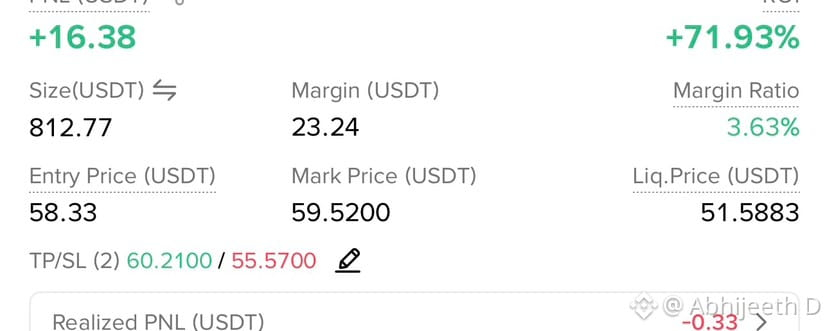
newt protocolDaily trading of Newton Protocol (NEWT) on Binance centers heavily around the NEWT/USDT pair, which remains the asset's most liquid and active market. Traders on the platform have access to both spot trading—where the token trades alongside major pairs like BNB, FDUSD, and TRY with a "seed tag" designation—and Binance Futures, which offers USDⓈ-margined perpetual contracts. Given the protocol's focus on verifiable on-chain AI automation and compliance infrastructure, daily price action frequently fluctuates based on ecosystem updates, data integrations, and broader shifts in the AI-crypto narrative. With a 24-hour trading volume hovering around several million dollars, daily volume-to-market-cap ratios highlight strong speculative interest, rendering it a highly active playground for intraday scalpers and automated trading bots looking to capitalize on its frequent liquidity bursts #NEWTProtocol $NEWT {future}(NEWTUSDT)

newt protocol

Daily trading of Newton Protocol (NEWT) on Binance centers heavily around the NEWT/USDT pair, which remains the asset's most liquid and active market. Traders on the platform have access to both spot trading—where the token trades alongside major pairs like BNB, FDUSD, and TRY with a "seed tag" designation—and Binance Futures, which offers USDⓈ-margined perpetual contracts. Given the protocol's focus on verifiable on-chain AI automation and compliance infrastructure, daily price action frequently fluctuates based on ecosystem updates, data integrations, and broader shifts in the AI-crypto narrative. With a 24-hour trading volume hovering around several million dollars, daily volume-to-market-cap ratios highlight strong speculative interest, rendering it a highly active playground for intraday scalpers and automated trading bots looking to capitalize on its frequent liquidity bursts
#NEWTProtocol $NEWT
Article
Autonomous Finance Does Not Have an Intelligence Problem. It Has a Consistency Problem.Everyone wants smarter AI. Almost nobody asks whether it will apply the same rules every single time. That may be the harder problem. Financial systems are not built on brilliant decisions that happen occasionally. They are built on predictable behavior that holds up under pressure. Markets change. Liquidity disappears. Volatility rises. Edge cases appear without warning. Those are the moments that reveal whether an autonomous system is truly reliable. An AI agent can produce excellent decisions most of the time and still become a source of risk if it behaves differently when conditions change. Intelligence improves performance. Consistency builds trust. That distinction deserves far more attention as AI becomes increasingly involved in financial markets. This is one of the reasons I found the Newton Protocol whitepaper interesting. Rather than relying entirely on an AI agent's judgment, @NewtonProtocol explores an authorization layer where predefined policies are evaluated before execution. Instead of asking an agent to decide what should happen every time, the system evaluates whether a transaction satisfies established conditions before assets move. That creates a clear separation between decision-making and authorization. As autonomous finance expands across chains, applications, and increasingly complex environments, consistent policy enforcement may become just as important as intelligent decision-making itself. $NEWT provides the economic security behind this authorization layer, aligning validator incentives with reliable policy enforcement across the network. I do not know whether the industry will prioritize consistency before autonomous financial systems become mainstream. Most of today's conversation is still focused on building more capable AI. History suggests that financial infrastructure earns trust differently. The systems that survive are rarely remembered for making the smartest decisions. They are remembered for applying the right rules consistently, especially when conditions become unpredictable. AI will continue becoming more intelligent. The infrastructure that makes that intelligence consistently trustworthy may prove to be the more important innovation. @NewtonProtocol #Newt #defi #BinanceTurns9 #Newtprotocol {spot}(NEWTUSDT) $EVAA {future}(EVAAUSDT) $LAB {future}(LABUSDT)

Autonomous Finance Does Not Have an Intelligence Problem. It Has a Consistency Problem.

Everyone wants smarter AI.
Almost nobody asks whether it will apply the same rules every single time.
That may be the harder problem.
Financial systems are not built on brilliant decisions that happen occasionally. They are built on predictable behavior that holds up under pressure. Markets change. Liquidity disappears. Volatility rises. Edge cases appear without warning. Those are the moments that reveal whether an autonomous system is truly reliable.
An AI agent can produce excellent decisions most of the time and still become a source of risk if it behaves differently when conditions change. Intelligence improves performance. Consistency builds trust.
That distinction deserves far more attention as AI becomes increasingly involved in financial markets.
This is one of the reasons I found the Newton Protocol whitepaper interesting.
Rather than relying entirely on an AI agent's judgment, @NewtonProtocol explores an authorization layer where predefined policies are evaluated before execution. Instead of asking an agent to decide what should happen every time, the system evaluates whether a transaction satisfies established conditions before assets move.
That creates a clear separation between decision-making and authorization.
As autonomous finance expands across chains, applications, and increasingly complex environments, consistent policy enforcement may become just as important as intelligent decision-making itself.
$NEWT provides the economic security behind this authorization layer, aligning validator incentives with reliable policy enforcement across the network.
I do not know whether the industry will prioritize consistency before autonomous financial systems become mainstream. Most of today's conversation is still focused on building more capable AI.
History suggests that financial infrastructure earns trust differently.
The systems that survive are rarely remembered for making the smartest decisions.
They are remembered for applying the right rules consistently, especially when conditions become unpredictable.
AI will continue becoming more intelligent.
The infrastructure that makes that intelligence consistently trustworthy may prove to be the more important innovation.
@NewtonProtocol #Newt #defi #BinanceTurns9 #Newtprotocol
$EVAA
$LAB
CoincoachSignals:
Another angle: if smart contract systems scales, clear permission boundaries for AI agents becomes essential, this is where $NEWT looks like infrastructure ⚡
Article
Newtprotocol@NewtonProtocol([https://www.binance.com/en/square/profile/newtonprotocol](https://www.binance.com/en/square/profile/newtonprotocol)), tag token $NEWT {spot}(NEWTUSDT) #NEWTProtocol #BinanceTurns9 nice https://tinyurl.com/42k5xwhv Stacking $NEWT, building with the community, and testing the new era of on-chain automation. Tagging NewtonProtocol and the $NEWT fam — let’s gooo! #Newt Option 2: Talking Points / Thread Starter 3 reasons I’m watching NewtonProtocol right now: 1. Newton Mainnet Beta is live — real users, real agents, real utility 2. $NEWT powers the network: staking, governance, and agent payments 3. It’s not just another L1. It’s infrastructure for AI agents to transact autonomously What are you building on Newton? Tag NewtonProtocol and $NEWT below 👇 Newton Mainnet Beta = unlocked 🔥 AI agents + Web3 infra + $NEWT = the next big thing. Testing, staking, and supporting NewtonProtocol as we push into autonomous finance. Who else is bullish on $NEWT? #Newt

Newtprotocol

@NewtonProtocol(https://www.binance.com/en/square/profile/newtonprotocol), tag token $NEWT
#NEWTProtocol #BinanceTurns9 nice https://tinyurl.com/42k5xwhv
Stacking $NEWT , building with the community, and testing the new era of on-chain automation.
Tagging NewtonProtocol and the $NEWT fam — let’s gooo!
#Newt
Option 2: Talking Points / Thread Starter
3 reasons I’m watching NewtonProtocol right now:
1. Newton Mainnet Beta is live — real users, real agents, real utility
2. $NEWT powers the network: staking, governance, and agent payments
3. It’s not just another L1. It’s infrastructure for AI agents to transact autonomously
What are you building on Newton? Tag NewtonProtocol and $NEWT below 👇
Newton Mainnet Beta = unlocked 🔥
AI agents + Web3 infra + $NEWT = the next big thing.
Testing, staking, and supporting NewtonProtocol as we push into autonomous finance.
Who else is bullish on $NEWT ?
#Newt
Most people assume that if authorization happened, there is a record of it. There usually is not. A transaction gets approved. Assets move. The system logs that the transaction was valid. But whether the authorization policies that should have governed that transaction were actually evaluated — and whether they were evaluated correctly — is almost impossible to verify from the outside. That gap matters more than most people realize. Authorization without proof is just a claim. And in financial systems, claims are not enough. I have watched compliance failures in crypto happen not because authorization policies did not exist, but because there was no way to verify they had actually been enforced at the moment the transaction proceeded. The logs said the transaction was approved. Nobody could prove what the approval process actually evaluated. That is one reason @NewtonProtocol caught my attention differently from most authorization discussions. Instead of only defining policies that should govern transactions, Newton's approach explores how policies evaluated before execution can be made verifiable — through TEEs and verifiable computation — rather than simply trusted after the fact. $NEWT powers the economic security behind that verification layer, aligning validator incentives with reliable proof generation across chains. What I still do not know is whether proof-of-authorization will become a standard requirement before a major compliance failure forces the conversation. Authorization is easy to claim. Proof that authorization actually happened is a different problem entirely. #Newt #TrendingTopic #crypto #Newtprotocol $T {spot}(TUSDT) $LAB {future}(LABUSDT) {spot}(NEWTUSDT)
Most people assume that if authorization happened, there is a record of it.
There usually is not.
A transaction gets approved. Assets move. The system logs that the transaction was valid. But whether the authorization policies that should have governed that transaction were actually evaluated — and whether they were evaluated correctly — is almost impossible to verify from the outside.
That gap matters more than most people realize.
Authorization without proof is just a claim. And in financial systems, claims are not enough.
I have watched compliance failures in crypto happen not because authorization policies did not exist, but because there was no way to verify they had actually been enforced at the moment the transaction proceeded. The logs said the transaction was approved. Nobody could prove what the approval process actually evaluated.
That is one reason @NewtonProtocol caught my attention differently from most authorization discussions.
Instead of only defining policies that should govern transactions, Newton's approach explores how policies evaluated before execution can be made verifiable — through TEEs and verifiable computation — rather than simply trusted after the fact.
$NEWT powers the economic security behind that verification layer, aligning validator incentives with reliable proof generation across chains.
What I still do not know is whether proof-of-authorization will become a standard requirement before a major compliance failure forces the conversation.
Authorization is easy to claim.
Proof that authorization actually happened is a different problem entirely.
#Newt #TrendingTopic #crypto #Newtprotocol
$T


$LAB
✅ Verifiable proof
34%
🔹 Platform reputation
33%
🔸 Smart contract audits
33%
⚪ Community trust
0%
3 votes • Voting closed
I am specialI’m especially interested in how $NEWT can help power this next phase of growth as Newton Protocol moves through Newton Mainnet Beta and the ecosystem expands. The beta feels like an important proving ground for the protocol’s core value: making onchain coordination, automation, and execution more reliable for users, builders, and partners. As more applications plug into @NewtonProtocol, the opportunity is not just faster adoption, but a stronger network effect where developers can build with greater confidence and communities can interact with a more seamless experience. I’m watching closely for how the beta improves performance, broadens utility, and sets the stage for long-term ecosystem growth. Looking forward to seeing how Newton Protocol continues to evolve through this beta and beyond. #Newt #NEWTProtocol

I am special

I’m especially interested in how $NEWT can help power this next phase of growth as Newton Protocol moves through Newton Mainnet Beta and the ecosystem expands. The beta feels like an important proving ground for the protocol’s core value: making onchain coordination, automation, and execution more reliable for users, builders, and partners. As more applications plug into @NewtonProtocol, the opportunity is not just faster adoption, but a stronger network effect where developers can build with greater confidence and communities can interact with a more seamless experience. I’m watching closely for how the beta improves performance, broadens utility, and sets the stage for long-term ecosystem growth. Looking forward to seeing how Newton Protocol continues to evolve through this beta and beyond. #Newt #NEWTProtocol
Article
I am very optimistic about the Newton Protocol projectThe Newton Protocol project is a very promising step in developing the infrastructure of blockchain networks, especially with the launch of the version the network’s experimental version $NEWT The Mainnet Testnet homepage that seeks to provide innovative and sustainable solutions.By reviewing the proposed update points for the project, we notice a strong focus on improving performance, increasing processing speed, and significantly reducing transaction costs to enhance the experience of both users and developers. These fundamental updates reflect the team’s ambitious vision in building a powerful and scalable ecosystem that meets the needs of the digital future.

I am very optimistic about the Newton Protocol project

The Newton Protocol project is a very promising step in developing the infrastructure of blockchain networks, especially with the launch of the version
the network’s experimental version $NEWT The Mainnet Testnet homepage that seeks to provide innovative and sustainable solutions.By reviewing the proposed update points for the project, we notice a strong focus on improving performance, increasing processing speed, and significantly reducing transaction costs to enhance the experience of both users and developers. These fundamental updates reflect the team’s ambitious vision in building a powerful and scalable ecosystem that meets the needs of the digital future.
#newt $NEWT it's good project innovative project #NEWTProtocol it's very strong technology active community and it's secure ecosystem and day by day increase their project build up secure token price increase their hard work for this token for growth it's very strong road map shows strong and buyers attention getting now and also do more effective secure and scale able bolockchain ecosystem it's price now improve $NEWT #binance
#newt $NEWT it's good project innovative project
#NEWTProtocol it's very strong technology active community and it's secure ecosystem and day by day increase their project build up secure token price increase their hard work for this token for growth it's very strong road map shows strong and buyers attention getting now and also do more effective secure and scale able bolockchain ecosystem
it's price now improve
$NEWT #binance
#newt $NEWT 🚀 Exploring Newton Protocol & Newton Mainnet Beta! The blockchain space is evolving rapidly, and the launch of the Newton Mainnet Beta is a massive milestone to watch. It brings incredible scalability, enhanced security, and a robust framework designed to empower decentralized applications (dApps) and next-generation Web3 ecosystems. As the foundation grows, the potential for real-world integration looks highly promising. Keeping a close eye on how this infrastructure transforms the decentralized economy! 📈 Make sure to check out their updates and follow the official project account at @NewtonProtocol to stay ahead of the game! 🔥 $NEWT #NEWTProtocol
#newt $NEWT 🚀 Exploring Newton Protocol & Newton Mainnet Beta!
The blockchain space is evolving rapidly, and the launch of the Newton Mainnet Beta is a massive milestone to watch. It brings incredible scalability, enhanced security, and a robust framework designed to empower decentralized applications (dApps) and next-generation Web3 ecosystems.
As the foundation grows, the potential for real-world integration looks highly promising. Keeping a close eye on how this infrastructure transforms the decentralized economy! 📈
Make sure to check out their updates and follow the official project account at @NewtonProtocol to stay ahead of the game! 🔥
$NEWT #NEWTProtocol

#newt $NEWT The step we were waiting for from @NewtonProtocol NewtonProtocol has become real. The goal is clear: a faster, cheaper network and a user experience without the complexity of wallets and bridges. $NEWT is the fuel that powers the network and governance. Right now, we can test the real performance and share feedback before a full launch. Do you expect $NEWT to reshape how we interact with Web3? Share your thoughts 👇 #Newt #NEWTPROTOCOL
#newt $NEWT
The step we were waiting for from @NewtonProtocol NewtonProtocol has become real. The goal is clear: a faster, cheaper network and a user experience without the complexity of wallets and bridges.

$NEWT is the fuel that powers the network and governance. Right now, we can test the real performance and share feedback before a full launch.

Do you expect $NEWT to reshape how we interact with Web3? Share your thoughts 👇

#Newt #NEWTPROTOCOL
Article
Newton Mainnet Beta Brings Pre-Transaction Authorization to DeFiMost blockchain security tools explain what happened after a transaction is already completed. Newton Protocol is taking a different approach with the launch of Newton Mainnet Beta by introducing an onchain authorization layer that evaluates transactions before settlement. Every transaction is checked against an active policy, and the protocol returns a signed pass or fail attestation onchain. This proactive model has the potential to improve how security, compliance, and risk management are handled across DeFi. A comparison that stands out is the idea that Newton is to the onchain economy what Visa's authorization network is to traditional card payments. Instead of only recording activity, the protocol can help determine whether a transaction should proceed before assets move. That could be especially valuable for curated DeFi vaults where compliance, security, identity verification, and risk controls have often relied on fragmented offchain processes. I'm also interested in the four enforcement domains that Newton supports: compliance, identity, security, and risk. Combined with collaborations across the ecosystem and the Newton Vault SDK, this approach could make policy enforcement more transparent and verifiable onchain. Congratulations to @NewtonProtocol on launching Mainnet Beta. Looking forward to seeing how the ecosystem evolves as more developers and institutions explore what $NEWT and the protocol can enable. #NEWTProtocol

Newton Mainnet Beta Brings Pre-Transaction Authorization to DeFi

Most blockchain security tools explain what happened after a transaction is already completed. Newton Protocol is taking a different approach with the launch of Newton Mainnet Beta by introducing an onchain authorization layer that evaluates transactions before settlement. Every transaction is checked against an active policy, and the protocol returns a signed pass or fail attestation onchain. This proactive model has the potential to improve how security, compliance, and risk management are handled across DeFi.
A comparison that stands out is the idea that Newton is to the onchain economy what Visa's authorization network is to traditional card payments. Instead of only recording activity, the protocol can help determine whether a transaction should proceed before assets move. That could be especially valuable for curated DeFi vaults where compliance, security, identity verification, and risk controls have often relied on fragmented offchain processes.
I'm also interested in the four enforcement domains that Newton supports: compliance, identity, security, and risk. Combined with collaborations across the ecosystem and the Newton Vault SDK, this approach could make policy enforcement more transparent and verifiable onchain. Congratulations to @NewtonProtocol on launching Mainnet Beta. Looking forward to seeing how the ecosystem evolves as more developers and institutions explore what $NEWT and the protocol can enable. #NEWTProtocol
#newt $NEWT #NEWTProtocol Exploring the future of blockchain with @NewtonProtocol! The NEWT ecosystem is focused on building scalable and efficient Web3 infrastructure. Looking forward to seeing the progress of the Newton Mainnet Beta and the growth of the community. $NEWT #newton
Article
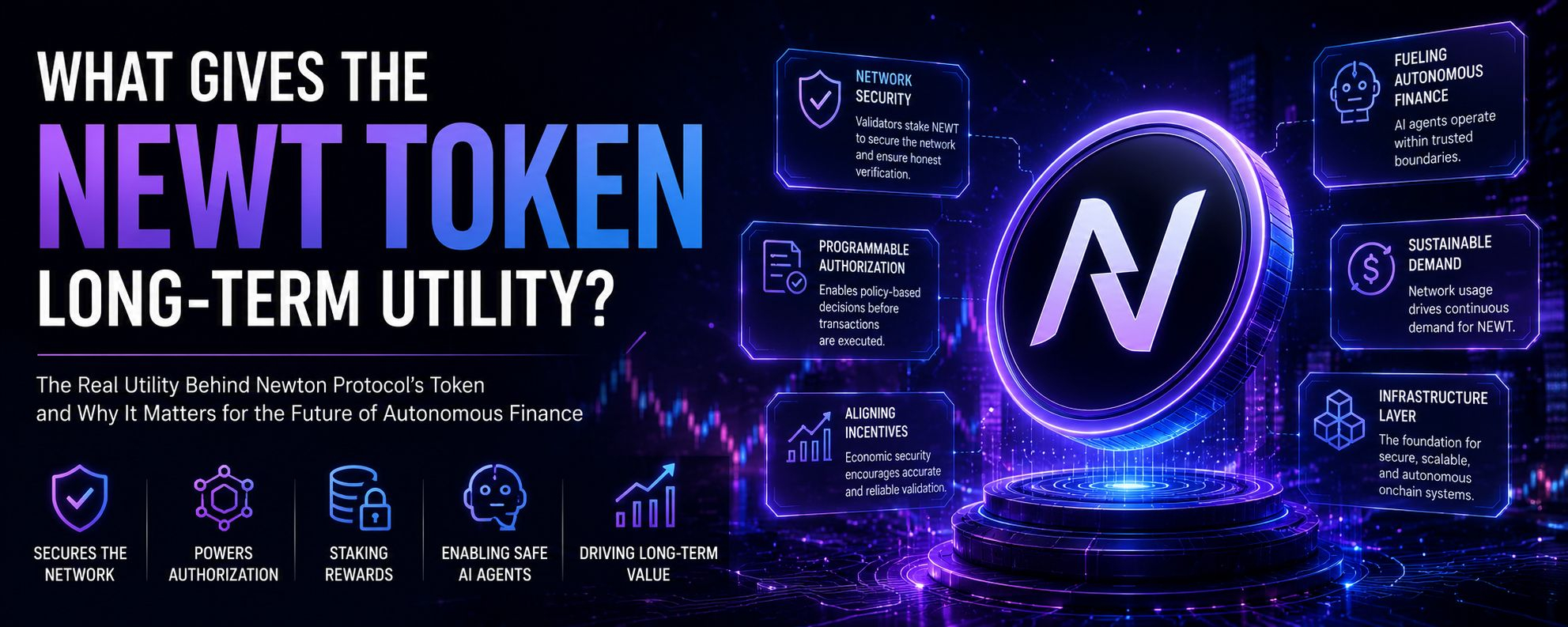
What Gives the NEWT Token Long-Term Utility?When I first started reading about the NEWT token, I found myself asking a question that I think investors should ask more often. If the token price disappeared from the chart for a month, would the protocol still need the token to function? That sounds simple, but it separates assets that exist mainly for speculation from those that are tied to the daily activity of a network. That question feels especially relevant today. The crypto market has matured beyond the phase where every project could justify a token simply because it was building on a blockchain. Investors have become more selective. They want to know what demand actually looks like, where value comes from, and whether usage can grow independently of market sentiment. The projects that survive the next cycle are likely to be the ones where token utility is connected to real network activity instead of temporary excitement. That is where NEWT becomes interesting. Its long-term value is less about payments or governance alone and more about becoming part of the infrastructure behind autonomous finance. The protocol itself is designed around authorization rather than execution. Most blockchains are excellent at confirming that a transaction is valid. Newton Protocol asks an additional question before execution ever happens. Should this transaction be allowed under a predefined policy? At first glance, that may not sound like a major distinction. Underneath, it changes the role of the token. If decentralized authorization becomes a service used by AI agents, institutions, decentralized applications, and automated trading systems, the network needs economic incentives that encourage participants to verify those decisions honestly. That is where NEWT enters the picture. According to Newton's token documentation, the total supply is fixed at 1 billion NEWT. A fixed supply by itself does not create value. Crypto has no shortage of fixed-supply assets that struggle to maintain demand. What matters is whether network usage creates continuous reasons for participants to acquire, stake, or hold those tokens. In Newton's case, staking is expected to secure the authorization network while aligning validators with the accuracy of policy verification. Understanding that helps explain why staking here is different from simply earning rewards. On the surface, validators lock tokens to participate in network security. Underneath, they are putting economic weight behind the correctness of authorization decisions. If verification becomes unreliable, the value of the network itself weakens. The token therefore represents participation in trust rather than simply ownership. That creates another effect that often receives less attention. AI agents are becoming increasingly capable of managing financial activity. They can monitor markets continuously, execute trades, rebalance portfolios, and interact with multiple decentralized applications without constant human involvement. The challenge is no longer whether AI can act. It is whether those actions remain inside boundaries established by users. Imagine an investment fund allowing an AI agent to manage a treasury worth $50 million. The AI may have permission to rebalance assets every hour but not to transfer funds to unknown wallets or exceed predefined exposure limits. Newton's authorization layer evaluates those permissions before execution. Every successful verification increases demand for the network itself rather than simply another transaction on a blockchain. Meanwhile, broader market trends make this model more relevant. Stablecoins now represent more than $313 billion in circulation, while tokenized real-world assets have surpassed $25 billion. Those figures matter because both sectors depend on reliable automation as they continue expanding. More value moving onchain means more decisions happening without direct human oversight. That naturally increases the importance of programmable authorization. What struck me is that NEWT is not trying to compete with existing settlement layers. It is positioning itself one level above them. Think of it like internet security. The internet already moves information efficiently, yet identity verification, encryption, and access control became separate industries because movement alone was never enough. Finance appears to be reaching a similar stage. Of course, there are risks that deserve equal attention. Long-term utility depends on adoption, not design alone. Developers need to integrate Newton's authorization framework into applications. AI platforms must decide that programmable policies improve their products enough to justify the additional complexity. Institutions will likely require years of testing before relying on decentralized authorization for meaningful financial operations. There is also competition. Several projects are exploring AI infrastructure, decentralized identity, and permission systems from different angles. Some focus on autonomous agents, while others emphasize compliance or zero-knowledge verification. Newton still needs to demonstrate that its approach becomes the preferred standard rather than simply another available option. Even so, the token's structure feels more aligned with network activity than many crypto assets introduced during previous market cycles. Instead of relying primarily on governance voting or speculative scarcity, NEWT connects value creation to an operational service. Every authorization request, every verified policy, and every validator participating in consensus contributes to the ecosystem's economic activity. That distinction may become increasingly important as AI continues changing how blockchain applications operate. Today's decentralized finance largely assumes humans remain the primary decision-makers. Early signs suggest that assumption may gradually shift. AI agents are already writing code, managing liquidity strategies, monitoring portfolios, and executing predefined financial tasks around the clock. As those responsibilities expand, authorization becomes less of an optional feature and more of a requirement. If that direction holds, token demand may increasingly follow infrastructure usage instead of transaction speculation. Networks supporting identity, verification, authorization, and policy enforcement could become just as important as networks processing payments themselves. That would represent a quiet shift in how investors evaluate utility. Whether Newton reaches that position remains to be seen. Technology alone never guarantees adoption, and infrastructure projects often take longer to gain recognition because their value is less visible than consumer applications. Yet history repeatedly shows that the strongest foundations are usually the least noticeable while they are being# built. That may ultimately be what gives NEWT its long-term utility. Not because it promises faster trading or bigger yields, but because every autonomous financial system eventually reaches the same question. Before an AI can move money, someone has to decide what it is allowed to do. The token earns its place if it becomes partof answering that question. #NEWTProtocol $newt

What Gives the NEWT Token Long-Term Utility?

When I first started reading about the NEWT token, I found myself asking a question that I think investors should ask more often. If the token price disappeared from the chart for a month, would the protocol still need the token to function? That sounds simple, but it separates assets that exist mainly for speculation from those that are tied to the daily activity of a network.
That question feels especially relevant today. The crypto market has matured beyond the phase where every project could justify a token simply because it was building on a blockchain. Investors have become more selective. They want to know what demand actually looks like, where value comes from, and whether usage can grow independently of market sentiment. The projects that survive the next cycle are likely to be the ones where token utility is connected to real network activity instead of temporary excitement.
That is where NEWT becomes interesting. Its long-term value is less about payments or governance alone and more about becoming part of the infrastructure behind autonomous finance.
The protocol itself is designed around authorization rather than execution. Most blockchains are excellent at confirming that a transaction is valid. Newton Protocol asks an additional question before execution ever happens. Should this transaction be allowed under a predefined policy?
At first glance, that may not sound like a major distinction. Underneath, it changes the role of the token. If decentralized authorization becomes a service used by AI agents, institutions, decentralized applications, and automated trading systems, the network needs economic incentives that encourage participants to verify those decisions honestly. That is where NEWT enters the picture.
According to Newton's token documentation, the total supply is fixed at 1 billion NEWT. A fixed supply by itself does not create value. Crypto has no shortage of fixed-supply assets that struggle to maintain demand. What matters is whether network usage creates continuous reasons for participants to acquire, stake, or hold those tokens. In Newton's case, staking is expected to secure the authorization network while aligning validators with the accuracy of policy verification.
Understanding that helps explain why staking here is different from simply earning rewards. On the surface, validators lock tokens to participate in network security. Underneath, they are putting economic weight behind the correctness of authorization decisions. If verification becomes unreliable, the value of the network itself weakens. The token therefore represents participation in trust rather than simply ownership.
That creates another effect that often receives less attention. AI agents are becoming increasingly capable of managing financial activity. They can monitor markets continuously, execute trades, rebalance portfolios, and interact with multiple decentralized applications without constant human involvement. The challenge is no longer whether AI can act. It is whether those actions remain inside boundaries established by users.
Imagine an investment fund allowing an AI agent to manage a treasury worth $50 million. The AI may have permission to rebalance assets every hour but not to transfer funds to unknown wallets or exceed predefined exposure limits. Newton's authorization layer evaluates those permissions before execution. Every successful verification increases demand for the network itself rather than simply another transaction on a blockchain.
Meanwhile, broader market trends make this model more relevant. Stablecoins now represent more than $313 billion in circulation, while tokenized real-world assets have surpassed $25 billion. Those figures matter because both sectors depend on reliable automation as they continue expanding. More value moving onchain means more decisions happening without direct human oversight. That naturally increases the importance of programmable authorization.
What struck me is that NEWT is not trying to compete with existing settlement layers. It is positioning itself one level above them. Think of it like internet security. The internet already moves information efficiently, yet identity verification, encryption, and access control became separate industries because movement alone was never enough. Finance appears to be reaching a similar stage.
Of course, there are risks that deserve equal attention. Long-term utility depends on adoption, not design alone. Developers need to integrate Newton's authorization framework into applications. AI platforms must decide that programmable policies improve their products enough to justify the additional complexity. Institutions will likely require years of testing before relying on decentralized authorization for meaningful financial operations.
There is also competition. Several projects are exploring AI infrastructure, decentralized identity, and permission systems from different angles. Some focus on autonomous agents, while others emphasize compliance or zero-knowledge verification. Newton still needs to demonstrate that its approach becomes the preferred standard rather than simply another available option.
Even so, the token's structure feels more aligned with network activity than many crypto assets introduced during previous market cycles. Instead of relying primarily on governance voting or speculative scarcity, NEWT connects value creation to an operational service. Every authorization request, every verified policy, and every validator participating in consensus contributes to the ecosystem's economic activity.
That distinction may become increasingly important as AI continues changing how blockchain applications operate. Today's decentralized finance largely assumes humans remain the primary decision-makers. Early signs suggest that assumption may gradually shift. AI agents are already writing code, managing liquidity strategies, monitoring portfolios, and executing predefined financial tasks around the clock. As those responsibilities expand, authorization becomes less of an optional feature and more of a requirement.
If that direction holds, token demand may increasingly follow infrastructure usage instead of transaction speculation. Networks supporting identity, verification, authorization, and policy enforcement could become just as important as networks processing payments themselves. That would represent a quiet shift in how investors evaluate utility.
Whether Newton reaches that position remains to be seen. Technology alone never guarantees adoption, and infrastructure projects often take longer to gain recognition because their value is less visible than consumer applications. Yet history repeatedly shows that the strongest foundations are usually the least noticeable while they are being# built.
That may ultimately be what gives NEWT its long-term utility. Not because it promises faster trading or bigger yields, but because every autonomous financial system eventually reaches the same question. Before an AI can move money, someone has to decide what it is allowed to do. The token earns its place if it becomes partof answering that question.
#NEWTProtocol $newt
Article
About NEWT and STUFFConvert Newton NEWT to STUFF.io STUFF NEWT to STUFF: 1 Newton converts to 85.68 STUFF Buy Newton with Coinbase Create an account on Coinbase to buy and sell Newton on the safest crypto exchange platform. About NEWT and STUFF The Newton asset is on the rise, while the STUFF.io asset is down this week. The current conversion rate of the NEWT asset to STUFF is 85.68. This means that if you convert 1 STUFF, you will receive 0.01167 NEWT. The NEWT/STUFF conversion rate decreased by 0.27% over the last hour (STUFF/NEWT increased by 0.27%). Over the past 24 hours, NEWT/STUFF has increased by 12.37%, while STUFF/NEWT has decreased by the same percentage.

About NEWT and STUFF

Convert Newton NEWT to STUFF.io STUFF
NEWT to STUFF: 1 Newton converts to 85.68 STUFF
Buy Newton with Coinbase
Create an account on Coinbase to buy and sell Newton on the safest crypto exchange platform.
About NEWT and STUFF
The Newton asset is on the rise, while the STUFF.io asset is down this week. The current conversion rate of the NEWT asset to STUFF is 85.68. This means that if you convert 1 STUFF, you will receive 0.01167 NEWT. The NEWT/STUFF conversion rate decreased by 0.27% over the last hour (STUFF/NEWT increased by 0.27%). Over the past 24 hours, NEWT/STUFF has increased by 12.37%, while STUFF/NEWT has decreased by the same percentage.
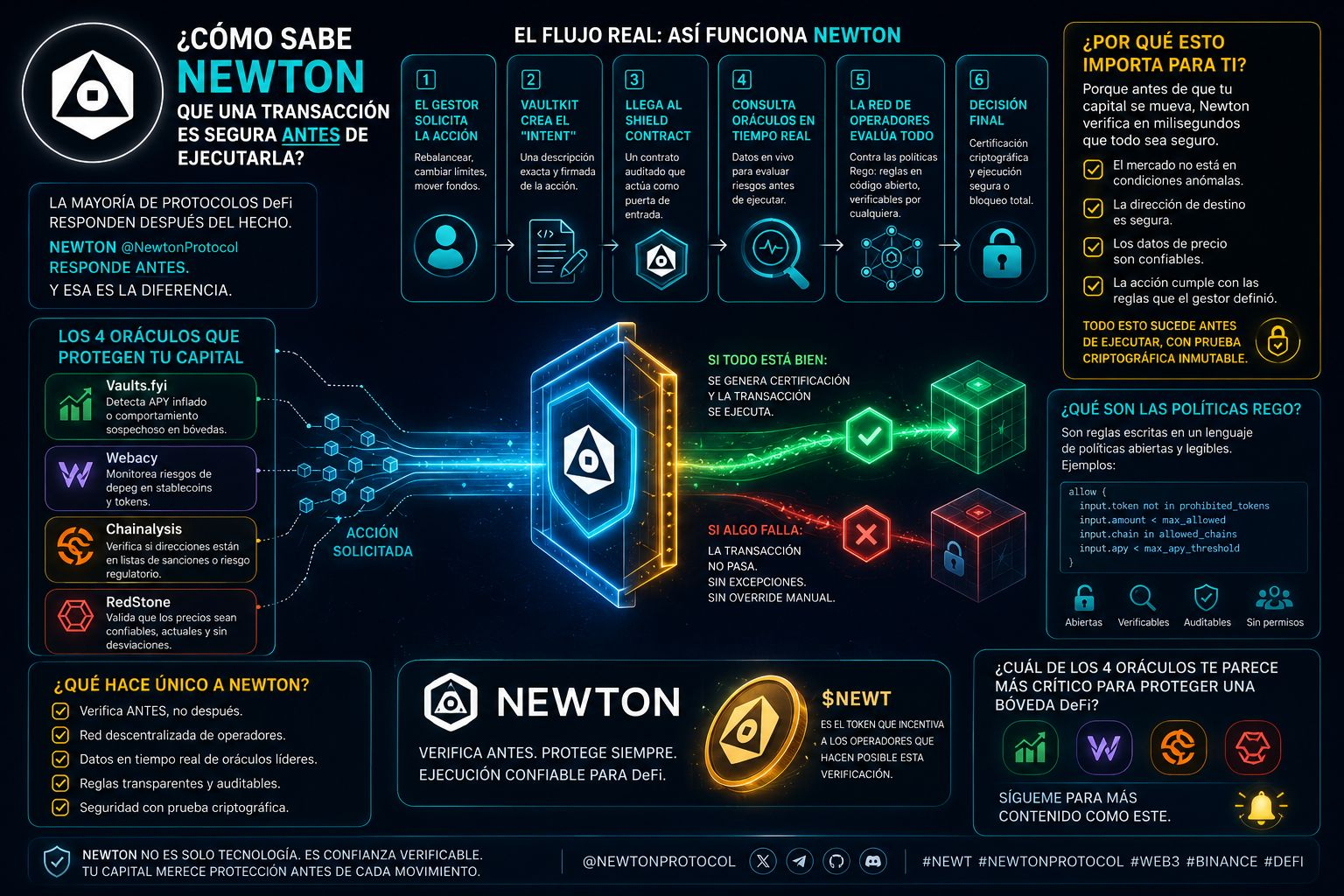
How does Newton know that a transaction is safe before executing it? Most DeFi protocols answer that question after the fact. @NewtonProtocol la answers before. The real flow in 4 steps: 1️⃣ The manager requests an action (rebalance, move funds, change limits). 2️⃣ VaultKit packages that action as a signed “Intent” and sends it to the Shield Contract, the entry point that nothing can bypass. 3️⃣ Newton queries 4 real-time oracles before approving: - Suspicious APY? → Vaults.fyi detects it. - Depeg risk? → Webacy monitors it. - Is the address on a sanctions list? → Chainalysis verifies it. - Stale price data? → RedStone confirms it. 4️⃣ If everything complies with the policies defined in open and verifiable Rego code, a cryptographic certification is generated and the transaction is executed. If anything fails, it doesn’t happen. No exceptions. All in milliseconds. Decentralized. With mathematical proof that it was done correctly. $NEWT incentivizes the operators who make this verification possible. Which of the 4 oracles do you think is most critical to protect a vault? Follow me for more. @NewtonProtocol #Newt #NEWTProtocol
How does Newton know that a transaction is safe before executing it?

Most DeFi protocols answer that question after the fact. @NewtonProtocol la answers before.

The real flow in 4 steps:
1️⃣ The manager requests an action (rebalance, move funds, change limits).
2️⃣ VaultKit packages that action as a signed “Intent” and sends it to the Shield Contract, the entry point that nothing can bypass.
3️⃣ Newton queries 4 real-time oracles
before approving:
- Suspicious APY? → Vaults.fyi detects it.
- Depeg risk? → Webacy monitors it.
- Is the address on a sanctions list? → Chainalysis verifies it.
- Stale price data? → RedStone confirms it.
4️⃣ If everything complies with the policies defined in open and verifiable Rego code, a cryptographic certification is generated and the transaction is executed. If anything fails, it doesn’t happen. No exceptions.
All in milliseconds. Decentralized. With mathematical proof that it was done correctly.
$NEWT incentivizes the operators who make this verification possible.

Which of the 4 oracles do you think is most critical to protect a vault? Follow me for more.

@NewtonProtocol #Newt #NEWTProtocol
#newt $NEWT Redefining Web3 efficiency with Newton Home Network Beta 🌐 In the world of digital currencies, staying for the most technologically powerful and the most capable of scaling. This is exactly what the @NewtonProtocol (https://www.binance.com/en/square/profile/newtonprotocol) project is proving with its recent launch of the Newton Mainnet Beta beta version. The primary focus in this pilot phase is to strike a perfect balance between superfast transaction processing and strict security, a dilemma that many existing networks face. Through this cutting-edge infrastructure, the project paves the way for widespread adoption of decentralized applications and smart solutions that serve the real digital economy. With this technological advancement, the $NEWT token is emerging as a key fuel for this network engine, playing a pivotal role in facilitating operations and promoting decentralized governance. The current beta is not just a pilot step, it is the solid foundation for a promising future that the project aspires to build in the Web3 space. What is the most exciting technical feature for you in this new network? ​#Newt #NEWTProtocol
#newt $NEWT
Redefining Web3 efficiency with Newton Home Network Beta 🌐
In the world of digital currencies, staying for the most technologically powerful and the most capable of scaling. This is exactly what the @NewtonProtocol (https://www.binance.com/en/square/profile/newtonprotocol) project is proving with its recent launch of the Newton Mainnet Beta beta version.
The primary focus in this pilot phase is to strike a perfect balance between superfast transaction processing and strict security, a dilemma that many existing networks face. Through this cutting-edge infrastructure, the project paves the way for widespread adoption of decentralized applications and smart solutions that serve the real digital economy.
With this technological advancement, the $NEWT token is emerging as a key fuel for this network engine, playing a pivotal role in facilitating operations and promoting decentralized governance.
The current beta is not just a pilot step, it is the solid foundation for a promising future that the project aspires to build in the Web3 space.
What is the most exciting technical feature for you in this new network?
#Newt
#NEWTProtocol
Article
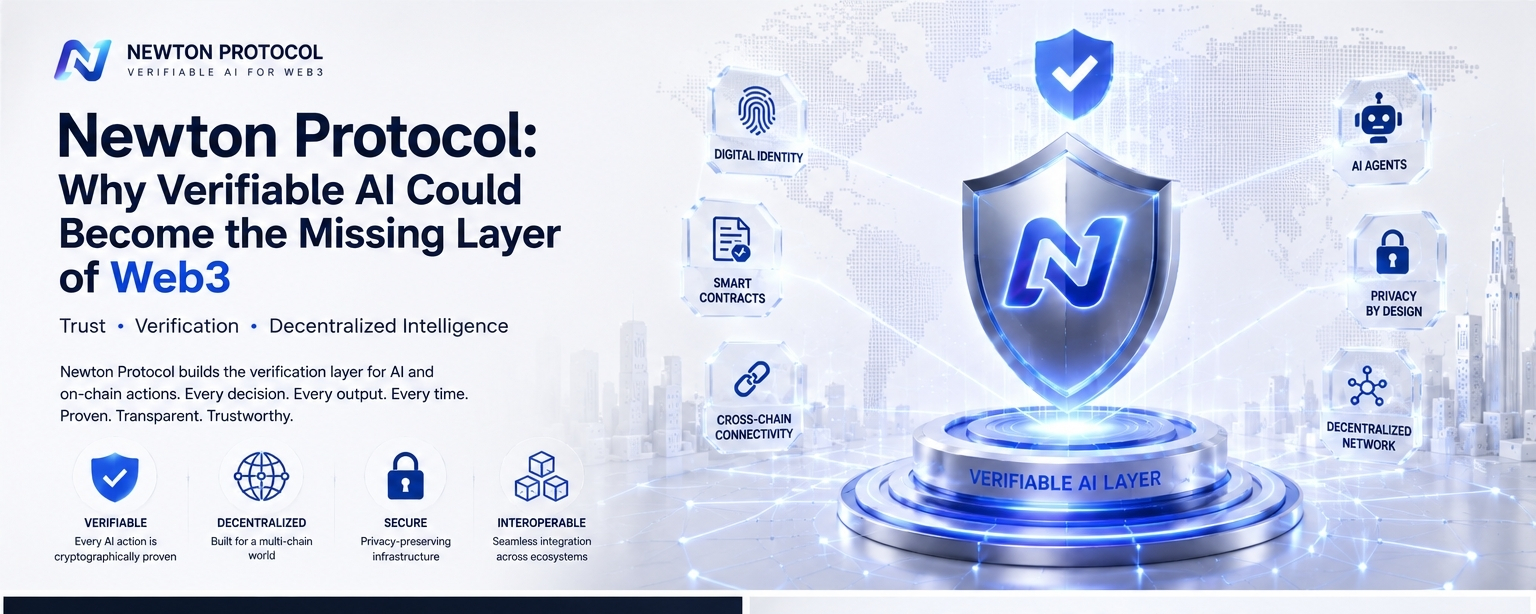
Newton Protocol: Why Verifiable AI Could Become the Missing Layer of Web3Artificial intelligence is becoming more capable every day, but one question keeps getting louder: Can we trust what AI produces? That question is exactly why Newton Protocol has started attracting attention across the crypto community. Most AI systems can generate answers, complete tasks, and even make decisions. The difficult part is proving those decisions are genuine, transparent, and haven't been manipulated. Newton Protocol focuses on adding a verification layer that helps make AI activity more reliable in decentralized environments. Instead of asking users to blindly trust an AI agent, the protocol is designed to provide cryptographic proof that important actions can be verified before they are accepted. As AI becomes more involved in finance, gaming, digital identity, and decentralized applications, this kind of transparency may become increasingly valuable. Another interesting aspect is interoperability. Web3 is growing across multiple blockchain ecosystems, and projects that can work across different networks are likely to offer greater flexibility. Newton Protocol aims to support that vision by building infrastructure that can integrate with a broader decentralized ecosystem instead of remaining isolated. For developers, verified execution can reduce uncertainty when building AI-powered applications. For users, it creates greater confidence that automated decisions are supported by transparent verification rather than hidden processes. The conversation around AI is no longer only about intelligence. It is gradually shifting toward accountability, security, and proof. Projects that combine blockchain with verifiable AI could play an important role in the next stage of Web3 innovation. Newton Protocol is still developing, but its focus on trust, verification, and decentralized infrastructure makes it a project worth following as AI and blockchain continue to evolve together. #Newt @NewtonProtocol #NEWTProtocol {spot}(NEWTUSDT) {stock_us}(NEWT.US)

Newton Protocol: Why Verifiable AI Could Become the Missing Layer of Web3

Artificial intelligence is becoming more capable every day, but one question keeps getting louder: Can we trust what AI produces?
That question is exactly why Newton Protocol has started attracting attention across the crypto community.
Most AI systems can generate answers, complete tasks, and even make decisions. The difficult part is proving those decisions are genuine, transparent, and haven't been manipulated. Newton Protocol focuses on adding a verification layer that helps make AI activity more reliable in decentralized environments.
Instead of asking users to blindly trust an AI agent, the protocol is designed to provide cryptographic proof that important actions can be verified before they are accepted. As AI becomes more involved in finance, gaming, digital identity, and decentralized applications, this kind of transparency may become increasingly valuable.
Another interesting aspect is interoperability. Web3 is growing across multiple blockchain ecosystems, and projects that can work across different networks are likely to offer greater flexibility. Newton Protocol aims to support that vision by building infrastructure that can integrate with a broader decentralized ecosystem instead of remaining isolated.
For developers, verified execution can reduce uncertainty when building AI-powered applications. For users, it creates greater confidence that automated decisions are supported by transparent verification rather than hidden processes.
The conversation around AI is no longer only about intelligence. It is gradually shifting toward accountability, security, and proof. Projects that combine blockchain with verifiable AI could play an important role in the next stage of Web3 innovation.
Newton Protocol is still developing, but its focus on trust, verification, and decentralized infrastructure makes it a project worth following as AI and blockchain continue to evolve together.
#Newt @NewtonProtocol #NEWTProtocol
NEWT0.00%
NEWTUS+0.38%
#newt $NEWT @NewtonProtocol #NEWTProtocol $NEWT The project is heavily leaning into a multi-chain future by preparing a zkPermissions rollup (the Newton Keystore) to handle cross-chain authorization rules for stablecoins and real-world assets (RWAs).

#newt $NEWT
@NewtonProtocol
#NEWTProtocol
$NEWT
The project is heavily leaning into a multi-chain future by preparing a zkPermissions rollup (the Newton Keystore) to handle cross-chain authorization rules for stablecoins and real-world assets (RWAs).
·
--
Newt Protocol🚀 Newt Protocol is becoming one of the Web3 projects that is starting to attract the attention of the crypto community. Its main focus is building infrastructure that supports the blockchain ecosystem to be more efficient, secure, and easy to use. If the team can continue to deliver innovation, expand adoption, and build an active community, Newt Protocol has the potential to grow further in the future. Keep doing independent research (DYOR) and manage risk before making any investment decisions. <t-12/>#NewtProtocol #Crypto #Web3 #BinanceSquare

Newt Protocol

🚀 Newt Protocol is becoming one of the Web3 projects that is starting to attract the attention of the crypto community. Its main focus is building infrastructure that supports the blockchain ecosystem to be more efficient, secure, and easy to use. If the team can continue to deliver innovation, expand adoption, and build an active community, Newt Protocol has the potential to grow further in the future. Keep doing independent research (DYOR) and manage risk before making any investment decisions. <t-12/>#NewtProtocol #Crypto #Web3 #BinanceSquare
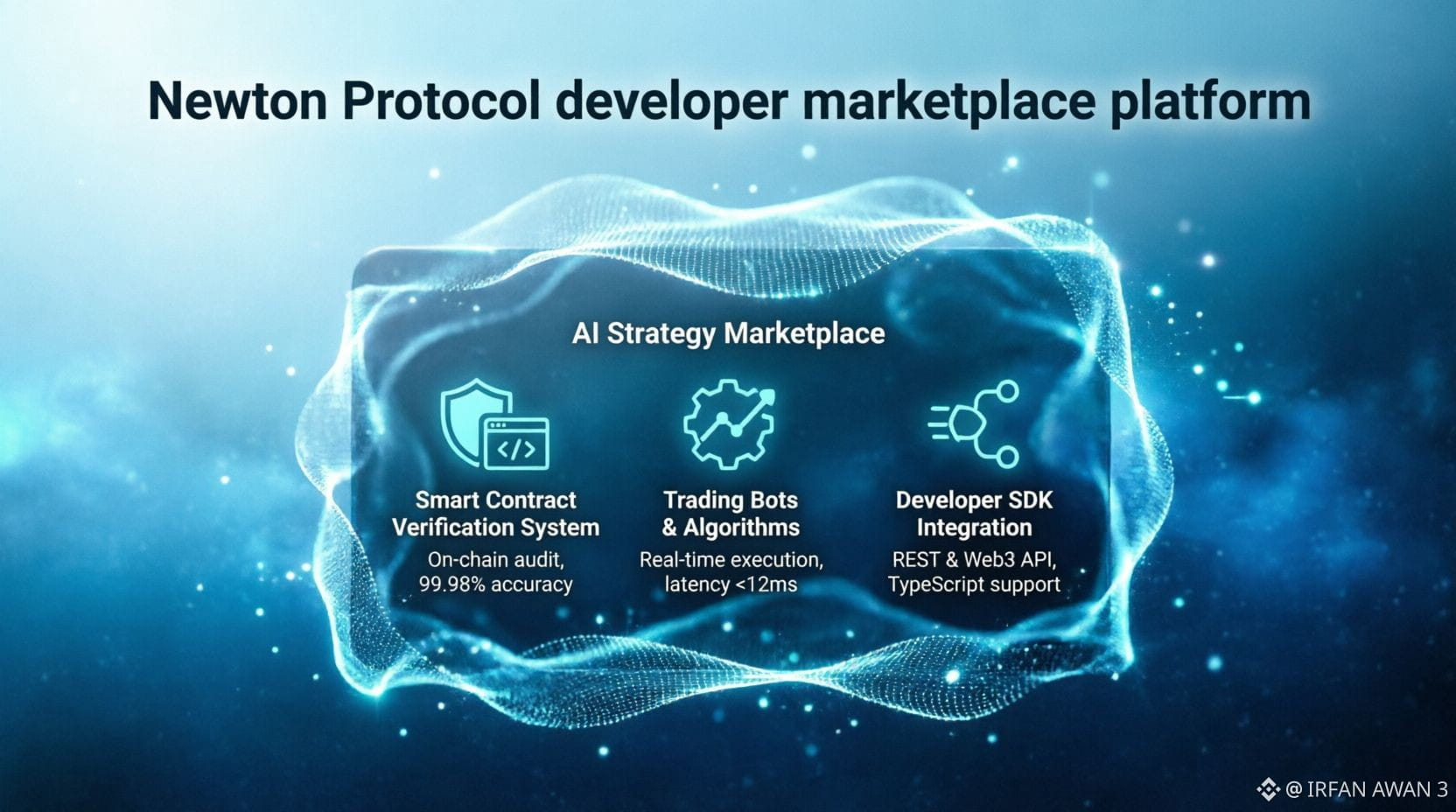
#NEWT $NEWT I like the idea behind @NewtonProtocol because it is trying to solve an important problem in both AI and crypto. As more people start using AI agents and automated trading strategies. Security and trust become much more important. Newton Protocol is building a system that checks transactions before they are completed on the blockchain. which could help reduce risks and improve safety. What I find interesting is that the project is not only focused on security but also on creating a future where AI-powered financial tools can operate more safely and efficiently. The plan to build a marketplace for AI developers and trading strategies also adds another exciting use case for the ecosystem. The Newton Mainet Beta is an important step forward. And I am looking forward to seeing how the project develops and how it supports the future of AI-driven finance and automation. @NewtonProtocol #NEWTProtocol $NEWT {future}(NEWTUSDT)
#NEWT $NEWT
I like the idea behind @NewtonProtocol because it is trying to solve an important problem in both AI and crypto.

As more people start using AI agents and automated trading strategies.

Security and trust become much more important. Newton Protocol is building a system that checks transactions before they are completed on the blockchain.

which could help reduce risks and improve safety.

What I find interesting is that the project is not only focused on security but also on creating a future where AI-powered financial tools can operate more safely and efficiently.

The plan to build a marketplace for AI developers and trading strategies also adds another exciting use case for the ecosystem.

The Newton Mainet Beta is an important step forward.

And I am looking forward to seeing how the project develops and how it supports the future of AI-driven finance and automation.
@NewtonProtocol #NEWTProtocol $NEWT
#newt $NEWT Newton Mainnet Beta is live — and it's doing something most chains can't. @NewtonProtocol l doesn't just execute transactions. It checks them first. Every action is evaluated against programmable policies, run inside Trusted Execution Environments (TEEs), and produces a cryptographic proof — a signed attestation anyone can verify on Newton Explorer. Builders write rules in Rego. Operators evaluate them. The result? Compliance-as-code, baked directly into the transaction layer. Real use cases already in play: 🔐 Sanctions screening ⚠️ Fraud prevention 📊 Risk management 🤖 AI agent authorization The VaultKit SDK is live for developers who want to build programmable transaction policies today. $NEWT powers it all — fees, staking, governance. This is what verifiable onchain automation looks like #Newt #NEWTProtocol #Web3
#newt $NEWT
Newton Mainnet Beta is live — and it's doing something most chains can't.

@NewtonProtocol l doesn't just execute transactions. It checks them first.

Every action is evaluated against programmable policies, run inside Trusted Execution Environments (TEEs), and produces a cryptographic proof — a signed attestation anyone can verify on Newton Explorer.

Builders write rules in Rego. Operators evaluate them. The result? Compliance-as-code, baked directly into the transaction layer.

Real use cases already in play:
🔐 Sanctions screening
⚠️ Fraud prevention
📊 Risk management
🤖 AI agent authorization

The VaultKit SDK is live for developers who want to build programmable transaction policies today.

$NEWT powers it all — fees, staking, governance.

This is what verifiable onchain automation looks like
#Newt

#NEWTProtocol #Web3
Log in to explore more content
Join global crypto users on Binance Square
⚡️ Get latest and useful information about crypto.
💬 Trusted by the world’s largest crypto exchange.
👍 Discover real insights from verified creators.
Email / Phone number