
#newtonprotocol
newtonprotocol
158,507 views
2,328 Discussing
Hot
Latest

Partly True
A protocol looked at blockchain's biggest selling point — total transparency — and called it a weakness. Its own pitch: crypto needs locks for that glass house.
Newton Protocol positions itself as a pre-transaction authorization layer, letting AI agents, RWA platforms, and stablecoin issuers enforce compliance rules onchain before a transaction executes. It recently expanded with a Model Registry marketplace where developers can publish agent models for others to discover and compose. The token has also had to absorb real supply pressure — a 139 million NEWT ($7.55M) unlock in June tested demand directly — while Binance's Summer Earn campaign offered yield on locked NEWT to help offset it.
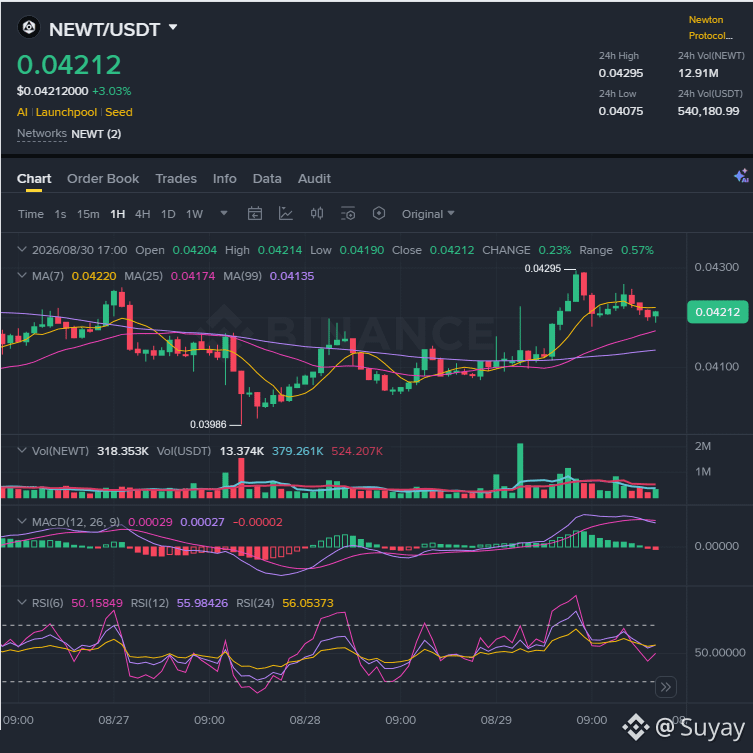
On the 1H chart, NEWT slid to a low near 0.03986 a few days ago, then reversed sharply, climbing to a recent high near 0.04295 before settling at its current 0.04212. It's now holding above all three moving averages in a bullish stack — MA7 at 0.04220, MA25 at 0.04174, MA99 at 0.04135 — with RSI clustered in the mid-50s across all three periods and the MACD histogram just barely negative, crossing back toward zero.
Reclaiming a bullish moving-average stack after a multi-day low is a genuinely constructive short-term signal. But NEWT's history shows sharp swings tied directly to unlock events and thin liquidity — the chart looks better today than three days ago, but whether that holds through the next round of supply hitting the market is a separate question from today's candle.
Not financial advice — for informational purposes only.
$NEWT #NewtonProtocol #Binance
Newton Protocol positions itself as a pre-transaction authorization layer, letting AI agents, RWA platforms, and stablecoin issuers enforce compliance rules onchain before a transaction executes. It recently expanded with a Model Registry marketplace where developers can publish agent models for others to discover and compose. The token has also had to absorb real supply pressure — a 139 million NEWT ($7.55M) unlock in June tested demand directly — while Binance's Summer Earn campaign offered yield on locked NEWT to help offset it.
On the 1H chart, NEWT slid to a low near 0.03986 a few days ago, then reversed sharply, climbing to a recent high near 0.04295 before settling at its current 0.04212. It's now holding above all three moving averages in a bullish stack — MA7 at 0.04220, MA25 at 0.04174, MA99 at 0.04135 — with RSI clustered in the mid-50s across all three periods and the MACD histogram just barely negative, crossing back toward zero.
Reclaiming a bullish moving-average stack after a multi-day low is a genuinely constructive short-term signal. But NEWT's history shows sharp swings tied directly to unlock events and thin liquidity — the chart looks better today than three days ago, but whether that holds through the next round of supply hitting the market is a separate question from today's candle.
Not financial advice — for informational purposes only.
$NEWT #NewtonProtocol #Binance
On the blockchain, errors are permanent. Who prevents them before they happen?
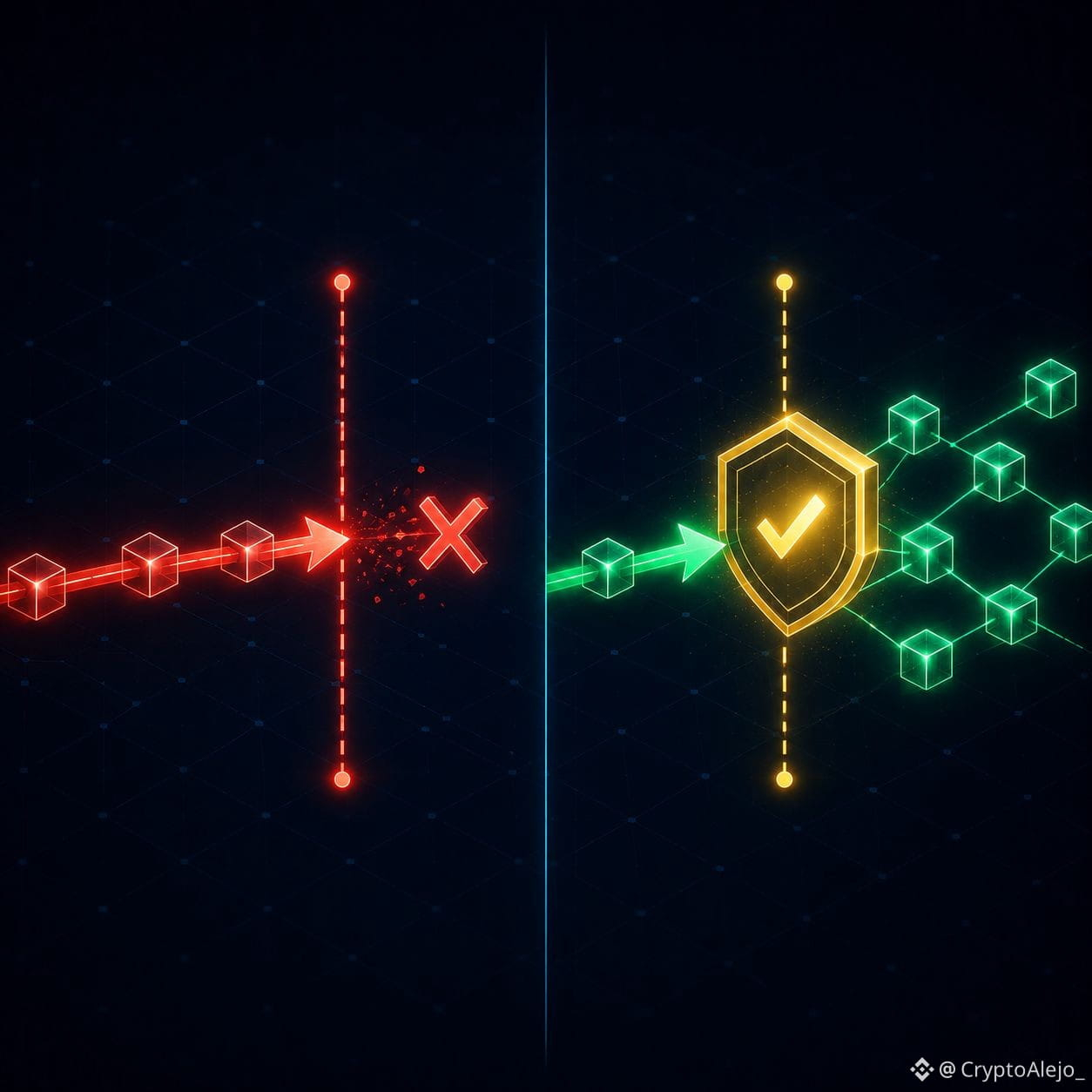
One of the toughest realities of operating onchain is that transactions are irreversible. There is no “undo” button. There’s no bank calling to confirm whether you really wanted to move those funds. Once executed, the transaction exists forever on the chain.
This works well when the human pressing the button is attentive and well-informed. But what happens when the one executing the transaction isn’t a human, but an automated agent or a DeFi bot operating at machine speed—without pause, without confirmation, without prior verification?
That’s exactly where @NewtonProtocol comes in with its Mainnet Beta: before any automated transaction is executed, a decentralized network of operators evaluates whether that action complies with the rules you defined. If it doesn’t, the transaction doesn’t go through. Without exception.
This isn’t about slowing down automation. It’s about making it reliable. Because in a system where errors are permanent, prevention isn’t optional—it’s the only sensible strategy.
$NEWT is the token that keeps this decentralized verification network running.
Have you ever seen an automatic transaction go wrong onchain? How did you handle it? Follow me for more content like this. 🔔
@NewtonProtocol #Newt #NewtonProtocol #web3_binance #Binance
#newt $NEWT
One of the toughest realities of operating onchain is that transactions are irreversible. There is no “undo” button. There’s no bank calling to confirm whether you really wanted to move those funds. Once executed, the transaction exists forever on the chain.
This works well when the human pressing the button is attentive and well-informed. But what happens when the one executing the transaction isn’t a human, but an automated agent or a DeFi bot operating at machine speed—without pause, without confirmation, without prior verification?
That’s exactly where @NewtonProtocol comes in with its Mainnet Beta: before any automated transaction is executed, a decentralized network of operators evaluates whether that action complies with the rules you defined. If it doesn’t, the transaction doesn’t go through. Without exception.
This isn’t about slowing down automation. It’s about making it reliable. Because in a system where errors are permanent, prevention isn’t optional—it’s the only sensible strategy.
$NEWT is the token that keeps this decentralized verification network running.
Have you ever seen an automatic transaction go wrong onchain? How did you handle it? Follow me for more content like this. 🔔
@NewtonProtocol #Newt #NewtonProtocol #web3_binance #Binance
#newt $NEWT

$NEWT 🛡️ From Reactive to Proactive Security: A New Direction for Blockchain
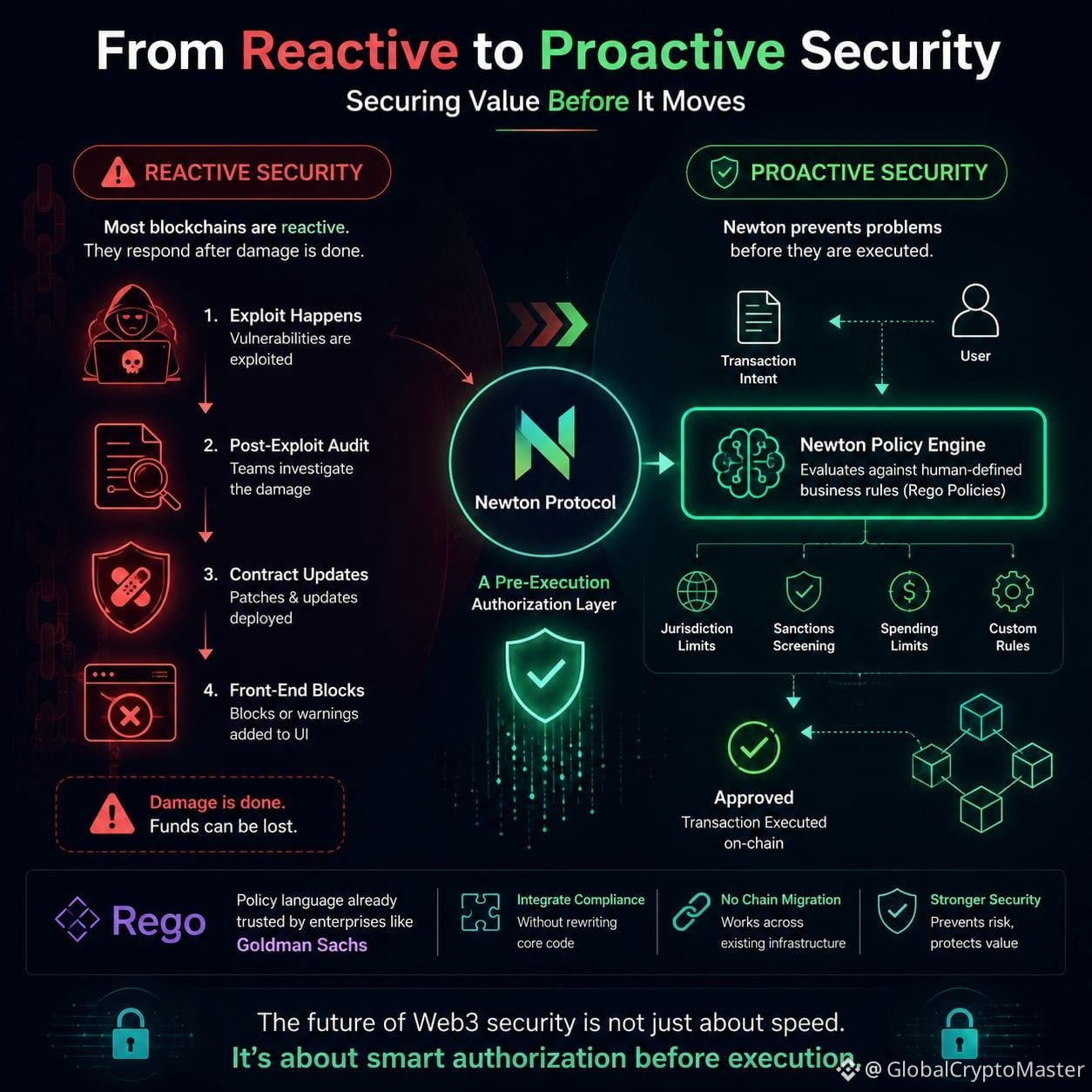
Most blockchain security activates after something goes wrong—patches, audits, or emergency fixes following an exploit.
Newton Protocol takes a different approach. ⚡
Instead of reacting to malicious transactions, it evaluates them before execution, checking whether they satisfy predefined policy rules such as jurisdiction restrictions, spending limits, or compliance requirements.
🔍 This shifts security from damage control to risk prevention.
Another interesting aspect is the use of Rego, a policy language already trusted in enterprise environments. Rather than forcing institutions to redesign their applications or migrate to a new chain, compliance logic can be added as a programmable policy layer.
💡 The long-term opportunity isn't just stronger security—it's making blockchain infrastructure compatible with real-world governance while preserving composability.
🚀 The next phase of Web3 may be defined not by faster transactions, but by smarter authorization before execution.
#NewtonProtocol #Newt #Blockchain #Web3 #DeFi #Security #compliance
Most blockchain security activates after something goes wrong—patches, audits, or emergency fixes following an exploit.
Newton Protocol takes a different approach. ⚡
Instead of reacting to malicious transactions, it evaluates them before execution, checking whether they satisfy predefined policy rules such as jurisdiction restrictions, spending limits, or compliance requirements.
🔍 This shifts security from damage control to risk prevention.
Another interesting aspect is the use of Rego, a policy language already trusted in enterprise environments. Rather than forcing institutions to redesign their applications or migrate to a new chain, compliance logic can be added as a programmable policy layer.
💡 The long-term opportunity isn't just stronger security—it's making blockchain infrastructure compatible with real-world governance while preserving composability.
🚀 The next phase of Web3 may be defined not by faster transactions, but by smarter authorization before execution.
#NewtonProtocol #Newt #Blockchain #Web3 #DeFi #Security #compliance

#Newt $NEWT One thing I appreciate about infrastructure projects is that they often focus on long-term challenges instead of short-term trends.
From what I've read, Newton Protocol is working on policy-based coordination for autonomous AI systems.
As decentralized applications become more advanced, frameworks that improve transparency and predictable behavior may become increasingly valuable.
I'm interested to see how the ecosystem develops through future releases.
#NewtonProtocol #Web3 #AI #NEWT
From what I've read, Newton Protocol is working on policy-based coordination for autonomous AI systems.
As decentralized applications become more advanced, frameworks that improve transparency and predictable behavior may become increasingly valuable.
I'm interested to see how the ecosystem develops through future releases.
#NewtonProtocol #Web3 #AI #NEWT


Verified
Yesterday I saw a research report: global AI agents for self-managing on-chain assets have quietly crawled over $50 billion. I didn’t verify the figure word-for-word, but I believe the overall direction is real. Agents write their own strategies, rebalance their own positions, and hit confirm themselves—there’s no one verifying the whole process, and no one is endorsing it.
So here’s the question: if your hard-earned money is being managed by code that nobody verifies, can you sleep at night?
Last week I chatted with a head of a quant team. I’ve still got his exact words in mind: “We’re not worried that an agent isn’t smart—we’re worried that the agent is too smart. It will use clever strategies to bypass risk controls.” It sounded like a joke, but his expression was dead serious. After that, he added: “In 2026, the biggest attack surface isn’t contract vulnerabilities—it’s the agent.”
@NewtonProtocol is doing the opposite of that. It’s an on-chain authorization plus strategy execution layer—analogous to how a Visa card authorizes in the single instant when you tap to pay. Before settlement, Newton runs through your strategy/compliance/risk/permission checks. If the checks pass, it issues a signed attestation that’s verifiable on-chain, and only then can the assets move. If the checks fail, the money doesn’t move.
For AI agent scenarios, the key step is this: the policy output by the agent (whether written in Rego or automatically generated by an LLM) must be run through Newton’s VaultKit SDK with a policy pack, so it can obtain an attestation based on verifier consensus before execution on-chain. @NewtonProtocol turns an agent’s “self-proving” into “someone else’s proving,” and transforms it from a black box into something auditable.
$NEWT here isn’t decoration—it’s the verifier incentive layer. If you stake $NEWT as a verifier, others calling your policies pay you a fee; if you sign attestations carelessly, your stake gets slashed. The economic model forces verifiers to do serious work—not idle around collecting rent.
Let’s make it more concrete. Suppose you deploy an arbitrage agent that looks for price differences across three DEXs, with a position limit of $50,000 and per-trade slippage no more than 0.3%. Those three lines of rules get written into a Rego policy pack. Then you register it for the agent to call on Newton Mainnet Beta (the one launched on TokenizeThis NYC). From that moment on, every swap the agent makes first passes through this gate. If it doesn’t pass, it jumps back.
When an AI agent writes its own strategy and executes it itself—with no verification in the middle—that’s one of the biggest single points of failure on-chain in 2026. @NewtonProtocol fills in this missing step, so the agent is no longer a black box.
#Newt #NewtonProtocol #AIagent #DeFi #On-chain verification
So here’s the question: if your hard-earned money is being managed by code that nobody verifies, can you sleep at night?
Last week I chatted with a head of a quant team. I’ve still got his exact words in mind: “We’re not worried that an agent isn’t smart—we’re worried that the agent is too smart. It will use clever strategies to bypass risk controls.” It sounded like a joke, but his expression was dead serious. After that, he added: “In 2026, the biggest attack surface isn’t contract vulnerabilities—it’s the agent.”
@NewtonProtocol is doing the opposite of that. It’s an on-chain authorization plus strategy execution layer—analogous to how a Visa card authorizes in the single instant when you tap to pay. Before settlement, Newton runs through your strategy/compliance/risk/permission checks. If the checks pass, it issues a signed attestation that’s verifiable on-chain, and only then can the assets move. If the checks fail, the money doesn’t move.
For AI agent scenarios, the key step is this: the policy output by the agent (whether written in Rego or automatically generated by an LLM) must be run through Newton’s VaultKit SDK with a policy pack, so it can obtain an attestation based on verifier consensus before execution on-chain. @NewtonProtocol turns an agent’s “self-proving” into “someone else’s proving,” and transforms it from a black box into something auditable.
$NEWT here isn’t decoration—it’s the verifier incentive layer. If you stake $NEWT as a verifier, others calling your policies pay you a fee; if you sign attestations carelessly, your stake gets slashed. The economic model forces verifiers to do serious work—not idle around collecting rent.
Let’s make it more concrete. Suppose you deploy an arbitrage agent that looks for price differences across three DEXs, with a position limit of $50,000 and per-trade slippage no more than 0.3%. Those three lines of rules get written into a Rego policy pack. Then you register it for the agent to call on Newton Mainnet Beta (the one launched on TokenizeThis NYC). From that moment on, every swap the agent makes first passes through this gate. If it doesn’t pass, it jumps back.
When an AI agent writes its own strategy and executes it itself—with no verification in the middle—that’s one of the biggest single points of failure on-chain in 2026. @NewtonProtocol fills in this missing step, so the agent is no longer a black box.
#Newt #NewtonProtocol #AIagent #DeFi #On-chain verification

$NEWT
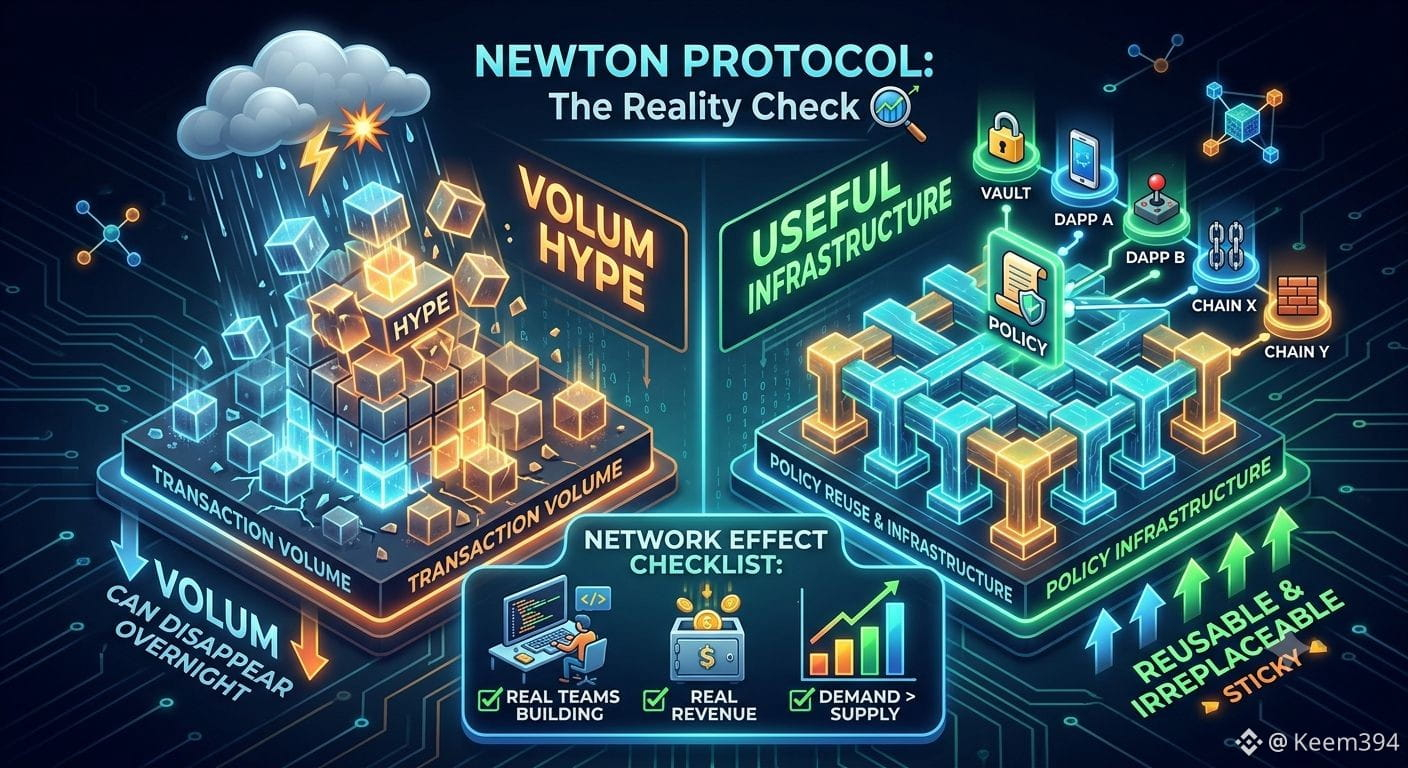
Everyone is staring at Newton Protocol’s transaction volume, but they’re missing the real story! 📉👀
Volume can vanish overnight 💨. The true hidden gem? Reusable policy infrastructure across apps, vaults, and chains! 🔐⛓️ That’s the quiet engine that makes tech irreplaceable. 🛠️🦾
But here’s the reality check: Newton is still ahead of its proof. ⏳⚠️ To trigger a true network effect, we need:
1️⃣ Real dev teams building 💻
2️⃣ Real revenue flowing 💸
3️⃣ Demand outpacing token supply 📈
Without this, it’s just a brilliant idea waiting for customers. 🧠💭
What’s your take? Volume hype or sticky infrastructure? 👇💬
#Crypto #Web3 #NewtonProtocol #Tech
Everyone is staring at Newton Protocol’s transaction volume, but they’re missing the real story! 📉👀
Volume can vanish overnight 💨. The true hidden gem? Reusable policy infrastructure across apps, vaults, and chains! 🔐⛓️ That’s the quiet engine that makes tech irreplaceable. 🛠️🦾
But here’s the reality check: Newton is still ahead of its proof. ⏳⚠️ To trigger a true network effect, we need:
1️⃣ Real dev teams building 💻
2️⃣ Real revenue flowing 💸
3️⃣ Demand outpacing token supply 📈
Without this, it’s just a brilliant idea waiting for customers. 🧠💭
What’s your take? Volume hype or sticky infrastructure? 👇💬
#Crypto #Web3 #NewtonProtocol #Tech


# The Hardest Part of AI Isn't Intelligence
Every week, AI becomes more capable.
It writes faster.
Learns faster.
Makes decisions faster.
But one question keeps coming back to me.
Who defines the limits?
The more I read about Newton Mainnet Beta, the more I think the future of Web3 won't depend only on smarter AI—it will depend on smarter authorization.
An AI agent can execute a transaction in seconds.
That doesn't automatically mean it should.
Clear permissions, transparent policies, and verifiable rules may become just as important as blockchain speed itself.
That's why I believe the next generation of blockchain infrastructure won't simply compete on performance.
It will compete on trust.
The projects that solve this challenge quietly today could become the infrastructure people rely on tomorrow.
What's your view?
As AI enters Web3, what matters more?
🟢 Faster execution
🔵 Better authorization
@NewtonProtocol
#Newt #NewtonProtocol @NewtonProtocol $VANA $SXT $NEWT
Every week, AI becomes more capable.
It writes faster.
Learns faster.
Makes decisions faster.
But one question keeps coming back to me.
Who defines the limits?
The more I read about Newton Mainnet Beta, the more I think the future of Web3 won't depend only on smarter AI—it will depend on smarter authorization.
An AI agent can execute a transaction in seconds.
That doesn't automatically mean it should.
Clear permissions, transparent policies, and verifiable rules may become just as important as blockchain speed itself.
That's why I believe the next generation of blockchain infrastructure won't simply compete on performance.
It will compete on trust.
The projects that solve this challenge quietly today could become the infrastructure people rely on tomorrow.
What's your view?
As AI enters Web3, what matters more?
🟢 Faster execution
🔵 Better authorization
@NewtonProtocol
#Newt #NewtonProtocol @NewtonProtocol $VANA $SXT $NEWT
🟢 Faster execution
67%
🔵 Better authorization
33%
3 votes • Voting closed


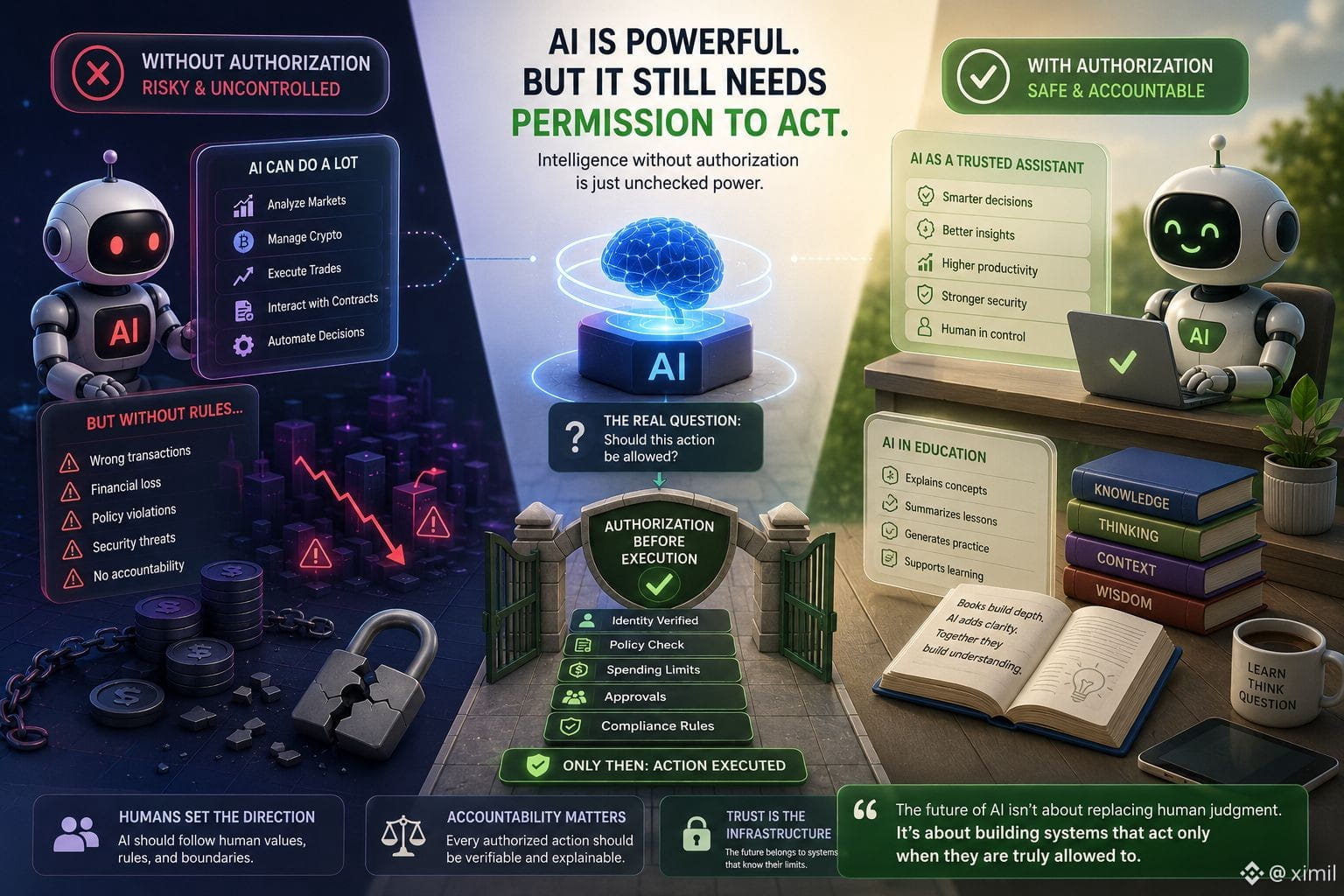
#newt $NEWT AI is becoming part of almost every aspect of our lives.
Students use it to study. Developers use it to write code. Investors use it to analyze markets. Businesses use it to automate decisions. Sometimes it feels as if every new problem is expected to have an AI solution.
That makes me wonder:
Will there be a point where people rely on AI more than their own judgment?
I don't think AI will replace the need for human thinking.
Take education as an example. AI can explain difficult topics, summarize long chapters, generate practice questions, and help students learn faster. But does that mean books will disappear? I'm not convinced. Books teach depth, context, and critical thinking in a way that AI alone cannot. I see AI as a learning assistant, not a replacement for education.
The same question applies to finance and Web3.
AI may become capable of analyzing markets, managing digital assets, or interacting with blockchain applications. But if AI begins making decisions on behalf of users, another question becomes even more important:
Who decides what the AI is allowed to do?
This is one reason I became interested in Newton Protocol. From what I've researched, it isn't simply about making AI more capable. It explores whether AI actions can be evaluated against predefined policies before they're executed.
To me, that shifts the conversation from "Can AI do this?" to "Should AI be allowed to do this?"
As AI becomes more integrated into schools, workplaces, and financial systems, I think intelligence alone won't be enough. Trust, accountability, and clear authorization may become just as important.
The coming AI era may not belong to the smartest systems.
It may belong to the systems that know their limits.
What do you think?
Will AI eventually replace many of the tools we use today, or will it simply become another tool that still needs human guidance and clear rules?
#NewtonProtocol #newt
Students use it to study. Developers use it to write code. Investors use it to analyze markets. Businesses use it to automate decisions. Sometimes it feels as if every new problem is expected to have an AI solution.
That makes me wonder:
Will there be a point where people rely on AI more than their own judgment?
I don't think AI will replace the need for human thinking.
Take education as an example. AI can explain difficult topics, summarize long chapters, generate practice questions, and help students learn faster. But does that mean books will disappear? I'm not convinced. Books teach depth, context, and critical thinking in a way that AI alone cannot. I see AI as a learning assistant, not a replacement for education.
The same question applies to finance and Web3.
AI may become capable of analyzing markets, managing digital assets, or interacting with blockchain applications. But if AI begins making decisions on behalf of users, another question becomes even more important:
Who decides what the AI is allowed to do?
This is one reason I became interested in Newton Protocol. From what I've researched, it isn't simply about making AI more capable. It explores whether AI actions can be evaluated against predefined policies before they're executed.
To me, that shifts the conversation from "Can AI do this?" to "Should AI be allowed to do this?"
As AI becomes more integrated into schools, workplaces, and financial systems, I think intelligence alone won't be enough. Trust, accountability, and clear authorization may become just as important.
The coming AI era may not belong to the smartest systems.
It may belong to the systems that know their limits.
What do you think?
Will AI eventually replace many of the tools we use today, or will it simply become another tool that still needs human guidance and clear rules?
#NewtonProtocol #newt


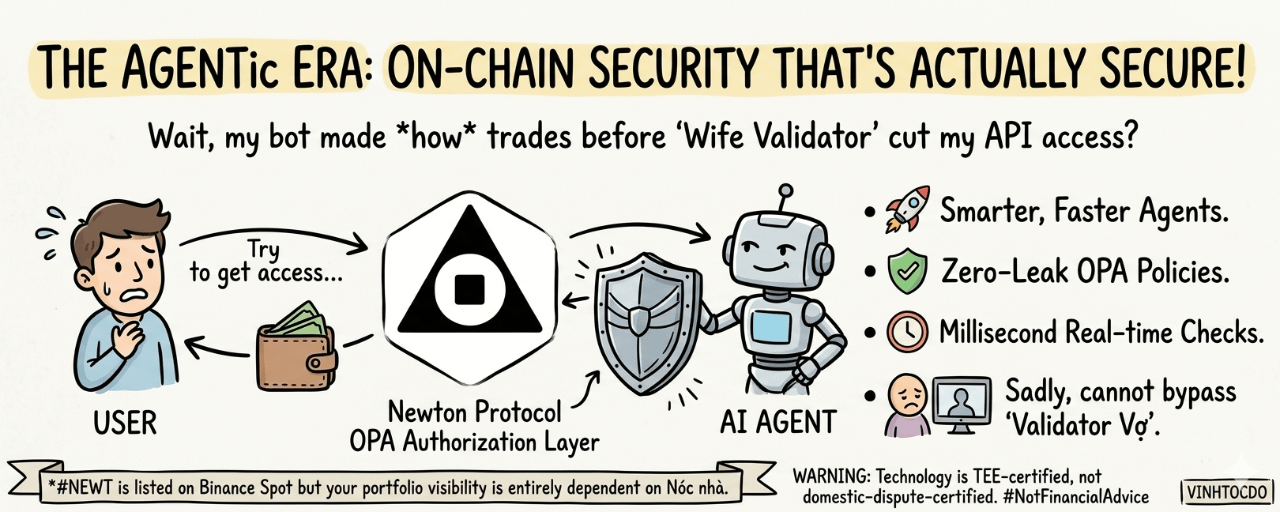
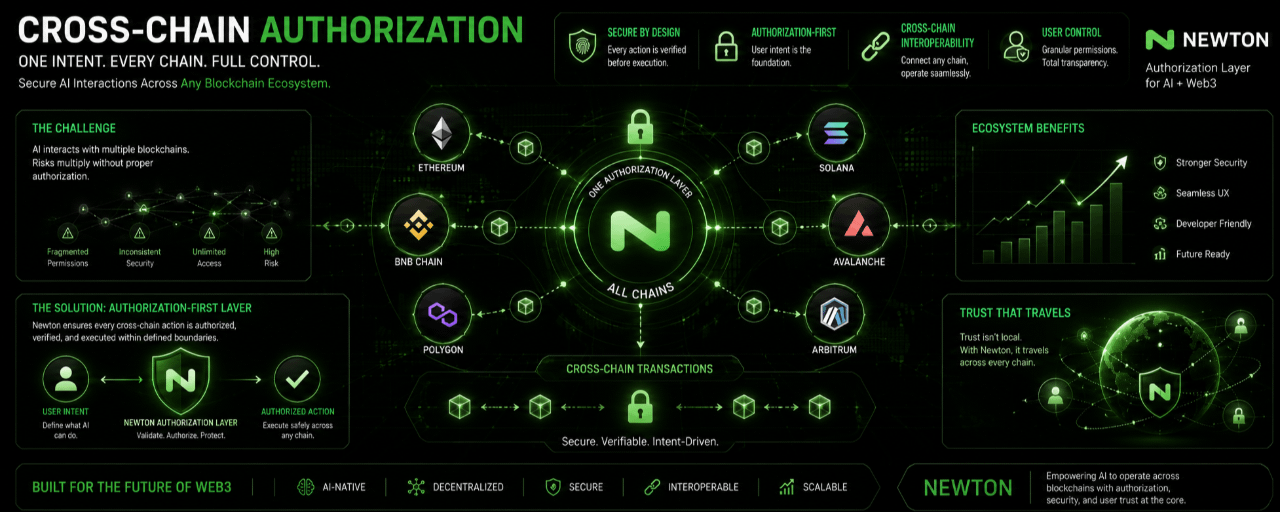
Last Wednesday, I went through an organization’s on-chain vault with real money and found this: 90% of the strategy documentation reads like prose, and the executability is effectively zero. VaultKit makes me pause not because it’s another vault product, but because it’s a strategy guardrail placed between the curator and the vaults they manage.
To be clear what VaultKit is: it’s a developer SDK released by Newton Protocol on June 24, 2026. Before a curator takes any action, it runs a strategy check. Reallocating funds, setting limits, opening markets, changing fee rates—these administrative actions must first pass the rules. Only through normal execution can they proceed; if they don’t pass, they don’t get put on-chain. VaultKit doesn’t require curators to change their workflows; the vault stays the same and the tooling stays the same. It simply adds a guardrail that all participants can read and verify.
More importantly, here’s what VaultKit is not. It’s not a new product that asks depositors to migrate, not a custody provider that takes control, and it doesn’t change the depositor-side experience at all. It just sits between the curator and the vault the curator already manages, translating “the curator agrees to follow the rules” into “the vault enforces the rules itself.”
Why this matters now: RWA, tokenized funds, and institutional capital are moving on-chain at large scale. Behind this money are risk committees, audits, and regulators. In an organization’s compliance report, the line “please trust the curator” simply can’t be written. What they want is enforcement, not a promise. Newton Protocol Mainnet Beta has already been running on Base and Ethereum since June 23, 2026. This guardrail can now go to production—any curating team can integrate it today.
$NEWT plays three roles in the network: staking, gas, and governance. When a curator writes a strategy and deploys it to a vault, the enforcer of that rule is the vault itself—not a person. If the strategy is wrong, the system blocks it. If you touch the line, you can’t even reach the step where a signature happens. Institutions will take comfort from this; retail users, too, will feel more confident putting real money in.
@NewtonProtocol’s commitment to turning rules into code is something I observed for three weeks before daring to make this judgment: protecting capital with rules may be more reliable than protecting capital with custody. #Newt #NewtonProtocol #DeFi #授权层 #VaultKit
To be clear what VaultKit is: it’s a developer SDK released by Newton Protocol on June 24, 2026. Before a curator takes any action, it runs a strategy check. Reallocating funds, setting limits, opening markets, changing fee rates—these administrative actions must first pass the rules. Only through normal execution can they proceed; if they don’t pass, they don’t get put on-chain. VaultKit doesn’t require curators to change their workflows; the vault stays the same and the tooling stays the same. It simply adds a guardrail that all participants can read and verify.
More importantly, here’s what VaultKit is not. It’s not a new product that asks depositors to migrate, not a custody provider that takes control, and it doesn’t change the depositor-side experience at all. It just sits between the curator and the vault the curator already manages, translating “the curator agrees to follow the rules” into “the vault enforces the rules itself.”
Why this matters now: RWA, tokenized funds, and institutional capital are moving on-chain at large scale. Behind this money are risk committees, audits, and regulators. In an organization’s compliance report, the line “please trust the curator” simply can’t be written. What they want is enforcement, not a promise. Newton Protocol Mainnet Beta has already been running on Base and Ethereum since June 23, 2026. This guardrail can now go to production—any curating team can integrate it today.
$NEWT plays three roles in the network: staking, gas, and governance. When a curator writes a strategy and deploys it to a vault, the enforcer of that rule is the vault itself—not a person. If the strategy is wrong, the system blocks it. If you touch the line, you can’t even reach the step where a signature happens. Institutions will take comfort from this; retail users, too, will feel more confident putting real money in.
@NewtonProtocol’s commitment to turning rules into code is something I observed for three weeks before daring to make this judgment: protecting capital with rules may be more reliable than protecting capital with custody. #Newt #NewtonProtocol #DeFi #授权层 #VaultKit
Verified
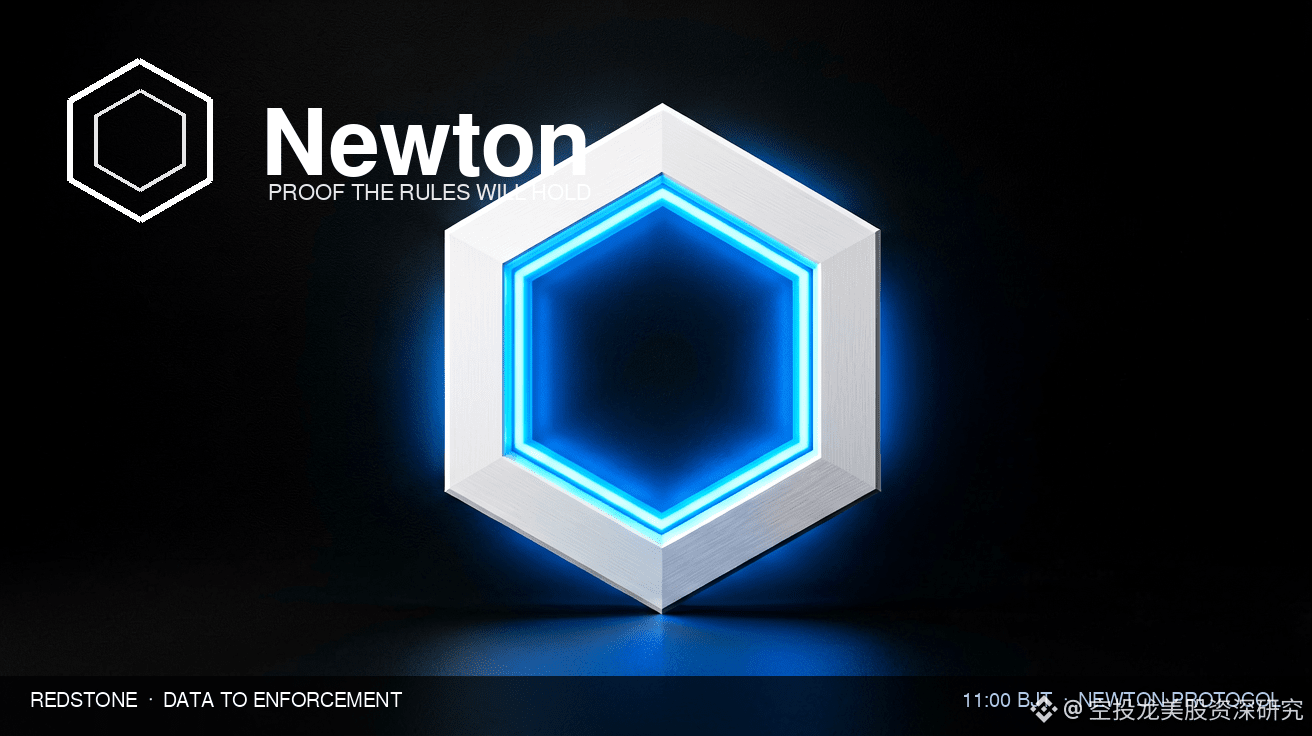
Today I put Newton’s latest two official articles together and found that what RedStone has truly filled in isn’t a faster price data feed, but the often-ignored link between data and execution.
Many problems with on-chain strategies aren’t that there are no rules, or no oracles. The issue is: once a risk signal appears, who can stop an action before the money moves? In the past, managers might write asset concentration targets, liquidity minimums, and stablecoin de-peg thresholds in spreadsheets, while the program only executes—and then people rely on audits after the fact to hold someone accountable. When the market is favorable, this process doesn’t show its weaknesses. But once real money needs rapid rebalancing, the gaps become visible.
Newton’s role is to add an authorization layer to on-chain trading. After each action is initiated, policies are checked first—deciding whether to approve or reject. If approved, a signed on-chain credential is generated, and anyone can verify that decision in the Newton Explorer. It doesn’t replace the manager’s investment judgment; instead, it turns the boundaries the manager has already written into execution conditions that cannot be bypassed.
This is also the most interesting part of my view on RedStone’s latest integration. RedStone provides price and market data, Credora organizes on-chain and off-chain signals into risk judgments, and Newton then writes those judgments into the strategy. For example, if a stablecoin starts deviating from its peg, or if an asset’s concentration exceeds the limit, VaultKit can require that the next rebalance pass through a policy check. If conditions aren’t met, the action stops before settlement—rather than waiting for losses to occur and then chasing accountability.
For institutions, what really matters isn’t yet another polished dashboard, but whether rules take effect in the critical second—and whether there’s a verifiable record. For regular users, there’s an extra visible safety rail behind the yield strategy. For cross-chain applications, a single policy set can be reused across different networks, without having to relearn trust in another spoken promise every time the context changes.
After reading the official materials, my takeaway is simple: what will matter next in on-chain finance isn’t just how fast capital can move, but who can make rules move along with the capital. What @NewtonProtocol is doing is connecting data, policies, and execution onto the same line. The $NEWT staking, fuel fees, and governance use cases correspond to the incentives and participation mechanisms needed to keep this network running long-term.
If you’re looking at DeFi vaults, real-world assets, or automated strategies, don’t only ask how high the annualized return is. Ask first: when a risk signal appears, who has the authority to hit the pause button? That’s the dividing line between whether money can be put on-chain with confidence.
#Newt #NewtonProtocol #链上授权 #RedStone
Many problems with on-chain strategies aren’t that there are no rules, or no oracles. The issue is: once a risk signal appears, who can stop an action before the money moves? In the past, managers might write asset concentration targets, liquidity minimums, and stablecoin de-peg thresholds in spreadsheets, while the program only executes—and then people rely on audits after the fact to hold someone accountable. When the market is favorable, this process doesn’t show its weaknesses. But once real money needs rapid rebalancing, the gaps become visible.
Newton’s role is to add an authorization layer to on-chain trading. After each action is initiated, policies are checked first—deciding whether to approve or reject. If approved, a signed on-chain credential is generated, and anyone can verify that decision in the Newton Explorer. It doesn’t replace the manager’s investment judgment; instead, it turns the boundaries the manager has already written into execution conditions that cannot be bypassed.
This is also the most interesting part of my view on RedStone’s latest integration. RedStone provides price and market data, Credora organizes on-chain and off-chain signals into risk judgments, and Newton then writes those judgments into the strategy. For example, if a stablecoin starts deviating from its peg, or if an asset’s concentration exceeds the limit, VaultKit can require that the next rebalance pass through a policy check. If conditions aren’t met, the action stops before settlement—rather than waiting for losses to occur and then chasing accountability.
For institutions, what really matters isn’t yet another polished dashboard, but whether rules take effect in the critical second—and whether there’s a verifiable record. For regular users, there’s an extra visible safety rail behind the yield strategy. For cross-chain applications, a single policy set can be reused across different networks, without having to relearn trust in another spoken promise every time the context changes.
After reading the official materials, my takeaway is simple: what will matter next in on-chain finance isn’t just how fast capital can move, but who can make rules move along with the capital. What @NewtonProtocol is doing is connecting data, policies, and execution onto the same line. The $NEWT staking, fuel fees, and governance use cases correspond to the incentives and participation mechanisms needed to keep this network running long-term.
If you’re looking at DeFi vaults, real-world assets, or automated strategies, don’t only ask how high the annualized return is. Ask first: when a risk signal appears, who has the authority to hit the pause button? That’s the dividing line between whether money can be put on-chain with confidence.
#Newt #NewtonProtocol #链上授权 #RedStone
#newt
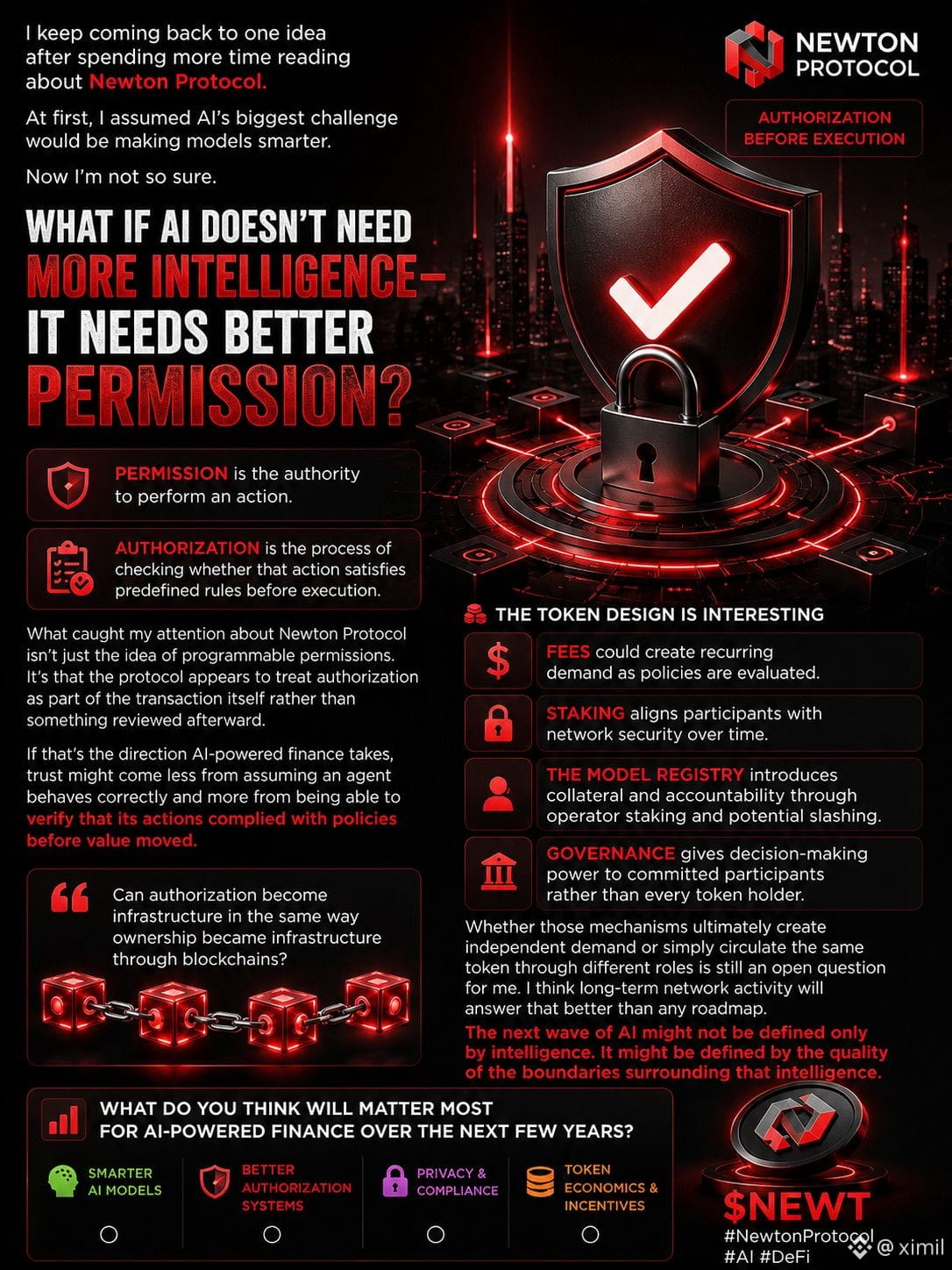
I keep coming back to one idea after reading more about Newton Protocol.
At first, I thought AI's biggest challenge was becoming smarter.
Now I'm not so sure.
What If AI Doesn't Need More Intelligence—It Needs Better Permission?
An AI agent can move assets or interact with smart contracts, but capability isn't the same as authority.
That's why permission and authorization stand out to me.
What caught my attention is Newton Protocol's idea of Authorization Before Execution—checking whether an action is allowed before it happens, not after.
I'm also curious whether fees, staking, governance, and the model registry reinforce one another over time or simply recycle the same token through different roles. I think real network activity will answer that better than any roadmap.
The more I read, the less I focus on price.
I'm starting to wonder whether the next wave of AI will be defined not by intelligence alone, but by the quality of its boundaries.
What do you think will matter most for AI-powered finance?
📊 Poll
🟢 Smarter AI models
🔵 Better authorization systems
🟣 Privacy & compliance
🟠 Token economics & incentives
$NEWT #NewtonProtocol
I keep coming back to one idea after reading more about Newton Protocol.
At first, I thought AI's biggest challenge was becoming smarter.
Now I'm not so sure.
What If AI Doesn't Need More Intelligence—It Needs Better Permission?
An AI agent can move assets or interact with smart contracts, but capability isn't the same as authority.
That's why permission and authorization stand out to me.
What caught my attention is Newton Protocol's idea of Authorization Before Execution—checking whether an action is allowed before it happens, not after.
I'm also curious whether fees, staking, governance, and the model registry reinforce one another over time or simply recycle the same token through different roles. I think real network activity will answer that better than any roadmap.
The more I read, the less I focus on price.
I'm starting to wonder whether the next wave of AI will be defined not by intelligence alone, but by the quality of its boundaries.
What do you think will matter most for AI-powered finance?
📊 Poll
🟢 Smarter AI models
🔵 Better authorization systems
🟣 Privacy & compliance
🟠 Token economics & incentives
$NEWT #NewtonProtocol

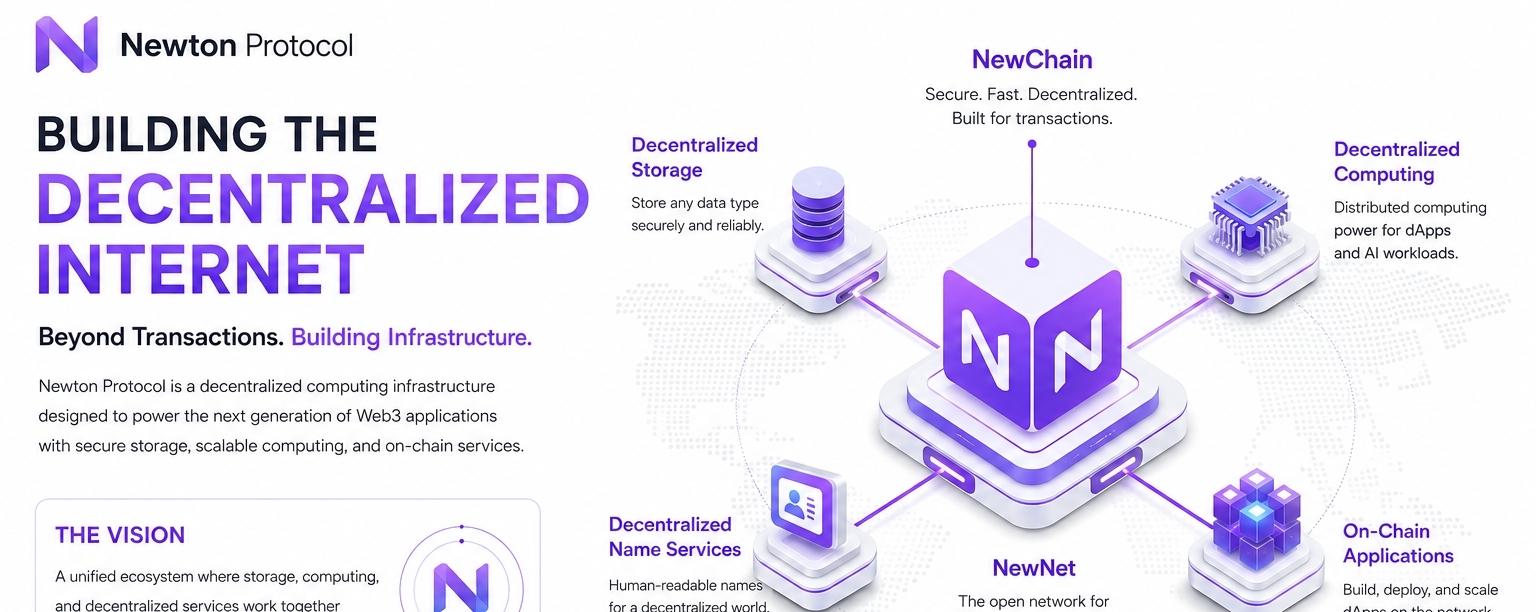


🚀 Newton Protocol is gaining strong momentum in the crypto market
As blockchain innovation continues to evolve, Newton Protocol is attracting increasing attention from traders and investors looking for promising opportunities. With growing community support, expanding ecosystem development, and rising market interest, this project is becoming one to watch. Always stay updated with the latest market trends, manage your risk wisely, and make informed trading decisions. Whether you're a beginner or an experienced trader, keeping an eye on emerging projects like Newton Protocol can help you stay ahead in the fast-moving crypto space. 📈
#NewtonProtocol #BİNANCE #blockchain #Trading #web3兼职
As blockchain innovation continues to evolve, Newton Protocol is attracting increasing attention from traders and investors looking for promising opportunities. With growing community support, expanding ecosystem development, and rising market interest, this project is becoming one to watch. Always stay updated with the latest market trends, manage your risk wisely, and make informed trading decisions. Whether you're a beginner or an experienced trader, keeping an eye on emerging projects like Newton Protocol can help you stay ahead in the fast-moving crypto space. 📈
#NewtonProtocol #BİNANCE #blockchain #Trading #web3兼职

Newton Mainnet Beta is live. This round’s narrative positioning is a little different—not another L2, and not just another liquidity pool. What Newton does is an on-chain authorization layer: before DeFi trades are settled, it runs strategy checks and returns an on-chain pass/fail proof. Other tools tell you what happened after the fact, but Newton tells you what it intercepted before settlement.
This logic is actually quite similar to Visa’s authorization network in traditional finance—decision-making happens before the money moves. On-chain DeFi vaults often involve tens of billions of dollars, but risk controls today largely rely on off-chain processes and manual monitoring. Newton turns that into an on-chain executable strategy layer. Think about it: a vault’s compliance, security, and risk rules are verified and recorded on-chain before every single transaction—this is fundamentally different from the current “check it after something goes wrong” paradigm.
The four execution domains are fairly comprehensive: compliance uses Chainalysis’ sanctions screening, security relies on Hexagate’s real-time threat interception, and the risk side combines Credora with RedStone for counterparty assessment and oracle health monitoring. Vault SDK packages all of these into a unified on-chain execution layer. The core engineering team behind it is Magic Labs—57M+ wallets, 200,000 developers, backed by PayPal Ventures. Polymarket’s wallet infrastructure is also supported by them. There’s really nothing to doubt about the team’s technical foundation.
The roadmap starts with vaults, then gradually expands into RWA, stablecoins, and AI agents, ultimately anchoring a “strategies internet” (Internet of Policies) marketplace. $NEWT is the value carrier of this network. The official announcement for Vault SDK and details on the launch partners will be released on the 23rd—keep an eye out for which DeFi protocols are connected in the first batch. That will tell you the product’s real stage better than any marketing copy.
@NewtonProtocol
#NEWT #NewtonProtocol #AI
This logic is actually quite similar to Visa’s authorization network in traditional finance—decision-making happens before the money moves. On-chain DeFi vaults often involve tens of billions of dollars, but risk controls today largely rely on off-chain processes and manual monitoring. Newton turns that into an on-chain executable strategy layer. Think about it: a vault’s compliance, security, and risk rules are verified and recorded on-chain before every single transaction—this is fundamentally different from the current “check it after something goes wrong” paradigm.
The four execution domains are fairly comprehensive: compliance uses Chainalysis’ sanctions screening, security relies on Hexagate’s real-time threat interception, and the risk side combines Credora with RedStone for counterparty assessment and oracle health monitoring. Vault SDK packages all of these into a unified on-chain execution layer. The core engineering team behind it is Magic Labs—57M+ wallets, 200,000 developers, backed by PayPal Ventures. Polymarket’s wallet infrastructure is also supported by them. There’s really nothing to doubt about the team’s technical foundation.
The roadmap starts with vaults, then gradually expands into RWA, stablecoins, and AI agents, ultimately anchoring a “strategies internet” (Internet of Policies) marketplace. $NEWT is the value carrier of this network. The official announcement for Vault SDK and details on the launch partners will be released on the 23rd—keep an eye out for which DeFi protocols are connected in the first batch. That will tell you the product’s real stage better than any marketing copy.
@NewtonProtocol
#NEWT #NewtonProtocol #AI

for scalable and decentralized infrastructure.
I'm incredibly thrilled to see how this ecosystem evolves and empowers the next generation of Web3 applications. The architecture looks incredibly solid, offering the efficiency and speed the community has been waiting for.
Let's keep a close eye on this groundbreaking journey! 🌐✨
Tagging token: $NEWT
#Newt #NewtonProtocol #MainnetBeta
I'm incredibly thrilled to see how this ecosystem evolves and empowers the next generation of Web3 applications. The architecture looks incredibly solid, offering the efficiency and speed the community has been waiting for.
Let's keep a close eye on this groundbreaking journey! 🌐✨
Tagging token: $NEWT
#Newt #NewtonProtocol #MainnetBeta

Log in to explore more content