
#mi̇ra
mi̇ra
53,164 views
2,250 Discussing
Hot
Latest

·
--
Bullish
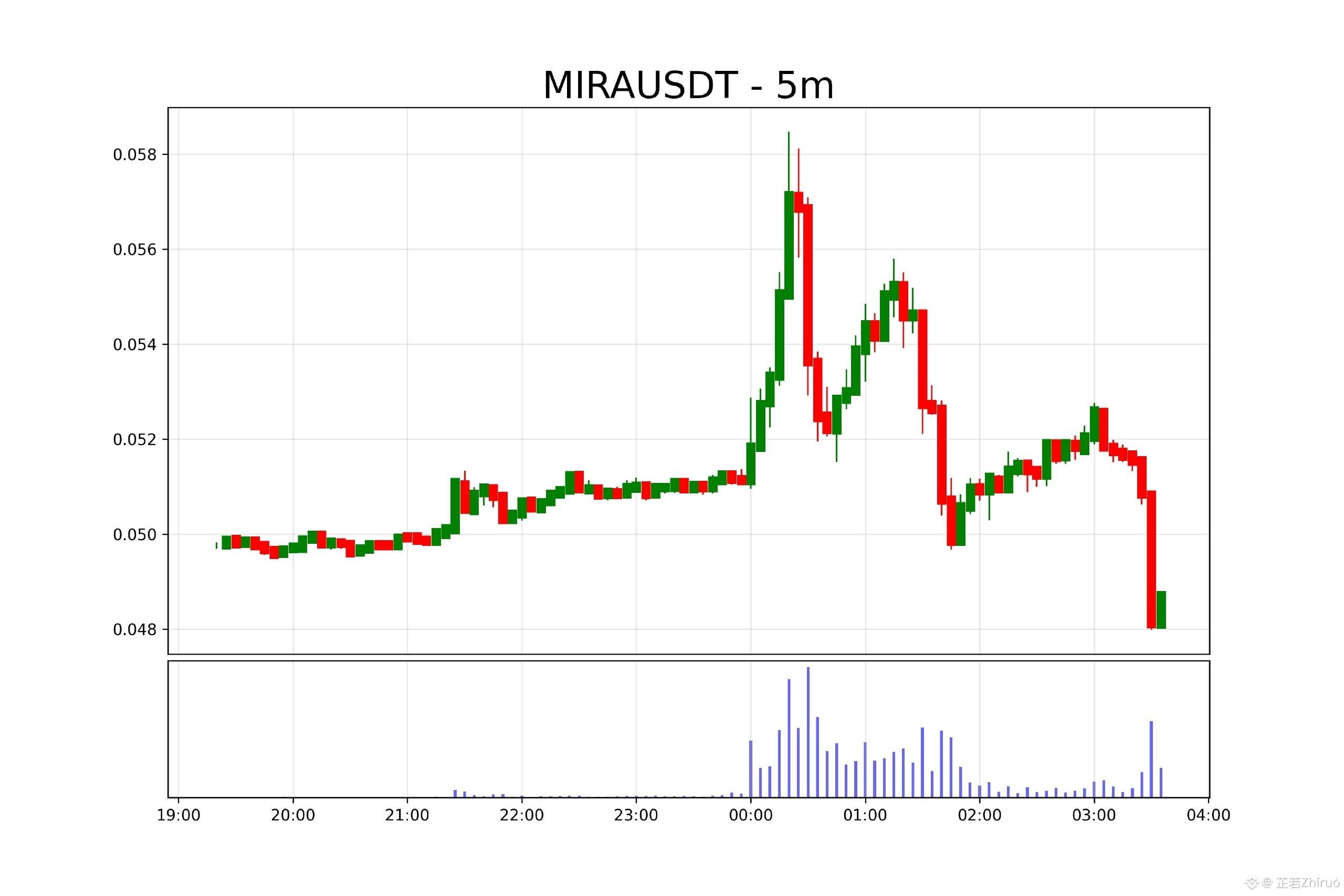
$MIRA USDT is experiencing an aggressive high-volatility liquidity sweep today, displaying intense order book liquidation as heavy market supply cascades through resting bid depth. Driven by a five hundred sixty-seven point seven percent explosion in trading volume, the asset has pulled back five point three one percent in recent price action, even as it maintains a two point nine percent gain over the macro twenty-four-hour timeline with total volume reaching twenty-nine point nine nine million. The immediate price action details a sharp downward contraction, bringing the price to hover around zero point zero four eight one one.
When a sudden drop in short-term price velocity coincides with a massive volume spike near localized range highs, it signals aggressive leverage flushes and short sellers forcefully sweeping through market liquidity. This intense volume expansion confirms massive market participation during the sell-off, though the rapid downward velocity leaves the asset in an overextended state that demands strict risk management.
From an execution standpoint, securing a firm structural footing above the zero point zero four five zero zero support tier is vital for stopping the bleeding and absorbing remaining overhead pressure. If buyers can defend this base and print a sustained push back above the zero point zero five one zero zero resistance level, it opens the pathway for a relief bounce toward higher consolidation nodes. Conversely, a failure to hold immediate support risks a further cascade down into deeper demand territory before establishing a reliable floor.#MİRA
{future}(MIRAUSDT)
$MIRA USDT is experiencing an aggressive high-volatility liquidity sweep today, displaying intense order book liquidation as heavy market supply cascades through resting bid depth. Driven by a five hundred sixty-seven point seven percent explosion in trading volume, the asset has pulled back five point three one percent in recent price action, even as it maintains a two point nine percent gain over the macro twenty-four-hour timeline with total volume reaching twenty-nine point nine nine million. The immediate price action details a sharp downward contraction, bringing the price to hover around zero point zero four eight one one.
When a sudden drop in short-term price velocity coincides with a massive volume spike near localized range highs, it signals aggressive leverage flushes and short sellers forcefully sweeping through market liquidity. This intense volume expansion confirms massive market participation during the sell-off, though the rapid downward velocity leaves the asset in an overextended state that demands strict risk management.
From an execution standpoint, securing a firm structural footing above the zero point zero four five zero zero support tier is vital for stopping the bleeding and absorbing remaining overhead pressure. If buyers can defend this base and print a sustained push back above the zero point zero five one zero zero resistance level, it opens the pathway for a relief bounce toward higher consolidation nodes. Conversely, a failure to hold immediate support risks a further cascade down into deeper demand territory before establishing a reliable floor.#MİRA
When a sudden drop in short-term price velocity coincides with a massive volume spike near localized range highs, it signals aggressive leverage flushes and short sellers forcefully sweeping through market liquidity. This intense volume expansion confirms massive market participation during the sell-off, though the rapid downward velocity leaves the asset in an overextended state that demands strict risk management.
From an execution standpoint, securing a firm structural footing above the zero point zero four five zero zero support tier is vital for stopping the bleeding and absorbing remaining overhead pressure. If buyers can defend this base and print a sustained push back above the zero point zero five one zero zero resistance level, it opens the pathway for a relief bounce toward higher consolidation nodes. Conversely, a failure to hold immediate support risks a further cascade down into deeper demand territory before establishing a reliable floor.#MİRA
188



·
--
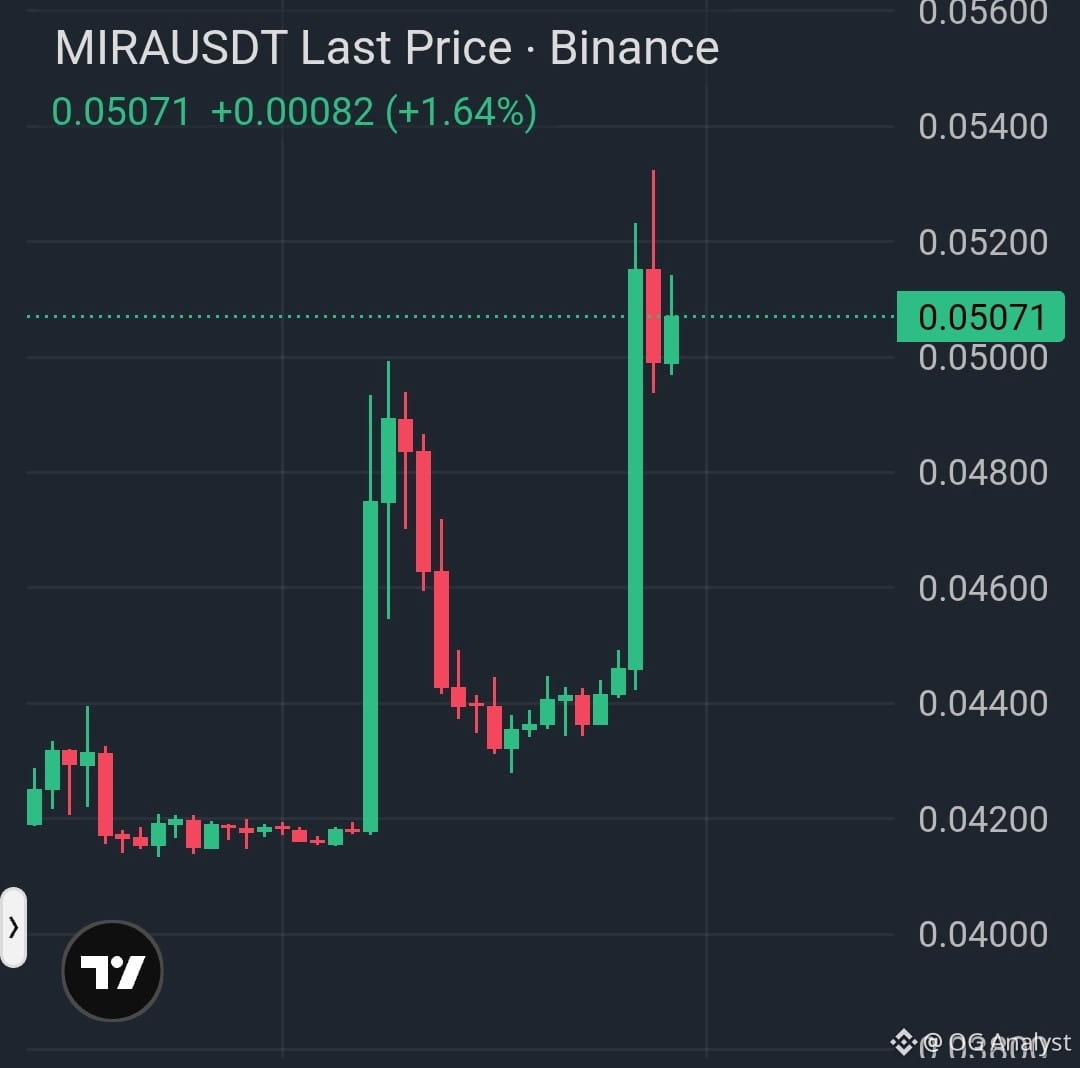
Steady as she goes $MIRA at $0.05071, up +1.64%.
Slowly grinding higher, holding above $0.05 with confidence. The run up to $0.052 shows there's interest building here. Nothing explosive, just quiet accumulation with a positive vibe. 💫
If someone's looking for a patient long-term hold, something that moves with purpose not panic... then #MİRA at this level makes a lot of sense.
$SMCI $ONE
{future}(MIRAUSDT)
{future}(ONEUSDT)
{future}(SMCIUSDT)
Steady as she goes $MIRA at $0.05071, up +1.64%.
Slowly grinding higher, holding above $0.05 with confidence. The run up to $0.052 shows there's interest building here. Nothing explosive, just quiet accumulation with a positive vibe. 💫
If someone's looking for a patient long-term hold, something that moves with purpose not panic... then #MİRA at this level makes a lot of sense.
$SMCI $ONE
Slowly grinding higher, holding above $0.05 with confidence. The run up to $0.052 shows there's interest building here. Nothing explosive, just quiet accumulation with a positive vibe. 💫
If someone's looking for a patient long-term hold, something that moves with purpose not panic... then #MİRA at this level makes a lot of sense.
$SMCI $ONE
1
369

·
--
🔻 $MIRA A Short Trade Signal | Bears Looking for a Deeper Pullback 📉
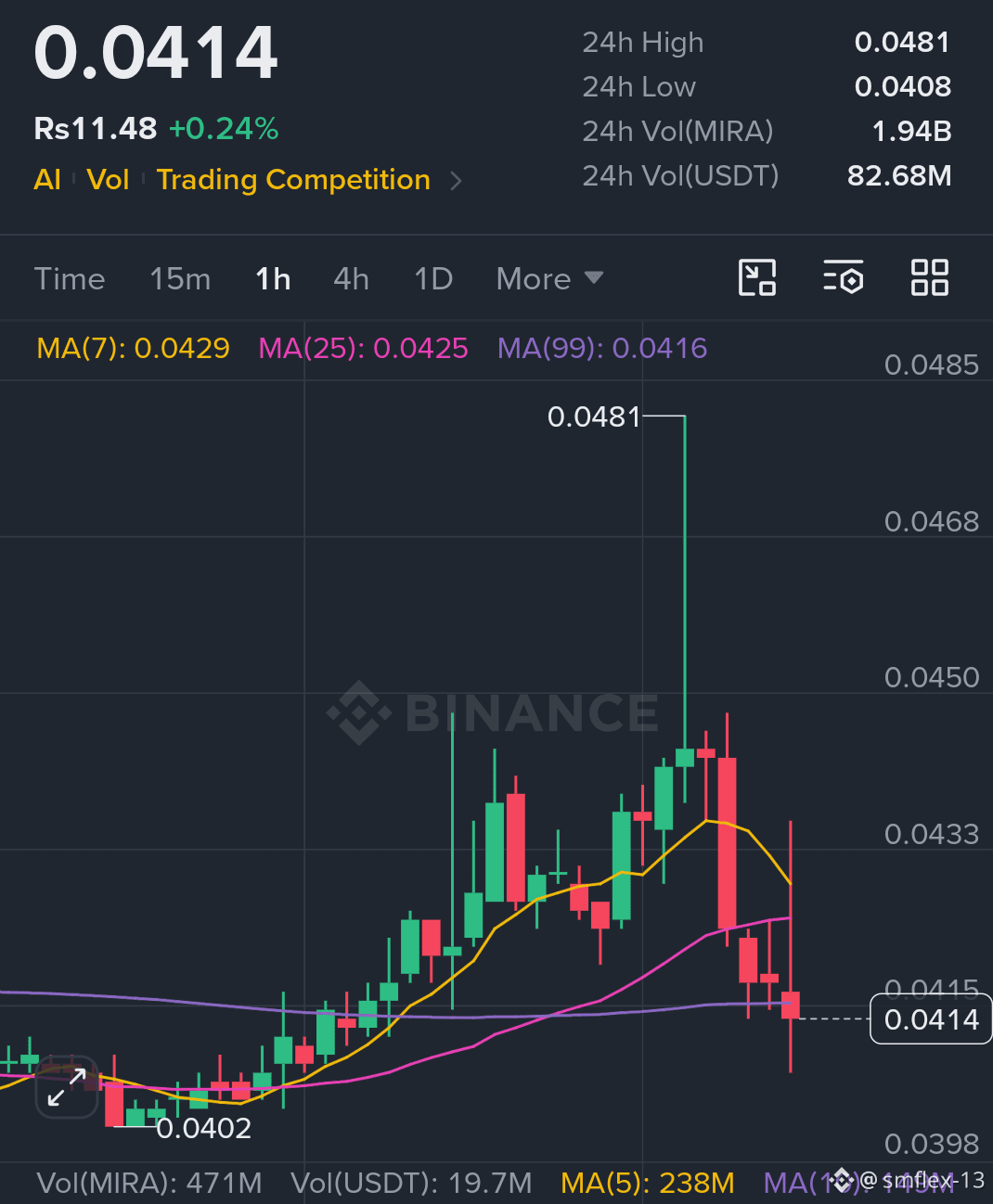
$MIRA A is trading below the MA(7), MA(25), and slightly below the MA(99) after failing to hold its recent rally toward $0.0481. Price has weakened from the daily high, suggesting bullish momentum is fading while profit-taking continues.
⚠️ The bearish outlook remains valid if price stays below the resistance zone and breaks the immediate support with increasing selling volume.
🎯 Trade Setup Direction: SHORT
📍 Entry: $0.0413 – $0.0416
🛑 Stop Loss: $0.0432
🎯 TP1: $0.0402
🎯 TP2: $0.0390
🏆 Final Target: $0.0375
🚨 A confirmed break below $0.0408 could accelerate the next bearish leg and strengthen downside momentum.
⚠️ Risk Management
✅ Wait for a bearish rejection candle before entering.
❌ Avoid shorting if price closes above $0.0432 with strong buying volume.
💰 Risk only 1–2% of your trading capital per trade.
📚 Always DYOR.
⚡ Futures trading is risky.
#trending #MİRA
🔻 $MIRA A Short Trade Signal | Bears Looking for a Deeper Pullback 📉
$MIRA A is trading below the MA(7), MA(25), and slightly below the MA(99) after failing to hold its recent rally toward $0.0481. Price has weakened from the daily high, suggesting bullish momentum is fading while profit-taking continues.
⚠️ The bearish outlook remains valid if price stays below the resistance zone and breaks the immediate support with increasing selling volume.
🎯 Trade Setup Direction: SHORT
📍 Entry: $0.0413 – $0.0416
🛑 Stop Loss: $0.0432
🎯 TP1: $0.0402
🎯 TP2: $0.0390
🏆 Final Target: $0.0375
🚨 A confirmed break below $0.0408 could accelerate the next bearish leg and strengthen downside momentum.
⚠️ Risk Management
✅ Wait for a bearish rejection candle before entering.
❌ Avoid shorting if price closes above $0.0432 with strong buying volume.
💰 Risk only 1–2% of your trading capital per trade.
📚 Always DYOR.
⚡ Futures trading is risky.
#trending #MİRA
$MIRA A is trading below the MA(7), MA(25), and slightly below the MA(99) after failing to hold its recent rally toward $0.0481. Price has weakened from the daily high, suggesting bullish momentum is fading while profit-taking continues.
⚠️ The bearish outlook remains valid if price stays below the resistance zone and breaks the immediate support with increasing selling volume.
🎯 Trade Setup Direction: SHORT
📍 Entry: $0.0413 – $0.0416
🛑 Stop Loss: $0.0432
🎯 TP1: $0.0402
🎯 TP2: $0.0390
🏆 Final Target: $0.0375
🚨 A confirmed break below $0.0408 could accelerate the next bearish leg and strengthen downside momentum.
⚠️ Risk Management
✅ Wait for a bearish rejection candle before entering.
❌ Avoid shorting if price closes above $0.0432 with strong buying volume.
💰 Risk only 1–2% of your trading capital per trade.
📚 Always DYOR.
⚡ Futures trading is risky.
#trending #MİRA
1
228

·
--
$MIRA
{future}(MIRAUSDT)
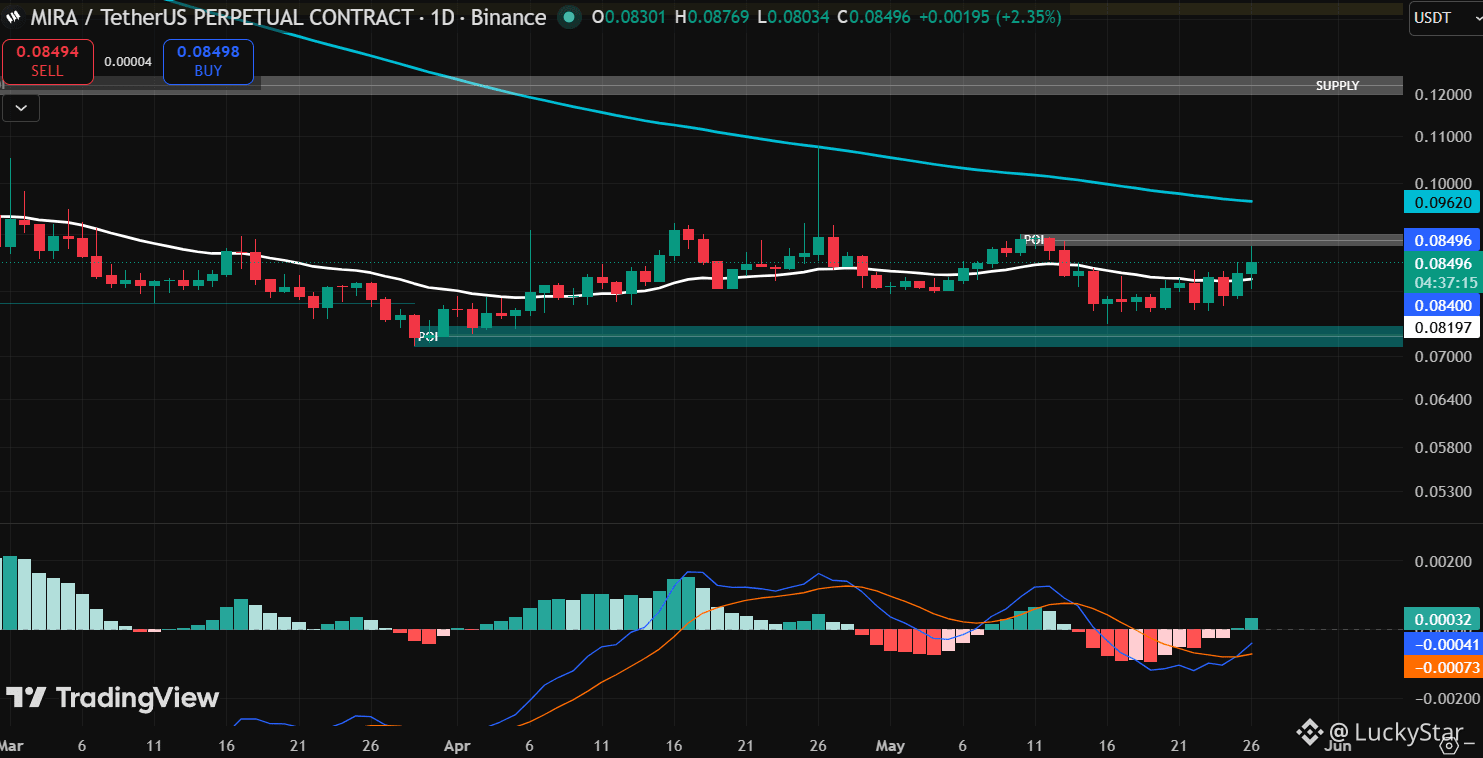
The price at 0.08496 USDT is rebounding from the demand zone near 0.0819–0.0840, showing early signs of bullish momentum. Buyers are defending this level effectively, and the market structure suggests potential continuation toward the supply zone around 0.096–0.100 if momentum holds.
#Mira #MİRA #trading
$MIRA
The price at 0.08496 USDT is rebounding from the demand zone near 0.0819–0.0840, showing early signs of bullish momentum. Buyers are defending this level effectively, and the market structure suggests potential continuation toward the supply zone around 0.096–0.100 if momentum holds.
#Mira #MİRA #trading
The price at 0.08496 USDT is rebounding from the demand zone near 0.0819–0.0840, showing early signs of bullish momentum. Buyers are defending this level effectively, and the market structure suggests potential continuation toward the supply zone around 0.096–0.100 if momentum holds.
#Mira #MİRA #trading
128

·
--
Bearish
MIRA longs getting flushed quickly.
No bounce confirmation yet.
$MIRA
{future}(MIRAUSDT)
🔴 LIQUIDITY ZONE HIT 🔴
Long liquidation spotted 🧨
$1.0896K cleared at $0.04741
Downside liquidity swept — watch reaction 👀
🎯 TP Targets:
TP1: ~$0.04680
TP2: ~$0.04610
TP3: ~$0.04540
#MİRA
MIRA longs getting flushed quickly.
No bounce confirmation yet.
$MIRA
🔴 LIQUIDITY ZONE HIT 🔴
Long liquidation spotted 🧨
$1.0896K cleared at $0.04741
Downside liquidity swept — watch reaction 👀
🎯 TP Targets:
TP1: ~$0.04680
TP2: ~$0.04610
TP3: ~$0.04540
#MİRA
No bounce confirmation yet.
$MIRA
🔴 LIQUIDITY ZONE HIT 🔴
Long liquidation spotted 🧨
$1.0896K cleared at $0.04741
Downside liquidity swept — watch reaction 👀
🎯 TP Targets:
TP1: ~$0.04680
TP2: ~$0.04610
TP3: ~$0.04540
#MİRA
50

·
--
Bullish
$MIRA 🚨 DON'T LET THE QUIET CHART FOOL YOU... SOME OF THE BIGGEST MOVES START WHEN NOBODY IS PAYING ATTENTION.
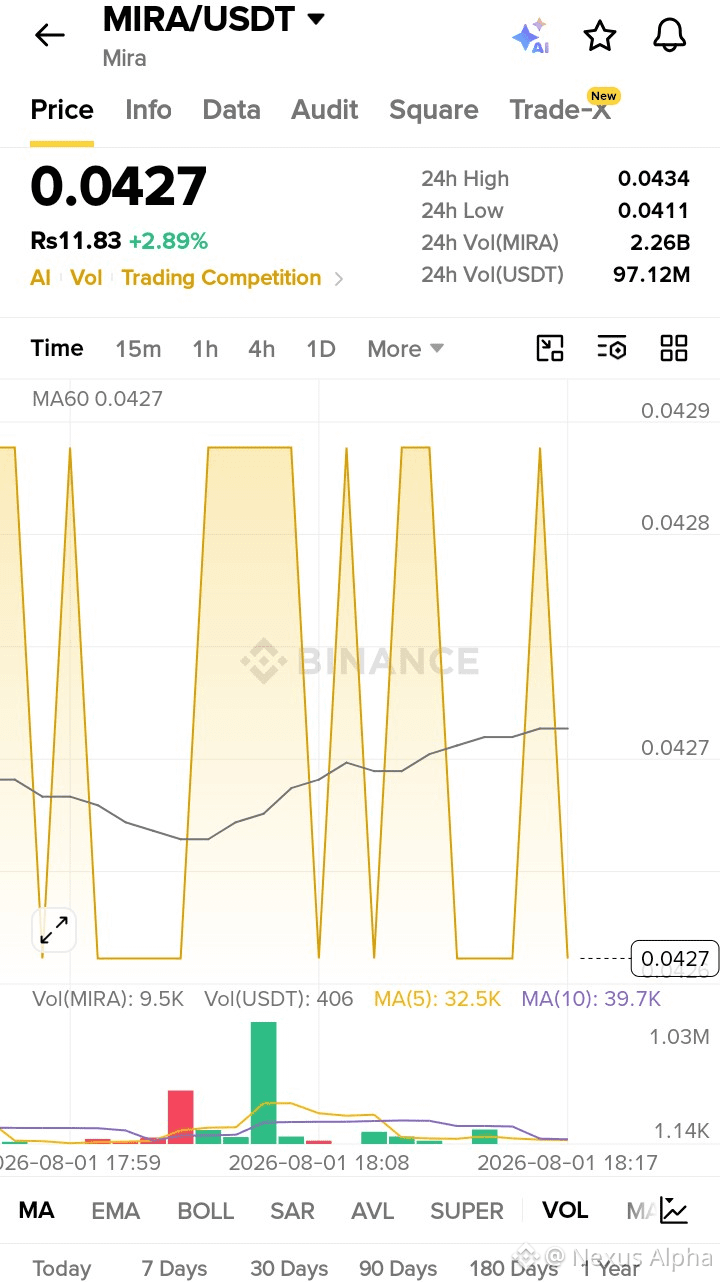
MIRA is holding steady while the market waits for its next signal. Price is moving inside a tight range, and that kind of calm rarely lasts for long. When volatility returns, it usually catches late traders by surprise.
A strong move above resistance could bring fresh momentum and attract new buyers. If support gives way, patience will be far more valuable than chasing candles. In markets like this, discipline always beats emotion.
The smartest traders aren't looking for excitement—they're looking for confirmation. Keep MIRA on your watchlist, stay focused on price action, and be ready when the market finally makes its move.
Do you think MIRA is getting ready for a breakout, or is one more shakeout still on the table? Drop your prediction below. 👇🔥
$MIRA
{spot}(MIRAUSDT)
🚀📈 #MİRA #HedgeFundsAddBullishOilBets #writetoearn
$MIRA 🚨 DON'T LET THE QUIET CHART FOOL YOU... SOME OF THE BIGGEST MOVES START WHEN NOBODY IS PAYING ATTENTION.
MIRA is holding steady while the market waits for its next signal. Price is moving inside a tight range, and that kind of calm rarely lasts for long. When volatility returns, it usually catches late traders by surprise.
A strong move above resistance could bring fresh momentum and attract new buyers. If support gives way, patience will be far more valuable than chasing candles. In markets like this, discipline always beats emotion.
The smartest traders aren't looking for excitement—they're looking for confirmation. Keep MIRA on your watchlist, stay focused on price action, and be ready when the market finally makes its move.
Do you think MIRA is getting ready for a breakout, or is one more shakeout still on the table? Drop your prediction below. 👇🔥
$MIRA
🚀📈 #MİRA #HedgeFundsAddBullishOilBets #writetoearn
MIRA is holding steady while the market waits for its next signal. Price is moving inside a tight range, and that kind of calm rarely lasts for long. When volatility returns, it usually catches late traders by surprise.
A strong move above resistance could bring fresh momentum and attract new buyers. If support gives way, patience will be far more valuable than chasing candles. In markets like this, discipline always beats emotion.
The smartest traders aren't looking for excitement—they're looking for confirmation. Keep MIRA on your watchlist, stay focused on price action, and be ready when the market finally makes its move.
Do you think MIRA is getting ready for a breakout, or is one more shakeout still on the table? Drop your prediction below. 👇🔥
$MIRA
🚀📈 #MİRA #HedgeFundsAddBullishOilBets #writetoearn
4
174
·
--
$MIRA
{future}(MIRAUSDT)
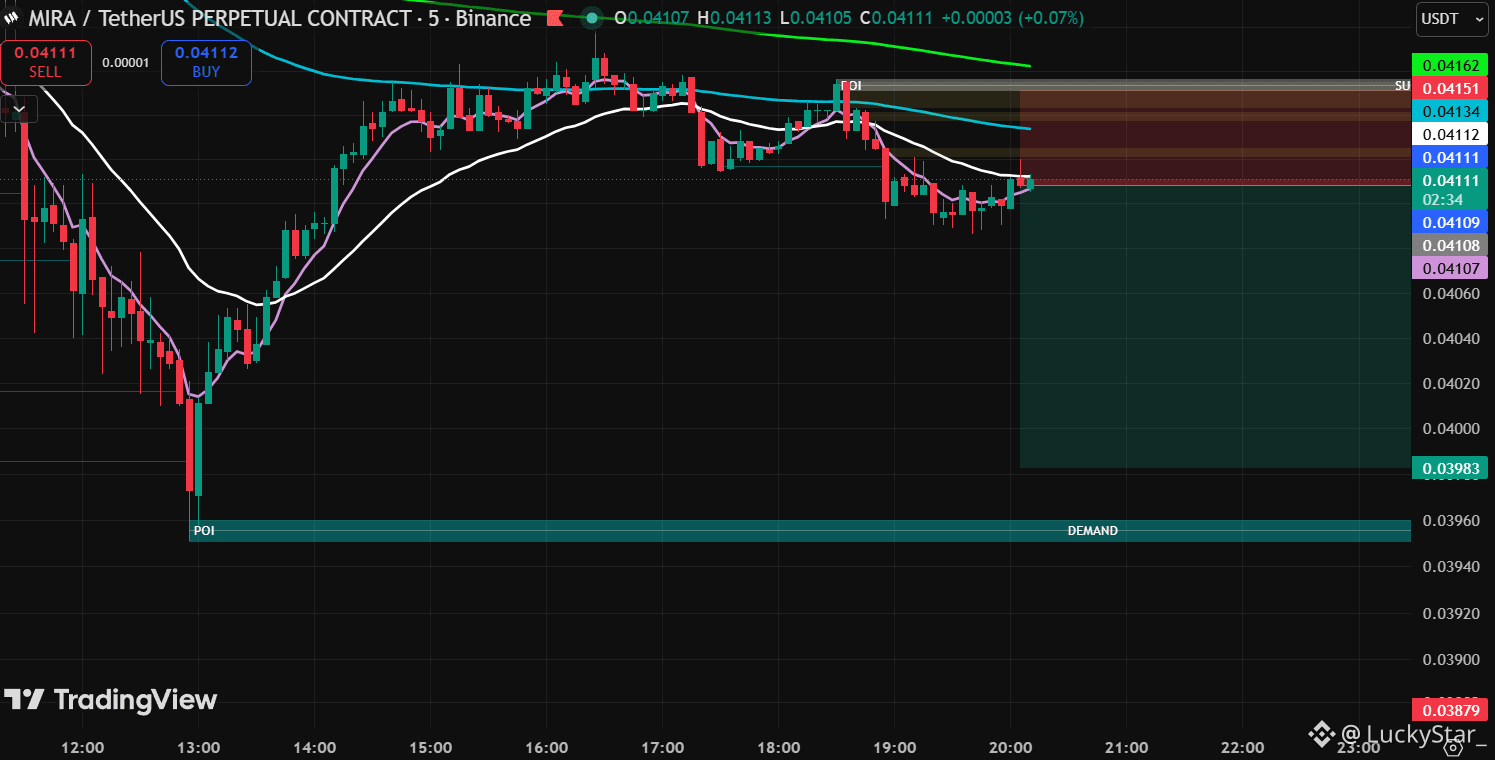
A breakout from current levels could trigger a healthy correction to support zones.
If the price fails to hold, the bears could seize control and push the market towards the stated downside targets.
#Mira #MİRA #crypto #TradingSignals
$MIRA
A breakout from current levels could trigger a healthy correction to support zones.
If the price fails to hold, the bears could seize control and push the market towards the stated downside targets.
#Mira #MİRA #crypto #TradingSignals
A breakout from current levels could trigger a healthy correction to support zones.
If the price fails to hold, the bears could seize control and push the market towards the stated downside targets.
#Mira #MİRA #crypto #TradingSignals
79

·
--
✨🚀 MIRA — a token that demonstrates how artificial intelligence 🤖 and blockchain ⛓️ can work together, creating new opportunities for the crypto industry. 🌍💎
🔍 Today, investors increasingly focus not only on the popularity of a project, but also on its technological foundation. That’s why MIRA is drawing interest from the crypto community — it combines innovations 💡, AI 🤖, and the potential for Web3 development 🌐.
📊 The crypto market is constantly changing 📈📉, but it’s new technologies ⚙️ that are able to shape future trends. MIRA aims to become part of this process by developing an ecosystem where automation ⚡, analytics 📊, and digital assets 💰 move in one direction.
💡 Each new market cycle brings its own leaders 🏆. Someone focuses only on price 💵, while someone carefully studies technologies 🧠, the team 👥, and development prospects 🚀. This kind of approach helps better understand the crypto market.
🌟 Will MIRA become one of the brightest AI projects? ⏳ Time will tell. But even today, this token attracts the attention of those who are interested in innovations 🔥, blockchain ⛓️, and the future of the digital economy 🌍.
🚀 Explore 📚, analyze 🔎
#MİRA 🚀 #AI 🤖 #Crypto 💎 #Blockchain ⛓️ #Web3
✨🚀 MIRA — a token that demonstrates how artificial intelligence 🤖 and blockchain ⛓️ can work together, creating new opportunities for the crypto industry. 🌍💎
🔍 Today, investors increasingly focus not only on the popularity of a project, but also on its technological foundation. That’s why MIRA is drawing interest from the crypto community — it combines innovations 💡, AI 🤖, and the potential for Web3 development 🌐.
📊 The crypto market is constantly changing 📈📉, but it’s new technologies ⚙️ that are able to shape future trends. MIRA aims to become part of this process by developing an ecosystem where automation ⚡, analytics 📊, and digital assets 💰 move in one direction.
💡 Each new market cycle brings its own leaders 🏆. Someone focuses only on price 💵, while someone carefully studies technologies 🧠, the team 👥, and development prospects 🚀. This kind of approach helps better understand the crypto market.
🌟 Will MIRA become one of the brightest AI projects? ⏳ Time will tell. But even today, this token attracts the attention of those who are interested in innovations 🔥, blockchain ⛓️, and the future of the digital economy 🌍.
🚀 Explore 📚, analyze 🔎
#MİRA 🚀 #AI 🤖 #Crypto 💎 #Blockchain ⛓️ #Web3
🔍 Today, investors increasingly focus not only on the popularity of a project, but also on its technological foundation. That’s why MIRA is drawing interest from the crypto community — it combines innovations 💡, AI 🤖, and the potential for Web3 development 🌐.
📊 The crypto market is constantly changing 📈📉, but it’s new technologies ⚙️ that are able to shape future trends. MIRA aims to become part of this process by developing an ecosystem where automation ⚡, analytics 📊, and digital assets 💰 move in one direction.
💡 Each new market cycle brings its own leaders 🏆. Someone focuses only on price 💵, while someone carefully studies technologies 🧠, the team 👥, and development prospects 🚀. This kind of approach helps better understand the crypto market.
🌟 Will MIRA become one of the brightest AI projects? ⏳ Time will tell. But even today, this token attracts the attention of those who are interested in innovations 🔥, blockchain ⛓️, and the future of the digital economy 🌍.
🚀 Explore 📚, analyze 🔎
#MİRA 🚀 #AI 🤖 #Crypto 💎 #Blockchain ⛓️ #Web3
132
·
--
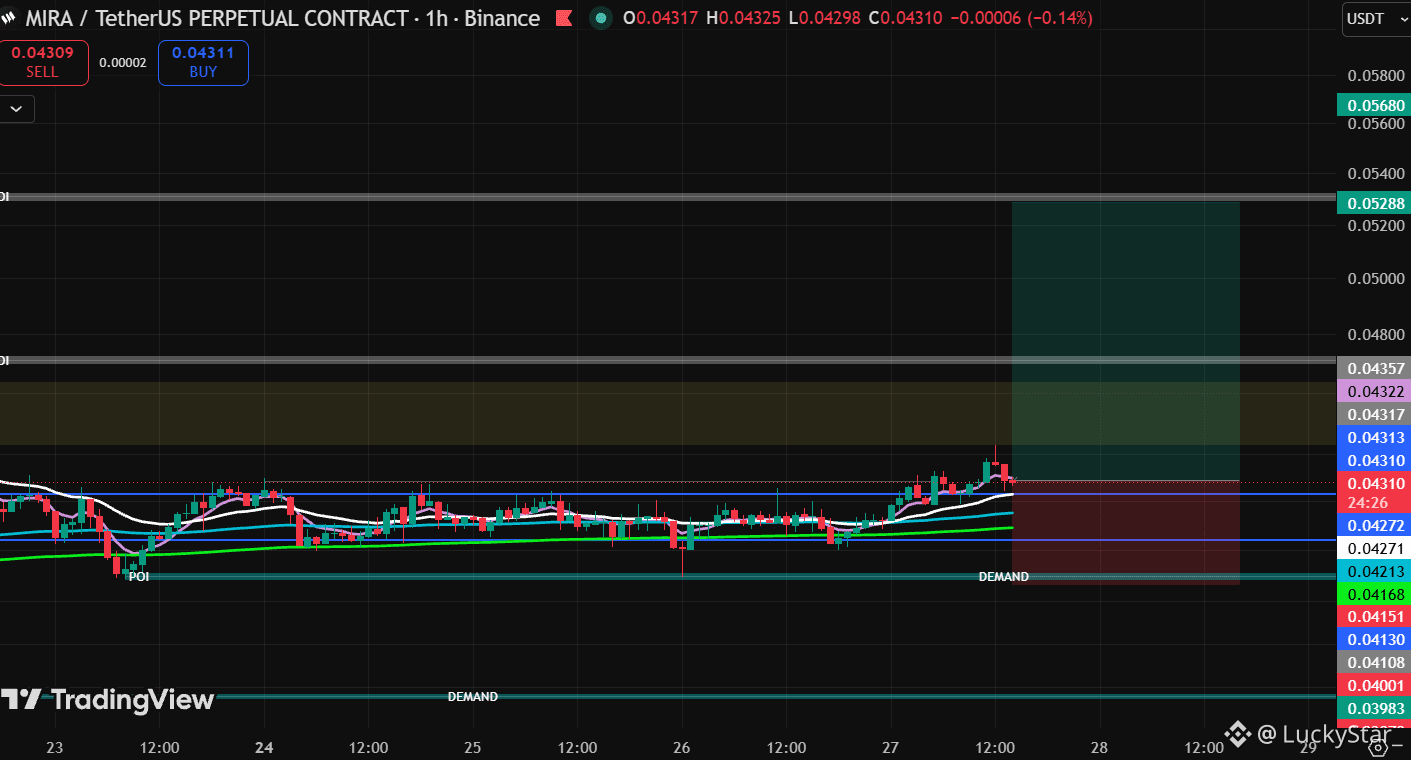
$MIRA Long Trade Signal | Bulls Holding the Trend
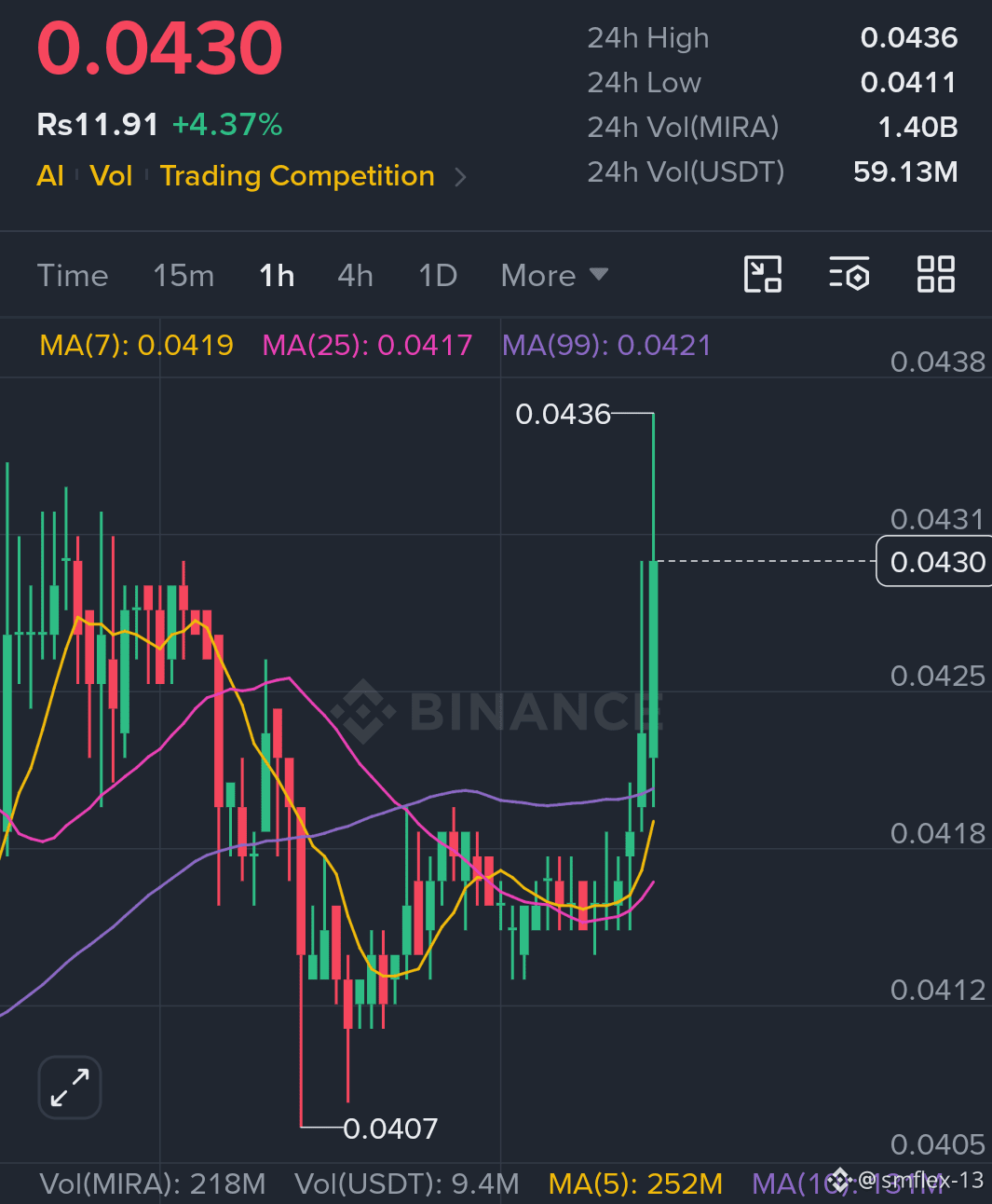
$MIRA continues to trade above its short-term moving averages, with strong 24-hour volume supporting the recent breakout. Buyers remain in control, and holding above the current support zone could lead to another move toward new highs.
Trade Setup Direction: LONG
Entry: $0.0428 – $0.0431
Stop Loss: $0.0415
TP1: $0.0438
TP2: $0.0448
Final Target: $0.0460
A confirmed breakout and close above $0.0436 could trigger the next bullish leg and attract additional buying momentum.
#MİRA
Futures trading is risky.
$MIRA Long Trade Signal | Bulls Holding the Trend
$MIRA continues to trade above its short-term moving averages, with strong 24-hour volume supporting the recent breakout. Buyers remain in control, and holding above the current support zone could lead to another move toward new highs.
Trade Setup Direction: LONG
Entry: $0.0428 – $0.0431
Stop Loss: $0.0415
TP1: $0.0438
TP2: $0.0448
Final Target: $0.0460
A confirmed breakout and close above $0.0436 could trigger the next bullish leg and attract additional buying momentum.
#MİRA
Futures trading is risky.
$MIRA continues to trade above its short-term moving averages, with strong 24-hour volume supporting the recent breakout. Buyers remain in control, and holding above the current support zone could lead to another move toward new highs.
Trade Setup Direction: LONG
Entry: $0.0428 – $0.0431
Stop Loss: $0.0415
TP1: $0.0438
TP2: $0.0448
Final Target: $0.0460
A confirmed breakout and close above $0.0436 could trigger the next bullish leg and attract additional buying momentum.
#MİRA
Futures trading is risky.
1
71

·
--
Bullish
$MIRA
Current Price: $0.0501 (Rs13.94)
MIRA is showing explosive strength with a 23.70% surge. This coin has been on my radar for weeks and now it is finally delivering. The breakout volume is massive and we are seeing new buyers entering at every dip. The project fundamentals are solid and the community is growing rapidly. This run is just getting started.
Market Insight: MIRA has formed a bullish flag pattern on the daily chart. The MACD just crossed bullish and the histogram is expanding. This typically signals strong upward momentum ahead.
Next Move: We are testing the upper Bollinger Band which often leads to a continuation or a minor pullback. The trend is clearly up.
Targets:
TG1: $0.05700
TG2: $0.06300
TG3: $0.07200
Pro Tip: Scale into your position. Buy 50% now and 50% on any dip to $0.04750. Use a trailing stop loss to lock in profits as it moves higher.
#Mira #MİRA #FedSeenHoldingRatesJuly29 #GoldAndSilverExtendGains
$MIRA
{future}(MIRAUSDT)
$MIRA
Current Price: $0.0501 (Rs13.94)
MIRA is showing explosive strength with a 23.70% surge. This coin has been on my radar for weeks and now it is finally delivering. The breakout volume is massive and we are seeing new buyers entering at every dip. The project fundamentals are solid and the community is growing rapidly. This run is just getting started.
Market Insight: MIRA has formed a bullish flag pattern on the daily chart. The MACD just crossed bullish and the histogram is expanding. This typically signals strong upward momentum ahead.
Next Move: We are testing the upper Bollinger Band which often leads to a continuation or a minor pullback. The trend is clearly up.
Targets:
TG1: $0.05700
TG2: $0.06300
TG3: $0.07200
Pro Tip: Scale into your position. Buy 50% now and 50% on any dip to $0.04750. Use a trailing stop loss to lock in profits as it moves higher.
#Mira #MİRA #FedSeenHoldingRatesJuly29 #GoldAndSilverExtendGains
$MIRA
Current Price: $0.0501 (Rs13.94)
MIRA is showing explosive strength with a 23.70% surge. This coin has been on my radar for weeks and now it is finally delivering. The breakout volume is massive and we are seeing new buyers entering at every dip. The project fundamentals are solid and the community is growing rapidly. This run is just getting started.
Market Insight: MIRA has formed a bullish flag pattern on the daily chart. The MACD just crossed bullish and the histogram is expanding. This typically signals strong upward momentum ahead.
Next Move: We are testing the upper Bollinger Band which often leads to a continuation or a minor pullback. The trend is clearly up.
Targets:
TG1: $0.05700
TG2: $0.06300
TG3: $0.07200
Pro Tip: Scale into your position. Buy 50% now and 50% on any dip to $0.04750. Use a trailing stop loss to lock in profits as it moves higher.
#Mira #MİRA #FedSeenHoldingRatesJuly29 #GoldAndSilverExtendGains
$MIRA
158

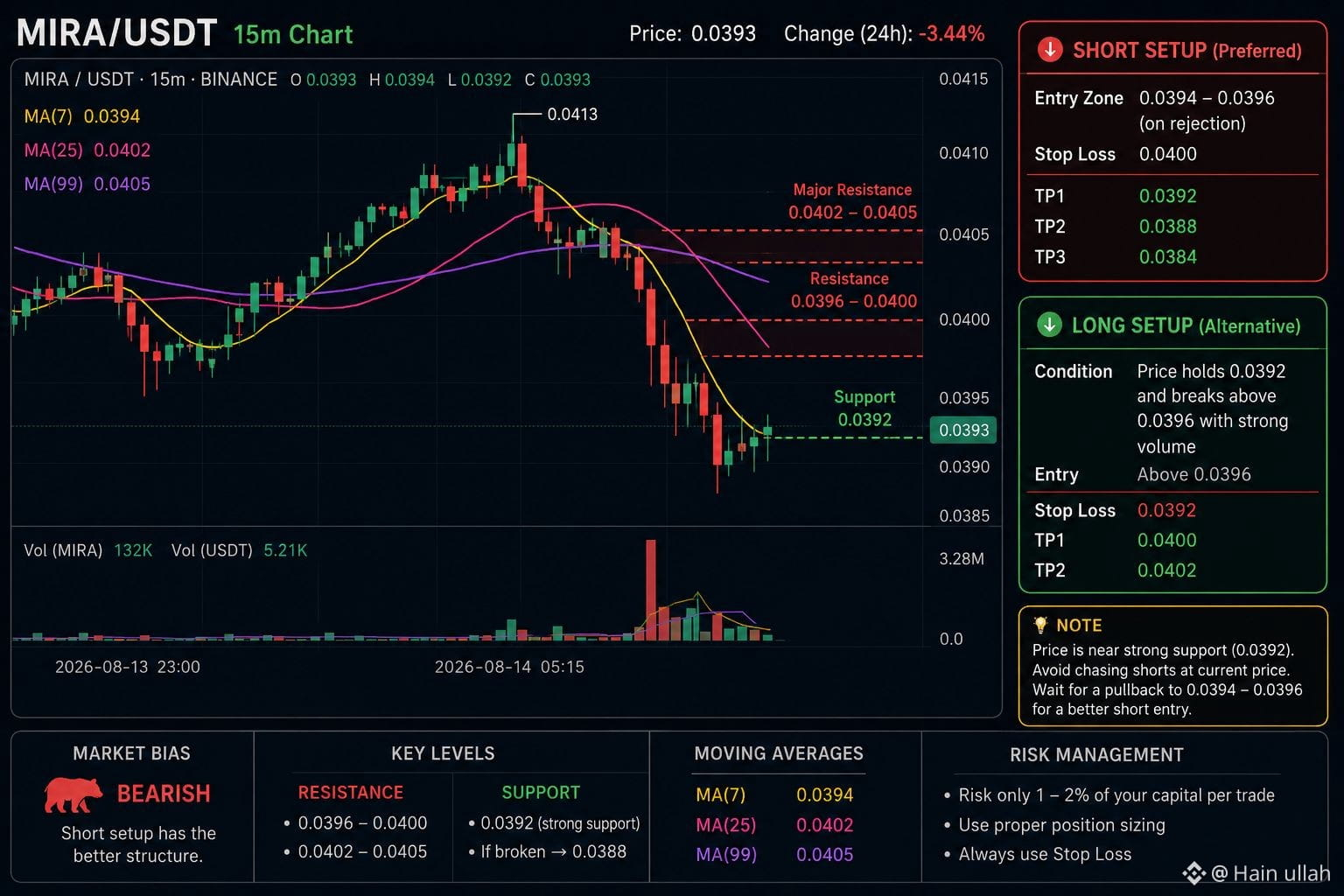
MIRA/USDT — 15-Minute Trade Setup
Based on your chart, the short-term trend is bearish:
Current price: 0.0393
Resistance: 0.0396–0.0400
Major resistance: 0.0402–0.0405
Support: 0.0392
MA(7): 0.0394
MA(25): 0.0402
MA(99): 0.0405
🔴 Short Setup
Entry: 0.0394–0.0396 on a rejection
Stop Loss: 0.0400
TP1: 0.0392
TP2: 0.0388
TP3: 0.0384
Important: Price is already very close to the 0.0392 support, so I would not chase a short at 0.0393. A bounce toward 0.0394–0.0396 followed by rejection gives a cleaner entry.
🟢 Long Setup
Only consider a long if MIRA holds 0.0392 and breaks back above 0.0396 with strong volume.
Potential TP: 0.0400 → 0.0402
Invalidation: below 0.0392
My bias from this chart: 🔴 Bearish — Short setup has the better structure, but wait for confirmation.
#MİRA #Mira $MIRA
{spot}(MIRAUSDT)
MIRA/USDT — 15-Minute Trade Setup
Based on your chart, the short-term trend is bearish:
Current price: 0.0393
Resistance: 0.0396–0.0400
Major resistance: 0.0402–0.0405
Support: 0.0392
MA(7): 0.0394
MA(25): 0.0402
MA(99): 0.0405
🔴 Short Setup
Entry: 0.0394–0.0396 on a rejection
Stop Loss: 0.0400
TP1: 0.0392
TP2: 0.0388
TP3: 0.0384
Important: Price is already very close to the 0.0392 support, so I would not chase a short at 0.0393. A bounce toward 0.0394–0.0396 followed by rejection gives a cleaner entry.
🟢 Long Setup
Only consider a long if MIRA holds 0.0392 and breaks back above 0.0396 with strong volume.
Potential TP: 0.0400 → 0.0402
Invalidation: below 0.0392
My bias from this chart: 🔴 Bearish — Short setup has the better structure, but wait for confirmation.
#MİRA #Mira $MIRA
Based on your chart, the short-term trend is bearish:
Current price: 0.0393
Resistance: 0.0396–0.0400
Major resistance: 0.0402–0.0405
Support: 0.0392
MA(7): 0.0394
MA(25): 0.0402
MA(99): 0.0405
🔴 Short Setup
Entry: 0.0394–0.0396 on a rejection
Stop Loss: 0.0400
TP1: 0.0392
TP2: 0.0388
TP3: 0.0384
Important: Price is already very close to the 0.0392 support, so I would not chase a short at 0.0393. A bounce toward 0.0394–0.0396 followed by rejection gives a cleaner entry.
🟢 Long Setup
Only consider a long if MIRA holds 0.0392 and breaks back above 0.0396 with strong volume.
Potential TP: 0.0400 → 0.0402
Invalidation: below 0.0392
My bias from this chart: 🔴 Bearish — Short setup has the better structure, but wait for confirmation.
#MİRA #Mira $MIRA
1
175


·
--

Waleed Naif
·
--
Bullish$MIRA 🚀🚀🚀
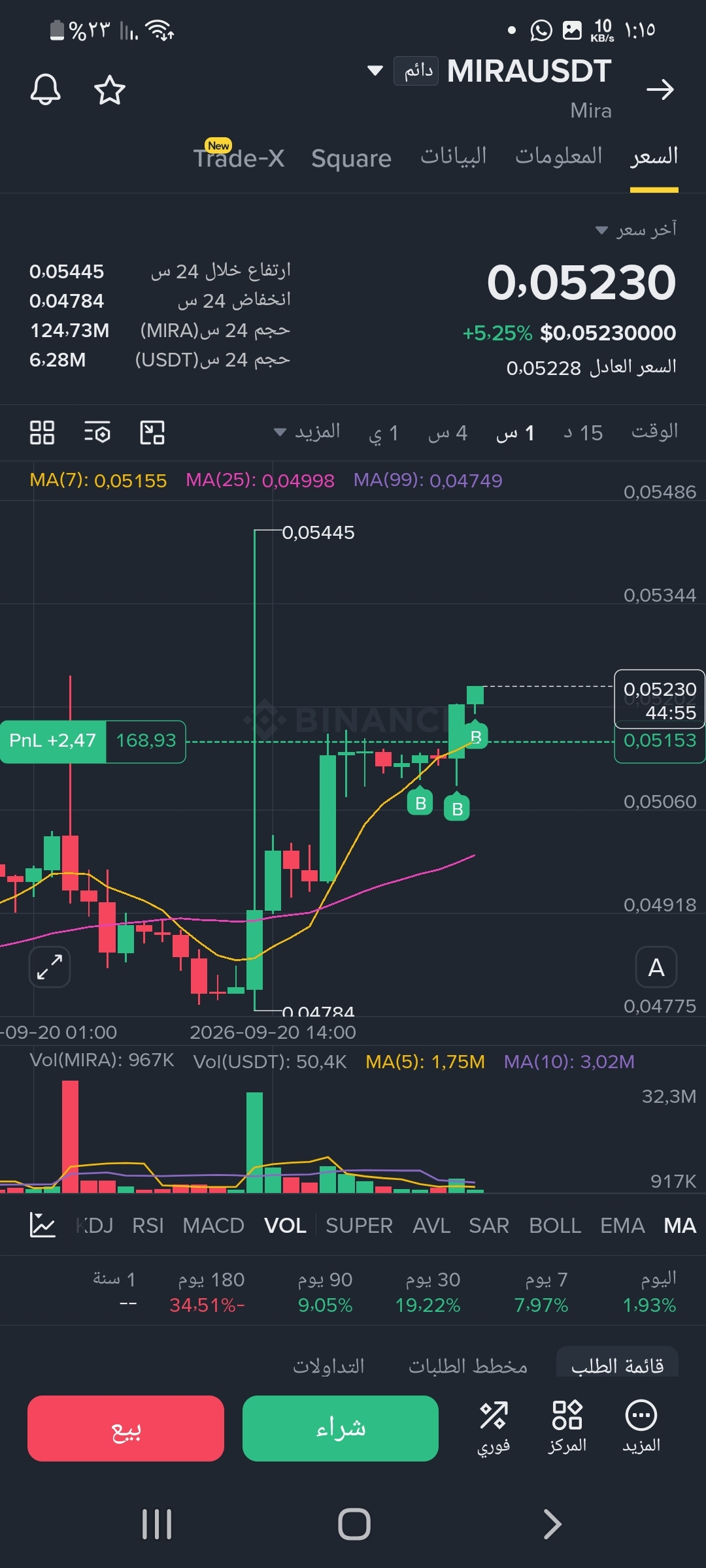
Sniper recommendation: $MIRA penetrates and is preparing for a new upward wave! 💣🚀
Watch the chart closely, you lions! 🦅🔥
The coin $MIRA shows strong bullish momentum after breaking its accumulation range and rebounding from the bottom around $0.05093. The price is currently at $0.05225 above all major moving averages (MA7, MA25, MA99), which suggests the breakout may continue toward higher ranges.
🎯 Entry / Consolidation Zone: $0.05150 - $0.05225
🛑 Strict Stop Loss (SL): $0.04950 (A break of the main bottom closes the plan)
💎 Targets
🔹 First Target: $0.05850 (breaks the nearby high)
🚀 Second Target: $0.06500 (medium breakout wave)
👑 Third Target (Explosive): $0.07800 (achieving more than +50% profits!)
Sniper recommendation: $MIRA penetrates and is preparing for a new upward wave! 💣🚀
Watch the chart closely, you lions! 🦅🔥
The coin $MIRA shows strong bullish momentum after breaking its accumulation range and rebounding from the bottom around $0.05093. The price is currently at $0.05225 above all major moving averages (MA7, MA25, MA99), which suggests the breakout may continue toward higher ranges.
🎯 Entry / Consolidation Zone: $0.05150 - $0.05225
🛑 Strict Stop Loss (SL): $0.04950 (A break of the main bottom closes the plan)
💎 Targets
🔹 First Target: $0.05850 (breaks the nearby high)
🚀 Second Target: $0.06500 (medium breakout wave)
👑 Third Target (Explosive): $0.07800 (achieving more than +50% profits!)
3
90
·
--
$MIRA
{future}(MIRAUSDT)
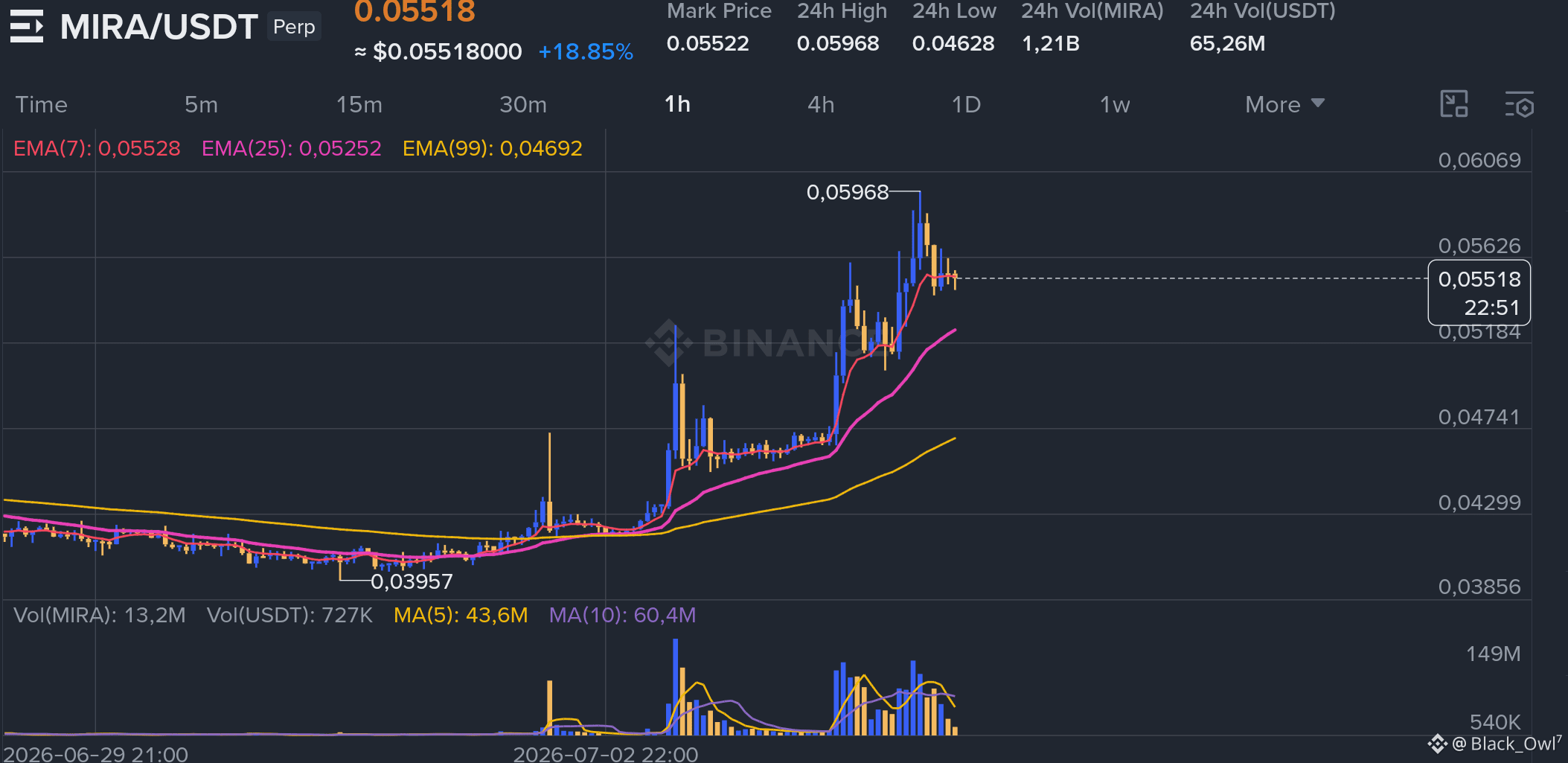
🐂 ARE THE BULLS PREPARING A NEW ATTACK?
⚡ The market rarely warns twice about a good opportunity.
THE MARKET IS FORMING A STRONG ASCENDING STRUCTURE, SUPPORTING A POSITIVE SCENARIO.
Do you expect continued growth this week?
#Mira #MİRA #TechnicalAnalysis #long
$MIRA
🐂 ARE THE BULLS PREPARING A NEW ATTACK?
⚡ The market rarely warns twice about a good opportunity.
THE MARKET IS FORMING A STRONG ASCENDING STRUCTURE, SUPPORTING A POSITIVE SCENARIO.
Do you expect continued growth this week?
#Mira #MİRA #TechnicalAnalysis #long
🐂 ARE THE BULLS PREPARING A NEW ATTACK?
⚡ The market rarely warns twice about a good opportunity.
THE MARKET IS FORMING A STRONG ASCENDING STRUCTURE, SUPPORTING A POSITIVE SCENARIO.
Do you expect continued growth this week?
#Mira #MİRA #TechnicalAnalysis #long
156


·
--
Shorting is the fuel—this cycle has to be big.#MİRA mira
Shorting is the fuel—this cycle has to be big.#MİRA mira
1
455

·
--
Bullish
It’s been about half a month now. The funding fee and unrealized losses are currently at a standstill; back when it was rising earlier, it didn’t get to breakeven #MİRA $MIRA
It’s been about half a month now. The funding fee and unrealized losses are currently at a standstill; back when it was rising earlier, it didn’t get to breakeven #MİRA $MIRA
6
401

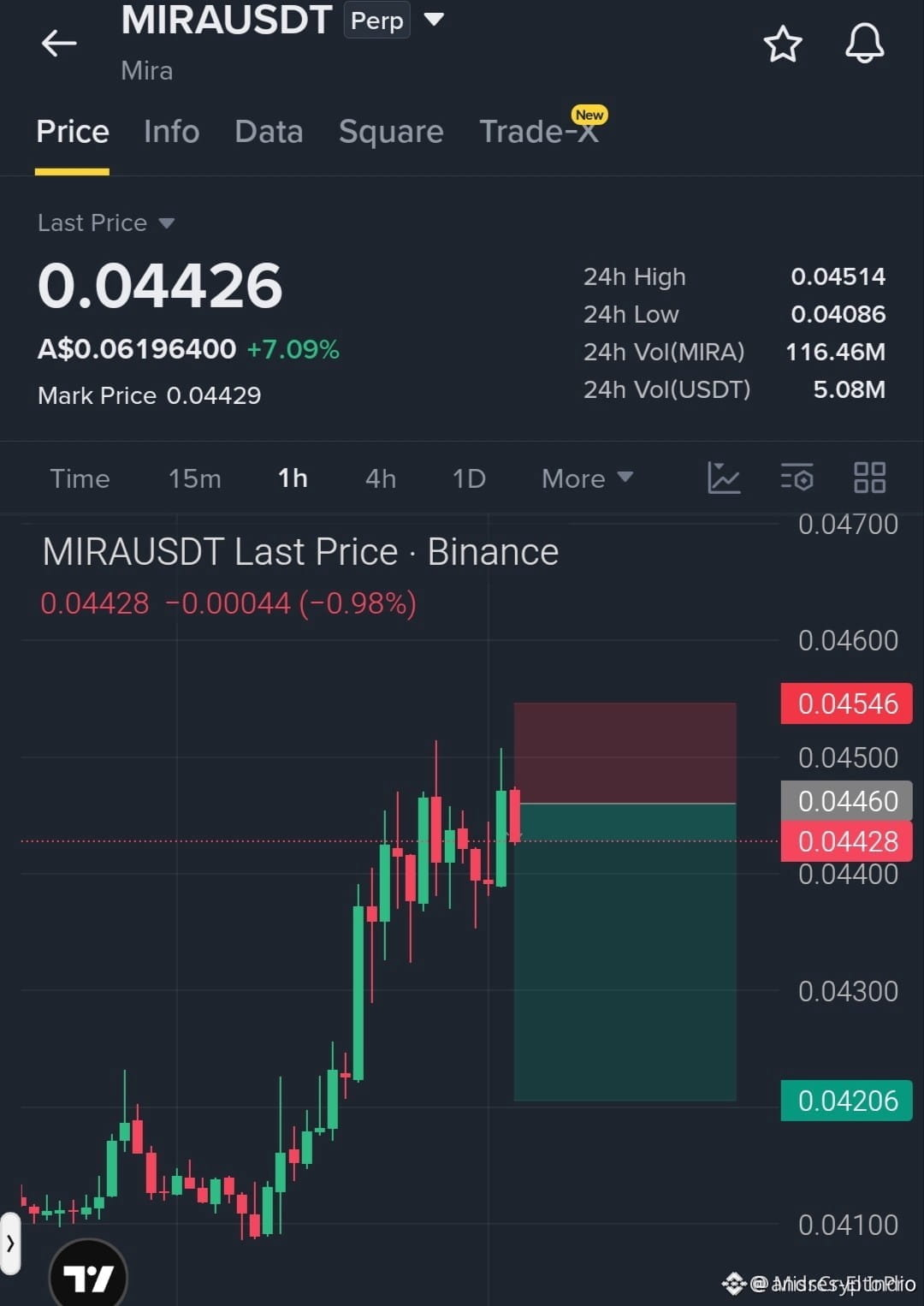
$MIRA — SELLERS SEEK A DEEPER BREAKDOWN
Operation setup: Short sale
Entry: 0.04420 – 0.04460
SL: 0.04546
TP1: 0.04350
TP2: 0.04270
TP3: 0.04206
$MIRA is facing rejection near the recent high, while the price remains capped below the 0.04460 zone.
A decisive drop from this area may extend the correction toward the downside targets.
$MIRA trade from here and it helps me
{future}(MIRAUSDT)
#MİRA #BinanceSquareFamily #Binace
$MIRA — SELLERS SEEK A DEEPER BREAKDOWN
Operation setup: Short sale
Entry: 0.04420 – 0.04460
SL: 0.04546
TP1: 0.04350
TP2: 0.04270
TP3: 0.04206
$MIRA is facing rejection near the recent high, while the price remains capped below the 0.04460 zone.
A decisive drop from this area may extend the correction toward the downside targets.
$MIRA trade from here and it helps me
#MİRA #BinanceSquareFamily #Binace
Operation setup: Short sale
Entry: 0.04420 – 0.04460
SL: 0.04546
TP1: 0.04350
TP2: 0.04270
TP3: 0.04206
$MIRA is facing rejection near the recent high, while the price remains capped below the 0.04460 zone.
A decisive drop from this area may extend the correction toward the downside targets.
$MIRA trade from here and it helps me
#MİRA #BinanceSquareFamily #Binace
170


Article
The Evolution of Verifiable AI: Why Mira is Dominating 2026As we move further into 2026, the initial "magic" of generative AI has transitioned into a critical demand for verifiable truth. In an era where AI agents manage real-world capital and execute complex smart contracts, the risk of "hallucinations" is no longer just a technical glitch—it’s a financial liability. This is exactly where @mira_network has established itself as the indispensable Trust Layer of AI.
Mainnet Performance and Real-World Impact
Since its mainnet launch, the network has seen explosive growth, recently hitting a milestone of processing over 3 billion tokens per day. By breaking down AI responses into atomic "claims" and using a decentralized network of verifier nodes, @mira_network ensures that outputs are not just fast, but factually accurate. Projects like Klok and WikiSentry are already leveraging this infrastructure, reportedly boosting AI accuracy from a standard 70% to an impressive 97%.
$MIRA Tokenomics: Driven by Utility
The MIRA token serves as the economic heartbeat of this ecosystem. Unlike many speculative assets, MIRA has a fixed supply of 1 billion tokens and functions through a robust cryptoeconomic model:
Staking & Nodes: Verifiers must stake MIRA to participate in consensus, earning rewards for honest work while facing slashing for inaccuracies.Verification Fees: As more AI agents require persistent verification, the demand for MIRA to cover API fees continues to scale.Ecosystem Growth: With Season 2 campaigns and developer grants in full swing, the network is attracting high-performance GPU partners to support its computational needs.
The roadmap for Q2 2026 looks even more promising, with the anticipated launch of the Mira Flows marketplace and deeper SDK integrations for autonomous agents. For those betting on the intersection of AI and blockchain, the message is clear: Verify first, always. #MİRA
@mira_network $MIRA
{spot}(MIRAUSDT)
The Evolution of Verifiable AI: Why Mira is Dominating 2026
As we move further into 2026, the initial "magic" of generative AI has transitioned into a critical demand for verifiable truth. In an era where AI agents manage real-world capital and execute complex smart contracts, the risk of "hallucinations" is no longer just a technical glitch—it’s a financial liability. This is exactly where @Mira - Trust Layer of AI has established itself as the indispensable Trust Layer of AI.
Mainnet Performance and Real-World Impact
Since its mainnet launch, the network has seen explosive growth, recently hitting a milestone of processing over 3 billion tokens per day. By breaking down AI responses into atomic "claims" and using a decentralized network of verifier nodes, @Mira - Trust Layer of AI ensures that outputs are not just fast, but factually accurate. Projects like Klok and WikiSentry are already leveraging this infrastructure, reportedly boosting AI accuracy from a standard 70% to an impressive 97%.
$MIRA Tokenomics: Driven by Utility
The MIRA token serves as the economic heartbeat of this ecosystem. Unlike many speculative assets, MIRA has a fixed supply of 1 billion tokens and functions through a robust cryptoeconomic model:
Staking & Nodes: Verifiers must stake MIRA to participate in consensus, earning rewards for honest work while facing slashing for inaccuracies.Verification Fees: As more AI agents require persistent verification, the demand for MIRA to cover API fees continues to scale.Ecosystem Growth: With Season 2 campaigns and developer grants in full swing, the network is attracting high-performance GPU partners to support its computational needs.
The roadmap for Q2 2026 looks even more promising, with the anticipated launch of the Mira Flows marketplace and deeper SDK integrations for autonomous agents. For those betting on the intersection of AI and blockchain, the message is clear: Verify first, always. #MİRA
@Mira - Trust Layer of AI $MIRA
Mainnet Performance and Real-World Impact
Since its mainnet launch, the network has seen explosive growth, recently hitting a milestone of processing over 3 billion tokens per day. By breaking down AI responses into atomic "claims" and using a decentralized network of verifier nodes, @Mira - Trust Layer of AI ensures that outputs are not just fast, but factually accurate. Projects like Klok and WikiSentry are already leveraging this infrastructure, reportedly boosting AI accuracy from a standard 70% to an impressive 97%.
$MIRA Tokenomics: Driven by Utility
The MIRA token serves as the economic heartbeat of this ecosystem. Unlike many speculative assets, MIRA has a fixed supply of 1 billion tokens and functions through a robust cryptoeconomic model:
Staking & Nodes: Verifiers must stake MIRA to participate in consensus, earning rewards for honest work while facing slashing for inaccuracies.Verification Fees: As more AI agents require persistent verification, the demand for MIRA to cover API fees continues to scale.Ecosystem Growth: With Season 2 campaigns and developer grants in full swing, the network is attracting high-performance GPU partners to support its computational needs.
The roadmap for Q2 2026 looks even more promising, with the anticipated launch of the Mira Flows marketplace and deeper SDK integrations for autonomous agents. For those betting on the intersection of AI and blockchain, the message is clear: Verify first, always. #MİRA
@Mira - Trust Layer of AI $MIRA
1
59
Log in to explore more content
Join global crypto users on Binance Square
⚡️ Get latest and useful information about crypto.
💬 Trusted by the world’s largest crypto exchange.
👍 Discover real insights from verified creators.
Email / Phone number
Trending Topics
1
#AIStocksWhatNext
217,376 views
2,315 Discussing
2
#BitcoinBreaksAboveMayHighNears$86K
7,423 views
128 Discussing
3
#DogecoinRises15%
18,665 views
682 Discussing
4
#$14BBitcoinOptionsExpireFriday
1,189 views
60 Discussing
5
#BNBMarketCapPassesBNYMellon
12,344 views
513 Discussing
6
#CryptoMarketCapReclaims$3Trillion
1,686 views
54 Discussing
7
#MuseOvertakesChatGPTAsTopFreeIOSApp
9,089 views
413 Discussing
8
#TokenizedStockPlatformsCouldLaunchNextQuarter
14,408 views
479 Discussing
9
#StrategyAdds950Bitcoin
19,463 views
539 Discussing
10
#CardanoAddedToX402KitForADAPayments
20,703 views
586 Discussing