
#hegota
hegota
4,237 views
43 Discussing
Hot
Latest

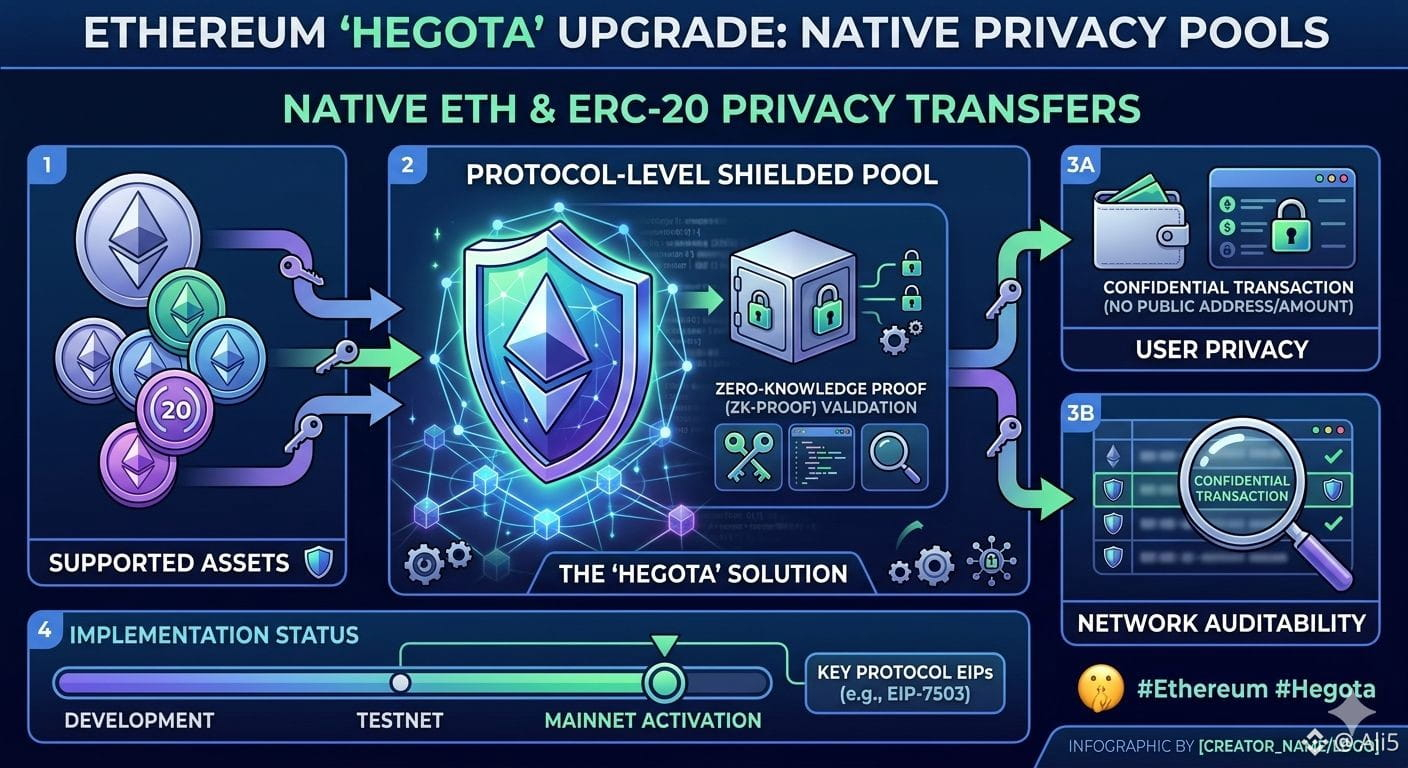
⚡️ Ethereum’s Hegota upgrade is set to introduce native privacy transfers. Fully private $ETH and ERC-20 transactions are coming straight to the protocol level! #Ethereum #Hegota
#EthereumHegotaUpgradePrivacyTransfers
#EthereumHegotaUpgradePrivacyTransfers

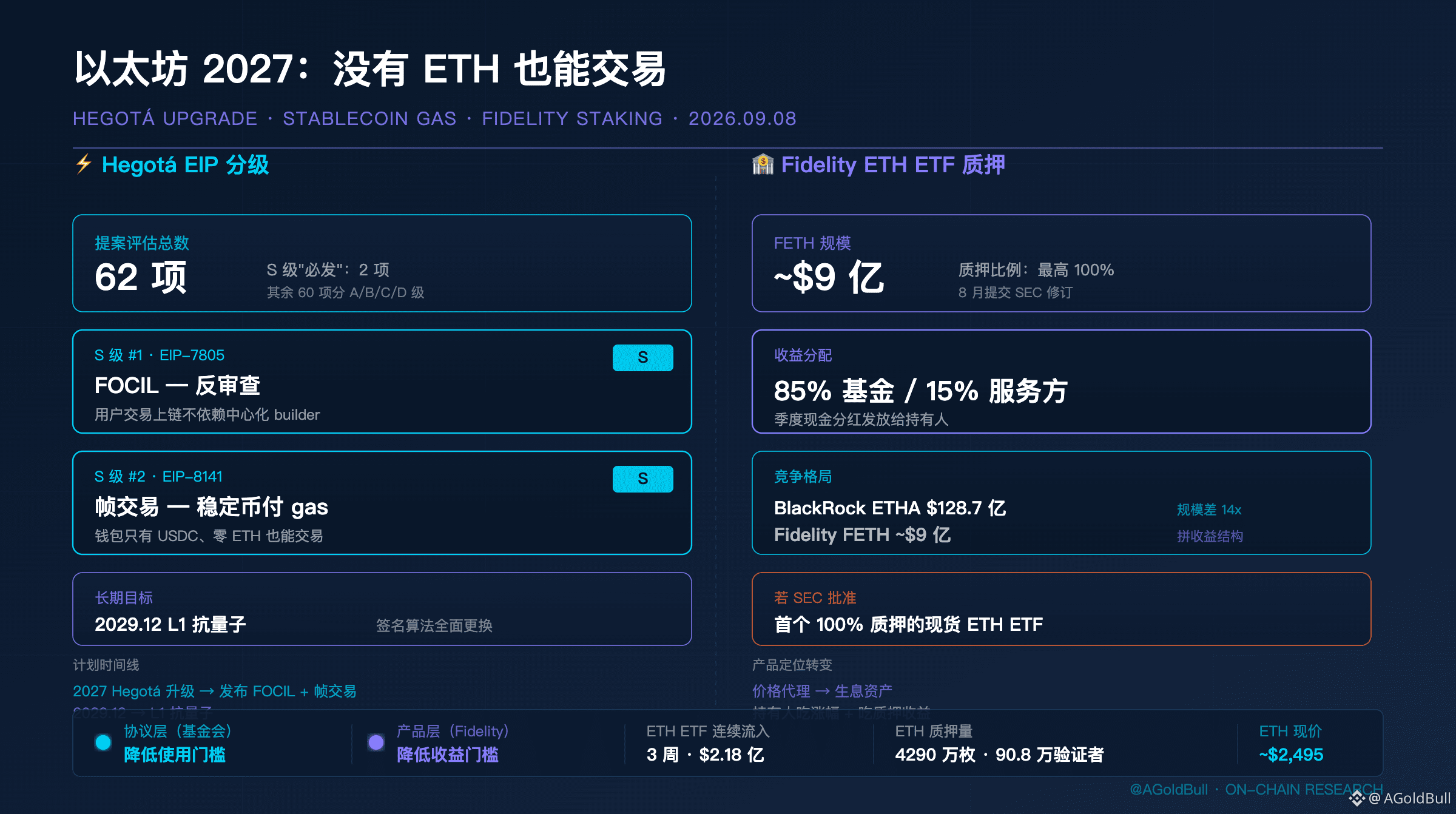
The Ethereum Foundation has just issued a grading table for 62 proposals.
Only two received S grade—"must do".
One is about censorship resistance.
One is about changing gas.
---
S grade #1: FOCIL (EIP-7805).
A censorship-resistance proposal.
Give every user an on-chain transaction route that does not depend on centralized builders.
On today’s Ethereum, whether transactions can be included on-chain depends largely on whether builders are willing to package them.
That’s what FOCIL aims to change.
---
S grade #2: Frame Transactions (EIP-8141).
This one is closer to ordinary people.
It lets you pay gas fees with stablecoins.
No need to hold ETH.
---
How is that done?
Your app or a third-party wallet front-loads the ETH gas fee for you, then charges you stablecoins.
Even if your wallet only has USDC and zero ETH, you can still transact on Ethereum.
Planned for the 2027 Hegotá upgrade.
---
Over the past decade, the first step for using Ethereum was buying ETH.
Going forward, the first step might just be holding USDC.
---
But there’s a problem.
If paying for gas doesn’t necessarily require ETH, does the ETH value-capture mechanism get weakened?
Some say it won’t—gas is still settled in ETH in the end, it’s just that users don’t pay directly.
The application layer absorbs the "visibility" of ETH, but the underlying consumption is still ETH.
---
The Ethereum Foundation also set a longer-term goal.
By December 2029, achieve L1 post-quantum readiness.
If quantum computing matures, today’s signature algorithms could be cracked.
Ethereum needs to replace its foundations before then.
From FOCIL to frame transactions to post-quantum security.
From censorship resistance to user experience, down to underlying safety.
---
On the same day, Fidelity was also moving.
Not upgrading code—upgrading products.
Fidelity filed a revised submission with the SEC, seeking to add staking to its spot Ethereum ETF (FETH).
Staking ratio: up to 100%.
Revenue allocation: 85% to the fund, 15% to the service provider.
Distribution method: quarterly cash dividends.
---
If the SEC approves it, this would be the first spot ETH ETF allowed to stake 100%.
Holders wouldn’t just benefit from ETH price appreciation.
They’d also earn staking rewards.
ETH ETFs would shift from "price proxies" to "yield-bearing assets".
---
BlackRock’s ETHA has already pulled in $12.8 billion.
Fidelity’s FETH is close to $900 million.
What the two firms are competing for isn’t just scale—it’s the revenue structure.
Who can help holders earn more wins.
---
The Ethereum Foundation is changing the protocol layer—so users can use Ethereum without needing ETH.
Fidelity is changing the product layer—so ETF holders can earn staking rewards even without staking.
---
The protocol layer is changing.
The product layer is changing.
ETH is still ETH.
But the people and scenarios it reaches are becoming more diverse.
$ETH #Ethereum #Hegota #EIP8141 #Fidelity
Not investment advice
Only two received S grade—"must do".
One is about censorship resistance.
One is about changing gas.
---
S grade #1: FOCIL (EIP-7805).
A censorship-resistance proposal.
Give every user an on-chain transaction route that does not depend on centralized builders.
On today’s Ethereum, whether transactions can be included on-chain depends largely on whether builders are willing to package them.
That’s what FOCIL aims to change.
---
S grade #2: Frame Transactions (EIP-8141).
This one is closer to ordinary people.
It lets you pay gas fees with stablecoins.
No need to hold ETH.
---
How is that done?
Your app or a third-party wallet front-loads the ETH gas fee for you, then charges you stablecoins.
Even if your wallet only has USDC and zero ETH, you can still transact on Ethereum.
Planned for the 2027 Hegotá upgrade.
---
Over the past decade, the first step for using Ethereum was buying ETH.
Going forward, the first step might just be holding USDC.
---
But there’s a problem.
If paying for gas doesn’t necessarily require ETH, does the ETH value-capture mechanism get weakened?
Some say it won’t—gas is still settled in ETH in the end, it’s just that users don’t pay directly.
The application layer absorbs the "visibility" of ETH, but the underlying consumption is still ETH.
---
The Ethereum Foundation also set a longer-term goal.
By December 2029, achieve L1 post-quantum readiness.
If quantum computing matures, today’s signature algorithms could be cracked.
Ethereum needs to replace its foundations before then.
From FOCIL to frame transactions to post-quantum security.
From censorship resistance to user experience, down to underlying safety.
---
On the same day, Fidelity was also moving.
Not upgrading code—upgrading products.
Fidelity filed a revised submission with the SEC, seeking to add staking to its spot Ethereum ETF (FETH).
Staking ratio: up to 100%.
Revenue allocation: 85% to the fund, 15% to the service provider.
Distribution method: quarterly cash dividends.
---
If the SEC approves it, this would be the first spot ETH ETF allowed to stake 100%.
Holders wouldn’t just benefit from ETH price appreciation.
They’d also earn staking rewards.
ETH ETFs would shift from "price proxies" to "yield-bearing assets".
---
BlackRock’s ETHA has already pulled in $12.8 billion.
Fidelity’s FETH is close to $900 million.
What the two firms are competing for isn’t just scale—it’s the revenue structure.
Who can help holders earn more wins.
---
The Ethereum Foundation is changing the protocol layer—so users can use Ethereum without needing ETH.
Fidelity is changing the product layer—so ETF holders can earn staking rewards even without staking.
---
The protocol layer is changing.
The product layer is changing.
ETH is still ETH.
But the people and scenarios it reaches are becoming more diverse.
$ETH #Ethereum #Hegota #EIP8141 #Fidelity
Not investment advice

⚡️ Ethereum is approaching a new generation of wallets and transactions
Ethereum developers have scheduled EIP-8141 (Frame Transactions) as part of the planned Hegotá upgrade in 2027.
🔹 Applications can pay gas fees on behalf of users
🔹 More flexible transaction execution and the ability to bundle multiple steps into a single transaction
🔹 Support for upgradable authentication mechanisms, paving the way for protection against quantum computing threats
🔹 Wallets may become more similar to traditional apps in terms of ease of use
And most importantly, Ethereum is not only working to improve the user experience, but also building cryptographic flexibility that helps the network prepare for the post–traditional encryption era.
📌 EIP-8141 could be one of the most important steps toward making Ethereum easier, safer, and more ready for the future.
#Ethereum #EIP8141 #HEGOTA
#Crypto #Web3
Ethereum developers have scheduled EIP-8141 (Frame Transactions) as part of the planned Hegotá upgrade in 2027.
🔹 Applications can pay gas fees on behalf of users
🔹 More flexible transaction execution and the ability to bundle multiple steps into a single transaction
🔹 Support for upgradable authentication mechanisms, paving the way for protection against quantum computing threats
🔹 Wallets may become more similar to traditional apps in terms of ease of use
And most importantly, Ethereum is not only working to improve the user experience, but also building cryptographic flexibility that helps the network prepare for the post–traditional encryption era.
📌 EIP-8141 could be one of the most important steps toward making Ethereum easier, safer, and more ready for the future.
#Ethereum #EIP8141 #HEGOTA
#Crypto #Web3

🚨 ETH'S HEGOTÁ UPGRADE: 66 PROPOSALS BECOME THE PRIVACY BATTLEFIELD — WHICH SIDE WINS? 💥
Ethereum just narrowed 66 upgrade proposals down to the finalists, and the Hegotá fork is shaping up as a war over privacy and censorship resistance that could rewire how the network settles value. 🦈 On one side, stronger resilience means tighter blockspace demand — bulls read this as a structural demand unlock for $ETH that institutions can't ignore. 📊 On the other, implementation delays open a window for short-term volatility to shake out weak hands before the real move lands. 🔻
This isn't just another dev upgrade — it's existential positioning for Ethereum's role as the uncensorable settlement layer. 💡 Whatever this vote decides, liquidity reacts fast, and the market will front-run it early. 💬 Will Hegotá cement ETH's flight to quality, or is the skeptic timeline risk the hidden trap here? 👇
⚠️ Not financial advice. Always manage your risk. 🛡️
🏷️ #ETH #Ethereum #Hegota #PrivacyUpgrade #CryptoMarket
🔥 🦈
Ethereum just narrowed 66 upgrade proposals down to the finalists, and the Hegotá fork is shaping up as a war over privacy and censorship resistance that could rewire how the network settles value. 🦈 On one side, stronger resilience means tighter blockspace demand — bulls read this as a structural demand unlock for $ETH that institutions can't ignore. 📊 On the other, implementation delays open a window for short-term volatility to shake out weak hands before the real move lands. 🔻
This isn't just another dev upgrade — it's existential positioning for Ethereum's role as the uncensorable settlement layer. 💡 Whatever this vote decides, liquidity reacts fast, and the market will front-run it early. 💬 Will Hegotá cement ETH's flight to quality, or is the skeptic timeline risk the hidden trap here? 👇
⚠️ Not financial advice. Always manage your risk. 🛡️
🏷️ #ETH #Ethereum #Hegota #PrivacyUpgrade #CryptoMarket
🔥 🦈

#EthereumHegotaUpgradePrivacyTransfers
Ethereum’s Hegota Upgrade: The Dawn of Native L1 Privacy 🛡️
Ethereum is moving beyond simple scalability. The Hegota hard fork, scheduled for the second half of 2026, is officially shifting the spotlight to native L1 privacy.
While previous privacy tools were fragmented and complex, Hegota aims to integrate privacy directly into the protocol stack.
The Hegota Privacy Stack 🧱
Protocol-Level Shielded Pools (EIP-8182): A proposal to introduce native private transfers for $ETH and ERC-20 tokens. It uses a UTXO architecture and Groth16 zero-knowledge proofs, eliminating the need for admin keys or proxy contracts.
Keyed Nonces (EIP-8250): Designed to support shared-sender privacy models, allowing multiple users to withdraw from a shared sender simultaneously without replay conflicts.
FOCIL + Account Abstraction: This combination ensures that private transactions are treated as "first-class citizens," preventing validators from selectively censoring or delaying them.
Kohaku: Work on the access layer to close side-channel leaks, ensuring that private application-layer data stays truly private.
Why It Matters 🚀
Unified Anonymity: Instead of many small, fragmented privacy pools, EIP-8182 creates one massive, shared anonymity set for all wallets and applications.
Seamless UX: Users can send private transfers directly to existing Ethereum addresses or ENS names without needing special privacy-only addresses.
True "Moneyness": Native privacy restores fungibility to ETH, allowing for private DeFi, untraceable payments, and regulatory-friendly private stablecoins.
The Bottom Line: Hegota is turning Ethereum from a public ledger into a secure, private financial powerhouse.
#ETH #Hegota #Ethereum #Privacy #ZKProofs #Web3
Ethereum’s Hegota Upgrade: The Dawn of Native L1 Privacy 🛡️
Ethereum is moving beyond simple scalability. The Hegota hard fork, scheduled for the second half of 2026, is officially shifting the spotlight to native L1 privacy.
While previous privacy tools were fragmented and complex, Hegota aims to integrate privacy directly into the protocol stack.
The Hegota Privacy Stack 🧱
Protocol-Level Shielded Pools (EIP-8182): A proposal to introduce native private transfers for $ETH and ERC-20 tokens. It uses a UTXO architecture and Groth16 zero-knowledge proofs, eliminating the need for admin keys or proxy contracts.
Keyed Nonces (EIP-8250): Designed to support shared-sender privacy models, allowing multiple users to withdraw from a shared sender simultaneously without replay conflicts.
FOCIL + Account Abstraction: This combination ensures that private transactions are treated as "first-class citizens," preventing validators from selectively censoring or delaying them.
Kohaku: Work on the access layer to close side-channel leaks, ensuring that private application-layer data stays truly private.
Why It Matters 🚀
Unified Anonymity: Instead of many small, fragmented privacy pools, EIP-8182 creates one massive, shared anonymity set for all wallets and applications.
Seamless UX: Users can send private transfers directly to existing Ethereum addresses or ENS names without needing special privacy-only addresses.
True "Moneyness": Native privacy restores fungibility to ETH, allowing for private DeFi, untraceable payments, and regulatory-friendly private stablecoins.
The Bottom Line: Hegota is turning Ethereum from a public ledger into a secure, private financial powerhouse.
#ETH #Hegota #Ethereum #Privacy #ZKProofs #Web3
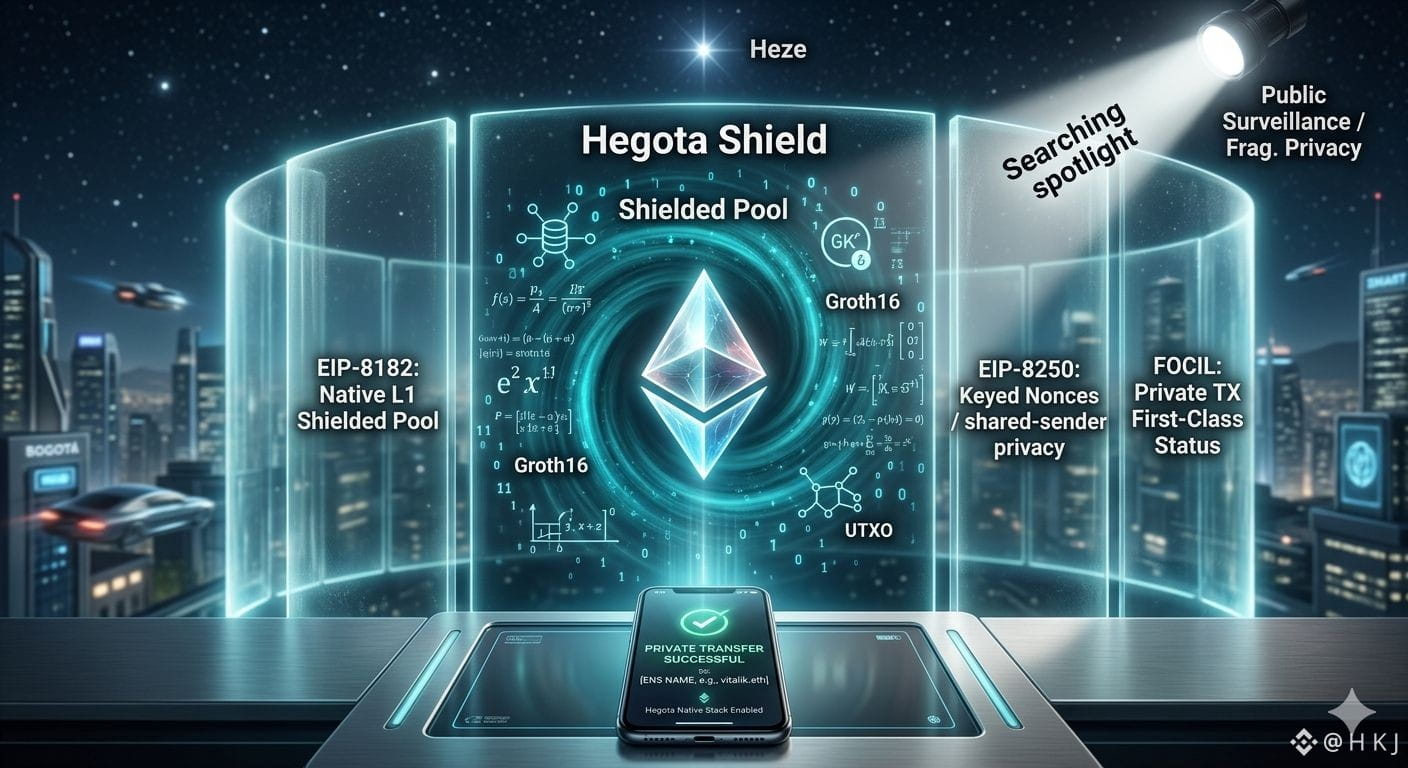

Big privacy move incoming!
EIP-8182 proposed for Hegota upgrade (H2 2026) — Native shielded transfers for ETH & ERC-20 tokens using ZK proofs.
No more fragmented privacy tools. One protocol-level privacy pool on Ethereum mainnet 👀
Ethereum getting serious about on-chain privacy!
Who’s bullish on this? 🔒
#Ethereum #Hegota #Privacy #EIP8182 #EthereumHegotaUpgradePrivacyTransfers
$ETH
$DRIFT
$PHA
EIP-8182 proposed for Hegota upgrade (H2 2026) — Native shielded transfers for ETH & ERC-20 tokens using ZK proofs.
No more fragmented privacy tools. One protocol-level privacy pool on Ethereum mainnet 👀
Ethereum getting serious about on-chain privacy!
Who’s bullish on this? 🔒
#Ethereum #Hegota #Privacy #EIP8182 #EthereumHegotaUpgradePrivacyTransfers
$ETH
$DRIFT
$PHA


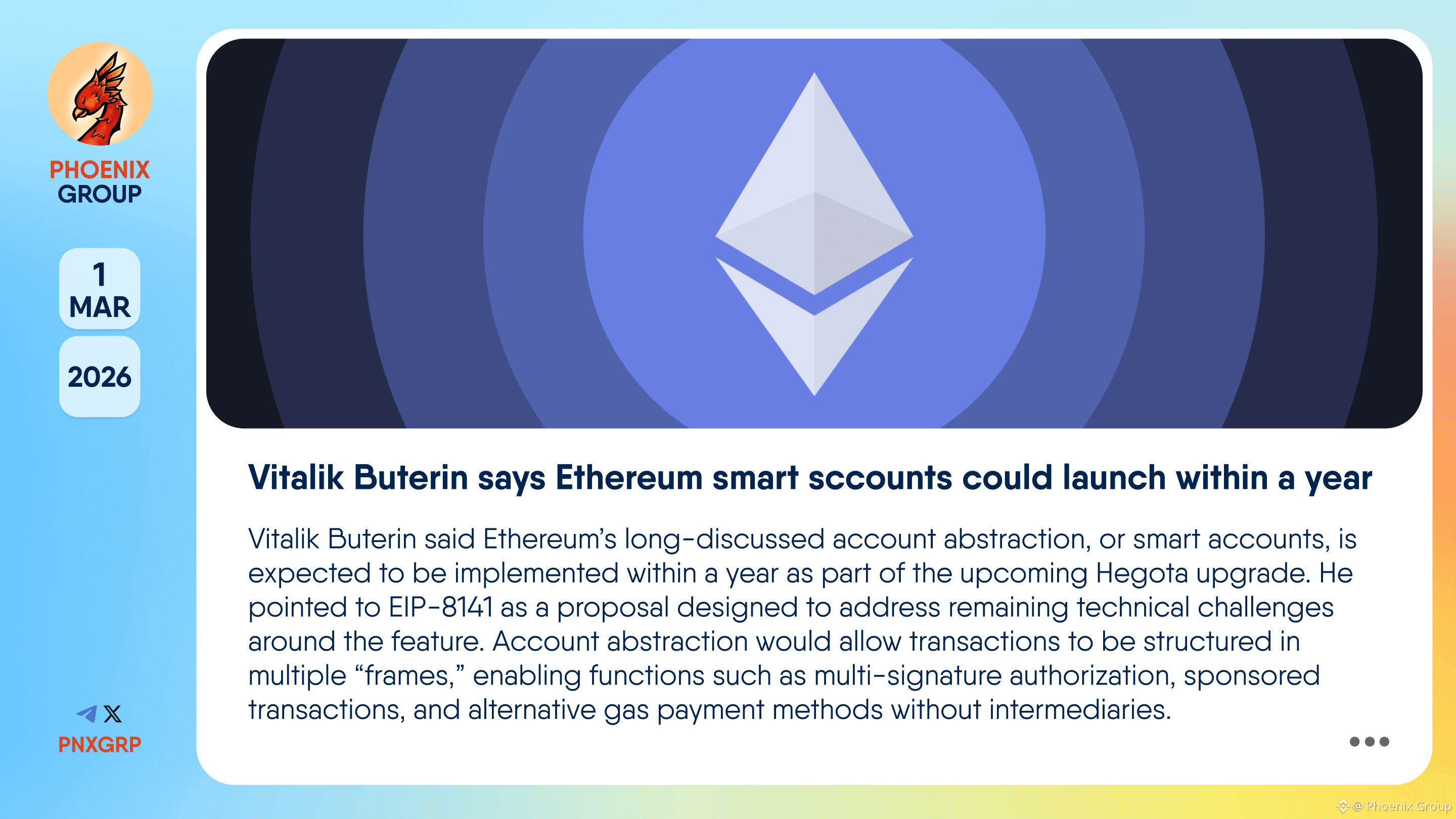
Vitalik Buterin says Ethereum smart sccounts could launch within a year
Vitalik Buterin said #Ethereum ’s long-discussed account abstraction, or smart accounts, is expected to be implemented within a year as part of the upcoming #Hegota upgrade. He pointed to EIP-8141 as a proposal designed to address remaining technical challenges around the feature.
Account abstraction would allow transactions to be structured in multiple “frames,” enabling functions such as multi-signature authorization, sponsored transactions, and alternative gas payment methods without intermediaries.
Vitalik Buterin said #Ethereum ’s long-discussed account abstraction, or smart accounts, is expected to be implemented within a year as part of the upcoming #Hegota upgrade. He pointed to EIP-8141 as a proposal designed to address remaining technical challenges around the feature.
Account abstraction would allow transactions to be structured in multiple “frames,” enabling functions such as multi-signature authorization, sponsored transactions, and alternative gas payment methods without intermediaries.

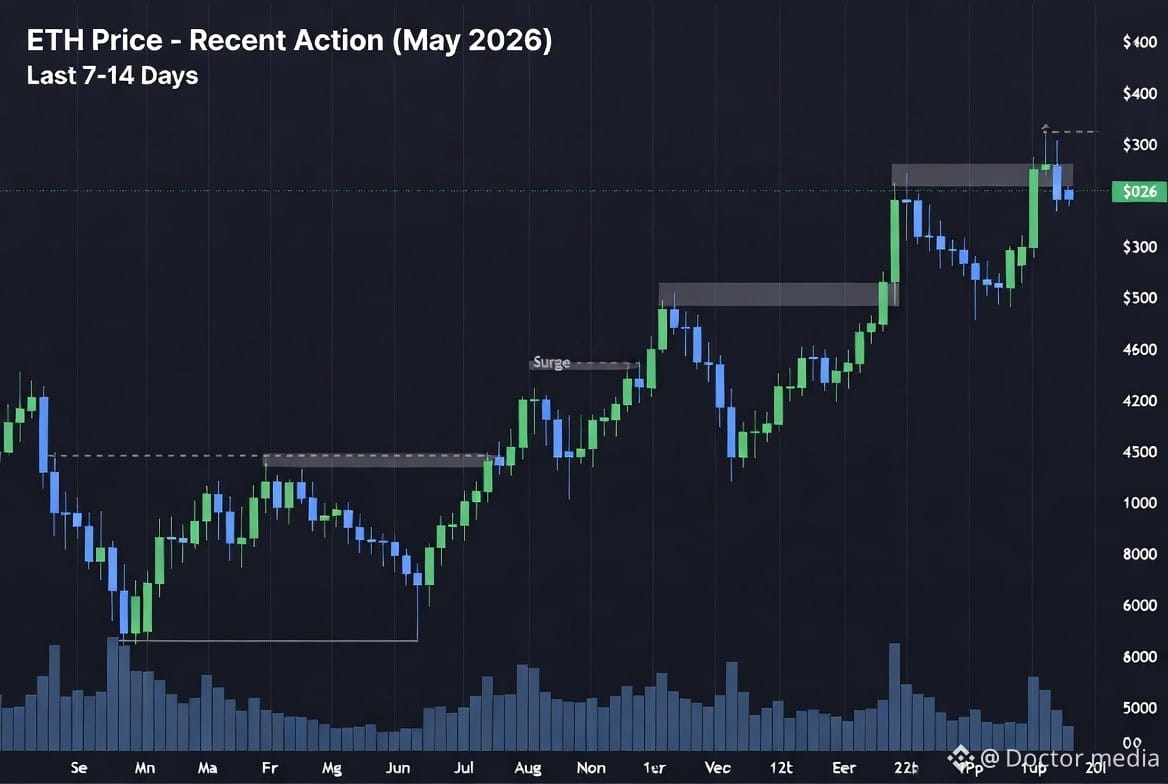
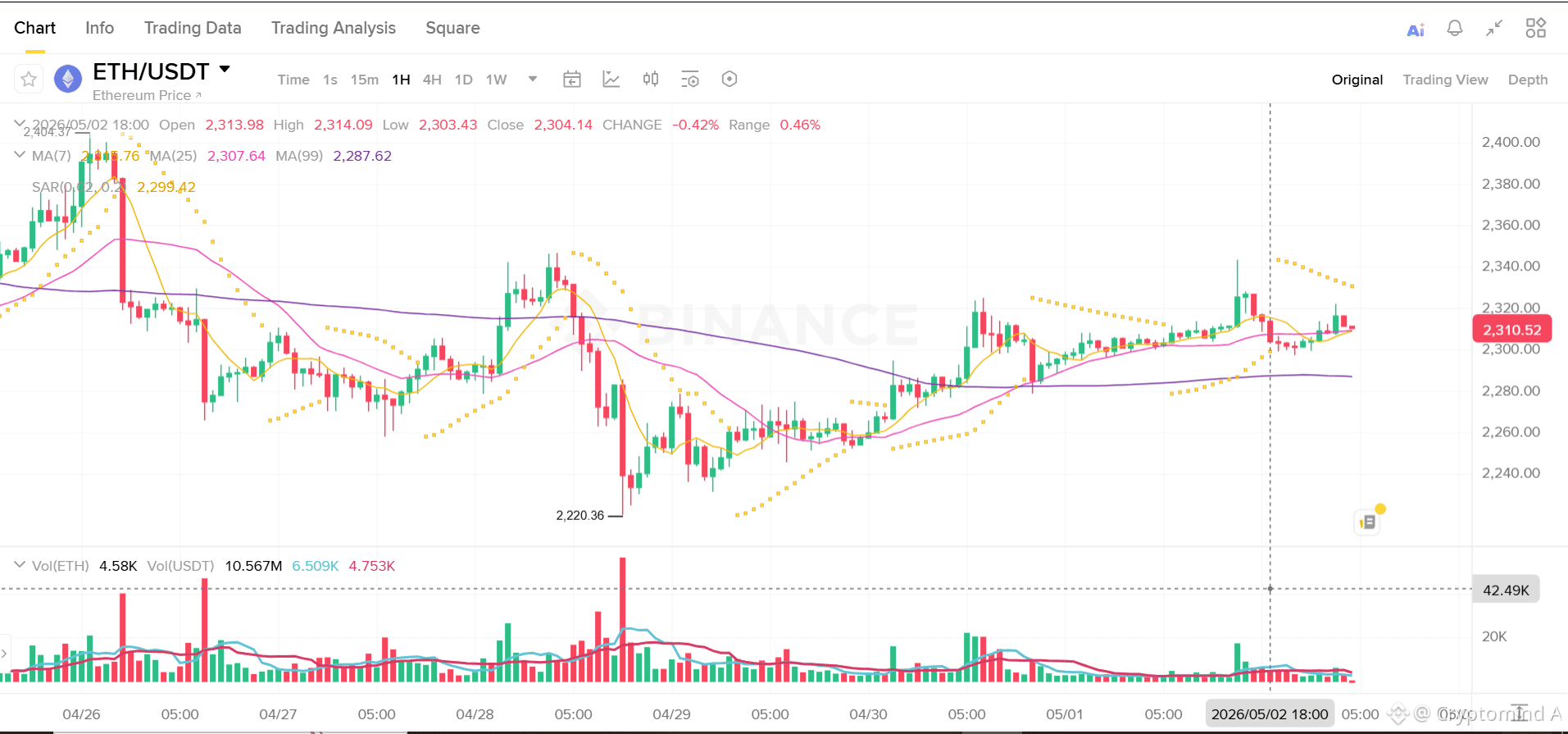
100+ $ETH developers just met and finalized the roadmap that could 3x ETH from here.
Most people haven't read a single word about it.
$ETH Glamsterdam upgrade here's what's actually changing:
🔥 Gas fees: -78.6%
🔥 Speed: 10,000 TPS (10x current)
🔥 Gas limit: 60M → 200M
🔥 Block building: trustless and on-chain for the first time
🔥 Parallel execution: multiple transactions simultaneously
While retail watches meme coins smart money is HERE:
✅ All 10 ETH spot ETFs turned net positive simultaneously in April first time ever
✅ 6.45M ETH accumulated in 15 weeks by smart wallets
✅ Ethereum Foundation staked $93M of their own ETH
✅ Citi target: $3,175. Standard Chartered: $7,500.
The trade:
🟢 Accumulate: $2,100–$2,300
🎯 Target: $3,000–$3,175 pre-launch
⚠️ Trim at launch — "sell the news" historically hits 10–15%
🛑 Stop: Below $2,000
After Glamsterdam? Hegotá comes in H2 2026. This is a full year of catalysts.
The meme coins get the headlines. ETH gets the institutional money. You decide which one you want to hold. 🎯
#ETH #Glamsterdam #HEGOTA
Most people haven't read a single word about it.
$ETH Glamsterdam upgrade here's what's actually changing:
🔥 Gas fees: -78.6%
🔥 Speed: 10,000 TPS (10x current)
🔥 Gas limit: 60M → 200M
🔥 Block building: trustless and on-chain for the first time
🔥 Parallel execution: multiple transactions simultaneously
While retail watches meme coins smart money is HERE:
✅ All 10 ETH spot ETFs turned net positive simultaneously in April first time ever
✅ 6.45M ETH accumulated in 15 weeks by smart wallets
✅ Ethereum Foundation staked $93M of their own ETH
✅ Citi target: $3,175. Standard Chartered: $7,500.
The trade:
🟢 Accumulate: $2,100–$2,300
🎯 Target: $3,000–$3,175 pre-launch
⚠️ Trim at launch — "sell the news" historically hits 10–15%
🛑 Stop: Below $2,000
After Glamsterdam? Hegotá comes in H2 2026. This is a full year of catalysts.
The meme coins get the headlines. ETH gets the institutional money. You decide which one you want to hold. 🎯
#ETH #Glamsterdam #HEGOTA

#EthereumHegotaUpgradePrivacyTransfers
Ethereum's upcoming Hegota upgrade is set to introduce native privacy for token transfers. 🛡️
Using zero-knowledge proofs (ZKPs), the upgrade allows users to send ETH and ERC-20 tokens without revealing sender, receiver, or amount on-chain. No more reliance on third-party mixers like Tornado Cash.
💡 Key benefits:
· Enhanced user privacy by default
· Regulatory-compliant design (optional privacy)
· Potential for wider institutional adoption
This could be a game-changer for on-chain privacy. Will other L1s follow suit? 👇
#EthereumEFT #Hegota #Privacy #CryptoUpgrade
Ethereum's upcoming Hegota upgrade is set to introduce native privacy for token transfers. 🛡️
Using zero-knowledge proofs (ZKPs), the upgrade allows users to send ETH and ERC-20 tokens without revealing sender, receiver, or amount on-chain. No more reliance on third-party mixers like Tornado Cash.
💡 Key benefits:
· Enhanced user privacy by default
· Regulatory-compliant design (optional privacy)
· Potential for wider institutional adoption
This could be a game-changer for on-chain privacy. Will other L1s follow suit? 👇
#EthereumEFT #Hegota #Privacy #CryptoUpgrade
Log in to explore more content