
#followlikecomment
followlikecomment
17,202 views
52 Discussing
Hot
Latest

🧧 Some people scroll. Others discover opportunities.
Which one are you? 👇🏻
Every day at Digital Mahanadi, a new Red Packet is waiting to be claimed. It's a simple way to stay connected, explore something new, and enjoy daily surprises.
🎁 New Red Packet. Every Day.
✨ Open to everyone.
📲 Follow now and don't miss tomorrow's surprise.
The next Red Packet could be waiting for you.
#DailyRewards #StayConnected #DigitalMahanadi #FollowLikeComment

27
2
5
222

Clawback policies and unvested equity rules apply when an executive exits amid an investigation?When an executive exits amid an investigation, clawback policies and unvested equity rules operate on two distinct tracks: mandatory financial-restatement clawbacks (which do not require proving personal fault) and misconduct / "for cause" clawbacks and equity forfeitures (which depend heavily on employment contracts, grant agreements, and investigative findings).
1. Mandatory Restatement Clawbacks vs. Misconduct Clawbacks
Accounting Restatement Clawbacks (No-Fault Trigger): Under exchange listing standards implementing SEC Rule 10D-1, public companies must recover erroneously awarded incentive-based compensation received by covered executive officers over the three completed fiscal years preceding an accounting restatement ("Big R" or "little r"). Crucially, this recovery is triggered by the accounting error itself—not by proving the departing executive acted with bad intent or personal misconduct—and applies to incentive awards tied to financial reporting measures, stock price, or total shareholder return (TSR).Misconduct / "Cause" Clawbacks (Fault-Based): Many companies also maintain separate supplemental clawback policies covering detrimental conduct, fraud, ethics violations, or regulatory/compliance breaches, even when no accounting restatement occurs. Enforcement here typically turns on whether the investigation establishes misconduct or a "for cause" violation under the company’s policy and contract terms.Limited Exceptions & No Indemnification: Mandatory restatement clawbacks allow only narrow exceptions (such as impracticability due to third-party recovery costs exceeding the amount recoverable or conflict with certain pre-existing home-country laws), and companies generally cannot indemnify executives for clawed-back incentive pay or pay insurance premiums shielding them from recovery.
2. How Unvested Equity Is Treated During & After an Exit
Unvested awards—such as RSUs (Restricted Stock Units), PSUs (Performance Stock Units), or unvested stock options—are governed primarily by the underlying equity plan and grant agreement rather than automatic statutory clawback rules:
Standard Forfeiture Upon Departure: In most equity plans, unvested shares or options are forfeited immediately upon termination or resignation unless a specific exception applies (such as retirement, death/disability, or negotiated severance).Good Reason / Without Cause vs. "For Cause": Departures during an investigation often create a dispute over how the exit is characterized. A "for cause" termination or finding of misconduct typically wipes out unvested equity and can cut off severance, whereas a resignation or negotiated separation without a "cause" finding may leave certain transition or severance terms open to negotiation—and potential legal challenge.Suspension or Tolling Pending Fact-Finding: Some equity agreements or transition arrangements allow the board or compensation committee to suspend vesting, hold back settlement, or toll forfeiture determinations while an active investigation is underway, preventing premature payouts before facts are verified.
3. Practical Friction Points for Boards and Departing Executives
4. What Boards Typically Watch
When an exit happens mid-probe, compensation and governance committees generally focus on documenting the factual record, applying policy terms consistently (to avoid selective enforcement or fiduciary claims), and aligning any separation or settlement terms with audit and legal findings so short-term expediency does not create larger regulatory or shareholder liability later.
#Binance #FollowLikeComment #Follow4more
Clawback policies and unvested equity rules apply when an executive exits amid an investigation?
When an executive exits amid an investigation, clawback policies and unvested equity rules operate on two distinct tracks: mandatory financial-restatement clawbacks (which do not require proving personal fault) and misconduct / "for cause" clawbacks and equity forfeitures (which depend heavily on employment contracts, grant agreements, and investigative findings).
1. Mandatory Restatement Clawbacks vs. Misconduct Clawbacks
Accounting Restatement Clawbacks (No-Fault Trigger): Under exchange listing standards implementing SEC Rule 10D-1, public companies must recover erroneously awarded incentive-based compensation received by covered executive officers over the three completed fiscal years preceding an accounting restatement ("Big R" or "little r"). Crucially, this recovery is triggered by the accounting error itself—not by proving the departing executive acted with bad intent or personal misconduct—and applies to incentive awards tied to financial reporting measures, stock price, or total shareholder return (TSR).Misconduct / "Cause" Clawbacks (Fault-Based): Many companies also maintain separate supplemental clawback policies covering detrimental conduct, fraud, ethics violations, or regulatory/compliance breaches, even when no accounting restatement occurs. Enforcement here typically turns on whether the investigation establishes misconduct or a "for cause" violation under the company’s policy and contract terms.Limited Exceptions & No Indemnification: Mandatory restatement clawbacks allow only narrow exceptions (such as impracticability due to third-party recovery costs exceeding the amount recoverable or conflict with certain pre-existing home-country laws), and companies generally cannot indemnify executives for clawed-back incentive pay or pay insurance premiums shielding them from recovery.
2. How Unvested Equity Is Treated During & After an Exit
Unvested awards—such as RSUs (Restricted Stock Units), PSUs (Performance Stock Units), or unvested stock options—are governed primarily by the underlying equity plan and grant agreement rather than automatic statutory clawback rules:
Standard Forfeiture Upon Departure: In most equity plans, unvested shares or options are forfeited immediately upon termination or resignation unless a specific exception applies (such as retirement, death/disability, or negotiated severance).Good Reason / Without Cause vs. "For Cause": Departures during an investigation often create a dispute over how the exit is characterized. A "for cause" termination or finding of misconduct typically wipes out unvested equity and can cut off severance, whereas a resignation or negotiated separation without a "cause" finding may leave certain transition or severance terms open to negotiation—and potential legal challenge.Suspension or Tolling Pending Fact-Finding: Some equity agreements or transition arrangements allow the board or compensation committee to suspend vesting, hold back settlement, or toll forfeiture determinations while an active investigation is underway, preventing premature payouts before facts are verified.
3. Practical Friction Points for Boards and Departing Executives
4. What Boards Typically Watch
When an exit happens mid-probe, compensation and governance committees generally focus on documenting the factual record, applying policy terms consistently (to avoid selective enforcement or fiduciary claims), and aligning any separation or settlement terms with audit and legal findings so short-term expediency does not create larger regulatory or shareholder liability later.
#Binance #FollowLikeComment #Follow4more
8
Governance dimension—often overlooked until a leadership crisis hitsAnother key governance dimension—often overlooked until a leadership crisis hits—is how executive compensation, clawbacks, and retention packages are structured during and after an abrupt founder exit. When a founding CEO steps down amid an investigation or market turmoil, compensation committees must balance retaining essential technical or commercial talent against avoiding "rewards for failure" or payouts that could be clawed back or challenged by shareholders and regulators.
How Compensation & Retention Shape Post-Exit Stability
Clawbacks, Forfeitures & Unvested Equity: Investigations into compliance, accounting, or misconduct often trigger scrutiny over whether bonuses, performance awards, or unvested equity should be forfeited, frozen, or recovered under clawback policies. Leaving those mechanics ambiguous can fuel shareholder lawsuits and complicate negotiations with departing or interim executives.Interim & Successor Pay Alignment: Interim CEOs frequently take on outsized legal, regulatory, and operational risk without knowing how long their tenure will last. Boards typically pair base salary adjustments or time-bound retention grants with clear performance and governance milestones rather than open-ended windfalls.Preventing Secondary Talent Flight: Key engineers, product leads, or finance and compliance executives often hold equity or career plans closely tied to the founder’s vision. Targeted retention awards—vesting across stabilization milestones—can keep critical operators in place while the board completes its review and builds a durable leadership team.
#BinanceSquareFamily #FollowLikeComment #Follow4more
Governance dimension—often overlooked until a leadership crisis hits
Another key governance dimension—often overlooked until a leadership crisis hits—is how executive compensation, clawbacks, and retention packages are structured during and after an abrupt founder exit. When a founding CEO steps down amid an investigation or market turmoil, compensation committees must balance retaining essential technical or commercial talent against avoiding "rewards for failure" or payouts that could be clawed back or challenged by shareholders and regulators.
How Compensation & Retention Shape Post-Exit Stability
Clawbacks, Forfeitures & Unvested Equity: Investigations into compliance, accounting, or misconduct often trigger scrutiny over whether bonuses, performance awards, or unvested equity should be forfeited, frozen, or recovered under clawback policies. Leaving those mechanics ambiguous can fuel shareholder lawsuits and complicate negotiations with departing or interim executives.Interim & Successor Pay Alignment: Interim CEOs frequently take on outsized legal, regulatory, and operational risk without knowing how long their tenure will last. Boards typically pair base salary adjustments or time-bound retention grants with clear performance and governance milestones rather than open-ended windfalls.Preventing Secondary Talent Flight: Key engineers, product leads, or finance and compliance executives often hold equity or career plans closely tied to the founder’s vision. Targeted retention awards—vesting across stabilization milestones—can keep critical operators in place while the board completes its review and builds a durable leadership team.
#BinanceSquareFamily #FollowLikeComment #Follow4more
9
Carried-forward short-term and long-term losses offset gains when both types exist in a later year?When both carried-forward short-term losses and carried-forward long-term losses exist in a later tax year alongside current-year gains, the IRS enforces a strict two-stage netting order on Schedule D.
Carried-forward losses preserve their original character (short-term vs. long-term) indefinitely.
1. Stage 1: Intra-Category Netting (Same Character First)
Before short-term and long-term items cross paths, each category nets within its own basket on Schedule D:
Short-Term Basket (Schedule D, Part I): Current-year short-term gains and losses net against your Short-Term Loss Carryover (entered on Line 6). The result is your Net Short-Term Gain or Loss (Line 7).Long-Term Basket (Schedule D, Part II): Current-year long-term gains and losses net against your Long-Term Loss Carryover (entered on Line 14). The result is your Net Long-Term Gain or Loss (Line 15).
2. Stage 2: Inter-Category Netting (Cross-Over)
If one basket ends up positive (net gain) and the other ends up negative (net loss), the remaining net loss spills over to offset the other basket's gain on Schedule D, Line 16.
Step-by-Step Scenario Examples
Scenario A: You Have Current-Year Gains in BOTH Categories
Inputs:Short-Term Carryover: -$5,000 | Current Short-Term Gain: +$4,000Long-Term Carryover: -$8,000 | Current Long-Term Gain: +$10,000Stage 1 (Same Character):Short-Term: $+\$4,000 - \$5,000 = \mathbf{-\$1,000}$ (Net Short-Term Loss)Long-Term: $+\$10,000 - \$8,000 = \mathbf{+\$2,000}$ (Net Long-Term Gain)Stage 2 (Cross-Over):$-\$1,000\text{ (ST Loss)} + \$2,000\text{ (LT Gain)} = \mathbf{+\$1,000}$ Net Long-Term Capital Gain.Tax Outcome: You owe tax on a net gain of $1,000 at preferential long-term rates.
Scenario B: One Loss Carryover Exceeds Its Basket (Spillover)
Inputs:Short-Term Carryover: -$10,000 | Current Short-Term Gain: +$2,000Long-Term Carryover: -$2,000 | Current Long-Term Gain: +$5,000Stage 1 (Same Character):Short-Term: $+\$2,000 - \$10,000 = \mathbf{-\$8,000}$ (Net Short-Term Loss)Long-Term: $+\$5,000 - \$2,000 = \mathbf{+\$3,000}$ (Net Long-Term Gain)Stage 2 (Cross-Over):$-\$8,000\text{ (ST Loss)} + \$3,000\text{ (LT Gain)} = \mathbf{-\$5,000}$ Net Overall Loss.Tax Outcome:Deduct $3,000 against ordinary income (W-2 salary/wages) on Form 1040, Line 7a.The remaining $2,000 loss carries forward to the following tax year as a Short-Term Loss Carryover.
Key Takeaways for Multi-Year Netting
Short-Term Losses are Tax-Optimal: Short-term losses offset high-tax short-term gains first. If any short-term loss remains, it crosses over to wipe out lower-tax long-term gains.Order of Absorption for Ordinary Income: When total net losses exceed total gains, the $3,000 ordinary income deduction absorbs short-term losses before long-term losses on the Capital Loss Carryover Worksheet.Line Verification: Always verify that prior-year carryovers land on Line 6 (Short-Term) and Line 14 (Long-Term) on Schedule D.
#Binance #FollowLikeComment #Follow4more
Carried-forward short-term and long-term losses offset gains when both types exist in a later year?
When both carried-forward short-term losses and carried-forward long-term losses exist in a later tax year alongside current-year gains, the IRS enforces a strict two-stage netting order on Schedule D.
Carried-forward losses preserve their original character (short-term vs. long-term) indefinitely.
1. Stage 1: Intra-Category Netting (Same Character First)
Before short-term and long-term items cross paths, each category nets within its own basket on Schedule D:
Short-Term Basket (Schedule D, Part I): Current-year short-term gains and losses net against your Short-Term Loss Carryover (entered on Line 6). The result is your Net Short-Term Gain or Loss (Line 7).Long-Term Basket (Schedule D, Part II): Current-year long-term gains and losses net against your Long-Term Loss Carryover (entered on Line 14). The result is your Net Long-Term Gain or Loss (Line 15).
2. Stage 2: Inter-Category Netting (Cross-Over)
If one basket ends up positive (net gain) and the other ends up negative (net loss), the remaining net loss spills over to offset the other basket's gain on Schedule D, Line 16.
Step-by-Step Scenario Examples
Scenario A: You Have Current-Year Gains in BOTH Categories
Inputs:Short-Term Carryover: -$5,000 | Current Short-Term Gain: +$4,000Long-Term Carryover: -$8,000 | Current Long-Term Gain: +$10,000Stage 1 (Same Character):Short-Term: $+\$4,000 - \$5,000 = \mathbf{-\$1,000}$ (Net Short-Term Loss)Long-Term: $+\$10,000 - \$8,000 = \mathbf{+\$2,000}$ (Net Long-Term Gain)Stage 2 (Cross-Over):$-\$1,000\text{ (ST Loss)} + \$2,000\text{ (LT Gain)} = \mathbf{+\$1,000}$ Net Long-Term Capital Gain.Tax Outcome: You owe tax on a net gain of $1,000 at preferential long-term rates.
Scenario B: One Loss Carryover Exceeds Its Basket (Spillover)
Inputs:Short-Term Carryover: -$10,000 | Current Short-Term Gain: +$2,000Long-Term Carryover: -$2,000 | Current Long-Term Gain: +$5,000Stage 1 (Same Character):Short-Term: $+\$2,000 - \$10,000 = \mathbf{-\$8,000}$ (Net Short-Term Loss)Long-Term: $+\$5,000 - \$2,000 = \mathbf{+\$3,000}$ (Net Long-Term Gain)Stage 2 (Cross-Over):$-\$8,000\text{ (ST Loss)} + \$3,000\text{ (LT Gain)} = \mathbf{-\$5,000}$ Net Overall Loss.Tax Outcome:Deduct $3,000 against ordinary income (W-2 salary/wages) on Form 1040, Line 7a.The remaining $2,000 loss carries forward to the following tax year as a Short-Term Loss Carryover.
Key Takeaways for Multi-Year Netting
Short-Term Losses are Tax-Optimal: Short-term losses offset high-tax short-term gains first. If any short-term loss remains, it crosses over to wipe out lower-tax long-term gains.Order of Absorption for Ordinary Income: When total net losses exceed total gains, the $3,000 ordinary income deduction absorbs short-term losses before long-term losses on the Capital Loss Carryover Worksheet.Line Verification: Always verify that prior-year carryovers land on Line 6 (Short-Term) and Line 14 (Long-Term) on Schedule D.
#Binance #FollowLikeComment #Follow4more
4

·
--
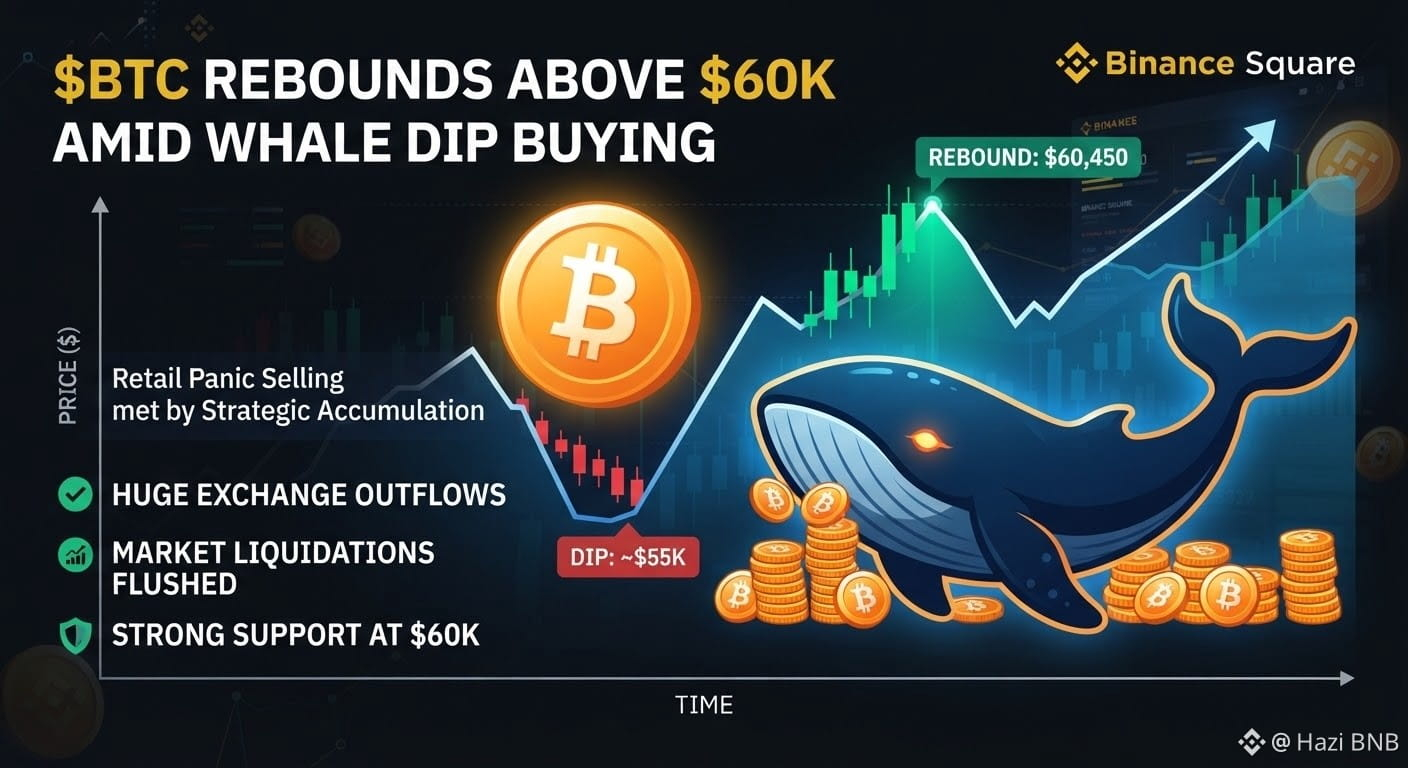
#BTCReboundsAbove$60KAmidWhaleDipBuying
Bitcoin Bounces Back Above $60,000 as Whales Buy the Dip 📉➡️📈
Following a sharp correction near $55K and heavy market liquidations, $BTC has recovered above the critical $60K mark.
What’s driving the move?
🔹 Whale Accumulation: Large institutional wallets stepped in to absorb the panic selling at lower levels.
🔹 Leverage Reset: Roughly $1.8B in liquidations cleared out over-leveraged positions.
What to watch next:
Holding above $60,000 is key for bulls to build momentum toward the $62K+ resistance zone. A breakdown back below could trigger another retest of lower support.
Are you buying this bounce or waiting for confirmation? 🤔
$BTC #FollowLikeComment #BTC #BinanceSquareTalks $EDEN
{future}(EDENUSDT)
#BTCReboundsAbove$60KAmidWhaleDipBuying
Bitcoin Bounces Back Above $60,000 as Whales Buy the Dip 📉➡️📈
Following a sharp correction near $55K and heavy market liquidations, $BTC has recovered above the critical $60K mark.
What’s driving the move?
🔹 Whale Accumulation: Large institutional wallets stepped in to absorb the panic selling at lower levels.
🔹 Leverage Reset: Roughly $1.8B in liquidations cleared out over-leveraged positions.
What to watch next:
Holding above $60,000 is key for bulls to build momentum toward the $62K+ resistance zone. A breakdown back below could trigger another retest of lower support.
Are you buying this bounce or waiting for confirmation? 🤔
$BTC #FollowLikeComment #BTC #BinanceSquareTalks $EDEN
89



·
--
Grab your reward here 🎁
✅ Like
✅ Repost
✅ Comment
✅ Follow
Good luck to everyone! 🚀
#RedPacketMission #FollowLikeComment #Airdrop #FreeCrypto #CryptoCommunityAlert
Grab your reward here 🎁
✅ Like
✅ Repost
✅ Comment
✅ Follow
Good luck to everyone! 🚀
#RedPacketMission #FollowLikeComment #Airdrop #FreeCrypto #CryptoCommunityAlert
✅ Like
✅ Repost
✅ Comment
✅ Follow
Good luck to everyone! 🚀
#RedPacketMission #FollowLikeComment #Airdrop #FreeCrypto #CryptoCommunityAlert
12
2
121

·
--
Bullish


Max_Crypto100x
·
--
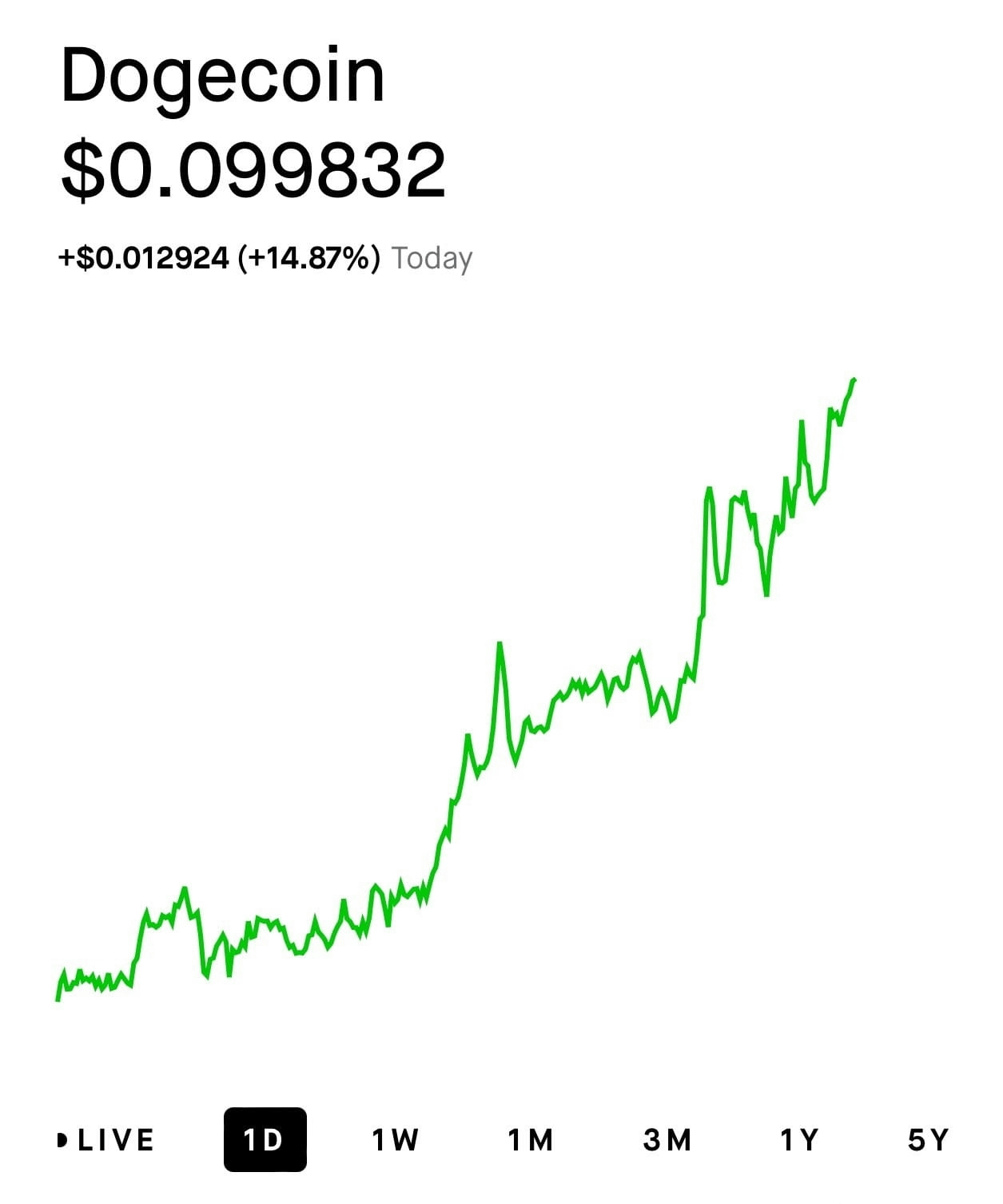
Bullishhold is Gold buy now $DOGE I think it will be $0.11-$0.12-0.15_$1
Just wait Guy's 🔥🚀🔥🚀Big Pump Very soooon 🚀🚀🚀
Just wait Guy's 🔥🚀🔥🚀Big Pump Very soooon 🚀🚀🚀

1
12


Log in to explore more content
Join global crypto users on Binance Square
⚡️ Get latest and useful information about crypto.
💬 Trusted by the world’s largest crypto exchange.
👍 Discover real insights from verified creators.
Email / Phone number
Trending Topics
1
#CorePCEBeatLiftsFedHikeOdds
24,499 views
447 Discussing
2
#BitcoinAndStocksSlipAgainAmidTrump’sTariffPlans
111,656 views
1,388 Discussing
3
#JensenHuangSaysNvidiaDoesn’tNeedASuccessionPlan
58,206 views
810 Discussing
4
#NasdaqFuturesSlideMoreThan3%
4,869 views
134 Discussing
5
#USOctoberPCEPriceIndexAt0.3%MoM
4,943 views
124 Discussing
6
#BitcoinETFsPostRecord$4.94BNovemberOutflows
445 views
19 Discussing
7
#TetherInvestsInArgentinasLemon
3,489 views
64 Discussing
8
#AnthropicBreaksBelowIPOPriceAmidAISlump
179,672 views
1,528 Discussing
9
#SouthKoreaProposesCryptoExchangeStaffUseOwnPlatform
929 views
24 Discussing
10
#UkraineParliamentPassesVirtualAssetLegalizationBill
6,959 views
25 Discussing