
#cap
cap
390,800 views
3,727 Discussing
Hot
Latest

·
--
🚨 $CAP Is Knocking on a Major Resistance! Will Bulls Break Through? 👀📈
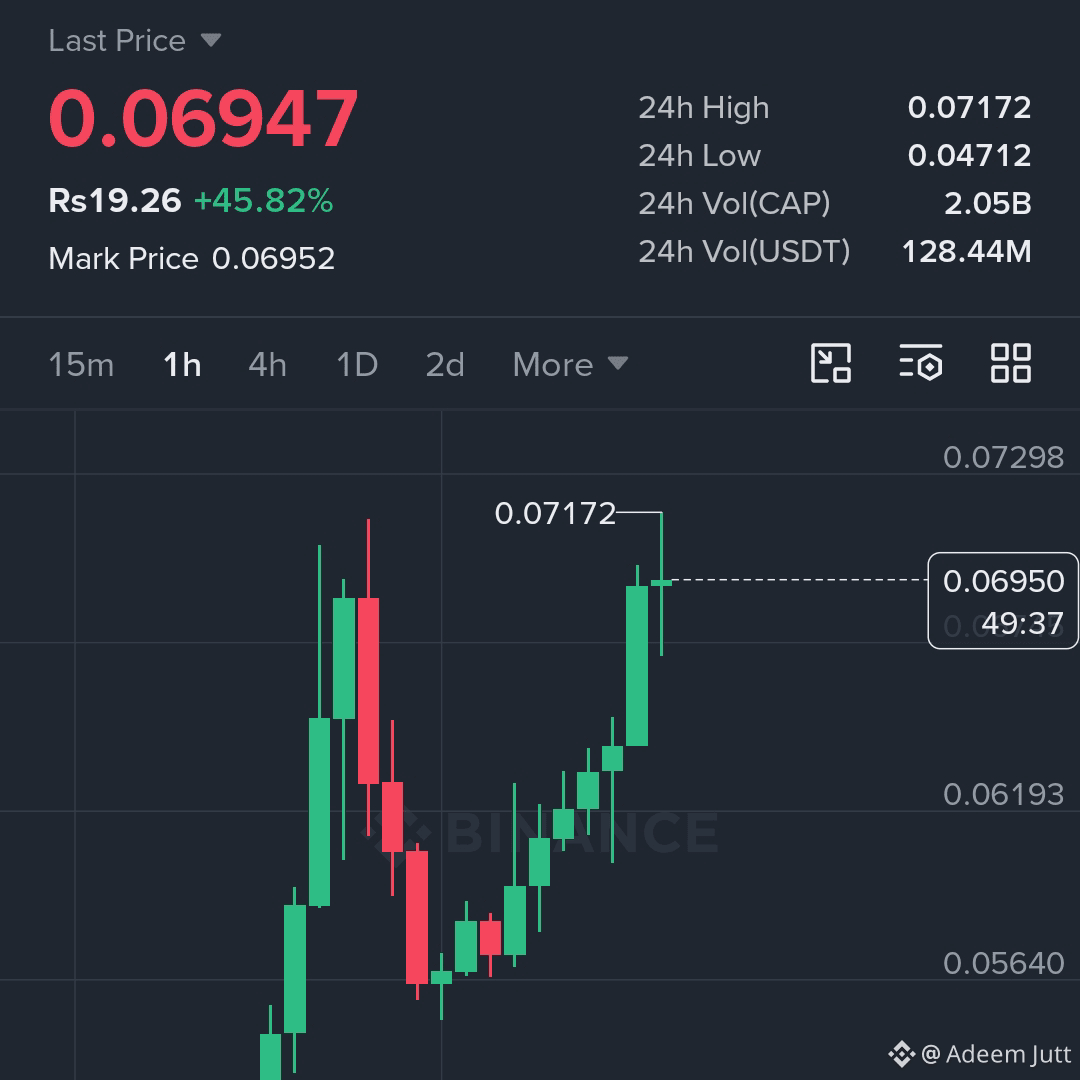
$CAP has surged over 45%, showing strong bullish momentum and forming a clear higher high/higher low structure on the 1H chart. Buyers remain in control, but the key resistance at 0.07172 is the level to watch.
📍 Trade Setup 🟢 Entry: Breakout above 0.07172 or buy the retest after confirmation.
🎯 TP1: 0.07450
🎯 TP2: 0.07750
🎯 TP3: 0.08000
🛑 SL: 0.06620
A successful breakout could trigger the next bullish leg, while rejection may lead to a healthy pullback before continuation.
Are you buying the breakout or waiting for a dip? Let me know below! 👇
$AIN
Trade Here 👇
{future}(CAPUSDT)
#CAP #GrayscalePutsXRPAt26.11%InAdvisorPortfolio #PhiladelphiaSemiconductorIndexFalls5.9% #SECChairUrgesCongressToAdvanceClarityAct #FedHikeOddsRiseTo89%
🚨 $CAP Is Knocking on a Major Resistance! Will Bulls Break Through? 👀📈
$CAP has surged over 45%, showing strong bullish momentum and forming a clear higher high/higher low structure on the 1H chart. Buyers remain in control, but the key resistance at 0.07172 is the level to watch.
📍 Trade Setup 🟢 Entry: Breakout above 0.07172 or buy the retest after confirmation.
🎯 TP1: 0.07450
🎯 TP2: 0.07750
🎯 TP3: 0.08000
🛑 SL: 0.06620
A successful breakout could trigger the next bullish leg, while rejection may lead to a healthy pullback before continuation.
Are you buying the breakout or waiting for a dip? Let me know below! 👇
$AIN
Trade Here 👇
#CAP #GrayscalePutsXRPAt26.11%InAdvisorPortfolio #PhiladelphiaSemiconductorIndexFalls5.9% #SECChairUrgesCongressToAdvanceClarityAct #FedHikeOddsRiseTo89%
$CAP has surged over 45%, showing strong bullish momentum and forming a clear higher high/higher low structure on the 1H chart. Buyers remain in control, but the key resistance at 0.07172 is the level to watch.
📍 Trade Setup 🟢 Entry: Breakout above 0.07172 or buy the retest after confirmation.
🎯 TP1: 0.07450
🎯 TP2: 0.07750
🎯 TP3: 0.08000
🛑 SL: 0.06620
A successful breakout could trigger the next bullish leg, while rejection may lead to a healthy pullback before continuation.
Are you buying the breakout or waiting for a dip? Let me know below! 👇
$AIN
Trade Here 👇
#CAP #GrayscalePutsXRPAt26.11%InAdvisorPortfolio #PhiladelphiaSemiconductorIndexFalls5.9% #SECChairUrgesCongressToAdvanceClarityAct #FedHikeOddsRiseTo89%
2
1
601


·
--
Bearish
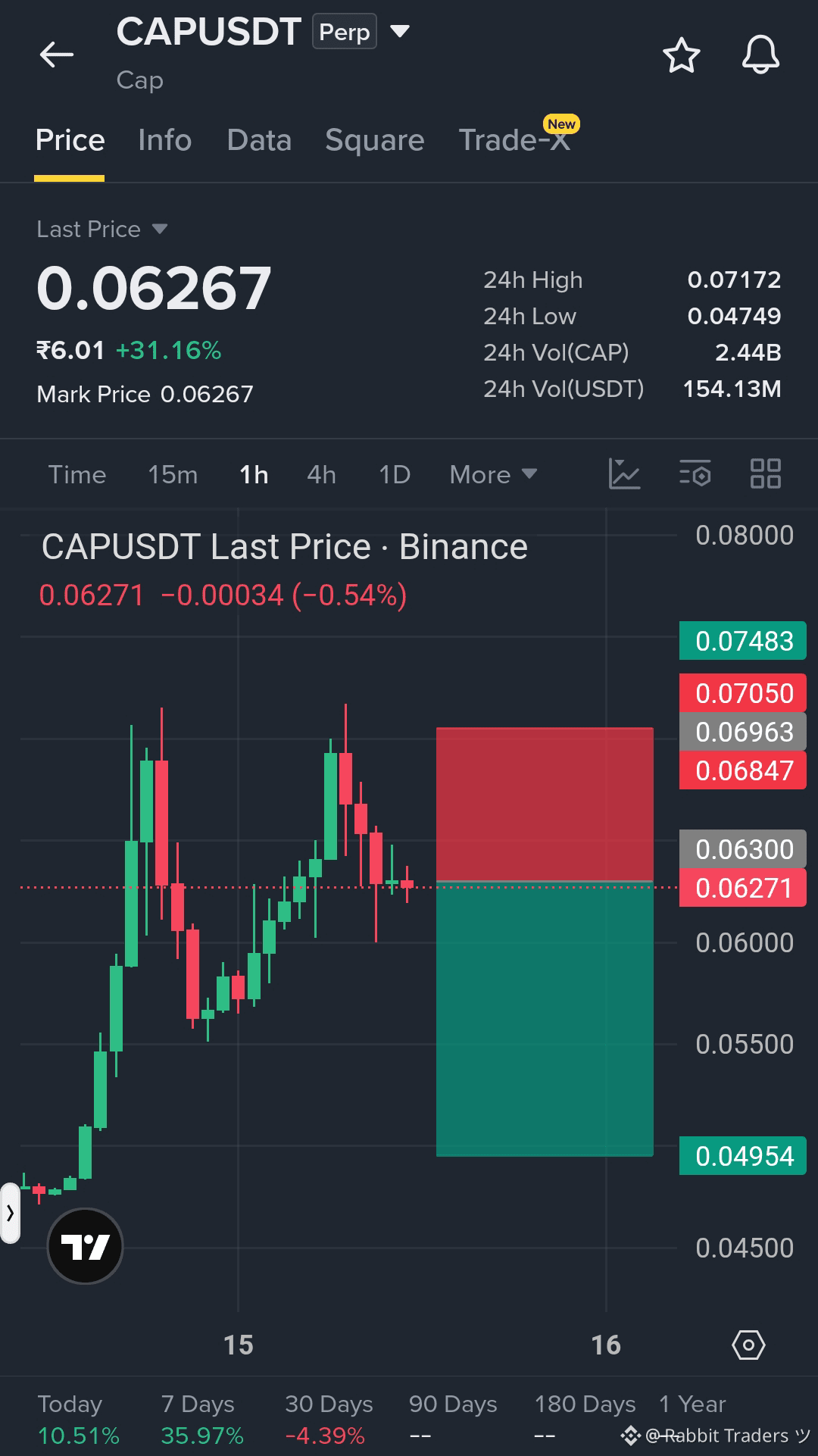
$CAP is showing a sharp move after already gaining around 31% today, so I’m not interested in chasing the upside here. On the 1H chart, price pushed toward the 0.069–0.071 area and started rejecting, while the recent candles are losing momentum. I’m watching for a continuation lower from this resistance zone.
📉 CAPUSDT SHORT SETUP
Entry: 0.06271 - 0.06847
TP1: 0.05950
TP2: 0.05450
TP3: 0.04954
SL: 0.07050
The key level for this setup is 0.069–0.0705. If price breaks and holds above that zone, the short idea is invalidated.
I’m treating this as a setup, not a guaranteed move. Manage leverage and risk accordingly.
What do you think rejection from resistance or another breakout?
{future}(CAPUSDT)
#CAP #CAPUSDT #Binance #crypto #FuturesTrading #TradingSetup
$CAP is showing a sharp move after already gaining around 31% today, so I’m not interested in chasing the upside here. On the 1H chart, price pushed toward the 0.069–0.071 area and started rejecting, while the recent candles are losing momentum. I’m watching for a continuation lower from this resistance zone.
📉 CAPUSDT SHORT SETUP
Entry: 0.06271 - 0.06847
TP1: 0.05950
TP2: 0.05450
TP3: 0.04954
SL: 0.07050
The key level for this setup is 0.069–0.0705. If price breaks and holds above that zone, the short idea is invalidated.
I’m treating this as a setup, not a guaranteed move. Manage leverage and risk accordingly.
What do you think rejection from resistance or another breakout?
#CAP #CAPUSDT #Binance #crypto #FuturesTrading #TradingSetup
📉 CAPUSDT SHORT SETUP
Entry: 0.06271 - 0.06847
TP1: 0.05950
TP2: 0.05450
TP3: 0.04954
SL: 0.07050
The key level for this setup is 0.069–0.0705. If price breaks and holds above that zone, the short idea is invalidated.
I’m treating this as a setup, not a guaranteed move. Manage leverage and risk accordingly.
What do you think rejection from resistance or another breakout?
#CAP #CAPUSDT #Binance #crypto #FuturesTrading #TradingSetup
102

·
--
$CAP – Long setup 🚀
{future}(CAPUSDT)
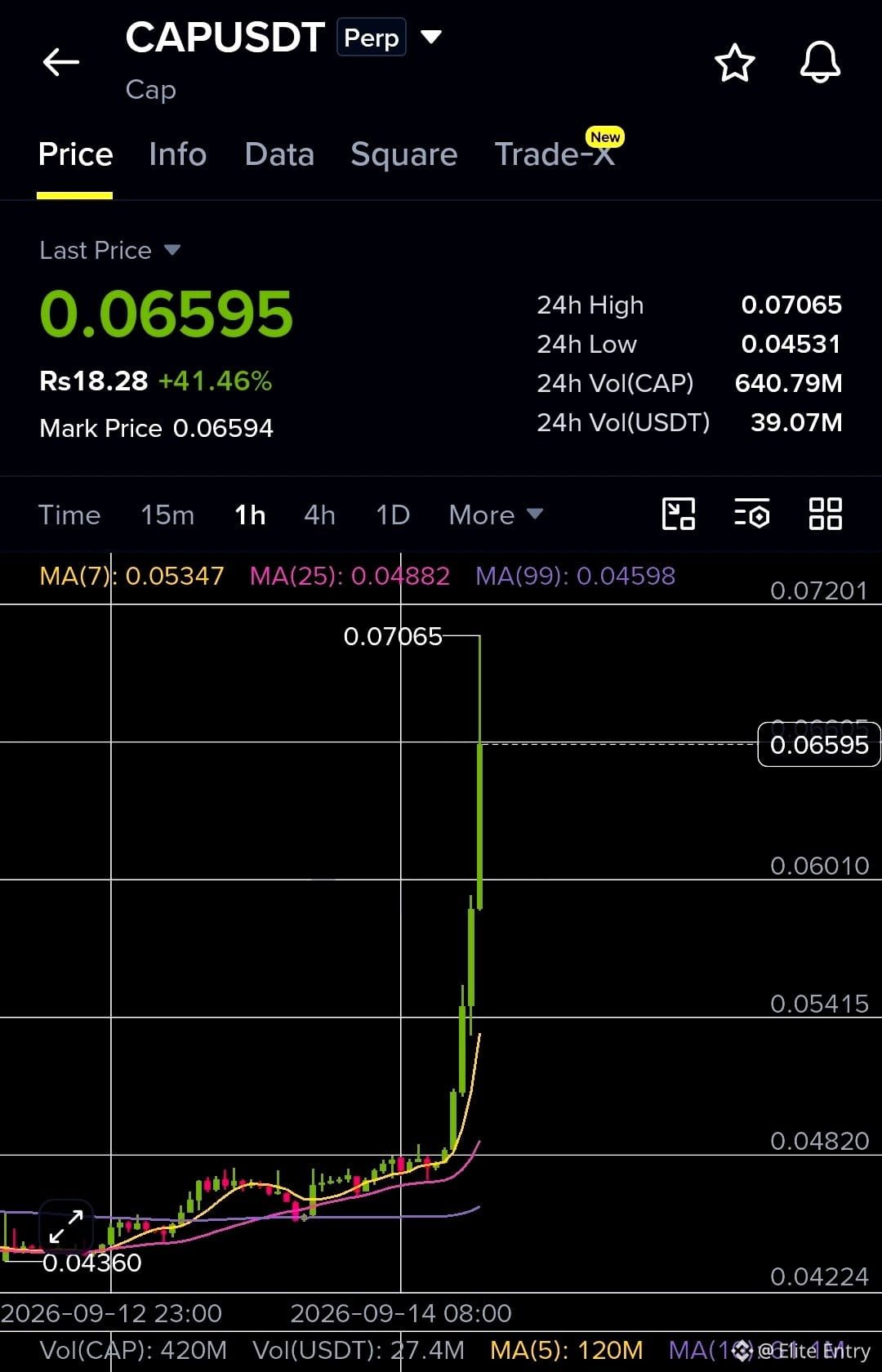
Price up 41% and holding above all MAs with strong volume. Break above 0.07065 = more upside ahead.
📌 Entry: 0.0650 – 0.0660
🛑 SL: 0.0600
🎯 TP1: 0.07065
🎯 TP2: 0.07500
🎯 TP3: 0.08000
⚡ Risk: 1–2% | Leverage: 5x–10x
#CAP
. .
i gave recently $BR signal that this will go more up so now you can also check
{future}(BRUSDT)
guys analysis on the $KOMA this will also continue pumping
{future}(KOMAUSDT)
$CAP – Long setup 🚀
Price up 41% and holding above all MAs with strong volume. Break above 0.07065 = more upside ahead.
📌 Entry: 0.0650 – 0.0660
🛑 SL: 0.0600
🎯 TP1: 0.07065
🎯 TP2: 0.07500
🎯 TP3: 0.08000
⚡ Risk: 1–2% | Leverage: 5x–10x
#CAP
. .
i gave recently $BR signal that this will go more up so now you can also check
guys analysis on the $KOMA this will also continue pumping
Price up 41% and holding above all MAs with strong volume. Break above 0.07065 = more upside ahead.
📌 Entry: 0.0650 – 0.0660
🛑 SL: 0.0600
🎯 TP1: 0.07065
🎯 TP2: 0.07500
🎯 TP3: 0.08000
⚡ Risk: 1–2% | Leverage: 5x–10x
#CAP
. .
i gave recently $BR signal that this will go more up so now you can also check
guys analysis on the $KOMA this will also continue pumping
BcryptexBTC:
Clean setup on $CAP bro Holding above MA7 MA25 MA99 with 640M volume is real momentum 0.07065 break opens the door to 0.08
1
1
1
495

·
--
$CAP has momentum, yet one timeframe is still pushing back against the move.
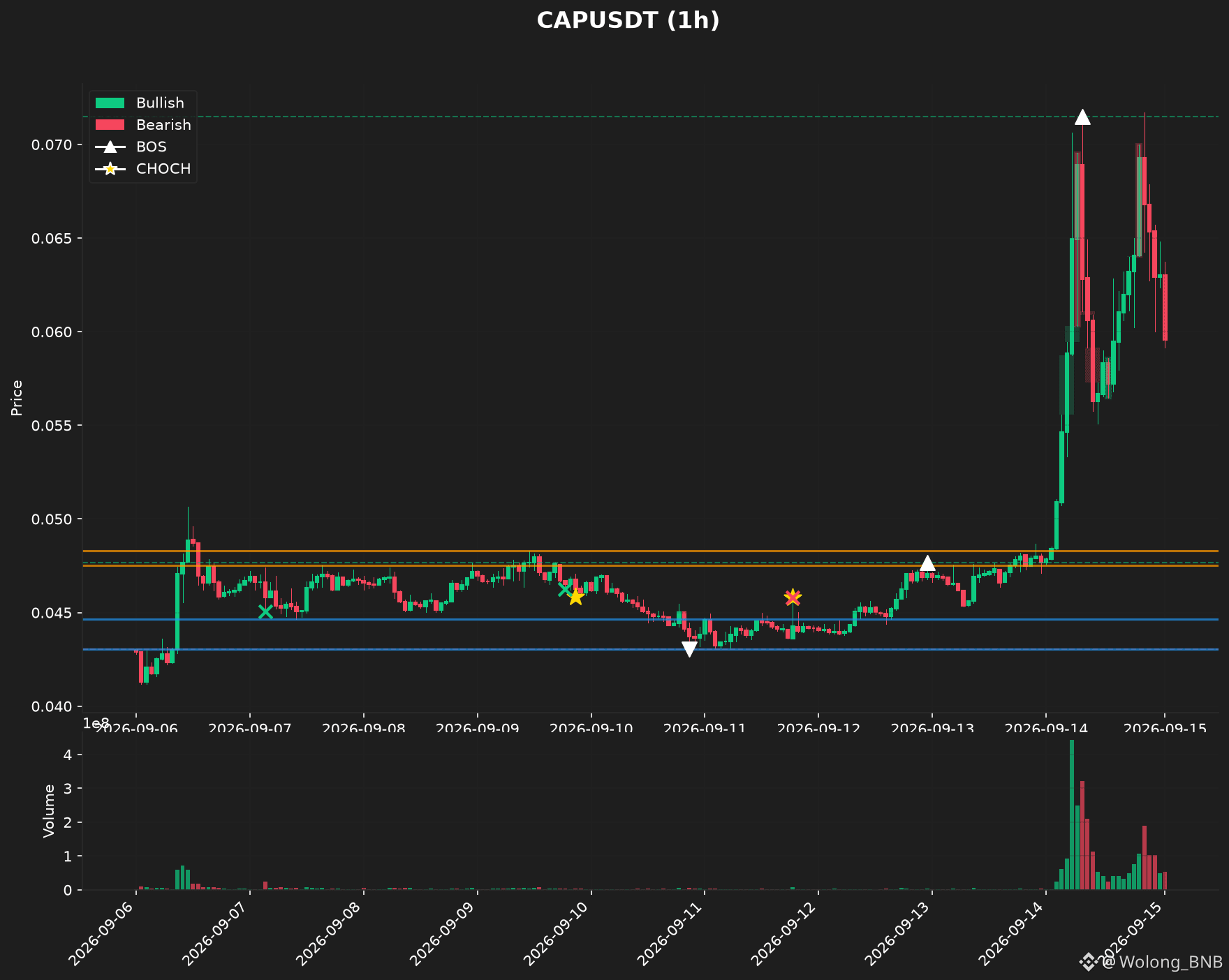
What stands out here is that volume is running about 3.3x its recent pace, the 1H move is -5.79%, and open interest is down 5.7%. That gives the move real context instead of treating every candle as a signal.
The 1h setup is bullish, but the broader multi-timeframe bias is still bearish. I would treat this as a tactical setup, not a clean trend trade.
The next test is around $0.0483. A clean hold above that area would strengthen continuation; rejection there would make a pullback more likely.
Which timeframe are you trusting on $CAP here?
#CAP #Trading
Trade plan: LONG
Entry: $0.05956
SL: $0.04282
TP1: $0.0763
TP2: $0.09303
TP3: $0.10977
$CAP has momentum, yet one timeframe is still pushing back against the move.
What stands out here is that volume is running about 3.3x its recent pace, the 1H move is -5.79%, and open interest is down 5.7%. That gives the move real context instead of treating every candle as a signal.
The 1h setup is bullish, but the broader multi-timeframe bias is still bearish. I would treat this as a tactical setup, not a clean trend trade.
The next test is around $0.0483. A clean hold above that area would strengthen continuation; rejection there would make a pullback more likely.
Which timeframe are you trusting on $CAP here?
#CAP #Trading
Trade plan: LONG
Entry: $0.05956
SL: $0.04282
TP1: $0.0763
TP2: $0.09303
TP3: $0.10977
What stands out here is that volume is running about 3.3x its recent pace, the 1H move is -5.79%, and open interest is down 5.7%. That gives the move real context instead of treating every candle as a signal.
The 1h setup is bullish, but the broader multi-timeframe bias is still bearish. I would treat this as a tactical setup, not a clean trend trade.
The next test is around $0.0483. A clean hold above that area would strengthen continuation; rejection there would make a pullback more likely.
Which timeframe are you trusting on $CAP here?
#CAP #Trading
Trade plan: LONG
Entry: $0.05956
SL: $0.04282
TP1: $0.0763
TP2: $0.09303
TP3: $0.10977
34
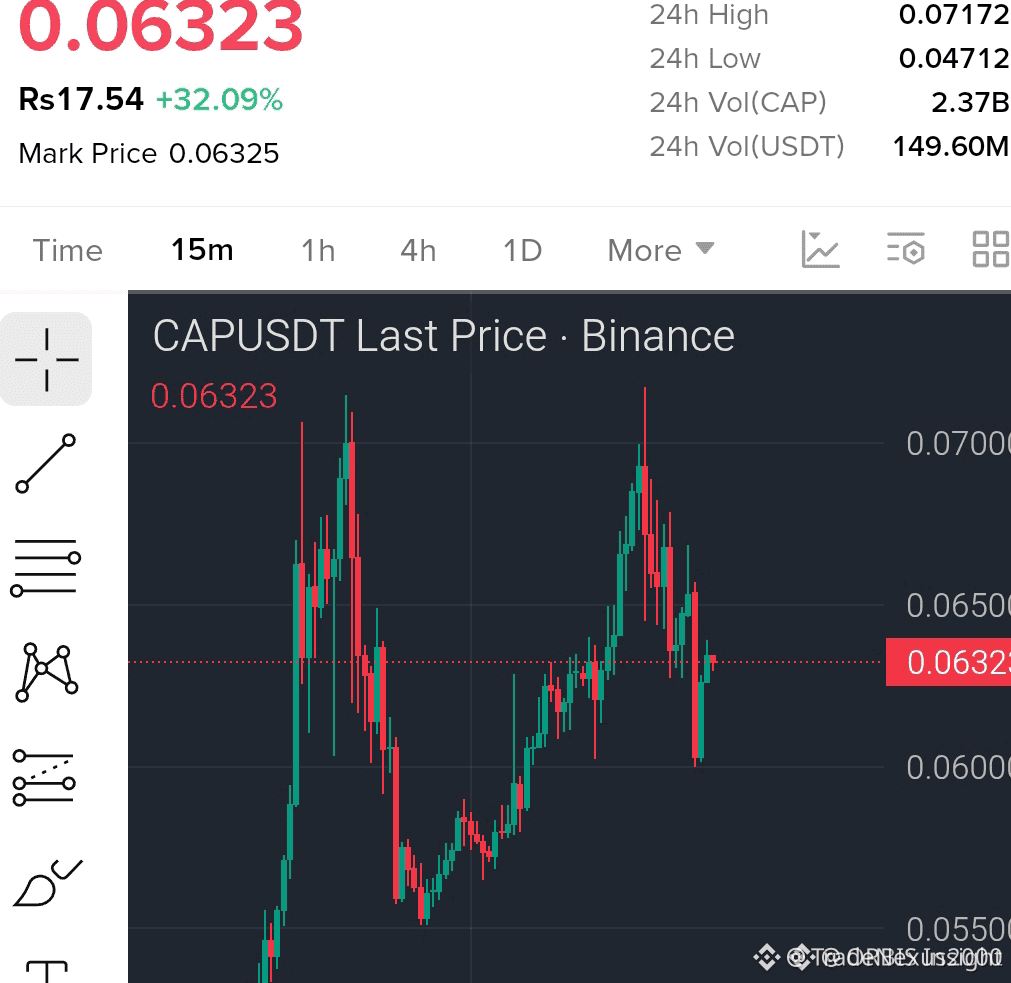
🚨 $CAP PLUNGES INTO LIQUIDITY SINK, X20 SHORT OPPORTUNITY! 🦈
Entry: $0.0630-$0.0650 ⚡
Target: $0.0610/$0.0590/$0.0560/$0.0530 🎯
Stop Loss: $0.0675 ⚠️
📊 The price has ripped through a hard resistance zone, instantly triggering a smart‑money liquidity sweep. 🦈 Sellers are absorbing the remaining long‑side delusion, and the order block at $0.0650 now acts as a fresh supply node. 📌 With each lower target, the market trades deeper into the institutional sell‑off, offering a clean 1:3+ R‑R for disciplined short positions. ⚡
💬 Are you positioned to ride the downside or waiting for the next liquidity grab? 👇
⚠️ Not financial advice. Always manage your risk. 🛡️
🏷️ #CAP #ShortSetup #LiquiditySweep #Crypto
🔥 🦈
🚨 $CAP PLUNGES INTO LIQUIDITY SINK, X20 SHORT OPPORTUNITY! 🦈
Entry: $0.0630-$0.0650 ⚡
Target: $0.0610/$0.0590/$0.0560/$0.0530 🎯
Stop Loss: $0.0675 ⚠️
📊 The price has ripped through a hard resistance zone, instantly triggering a smart‑money liquidity sweep. 🦈 Sellers are absorbing the remaining long‑side delusion, and the order block at $0.0650 now acts as a fresh supply node. 📌 With each lower target, the market trades deeper into the institutional sell‑off, offering a clean 1:3+ R‑R for disciplined short positions. ⚡
💬 Are you positioned to ride the downside or waiting for the next liquidity grab? 👇
⚠️ Not financial advice. Always manage your risk. 🛡️
🏷️ #CAP #ShortSetup #LiquiditySweep #Crypto
🔥 🦈
Entry: $0.0630-$0.0650 ⚡
Target: $0.0610/$0.0590/$0.0560/$0.0530 🎯
Stop Loss: $0.0675 ⚠️
📊 The price has ripped through a hard resistance zone, instantly triggering a smart‑money liquidity sweep. 🦈 Sellers are absorbing the remaining long‑side delusion, and the order block at $0.0650 now acts as a fresh supply node. 📌 With each lower target, the market trades deeper into the institutional sell‑off, offering a clean 1:3+ R‑R for disciplined short positions. ⚡
💬 Are you positioned to ride the downside or waiting for the next liquidity grab? 👇
⚠️ Not financial advice. Always manage your risk. 🛡️
🏷️ #CAP #ShortSetup #LiquiditySweep #Crypto
🔥 🦈
11
·
--
🚀 CAPUSDT 1D Forecast: LONG Setup Alert! Trade $CAP Now!
$CAP blasting higher at 0.06075 (+27% 24h)! Price smashed above EMA8/13/21 (0.053) & Bollinger mid (0.0556). RSI(14) 57 healthy, RSI(6) 69 rising strong. KDJ J 81 with K/D turning up = bullish momentum building after sharp pullback. Volume exploding (2.52B CAP).
LONG entry near 0.0600-0.0610
🎯 Take Profit: 0.0710-0.0780 (prev high / Boll upper)
🛑 Stop Loss: 0.0530 (below EMAs)
Risk managed, upside open! Don’t miss this rebound.
Trade or buy $CAP / $USDT Now! Follow & turn 🔔 on ✅
#CAPUSDT #CAP #Binance #Crypto #Long #Trading #Altcoin #Futures #BinanceSquare #Bullish
🚀 CAPUSDT 1D Forecast: LONG Setup Alert! Trade $CAP Now!
$CAP blasting higher at 0.06075 (+27% 24h)! Price smashed above EMA8/13/21 (0.053) & Bollinger mid (0.0556). RSI(14) 57 healthy, RSI(6) 69 rising strong. KDJ J 81 with K/D turning up = bullish momentum building after sharp pullback. Volume exploding (2.52B CAP).
LONG entry near 0.0600-0.0610
🎯 Take Profit: 0.0710-0.0780 (prev high / Boll upper)
🛑 Stop Loss: 0.0530 (below EMAs)
Risk managed, upside open! Don’t miss this rebound.
Trade or buy $CAP / $USDT Now! Follow & turn 🔔 on ✅
#CAPUSDT #CAP #Binance #Crypto #Long #Trading #Altcoin #Futures #BinanceSquare #Bullish
$CAP blasting higher at 0.06075 (+27% 24h)! Price smashed above EMA8/13/21 (0.053) & Bollinger mid (0.0556). RSI(14) 57 healthy, RSI(6) 69 rising strong. KDJ J 81 with K/D turning up = bullish momentum building after sharp pullback. Volume exploding (2.52B CAP).
LONG entry near 0.0600-0.0610
🎯 Take Profit: 0.0710-0.0780 (prev high / Boll upper)
🛑 Stop Loss: 0.0530 (below EMAs)
Risk managed, upside open! Don’t miss this rebound.
Trade or buy $CAP / $USDT Now! Follow & turn 🔔 on ✅
#CAPUSDT #CAP #Binance #Crypto #Long #Trading #Altcoin #Futures #BinanceSquare #Bullish
1
7

·
--
This round leaves only 6 strong signals: LSK, BTW, VTHO—3 go long and 3 go short. First focus on volume/energy and the structure—then move.
Last round: four candles drifted green by +22.8%. Current position holds 21, average price -0.1%. Wait for confirmation first.
🎯 Last round’s returns: XPL entered at $0.0841 → exited at $0.0846, 5.0x, took +5.0%; PENDLE entered at $2.3440 → exited at $2.3440, 5.0x, took +3.6%; CYS entered at $0.1400 → exited at $0.1404, 5.0x, took +5.4%
📊 Market view
BTC $78,166 +1.8%. Long/short disagreement is still there; negative fee-rate data is temporarily unavailable, and capital is still choosing a direction. Don’t chase the old-top winners—only look at newly increased volume. If it hasn’t reached the entry zone, don’t chase.
📊 Trading plan
📈 Long direction
🔥 CAP reference $0.06265 → take profit $0.06844 stop loss $0.05944 | CAP: capital rotates to longs to catch up on the upside; wait for a pullback to confirm at the OB
🔥 BR reference $0.53557 → take profit $0.60498 stop loss $0.49701 | After a huge surge, there’s zero heat and zero fee-rate; wait for a pullback to the OB area and confirm the structure, then move
🔥 PONS reference $0.64560 → take profit $0.71928 stop loss $0.60467 | Pull back to the OB, then re-enter. In the same batch, CAP and BR have led the gains; capital is
📉 Short direction
📉 LSK reference $0.37498 → take profit $0.32098 stop loss $0.40498 | After a sharp drop, the rebound lacks strength; wait for a pullback to the upper trapped-liquidity area to short
📉 BTW reference $0.58067 → take profit $0.49705 stop loss $0.62712 | The small coins in the same batch collectively retreat; short only after the rebound meets resistance at the OB
📉 VTHO reference $0.00064235 → take profit $0.00054985 stop loss $0.00069374 | Short again when the price rebounds into the upper supply zone; the short-batch coins all weaken together
If you’re not at the position, wait—then move once confirmed. Don’t rush in.
#BTC #LSK #BTW #VTHO #CAP
l
{future}(VTHOUSDT)
{future}(LSKUSDT)
{future}(CAPUSDT)
This round leaves only 6 strong signals: LSK, BTW, VTHO—3 go long and 3 go short. First focus on volume/energy and the structure—then move.
Last round: four candles drifted green by +22.8%. Current position holds 21, average price -0.1%. Wait for confirmation first.
🎯 Last round’s returns: XPL entered at $0.0841 → exited at $0.0846, 5.0x, took +5.0%; PENDLE entered at $2.3440 → exited at $2.3440, 5.0x, took +3.6%; CYS entered at $0.1400 → exited at $0.1404, 5.0x, took +5.4%
📊 Market view
BTC $78,166 +1.8%. Long/short disagreement is still there; negative fee-rate data is temporarily unavailable, and capital is still choosing a direction. Don’t chase the old-top winners—only look at newly increased volume. If it hasn’t reached the entry zone, don’t chase.
📊 Trading plan
📈 Long direction
🔥 CAP reference $0.06265 → take profit $0.06844 stop loss $0.05944 | CAP: capital rotates to longs to catch up on the upside; wait for a pullback to confirm at the OB
🔥 BR reference $0.53557 → take profit $0.60498 stop loss $0.49701 | After a huge surge, there’s zero heat and zero fee-rate; wait for a pullback to the OB area and confirm the structure, then move
🔥 PONS reference $0.64560 → take profit $0.71928 stop loss $0.60467 | Pull back to the OB, then re-enter. In the same batch, CAP and BR have led the gains; capital is
📉 Short direction
📉 LSK reference $0.37498 → take profit $0.32098 stop loss $0.40498 | After a sharp drop, the rebound lacks strength; wait for a pullback to the upper trapped-liquidity area to short
📉 BTW reference $0.58067 → take profit $0.49705 stop loss $0.62712 | The small coins in the same batch collectively retreat; short only after the rebound meets resistance at the OB
📉 VTHO reference $0.00064235 → take profit $0.00054985 stop loss $0.00069374 | Short again when the price rebounds into the upper supply zone; the short-batch coins all weaken together
If you’re not at the position, wait—then move once confirmed. Don’t rush in.
#BTC #LSK #BTW #VTHO #CAP
l
Last round: four candles drifted green by +22.8%. Current position holds 21, average price -0.1%. Wait for confirmation first.
🎯 Last round’s returns: XPL entered at $0.0841 → exited at $0.0846, 5.0x, took +5.0%; PENDLE entered at $2.3440 → exited at $2.3440, 5.0x, took +3.6%; CYS entered at $0.1400 → exited at $0.1404, 5.0x, took +5.4%
📊 Market view
BTC $78,166 +1.8%. Long/short disagreement is still there; negative fee-rate data is temporarily unavailable, and capital is still choosing a direction. Don’t chase the old-top winners—only look at newly increased volume. If it hasn’t reached the entry zone, don’t chase.
📊 Trading plan
📈 Long direction
🔥 CAP reference $0.06265 → take profit $0.06844 stop loss $0.05944 | CAP: capital rotates to longs to catch up on the upside; wait for a pullback to confirm at the OB
🔥 BR reference $0.53557 → take profit $0.60498 stop loss $0.49701 | After a huge surge, there’s zero heat and zero fee-rate; wait for a pullback to the OB area and confirm the structure, then move
🔥 PONS reference $0.64560 → take profit $0.71928 stop loss $0.60467 | Pull back to the OB, then re-enter. In the same batch, CAP and BR have led the gains; capital is
📉 Short direction
📉 LSK reference $0.37498 → take profit $0.32098 stop loss $0.40498 | After a sharp drop, the rebound lacks strength; wait for a pullback to the upper trapped-liquidity area to short
📉 BTW reference $0.58067 → take profit $0.49705 stop loss $0.62712 | The small coins in the same batch collectively retreat; short only after the rebound meets resistance at the OB
📉 VTHO reference $0.00064235 → take profit $0.00054985 stop loss $0.00069374 | Short again when the price rebounds into the upper supply zone; the short-batch coins all weaken together
If you’re not at the position, wait—then move once confirmed. Don’t rush in.
#BTC #LSK #BTW #VTHO #CAP
l
415

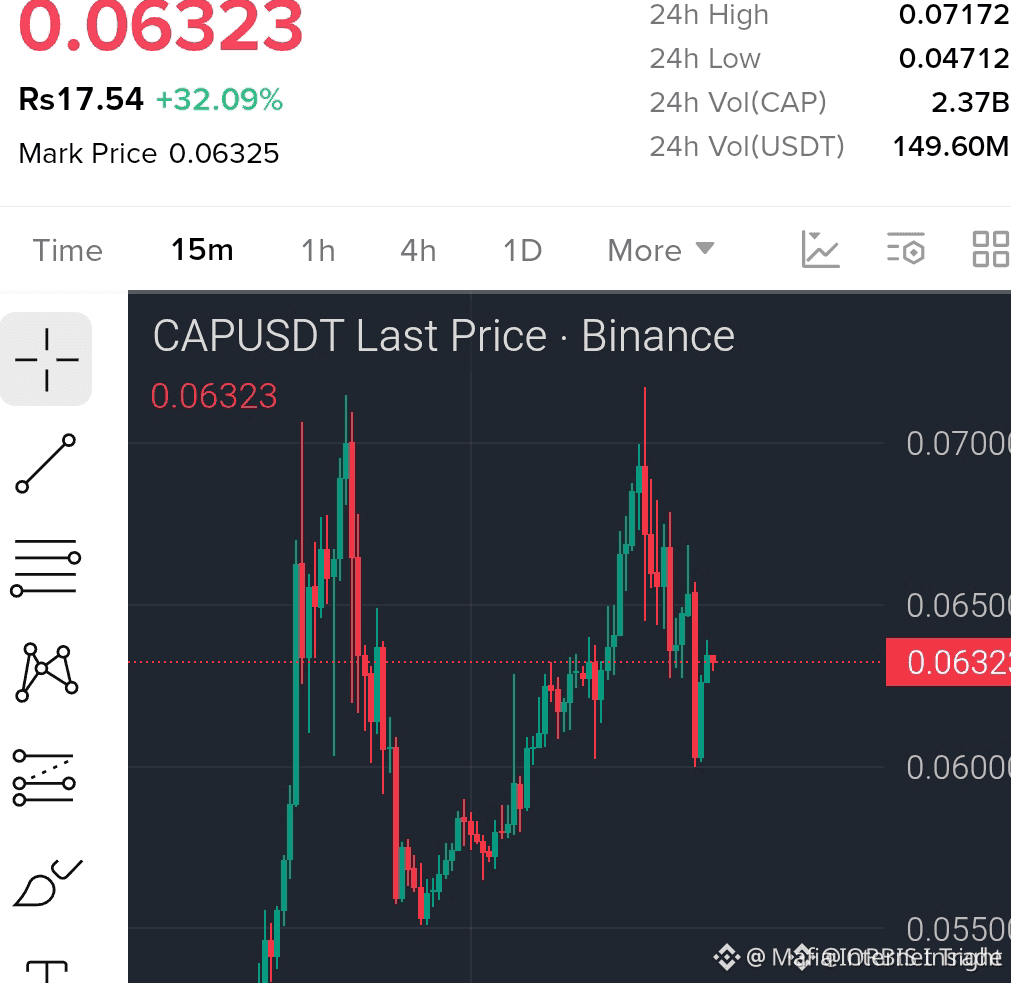
🚨 $CAP PLUNGES INTO LIQUIDITY SWEEP – X20 SHORT OPPORTUNITY! 💥
Entry: 0.0630-0.0650 ⚡
Target: 0.0610, 0.0590, 0.0560, 0.0530 🚀
Stop Loss: 0.0675 ⚠️
🦈 Smart money is slashing the last demand wall, forcing a brutal drop that leaves the long crowd chasing ghosts. 📊 Volume spikes confirm a relentless sell‑off, and the order block at 0.0650 is already saturated. ⚡ The market’s momentum is now a downhill sprint, primed for a cascade to the 0.0530 zone.
💡 With every candle carving deeper lows, the risk‑to‑reward curve sharpens for a swift x20 short. 💬 Are you ready to ride the wave down or watching the long side drown? 👇
⚠️ Not financial advice. Always manage your risk. 🛡️
🏷️ #CAP #ShortSetup #LiquiditySweep #Crypto #TradeAlert
🔥 💎
🚨 $CAP PLUNGES INTO LIQUIDITY SWEEP – X20 SHORT OPPORTUNITY! 💥
Entry: 0.0630-0.0650 ⚡
Target: 0.0610, 0.0590, 0.0560, 0.0530 🚀
Stop Loss: 0.0675 ⚠️
🦈 Smart money is slashing the last demand wall, forcing a brutal drop that leaves the long crowd chasing ghosts. 📊 Volume spikes confirm a relentless sell‑off, and the order block at 0.0650 is already saturated. ⚡ The market’s momentum is now a downhill sprint, primed for a cascade to the 0.0530 zone.
💡 With every candle carving deeper lows, the risk‑to‑reward curve sharpens for a swift x20 short. 💬 Are you ready to ride the wave down or watching the long side drown? 👇
⚠️ Not financial advice. Always manage your risk. 🛡️
🏷️ #CAP #ShortSetup #LiquiditySweep #Crypto #TradeAlert
🔥 💎
Entry: 0.0630-0.0650 ⚡
Target: 0.0610, 0.0590, 0.0560, 0.0530 🚀
Stop Loss: 0.0675 ⚠️
🦈 Smart money is slashing the last demand wall, forcing a brutal drop that leaves the long crowd chasing ghosts. 📊 Volume spikes confirm a relentless sell‑off, and the order block at 0.0650 is already saturated. ⚡ The market’s momentum is now a downhill sprint, primed for a cascade to the 0.0530 zone.
💡 With every candle carving deeper lows, the risk‑to‑reward curve sharpens for a swift x20 short. 💬 Are you ready to ride the wave down or watching the long side drown? 👇
⚠️ Not financial advice. Always manage your risk. 🛡️
🏷️ #CAP #ShortSetup #LiquiditySweep #Crypto #TradeAlert
🔥 💎
21

·
--
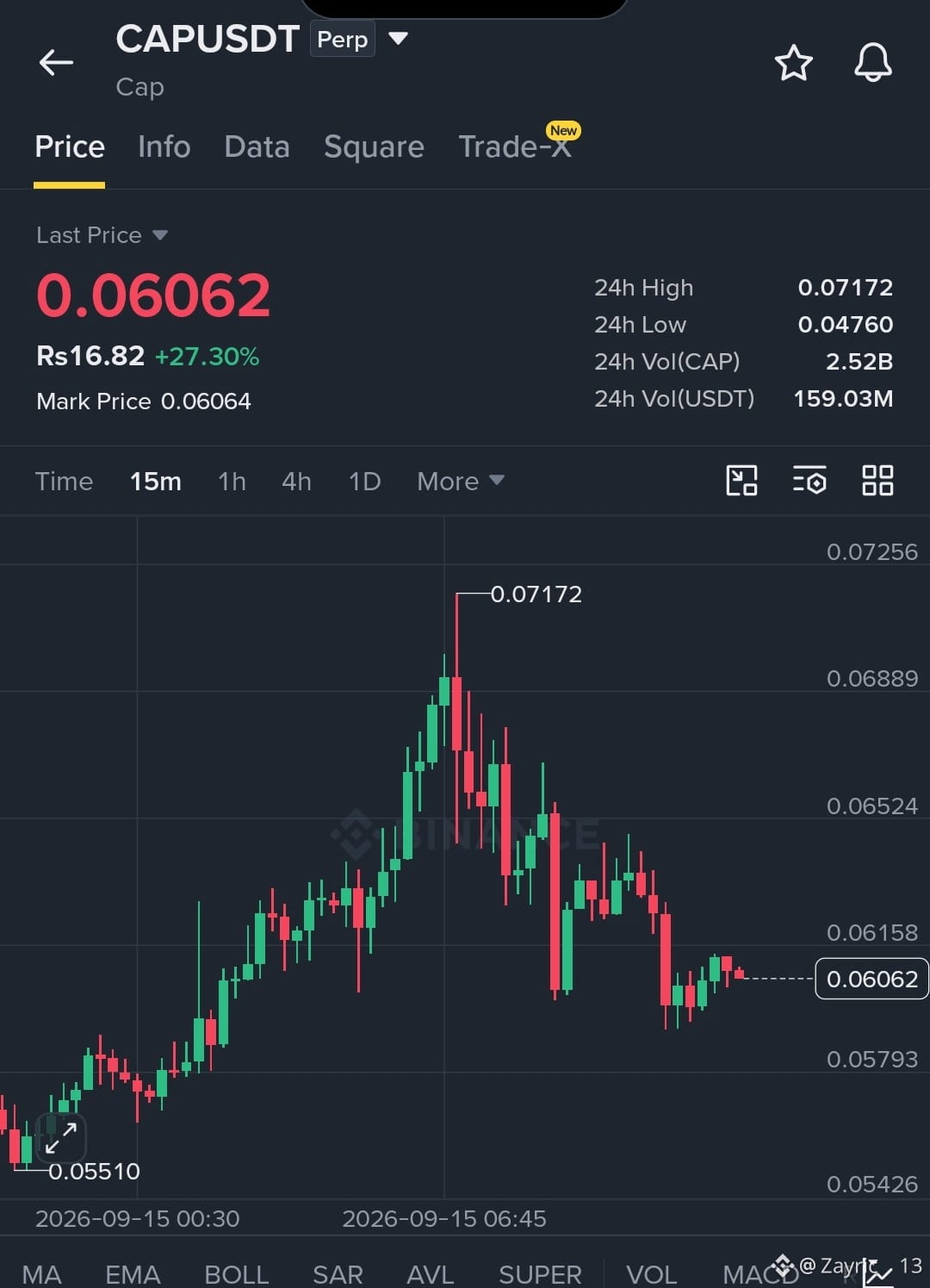
🚨 $CAP IS MOVING —27%+ IN 24H!
Binance Futures traders are watching this one closely.
🔥 Why $CAP is on my radar:
⚡ Strong momentum: +27.3% with ~$159M USDT volume
🏦 Credit narrative: Cap is a credit platform backed by financial guarantees
📈 Volatility play: 24H range of $0.04760–$0.07172 creates major liquidity zones
Market sentiment: Holding above the $0.060 area could keep buyers interested for another breakout attempt.
👀 Watching $CAP closely with @Binance.
Are you buying the dip or waiting for a breakout above $0.07172?
#Binance
{future}(CAPUSDT)
#CAP #crypto #BinanceFutures
🚨 $CAP IS MOVING —27%+ IN 24H!
Binance Futures traders are watching this one closely.
🔥 Why $CAP is on my radar:
⚡ Strong momentum: +27.3% with ~$159M USDT volume
🏦 Credit narrative: Cap is a credit platform backed by financial guarantees
📈 Volatility play: 24H range of $0.04760–$0.07172 creates major liquidity zones
Market sentiment: Holding above the $0.060 area could keep buyers interested for another breakout attempt.
👀 Watching $CAP closely with @Binance.
Are you buying the dip or waiting for a breakout above $0.07172?
#Binance
#CAP #crypto #BinanceFutures
Binance Futures traders are watching this one closely.
🔥 Why $CAP is on my radar:
⚡ Strong momentum: +27.3% with ~$159M USDT volume
🏦 Credit narrative: Cap is a credit platform backed by financial guarantees
📈 Volatility play: 24H range of $0.04760–$0.07172 creates major liquidity zones
Market sentiment: Holding above the $0.060 area could keep buyers interested for another breakout attempt.
👀 Watching $CAP closely with @Binance.
Are you buying the dip or waiting for a breakout above $0.07172?
#Binance
#CAP #crypto #BinanceFutures
30

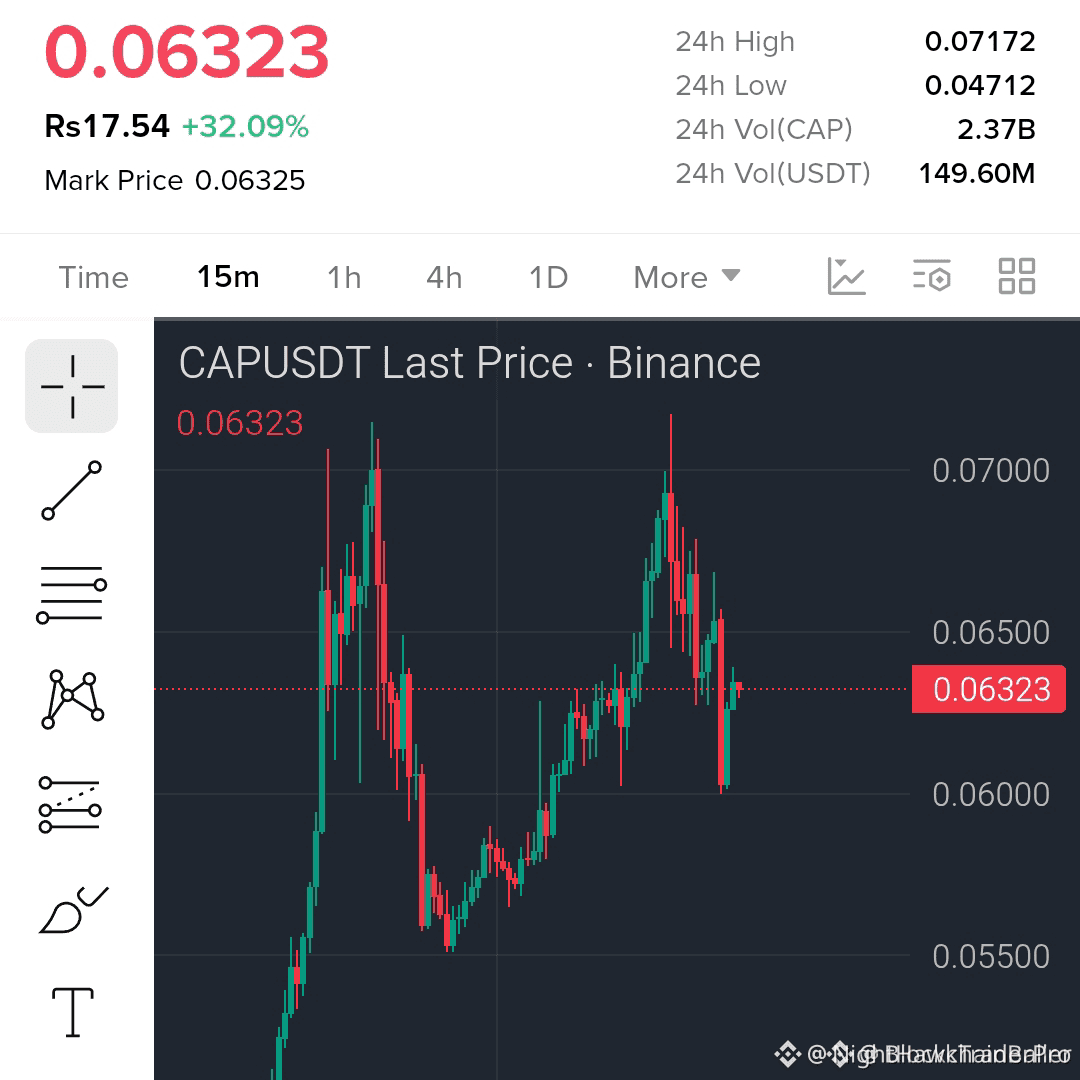
🚨 $CAP PLUNGES INTO HEAVY REJECTION ZONE! 🐻
Entry: 0.0630-0.0650 ⚡
Target: 0.0610 | 0.0590 | 0.0560 | 0.0530 🚀
Stop Loss: 0.0675 ⚠️
Smart money is dumping $CAP hard, the order flow shows a decisive liquidity sweep past the 0.0650 ceiling. 🦈 Volume spikes on the 1H chart confirm sellers are in full‑steam mode.
With 20x leverage the risk‑reward flips in our favor – each target shaves off 2‑3 cents, and the stop sits just above the last absorption zone. 📊 A clean short corridor from 0.0630 to 0.0650 invites aggressive bids.
If the price respects the 0.0675 barrier, we’re set for a cascade down to 0.0530. ⚡ Are you ready to ride the bear wave or waiting for the next liquidity trap? 💬
⚠️ Not financial advice. Always manage your risk. 🛡️
🏷️ #CAP #ShortSetup #Leverage #Crypto #Bearish
🐻 🔥
🚨 $CAP PLUNGES INTO HEAVY REJECTION ZONE! 🐻
Entry: 0.0630-0.0650 ⚡
Target: 0.0610 | 0.0590 | 0.0560 | 0.0530 🚀
Stop Loss: 0.0675 ⚠️
Smart money is dumping $CAP hard, the order flow shows a decisive liquidity sweep past the 0.0650 ceiling. 🦈 Volume spikes on the 1H chart confirm sellers are in full‑steam mode.
With 20x leverage the risk‑reward flips in our favor – each target shaves off 2‑3 cents, and the stop sits just above the last absorption zone. 📊 A clean short corridor from 0.0630 to 0.0650 invites aggressive bids.
If the price respects the 0.0675 barrier, we’re set for a cascade down to 0.0530. ⚡ Are you ready to ride the bear wave or waiting for the next liquidity trap? 💬
⚠️ Not financial advice. Always manage your risk. 🛡️
🏷️ #CAP #ShortSetup #Leverage #Crypto #Bearish
🐻 🔥
Entry: 0.0630-0.0650 ⚡
Target: 0.0610 | 0.0590 | 0.0560 | 0.0530 🚀
Stop Loss: 0.0675 ⚠️
Smart money is dumping $CAP hard, the order flow shows a decisive liquidity sweep past the 0.0650 ceiling. 🦈 Volume spikes on the 1H chart confirm sellers are in full‑steam mode.
With 20x leverage the risk‑reward flips in our favor – each target shaves off 2‑3 cents, and the stop sits just above the last absorption zone. 📊 A clean short corridor from 0.0630 to 0.0650 invites aggressive bids.
If the price respects the 0.0675 barrier, we’re set for a cascade down to 0.0530. ⚡ Are you ready to ride the bear wave or waiting for the next liquidity trap? 💬
⚠️ Not financial advice. Always manage your risk. 🛡️
🏷️ #CAP #ShortSetup #Leverage #Crypto #Bearish
🐻 🔥
26

·
--
Bullish
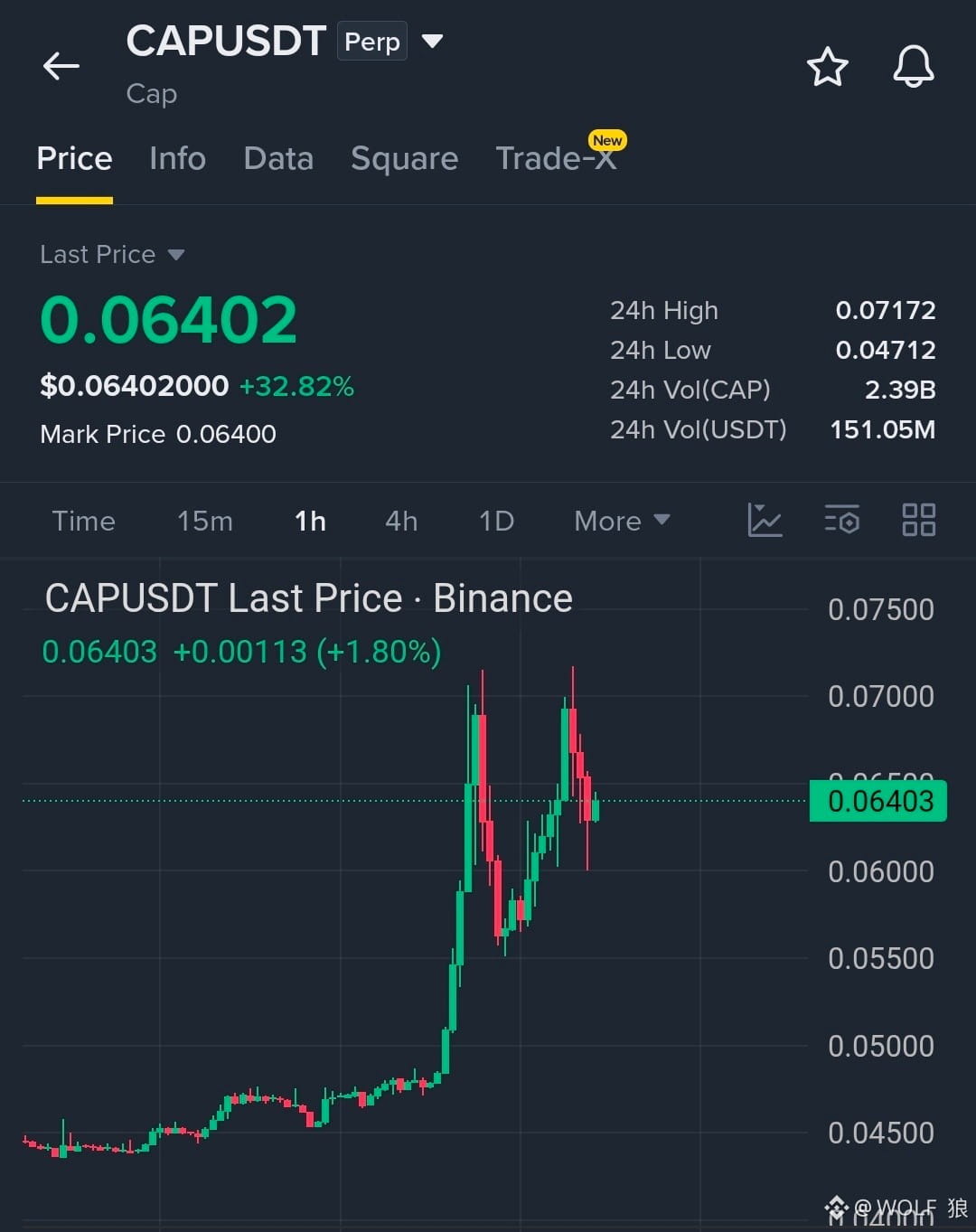
$CAP Showing Relative Strength — Breakout Setup in Play
Entry: 0.0625 - 0.0645
TP1: 0.0680
TP2: 0.0722
TP3: 0.0770
Stop: 0.0585
Always remember to move your stop-loss to entry once TP1 is hit. Lock in profits along the way.
I'm eyeing a clean entry near the current consolidation range as long as broader market sentiment remains stable.
$CAP
{future}(CAPUSDT)
#CAP
#MarketSentimentToday
$CAP Showing Relative Strength — Breakout Setup in Play
Entry: 0.0625 - 0.0645
TP1: 0.0680
TP2: 0.0722
TP3: 0.0770
Stop: 0.0585
Always remember to move your stop-loss to entry once TP1 is hit. Lock in profits along the way.
I'm eyeing a clean entry near the current consolidation range as long as broader market sentiment remains stable.
$CAP
#CAP
#MarketSentimentToday
Entry: 0.0625 - 0.0645
TP1: 0.0680
TP2: 0.0722
TP3: 0.0770
Stop: 0.0585
Always remember to move your stop-loss to entry once TP1 is hit. Lock in profits along the way.
I'm eyeing a clean entry near the current consolidation range as long as broader market sentiment remains stable.
$CAP
#CAP
#MarketSentimentToday
141

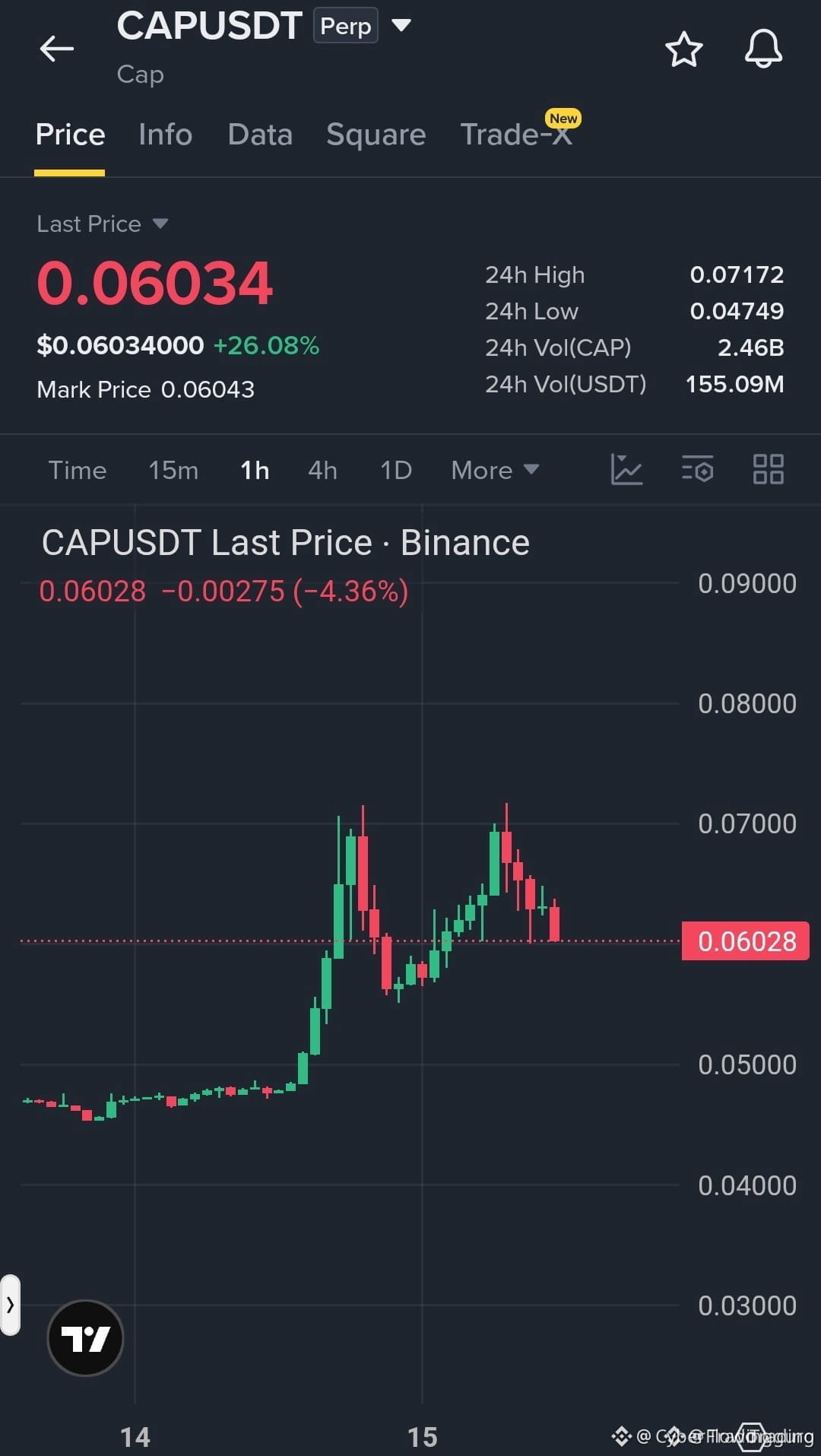
🔴 $CAP SHORT: 83% CONFIDENCE, 0.052 LIQUIDITY MAGNET 🐻
Entry: 0.06200 – 0.06600 ⚡
Target: 0.05600 – 0.05200 🚀
Stop Loss: 0.07200 ⚠️
The $CAP plan is built around a clean rejection zone between 0.06200 and 0.06600, with 0.07200 as the invalidation line. If buyers fail to reclaim that level, downside liquidity from 0.05600 to 0.05200 becomes the next magnet. 📊
💡 The 83% confidence only works if risk stays locked, while $FF and $POWER may follow the same momentum map. Would you short the retest or wait for a clean break below 0.05600? 👇
⚠️ Not financial advice. Always manage your risk. 🛡️
🏷️ #CAP #ShortSetup #LiquiditySweep #Crypto #Momentum
🐻 📉
🔴 $CAP SHORT: 83% CONFIDENCE, 0.052 LIQUIDITY MAGNET 🐻
Entry: 0.06200 – 0.06600 ⚡
Target: 0.05600 – 0.05200 🚀
Stop Loss: 0.07200 ⚠️
The $CAP plan is built around a clean rejection zone between 0.06200 and 0.06600, with 0.07200 as the invalidation line. If buyers fail to reclaim that level, downside liquidity from 0.05600 to 0.05200 becomes the next magnet. 📊
💡 The 83% confidence only works if risk stays locked, while $FF and $POWER may follow the same momentum map. Would you short the retest or wait for a clean break below 0.05600? 👇
⚠️ Not financial advice. Always manage your risk. 🛡️
🏷️ #CAP #ShortSetup #LiquiditySweep #Crypto #Momentum
🐻 📉
Entry: 0.06200 – 0.06600 ⚡
Target: 0.05600 – 0.05200 🚀
Stop Loss: 0.07200 ⚠️
The $CAP plan is built around a clean rejection zone between 0.06200 and 0.06600, with 0.07200 as the invalidation line. If buyers fail to reclaim that level, downside liquidity from 0.05600 to 0.05200 becomes the next magnet. 📊
💡 The 83% confidence only works if risk stays locked, while $FF and $POWER may follow the same momentum map. Would you short the retest or wait for a clean break below 0.05600? 👇
⚠️ Not financial advice. Always manage your risk. 🛡️
🏷️ #CAP #ShortSetup #LiquiditySweep #Crypto #Momentum
🐻 📉
26

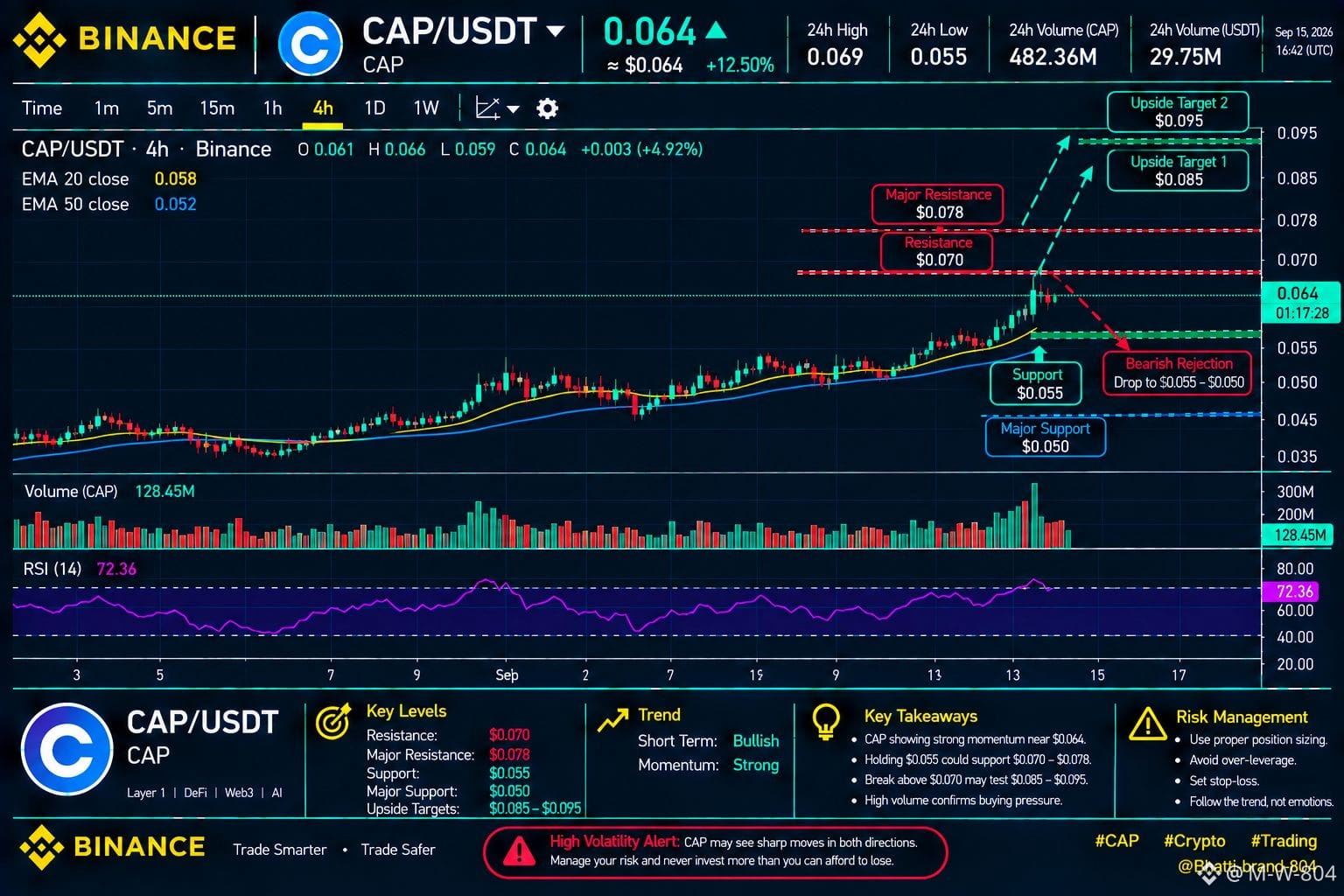

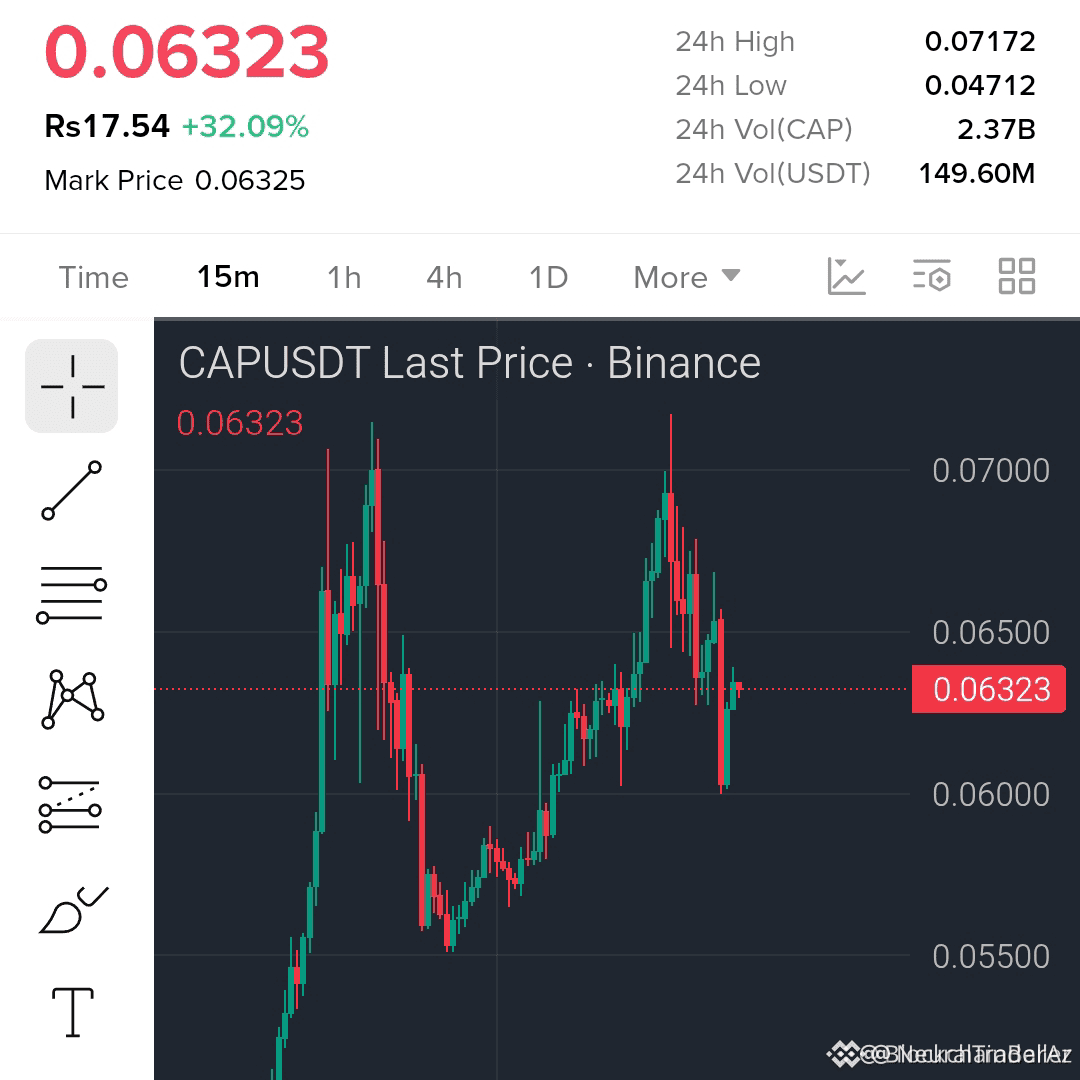
🔴 $CAP REJECTION HEAVY – SHORT WITH 20X LEVERAGE! 💥
Entry: 0.0630-0.0650 ⚡
Target: 0.0610 🚀
Target: 0.0590 🚀
Target: 0.0560 🚀
Target: 0.0530 🚀
Stop Loss: 0.0675 ⚠️
Smart money 🦈 has bulldozed through the $0.0650 resistance, snapping the last demand block and forcing sellers into the next liquidity pool. 📊 Volume spiked on the 15‑min chart as the order block crumbled, confirming a bearish imbalance.
Now the price is trapped below the 0.0630‑0.0650 corridor, and each descending target aligns with the triangle’s liquidity zones, offering a crisp 1:2‑3 risk‑reward profile. ⚡
💬 Are you ready to ride the downside or waiting for a reversal trap? 👇
⚠️ Not financial advice. Always manage your risk. 🛡️
🏷️ #CAP #ShortSetup #LiquiditySweep #Crypto
🦈 🔥
🔴 $CAP REJECTION HEAVY – SHORT WITH 20X LEVERAGE! 💥
Entry: 0.0630-0.0650 ⚡
Target: 0.0610 🚀
Target: 0.0590 🚀
Target: 0.0560 🚀
Target: 0.0530 🚀
Stop Loss: 0.0675 ⚠️
Smart money 🦈 has bulldozed through the $0.0650 resistance, snapping the last demand block and forcing sellers into the next liquidity pool. 📊 Volume spiked on the 15‑min chart as the order block crumbled, confirming a bearish imbalance.
Now the price is trapped below the 0.0630‑0.0650 corridor, and each descending target aligns with the triangle’s liquidity zones, offering a crisp 1:2‑3 risk‑reward profile. ⚡
💬 Are you ready to ride the downside or waiting for a reversal trap? 👇
⚠️ Not financial advice. Always manage your risk. 🛡️
🏷️ #CAP #ShortSetup #LiquiditySweep #Crypto
🦈 🔥
Entry: 0.0630-0.0650 ⚡
Target: 0.0610 🚀
Target: 0.0590 🚀
Target: 0.0560 🚀
Target: 0.0530 🚀
Stop Loss: 0.0675 ⚠️
Smart money 🦈 has bulldozed through the $0.0650 resistance, snapping the last demand block and forcing sellers into the next liquidity pool. 📊 Volume spiked on the 15‑min chart as the order block crumbled, confirming a bearish imbalance.
Now the price is trapped below the 0.0630‑0.0650 corridor, and each descending target aligns with the triangle’s liquidity zones, offering a crisp 1:2‑3 risk‑reward profile. ⚡
💬 Are you ready to ride the downside or waiting for a reversal trap? 👇
⚠️ Not financial advice. Always manage your risk. 🛡️
🏷️ #CAP #ShortSetup #LiquiditySweep #Crypto
🦈 🔥
20
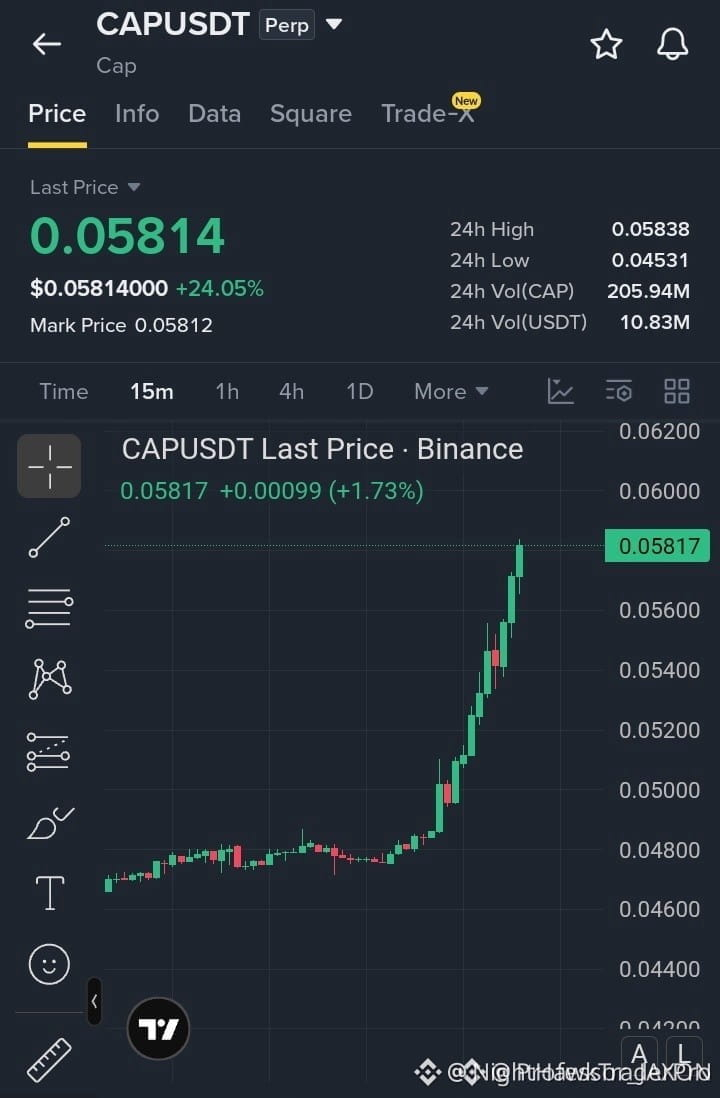
🚀 $CAP BREAKOUT STRUCTURE ACCELERATES AS BUYERS DOMINATE THE RECLAIM ZONE! 💥
Entry: 0.0575 - 0.0582 ⚡
Target: 0.0600 - 0.0650 🚀
Stop Loss: 0.0552 ⚠️
Momentum buyers are aggressively defending the demand zone around 0.0575, flipping prior resistance into an ironclad launchpad. 📊 Order flow reflects relentless absorption as bids stack up for the next velocity push.
As long as this support corridor holds firm, the path of least resistance points straight toward upper liquidity targets. 💡 Structure remains pristine with volume confirming genuine expansion underway. 💬 Are you front-running this momentum push now or waiting for 0.0600 to clear first? 👇
⚠️ Not financial advice. Always manage your risk. 🛡️
🏷️ #CAP #LongSetup #Breakout #Crypto
⚡ 🎯
🚀 $CAP BREAKOUT STRUCTURE ACCELERATES AS BUYERS DOMINATE THE RECLAIM ZONE! 💥
Entry: 0.0575 - 0.0582 ⚡
Target: 0.0600 - 0.0650 🚀
Stop Loss: 0.0552 ⚠️
Momentum buyers are aggressively defending the demand zone around 0.0575, flipping prior resistance into an ironclad launchpad. 📊 Order flow reflects relentless absorption as bids stack up for the next velocity push.
As long as this support corridor holds firm, the path of least resistance points straight toward upper liquidity targets. 💡 Structure remains pristine with volume confirming genuine expansion underway. 💬 Are you front-running this momentum push now or waiting for 0.0600 to clear first? 👇
⚠️ Not financial advice. Always manage your risk. 🛡️
🏷️ #CAP #LongSetup #Breakout #Crypto
⚡ 🎯
Entry: 0.0575 - 0.0582 ⚡
Target: 0.0600 - 0.0650 🚀
Stop Loss: 0.0552 ⚠️
Momentum buyers are aggressively defending the demand zone around 0.0575, flipping prior resistance into an ironclad launchpad. 📊 Order flow reflects relentless absorption as bids stack up for the next velocity push.
As long as this support corridor holds firm, the path of least resistance points straight toward upper liquidity targets. 💡 Structure remains pristine with volume confirming genuine expansion underway. 💬 Are you front-running this momentum push now or waiting for 0.0600 to clear first? 👇
⚠️ Not financial advice. Always manage your risk. 🛡️
🏷️ #CAP #LongSetup #Breakout #Crypto
⚡ 🎯
45
·
--
$CAP is reaching an active decision zone where momentum can expand quickly.
$CAP is still trading with strength, and dip buyers keep defending the latest breakout area.
Setup LONG $CAP (max 10x)
🎯 Entry: 0.0639 - 0.06441
🛑 SL: 0.05879
✅ TP1: 0.06505
✅ TP2: 0.06589
✅ TP3: 0.06685
• Focused Support Launches Cavok STRIKE to Expand Link-16 Participation Across the Joint Force
• Your Doctor’s Office Is An Ad Channel Now
Do you prefer the breakout on $CAP, or the retest entry?
Trade $CAP here 👇
#CAP #MarketStructure #TradingSetup
$CAP is reaching an active decision zone where momentum can expand quickly.
$CAP is still trading with strength, and dip buyers keep defending the latest breakout area.
Setup LONG $CAP (max 10x)
🎯 Entry: 0.0639 - 0.06441
🛑 SL: 0.05879
✅ TP1: 0.06505
✅ TP2: 0.06589
✅ TP3: 0.06685
• Focused Support Launches Cavok STRIKE to Expand Link-16 Participation Across the Joint Force
• Your Doctor’s Office Is An Ad Channel Now
Do you prefer the breakout on $CAP , or the retest entry?
Trade $CAP here 👇
#CAP #MarketStructure #TradingSetup
$CAP is still trading with strength, and dip buyers keep defending the latest breakout area.
Setup LONG $CAP (max 10x)
🎯 Entry: 0.0639 - 0.06441
🛑 SL: 0.05879
✅ TP1: 0.06505
✅ TP2: 0.06589
✅ TP3: 0.06685
• Focused Support Launches Cavok STRIKE to Expand Link-16 Participation Across the Joint Force
• Your Doctor’s Office Is An Ad Channel Now
Do you prefer the breakout on $CAP , or the retest entry?
Trade $CAP here 👇
#CAP #MarketStructure #TradingSetup
57
·
--
Bullish
🚨 #CAP STRONG BREAKOUT SETUP 🔥
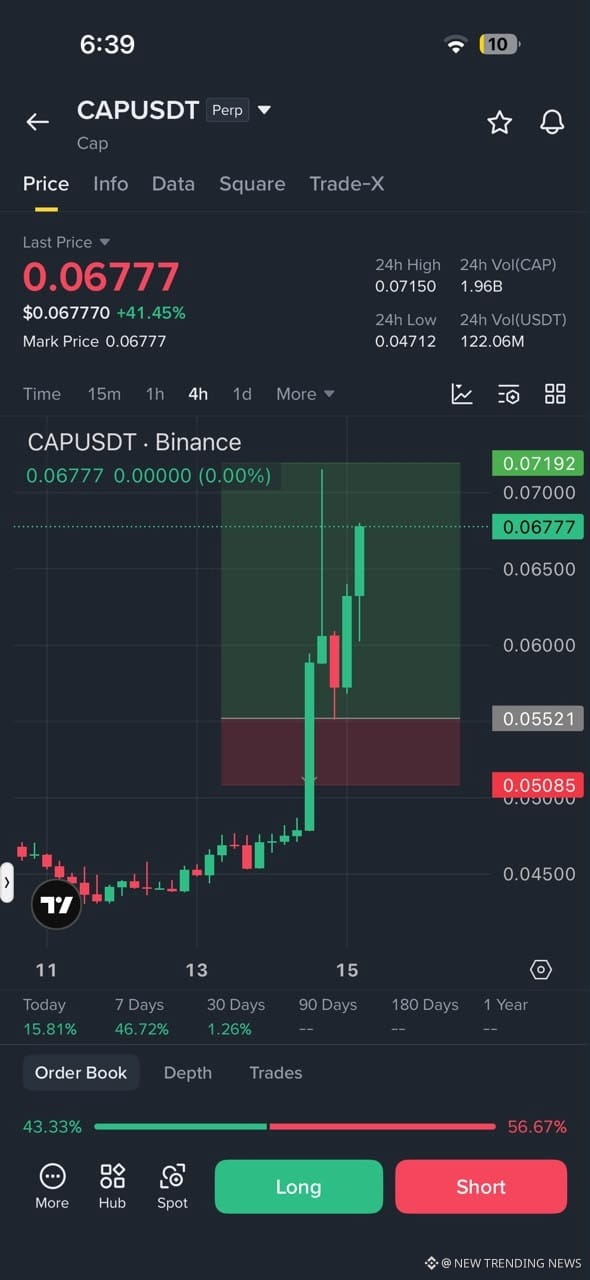
$CAP is trading around 0.06741 | +40.93% 🚀
Buyers are stepping in aggressively.
Breakout zone is holding strong.
Next expansion could be explosive. 📈🔥
⚡ LONG ENTRY: 0.0638 – 0.0672
🎯 TP1: 0.0700
🎯 TP2: 0.0750
🏆 FINAL TARGET: 0.0803
🛑 STOP LOSS: 0.0587
🔥 LONG HERE 👇👇
$LSK -53.78% 📉
$AIO +12.84% ⚡
{future}(CAPUSDT)
{spot}(LSKUSDT)
{future}(AIOUSDT)
🚨 #CAP STRONG BREAKOUT SETUP 🔥
$CAP is trading around 0.06741 | +40.93% 🚀
Buyers are stepping in aggressively.
Breakout zone is holding strong.
Next expansion could be explosive. 📈🔥
⚡ LONG ENTRY: 0.0638 – 0.0672
🎯 TP1: 0.0700
🎯 TP2: 0.0750
🏆 FINAL TARGET: 0.0803
🛑 STOP LOSS: 0.0587
🔥 LONG HERE 👇👇
$LSK -53.78% 📉
$AIO +12.84% ⚡
$CAP is trading around 0.06741 | +40.93% 🚀
Buyers are stepping in aggressively.
Breakout zone is holding strong.
Next expansion could be explosive. 📈🔥
⚡ LONG ENTRY: 0.0638 – 0.0672
🎯 TP1: 0.0700
🎯 TP2: 0.0750
🏆 FINAL TARGET: 0.0803
🛑 STOP LOSS: 0.0587
🔥 LONG HERE 👇👇
$LSK -53.78% 📉
$AIO +12.84% ⚡
1
163

·
--
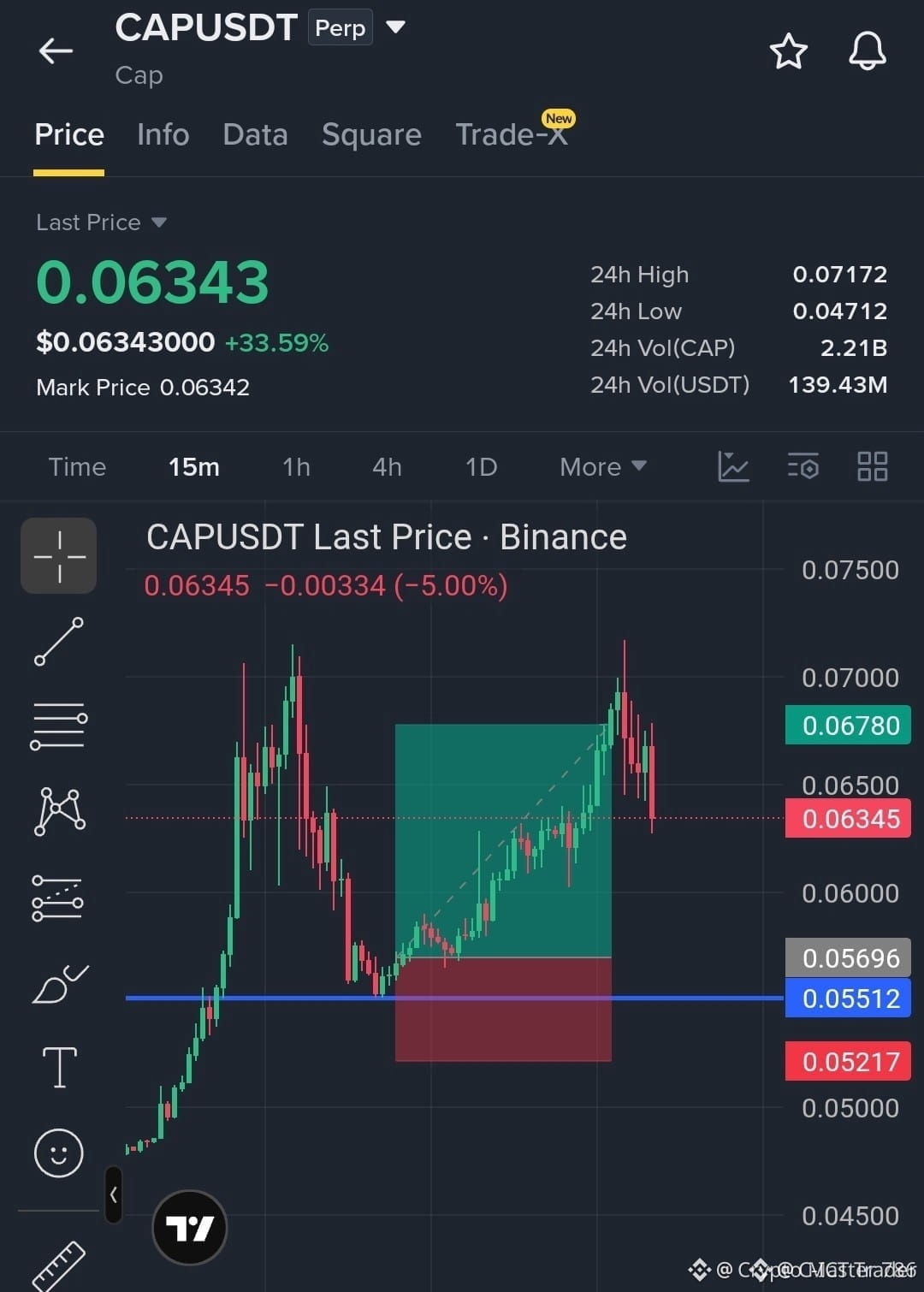
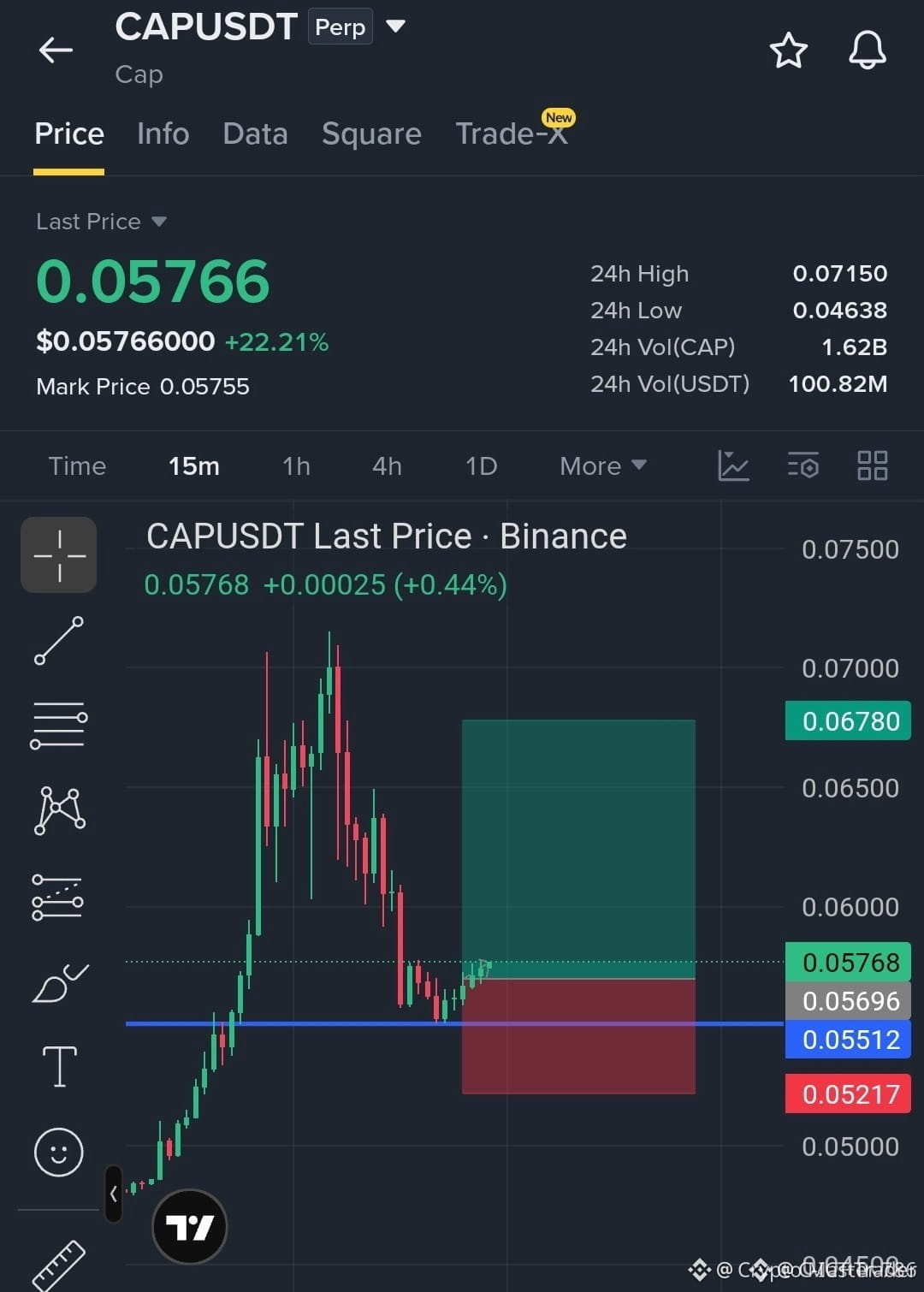
🔴 $CAP DOUBLE TOP TRIGGERS SHORT SWEEP! 📉
📊 The recent double‑top on $CAP is a textbook liquidity trap—smart money has exhausted the bullish order block and is now hunting for sellers. 🦈 Volume spikes on the 1‑hour chart confirm aggressive buying pressure being sapped, while the bearish divergence on the RSI hints at further downside. 🌊 A clean break below the neckline opens a high‑conviction short corridor with institutional footprints lining the path.
💬 Do you see the next liquidity sweep confirming the short bias? 👇
⚠️ Not financial advice. Always manage your risk. 🛡️
🏷️ #CAP #ShortSetup #DoubleTop #Liquidity #Crypto
🦈 🔥
🔴 $CAP DOUBLE TOP TRIGGERS SHORT SWEEP! 📉
📊 The recent double‑top on $CAP is a textbook liquidity trap—smart money has exhausted the bullish order block and is now hunting for sellers. 🦈 Volume spikes on the 1‑hour chart confirm aggressive buying pressure being sapped, while the bearish divergence on the RSI hints at further downside. 🌊 A clean break below the neckline opens a high‑conviction short corridor with institutional footprints lining the path.
💬 Do you see the next liquidity sweep confirming the short bias? 👇
⚠️ Not financial advice. Always manage your risk. 🛡️
🏷️ #CAP #ShortSetup #DoubleTop #Liquidity #Crypto
🦈 🔥
📊 The recent double‑top on $CAP is a textbook liquidity trap—smart money has exhausted the bullish order block and is now hunting for sellers. 🦈 Volume spikes on the 1‑hour chart confirm aggressive buying pressure being sapped, while the bearish divergence on the RSI hints at further downside. 🌊 A clean break below the neckline opens a high‑conviction short corridor with institutional footprints lining the path.
💬 Do you see the next liquidity sweep confirming the short bias? 👇
⚠️ Not financial advice. Always manage your risk. 🛡️
🏷️ #CAP #ShortSetup #DoubleTop #Liquidity #Crypto
🦈 🔥
34

·
--
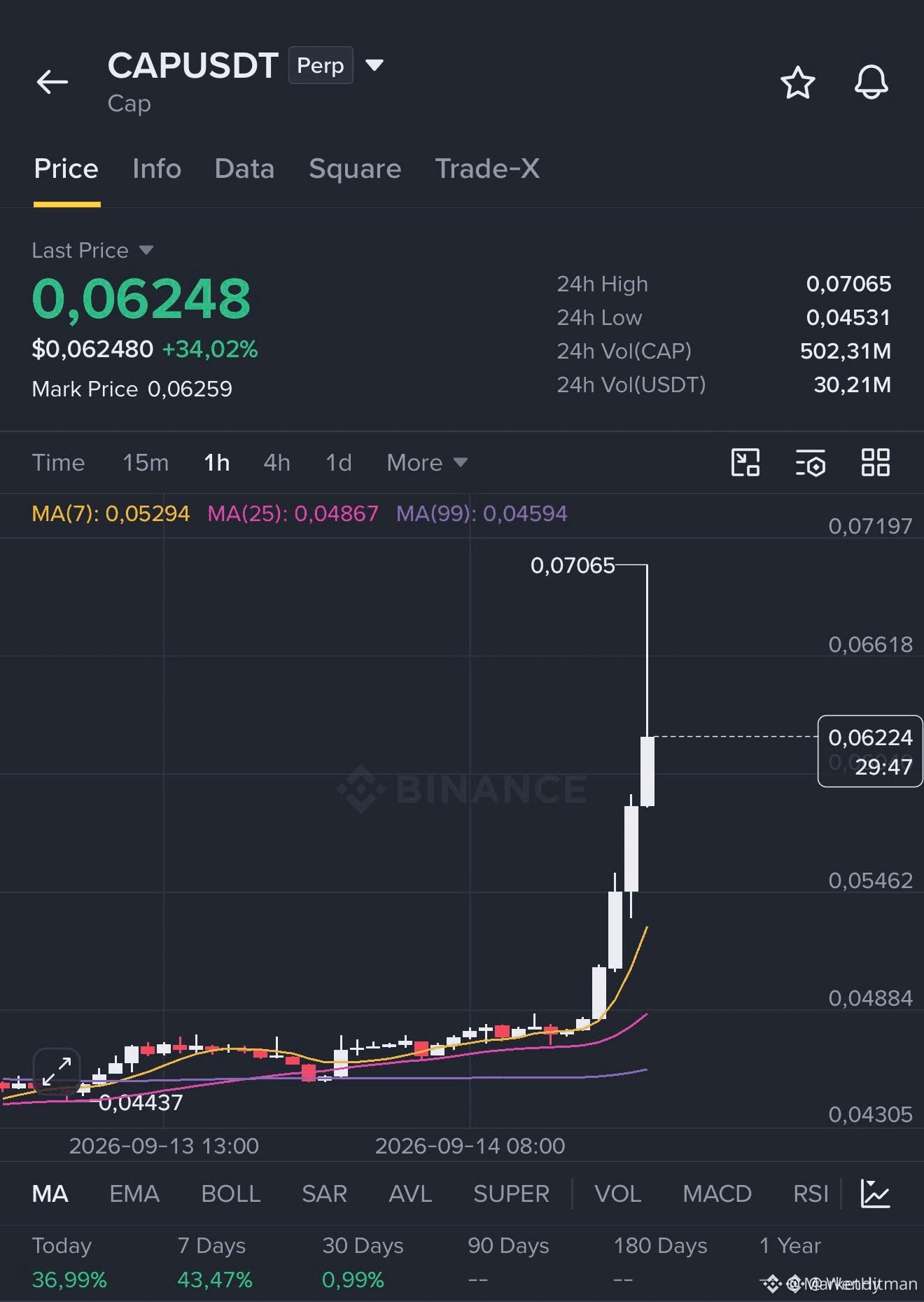
🎯 $CAP VERTICAL RALLY CALLS FOR PATIENCE BEFORE THE NEXT EXPANSION! ⚡
Entry: 0.0640 - 0.0660 ⚡
Target: 0.0705, 0.0740, 0.0780 🚀
$CAP just printed a sharp velocity candle, but chasing extended momentum while RSI overheats is how market participants get trapped. 📊 The high-probability play lies in waiting for a clean retracement into the $0.0640-$0.0660 demand zone to confirm a firm 1H bullish reclaim.
💡 If buyers step up and absorb supply on the retest, order flow favors a secondary push straight through key targets overhead. 💬 Are you setting your bids at support or waiting for secondary momentum to build? 👇
⚠️ Not financial advice. Always manage your risk. 🛡️
🏷️ #CAP #Crypto #Altcoins #TradingSetup
🔥 💎
🎯 $CAP VERTICAL RALLY CALLS FOR PATIENCE BEFORE THE NEXT EXPANSION! ⚡
Entry: 0.0640 - 0.0660 ⚡
Target: 0.0705, 0.0740, 0.0780 🚀
$CAP just printed a sharp velocity candle, but chasing extended momentum while RSI overheats is how market participants get trapped. 📊 The high-probability play lies in waiting for a clean retracement into the $0.0640-$0.0660 demand zone to confirm a firm 1H bullish reclaim.
💡 If buyers step up and absorb supply on the retest, order flow favors a secondary push straight through key targets overhead. 💬 Are you setting your bids at support or waiting for secondary momentum to build? 👇
⚠️ Not financial advice. Always manage your risk. 🛡️
🏷️ #CAP #Crypto #Altcoins #TradingSetup
🔥 💎
Entry: 0.0640 - 0.0660 ⚡
Target: 0.0705, 0.0740, 0.0780 🚀
$CAP just printed a sharp velocity candle, but chasing extended momentum while RSI overheats is how market participants get trapped. 📊 The high-probability play lies in waiting for a clean retracement into the $0.0640-$0.0660 demand zone to confirm a firm 1H bullish reclaim.
💡 If buyers step up and absorb supply on the retest, order flow favors a secondary push straight through key targets overhead. 💬 Are you setting your bids at support or waiting for secondary momentum to build? 👇
⚠️ Not financial advice. Always manage your risk. 🛡️
🏷️ #CAP #Crypto #Altcoins #TradingSetup
🔥 💎
35

·
--
Bearish
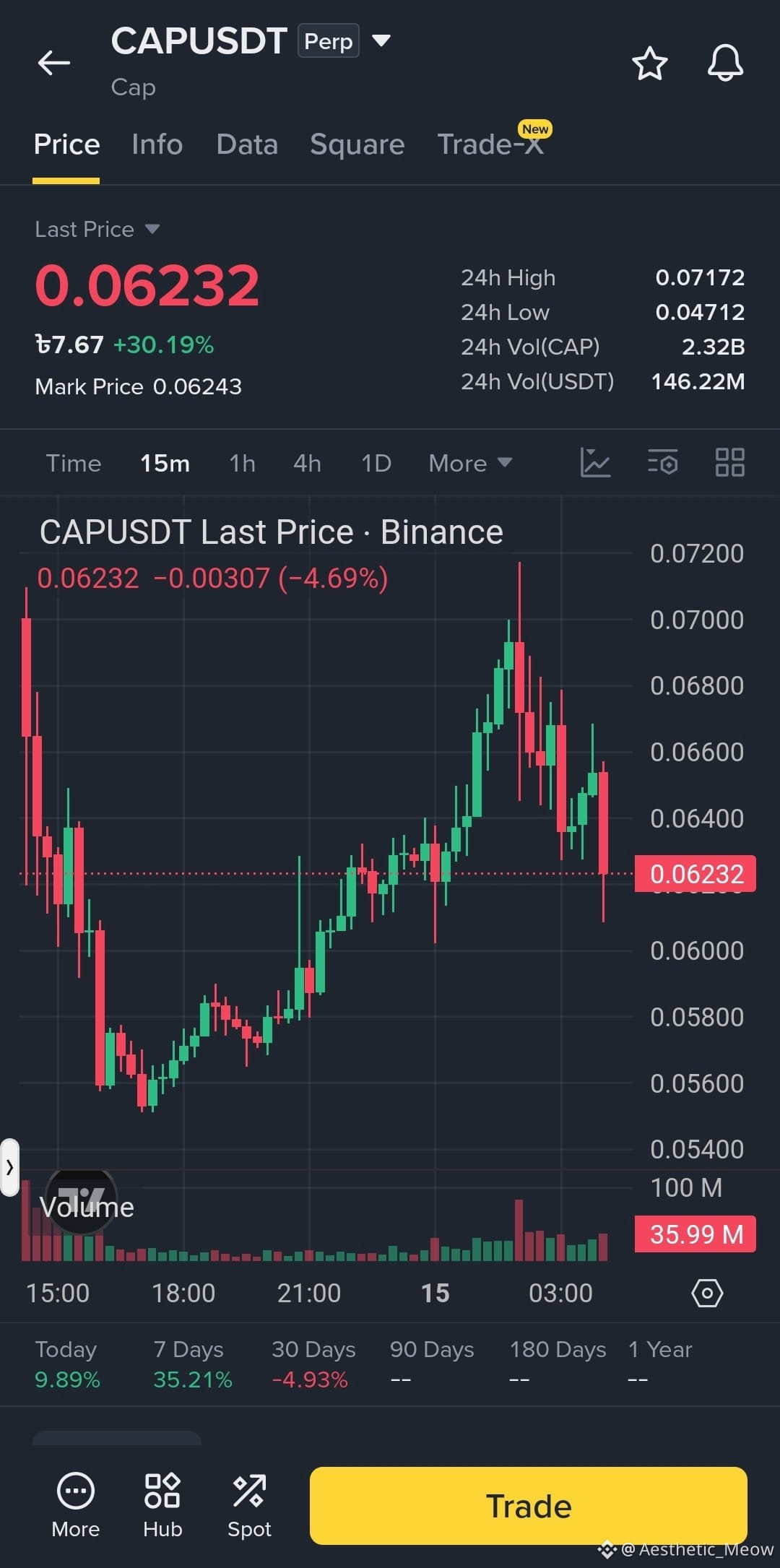
Okay… $CAP just flipped the script.
The pump looked strong near 0.072, but sellers stepped in hard. Now price is making lower highs and slipping back toward the 0.062 support.
Could this be the start of a deeper retracement?
🟥 CAPUSDT — SHORT
Entry: 0.0635–0.0650
TP1: 0.0610
TP2: 0.0585
TP3: 0.0560
SL: 0.0678
Chart read: 15M momentum has turned bearish after the rejection from 0.070–0.072. The recent bounce failed around 0.066–0.067, while selling volume is picking up.
My plan: I’d wait for a retest of 0.0635–0.0650 and look for rejection. If price reclaims 0.0678, I’m out no forcing the trade.
Personal chart analysis, not financial advice. Manage risk and never use full capital on one trade.
Trade here 👇
{future}(CAPUSDT)
$AIN
{future}(AINUSDT)
$POWER
{future}(POWERUSDT)
#CAP #Write2Earn #FedHikeOddsRiseTo89%
Okay… $CAP just flipped the script.
The pump looked strong near 0.072, but sellers stepped in hard. Now price is making lower highs and slipping back toward the 0.062 support.
Could this be the start of a deeper retracement?
🟥 CAPUSDT — SHORT
Entry: 0.0635–0.0650
TP1: 0.0610
TP2: 0.0585
TP3: 0.0560
SL: 0.0678
Chart read: 15M momentum has turned bearish after the rejection from 0.070–0.072. The recent bounce failed around 0.066–0.067, while selling volume is picking up.
My plan: I’d wait for a retest of 0.0635–0.0650 and look for rejection. If price reclaims 0.0678, I’m out no forcing the trade.
Personal chart analysis, not financial advice. Manage risk and never use full capital on one trade.
Trade here 👇
$AIN
$POWER
#CAP #Write2Earn #FedHikeOddsRiseTo89%
The pump looked strong near 0.072, but sellers stepped in hard. Now price is making lower highs and slipping back toward the 0.062 support.
Could this be the start of a deeper retracement?
🟥 CAPUSDT — SHORT
Entry: 0.0635–0.0650
TP1: 0.0610
TP2: 0.0585
TP3: 0.0560
SL: 0.0678
Chart read: 15M momentum has turned bearish after the rejection from 0.070–0.072. The recent bounce failed around 0.066–0.067, while selling volume is picking up.
My plan: I’d wait for a retest of 0.0635–0.0650 and look for rejection. If price reclaims 0.0678, I’m out no forcing the trade.
Personal chart analysis, not financial advice. Manage risk and never use full capital on one trade.
Trade here 👇
$AIN
$POWER
#CAP #Write2Earn #FedHikeOddsRiseTo89%
1
3
396
Log in to explore more content
Join global crypto users on Binance Square
⚡️ Get latest and useful information about crypto.
💬 Trusted by the world’s largest crypto exchange.
👍 Discover real insights from verified creators.
Email / Phone number
Trending Topics
1
#BitcoinReboundsTo$79K
21,136 views
188 Discussing
2
#BitcoinSpotETFsNetInflow$160M
269 views
35 Discussing
3
#SouthKoreaCryptoTaxDelayPetitionTops50000
12,276 views
341 Discussing
4
#SolanaTransactionV1GoesLiveOnMainnet
7,333 views
233 Discussing
5
#RussianCentralBankFlagsCryptoAsFinancialRisk
6,874 views
228 Discussing
6
#GrayscalePutsXRPAt26.11%InAdvisorPortfolio
19,732 views
330 Discussing
7
#PhiladelphiaSemiconductorIndexFalls5.9%
6,315 views
206 Discussing
8
#SECChairUrgesCongressToAdvanceClarityAct
20,029 views
225 Discussing
9
#FedHikeOddsRiseTo89%
114,182 views
1,247 Discussing
10
#RLUSDSupplyHitsRecord$2.442B
8,163 views
70 Discussing