

#bondselloff
bondselloff
4,781 views
20 Discussing
Hot
Latest

#us30yearyieldhighestsince2004
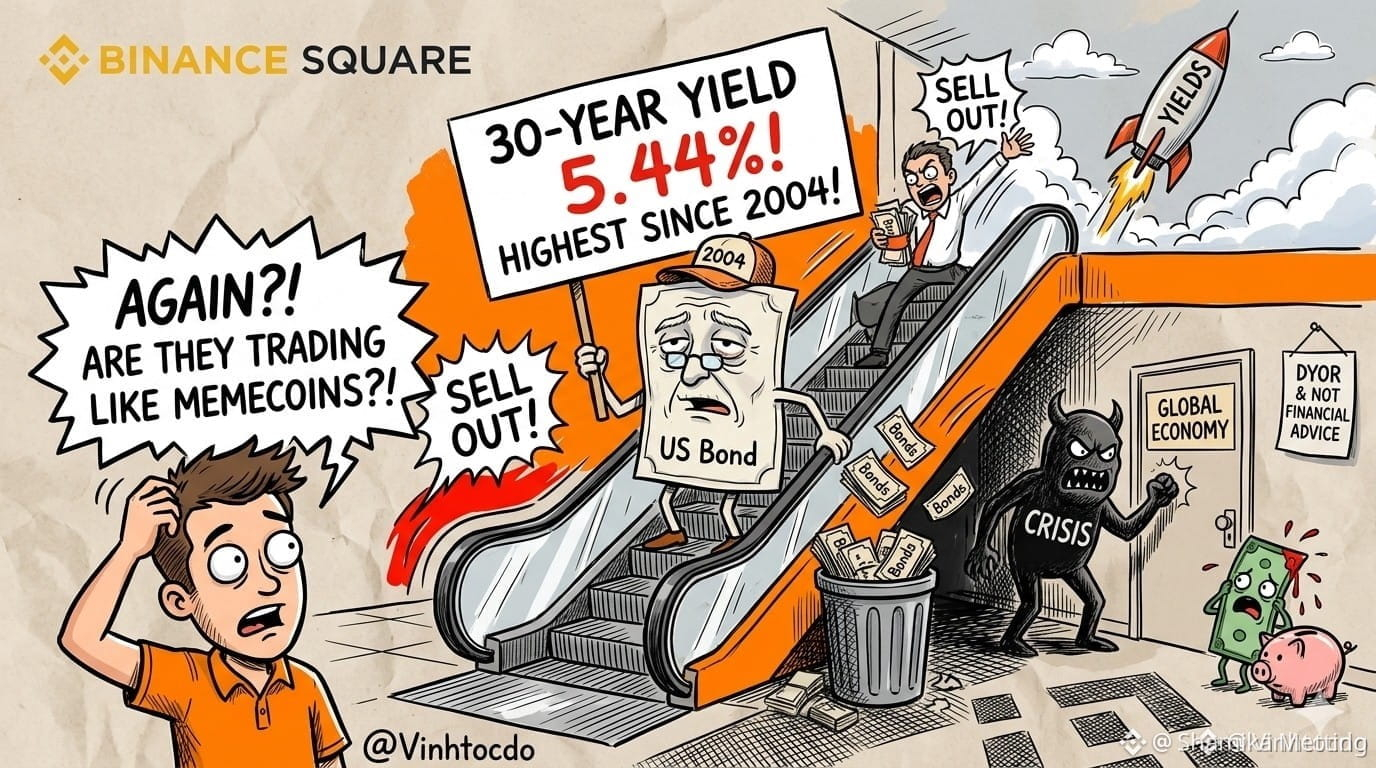
📈 Wait, what?! #us30yearyieldhighestsince2004 is heading up crazily—up to 5.44%! 🤯
Once again?! U.S. Treasury bond yields for 30 years just hit their highest level in 22 years! Is a financial crisis knocking at our door? 🚨 And wait... "sell the bonds"? Are people trading bonds now the same way they trade meme coins? 😂
It turns out that high inflation and a rocket-like rise in oil prices have investors in panic—selling long-term bonds, pushing yields to the moon! 🚀
What should crypto traders do?
1️⃣ Don’t panic! Cash is bleeding, but crypto is built for this. 🧠
2️⃣ Watch the market volatility. 📉📈
3️⃣ Do your own research (DYOR)! This is not financial advice! 👀
Please follow along
$BTC
$BNB
$ETH
#YieldsRising #BondSellOff #MacroCrypto #CryptoNews #FinancialCrisis
#us30yearyieldhighestsince2004
📈 Wait, what?! #us30yearyieldhighestsince2004 is heading up crazily—up to 5.44%! 🤯
Once again?! U.S. Treasury bond yields for 30 years just hit their highest level in 22 years! Is a financial crisis knocking at our door? 🚨 And wait... "sell the bonds"? Are people trading bonds now the same way they trade meme coins? 😂
It turns out that high inflation and a rocket-like rise in oil prices have investors in panic—selling long-term bonds, pushing yields to the moon! 🚀
What should crypto traders do?
1️⃣ Don’t panic! Cash is bleeding, but crypto is built for this. 🧠
2️⃣ Watch the market volatility. 📉📈
3️⃣ Do your own research (DYOR)! This is not financial advice! 👀
Please follow along
$BTC
$BNB
$ETH
#YieldsRising #BondSellOff #MacroCrypto #CryptoNews #FinancialCrisis
📈 Wait, what?! #us30yearyieldhighestsince2004 is heading up crazily—up to 5.44%! 🤯
Once again?! U.S. Treasury bond yields for 30 years just hit their highest level in 22 years! Is a financial crisis knocking at our door? 🚨 And wait... "sell the bonds"? Are people trading bonds now the same way they trade meme coins? 😂
It turns out that high inflation and a rocket-like rise in oil prices have investors in panic—selling long-term bonds, pushing yields to the moon! 🚀
What should crypto traders do?
1️⃣ Don’t panic! Cash is bleeding, but crypto is built for this. 🧠
2️⃣ Watch the market volatility. 📉📈
3️⃣ Do your own research (DYOR)! This is not financial advice! 👀
Please follow along
$BTC
$BNB
$ETH
#YieldsRising #BondSellOff #MacroCrypto #CryptoNews #FinancialCrisis
2
4.9k

·
--
Bullish
Verified
#us30yearyieldhighestsince2004
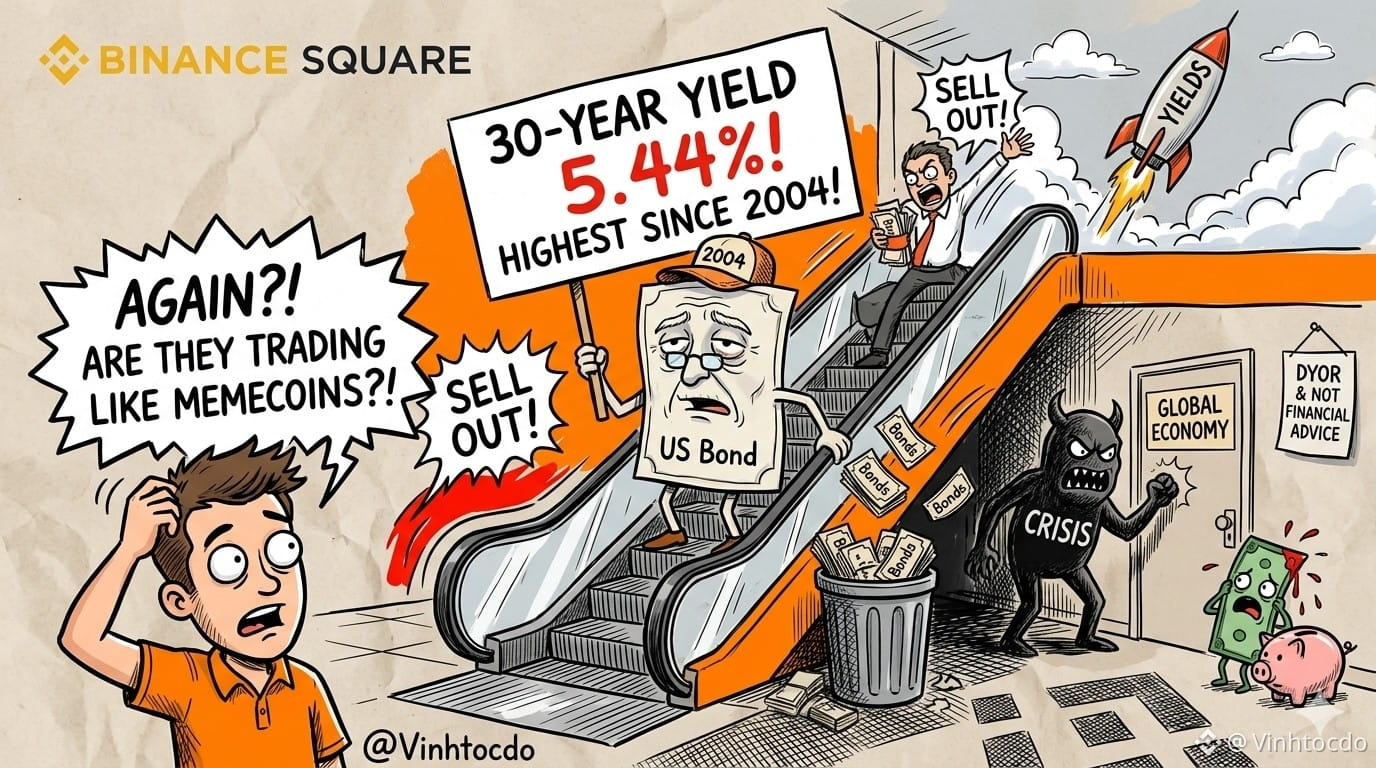
📈 Wait, what?! #us30yearyieldhighestsince2004 is trending at a crazy 5.44%! 🤯
Again?! US 30-year bond yields just hit a 22-year high! Is a financial crisis knocking on our doors? 🚨 And wait... "bond sell-off"? People actually trade bonds like memecoins now? 😂
Turns out, high inflation and skyrocketing oil prices are making investors panic and dump long-term bonds, driving yields to the moon! 🚀
What should crypto traders do?
1️⃣ Don't panic! Cash is bleeding, but crypto is built for this. 🧠
2️⃣ Watch out for market volatility. 📉📈
3️⃣ DYOR! This is NOT financial advice! 👀
Ready to trade the chaos? Sign up with code VINHTOCDO:
👉 https://www.binance.com/register?ref=VINHTOCDO
Click and trade below to support me:
$BTC
{future}(BTCUSDT)
$BNB
{future}(BNBUSDT)
$ETH
{future}(ETHUSDT)
#YieldsRising #BondSellOff #MacroCrypto #CryptoNews #FinancialCrisis #VINHTOCDO
#us30yearyieldhighestsince2004
📈 Wait, what?! #us30yearyieldhighestsince2004 is trending at a crazy 5.44%! 🤯
Again?! US 30-year bond yields just hit a 22-year high! Is a financial crisis knocking on our doors? 🚨 And wait... "bond sell-off"? People actually trade bonds like memecoins now? 😂
Turns out, high inflation and skyrocketing oil prices are making investors panic and dump long-term bonds, driving yields to the moon! 🚀
What should crypto traders do?
1️⃣ Don't panic! Cash is bleeding, but crypto is built for this. 🧠
2️⃣ Watch out for market volatility. 📉📈
3️⃣ DYOR! This is NOT financial advice! 👀
Ready to trade the chaos? Sign up with code VINHTOCDO:
👉 https://www.binance.com/register?ref=VINHTOCDO
Click and trade below to support me:
$BTC
$BNB
$ETH
#YieldsRising #BondSellOff #MacroCrypto #CryptoNews #FinancialCrisis #VINHTOCDO
📈 Wait, what?! #us30yearyieldhighestsince2004 is trending at a crazy 5.44%! 🤯
Again?! US 30-year bond yields just hit a 22-year high! Is a financial crisis knocking on our doors? 🚨 And wait... "bond sell-off"? People actually trade bonds like memecoins now? 😂
Turns out, high inflation and skyrocketing oil prices are making investors panic and dump long-term bonds, driving yields to the moon! 🚀
What should crypto traders do?
1️⃣ Don't panic! Cash is bleeding, but crypto is built for this. 🧠
2️⃣ Watch out for market volatility. 📉📈
3️⃣ DYOR! This is NOT financial advice! 👀
Ready to trade the chaos? Sign up with code VINHTOCDO:
👉 https://www.binance.com/register?ref=VINHTOCDO
Click and trade below to support me:
$BTC
$BNB
$ETH
#YieldsRising #BondSellOff #MacroCrypto #CryptoNews #FinancialCrisis #VINHTOCDO
2
160
·
--
Article
Crypto vs Stocks vs BondsCrypto vs Stocks vs Bonds comes down to risk, ownership, and what’s driving returns.
Here’s the breakdown:
1. What you actually own
- Stocks: A piece of a company. You profit if the company grows and becomes more valuable, plus dividends if they pay them.
- Bonds: An IOU from a government or company. You lend money and get fixed interest + principal back at maturity.
- Crypto: A digital token on a blockchain. Value comes from network use, speculation, and supply/demand. No cash flow unless you stake/yield farm it.
2. Risk & Volatility
Asset Typical Volatility Risk Drivers
Bonds Low to moderate Interest rates, credit risk, inflation. US Treasuries are lowest risk.
Stocks Moderate to high Company earnings, economy, market sentiment. Individual stocks can swing 10-20% in a week.
Crypto Very high Regulation, tech risk, liquidity, sentiment. 30-50% moves in a week aren’t unusual.
3. Return Profile
- Bonds: 3-6% annually for investment grade right now. Main job is capital preservation and income, not growth.
- Stocks: Historically ∼7-10% annually after inflation over long periods. Driven by real business growth.
- Crypto: No historical average. Bitcoin and ETH have had cycles of +1000% and -70%. Most altcoins go to zero.
4. Role in a Portfolio
- Bonds: Ballast. They zig when stocks zag, especially during recessions. Good if you need stability or income soon.
- Stocks: Growth engine. Where wealth compounds over 10+ years if you can tolerate drawdowns.
- Crypto: Speculative/high-beta allocation. Most advisors who use it suggest 1-5% max, treating it like venture capital.
5. Other practical differences
- Liquidity: Stocks and major crypto trade 24/7 or weekdays. Bonds can be illiquid outside Treasuries.
- Regulation: Stocks/bonds are regulated, audited, with investor protections. Crypto regulation is still evolving.
- Inflation hedge: Stocks do okay long-term. TIPS bonds are built for it. Crypto like Bitcoin is pitched as digital gold, but it hasn’t proven that yet in practice.
Bottom line:
Bonds = safety/income.
Stocks = ownership/growth.
Crypto = high risk/high uncertainty optionality.
#StockMarketSuccess #cryptouniverseofficial #BondSelloff
#bitcoin
Crypto vs Stocks vs Bonds
Crypto vs Stocks vs Bonds comes down to risk, ownership, and what’s driving returns.
Here’s the breakdown:
1. What you actually own
- Stocks: A piece of a company. You profit if the company grows and becomes more valuable, plus dividends if they pay them.
- Bonds: An IOU from a government or company. You lend money and get fixed interest + principal back at maturity.
- Crypto: A digital token on a blockchain. Value comes from network use, speculation, and supply/demand. No cash flow unless you stake/yield farm it.
2. Risk & Volatility
Asset Typical Volatility Risk Drivers
Bonds Low to moderate Interest rates, credit risk, inflation. US Treasuries are lowest risk.
Stocks Moderate to high Company earnings, economy, market sentiment. Individual stocks can swing 10-20% in a week.
Crypto Very high Regulation, tech risk, liquidity, sentiment. 30-50% moves in a week aren’t unusual.
3. Return Profile
- Bonds: 3-6% annually for investment grade right now. Main job is capital preservation and income, not growth.
- Stocks: Historically ∼7-10% annually after inflation over long periods. Driven by real business growth.
- Crypto: No historical average. Bitcoin and ETH have had cycles of +1000% and -70%. Most altcoins go to zero.
4. Role in a Portfolio
- Bonds: Ballast. They zig when stocks zag, especially during recessions. Good if you need stability or income soon.
- Stocks: Growth engine. Where wealth compounds over 10+ years if you can tolerate drawdowns.
- Crypto: Speculative/high-beta allocation. Most advisors who use it suggest 1-5% max, treating it like venture capital.
5. Other practical differences
- Liquidity: Stocks and major crypto trade 24/7 or weekdays. Bonds can be illiquid outside Treasuries.
- Regulation: Stocks/bonds are regulated, audited, with investor protections. Crypto regulation is still evolving.
- Inflation hedge: Stocks do okay long-term. TIPS bonds are built for it. Crypto like Bitcoin is pitched as digital gold, but it hasn’t proven that yet in practice.
Bottom line:
Bonds = safety/income.
Stocks = ownership/growth.
Crypto = high risk/high uncertainty optionality.
#StockMarketSuccess #cryptouniverseofficial #BondSelloff
#bitcoin
Here’s the breakdown:
1. What you actually own
- Stocks: A piece of a company. You profit if the company grows and becomes more valuable, plus dividends if they pay them.
- Bonds: An IOU from a government or company. You lend money and get fixed interest + principal back at maturity.
- Crypto: A digital token on a blockchain. Value comes from network use, speculation, and supply/demand. No cash flow unless you stake/yield farm it.
2. Risk & Volatility
Asset Typical Volatility Risk Drivers
Bonds Low to moderate Interest rates, credit risk, inflation. US Treasuries are lowest risk.
Stocks Moderate to high Company earnings, economy, market sentiment. Individual stocks can swing 10-20% in a week.
Crypto Very high Regulation, tech risk, liquidity, sentiment. 30-50% moves in a week aren’t unusual.
3. Return Profile
- Bonds: 3-6% annually for investment grade right now. Main job is capital preservation and income, not growth.
- Stocks: Historically ∼7-10% annually after inflation over long periods. Driven by real business growth.
- Crypto: No historical average. Bitcoin and ETH have had cycles of +1000% and -70%. Most altcoins go to zero.
4. Role in a Portfolio
- Bonds: Ballast. They zig when stocks zag, especially during recessions. Good if you need stability or income soon.
- Stocks: Growth engine. Where wealth compounds over 10+ years if you can tolerate drawdowns.
- Crypto: Speculative/high-beta allocation. Most advisors who use it suggest 1-5% max, treating it like venture capital.
5. Other practical differences
- Liquidity: Stocks and major crypto trade 24/7 or weekdays. Bonds can be illiquid outside Treasuries.
- Regulation: Stocks/bonds are regulated, audited, with investor protections. Crypto regulation is still evolving.
- Inflation hedge: Stocks do okay long-term. TIPS bonds are built for it. Crypto like Bitcoin is pitched as digital gold, but it hasn’t proven that yet in practice.
Bottom line:
Bonds = safety/income.
Stocks = ownership/growth.
Crypto = high risk/high uncertainty optionality.
#StockMarketSuccess #cryptouniverseofficial #BondSelloff
#bitcoin
1
98

I won’t stop pointing it out: the retail investor has many advantages as an investor, and should take advantage of them. And this is what Peter Lynch says in his entertaining books for non-institutional investors.
Yes, in addition, you remove the main principal–agent problem from advisors, and if you don’t have to liquidate positions at the end of the year to “massage” returns for the people you report to, you end up maximizing patience.
Imagine a manager immersed in unrealized losses for 10 months. He’s simply fired, even if his thesis is correct over 10 years. The retail investor can be “wrong” for 18 months or even 2 years and still see the full results of the thesis in the third year.
It’s the advantage that makes all the others possible.
Long-term value investing is pure stoicism.
#BondSelloff
I won’t stop pointing it out: the retail investor has many advantages as an investor, and should take advantage of them. And this is what Peter Lynch says in his entertaining books for non-institutional investors.
Yes, in addition, you remove the main principal–agent problem from advisors, and if you don’t have to liquidate positions at the end of the year to “massage” returns for the people you report to, you end up maximizing patience.
Imagine a manager immersed in unrealized losses for 10 months. He’s simply fired, even if his thesis is correct over 10 years. The retail investor can be “wrong” for 18 months or even 2 years and still see the full results of the thesis in the third year.
It’s the advantage that makes all the others possible.
Long-term value investing is pure stoicism.
#BondSelloff
Yes, in addition, you remove the main principal–agent problem from advisors, and if you don’t have to liquidate positions at the end of the year to “massage” returns for the people you report to, you end up maximizing patience.
Imagine a manager immersed in unrealized losses for 10 months. He’s simply fired, even if his thesis is correct over 10 years. The retail investor can be “wrong” for 18 months or even 2 years and still see the full results of the thesis in the third year.
It’s the advantage that makes all the others possible.
Long-term value investing is pure stoicism.
#BondSelloff
114
Log in to explore more content
Join global crypto users on Binance Square
⚡️ Get latest and useful information about crypto.
💬 Trusted by the world’s largest crypto exchange.
👍 Discover real insights from verified creators.
Email / Phone number
Trending Topics
1
#BitcoinSpotETFsNetInflow$191M
1,115 views
84 Discussing
2
#CFTCUpdatesGuidanceOnTokenizedAssets
13,774 views
606 Discussing
3
#BitgetSays$352MAffectedInHack
3,429 views
44 Discussing
4
#BinanceWillListHyperliquid(HYPE)
202,005 views
3,205 Discussing
5
#BrazilOrdersReportingOf$10KSelfCustodyTransfers
1,419 views
42 Discussing
6
#FedProposesRulesForBankIssuedStablecoins
13,936 views
433 Discussing
7
#OndoFinanceSoughtSaleAfterFoundersDeath
9,087 views
279 Discussing
8
#FedOctoberRateHikeOddsRiseTo69.7%
80,872 views
1,401 Discussing
9
#BitcoinFallsBelow$83,000
5,206 views
19 Discussing
10
#BitcoinFallsToAround$84,600ThisWeek
0 views
0 Discussing