
#bnbchainsiemreap
bnbchainsiemreap
1,669 views
19 Discussing
Hot
Latest

44 people. One room. So many conversations about the future.
☕️🟡Today, I had the pleasure of hosting a BNB Chain Coffee Chat in Siem Reap, and honestly, this is the kind of community moment I love most.
We had 44 solid attendees who stayed engaged and curious throughout the session. What really impressed me was the attention and questions around AI, U.S. stocks, bStocks, and Binance Academy.
We talked about how AI is already becoming useful in our daily lives and workloads — not just something we hear about in the news.
We also explored how the financial world is changing. A few years ago, owning U.S. stocks from this part of the world could feel complicated. Today, Binance is bringing crypto and traditional financial products closer together, with access to thousands of U.S. stocks and tokenized assets.
And education matters just as much.
Binance Academy gives people a free online place to learn, earn and build knowledge across different areas of Web3 and finance.
For me, this is what community is about.
Not just talking about the future online — but sitting together, learning together, asking questions, and helping each other understand it.
Big thanks to everyone who joined us in Siem Reap. ❤️
44 attendees today. Hopefully, many more conversations tomorrow. 🚀
#BNBChainsiemreap #Binance #BinanceAngels #BinanceAcademy #Siemreap
@Binance Square Official @Binance Angels
☕️🟡Today, I had the pleasure of hosting a BNB Chain Coffee Chat in Siem Reap, and honestly, this is the kind of community moment I love most.
We had 44 solid attendees who stayed engaged and curious throughout the session. What really impressed me was the attention and questions around AI, U.S. stocks, bStocks, and Binance Academy.
We talked about how AI is already becoming useful in our daily lives and workloads — not just something we hear about in the news.
We also explored how the financial world is changing. A few years ago, owning U.S. stocks from this part of the world could feel complicated. Today, Binance is bringing crypto and traditional financial products closer together, with access to thousands of U.S. stocks and tokenized assets.
And education matters just as much.
Binance Academy gives people a free online place to learn, earn and build knowledge across different areas of Web3 and finance.
For me, this is what community is about.
Not just talking about the future online — but sitting together, learning together, asking questions, and helping each other understand it.
Big thanks to everyone who joined us in Siem Reap. ❤️
44 attendees today. Hopefully, many more conversations tomorrow. 🚀
#BNBChainsiemreap #Binance #BinanceAngels #BinanceAcademy #Siemreap
@Binance Square Official @Binance Angels

Noobie Trader:
The 4




Angel_web3:
beautiful 💛




Mr TooN:
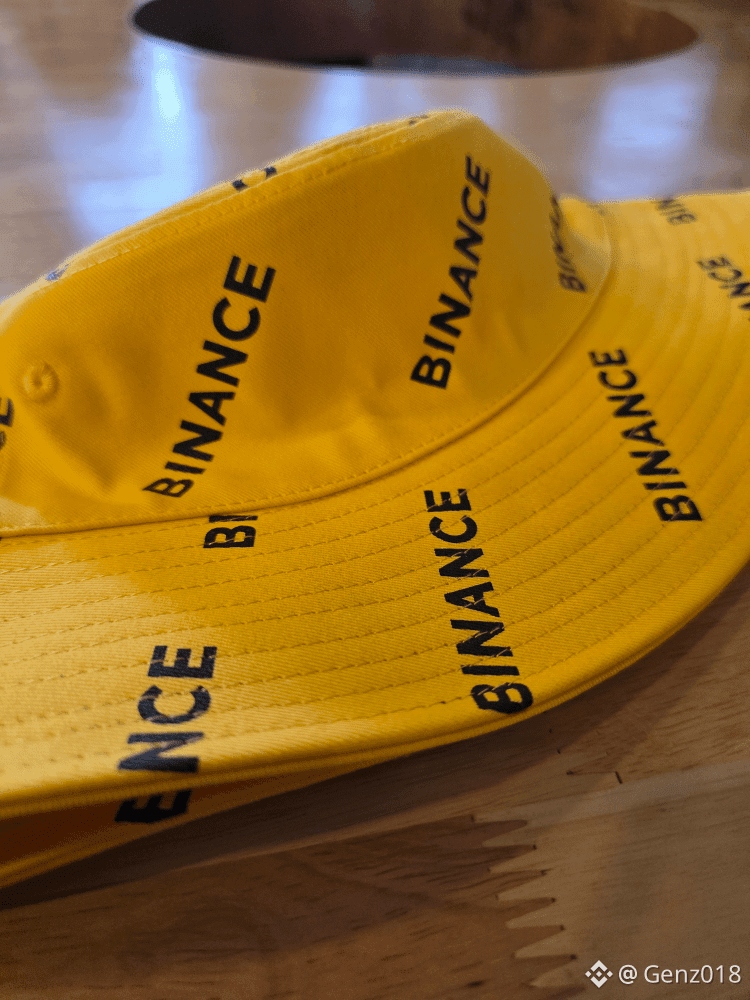
How I can get this kit















Meeting Coffee
#BNBChainsiemreap
#BNBChainsiemreap






#BNBchainSiemReap @Binance Khmer
D7-v
·
--
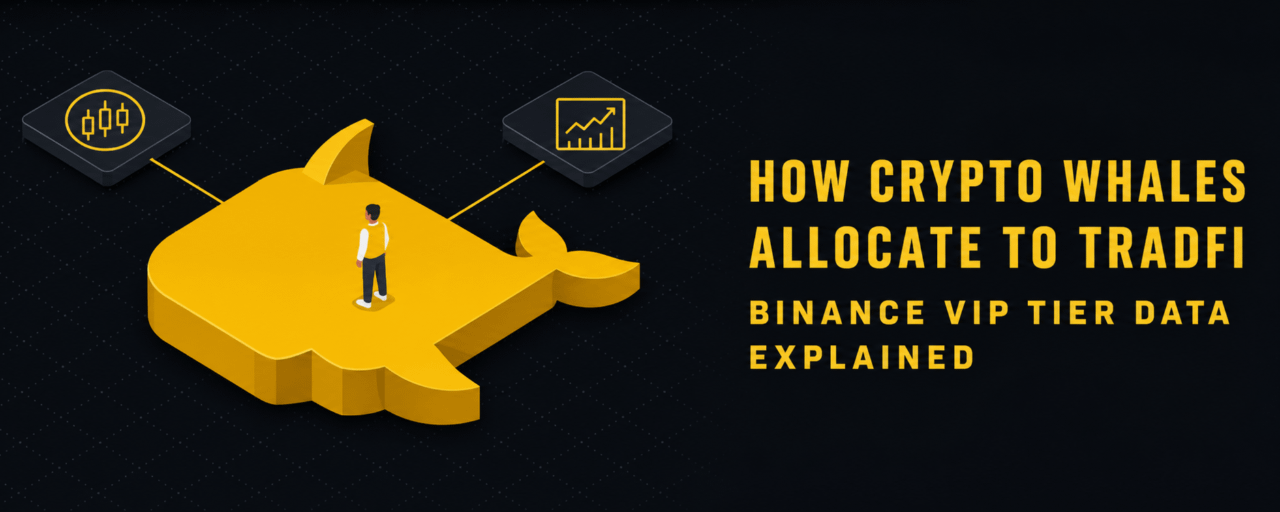
How Crypto's Whales Allocate to TradFi: What Binance's VIP Tier Data Reveals
For years, describing a "crypto whale" meant listing Bitcoin holdings, Ethereum stacks, DeFi positions, and maybe a leveraged futures book. That was the whole picture. Not anymore.
A growing body of behavioral data from Binance's VIP program — the tier system ranking the platform's highest-volume traders and most sophisticated participants from VIP 1 through VIP 9 — is starting to reveal something that changes how we should think about crypto wealth: crypto's whales are allocating capital into traditional finance (TradFi) assets like U.S. equities, ETFs, and commodities, right alongside their crypto holdings.
This isn't a story about crypto losing to Wall Street. It's a story about the wall between the two disappearing.
Why This Topic Matters Now
Crypto has spent over a decade positioning itself as an alternative to the traditional financial system. That framing made sense when access was one-directional — a brokerage account for stocks, an exchange account for crypto, rarely both in one place.
That's changed. Binance now offers direct access to thousands of U.S. stocks and ETFs, and products like TradFi Perps give users around-the-clock exposure to major equities, indices, and commodities without leaving the crypto trading environment. As of today, Bitcoin is trading around $78,900, still the dominant benchmark for crypto wealth, while BNB sits near $691 — a reminder that the assets underpinning VIP status (trading volume, BNB holdings) remain firmly rooted in the crypto economy even as VIP users branch into equities.
Three reasons this matters:
It signals market maturity. Sophisticated capital moving across asset classes is a hallmark of a maturing financial ecosystem, not a niche one.It reframes crypto adoption. Instead of asking "when will TradFi adopt crypto," the more interesting question becomes "how is crypto-native capital adopting TradFi?"It's a uniquely observable data point. Only a platform housing both crypto and TradFi products under one roof — with visibility into a user's trading tier and cross-asset activity — can actually measure this. That's precisely why Binance's VIP tier data stands out.
What Is Binance's VIP Program, and Who Qualifies?
Before digging into whale behavior, it's worth understanding what "VIP" actually means on Binance — it's easy to over-interpret.
Binance's VIP program spans ten levels: Regular User (VIP 0) through VIP 9. Users qualify through several paths, not just raw trading volume:
Spot or futures trading volume — VIP 1 starts at roughly $1 million in 30-day spot volume (or higher futures volume), climbing to $4 billion+ at VIP 9.BNB holdings — a minimum daily average BNB balance, from 5 BNB at VIP 1 up to 5,500 BNB at VIP 9.Asset holdings, OTC volume, or borrowing activity — since Binance updated its eligibility rules, users can also qualify as "Holder VIPs," "Investor VIPs," or "Borrower VIPs" based on portfolio size, Simple Earn subscriptions, or net borrowing, not trading volume alone.
In short, VIP tiers capture high-volume traders, professional desks, market makers, large holders, and institutional-style participants — a population that skews sophisticated and well-capitalized, even if VIP status isn't a precise measure of net worth.
From Crypto-Only Portfolios to Multi-Asset Allocation
Here's where it gets interesting. Historically, a crypto-native investor managed one mental model: crypto assets, crypto volatility, crypto cycles. TradFi was a separate universe — separate accounts, separate custodians, separate research habits.
By bringing equities, ETFs, and commodities directly onto a crypto-native platform, Binance removed the friction that used to keep these worlds apart. A VIP user who already manages a six- or seven-figure crypto book can now allocate into a U.S. equity or ETF position in the same interface where they trade Bitcoin perpetuals — no new brokerage account, no separate KYC process, no context-switching.
That convenience matters more for high-tier users than casual ones, because sophisticated traders are already comfortable with cross-asset risk management. Give them the tools, and equities stop looking like "someone else's market" and start looking like another instrument in the same portfolio.
The Whale Question: Speculation or Diversification?
The critical distinction in this data isn't whether whales touch TradFi products — it's how they use them.
There's a meaningful difference between:
A trader buying a Tesla or Nvidia perpetual contract around an earnings release to catch a short-term move, andA VIP 5+ user consistently holding a diversified basket of equities or ETFs alongside their core crypto positions, quarter after quarter.
The first is speculation dressed up in a new wrapper. The second is portfolio construction. Binance's VIP data can distinguish between the two because it observes not just that someone traded a stock, but how that behavior correlates with their broader crypto footprint, holding periods, and trading cadence.
If higher VIP tiers show longer average holding periods for equities, more consistent allocation sizes, and lower correlation with short-term news catalysts, that's a strong signal of genuine diversification rather than a passing trade.
Why Binance's VIP Data Is a Uniquely Credible Signal
Most financial institutions only see half the picture. A traditional brokerage knows a client owns Apple stock but has no visibility into whether that same person also holds Bitcoin, stablecoins, or DeFi positions elsewhere. A standalone crypto exchange sees the opposite: rich data on token activity, nothing about equity exposure.
A platform housing both — crypto trading, VIP tier classification, and tokenized equity or TradFi Perps access — can connect the dots at the individual user level. That's what makes this dataset valuable to analysts, researchers, and anyone tracking the institutionalization of crypto capital: it's one of the only places where "crypto wealth tier" and "TradFi allocation behavior" can be observed side by side.
Investment Themes, Not Just Asset Classes
One of the more compelling ways to interpret this shift is to stop separating "crypto" and "stocks" and instead look at investment themes.
Take an investor convinced artificial intelligence will reshape the global economy over the next decade. That thesis doesn't have to live in a single asset class:
They might hold Bitcoin, believing digital assets benefit from broader technological adoption and institutional inflows.They might hold semiconductor or cloud-computing stocks, betting on rising corporate AI infrastructure spend.They might hold a broad-market tech ETF for diversified exposure to the same trend.
Three different instruments, one underlying thesis. This is the mindset increasingly associated with sophisticated crypto users: portfolio thinking rather than asset-class loyalty. The same logic applies to macro views — an investor anticipating rate cuts might express that view through equities, crypto, or both, depending on which market offers better liquidity or risk-adjusted exposure at the time.
The Important Caveat: VIP Status Isn't the Same as Net Worth
It's worth being precise here, because it's tempting to treat every VIP 9 account as a billionaire family office. That's not accurate.
Binance VIP tiers are largely driven by trading volume and BNB holdings, not verified net worth. A high-frequency trading firm or market maker can reach VIP 9 by generating billions in monthly volume without holding a correspondingly massive long-term portfolio. Conversely, a long-term holder with significant assets but low trading activity might sit at a lower tier despite substantial wealth.
The right way to read this data isn't "every VIP 9 user is ultra-wealthy." It's "high-volume, professionally-minded crypto participants provide a uniquely active and observable population for studying cross-asset behavior" — a more modest claim, but the one worth building analysis around.
What It Would Mean If TradFi Becomes a Core Allocation
If VIP-tier data eventually shows higher tiers consistently allocating a meaningful, stable share of their activity to equities and ETFs — not just opportunistic trades around volatility spikes — that would be a genuinely important signal.
It would suggest crypto's most professional capital no longer treats U.S. equities as a curiosity or a hedge, but as a structural part of portfolio construction, alongside Bitcoin, stablecoins, and derivatives. That reframes the entire "crypto vs. TradFi" debate. The question stops being "will crypto replace traditional finance?" and becomes "how do crypto and TradFi coexist inside the same portfolio, managed by the same investor, on the same platform?"
Retail vs. Whale: Two Sides of the Same Convergence Story
This whale-focused analysis complements an earlier finding: younger and emerging-market users are increasingly using Binance as their first entry point into U.S. equities, often because traditional brokerage access is harder to reach in their home markets.
Put the two trends together and you get a two-directional convergence:
Retail and emerging-market users are discovering global equities through crypto-native infrastructure for the first time.Whales and professional desks are folding those same equities into portfolios that were previously dominated by digital assets.
Both groups are arriving at the same destination — a blended, multi-asset portfolio — from opposite starting points. That convergence, happening simultaneously at both ends of the wealth spectrum, is arguably a stronger signal of crypto's maturation than either trend alone.
The Bigger Picture: Crypto Capital Is Growing Up
The label "crypto whale" may eventually feel outdated. An investor moving fluidly between Bitcoin, Nvidia stock, a diversified ETF, stablecoins, and tokenized assets isn't just a crypto participant anymore — they're a global, multi-asset investor who happens to use crypto-native infrastructure as their entry point.
Professional investors don't typically ask whether an asset "belongs" to crypto or Wall Street. They ask about liquidity, risk, correlation, and fit within a broader strategy. As Binance's VIP ecosystem increasingly blurs that line, it offers one of the earliest, most credible windows into what the next generation of global, cross-asset portfolios might look like.
Key Takeaways
Binance's VIP program (VIP 1-9) captures the platform's highest-volume traders, professional desks, and large holders — not a perfect proxy for net worth, but a highly active, observable population.VIP users can access U.S. equities, ETFs, and TradFi Perps within the same platform used for crypto trading, lowering the friction to cross-asset allocation.The key signal isn't whether whales touch stocks — it's whether they hold them consistently as diversification versus trading them opportunistically around news events.Binance's unique advantage is visibility into both crypto wealth tier and TradFi behavior for the same user, something neither a traditional brokerage nor a standalone crypto exchange can offer.If sustained, this behavior suggests crypto's most sophisticated capital is shifting from "crypto vs. TradFi" thinking to portfolio-level, multi-asset thinking.This whale-side trend mirrors a retail-side trend of emerging-market and younger users discovering equities through crypto platforms — convergence is happening from both directions.
FAQ
What does VIP 1-9 mean on Binance?
It's Binance's tiered program for high-volume traders, large holders, borrowers, and institutional-style participants. Users qualify through 30-day trading volume, BNB holdings, asset holdings, OTC volume, or borrowing activity, with VIP 9 requiring billions of dollars in trading volume or very large holdings.
Does a high VIP tier mean someone is extremely wealthy?
Not necessarily. VIP tiers are largely based on trading volume and BNB balances, so a high-frequency trader or market maker can reach VIP 9 without holding a massive long-term portfolio. It's more accurate to think of VIP tiers as measuring activity and sophistication rather than verified net worth.
How can Binance's whales access TradFi assets?
Through Binance's tokenized U.S. stock and ETF offerings and TradFi Perps, which provide extended-hours exposure to major equities, indices, and commodities directly from a crypto trading account.
Why is this data considered uniquely credible?
Because Binance can observe both a user's crypto trading tier and their TradFi allocation behavior on the same platform — a combination neither a traditional brokerage nor a crypto-only exchange can replicate.
Is this trend the same as institutional adoption of crypto?
It's related but distinct. Institutional adoption usually refers to TradFi firms buying crypto (e.g., Bitcoin ETFs). This trend runs the other direction: crypto-native, high-volume users allocating into TradFi assets — evidence that convergence is happening from both sides of the market.
A growing body of behavioral data from Binance's VIP program — the tier system ranking the platform's highest-volume traders and most sophisticated participants from VIP 1 through VIP 9 — is starting to reveal something that changes how we should think about crypto wealth: crypto's whales are allocating capital into traditional finance (TradFi) assets like U.S. equities, ETFs, and commodities, right alongside their crypto holdings.
This isn't a story about crypto losing to Wall Street. It's a story about the wall between the two disappearing.
Why This Topic Matters Now
Crypto has spent over a decade positioning itself as an alternative to the traditional financial system. That framing made sense when access was one-directional — a brokerage account for stocks, an exchange account for crypto, rarely both in one place.
That's changed. Binance now offers direct access to thousands of U.S. stocks and ETFs, and products like TradFi Perps give users around-the-clock exposure to major equities, indices, and commodities without leaving the crypto trading environment. As of today, Bitcoin is trading around $78,900, still the dominant benchmark for crypto wealth, while BNB sits near $691 — a reminder that the assets underpinning VIP status (trading volume, BNB holdings) remain firmly rooted in the crypto economy even as VIP users branch into equities.
Three reasons this matters:
It signals market maturity. Sophisticated capital moving across asset classes is a hallmark of a maturing financial ecosystem, not a niche one.It reframes crypto adoption. Instead of asking "when will TradFi adopt crypto," the more interesting question becomes "how is crypto-native capital adopting TradFi?"It's a uniquely observable data point. Only a platform housing both crypto and TradFi products under one roof — with visibility into a user's trading tier and cross-asset activity — can actually measure this. That's precisely why Binance's VIP tier data stands out.
What Is Binance's VIP Program, and Who Qualifies?
Before digging into whale behavior, it's worth understanding what "VIP" actually means on Binance — it's easy to over-interpret.
Binance's VIP program spans ten levels: Regular User (VIP 0) through VIP 9. Users qualify through several paths, not just raw trading volume:
Spot or futures trading volume — VIP 1 starts at roughly $1 million in 30-day spot volume (or higher futures volume), climbing to $4 billion+ at VIP 9.BNB holdings — a minimum daily average BNB balance, from 5 BNB at VIP 1 up to 5,500 BNB at VIP 9.Asset holdings, OTC volume, or borrowing activity — since Binance updated its eligibility rules, users can also qualify as "Holder VIPs," "Investor VIPs," or "Borrower VIPs" based on portfolio size, Simple Earn subscriptions, or net borrowing, not trading volume alone.
In short, VIP tiers capture high-volume traders, professional desks, market makers, large holders, and institutional-style participants — a population that skews sophisticated and well-capitalized, even if VIP status isn't a precise measure of net worth.
From Crypto-Only Portfolios to Multi-Asset Allocation
Here's where it gets interesting. Historically, a crypto-native investor managed one mental model: crypto assets, crypto volatility, crypto cycles. TradFi was a separate universe — separate accounts, separate custodians, separate research habits.
By bringing equities, ETFs, and commodities directly onto a crypto-native platform, Binance removed the friction that used to keep these worlds apart. A VIP user who already manages a six- or seven-figure crypto book can now allocate into a U.S. equity or ETF position in the same interface where they trade Bitcoin perpetuals — no new brokerage account, no separate KYC process, no context-switching.
That convenience matters more for high-tier users than casual ones, because sophisticated traders are already comfortable with cross-asset risk management. Give them the tools, and equities stop looking like "someone else's market" and start looking like another instrument in the same portfolio.
The Whale Question: Speculation or Diversification?
The critical distinction in this data isn't whether whales touch TradFi products — it's how they use them.
There's a meaningful difference between:
A trader buying a Tesla or Nvidia perpetual contract around an earnings release to catch a short-term move, andA VIP 5+ user consistently holding a diversified basket of equities or ETFs alongside their core crypto positions, quarter after quarter.
The first is speculation dressed up in a new wrapper. The second is portfolio construction. Binance's VIP data can distinguish between the two because it observes not just that someone traded a stock, but how that behavior correlates with their broader crypto footprint, holding periods, and trading cadence.
If higher VIP tiers show longer average holding periods for equities, more consistent allocation sizes, and lower correlation with short-term news catalysts, that's a strong signal of genuine diversification rather than a passing trade.
Why Binance's VIP Data Is a Uniquely Credible Signal
Most financial institutions only see half the picture. A traditional brokerage knows a client owns Apple stock but has no visibility into whether that same person also holds Bitcoin, stablecoins, or DeFi positions elsewhere. A standalone crypto exchange sees the opposite: rich data on token activity, nothing about equity exposure.
A platform housing both — crypto trading, VIP tier classification, and tokenized equity or TradFi Perps access — can connect the dots at the individual user level. That's what makes this dataset valuable to analysts, researchers, and anyone tracking the institutionalization of crypto capital: it's one of the only places where "crypto wealth tier" and "TradFi allocation behavior" can be observed side by side.
Investment Themes, Not Just Asset Classes
One of the more compelling ways to interpret this shift is to stop separating "crypto" and "stocks" and instead look at investment themes.
Take an investor convinced artificial intelligence will reshape the global economy over the next decade. That thesis doesn't have to live in a single asset class:
They might hold Bitcoin, believing digital assets benefit from broader technological adoption and institutional inflows.They might hold semiconductor or cloud-computing stocks, betting on rising corporate AI infrastructure spend.They might hold a broad-market tech ETF for diversified exposure to the same trend.
Three different instruments, one underlying thesis. This is the mindset increasingly associated with sophisticated crypto users: portfolio thinking rather than asset-class loyalty. The same logic applies to macro views — an investor anticipating rate cuts might express that view through equities, crypto, or both, depending on which market offers better liquidity or risk-adjusted exposure at the time.
The Important Caveat: VIP Status Isn't the Same as Net Worth
It's worth being precise here, because it's tempting to treat every VIP 9 account as a billionaire family office. That's not accurate.
Binance VIP tiers are largely driven by trading volume and BNB holdings, not verified net worth. A high-frequency trading firm or market maker can reach VIP 9 by generating billions in monthly volume without holding a correspondingly massive long-term portfolio. Conversely, a long-term holder with significant assets but low trading activity might sit at a lower tier despite substantial wealth.
The right way to read this data isn't "every VIP 9 user is ultra-wealthy." It's "high-volume, professionally-minded crypto participants provide a uniquely active and observable population for studying cross-asset behavior" — a more modest claim, but the one worth building analysis around.
What It Would Mean If TradFi Becomes a Core Allocation
If VIP-tier data eventually shows higher tiers consistently allocating a meaningful, stable share of their activity to equities and ETFs — not just opportunistic trades around volatility spikes — that would be a genuinely important signal.
It would suggest crypto's most professional capital no longer treats U.S. equities as a curiosity or a hedge, but as a structural part of portfolio construction, alongside Bitcoin, stablecoins, and derivatives. That reframes the entire "crypto vs. TradFi" debate. The question stops being "will crypto replace traditional finance?" and becomes "how do crypto and TradFi coexist inside the same portfolio, managed by the same investor, on the same platform?"
Retail vs. Whale: Two Sides of the Same Convergence Story
This whale-focused analysis complements an earlier finding: younger and emerging-market users are increasingly using Binance as their first entry point into U.S. equities, often because traditional brokerage access is harder to reach in their home markets.
Put the two trends together and you get a two-directional convergence:
Retail and emerging-market users are discovering global equities through crypto-native infrastructure for the first time.Whales and professional desks are folding those same equities into portfolios that were previously dominated by digital assets.
Both groups are arriving at the same destination — a blended, multi-asset portfolio — from opposite starting points. That convergence, happening simultaneously at both ends of the wealth spectrum, is arguably a stronger signal of crypto's maturation than either trend alone.
The Bigger Picture: Crypto Capital Is Growing Up
The label "crypto whale" may eventually feel outdated. An investor moving fluidly between Bitcoin, Nvidia stock, a diversified ETF, stablecoins, and tokenized assets isn't just a crypto participant anymore — they're a global, multi-asset investor who happens to use crypto-native infrastructure as their entry point.
Professional investors don't typically ask whether an asset "belongs" to crypto or Wall Street. They ask about liquidity, risk, correlation, and fit within a broader strategy. As Binance's VIP ecosystem increasingly blurs that line, it offers one of the earliest, most credible windows into what the next generation of global, cross-asset portfolios might look like.
Key Takeaways
Binance's VIP program (VIP 1-9) captures the platform's highest-volume traders, professional desks, and large holders — not a perfect proxy for net worth, but a highly active, observable population.VIP users can access U.S. equities, ETFs, and TradFi Perps within the same platform used for crypto trading, lowering the friction to cross-asset allocation.The key signal isn't whether whales touch stocks — it's whether they hold them consistently as diversification versus trading them opportunistically around news events.Binance's unique advantage is visibility into both crypto wealth tier and TradFi behavior for the same user, something neither a traditional brokerage nor a standalone crypto exchange can offer.If sustained, this behavior suggests crypto's most sophisticated capital is shifting from "crypto vs. TradFi" thinking to portfolio-level, multi-asset thinking.This whale-side trend mirrors a retail-side trend of emerging-market and younger users discovering equities through crypto platforms — convergence is happening from both directions.
FAQ
What does VIP 1-9 mean on Binance?
It's Binance's tiered program for high-volume traders, large holders, borrowers, and institutional-style participants. Users qualify through 30-day trading volume, BNB holdings, asset holdings, OTC volume, or borrowing activity, with VIP 9 requiring billions of dollars in trading volume or very large holdings.
Does a high VIP tier mean someone is extremely wealthy?
Not necessarily. VIP tiers are largely based on trading volume and BNB balances, so a high-frequency trader or market maker can reach VIP 9 without holding a massive long-term portfolio. It's more accurate to think of VIP tiers as measuring activity and sophistication rather than verified net worth.
How can Binance's whales access TradFi assets?
Through Binance's tokenized U.S. stock and ETF offerings and TradFi Perps, which provide extended-hours exposure to major equities, indices, and commodities directly from a crypto trading account.
Why is this data considered uniquely credible?
Because Binance can observe both a user's crypto trading tier and their TradFi allocation behavior on the same platform — a combination neither a traditional brokerage nor a crypto-only exchange can replicate.
Is this trend the same as institutional adoption of crypto?
It's related but distinct. Institutional adoption usually refers to TradFi firms buying crypto (e.g., Bitcoin ETFs). This trend runs the other direction: crypto-native, high-volume users allocating into TradFi assets — evidence that convergence is happening from both sides of the market.

Log in to explore more content