

#bc
bc
38,274 views
157 Discussing
Hot
Latest

Verified
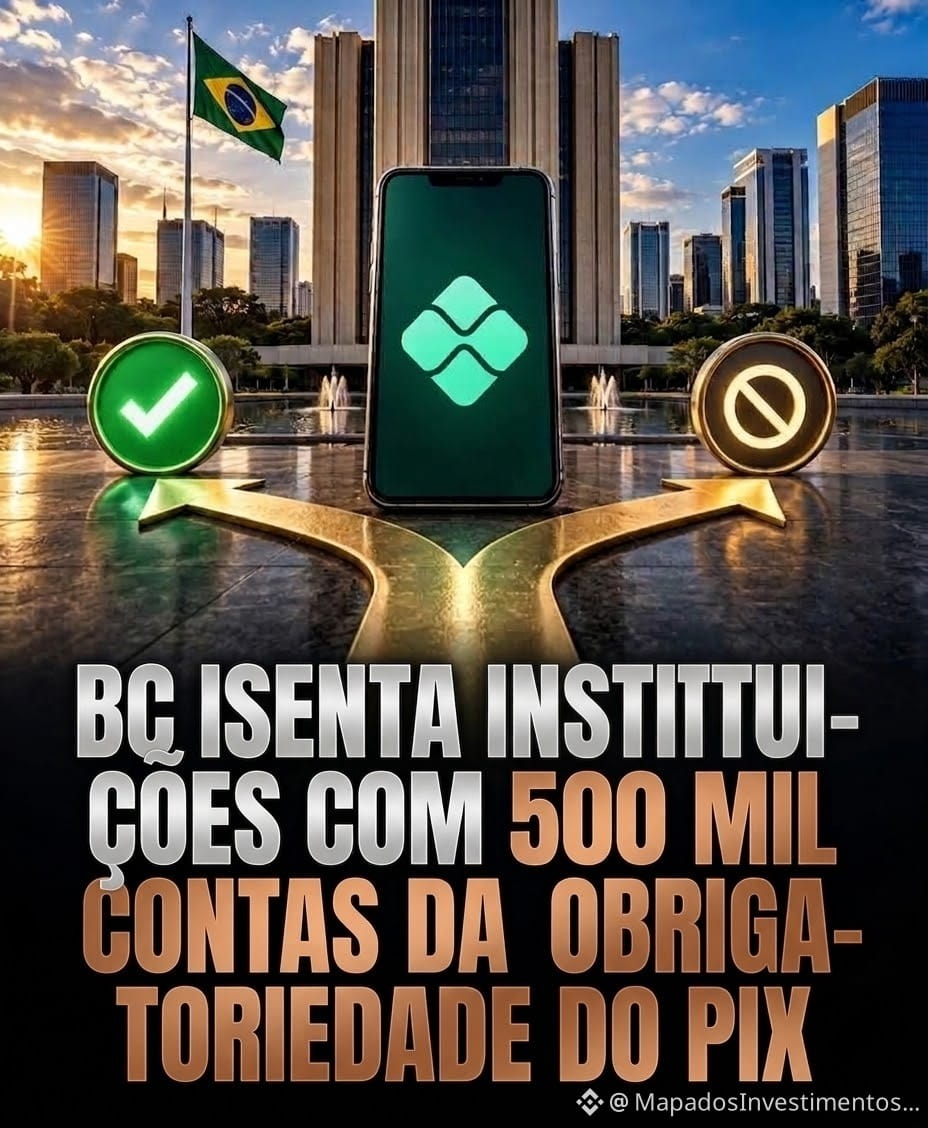
The Central Bank of Brazil really changed a Pix rule that had been in effect since 2020. Now it can exempt institutions with more than 500 thousand active accounts from the obligation, when it understands that the business model or customer profile does not justify requiring integration with the system.
But this isn’t a general “get-out-of-jail-free” card. The exemption is not automatic—it depends on a case-by-case assessment by the Central Bank itself, and the rule continues to stand as the default. In other words: no bank or fintech gained the freedom to simply remove Pix from the app. The change is already in effect.
The Central Bank also tightened things on the other end: institutions definitively penalized may now be excluded from Pix immediately, without the 30-day deadline that existed before, and those entering extrajudicial liquidation can be suspended right away, with a structured process for customers to withdraw their funds.
And there are two more changes on the horizon: Pix Automático (Automatic Pix) allowed in payroll accounts starting in July 2027, and a boleto (payment slip) with a Pix QR Code regulated starting in February 2027.
#PIX #bc #brasil #fintech #Educacaofinanceira
$AAPLB $NVDAB $POL
The Central Bank of Brazil really changed a Pix rule that had been in effect since 2020. Now it can exempt institutions with more than 500 thousand active accounts from the obligation, when it understands that the business model or customer profile does not justify requiring integration with the system.
But this isn’t a general “get-out-of-jail-free” card. The exemption is not automatic—it depends on a case-by-case assessment by the Central Bank itself, and the rule continues to stand as the default. In other words: no bank or fintech gained the freedom to simply remove Pix from the app. The change is already in effect.
The Central Bank also tightened things on the other end: institutions definitively penalized may now be excluded from Pix immediately, without the 30-day deadline that existed before, and those entering extrajudicial liquidation can be suspended right away, with a structured process for customers to withdraw their funds.
And there are two more changes on the horizon: Pix Automático (Automatic Pix) allowed in payroll accounts starting in July 2027, and a boleto (payment slip) with a Pix QR Code regulated starting in February 2027.
#PIX #bc #brasil #fintech #Educacaofinanceira
$AAPLB $NVDAB $POL
But this isn’t a general “get-out-of-jail-free” card. The exemption is not automatic—it depends on a case-by-case assessment by the Central Bank itself, and the rule continues to stand as the default. In other words: no bank or fintech gained the freedom to simply remove Pix from the app. The change is already in effect.
The Central Bank also tightened things on the other end: institutions definitively penalized may now be excluded from Pix immediately, without the 30-day deadline that existed before, and those entering extrajudicial liquidation can be suspended right away, with a structured process for customers to withdraw their funds.
And there are two more changes on the horizon: Pix Automático (Automatic Pix) allowed in payroll accounts starting in July 2027, and a boleto (payment slip) with a Pix QR Code regulated starting in February 2027.
#PIX #bc #brasil #fintech #Educacaofinanceira
$AAPLB $NVDAB $POL
1
1
1.4k

·
--
BC.GAME Token (often shown as BC on some platforms) is the utility token tied to the BC.GAME crypto casino ecosystem, typically used to unlock platform perks such as VIP benefits, bonuses/rebates, and participation in campaigns or rewards programs (exact benefits depend on what the platform is running at the time). Like many gaming/casino-linked tokens, its demand is usually driven more by user activity, incentives, and tokenomics (supply, emissions, burns/buybacks if any) than by broader “tech adoption,” which can make the price more volatile—especially around promotions or major announcements.
#bc #BCGAME
BC.GAME Token (often shown as BC on some platforms) is the utility token tied to the BC.GAME crypto casino ecosystem, typically used to unlock platform perks such as VIP benefits, bonuses/rebates, and participation in campaigns or rewards programs (exact benefits depend on what the platform is running at the time). Like many gaming/casino-linked tokens, its demand is usually driven more by user activity, incentives, and tokenomics (supply, emissions, burns/buybacks if any) than by broader “tech adoption,” which can make the price more volatile—especially around promotions or major announcements.
#bc #BCGAME
#bc #BCGAME
69


·
--
Bullish
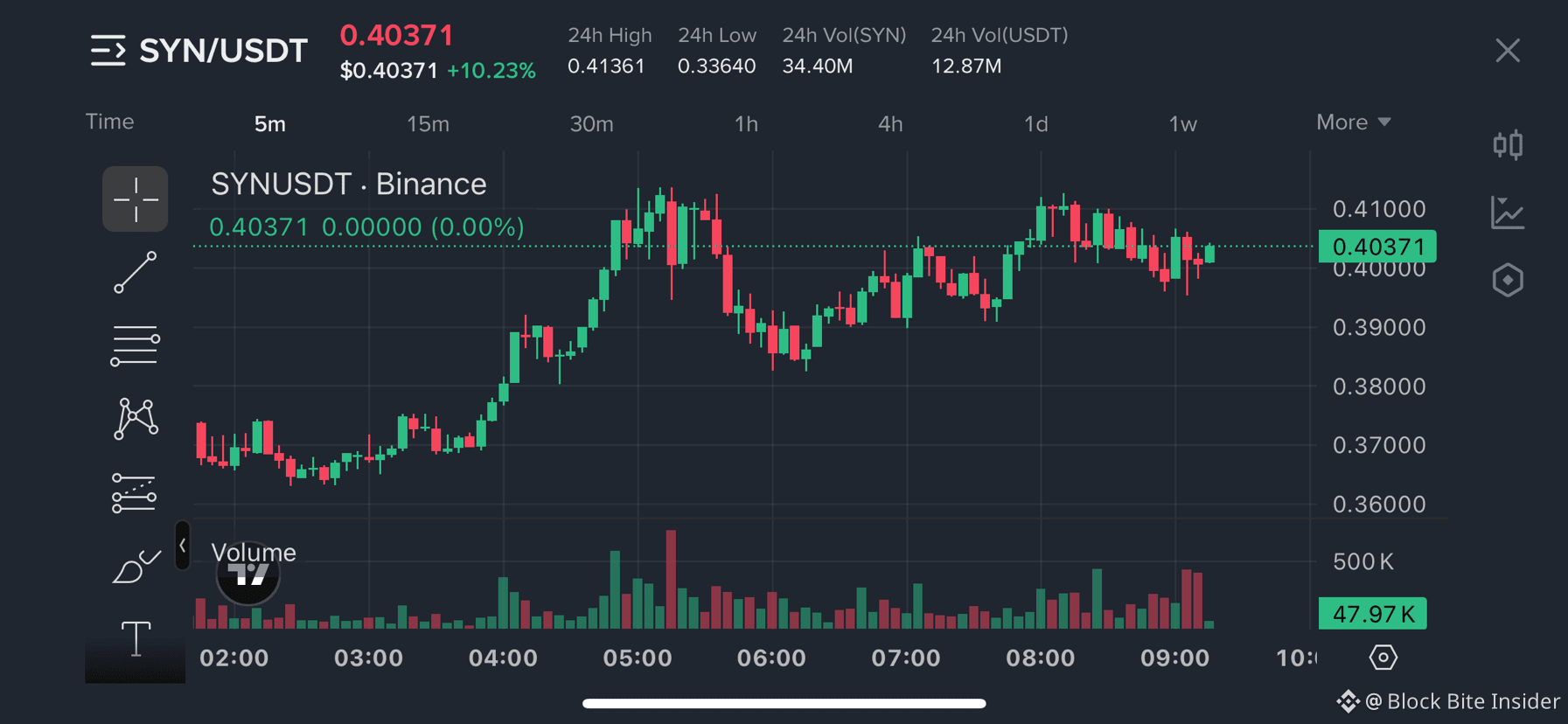
$SYN VOLUME SPIKE – INSTANT LONG! ⚡
SYN 12.87M USDT volume, holding above 0.4000! SPELL & KMNO already pumping. SYN next leg up – target 0.4300. Momentum unstoppable. BC fueling fire. Enter before 0.4150 break!
#cryptosignals #BC #
{spot}(SYNUSDT)
$SYN VOLUME SPIKE – INSTANT LONG! ⚡
SYN 12.87M USDT volume, holding above 0.4000! SPELL & KMNO already pumping. SYN next leg up – target 0.4300. Momentum unstoppable. BC fueling fire. Enter before 0.4150 break!
#cryptosignals #BC #
SYN 12.87M USDT volume, holding above 0.4000! SPELL & KMNO already pumping. SYN next leg up – target 0.4300. Momentum unstoppable. BC fueling fire. Enter before 0.4150 break!
#cryptosignals #BC #
1
152

·
--
Bullish
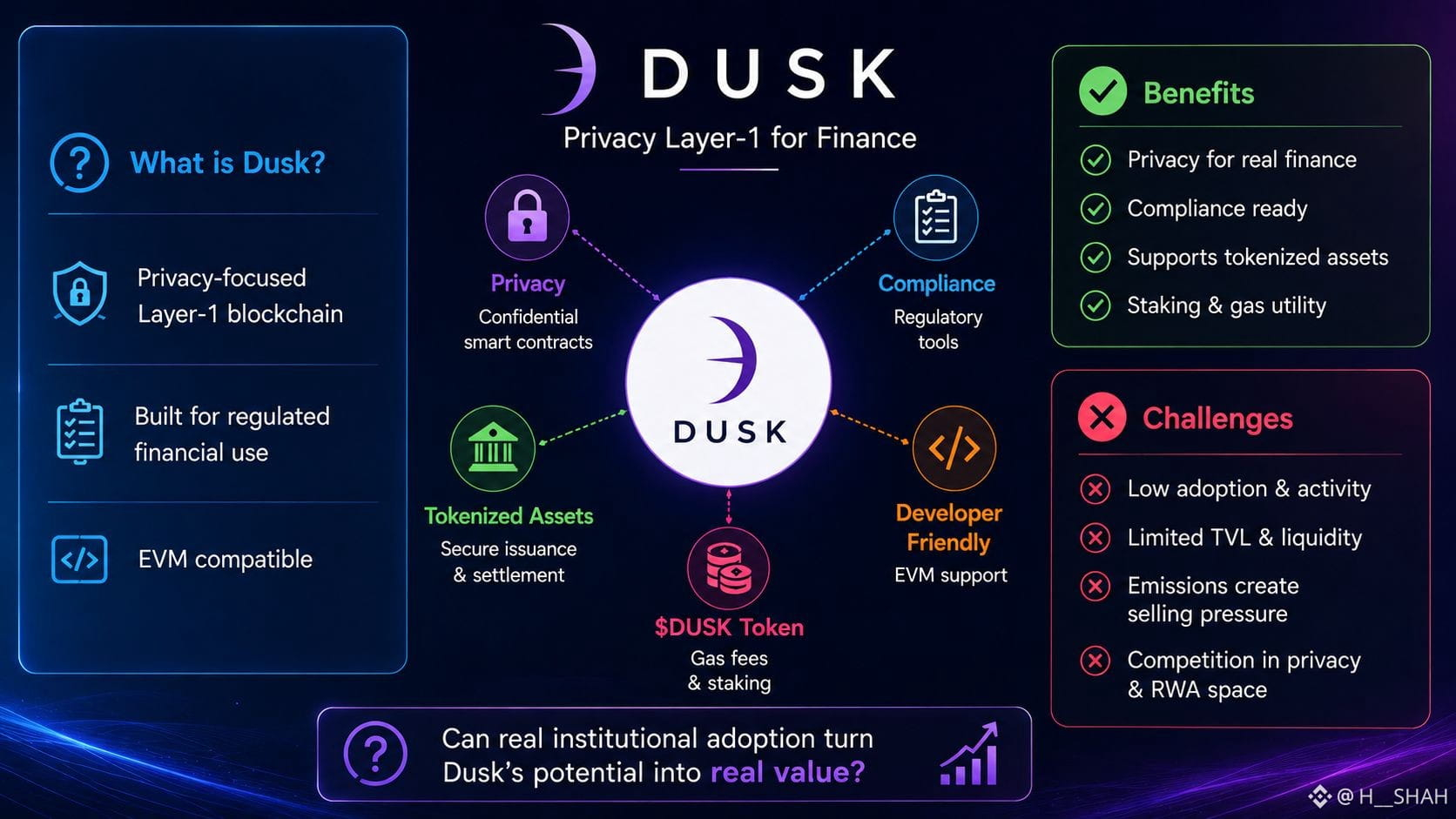
When I started researching @Dusk_Foundation , I discovered a lot about the project—what it does well, its potential benefits, and the challenges it still needs to overcome.
Blockchain is becoming more connected to traditional finance, but financial institutions still need privacy and compliance. They cannot always put every detail of a transaction on a completely public blockchain.
Dusk is a Layer-1 blockchain built with financial use cases in mind, focusing on privacy, compliance, and secure settlement. The idea is simple: institutions should be able to use blockchain while keeping sensitive information protected and only sharing what needs to be verified.
Dusk also supports tokenized assets and financial applications, while EVM compatibility makes it easier for Ethereum developers to build on the network. The $DUSK token is used for network fees and staking.
If Dusk can attract real financial institutions, asset issuers, developers, and users, it could become useful infrastructure for bringing traditional financial activity onto blockchain.
But a good idea does not automatically create adoption.
Dusk still needs more real users, applications, liquidity, and network activity. Its current usage remains relatively small compared with the huge financial market it is targeting.
There is also an important question around $DUSK itself: if institutions use Dusk’s technology but do not need to hold large amounts of the token, will network growth create enough demand?
And if token emissions continue faster than real demand grows, could that put pressure on existing holders
Competition is another factor. Dusk is not the only project working on privacy, tokenized assets, and institutional blockchain infrastructure. The real challenge is whether Dusk can become a platform people actually choose to use.
Will real usage drive sustainable $DUSK demand?
{spot}(DUSKUSDT)
#dusk #DuskNetwork #BC #Privacy #Blockchain
{future}(DUSKUSDT)
When I started researching @Dusk , I discovered a lot about the project—what it does well, its potential benefits, and the challenges it still needs to overcome.
Blockchain is becoming more connected to traditional finance, but financial institutions still need privacy and compliance. They cannot always put every detail of a transaction on a completely public blockchain.
Dusk is a Layer-1 blockchain built with financial use cases in mind, focusing on privacy, compliance, and secure settlement. The idea is simple: institutions should be able to use blockchain while keeping sensitive information protected and only sharing what needs to be verified.
Dusk also supports tokenized assets and financial applications, while EVM compatibility makes it easier for Ethereum developers to build on the network. The $DUSK token is used for network fees and staking.
If Dusk can attract real financial institutions, asset issuers, developers, and users, it could become useful infrastructure for bringing traditional financial activity onto blockchain.
But a good idea does not automatically create adoption.
Dusk still needs more real users, applications, liquidity, and network activity. Its current usage remains relatively small compared with the huge financial market it is targeting.
There is also an important question around $DUSK itself: if institutions use Dusk’s technology but do not need to hold large amounts of the token, will network growth create enough demand?
And if token emissions continue faster than real demand grows, could that put pressure on existing holders
Competition is another factor. Dusk is not the only project working on privacy, tokenized assets, and institutional blockchain infrastructure. The real challenge is whether Dusk can become a platform people actually choose to use.
Will real usage drive sustainable $DUSK demand?
#dusk #DuskNetwork #BC #Privacy #Blockchain
Blockchain is becoming more connected to traditional finance, but financial institutions still need privacy and compliance. They cannot always put every detail of a transaction on a completely public blockchain.
Dusk is a Layer-1 blockchain built with financial use cases in mind, focusing on privacy, compliance, and secure settlement. The idea is simple: institutions should be able to use blockchain while keeping sensitive information protected and only sharing what needs to be verified.
Dusk also supports tokenized assets and financial applications, while EVM compatibility makes it easier for Ethereum developers to build on the network. The $DUSK token is used for network fees and staking.
If Dusk can attract real financial institutions, asset issuers, developers, and users, it could become useful infrastructure for bringing traditional financial activity onto blockchain.
But a good idea does not automatically create adoption.
Dusk still needs more real users, applications, liquidity, and network activity. Its current usage remains relatively small compared with the huge financial market it is targeting.
There is also an important question around $DUSK itself: if institutions use Dusk’s technology but do not need to hold large amounts of the token, will network growth create enough demand?
And if token emissions continue faster than real demand grows, could that put pressure on existing holders
Competition is another factor. Dusk is not the only project working on privacy, tokenized assets, and institutional blockchain infrastructure. The real challenge is whether Dusk can become a platform people actually choose to use.
Will real usage drive sustainable $DUSK demand?
#dusk #DuskNetwork #BC #Privacy #Blockchain
56
34
702

·
--
Bearish
Fresh volatility is keeping leveraged traders under pressure as liquidity gets swept across the market 💥
Momentum is building quickly, and the next move could arrive faster than expected 👀
$BCH
{future}(BCHUSDT)
🔴 LIQUIDITY ZONE HIT 🔴
Long liquidation spotted 🧨
$5.9979K cleared at $196.78
Downside liquidity swept — react NOW or watch the market shift 👀
🎯 TP Targets:
TP1: ~$196.10
TP2: ~$195.30
TP3: ~$194.50
#bc
Fresh volatility is keeping leveraged traders under pressure as liquidity gets swept across the market 💥
Momentum is building quickly, and the next move could arrive faster than expected 👀
$BCH
🔴 LIQUIDITY ZONE HIT 🔴
Long liquidation spotted 🧨
$5.9979K cleared at $196.78
Downside liquidity swept — react NOW or watch the market shift 👀
🎯 TP Targets:
TP1: ~$196.10
TP2: ~$195.30
TP3: ~$194.50
#bc
Momentum is building quickly, and the next move could arrive faster than expected 👀
$BCH
🔴 LIQUIDITY ZONE HIT 🔴
Long liquidation spotted 🧨
$5.9979K cleared at $196.78
Downside liquidity swept — react NOW or watch the market shift 👀
🎯 TP Targets:
TP1: ~$196.10
TP2: ~$195.30
TP3: ~$194.50
#bc
37
Log in to explore more content
Join global crypto users on Binance Square
⚡️ Get latest and useful information about crypto.
💬 Trusted by the world’s largest crypto exchange.
👍 Discover real insights from verified creators.
Email / Phone number
Trending Topics
1
#NFPWatch
10.5M views
17,316 Discussing
2
#ZcashFalls21%FromSeptemberPeak
8 views
17 Discussing
3
#XRPPostsFirstThreeGreenMonthsInQ3
4,189 views
126 Discussing
4
#BitcoinRisesToward$85K
36,337 views
92 Discussing
5
#AmazonPlansToSell$8BNvidiaChips
4,346 views
66 Discussing
6
#NEARFallsToAround$4.70Down14%
35,699 views
92 Discussing
7
#EthereumFoundationLaunchesZkAPIOnMainnet
53,115 views
788 Discussing
8
#EvernorthPlansNasdaqListingOct8
77,013 views
665 Discussing
9
#SECProposesCryptoCustodyFramework
66,400 views
597 Discussing
10
#IMFApproves$139MDisbursementToElSalvador
31,779 views
32 Discussing