

#auverachain
auverachain
1,015 views
9 Discussing
Hot
Latest


·
--
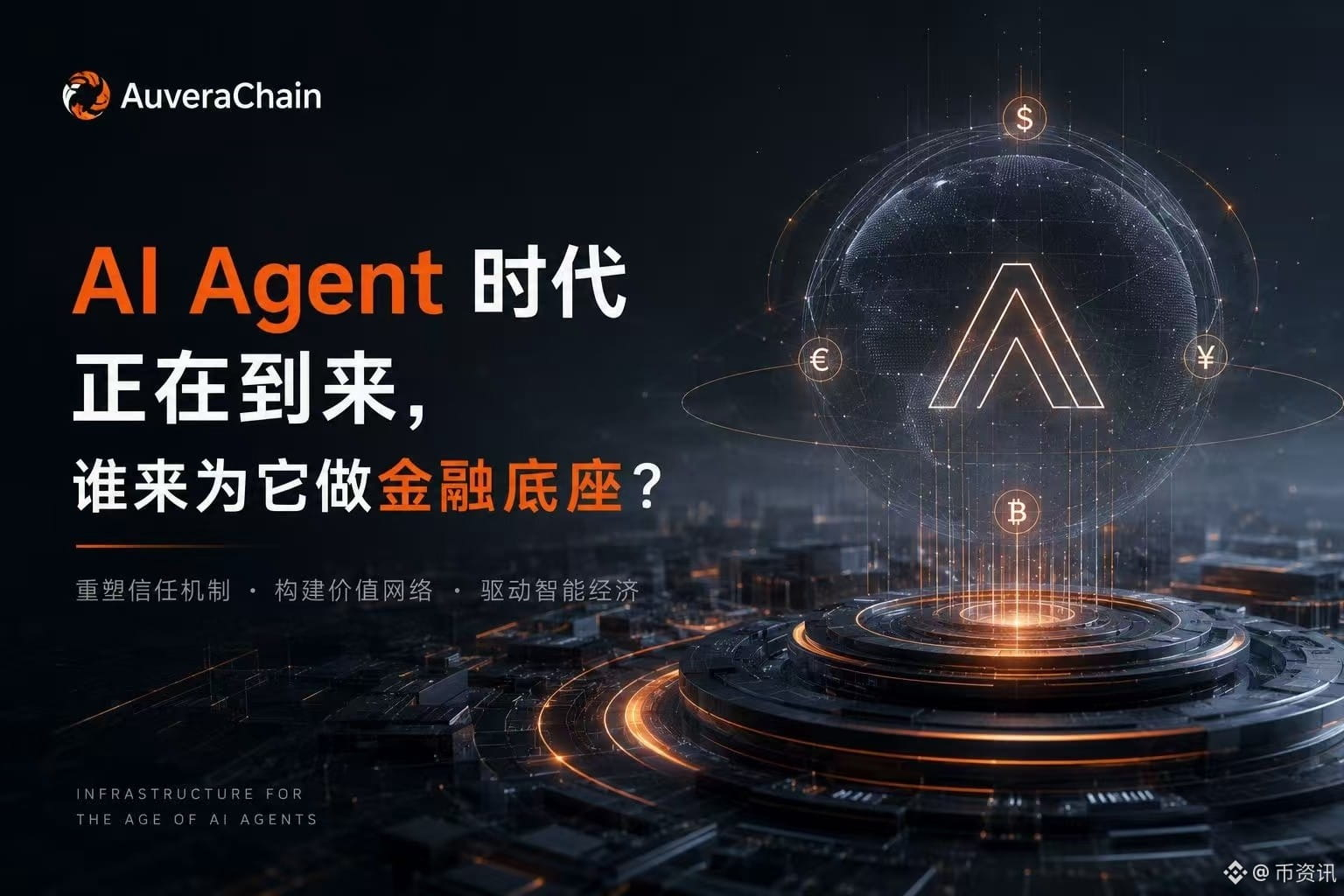
Once the AI Agent is truly on-chain, the first question might not be about the model, but rather about settlement. Right now, many projects are buzzing about AI Agents: whose model is stronger, whose framework is faster, and who can deploy more tools.
But if Agents really start executing tasks for people, they'll immediately hit a more fundamental issue: where do they hold their identity? What account do they use for payments? How do they settle with humans, applications, and compute nodes? What have they done, and who audits that?
This is also the focus of Auvera Chain: not just creating an 'AI conceptual chain', but placing on-chain economic entities within the same financial infrastructure.
Today's entities might be users, creators, traders, and developers; tomorrow, AI Agents will also become new executing entities.
Humans generate value on-chain, Agents execute tasks on-chain, and the underlying network handles rights confirmation, payments, settlements, and record-keeping.
If the AI Agent economy is really going to materialize, the ultimate competition might not be about who can talk the best AI, but rather who can actually facilitate real on-chain economic activities.
Content is for track observation only and does not constitute investment advice.
#AuveraChain #AUV #AIAgent #Web3 #Layer2
Once the AI Agent is truly on-chain, the first question might not be about the model, but rather about settlement. Right now, many projects are buzzing about AI Agents: whose model is stronger, whose framework is faster, and who can deploy more tools.
But if Agents really start executing tasks for people, they'll immediately hit a more fundamental issue: where do they hold their identity? What account do they use for payments? How do they settle with humans, applications, and compute nodes? What have they done, and who audits that?
This is also the focus of Auvera Chain: not just creating an 'AI conceptual chain', but placing on-chain economic entities within the same financial infrastructure.
Today's entities might be users, creators, traders, and developers; tomorrow, AI Agents will also become new executing entities.
Humans generate value on-chain, Agents execute tasks on-chain, and the underlying network handles rights confirmation, payments, settlements, and record-keeping.
If the AI Agent economy is really going to materialize, the ultimate competition might not be about who can talk the best AI, but rather who can actually facilitate real on-chain economic activities.
Content is for track observation only and does not constitute investment advice.
#AuveraChain #AUV #AIAgent #Web3 #Layer2
But if Agents really start executing tasks for people, they'll immediately hit a more fundamental issue: where do they hold their identity? What account do they use for payments? How do they settle with humans, applications, and compute nodes? What have they done, and who audits that?
This is also the focus of Auvera Chain: not just creating an 'AI conceptual chain', but placing on-chain economic entities within the same financial infrastructure.
Today's entities might be users, creators, traders, and developers; tomorrow, AI Agents will also become new executing entities.
Humans generate value on-chain, Agents execute tasks on-chain, and the underlying network handles rights confirmation, payments, settlements, and record-keeping.
If the AI Agent economy is really going to materialize, the ultimate competition might not be about who can talk the best AI, but rather who can actually facilitate real on-chain economic activities.
Content is for track observation only and does not constitute investment advice.
#AuveraChain #AUV #AIAgent #Web3 #Layer2
406

·
--
Why is the World Cup bringing prediction markets back into the Web3 limelight?
Major sports events have a unique characteristic: they turn abstract on-chain applications into concrete events that everyday users can grasp. Wins, losses, advancements, goals scored, player performances, injury updates, and starting lineups all naturally lend themselves to forming prediction markets. For users, the entry barrier is low. For AlAgent, high information density, rapid decision-making, and clear outcome boundaries serve as a real stress test for public chains: can they handle orders, trades, positions, fees, settlements, and audits at a low cost?
AuveraChain positions prediction markets as one of its key application scenarios; it's not just about "sports betting" but rather using real event traffic to test a larger system: humans express needs, Agents process information, data and computing power provide resources, and the chain completes settlements. This is more concrete than simply discussing AI public chains.
Content is for track observation only and does not constitute investment advice.
#WorldCup #PredictionMarkets #AuveraChain #AIAgent #Web3
Why is the World Cup bringing prediction markets back into the Web3 limelight?
Major sports events have a unique characteristic: they turn abstract on-chain applications into concrete events that everyday users can grasp. Wins, losses, advancements, goals scored, player performances, injury updates, and starting lineups all naturally lend themselves to forming prediction markets. For users, the entry barrier is low. For AlAgent, high information density, rapid decision-making, and clear outcome boundaries serve as a real stress test for public chains: can they handle orders, trades, positions, fees, settlements, and audits at a low cost?
AuveraChain positions prediction markets as one of its key application scenarios; it's not just about "sports betting" but rather using real event traffic to test a larger system: humans express needs, Agents process information, data and computing power provide resources, and the chain completes settlements. This is more concrete than simply discussing AI public chains.
Content is for track observation only and does not constitute investment advice.
#WorldCup #PredictionMarkets #AuveraChain #AIAgent #Web3
Major sports events have a unique characteristic: they turn abstract on-chain applications into concrete events that everyday users can grasp. Wins, losses, advancements, goals scored, player performances, injury updates, and starting lineups all naturally lend themselves to forming prediction markets. For users, the entry barrier is low. For AlAgent, high information density, rapid decision-making, and clear outcome boundaries serve as a real stress test for public chains: can they handle orders, trades, positions, fees, settlements, and audits at a low cost?
AuveraChain positions prediction markets as one of its key application scenarios; it's not just about "sports betting" but rather using real event traffic to test a larger system: humans express needs, Agents process information, data and computing power provide resources, and the chain completes settlements. This is more concrete than simply discussing AI public chains.
Content is for track observation only and does not constitute investment advice.
#WorldCup #PredictionMarkets #AuveraChain #AIAgent #Web3
2
3
536

·
--
Behind the three hot sectors, they are actually asking the same question: Who will settle?\nAI Agents, DePIN computing power, and prediction markets are all the rage lately.\nBut what's really interesting isn't how hot they each are, but whether they can be integrated into the same process: \nAn Agent reads event data, calls external computing power, forms strategy judgments, uses smart wallets to pay fees, and then records operations and results on-chain.\nIn this process, data, computing power, funds, permissions, and responsibilities are all flowing.\nWithout a unified settlement and auditing layer, these three things are just three concepts.\nIf they can gradually run on the same chain, they will become an observable economic closed loop.\nThe current focus of the Auvera Chain public testnet is to integrate these needs into a single validation environment: the Agent executes, computing power provides resources, the prediction market offers scenarios, and the chain is responsible for accounts, payments, settlements, and audits.\nIn the next phase, what’s worth watching is not the marketing hype, but the real interactions in the block explorer.\nContent is for sector observation only and does not constitute investment advice.\n#AuveraChain #AIAgent #DePIN #PredictionMarkets #Onchain
Behind the three hot sectors, they are actually asking the same question: Who will settle?\nAI Agents, DePIN computing power, and prediction markets are all the rage lately.\nBut what's really interesting isn't how hot they each are, but whether they can be integrated into the same process: \nAn Agent reads event data, calls external computing power, forms strategy judgments, uses smart wallets to pay fees, and then records operations and results on-chain.\nIn this process, data, computing power, funds, permissions, and responsibilities are all flowing.\nWithout a unified settlement and auditing layer, these three things are just three concepts.\nIf they can gradually run on the same chain, they will become an observable economic closed loop.\nThe current focus of the Auvera Chain public testnet is to integrate these needs into a single validation environment: the Agent executes, computing power provides resources, the prediction market offers scenarios, and the chain is responsible for accounts, payments, settlements, and audits.\nIn the next phase, what’s worth watching is not the marketing hype, but the real interactions in the block explorer.\nContent is for sector observation only and does not constitute investment advice.\n#AuveraChain #AIAgent #DePIN #PredictionMarkets #Onchain
454

·
--
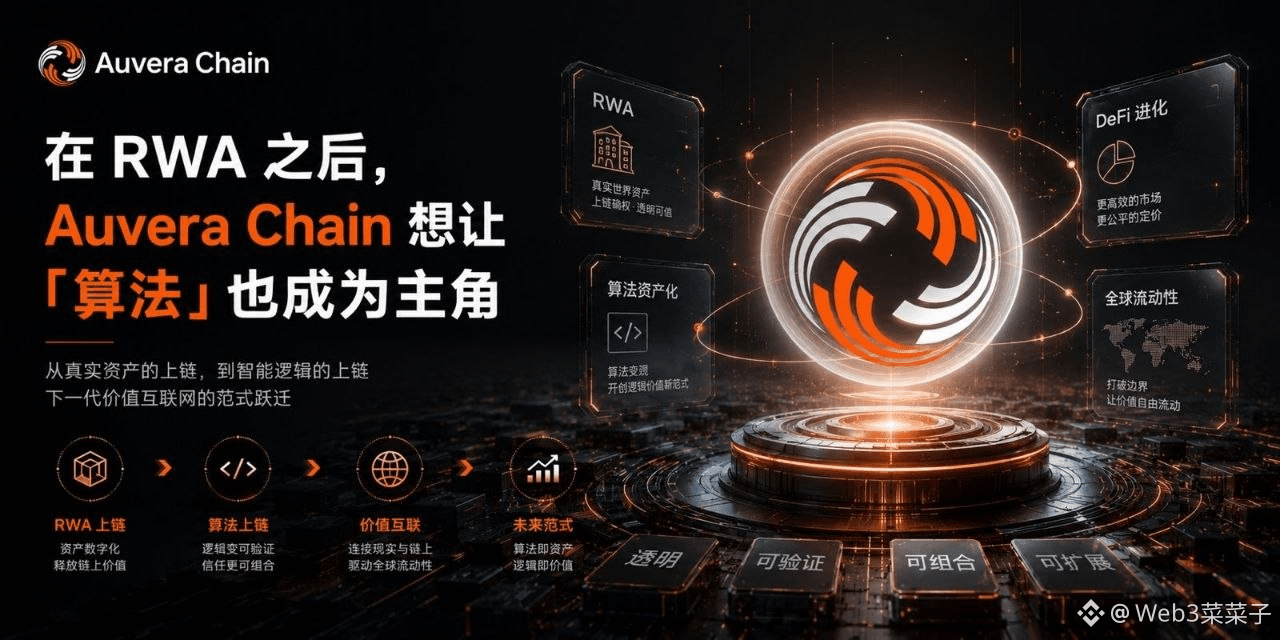
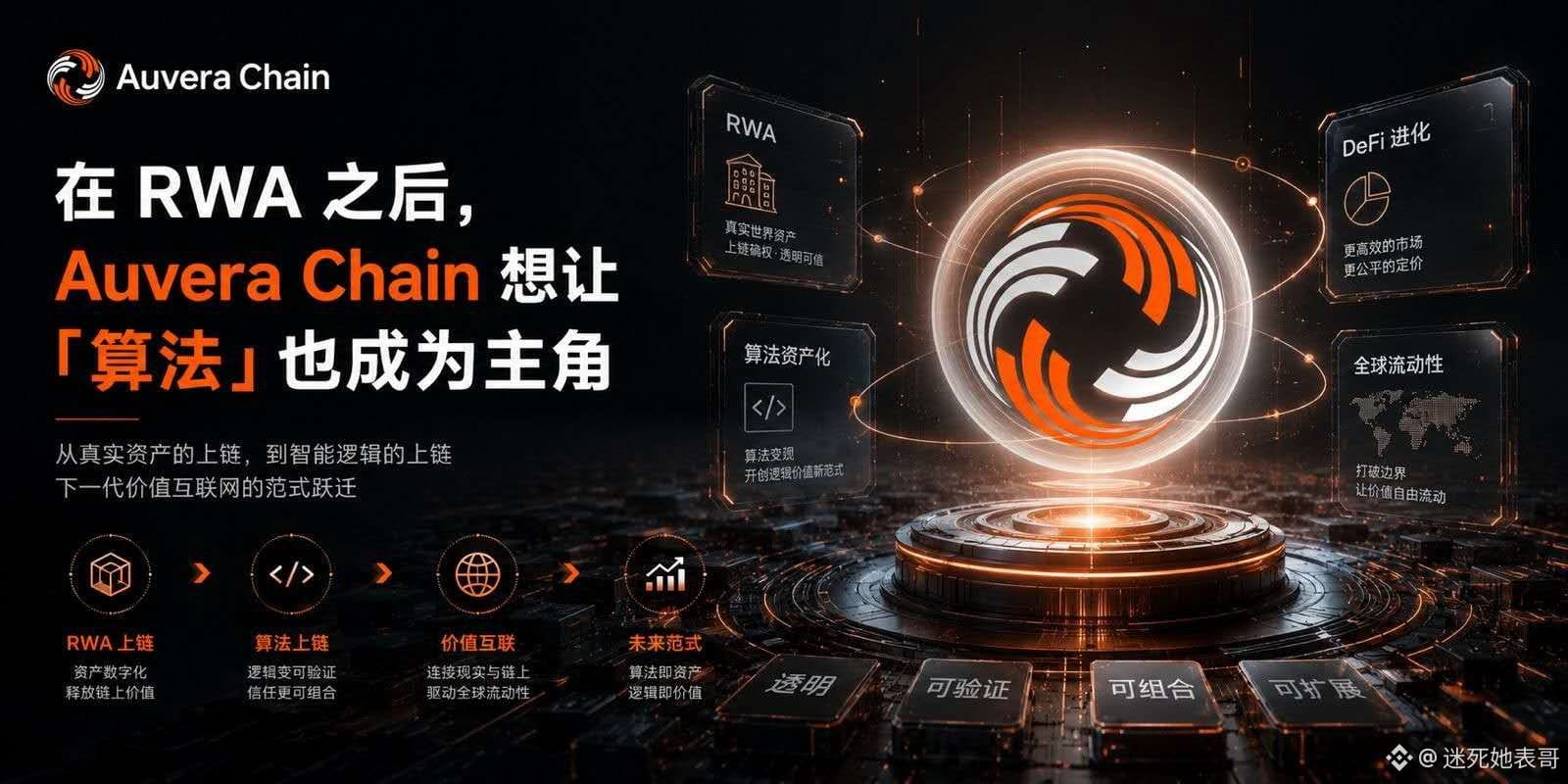
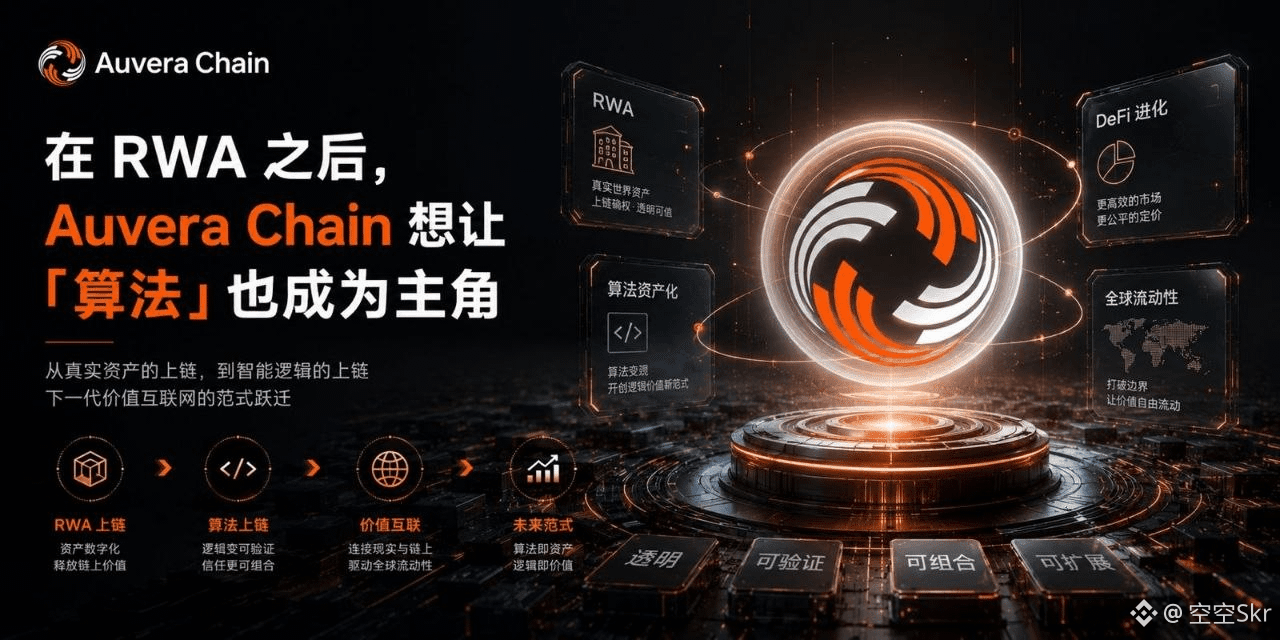
The next on-chain economic entity might not be a person, but an algorithm.
In the past, on-chain economic entities were primarily people: traders, creators, users, liquidity providers.
But with the emergence of AI Agents, that boundary is shifting.
When an Agent can read data, call on tools, generate content, execute strategies, and pay fees, it’s no longer just 'software functionality'; it resembles a self-sustaining economic entity.
This raises some questions:
Who is the identity of the Agent?
Who manages the wallet?
How are task results recorded?
How are profits and costs settled?
Who is accountable for erroneous executions?
The long-term narrative of Auvera Chain is to understand both humans and Agents on the same chain. Today, we serve real users and applications, and tomorrow we’ll extend the same identity, account, payment, permission, and auditing capabilities to Agents.
A true AI public chain isn’t just about moving models onto the chain; it’s about making AI's economic actions recordable, quantifiable, and settleable.
Content is for track observation only and does not constitute investment advice.
#AIAgent #AuveraChain #AUV #OnchainEconomy #Aİ
The next on-chain economic entity might not be a person, but an algorithm.
In the past, on-chain economic entities were primarily people: traders, creators, users, liquidity providers.
But with the emergence of AI Agents, that boundary is shifting.
When an Agent can read data, call on tools, generate content, execute strategies, and pay fees, it’s no longer just 'software functionality'; it resembles a self-sustaining economic entity.
This raises some questions:
Who is the identity of the Agent?
Who manages the wallet?
How are task results recorded?
How are profits and costs settled?
Who is accountable for erroneous executions?
The long-term narrative of Auvera Chain is to understand both humans and Agents on the same chain. Today, we serve real users and applications, and tomorrow we’ll extend the same identity, account, payment, permission, and auditing capabilities to Agents.
A true AI public chain isn’t just about moving models onto the chain; it’s about making AI's economic actions recordable, quantifiable, and settleable.
Content is for track observation only and does not constitute investment advice.
#AIAgent #AuveraChain #AUV #OnchainEconomy #Aİ
In the past, on-chain economic entities were primarily people: traders, creators, users, liquidity providers.
But with the emergence of AI Agents, that boundary is shifting.
When an Agent can read data, call on tools, generate content, execute strategies, and pay fees, it’s no longer just 'software functionality'; it resembles a self-sustaining economic entity.
This raises some questions:
Who is the identity of the Agent?
Who manages the wallet?
How are task results recorded?
How are profits and costs settled?
Who is accountable for erroneous executions?
The long-term narrative of Auvera Chain is to understand both humans and Agents on the same chain. Today, we serve real users and applications, and tomorrow we’ll extend the same identity, account, payment, permission, and auditing capabilities to Agents.
A true AI public chain isn’t just about moving models onto the chain; it’s about making AI's economic actions recordable, quantifiable, and settleable.
Content is for track observation only and does not constitute investment advice.
#AIAgent #AuveraChain #AUV #OnchainEconomy #Aİ
240

·
--
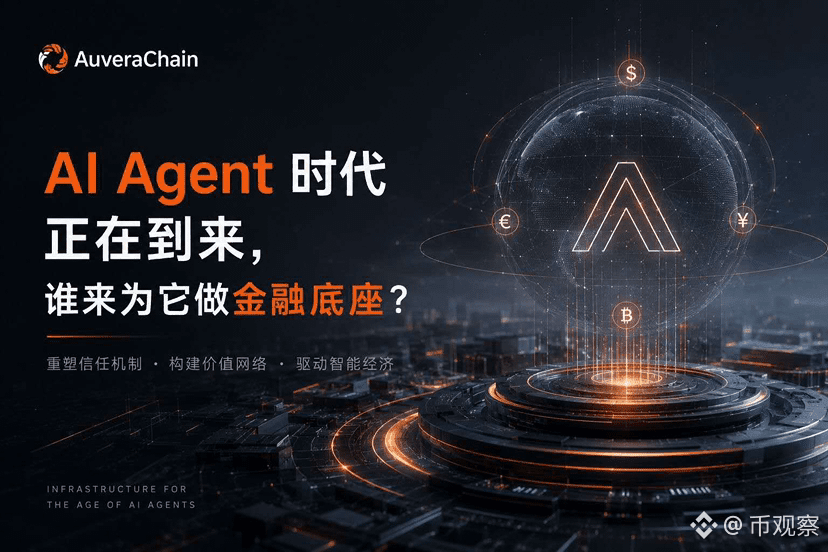
After the launch of the Auvera Chain public testnet, the real focus shouldn't just be on the hype. The testnet going live isn't the finish line; it's the starting point for validation. Once Auvera Chain enters the public testnet/beta phase, the community should be looking beyond the 'AI public chain' label to a few more specific questions: 1. Will EVM compatibility lower the migration costs for developers? 2. Can low-cost Layer 2 solutions handle high-frequency micro-interactions? 3. Will smart wallets and Agent identities support machine executions? 4. Can the infrastructure like DEXs, cross-chain bridges, and block explorers provide observable data? AI Agents, prediction markets, and DePIN computing power sound like three different tracks, but when it comes down to products, they all boil down to the same essential needs: identity, accounts, payments, settlements, and audits. The value of the testnet lies here. It's not about showcasing a bunch of pretty metrics; it's about showing the market whether these capabilities can truly support interactions. Moving forward, looking at on-chain data will be more important than following narratives. This content is for track observation only and does not constitute investment advice. #AuveraChain #AUV #testnet #Layer2 #AIAgent
After the launch of the Auvera Chain public testnet, the real focus shouldn't just be on the hype. The testnet going live isn't the finish line; it's the starting point for validation. Once Auvera Chain enters the public testnet/beta phase, the community should be looking beyond the 'AI public chain' label to a few more specific questions: 1. Will EVM compatibility lower the migration costs for developers? 2. Can low-cost Layer 2 solutions handle high-frequency micro-interactions? 3. Will smart wallets and Agent identities support machine executions? 4. Can the infrastructure like DEXs, cross-chain bridges, and block explorers provide observable data? AI Agents, prediction markets, and DePIN computing power sound like three different tracks, but when it comes down to products, they all boil down to the same essential needs: identity, accounts, payments, settlements, and audits. The value of the testnet lies here. It's not about showcasing a bunch of pretty metrics; it's about showing the market whether these capabilities can truly support interactions. Moving forward, looking at on-chain data will be more important than following narratives. This content is for track observation only and does not constitute investment advice. #AuveraChain #AUV #testnet #Layer2 #AIAgent
3
2
361

·
--
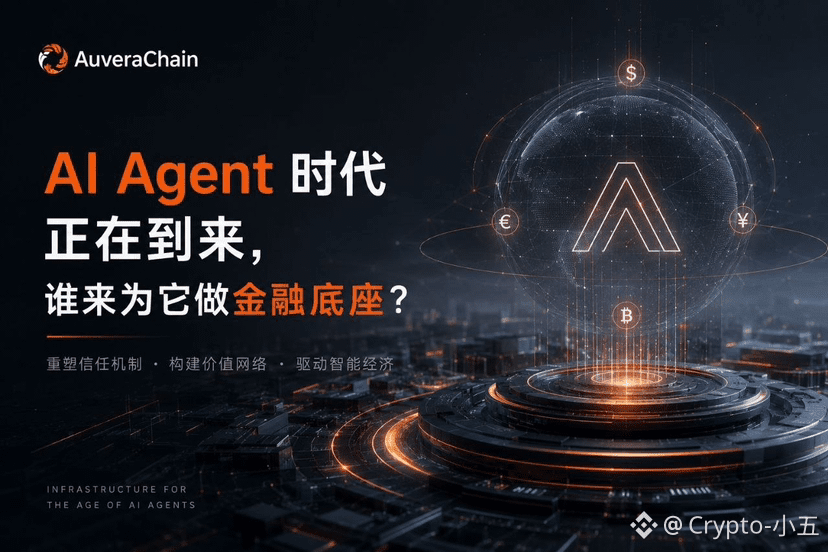
If you want to keep an eye on an AI public chain testnet, here are 4 things to look at. A lot of folks see a testnet and only ask if there are any airdrops. But if you want to assess whether an AI + Crypto project is genuinely building something, consider it from a different angle:
1. Can developers deploy contracts at low cost? EVM compatibility and support for common dev frameworks determine if the ecosystem can kickstart quickly.
2. Does the block explorer show real interactions? Transactions, contract calls, and wallet activity are more telling than mere slogans.
3. Are the Agent-related modules clearly defined? Identity, smart wallets, permissions, budgets, and audits—all are crucial for autonomous execution. 4. Does the application bring real tasks? Prediction markets, computing power calls, DEX interactions—all need to circle back to real-world usage.
Observe Auvera Chain's testnet through this framework: it's not just about how it talks AI, but whether it can enable people, applications, and future Agents to settle value on the same chain. This content is for track observation only and does not constitute investment advice.
#AuveraChain #AUV #Web3Builder #AlAgent #Layer2
If you want to keep an eye on an AI public chain testnet, here are 4 things to look at. A lot of folks see a testnet and only ask if there are any airdrops. But if you want to assess whether an AI + Crypto project is genuinely building something, consider it from a different angle:
1. Can developers deploy contracts at low cost? EVM compatibility and support for common dev frameworks determine if the ecosystem can kickstart quickly.
2. Does the block explorer show real interactions? Transactions, contract calls, and wallet activity are more telling than mere slogans.
3. Are the Agent-related modules clearly defined? Identity, smart wallets, permissions, budgets, and audits—all are crucial for autonomous execution. 4. Does the application bring real tasks? Prediction markets, computing power calls, DEX interactions—all need to circle back to real-world usage.
Observe Auvera Chain's testnet through this framework: it's not just about how it talks AI, but whether it can enable people, applications, and future Agents to settle value on the same chain. This content is for track observation only and does not constitute investment advice.
#AuveraChain #AUV #Web3Builder #AlAgent #Layer2
1. Can developers deploy contracts at low cost? EVM compatibility and support for common dev frameworks determine if the ecosystem can kickstart quickly.
2. Does the block explorer show real interactions? Transactions, contract calls, and wallet activity are more telling than mere slogans.
3. Are the Agent-related modules clearly defined? Identity, smart wallets, permissions, budgets, and audits—all are crucial for autonomous execution. 4. Does the application bring real tasks? Prediction markets, computing power calls, DEX interactions—all need to circle back to real-world usage.
Observe Auvera Chain's testnet through this framework: it's not just about how it talks AI, but whether it can enable people, applications, and future Agents to settle value on the same chain. This content is for track observation only and does not constitute investment advice.
#AuveraChain #AUV #Web3Builder #AlAgent #Layer2
1
285
Log in to explore more content
Join global crypto users on Binance Square
⚡️ Get latest and useful information about crypto.
💬 Trusted by the world’s largest crypto exchange.
👍 Discover real insights from verified creators.
Email / Phone number
Trending Topics
1
#EarningsSeason
275,949 views
2,327 Discussing
2
#BitwiseLaunchesFirstSpotNEARETF
19,794 views
447 Discussing
3
#USJobOpeningsFallToFiveMonthLow
25,239 views
333 Discussing
4
#ECBToTestAIAgentsInDigitalEuroPayments
21,111 views
483 Discussing
5
#JapanFSABacksFourthStablecoinTradeSettlementPilot
24,537 views
509 Discussing
6
#BitgetHackerFailsToMoveStolenFunds
40,147 views
608 Discussing
7
#BitMineETHHoldingsTop6Million
33,856 views
709 Discussing
8
#StrategyAdds1666BTCHoldingsReach847666
28,561 views
495 Discussing
9
#NvidiaApproves$150BBuyback
5,086 views
75 Discussing
10
#OpenAIDelaysGPT6.1OverSafetyIssues
42,301 views
876 Discussing