
#andrecronje
andrecronje
124,651 views
90 Discussing
Hot
Latest

Andre Cronje dropped a statement today, and the core message is this: I'm not the founder of Fantom.
Coming from the DeFi godfather, there's a bit of dark humor in that. Yearn Finance, Keep3r, Solidly—these projects made him one of the most renowned devs on Ethereum. He joined Fantom in 2018 as a tech advisor, later became CTO, and the outside world has always referred to him as a 'co-founder.' He himself has used that title too. Now he's saying that's not accurate.
In the statement, he also drew a few lines: the migration from FTM to S tokens wasn't led by him, the Sonic airdrop wasn't designed by him, and he didn't set the tokenomics. The implication is clear: if the community is upset about those issues, don't blame me.
On the same day, Sonic Labs announced a major shake-up. Michael Kong, Andre Cronje, and David Richardson all resigned from the board. New CEO Matt Visser said something pretty real: 'I won't promise instant changes; I'm just aiming for 1% improvement every day.'
Take a look at Sonic Labs' timeline for 2026: CEO Mitchell Demeter resigned in February, a quantum-resistant PoS upgrade roadmap was proposed in April, and now there's another round of management changes. In less than a year, three CEOs.
The price of the $S token has been on a downward slope from its peak, and community sentiment has hit rock bottom. The new management claims the next 100 days will be 'Day 1,' aiming for transparent governance and establishing a risk compliance committee. It all sounds good, but with a project changing CEOs three times in a year, which 'Day 1' are you going to believe?
Interestingly, AC's statement sheds some light. He said his focus has been on Flying Tulip for the past 18 months, and he hasn't really been involved with Sonic. This explains why the Sonic ecosystem hasn't made major moves for half a year—its tech lead has been busy elsewhere.
From a different angle, AC's proactive distancing is actually responsible. Instead of letting the community pin all the issues on someone who's no longer involved, it's better to clarify: who's responsible for what, and who should be held accountable.
Sonic used to be called Fantom, kicked off by a Korean team in 2018 through an ICO. AC's technical skills are unquestionable; the consensus mechanism of the Sonic network and Sonic Gateway are his creations. But blockchain projects aren't just about tech; they also need operations, community, and tokenomics. Those aren't things one person can shoulder alone.
Now Sonic Labs faces a simple question: without AC's tech halo, what will keep developers and users around? Matt Visser said it takes 100 days to see any changes with a 1% daily improvement. Whether the community is willing to wait is another story.
$SONIC #AndreCronje #SonicLabs #DeFi #BinanceSquare
Coming from the DeFi godfather, there's a bit of dark humor in that. Yearn Finance, Keep3r, Solidly—these projects made him one of the most renowned devs on Ethereum. He joined Fantom in 2018 as a tech advisor, later became CTO, and the outside world has always referred to him as a 'co-founder.' He himself has used that title too. Now he's saying that's not accurate.
In the statement, he also drew a few lines: the migration from FTM to S tokens wasn't led by him, the Sonic airdrop wasn't designed by him, and he didn't set the tokenomics. The implication is clear: if the community is upset about those issues, don't blame me.
On the same day, Sonic Labs announced a major shake-up. Michael Kong, Andre Cronje, and David Richardson all resigned from the board. New CEO Matt Visser said something pretty real: 'I won't promise instant changes; I'm just aiming for 1% improvement every day.'
Take a look at Sonic Labs' timeline for 2026: CEO Mitchell Demeter resigned in February, a quantum-resistant PoS upgrade roadmap was proposed in April, and now there's another round of management changes. In less than a year, three CEOs.
The price of the $S token has been on a downward slope from its peak, and community sentiment has hit rock bottom. The new management claims the next 100 days will be 'Day 1,' aiming for transparent governance and establishing a risk compliance committee. It all sounds good, but with a project changing CEOs three times in a year, which 'Day 1' are you going to believe?
Interestingly, AC's statement sheds some light. He said his focus has been on Flying Tulip for the past 18 months, and he hasn't really been involved with Sonic. This explains why the Sonic ecosystem hasn't made major moves for half a year—its tech lead has been busy elsewhere.
From a different angle, AC's proactive distancing is actually responsible. Instead of letting the community pin all the issues on someone who's no longer involved, it's better to clarify: who's responsible for what, and who should be held accountable.
Sonic used to be called Fantom, kicked off by a Korean team in 2018 through an ICO. AC's technical skills are unquestionable; the consensus mechanism of the Sonic network and Sonic Gateway are his creations. But blockchain projects aren't just about tech; they also need operations, community, and tokenomics. Those aren't things one person can shoulder alone.
Now Sonic Labs faces a simple question: without AC's tech halo, what will keep developers and users around? Matt Visser said it takes 100 days to see any changes with a 1% daily improvement. Whether the community is willing to wait is another story.
$SONIC #AndreCronje #SonicLabs #DeFi #BinanceSquare

#FranklinTempleton
#Andrecronje
#criptonews
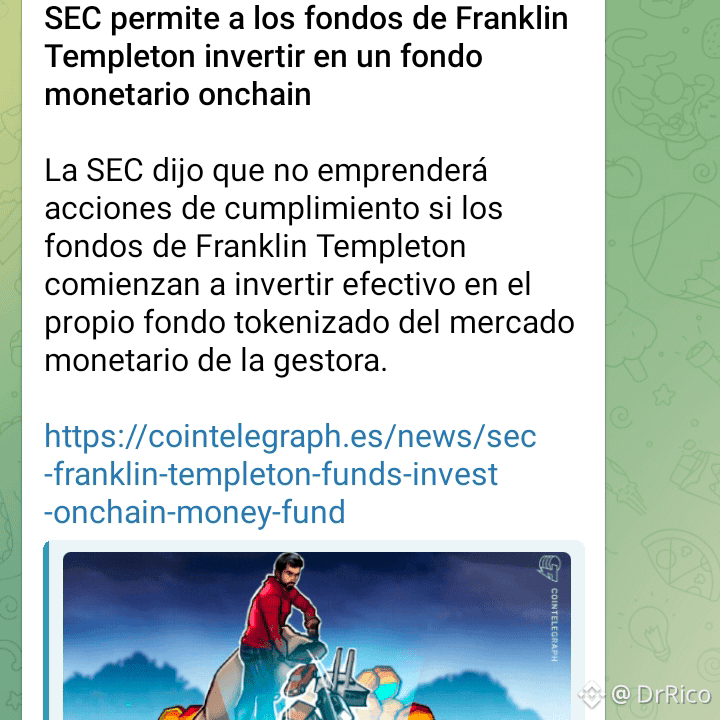
1-La FED will not take measures against Franklin Templeton's investments in an onchain money market fund
2-Andre Cronje DEFI no longer exists only onchain finance
$NVDAB
$MSFTB
$TSMB
#Andrecronje
#criptonews
1-La FED will not take measures against Franklin Templeton's investments in an onchain money market fund
2-Andre Cronje DEFI no longer exists only onchain finance
$NVDAB
$MSFTB
$TSMB


Verified
🚨 THE END OF AN ERA: Has the legendary Andre Cronje jumped ship?
Who remembers the noise that the Sonic token ($S ) made back in the day with #FTM? The reality now is harsh: the project has faced a brutal drop since its all-time high, and the latest bombshell is that the lead developer, Andre Cronje, and the other founders have stepped down from the Sonic Labs board.
The new leadership has taken over the project, claiming they will try to improve "1% a day" to win back trust, but the investor who bought in excitedly at the peak is now in full panic mode, selling at the bottom. It's the classic retail mistake repeating itself.
💬 Did you ever hold this token or did you spot the trap in time? Leave your comment! 👇
.
.
.
#AndreCronje #Crypto #Trading #SONIC #SonicLabs
Who remembers the noise that the Sonic token ($S ) made back in the day with #FTM? The reality now is harsh: the project has faced a brutal drop since its all-time high, and the latest bombshell is that the lead developer, Andre Cronje, and the other founders have stepped down from the Sonic Labs board.
The new leadership has taken over the project, claiming they will try to improve "1% a day" to win back trust, but the investor who bought in excitedly at the peak is now in full panic mode, selling at the bottom. It's the classic retail mistake repeating itself.
💬 Did you ever hold this token or did you spot the trap in time? Leave your comment! 👇
.
.
.
#AndreCronje #Crypto #Trading #SONIC #SonicLabs

🔥 Tonight's crypto scene is anything but quiet! A few major bombs have exploded in succession, have you been affected?
💥 The Taiko cross-chain bridge was attacked, losing $1.7 million.
Today's biggest black swan is none other than Taiko. This Ethereum L2 project's chain state validation mechanism was breached, with the attacker exploiting the SGX signing key exposed on GitHub to fake messages proving cross-chain bridge transactions, siphoning funds from the ERC20Vault. The Taiko team has urgently paused block production, urging all users to withdraw funds from the bridge immediately and requesting CEX to suspend TAIKO deposits. The attacker has deposited 1.99 million TKO into MEXC and still holds 870.8 ETH (around $1.52 million).
📉 Andre Cronje bids farewell to Sonic Labs, S token plummets 97%.
DeFi legend Andre Cronje, along with two executives, has resigned from the Sonic Labs board, causing the S token to crash 97% from its all-time high. As the mastermind behind Yearn and Fantom, his exit has undoubtedly sent shockwaves through the DeFi community. Do you think Sonic can make a comeback?
🚢 Tensions rise again in the Strait of Hormuz.
Iran has closed the Strait of Hormuz again, with only 5 ships passing on Sunday (down from 26 the day before). The geopolitical situation continues to heat up, putting pressure on risk assets. However, Pakistan and Qatar are mediating, and there are positive signals from the negotiations.
🇬🇧 The UK sanctions HTX exchange.
The UK has imposed sanctions on HTX exchange under the pretext of combating Russia's evasion of sanctions, increasing compliance pressure once again.
💡 Tonight's interactive topic: The security trust crisis in L2s is frequently occurring, from Secret Network to Taiko, cross-chain bridges seem to always be a hacker's ATM. Would you still park your funds on L2 bridges?
NFA | DYOR
#Taiko被黑 #AndreCronje #SonicLabs #跨链桥安全 #StraitOfHormuz
💥 The Taiko cross-chain bridge was attacked, losing $1.7 million.
Today's biggest black swan is none other than Taiko. This Ethereum L2 project's chain state validation mechanism was breached, with the attacker exploiting the SGX signing key exposed on GitHub to fake messages proving cross-chain bridge transactions, siphoning funds from the ERC20Vault. The Taiko team has urgently paused block production, urging all users to withdraw funds from the bridge immediately and requesting CEX to suspend TAIKO deposits. The attacker has deposited 1.99 million TKO into MEXC and still holds 870.8 ETH (around $1.52 million).
📉 Andre Cronje bids farewell to Sonic Labs, S token plummets 97%.
DeFi legend Andre Cronje, along with two executives, has resigned from the Sonic Labs board, causing the S token to crash 97% from its all-time high. As the mastermind behind Yearn and Fantom, his exit has undoubtedly sent shockwaves through the DeFi community. Do you think Sonic can make a comeback?
🚢 Tensions rise again in the Strait of Hormuz.
Iran has closed the Strait of Hormuz again, with only 5 ships passing on Sunday (down from 26 the day before). The geopolitical situation continues to heat up, putting pressure on risk assets. However, Pakistan and Qatar are mediating, and there are positive signals from the negotiations.
🇬🇧 The UK sanctions HTX exchange.
The UK has imposed sanctions on HTX exchange under the pretext of combating Russia's evasion of sanctions, increasing compliance pressure once again.
💡 Tonight's interactive topic: The security trust crisis in L2s is frequently occurring, from Secret Network to Taiko, cross-chain bridges seem to always be a hacker's ATM. Would you still park your funds on L2 bridges?
NFA | DYOR
#Taiko被黑 #AndreCronje #SonicLabs #跨链桥安全 #StraitOfHormuz
Log in to explore more content