
#amznb
amznb
1,502 views
67 Discussing
Hot
Latest

$AMZN #AMZN
Movement alert: short-selling signal! | AMZN
15m: observe the movement of the shorts
1h: increased volume / weakness in the structure
4h: shorts with GMMA
pump_score: 8/12
Current price: 252.45
Breakout level: 251.12
Invalidation level: 256.27
Downside target: 227.20 / 201.96
Funding rate: +0.0000% (balance between longs and shorts)
Near the activation level, execute according to direction; the invalidation level is the stop-loss.
$AMZN trade from here and help me 🆘
{future}(AMZNUSDT)
#AMZNB #BinanceSquareFamily #BinanceVietnamSquare
$AMZN #AMZN
Movement alert: short-selling signal! | AMZN
15m: observe the movement of the shorts
1h: increased volume / weakness in the structure
4h: shorts with GMMA
pump_score: 8/12
Current price: 252.45
Breakout level: 251.12
Invalidation level: 256.27
Downside target: 227.20 / 201.96
Funding rate: +0.0000% (balance between longs and shorts)
Near the activation level, execute according to direction; the invalidation level is the stop-loss.
$AMZN trade from here and help me 🆘
#AMZNB #BinanceSquareFamily #BinanceVietnamSquare
Movement alert: short-selling signal! | AMZN
15m: observe the movement of the shorts
1h: increased volume / weakness in the structure
4h: shorts with GMMA
pump_score: 8/12
Current price: 252.45
Breakout level: 251.12
Invalidation level: 256.27
Downside target: 227.20 / 201.96
Funding rate: +0.0000% (balance between longs and shorts)
Near the activation level, execute according to direction; the invalidation level is the stop-loss.
$AMZN trade from here and help me 🆘
#AMZNB #BinanceSquareFamily #BinanceVietnamSquare
11

Given the current market trend that is seeing a decline, I’m getting into it with$AMZNB . For now the purchase price is still good to take because in the near future, when people discover it, #AMZNB will increase in price. Having it now also means keeping a reserve. That way, when its price goes up, the price of my subscribed reserve goes up as well. Have you ever done your own research?
Given the current market trend that is seeing a decline, I’m getting into it with$AMZNB . For now the purchase price is still good to take because in the near future, when people discover it, #AMZNB will increase in price. Having it now also means keeping a reserve. That way, when its price goes up, the price of my subscribed reserve goes up as well. Have you ever done your own research?
1
83

·
--
AMZNB signal on a local Buy 🚀
On the daily timeframe, a flat trend is observed, but on the 15m timeframe a VMC BullCross has formed and the RSI has stabilized (46.69) after a pullback. We enter with a limit order on a test of the bullish order block (1h/5m) in the zone $254.52-$255.45.
Entry point: $255.0
TP💵: $262.6500$ (+3%)
SL🙊: $249.9000$
⚠️ I want to emphasize that using a stop-loss is mandatory to preserve your capital in a volatile market! This information is not financial advice. Do your own analysis. If you like this, subscribe—and I would be grateful for tips.
$AMZNB #AMZNB
AMZNB signal on a local Buy 🚀
On the daily timeframe, a flat trend is observed, but on the 15m timeframe a VMC BullCross has formed and the RSI has stabilized (46.69) after a pullback. We enter with a limit order on a test of the bullish order block (1h/5m) in the zone $254.52-$255.45.
Entry point: $255.0
TP💵: $262.6500$ (+3%)
SL🙊: $249.9000$
⚠️ I want to emphasize that using a stop-loss is mandatory to preserve your capital in a volatile market! This information is not financial advice. Do your own analysis. If you like this, subscribe—and I would be grateful for tips.
$AMZNB #AMZNB
On the daily timeframe, a flat trend is observed, but on the 15m timeframe a VMC BullCross has formed and the RSI has stabilized (46.69) after a pullback. We enter with a limit order on a test of the bullish order block (1h/5m) in the zone $254.52-$255.45.
Entry point: $255.0
TP💵: $262.6500$ (+3%)
SL🙊: $249.9000$
⚠️ I want to emphasize that using a stop-loss is mandatory to preserve your capital in a volatile market! This information is not financial advice. Do your own analysis. If you like this, subscribe—and I would be grateful for tips.
$AMZNB #AMZNB
13
·
--
AMZNB signal for a local Buy 🚀
We open a position using Strategy A on the pullback, relying on the formation of a VMC BullCross signal on the 4-hour timeframe. Entry is made in the support zone near a bullish order block (Bullish OB). The local RSI indicator (15m) is at 68.58, confirming the buyer’s strength and readiness for an upward impulse.
Entry point: 255.0$
TP💵: 262.6500$ (+3%)
SL🙊: 249.9000$
⚠️ I emphasize that using a stop-loss is mandatory to preserve your capital in a volatile market! This information is not financial advice. Do your own analysis. If you like the content, subscribe—I’d be grateful for tips.
$AMZNB #AMZNB
AMZNB signal for a local Buy 🚀
We open a position using Strategy A on the pullback, relying on the formation of a VMC BullCross signal on the 4-hour timeframe. Entry is made in the support zone near a bullish order block (Bullish OB). The local RSI indicator (15m) is at 68.58, confirming the buyer’s strength and readiness for an upward impulse.
Entry point: 255.0$
TP💵: 262.6500$ (+3%)
SL🙊: 249.9000$
⚠️ I emphasize that using a stop-loss is mandatory to preserve your capital in a volatile market! This information is not financial advice. Do your own analysis. If you like the content, subscribe—I’d be grateful for tips.
$AMZNB #AMZNB
We open a position using Strategy A on the pullback, relying on the formation of a VMC BullCross signal on the 4-hour timeframe. Entry is made in the support zone near a bullish order block (Bullish OB). The local RSI indicator (15m) is at 68.58, confirming the buyer’s strength and readiness for an upward impulse.
Entry point: 255.0$
TP💵: 262.6500$ (+3%)
SL🙊: 249.9000$
⚠️ I emphasize that using a stop-loss is mandatory to preserve your capital in a volatile market! This information is not financial advice. Do your own analysis. If you like the content, subscribe—I’d be grateful for tips.
$AMZNB #AMZNB
5
·
--
Bearish
$AMZN
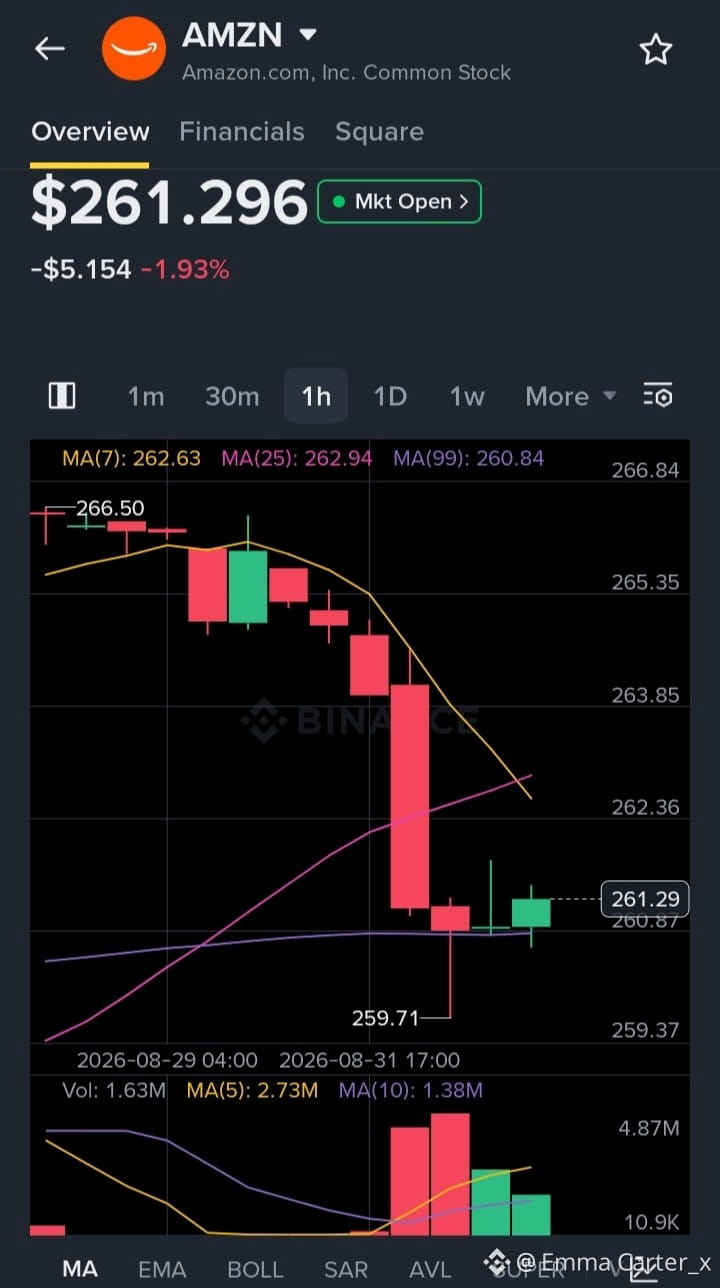
AMZN remains under pressure after the recent decline. A strong defense of the current zone could trigger a technical rebound toward resistance.
EP: 259–262
TP: 268 / 276 / 286
SL: 252
#AMZNB
#TankerHitsMinesInStraitOfHormuz
#SaylorHintsStrategyBitcoinBuy
{future}(AMZNUSDT)
$AMZN
AMZN remains under pressure after the recent decline. A strong defense of the current zone could trigger a technical rebound toward resistance.
EP: 259–262
TP: 268 / 276 / 286
SL: 252
#AMZNB
#TankerHitsMinesInStraitOfHormuz
#SaylorHintsStrategyBitcoinBuy
AMZN remains under pressure after the recent decline. A strong defense of the current zone could trigger a technical rebound toward resistance.
EP: 259–262
TP: 268 / 276 / 286
SL: 252
#AMZNB
#TankerHitsMinesInStraitOfHormuz
#SaylorHintsStrategyBitcoinBuy
14

·
--
⚡ $AMZNB BREAKS MARKET STRUCTURE AS BUYERS TARGET THE 267.90 KEY RESISTANCE PIVOT! 🐂
Entry: 264.50 - 266.50 ⚡
Target: 269.50 - 277.00 🚀
Stop Loss: 261.50 ⚠️
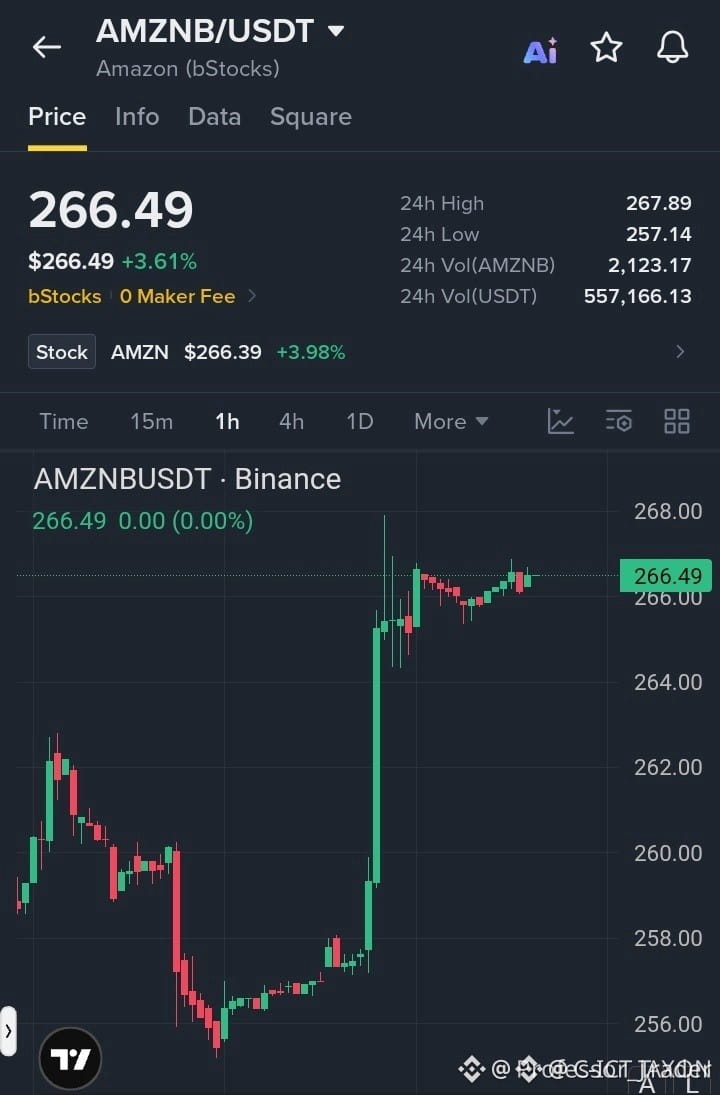
Smart money accumulation is visible around the daily highs after a clean +3.61% expansion leg, leaving minimal sell-side liquidity behind. 📌 Price action is now compressing just beneath the critical 267.90 structural level, signaling an impending breakout fill into overhead supply inefficiencies.
📊 As institutional bids defend the demand block between 264.50 and 266.50, sustained momentum above resistance unlocks a clear upside path toward upper expansion targets. 💡 Managing exposure with disciplined risk parameters remains essential as volatility expands near key pivot levels.
💬 Will buyers secure a clean daily close above 267.90 to trigger the full expansion, or do you expect a quick liquidity sweep before the next push? 👇
⚠️ Not financial advice. Always manage your risk. 🛡️
🏷️ #AMZNB #MarketStructure #Crypto #LongSetup #Trading
🎯 🦈
⚡ $AMZNB BREAKS MARKET STRUCTURE AS BUYERS TARGET THE 267.90 KEY RESISTANCE PIVOT! 🐂
Entry: 264.50 - 266.50 ⚡
Target: 269.50 - 277.00 🚀
Stop Loss: 261.50 ⚠️
Smart money accumulation is visible around the daily highs after a clean +3.61% expansion leg, leaving minimal sell-side liquidity behind. 📌 Price action is now compressing just beneath the critical 267.90 structural level, signaling an impending breakout fill into overhead supply inefficiencies.
📊 As institutional bids defend the demand block between 264.50 and 266.50, sustained momentum above resistance unlocks a clear upside path toward upper expansion targets. 💡 Managing exposure with disciplined risk parameters remains essential as volatility expands near key pivot levels.
💬 Will buyers secure a clean daily close above 267.90 to trigger the full expansion, or do you expect a quick liquidity sweep before the next push? 👇
⚠️ Not financial advice. Always manage your risk. 🛡️
🏷️ #AMZNB #MarketStructure #Crypto #LongSetup #Trading
🎯 🦈
Entry: 264.50 - 266.50 ⚡
Target: 269.50 - 277.00 🚀
Stop Loss: 261.50 ⚠️
Smart money accumulation is visible around the daily highs after a clean +3.61% expansion leg, leaving minimal sell-side liquidity behind. 📌 Price action is now compressing just beneath the critical 267.90 structural level, signaling an impending breakout fill into overhead supply inefficiencies.
📊 As institutional bids defend the demand block between 264.50 and 266.50, sustained momentum above resistance unlocks a clear upside path toward upper expansion targets. 💡 Managing exposure with disciplined risk parameters remains essential as volatility expands near key pivot levels.
💬 Will buyers secure a clean daily close above 267.90 to trigger the full expansion, or do you expect a quick liquidity sweep before the next push? 👇
⚠️ Not financial advice. Always manage your risk. 🛡️
🏷️ #AMZNB #MarketStructure #Crypto #LongSetup #Trading
🎯 🦈
6

·
--
$AMZNB POWER BUYERS LOCK IN MOMENTUM AS 267.90 RESISTANCE BREAKOUT LOOMS! 🟢
Entry: 264.50 - 266.50 ⚡
Target: 269.50 - 277.00 🚀
Stop Loss: 261.50 ⚠️
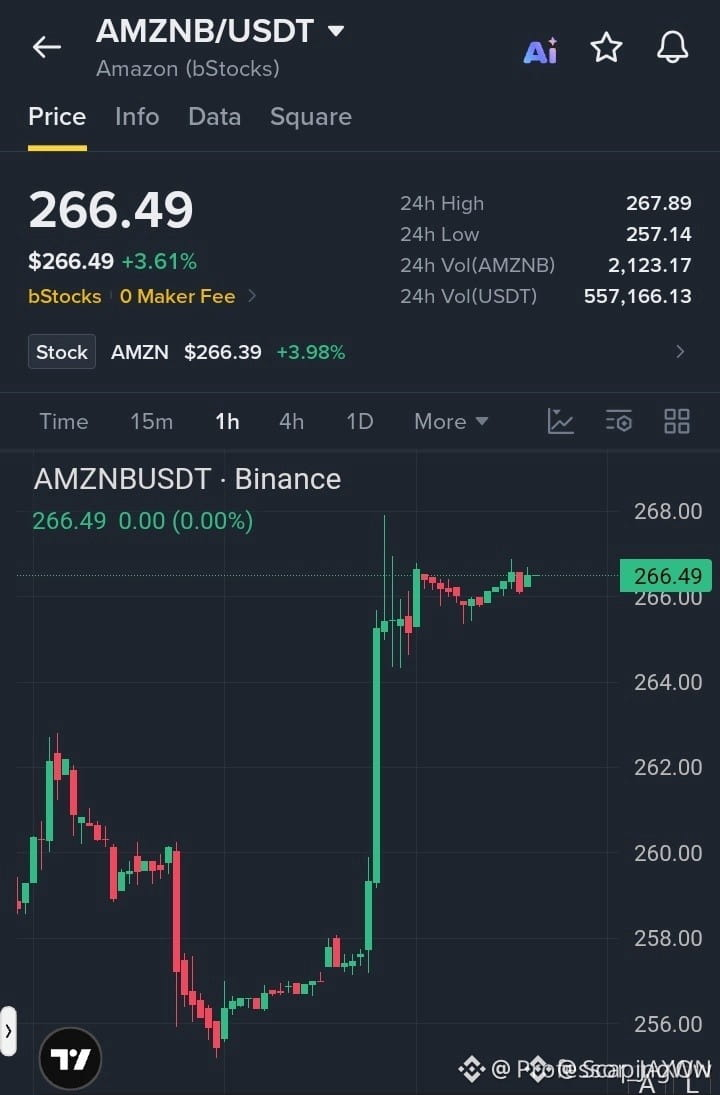
📌 Buyers just printed a clean +3.61% expansion leg, aggressively holding bids right beneath the daily high. Order flow shows heavy accumulation stepping in to absorb overhead supply before the next major push. 📊
💡 The structural pivot at 267.90 is the line in the sand—once bulls clear and flip this key resistance, liquidity opens up rapidly toward our upper targets. 🎯
💬 Are you bidding this momentum continuation or waiting for a sweep back into entry? 👇
⚠️ Not financial advice. Always manage your risk. 🛡️
🏷️ #AMZNB #LongSetup #Breakout #Crypto #Trading
🔥 💎
$AMZNB POWER BUYERS LOCK IN MOMENTUM AS 267.90 RESISTANCE BREAKOUT LOOMS! 🟢
Entry: 264.50 - 266.50 ⚡
Target: 269.50 - 277.00 🚀
Stop Loss: 261.50 ⚠️
📌 Buyers just printed a clean +3.61% expansion leg, aggressively holding bids right beneath the daily high. Order flow shows heavy accumulation stepping in to absorb overhead supply before the next major push. 📊
💡 The structural pivot at 267.90 is the line in the sand—once bulls clear and flip this key resistance, liquidity opens up rapidly toward our upper targets. 🎯
💬 Are you bidding this momentum continuation or waiting for a sweep back into entry? 👇
⚠️ Not financial advice. Always manage your risk. 🛡️
🏷️ #AMZNB #LongSetup #Breakout #Crypto #Trading
🔥 💎
Entry: 264.50 - 266.50 ⚡
Target: 269.50 - 277.00 🚀
Stop Loss: 261.50 ⚠️
📌 Buyers just printed a clean +3.61% expansion leg, aggressively holding bids right beneath the daily high. Order flow shows heavy accumulation stepping in to absorb overhead supply before the next major push. 📊
💡 The structural pivot at 267.90 is the line in the sand—once bulls clear and flip this key resistance, liquidity opens up rapidly toward our upper targets. 🎯
💬 Are you bidding this momentum continuation or waiting for a sweep back into entry? 👇
⚠️ Not financial advice. Always manage your risk. 🛡️
🏷️ #AMZNB #LongSetup #Breakout #Crypto #Trading
🔥 💎
19

·
--
Bullish
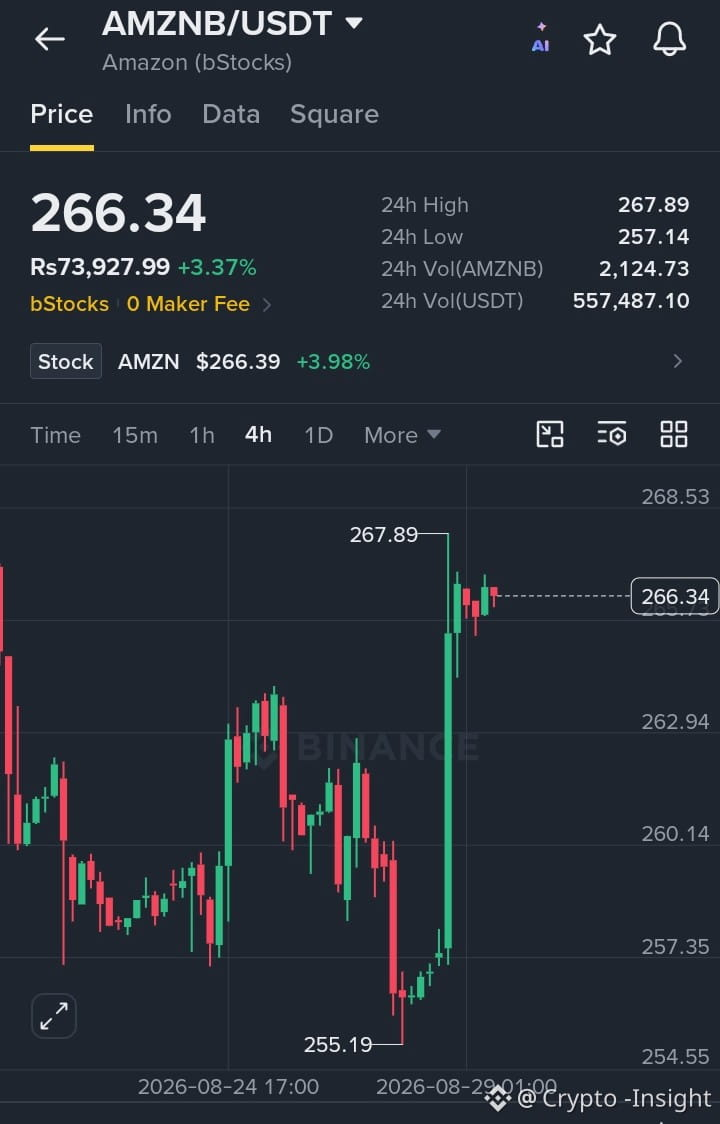
Here Is How $AMZNB Is Shaping Up Right Now…!!
#AMZNB surged aggressively from its low of 255.19 up to a high of 267.89 before entering a brief consolidation that reflects a healthy pullback after the big move Price is currently holding around 266.34 with clear support established near 257.14 If buyers keep up this bullish momentum the key targets to keep on your radar are 267.89 and 268.53
{spot}(AMZNBUSDT)
$ZEC $TUT
{future}(TUTUSDT)
Here Is How $AMZNB Is Shaping Up Right Now…!!
#AMZNB surged aggressively from its low of 255.19 up to a high of 267.89 before entering a brief consolidation that reflects a healthy pullback after the big move Price is currently holding around 266.34 with clear support established near 257.14 If buyers keep up this bullish momentum the key targets to keep on your radar are 267.89 and 268.53
$ZEC $TUT
#AMZNB surged aggressively from its low of 255.19 up to a high of 267.89 before entering a brief consolidation that reflects a healthy pullback after the big move Price is currently holding around 266.34 with clear support established near 257.14 If buyers keep up this bullish momentum the key targets to keep on your radar are 267.89 and 268.53
$ZEC $TUT
1
117


$AMZNB — Long Setup
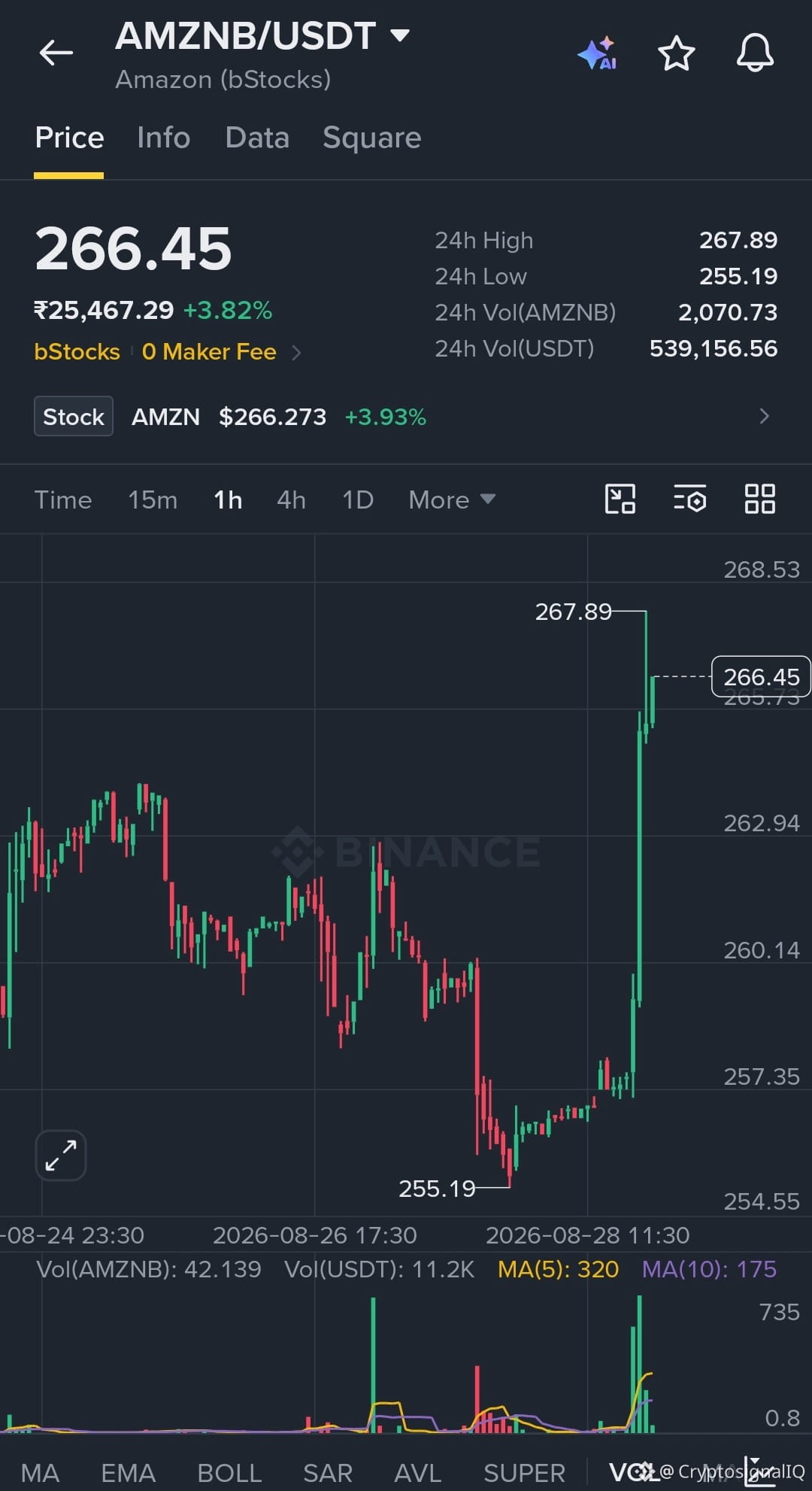
AMZNB is trading at 266.45, up +3.82%, after a powerful breakout from the $257 area with a major volume spike. Price is holding close to the 267.89 high, keeping the bullish structure intact.
LONG SETUP
Entry: 264.5 – 266.0
🎯 TP1: 268.0
🎯 TP2: 270.5
🎯 TP3: 273.0
🛑 SL: 261.8
🔥 If 267.89 breaks with strong volume, the breakout can extend further. Best entry is on a controlled retest rather than chasing the spike.
Trade #AMZNB here
{spot}(AMZNBUSDT)
$BTR
{alpha}(560xfed13d0c40790220fbde712987079eda1ed75c51)
$HEMI
{future}(HEMIUSDT)
$AMZNB — Long Setup
AMZNB is trading at 266.45, up +3.82%, after a powerful breakout from the $257 area with a major volume spike. Price is holding close to the 267.89 high, keeping the bullish structure intact.
LONG SETUP
Entry: 264.5 – 266.0
🎯 TP1: 268.0
🎯 TP2: 270.5
🎯 TP3: 273.0
🛑 SL: 261.8
🔥 If 267.89 breaks with strong volume, the breakout can extend further. Best entry is on a controlled retest rather than chasing the spike.
Trade #AMZNB here
$BTR
$HEMI
AMZNB is trading at 266.45, up +3.82%, after a powerful breakout from the $257 area with a major volume spike. Price is holding close to the 267.89 high, keeping the bullish structure intact.
LONG SETUP
Entry: 264.5 – 266.0
🎯 TP1: 268.0
🎯 TP2: 270.5
🎯 TP3: 273.0
🛑 SL: 261.8
🔥 If 267.89 breaks with strong volume, the breakout can extend further. Best entry is on a controlled retest rather than chasing the spike.
Trade #AMZNB here
$BTR
$HEMI
1
218
·
--
Bullish
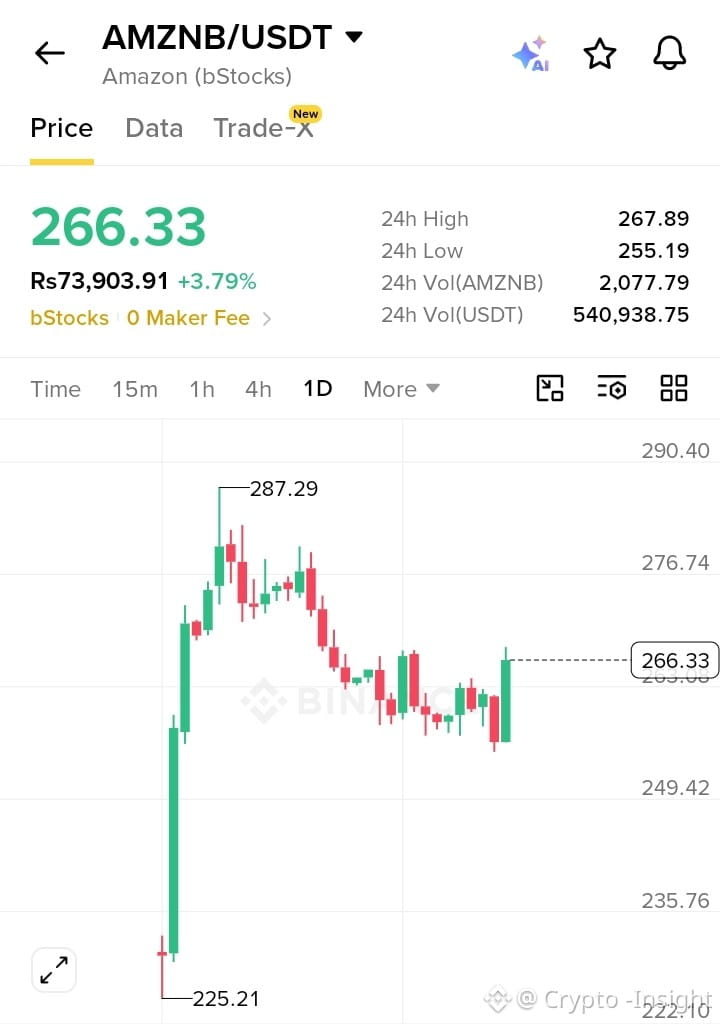
Can $AMZNB Reclaim Higher Resistance Levels After Support Bounce…!!
#AMZNB is showing positive bullish momentum on the daily chart as it recovers to 266.33 up over 3 percent today after building support above its 255.19 24h low and holding well above the 225.21 major bottom base. The price structure shows buyers stepping in to break out of a consolidation range, pushing price back toward local overhead levels. If momentum remains strong, the next key targets to watch are 267.89 and 276.74, while 255.19 serves as the primary support zone to monitor on pullbacks.
{spot}(AMZNBUSDT)
$ZEC
{future}(ZECUSDT)
$TUT
Can $AMZNB Reclaim Higher Resistance Levels After Support Bounce…!!
#AMZNB is showing positive bullish momentum on the daily chart as it recovers to 266.33 up over 3 percent today after building support above its 255.19 24h low and holding well above the 225.21 major bottom base. The price structure shows buyers stepping in to break out of a consolidation range, pushing price back toward local overhead levels. If momentum remains strong, the next key targets to watch are 267.89 and 276.74, while 255.19 serves as the primary support zone to monitor on pullbacks.
$ZEC
$TUT
#AMZNB is showing positive bullish momentum on the daily chart as it recovers to 266.33 up over 3 percent today after building support above its 255.19 24h low and holding well above the 225.21 major bottom base. The price structure shows buyers stepping in to break out of a consolidation range, pushing price back toward local overhead levels. If momentum remains strong, the next key targets to watch are 267.89 and 276.74, while 255.19 serves as the primary support zone to monitor on pullbacks.
$ZEC
$TUT
276

·
--
I used to think the interesting part of tokenized stocks was simply being able to trade them outside traditional market hours.
Then I started looking at it from a different angle.
The bigger change may be where the asset lives in the investor’s workflow.
A traditional stock usually sits inside a brokerage account.
A bStock sits inside a crypto environment.
That sounds like a small technical distinction.
It isn't.
With a tokenized security, the same market participant who already manages USDT, BNB or other digital assets can encounter an equity-linked instrument without completely switching financial environments.
That changes the context in which the asset can be used.
And this is where I think tokenization gets more interesting.
Not:
“Stocks, but on a blockchain.”
More like:
“What happens when an equity-linked asset becomes part of an on-chain financial ecosystem?”
That opens a much bigger discussion around settlement, custody, portability and eventually composability.
Of course, a bStock is not the same thing as directly owning the underlying company’s shares. It is a tokenized security backed 1:1 by an underlying share, and availability depends on jurisdiction. �
Binance Academy +1
For me, the important question has changed.
I no longer ask:
“Why would someone tokenize a stock?”
I ask:
“What becomes possible once the stock can exist inside a different financial infrastructure?”
That is a much more interesting question.
#bstockscis @BinanceCIS #AMZNB
{spot}(AMZNBUSDT)
I used to think the interesting part of tokenized stocks was simply being able to trade them outside traditional market hours.
Then I started looking at it from a different angle.
The bigger change may be where the asset lives in the investor’s workflow.
A traditional stock usually sits inside a brokerage account.
A bStock sits inside a crypto environment.
That sounds like a small technical distinction.
It isn't.
With a tokenized security, the same market participant who already manages USDT, BNB or other digital assets can encounter an equity-linked instrument without completely switching financial environments.
That changes the context in which the asset can be used.
And this is where I think tokenization gets more interesting.
Not:
“Stocks, but on a blockchain.”
More like:
“What happens when an equity-linked asset becomes part of an on-chain financial ecosystem?”
That opens a much bigger discussion around settlement, custody, portability and eventually composability.
Of course, a bStock is not the same thing as directly owning the underlying company’s shares. It is a tokenized security backed 1:1 by an underlying share, and availability depends on jurisdiction. �
Binance Academy +1
For me, the important question has changed.
I no longer ask:
“Why would someone tokenize a stock?”
I ask:
“What becomes possible once the stock can exist inside a different financial infrastructure?”
That is a much more interesting question.
#bstockscis @BinanceCIS #AMZNB
Then I started looking at it from a different angle.
The bigger change may be where the asset lives in the investor’s workflow.
A traditional stock usually sits inside a brokerage account.
A bStock sits inside a crypto environment.
That sounds like a small technical distinction.
It isn't.
With a tokenized security, the same market participant who already manages USDT, BNB or other digital assets can encounter an equity-linked instrument without completely switching financial environments.
That changes the context in which the asset can be used.
And this is where I think tokenization gets more interesting.
Not:
“Stocks, but on a blockchain.”
More like:
“What happens when an equity-linked asset becomes part of an on-chain financial ecosystem?”
That opens a much bigger discussion around settlement, custody, portability and eventually composability.
Of course, a bStock is not the same thing as directly owning the underlying company’s shares. It is a tokenized security backed 1:1 by an underlying share, and availability depends on jurisdiction. �
Binance Academy +1
For me, the important question has changed.
I no longer ask:
“Why would someone tokenize a stock?”
I ask:
“What becomes possible once the stock can exist inside a different financial infrastructure?”
That is a much more interesting question.
#bstockscis @BinanceCIS #AMZNB


78

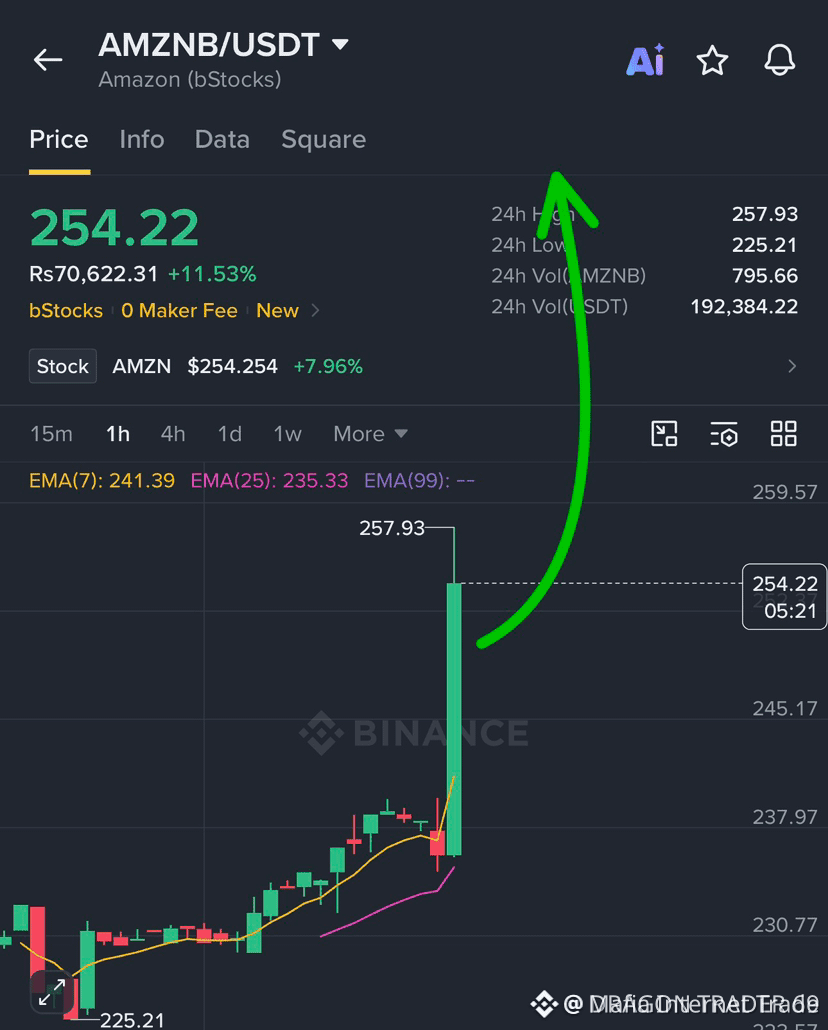
🚨 $AMZNB BUYERS JUST STACKED THE DEMAND ZONE – NEXT LEG UP LOADING 🔥
Entry: 250.0 ⚡
Target: 260.0 🚀
Stop Loss: 242.0 ⚠️
📌 The bid wall at $250 has held firm for three consecutive sessions, absorbing every sell-off into the range. 🛡️ Volume on the 1H chart is expanding while the RSI prints a bullish divergence off the 38 level – classic accumulation pattern before a momentum shift.
💡 This zone has historically acted as a springboard for quick 5–8% rips. With targets stacked at $270 and $285, the risk-to-reward is a crisp 1:2+ on the first pull. 💬 Are you waiting for a deeper sweep or loading here with the smart money? 👇
⚠️ Not financial advice. Always manage your risk. 🛡️
🏷️ #AMZNB #LongSetup #Breakout #Crypto #Altcoins
🚀 🎯
🚨 $AMZNB BUYERS JUST STACKED THE DEMAND ZONE – NEXT LEG UP LOADING 🔥
Entry: 250.0 ⚡
Target: 260.0 🚀
Stop Loss: 242.0 ⚠️
📌 The bid wall at $250 has held firm for three consecutive sessions, absorbing every sell-off into the range. 🛡️ Volume on the 1H chart is expanding while the RSI prints a bullish divergence off the 38 level – classic accumulation pattern before a momentum shift.
💡 This zone has historically acted as a springboard for quick 5–8% rips. With targets stacked at $270 and $285, the risk-to-reward is a crisp 1:2+ on the first pull. 💬 Are you waiting for a deeper sweep or loading here with the smart money? 👇
⚠️ Not financial advice. Always manage your risk. 🛡️
🏷️ #AMZNB #LongSetup #Breakout #Crypto #Altcoins
🚀 🎯
Entry: 250.0 ⚡
Target: 260.0 🚀
Stop Loss: 242.0 ⚠️
📌 The bid wall at $250 has held firm for three consecutive sessions, absorbing every sell-off into the range. 🛡️ Volume on the 1H chart is expanding while the RSI prints a bullish divergence off the 38 level – classic accumulation pattern before a momentum shift.
💡 This zone has historically acted as a springboard for quick 5–8% rips. With targets stacked at $270 and $285, the risk-to-reward is a crisp 1:2+ on the first pull. 💬 Are you waiting for a deeper sweep or loading here with the smart money? 👇
⚠️ Not financial advice. Always manage your risk. 🛡️
🏷️ #AMZNB #LongSetup #Breakout #Crypto #Altcoins
🚀 🎯
9

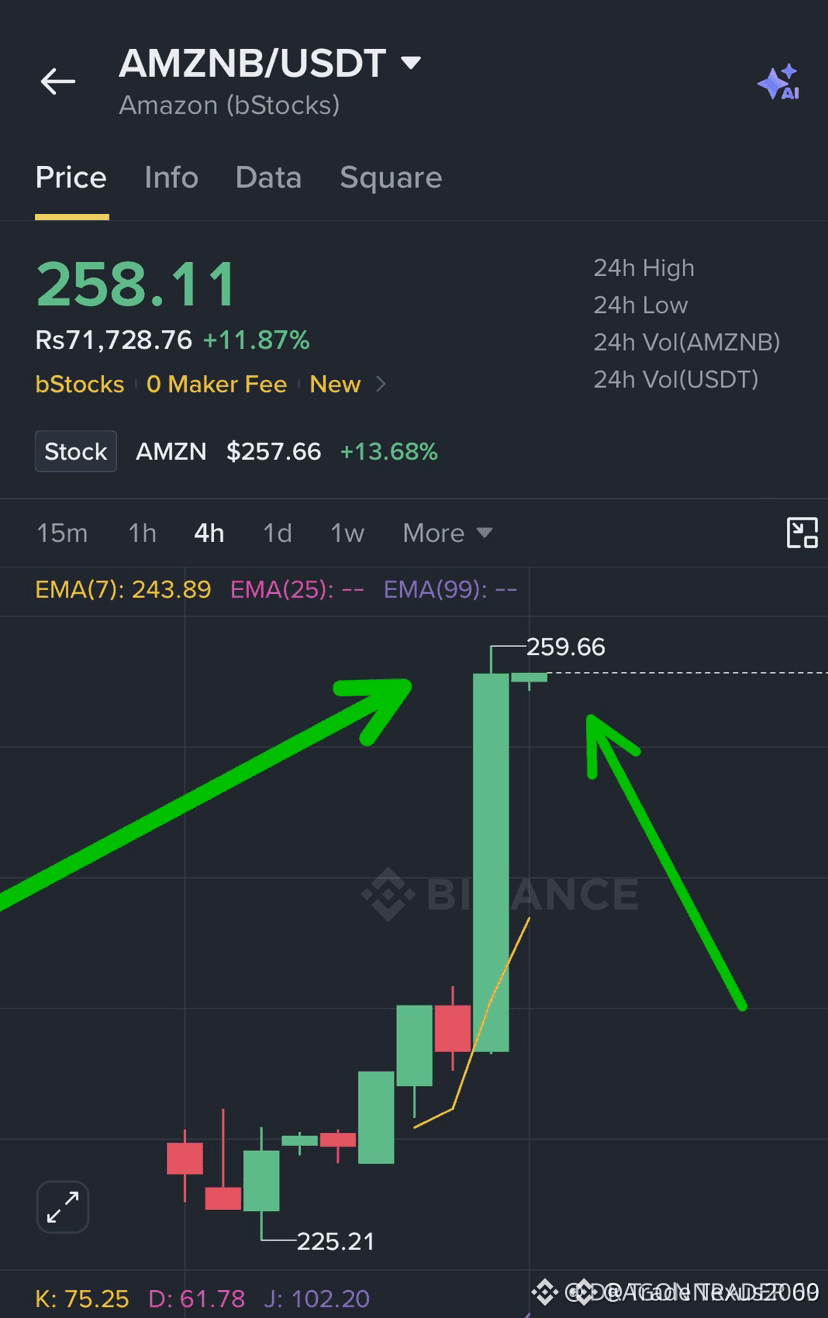
🦈 $AMZNB INSTITUTIONAL ACCUMULATION PATTERN CONFIRMED – MOMENTUM BUILDING! ⚡
📊 The recent price action on $AMZNB reflects a textbook accumulation structure with higher lows forming on the daily time frame. Volume is expanding as price reclaims previous resistance, indicating institutional participation. 💡 This kind of momentum shift typically precedes a sustained trend move. The market is absorbing supply efficiently while buyers step in aggressively.
🔍 Smart money fingerprints are visible in the order flow – layering at key support levels with minimal volatility. This suggests accumulation, not distribution. 💬 Are you positioned for the next leg or waiting for a pullback to the demand zone? 👇
⚠️ Not financial advice. Always manage your risk. 🛡️
🏷️ #AMZNB #Crypto #Altcoin #Momentum #SmartMoney
🦈 ⚡
🦈 $AMZNB INSTITUTIONAL ACCUMULATION PATTERN CONFIRMED – MOMENTUM BUILDING! ⚡
📊 The recent price action on $AMZNB reflects a textbook accumulation structure with higher lows forming on the daily time frame. Volume is expanding as price reclaims previous resistance, indicating institutional participation. 💡 This kind of momentum shift typically precedes a sustained trend move. The market is absorbing supply efficiently while buyers step in aggressively.
🔍 Smart money fingerprints are visible in the order flow – layering at key support levels with minimal volatility. This suggests accumulation, not distribution. 💬 Are you positioned for the next leg or waiting for a pullback to the demand zone? 👇
⚠️ Not financial advice. Always manage your risk. 🛡️
🏷️ #AMZNB #Crypto #Altcoin #Momentum #SmartMoney
🦈 ⚡
📊 The recent price action on $AMZNB reflects a textbook accumulation structure with higher lows forming on the daily time frame. Volume is expanding as price reclaims previous resistance, indicating institutional participation. 💡 This kind of momentum shift typically precedes a sustained trend move. The market is absorbing supply efficiently while buyers step in aggressively.
🔍 Smart money fingerprints are visible in the order flow – layering at key support levels with minimal volatility. This suggests accumulation, not distribution. 💬 Are you positioned for the next leg or waiting for a pullback to the demand zone? 👇
⚠️ Not financial advice. Always manage your risk. 🛡️
🏷️ #AMZNB #Crypto #Altcoin #Momentum #SmartMoney
🦈 ⚡
5

·
--
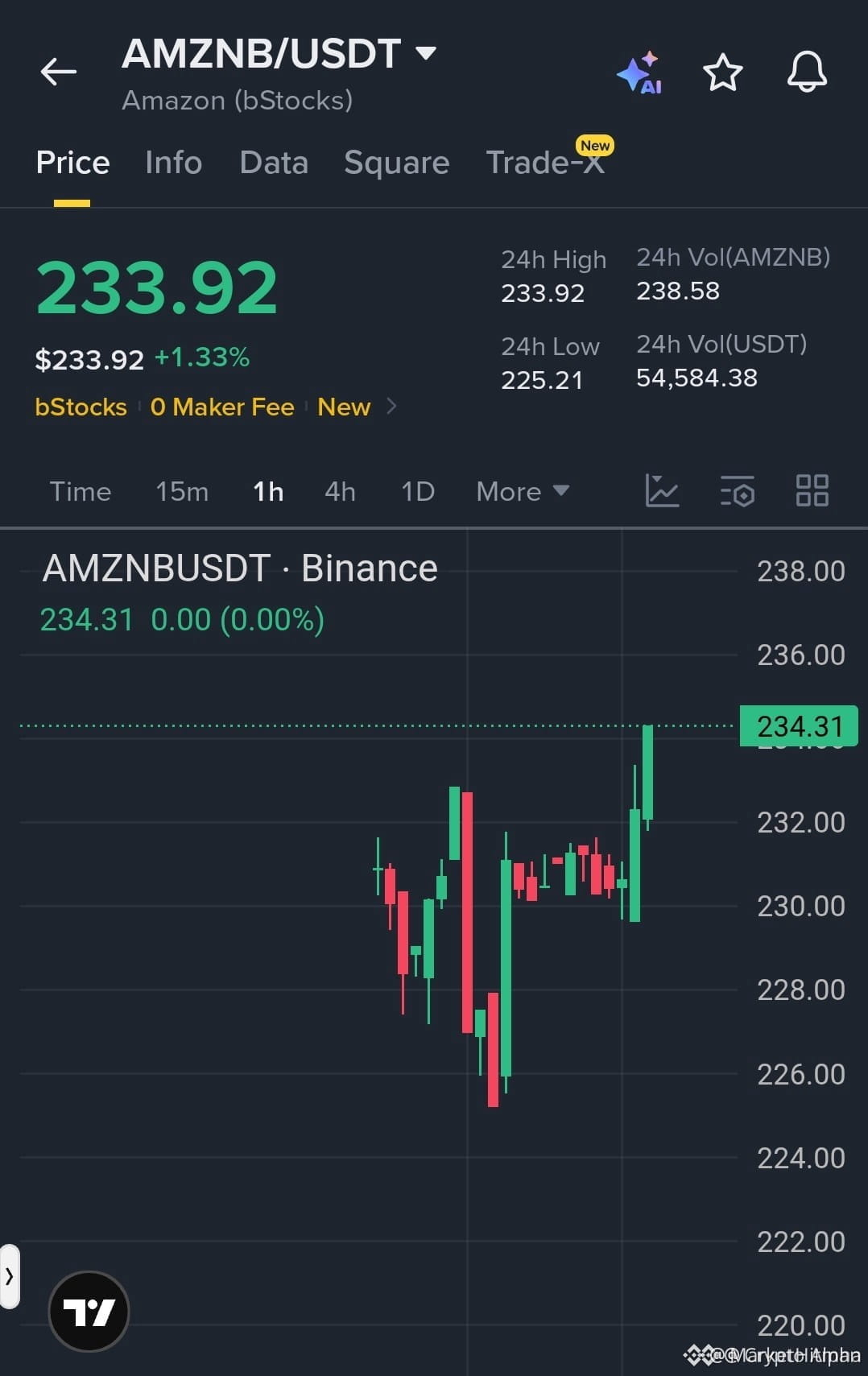
🚀 $AMZNB BREAKING ABOVE CONSOLIDATION WITH INSTITUTIONAL FOOTPRINT CONFIRMED! 💥
Entry: $233.50 - $234.50 ⚡
Targets: $236.50, $239.00, $243.00 🚀
Stop Loss: $229.50 ⚠️
📊 The 1H structure shows a clean range breakout, with price reclaiming the liquidity zone that previously capped multiple reactions. Volume is expanding above the average, and the order block at $233-$234 has been defended twice in the last four sessions. 📌 This isn't a random pump—smart money has been accumulating beneath the range since early week.
💡 The first target sits at a minor resistance, but the real magnet is $243—a level that aligns with a higher-timeframe fair value gap. If buyers hold above the breakout threshold, the path opens for a sequential run. 💬 Are you riding the breakout or waiting for a retest of the demand zone for a better entry? 👇
⚠️ Not financial advice. Always manage your risk. 🛡️
🏷️ #AMZNB #Breakout #LongSetup #Crypto #SmartMoney
🚀 🎯
🚀 $AMZNB BREAKING ABOVE CONSOLIDATION WITH INSTITUTIONAL FOOTPRINT CONFIRMED! 💥
Entry: $233.50 - $234.50 ⚡
Targets: $236.50, $239.00, $243.00 🚀
Stop Loss: $229.50 ⚠️
📊 The 1H structure shows a clean range breakout, with price reclaiming the liquidity zone that previously capped multiple reactions. Volume is expanding above the average, and the order block at $233-$234 has been defended twice in the last four sessions. 📌 This isn't a random pump—smart money has been accumulating beneath the range since early week.
💡 The first target sits at a minor resistance, but the real magnet is $243—a level that aligns with a higher-timeframe fair value gap. If buyers hold above the breakout threshold, the path opens for a sequential run. 💬 Are you riding the breakout or waiting for a retest of the demand zone for a better entry? 👇
⚠️ Not financial advice. Always manage your risk. 🛡️
🏷️ #AMZNB #Breakout #LongSetup #Crypto #SmartMoney
🚀 🎯
Entry: $233.50 - $234.50 ⚡
Targets: $236.50, $239.00, $243.00 🚀
Stop Loss: $229.50 ⚠️
📊 The 1H structure shows a clean range breakout, with price reclaiming the liquidity zone that previously capped multiple reactions. Volume is expanding above the average, and the order block at $233-$234 has been defended twice in the last four sessions. 📌 This isn't a random pump—smart money has been accumulating beneath the range since early week.
💡 The first target sits at a minor resistance, but the real magnet is $243—a level that aligns with a higher-timeframe fair value gap. If buyers hold above the breakout threshold, the path opens for a sequential run. 💬 Are you riding the breakout or waiting for a retest of the demand zone for a better entry? 👇
⚠️ Not financial advice. Always manage your risk. 🛡️
🏷️ #AMZNB #Breakout #LongSetup #Crypto #SmartMoney
🚀 🎯
6
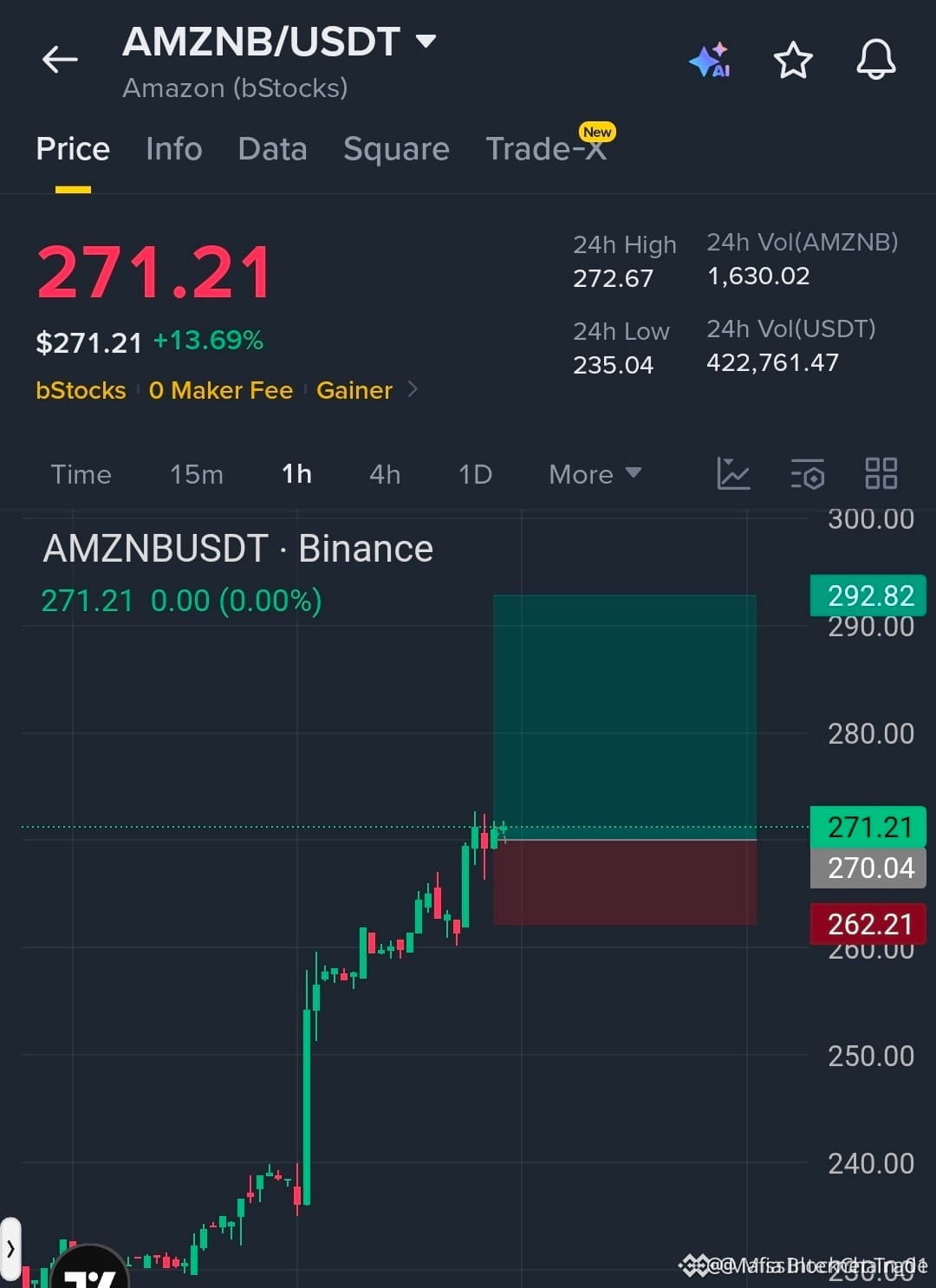
$AMZNB BREAKOUT HOLDS — HIGHER LOWS FUEL THE NEXT LEG UP! ⚡
Entry: 269.50 – 272.00 ⚡
Target: 278.00 🚀
Target: 285.00 🚀
Target: 292.50 🚀
Target: 300.00 🚀
Stop Loss: 262.00 ⚠️
📊 The breakout above resistance is a declaration of war — bulls have claimed the high ground and every higher low is a brick in their fortress. For new buyers, the smart entry isn't chasing the green candles; it's letting the market sweep back into the 269.50–272.00 zone and hold. That's where the risk-to-reward sharpens significantly.
That volume signature tells me this isn't a dead-cat bounce — it's a structured continuation. 📌 Once buyers defend breakout ground, targets from 278 to 300 become a stairway of liquidity. Existing longs should trail stops and let the runner breathe. Watching $BNB and $MUBARAK for the same wind in their sails. 💬 Are you waiting for the retest or pressing bids at market? 👇
⚠️ Not financial advice. Always manage your risk. 🛡️
🏷️ #AMZNB #LongSetup #Breakout #Crypto #Trading
🐂 ⚡
$AMZNB BREAKOUT HOLDS — HIGHER LOWS FUEL THE NEXT LEG UP! ⚡
Entry: 269.50 – 272.00 ⚡
Target: 278.00 🚀
Target: 285.00 🚀
Target: 292.50 🚀
Target: 300.00 🚀
Stop Loss: 262.00 ⚠️
📊 The breakout above resistance is a declaration of war — bulls have claimed the high ground and every higher low is a brick in their fortress. For new buyers, the smart entry isn't chasing the green candles; it's letting the market sweep back into the 269.50–272.00 zone and hold. That's where the risk-to-reward sharpens significantly.
That volume signature tells me this isn't a dead-cat bounce — it's a structured continuation. 📌 Once buyers defend breakout ground, targets from 278 to 300 become a stairway of liquidity. Existing longs should trail stops and let the runner breathe. Watching $BNB and $MUBARAK for the same wind in their sails. 💬 Are you waiting for the retest or pressing bids at market? 👇
⚠️ Not financial advice. Always manage your risk. 🛡️
🏷️ #AMZNB #LongSetup #Breakout #Crypto #Trading
🐂 ⚡
Entry: 269.50 – 272.00 ⚡
Target: 278.00 🚀
Target: 285.00 🚀
Target: 292.50 🚀
Target: 300.00 🚀
Stop Loss: 262.00 ⚠️
📊 The breakout above resistance is a declaration of war — bulls have claimed the high ground and every higher low is a brick in their fortress. For new buyers, the smart entry isn't chasing the green candles; it's letting the market sweep back into the 269.50–272.00 zone and hold. That's where the risk-to-reward sharpens significantly.
That volume signature tells me this isn't a dead-cat bounce — it's a structured continuation. 📌 Once buyers defend breakout ground, targets from 278 to 300 become a stairway of liquidity. Existing longs should trail stops and let the runner breathe. Watching $BNB and $MUBARAK for the same wind in their sails. 💬 Are you waiting for the retest or pressing bids at market? 👇
⚠️ Not financial advice. Always manage your risk. 🛡️
🏷️ #AMZNB #LongSetup #Breakout #Crypto #Trading
🐂 ⚡
25

$AMZNB is moving higher at 277.72 (+1.21%)! Support: 272 | Resistance: 285 | 🎯 Target: 292–300. Next move: Holding above 277 keeps the bulls in control. 💡 Pro Tip: 285 is the key breakout zone. #AMZNB
{spot}(AMZNBUSDT)
#RobinhoodToOfferCryptoTradingInUK #TSMCJulyRevenueJumps45% #USRedirects55VesselsUnderHormuzBlockade #NYSEDevelopingTokenizedSecuritiesPaymentPlatform
$AMZNB is moving higher at 277.72 (+1.21%)! Support: 272 | Resistance: 285 | 🎯 Target: 292–300. Next move: Holding above 277 keeps the bulls in control. 💡 Pro Tip: 285 is the key breakout zone. #AMZNB
#RobinhoodToOfferCryptoTradingInUK #TSMCJulyRevenueJumps45% #USRedirects55VesselsUnderHormuzBlockade #NYSEDevelopingTokenizedSecuritiesPaymentPlatform
#RobinhoodToOfferCryptoTradingInUK #TSMCJulyRevenueJumps45% #USRedirects55VesselsUnderHormuzBlockade #NYSEDevelopingTokenizedSecuritiesPaymentPlatform
47

·
--
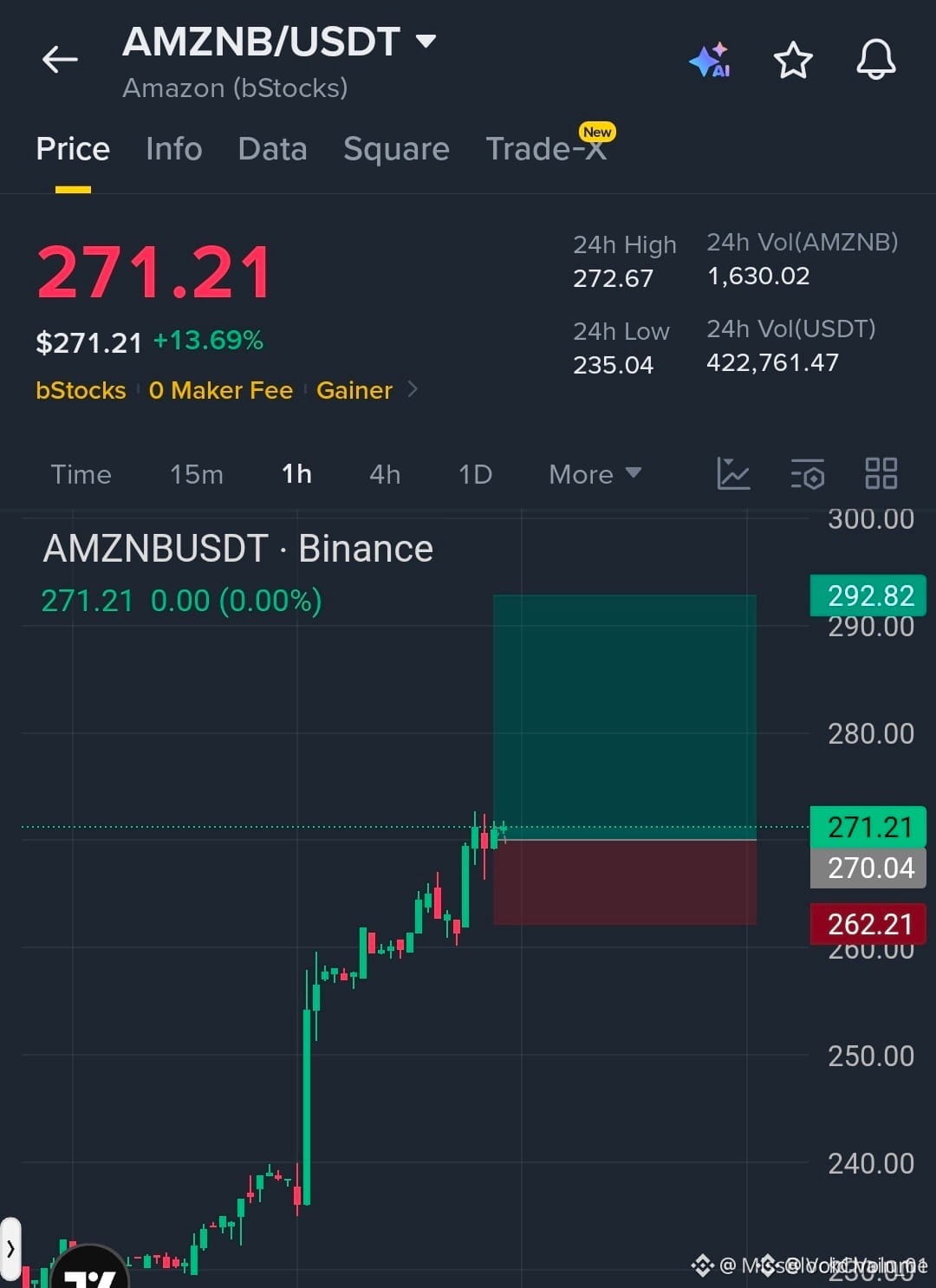
$AMZNB BREAKOUT CONTINUES – PULLBACK TO THE ENTRY ZONE SETS UP THE NEXT SURGE! 🚀
Entry: 269.50 – 272.00 ⚡
Target 1: 278.00 🎯
Target 2: 285.00 🎯
Target 3: 292.50 🎯
Target 4: 300.00 🚀
Stop Loss: 262.00 ⚠️
This is the exact pullback the breakout needs. Price cleared a dense supply zone, and the rejection of bids near 269.50-272.00 tells me buyers still own this structure. 📊 Sustained volume and a clean higher-high sequence confirm the trend is far from exhausted.
Trail stops for existing longs and let the market breathe. New entries should respect the zone, not chase strength. The risk-to-reward on the first targets makes this one of the sharpest risk-defined plays on the board. 💡
Only invalidation sits on a daily close below 262.00. 💬 Would you reload at the breakout retest or wait for deeper liquidity? 👇
⚠️ Not financial advice. Always manage your risk. 🛡️
🏷️ #AMZNB #Breakout #LongSetup #Crypto
🎯 🦈
$AMZNB BREAKOUT CONTINUES – PULLBACK TO THE ENTRY ZONE SETS UP THE NEXT SURGE! 🚀
Entry: 269.50 – 272.00 ⚡
Target 1: 278.00 🎯
Target 2: 285.00 🎯
Target 3: 292.50 🎯
Target 4: 300.00 🚀
Stop Loss: 262.00 ⚠️
This is the exact pullback the breakout needs. Price cleared a dense supply zone, and the rejection of bids near 269.50-272.00 tells me buyers still own this structure. 📊 Sustained volume and a clean higher-high sequence confirm the trend is far from exhausted.
Trail stops for existing longs and let the market breathe. New entries should respect the zone, not chase strength. The risk-to-reward on the first targets makes this one of the sharpest risk-defined plays on the board. 💡
Only invalidation sits on a daily close below 262.00. 💬 Would you reload at the breakout retest or wait for deeper liquidity? 👇
⚠️ Not financial advice. Always manage your risk. 🛡️
🏷️ #AMZNB #Breakout #LongSetup #Crypto
🎯 🦈
Entry: 269.50 – 272.00 ⚡
Target 1: 278.00 🎯
Target 2: 285.00 🎯
Target 3: 292.50 🎯
Target 4: 300.00 🚀
Stop Loss: 262.00 ⚠️
This is the exact pullback the breakout needs. Price cleared a dense supply zone, and the rejection of bids near 269.50-272.00 tells me buyers still own this structure. 📊 Sustained volume and a clean higher-high sequence confirm the trend is far from exhausted.
Trail stops for existing longs and let the market breathe. New entries should respect the zone, not chase strength. The risk-to-reward on the first targets makes this one of the sharpest risk-defined plays on the board. 💡
Only invalidation sits on a daily close below 262.00. 💬 Would you reload at the breakout retest or wait for deeper liquidity? 👇
⚠️ Not financial advice. Always manage your risk. 🛡️
🏷️ #AMZNB #Breakout #LongSetup #Crypto
🎯 🦈
4

🚨 BULLS IGNITE $AMZNB FRESH BREAKOUT AS MOMENTUM BUILDS FOR NEW HIGHS 🐂💥
Entry: 270 – 273 ⚡
Target 1: 280 🚀
Target 2: 288 🚀
Target 3: 300 🚀
Stop Loss: 262 ⚠️
The bid is stacking behind $AMZNB after that powerful upward expansion. Buyers are holding the structure like a vice, and as long as price stays above the 270–273 demand zone, the path to 280, then 288, then 300 is the line of least resistance. 📊
Volume is confirming the breakout velocity, and every dip is being swallowed by eager bids. This is momentum doing what momentum does — respecting strength and rewarding risk-takers. 🔍
Are you waiting for a deeper retrace that might never come, or are you stepping in where the smart money is already parked? 💬
⚠️ Not financial advice. Always manage your risk. 🛡️
🏷️ #AMZNB #Breakout #Momentum #LongSetup #Crypto
🐂 🔥
🚨 BULLS IGNITE $AMZNB FRESH BREAKOUT AS MOMENTUM BUILDS FOR NEW HIGHS 🐂💥
Entry: 270 – 273 ⚡
Target 1: 280 🚀
Target 2: 288 🚀
Target 3: 300 🚀
Stop Loss: 262 ⚠️
The bid is stacking behind $AMZNB after that powerful upward expansion. Buyers are holding the structure like a vice, and as long as price stays above the 270–273 demand zone, the path to 280, then 288, then 300 is the line of least resistance. 📊
Volume is confirming the breakout velocity, and every dip is being swallowed by eager bids. This is momentum doing what momentum does — respecting strength and rewarding risk-takers. 🔍
Are you waiting for a deeper retrace that might never come, or are you stepping in where the smart money is already parked? 💬
⚠️ Not financial advice. Always manage your risk. 🛡️
🏷️ #AMZNB #Breakout #Momentum #LongSetup #Crypto
🐂 🔥
Entry: 270 – 273 ⚡
Target 1: 280 🚀
Target 2: 288 🚀
Target 3: 300 🚀
Stop Loss: 262 ⚠️
The bid is stacking behind $AMZNB after that powerful upward expansion. Buyers are holding the structure like a vice, and as long as price stays above the 270–273 demand zone, the path to 280, then 288, then 300 is the line of least resistance. 📊
Volume is confirming the breakout velocity, and every dip is being swallowed by eager bids. This is momentum doing what momentum does — respecting strength and rewarding risk-takers. 🔍
Are you waiting for a deeper retrace that might never come, or are you stepping in where the smart money is already parked? 💬
⚠️ Not financial advice. Always manage your risk. 🛡️
🏷️ #AMZNB #Breakout #Momentum #LongSetup #Crypto
🐂 🔥
69
Log in to explore more content
Join global crypto users on Binance Square
⚡️ Get latest and useful information about crypto.
💬 Trusted by the world’s largest crypto exchange.
👍 Discover real insights from verified creators.
Email / Phone number
Trending Topics
1
#BitcoinReboundsTo$79K
31,722 views
252 Discussing
2
#BessentEndorsesFinalClarityActDraft
180 views
34 Discussing
3
#ZamaOpens16ConfidentialMorphoVaults
260 views
21 Discussing
4
#USDCOnChainVolumeTops$100Trillion
226 views
14 Discussing
5
#BitcoinSpotETFsNetInflow$160M
1,222 views
63 Discussing
6
#SouthKoreaCryptoTaxDelayPetitionTops50000
23,690 views
699 Discussing
7
#SolanaTransactionV1GoesLiveOnMainnet
16,808 views
462 Discussing
8
#RussianCentralBankFlagsCryptoAsFinancialRisk
12,676 views
385 Discussing
9
#GrayscalePutsXRPAt26.11%InAdvisorPortfolio
28,660 views
513 Discussing
10
#PhiladelphiaSemiconductorIndexFalls5.9%
12,433 views
313 Discussing