

#aeon
aeon
235,649 views
939 Discussing
Hot
Latest

·
--
Where’s the money flowing?
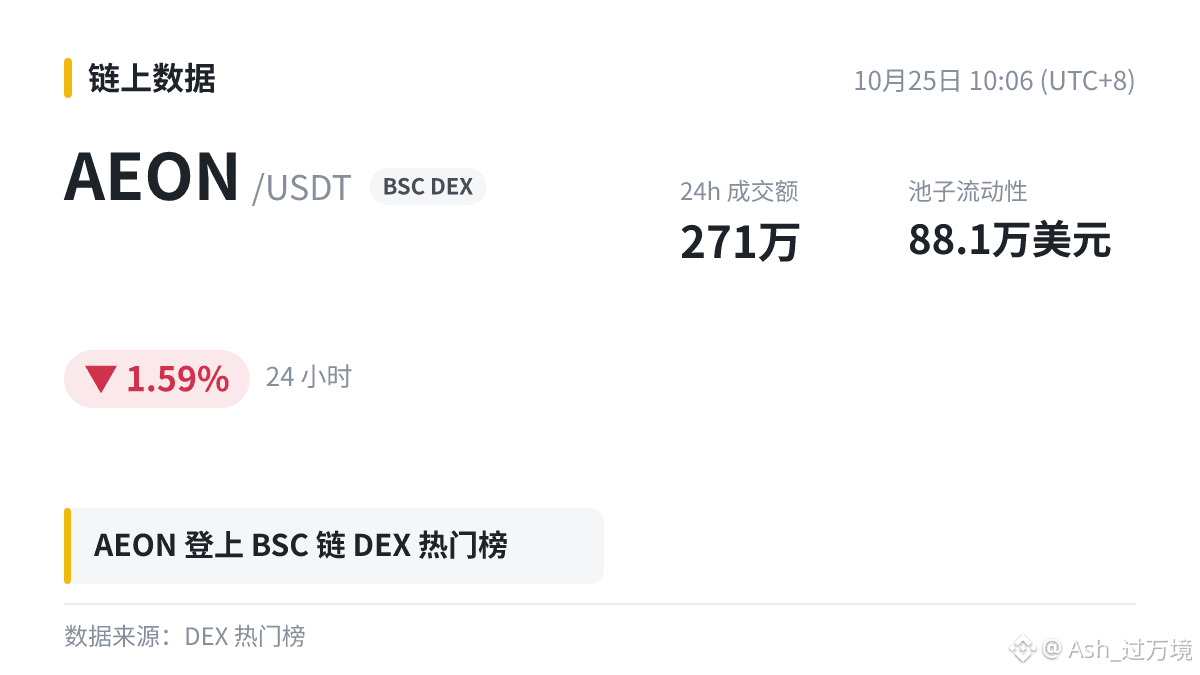
$AEON is trending on BSC DEX, down 1.59% over 24h.
Behind on-chain trends, it’s often a few large addresses trading frequently. Checking whether the top addresses are buying or selling can give you an earlier signal than watching candlestick charts.
Join the conversation in the comments.
#AEON
These signals can be wrong too—don’t blindly follow them.
Where’s the money flowing?
$AEON is trending on BSC DEX, down 1.59% over 24h.
Behind on-chain trends, it’s often a few large addresses trading frequently. Checking whether the top addresses are buying or selling can give you an earlier signal than watching candlestick charts.
Join the conversation in the comments.
#AEON
These signals can be wrong too—don’t blindly follow them.
$AEON is trending on BSC DEX, down 1.59% over 24h.
Behind on-chain trends, it’s often a few large addresses trading frequently. Checking whether the top addresses are buying or selling can give you an earlier signal than watching candlestick charts.
Join the conversation in the comments.
#AEON
These signals can be wrong too—don’t blindly follow them.
40

·
--
Let's talk market trends.
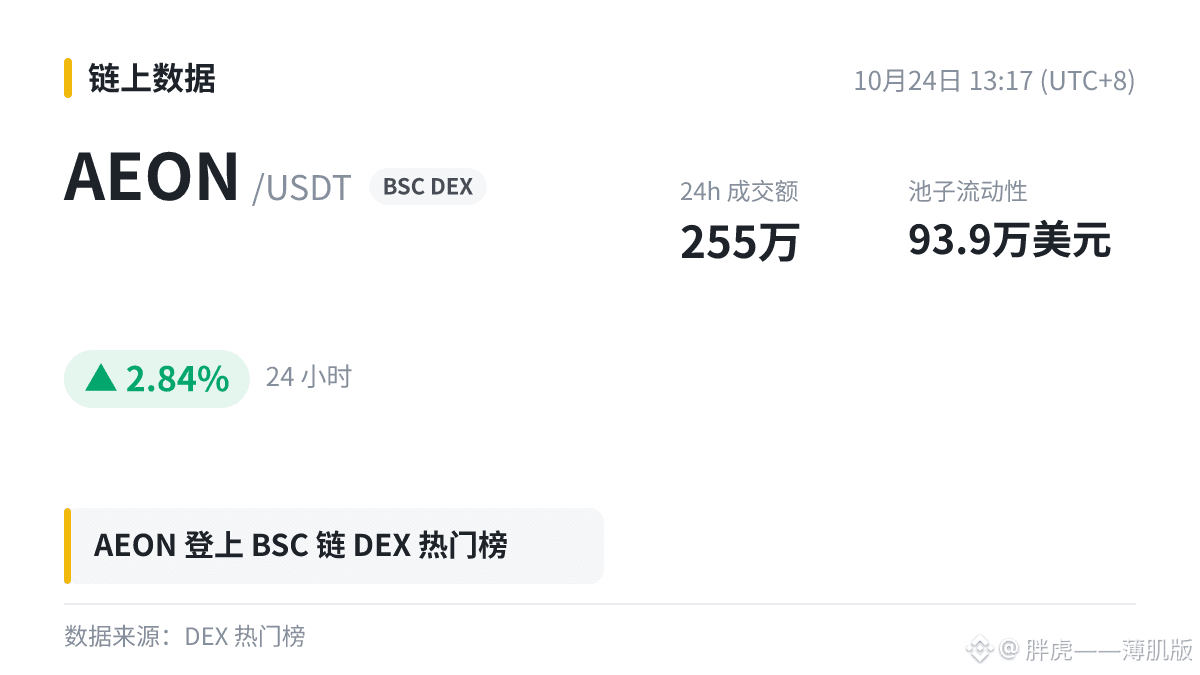
$AEON has appeared on the trending DEX list on BSC, up 2.84% over the past 24 hours.
Honestly, many coins on the trending list are newly launched, so there's no history to go by.
#AEON
Let's talk market trends.
$AEON has appeared on the trending DEX list on BSC, up 2.84% over the past 24 hours.
Honestly, many coins on the trending list are newly launched, so there's no history to go by.
#AEON
$AEON has appeared on the trending DEX list on BSC, up 2.84% over the past 24 hours.
Honestly, many coins on the trending list are newly launched, so there's no history to go by.
#AEON
聪明的韭菜:
哪个网站可以看
3
409

·
--
📢 AEON, the settlement layer built for the AI economy, has launched Agentic Checkout V2, expanding its agentic commerce infrastructure from e-commerce purchases to travel bookings. The updated version enables AI agents to search for and book hotels.
$AEON Add it to the watchlist for now.
Read the original message—retellings often distort the facts. Stay tuned.
#AEON
📢 AEON, the settlement layer built for the AI economy, has launched Agentic Checkout V2, expanding its agentic commerce infrastructure from e-commerce purchases to travel bookings. The updated version enables AI agents to search for and book hotels.
$AEON Add it to the watchlist for now.
Read the original message—retellings often distort the facts. Stay tuned.
#AEON
$AEON Add it to the watchlist for now.
Read the original message—retellings often distort the facts. Stay tuned.
#AEON

·
--
Just chatting with everyone: when I come across news like this, I now run through my own little checklist:
✅ First, verify the source: Techub News
✅ Then, check the market: $AEON
✅ Finally, ask myself: Would this make me change my position? Most of the time, it’s not worth it.
This time, the news is: AEON launches Agentic Checkout V2, providing AI-powered travel bookings for Travala
What’s your process for evaluating news?
#AEON
My views may not be right. Trade at your own risk.
Just chatting with everyone: when I come across news like this, I now run through my own little checklist:
✅ First, verify the source: Techub News
✅ Then, check the market: $AEON
✅ Finally, ask myself: Would this make me change my position? Most of the time, it’s not worth it.
This time, the news is: AEON launches Agentic Checkout V2, providing AI-powered travel bookings for Travala
What’s your process for evaluating news?
#AEON
My views may not be right. Trade at your own risk.
✅ First, verify the source: Techub News
✅ Then, check the market: $AEON
✅ Finally, ask myself: Would this make me change my position? Most of the time, it’s not worth it.
This time, the news is: AEON launches Agentic Checkout V2, providing AI-powered travel bookings for Travala
What’s your process for evaluating news?
#AEON
My views may not be right. Trade at your own risk.

Lincoln Hollister eSnU:
说的什么玩意
1
292

·
--
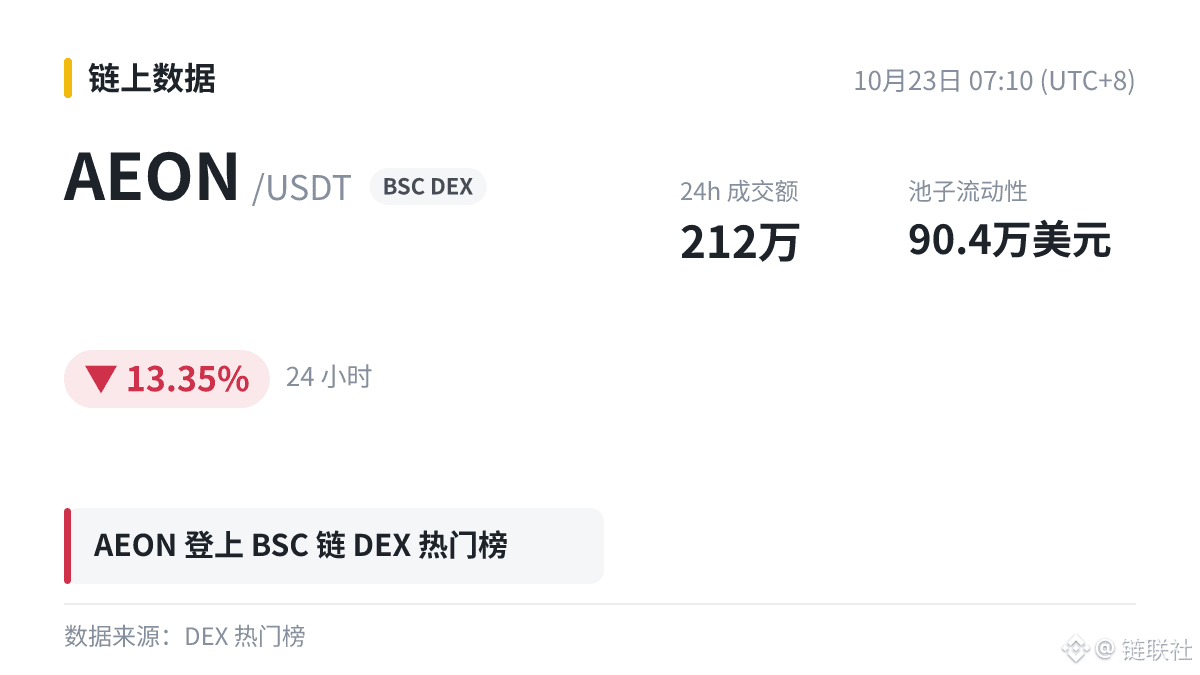
$AEON is trending on the BSC chain (No. 9), down 13.35% in 24 hours.
One easily overlooked point: on-chain buzz often precedes a reaction in exchange order books, but sometimes it’s just on-chain hype. The key is whether trading volume on exchanges picks up.
What will you do if it moves in the opposite direction later?
Folks, follow Chainlian Society to spot high-volatility opportunities early—don’t wait until it pumps to chase.
#AEON
$AEON is trending on the BSC chain (No. 9), down 13.35% in 24 hours.
One easily overlooked point: on-chain buzz often precedes a reaction in exchange order books, but sometimes it’s just on-chain hype. The key is whether trading volume on exchanges picks up.
What will you do if it moves in the opposite direction later?
Folks, follow Chainlian Society to spot high-volatility opportunities early—don’t wait until it pumps to chase.
#AEON
One easily overlooked point: on-chain buzz often precedes a reaction in exchange order books, but sometimes it’s just on-chain hype. The key is whether trading volume on exchanges picks up.
What will you do if it moves in the opposite direction later?
Folks, follow Chainlian Society to spot high-volatility opportunities early—don’t wait until it pumps to chase.
#AEON
17

·
--
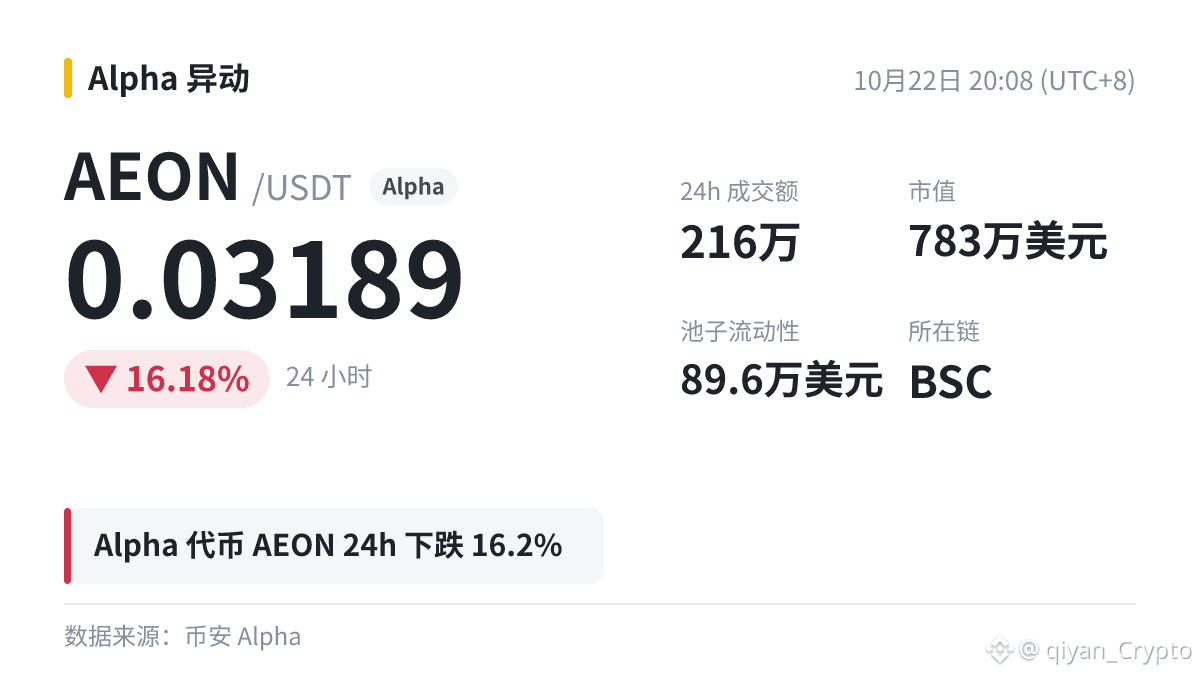
A classic chart-watching moment is here: $AEON 24h -16.18%, current price 0.03189.
When it’s going up, everyone’s shouting “King of Alpha.” When it’s going down, the comments section goes quiet, with nothing but sighs.
The fate of small caps: they shoot up fast, and crash just as fast. Save this and take a look next time you get the urge to jump in.
#AEON
A classic chart-watching moment is here: $AEON 24h -16.18%, current price 0.03189.
When it’s going up, everyone’s shouting “King of Alpha.” When it’s going down, the comments section goes quiet, with nothing but sighs.
The fate of small caps: they shoot up fast, and crash just as fast. Save this and take a look next time you get the urge to jump in.
#AEON
When it’s going up, everyone’s shouting “King of Alpha.” When it’s going down, the comments section goes quiet, with nothing but sighs.
The fate of small caps: they shoot up fast, and crash just as fast. Save this and take a look next time you get the urge to jump in.
#AEON
13

AEON launches Agentic Checkout V2, enabling AI agents to book hotels through Travala—what does this mean for the market?
The impact is limited, but it’s worth noting and revisiting later. The most important thing now is whether sentiment can shift from discussion to real money.
Watchlist: $AEON
#AEON
AEON launches Agentic Checkout V2, enabling AI agents to book hotels through Travala—what does this mean for the market?
The impact is limited, but it’s worth noting and revisiting later. The most important thing now is whether sentiment can shift from discussion to real money.
Watchlist: $AEON
#AEON
The impact is limited, but it’s worth noting and revisiting later. The most important thing now is whether sentiment can shift from discussion to real money.
Watchlist: $AEON
#AEON

29

·
--
Is big money on the move?
“AEON launches Agentic Checkout V2, enabling AI agents to book hotels through Travala.”
After the news broke, I asked just three questions about the money flow:
1. Are aggressive trades skewed toward buying or selling?
2. Can trading volume for $AEON keep growing?
3. Are whales making unusual transfers to exchanges?
Only when all three point in the same direction does the news carry real weight; otherwise, it’s probably just noise.
Treat the news as a reference, and stick to your own trading plan.
#AEON
Is big money on the move?
“AEON launches Agentic Checkout V2, enabling AI agents to book hotels through Travala.”
After the news broke, I asked just three questions about the money flow:
1. Are aggressive trades skewed toward buying or selling?
2. Can trading volume for $AEON keep growing?
3. Are whales making unusual transfers to exchanges?
Only when all three point in the same direction does the news carry real weight; otherwise, it’s probably just noise.
Treat the news as a reference, and stick to your own trading plan.
#AEON
“AEON launches Agentic Checkout V2, enabling AI agents to book hotels through Travala.”
After the news broke, I asked just three questions about the money flow:
1. Are aggressive trades skewed toward buying or selling?
2. Can trading volume for $AEON keep growing?
3. Are whales making unusual transfers to exchanges?
Only when all three point in the same direction does the news carry real weight; otherwise, it’s probably just noise.
Treat the news as a reference, and stick to your own trading plan.
#AEON

55

📣 AEON launches Agentic Checkout V2, enabling AI agents to book hotels through Travala
$AEON . This is fairly neutral; I wouldn’t change my position because of it.
Keep an eye on whether the buzz in the comments section continues.
#AEON
📣 AEON launches Agentic Checkout V2, enabling AI agents to book hotels through Travala
$AEON . This is fairly neutral; I wouldn’t change my position because of it.
Keep an eye on whether the buzz in the comments section continues.
#AEON
$AEON . This is fairly neutral; I wouldn’t change my position because of it.
Keep an eye on whether the buzz in the comments section continues.
#AEON
29

·
--
Saw something worth pondering:
AEON launches Agentic Checkout V2, enabling AI agents to book hotels through Travala
$AEON . What really determines the price is the order book, not the news itself. If the market moves in the opposite direction next, how will you respond?
#AEON
Saw something worth pondering:
AEON launches Agentic Checkout V2, enabling AI agents to book hotels through Travala
$AEON . What really determines the price is the order book, not the news itself. If the market moves in the opposite direction next, how will you respond?
#AEON
AEON launches Agentic Checkout V2, enabling AI agents to book hotels through Travala
$AEON . What really determines the price is the order book, not the news itself. If the market moves in the opposite direction next, how will you respond?
#AEON

44


I just saw a piece of news: “AEON launches Agentic Checkout V2, enabling AI agents to book hotels through Travala.”
Personally, I don’t think it’ll have much of an impact on the market, but it’s worth keeping an eye on.
$AEON I’ll keep following this. Leave a comment and let’s discuss—it might spark some ideas.
#AEON
Whether to buy is up to you; I’m just keeping a record.
I just saw a piece of news: “AEON launches Agentic Checkout V2, enabling AI agents to book hotels through Travala.”
Personally, I don’t think it’ll have much of an impact on the market, but it’s worth keeping an eye on.
$AEON I’ll keep following this. Leave a comment and let’s discuss—it might spark some ideas.
#AEON
Whether to buy is up to you; I’m just keeping a record.
Personally, I don’t think it’ll have much of an impact on the market, but it’s worth keeping an eye on.
$AEON I’ll keep following this. Leave a comment and let’s discuss—it might spark some ideas.
#AEON
Whether to buy is up to you; I’m just keeping a record.

77

·
--
AEON launches Agentic Checkout V2, enabling AI agents to book hotels through Travala—could this significantly affect the market?
There’s no clear directional bias; the price will most likely continue to follow its own structure.
Watchlist: $AEON
#AEON
AEON launches Agentic Checkout V2, enabling AI agents to book hotels through Travala—could this significantly affect the market?
There’s no clear directional bias; the price will most likely continue to follow its own structure.
Watchlist: $AEON
#AEON
There’s no clear directional bias; the price will most likely continue to follow its own structure.
Watchlist: $AEON
#AEON

27

·
--
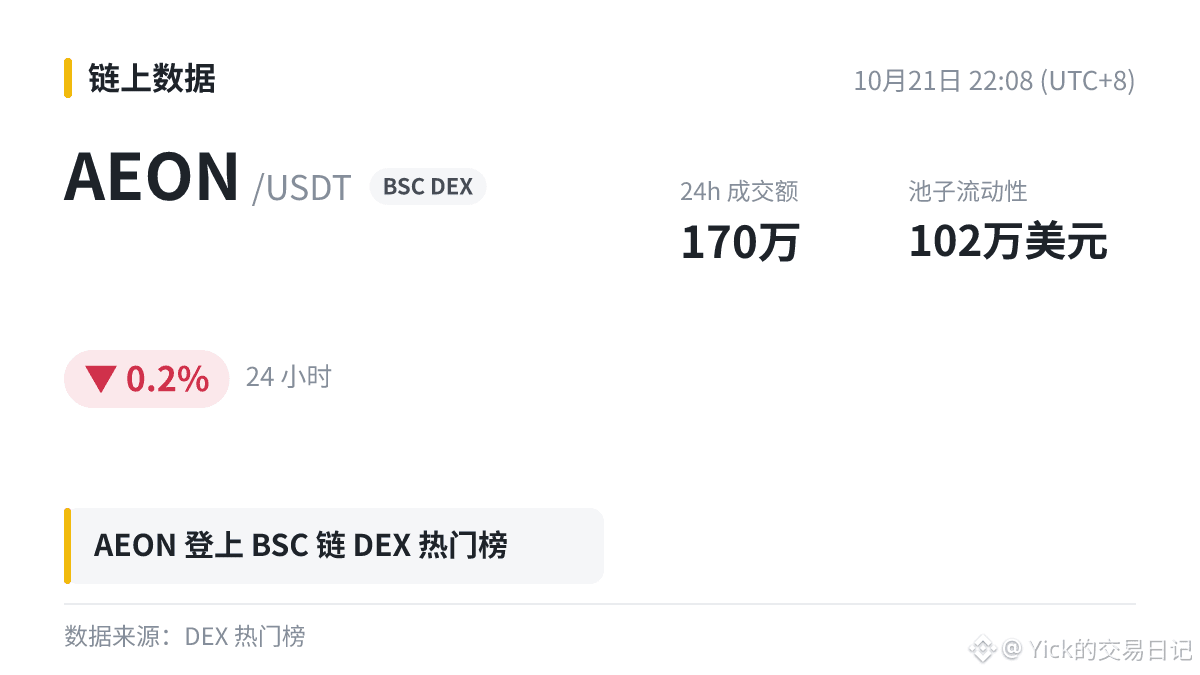
Let’s chat: I saw $AEON (BSC) on the on-chain trending list: 24h -0.2%, with $1.02 million in pool liquidity.
I usually treat on-chain trending lists as just a gauge of market sentiment. Before participating, I first check whether the pool is deep enough and whether the contract is safe.
Do you ever trade trending on-chain tokens?
#AEON
Let’s chat: I saw $AEON (BSC) on the on-chain trending list: 24h -0.2%, with $1.02 million in pool liquidity.
I usually treat on-chain trending lists as just a gauge of market sentiment. Before participating, I first check whether the pool is deep enough and whether the contract is safe.
Do you ever trade trending on-chain tokens?
#AEON
I usually treat on-chain trending lists as just a gauge of market sentiment. Before participating, I first check whether the pool is deep enough and whether the contract is safe.
Do you ever trade trending on-chain tokens?
#AEON
1

·
--
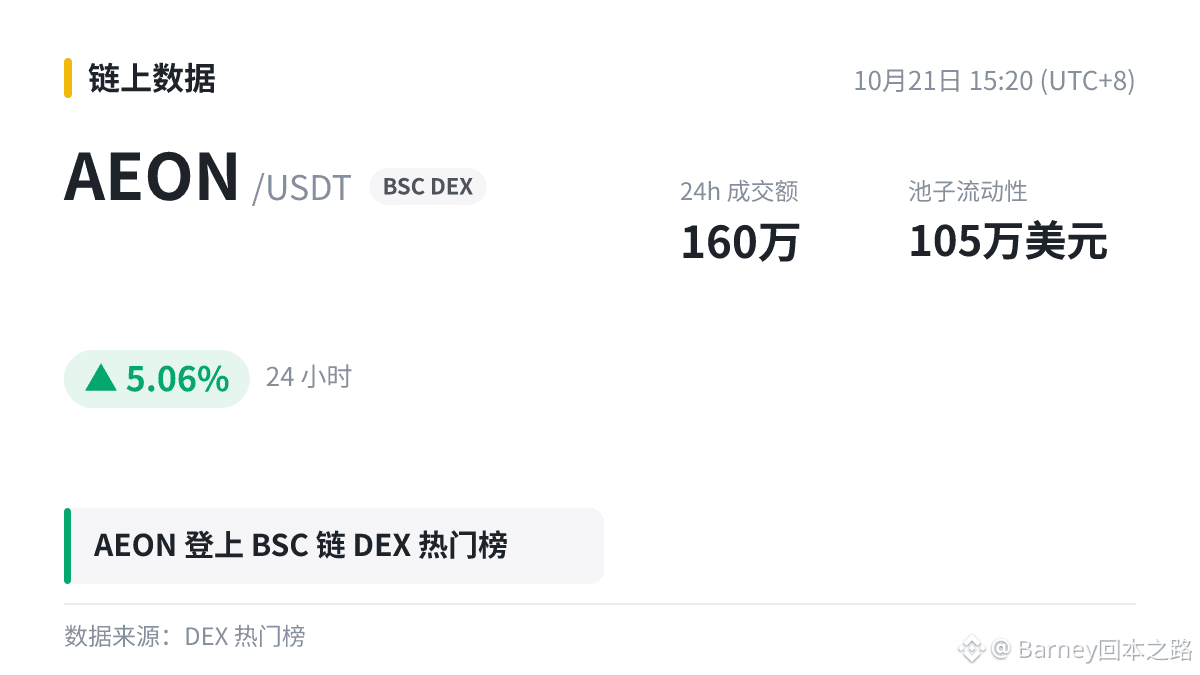
$AEON is trending on-chain on BSC (No. 10), up 5.06% in 24h.
One detail: on-chain buzz often precedes reactions from centralized platforms, but it can also be short-lived. Watch to see whether buying on exchanges picks up.
Is this a signal or a trap?
#AEON
Just sharing some thoughts—make your own decisions about buying and selling.
$AEON is trending on-chain on BSC (No. 10), up 5.06% in 24h.
One detail: on-chain buzz often precedes reactions from centralized platforms, but it can also be short-lived. Watch to see whether buying on exchanges picks up.
Is this a signal or a trap?
#AEON
Just sharing some thoughts—make your own decisions about buying and selling.
One detail: on-chain buzz often precedes reactions from centralized platforms, but it can also be short-lived. Watch to see whether buying on exchanges picks up.
Is this a signal or a trap?
#AEON
Just sharing some thoughts—make your own decisions about buying and selling.

·
--
Bullish
$AEON is holding in positive territory with a 0.48% gain in the displayed snapshot.
Price: $0.036674
Market Cap: $2.28M
Change: +0.48%
The move is small, but relative strength is worth monitoring when other tokens are under pressure. The next thing to watch is sustained buying volume and a confirmed move above resistance. No breakout is confirmed yet.
#AEON #Crypto #Altcoins #trading $AEON
{alpha}(560x277add739c6e0477616948357af9e79fe1ec9b80)
$AEON is holding in positive territory with a 0.48% gain in the displayed snapshot.
Price: $0.036674
Market Cap: $2.28M
Change: +0.48%
The move is small, but relative strength is worth monitoring when other tokens are under pressure. The next thing to watch is sustained buying volume and a confirmed move above resistance. No breakout is confirmed yet.
#AEON #Crypto #Altcoins #trading $AEON
Price: $0.036674
Market Cap: $2.28M
Change: +0.48%
The move is small, but relative strength is worth monitoring when other tokens are under pressure. The next thing to watch is sustained buying volume and a confirmed move above resistance. No breakout is confirmed yet.
#AEON #Crypto #Altcoins #trading $AEON
850

·
--
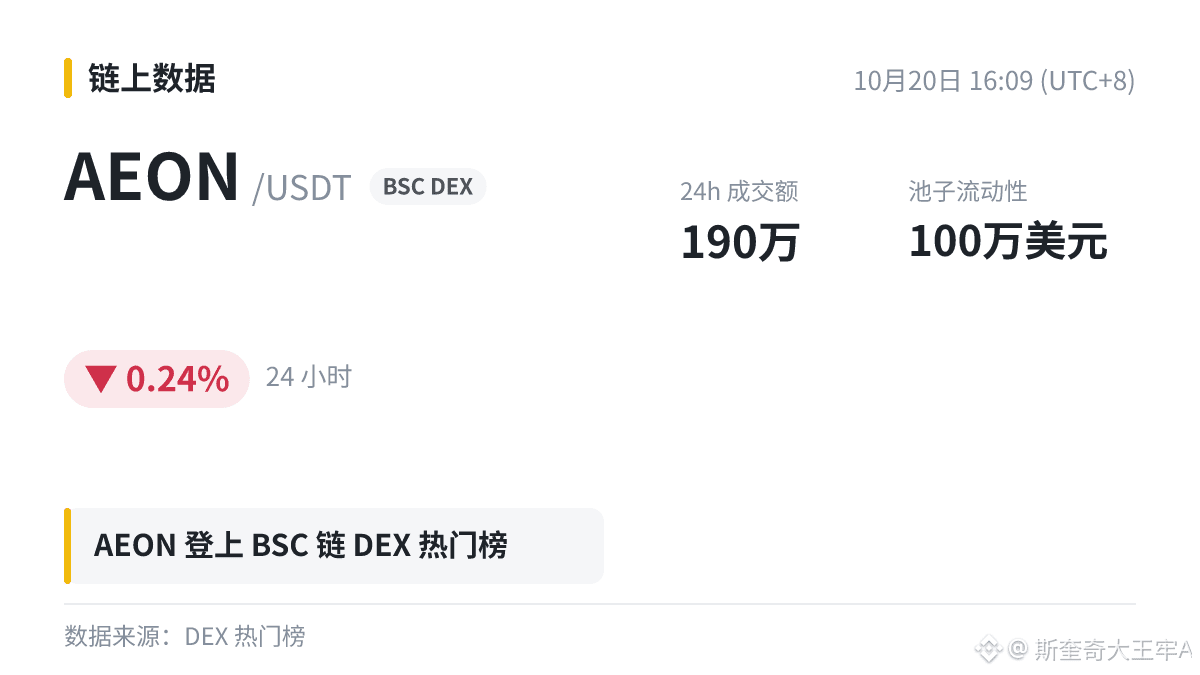
$AEON ranked No. 9 among trending tokens on BSC, 24h: -0.24%, liquidity pool: $1 million.
On-chain trends are like suddenly viral restaurants: the lines get longer by the day, but the hype comes fast and fades just as quickly.
Send this to that friend of yours who always says, “This time is different.”
#AEON
$AEON ranked No. 9 among trending tokens on BSC, 24h: -0.24%, liquidity pool: $1 million.
On-chain trends are like suddenly viral restaurants: the lines get longer by the day, but the hype comes fast and fades just as quickly.
Send this to that friend of yours who always says, “This time is different.”
#AEON
On-chain trends are like suddenly viral restaurants: the lines get longer by the day, but the hype comes fast and fades just as quickly.
Send this to that friend of yours who always says, “This time is different.”
#AEON
1

·
--
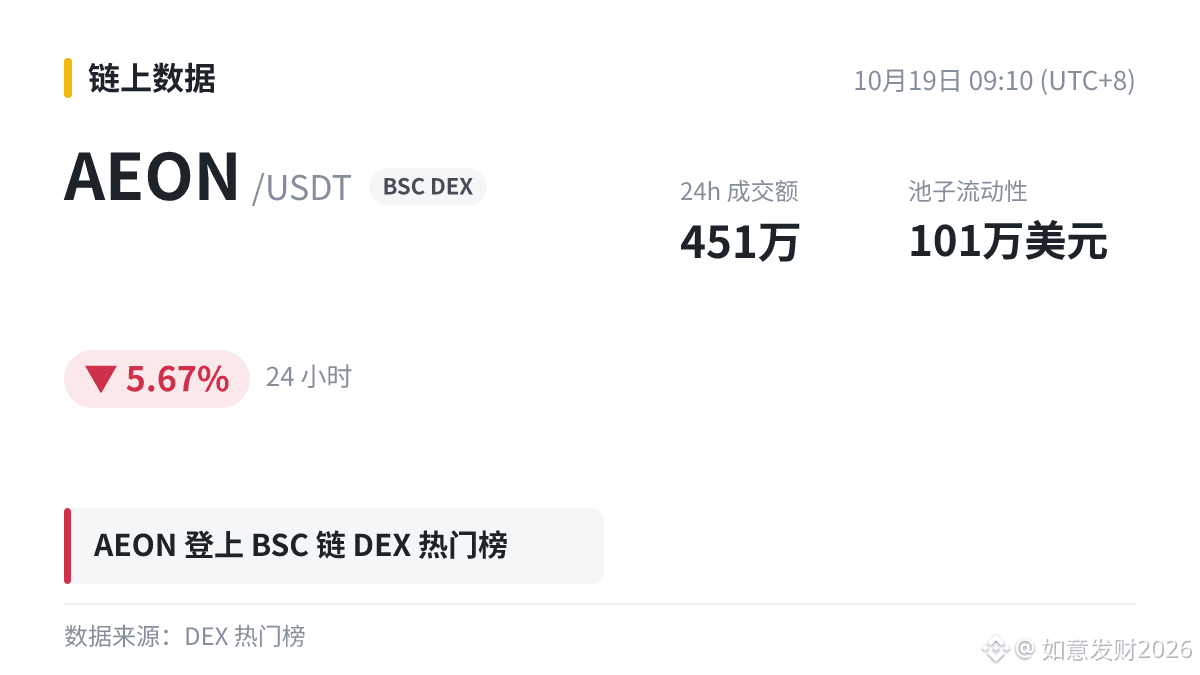
$AEON made it onto the BSC DEX trending list (No. 7), 24h -5.67%.
On-chain hot picks are like a night market: lots of people, lots of stalls, and plenty of new and exciting things—but keep a tight grip on your wallet. Pool liquidity: $1.01 million.
Watching whether the number of trades and buying addresses keep growing is far more reliable than price gains.
#AEON
$AEON made it onto the BSC DEX trending list (No. 7), 24h -5.67%.
On-chain hot picks are like a night market: lots of people, lots of stalls, and plenty of new and exciting things—but keep a tight grip on your wallet. Pool liquidity: $1.01 million.
Watching whether the number of trades and buying addresses keep growing is far more reliable than price gains.
#AEON
On-chain hot picks are like a night market: lots of people, lots of stalls, and plenty of new and exciting things—but keep a tight grip on your wallet. Pool liquidity: $1.01 million.
Watching whether the number of trades and buying addresses keep growing is far more reliable than price gains.
#AEON
64

·
--
$AEON +7.71% | $CYC +7.11% | $ARTX +6.94%
#AEON on BSC is at $0.0388, up +7.71% with $3.9 M volume and a $9.5 M market cap. The climb feels solid for an Alpha token, but thin liquidity could still bite.
CYC on BSC trades at $0.0810, gaining +7.11% on $882.1 K volume and a $12.4 M market cap. Momentum is noticeable, yet a sudden sell‑off isn’t out of the question.
ARTX on BSC sits at $0.1084, rising +6.94% with $262.5 K volume and an $8.5 M market cap. The price jump is respectable, though the modest volume means the rally could wobble.
⚠️ Keep an eye on any abrupt volume drops—they often precede quick reversals in today’s top‑gainer Alpha tokens.
#BinanceAlpha #TopGainers #Write2Earn #Binance
$AEON +7.71% | $CYC +7.11% | $ARTX +6.94%
#AEON on BSC is at $0.0388, up +7.71% with $3.9 M volume and a $9.5 M market cap. The climb feels solid for an Alpha token, but thin liquidity could still bite.
CYC on BSC trades at $0.0810, gaining +7.11% on $882.1 K volume and a $12.4 M market cap. Momentum is noticeable, yet a sudden sell‑off isn’t out of the question.
ARTX on BSC sits at $0.1084, rising +6.94% with $262.5 K volume and an $8.5 M market cap. The price jump is respectable, though the modest volume means the rally could wobble.
⚠️ Keep an eye on any abrupt volume drops—they often precede quick reversals in today’s top‑gainer Alpha tokens.
#BinanceAlpha #TopGainers #Write2Earn #Binance
#AEON on BSC is at $0.0388, up +7.71% with $3.9 M volume and a $9.5 M market cap. The climb feels solid for an Alpha token, but thin liquidity could still bite.
CYC on BSC trades at $0.0810, gaining +7.11% on $882.1 K volume and a $12.4 M market cap. Momentum is noticeable, yet a sudden sell‑off isn’t out of the question.
ARTX on BSC sits at $0.1084, rising +6.94% with $262.5 K volume and an $8.5 M market cap. The price jump is respectable, though the modest volume means the rally could wobble.
⚠️ Keep an eye on any abrupt volume drops—they often precede quick reversals in today’s top‑gainer Alpha tokens.
#BinanceAlpha #TopGainers #Write2Earn #Binance
26

·
--
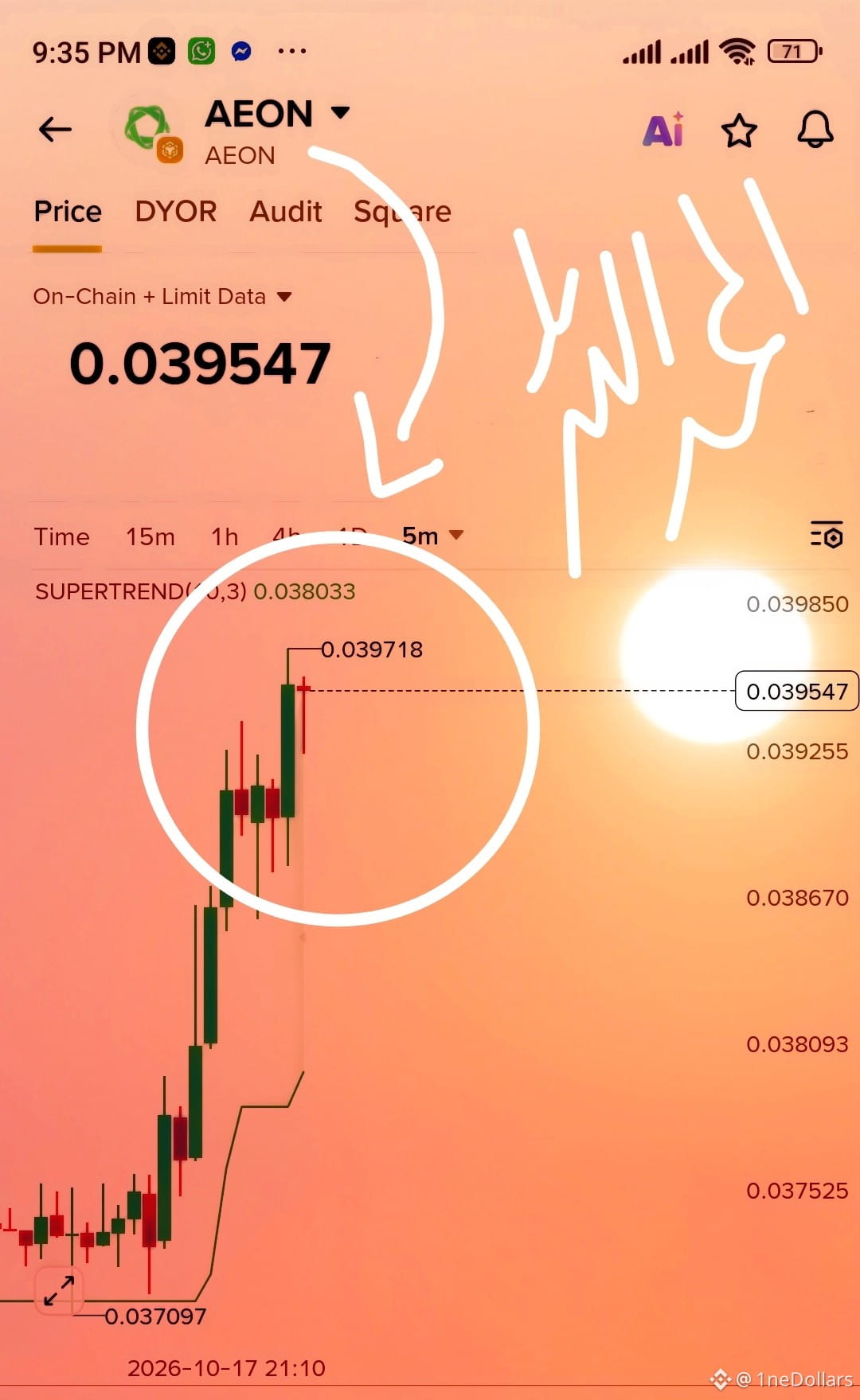
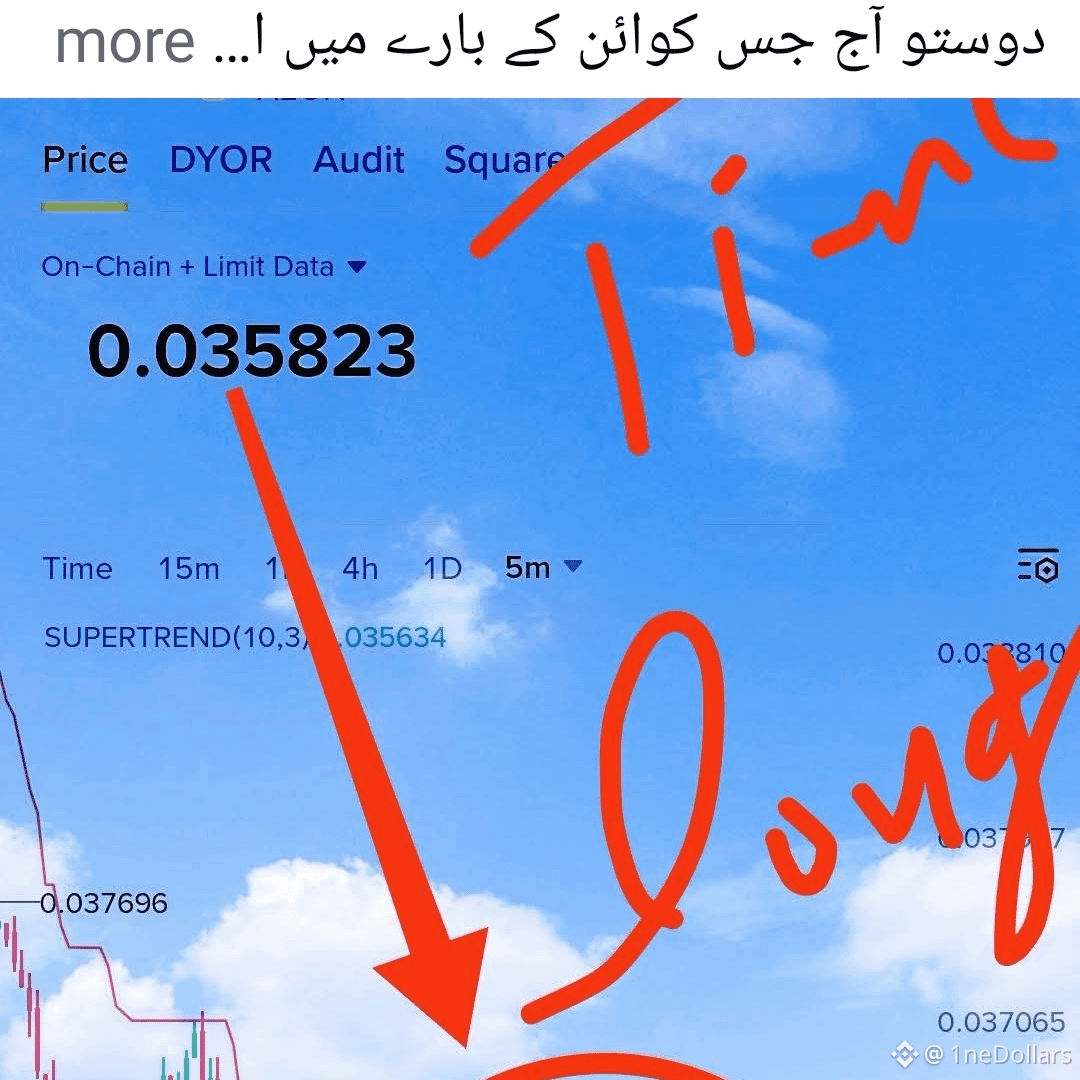
Masha'Allah 💜 Friends, as I recently shared information regarding this $AEON coin, I emphasized one clear point: consider this coin only if you possess patience. For those who do, keep in mind that this entire game is about patience—not greed. As long as the person guiding you on *where* to exercise that patience isn't driven by greed themselves, everything else should work out in your favor, Insha'Allah.
Stay happy and keep smiling! 🤗
#1neDollars
#AEON
#CryptoAnalysis
{alpha}(560x277add739c6e0477616948357af9e79fe1ec9b80)
Masha'Allah 💜 Friends, as I recently shared information regarding this $AEON coin, I emphasized one clear point: consider this coin only if you possess patience. For those who do, keep in mind that this entire game is about patience—not greed. As long as the person guiding you on *where* to exercise that patience isn't driven by greed themselves, everything else should work out in your favor, Insha'Allah.
Stay happy and keep smiling! 🤗
#1neDollars
#AEON
#CryptoAnalysis
Stay happy and keep smiling! 🤗
#1neDollars
#AEON
#CryptoAnalysis
3
1.3k

·
--
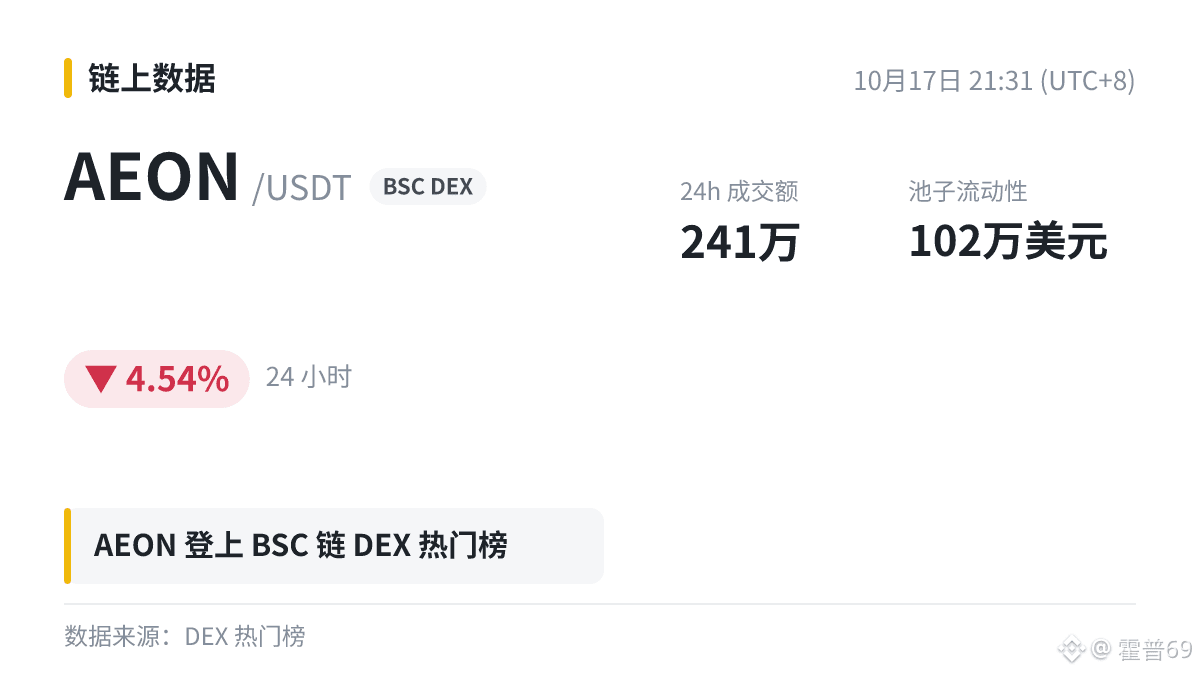
I noticed something:
The trending DEX list on BSC has $AEON , down 4.54% over 24 hours.
What can I say? Before buying on-chain, double-check the address—there are plenty of fake coins with the same name.
If you found this useful, give me a follow so you don’t miss the next post 👆
#AEON
Don’t take what I’m saying as advice.
I noticed something:
The trending DEX list on BSC has $AEON , down 4.54% over 24 hours.
What can I say? Before buying on-chain, double-check the address—there are plenty of fake coins with the same name.
If you found this useful, give me a follow so you don’t miss the next post 👆
#AEON
Don’t take what I’m saying as advice.
The trending DEX list on BSC has $AEON , down 4.54% over 24 hours.
What can I say? Before buying on-chain, double-check the address—there are plenty of fake coins with the same name.
If you found this useful, give me a follow so you don’t miss the next post 👆
#AEON
Don’t take what I’m saying as advice.
5
Log in to explore more content
Join global crypto users on Binance Square
⚡️ Get latest and useful information about crypto.
💬 Trusted by the world’s largest crypto exchange.
👍 Discover real insights from verified creators.
Email / Phone number
Trending Topics
1
#BinancePick
2.9M views
150,602 Discussing
2
#EarningsSeason
5.2M views
25,672 Discussing
3
#AnthropicTTMRevenueGrewAbout1200%
12,328 views
288 Discussing
4
#AnthropicS1ExpectedToday
15,393 views
266 Discussing
5
#SouthKoreaReportedlyWeighsFourthCryptoTaxDelay
22,213 views
394 Discussing
6
#FranklinTempletonFilesForTwoDividendToBitcoinETFs
29,506 views
488 Discussing
7
#StrategyMSTRSurpassesNasdaqInMarketCap
22,916 views
355 Discussing
8
#CanadaProposesStablecoinRedemptionWithin3BusinessDays
1,060 views
34 Discussing
9
#ElectrumWalletBugLetRogueServersStealFunds
25,201 views
438 Discussing
10
#ArgentineCourtDismissesLIBRACaseAgainstMilei
38,395 views
540 Discussing