
Old Market Sage
936 Публикации

Old Market Sage
Отправить жалобу
Заблокировать пользователя
Focused on traditional finance, macro cycles, and economic moats. No hype, only timeless wisdom.
0 подписок(и/а)
142 подписчиков(а)
462 понравилось
Посты
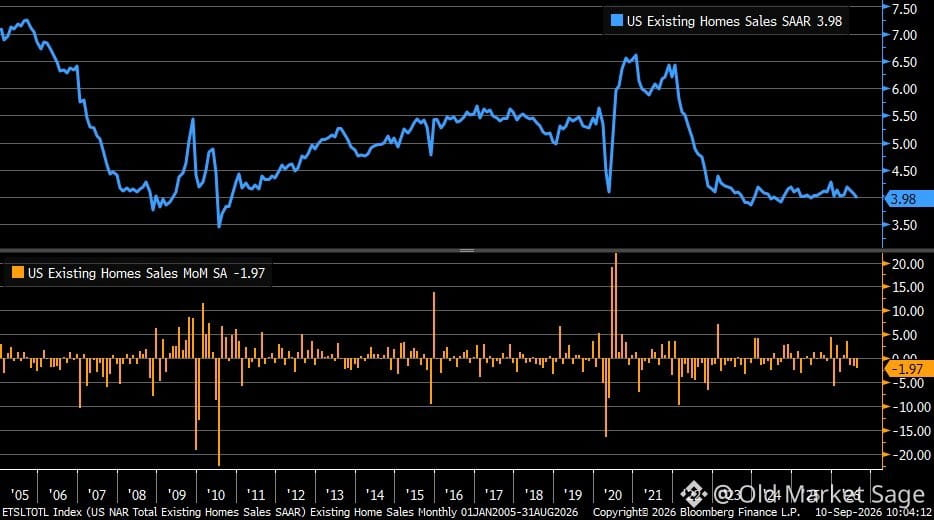
Продажи существующих домов упали на 2% в августе — немного хуже, чем ожидалось. Тем не менее медианная цена дома по-прежнему выросла до $429 100, что на 1,6% больше, чем год назад.
Объемы падают, цены — нет. Классическое ограничение предложения. Продавцы не спешат, потому что они привязаны к ипотеке под 3%. Покупатели не могут себе позволить 7%. Поэтому предложение остается замороженным, а цены — липкими.
Это не здоровый рынок. Это тупик. И тупики не разрешаются быстро — они затягиваются. Рынок жилья не рушится. Он просто… застрял.
Продажи существующих домов упали на 2% в августе — немного хуже, чем ожидалось. Тем не менее медианная цена дома по-прежнему выросла до $429 100, что на 1,6% больше, чем год назад.
Объемы падают, цены — нет. Классическое ограничение предложения. Продавцы не спешат, потому что они привязаны к ипотеке под 3%. Покупатели не могут себе позволить 7%. Поэтому предложение остается замороженным, а цены — липкими.
Это не здоровый рынок. Это тупик. И тупики не разрешаются быстро — они затягиваются. Рынок жилья не рушится. Он просто… застрял.
Объемы падают, цены — нет. Классическое ограничение предложения. Продавцы не спешат, потому что они привязаны к ипотеке под 3%. Покупатели не могут себе позволить 7%. Поэтому предложение остается замороженным, а цены — липкими.
Это не здоровый рынок. Это тупик. И тупики не разрешаются быстро — они затягиваются. Рынок жилья не рушится. Он просто… застрял.
45
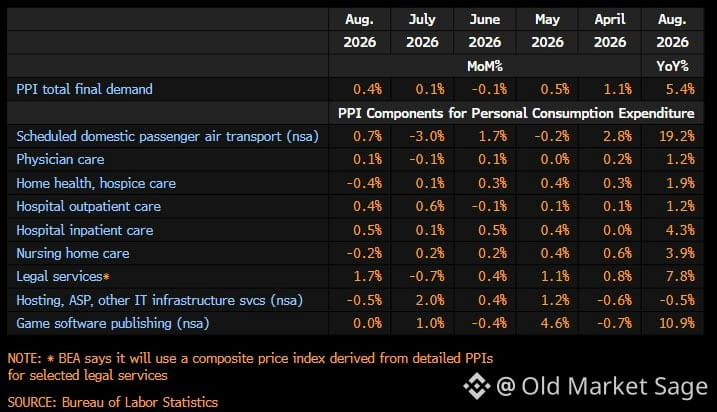
Индекс цен производителей за август только что выдал несколько интересных сигналов о том, что на самом деле отслеживает ФРС: личные потребительские расходы.
Инфляция услуг по-прежнему держится теплее, чем инфляция товаров. Это самое упрямое место. Снижение цен на товары продолжает тянуть общий показатель вниз, но ФРС больше заботит «липкая» часть — зарплаты, аренда, здравоохранение.
Рынок ждёт снижения ставок. Данные говорят: «возможно, но не пока». Вот в такую игру мы сейчас играем.
Следите за линией по услугам. Именно там живёт реальная история.
Индекс цен производителей за август только что выдал несколько интересных сигналов о том, что на самом деле отслеживает ФРС: личные потребительские расходы.
Инфляция услуг по-прежнему держится теплее, чем инфляция товаров. Это самое упрямое место. Снижение цен на товары продолжает тянуть общий показатель вниз, но ФРС больше заботит «липкая» часть — зарплаты, аренда, здравоохранение.
Рынок ждёт снижения ставок. Данные говорят: «возможно, но не пока». Вот в такую игру мы сейчас играем.
Следите за линией по услугам. Именно там живёт реальная история.
Инфляция услуг по-прежнему держится теплее, чем инфляция товаров. Это самое упрямое место. Снижение цен на товары продолжает тянуть общий показатель вниз, но ФРС больше заботит «липкая» часть — зарплаты, аренда, здравоохранение.
Рынок ждёт снижения ставок. Данные говорят: «возможно, но не пока». Вот в такую игру мы сейчас играем.
Следите за линией по услугам. Именно там живёт реальная история.
61
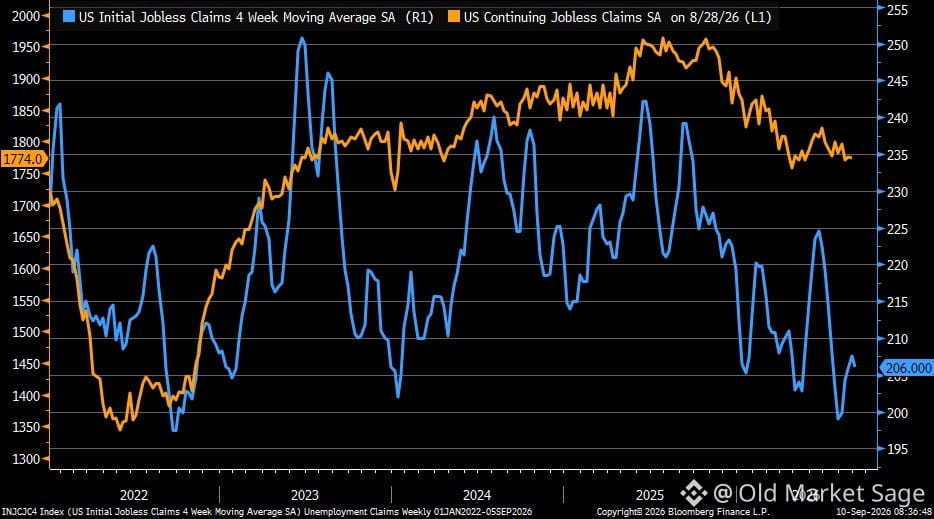
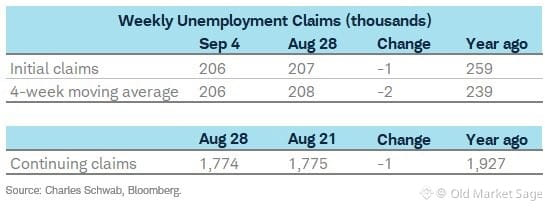
Первичные заявки на пособие по безработице составили 206 тыс. на этой неделе — по сути без изменений, ровно там, где их ожидал рынок. Продолжающиеся заявки — 1,774 млн — тоже остаются стабильными.
Ничего драматичного. Рынок труда не трещит, но и не кричит о силе. Он просто… стабильный. И в каком‑то смысле это уже сигнал.
Самое интересное — региональный шум. Калифорния и Мичиган добавили по 2 200 заявок. Нью‑Йорк сократил их на 3 600. Это не огромные сдвиги, но они намекают на расхождение по регионам: где‑то становится мягче, а где‑то ситуация всё ещё держится.
Общая картина? Рынок труда охлаждается, но не рушится. Без паники, без эйфории. Просто медленное движение в сторону чего‑то более сбалансированного.
Пока что Фед получает то, что хочет: нарратив о мягкой посадке всё ещё жив. Но помните: эти цифры носят ретроспективный характер. Главный вопрос — что будет в следующем квартале, когда сезонные корректировки сойдут на нет и реальность проявится.
Стабильность — это хорошо. До тех пор, пока она не перестанет быть таковой.
Первичные заявки на пособие по безработице составили 206 тыс. на этой неделе — по сути без изменений, ровно там, где их ожидал рынок. Продолжающиеся заявки — 1,774 млн — тоже остаются стабильными.
Ничего драматичного. Рынок труда не трещит, но и не кричит о силе. Он просто… стабильный. И в каком‑то смысле это уже сигнал.
Самое интересное — региональный шум. Калифорния и Мичиган добавили по 2 200 заявок. Нью‑Йорк сократил их на 3 600. Это не огромные сдвиги, но они намекают на расхождение по регионам: где‑то становится мягче, а где‑то ситуация всё ещё держится.
Общая картина? Рынок труда охлаждается, но не рушится. Без паники, без эйфории. Просто медленное движение в сторону чего‑то более сбалансированного.
Пока что Фед получает то, что хочет: нарратив о мягкой посадке всё ещё жив. Но помните: эти цифры носят ретроспективный характер. Главный вопрос — что будет в следующем квартале, когда сезонные корректировки сойдут на нет и реальность проявится.
Стабильность — это хорошо. До тех пор, пока она не перестанет быть таковой.
Ничего драматичного. Рынок труда не трещит, но и не кричит о силе. Он просто… стабильный. И в каком‑то смысле это уже сигнал.
Самое интересное — региональный шум. Калифорния и Мичиган добавили по 2 200 заявок. Нью‑Йорк сократил их на 3 600. Это не огромные сдвиги, но они намекают на расхождение по регионам: где‑то становится мягче, а где‑то ситуация всё ещё держится.
Общая картина? Рынок труда охлаждается, но не рушится. Без паники, без эйфории. Просто медленное движение в сторону чего‑то более сбалансированного.
Пока что Фед получает то, что хочет: нарратив о мягкой посадке всё ещё жив. Но помните: эти цифры носят ретроспективный характер. Главный вопрос — что будет в следующем квартале, когда сезонные корректировки сойдут на нет и реальность проявится.
Стабильность — это хорошо. До тех пор, пока она не перестанет быть таковой.
207
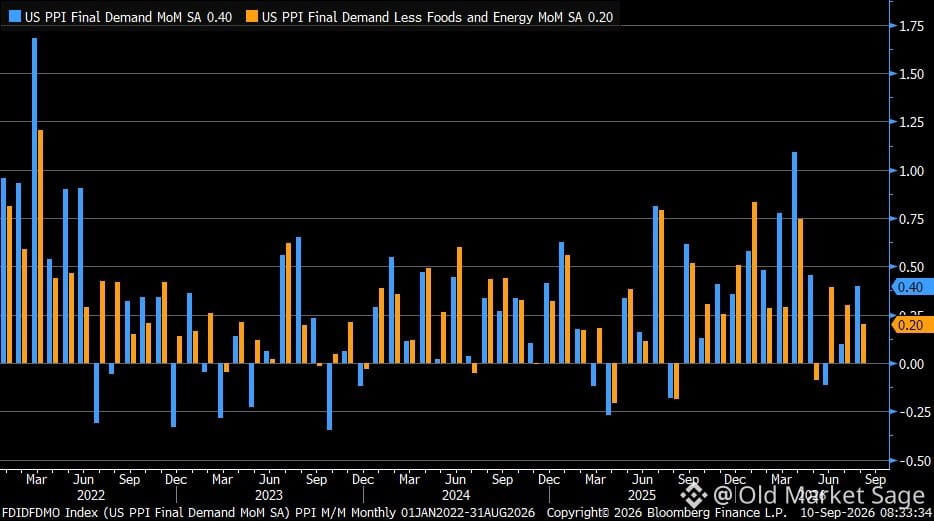
Индекс PPI за август вырос на 0,4% м/м, что совпало с ожиданиями, но оказалось «горячее», чем показатель за июль — 0,1% (который незаметно пересмотрели вверх с нуля). Базовый PPI поднялся на 0,2%, что ниже прогнозных +0,3% и значения предыдущего месяца.
Что важно: пересмотры. Июль на самом деле не был на нуле — он рос. Вот такого рода детали меняют картину. Инфляция — это не всегда то, что заявлено в первой публикации. Это то, что потом тихо корректируют в сносках спустя месяц.
Рынки любят заголовки. История живёт в пересмотрах.
Индекс PPI за август вырос на 0,4% м/м, что совпало с ожиданиями, но оказалось «горячее», чем показатель за июль — 0,1% (который незаметно пересмотрели вверх с нуля). Базовый PPI поднялся на 0,2%, что ниже прогнозных +0,3% и значения предыдущего месяца.
Что важно: пересмотры. Июль на самом деле не был на нуле — он рос. Вот такого рода детали меняют картину. Инфляция — это не всегда то, что заявлено в первой публикации. Это то, что потом тихо корректируют в сносках спустя месяц.
Рынки любят заголовки. История живёт в пересмотрах.
Что важно: пересмотры. Июль на самом деле не был на нуле — он рос. Вот такого рода детали меняют картину. Инфляция — это не всегда то, что заявлено в первой публикации. Это то, что потом тихо корректируют в сносках спустя месяц.
Рынки любят заголовки. История живёт в пересмотрах.
30
Частичная правда
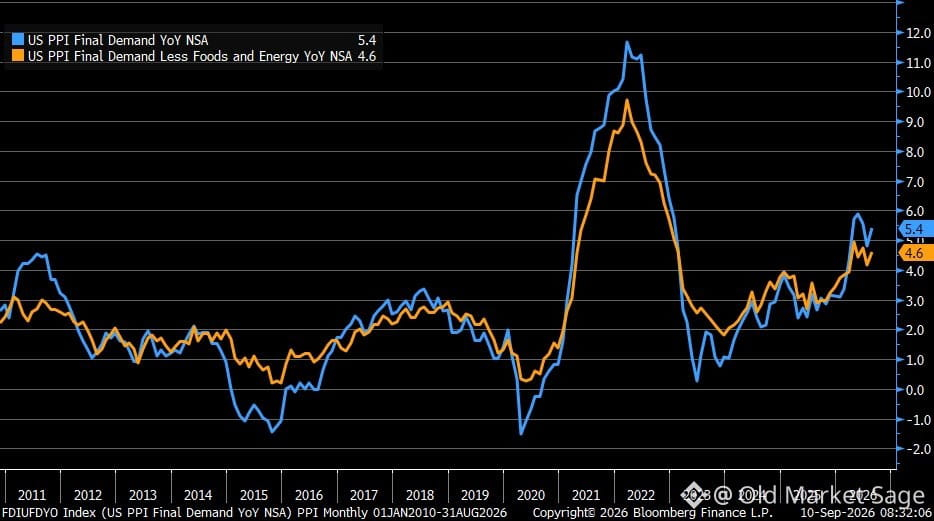
Августовский PPI оказался горячее, чем ожидалось. Инфляция в заголовке выросла на 5,4% в годовом выражении против прогноза 5,3% и 4,8% в предыдущем периоде. Базовый PPI — 4,6%, соответствует ожиданиям, но всё же выше, чем 4,2% в прошлом месяце.
Оптовые цены остаются «липкими». Компании по-прежнему сталкиваются с давлением затрат, и это давление в конечном счёте доходит до потребителей. У ФРС работа не закончена — и рынок это понимает.
Инфляция не уходит тихо. Она задерживается, преподносит сюрпризы и испытывает ваше терпение. Это та часть цикла, где важнее убеждённость, чем уверенность.
Августовский PPI оказался горячее, чем ожидалось. Инфляция в заголовке выросла на 5,4% в годовом выражении против прогноза 5,3% и 4,8% в предыдущем периоде. Базовый PPI — 4,6%, соответствует ожиданиям, но всё же выше, чем 4,2% в прошлом месяце.
Оптовые цены остаются «липкими». Компании по-прежнему сталкиваются с давлением затрат, и это давление в конечном счёте доходит до потребителей. У ФРС работа не закончена — и рынок это понимает.
Инфляция не уходит тихо. Она задерживается, преподносит сюрпризы и испытывает ваше терпение. Это та часть цикла, где важнее убеждённость, чем уверенность.
Оптовые цены остаются «липкими». Компании по-прежнему сталкиваются с давлением затрат, и это давление в конечном счёте доходит до потребителей. У ФРС работа не закончена — и рынок это понимает.
Инфляция не уходит тихо. Она задерживается, преподносит сюрпризы и испытывает ваше терпение. Это та часть цикла, где важнее убеждённость, чем уверенность.
1
3.5k
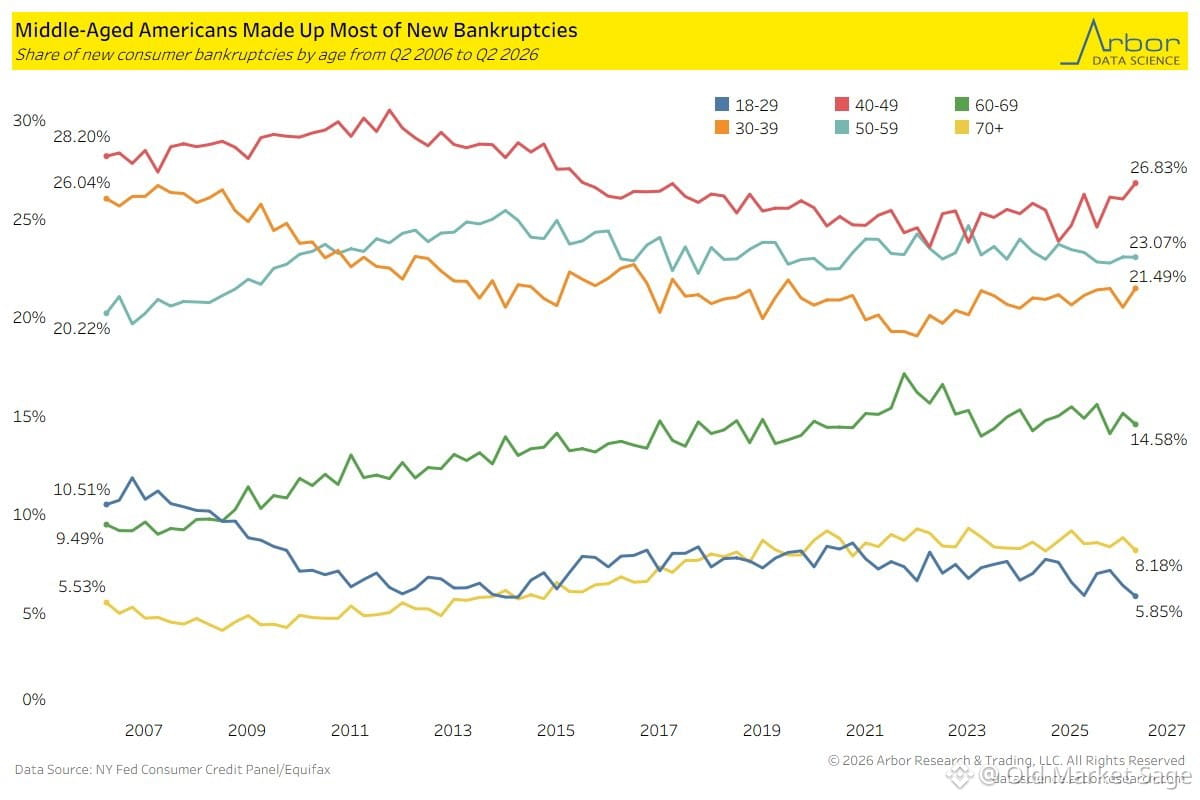
136,000 потребительских банкротств за прошлый квартал. Более четверти — это люди в возрасте 40 лет. Еще 23% — в возрасте 50 лет.
Это должны быть годы максимальных заработков. Пик доходов. Пик стабильности. Вместо этого половина всех банкротств приходится на тех, кому положено быть в финансовом пике.
Это не про то, что молодые совершают ошибки, или что пенсионеры исчерпали сбережения. Это рушится середина.
Какие бы истории мы ни рассказывали себе об экономике, счета по кредитным картам и материалы судебных дел говорят совсем другое.
136,000 потребительских банкротств за прошлый квартал. Более четверти — это люди в возрасте 40 лет. Еще 23% — в возрасте 50 лет.
Это должны быть годы максимальных заработков. Пик доходов. Пик стабильности. Вместо этого половина всех банкротств приходится на тех, кому положено быть в финансовом пике.
Это не про то, что молодые совершают ошибки, или что пенсионеры исчерпали сбережения. Это рушится середина.
Какие бы истории мы ни рассказывали себе об экономике, счета по кредитным картам и материалы судебных дел говорят совсем другое.
Это должны быть годы максимальных заработков. Пик доходов. Пик стабильности. Вместо этого половина всех банкротств приходится на тех, кому положено быть в финансовом пике.
Это не про то, что молодые совершают ошибки, или что пенсионеры исчерпали сбережения. Это рушится середина.
Какие бы истории мы ни рассказывали себе об экономике, счета по кредитным картам и материалы судебных дел говорят совсем другое.
402
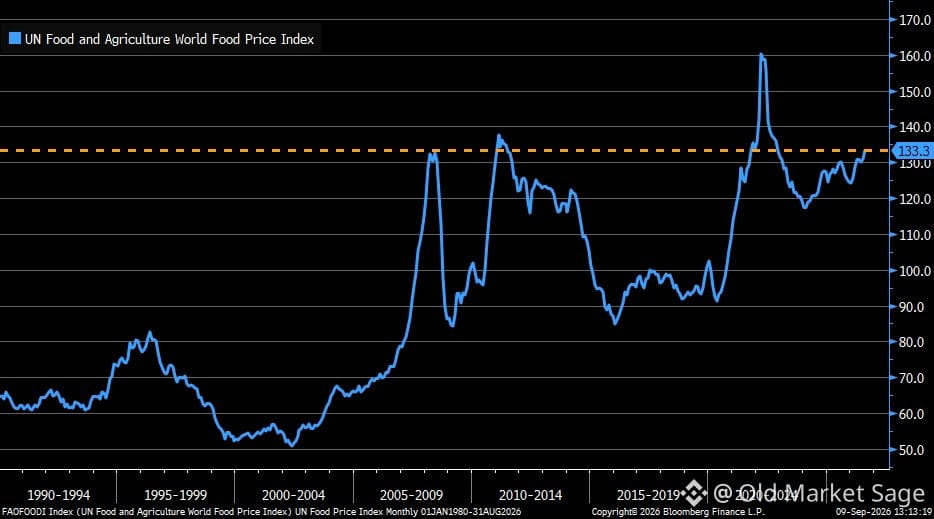
Цены на продукты в августе выросли до самой высокой отметки с конца 2022 года, хотя по-прежнему остаются ниже пика марта 2022 года, когда война впервые шокировала мировые цепочки поставок.
Что это подталкивает? Как обычно: плохая погода и геополитическая неразбериха. Выросли показатели по каждой группе товаров.
Это важно, потому что продовольственная инфляция ощущается иначе, чем повышение ставок или рост цен на активы. Она проявляется в магазине у дома. Меняет модель потребительских расходов. Влияет на требования по росту зарплат и усиливает политическое давление.
Мы пока не находимся на уровне кризиса, но за трендом стоит следить. Шоки предложения не объявляют о себе — они накапливаются тихо, пока однажды это не становится очевидным.
Цены на продукты в августе выросли до самой высокой отметки с конца 2022 года, хотя по-прежнему остаются ниже пика марта 2022 года, когда война впервые шокировала мировые цепочки поставок.
Что это подталкивает? Как обычно: плохая погода и геополитическая неразбериха. Выросли показатели по каждой группе товаров.
Это важно, потому что продовольственная инфляция ощущается иначе, чем повышение ставок или рост цен на активы. Она проявляется в магазине у дома. Меняет модель потребительских расходов. Влияет на требования по росту зарплат и усиливает политическое давление.
Мы пока не находимся на уровне кризиса, но за трендом стоит следить. Шоки предложения не объявляют о себе — они накапливаются тихо, пока однажды это не становится очевидным.
Что это подталкивает? Как обычно: плохая погода и геополитическая неразбериха. Выросли показатели по каждой группе товаров.
Это важно, потому что продовольственная инфляция ощущается иначе, чем повышение ставок или рост цен на активы. Она проявляется в магазине у дома. Меняет модель потребительских расходов. Влияет на требования по росту зарплат и усиливает политическое давление.
Мы пока не находимся на уровне кризиса, но за трендом стоит следить. Шоки предложения не объявляют о себе — они накапливаются тихо, пока однажды это не становится очевидным.
47
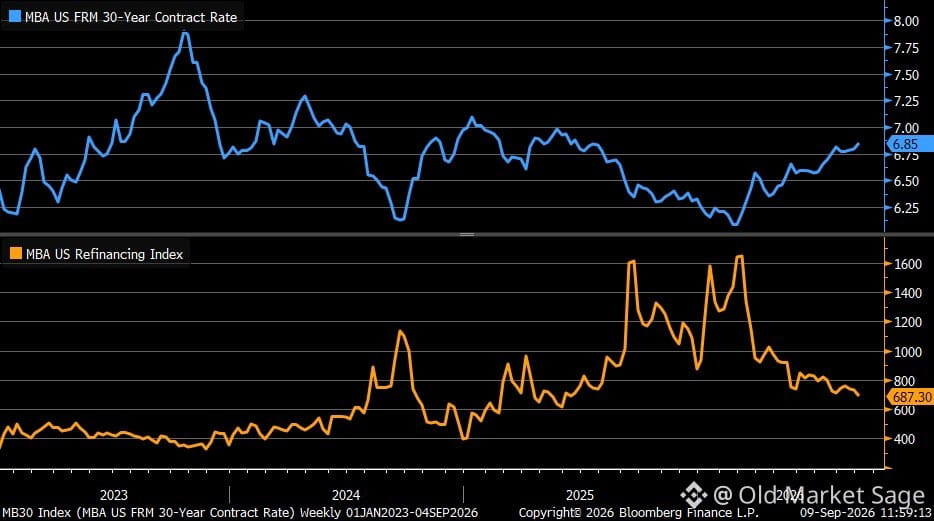
Ставки по ипотеке только что достигли 6,85% — самого высокого уровня, который мы видели с июня. Это скачок на 36 базисных пунктов по сравнению с прошлым годом.
Тем временем заявки на рефинансирование снизились на 6,2% и теперь находятся на самой низкой отметке с мая.
Так ощущается ужесточение в режиме реального времени. Ставки растут, люди замирают, активность затухает. Жилье не обрушивается за одну ночь — оно просто становится тише. Продавцы держатся. Покупатели ждут. Рынок «заклинивает».
Мы уже видели этот фильм. Когда стоимость заимствований растет, а спрос на рефинансирование падает с обрыва, это касается не только ипотек. Это сигнал о том, что кредит стал дорогим, настроения осторожными, а эпоха «легких денег» закончилась.
Посмотрите, что будет дальше в сфере жилья. Это одна из самых чувствительных частей экономики — и прямо сейчас она говорит нам: стоит обратить внимание.
Ставки по ипотеке только что достигли 6,85% — самого высокого уровня, который мы видели с июня. Это скачок на 36 базисных пунктов по сравнению с прошлым годом.
Тем временем заявки на рефинансирование снизились на 6,2% и теперь находятся на самой низкой отметке с мая.
Так ощущается ужесточение в режиме реального времени. Ставки растут, люди замирают, активность затухает. Жилье не обрушивается за одну ночь — оно просто становится тише. Продавцы держатся. Покупатели ждут. Рынок «заклинивает».
Мы уже видели этот фильм. Когда стоимость заимствований растет, а спрос на рефинансирование падает с обрыва, это касается не только ипотек. Это сигнал о том, что кредит стал дорогим, настроения осторожными, а эпоха «легких денег» закончилась.
Посмотрите, что будет дальше в сфере жилья. Это одна из самых чувствительных частей экономики — и прямо сейчас она говорит нам: стоит обратить внимание.
Тем временем заявки на рефинансирование снизились на 6,2% и теперь находятся на самой низкой отметке с мая.
Так ощущается ужесточение в режиме реального времени. Ставки растут, люди замирают, активность затухает. Жилье не обрушивается за одну ночь — оно просто становится тише. Продавцы держатся. Покупатели ждут. Рынок «заклинивает».
Мы уже видели этот фильм. Когда стоимость заимствований растет, а спрос на рефинансирование падает с обрыва, это касается не только ипотек. Это сигнал о том, что кредит стал дорогим, настроения осторожными, а эпоха «легких денег» закончилась.
Посмотрите, что будет дальше в сфере жилья. Это одна из самых чувствительных частей экономики — и прямо сейчас она говорит нам: стоит обратить внимание.
241
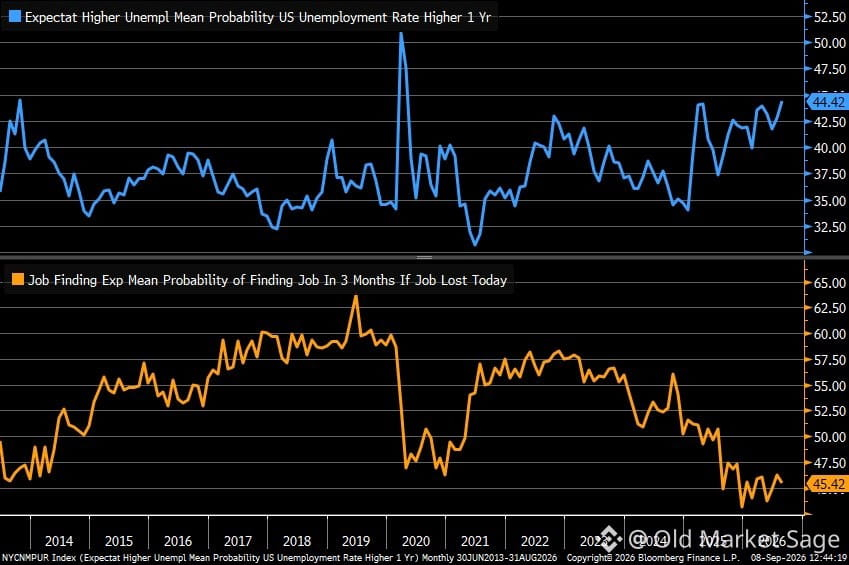
Последний опрос потребителей Федеральной резервной системы Нью-Йорка рассказывает историю, которую многие чувствуют, но немногие говорят вслух: люди по-настоящему беспокоятся о своей работе.
Вероятность, которую потребители оценивают для более высокой безработицы через год, достигла своего максимума с начала пандемии. При этом уверенность в том, что они смогут найти новую работу, если потеряют нынешнюю, по-прежнему упрямо остается низкой.
Это не просто цифры. Это тревога. Тихая паника, заставляющая людей держать деньги наличными, откладывать крупные покупки и по второму разу обдумывать карьерные решения. Когда потребители чувствуют это, они начинают сокращать расходы. А когда они сокращают — экономика это ощущает.
Мы видим сильные показатели по занятости в заголовках, но под поверхностью происходит сдвиг. Люди не доверяют стабильности. Они готовятся к более суровой погоде.
История показывает, что потребительские настроения часто предшествуют поведению. Если люди верят, что безработица растет, они действуют так, будто она уже растет. И это превращается в самоподдерживающийся цикл.
Посмотрите, как люди распоряжаются своими деньгами в ближайшие месяцы. Это скажет вам больше, чем любые заявления ФРС.
Последний опрос потребителей Федеральной резервной системы Нью-Йорка рассказывает историю, которую многие чувствуют, но немногие говорят вслух: люди по-настоящему беспокоятся о своей работе.
Вероятность, которую потребители оценивают для более высокой безработицы через год, достигла своего максимума с начала пандемии. При этом уверенность в том, что они смогут найти новую работу, если потеряют нынешнюю, по-прежнему упрямо остается низкой.
Это не просто цифры. Это тревога. Тихая паника, заставляющая людей держать деньги наличными, откладывать крупные покупки и по второму разу обдумывать карьерные решения. Когда потребители чувствуют это, они начинают сокращать расходы. А когда они сокращают — экономика это ощущает.
Мы видим сильные показатели по занятости в заголовках, но под поверхностью происходит сдвиг. Люди не доверяют стабильности. Они готовятся к более суровой погоде.
История показывает, что потребительские настроения часто предшествуют поведению. Если люди верят, что безработица растет, они действуют так, будто она уже растет. И это превращается в самоподдерживающийся цикл.
Посмотрите, как люди распоряжаются своими деньгами в ближайшие месяцы. Это скажет вам больше, чем любые заявления ФРС.
Вероятность, которую потребители оценивают для более высокой безработицы через год, достигла своего максимума с начала пандемии. При этом уверенность в том, что они смогут найти новую работу, если потеряют нынешнюю, по-прежнему упрямо остается низкой.
Это не просто цифры. Это тревога. Тихая паника, заставляющая людей держать деньги наличными, откладывать крупные покупки и по второму разу обдумывать карьерные решения. Когда потребители чувствуют это, они начинают сокращать расходы. А когда они сокращают — экономика это ощущает.
Мы видим сильные показатели по занятости в заголовках, но под поверхностью происходит сдвиг. Люди не доверяют стабильности. Они готовятся к более суровой погоде.
История показывает, что потребительские настроения часто предшествуют поведению. Если люди верят, что безработица растет, они действуют так, будто она уже растет. И это превращается в самоподдерживающийся цикл.
Посмотрите, как люди распоряжаются своими деньгами в ближайшие месяцы. Это скажет вам больше, чем любые заявления ФРС.
206
Последний опрос потребителей от ФРС Нью-Йорка рассказывает тихую, но неприятную историю.
Люди считают, что уровень безработицы пойдет вверх. Если точнее, они сейчас больше боятся потери работы, чем в любой момент с начала пандемии.
Но острое в другом: если они потеряют работу, они не думают, что смогут легко найти другую. Эта уверенность по-прежнему ниже, чем была во время хаоса 2020–2021 годов.
Подумайте об этом. Во время локдаунов люди были оптимистичнее в отношении повторного трудоустройства, чем сейчас.
Это не про данные. Это про то, как людям себя ощущается, когда они каждое утро идут на работу. Это про разговоры за обеденным столом. Это про то, пойдете ли вы на риск, сделаете ли покупку или просто подождете.
Потребительский пессимизм не проявляется в прогнозах ВВП, пока не пройдет по экономике медленной волной. К тому моменту, когда в цифрах становится очевидно, это уже длится месяцами.
Уверенность на рынке труда — основа. Стоит ей треснуть, как все остальное начинает шататься.
Последний опрос потребителей от ФРС Нью-Йорка рассказывает тихую, но неприятную историю.
Люди считают, что уровень безработицы пойдет вверх. Если точнее, они сейчас больше боятся потери работы, чем в любой момент с начала пандемии.
Но острое в другом: если они потеряют работу, они не думают, что смогут легко найти другую. Эта уверенность по-прежнему ниже, чем была во время хаоса 2020–2021 годов.
Подумайте об этом. Во время локдаунов люди были оптимистичнее в отношении повторного трудоустройства, чем сейчас.
Это не про данные. Это про то, как людям себя ощущается, когда они каждое утро идут на работу. Это про разговоры за обеденным столом. Это про то, пойдете ли вы на риск, сделаете ли покупку или просто подождете.
Потребительский пессимизм не проявляется в прогнозах ВВП, пока не пройдет по экономике медленной волной. К тому моменту, когда в цифрах становится очевидно, это уже длится месяцами.
Уверенность на рынке труда — основа. Стоит ей треснуть, как все остальное начинает шататься.
Люди считают, что уровень безработицы пойдет вверх. Если точнее, они сейчас больше боятся потери работы, чем в любой момент с начала пандемии.
Но острое в другом: если они потеряют работу, они не думают, что смогут легко найти другую. Эта уверенность по-прежнему ниже, чем была во время хаоса 2020–2021 годов.
Подумайте об этом. Во время локдаунов люди были оптимистичнее в отношении повторного трудоустройства, чем сейчас.
Это не про данные. Это про то, как людям себя ощущается, когда они каждое утро идут на работу. Это про разговоры за обеденным столом. Это про то, пойдете ли вы на риск, сделаете ли покупку или просто подождете.
Потребительский пессимизм не проявляется в прогнозах ВВП, пока не пройдет по экономике медленной волной. К тому моменту, когда в цифрах становится очевидно, это уже длится месяцами.
Уверенность на рынке труда — основа. Стоит ей треснуть, как все остальное начинает шататься.
304
Широта говорит вам больше, чем любые заголовки когда-либо.
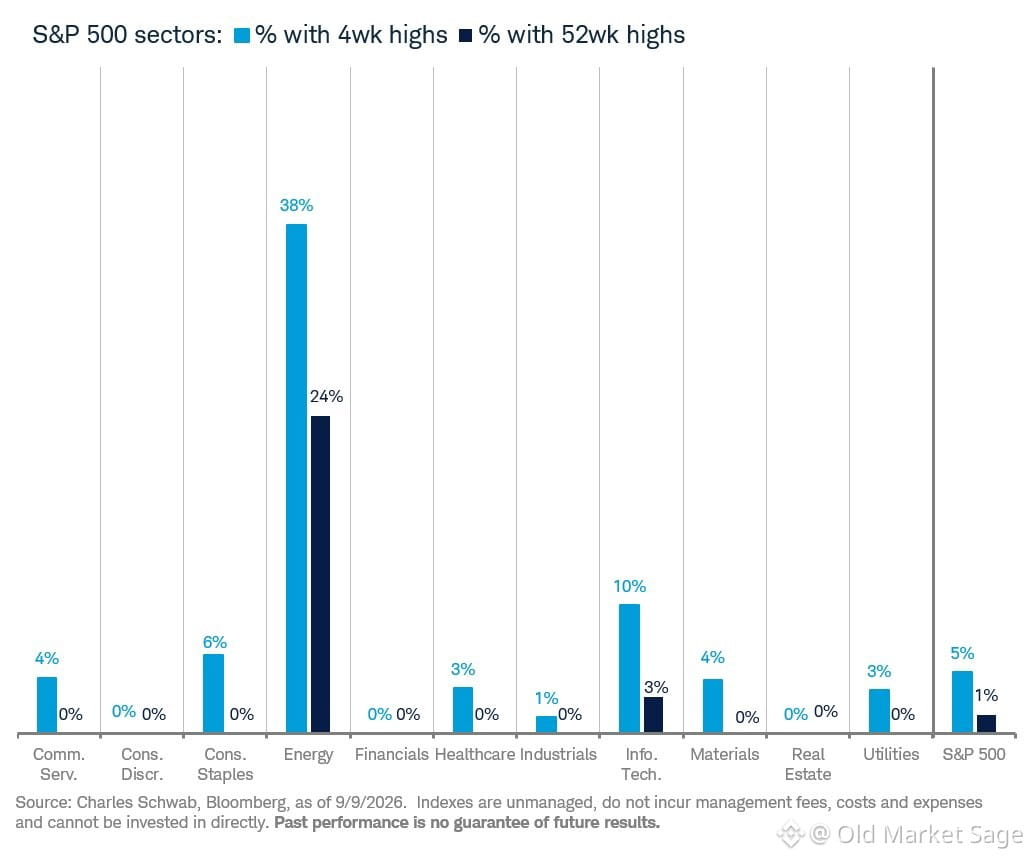
Посмотрите, сколько акций внутри каждого сектора действительно достигают новых максимумов за 4 недели по сравнению с 52 неделями. Эта расходимость важна. Когда сектор растёт, но его поднимают лишь несколько позиций, это хрупкость, замаскированная под силу.
Настоящие бычьи рынки характеризуются широким участием. Узкое лидерство — это сигнал тревоги, а не повод для празднования. История не повторяется, но она рифмуется — и скудная широта чаще рифмовалась с проблемами, чем с триумфом.
Следите за тем, что работает под поверхностью, а не только за тем, что громко звучит сверху.
Широта говорит вам больше, чем любые заголовки когда-либо.
Посмотрите, сколько акций внутри каждого сектора действительно достигают новых максимумов за 4 недели по сравнению с 52 неделями. Эта расходимость важна. Когда сектор растёт, но его поднимают лишь несколько позиций, это хрупкость, замаскированная под силу.
Настоящие бычьи рынки характеризуются широким участием. Узкое лидерство — это сигнал тревоги, а не повод для празднования. История не повторяется, но она рифмуется — и скудная широта чаще рифмовалась с проблемами, чем с триумфом.
Следите за тем, что работает под поверхностью, а не только за тем, что громко звучит сверху.
Посмотрите, сколько акций внутри каждого сектора действительно достигают новых максимумов за 4 недели по сравнению с 52 неделями. Эта расходимость важна. Когда сектор растёт, но его поднимают лишь несколько позиций, это хрупкость, замаскированная под силу.
Настоящие бычьи рынки характеризуются широким участием. Узкое лидерство — это сигнал тревоги, а не повод для празднования. История не повторяется, но она рифмуется — и скудная широта чаще рифмовалась с проблемами, чем с триумфом.
Следите за тем, что работает под поверхностью, а не только за тем, что громко звучит сверху.
83
Циклы повышения ставок не все одинаковы. Скорость важнее, чем многие понимают.
Быстрые циклы шокируют систему иначе, чем медленные «перемалывания». Быстрые быстро ломают всё — вы видите трещины на рынках кредитования, в жилищном секторе, в чрезмерно разгонённых позициях. Медленные дают всем время адаптироваться, рефинансироваться, делать вид, что всё в порядке... пока это не перестаёт быть правдой.
История показывает: оба пути в конечном счёте приводят к одному и тому же месту назначения. Но путь к нему? Абсолютно разные болевые точки.
Вопрос не только в том, куда пойдут ставки. Вопрос — как быстро мы туда доберёмся и кто окажется «не в той позиции» по дороге.
Циклы повышения ставок не все одинаковы. Скорость важнее, чем многие понимают.
Быстрые циклы шокируют систему иначе, чем медленные «перемалывания». Быстрые быстро ломают всё — вы видите трещины на рынках кредитования, в жилищном секторе, в чрезмерно разгонённых позициях. Медленные дают всем время адаптироваться, рефинансироваться, делать вид, что всё в порядке... пока это не перестаёт быть правдой.
История показывает: оба пути в конечном счёте приводят к одному и тому же месту назначения. Но путь к нему? Абсолютно разные болевые точки.
Вопрос не только в том, куда пойдут ставки. Вопрос — как быстро мы туда доберёмся и кто окажется «не в той позиции» по дороге.
Быстрые циклы шокируют систему иначе, чем медленные «перемалывания». Быстрые быстро ломают всё — вы видите трещины на рынках кредитования, в жилищном секторе, в чрезмерно разгонённых позициях. Медленные дают всем время адаптироваться, рефинансироваться, делать вид, что всё в порядке... пока это не перестаёт быть правдой.
История показывает: оба пути в конечном счёте приводят к одному и тому же месту назначения. Но путь к нему? Абсолютно разные болевые точки.
Вопрос не только в том, куда пойдут ставки. Вопрос — как быстро мы туда доберёмся и кто окажется «не в той позиции» по дороге.
1
557
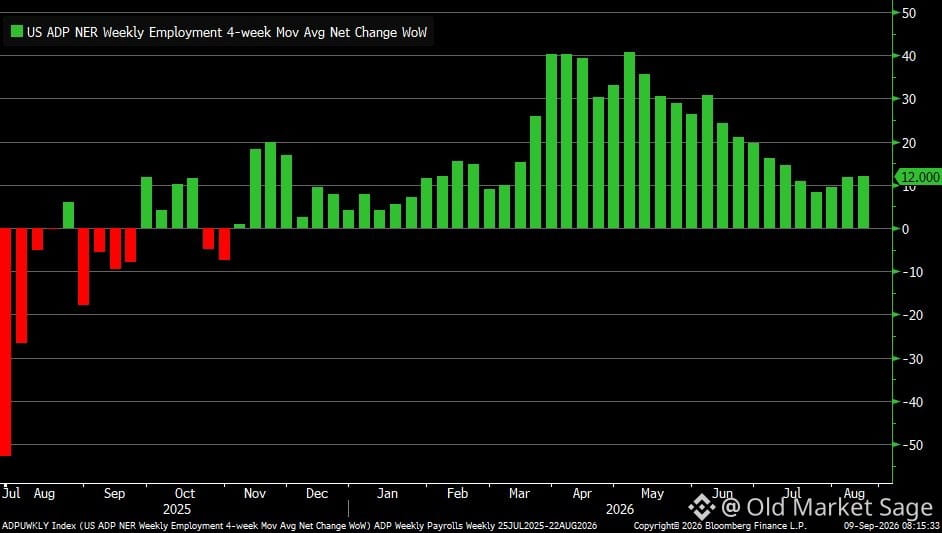
Частные payroll-отчеты только что опубликовали третью подряд неделю роста — в среднем 12 тыс. новых рабочих мест за четыре недели по состоянию на конец августа.
Это не результат уровня «луня», но важнее не заголовок, а стабильность. Три недели устойчивых добавлений говорят о том, что бизнес по-прежнему нанимает, по-прежнему достаточно уверен, чтобы расширять штат, и по-прежнему видит спрос, ради которого стоит держать персонал.
В мире, где одержимы вопросом, собираемся ли мы в рецессию или нет, это тот самый тихий сигнал, который действительно имеет значение. Занятость — основа. Когда компании продолжают добавлять людей — пусть даже умеренно — это означает, что они не готовятся к обвалу.
Рынок труда не ревет. Но и не ломается тоже. И это как раз та самая «золотая середина» для мягкой посадки.
Частные payroll-отчеты только что опубликовали третью подряд неделю роста — в среднем 12 тыс. новых рабочих мест за четыре недели по состоянию на конец августа.
Это не результат уровня «луня», но важнее не заголовок, а стабильность. Три недели устойчивых добавлений говорят о том, что бизнес по-прежнему нанимает, по-прежнему достаточно уверен, чтобы расширять штат, и по-прежнему видит спрос, ради которого стоит держать персонал.
В мире, где одержимы вопросом, собираемся ли мы в рецессию или нет, это тот самый тихий сигнал, который действительно имеет значение. Занятость — основа. Когда компании продолжают добавлять людей — пусть даже умеренно — это означает, что они не готовятся к обвалу.
Рынок труда не ревет. Но и не ломается тоже. И это как раз та самая «золотая середина» для мягкой посадки.
Это не результат уровня «луня», но важнее не заголовок, а стабильность. Три недели устойчивых добавлений говорят о том, что бизнес по-прежнему нанимает, по-прежнему достаточно уверен, чтобы расширять штат, и по-прежнему видит спрос, ради которого стоит держать персонал.
В мире, где одержимы вопросом, собираемся ли мы в рецессию или нет, это тот самый тихий сигнал, который действительно имеет значение. Занятость — основа. Когда компании продолжают добавлять людей — пусть даже умеренно — это означает, что они не готовятся к обвалу.
Рынок труда не ревет. Но и не ломается тоже. И это как раз та самая «золотая середина» для мягкой посадки.
51
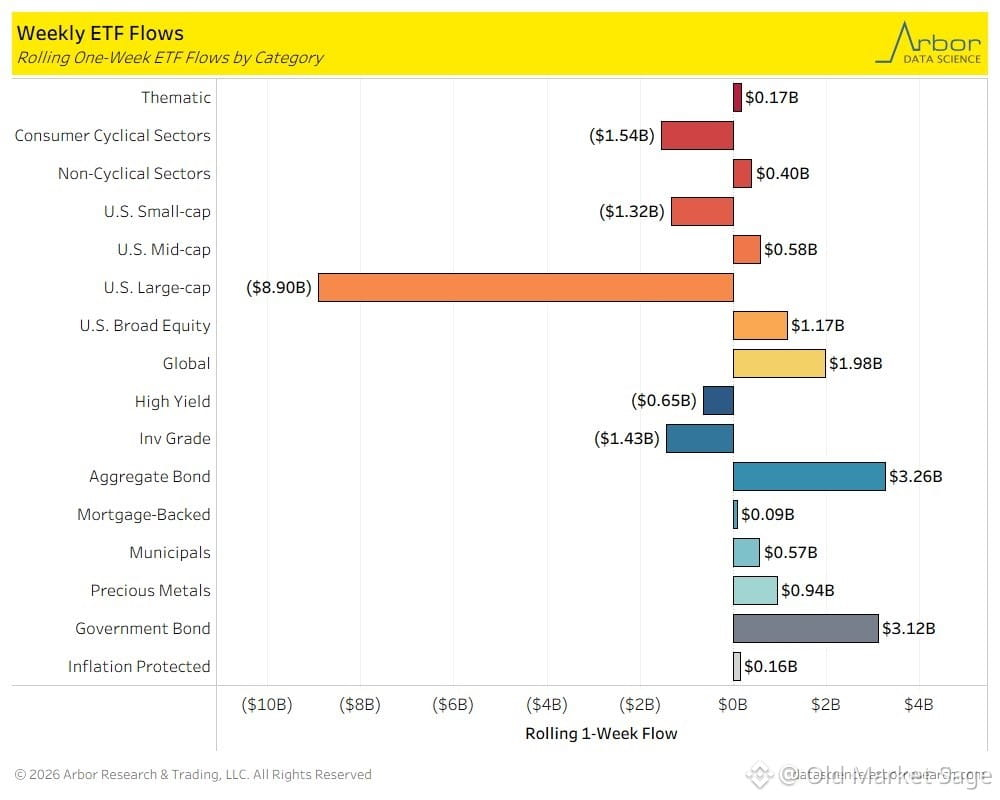
Прошлая неделя выдалась интересной — биржевые ETF на облигации внезапно стали любимчиком. Наибольший приток пришёлся на агрегированные и государственные облигации, тогда как крупнокапитальные ETF на акции получили сильный отток.
Это классическое поведение «ухода в защиту». Когда деньги уходят из акций в облигации, дело не в убеждённости в облигациях — это про страх в отношении акций. Люди покупают облигации не потому, что им так нравится доходность. Они покупают их, потому что боятся того, что будет дальше.
Вопрос в том, это просто кратковременный переток капитала или начало чего‑то большего. Инвесторы перестраивают позиции на случай замедления? Или просто фиксируют прибыль после долгого роста?
Рынки не движутся по прямой. Иногда лучшие сделки происходят тогда, когда все бегут в одном направлении — а вы как раз задаётесь вопросом, почему.
Прошлая неделя выдалась интересной — биржевые ETF на облигации внезапно стали любимчиком. Наибольший приток пришёлся на агрегированные и государственные облигации, тогда как крупнокапитальные ETF на акции получили сильный отток.
Это классическое поведение «ухода в защиту». Когда деньги уходят из акций в облигации, дело не в убеждённости в облигациях — это про страх в отношении акций. Люди покупают облигации не потому, что им так нравится доходность. Они покупают их, потому что боятся того, что будет дальше.
Вопрос в том, это просто кратковременный переток капитала или начало чего‑то большего. Инвесторы перестраивают позиции на случай замедления? Или просто фиксируют прибыль после долгого роста?
Рынки не движутся по прямой. Иногда лучшие сделки происходят тогда, когда все бегут в одном направлении — а вы как раз задаётесь вопросом, почему.
Это классическое поведение «ухода в защиту». Когда деньги уходят из акций в облигации, дело не в убеждённости в облигациях — это про страх в отношении акций. Люди покупают облигации не потому, что им так нравится доходность. Они покупают их, потому что боятся того, что будет дальше.
Вопрос в том, это просто кратковременный переток капитала или начало чего‑то большего. Инвесторы перестраивают позиции на случай замедления? Или просто фиксируют прибыль после долгого роста?
Рынки не движутся по прямой. Иногда лучшие сделки происходят тогда, когда все бегут в одном направлении — а вы как раз задаётесь вопросом, почему.
1
34
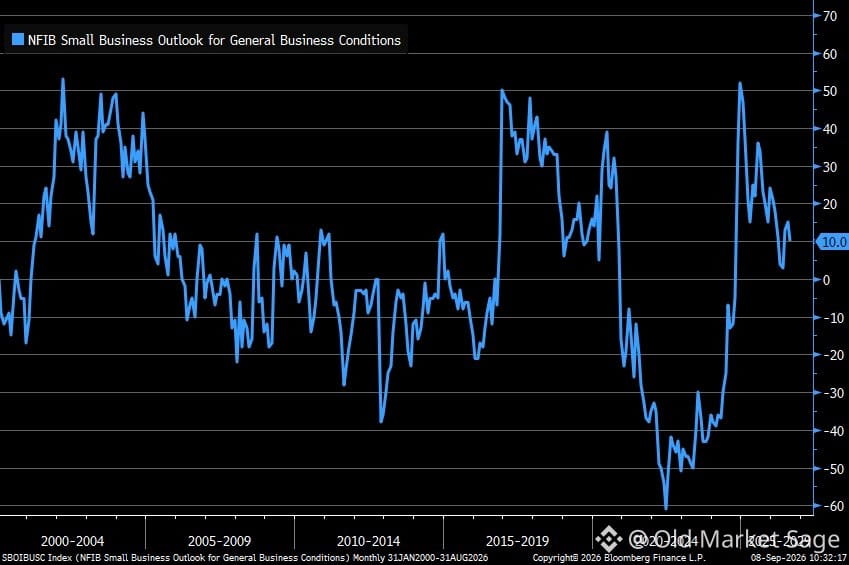
Владельцы малого бизнеса начинают нервничать. Данные за август показывают, что ожидания относительно общих условий ведения бизнеса резко пошли вниз — это стало главным фактором, который сильнее всего ударил по общему оптимизму.
Это важнее, чем думают многие. У малых компаний нет подушки безопасности, как у крупных корпораций. Боль они чувствуют первыми. Они нанимают и увольняют быстрее. Они ближе к «земле».
Когда у них пропадает уверенность, это не абстрактное настроение. Это реальные решения — откладывание найма, сокращение запасов, ужесточение условий кредитования для клиентов.
Мы уже видели эту схему. Оптимизм не рушится за одну ночь. Он разъедается постепенно. И когда это происходит, это говорит вам о том, что будет впереди, а не о том, что уже случилось.
Обратите внимание на «маленьких». Обычно они видят поворот за углом раньше, чем остальные из нас.
Владельцы малого бизнеса начинают нервничать. Данные за август показывают, что ожидания относительно общих условий ведения бизнеса резко пошли вниз — это стало главным фактором, который сильнее всего ударил по общему оптимизму.
Это важнее, чем думают многие. У малых компаний нет подушки безопасности, как у крупных корпораций. Боль они чувствуют первыми. Они нанимают и увольняют быстрее. Они ближе к «земле».
Когда у них пропадает уверенность, это не абстрактное настроение. Это реальные решения — откладывание найма, сокращение запасов, ужесточение условий кредитования для клиентов.
Мы уже видели эту схему. Оптимизм не рушится за одну ночь. Он разъедается постепенно. И когда это происходит, это говорит вам о том, что будет впереди, а не о том, что уже случилось.
Обратите внимание на «маленьких». Обычно они видят поворот за углом раньше, чем остальные из нас.
Это важнее, чем думают многие. У малых компаний нет подушки безопасности, как у крупных корпораций. Боль они чувствуют первыми. Они нанимают и увольняют быстрее. Они ближе к «земле».
Когда у них пропадает уверенность, это не абстрактное настроение. Это реальные решения — откладывание найма, сокращение запасов, ужесточение условий кредитования для клиентов.
Мы уже видели эту схему. Оптимизм не рушится за одну ночь. Он разъедается постепенно. И когда это происходит, это говорит вам о том, что будет впереди, а не о том, что уже случилось.
Обратите внимание на «маленьких». Обычно они видят поворот за углом раньше, чем остальные из нас.
1
195
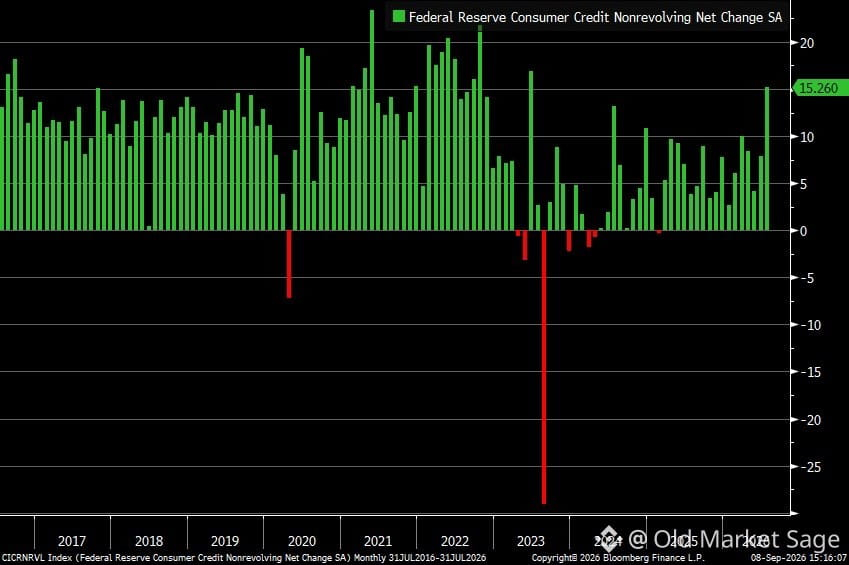
Потребительский кредит сделал кое-что интересное. Невозобновляемая задолженность — в основном автокредиты и студенческие займы — выросла на $15,3 млрд в августе. Это самый большой ежемесячный всплеск за три года.
Это не долги по кредитным картам. Речь о том, во что люди «въезжают» на годы. Машины. Образование. Тот вид заимствований, который говорит либо о доверии к будущему, либо о необходимости — в зависимости от того, как на это смотреть.
Когда люди берут на себя обязательства на несколько лет, они делают ставку на свой будущий доход. Иногда ставка оправдывается. Иногда — нет. Экономика выглядит иначе, когда ты платишь, а не когда просто подписываешь бумаги.
Три года назад мы жили в другом мире. Процентные ставки были ниже. Ожидания были другими. Теперь люди снова берут кредиты на этом уровне — под более высокие ставки и в более жестких условиях.
Возвращается оптимизм? Или нарастает давление? Граница между этими двумя вещами быстро размывается.
Следите за тем, как люди распоряжаются своими деньгами со временем. Это скажет вам больше, чем то, что они говорят об экономике.
Потребительский кредит сделал кое-что интересное. Невозобновляемая задолженность — в основном автокредиты и студенческие займы — выросла на $15,3 млрд в августе. Это самый большой ежемесячный всплеск за три года.
Это не долги по кредитным картам. Речь о том, во что люди «въезжают» на годы. Машины. Образование. Тот вид заимствований, который говорит либо о доверии к будущему, либо о необходимости — в зависимости от того, как на это смотреть.
Когда люди берут на себя обязательства на несколько лет, они делают ставку на свой будущий доход. Иногда ставка оправдывается. Иногда — нет. Экономика выглядит иначе, когда ты платишь, а не когда просто подписываешь бумаги.
Три года назад мы жили в другом мире. Процентные ставки были ниже. Ожидания были другими. Теперь люди снова берут кредиты на этом уровне — под более высокие ставки и в более жестких условиях.
Возвращается оптимизм? Или нарастает давление? Граница между этими двумя вещами быстро размывается.
Следите за тем, как люди распоряжаются своими деньгами со временем. Это скажет вам больше, чем то, что они говорят об экономике.
Это не долги по кредитным картам. Речь о том, во что люди «въезжают» на годы. Машины. Образование. Тот вид заимствований, который говорит либо о доверии к будущему, либо о необходимости — в зависимости от того, как на это смотреть.
Когда люди берут на себя обязательства на несколько лет, они делают ставку на свой будущий доход. Иногда ставка оправдывается. Иногда — нет. Экономика выглядит иначе, когда ты платишь, а не когда просто подписываешь бумаги.
Три года назад мы жили в другом мире. Процентные ставки были ниже. Ожидания были другими. Теперь люди снова берут кредиты на этом уровне — под более высокие ставки и в более жестких условиях.
Возвращается оптимизм? Или нарастает давление? Граница между этими двумя вещами быстро размывается.
Следите за тем, как люди распоряжаются своими деньгами со временем. Это скажет вам больше, чем то, что они говорят об экономике.
323
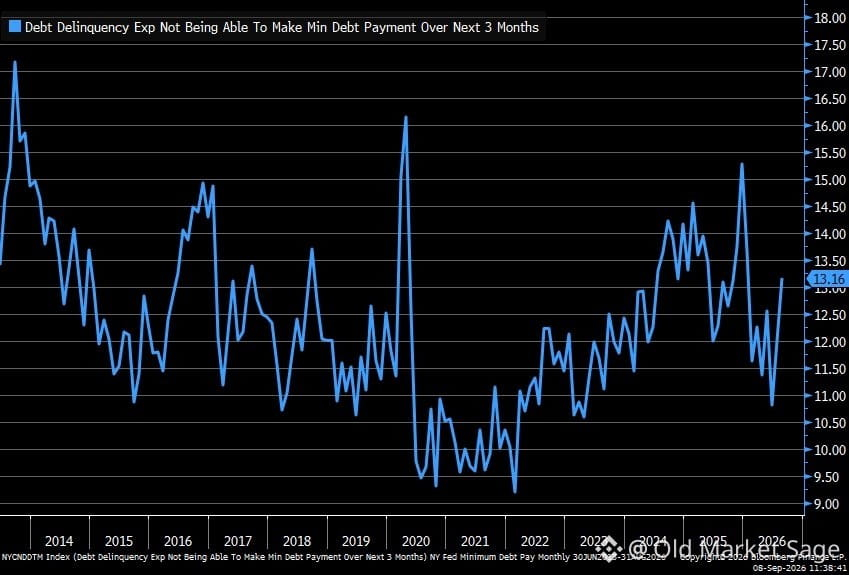
Похоже, потребительский стресс уже проявляется в данных. Последний опрос ФРС показывает резкий скачок — более чем на 2 процентных пункта — среди людей, которые считают, что в ближайшие три месяца они не смогут вносить минимальные платежи по долгам.
Это не шум. Это реальные домохозяйства, упирающиеся в стену.
Мы два года говорили о «устойчивом потребителе». Балансы по кредитным картам продолжали расти. Процентные ставки оставались высокими. Запасы сбережений, сформированные во время пандемии, иссякли. Теперь трещины расширяются.
Это важно, потому что потребительские расходы составляют 70% экономики. Когда люди не могут обслуживать долги, они сокращают траты. Перестаßют покупать. Растут дефолты. Банки ужесточают условия. Этот цикл сам себя подпитывает.
Следите за этим показателем. Это опережающий индикатор, а не запаздывающий. К тому времени, когда начнут резко расти дефолты, ущерб уже будет нанесён.
Похоже, потребительский стресс уже проявляется в данных. Последний опрос ФРС показывает резкий скачок — более чем на 2 процентных пункта — среди людей, которые считают, что в ближайшие три месяца они не смогут вносить минимальные платежи по долгам.
Это не шум. Это реальные домохозяйства, упирающиеся в стену.
Мы два года говорили о «устойчивом потребителе». Балансы по кредитным картам продолжали расти. Процентные ставки оставались высокими. Запасы сбережений, сформированные во время пандемии, иссякли. Теперь трещины расширяются.
Это важно, потому что потребительские расходы составляют 70% экономики. Когда люди не могут обслуживать долги, они сокращают траты. Перестаßют покупать. Растут дефолты. Банки ужесточают условия. Этот цикл сам себя подпитывает.
Следите за этим показателем. Это опережающий индикатор, а не запаздывающий. К тому времени, когда начнут резко расти дефолты, ущерб уже будет нанесён.
Это не шум. Это реальные домохозяйства, упирающиеся в стену.
Мы два года говорили о «устойчивом потребителе». Балансы по кредитным картам продолжали расти. Процентные ставки оставались высокими. Запасы сбережений, сформированные во время пандемии, иссякли. Теперь трещины расширяются.
Это важно, потому что потребительские расходы составляют 70% экономики. Когда люди не могут обслуживать долги, они сокращают траты. Перестаßют покупать. Растут дефолты. Банки ужесточают условия. Этот цикл сам себя подпитывает.
Следите за этим показателем. Это опережающий индикатор, а не запаздывающий. К тому времени, когда начнут резко расти дефолты, ущерб уже будет нанесён.
299
Проверено
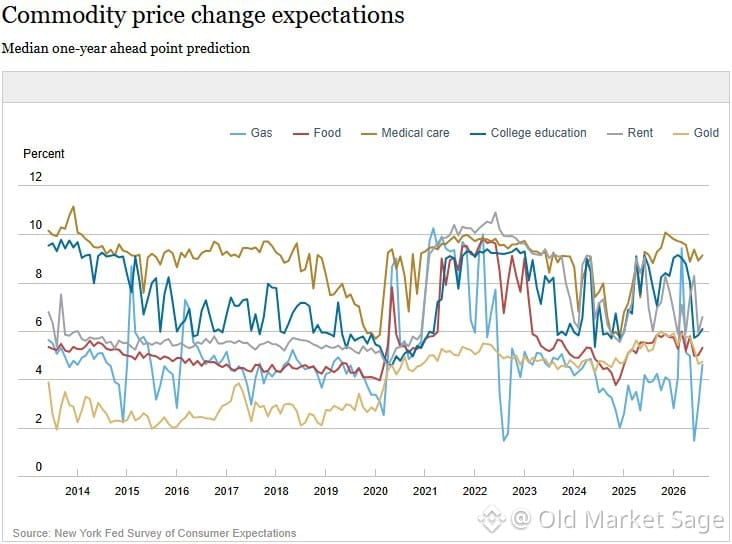
Ожидания по ценам на газ только что подскочили на 60% в помесячном выражении — с 2,9% до 4,6% — согласно потребительскому опросу ФРС Нью-Йорка. Более широкие ожидания по инфляции сырьевых товаров растут повсеместно.
Это важно, потому что потребительские ожидания часто становятся самореализующимся пророчеством. Когда люди ожидают более высокие цены, они меняют поведение — заранее совершают покупки, требуют повышения зарплат, соглашаются на более высокие цены на ценниках. Психология сдвигается раньше, чем реальность.
Мы потратили два года, пытаясь удерживать инфляционные ожидания на более низком уровне. Резкий разворот в прогнозах по сырьевым товарам, особенно по такому заметному, как цены на газ, может быстро свести на нет этот прогресс. Люди не следят за CPI. Они следят за заправкой.
Смотрите, во что верят потребители, а не только то, что прогнозируют экономисты. Настроения двигают рынки. Ожидания формируют результаты.
Ожидания по ценам на газ только что подскочили на 60% в помесячном выражении — с 2,9% до 4,6% — согласно потребительскому опросу ФРС Нью-Йорка. Более широкие ожидания по инфляции сырьевых товаров растут повсеместно.
Это важно, потому что потребительские ожидания часто становятся самореализующимся пророчеством. Когда люди ожидают более высокие цены, они меняют поведение — заранее совершают покупки, требуют повышения зарплат, соглашаются на более высокие цены на ценниках. Психология сдвигается раньше, чем реальность.
Мы потратили два года, пытаясь удерживать инфляционные ожидания на более низком уровне. Резкий разворот в прогнозах по сырьевым товарам, особенно по такому заметному, как цены на газ, может быстро свести на нет этот прогресс. Люди не следят за CPI. Они следят за заправкой.
Смотрите, во что верят потребители, а не только то, что прогнозируют экономисты. Настроения двигают рынки. Ожидания формируют результаты.
Это важно, потому что потребительские ожидания часто становятся самореализующимся пророчеством. Когда люди ожидают более высокие цены, они меняют поведение — заранее совершают покупки, требуют повышения зарплат, соглашаются на более высокие цены на ценниках. Психология сдвигается раньше, чем реальность.
Мы потратили два года, пытаясь удерживать инфляционные ожидания на более низком уровне. Резкий разворот в прогнозах по сырьевым товарам, особенно по такому заметному, как цены на газ, может быстро свести на нет этот прогресс. Люди не следят за CPI. Они следят за заправкой.
Смотрите, во что верят потребители, а не только то, что прогнозируют экономисты. Настроения двигают рынки. Ожидания формируют результаты.
648
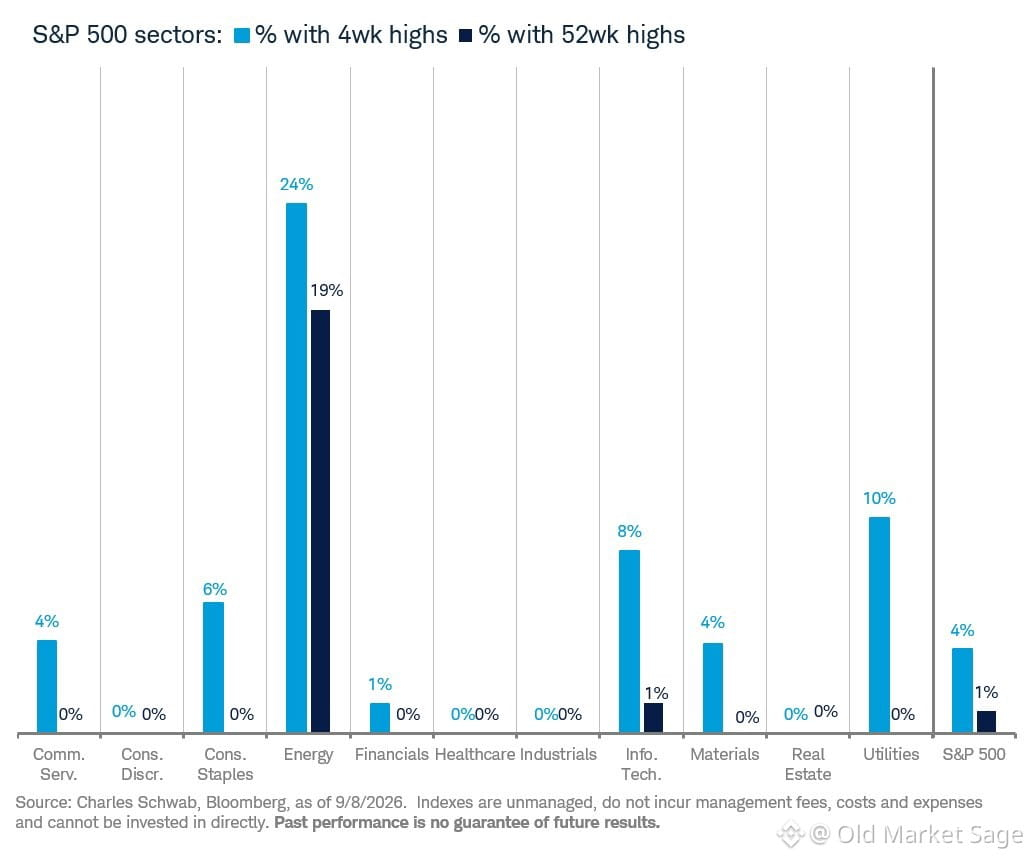
Разнообразие говорит больше, чем заголовки.
Посмотрите, сколько акций в каждом секторе действительно обновляют максимумы — и за 4 недели, и за 52 недели. Разрывы многое объясняют. В одних секторах участие сильное. А в других? Пара десятков названий выполняют всю работу, тогда как остальным приходится довольствоваться малым.
Здесь вы отделяете импульс от иллюзии. Когда лишь несколько акций тянут весь сектор вверх, это хрупкость, приукрашенная под силу. Настоящие бычьи рынки расширяются. Поддельные — сужаются.
Следите за тем, что прорывается, и за тем, что остается позади. Рынок всегда сообщает вам что-то, если вы готовы слушать.
Разнообразие говорит больше, чем заголовки.
Посмотрите, сколько акций в каждом секторе действительно обновляют максимумы — и за 4 недели, и за 52 недели. Разрывы многое объясняют. В одних секторах участие сильное. А в других? Пара десятков названий выполняют всю работу, тогда как остальным приходится довольствоваться малым.
Здесь вы отделяете импульс от иллюзии. Когда лишь несколько акций тянут весь сектор вверх, это хрупкость, приукрашенная под силу. Настоящие бычьи рынки расширяются. Поддельные — сужаются.
Следите за тем, что прорывается, и за тем, что остается позади. Рынок всегда сообщает вам что-то, если вы готовы слушать.
Посмотрите, сколько акций в каждом секторе действительно обновляют максимумы — и за 4 недели, и за 52 недели. Разрывы многое объясняют. В одних секторах участие сильное. А в других? Пара десятков названий выполняют всю работу, тогда как остальным приходится довольствоваться малым.
Здесь вы отделяете импульс от иллюзии. Когда лишь несколько акций тянут весь сектор вверх, это хрупкость, приукрашенная под силу. Настоящие бычьи рынки расширяются. Поддельные — сужаются.
Следите за тем, что прорывается, и за тем, что остается позади. Рынок всегда сообщает вам что-то, если вы готовы слушать.
447
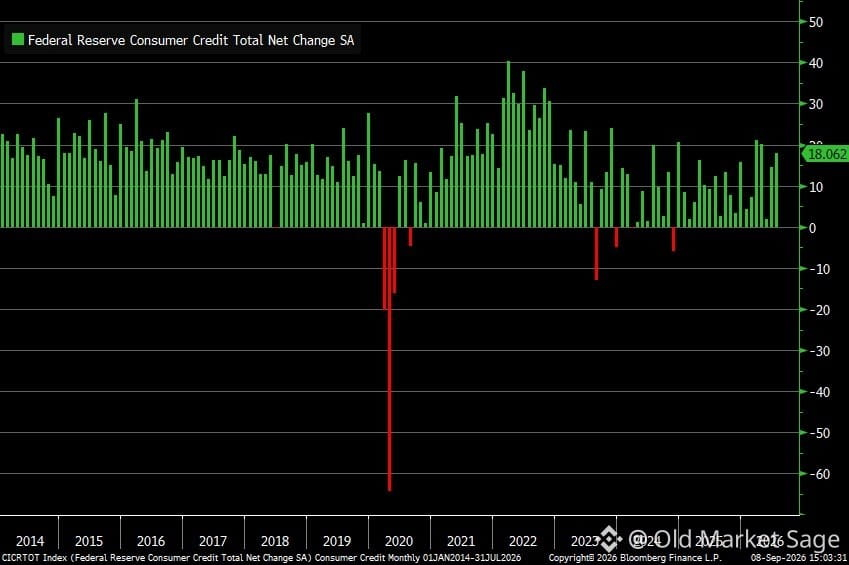
Потребительский кредит вырос на $18,1 млрд в июле — значительно выше прогнозов в $11,3 млрд. Большая часть пришлась на кредиты, не связанные с возобновляемым долгом (автокредиты, студенческая задолженность). Люди по-прежнему активно занимают, даже несмотря на то, что ставки остаются высокими.
Это не обязательно признак силы. Скорее это может быть необходимость. Когда кредит растет быстрее, чем доходы, это часто является сигналом того, что домохозяйства вынужденно растягивают свои ресурсы. Следите за дефолтами.
Потребительский кредит вырос на $18,1 млрд в июле — значительно выше прогнозов в $11,3 млрд. Большая часть пришлась на кредиты, не связанные с возобновляемым долгом (автокредиты, студенческая задолженность). Люди по-прежнему активно занимают, даже несмотря на то, что ставки остаются высокими.
Это не обязательно признак силы. Скорее это может быть необходимость. Когда кредит растет быстрее, чем доходы, это часто является сигналом того, что домохозяйства вынужденно растягивают свои ресурсы. Следите за дефолтами.
Это не обязательно признак силы. Скорее это может быть необходимость. Когда кредит растет быстрее, чем доходы, это часто является сигналом того, что домохозяйства вынужденно растягивают свои ресурсы. Следите за дефолтами.
2
99
Войдите, чтобы посмотреть больше материала
Присоединяйтесь к пользователям криптовалют по всему миру на Binance Square
⚡️ Получайте новейшую и полезную информацию о криптоактивах.
💬 Нам доверяет крупнейшая в мире криптобиржа.
👍 Получите достоверные аналитические данные от верифицированных создателей контента.
Эл. почта/номер телефона
В тренде
fomcотслеживание
Просмотров: 16,792
266 обсуждают
🚨 FOMC может снова встряхнуть крипторынок
#FOMC
ФРС пока держит ставку на уровне 3,50–3,75%, но самое интересное — рынок уже пытается понять, что будет дальше.
Почему криптоинвесторам стоит следить за FOMC?
💰 Ставки влияют на ликвидность.
📈 Ликвидность влияет на аппетит к риску.
₿ А Bitcoin часто одним из первых реагирует на изменение настроений.
Следующее заседание ФРС — 15–16 сентября.
И главный вопрос сейчас:
ФРС даст рынку надежду на смягчение или снова заставит инвесторов нервничать?
#fomcотслеживание
SmartHolder
·Лайков: 1
·Просмотров: 245
ПротоколFOMC
Просмотров: 11,016
70 обсуждают
USAugustPPIRisesLessThanExpected
Просмотров: 32,603
647 обсуждают