

Hamad Bro King
8.1k Publicações

Hamad Bro King
 Square verificado+
Denunciar
Bloquear Utilizador
Aberto ao trading
Trader Frequente
12.1 mês(es)
665 A seguir
31.3K+ Seguidores
11.3K+ Gostaram
Publicações
Portfólio
Tudo
Cotações
Em direto
Já passei tempo suficiente no mundo das criptos para saber que cada ciclo vem com uma nova narrativa, que supostamente vai mudar tudo. A maioria delas desaparece quando a empolgação some — por isso parei de prestar atenção em promessas ousadas.
O Newton Protocol chamou minha atenção por um motivo diferente. Ele não está pedindo que eu confie cegamente em IA ou em outra camada de automação. Parece mais focado em garantir que ações automatizadas possam seguir regras claras antes mesmo de tocarem em ativos on-chain. Isso me parece um problema muito mais prático de resolver.
Ainda sou cético, e acho que isso é saudável neste mercado. Boas ideias não viram produtos bem-sucedidos automaticamente. A adoção leva tempo, a execução importa, e a confiança real precisa ser conquistada. Mas de vez em quando aparece um projeto que faz eu parar de rolar a tela e pensar um pouco mais. Neste momento, o Newton Protocol é um daqueles projetos que estou observando em silêncio.
@Square-Creator-0f7971990 $NEWT #Newt
{future}(NEWTUSDT)
Já passei tempo suficiente no mundo das criptos para saber que cada ciclo vem com uma nova narrativa, que supostamente vai mudar tudo. A maioria delas desaparece quando a empolgação some — por isso parei de prestar atenção em promessas ousadas.
O Newton Protocol chamou minha atenção por um motivo diferente. Ele não está pedindo que eu confie cegamente em IA ou em outra camada de automação. Parece mais focado em garantir que ações automatizadas possam seguir regras claras antes mesmo de tocarem em ativos on-chain. Isso me parece um problema muito mais prático de resolver.
Ainda sou cético, e acho que isso é saudável neste mercado. Boas ideias não viram produtos bem-sucedidos automaticamente. A adoção leva tempo, a execução importa, e a confiança real precisa ser conquistada. Mas de vez em quando aparece um projeto que faz eu parar de rolar a tela e pensar um pouco mais. Neste momento, o Newton Protocol é um daqueles projetos que estou observando em silêncio.
@Newt $NEWT #Newt
O Newton Protocol chamou minha atenção por um motivo diferente. Ele não está pedindo que eu confie cegamente em IA ou em outra camada de automação. Parece mais focado em garantir que ações automatizadas possam seguir regras claras antes mesmo de tocarem em ativos on-chain. Isso me parece um problema muito mais prático de resolver.
Ainda sou cético, e acho que isso é saudável neste mercado. Boas ideias não viram produtos bem-sucedidos automaticamente. A adoção leva tempo, a execução importa, e a confiança real precisa ser conquistada. Mas de vez em quando aparece um projeto que faz eu parar de rolar a tela e pensar um pouco mais. Neste momento, o Newton Protocol é um daqueles projetos que estou observando em silêncio.
@Newt $NEWT #Newt
1
2
1.2k
·
--
Em Alta
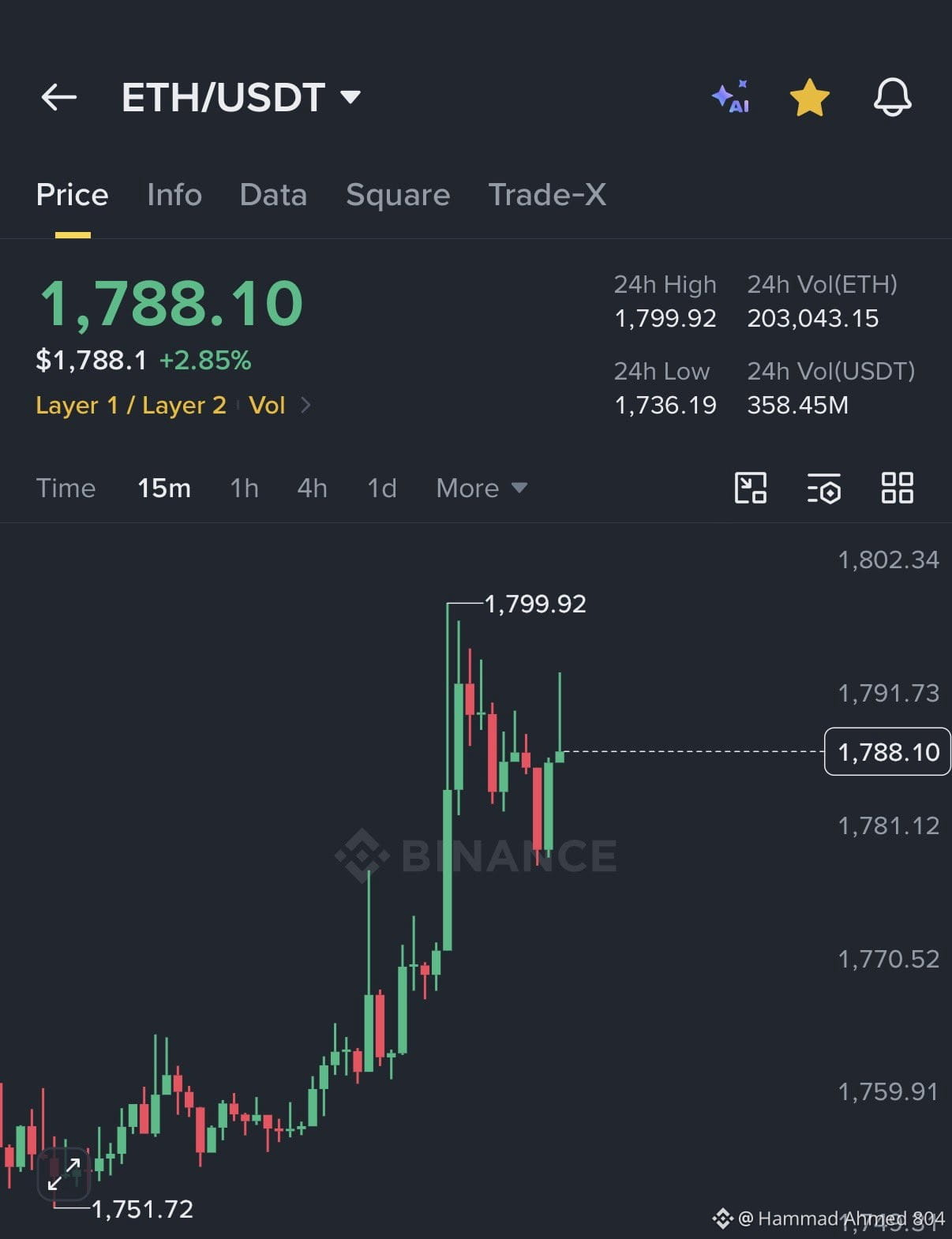
O Ethereum está avançando de forma constante em direção à zona de resistência de US$ 1.800, seguindo o exemplo do Bitcoin. A recente onda de liquidações curtas melhorou o sentimento do mercado, e o ETH está começando a atrair um novo interesse de compra. Um movimento decisivo acima de US$ 1.800 pode desencadear uma recuperação mais ampla entre as principais altcoins, tornando o Ethereum um dos ativos mais fortes para monitorar na estrutura atual do mercado.$ETH
{future}(ETHUSDT)
O Ethereum está avançando de forma constante em direção à zona de resistência de US$ 1.800, seguindo o exemplo do Bitcoin. A recente onda de liquidações curtas melhorou o sentimento do mercado, e o ETH está começando a atrair um novo interesse de compra. Um movimento decisivo acima de US$ 1.800 pode desencadear uma recuperação mais ampla entre as principais altcoins, tornando o Ethereum um dos ativos mais fortes para monitorar na estrutura atual do mercado.$ETH
136
·
--
Em Baixa
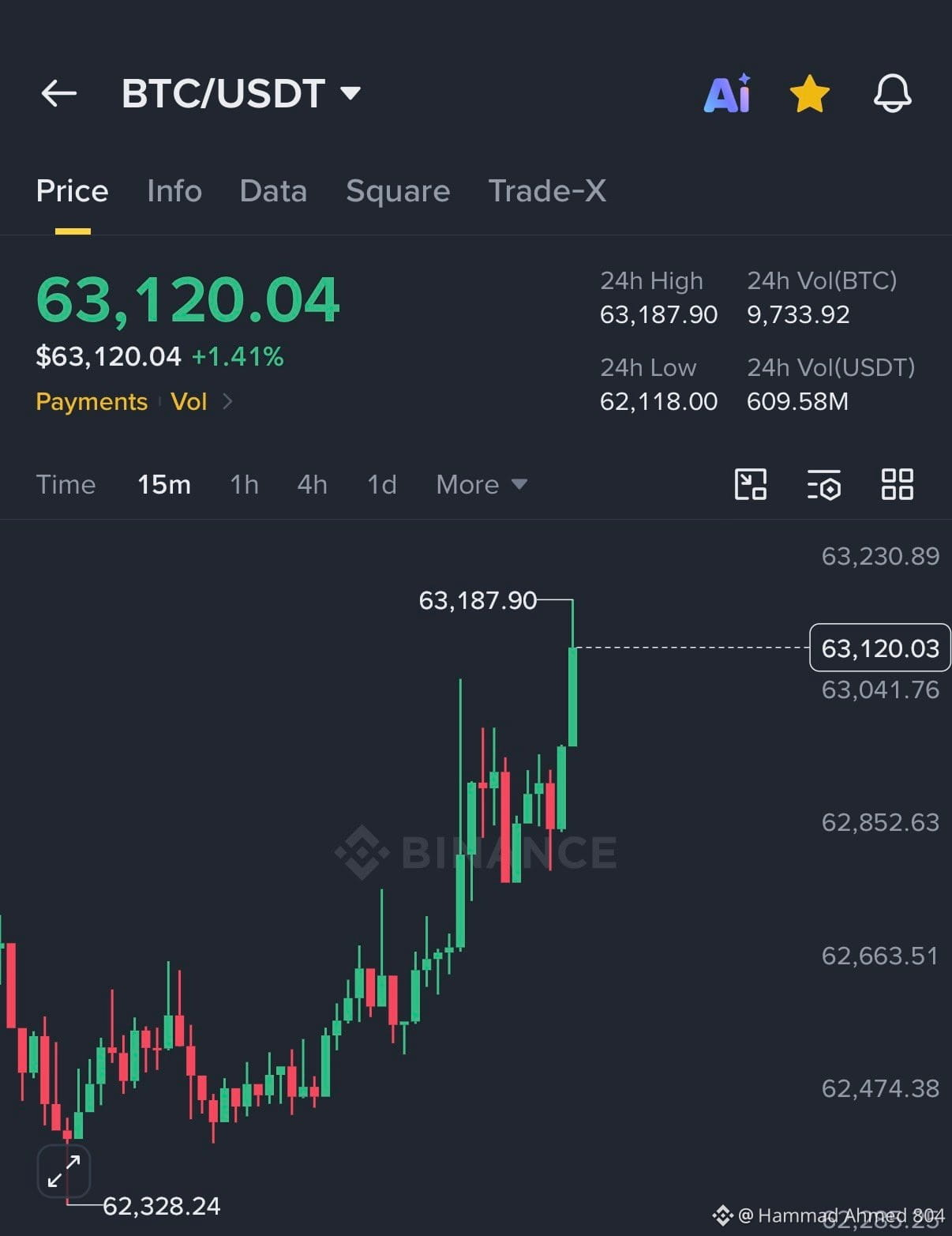
$BITCOIN recuperou o nível de US$ 63.000, sinalizando força renovada após um período de liquidez fraca. Livros de ordens mais finos amplificaram o movimento de preços, forçando os vendedores a descoberto a deixarem o mercado. Mais de US$ 208 milhões em posições vendidas foram liquidados em 24 horas, adicionando combustível para a recuperação. Enquanto o BTC se mantiver acima de um suporte importante, o impulso permanece a favor dos compradores, enquanto os traders devem observar o aumento do volume para confirmar uma tendência mais forte.$BITCOIN
$BITCOIN recuperou o nível de US$ 63.000, sinalizando força renovada após um período de liquidez fraca. Livros de ordens mais finos amplificaram o movimento de preços, forçando os vendedores a descoberto a deixarem o mercado. Mais de US$ 208 milhões em posições vendidas foram liquidados em 24 horas, adicionando combustível para a recuperação. Enquanto o BTC se mantiver acima de um suporte importante, o impulso permanece a favor dos compradores, enquanto os traders devem observar o aumento do volume para confirmar uma tendência mais forte.$BITCOIN
114
O Genius Terminal parece ser o tipo de produto que está tentando tornar o trading onchain menos caótico e mais parecido com um espaço de trabalho adequado.
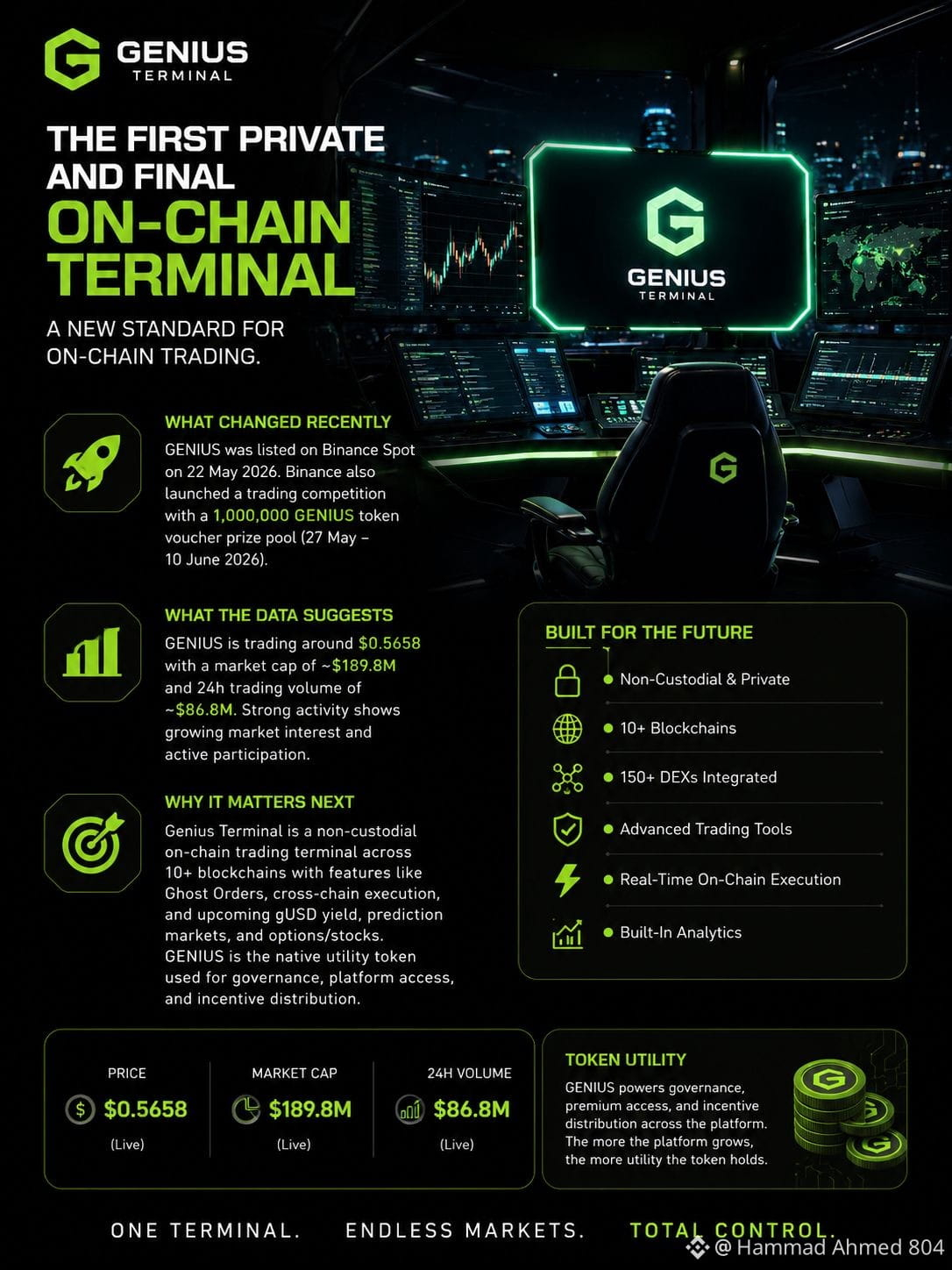
O que mudou recentemente: A Binance listou o GENIUS em 22 de maio de 2026, e depois o adicionou ao Simple Earn, Compra de Cripto, Conversão, Margem e Empréstimo VIP. Isso geralmente sinaliza que um projeto está se movendo de "ideia interessante" para algo que o mercado pode realmente tocar e usar.
O que os dados sugerem: O GENIUS está mostrando uma capitalização de mercado ao vivo de cerca de $189.8M e cerca de $86.8M em volume de trading nas últimas 24 horas, com aproximadamente 335.4M em circulação. Para mim, isso indica que o token já se moveu além da atenção silenciosa da fase inicial e entrou na participação ativa do mercado.
Por que isso importa a seguir: O Genius Terminal é descrito como um terminal onchain não custodial, e o GENIUS é o token utilitário nativo para governança, recursos premium e distribuição de incentivos. Em termos simples, o token é destinado a fazer algo dentro do produto, não apenas ficar ali e parecer bom em um gráfico.
Conclusão: O GENIUS está começando a parecer um verdadeiro token utilitário construído em torno do uso do produto, não apenas ruído de mercado.
@GeniusOfficial #genius $GENIUS
O Genius Terminal parece ser o tipo de produto que está tentando tornar o trading onchain menos caótico e mais parecido com um espaço de trabalho adequado.
O que mudou recentemente: A Binance listou o GENIUS em 22 de maio de 2026, e depois o adicionou ao Simple Earn, Compra de Cripto, Conversão, Margem e Empréstimo VIP. Isso geralmente sinaliza que um projeto está se movendo de "ideia interessante" para algo que o mercado pode realmente tocar e usar.
O que os dados sugerem: O GENIUS está mostrando uma capitalização de mercado ao vivo de cerca de $189.8M e cerca de $86.8M em volume de trading nas últimas 24 horas, com aproximadamente 335.4M em circulação. Para mim, isso indica que o token já se moveu além da atenção silenciosa da fase inicial e entrou na participação ativa do mercado.
Por que isso importa a seguir: O Genius Terminal é descrito como um terminal onchain não custodial, e o GENIUS é o token utilitário nativo para governança, recursos premium e distribuição de incentivos. Em termos simples, o token é destinado a fazer algo dentro do produto, não apenas ficar ali e parecer bom em um gráfico.
Conclusão: O GENIUS está começando a parecer um verdadeiro token utilitário construído em torno do uso do produto, não apenas ruído de mercado.
@GeniusOfficial #genius $GENIUS
O que mudou recentemente: A Binance listou o GENIUS em 22 de maio de 2026, e depois o adicionou ao Simple Earn, Compra de Cripto, Conversão, Margem e Empréstimo VIP. Isso geralmente sinaliza que um projeto está se movendo de "ideia interessante" para algo que o mercado pode realmente tocar e usar.
O que os dados sugerem: O GENIUS está mostrando uma capitalização de mercado ao vivo de cerca de $189.8M e cerca de $86.8M em volume de trading nas últimas 24 horas, com aproximadamente 335.4M em circulação. Para mim, isso indica que o token já se moveu além da atenção silenciosa da fase inicial e entrou na participação ativa do mercado.
Por que isso importa a seguir: O Genius Terminal é descrito como um terminal onchain não custodial, e o GENIUS é o token utilitário nativo para governança, recursos premium e distribuição de incentivos. Em termos simples, o token é destinado a fazer algo dentro do produto, não apenas ficar ali e parecer bom em um gráfico.
Conclusão: O GENIUS está começando a parecer um verdadeiro token utilitário construído em torno do uso do produto, não apenas ruído de mercado.
@GeniusOfficial #genius $GENIUS
106
🚨 NOVA ATUALIZAÇÃO: Peter Schiff Diz Que o Bitcoin Pode Cair Abaixo de $20,000
Para quem é novo no mundo cripto, essa não é a primeira vez que Peter Schiff faz uma previsão de baixa significativa sobre o Bitcoin.
O defensor do ouro de longa data e crítico do Bitcoin argumenta que, se o BTC perder níveis de suporte chave, um movimento em direção a $20,000 é possível. Segundo Schiff, uma quebra abaixo de $50,000 poderia desencadear uma correção muito mais profunda, resultando potencialmente em uma queda de 80% ou mais em relação ao recorde histórico anterior do Bitcoin.
Mas aqui está o que torna isso interessante:
📌 Schiff tem previsto o colapso do Bitcoin há mais de uma década.
📌 Apesar das previsões de queda repetidas, o Bitcoin subiu de menos de $1,000 para seis dígitos ao longo dos anos.
📌 Enquanto isso, os apoiadores do Bitcoin apontam para a crescente adoção institucional, a demanda por ETFs, a acumulação de tesourarias corporativas e a aceitação crescente no mainstream como razões pelas quais este ciclo pode ser diferente.
O verdadeiro debate não é se o Bitcoin pode ser volátil.
Todo mundo já sabe disso.
A questão é se o papel crescente do Bitcoin nas finanças globais pode superar os riscos que Schiff continua a destacar.
A história mostra que o Bitcoin sobreviveu a múltiplas quedas de 70–80% antes.
A história também mostra que cada ciclo cria novos crentes e novos céticos.
Por enquanto, o mercado permanece dividido:
🐻 Os Ursos veem um caminho para $20K.
🐂 Os Touros ainda veem o Bitcoin de seis dígitos como a tendência maior a longo prazo.
Uma coisa é certa:
Quando Peter Schiff começa a chamar por um colapso do Bitcoin, o Twitter cripto presta atenção—se concorda com ele ou não. 🚀
#Bitcoin #BTC #Crypto #PeterSchiff #BitcoinNews #CryptoMarket #DigitalAssets #Investing #blockchain #btcnews
🚨 NOVA ATUALIZAÇÃO: Peter Schiff Diz Que o Bitcoin Pode Cair Abaixo de $20,000
Para quem é novo no mundo cripto, essa não é a primeira vez que Peter Schiff faz uma previsão de baixa significativa sobre o Bitcoin.
O defensor do ouro de longa data e crítico do Bitcoin argumenta que, se o BTC perder níveis de suporte chave, um movimento em direção a $20,000 é possível. Segundo Schiff, uma quebra abaixo de $50,000 poderia desencadear uma correção muito mais profunda, resultando potencialmente em uma queda de 80% ou mais em relação ao recorde histórico anterior do Bitcoin.
Mas aqui está o que torna isso interessante:
📌 Schiff tem previsto o colapso do Bitcoin há mais de uma década.
📌 Apesar das previsões de queda repetidas, o Bitcoin subiu de menos de $1,000 para seis dígitos ao longo dos anos.
📌 Enquanto isso, os apoiadores do Bitcoin apontam para a crescente adoção institucional, a demanda por ETFs, a acumulação de tesourarias corporativas e a aceitação crescente no mainstream como razões pelas quais este ciclo pode ser diferente.
O verdadeiro debate não é se o Bitcoin pode ser volátil.
Todo mundo já sabe disso.
A questão é se o papel crescente do Bitcoin nas finanças globais pode superar os riscos que Schiff continua a destacar.
A história mostra que o Bitcoin sobreviveu a múltiplas quedas de 70–80% antes.
A história também mostra que cada ciclo cria novos crentes e novos céticos.
Por enquanto, o mercado permanece dividido:
🐻 Os Ursos veem um caminho para $20K.
🐂 Os Touros ainda veem o Bitcoin de seis dígitos como a tendência maior a longo prazo.
Uma coisa é certa:
Quando Peter Schiff começa a chamar por um colapso do Bitcoin, o Twitter cripto presta atenção—se concorda com ele ou não. 🚀
#Bitcoin #BTC #Crypto #PeterSchiff #BitcoinNews #CryptoMarket #DigitalAssets #Investing #blockchain #btcnews
Para quem é novo no mundo cripto, essa não é a primeira vez que Peter Schiff faz uma previsão de baixa significativa sobre o Bitcoin.
O defensor do ouro de longa data e crítico do Bitcoin argumenta que, se o BTC perder níveis de suporte chave, um movimento em direção a $20,000 é possível. Segundo Schiff, uma quebra abaixo de $50,000 poderia desencadear uma correção muito mais profunda, resultando potencialmente em uma queda de 80% ou mais em relação ao recorde histórico anterior do Bitcoin.
Mas aqui está o que torna isso interessante:
📌 Schiff tem previsto o colapso do Bitcoin há mais de uma década.
📌 Apesar das previsões de queda repetidas, o Bitcoin subiu de menos de $1,000 para seis dígitos ao longo dos anos.
📌 Enquanto isso, os apoiadores do Bitcoin apontam para a crescente adoção institucional, a demanda por ETFs, a acumulação de tesourarias corporativas e a aceitação crescente no mainstream como razões pelas quais este ciclo pode ser diferente.
O verdadeiro debate não é se o Bitcoin pode ser volátil.
Todo mundo já sabe disso.
A questão é se o papel crescente do Bitcoin nas finanças globais pode superar os riscos que Schiff continua a destacar.
A história mostra que o Bitcoin sobreviveu a múltiplas quedas de 70–80% antes.
A história também mostra que cada ciclo cria novos crentes e novos céticos.
Por enquanto, o mercado permanece dividido:
🐻 Os Ursos veem um caminho para $20K.
🐂 Os Touros ainda veem o Bitcoin de seis dígitos como a tendência maior a longo prazo.
Uma coisa é certa:
Quando Peter Schiff começa a chamar por um colapso do Bitcoin, o Twitter cripto presta atenção—se concorda com ele ou não. 🚀
#Bitcoin #BTC #Crypto #PeterSchiff #BitcoinNews #CryptoMarket #DigitalAssets #Investing #blockchain #btcnews

312
O Genius Terminal parece menos um aplicativo de cripto e mais uma sala de controle silenciosa para capital on-chain — feito para pessoas que querem velocidade, clareza e menos atrito.
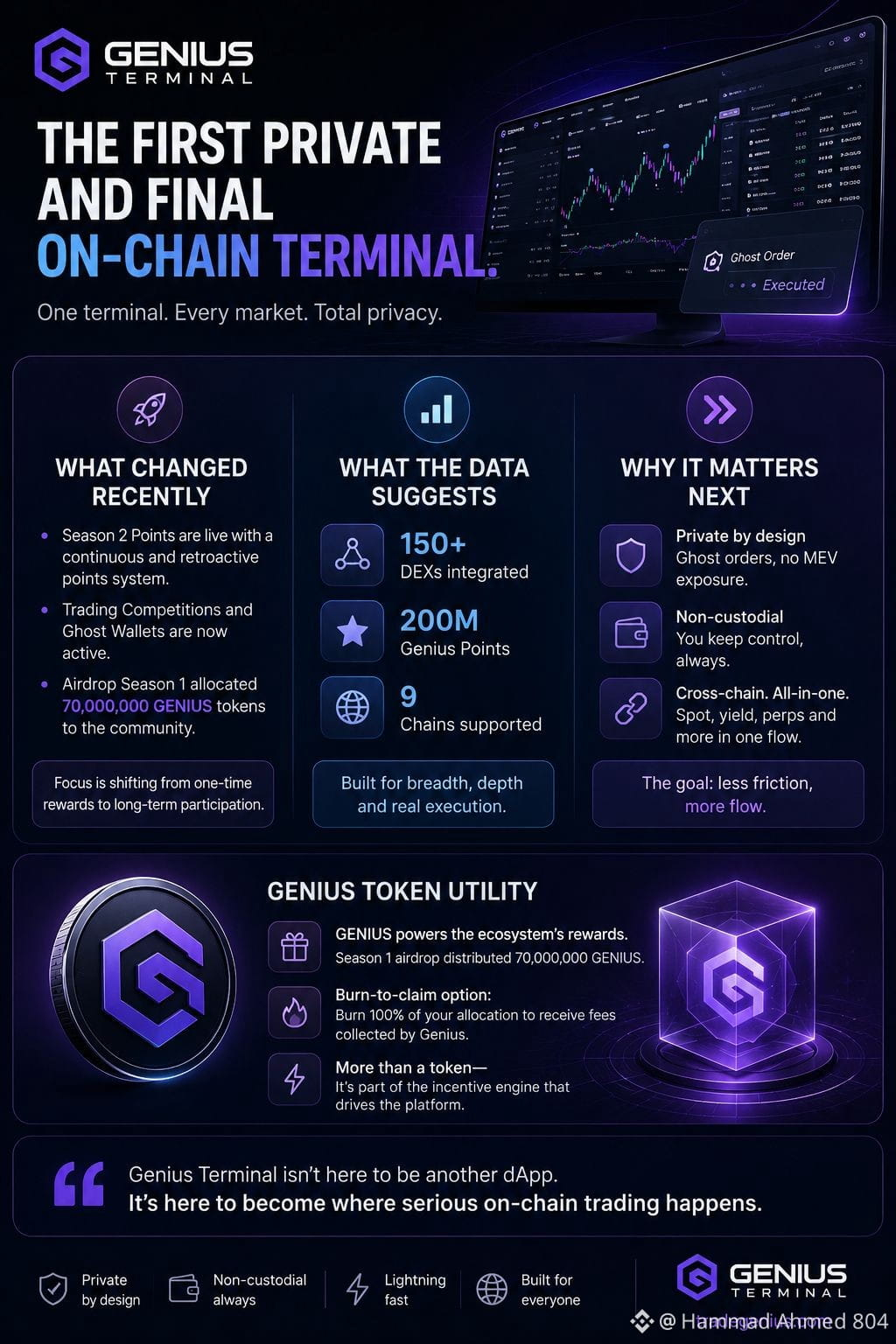
O que mudou recentemente: o produto continuou se expandindo além do trading básico para incluir Pontos da Temporada 2, competições de trading e Ghost Wallets. Para mim, isso mostra que a equipe está tentando construir um hábito e uma identidade em torno do produto, não apenas um lançamento pontual.
O que os dados sugerem: o Genius afirma ter mais de 150 DEXs integrados, 200M de Pontos Genius e suporte em 9 redes. Essa combinação aponta para uma plataforma tentando vencer tanto em alcance quanto em profundidade de execução, não só em hype.
Por que isso importa a seguir: a direção está se tornando mais clara — um lugar para negociar, financiar, rastrear e se mover entre redes sem transformar a experiência em um labirinto. Se eles continuarem a otimizar esse fluxo, o produto começa a parecer uma infraestrutura em vez de apenas uma funcionalidade.
Utilidade do token: o GENIUS está atrelado ao sistema de recompensas, com o programa da Temporada 1 alocando 70.000.000 de tokens GENIUS. O token também faz parte do design de incentivos da plataforma, o que o torna parte do loop de atividade do ecossistema, em vez de apenas um rótulo.
Conclusão: o Genius Terminal está tentando se tornar o lugar padrão onde os traders on-chain realmente operam, não apenas outra tela que eles visitam.
@GeniusOfficial #genius $GENIUS
O Genius Terminal parece menos um aplicativo de cripto e mais uma sala de controle silenciosa para capital on-chain — feito para pessoas que querem velocidade, clareza e menos atrito.
O que mudou recentemente: o produto continuou se expandindo além do trading básico para incluir Pontos da Temporada 2, competições de trading e Ghost Wallets. Para mim, isso mostra que a equipe está tentando construir um hábito e uma identidade em torno do produto, não apenas um lançamento pontual.
O que os dados sugerem: o Genius afirma ter mais de 150 DEXs integrados, 200M de Pontos Genius e suporte em 9 redes. Essa combinação aponta para uma plataforma tentando vencer tanto em alcance quanto em profundidade de execução, não só em hype.
Por que isso importa a seguir: a direção está se tornando mais clara — um lugar para negociar, financiar, rastrear e se mover entre redes sem transformar a experiência em um labirinto. Se eles continuarem a otimizar esse fluxo, o produto começa a parecer uma infraestrutura em vez de apenas uma funcionalidade.
Utilidade do token: o GENIUS está atrelado ao sistema de recompensas, com o programa da Temporada 1 alocando 70.000.000 de tokens GENIUS. O token também faz parte do design de incentivos da plataforma, o que o torna parte do loop de atividade do ecossistema, em vez de apenas um rótulo.
Conclusão: o Genius Terminal está tentando se tornar o lugar padrão onde os traders on-chain realmente operam, não apenas outra tela que eles visitam.
@GeniusOfficial #genius $GENIUS
O que mudou recentemente: o produto continuou se expandindo além do trading básico para incluir Pontos da Temporada 2, competições de trading e Ghost Wallets. Para mim, isso mostra que a equipe está tentando construir um hábito e uma identidade em torno do produto, não apenas um lançamento pontual.
O que os dados sugerem: o Genius afirma ter mais de 150 DEXs integrados, 200M de Pontos Genius e suporte em 9 redes. Essa combinação aponta para uma plataforma tentando vencer tanto em alcance quanto em profundidade de execução, não só em hype.
Por que isso importa a seguir: a direção está se tornando mais clara — um lugar para negociar, financiar, rastrear e se mover entre redes sem transformar a experiência em um labirinto. Se eles continuarem a otimizar esse fluxo, o produto começa a parecer uma infraestrutura em vez de apenas uma funcionalidade.
Utilidade do token: o GENIUS está atrelado ao sistema de recompensas, com o programa da Temporada 1 alocando 70.000.000 de tokens GENIUS. O token também faz parte do design de incentivos da plataforma, o que o torna parte do loop de atividade do ecossistema, em vez de apenas um rótulo.
Conclusão: o Genius Terminal está tentando se tornar o lugar padrão onde os traders on-chain realmente operam, não apenas outra tela que eles visitam.
@GeniusOfficial #genius $GENIUS
217
A maioria das pessoas está falando sobre a Binance trazendo ações dos EUA para os usuários de cripto.
Mas a história maior é o que isso significa para o futuro das negociações.
Por anos, o fluxo era simples:
Lucros em cripto → Retirada → Corretora → Comprar ações.
Agora a Binance está mudando esse modelo ao manter tudo dentro de um único ecossistema. Os usuários podem negociar cripto, ações e ETFs sem mover capital através de várias plataformas. O objetivo é simples: reduzir a fricção e manter a liquidez onde já existe.
Ao mesmo tempo, uma tendência diferente está surgindo do lado descentralizado.
Plataformas como a Genius estão tornando as xStocks acessíveis diretamente de carteiras on-chain, permitindo que os usuários tenham exposição a empresas como Amazon, Nvidia e Tesla sem depender de uma conta de corretagem tradicional.
O que se destaca não é apenas o acesso às ações—é a evolução da identidade e da execução.
A cripto foi construída em torno de carteiras, mas os usuários ainda gastam uma quantidade surpreendente de tempo provando a propriedade, assinando transações e revelando intenções. A Genius aborda isso de maneira diferente através de recursos como Ghost Wallet, Ghost Orders e Private Execution, que focam na privacidade e na redução da visibilidade desnecessária.
Isso cria uma mudança interessante.
O futuro não é cripto versus ações. É sobre criar ambientes onde ativos, identidade e execução coexistem de forma harmoniosa.
À medida que a negociação se torna mais unificada e a fricção desaparece, a verdadeira pergunta se torna:
Quando tudo parece fácil, onde a confiança realmente reside?
@GeniusOfficial #genius $GENIUS
{future}(GENIUSUSDT)
A maioria das pessoas está falando sobre a Binance trazendo ações dos EUA para os usuários de cripto.
Mas a história maior é o que isso significa para o futuro das negociações.
Por anos, o fluxo era simples:
Lucros em cripto → Retirada → Corretora → Comprar ações.
Agora a Binance está mudando esse modelo ao manter tudo dentro de um único ecossistema. Os usuários podem negociar cripto, ações e ETFs sem mover capital através de várias plataformas. O objetivo é simples: reduzir a fricção e manter a liquidez onde já existe.
Ao mesmo tempo, uma tendência diferente está surgindo do lado descentralizado.
Plataformas como a Genius estão tornando as xStocks acessíveis diretamente de carteiras on-chain, permitindo que os usuários tenham exposição a empresas como Amazon, Nvidia e Tesla sem depender de uma conta de corretagem tradicional.
O que se destaca não é apenas o acesso às ações—é a evolução da identidade e da execução.
A cripto foi construída em torno de carteiras, mas os usuários ainda gastam uma quantidade surpreendente de tempo provando a propriedade, assinando transações e revelando intenções. A Genius aborda isso de maneira diferente através de recursos como Ghost Wallet, Ghost Orders e Private Execution, que focam na privacidade e na redução da visibilidade desnecessária.
Isso cria uma mudança interessante.
O futuro não é cripto versus ações. É sobre criar ambientes onde ativos, identidade e execução coexistem de forma harmoniosa.
À medida que a negociação se torna mais unificada e a fricção desaparece, a verdadeira pergunta se torna:
Quando tudo parece fácil, onde a confiança realmente reside?
@GeniusOfficial #genius $GENIUS
Mas a história maior é o que isso significa para o futuro das negociações.
Por anos, o fluxo era simples:
Lucros em cripto → Retirada → Corretora → Comprar ações.
Agora a Binance está mudando esse modelo ao manter tudo dentro de um único ecossistema. Os usuários podem negociar cripto, ações e ETFs sem mover capital através de várias plataformas. O objetivo é simples: reduzir a fricção e manter a liquidez onde já existe.
Ao mesmo tempo, uma tendência diferente está surgindo do lado descentralizado.
Plataformas como a Genius estão tornando as xStocks acessíveis diretamente de carteiras on-chain, permitindo que os usuários tenham exposição a empresas como Amazon, Nvidia e Tesla sem depender de uma conta de corretagem tradicional.
O que se destaca não é apenas o acesso às ações—é a evolução da identidade e da execução.
A cripto foi construída em torno de carteiras, mas os usuários ainda gastam uma quantidade surpreendente de tempo provando a propriedade, assinando transações e revelando intenções. A Genius aborda isso de maneira diferente através de recursos como Ghost Wallet, Ghost Orders e Private Execution, que focam na privacidade e na redução da visibilidade desnecessária.
Isso cria uma mudança interessante.
O futuro não é cripto versus ações. É sobre criar ambientes onde ativos, identidade e execução coexistem de forma harmoniosa.
À medida que a negociação se torna mais unificada e a fricção desaparece, a verdadeira pergunta se torna:
Quando tudo parece fácil, onde a confiança realmente reside?
@GeniusOfficial #genius $GENIUS
2
111
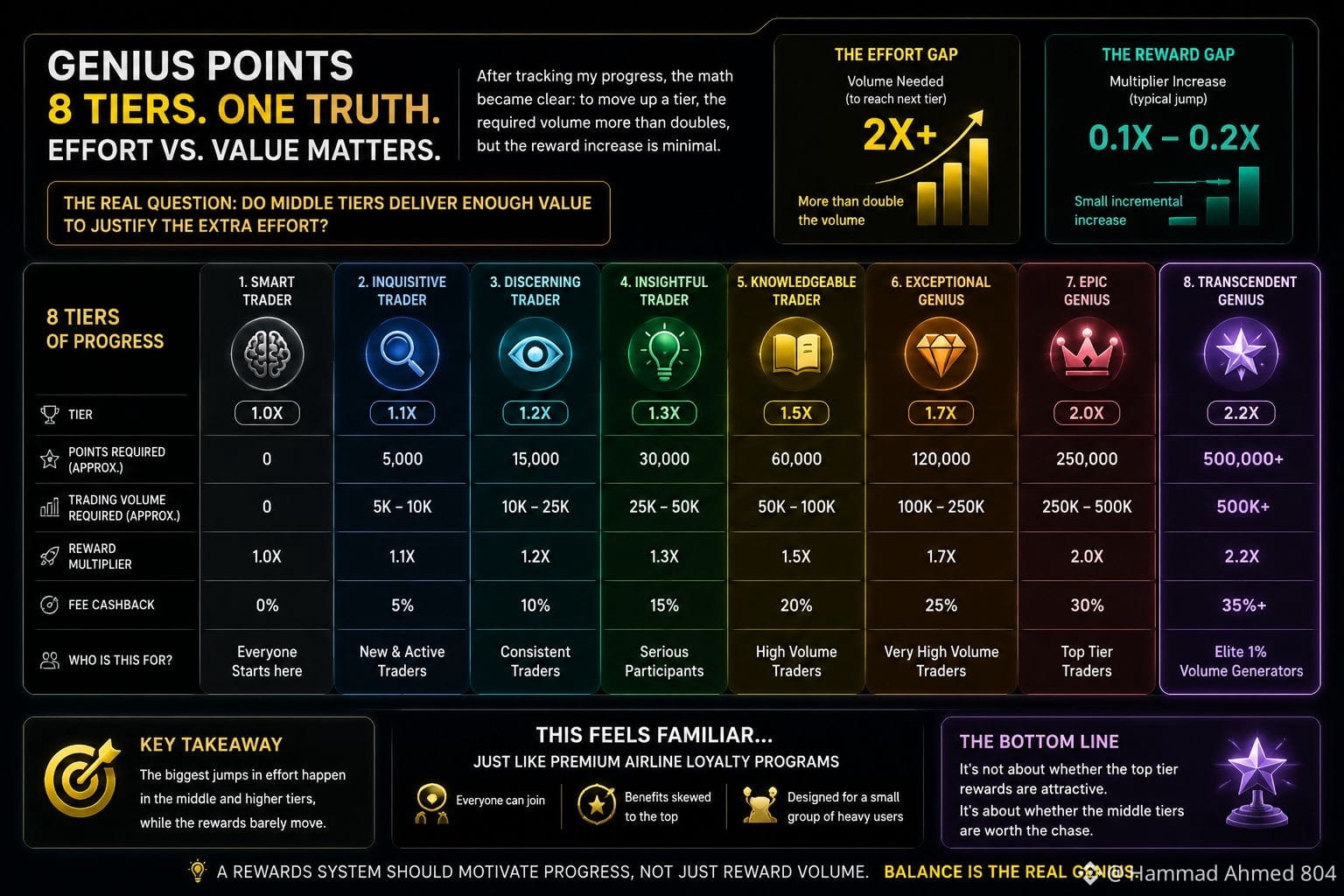
Algumas semanas atrás, eu comecei a acompanhar meu progresso nos Pontos Genius mais de perto para ver se subir de nível realmente valia o esforço. Depois de comparar minha atividade com o próximo nível, percebi que precisaria gerar mais do que o dobro do meu volume atual só para desbloquear um aumento relativamente pequeno no multiplicador de recompensas. Do ponto de vista puramente econômico, a negociação extra não parecia justificada apenas pelas recompensas adicionais.
O Genius Terminal atualmente opera uma estrutura de pontos em 8 níveis, que vão desde traders inteligentes com um multiplicador de 1x até contas de Gênios Transcendentes que recebem até 2.2x de multiplicador e um cashback significativo nas taxas. O que me chamou a atenção é como isso se parece muito com programas de fidelidade de companhias aéreas premium. Enquanto todos podem participar, os benefícios mais atraentes são claramente projetados para um grupo muito pequeno de usuários de volume extremamente alto.
Isso não torna o sistema ruim. Simplesmente muda como eu o vejo. A verdadeira questão não é se as recompensas do nível superior são atraentes. É se os níveis intermediários oferecem valor suficiente para influenciar o comportamento dos traders que provavelmente nunca alcançarão os níveis mais altos.
Quando eu avalio qualquer estrutura de recompensas em níveis, essa é a métrica que mais presto atenção. Se a diferença entre usuários de nível médio e de nível superior for muito grande, o programa funciona menos como um sistema de recompensas universal e mais como uma estratégia de aquisição de clientes voltada para reter os maiores geradores de volume da plataforma.
@GeniusOfficial #genius $GENIUS
Algumas semanas atrás, eu comecei a acompanhar meu progresso nos Pontos Genius mais de perto para ver se subir de nível realmente valia o esforço. Depois de comparar minha atividade com o próximo nível, percebi que precisaria gerar mais do que o dobro do meu volume atual só para desbloquear um aumento relativamente pequeno no multiplicador de recompensas. Do ponto de vista puramente econômico, a negociação extra não parecia justificada apenas pelas recompensas adicionais.
O Genius Terminal atualmente opera uma estrutura de pontos em 8 níveis, que vão desde traders inteligentes com um multiplicador de 1x até contas de Gênios Transcendentes que recebem até 2.2x de multiplicador e um cashback significativo nas taxas. O que me chamou a atenção é como isso se parece muito com programas de fidelidade de companhias aéreas premium. Enquanto todos podem participar, os benefícios mais atraentes são claramente projetados para um grupo muito pequeno de usuários de volume extremamente alto.
Isso não torna o sistema ruim. Simplesmente muda como eu o vejo. A verdadeira questão não é se as recompensas do nível superior são atraentes. É se os níveis intermediários oferecem valor suficiente para influenciar o comportamento dos traders que provavelmente nunca alcançarão os níveis mais altos.
Quando eu avalio qualquer estrutura de recompensas em níveis, essa é a métrica que mais presto atenção. Se a diferença entre usuários de nível médio e de nível superior for muito grande, o programa funciona menos como um sistema de recompensas universal e mais como uma estratégia de aquisição de clientes voltada para reter os maiores geradores de volume da plataforma.
@GeniusOfficial #genius $GENIUS
O Genius Terminal atualmente opera uma estrutura de pontos em 8 níveis, que vão desde traders inteligentes com um multiplicador de 1x até contas de Gênios Transcendentes que recebem até 2.2x de multiplicador e um cashback significativo nas taxas. O que me chamou a atenção é como isso se parece muito com programas de fidelidade de companhias aéreas premium. Enquanto todos podem participar, os benefícios mais atraentes são claramente projetados para um grupo muito pequeno de usuários de volume extremamente alto.
Isso não torna o sistema ruim. Simplesmente muda como eu o vejo. A verdadeira questão não é se as recompensas do nível superior são atraentes. É se os níveis intermediários oferecem valor suficiente para influenciar o comportamento dos traders que provavelmente nunca alcançarão os níveis mais altos.
Quando eu avalio qualquer estrutura de recompensas em níveis, essa é a métrica que mais presto atenção. Se a diferença entre usuários de nível médio e de nível superior for muito grande, o programa funciona menos como um sistema de recompensas universal e mais como uma estratégia de aquisição de clientes voltada para reter os maiores geradores de volume da plataforma.
@GeniusOfficial #genius $GENIUS
1
1
182
·
--
Em Baixa
🚨 O Bitcoin Venceu — Mas o Jogo Mudou
Por mais de uma década, o Bitcoin foi tratado como um experimento especulativo. Hoje, a conversa é diferente. Os mercados globais estão cada vez mais reconhecendo o Bitcoin como capital digital, não apenas como uma moeda digital.
A velha narrativa do ciclo previsível de quatro anos está perdendo relevância. Historicamente, as reduções de recompensa dominaram a psicologia do mercado, mas o Bitcoin agora está entrando em uma nova era onde o fluxo de capital importa mais do que datas no calendário. Investidores institucionais, ETFs, fundos soberanos, corporações e bancos estão se tornando grandes motores da demanda.
À medida que as finanças tradicionais se integram com ativos digitais, a trajetória de crescimento do Bitcoin será influenciada pela expansão do crédito bancário, condições de liquidez e a disposição do capital global em buscar ativos escassos. Nesse ambiente, forças macroeconômicas podem se tornar mais importantes do que eventos de halving.
No entanto, o maior risco do Bitcoin pode não ser mais ataques externos ou pressão regulatória. A ameaça maior pode vir de dentro: mudanças de protocolo mal projetadas que comprometem os princípios que tornaram o Bitcoin valioso em primeiro lugar.
O Bitcoin teve sucesso por causa de sua simplicidade, previsibilidade, descentralização e credibilidade. Qualquer mudança iatrogênica — uma intervenção que causa danos não intencionais — pode enfraquecer a confiança que levou anos para ser construída.
A próxima década não será sobre provar que o Bitcoin funciona. Esse debate está em grande parte encerrado. O desafio agora é preservar o que o tornou bem-sucedido enquanto navegamos em um mundo onde trilhões de dólares em capital estão começando a tratar $BTC como um ativo de reserva global.
#DigitalCapital #BitcoinETF #Blockchain #Investing #Finance
🚨 O Bitcoin Venceu — Mas o Jogo Mudou
Por mais de uma década, o Bitcoin foi tratado como um experimento especulativo. Hoje, a conversa é diferente. Os mercados globais estão cada vez mais reconhecendo o Bitcoin como capital digital, não apenas como uma moeda digital.
A velha narrativa do ciclo previsível de quatro anos está perdendo relevância. Historicamente, as reduções de recompensa dominaram a psicologia do mercado, mas o Bitcoin agora está entrando em uma nova era onde o fluxo de capital importa mais do que datas no calendário. Investidores institucionais, ETFs, fundos soberanos, corporações e bancos estão se tornando grandes motores da demanda.
À medida que as finanças tradicionais se integram com ativos digitais, a trajetória de crescimento do Bitcoin será influenciada pela expansão do crédito bancário, condições de liquidez e a disposição do capital global em buscar ativos escassos. Nesse ambiente, forças macroeconômicas podem se tornar mais importantes do que eventos de halving.
No entanto, o maior risco do Bitcoin pode não ser mais ataques externos ou pressão regulatória. A ameaça maior pode vir de dentro: mudanças de protocolo mal projetadas que comprometem os princípios que tornaram o Bitcoin valioso em primeiro lugar.
O Bitcoin teve sucesso por causa de sua simplicidade, previsibilidade, descentralização e credibilidade. Qualquer mudança iatrogênica — uma intervenção que causa danos não intencionais — pode enfraquecer a confiança que levou anos para ser construída.
A próxima década não será sobre provar que o Bitcoin funciona. Esse debate está em grande parte encerrado. O desafio agora é preservar o que o tornou bem-sucedido enquanto navegamos em um mundo onde trilhões de dólares em capital estão começando a tratar $BTC como um ativo de reserva global.
#DigitalCapital #BitcoinETF #Blockchain #Investing #Finance
Por mais de uma década, o Bitcoin foi tratado como um experimento especulativo. Hoje, a conversa é diferente. Os mercados globais estão cada vez mais reconhecendo o Bitcoin como capital digital, não apenas como uma moeda digital.
A velha narrativa do ciclo previsível de quatro anos está perdendo relevância. Historicamente, as reduções de recompensa dominaram a psicologia do mercado, mas o Bitcoin agora está entrando em uma nova era onde o fluxo de capital importa mais do que datas no calendário. Investidores institucionais, ETFs, fundos soberanos, corporações e bancos estão se tornando grandes motores da demanda.
À medida que as finanças tradicionais se integram com ativos digitais, a trajetória de crescimento do Bitcoin será influenciada pela expansão do crédito bancário, condições de liquidez e a disposição do capital global em buscar ativos escassos. Nesse ambiente, forças macroeconômicas podem se tornar mais importantes do que eventos de halving.
No entanto, o maior risco do Bitcoin pode não ser mais ataques externos ou pressão regulatória. A ameaça maior pode vir de dentro: mudanças de protocolo mal projetadas que comprometem os princípios que tornaram o Bitcoin valioso em primeiro lugar.
O Bitcoin teve sucesso por causa de sua simplicidade, previsibilidade, descentralização e credibilidade. Qualquer mudança iatrogênica — uma intervenção que causa danos não intencionais — pode enfraquecer a confiança que levou anos para ser construída.
A próxima década não será sobre provar que o Bitcoin funciona. Esse debate está em grande parte encerrado. O desafio agora é preservar o que o tornou bem-sucedido enquanto navegamos em um mundo onde trilhões de dólares em capital estão começando a tratar $BTC como um ativo de reserva global.
#DigitalCapital #BitcoinETF #Blockchain #Investing #Finance
214
Depois de anos observando projetos de cripto prometerem transformação e desaparecerem silenciosamente, eu me tornei cauteloso sobre o que merece atenção.
O que torna a OpenLedger interessante não é apenas IA, blockchain ou privacidade. É a tentativa de resolver um problema crescente que muitas pessoas ainda subestimam: como verificamos o valor sem expor tudo por trás dele?
A maioria das blockchains transformou a transparência em uma condição permanente. Cada carteira, transação e interação se torna parte de um registro público. Isso funciona para verificação, mas se torna mais difícil justificar à medida que sistemas de IA, criadores, negócios e usuários do dia a dia trazem dados mais valiosos para a rede.
A abordagem da OpenLedger parece diferente. O objetivo não é o segredo absoluto. É a visibilidade seletiva — provando atividade, propriedade e contribuição sem revelar detalhes desnecessários.
A próxima Fase 1 será importante porque a teoria finalmente encontra a realidade. Uma arquitetura forte sempre parece impressionante no papel. A adoção real depende de os desenvolvedores construírem, os usuários permanecerem e a experiência continuar simples o suficiente para as pessoas que não se importam com jargões técnicos.
A ideia é convincente. A execução é o que importa agora.
#OpenLedger #OPEN #AI #crypto
@Openledger $OPEN
Depois de anos observando projetos de cripto prometerem transformação e desaparecerem silenciosamente, eu me tornei cauteloso sobre o que merece atenção.
O que torna a OpenLedger interessante não é apenas IA, blockchain ou privacidade. É a tentativa de resolver um problema crescente que muitas pessoas ainda subestimam: como verificamos o valor sem expor tudo por trás dele?
A maioria das blockchains transformou a transparência em uma condição permanente. Cada carteira, transação e interação se torna parte de um registro público. Isso funciona para verificação, mas se torna mais difícil justificar à medida que sistemas de IA, criadores, negócios e usuários do dia a dia trazem dados mais valiosos para a rede.
A abordagem da OpenLedger parece diferente. O objetivo não é o segredo absoluto. É a visibilidade seletiva — provando atividade, propriedade e contribuição sem revelar detalhes desnecessários.
A próxima Fase 1 será importante porque a teoria finalmente encontra a realidade. Uma arquitetura forte sempre parece impressionante no papel. A adoção real depende de os desenvolvedores construírem, os usuários permanecerem e a experiência continuar simples o suficiente para as pessoas que não se importam com jargões técnicos.
A ideia é convincente. A execução é o que importa agora.
#OpenLedger #OPEN #AI #crypto
@OpenLedger $OPEN
O que torna a OpenLedger interessante não é apenas IA, blockchain ou privacidade. É a tentativa de resolver um problema crescente que muitas pessoas ainda subestimam: como verificamos o valor sem expor tudo por trás dele?
A maioria das blockchains transformou a transparência em uma condição permanente. Cada carteira, transação e interação se torna parte de um registro público. Isso funciona para verificação, mas se torna mais difícil justificar à medida que sistemas de IA, criadores, negócios e usuários do dia a dia trazem dados mais valiosos para a rede.
A abordagem da OpenLedger parece diferente. O objetivo não é o segredo absoluto. É a visibilidade seletiva — provando atividade, propriedade e contribuição sem revelar detalhes desnecessários.
A próxima Fase 1 será importante porque a teoria finalmente encontra a realidade. Uma arquitetura forte sempre parece impressionante no papel. A adoção real depende de os desenvolvedores construírem, os usuários permanecerem e a experiência continuar simples o suficiente para as pessoas que não se importam com jargões técnicos.
A ideia é convincente. A execução é o que importa agora.
#OpenLedger #OPEN #AI #crypto
@OpenLedger $OPEN
Red ♥️
0%
Green 💚
100%
1 Votos • Votação encerrada
1
1
56

Artigo
OpenLedger e o Dilema da Privacidade: A Verificação Pode Existir Sem Exposição?Durante a maior parte da última década, o cripto tratou a transparência como uma virtude moral em vez de uma escolha de design. Cada wallet, transação, interação com contratos inteligentes e padrão comportamental se torna parte de um arquivo público permanente. Os primeiros usuários celebraram essa visibilidade porque representava algo novo: sistemas financeiros que podiam ser verificados de forma independente sem confiar em instituições. A ideia era poderosa. A realidade se tornou mais complicada.
Depois de observar vários ciclos de mercado, estou menos convencido de que a transparência radical automaticamente leva a sistemas melhores. Em muitos casos, isso cria uma estranha contradição. As blockchains prometem soberania financeira, mas os usuários operam sob condições de exposição permanente. Cada trade bem-sucedido, cada experimento fracassado, cada transferência entre wallets pode ser inspecionada anos depois por estranhos, concorrentes, empresas de dados ou sistemas de IA cada vez mais sofisticados. O que começou como transparência para verificação evoluiu gradualmente para vigilância por padrão.
OpenLedger e o Dilema da Privacidade: A Verificação Pode Existir Sem Exposição?
Durante a maior parte da última década, o cripto tratou a transparência como uma virtude moral em vez de uma escolha de design. Cada wallet, transação, interação com contratos inteligentes e padrão comportamental se torna parte de um arquivo público permanente. Os primeiros usuários celebraram essa visibilidade porque representava algo novo: sistemas financeiros que podiam ser verificados de forma independente sem confiar em instituições. A ideia era poderosa. A realidade se tornou mais complicada.
Depois de observar vários ciclos de mercado, estou menos convencido de que a transparência radical automaticamente leva a sistemas melhores. Em muitos casos, isso cria uma estranha contradição. As blockchains prometem soberania financeira, mas os usuários operam sob condições de exposição permanente. Cada trade bem-sucedido, cada experimento fracassado, cada transferência entre wallets pode ser inspecionada anos depois por estranhos, concorrentes, empresas de dados ou sistemas de IA cada vez mais sofisticados. O que começou como transparência para verificação evoluiu gradualmente para vigilância por padrão.
Depois de observar vários ciclos de mercado, estou menos convencido de que a transparência radical automaticamente leva a sistemas melhores. Em muitos casos, isso cria uma estranha contradição. As blockchains prometem soberania financeira, mas os usuários operam sob condições de exposição permanente. Cada trade bem-sucedido, cada experimento fracassado, cada transferência entre wallets pode ser inspecionada anos depois por estranhos, concorrentes, empresas de dados ou sistemas de IA cada vez mais sofisticados. O que começou como transparência para verificação evoluiu gradualmente para vigilância por padrão.
4
4
137
A maioria dos projetos cripto me lembra carros-conceito em uma feira de automóveis: engenharia linda, demos impressionantes e multidões tirando fotos—até que alguém pergunta como eles se comportam com cinco anos de tráfego diário.
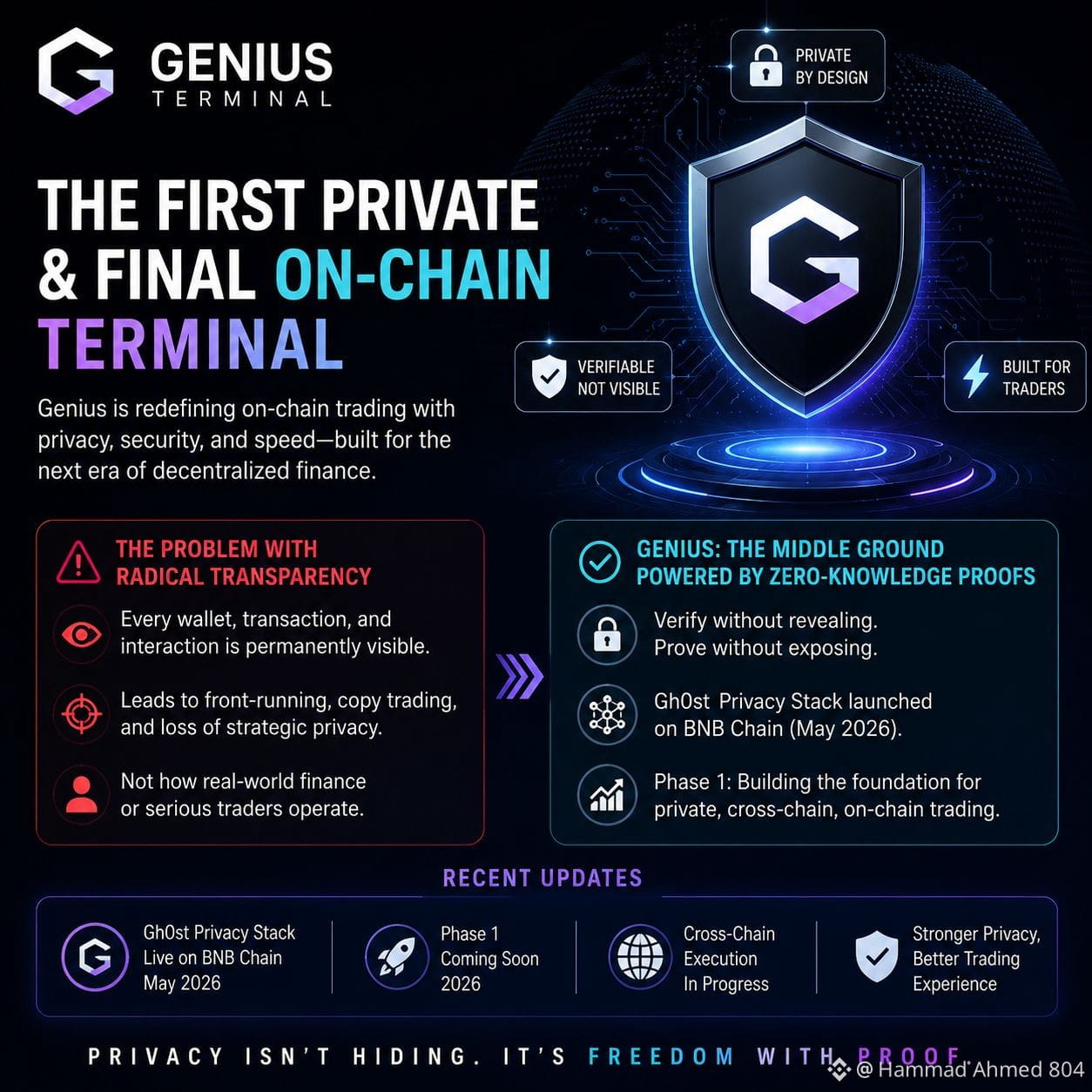
A Genius está abordando um problema diferente da maioria da infraestrutura de trading. Em vez de tornar tudo mais rápido ou barulhento, ela está questionando se a visibilidade financeira permanente é realmente sustentável. O recente lançamento do Gh0st na BNB Chain e o impulso em direção à Fase 1 sugerem que a equipe está apostando que a privacidade verificável se torne uma necessidade prática, não apenas uma preferência filosófica.
A parte interessante não é a tecnologia em si. É se os traders ainda se importam com a privacidade uma vez que os incentivos desaparecem e a conveniência se torna o fator decisivo.
O verdadeiro teste para a Genius começa quando a curiosidade termina e o uso rotineiro começa.
@GeniusOfficial #genius $GENIUS
A maioria dos projetos cripto me lembra carros-conceito em uma feira de automóveis: engenharia linda, demos impressionantes e multidões tirando fotos—até que alguém pergunta como eles se comportam com cinco anos de tráfego diário.
A Genius está abordando um problema diferente da maioria da infraestrutura de trading. Em vez de tornar tudo mais rápido ou barulhento, ela está questionando se a visibilidade financeira permanente é realmente sustentável. O recente lançamento do Gh0st na BNB Chain e o impulso em direção à Fase 1 sugerem que a equipe está apostando que a privacidade verificável se torne uma necessidade prática, não apenas uma preferência filosófica.
A parte interessante não é a tecnologia em si. É se os traders ainda se importam com a privacidade uma vez que os incentivos desaparecem e a conveniência se torna o fator decisivo.
O verdadeiro teste para a Genius começa quando a curiosidade termina e o uso rotineiro começa.
@GeniusOfficial #genius $GENIUS
A Genius está abordando um problema diferente da maioria da infraestrutura de trading. Em vez de tornar tudo mais rápido ou barulhento, ela está questionando se a visibilidade financeira permanente é realmente sustentável. O recente lançamento do Gh0st na BNB Chain e o impulso em direção à Fase 1 sugerem que a equipe está apostando que a privacidade verificável se torne uma necessidade prática, não apenas uma preferência filosófica.
A parte interessante não é a tecnologia em si. É se os traders ainda se importam com a privacidade uma vez que os incentivos desaparecem e a conveniência se torna o fator decisivo.
O verdadeiro teste para a Genius começa quando a curiosidade termina e o uso rotineiro começa.
@GeniusOfficial #genius $GENIUS
2
3
96
🔥 MYX salta +7,90%, destacando um forte momento e aumentando o interesse do mercado. Ganhos significativos podem atrair nova liquidez e participação ativa no trading. Os traders devem permanecer focados na confirmação técnica, nas tendências de volume e na gestão de risco disciplinada ao avaliar cenários potenciais de continuação. #CryptoTrading #AltcoinNews #MarketMomentum #RiskManagement
🔥 MYX salta +7,90%, destacando um forte momento e aumentando o interesse do mercado. Ganhos significativos podem atrair nova liquidez e participação ativa no trading. Os traders devem permanecer focados na confirmação técnica, nas tendências de volume e na gestão de risco disciplinada ao avaliar cenários potenciais de continuação. #CryptoTrading #AltcoinNews #MarketMomentum #RiskManagement
1
483
🌍 ROAM ganhou +1,83%, mostrando força medida e engajamento estável no mercado. Avanços graduais muitas vezes fornecem sinais valiosos sobre a confiança dos investidores e o desenvolvimento de tendências. Observar padrões de consolidação de preços e tendências de liquidez pode ajudar os traders a se prepararem para os próximos movimentos do mercado. #CryptoNews #MarketWatch #TradingCommunity #DigitalAssets
🌍 ROAM ganhou +1,83%, mostrando força medida e engajamento estável no mercado. Avanços graduais muitas vezes fornecem sinais valiosos sobre a confiança dos investidores e o desenvolvimento de tendências. Observar padrões de consolidação de preços e tendências de liquidez pode ajudar os traders a se prepararem para os próximos movimentos do mercado. #CryptoNews #MarketWatch #TradingCommunity #DigitalAssets
1
465
📊 COAI avança +3.85%, mantendo um momentum positivo e demonstrando resiliência nas condições atuais do mercado. Crescimento constante pode indicar demanda saudável e uma ação de preço construtiva. Os traders devem monitorar a expansão de volume e as zonas de suporte para identificar oportunidades de continuação. #CryptoMarkets #TradingStrategy #MarketAnalysis #TraderInsights
📊 COAI avança +3.85%, mantendo um momentum positivo e demonstrando resiliência nas condições atuais do mercado. Crescimento constante pode indicar demanda saudável e uma ação de preço construtiva. Os traders devem monitorar a expansão de volume e as zonas de suporte para identificar oportunidades de continuação. #CryptoMarkets #TradingStrategy #MarketAnalysis #TraderInsights
1
352
🚀 O Token PLTRON subiu +8,33%, refletindo uma forte participação do mercado e aumentando a atenção dos traders. Ganhos saudáveis combinados com liquidez sustentada geralmente apoiam um sentimento bullish. Os traders devem avaliar os níveis de resistência e as condições do mercado mais amplo antes de antecipar o próximo grande movimento. #AltcoinTrading #MarketMomentum #CryptoUpdate #TechnicalAnalysis
🚀 O Token PLTRON subiu +8,33%, refletindo uma forte participação do mercado e aumentando a atenção dos traders. Ganhos saudáveis combinados com liquidez sustentada geralmente apoiam um sentimento bullish. Os traders devem avaliar os níveis de resistência e as condições do mercado mais amplo antes de antecipar o próximo grande movimento. #AltcoinTrading #MarketMomentum #CryptoUpdate #TechnicalAnalysis
1
87
🌟 AIA registra um aumento de +2,70%, sinalizando um momentum positivo e uma melhora no sentimento. Avanços consistentes costumam atrair traders em busca de oportunidades estruturadas em vez de especulação de alto risco. Monitorar o desenvolvimento da tendência e a atividade de volume continua sendo importante para avaliar o potencial futuro. #DigitalAssets #CryptoTrading #MarketWatch #TradingSignals
🌟 AIA registra um aumento de +2,70%, sinalizando um momentum positivo e uma melhora no sentimento. Avanços consistentes costumam atrair traders em busca de oportunidades estruturadas em vez de especulação de alto risco. Monitorar o desenvolvimento da tendência e a atividade de volume continua sendo importante para avaliar o potencial futuro. #DigitalAssets #CryptoTrading #MarketWatch #TradingSignals
60
💡 LIGHT sobe +4,22%, demonstrando uma força saudável e crescente interesse dos investidores. Ganhos moderados, apoiados por uma participação constante, podem criar oportunidades atraentes para traders disciplinados. Observar de perto as zonas de suporte e resistência pode ajudar a descobrir a próxima fase do movimento de preços. #CryptoMarkets #TraderInsights #MarketAnalysis #TradingCommunity
💡 LIGHT sobe +4,22%, demonstrando uma força saudável e crescente interesse dos investidores. Ganhos moderados, apoiados por uma participação constante, podem criar oportunidades atraentes para traders disciplinados. Observar de perto as zonas de suporte e resistência pode ajudar a descobrir a próxima fase do movimento de preços. #CryptoMarkets #TraderInsights #MarketAnalysis #TradingCommunity
561
📈 TAG ganha +1,06%, refletindo uma participação estável no mercado e um gradativo impulso positivo. Embora o movimento seja modesto, a consistência frequentemente forma a base de tendências mais fortes. Os traders devem focar no crescimento de volume e em níveis técnicos chave para confirmação da direção futura. #CryptoTrading #MarketWatch #TradingTips #MarketTrends
📈 TAG ganha +1,06%, refletindo uma participação estável no mercado e um gradativo impulso positivo. Embora o movimento seja modesto, a consistência frequentemente forma a base de tendências mais fortes. Os traders devem focar no crescimento de volume e em níveis técnicos chave para confirmação da direção futura. #CryptoTrading #MarketWatch #TradingTips #MarketTrends
208
🔥 UAI avança +9.73%, mostrando forte pressão de compra e renovado entusiasmo no mercado. Ganhos próximos de dois dígitos costumam atrair traders de momentum em busca de setups de continuação de tendência. Ficar de olho na liquidez, níveis de resistência e confirmação de volume pode fornecer insights valiosos para a operação. #TradingStrategy #CryptoNews #MarketAnalysis #DigitalAssets
🔥 UAI avança +9.73%, mostrando forte pressão de compra e renovado entusiasmo no mercado. Ganhos próximos de dois dígitos costumam atrair traders de momentum em busca de setups de continuação de tendência. Ficar de olho na liquidez, níveis de resistência e confirmação de volume pode fornecer insights valiosos para a operação. #TradingStrategy #CryptoNews #MarketAnalysis #DigitalAssets
1
311
Inicia sessão para explorar mais conteúdos
Junta-te a utilizadores de criptomoedas de todo o mundo na Binance Square
⚡️ Obtém informações úteis e recentes sobre criptomoedas.
💬 Com a confiança da maior exchange de criptomoedas do mundo.
👍 Descobre perspetivas reais de criadores verificados.
E-mail/Número de telefone
Tópicos em Tendência
SECSaysBuybacksUpgradesDontMakeTokenSecurity
48 visualizações
22 a discutir
#SECSaysBuybacksUpgradesDontMakeTokenSecurity
🚨🇺🇸 ATUALIZAÇÃO DA SEC SOBRE CRIPTO: RECOMPRA E ATUALIZAÇÕES NÃO TORNAM AUTOMATICAMENTE UM TOKEN UM TÍTULO
A Divisão de Corporation Finance da SEC emitiu uma orientação recente sobre cripto que aborda recompra de tokens, atualizações de rede, alegações de marketing e desenvolvimento pós-lançamento. 👀
🔄 Recompras de Token: Uma recompra em uma rede que já funciona não faz, por si só, com que o token seja um contrato de investimento.
🛠️ Atualizações de Rede: Continuar a manter, melhorar ou aprimorar uma rede cripto funcional não conta automaticamente como o tipo de esforço gerencial que faria o token ser um título.
⚠️ Mas há um ponto importante: A SEC diz que a análise depende dos fatos e circunstâncias específicos. Recompras em uma rede não funcional ou promessas de que os detentores terão lucro podem levar a uma análise diferente.
📌 Conclusão: Essa orientação pode trazer mais clareza sobre como as leis de valores mobiliários dos EUA se aplicam a certos projetos de cripto — mas não é um porto seguro amplo para todo e qualquer token.
A regulação de cripto está ficando mais clara. 👀🔥
$PHA
$QNT
$LYN
FAÇA SUA PESQUISA • Fique Atualizado • Gerencie Riscos
#Binance #trading #market #news
Shourov Saha-01
·0 gostos
·247 visualizações
CoinMarketCapCompletesCoinglassAcquisition
28 visualizações
13 a discutir
QNTRises39%
57,450 visualizações
1,227 a discutir