Binance Square
Synthetic Cyborg
63 Publicações

Synthetic Cyborg

Crypto analyst | Technical & fundamental market insights 📊 | BTC, ETH & altcoin trends | Stay updated, stay smart
23 A seguir
17 Seguidores
18 Gostaram
Publicações
·
--
Artigo
Ver tradução
Ethereum Is Losing Its Grip on Crypto Payments as Base Crosses $565 Billion in Stablecoin Volume.For years, $ETH has been the undisputed leader of blockchain payments. It introduced smart contracts, became the home of DeFi, and powered the majority of stablecoin transactions. But the latest on-chain data suggests that the market is entering a new phase. According to Visa's adjusted on-chain analytics for June, Base processed approximately $565 billion in stablecoin volume, slightly ahead of Ethereum's $562 billion. The difference is small, but the message is significant: the battle for crypto payments is no longer centered on Ethereum alone. Why Is Base Growing So Quickly? Base was built with one clear objective—making blockchain transactions faster and cheaper while maintaining Ethereum-level security. Instead of competing directly with Ethereum, Base extends its ecosystem by handling transactions more efficiently. Lower fees, faster settlement, and a growing ecosystem of consumer applications have encouraged developers and businesses to move payment activity onto Layer 2. This is especially important for stablecoins. Whether it's cross-border transfers, merchant payments, payroll, or remittances, users care more about speed and transaction costs than the blockchain itself. Stablecoins Are Changing the Competition The real competition is no longer about which blockchain has the highest TVL or the most smart contracts. The new race is about who moves the most digital dollars. Visa's latest data shows adjusted stablecoin volume reached nearly $1.79 trillion in June, highlighting how rapidly blockchain-based payments continue to expand. A large portion of that activity is now shifting toward Layer 2 networks such as Base. This trend indicates that stablecoins are evolving from trading tools into real payment infrastructure. Does This Mean Ethereum Is Losing? Not exactly. Ethereum remains the settlement layer that secures billions of dollars in assets and continues to dominate DeFi, institutional adoption, and smart contract innovation. What appears to be changing is where everyday payment activity happens. Think of Ethereum as the financial backbone, while Base is becoming one of the highways built on top of it. More users may interact with Base without even realizing that Ethereum is providing the underlying security. Why This Matters for Investors Investors should avoid interpreting this headline as "Ethereum is finished." Instead, it signals that Ethereum's ecosystem is evolving. If Base and other Layer 2 networks continue attracting payment activity, Ethereum's long-term value may increasingly come from acting as the settlement and security layer rather than processing every transaction directly. The biggest winners could be projects building payment applications, wallets, and financial services on Layer 2 networks. Final Thoughts Base overtaking Ethereum in monthly stablecoin payment volume—even by a narrow margin—is an important milestone. It reflects a broader industry trend toward scalable, low-cost blockchain infrastructure designed for real-world payments. Ethereum is unlikely to lose its position as the foundation of decentralized finance anytime soon. However, the future of crypto payments may increasingly belong to Layer 2 networks that deliver the speed, affordability, and user experience needed for mass adoption. The competition has officially shifted from who built crypto to who can make crypto usable for everyone. #Ethereum #CryptoNew #Stab

Ethereum Is Losing Its Grip on Crypto Payments as Base Crosses $565 Billion in Stablecoin Volume.

For years, $ETH has been the undisputed leader of blockchain payments. It introduced smart contracts, became the home of DeFi, and powered the majority of stablecoin transactions. But the latest on-chain data suggests that the market is entering a new phase.
According to Visa's adjusted on-chain analytics for June, Base processed approximately $565 billion in stablecoin volume, slightly ahead of Ethereum's $562 billion. The difference is small, but the message is significant: the battle for crypto payments is no longer centered on Ethereum alone.
Why Is Base Growing So Quickly?
Base was built with one clear objective—making blockchain transactions faster and cheaper while maintaining Ethereum-level security.
Instead of competing directly with Ethereum, Base extends its ecosystem by handling transactions more efficiently. Lower fees, faster settlement, and a growing ecosystem of consumer applications have encouraged developers and businesses to move payment activity onto Layer 2.
This is especially important for stablecoins. Whether it's cross-border transfers, merchant payments, payroll, or remittances, users care more about speed and transaction costs than the blockchain itself.
Stablecoins Are Changing the Competition
The real competition is no longer about which blockchain has the highest TVL or the most smart contracts.
The new race is about who moves the most digital dollars.
Visa's latest data shows adjusted stablecoin volume reached nearly $1.79 trillion in June, highlighting how rapidly blockchain-based payments continue to expand. A large portion of that activity is now shifting toward Layer 2 networks such as Base.
This trend indicates that stablecoins are evolving from trading tools into real payment infrastructure.
Does This Mean Ethereum Is Losing?
Not exactly.
Ethereum remains the settlement layer that secures billions of dollars in assets and continues to dominate DeFi, institutional adoption, and smart contract innovation.
What appears to be changing is where everyday payment activity happens.
Think of Ethereum as the financial backbone, while Base is becoming one of the highways built on top of it. More users may interact with Base without even realizing that Ethereum is providing the underlying security.
Why This Matters for Investors
Investors should avoid interpreting this headline as "Ethereum is finished."
Instead, it signals that Ethereum's ecosystem is evolving.
If Base and other Layer 2 networks continue attracting payment activity, Ethereum's long-term value may increasingly come from acting as the settlement and security layer rather than processing every transaction directly.
The biggest winners could be projects building payment applications, wallets, and financial services on Layer 2 networks.
Final Thoughts
Base overtaking Ethereum in monthly stablecoin payment volume—even by a narrow margin—is an important milestone.
It reflects a broader industry trend toward scalable, low-cost blockchain infrastructure designed for real-world payments.
Ethereum is unlikely to lose its position as the foundation of decentralized finance anytime soon. However, the future of crypto payments may increasingly belong to Layer 2 networks that deliver the speed, affordability, and user experience needed for mass adoption.
The competition has officially shifted from who built crypto to who can make crypto usable for everyone.
#Ethereum #CryptoNew #Stab
·
--
Em Baixa
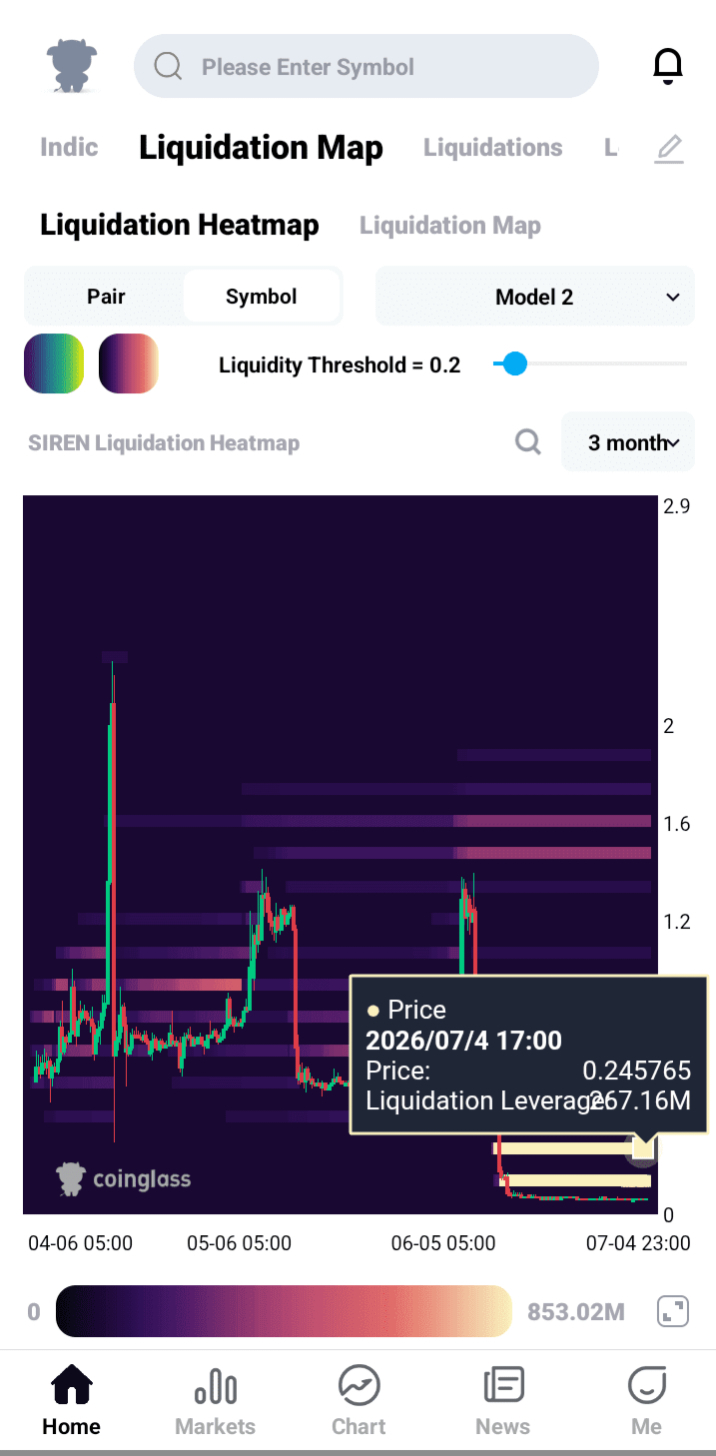
Depois de analisar as atualizações mais recentes, não acho justo chamar a SIREN de uma moeda morta. No entanto, o projeto claramente está em uma posição fraca no momento.

H T Y
·
--
É prova $SIREN will voltar $0.24
·
--
Em Alta
Vim acompanhando $VELVET {alpha}(560x8b194370825e37b33373e74a41009161808c1488) há algum tempo, e acho que é um daqueles projetos que não está recebendo a atenção que merece. O que se destaca para mim não é apenas a movimentação do preço — é o desenvolvimento constante, a direção clara e o fato de a equipe continuar construindo em vez de correr atrás de hype. Se o mercado de cripto continuar forte e o roadmap seguir sendo entregue, não ficaria surpreso em ver a VELVET se tornar um dos projetos menores com melhor desempenho ao longo do tempo. Não é aconselhamento financeiro — estou apenas compartilhando um projeto que estou observando de verdade de perto. Faça sempre sua própria pesquisa. #VELVET #Crypto #Web3 #Altcoins #DYOR
Vim acompanhando $VELVET
há algum tempo, e acho que é um daqueles projetos que não está recebendo a atenção que merece.
O que se destaca para mim não é apenas a movimentação do preço — é o desenvolvimento constante, a direção clara e o fato de a equipe continuar construindo em vez de correr atrás de hype.
Se o mercado de cripto continuar forte e o roadmap seguir sendo entregue, não ficaria surpreso em ver a VELVET se tornar um dos projetos menores com melhor desempenho ao longo do tempo.
Não é aconselhamento financeiro — estou apenas compartilhando um projeto que estou observando de verdade de perto. Faça sempre sua própria pesquisa.
#VELVET #Crypto #Web3 #Altcoins #DYOR

·
--
Em Baixa
Ver tradução
$BTC toady news
$BTC toady news
$BTC US ETFs de Bitcoin finalmente encerraram a sequência de 10 dias de perdas, atraindo US$ 222 milhões em entradas ontem. #BTC
$BTC US ETFs de Bitcoin finalmente encerraram a sequência de 10 dias de perdas, atraindo US$ 222 milhões em entradas ontem.

#BTC
Ver tradução
WHAT IS THE FEAR & GREED INDEX ? The Fear & Greed Index (FGI) is a widely used indicator that helps measure the overall mood of the cryptocurrency market. It assigns a score between 0 and 100, showing whether investors are acting out of fear or driven by greed. Lower scores usually reflect cautious or fearful market sentiment, while higher scores indicate stronger optimism and increased buying interest. To calculate this score, the index combines data from multiple market signals instead of relying on a single metric. These signals commonly include trading volume, price volatility, Bitcoin dominance, whale activity, search trends, and order book data. By evaluating these factors together, the index provides a broader picture of current market sentiment. Some versions of the Fear & Greed Index also incorporate machine learning to analyze discussions across social media platforms and assess how public opinion and technical analysis trends may influence investor behavior. Each data source is assigned a different weight based on its historical relationship with market movements, allowing the index to generate a balanced sentiment score that traders and investors can use as one of many tools when making decisions. #CryptoFearGreedIndex #Bitcoin #CryptoMarket $BTC $SOL $ETH

WHAT IS THE FEAR & GREED INDEX ?

The Fear & Greed Index (FGI) is a widely used indicator that helps measure the overall mood of the cryptocurrency market. It assigns a score between 0 and 100, showing whether investors are acting out of fear or driven by greed. Lower scores usually reflect cautious or fearful market sentiment, while higher scores indicate stronger optimism and increased buying interest.
To calculate this score, the index combines data from multiple market signals instead of relying on a single metric. These signals commonly include trading volume, price volatility, Bitcoin dominance, whale activity, search trends, and order book data. By evaluating these factors together, the index provides a broader picture of current market sentiment.
Some versions of the Fear & Greed Index also incorporate machine learning to analyze discussions across social media platforms and assess how public opinion and technical analysis trends may influence investor behavior. Each data source is assigned a different weight based on its historical relationship with market movements, allowing the index to generate a balanced sentiment score that traders and investors can use as one of many tools when making decisions.

#CryptoFearGreedIndex #Bitcoin #CryptoMarket
$BTC $SOL $ETH

Artigo
Ver tradução
Shares of Forward Industries surged 11% as the company increased its investment in Solana, with its.Forward Industries, the largest corporate Solana SOLUSD holder, saw its share price rise by double-digits on Wednesday. The uptick came after the company revealed it bought over 500,000 Solana SOLUSD in fiscal Q3 2026. Forward Industries SOL Treasury Tops 7.5M FWDI closed at $4.70 on July 1, up 11.37%. The gain extended a rally that began in late June, when SOL started to recover. That rebound has offered relief to a stock weighed down by a broader 2026 downturn. According to the announcement, the firm acquired the tokens at an average price of about $79 each. Forward held 7.55 million $SOL as of June 30, 2026. SOL-per-fully diluted share rose to 0.0729 from 0.0669 in the prior quarter, a 36% annualized growth rate. Furthermore, shares outstanding fell to 73.85 million from 76.31 million. Meanwhile, the company sold 93,642 shares through its at-the-market program during the quarter. Forward also cited its recent inclusion in the Russell 2000 and Russell 3000 indexes. Losses Continue to Impact the Largest SOL Holder The recent increase in buying activity followed a difficult period. Forward reported a net loss of $283.1 million for the quarter ending March 31, 2026, primarily due to fair-value adjustments on its SOL holdings.Despite this, revenue more than doubled compared to the same period last year, mainly from staking rewards. The market has since improved. SOL has risen by over 15% in the past week, driven by increased network activity, and has outperformed other major cryptocurrencies, according to BeInCrypto Markets data. The coming months will test whether SOL’s recovery can hold, a swing that flows directly to Forward’s balance sheet as the largest $SOL holder. #SOL #Crypto #Investing #InstitutionalAdoption #MarketUpdate

Shares of Forward Industries surged 11% as the company increased its investment in Solana, with its.

Forward Industries, the largest corporate Solana SOLUSD holder, saw its share price rise by double-digits on Wednesday. The uptick came after the company revealed it bought over 500,000 Solana SOLUSD in fiscal Q3 2026.
Forward Industries SOL Treasury Tops 7.5M
FWDI closed at $4.70 on July 1, up 11.37%. The gain extended a rally that began in late June, when SOL started to recover. That rebound has offered relief to a stock weighed down by a broader 2026 downturn.
According to the announcement, the firm acquired the tokens at an average price of about $79 each. Forward held 7.55 million $SOL as of June 30, 2026.
SOL-per-fully diluted share rose to 0.0729 from 0.0669 in the prior quarter, a 36% annualized growth rate. Furthermore, shares outstanding fell to 73.85 million from 76.31 million.
Meanwhile, the company sold 93,642 shares through its at-the-market program during the quarter. Forward also cited its recent inclusion in the Russell 2000 and Russell 3000 indexes.
Losses Continue to Impact the Largest SOL Holder
The recent increase in buying activity followed a difficult period. Forward reported a net loss of $283.1 million for the quarter ending March 31, 2026, primarily due to fair-value adjustments on its SOL holdings.Despite this, revenue more than doubled compared to the same period last year, mainly from staking rewards.
The market has since improved. SOL has risen by over 15% in the past week, driven by increased network activity, and has outperformed other major cryptocurrencies, according to BeInCrypto Markets data.
The coming months will test whether SOL’s recovery can hold, a swing that flows directly to Forward’s balance sheet as the largest $SOL holder.
#SOL #Crypto #Investing #InstitutionalAdoption #MarketUpdate
SOL-3,96%
FWDIUS-0,46%
Artigo
Ver tradução
Circle CEO Says Open USD Must Overcome USDC’s Network Effect: Why Stablecoin Liquidity Matters More.The emergence of Open USD (OUSD) has created one of the most significant competitive challenges the stablecoin industry has seen in years. With more than 140 prominent backers spanning payments, finance, technology, and blockchain infrastructure, the project immediately attracted attention across the digital asset market. However, the central question remains unchanged: Can a consortium-backed stablecoin replace an ecosystem built over years of liquidity, integrations, regulatory compliance, and institutional trust? The answer depends less on the size of the partner list and more on whether Open USD can generate sustained transaction flow across the global financial system. The Stablecoin Battle Is About Network Effects, Not Announcements Stablecoins behave similarly to internet platforms. Once liquidity becomes concentrated, every additional participant strengthens the network: Exchanges prefer deeper liquidity. Institutions prefer regulated infrastructure. Developers build around existing standards. Payment providers integrate the most widely accepted assets. Users naturally migrate toward the easiest settlement option. This creates powerful network effects that become increasingly difficult for newcomers to overcome. While Open USD launches with impressive institutional support, established transaction volume remains a considerably stronger competitive advantage than announced partnerships. Why USDC Holds a Significant Competitive Advantage Deep Global Liquidity Liquidity determines whether a stablecoin functions efficiently across: centralized exchanges decentralized finance cross-border payments treasury management merchant settlement institutional trading A stablecoin with deeper liquidity generally experiences: tighter spreads lower slippage faster settlements greater market confidence These characteristics encourage even more adoption, reinforcing the existing network. Mature Infrastructure Years of ecosystem development have resulted in an extensive operational framework including: multi-chain availability institutional custody payment integrations enterprise APIs compliance tooling cross-chain transfer infrastructure Infrastructure represents years of engineering investment that cannot be replicated overnight. Regulatory Footprint Large financial institutions increasingly require: licensing compliance reserve transparency regulatory approvals operational oversight Stablecoins seeking institutional adoption must satisfy regulatory requirements across multiple jurisdictions rather than relying solely on technical innovation. What Makes Open USD Different? Open USD attempts to compete using a fundamentally different economic model. Its primary value propositions include: zero-cost minting zero-cost redemption shared reserve revenue consortium governance partner-owned economics Instead of concentrating reserve income with a single issuer, participating organizations receive a portion of reserve earnings. This creates incentives for businesses to distribute Open USD across their products and services. #OpenUSD #USDC #Circle #Stablecoins #Crypto #CryptoNews #Blockchain #DeFi #Web3 #DigitalAssets #Payments #Fintech #USDStablecoin #CryptoMarket #RWA #Tokenization

Circle CEO Says Open USD Must Overcome USDC’s Network Effect: Why Stablecoin Liquidity Matters More.

The emergence of Open USD (OUSD) has created one of the most significant competitive challenges the stablecoin industry has seen in years. With more than 140 prominent backers spanning payments, finance, technology, and blockchain infrastructure, the project immediately attracted attention across the digital asset market.
However, the central question remains unchanged:
Can a consortium-backed stablecoin replace an ecosystem built over years of liquidity, integrations, regulatory compliance, and institutional trust?
The answer depends less on the size of the partner list and more on whether Open USD can generate sustained transaction flow across the global financial system.
The Stablecoin Battle Is About Network Effects, Not Announcements
Stablecoins behave similarly to internet platforms.
Once liquidity becomes concentrated, every additional participant strengthens the network:
Exchanges prefer deeper liquidity. Institutions prefer regulated infrastructure. Developers build around existing standards. Payment providers integrate the most widely accepted assets. Users naturally migrate toward the easiest settlement option.
This creates powerful network effects that become increasingly difficult for newcomers to overcome.
While Open USD launches with impressive institutional support, established transaction volume remains a considerably stronger competitive advantage than announced partnerships.
Why USDC Holds a Significant Competitive Advantage
Deep Global Liquidity
Liquidity determines whether a stablecoin functions efficiently across:
centralized exchanges decentralized finance cross-border payments treasury management merchant settlement institutional trading
A stablecoin with deeper liquidity generally experiences:
tighter spreads lower slippage faster settlements greater market confidence
These characteristics encourage even more adoption, reinforcing the existing network.
Mature Infrastructure
Years of ecosystem development have resulted in an extensive operational framework including:
multi-chain availability institutional custody payment integrations enterprise APIs compliance tooling cross-chain transfer infrastructure
Infrastructure represents years of engineering investment that cannot be replicated overnight.
Regulatory Footprint
Large financial institutions increasingly require:
licensing compliance reserve transparency regulatory approvals operational oversight
Stablecoins seeking institutional adoption must satisfy regulatory requirements across multiple jurisdictions rather than relying solely on technical innovation.
What Makes Open USD Different?
Open USD attempts to compete using a fundamentally different economic model.
Its primary value propositions include:
zero-cost minting zero-cost redemption shared reserve revenue consortium governance partner-owned economics
Instead of concentrating reserve income with a single issuer, participating organizations receive a portion of reserve earnings.
This creates incentives for businesses to distribute Open USD across their products and services.
#OpenUSD #USDC #Circle #Stablecoins #Crypto #CryptoNews #Blockchain #DeFi #Web3 #DigitalAssets #Payments #Fintech #USDStablecoin #CryptoMarket #RWA #Tokenization
Ver tradução
Why the Newton Mainnet Beta Matters for the Future of On-Chain Automation.The launch of the Newton Mainnet Beta represents an important milestone for decentralized applications that require secure, transparent, and verifiable automation. Instead of relying on centralized services for critical execution, Newton Protocol is building infrastructure that enables automated actions to be verified directly on-chain. This approach can improve transparency, strengthen trust, and reduce single points of failure for developers and users. One of the most interesting aspects of the project is its focus on creating practical tools that can support the next generation of Web3 applications. Whether it involves automated workflows, smart contract execution, or more efficient decentralized services, the Mainnet Beta provides an opportunity for developers to test, refine, and expand real-world use cases. As the ecosystem grows, community feedback and developer participation will play an important role in improving the network and discovering new applications. It will be exciting to watch how the platform evolves over the coming months and what innovative solutions emerge from builders around the world. Congratulations to @NewtonProtocol on reaching this important stage. I’m looking forward to following the progress of the Newton Mainnet Beta and seeing how the ecosystem develops. $NEWT #Newt

Why the Newton Mainnet Beta Matters for the Future of On-Chain Automation.

The launch of the Newton Mainnet Beta represents an important milestone for decentralized applications that require secure, transparent, and verifiable automation. Instead of relying on centralized services for critical execution, Newton Protocol is building infrastructure that enables automated actions to be verified directly on-chain. This approach can improve transparency, strengthen trust, and reduce single points of failure for developers and users.
One of the most interesting aspects of the project is its focus on creating practical tools that can support the next generation of Web3 applications. Whether it involves automated workflows, smart contract execution, or more efficient decentralized services, the Mainnet Beta provides an opportunity for developers to test, refine, and expand real-world use cases.
As the ecosystem grows, community feedback and developer participation will play an important role in improving the network and discovering new applications. It will be exciting to watch how the platform evolves over the coming months and what innovative solutions emerge from builders around the world.
Congratulations to @NewtonProtocol on reaching this important stage. I’m looking forward to following the progress of the Newton Mainnet Beta and seeing how the ecosystem develops. $NEWT #Newt
Ver tradução
#newt $NEWT The launch of the Newton Mainnet Beta is an exciting step toward bringing verifiable automation and smarter on-chain execution to Web3. I'm looking forward to seeing how developers and users build real-world applications on the network. Great progress from @NewtonProtocol! 🚀 $NEWT #Newt
Ver tradução
🚨 Crypto Market Sees $450M in Liquidations in Just 24 Hours The crypto derivatives market experienced approximately $450 million in liquidations over the past 24 hours, highlighting another period of intense market volatility. 📊 Liquidation Breakdown: • Short positions: ~$280 million • Long positions: ~$171 million According to ChainCatcher, the data is sourced from Coinglass. Bitcoin $BTC recorded approximately $125 million in short liquidations and $27 million in long liquidations, indicating that many bearish traders were caught off guard by the recent price movement. Ethereum $ETH also saw significant liquidations, with around $67.6 million in shorts and $20.1 million in longs. In total, 117,590 traders were liquidated globally within the last 24 hours. The largest single liquidation occurred on Hyperliquid in the XYZ market, valued at approximately $9.85 million. ⚠️ High liquidation events often reflect elevated volatility and increased leverage across the market. As always, traders should manage risk carefully and avoid excessive leverage during uncertain market conditions. $SOL #Crypto #Bitcoin #BTC #Ethereum #ETH #Liquidation #Trading #Coinglass #Hyperliquid #CryptoNews
🚨 Crypto Market Sees $450M in Liquidations in Just 24 Hours
The crypto derivatives market experienced approximately $450 million in liquidations over the past 24 hours, highlighting another period of intense market volatility.
📊 Liquidation Breakdown:
• Short positions: ~$280 million
• Long positions: ~$171 million
According to ChainCatcher, the data is sourced from Coinglass.
Bitcoin $BTC recorded approximately $125 million in short liquidations and $27 million in long liquidations, indicating that many bearish traders were caught off guard by the recent price movement.
Ethereum $ETH also saw significant liquidations, with around $67.6 million in shorts and $20.1 million in longs.
In total, 117,590 traders were liquidated globally within the last 24 hours. The largest single liquidation occurred on Hyperliquid in the XYZ market, valued at approximately $9.85 million.
⚠️ High liquidation events often reflect elevated volatility and increased leverage across the market. As always, traders should manage risk carefully and avoid excessive leverage during uncertain market conditions.
$SOL #Crypto #Bitcoin #BTC #Ethereum #ETH #Liquidation #Trading #Coinglass #Hyperliquid #CryptoNews
Artigo
Ver tradução
Newton Mainnet Beta: The Future of Verifiable Onchain Automation.@NewtonProtocol has launched its Mainnet Beta, introducing a trustless automation layer for onchain finance. Using TEEs and ZKPs, Newton enables AI agents to execute cross-chain transactions with cryptographic proof that every action was user-authorized. The $NEWT token secures the network through staking and governance. Backed by Magic Labs with $90M from PayPal Ventures and Polygon, Newton Protocol solves DeFi's trust problem through compliance-as-code. Developers can now deploy AI agents on Mainnet Beta to automate portfolio rebalancing, DCA, and yield strategies without compromising custody. This is critical infrastructure for smart wallets and autonomous finance. #Newt

Newton Mainnet Beta: The Future of Verifiable Onchain Automation.

@NewtonProtocol has launched its Mainnet Beta, introducing a trustless automation layer for onchain finance. Using TEEs and ZKPs, Newton enables AI agents to execute cross-chain transactions with cryptographic proof that every action was user-authorized.
The $NEWT token secures the network through staking and governance. Backed by Magic Labs with $90M from PayPal Ventures and Polygon, Newton Protocol solves DeFi's trust problem through compliance-as-code.
Developers can now deploy AI agents on Mainnet Beta to automate portfolio rebalancing, DCA, and yield strategies without compromising custody. This is critical infrastructure for smart wallets and autonomous finance. #Newt
·
--
Em Alta
Ver tradução
#newt $NEWT The future of on-chain automation depends on secure and verifiable execution, and Newton Mainnet Beta is a major step in that direction. Looking forward to seeing developers build powerful autonomous applications on the network. Great progress from @NewtonProtocol #Newt
Ver tradução
I had $600, but now I'm left with only $146. I've become completely discouraged with trading. That money meant a lot to me.
Ver tradução
It feels like the cryptocurrency market has lost its appeal. These days, it seems to offer little beyond losses, making it increasingly difficult to see any worthwhile opportunities.
Ver tradução
#AAVERises13.16%To$94.32
As instituições despejaram ETFs de Bitcoin e Ethereum, mas ainda compraram XRP e HYPE novamente. Os resgates dos ETFs de Bitcoin e Ethereum superaram em muito o ingresso semanal do XRP, enquanto a demanda seletiva por $XRP and HYPE wrappers mostrou que as instituições separaram o risco amplo de cripto da exposição direcionada a altcoins. {future}(XRPUSDT)
As instituições despejaram ETFs de Bitcoin e Ethereum, mas ainda compraram XRP e HYPE novamente.
Os resgates dos ETFs de Bitcoin e Ethereum superaram em muito o ingresso semanal do XRP, enquanto a demanda seletiva por $XRP and HYPE wrappers mostrou que as instituições separaram o risco amplo de cripto da exposição direcionada a altcoins.
·
--
Em Alta
$LUNC O nome “Luna” da OpenAI virou o “token morto” de Terra em um trade de alavancagem no estilo YOLO. A OpenAI apresentou o GPT-5.6 como uma nova família de modelos de fronteira criada para desafiar o Mythos. Traders de cripto viram Sol, Terra e Luna e transformaram um token da era do colapso em uma aposta viva na atenção.
$LUNC O nome “Luna” da OpenAI virou o “token morto” de Terra em um trade de alavancagem no estilo YOLO.
A OpenAI apresentou o GPT-5.6 como uma nova família de modelos de fronteira criada para desafiar o Mythos. Traders de cripto viram Sol, Terra e Luna e transformaram um token da era do colapso em uma aposta viva na atenção.
Inicia sessão para explorar mais conteúdos
Junta-te a utilizadores de criptomoedas de todo o mundo na Binance Square
⚡️ Obtém informações úteis e recentes sobre criptomoedas.
💬 Com a confiança da maior exchange de criptomoedas do mundo.
👍 Descobre perspetivas reais de criadores verificados.
E-mail/Número de telefone
Mapa do sítio
Preferências de cookies
Termos e Condições da Plataforma