
Bilal crypto 7
5.5k Publicações

Bilal crypto 7
324 A seguir
25.3K+ Seguidores
9.1K+ Gostaram
Publicações
Tudo
Em direto
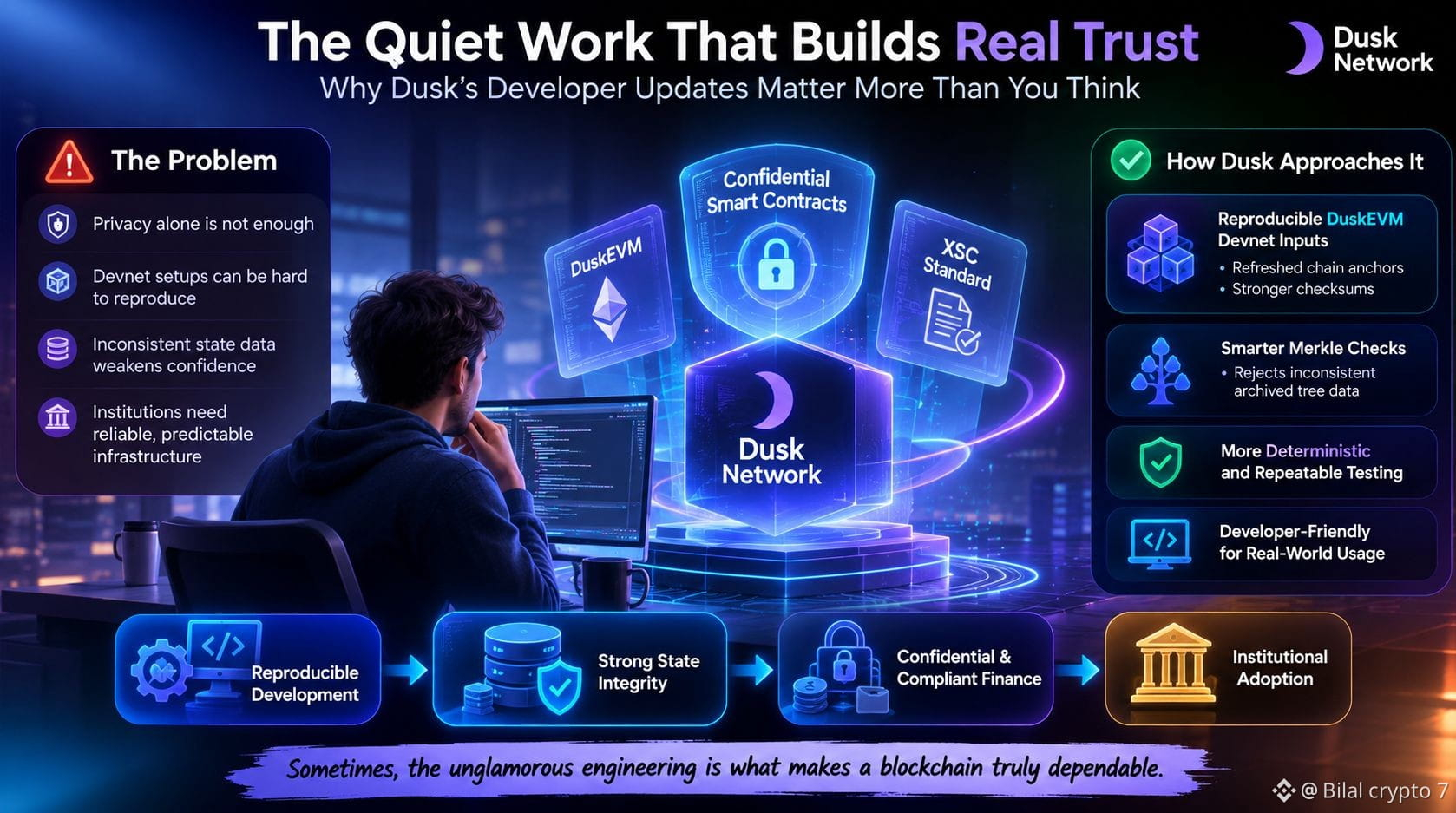
Uma coisa que percebi nas recentes atualizações de desenvolvedores da Dusk não foi um recurso chamativo. Foi o trabalho mais silencioso para garantir a reprodutibilidade e manter o estado da blockchain consistente.
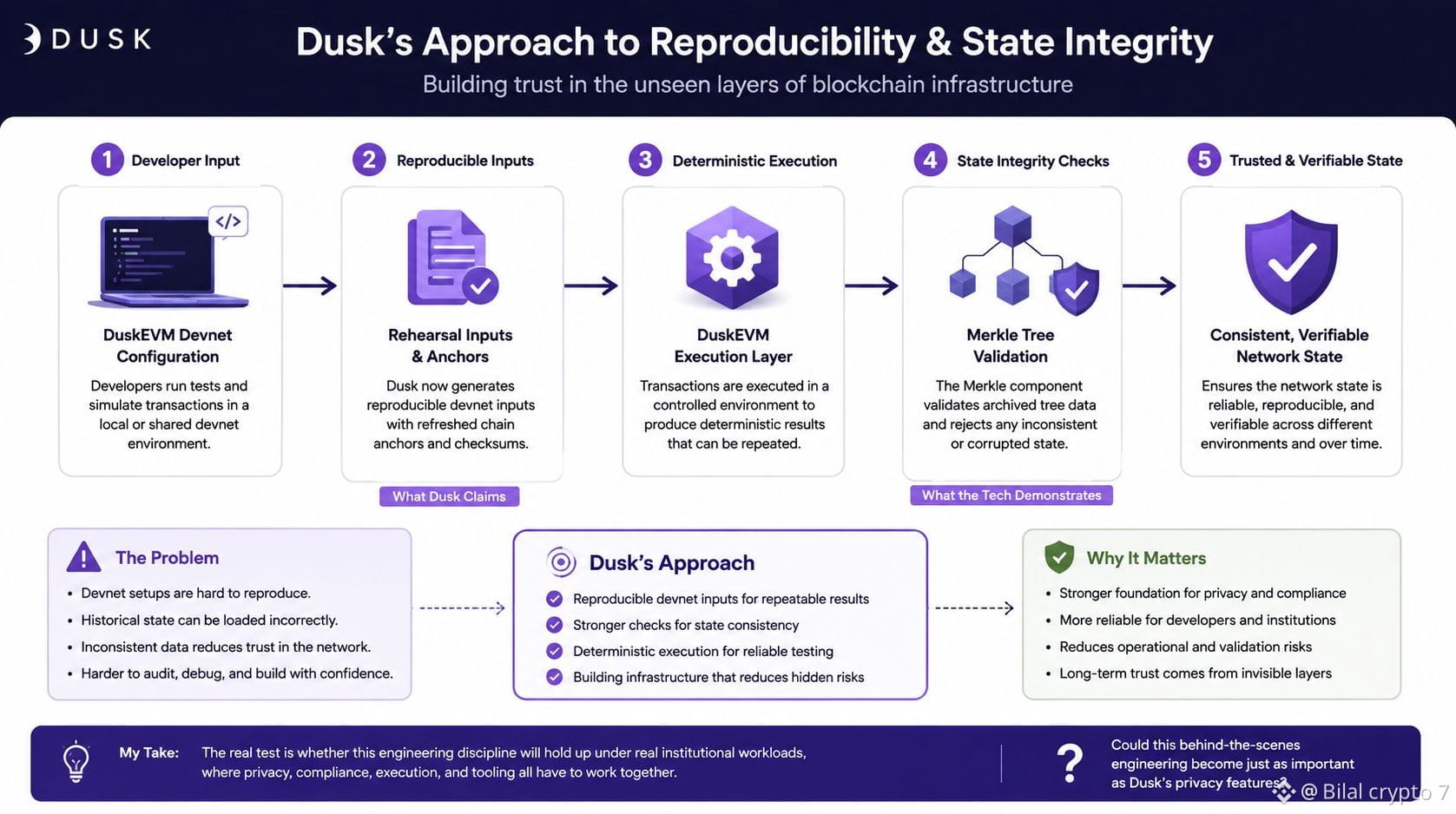
Isso importa porque só a privacidade não torna uma infraestrutura confiável. Se os desenvolvedores não conseguirem reproduzir com confiabilidade uma configuração de devnet, ou se um estado antigo puder ser carregado incorretamente, mesmo uma tecnologia boa fica mais difícil de depender.
A Dusk tem trabalhado em entradas reprodutíveis de devnet do DuskEVM, incluindo âncoras de cadeia e somas de verificação (checksums) atualizadas. O trabalho com Merkle também adiciona verificações para rejeitar dados de árvore arquivados inconsistentes.
Na verdade, acho isso mais interessante do que outro grande anúncio de recurso. Isso demonstra atenção aos pequenos problemas de engenharia que podem se tornar dolorosos mais tarde.
Ainda assim, tenho algumas dúvidas. Passar essas verificações técnicas é uma coisa; provar que o sistema continua confiável sob cargas reais é outra.
Esse tipo de engenharia nos bastidores pode acabar sendo tão importante quanto os recursos de privacidade da Dusk?
@Dusk #dusk $DUSK
Isso importa porque só a privacidade não torna uma infraestrutura confiável. Se os desenvolvedores não conseguirem reproduzir com confiabilidade uma configuração de devnet, ou se um estado antigo puder ser carregado incorretamente, mesmo uma tecnologia boa fica mais difícil de depender.
A Dusk tem trabalhado em entradas reprodutíveis de devnet do DuskEVM, incluindo âncoras de cadeia e somas de verificação (checksums) atualizadas. O trabalho com Merkle também adiciona verificações para rejeitar dados de árvore arquivados inconsistentes.
Na verdade, acho isso mais interessante do que outro grande anúncio de recurso. Isso demonstra atenção aos pequenos problemas de engenharia que podem se tornar dolorosos mais tarde.
Ainda assim, tenho algumas dúvidas. Passar essas verificações técnicas é uma coisa; provar que o sistema continua confiável sob cargas reais é outra.
Esse tipo de engenharia nos bastidores pode acabar sendo tão importante quanto os recursos de privacidade da Dusk?
@Dusk #dusk $DUSK
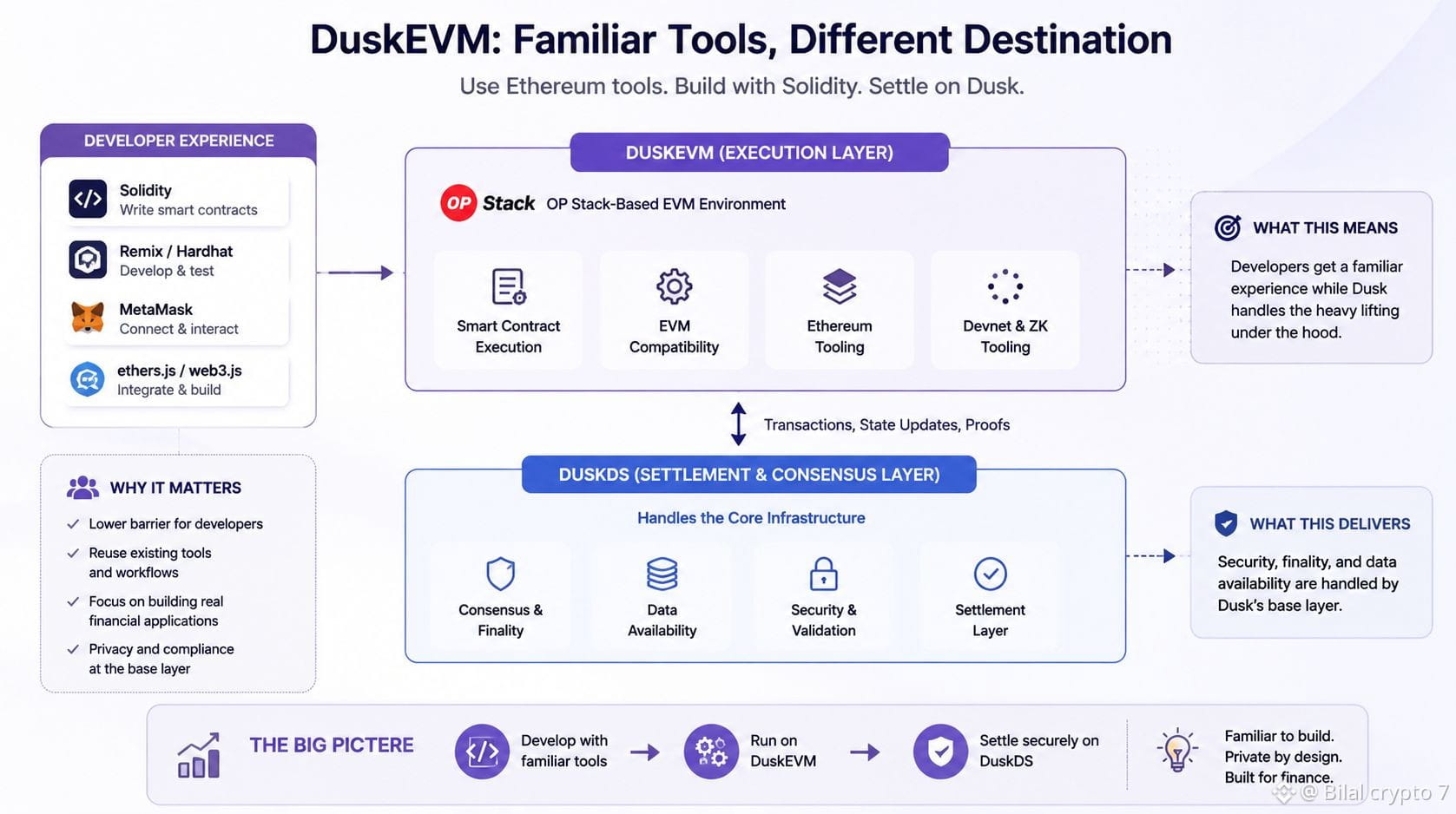
Percebi que novas blockchains frequentemente enfrentam um problema simples: desenvolvedores não querem ter que aprender tudo de novo apenas para testar outra rede.
É aí que o DuskEVM faz sentido para mim. A Dusk está trazendo um ambiente EVM para sua rede, permitindo que desenvolvedores trabalhem com Solidity e ferramentas familiares do ecossistema Ethereum, usando a infraestrutura subjacente da Dusk para consenso, finalização e disponibilidade de dados.
Gosto dessa abordagem porque reduzir a barreira técnica é importante. Se eu fosse desenvolvedor, poder reutilizar ferramentas e conhecimento que eu já tenho tornaria testar a Dusk muito mais fácil.
Mas ainda estou cético quanto ao que vem a seguir.
Tenho visto a compatibilidade com EVM virar quase uma lista de requisitos obrigatórios em meio ao cripto. Ela pode facilitar a implantação, mas não traz automaticamente usuários, liquidez ou desenvolvedores que realmente queiram permanecer.
Para mim, a parte interessante é se o DuskEVM consegue conectar essa experiência familiar para desenvolvedores com o foco da Dusk em privacidade e aplicações financeiras. Esse é um problema muito mais difícil do que simplesmente dar suporte ao Solidity.
Então estou acompanhando a adoção mais do que a lista de recursos.
O DuskEVM consegue transformar as ferramentas familiares do Ethereum em um motivo genuinamente diferente para que desenvolvedores construam na Dusk?
@Dusk #dusk $DUSK
É aí que o DuskEVM faz sentido para mim. A Dusk está trazendo um ambiente EVM para sua rede, permitindo que desenvolvedores trabalhem com Solidity e ferramentas familiares do ecossistema Ethereum, usando a infraestrutura subjacente da Dusk para consenso, finalização e disponibilidade de dados.
Gosto dessa abordagem porque reduzir a barreira técnica é importante. Se eu fosse desenvolvedor, poder reutilizar ferramentas e conhecimento que eu já tenho tornaria testar a Dusk muito mais fácil.
Mas ainda estou cético quanto ao que vem a seguir.
Tenho visto a compatibilidade com EVM virar quase uma lista de requisitos obrigatórios em meio ao cripto. Ela pode facilitar a implantação, mas não traz automaticamente usuários, liquidez ou desenvolvedores que realmente queiram permanecer.
Para mim, a parte interessante é se o DuskEVM consegue conectar essa experiência familiar para desenvolvedores com o foco da Dusk em privacidade e aplicações financeiras. Esse é um problema muito mais difícil do que simplesmente dar suporte ao Solidity.
Então estou acompanhando a adoção mais do que a lista de recursos.
O DuskEVM consegue transformar as ferramentas familiares do Ethereum em um motivo genuinamente diferente para que desenvolvedores construam na Dusk?
@Dusk #dusk $DUSK
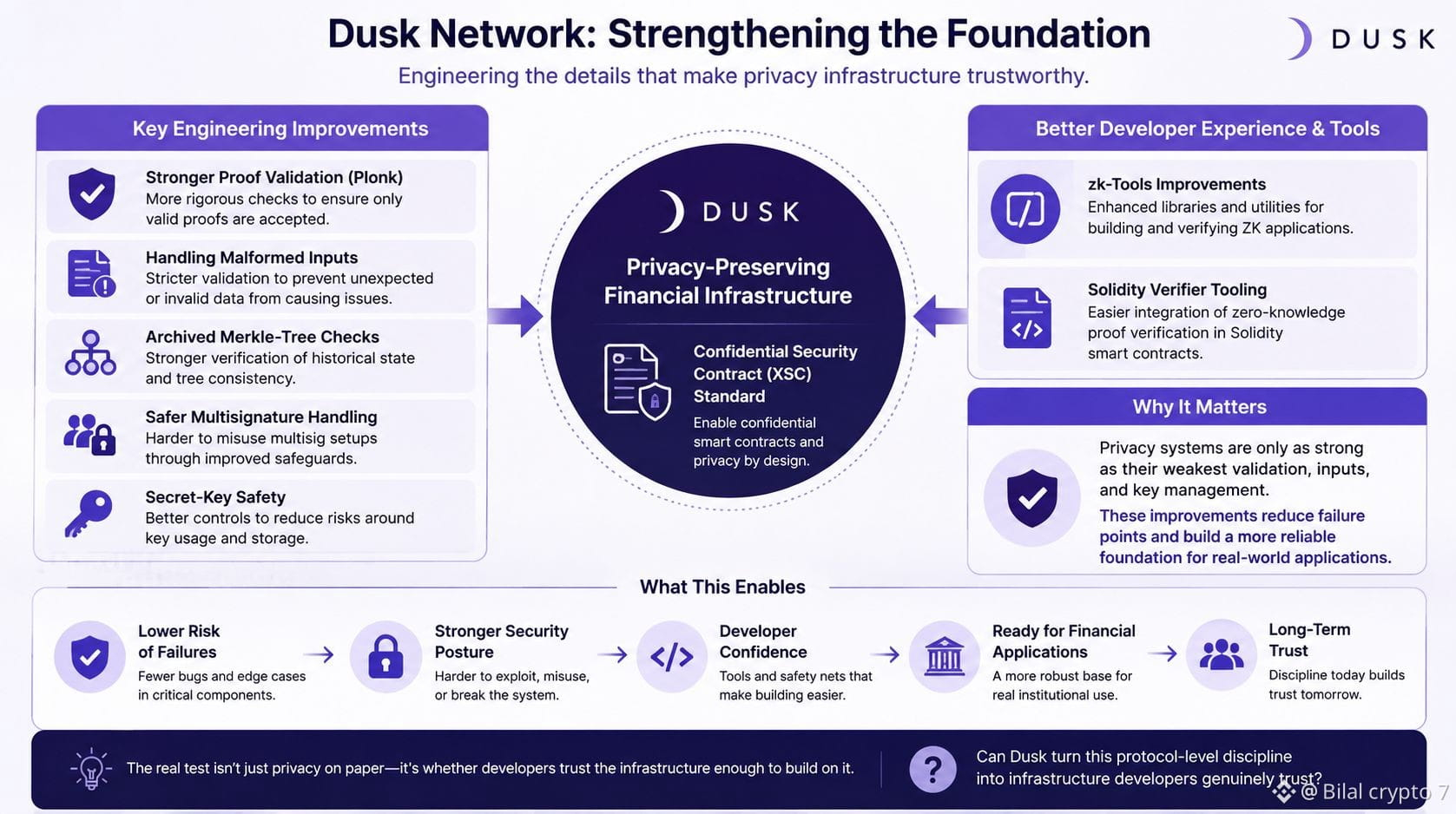
Tenho voltado a mexer em Dusk de novo, e continuo voltando a algo que recebe pouca atenção: o trabalho de engenharia “chato” por trás da história de privacidade.
O que me chamou a atenção foi o foco recente em validação de provas, entradas malformadas, verificações de árvore de Merkle, tratamento de multisig e segurança da chave secreta. A Dusk também tem melhorado suas ferramentas zk com suporte a Solidity para verificadores.
Eu realmente gosto de ver esse lado do projeto. Já vi vários projetos de cripto fazerem grandes promessas sobre privacidade, enquanto os detalhes de segurança menos empolgantes acabam ficando em segundo plano.
Claro, uma validação melhor não prova que a Dusk vai alcançar adoção institucional. Também não remove riscos de segurança magicamente. Mas acho que reduzir pequenos pontos de falha importa, especialmente quando há aplicações financeiras envolvidas.
Para mim, a pergunta interessante não é se a Dusk consegue deixar a privacidade com aparência impressionante. É se os desenvolvedores, eventualmente, vão confiar o suficiente na infraestrutura subjacente para construir aplicações sérias sobre ela.
Estou observando essa parte de perto.
@Dusk #dusk $DUSK
O que me chamou a atenção foi o foco recente em validação de provas, entradas malformadas, verificações de árvore de Merkle, tratamento de multisig e segurança da chave secreta. A Dusk também tem melhorado suas ferramentas zk com suporte a Solidity para verificadores.
Eu realmente gosto de ver esse lado do projeto. Já vi vários projetos de cripto fazerem grandes promessas sobre privacidade, enquanto os detalhes de segurança menos empolgantes acabam ficando em segundo plano.
Claro, uma validação melhor não prova que a Dusk vai alcançar adoção institucional. Também não remove riscos de segurança magicamente. Mas acho que reduzir pequenos pontos de falha importa, especialmente quando há aplicações financeiras envolvidas.
Para mim, a pergunta interessante não é se a Dusk consegue deixar a privacidade com aparência impressionante. É se os desenvolvedores, eventualmente, vão confiar o suficiente na infraestrutura subjacente para construir aplicações sérias sobre ela.
Estou observando essa parte de perto.
@Dusk #dusk $DUSK
Verificado
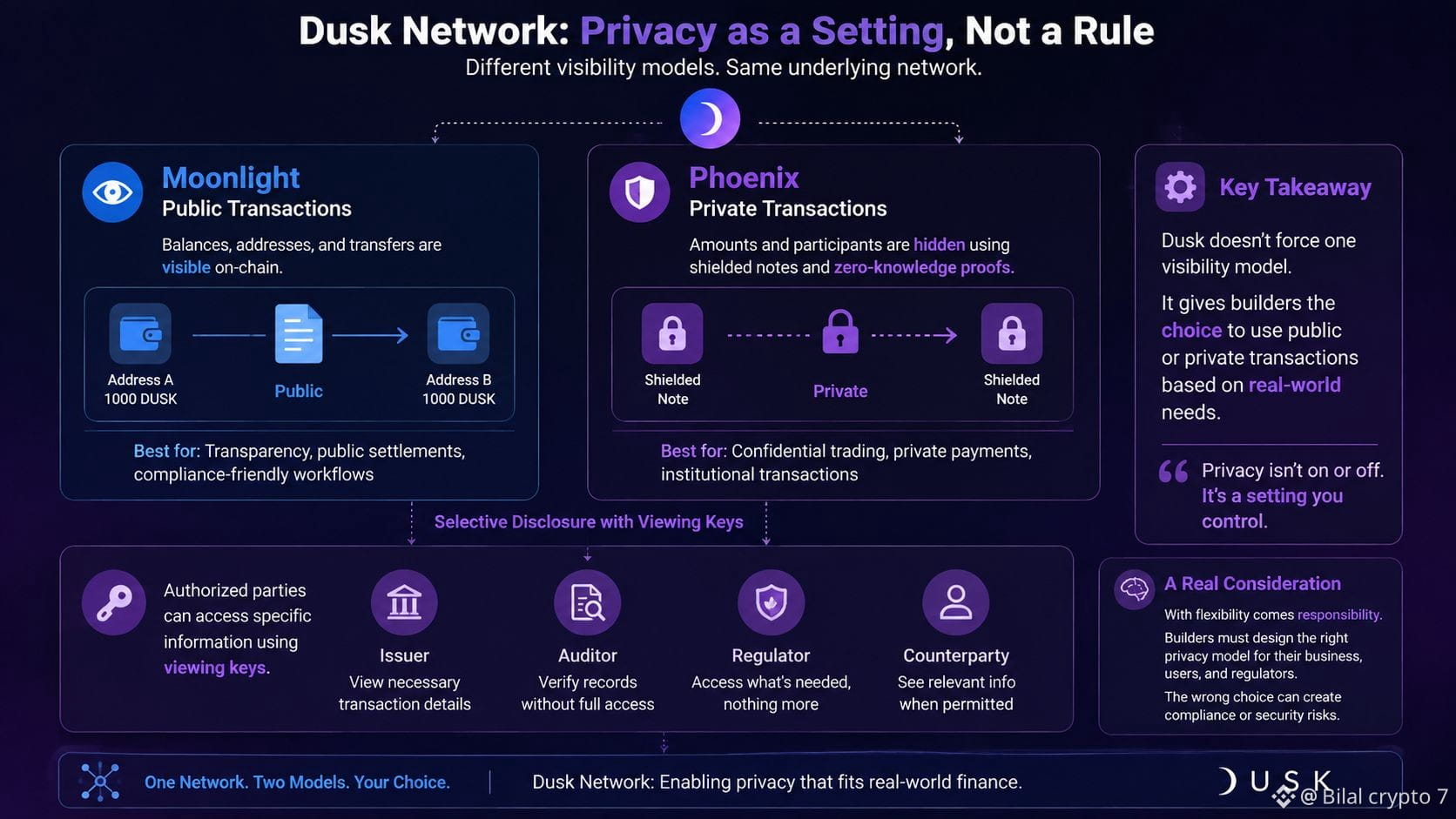
Continuo pensando em como a Dusk trata a privacidade como uma configuração, não como uma regra geral.
O problema é que os mercados financeiros raramente se encaixam perfeitamente em “tudo público” ou “tudo privado”. Uma transação pode precisar de confidencialidade em relação ao mercado, mas ainda exigir evidências para um emissor, auditor ou regulador.
A Dusk aborda isso com dois modelos nativos de transações. O Moonlight mantém saldos e transferências públicas, enquanto o Phoenix usa notas protegidas e provas de conhecimento zero para ocultar os valores transferidos e os participantes. A Dusk também descreve divulgação seletiva por meio de chaves de visualização quando as partes autorizadas precisam de informações específicas.
Essa distinção importa. A alegação da Dusk não é que toda transação deva ser privada; sua arquitetura demonstra que diferentes modelos de visibilidade podem chegar a um mesmo acordo na mesma rede subjacente. A documentação deles enquadra explicitamente a privacidade como algo que os desenvolvedores podem escolher dependendo do fluxo de trabalho.
Ainda assim, me pergunto se essa flexibilidade cria outro desafio: os desenvolvedores precisam fazer com que o modelo de privacidade corresponda corretamente às exigências do negócio e da regulamentação.
Se a privacidade se tornar uma infraestrutura configurável, isso torna o blockchain mais prático para as finanças — ou mais complicado de construir corretamente?
@Dusk #dusk $DUSK
O problema é que os mercados financeiros raramente se encaixam perfeitamente em “tudo público” ou “tudo privado”. Uma transação pode precisar de confidencialidade em relação ao mercado, mas ainda exigir evidências para um emissor, auditor ou regulador.
A Dusk aborda isso com dois modelos nativos de transações. O Moonlight mantém saldos e transferências públicas, enquanto o Phoenix usa notas protegidas e provas de conhecimento zero para ocultar os valores transferidos e os participantes. A Dusk também descreve divulgação seletiva por meio de chaves de visualização quando as partes autorizadas precisam de informações específicas.
Essa distinção importa. A alegação da Dusk não é que toda transação deva ser privada; sua arquitetura demonstra que diferentes modelos de visibilidade podem chegar a um mesmo acordo na mesma rede subjacente. A documentação deles enquadra explicitamente a privacidade como algo que os desenvolvedores podem escolher dependendo do fluxo de trabalho.
Ainda assim, me pergunto se essa flexibilidade cria outro desafio: os desenvolvedores precisam fazer com que o modelo de privacidade corresponda corretamente às exigências do negócio e da regulamentação.
Se a privacidade se tornar uma infraestrutura configurável, isso torna o blockchain mais prático para as finanças — ou mais complicado de construir corretamente?
@Dusk #dusk $DUSK
Verificado
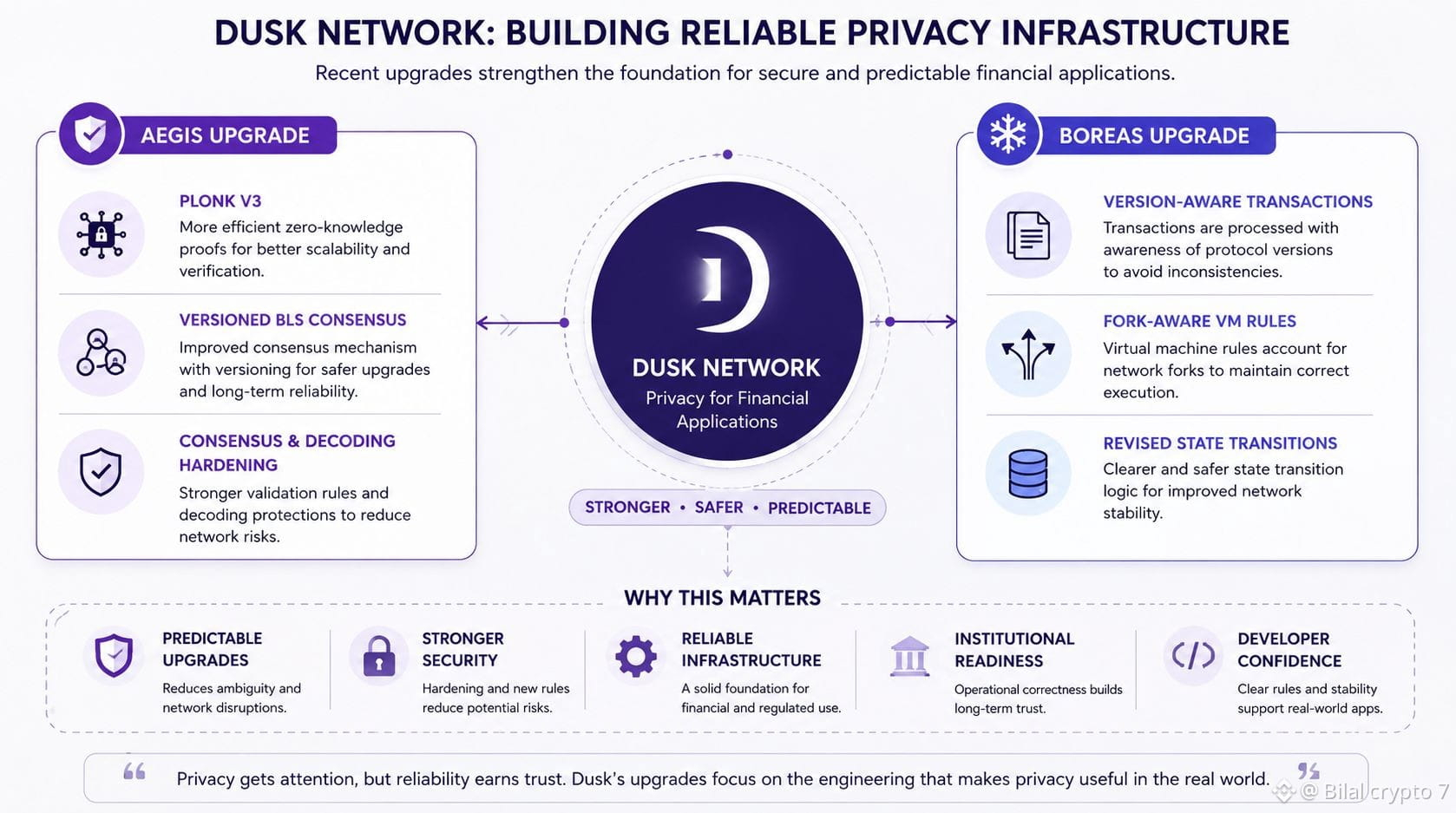
Tenho observado a Dusk por um ângulo um pouco diferente ultimamente: não apenas sua tecnologia de privacidade, mas como a rede lida com aquele trabalho de engenharia “chato” que acontece por baixo.
As atualizações recentes como Aegis e Boreas chamaram minha atenção porque focam em coisas como mudanças no consenso, tratamento de transações, regras da VM e reforço de segurança da rede. Não é o tipo de atualização que cria muita empolgação, mas eu acho que isso importa se a Dusk quiser apoiar aplicações financeiras sérias.
Vejo a privacidade como apenas uma parte do quebra-cabeça. Se a rede subjacente não consegue evoluir com segurança e de forma previsível, a privacidade sozinha não vai resolver muita coisa.
Ao mesmo tempo, continuo cauteloso. Ler sobre melhorias de protocolo é muito diferente de vê-las funcionando sob uso intenso, falhas inesperadas ou em aplicações complexas.
O que acho interessante na Dusk é que parece que a equipe está dedicando tempo a essas camadas de infraestrutura menos visíveis.
Estou curioso para saber se essa engenharia cuidadosa pode, eventualmente, se tornar uma das maiores vantagens da Dusk.
@Dusk #dusk $DUSK
As atualizações recentes como Aegis e Boreas chamaram minha atenção porque focam em coisas como mudanças no consenso, tratamento de transações, regras da VM e reforço de segurança da rede. Não é o tipo de atualização que cria muita empolgação, mas eu acho que isso importa se a Dusk quiser apoiar aplicações financeiras sérias.
Vejo a privacidade como apenas uma parte do quebra-cabeça. Se a rede subjacente não consegue evoluir com segurança e de forma previsível, a privacidade sozinha não vai resolver muita coisa.
Ao mesmo tempo, continuo cauteloso. Ler sobre melhorias de protocolo é muito diferente de vê-las funcionando sob uso intenso, falhas inesperadas ou em aplicações complexas.
O que acho interessante na Dusk é que parece que a equipe está dedicando tempo a essas camadas de infraestrutura menos visíveis.
Estou curioso para saber se essa engenharia cuidadosa pode, eventualmente, se tornar uma das maiores vantagens da Dusk.
@Dusk #dusk $DUSK
Notei que muitas discussões sobre tokenização se concentram no próprio ativo. Coloque um título ou um ativo financeiro on-chain, e parece que a parte difícil já está feita.
Não acho que seja tão simples.
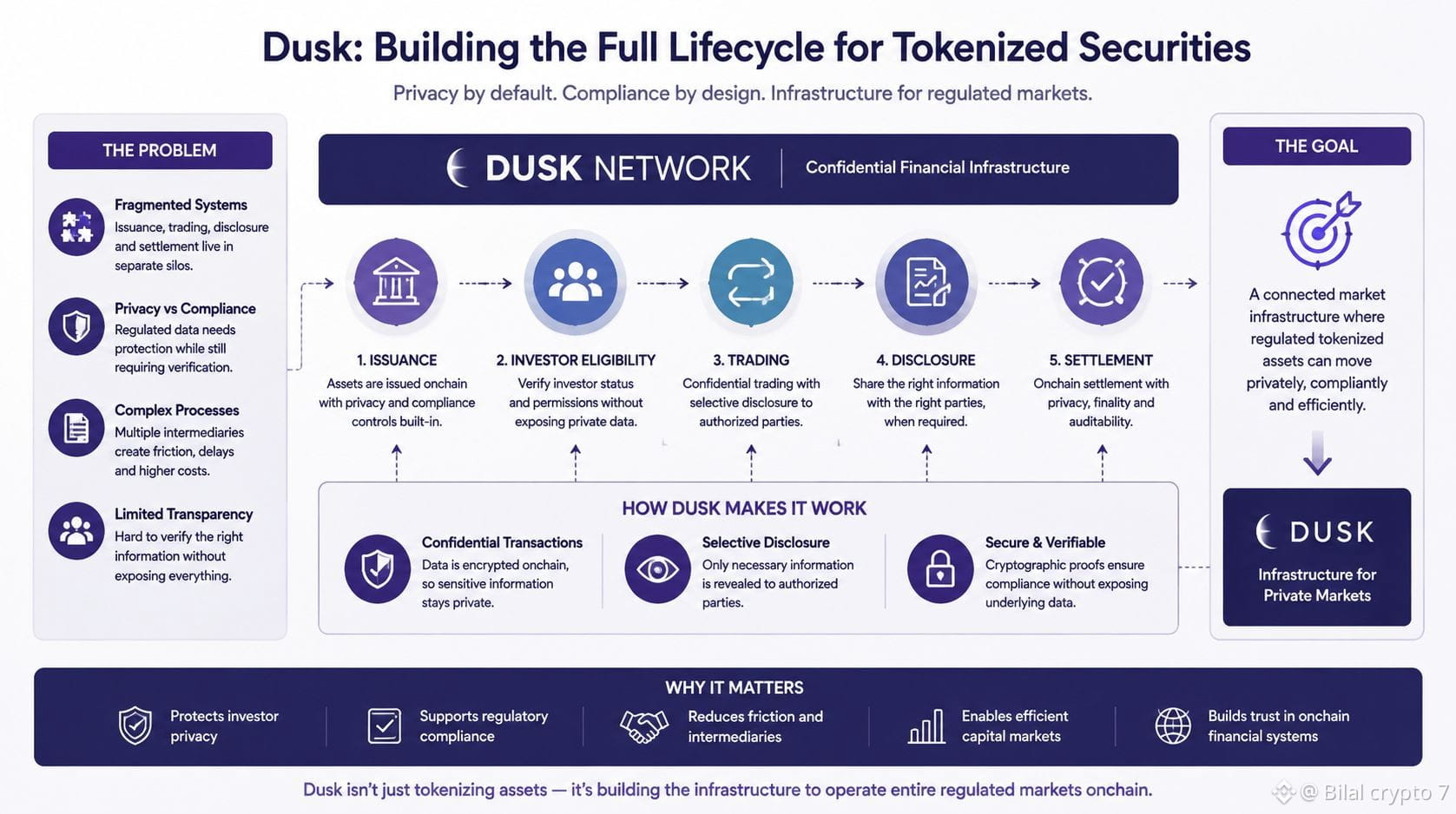
Para mim, o verdadeiro desafio é tudo o que envolve o ativo: quem tem permissão para mantê-lo, quais informações precisam ser compartilhadas, como as transferências são verificadas e como a liquidação acontece sem expor mais dados do que o necessário.
É uma das razões pelas quais acho o Dusk interessante. A abordagem dele combina transações confidenciais com formas de provar ou divulgar informações específicas quando necessário. Em teoria, isso poderia oferecer aos mercados financeiros regulados algo que blockchains muitas vezes tiveram dificuldade em alcançar: privacidade sem perder totalmente a conformidade.
Mas ainda sou cauteloso.
A tecnologia pode resolver grande parte do problema de infraestrutura, mas não pode criar magia de liquidez, demanda institucional ou responsabilidade legal clara. Essas são questões de adoção, não de criptografia.
Acho que o Dusk se torna muito mais interessante se ele puder fazer com que os mercados regulados se sintam mais simples, em vez de apenas colocar processos existentes on-chain.
A privacidade realmente pode reduzir atrito nos mercados financeiros, ou a complexidade regulatória simplesmente aparece em outro lugar?
@Dusk $DUSK #dusk
Não acho que seja tão simples.
Para mim, o verdadeiro desafio é tudo o que envolve o ativo: quem tem permissão para mantê-lo, quais informações precisam ser compartilhadas, como as transferências são verificadas e como a liquidação acontece sem expor mais dados do que o necessário.
É uma das razões pelas quais acho o Dusk interessante. A abordagem dele combina transações confidenciais com formas de provar ou divulgar informações específicas quando necessário. Em teoria, isso poderia oferecer aos mercados financeiros regulados algo que blockchains muitas vezes tiveram dificuldade em alcançar: privacidade sem perder totalmente a conformidade.
Mas ainda sou cauteloso.
A tecnologia pode resolver grande parte do problema de infraestrutura, mas não pode criar magia de liquidez, demanda institucional ou responsabilidade legal clara. Essas são questões de adoção, não de criptografia.
Acho que o Dusk se torna muito mais interessante se ele puder fazer com que os mercados regulados se sintam mais simples, em vez de apenas colocar processos existentes on-chain.
A privacidade realmente pode reduzir atrito nos mercados financeiros, ou a complexidade regulatória simplesmente aparece em outro lugar?
@Dusk $DUSK #dusk
Uma coisa que continuo a destacar sobre a Dusk Network é a segurança.
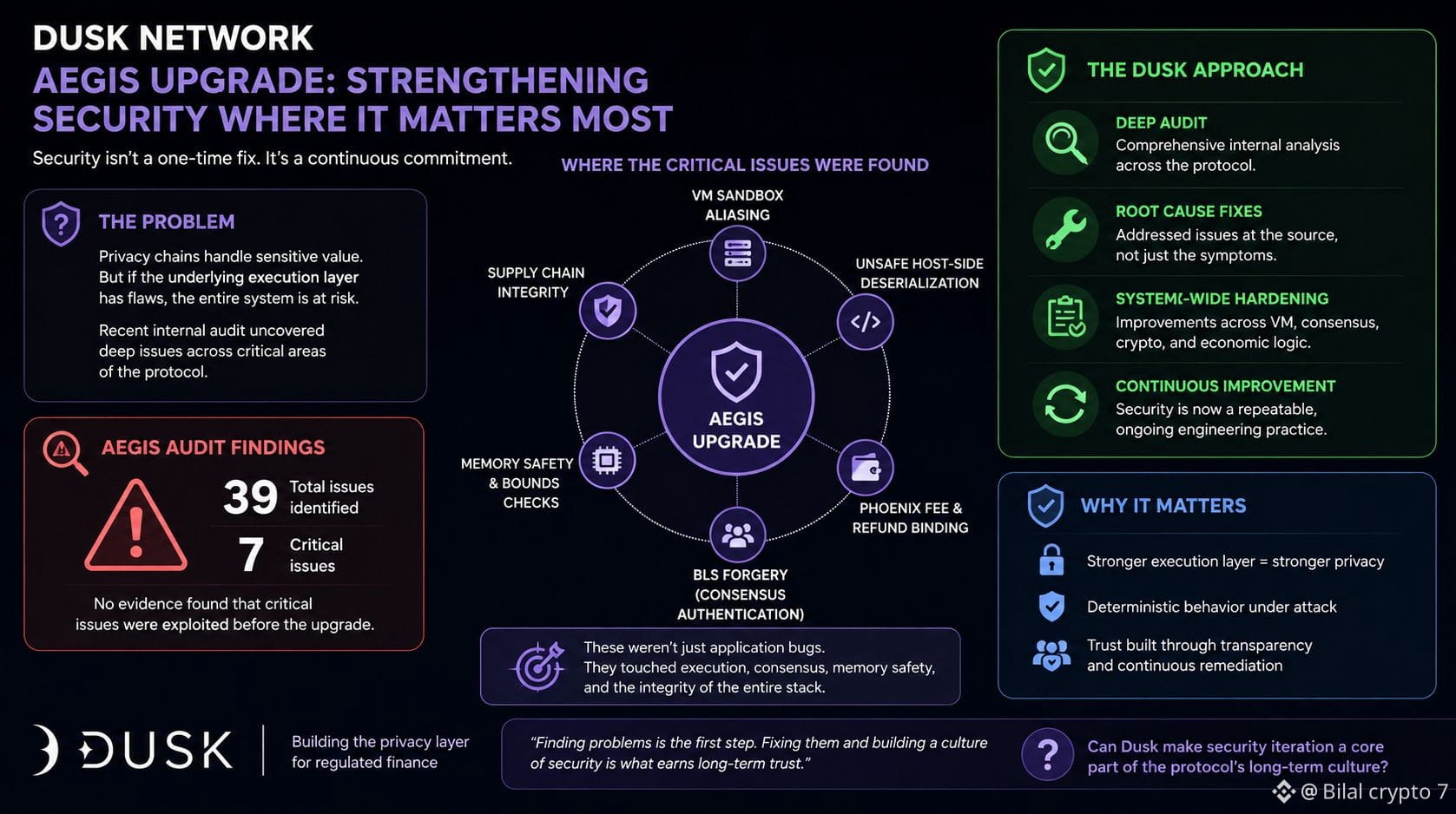
A privacidade recebe a maior parte da atenção, mas acho que o “trabalho chato” por baixo disso importa tanto quanto para uma blockchain financeira. Se a camada de execução tiver uma fraqueza, criptografia sofisticada não significa muito.
A atualização AEGIS da Dusk chamou minha atenção porque não era apenas sobre dar um acabamento melhor nas bordas. A Dusk diz que a auditoria encontrou 39 problemas, incluindo sete críticos, envolvendo áreas como sandboxing de VM, desserialização, tratamento de taxas e assinaturas BLS.
O que acho interessante é que esses problemas não estavam todos concentrados em um único canto da pilha. Eles tocaram a execução, a segurança e a forma como a rede lida com transações.
Eu já vi projetos suficientes para saber que uma auditoria por si só não prova muita coisa. Encontrar problemas é útil, mas eu me importo mais com o que acontece depois. As correções são devidamente testadas? A equipe continua procurando fraquezas? A segurança se torna parte do processo de desenvolvimento?
É aí que eu ainda fico um pouco cauteloso com a Dusk. Uma boa remediação é encorajadora, mas precisa virar hábito.
Estou curioso para saber se a Dusk consegue transformar essa disciplina de segurança em parte da cultura de longo prazo do protocolo.
@Dusk #dusk $DUSK
A privacidade recebe a maior parte da atenção, mas acho que o “trabalho chato” por baixo disso importa tanto quanto para uma blockchain financeira. Se a camada de execução tiver uma fraqueza, criptografia sofisticada não significa muito.
A atualização AEGIS da Dusk chamou minha atenção porque não era apenas sobre dar um acabamento melhor nas bordas. A Dusk diz que a auditoria encontrou 39 problemas, incluindo sete críticos, envolvendo áreas como sandboxing de VM, desserialização, tratamento de taxas e assinaturas BLS.
O que acho interessante é que esses problemas não estavam todos concentrados em um único canto da pilha. Eles tocaram a execução, a segurança e a forma como a rede lida com transações.
Eu já vi projetos suficientes para saber que uma auditoria por si só não prova muita coisa. Encontrar problemas é útil, mas eu me importo mais com o que acontece depois. As correções são devidamente testadas? A equipe continua procurando fraquezas? A segurança se torna parte do processo de desenvolvimento?
É aí que eu ainda fico um pouco cauteloso com a Dusk. Uma boa remediação é encorajadora, mas precisa virar hábito.
Estou curioso para saber se a Dusk consegue transformar essa disciplina de segurança em parte da cultura de longo prazo do protocolo.
@Dusk #dusk $DUSK
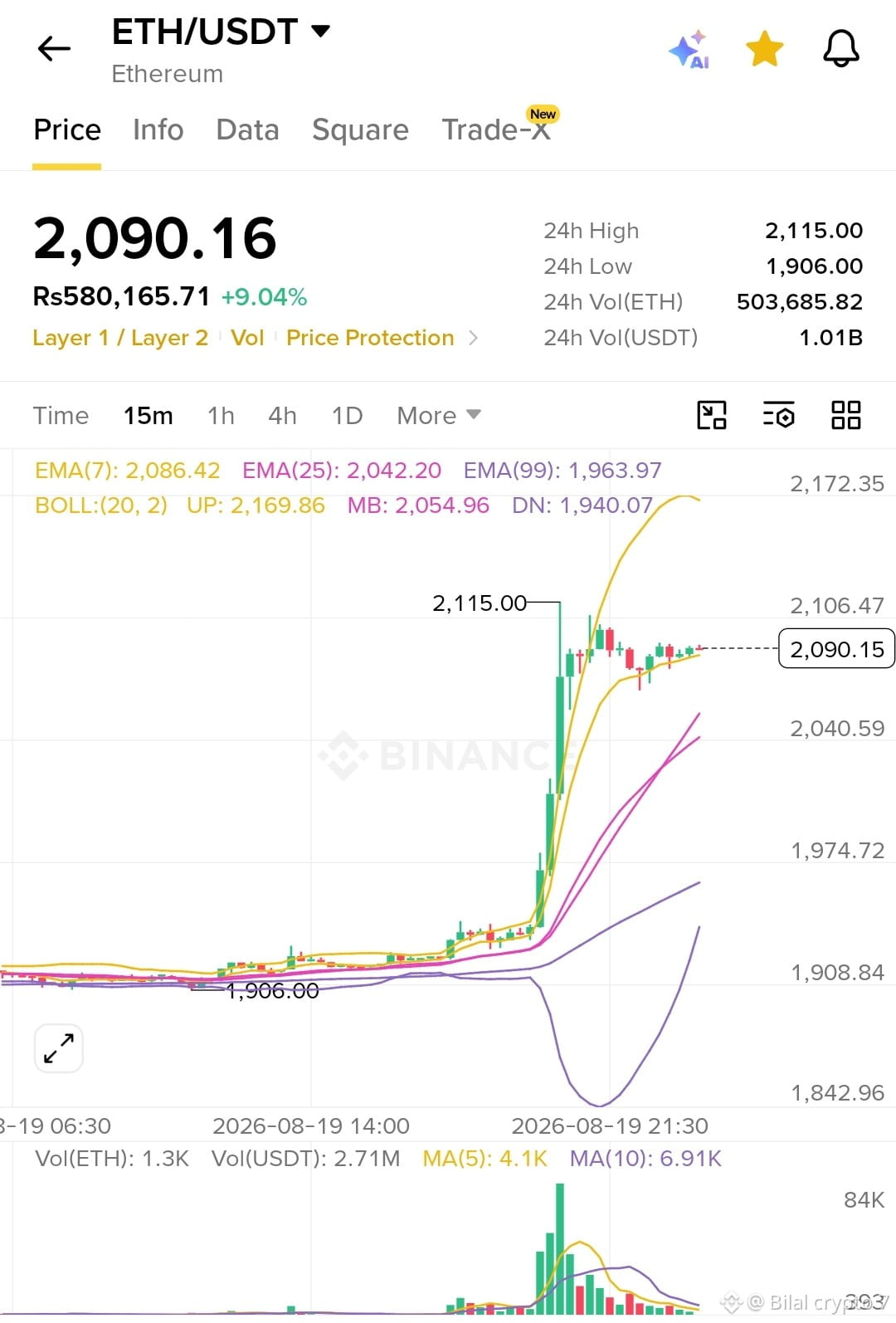
$ETH Ethereum está mostrando um forte movimento hoje, negociando em torno de US$ 2.090 após sair da mínima de US$ 1.906. O ganho nas últimas 24h está acima de 9%, mas eu estou mais interessado no que acontece a seguir do que no percentual em si.
No gráfico de 15 minutos, o ETH está sustentando acima da EMA(7) perto de US$ 2.086 e continua confortavelmente acima da EMA(25) em torno de US$ 2.042 e da EMA(99) perto de US$ 1.964. Isso me diz que o momentum de curto prazo ainda é positivo.
A grande questão é a resistência. O ETH já testou a região de US$ 2.115, enquanto a banda superior de Bollinger fica perto de US$ 2.170. Se os compradores conseguirem romper e manter acima de US$ 2.115, o próximo movimento pode se tornar mais interessante. Mas se o preço sofrer nova rejeição, uma retração em direção a US$ 2.055–US$ 2.040 não me surpreenderia.
O volume também é significativo, com mais de US$ 1B em volume de USDT nas últimas 24h.
Eu não perseguiria esta vela. Eu preferiria observar se o ETH consegue transformar a resistência em suporte. É aí que a força real vai ficar mais clara.
#WyomingMovesFRNTToChainlinkCCIP #ColdcardTheftInvestigationAdvances
#UAESaysItDetectedTwoIranianBallisticMissiles
No gráfico de 15 minutos, o ETH está sustentando acima da EMA(7) perto de US$ 2.086 e continua confortavelmente acima da EMA(25) em torno de US$ 2.042 e da EMA(99) perto de US$ 1.964. Isso me diz que o momentum de curto prazo ainda é positivo.
A grande questão é a resistência. O ETH já testou a região de US$ 2.115, enquanto a banda superior de Bollinger fica perto de US$ 2.170. Se os compradores conseguirem romper e manter acima de US$ 2.115, o próximo movimento pode se tornar mais interessante. Mas se o preço sofrer nova rejeição, uma retração em direção a US$ 2.055–US$ 2.040 não me surpreenderia.
O volume também é significativo, com mais de US$ 1B em volume de USDT nas últimas 24h.
Eu não perseguiria esta vela. Eu preferiria observar se o ETH consegue transformar a resistência em suporte. É aí que a força real vai ficar mais clara.
#WyomingMovesFRNTToChainlinkCCIP #ColdcardTheftInvestigationAdvances
#UAESaysItDetectedTwoIranianBallisticMissiles
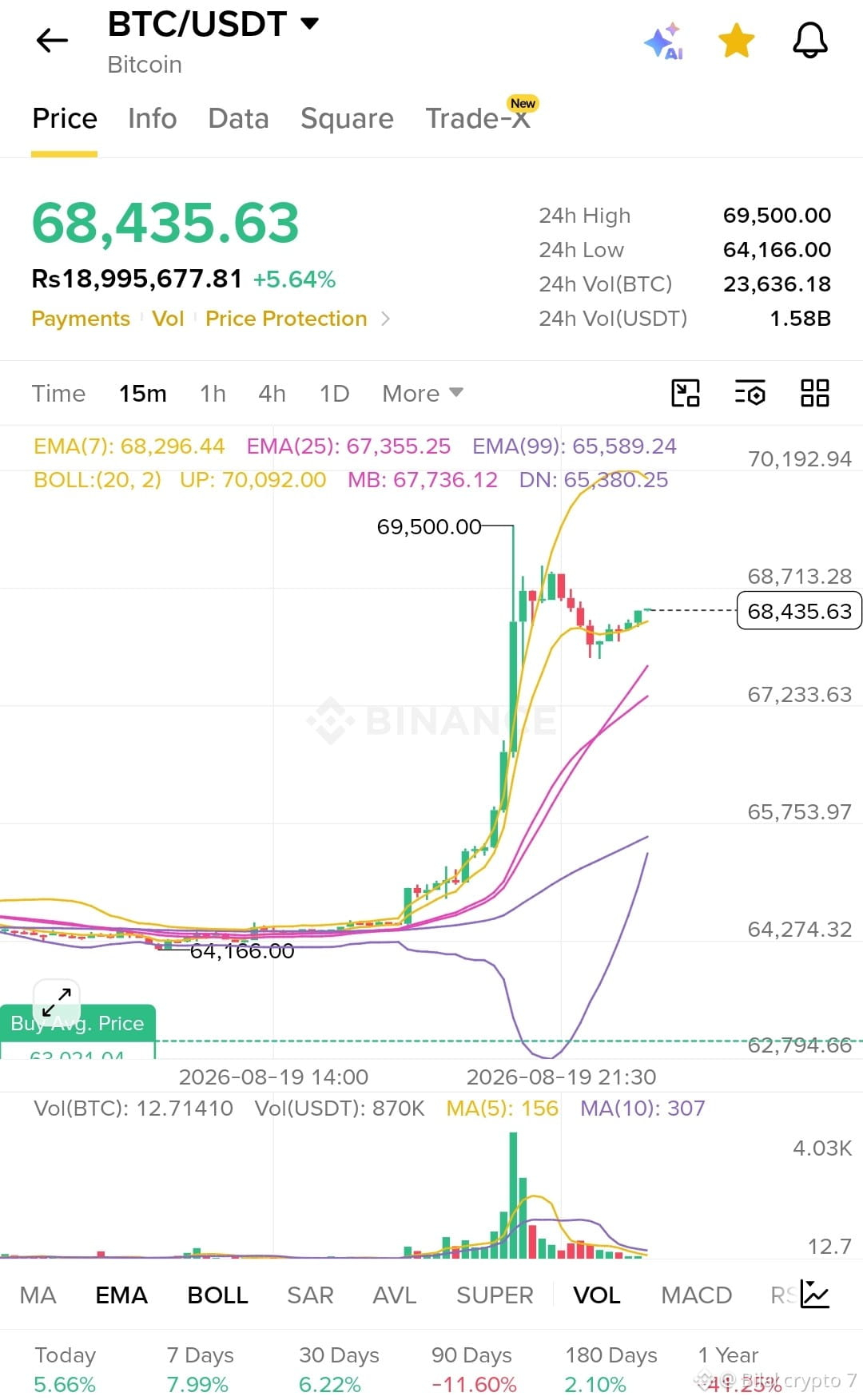
$BTC está mostrando forte impulso após recuperar US$ 68K. O gráfico de 15m indica que o preço está acima da EMA(7), da EMA(25) e da EMA(99), enquanto o volume disparou durante a ruptura. Estou observando US$ 69,5K como a resistência-chave e US$ 67,7K como a zona de suporte de curto prazo. Se os compradores sustentarem acima do suporte, o impulso pode continuar forte.
$BTC
#ColdcardTheftInvestigationAdvances #CryptoRally #ToyotaFinanceLaunchesTokenizedBondForRetail
$BTC
#ColdcardTheftInvestigationAdvances #CryptoRally #ToyotaFinanceLaunchesTokenizedBondForRetail
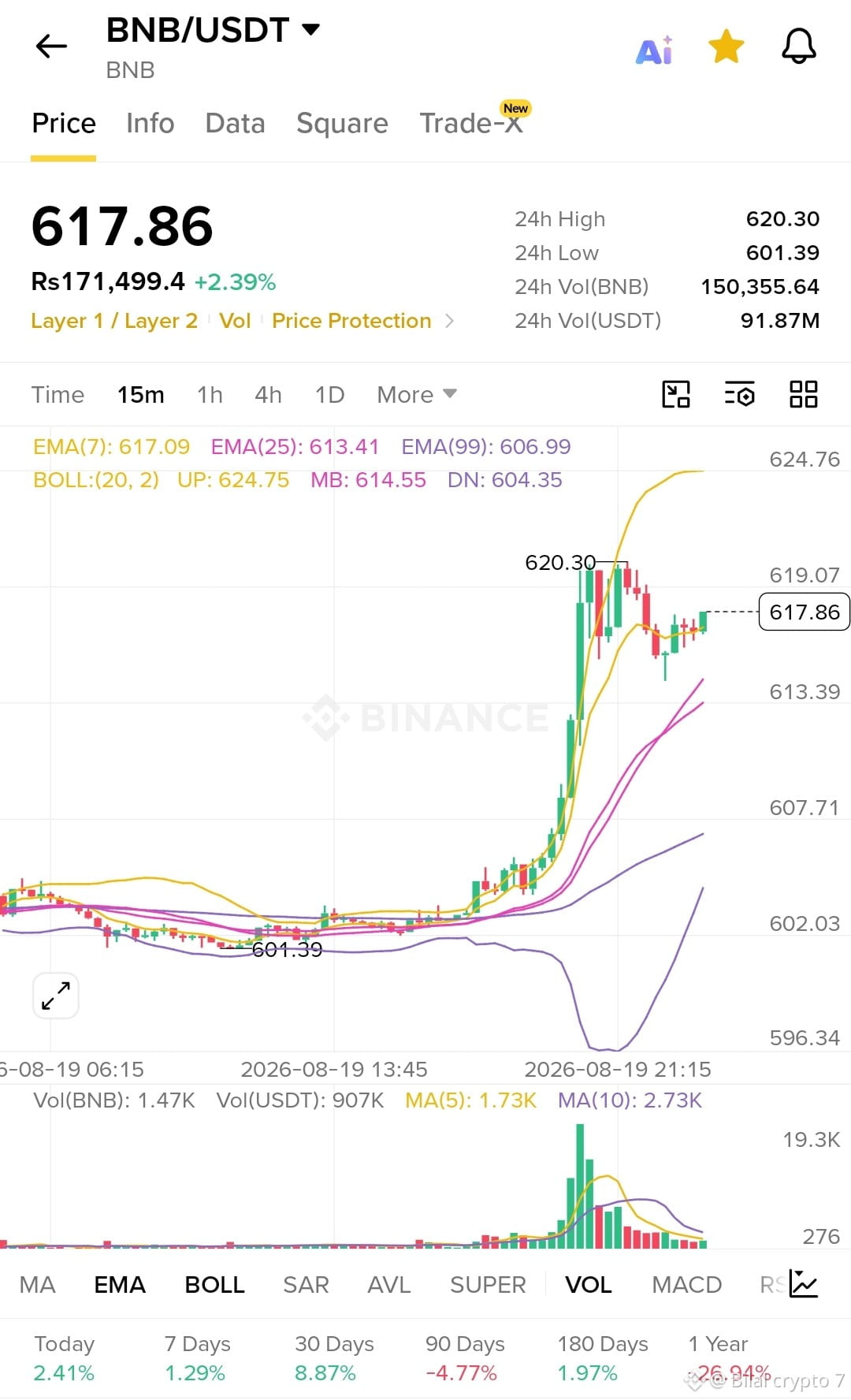
$BNB
USDT — $617.86 (+2.39%)**
Salto forte saindo de US$ 601,39 para uma máxima de 24h de US$ 620,30; agora mantém-se estável acima de US$ 617. O volume disparou no rompimento e depois arrefeceu quando o preço se acomodou na nova faixa.
O que está por trás disso:
📊 A BNB ficou em #2 no novo Índice de Ativos Digitais S&P/Pantera — classificada apenas com base na receita do protocolo
👥 A BNB Chain tem média de ~4,5M de usuários ativos diários este ano
🔧 Atualização da rede agendada para 25 de agosto (algumas exchanges vão pausar depósitos/saques)
⚠️ A BNB Chain também está movendo uma ação legal por um token não autorizado lançado via uma carteira de um ex-funcionário
7D: +1.29% | 30D: +8.87% | 1Y: -26.94%
**Conclusão:** Isso não é apenas um pico no gráfico — é o uso e os dados de escassez se alinhando com o preço ao mesmo tempo.
#BNB #Binance #crypto
#WyomingMovesFRNTToChainlinkCCIP #FOMCWatch
USDT — $617.86 (+2.39%)**
Salto forte saindo de US$ 601,39 para uma máxima de 24h de US$ 620,30; agora mantém-se estável acima de US$ 617. O volume disparou no rompimento e depois arrefeceu quando o preço se acomodou na nova faixa.
O que está por trás disso:
📊 A BNB ficou em #2 no novo Índice de Ativos Digitais S&P/Pantera — classificada apenas com base na receita do protocolo
👥 A BNB Chain tem média de ~4,5M de usuários ativos diários este ano
🔧 Atualização da rede agendada para 25 de agosto (algumas exchanges vão pausar depósitos/saques)
⚠️ A BNB Chain também está movendo uma ação legal por um token não autorizado lançado via uma carteira de um ex-funcionário
7D: +1.29% | 30D: +8.87% | 1Y: -26.94%
**Conclusão:** Isso não é apenas um pico no gráfico — é o uso e os dados de escassez se alinhando com o preço ao mesmo tempo.
#BNB #Binance #crypto
#WyomingMovesFRNTToChainlinkCCIP #FOMCWatch
Eu continuo voltando a uma coisa com o Dusk: uma boa tecnologia de privacidade significa muito pouco se os desenvolvedores realmente não quiserem usá-la.
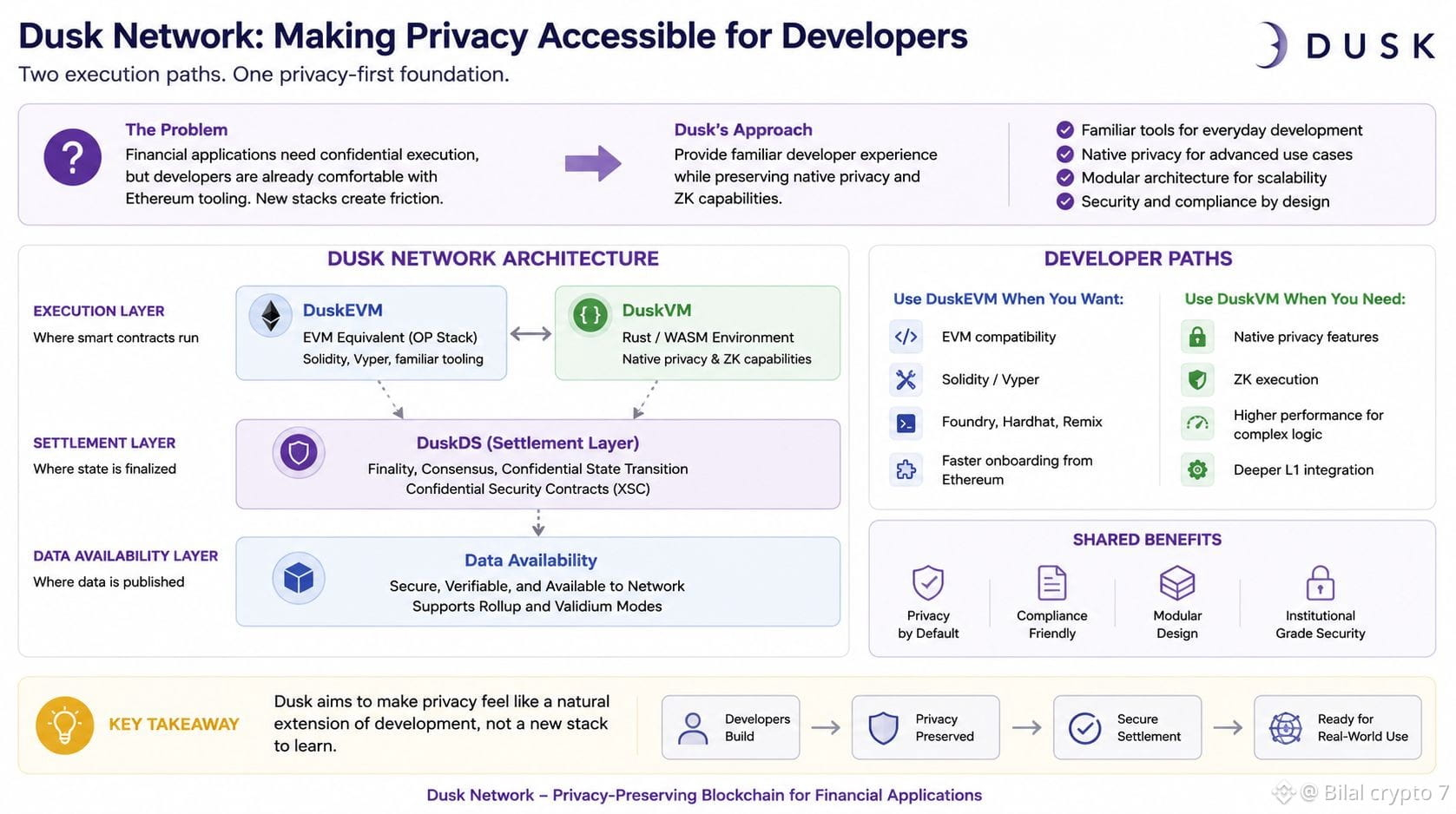
O problema parece bem simples para mim. Aplicativos financeiros podem precisar de execução confidencial, mas a maioria dos desenvolvedores já conhece Ethereum, Solidity, Foundry, Hardhat e as ferramentas usuais de EVM. Pedir que eles aprendam um ambiente completamente diferente pode se tornar uma barreira por si só.
O que acho interessante no Dusk é como ele aborda esse problema. O DuskEVM oferece aos desenvolvedores um ambiente EVM mais familiar, enquanto o DuskDS cuida do settlement e da disponibilidade de dados. Desenvolvedores que querem acesso mais profundo às capacidades nativas do Dusk podem usar o DuskVM, construído em torno de Rust/WASM com suporte a privacidade e execução via ZK.
Eu gosto da direção, mas ainda não estou totalmente convencido.
Apoiar diferentes ambientes de execução parece útil, mas também dá aos desenvolvedores mais coisas para entender. Para mim, o teste real não é se o Dusk consegue suportá-los. É se os desenvolvedores realmente escolhem construir ali.
Acredito que essa distinção importa.
O Dusk consegue tornar o desenvolvimento de blockchain privado algo “normal”, ou os desenvolvedores só vão se importar com privacidade quando realmente precisarem?
@Dusk #dusk $DUSK
O problema parece bem simples para mim. Aplicativos financeiros podem precisar de execução confidencial, mas a maioria dos desenvolvedores já conhece Ethereum, Solidity, Foundry, Hardhat e as ferramentas usuais de EVM. Pedir que eles aprendam um ambiente completamente diferente pode se tornar uma barreira por si só.
O que acho interessante no Dusk é como ele aborda esse problema. O DuskEVM oferece aos desenvolvedores um ambiente EVM mais familiar, enquanto o DuskDS cuida do settlement e da disponibilidade de dados. Desenvolvedores que querem acesso mais profundo às capacidades nativas do Dusk podem usar o DuskVM, construído em torno de Rust/WASM com suporte a privacidade e execução via ZK.
Eu gosto da direção, mas ainda não estou totalmente convencido.
Apoiar diferentes ambientes de execução parece útil, mas também dá aos desenvolvedores mais coisas para entender. Para mim, o teste real não é se o Dusk consegue suportá-los. É se os desenvolvedores realmente escolhem construir ali.
Acredito que essa distinção importa.
O Dusk consegue tornar o desenvolvimento de blockchain privado algo “normal”, ou os desenvolvedores só vão se importar com privacidade quando realmente precisarem?
@Dusk #dusk $DUSK
Eu volto sempre a um problema simples com blockchains de privacidade: boa tecnologia não significa muito se os desenvolvedores acham difícil usá-la.
Quando analisei melhor a Dusk, o que chamou minha atenção foi a abordagem dela para o acesso dos desenvolvedores. A DuskEVM oferece suporte a Solidity, Vyper e às ferramentas familiares do ecossistema Ethereum, enquanto a DuskVM fornece aos desenvolvedores um ambiente nativo em Rust/WASM para aplicações que precisam de acesso mais profundo à arquitetura, aos recursos de privacidade e às capacidades de zero knowledge da Dusk.
Vejo isso como um equilíbrio prático. Imagino um desenvolvedor começando com ferramentas que ele já entende, mantendo ainda um caminho para recursos mais específicos da Dusk.
Mas ainda estou cauteloso com isso.
Apoiar ferramentas familiares pode reduzir a barreira de entrada, mas não cria automaticamente um ecossistema de desenvolvedores forte. Vi muitos projetos tornarem a integração fácil e, ainda assim, terem dificuldade para atrair construtores que ficam no longo prazo.
Para mim, a pergunta mais interessante não é se a Dusk consegue apoiar desenvolvedores, mas se a arquitetura de privacidade dela oferece um motivo para que eles escolham a Dusk em vez dos ambientes EVM que eles já conhecem.
Fico curioso: o que faria de fato um desenvolvedor permanecer na Dusk após o experimento inicial?
@Dusk #dusk $DUSK
Quando analisei melhor a Dusk, o que chamou minha atenção foi a abordagem dela para o acesso dos desenvolvedores. A DuskEVM oferece suporte a Solidity, Vyper e às ferramentas familiares do ecossistema Ethereum, enquanto a DuskVM fornece aos desenvolvedores um ambiente nativo em Rust/WASM para aplicações que precisam de acesso mais profundo à arquitetura, aos recursos de privacidade e às capacidades de zero knowledge da Dusk.
Vejo isso como um equilíbrio prático. Imagino um desenvolvedor começando com ferramentas que ele já entende, mantendo ainda um caminho para recursos mais específicos da Dusk.
Mas ainda estou cauteloso com isso.
Apoiar ferramentas familiares pode reduzir a barreira de entrada, mas não cria automaticamente um ecossistema de desenvolvedores forte. Vi muitos projetos tornarem a integração fácil e, ainda assim, terem dificuldade para atrair construtores que ficam no longo prazo.
Para mim, a pergunta mais interessante não é se a Dusk consegue apoiar desenvolvedores, mas se a arquitetura de privacidade dela oferece um motivo para que eles escolham a Dusk em vez dos ambientes EVM que eles já conhecem.
Fico curioso: o que faria de fato um desenvolvedor permanecer na Dusk após o experimento inicial?
@Dusk #dusk $DUSK
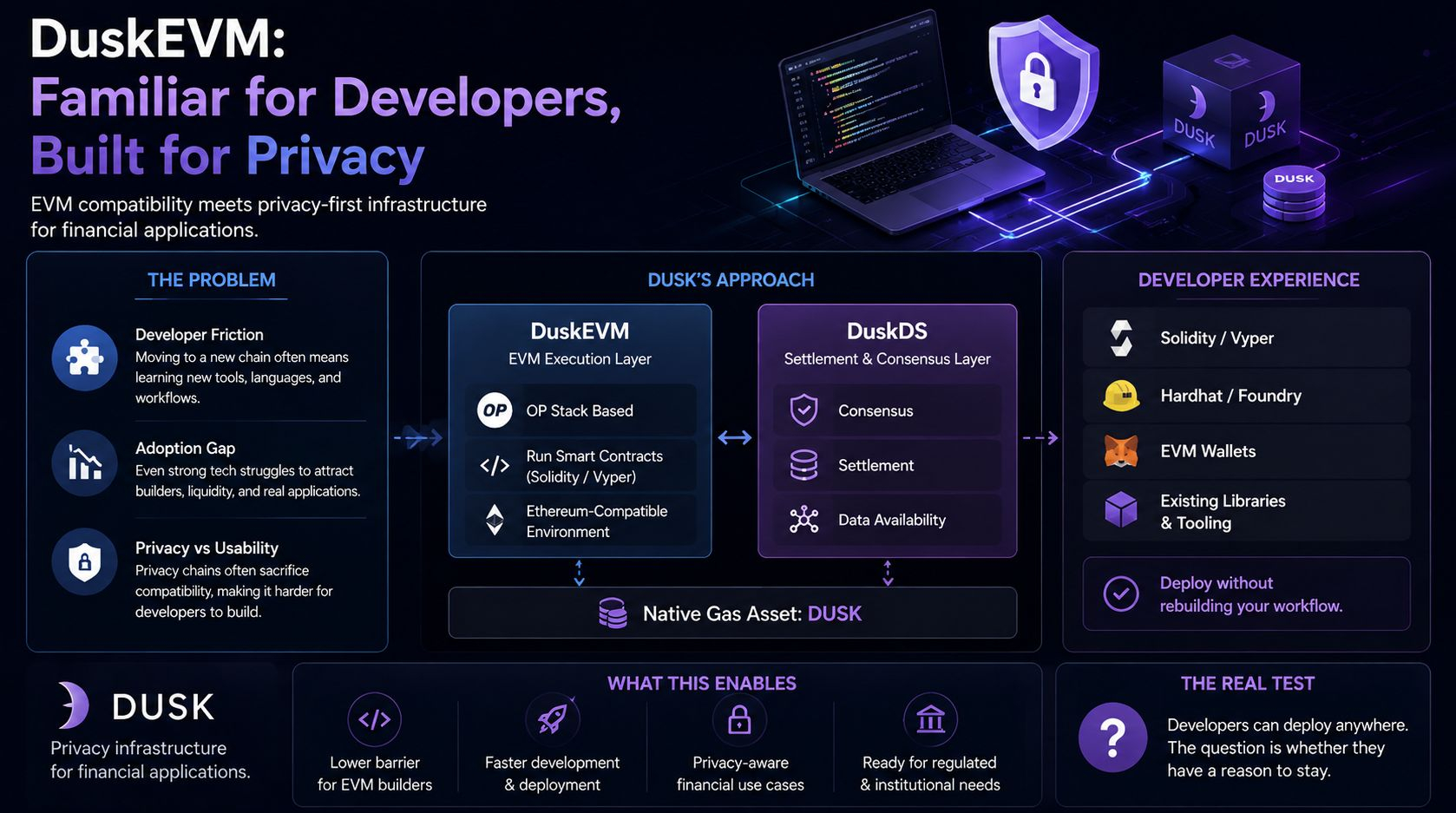
Eu fiquei bem cético em relação a projetos de cripto quando eles falam sobre segurança. Uma auditoria pode parecer ótima no papel, mas eu me importo muito mais com o que acontece quando alguém realmente encontra um problema.
Foi isso que tornou o trabalho de segurança recente da Dusk interessante para mim.
Na sua análise de segurança AEGIS, a Dusk reportou 39 achados, incluindo sete classificados como críticos. As questões envolviam áreas como sandboxing de VM, desserialização insegura, lógica de taxas e reembolso, e autenticação BLS. A Dusk diz que os problemas foram resolvidos por meio de uma grande hard fork, e que não havia evidências de que as questões críticas tivessem sido exploradas antes.
Eu não tomaria isso como prova de que a Dusk é simplesmente “segura”. Acho que essa conclusão seria fácil demais.
O que eu vejo em vez disso é um sinal mais útil: os problemas foram encontrados, investigados e convertidos em correções no nível do protocolo.
Eu já vi tempo suficiente de ciclos de cripto para saber que segurança não é uma conquista única. Fica mais difícil conforme o sistema cresce, especialmente quando mais desenvolvedores e aplicações começam a depender dele.
Então estou mais interessado no que a Dusk faz depois da próxima auditoria do que em quão bom parece o relatório atual.
A Dusk consegue transformar a remediação contínua de segurança em um hábito de longo prazo?
@Dusk #dusk $DUSK
Foi isso que tornou o trabalho de segurança recente da Dusk interessante para mim.
Na sua análise de segurança AEGIS, a Dusk reportou 39 achados, incluindo sete classificados como críticos. As questões envolviam áreas como sandboxing de VM, desserialização insegura, lógica de taxas e reembolso, e autenticação BLS. A Dusk diz que os problemas foram resolvidos por meio de uma grande hard fork, e que não havia evidências de que as questões críticas tivessem sido exploradas antes.
Eu não tomaria isso como prova de que a Dusk é simplesmente “segura”. Acho que essa conclusão seria fácil demais.
O que eu vejo em vez disso é um sinal mais útil: os problemas foram encontrados, investigados e convertidos em correções no nível do protocolo.
Eu já vi tempo suficiente de ciclos de cripto para saber que segurança não é uma conquista única. Fica mais difícil conforme o sistema cresce, especialmente quando mais desenvolvedores e aplicações começam a depender dele.
Então estou mais interessado no que a Dusk faz depois da próxima auditoria do que em quão bom parece o relatório atual.
A Dusk consegue transformar a remediação contínua de segurança em um hábito de longo prazo?
@Dusk #dusk $DUSK
$DUSK Tenho me aprofundado no DuskEVM, e acho que a parte realmente interessante não é apenas que ele é compatível com EVM.
Já vi esse rótulo ser usado muitas vezes no setor cripto. A verdadeira pergunta para mim é se um desenvolvedor consegue migrar de verdade sem sentir que tem que aprender um mundo totalmente novo primeiro.
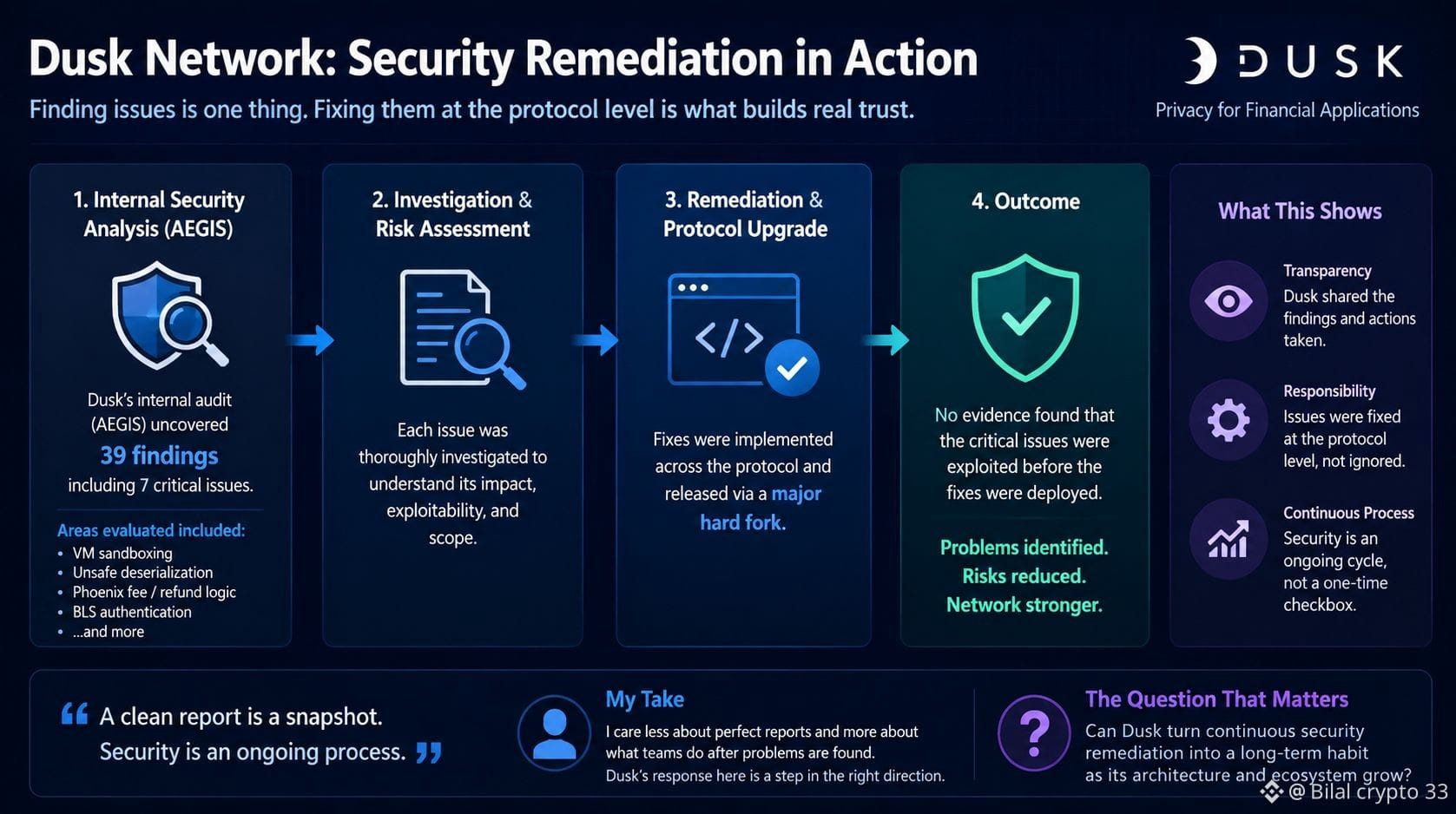
A Dusk está adotando uma abordagem bem prática aqui. O DuskEVM usa o OP Stack, enquanto o DuskDS cuida do consenso, da liquidação e da disponibilidade de dados. Os desenvolvedores podem usar ferramentas familiares como Solidity, Vyper, Hardhat e Foundry em vez de reconstruir todo o fluxo de trabalho do zero.
Gosto dessa ideia, mas ainda fico cauteloso.
Ferramentas familiares podem reduzir atrito, mas não criam, magicamente, usuários, liquidez ou aplicações que as pessoas realmente precisam. Já vi muitas redes tecnicamente sólidas terem dificuldades justamente nessa parte.
O que me interessa no Dusk é a tentativa de manter a experiência do desenvolvedor familiar, ao mesmo tempo em que constrói infraestrutura em torno de casos de uso financeiros que exigem privacidade.
Para mim, o teste real não é se os desenvolvedores conseguem implantar no DuskEVM.
É se, eventualmente, eles encontram um motivo para ficar por lá.
@Dusk #dusk $DUSK
Já vi esse rótulo ser usado muitas vezes no setor cripto. A verdadeira pergunta para mim é se um desenvolvedor consegue migrar de verdade sem sentir que tem que aprender um mundo totalmente novo primeiro.
A Dusk está adotando uma abordagem bem prática aqui. O DuskEVM usa o OP Stack, enquanto o DuskDS cuida do consenso, da liquidação e da disponibilidade de dados. Os desenvolvedores podem usar ferramentas familiares como Solidity, Vyper, Hardhat e Foundry em vez de reconstruir todo o fluxo de trabalho do zero.
Gosto dessa ideia, mas ainda fico cauteloso.
Ferramentas familiares podem reduzir atrito, mas não criam, magicamente, usuários, liquidez ou aplicações que as pessoas realmente precisam. Já vi muitas redes tecnicamente sólidas terem dificuldades justamente nessa parte.
O que me interessa no Dusk é a tentativa de manter a experiência do desenvolvedor familiar, ao mesmo tempo em que constrói infraestrutura em torno de casos de uso financeiros que exigem privacidade.
Para mim, o teste real não é se os desenvolvedores conseguem implantar no DuskEVM.
É se, eventualmente, eles encontram um motivo para ficar por lá.
@Dusk #dusk $DUSK
Notei que as atualizações mais interessantes em cripto, muitas vezes, não são as que têm os maiores anúncios. No caso da Dusk, o que me chamou atenção recentemente não foi mais um recurso de privacidade, e sim como a equipe lidou com um desafio de segurança.
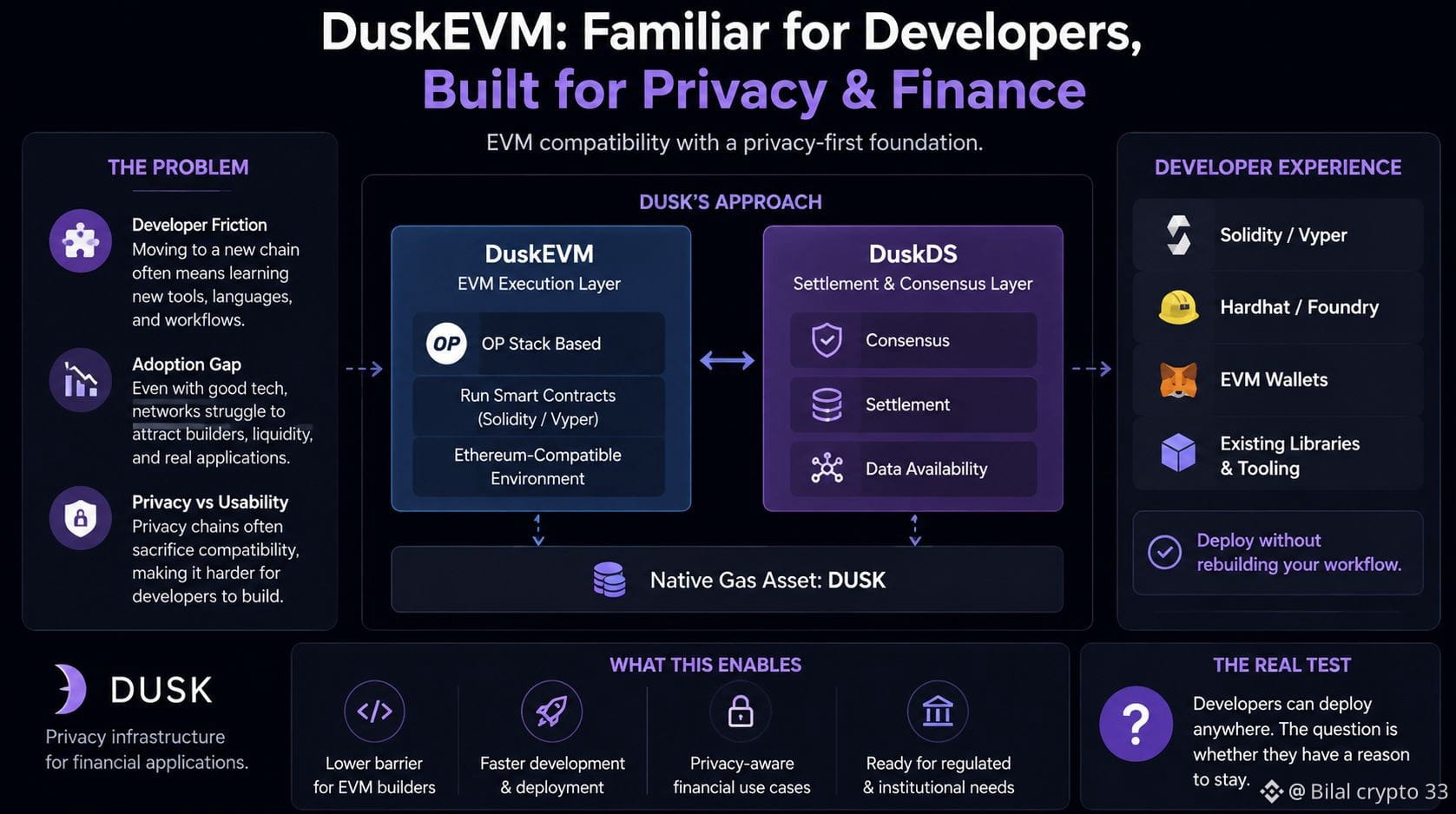
A Dusk reportou uma possível invasão envolvendo uma carteira de assinatura conectada ao serviço de bridge. Pela explicação do time, o problema não estava relacionado à camada de consenso central do DuskDS, mas evidenciou uma fraqueza comum na infraestrutura de blockchain: a segurança operacional pode se tornar o elo mais fraco mesmo quando a tecnologia subjacente foi projetada com cuidado.
O que achei interessante foi a resposta. A Dusk focou em separar os processos de assinatura do tratamento de eventos, adicionar controles de transação mais claros, reduzir a exposição de hot-wallets e isolar as operações de bridge.
Sempre tive um certo ceticismo quando projetos falam apenas sobre criptografia avançada. Privacidade e sistemas de conhecimento zero são importantes, mas a adoção real também depende das decisões de engenharia “chatas” que protegem os usuários quando as coisas dão errado.
As análises de segurança da Dusk, cobrindo áreas como Piecrust, Phoenix, consenso e criptografia, mostram um esforço para examinar essas bases.
A pergunta que estou acompanhando agora é: a Dusk consegue manter esse nível de disciplina de segurança à medida que sua infraestrutura financeira se torna mais complexa?
@Dusk #dusk $DUSK
A Dusk reportou uma possível invasão envolvendo uma carteira de assinatura conectada ao serviço de bridge. Pela explicação do time, o problema não estava relacionado à camada de consenso central do DuskDS, mas evidenciou uma fraqueza comum na infraestrutura de blockchain: a segurança operacional pode se tornar o elo mais fraco mesmo quando a tecnologia subjacente foi projetada com cuidado.
O que achei interessante foi a resposta. A Dusk focou em separar os processos de assinatura do tratamento de eventos, adicionar controles de transação mais claros, reduzir a exposição de hot-wallets e isolar as operações de bridge.
Sempre tive um certo ceticismo quando projetos falam apenas sobre criptografia avançada. Privacidade e sistemas de conhecimento zero são importantes, mas a adoção real também depende das decisões de engenharia “chatas” que protegem os usuários quando as coisas dão errado.
As análises de segurança da Dusk, cobrindo áreas como Piecrust, Phoenix, consenso e criptografia, mostram um esforço para examinar essas bases.
A pergunta que estou acompanhando agora é: a Dusk consegue manter esse nível de disciplina de segurança à medida que sua infraestrutura financeira se torna mais complexa?
@Dusk #dusk $DUSK
Continuo reparando que a maioria das conversas sobre privacidade em blockchain começa no lugar errado. As pessoas imaginam sigilo como esconder informações, mas as finanças reguladas têm um problema diferente: provar as coisas certas para as pessoas certas sem expor tudo o mais.
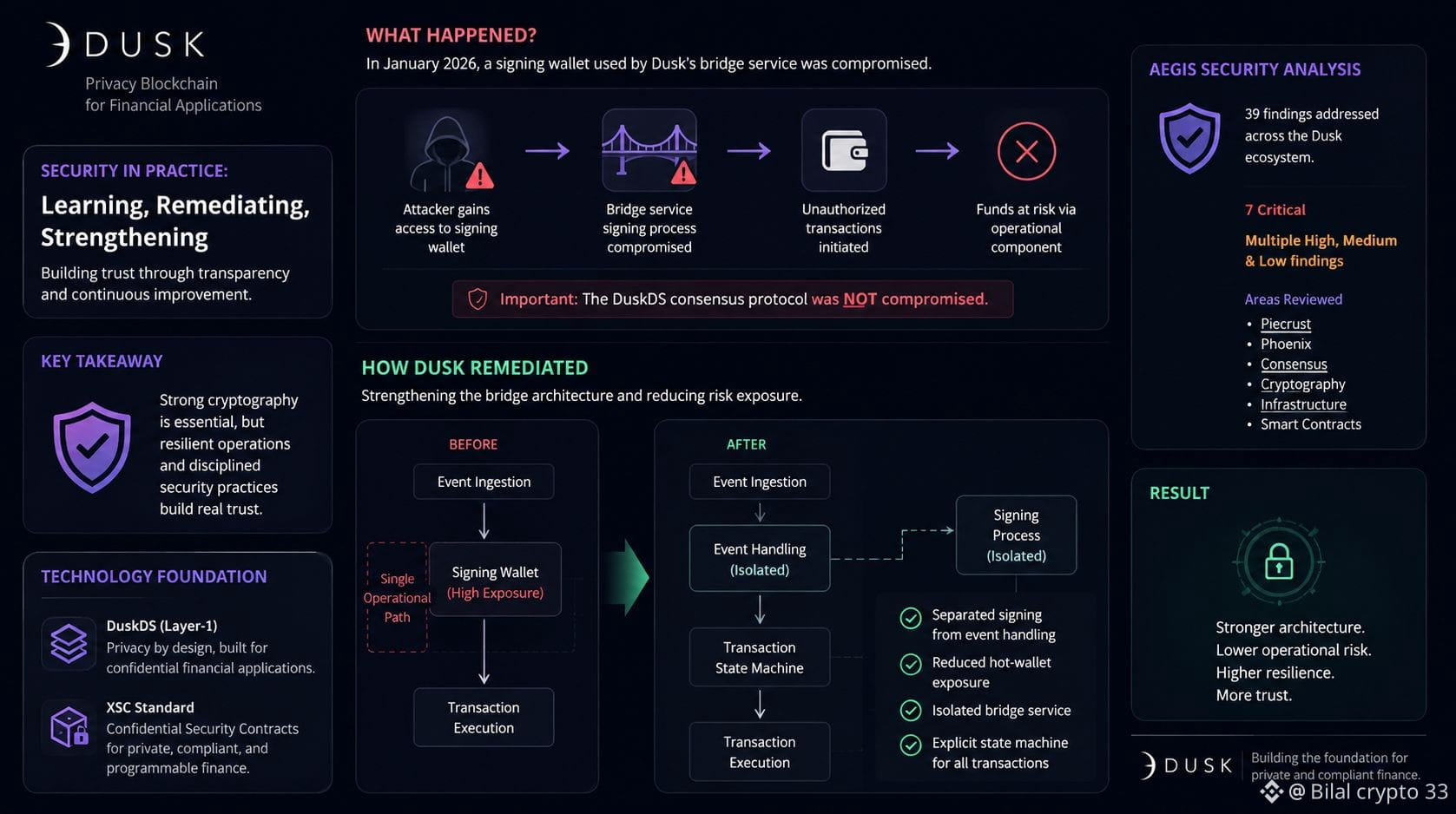
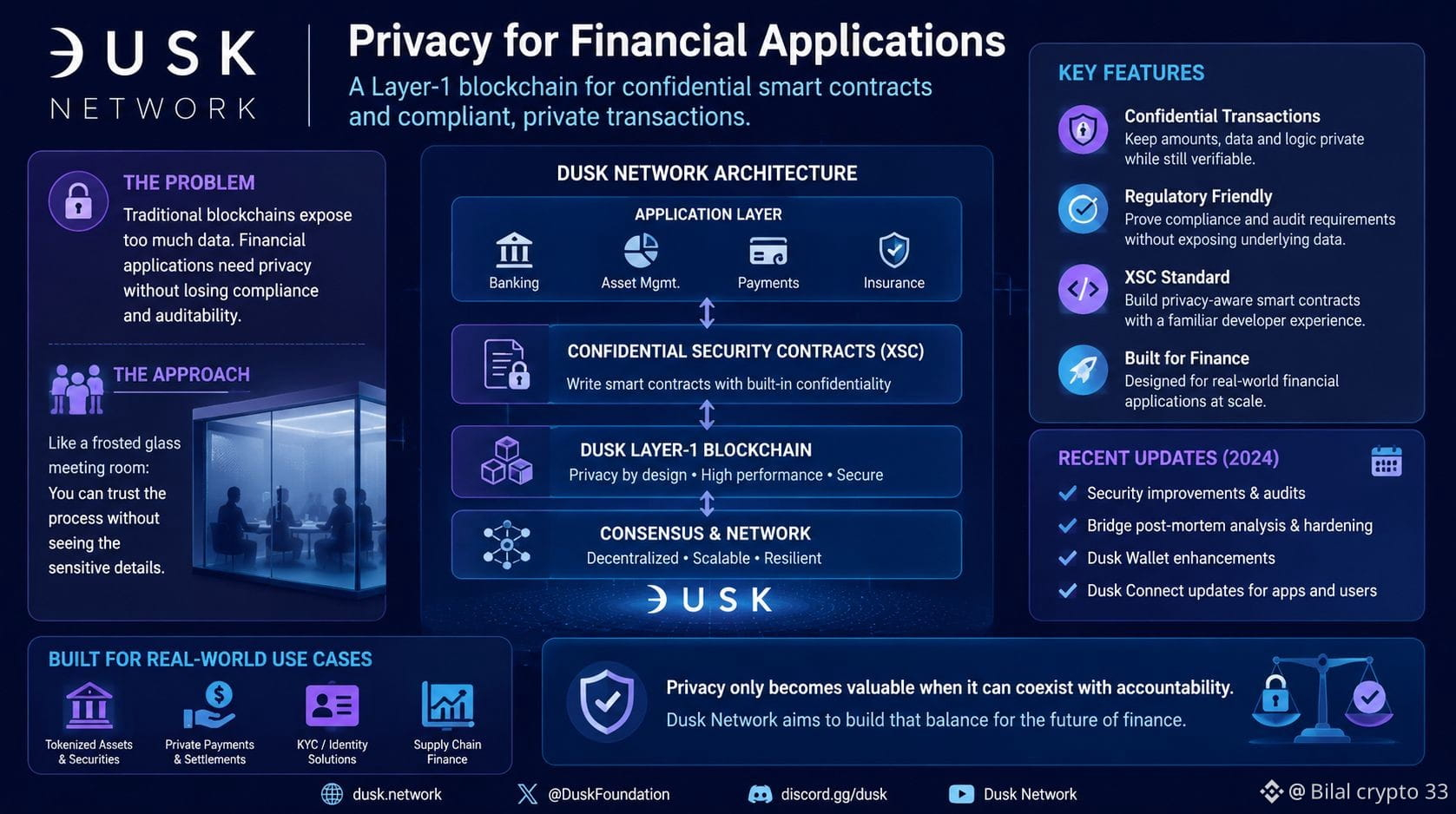
Foi por isso que a Dusk Network me chamou a atenção. Em vez de tratar a confidencialidade como um recurso opcional, ela constrói uma Layer-1 em torno de contratos inteligentes confidenciais por meio do padrão Confidential Security Contract (XSC). A parte interessante não é apenas criptografar dados. É criar um ambiente em que as empresas possam liquidar transações, cumprir exigências de conformidade e, ainda assim, evitar transformar cada participante em um livro aberto.
Uma analogia útil é o vidro fosco em uma sala de reuniões. Você consegue ver claramente que a reunião está acontecendo e confiar no processo, mas a discussão sensível permanece lá dentro. Isso parece mais próximo do que muitas aplicações financeiras realmente precisam do que a transparência total ou a opacidade total.
O desenvolvimento recente também sugere que a equipe está focada em fortalecer a infraestrutura, em vez de correr atrás de manchetes. Trabalhos de segurança, análises pós-mortem de bridges, melhorias em carteiras e atualizações do Dusk Connect apontam para refinar o ecossistema antes de expandi-lo ainda mais.
A privacidade só se torna valiosa quando pode coexistir com a responsabilidade, e é nesse equilíbrio que o teste de longo prazo da Dusk será decidido
@Dusk #dusk $DUSK
Foi por isso que a Dusk Network me chamou a atenção. Em vez de tratar a confidencialidade como um recurso opcional, ela constrói uma Layer-1 em torno de contratos inteligentes confidenciais por meio do padrão Confidential Security Contract (XSC). A parte interessante não é apenas criptografar dados. É criar um ambiente em que as empresas possam liquidar transações, cumprir exigências de conformidade e, ainda assim, evitar transformar cada participante em um livro aberto.
Uma analogia útil é o vidro fosco em uma sala de reuniões. Você consegue ver claramente que a reunião está acontecendo e confiar no processo, mas a discussão sensível permanece lá dentro. Isso parece mais próximo do que muitas aplicações financeiras realmente precisam do que a transparência total ou a opacidade total.
O desenvolvimento recente também sugere que a equipe está focada em fortalecer a infraestrutura, em vez de correr atrás de manchetes. Trabalhos de segurança, análises pós-mortem de bridges, melhorias em carteiras e atualizações do Dusk Connect apontam para refinar o ecossistema antes de expandi-lo ainda mais.
A privacidade só se torna valiosa quando pode coexistir com a responsabilidade, e é nesse equilíbrio que o teste de longo prazo da Dusk será decidido
@Dusk #dusk $DUSK
A Dusk Network é interessante por um motivo que vai além de simplesmente colocar a palavra “privacidade” ao lado de uma blockchain.
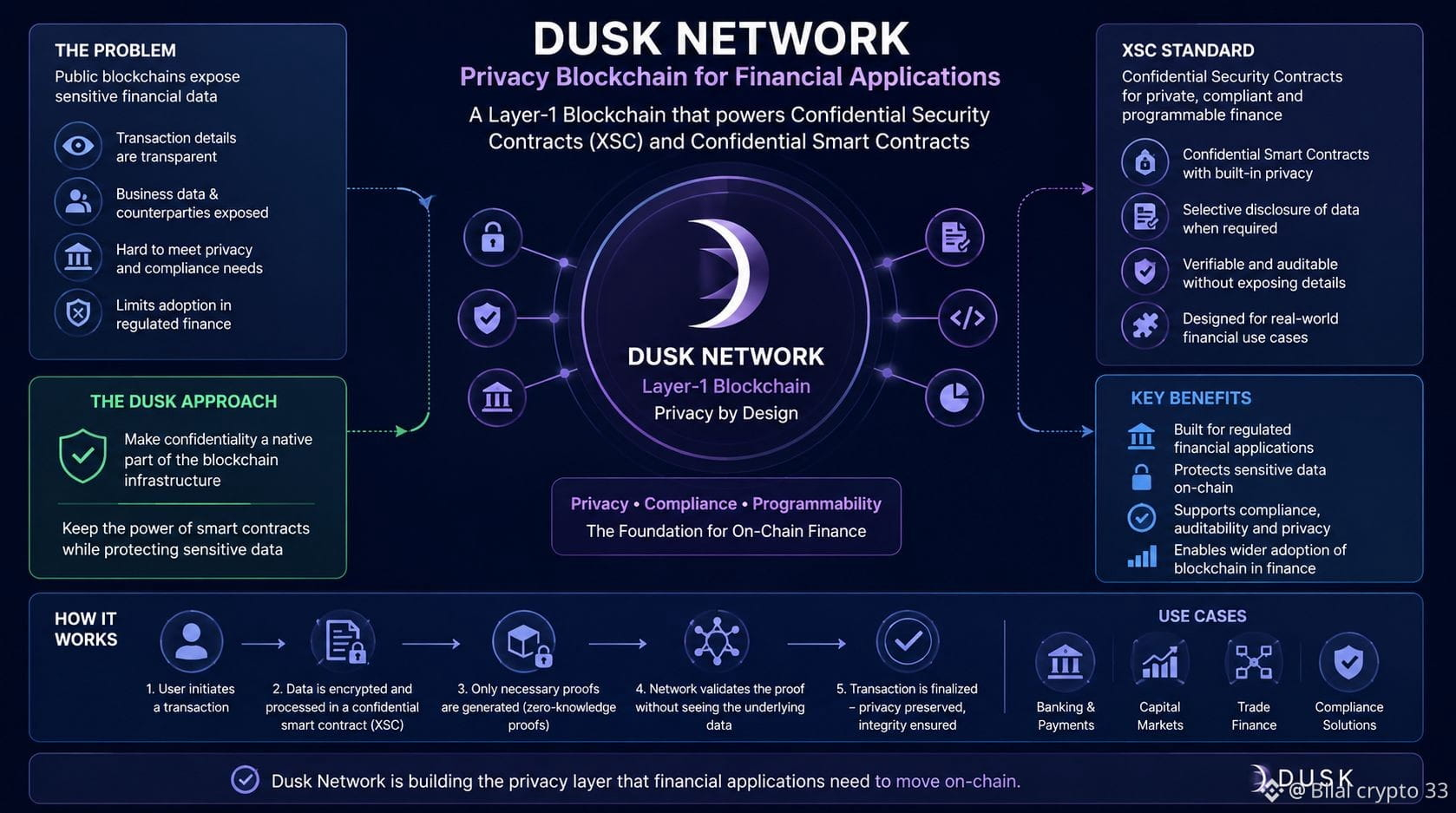
Trata-se de uma Layer-1 construída em torno de aplicações financeiras, com o padrão do Confidential Security Contract (XSC) e contratos inteligentes confidenciais no centro do design. A pergunta importante, na minha visão, não é se a blockchain precisa de privacidade. Ela precisa, com certeza. A questão mais difícil é se a privacidade pode coexistir com a transparência, a conformidade e a auditabilidade que os sistemas financeiros exigem.
É aí que a Dusk passa a valer a pena ser acompanhada.
As blockchains tradicionais tornam as transações fáceis de verificar, mas também expõem muito mais informação do que muitas empresas se sentiriam confortáveis em colocar em um ledger público. Instituições financeiras que lidam com saldos, contrapartes ou dados sensíveis de transações não podem simplesmente tratar a transparência completa como um recurso.
A Dusk está abordando o problema pelo caminho oposto: preservar as vantagens da infraestrutura programável de blockchain enquanto torna a confidencialidade parte da arquitetura, e não uma ideia posterior.
Ainda tenho cautela quanto à adoção, porque uma tecnologia forte não cria automaticamente um uso real.
Mas se o setor financeiro regulado avançar em direção à blockchain, a privacidade pode se tornar infraestrutura — não um luxo.
@Dusk #dusk $DUSK
Trata-se de uma Layer-1 construída em torno de aplicações financeiras, com o padrão do Confidential Security Contract (XSC) e contratos inteligentes confidenciais no centro do design. A pergunta importante, na minha visão, não é se a blockchain precisa de privacidade. Ela precisa, com certeza. A questão mais difícil é se a privacidade pode coexistir com a transparência, a conformidade e a auditabilidade que os sistemas financeiros exigem.
É aí que a Dusk passa a valer a pena ser acompanhada.
As blockchains tradicionais tornam as transações fáceis de verificar, mas também expõem muito mais informação do que muitas empresas se sentiriam confortáveis em colocar em um ledger público. Instituições financeiras que lidam com saldos, contrapartes ou dados sensíveis de transações não podem simplesmente tratar a transparência completa como um recurso.
A Dusk está abordando o problema pelo caminho oposto: preservar as vantagens da infraestrutura programável de blockchain enquanto torna a confidencialidade parte da arquitetura, e não uma ideia posterior.
Ainda tenho cautela quanto à adoção, porque uma tecnologia forte não cria automaticamente um uso real.
Mas se o setor financeiro regulado avançar em direção à blockchain, a privacidade pode se tornar infraestrutura — não um luxo.
@Dusk #dusk $DUSK
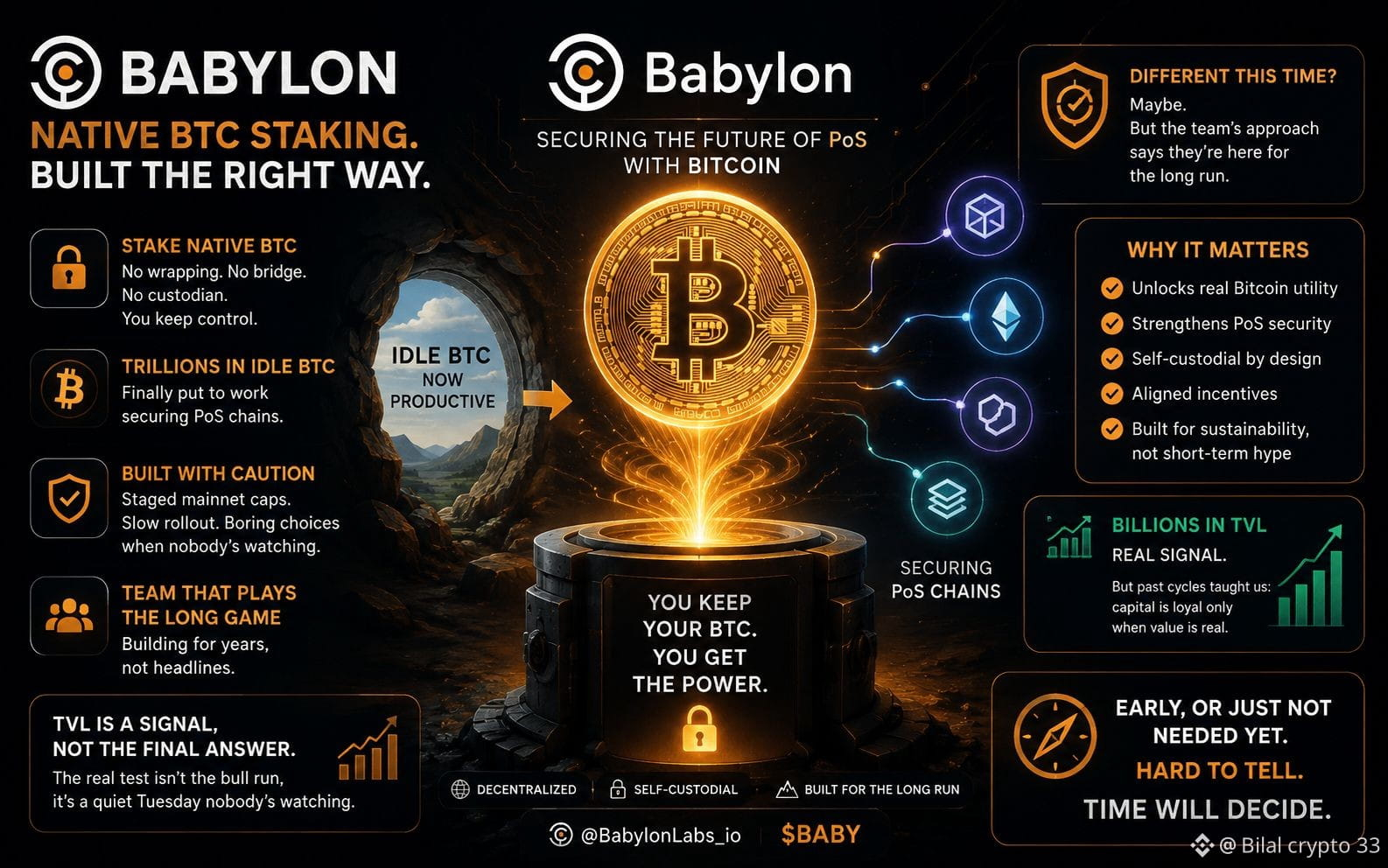
$BABY Babylon é um dos poucos projetos de infraestrutura de Bitcoin que me fez parar e pensar. Fazer staking de BTC nativo sem wrap, bridges ou abrir mão da custódia parece uma solução mais limpa do que a maioria das tentativas de tornar o Bitcoin produtivo. @BabylonLabs_io
A ideia de colocar BTC dormente para trabalhar garantindo cadeias PoS faz sentido. O que chamou ainda mais a minha atenção foi a abordagem do time: expansão gradual do mainnet, limites mensurados e disposição para avançar devagar em vez de correr atrás de manchetes. Não é um marketing empolgante, mas frequentemente isso reflete engenharia disciplinada.
Ainda assim, já vi ciclos suficientes para saber que TVL, por si só, não prova valor duradouro. O capital chega rápido quando os incentivos são fortes e some tão rápido quanto quando eles desaparecem. A verdadeira pergunta é se Babylon continua útil quando os rendimentos se normalizam e a atenção se desloca para outros lugares.
$BABY pode ser cedo, ou pode simplesmente estar resolvendo um problema que o mercado ainda não percebeu totalmente. O tempo, e não o hype, é que vai decidir.
@BabylonLabs_io #baby $BABY
A ideia de colocar BTC dormente para trabalhar garantindo cadeias PoS faz sentido. O que chamou ainda mais a minha atenção foi a abordagem do time: expansão gradual do mainnet, limites mensurados e disposição para avançar devagar em vez de correr atrás de manchetes. Não é um marketing empolgante, mas frequentemente isso reflete engenharia disciplinada.
Ainda assim, já vi ciclos suficientes para saber que TVL, por si só, não prova valor duradouro. O capital chega rápido quando os incentivos são fortes e some tão rápido quanto quando eles desaparecem. A verdadeira pergunta é se Babylon continua útil quando os rendimentos se normalizam e a atenção se desloca para outros lugares.
$BABY pode ser cedo, ou pode simplesmente estar resolvendo um problema que o mercado ainda não percebeu totalmente. O tempo, e não o hype, é que vai decidir.
@BabylonLabs_io #baby $BABY
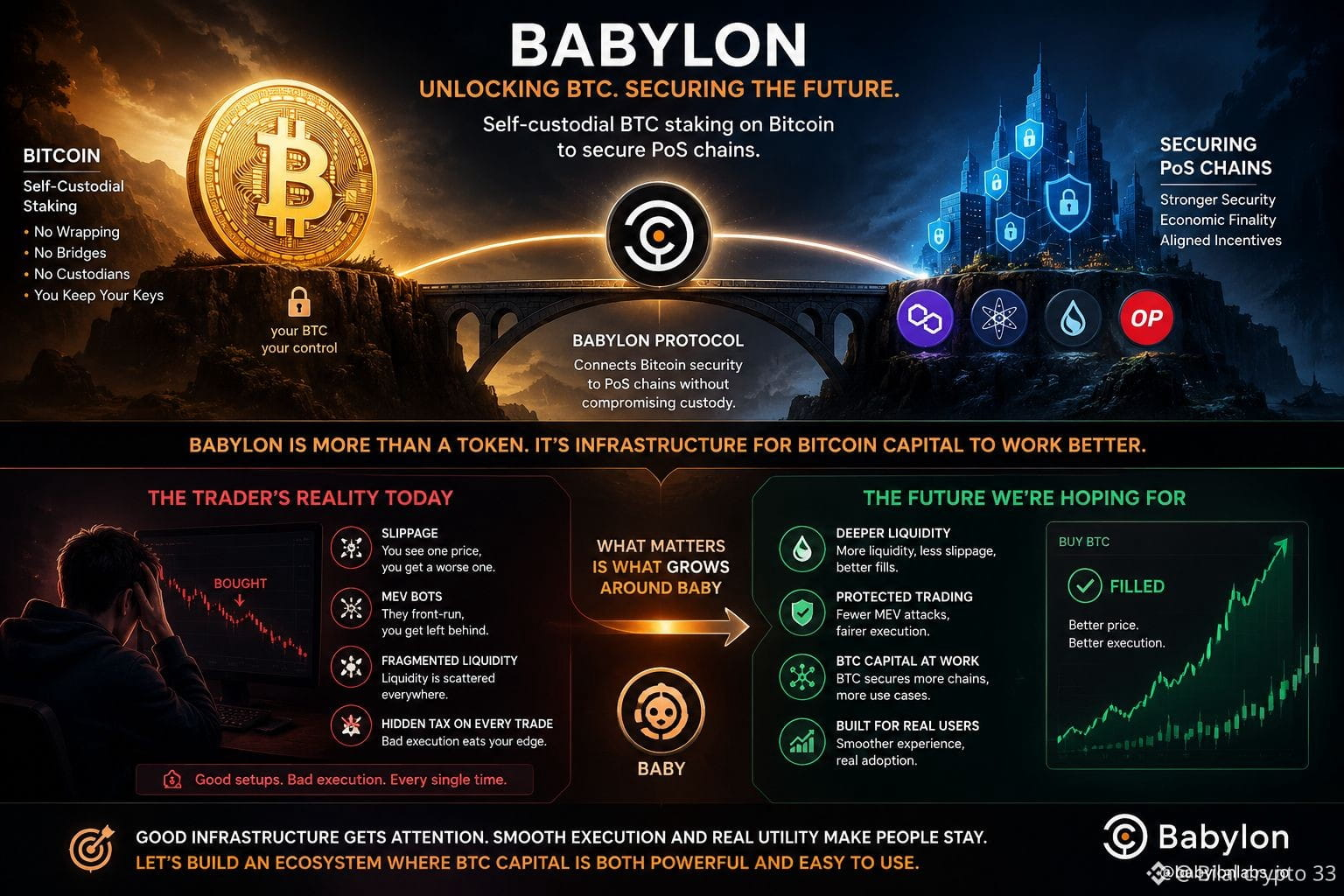
Tenho pensado em Babilônia ultimamente. A ideia inteira de fazer staking de BTC com autocustódia diretamente no Bitcoin é, honestamente, uma das poucas narrativas que me fez parar e prestar atenção em vez de apenas rolar a tela. Manter o Bitcoin no Bitcoin simplesmente parece o caminho certo.
Mas uma boa infraestrutura não cria automaticamente uma experiência de negociação melhor.
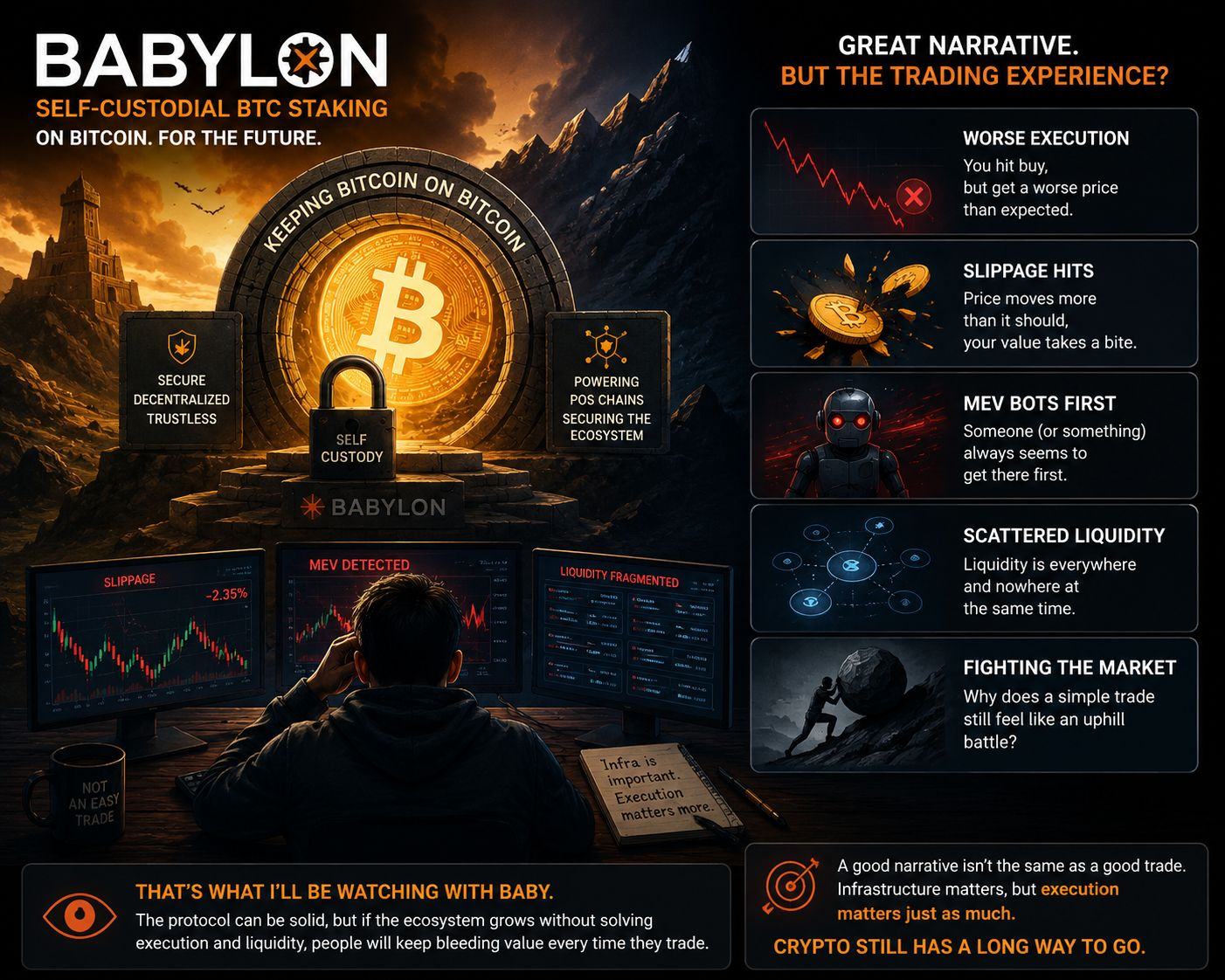
Não importa qual cadeia eu use, continuo esbarrando nos mesmos problemas: slippage inesperado, execução ruim, bots de MEV chegando primeiro e a liquidez espalhada por muitos pools. A tecnologia continua melhorando, mas fazer uma negociação simples ainda pode parecer mais difícil do que deveria.
É isso que vou observar com a BABY. Infraestrutura forte é importante, mas um ecossistema também precisa de execução eficiente e liquidez profunda. Caso contrário, os usuários continuam perdendo valor de maneiras que nem sempre são óbvias.
Já estou no mundo cripto o suficiente para saber que uma narrativa forte nem sempre se traduz em uma boa experiência de negociação, porque construir melhor infraestrutura é apenas metade da jornada. Resolver a questão da execução é o que, no fim das contas, vai fazer essa infraestrutura realmente importar.
@BabylonLabs_io #baby $BABY
Mas uma boa infraestrutura não cria automaticamente uma experiência de negociação melhor.
Não importa qual cadeia eu use, continuo esbarrando nos mesmos problemas: slippage inesperado, execução ruim, bots de MEV chegando primeiro e a liquidez espalhada por muitos pools. A tecnologia continua melhorando, mas fazer uma negociação simples ainda pode parecer mais difícil do que deveria.
É isso que vou observar com a BABY. Infraestrutura forte é importante, mas um ecossistema também precisa de execução eficiente e liquidez profunda. Caso contrário, os usuários continuam perdendo valor de maneiras que nem sempre são óbvias.
Já estou no mundo cripto o suficiente para saber que uma narrativa forte nem sempre se traduz em uma boa experiência de negociação, porque construir melhor infraestrutura é apenas metade da jornada. Resolver a questão da execução é o que, no fim das contas, vai fazer essa infraestrutura realmente importar.
@BabylonLabs_io #baby $BABY
Tenho pensado em Babilônia ultimamente. A ideia de fazer staking de BTC com auto-custódia diretamente no Bitcoin para ajudar a garantir cadeias PoS é uma das poucas narrativas que realmente conseguiram me fazer parar e prestar atenção, em vez de apenas rolar a tela. Parece uma direção mais prática do que ficar embrulhando o Bitcoin indefinidamente em outra coisa.
O que ainda me incomoda é o que acontece quando tento realmente negociar. Deslizamento (slippage), MEV, front-runs e liquidez fragmentada podem transformar uma boa configuração em uma execução ruim antes mesmo que eu perceba. Você vê um preço, clica em comprar e, de alguma forma, o mercado já se moveu contra você. Essa fricção parece um tipo de imposto que os traders aceitam em silêncio.
Então estou observando o que se desenvolve além do preço do token em $BABY . Se o Babylon puder tornar o capital em BTC mais produtivo enquanto o ecossistema ao redor melhora liquidez e execução, isso parece muito mais significativo para mim do que outra narrativa de curto prazo.
@BabylonLabs_io #baby $BABY
O que ainda me incomoda é o que acontece quando tento realmente negociar. Deslizamento (slippage), MEV, front-runs e liquidez fragmentada podem transformar uma boa configuração em uma execução ruim antes mesmo que eu perceba. Você vê um preço, clica em comprar e, de alguma forma, o mercado já se moveu contra você. Essa fricção parece um tipo de imposto que os traders aceitam em silêncio.
Então estou observando o que se desenvolve além do preço do token em $BABY . Se o Babylon puder tornar o capital em BTC mais produtivo enquanto o ecossistema ao redor melhora liquidez e execução, isso parece muito mais significativo para mim do que outra narrativa de curto prazo.
@BabylonLabs_io #baby $BABY
Inicia sessão para explorar mais conteúdos