
溪月 Xīyuè
7.6k Publicações

溪月 Xīyuè
加密分析师 | 市场洞察短期与长期信号 | 比特币、以太坊及其他币种分享实时设置与基于研究的观点 与加密女王👸
Aberto ao trading
Trader Frequente
2.5 ano(s)
766 A seguir
28.5K+ Seguidores
4.5K+ Gostaram
Publicações
Portfólio
Tudo
Cotações
Em direto
#zec'smarketcapsurpasseddoge
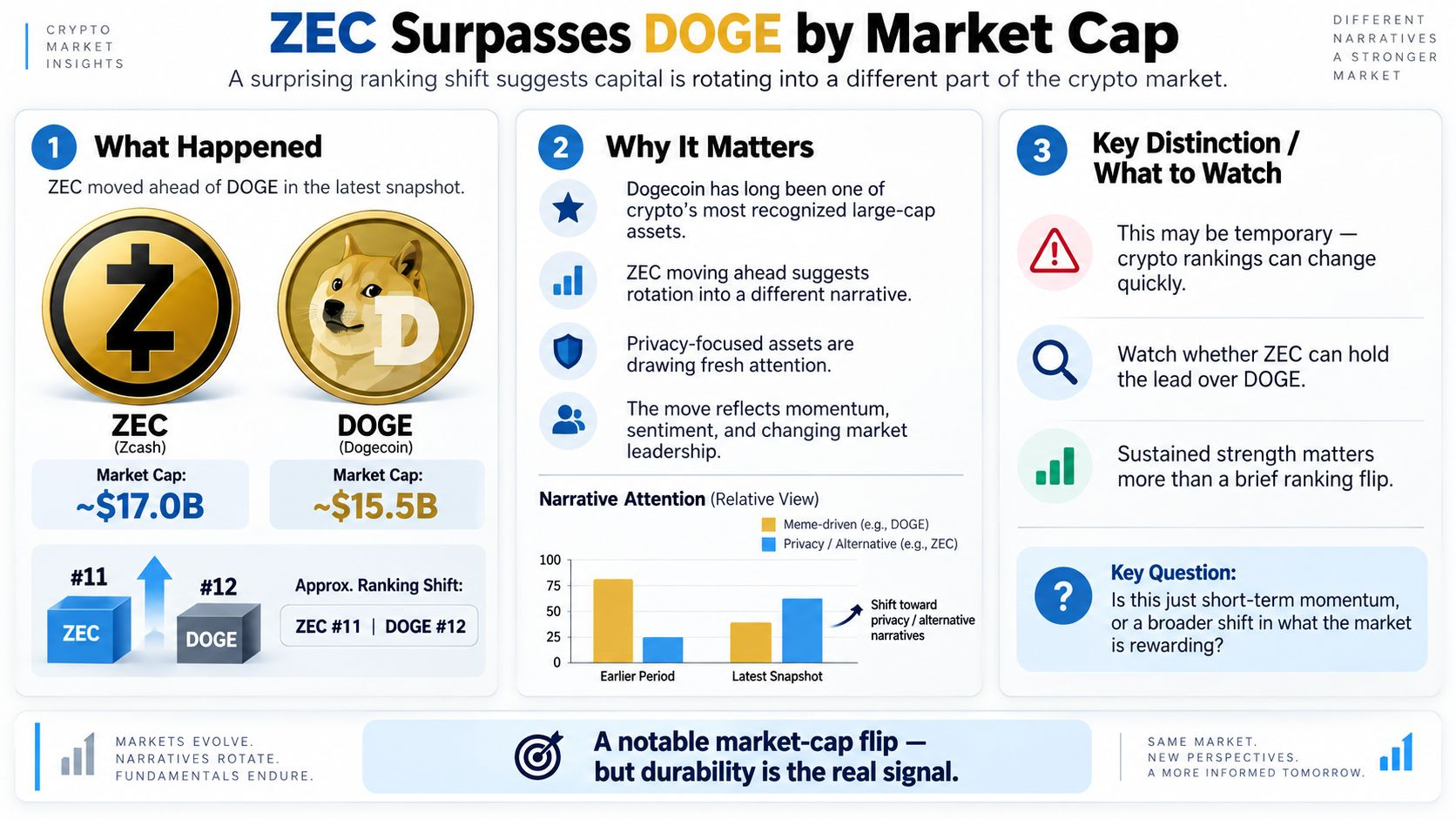
🚨 O Zcash acabou de ultrapassar o Dogecoin em valor de mercado — uma classificação que poucos traders teriam esperado recentemente.
$ZEC disparou para a faixa superior do mercado de criptomoedas, com sua capitalização de mercado agora acima de $DOGE na mais recente captura do CoinGecko.
O movimento acontece após um período incomumente forte para o Zcash. No início desta semana, o ZEC liderou os principais ativos cripto com um ganho diário de 16,5%, enquanto seu impulso também acompanhou o processo recente de lançamento do ETF de Zcash listado nos EUA.
Por que isso importa?
O Dogecoin há muito tempo é um dos ativos mais importantes e reconhecíveis do mercado cripto. Ver uma criptomoeda focada em privacidade ultrapassá-lo temporariamente sugere que o capital está migrando para uma parte muito diferente do mercado.
Isso não significa que o ZEC manterá essa posição permanentemente. As classificações do mercado cripto podem mudar rapidamente quando os preços estão se movendo tão depressa.
Mas a mudança levanta uma questão interessante:
A alta do Zcash é apenas impulso — ou o mercado está começando a valorizar a narrativa de privacidade de forma diferente?
#zec #zcash #DOGE #Crypto
$ARB
🚨 O Zcash acabou de ultrapassar o Dogecoin em valor de mercado — uma classificação que poucos traders teriam esperado recentemente.
$ZEC disparou para a faixa superior do mercado de criptomoedas, com sua capitalização de mercado agora acima de $DOGE na mais recente captura do CoinGecko.
O movimento acontece após um período incomumente forte para o Zcash. No início desta semana, o ZEC liderou os principais ativos cripto com um ganho diário de 16,5%, enquanto seu impulso também acompanhou o processo recente de lançamento do ETF de Zcash listado nos EUA.
Por que isso importa?
O Dogecoin há muito tempo é um dos ativos mais importantes e reconhecíveis do mercado cripto. Ver uma criptomoeda focada em privacidade ultrapassá-lo temporariamente sugere que o capital está migrando para uma parte muito diferente do mercado.
Isso não significa que o ZEC manterá essa posição permanentemente. As classificações do mercado cripto podem mudar rapidamente quando os preços estão se movendo tão depressa.
Mas a mudança levanta uma questão interessante:
A alta do Zcash é apenas impulso — ou o mercado está começando a valorizar a narrativa de privacidade de forma diferente?
#zec #zcash #DOGE #Crypto
$ARB
Ver tradução
#russiaukraine72-hourceasefire
🕊️ A 72-hour pause in Russia–Ukraine strikes has opened a new diplomatic window — but it’s not a full ceasefire.
Russia ordered a three-day pause in strikes on Kyiv as U.S. envoys Steve Witkoff and Jared Kushner traveled for talks with Moscow and Kyiv. Ukraine said it would reciprocate by avoiding strikes on Moscow during the diplomatic effort.
The important distinction: broader fighting has not stopped, and no comprehensive ceasefire agreement has been announced.
For markets, even a temporary reduction in escalation can matter for geopolitical risk sentiment. But a lasting impact on energy, equities, gold or crypto would likely require evidence that these talks are moving toward something broader and more durable.
For now, this looks more like a diplomatic opening than a peace breakthrough.
The next signal to watch: does the 72-hour pause end on schedule — or lead to another round of negotiations?
$ARB $RAY $FLOCK
🕊️ A 72-hour pause in Russia–Ukraine strikes has opened a new diplomatic window — but it’s not a full ceasefire.
Russia ordered a three-day pause in strikes on Kyiv as U.S. envoys Steve Witkoff and Jared Kushner traveled for talks with Moscow and Kyiv. Ukraine said it would reciprocate by avoiding strikes on Moscow during the diplomatic effort.
The important distinction: broader fighting has not stopped, and no comprehensive ceasefire agreement has been announced.
For markets, even a temporary reduction in escalation can matter for geopolitical risk sentiment. But a lasting impact on energy, equities, gold or crypto would likely require evidence that these talks are moving toward something broader and more durable.
For now, this looks more like a diplomatic opening than a peace breakthrough.
The next signal to watch: does the 72-hour pause end on schedule — or lead to another round of negotiations?
$ARB $RAY $FLOCK

Ver tradução
$ETH — One level still stands in the way
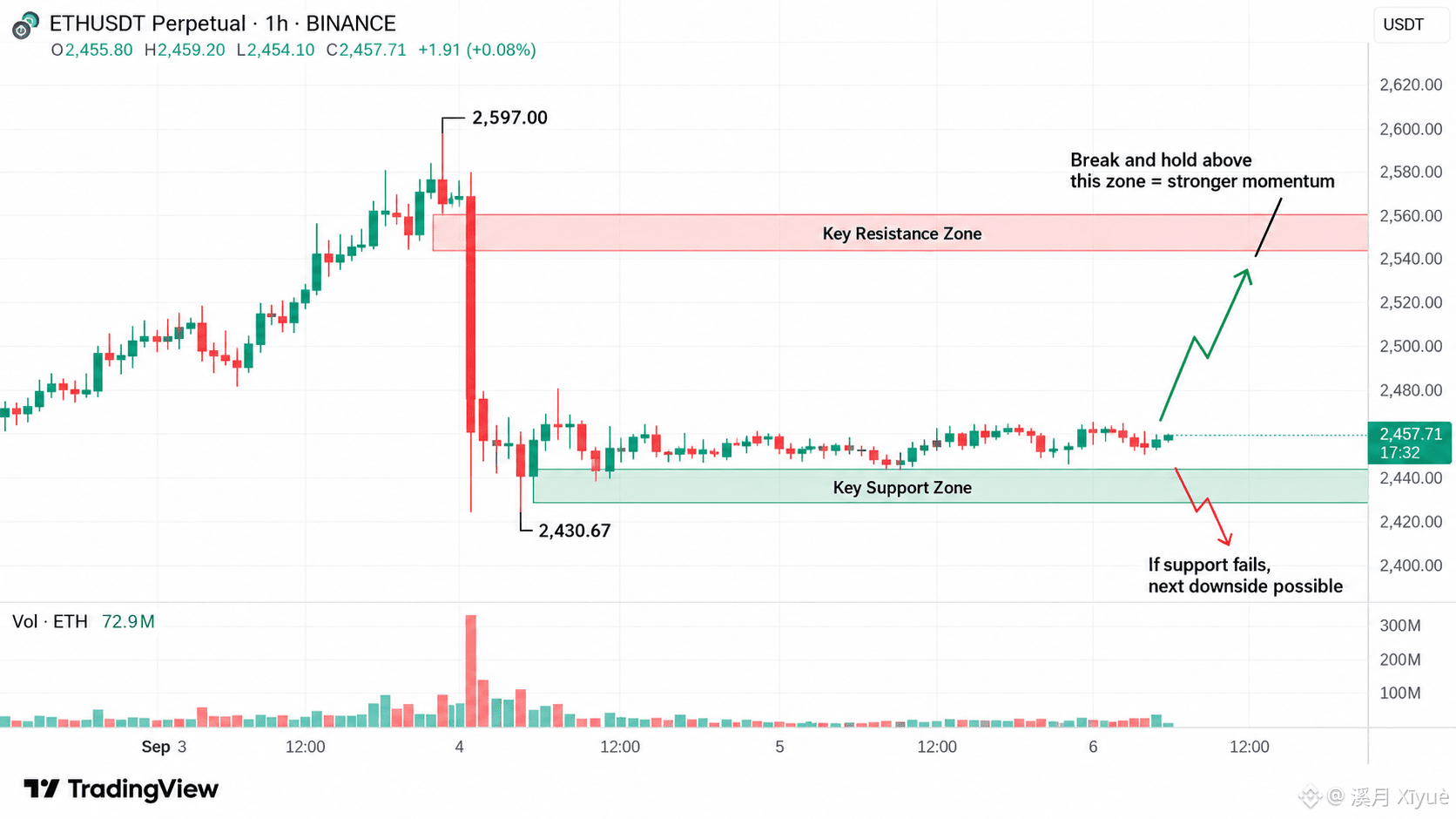
$ETH is trying to stabilize after a sharp 1H sell-off, but I wouldn’t call this a bullish reversal yet.
Price is currently around $2,457.71 after dropping from the visible $2,547 high and briefly reaching $2,430.67. Since that move, ETH has been consolidating rather than producing a strong recovery.
The level I’m watching most is the Supertrend around $2,477.43. Price remains below it, so buyers still need to reclaim and hold above that area before the short-term structure starts looking stronger.
On the downside, the $2,430–$2,442 area matters because that’s where the recent low formed. Losing that zone could put sellers back in control.
Volume has also cooled considerably since the initial sell-off, which makes confirmation important.
For now, $ETH looks more like consolidation after a breakdown than a confirmed reversal.
#ETH #Ethereum
$ETH is trying to stabilize after a sharp 1H sell-off, but I wouldn’t call this a bullish reversal yet.
Price is currently around $2,457.71 after dropping from the visible $2,547 high and briefly reaching $2,430.67. Since that move, ETH has been consolidating rather than producing a strong recovery.
The level I’m watching most is the Supertrend around $2,477.43. Price remains below it, so buyers still need to reclaim and hold above that area before the short-term structure starts looking stronger.
On the downside, the $2,430–$2,442 area matters because that’s where the recent low formed. Losing that zone could put sellers back in control.
Volume has also cooled considerably since the initial sell-off, which makes confirmation important.
For now, $ETH looks more like consolidation after a breakdown than a confirmed reversal.
#ETH #Ethereum
$BNB — Este movimento está ficando estendido demais? 📉
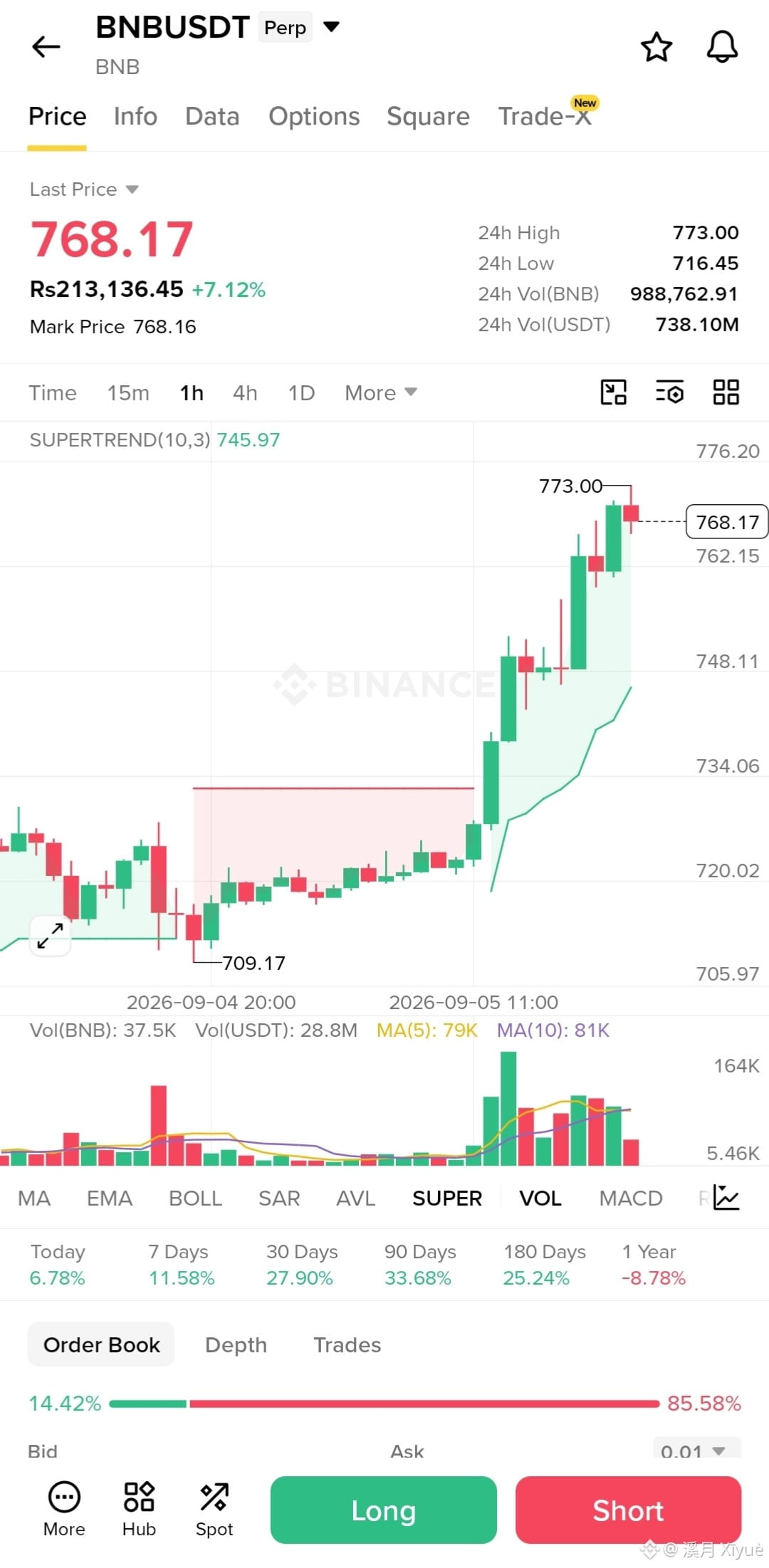
$BNB está sendo negociado em torno de 770.36, com o RSI perto de 81, colocando o momentum de curto prazo em território de sobrecompra.
O preço também está acima da EMA20 em $742.92 e da EMA50 em $728.06, então o cenário baixista ainda precisa de confirmação, em vez de um short automático.
A área em torno de $766–$774 merece atenção de perto. Uma rejeição pode trazer $735.61 de volta ao foco, seguida por $705.06 e $674.52 se a pressão de venda se intensificar.
Por outro lado, uma alta sustentada acima de $781.42 enfraqueceria este cenário baixista.
Esses são níveis que estou monitorando, não alvos garantidos nem uma recomendação de trade.
A BNB rejeita esse movimento estendido demais, ou os compradores conseguem manter o controle?
#bnb #crypto #MarketAnalysis #BNB_Market_Update
$BNB está sendo negociado em torno de 770.36, com o RSI perto de 81, colocando o momentum de curto prazo em território de sobrecompra.
O preço também está acima da EMA20 em $742.92 e da EMA50 em $728.06, então o cenário baixista ainda precisa de confirmação, em vez de um short automático.
A área em torno de $766–$774 merece atenção de perto. Uma rejeição pode trazer $735.61 de volta ao foco, seguida por $705.06 e $674.52 se a pressão de venda se intensificar.
Por outro lado, uma alta sustentada acima de $781.42 enfraqueceria este cenário baixista.
Esses são níveis que estou monitorando, não alvos garantidos nem uma recomendação de trade.
A BNB rejeita esse movimento estendido demais, ou os compradores conseguem manter o controle?
#bnb #crypto #MarketAnalysis #BNB_Market_Update
$VELVET — A estrutura de 1H está começando a parecer mais construtiva 👀
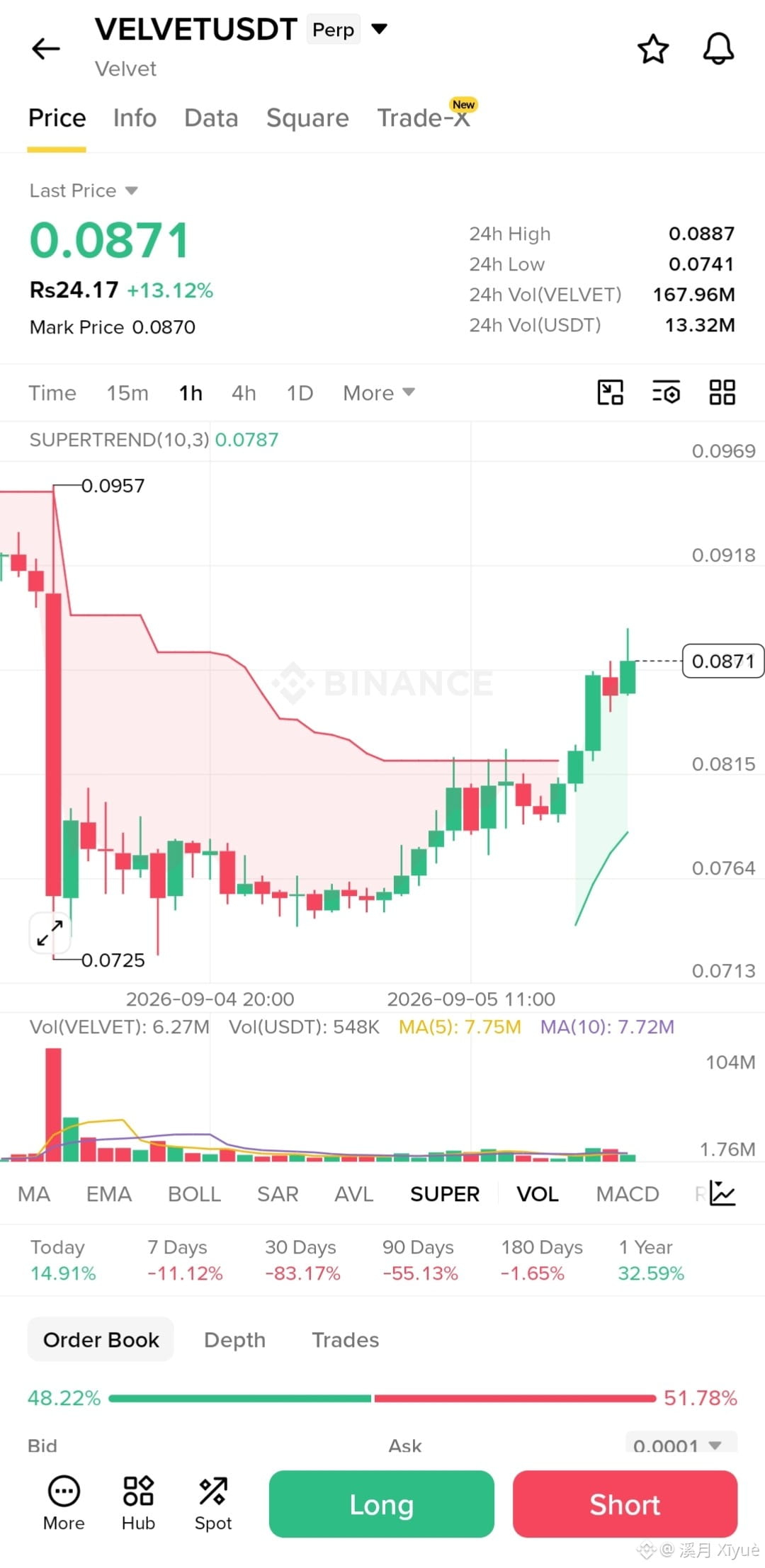
O gráfico de 1H está contando uma história mais forte do que o timeframe inferior. Isso está começando a parecer mais do que apenas um repique rápido.
O preço recuperou a área visível de $0.0815, enquanto o Supertrend virou abaixo do movimento.
📍 Área que estou acompanhando: $0.0815–$0.0871
Níveis de alta:
$0.0918
$0.0957
$0.0969
Área de invalidação: $0.0787
A recuperação acima de $0.0815 é a parte-chave desta configuração. Manter essa área de rompimento manteria intacta a recuperação de fundos mais altos, com $0.0918 atuando como o próximo obstáculo visível e a máxima anterior de $0.0957 logo acima.
Um movimento de volta abaixo da área do Supertrend perto de $0.0787 enfraqueceria este cenário de continuação.
Esses são simplesmente os níveis do gráfico que estou monitorando — não são alvos garantidos.
Será que $VELVET consegue manter a recuperação, ou o preço volta para a faixa anterior?
#VELVET #Crypto #trading #MarketAnalysis
O gráfico de 1H está contando uma história mais forte do que o timeframe inferior. Isso está começando a parecer mais do que apenas um repique rápido.
O preço recuperou a área visível de $0.0815, enquanto o Supertrend virou abaixo do movimento.
📍 Área que estou acompanhando: $0.0815–$0.0871
Níveis de alta:
$0.0918
$0.0957
$0.0969
Área de invalidação: $0.0787
A recuperação acima de $0.0815 é a parte-chave desta configuração. Manter essa área de rompimento manteria intacta a recuperação de fundos mais altos, com $0.0918 atuando como o próximo obstáculo visível e a máxima anterior de $0.0957 logo acima.
Um movimento de volta abaixo da área do Supertrend perto de $0.0787 enfraqueceria este cenário de continuação.
Esses são simplesmente os níveis do gráfico que estou monitorando — não são alvos garantidos.
Será que $VELVET consegue manter a recuperação, ou o preço volta para a faixa anterior?
#VELVET #Crypto #trading #MarketAnalysis
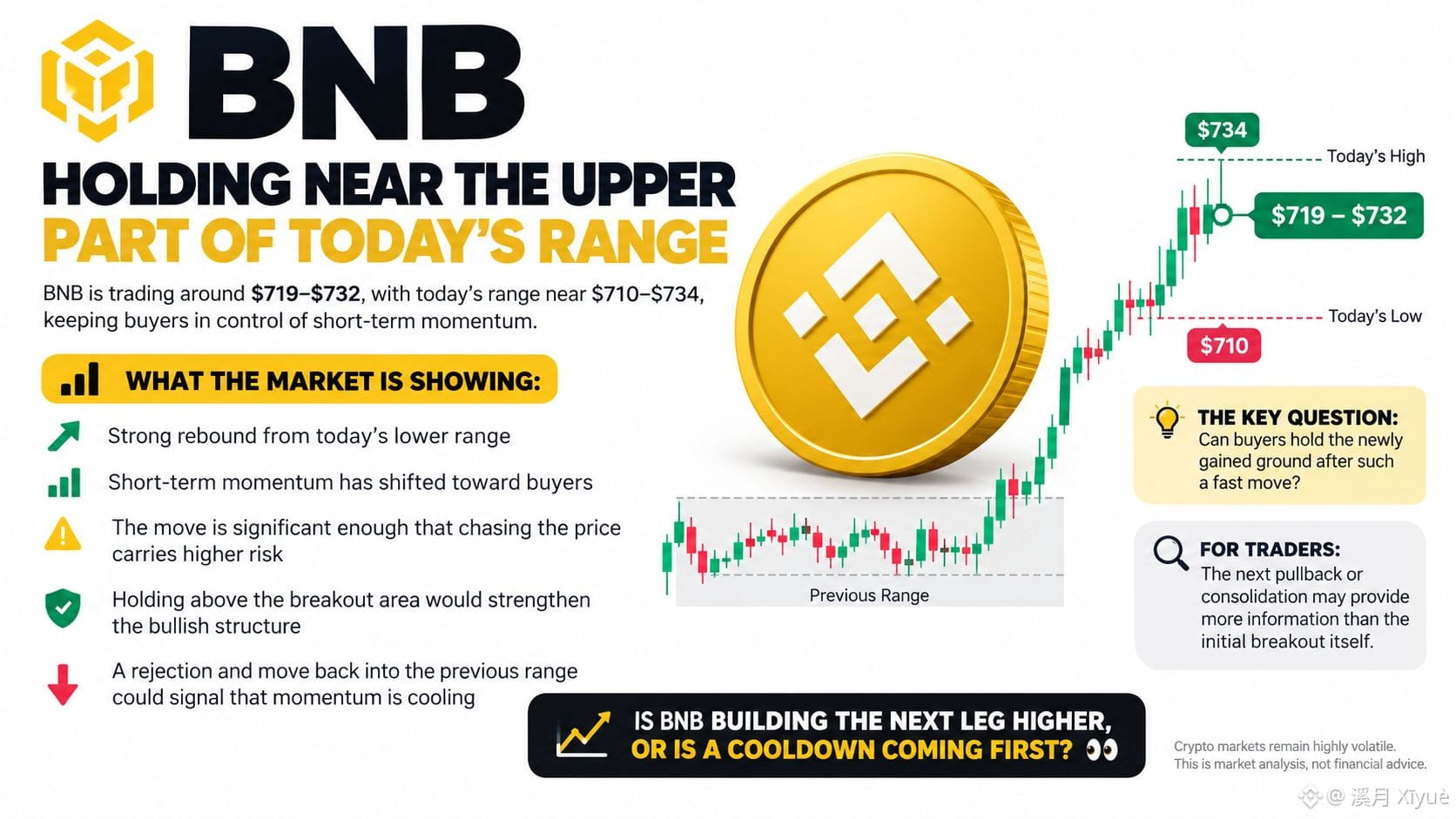
🔥 $BNB está mostrando nova força — mas é aqui que a confirmação importa.
O BNB subiu fortemente hoje após negociar na faixa baixa dos $700, colocando os compradores de volta no controle do momentum de curto prazo.
📊 O que o mercado está mostrando:
• Forte recuperação a partir da faixa inferior de hoje
• O momentum de curto prazo mudou para os compradores
• O movimento é significativo o suficiente para que correr atrás do preço envolva maior risco
• Manter-se acima da área de rompimento fortaleceria a estrutura de alta
• Uma rejeição e retorno para dentro da faixa anterior pode sinalizar que o momentum está perdendo força
A questão importante agora não é simplesmente se o BNB pode subir mais.
É se os compradores conseguem sustentar o terreno recém-conquistado após um movimento tão rápido.
Para os traders, o próximo recuo ou consolidação pode fornecer mais informações do que o rompimento inicial em si.
⚠️ Os mercados de cripto continuam altamente voláteis. Esta é uma análise de mercado, não uma सलाह financeira.
O $BNB está construindo a próxima perna de alta, ou uma desaceleração vem primeiro? 👀
#bnb #BNB_Market_Update #bnb一輩子 #BNB走势 #BNB金鏟子
O BNB subiu fortemente hoje após negociar na faixa baixa dos $700, colocando os compradores de volta no controle do momentum de curto prazo.
📊 O que o mercado está mostrando:
• Forte recuperação a partir da faixa inferior de hoje
• O momentum de curto prazo mudou para os compradores
• O movimento é significativo o suficiente para que correr atrás do preço envolva maior risco
• Manter-se acima da área de rompimento fortaleceria a estrutura de alta
• Uma rejeição e retorno para dentro da faixa anterior pode sinalizar que o momentum está perdendo força
A questão importante agora não é simplesmente se o BNB pode subir mais.
É se os compradores conseguem sustentar o terreno recém-conquistado após um movimento tão rápido.
Para os traders, o próximo recuo ou consolidação pode fornecer mais informações do que o rompimento inicial em si.
⚠️ Os mercados de cripto continuam altamente voláteis. Esta é uma análise de mercado, não uma सलाह financeira.
O $BNB está construindo a próxima perna de alta, ou uma desaceleração vem primeiro? 👀
#bnb #BNB_Market_Update #bnb一輩子 #BNB走势 #BNB金鏟子
#USAugustAvgHourlyEarningsRise3.1%
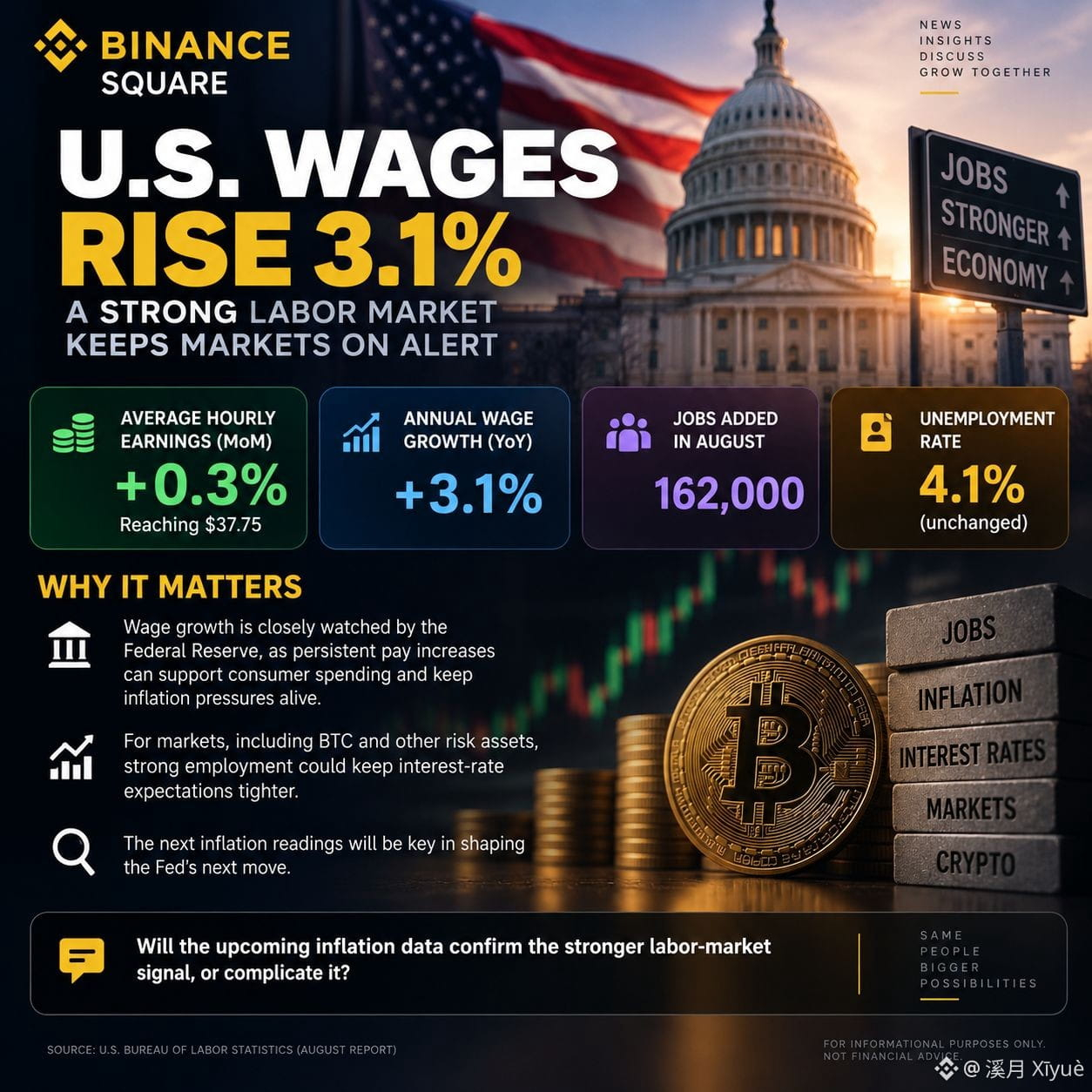
🇺🇸 Os salários nos EUA ainda estão subindo — mas o relatório de empregos mais recente envia um sinal misto para os mercados.
Os ganhos médios por hora aumentaram 0,3% em agosto, chegando a $37.75, enquanto o crescimento anual dos salários ficou em 3,1%.
Ao mesmo tempo, a economia dos EUA adicionou 162.000 empregos e o desemprego permaneceu inalterado em 4,1%.
Por que isso importa?
O crescimento dos salários é acompanhado de perto pelo Federal Reserve porque aumentos persistentes na remuneração podem sustentar os gastos do consumidor e potencialmente manter vivas as pressões inflacionárias.
Para os mercados, incluindo $BTC e outros ativos de risco, isso torna as próximas leituras de inflação especialmente importantes. Um emprego forte combinado com inflação persistente pode manter as expectativas de taxas de juros mais apertadas, enquanto uma inflação mais fraca poderia mudar esse cenário.
Por enquanto, os dados apontam para um mercado de trabalho que continua resiliente — mas o próximo movimento do Fed está longe de estar definido.
👀 Os próximos dados de inflação vão confirmar o sinal mais forte do mercado de trabalho, ou complicá-lo?
$TUT $NOM
$AAPLB
🇺🇸 Os salários nos EUA ainda estão subindo — mas o relatório de empregos mais recente envia um sinal misto para os mercados.
Os ganhos médios por hora aumentaram 0,3% em agosto, chegando a $37.75, enquanto o crescimento anual dos salários ficou em 3,1%.
Ao mesmo tempo, a economia dos EUA adicionou 162.000 empregos e o desemprego permaneceu inalterado em 4,1%.
Por que isso importa?
O crescimento dos salários é acompanhado de perto pelo Federal Reserve porque aumentos persistentes na remuneração podem sustentar os gastos do consumidor e potencialmente manter vivas as pressões inflacionárias.
Para os mercados, incluindo $BTC e outros ativos de risco, isso torna as próximas leituras de inflação especialmente importantes. Um emprego forte combinado com inflação persistente pode manter as expectativas de taxas de juros mais apertadas, enquanto uma inflação mais fraca poderia mudar esse cenário.
Por enquanto, os dados apontam para um mercado de trabalho que continua resiliente — mas o próximo movimento do Fed está longe de estar definido.
👀 Os próximos dados de inflação vão confirmar o sinal mais forte do mercado de trabalho, ou complicá-lo?
$TUT $NOM
$AAPLB
#USAugustJobGrowthNearlyTriplesForecast
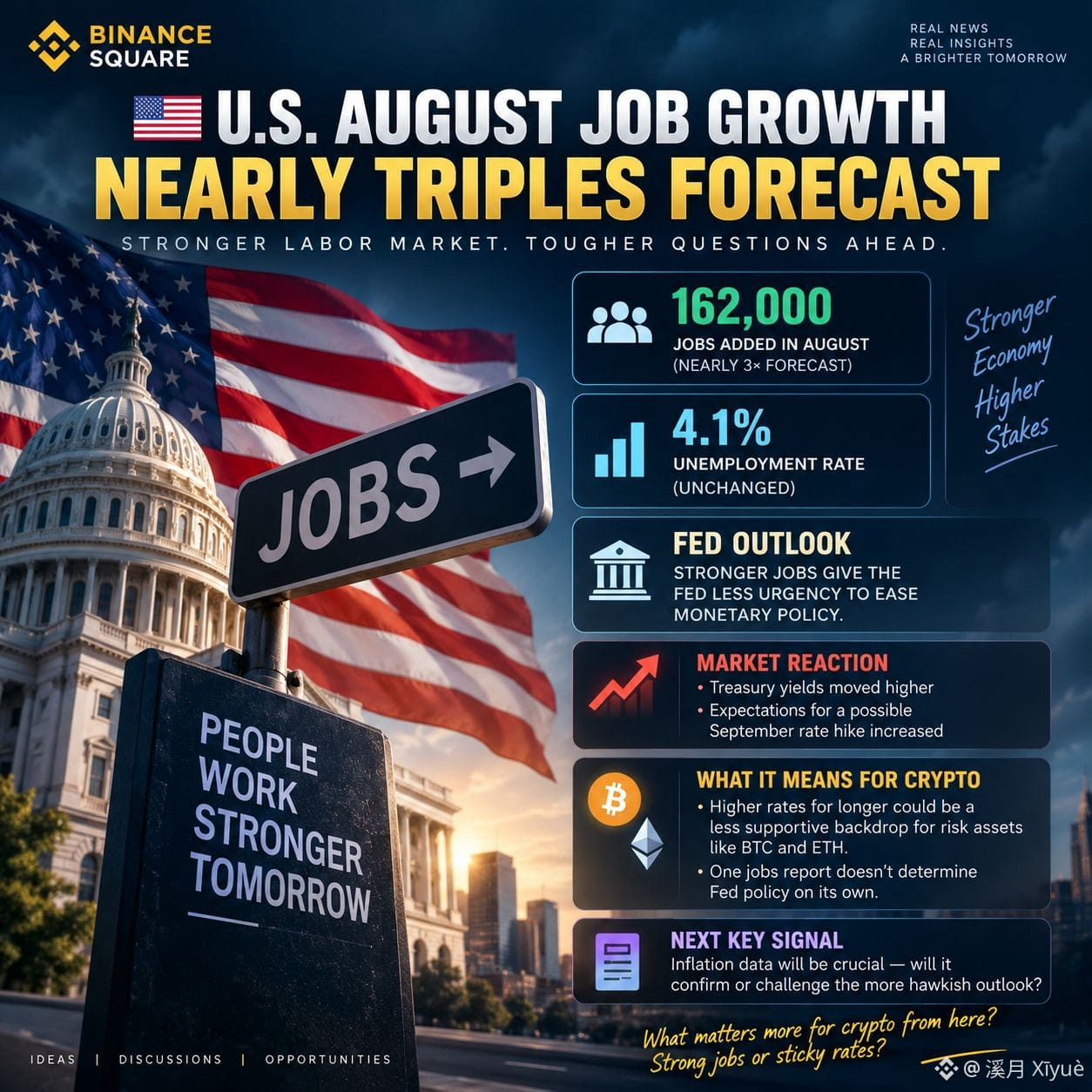
🇺🇸 O mercado de trabalho dos EUA acabou de trazer uma grande surpresa positiva.
Os empregadores adicionaram 162.000 empregos em agosto, quase o triplo do que os economistas esperavam, enquanto a taxa de desemprego manteve-se estável em 4,1%.
Isso importa porque um mercado de trabalho mais forte dá ao Federal Reserve menos urgência para afrouxar a política monetária.
Os mercados reagiram rapidamente: os rendimentos dos Treasuries subiram e as expectativas de um possível aumento da taxa do Fed em setembro aumentaram.
Para as criptos, a conexão ocorre principalmente por meio da liquidez e das expectativas de taxas de juros. Se os mercados começarem a precificar taxas mais altas por mais tempo, ativos de risco como $BTC e $ETH podem enfrentar um cenário macroeconômico menos favorável.
Mas um único relatório de empregos não determina a política do Fed por si só.
O próximo grande sinal será os dados de inflação — e se eles confirmam ou desafiam a perspectiva de taxas mais agressiva.
Empregos fortes, taxas persistentes — o que importa mais para as criptos daqui para frente?
$BULLA $4 $DASH
🇺🇸 O mercado de trabalho dos EUA acabou de trazer uma grande surpresa positiva.
Os empregadores adicionaram 162.000 empregos em agosto, quase o triplo do que os economistas esperavam, enquanto a taxa de desemprego manteve-se estável em 4,1%.
Isso importa porque um mercado de trabalho mais forte dá ao Federal Reserve menos urgência para afrouxar a política monetária.
Os mercados reagiram rapidamente: os rendimentos dos Treasuries subiram e as expectativas de um possível aumento da taxa do Fed em setembro aumentaram.
Para as criptos, a conexão ocorre principalmente por meio da liquidez e das expectativas de taxas de juros. Se os mercados começarem a precificar taxas mais altas por mais tempo, ativos de risco como $BTC e $ETH podem enfrentar um cenário macroeconômico menos favorável.
Mas um único relatório de empregos não determina a política do Fed por si só.
O próximo grande sinal será os dados de inflação — e se eles confirmam ou desafiam a perspectiva de taxas mais agressiva.
Empregos fortes, taxas persistentes — o que importa mais para as criptos daqui para frente?
$BULLA $4 $DASH
Ver tradução
#bitcoinetfsbiggestdailyinflowsincejanuary
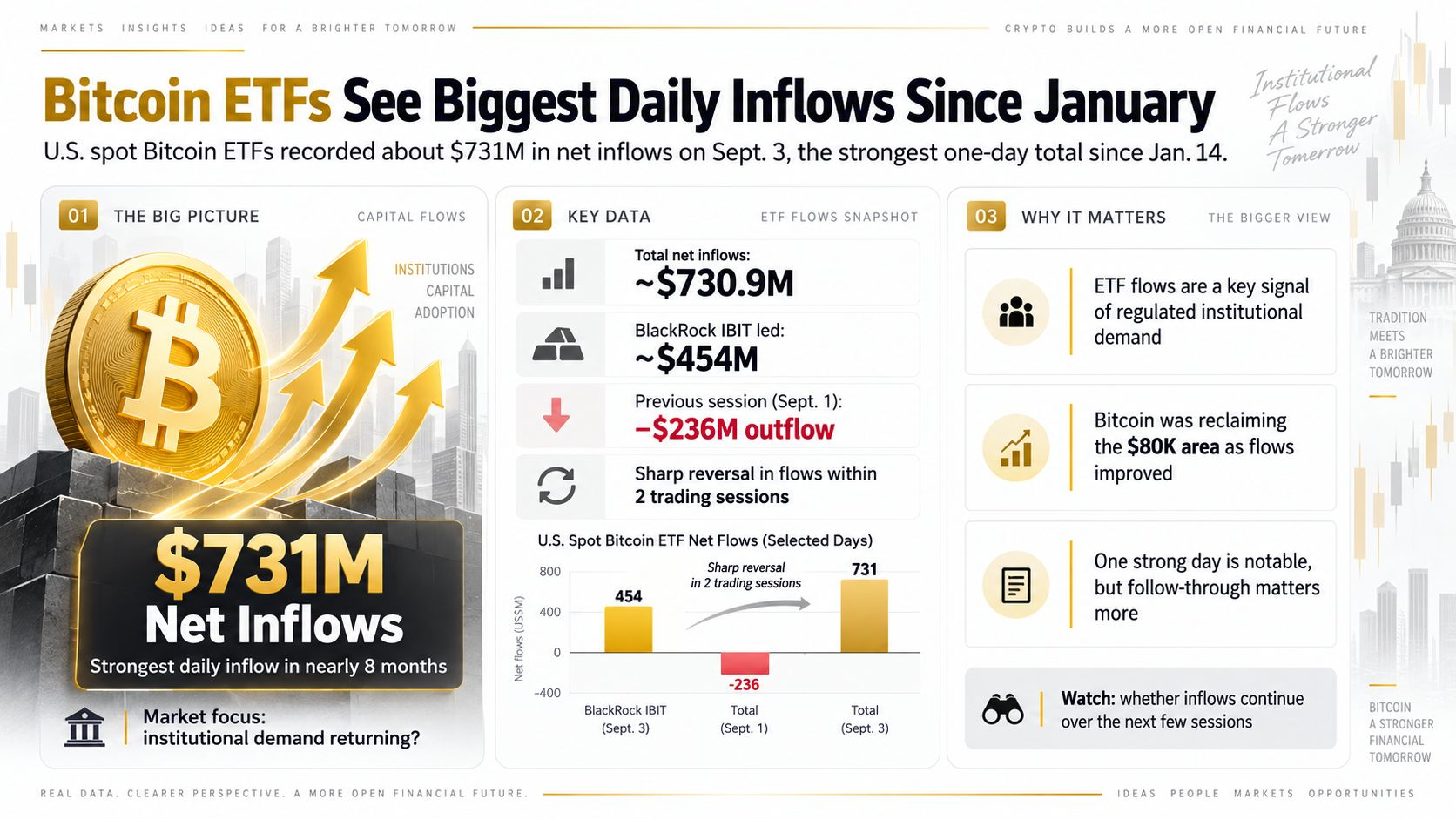
🚨 Bitcoin ETFs Just Had Their Biggest Inflow Day Since January
Institutional demand for Bitcoin suddenly picked up again.
U.S. spot Bitcoin ETFs recorded roughly $731 million in net inflows, marking their strongest single trading day in nearly eight months. BlackRock’s IBIT led the move with about $454 million, accounting for more than 60% of the total.
The timing is notable.
Bitcoin was also recovering around the $80,000 area, while ETF flows flipped sharply from a $236 million outflow on September 1 to major buying just two sessions later.
Why it matters: ETF flows are one of the clearest windows into demand coming through regulated U.S. investment products. One strong day doesn't establish a lasting trend, but sustained inflows could strengthen the case that institutional appetite is returning.
The key question now isn't whether one big inflow happened — it's whether the buying continues over the next several sessions.
⚠️ Market risk: ETF flows and crypto prices can reverse quickly. This is market commentary, not financial advice.
$BTC $BULLA $4
🚨 Bitcoin ETFs Just Had Their Biggest Inflow Day Since January
Institutional demand for Bitcoin suddenly picked up again.
U.S. spot Bitcoin ETFs recorded roughly $731 million in net inflows, marking their strongest single trading day in nearly eight months. BlackRock’s IBIT led the move with about $454 million, accounting for more than 60% of the total.
The timing is notable.
Bitcoin was also recovering around the $80,000 area, while ETF flows flipped sharply from a $236 million outflow on September 1 to major buying just two sessions later.
Why it matters: ETF flows are one of the clearest windows into demand coming through regulated U.S. investment products. One strong day doesn't establish a lasting trend, but sustained inflows could strengthen the case that institutional appetite is returning.
The key question now isn't whether one big inflow happened — it's whether the buying continues over the next several sessions.
⚠️ Market risk: ETF flows and crypto prices can reverse quickly. This is market commentary, not financial advice.
$BTC $BULLA $4
Verificado
#lululemontumbles20%onweakguidance
🚨 A Lululemon Acaba de Sofrer Mais um Grande Golpe
$LULU.US as ações caíram acentuadamente depois que a empresa de vestuário esportivo reduziu sua projeção para o ano inteiro pela segunda vez neste ano.
A receita do segundo trimestre caiu 4% em relação ao ano anterior, para US$ 2,42 bilhões, enquanto as vendas nas Américas recuaram 8%. A empresa agora espera uma receita de US$ 10,35 bilhões a US$ 10,50 bilhões para o ano fiscal de 2026, abaixo da previsão anterior de US$ 11 bilhões a US$ 11,15 bilhões.
Um dos sinais de alerta mais importantes: as vendas das leggings icônicas da Lululemon teriam caído cerca de 20%, enquanto as concorrentes continuam ganhando espaço no mercado de athleisure.
Por que isso importa: isso parece menos um erro pontual de lucros de um trimestre e mais um teste de se uma marca premium que antes dominava o setor consegue recuperar o impulso dos produtos e o interesse dos consumidores.
Com a chegada da nova CEO Heidi O'Neill em 8 de setembro, os investidores agora будут observando se a nova liderança consegue reverter a tendência — ou se a recuperação levará muito mais tempo do que o mercado espera.
Nota de risco: os mercados são voláteis. Não é सलाह financeira.
$MARSCOIN $BULLA
🚨 A Lululemon Acaba de Sofrer Mais um Grande Golpe
$LULU.US as ações caíram acentuadamente depois que a empresa de vestuário esportivo reduziu sua projeção para o ano inteiro pela segunda vez neste ano.
A receita do segundo trimestre caiu 4% em relação ao ano anterior, para US$ 2,42 bilhões, enquanto as vendas nas Américas recuaram 8%. A empresa agora espera uma receita de US$ 10,35 bilhões a US$ 10,50 bilhões para o ano fiscal de 2026, abaixo da previsão anterior de US$ 11 bilhões a US$ 11,15 bilhões.
Um dos sinais de alerta mais importantes: as vendas das leggings icônicas da Lululemon teriam caído cerca de 20%, enquanto as concorrentes continuam ganhando espaço no mercado de athleisure.
Por que isso importa: isso parece menos um erro pontual de lucros de um trimestre e mais um teste de se uma marca premium que antes dominava o setor consegue recuperar o impulso dos produtos e o interesse dos consumidores.
Com a chegada da nova CEO Heidi O'Neill em 8 de setembro, os investidores agora будут observando se a nova liderança consegue reverter a tendência — ou se a recuperação levará muito mais tempo do que o mercado espera.
Nota de risco: os mercados são voláteis. Não é सलाह financeira.
$MARSCOIN $BULLA

Verificado
#zechitsanewalltimehigh
🚨 Zcash Acabou de Romper US$ 1.000 — Um nível que não sustentava há quase uma década
$ZEC disparou cerca de 20% na sexta-feira, sendo negociado brevemente acima de US$ 1.020, enquanto a moeda de privacidade estendia uma das altas mais fortes do mercado.
O movimento não foi impulsionado apenas pela demanda à vista.
Cerca de US$ 34,5 milhões em posições vendidas de ZEC foram liquidadas, potencialmente adicionando combustível ao rali, à medida que os traders pessimistas foram forçados a sair. O open interest de futuros também subiu para cerca de US$ 2,3 bilhões.
O acesso institucional é outra parte da história. O ETF spot de Zcash da Grayscale começou a ser negociado na NYSE Arca no fim de agosto, enquanto o renovado interesse em ativos focados em privacidade ajudou a colocar o ZEC novamente no radar dos traders.
A pergunta maior agora não é simplesmente até que ponto o ZEC negociou.
É se US$ 1.000 pode deixar de ser um nível de rompimento e se tornar suporte sustentado quando a pressão do short squeeze esfriar.
Isso poderia nos dizer muito mais sobre a força desse movimento.
$BULLA $MARSCOIN
🚨 Zcash Acabou de Romper US$ 1.000 — Um nível que não sustentava há quase uma década
$ZEC disparou cerca de 20% na sexta-feira, sendo negociado brevemente acima de US$ 1.020, enquanto a moeda de privacidade estendia uma das altas mais fortes do mercado.
O movimento não foi impulsionado apenas pela demanda à vista.
Cerca de US$ 34,5 milhões em posições vendidas de ZEC foram liquidadas, potencialmente adicionando combustível ao rali, à medida que os traders pessimistas foram forçados a sair. O open interest de futuros também subiu para cerca de US$ 2,3 bilhões.
O acesso institucional é outra parte da história. O ETF spot de Zcash da Grayscale começou a ser negociado na NYSE Arca no fim de agosto, enquanto o renovado interesse em ativos focados em privacidade ajudou a colocar o ZEC novamente no radar dos traders.
A pergunta maior agora não é simplesmente até que ponto o ZEC negociou.
É se US$ 1.000 pode deixar de ser um nível de rompimento e se tornar suporte sustentado quando a pressão do short squeeze esfriar.
Isso poderia nos dizer muito mais sobre a força desse movimento.
$BULLA $MARSCOIN
#bitcoinethereumhitmultimonthhighs
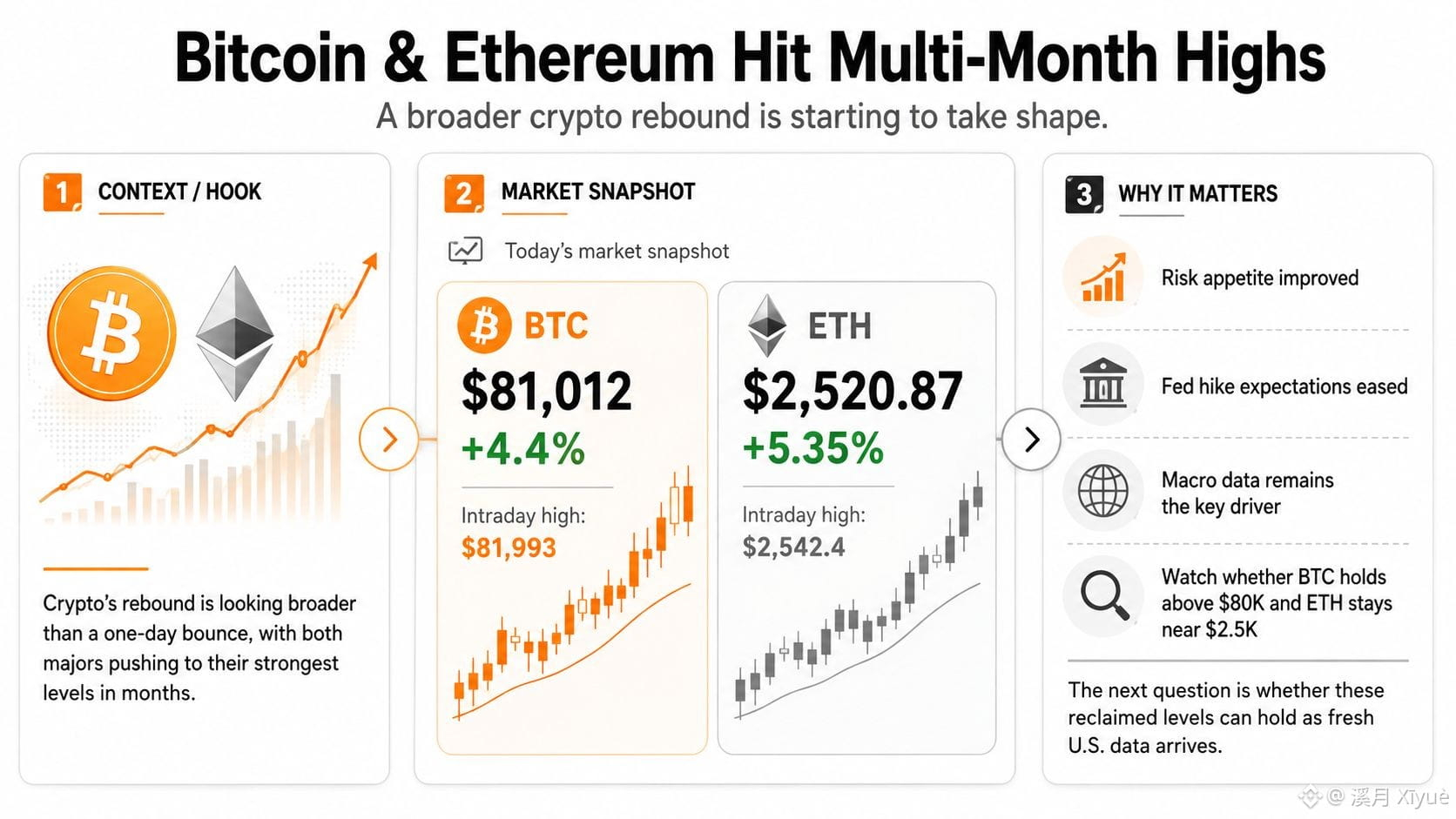
🚀 Bitcoin e Ethereum acabaram de atingir máximas de vários meses
O mais recente repique do setor cripto está começando a parecer mais amplo do que um simples salto de um dia.
O Bitcoin chegou a ultrapassar brevemente US$ 82.000, atingindo o nível mais alto desde maio, enquanto o Ethereum voltou a recuperar a faixa de US$ 2.500 após ganhar quase 5%.
A alta ocorre enquanto as expectativas de um aumento imediato da taxa do Fed diminuíram após comentários do governador do Fed Christopher Waller, e também com a mudança do panorama macro devido a dados mais fracos do emprego nos EUA.
Os fluxos institucionais acrescentam mais um ponto à história: os ETFs de Bitcoin spot dos EUA registraram cerca de US$ 101 milhões em entradas líquidas na última sessão reportada.
Por que isso importa:
BTC e ETH subindo juntos sugere que a disposição ao risco está melhorando, mas o mercado ainda tem grandes dados macro pela frente que podem rapidamente mudar o sentimento.
A grande questão agora é: o cripto consegue manter esses níveis recentemente recuperados quando chegarem os próximos dados econômicos dos EUA?
$BTC $ETH
🚀 Bitcoin e Ethereum acabaram de atingir máximas de vários meses
O mais recente repique do setor cripto está começando a parecer mais amplo do que um simples salto de um dia.
O Bitcoin chegou a ultrapassar brevemente US$ 82.000, atingindo o nível mais alto desde maio, enquanto o Ethereum voltou a recuperar a faixa de US$ 2.500 após ganhar quase 5%.
A alta ocorre enquanto as expectativas de um aumento imediato da taxa do Fed diminuíram após comentários do governador do Fed Christopher Waller, e também com a mudança do panorama macro devido a dados mais fracos do emprego nos EUA.
Os fluxos institucionais acrescentam mais um ponto à história: os ETFs de Bitcoin spot dos EUA registraram cerca de US$ 101 milhões em entradas líquidas na última sessão reportada.
Por que isso importa:
BTC e ETH subindo juntos sugere que a disposição ao risco está melhorando, mas o mercado ainda tem grandes dados macro pela frente que podem rapidamente mudar o sentimento.
A grande questão agora é: o cripto consegue manter esses níveis recentemente recuperados quando chegarem os próximos dados econômicos dos EUA?
$BTC $ETH
#adobesharesfall3%onceotransition
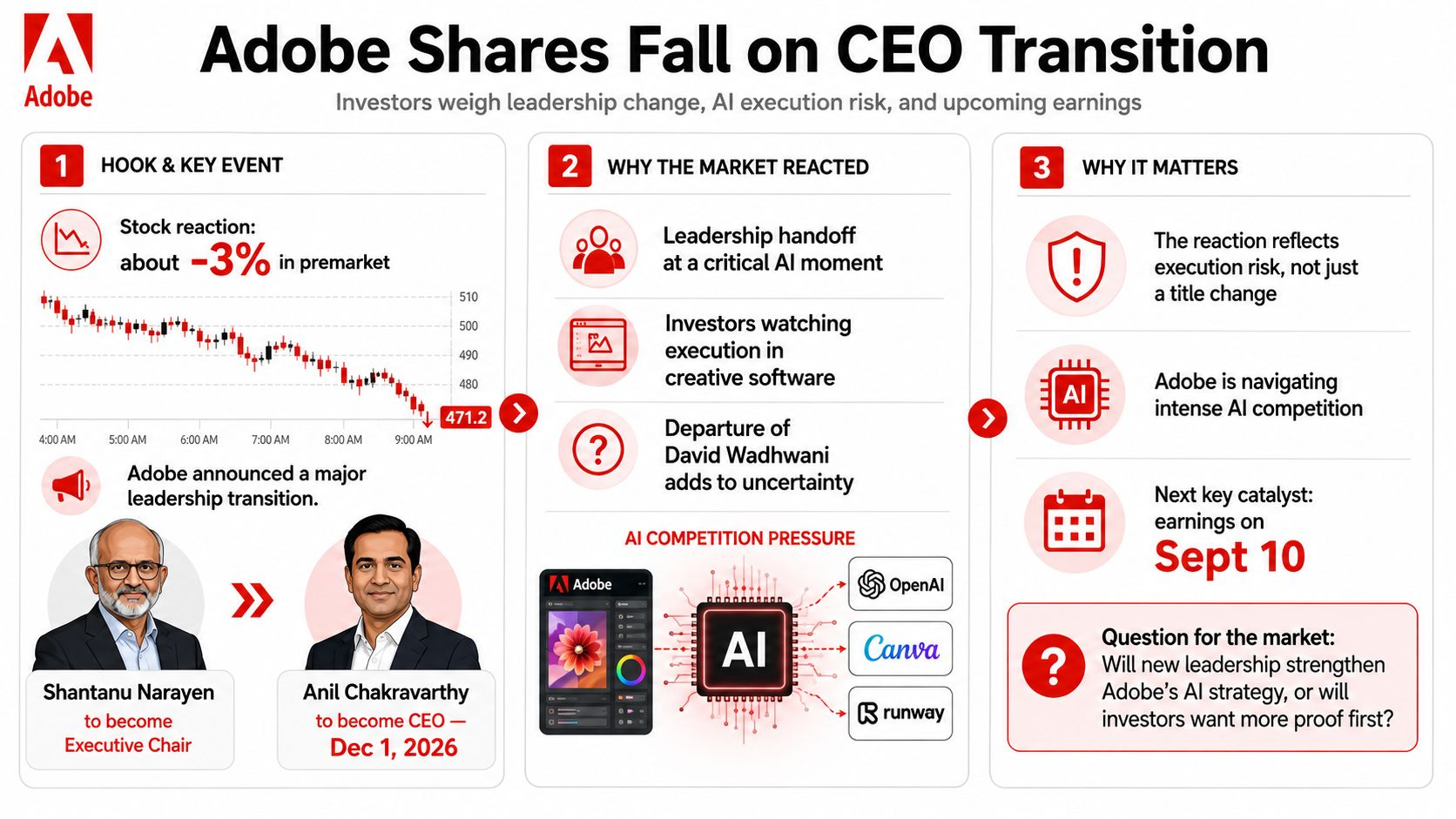
📉 A transição do CEO da Adobe está pressionando a ação
As ações da Adobe caíram cerca de 3% nas negociações de pré-mercado depois que a empresa anunciou uma grande mudança de liderança.
Anil Chakravarthy assumirá como CEO em 1º de dezembro, substituindo Shantanu Narayen, que lidera a Adobe há quase duas décadas e passará para o cargo de presidente executivo.
A transição ocorre em um momento importante. A Adobe já enfrenta uma concorrência crescente de ferramentas criativas impulsionadas por IA, enquanto os investidores continuam a questionar quão rapidamente a IA fortalecerá — ou desestabilizará — seu negócio tradicional de software.
Somando-se à incerteza, o executivo sênior David Wadhwani, antes visto como um possível sucessor do cargo de CEO, também está deixando a empresa.
Para os mercados, a reação parece menos relacionada a uma simples troca de executivo e mais ao risco de execução durante uma grande transição para a IA.
A Adobe divulga resultados em 10 de setembro, o que pode dar aos investidores um sinal mais claro sobre o que vem a seguir.
Uma nova liderança fortalecerá a estratégia de IA da Adobe, ou os investidores precisarão de mais evidências primeiro?
$SPX $TRIA $USELESS
📉 A transição do CEO da Adobe está pressionando a ação
As ações da Adobe caíram cerca de 3% nas negociações de pré-mercado depois que a empresa anunciou uma grande mudança de liderança.
Anil Chakravarthy assumirá como CEO em 1º de dezembro, substituindo Shantanu Narayen, que lidera a Adobe há quase duas décadas e passará para o cargo de presidente executivo.
A transição ocorre em um momento importante. A Adobe já enfrenta uma concorrência crescente de ferramentas criativas impulsionadas por IA, enquanto os investidores continuam a questionar quão rapidamente a IA fortalecerá — ou desestabilizará — seu negócio tradicional de software.
Somando-se à incerteza, o executivo sênior David Wadhwani, antes visto como um possível sucessor do cargo de CEO, também está deixando a empresa.
Para os mercados, a reação parece menos relacionada a uma simples troca de executivo e mais ao risco de execução durante uma grande transição para a IA.
A Adobe divulga resultados em 10 de setembro, o que pode dar aos investidores um sinal mais claro sobre o que vem a seguir.
Uma nova liderança fortalecerá a estratégia de IA da Adobe, ou os investidores precisarão de mais evidências primeiro?
$SPX $TRIA $USELESS
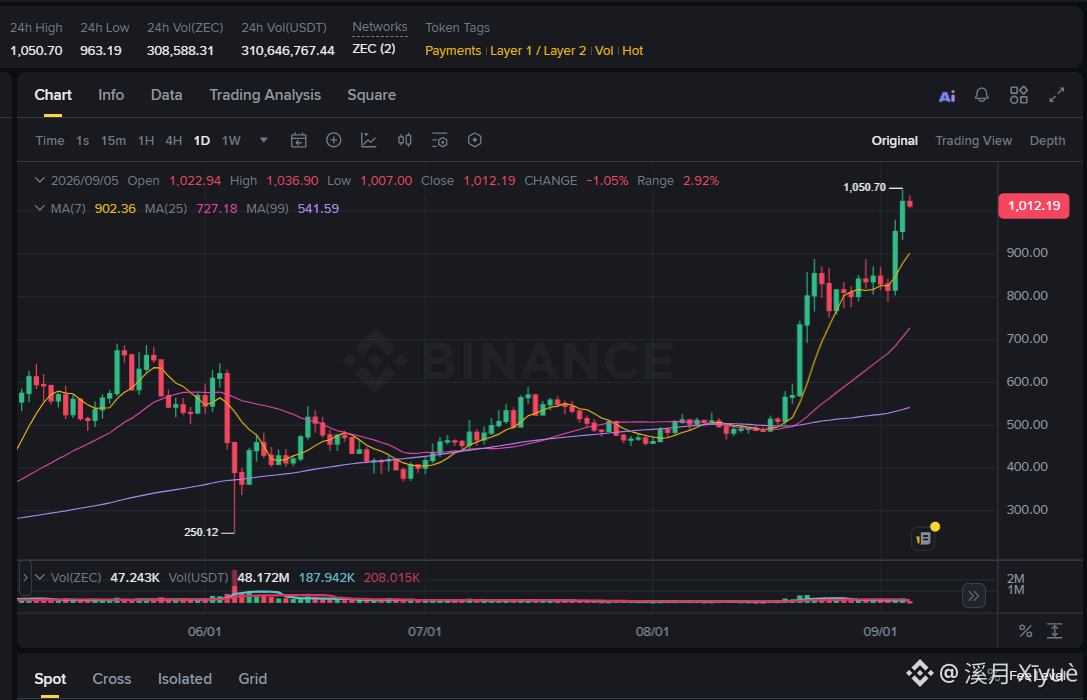
⚡ $ZEC está se movendo rápido.
Zcash está sendo negociado por volta de US$ 1.003, com alta de mais de 21%, após tocar aproximadamente US$ 1.022 durante o pregão.
O forte momentum está chamando a atenção, mas a volatilidade também está alta. Os traders podem querer observar se a ZEC consegue se manter acima da faixa de US$ 1.000 ou se vê uma rápida correção.
Continuação do momentum ou desaceleração agora? 👀
Não é aconselhamento financeiro. Gerencie o risco.
Zcash está sendo negociado por volta de US$ 1.003, com alta de mais de 21%, após tocar aproximadamente US$ 1.022 durante o pregão.
O forte momentum está chamando a atenção, mas a volatilidade também está alta. Os traders podem querer observar se a ZEC consegue se manter acima da faixa de US$ 1.000 ou se vê uma rápida correção.
Continuação do momentum ou desaceleração agora? 👀
Não é aconselhamento financeiro. Gerencie o risco.
Bullish💚
100%
Bearish❤️
0%
1 Votos • Votação encerrada
#clarityactfacesdelaysenateloses8votingdays
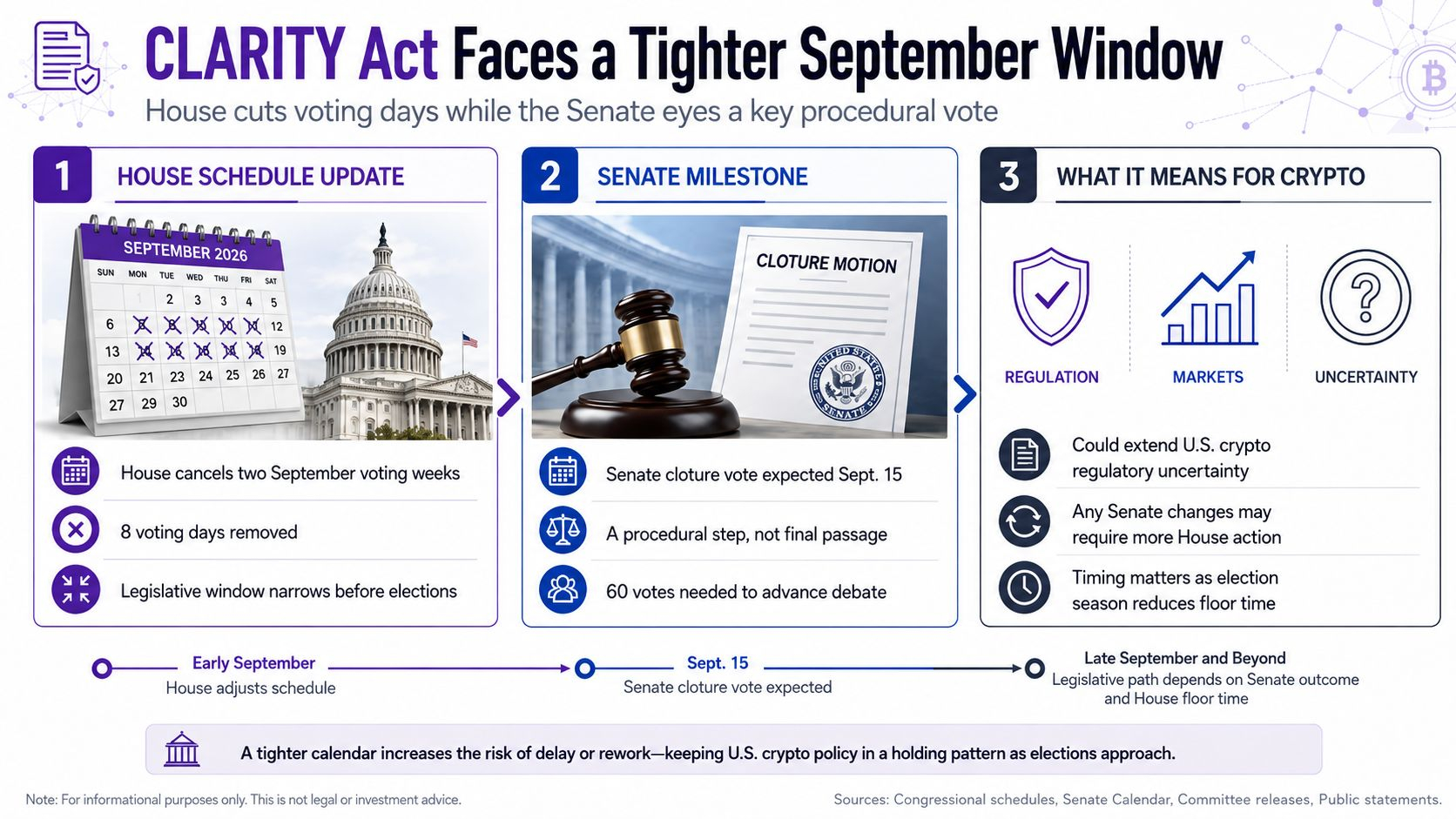
🏛️ A janela de setembro da Lei CLARITY acabou de ficar muito mais apertada
Um dos maiores projetos de lei de política cripto dos EUA está enfrentando um novo problema: o calendário do Congresso.
A liderança republicana da Câmara cancelou duas semanas de votação em setembro, removendo oito dias de votação previstos e deixando a Câmara com apenas uma sessão curta antes de os legisladores saírem para a campanha antes das eleições de meio de mandato.
Enquanto isso, espera-se que o Senado realize uma votação de encerramento (cloture) em 15 de setembro sobre a Lei CLARITY. Mas essa votação seria apenas uma etapa processual rumo ao debate — e não a aprovação final.
Isso importa porque o projeto ainda tem vários obstáculos antes de se tornar lei, incluindo a aprovação do Senado e possivelmente outra ação da Câmara caso o texto final seja alterado.
Para os mercados de cripto, a importância vai além de uma única votação. A Lei CLARITY tem como objetivo criar um arcabouço mais claro nos EUA para a supervisão de ativos digitais; assim, outro adiamento significaria que a incerteza regulatória duraria mais.
A questão principal agora talvez não seja se os legisladores apoiam reformas na estrutura do mercado de cripto — mas se ainda há tempo legislativo suficiente para concluí-las antes das eleições.
#crypto #CryptoRegulation #SECCryptoAccounting #CFTC
$USELESS $TRIA $EDGE
🏛️ A janela de setembro da Lei CLARITY acabou de ficar muito mais apertada
Um dos maiores projetos de lei de política cripto dos EUA está enfrentando um novo problema: o calendário do Congresso.
A liderança republicana da Câmara cancelou duas semanas de votação em setembro, removendo oito dias de votação previstos e deixando a Câmara com apenas uma sessão curta antes de os legisladores saírem para a campanha antes das eleições de meio de mandato.
Enquanto isso, espera-se que o Senado realize uma votação de encerramento (cloture) em 15 de setembro sobre a Lei CLARITY. Mas essa votação seria apenas uma etapa processual rumo ao debate — e não a aprovação final.
Isso importa porque o projeto ainda tem vários obstáculos antes de se tornar lei, incluindo a aprovação do Senado e possivelmente outra ação da Câmara caso o texto final seja alterado.
Para os mercados de cripto, a importância vai além de uma única votação. A Lei CLARITY tem como objetivo criar um arcabouço mais claro nos EUA para a supervisão de ativos digitais; assim, outro adiamento significaria que a incerteza regulatória duraria mais.
A questão principal agora talvez não seja se os legisladores apoiam reformas na estrutura do mercado de cripto — mas se ainda há tempo legislativo suficiente para concluí-las antes das eleições.
#crypto #CryptoRegulation #SECCryptoAccounting #CFTC
$USELESS $TRIA $EDGE
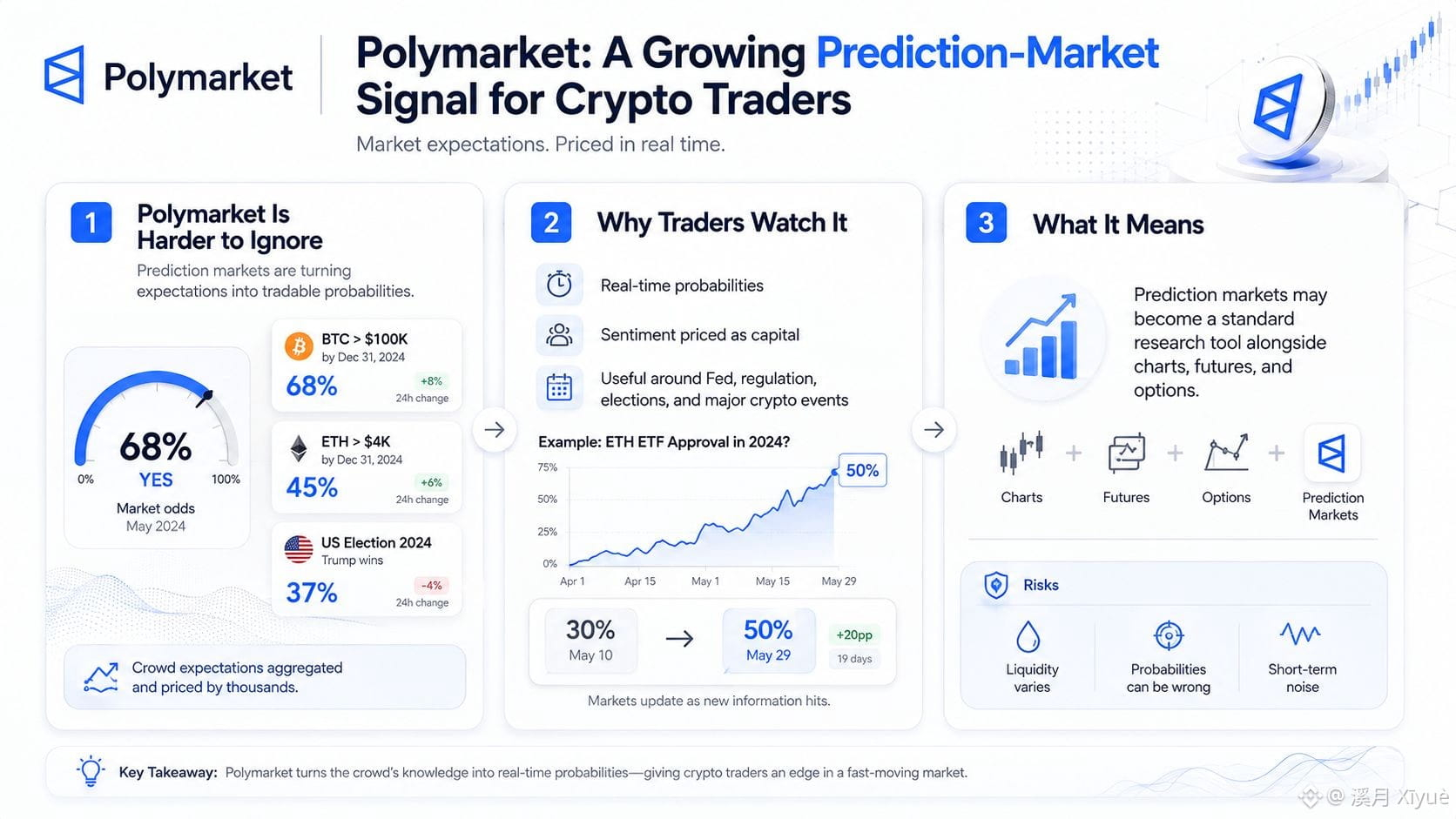
🔮 A Polymarket Está a Tornar-se Mais Difícil de Ignorar para os Traders de Cripto
Os traders de cripto geralmente acompanham gráficos, taxas de financiamento, open interest e sentimento social.
Mas os mercados de previsão estão a adicionar outro sinal a essa lista.
A Polymarket transforma expectativas em probabilidades. Em vez de simplesmente perguntar se as pessoas estão otimistas ou pessimistas sobre um evento, os traders podem ver como o capital real está a precificar o possível resultado.
Isso torna a plataforma interessante muito para além da política.
Decisões da Fed, regulamentação de cripto, eleições, lançamentos tecnológicos e grandes eventos globais podem todos criar mercados em rápida mudança, onde a probabilidade se move à medida que novas informações chegam.
Para os traders de cripto, a parte útil não é seguir cegamente as probabilidades. É observar como essas probabilidades mudam.
Um movimento súbito de 30% para 50%, por exemplo, pode mostrar que os participantes do mercado estão a reavaliar um evento antes de a narrativa mais ampla se estabilizar completamente.
Os mercados de previsão ainda têm limitações — a liquidez varia, as probabilidades podem estar erradas e movimentos de curto prazo podem ser impulsionados por um pequeno número de traders.
Mas a sua crescente visibilidade sugere algo maior:
O sentimento de mercado já não é expresso apenas através de gráficos de preço. Está cada vez mais a ser precificado diretamente como probabilidade.
A questão é se os mercados de previsão acabarão por se tornar uma ferramenta padrão ao lado de futuros, opções e dados tradicionais de mercado.
Usarias as probabilidades da Polymarket como parte da tua pesquisa sobre cripto? 👀
NFA • DYOR
#Polymarket #PredictionMarkets #crypto #MarketSentiment #Web3
$GNO $DRIFT
Os traders de cripto geralmente acompanham gráficos, taxas de financiamento, open interest e sentimento social.
Mas os mercados de previsão estão a adicionar outro sinal a essa lista.
A Polymarket transforma expectativas em probabilidades. Em vez de simplesmente perguntar se as pessoas estão otimistas ou pessimistas sobre um evento, os traders podem ver como o capital real está a precificar o possível resultado.
Isso torna a plataforma interessante muito para além da política.
Decisões da Fed, regulamentação de cripto, eleições, lançamentos tecnológicos e grandes eventos globais podem todos criar mercados em rápida mudança, onde a probabilidade se move à medida que novas informações chegam.
Para os traders de cripto, a parte útil não é seguir cegamente as probabilidades. É observar como essas probabilidades mudam.
Um movimento súbito de 30% para 50%, por exemplo, pode mostrar que os participantes do mercado estão a reavaliar um evento antes de a narrativa mais ampla se estabilizar completamente.
Os mercados de previsão ainda têm limitações — a liquidez varia, as probabilidades podem estar erradas e movimentos de curto prazo podem ser impulsionados por um pequeno número de traders.
Mas a sua crescente visibilidade sugere algo maior:
O sentimento de mercado já não é expresso apenas através de gráficos de preço. Está cada vez mais a ser precificado diretamente como probabilidade.
A questão é se os mercados de previsão acabarão por se tornar uma ferramenta padrão ao lado de futuros, opções e dados tradicionais de mercado.
Usarias as probabilidades da Polymarket como parte da tua pesquisa sobre cripto? 👀
NFA • DYOR
#Polymarket #PredictionMarkets #crypto #MarketSentiment #Web3
$GNO $DRIFT
Verificado
#us10yeartreasuryyieldhitshighestsincenov2023
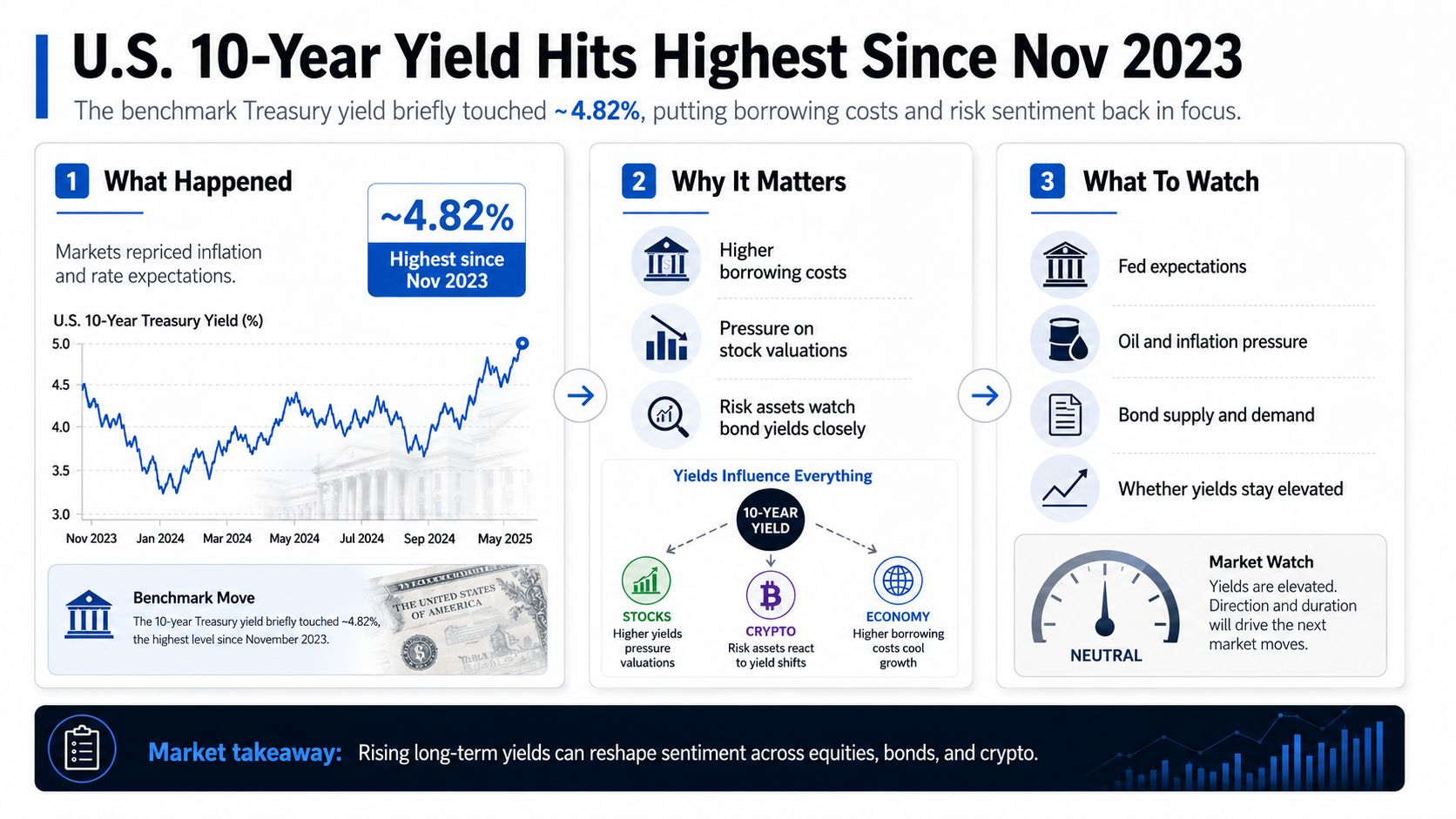
📈 O rendimento dos EUA para 10 anos acabou de atingir uma alta de quase 3 anos — e os mercados estão prestando atenção
Uma das taxas mais importantes das finanças globais acabou de fazer um movimento significativo.
O rendimento dos Treasuries de 10 anos dos EUA subiu brevemente para cerca de 4,82%, atingindo o maior nível desde novembro de 2023, antes de recuar.
Várias pressões vêm se acumulando ao mesmo tempo: preços mais altos do petróleo reavivaram preocupações com a inflação, os mercados estão reavaliando o próximo movimento do Federal Reserve e um volume pesado de empréstimos do governo e das empresas adicionou pressão ao mercado de títulos.
Por que isso importa?
O rendimento de 10 anos influencia os custos de empréstimos em toda a economia, de hipotecas e financiamentos corporativos até como os investidores avaliam ações. Rendimentos mais altos também podem tornar os títulos públicos mais seguros mais competitivos em relação a ativos de risco — potencialmente afetando o sentimento em ações e cripto.
Desde então, os rendimentos se acomodaram à medida que as expectativas de um aumento imediato do Fed esfriaram, mostrando como rapidamente a perspectiva pode mudar.
A questão maior talvez não seja se 4,8% foi o pico — mas o que mantém os custos de empréstimos de longo prazo elevados daqui para frente.
$CHIP $USELESS $MARSCOIN
📈 O rendimento dos EUA para 10 anos acabou de atingir uma alta de quase 3 anos — e os mercados estão prestando atenção
Uma das taxas mais importantes das finanças globais acabou de fazer um movimento significativo.
O rendimento dos Treasuries de 10 anos dos EUA subiu brevemente para cerca de 4,82%, atingindo o maior nível desde novembro de 2023, antes de recuar.
Várias pressões vêm se acumulando ao mesmo tempo: preços mais altos do petróleo reavivaram preocupações com a inflação, os mercados estão reavaliando o próximo movimento do Federal Reserve e um volume pesado de empréstimos do governo e das empresas adicionou pressão ao mercado de títulos.
Por que isso importa?
O rendimento de 10 anos influencia os custos de empréstimos em toda a economia, de hipotecas e financiamentos corporativos até como os investidores avaliam ações. Rendimentos mais altos também podem tornar os títulos públicos mais seguros mais competitivos em relação a ativos de risco — potencialmente afetando o sentimento em ações e cripto.
Desde então, os rendimentos se acomodaram à medida que as expectativas de um aumento imediato do Fed esfriaram, mostrando como rapidamente a perspectiva pode mudar.
A questão maior talvez não seja se 4,8% foi o pico — mas o que mantém os custos de empréstimos de longo prazo elevados daqui para frente.
$CHIP $USELESS $MARSCOIN
#BTCTops$80K
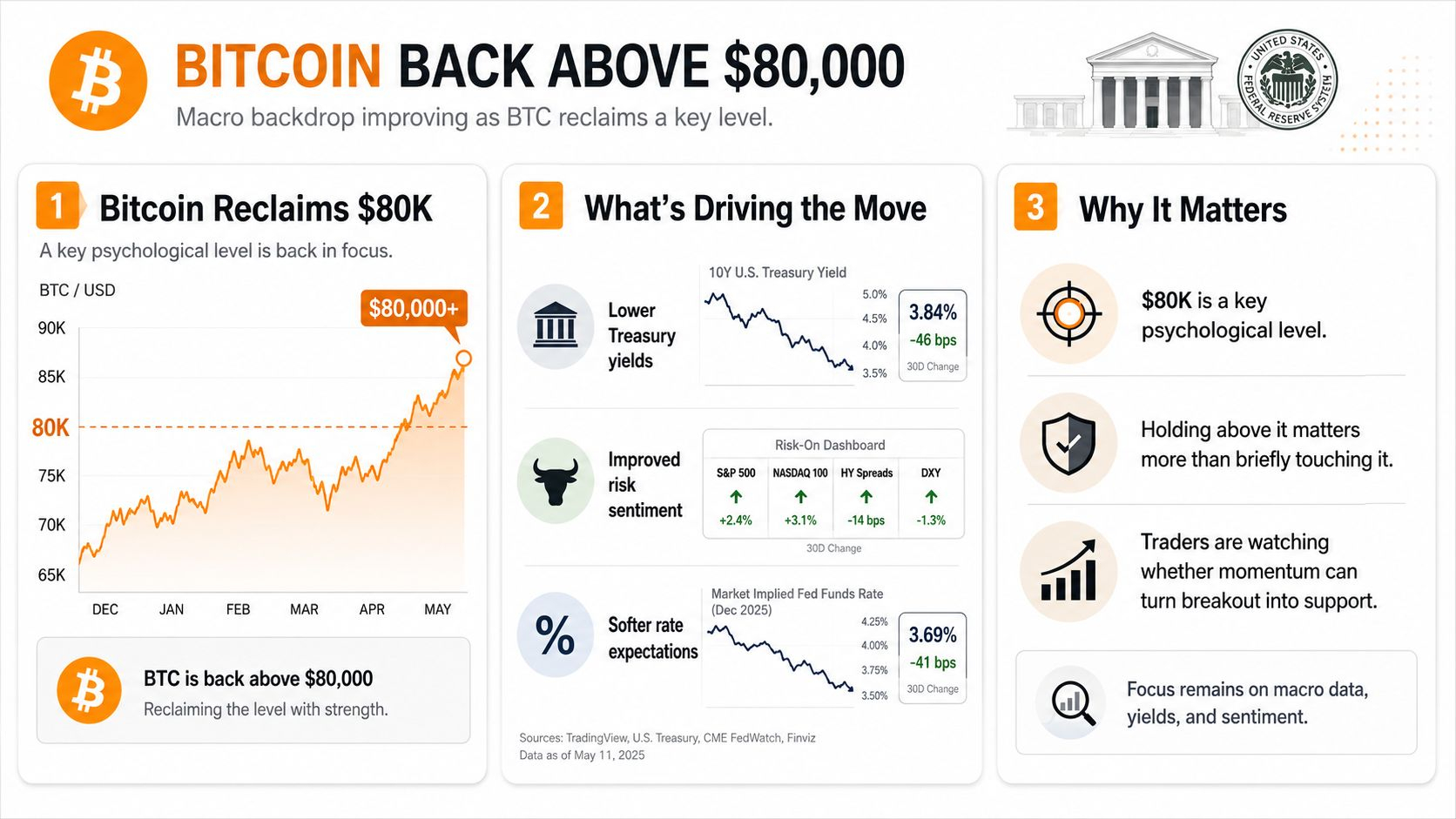
🚀 Bitcoin voltou acima de US$ 80 mil — mas desta vez, o cenário macro importa
O Bitcoin recuperou o nível de US$ 80.000, recolocando em foco uma das zonas de preço mais acompanhadas do mercado.
A alta ocorreu quando os rendimentos dos Treasuries dos EUA recuaram e os ativos de risco mais amplos ganharam força. Um tom menos “hawkish” do Fed também ajudou a aliviar parte da pressão que havia pesado recentemente sobre as criptos.
A reação não ficou restrita ao BTC — grandes altcoins também subiram junto, sugerindo que o salto fazia parte de uma melhora mais ampla no sentimento do mercado.
Por que isso importa:
US$ 80 mil é psicologicamente importante, mas a questão maior é se o Bitcoin consegue se manter acima disso, e não apenas negociar por ele temporariamente.
A próxima área que os traders podem observar fica perto das máximas recentes, por volta de US$ 82 mil–US$ 83 mil, enquanto dados macro, rendimentos dos títulos e expectativas do Fed podem continuar a influenciar o ritmo.
O Bitcoin recuperou US$ 80 mil.
Agora vem a parte mais difícil: os compradores conseguem transformar a alta em suporte?
#bitcoin #BTC #CryptoMarket
$BTC $MARSCOIN $USELESS
🚀 Bitcoin voltou acima de US$ 80 mil — mas desta vez, o cenário macro importa
O Bitcoin recuperou o nível de US$ 80.000, recolocando em foco uma das zonas de preço mais acompanhadas do mercado.
A alta ocorreu quando os rendimentos dos Treasuries dos EUA recuaram e os ativos de risco mais amplos ganharam força. Um tom menos “hawkish” do Fed também ajudou a aliviar parte da pressão que havia pesado recentemente sobre as criptos.
A reação não ficou restrita ao BTC — grandes altcoins também subiram junto, sugerindo que o salto fazia parte de uma melhora mais ampla no sentimento do mercado.
Por que isso importa:
US$ 80 mil é psicologicamente importante, mas a questão maior é se o Bitcoin consegue se manter acima disso, e não apenas negociar por ele temporariamente.
A próxima área que os traders podem observar fica perto das máximas recentes, por volta de US$ 82 mil–US$ 83 mil, enquanto dados macro, rendimentos dos títulos e expectativas do Fed podem continuar a influenciar o ritmo.
O Bitcoin recuperou US$ 80 mil.
Agora vem a parte mais difícil: os compradores conseguem transformar a alta em suporte?
#bitcoin #BTC #CryptoMarket
$BTC $MARSCOIN $USELESS
#us10yeartreasuryyieldhitshighestsincenov2023
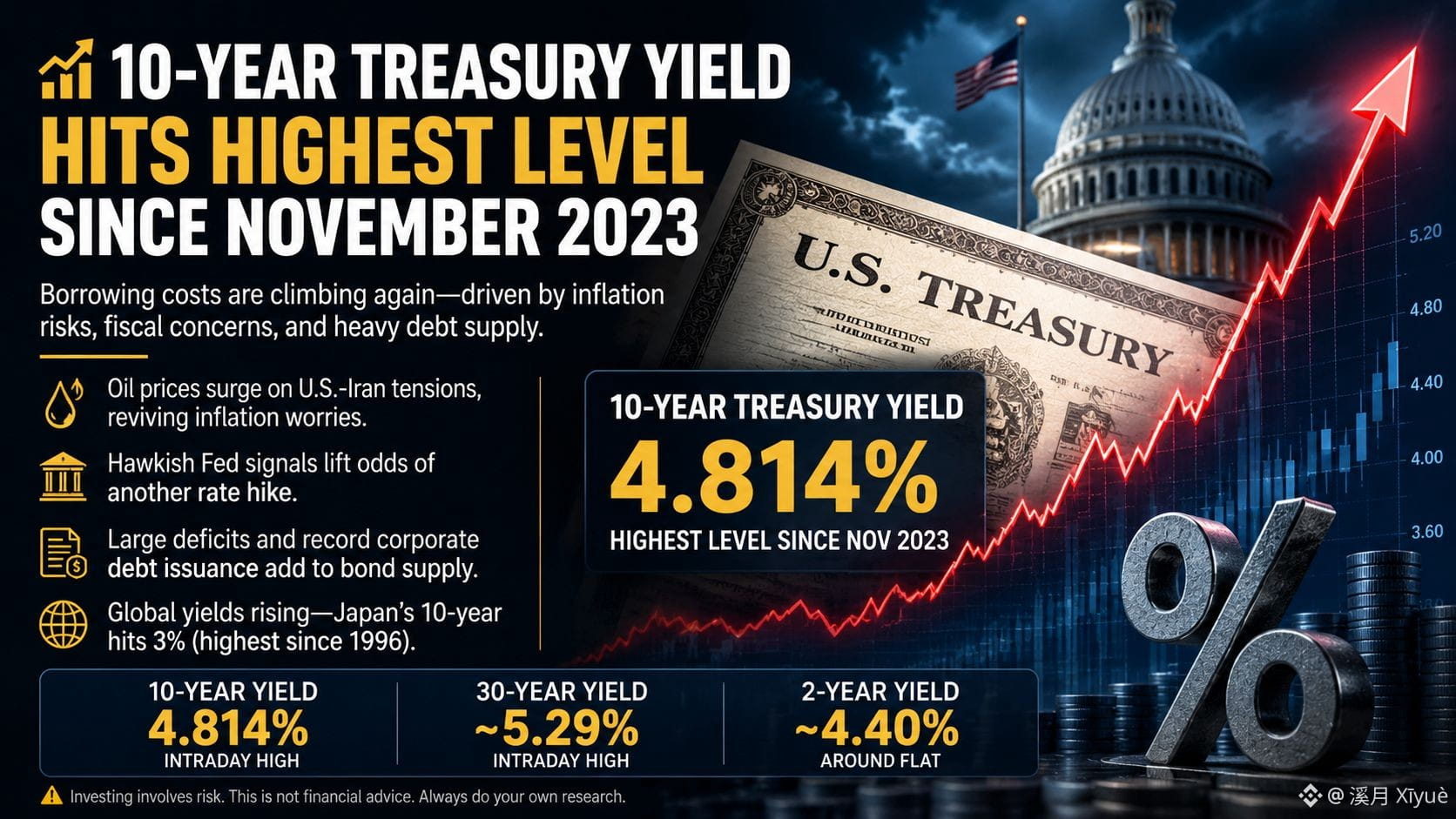
📈 A rentabilidade dos Treasuries de 10 anos acaba de atingir o maior nível desde 2023
Um dos principais indicadores para custos de empréstimos acabou de entrar em uma faixa que o mercado não via há quase três anos.
O resumo:
A rentabilidade dos Treasuries dos EUA de 10 anos subiu até 4,814% na quarta-feira, o maior nível desde novembro de 2023. A rentabilidade dos títulos de 30 anos chegou a cerca de 5,29%, enquanto a dos 2 anos — mais sensível às decisões do Fed — ficou perto de 4,4%.
A história maior é a rapidez com que os custos de captação de longo prazo aumentaram — e o que está impulsionando a alta.
Os preços do petróleo dispararam em meio a tensões renovadas entre EUA e Irã, reacendendo o foco no risco de inflação. Ao mesmo tempo, sinais mais duros vindos de autoridades do Fed fizeram o mercado precificar uma maior chance de novo aumento de juros.
Também há pressão vinda de fora da política monetária. Grandes déficits fiscais significam continuidade nas necessidades de financiamento do governo, enquanto grandes empresas estão emitindo volumes substanciais de dívida para financiar infraestrutura de IA e outros investimentos. Tudo isso contribui para a oferta de títulos que compete pelo capital dos investidores.
E isso não é apenas uma história dos EUA. As rentabilidades de longo prazo dos governos têm subido em várias economias importantes, apontando para uma reprecificação mais ampla de inflação, dívida e risco de taxa de juros.
Por que isso importa:
Rentabilidades mais altas nos Treasuries podem se espalhar pelos mercados financeiros. Custos de hipotecas e de empréstimos corporativos podem subir, enquanto retornos livres de risco maiores podem pressionar as avaliações das ações — especialmente de empresas de crescimento mais sensíveis às taxas.
A pergunta importante agora não é apenas se as rentabilidades podem subir ainda mais.
É por que elas permanecem elevadas.
Se os preços do petróleo e os temores de inflação arrefecerem, parte dessa pressão pode reverter. Mas se preocupações fiscais, grande emissão de dívidas e juros mais altos por mais tempo continuarem, os mercados podem ter de se ajustar a um ambiente de empréstimos mais caro.
O que observar a seguir:
Isso é mais um pico temporário do mercado de títulos — ou o mercado está começando a precificar, de forma estrutural, custos de captação de longo prazo mais altos?
$AKE $HEMI
📈 A rentabilidade dos Treasuries de 10 anos acaba de atingir o maior nível desde 2023
Um dos principais indicadores para custos de empréstimos acabou de entrar em uma faixa que o mercado não via há quase três anos.
O resumo:
A rentabilidade dos Treasuries dos EUA de 10 anos subiu até 4,814% na quarta-feira, o maior nível desde novembro de 2023. A rentabilidade dos títulos de 30 anos chegou a cerca de 5,29%, enquanto a dos 2 anos — mais sensível às decisões do Fed — ficou perto de 4,4%.
A história maior é a rapidez com que os custos de captação de longo prazo aumentaram — e o que está impulsionando a alta.
Os preços do petróleo dispararam em meio a tensões renovadas entre EUA e Irã, reacendendo o foco no risco de inflação. Ao mesmo tempo, sinais mais duros vindos de autoridades do Fed fizeram o mercado precificar uma maior chance de novo aumento de juros.
Também há pressão vinda de fora da política monetária. Grandes déficits fiscais significam continuidade nas necessidades de financiamento do governo, enquanto grandes empresas estão emitindo volumes substanciais de dívida para financiar infraestrutura de IA e outros investimentos. Tudo isso contribui para a oferta de títulos que compete pelo capital dos investidores.
E isso não é apenas uma história dos EUA. As rentabilidades de longo prazo dos governos têm subido em várias economias importantes, apontando para uma reprecificação mais ampla de inflação, dívida e risco de taxa de juros.
Por que isso importa:
Rentabilidades mais altas nos Treasuries podem se espalhar pelos mercados financeiros. Custos de hipotecas e de empréstimos corporativos podem subir, enquanto retornos livres de risco maiores podem pressionar as avaliações das ações — especialmente de empresas de crescimento mais sensíveis às taxas.
A pergunta importante agora não é apenas se as rentabilidades podem subir ainda mais.
É por que elas permanecem elevadas.
Se os preços do petróleo e os temores de inflação arrefecerem, parte dessa pressão pode reverter. Mas se preocupações fiscais, grande emissão de dívidas e juros mais altos por mais tempo continuarem, os mercados podem ter de se ajustar a um ambiente de empréstimos mais caro.
O que observar a seguir:
Isso é mais um pico temporário do mercado de títulos — ou o mercado está começando a precificar, de forma estrutural, custos de captação de longo prazo mais altos?
$AKE $HEMI
Inicia sessão para explorar mais conteúdos