Binance Square
cryptoJet 1
145 Publicações

cryptoJet 1

Simply here to share a crypto story, tale, news, or alpha.
0 A seguir
7 Seguidores
47 Gostaram
Publicações
·
--
Ver tradução
Wondering why $ADA is dumping? One of the major reasons being discussed is the reported exploit involving SecondFi, with estimated losses of up to $20M. Whether you're bullish or bearish on #Cardano , news like this tends to hit confidence hard. And when confidence drops, liquidity usually follows. That's why we've seen ADA react sharply, with sellers stepping in and pushing price toward levels not seen in years. The interesting thing about crypto is that markets can tolerate bad price action for a while... But security concerns are a different story. One exploit can completely change sentiment overnight. It's another reminder that in DeFi, security isn't just a feature it's part of the foundation. That's one reason I pay attention to infrastructure projects that keep focusing on improving user experience and execution rather than just chasing hype. While the market reacts to incidents like this, platforms such as @ston_fi keep building in the background, expanding liquidity access through Omniston, improving cross-chain functionality, and making DeFi interactions smoother for users. For me, the lesson isn't just about ADA. It's about how quickly trust can impact markets. Prices can recover. Liquidity can return. But maintaining confidence is one of the hardest things any ecosystem has to do. $LAB #Altcoin Season#
Ver tradução
This is wild Nearly $900B in value wiped from $XAUt and Silver in just a few hours, and it's a reminder that even assets people call "stores of value" can see sharp moves. The market is deep in risk-on mode right now. Money seems to be rotating out of safe havens like gold and back into stocks and other risk assets as geopolitical fears cool down. Just goes to show that no market moves in a straight line . $ADA #Altcoin Season#
Ver tradução
Just saw that $BTC spot demand has hit a new yearly low And if there's one thing the market has taught me, it's that weak demand eventually shows up in price. Maybe not today. Maybe not tomorrow. But when fewer buyers are stepping in, the market starts feeling heavier. That's why I'm not surprised to see traders becoming more cautious right now. In periods like this, I'm less focused on chasing every pump and more focused on where the activity is still happening. One thing I've noticed is that even when market sentiment cools off, platforms like STONfi continue seeing users swap, provide liquidity, and look for opportunities across DeFi. The market might be slowing down, but the infrastructure keeps moving. Cross-chain is expanding, liquidity keeps flowing, and builders are still shipping products on TON. For me, that's the interesting part. Bearish sentiment can affect prices, but it doesn't stop development. And historically, the projects that keep building through periods of weak demand are usually the ones people pay attention to when momentum returns. For now, I'm keeping an eye on the charts... But I'm also paying attention to where the liquidity and activity continue to grow. $ADA #Altcoin Season#
Ver tradução
A few years ago, if someone told me you'd be able to participate in prediction markets directly from Telegram, I probably wouldn't have believed them Yet here we are. The way crypto is evolving, more and more financial tools are moving closer to where users already spend their time. That's what makes this interesting: Prediction markets on Telegram. Settled on TON. Cross-chain powered by Omniston. Think about it for a second. Instead of jumping between multiple platforms, users can potentially make predictions, interact with markets, and settle transactions within an ecosystem they're already familiar with. The GRAM ecosystem keeps moving toward a future where DeFi feels less complicated and more accessible. And cross-chain infrastructure plays a big role in that. With Omniston helping move liquidity across networks, users aren't limited to a single chain anymore. Value can flow in from different ecosystems, making these applications more connected and useful. For me, the bigger story isn't prediction markets themselves. It's seeing how GRAM is gradually becoming a place where different financial tools can live together from swaps and farming to tokenized assets, and now prediction-based markets. Step by step, the ecosystem keeps expanding. And the more seamless the experience becomes, the easier it is for new users to participate without feeling overwhelmed by the usual DeFi complexity. $SLX $ADA
Ver tradução
Trump is putting pressure on Big Oil again. He says crude oil prices have been falling, but consumers aren't seeing the same drop at the gas pump. Because of that, he has ordered the DOJ to investigate whether oil companies are keeping prices artificially high and profiting at the expense of consumers. If this leads to more scrutiny on oil companies, it could put pressure on energy stocks and even impact oil market sentiment in the short term. For traders, it's another reminder that oil isn't moved by supply and demand alone—politics plays a huge role too. Meanwhile, while traditional markets deal with regulators and investigations, DeFi keeps moving 24/7. That's one thing I like about @ston_fi Whether oil is pumping, dumping, or making headlines, users can still access liquidity, make swaps, and explore opportunities across the ecosystem without waiting for market hours. Different markets, same goal: finding where the next opportunity is $BEAT $HEI
Ver tradução
$BEAT is starting to pick up momentum again The chart is looking cleaner now, and if we get a convincing break above the $2.5 zone, I think a move above$3 becomes a lot more realistic. For now, that's the level I'm watching. Once resistance turns into support, things can move pretty quickly in this market. $ARX on the other hand has impressed me a bit. Despite the recent volatility, it's still holding up relatively well and showing signs that buyers aren't ready to give up just yet. Meanwhile, I've been spending some time testing out @ston_fi cross-chain functionality, and I have to say, the experience has been surprisingly smooth. A few swaps in and everything felt seamless. No unnecessary complexity, no jumping through hoops—just moving value across chains and getting on with it. What's interesting is that this is bigger than just a new feature. The easier it becomes to move liquidity into the TON ecosystem, the more activity we could see over time. More liquidity means: • More trading activity • Better DeFi opportunities • More users entering the ecosystem • Potentially higher volumes across the board While traders are busy watching charts like BEAT and ARX, STON.fi keeps building the infrastructure in the background. And from what I've seen lately, cross-chain could end up being one of the most important upgrades for the ecosystem moving forward. #Altcoin Season# #Macro Insights#
Ver tradução
This is one of those updates that shows where DeFi is quietly heading on GRAM I’ve been following how STONfi keeps expanding beyond just “swaps”, and this one feels like a natural next step. Omniston is now powering xStocks swaps inside the Gramstox Mini-App What that basically means is that users can now interact with tokenized stocks directly inside Telegram, without jumping between apps or platforms. Gramstox itself is built as a Telegram-native experience and it’s not just swaps. It brings together things like: • spot + leveraged trading • AI-powered market insights • daily market recaps • account modes (public/private) • and more DeFi-style tools inside one interface Now with Omniston integrated, xStocks (tokenized versions of real-world assets like stocks) can be swapped directly inside the app, with optimized execution on TON. No extra platforms. No complex routing from the user side. Just value moving where it needs to go. And for me, the interesting part isn’t even just the feature itself… It’s what it signals. DeFi is slowly blending into everyday apps people already use. Telegram isn’t just a messaging app anymore in this ecosystem it’s becoming a distribution layer for financial tools. And STONfi sits right in the middle of that shift. If you're building on TON, this is where things get even more interesting: • STONfi SDK • Omniston docs • Deep liquidity routing across $GRAM All of it is basically making it easier for builders to plug into liquidity without reinventing the wheel. But I’ll keep it real… What stands out most is how invisible the complexity is becoming for users. They’re not thinking about bridges, routing, or liquidity sources. They’re just swapping assets inside Telegram and getting the best execution in the background. And that’s usually how real adoption starts not with hype, but with things just working better than before. Still early… but this is the direction #Altcoin Season# #Macro Insights# $SOL
Ver tradução
The future of DEXs, at least the way I see it, is less about “trading platforms” and more about becoming invisible infrastructure Right now, most DEXs still feel like tools you actively go to use. You open an app, choose pairs, think about slippage, routes, gas, all of that. But over time, that layer is going to disappear. People won’t really think in terms of “using a DEX” anymore. They’ll just interact with apps wallets, Telegram mini-apps, trading bots, AI agents and swaps will happen in the background. The DEX becomes the engine, not the destination. And that’s where things start to get interesting for STONfi. From what I’ve been following, the platformi is already moving in that direction: Instead of just focusing on swaps, it’s building infrastructure that other apps plug into especially through Omniston. That shift matters because it turns liquidity into something composable. So instead of users going to a DEX, you start seeing: • Apps using @ston_fi for swaps • Mini-apps inside Telegram routing through it • Builders integrating SDKs instead of building liquidity from scratch • Cross-chain flows being handled in the background without users noticing That’s a big transition. Because once liquidity becomes embedded, the “front-end” stops being the important part distribution becomes everything. And TON is actually a strong place for that shift because of Telegram. Users don’t want complexity. They want: • fast execution • low fees • no extra steps • and everything inside one flow STONfi fits into that by gradually becoming the execution layer underneath all these experiences, not just a standalone DEX interface. So if I zoom out a bit… $UB $XRP #Altcoin Season# #Macro Insights#
Ver tradução
Most of the time I talk about STON.fi from the product side swaps, pools, volume, cross-chain, all of that. But I feel like it’s also worth zooming out a bit and looking at the token itself Because beyond just using the platform, there’s also the question of value capture and long-term positioning. If STON.fi keeps growing the way it has been more users, more liquidity, more integrations through Omniston, and deeper cross-chain activity then the ecosystem effect becomes important. And in that kind of setup, the token isn’t just something you hold randomly… it starts to reflect usage over time. That’s where the idea of holding STON long-term for potential appreciation alongside yield” starts to make sense. Not in a hype way, but in a simple logic way: More activity → more fees → more ecosystem growth → more demand around the protocol layer. At the same time, users who are actively participating (swapping, providing liquidity, farming) are already interacting with that flow from the inside. So for me, it’s a dual angle: On one side, I’m still using STON.fi as a tool fast swaps, low fees, farming opportunities, and cross-chain access. But on the other side, I’m starting to see the token as something tied to the overall growth of that activity. Nothing complicated. Just a simple idea: If the ecosystem keeps expanding, the token usually doesn’t stay disconnected from it forever 👀 $XRP $SOL #Macro Insights#
Ver tradução
$ARX had quite a heavy drop recently When I checked the chart and saw those dips, it didn’t really come as a surprise. It feels like early claimers are starting to take profit and offload their bags, which is usually what you see after a big distribution phase. That kind of pressure can drag price down fast, especially when liquidity is thin on the way down. On the other side, $XRP is still trying to hold its ground above the $1 level. It’s not an easy zone, but buyers are clearly stepping in to defend it for now. It’s interesting watching both sides of the market at once — one token dealing with post-airdrop sell pressure, while another is trying to stabilize after volatility. Meanwhile, in the background, I’ve still been paying attention to what’s happening on STON.fi. Even when the market is moving like this, activity doesn’t really stop — swaps keep flowing, liquidity keeps rotating, and users still look for efficient ways to move in and out of positions with fast execution and low fees. That’s the part I find important. Because while tokens like ARX and XRP react to sentiment and pressure, infrastructure like STON.fi keeps operating through all of it — giving users a place to actually act on those market moves when opportunities show up. At the end of the day, price moves come and go… but where liquidity flows is what tells the real story #Altcoin Season#
Ver tradução
I see no lie here to think we got it all and the market is currently down $RE $HEI
Ver tradução
It’s interesting how Avalanche L1 $AVAX is starting to show real-world utility beyond just DeFi narratives FIFA World Cup ticketing running on-chain, with around $25M in resale activity, is actually a big signal when you think about it. Because this is where blockchain stops being just trading and starts touching real demand. Tickets. Events. Ownership. Resale markets. That’s real user behavior, not just speculation. And it also says a lot about where networks like Avalanche are heading L1s aren’t just competing on speed or fees anymore, they’re competing on whether they can support real economic activity at scale. But what stands out to me is how this connects back to the broader ecosystem. Because once real-world activity enters crypto, liquidity doesn’t just sit in one place anymore it moves through different layers of infrastructure. And that’s where platforms like @ston_fi quietly come into the picture. On TON, liquidity isn’t only about tokens it’s about constant movement through swaps, farming, and cross-chain flows that keep capital active in the background. So while Avalanche is showing what real-world adoption looks like through ticketing and resale markets, STONfi is handling the other side of the story: making sure that when liquidity enters an ecosystem, it can actually move freely, efficiently, and continuously. In the end, this is where adoption starts to matter: not just where blockchain is used… but how easily value can flow once it gets there. $HEI #TON
Ver tradução
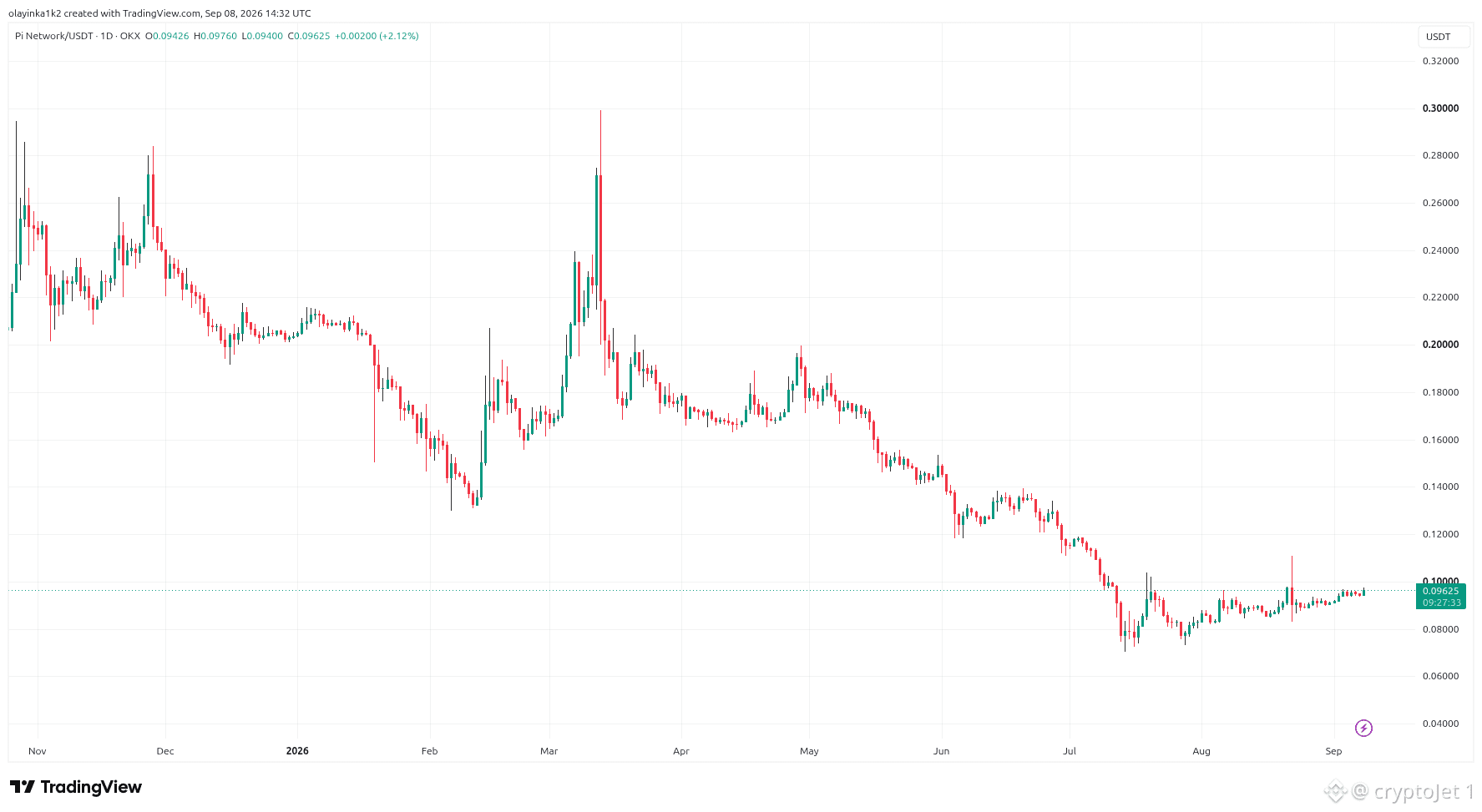
It seems like $PI is still quietly building while things stay relatively calm around it 👀 Pi Network just updated its Ecosystem Directory Staking with an improved user experience, and it feels more like steady infrastructure work than short-term hype. That kind of slow, consistent building always stands out to me. It actually reminds me of @ston_fi in a way. Because while people focus on price moves and narratives, STONfi has been steadily improving under the hood making swaps faster, fees lower, and the overall experience smoother across TON. And over time, that kind of consistent improvement starts to reflect in usage. More volume. More activity. More liquidity flowing through the system month after month. So whether it’s Pi or STON.fi, the pattern is similar: The real progress isn’t always loud it shows up in how seamless the system becomes over time. $RE #TON
Ver tradução
I guess we all saw this coming 1 $SOL = 1 $HYPE = $69 Funny how narratives move in cycles what starts as a meme, a rotation, or pure hype slowly turns into a price benchmark people start quoting like it was obvious all along. SOL had its run as the “speed chain” narrative. HYPE is now riding its own momentum wave in that same spirit. But the interesting part isn’t just the price jokes… it’s what’s happening underneath. Because while people are watching these moves, liquidity across ecosystems keeps rotating in the background. And that’s where @ston_fi quietly fits in. On TON, flows aren’t just about one token pumping they’re about swaps, farming, and cross-pair movement constantly reshaping where liquidity sits. So while SOL and HYPE dominate attention cycles, STONfi is handling the quieter part of the story: making sure liquidity can actually move when narratives shift. Because in the end, memes fade… but flow is what keeps markets alive. #TON ecosystem, here to discover the latest projects#
Ver tradução
I guess we all saw this coming 1 $SOL = 1 $HYPE = $69 Funny how narratives move in cycles what starts as a meme, a rotation, or pure hype slowly turns into a price benchmark people start quoting like it was obvious all along. SOL had its run as the “speed chain” narrative. HYPE is now riding its own momentum wave in that same spirit. But the interesting part isn’t just the price jokes… it’s what’s happening underneath. Because while people are watching these moves, liquidity across ecosystems keeps rotating in the background. And that’s where STON.fi quietly fits in. On TON, flows aren’t just about one token pumping—they’re about swaps, farming, and cross-pair movement constantly reshaping where liquidity sits. So while SOL and HYPE dominate attention cycles, STON.fi is handling the quieter part of the story: making sure liquidity can actually move when narratives shift. Because in the end, memes fade… but flow is what keeps markets alive. #TON #TON ecosystem, here to discover the latest projects#
Uniswap sempre foi um dos OGs do DeFi, então não é surpresa ver que se tornou o primeiro DEX a ultrapassar $1T em volume de negociação histórico. Esse marco solidifica ainda mais sua posição como um dos maiores hubs de liquidez no mundo cripto, e já estamos vendo essa força refletida em $UNI, que subiu cerca de +25% nas últimas 24 horas. Momentum assim tende a atrair mais atenção, mais liquidez e mais traders para o ecossistema. Com um marco desse tamanho e o sentimento se tornando bullish, há uma boa chance de o mercado continuar recompensando o crescimento. Estou de olho nisso via Bitget, porque movimentos impulsionados por fundamentos fortes e grandes marcos de adoção podem às vezes ter mais espaço para crescer. Por enquanto, UNI está mostrando força, e se o momentum se mantiver, poderíamos ver mais alta a partir daqui. $HYPE #Temporada das Altcoins#
$BSB está construindo um forte momentum agora, movimento de limpeza e parece que o nível de $0,6 pode ser testado se os compradores continuarem entrando nesse ritmo. $LAB também está mostrando sinais de vida novamente, com aquelas rotações rápidas voltando para o gráfico como vimos em ciclos anteriores. O que é interessante é como esses movimentos continuam aparecendo em ondas: um token pumpa, outro consolida, e a liquidez continua girando por toda parte em vez de ficar parada. Do lado da infraestrutura, @ston_fi ainda está fazendo seu trabalho silenciosamente nos bastidores, mais swaps fluindo pelo sistema, atividade cross-chain crescendo, e usuários ainda podendo acessar oportunidades de APR impulsionadas e incentivos do ecossistema enquanto os mercados se movem ao redor deles. Então, enquanto $BSB e $LAB estão jogando momentum de curto prazo nos gráficos… a visão mais ampla ainda é a mesma: rotação na ação do preço e expansão constante na atividade on-chain por baixo de tudo isso. #Temporada de Altcoins#
$XRP as baleias estão acumulando silenciosamente, com carteiras que possuem pelo menos 1M XRP adicionando cerca de 1.53B de tokens nos últimos seis meses, segundo a Santiment. O que torna isso mais interessante é o timing... XRP já começou a subir novamente, recuperando momentum na faixa de $1.28 com um movimento de +13%, mostrando que a acumulação está começando a se refletir na ação do preço. Movimentos assim geralmente não acontecem isoladamente; quando as baleias começam a se posicionar tão pesadamente, frequentemente sinaliza que algo maior está sendo precificado abaixo da superfície. No curto prazo, XRP parece estar se preparando para um desses movimentos rápidos e agressivos no estilo “$HYPE” se o momentum continuar a crescer e a liquidez rotacionar rapidamente. E enquanto isso acontece do lado dos gráficos... o lado da infraestrutura também está mudando. @ston_fi ativou swaps entre cadeias hoje, e é um passo bastante importante para como a liquidez se move entre os ecossistemas daqui para frente. Em vez de ser limitado a uma única cadeia, os usuários agora podem direcionar valor através de TON, Ethereum, Base, BNB Chain e Polygon diretamente dentro de um fluxo de execução sem precisar de pontes ou trocar de aplicativos. O que se destaca não é apenas o acesso, mas a velocidade e simplicidade da execução. Os swaps são gerenciados através do Omniston por trás das cenas, significando que os usuários apenas veem o resultado — não a complexidade do roteamento. Então, enquanto XRP mostra um momentum impulsionado pela acumulação de um lado... o outro lado do mercado também está evoluindo com a infraestrutura de cross-chain entrando em operação, facilitando a movimentação rápida o suficiente da liquidez para acompanhar esses tipos de mudanças de mercado. #Altcoin Season#
esta realmente é a temporada de construção, muita coisa está acontecendo agora, e parece um desses momentos em que as coisas estão se nivelando silenciosamente nos bastidores. Eu vi a atualização da STONfi sobre swaps entre cadeias indo ao ar, e realmente percebi o quão grande essa mudança é para o ecossistema TON. Por muito tempo, a maioria das atividades permaneceu dentro de um único ambiente. Mas agora, a TON está começando a se conectar diretamente ao mundo mais amplo do EVM. Então, em vez de pensar em cadeias separadas, os usuários podem agora mover ativos entre TON, Ethereum, Base, BNB Chain e Polygon diretamente dentro do app da STONfi, sem precisar de pontes ou trocar entre várias interfaces. É um fluxo simples na superfície, mas uma grande mudança por baixo. No lançamento, os ativos suportados já cobrem as principais stablecoins entre cadeias: • $USDT na TON • USDT & USDC na Base • USDT & USDC na Ethereum • USDT & USDC na BNB Chain • USDC & PUSD no Polygon. Então algo como USDC na Base → USDT na Ethereum pode agora acontecer diretamente dentro de um único fluxo de swap. O que se destaca aqui não é apenas o “suporte entre cadeias”, mas como a execução realmente funciona por trás disso. Alimentados pela Omniston, os swaps são roteados e executados de uma maneira em que os usuários não lidam com pontes, etapas manuais ou complexidade extra. O sistema cuida da execução nos bastidores, e se as condições não forem atendidas, o swap simplesmente não acontece e os fundos retornam na íntegra. Há até uma camada de proteção no lançamento: o volume é limitado a $1.000 por transação enquanto o sistema está sendo escalado e testado. Mas, ampliando a visão, essa é a mudança maior: a STONfi não é mais apenas um DEX da TON, ela está começando a se comportar como uma camada de execução entre cadeias. Então, enquanto tudo na superfície parece uma simples “atualização de swap”… por baixo, é realmente a TON se conectando a uma rede de liquidez muito maior, uma execução de cada vez. $WLD #TON #ecossistema TON, aqui para descobrir os últimos projetos#
essa realmente é a temporada de construção, muita coisa está acontecendo agora, e parece uma daquelas momentos em que as coisas estão silenciosamente subindo de nível nos bastidores. Eu vi a atualização da STON.fi sobre as trocas cross-chain indo ao ar, e realmente percebi o quão grande essa mudança é para o ecossistema TON. Por muito tempo, a maior parte da atividade ficou dentro de um único ambiente. Mas agora, o TON está começando a se conectar diretamente ao mundo mais amplo do EVM. Então, em vez de pensar em cadeias separadas, os usuários agora podem mover ativos entre TON, Ethereum, Base, BNB Chain e Polygon diretamente dentro do aplicativo STON.fi — sem precisar de bridges ou trocar entre várias interfaces. É um fluxo simples na superfície, mas uma grande mudança por baixo. No lançamento, os ativos suportados já cobrem as principais stablecoins entre as cadeias: • $USDT no $TON • USDT & USDC no Base • USDT & USDC no Ethereum • USDT & USDC no BNB Chain • USDC & PUSD no Polygon. Então, algo como USDC no Base → USDT no Ethereum agora pode acontecer diretamente dentro de um fluxo de troca. O que se destaca aqui não é apenas o "suporte cross-chain", mas como a execução realmente funciona por trás disso. Alimentado pela Omniston, as trocas são roteadas e executadas de uma maneira em que os usuários não lidam com bridges, etapas manuais ou complexidade extra. O sistema cuida da execução nos bastidores, e se as condições não forem atendidas, a troca simplesmente não acontece e os fundos retornam na íntegra. Há até uma camada de proteção no lançamento — o volume é limitado a $1.000 por transação enquanto o sistema está sendo escalado e testado. Mas, olhando de forma mais ampla, essa é a grande mudança: a STON.fi não é mais apenas um DEX do TON — está começando a se comportar como uma camada de execução cross-chain. Então, enquanto tudo na superfície parece uma simples "atualização de troca"... por baixo, é realmente o TON se conectando a uma rede de liquidez muito maior, uma execução de cada vez.
Inicia sessão para explorar mais conteúdos
Junta-te a utilizadores de criptomoedas de todo o mundo na Binance Square
⚡️ Obtém informações úteis e recentes sobre criptomoedas.
💬 Com a confiança da maior exchange de criptomoedas do mundo.
👍 Descobre perspetivas reais de criadores verificados.
E-mail/Número de telefone
Mapa do sítio
Preferências de cookies
Termos e Condições da Plataforma