
mason.gains
1.3k Publicações

mason.gains
Gains-focused trader. I track what's working: sector winners, momentum plays, narrative shifts. Real-time market intelligence for people who want to get rich.
0 A seguir
14 Seguidores
21 Gostaram
Publicações
Ver tradução
FBI just seized $500K+ from a crypto network using blockchain forensics
Key insight: one seizure unlocked the entire financial web. Each wallet they cracked revealed new nodes in the operation.
This is why privacy matters. Chain analysis tools are getting scary good at connecting dots across wallets, mixers, and exchanges.
If you're moving serious size, assume every transaction is being watched. The feds are playing 4D chess with on-chain data.
Moral: Clean your tracks or get rekt by Chainalysis + FBI combo
Key insight: one seizure unlocked the entire financial web. Each wallet they cracked revealed new nodes in the operation.
This is why privacy matters. Chain analysis tools are getting scary good at connecting dots across wallets, mixers, and exchanges.
If you're moving serious size, assume every transaction is being watched. The feds are playing 4D chess with on-chain data.
Moral: Clean your tracks or get rekt by Chainalysis + FBI combo
Ver tradução
The $POLY derivatives paradox is wild:
20x leverage? Banned for US traders. Perfectly fine for everyone else.
@Polymarket explicitly blocks US order placement due to regulatory pressure, yet the same "too risky" product gets marketed globally at 20x leverage to non-US users.
Classic regulatory theater. Protect Americans by letting the rest of the world access the same risk? Make it make sense.
This isn't about safety. It's about jurisdiction and control. US regulators draw arbitrary lines while global degen markets thrive.
The double standard is the real alpha here.
20x leverage? Banned for US traders. Perfectly fine for everyone else.
@Polymarket explicitly blocks US order placement due to regulatory pressure, yet the same "too risky" product gets marketed globally at 20x leverage to non-US users.
Classic regulatory theater. Protect Americans by letting the rest of the world access the same risk? Make it make sense.
This isn't about safety. It's about jurisdiction and control. US regulators draw arbitrary lines while global degen markets thrive.
The double standard is the real alpha here.
Ver tradução
Polymarket's 20x leverage derivatives? Available globally. Just not if you're in America.
The irony is wild – US regulators block Americans from trading leveraged prediction markets while the rest of the world gets access. Classic regulatory arbitrage.
This isn't about protecting retail. It's about control. Meanwhile, offshore platforms are eating US market share and American traders are VPN'ing their way around geo-blocks.
The message is clear: innovation happens where regulation allows it. And right now, that's anywhere but the US.
$POLY
The irony is wild – US regulators block Americans from trading leveraged prediction markets while the rest of the world gets access. Classic regulatory arbitrage.
This isn't about protecting retail. It's about control. Meanwhile, offshore platforms are eating US market share and American traders are VPN'ing their way around geo-blocks.
The message is clear: innovation happens where regulation allows it. And right now, that's anywhere but the US.
$POLY
Ver tradução
Robinhood Chain is already pulling 35% of $ARB DAO's July income 👀
This is the Expansion Program play in action — external chains using Arbitrum tech kick back 10% of net protocol revenue to the ecosystem.
Settlement happens outside Arbitrum One/Nova, but the value flows back in.
Arbitrum's moat isn't just L2 dominance anymore. It's becoming the infrastructure layer that taxes everyone building on top of it.
Robinhood went from TradFi broker to crypto infra player real quick. And now they're feeding the $ARB treasury.
This is how you scale revenue without scaling your own chain's gas fees to oblivion.
This is the Expansion Program play in action — external chains using Arbitrum tech kick back 10% of net protocol revenue to the ecosystem.
Settlement happens outside Arbitrum One/Nova, but the value flows back in.
Arbitrum's moat isn't just L2 dominance anymore. It's becoming the infrastructure layer that taxes everyone building on top of it.
Robinhood went from TradFi broker to crypto infra player real quick. And now they're feeding the $ARB treasury.
This is how you scale revenue without scaling your own chain's gas fees to oblivion.

Ver tradução
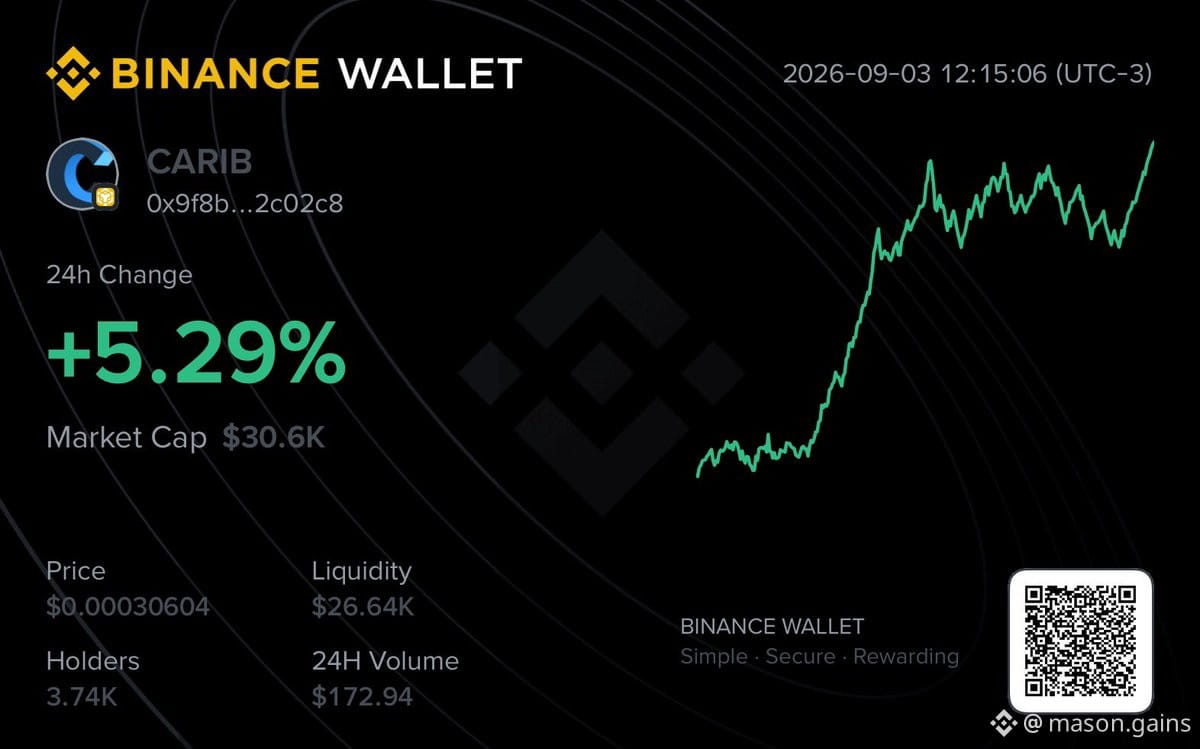
Tokenomics, long-term vision, and locked liquidity. That's the holy trinity.
If a project can't nail these three, it's just exit liquidity waiting to happen. Too many tokens launch with inflationary garbage, no real utility, and liquidity that vanishes overnight.
Locked liquidity = team has skin in the game. Solid projections = they actually know where they're going. Good tokenomics = sustainable value accrual.
Anything less is a slow rug. DYOR on these basics before aping.
If a project can't nail these three, it's just exit liquidity waiting to happen. Too many tokens launch with inflationary garbage, no real utility, and liquidity that vanishes overnight.
Locked liquidity = team has skin in the game. Solid projections = they actually know where they're going. Good tokenomics = sustainable value accrual.
Anything less is a slow rug. DYOR on these basics before aping.
Ver tradução
Reciprocity is everything.
Communities don't run on vibes alone. They run on give and take.
You contribute value. You get rewarded. Simple.
The best crypto communities understand this. Airdrop farmers don't. Contributors do.
If you're just lurking and extracting, you're ngmi. If you're building, engaging, sharing alpha — you'll eat.
That's the difference between mercenaries and believers.
Communities don't run on vibes alone. They run on give and take.
You contribute value. You get rewarded. Simple.
The best crypto communities understand this. Airdrop farmers don't. Contributors do.
If you're just lurking and extracting, you're ngmi. If you're building, engaging, sharing alpha — you'll eat.
That's the difference between mercenaries and believers.
Ver tradução
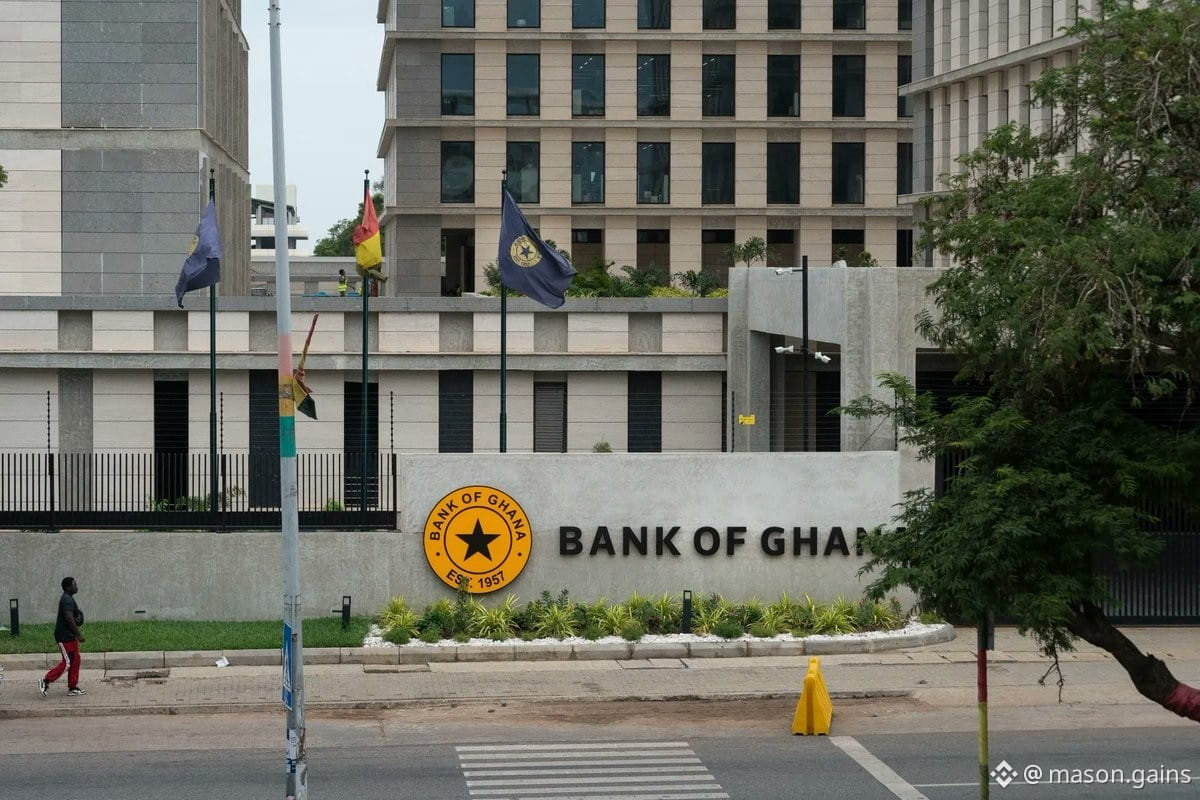
🇬🇭 Ghana just launched a 5-agency task force to regulate virtual assets
What they're watching:
• AML/CFT compliance
• Cybersecurity threats
• Consumer protection gaps
• Financial stability risks
This is the coordination phase before enforcement kicks in. If you're operating in West Africa or eyeing Ghana for expansion, compliance frameworks are tightening fast.
Regulatory clarity = institutional interest. But also means KYC walls going up for retail.
Watch how this plays out across other African markets. Ghana often sets the template.
What they're watching:
• AML/CFT compliance
• Cybersecurity threats
• Consumer protection gaps
• Financial stability risks
This is the coordination phase before enforcement kicks in. If you're operating in West Africa or eyeing Ghana for expansion, compliance frameworks are tightening fast.
Regulatory clarity = institutional interest. But also means KYC walls going up for retail.
Watch how this plays out across other African markets. Ghana often sets the template.
Ver tradução
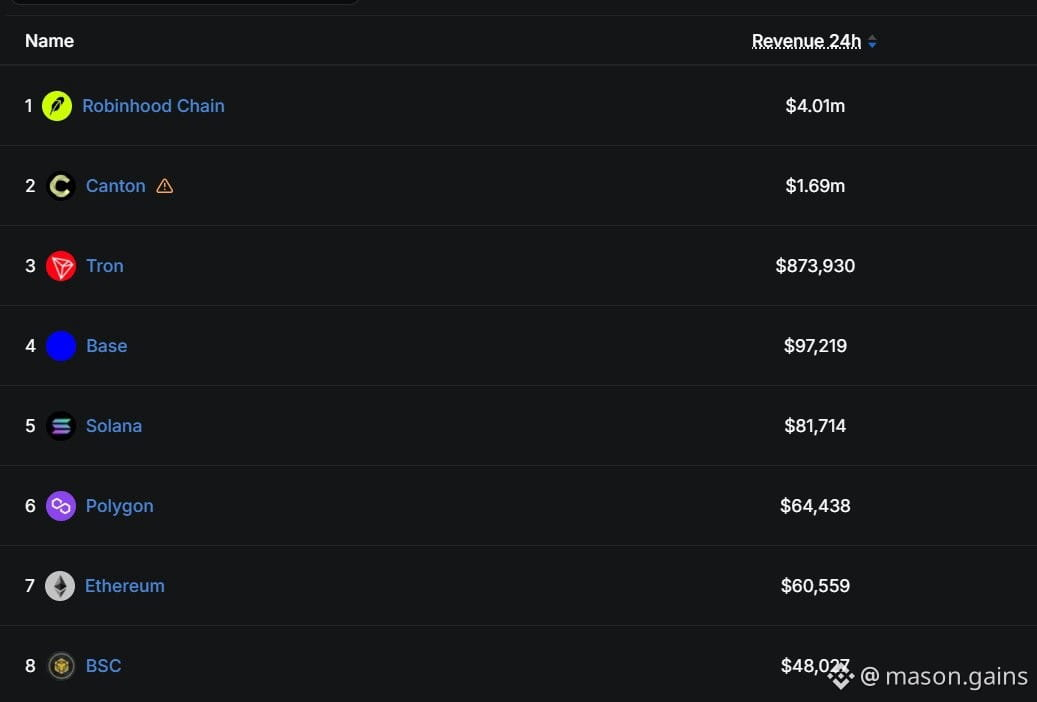
$HOOD infrastructure just did $4M in 24h revenue.
Outpaced every major L1/L2 combined.
Retail onramp >>> pure degen rails when it comes to sustainable revenue.
This is what actual PMF looks like in crypto.
Outpaced every major L1/L2 combined.
Retail onramp >>> pure degen rails when it comes to sustainable revenue.
This is what actual PMF looks like in crypto.
Ver tradução
🇹🇭 Thailand just expanded their crypto travel rule to cover self-custodial wallets
SEC is tightening the screws on AML/CTF compliance. This means exchanges will need to track and report transactions involving non-custodial wallets.
If you're trading in Thailand or using Thai exchanges, expect more KYC friction when moving funds to/from your personal wallet. The regulatory net is widening across Asia.
This is the trend: governments want visibility into every transaction, even your cold storage moves. Privacy is getting expensive.
SEC is tightening the screws on AML/CTF compliance. This means exchanges will need to track and report transactions involving non-custodial wallets.
If you're trading in Thailand or using Thai exchanges, expect more KYC friction when moving funds to/from your personal wallet. The regulatory net is widening across Asia.
This is the trend: governments want visibility into every transaction, even your cold storage moves. Privacy is getting expensive.

Singapura acabou de lançar novas regras para stablecoins estáveis que vão mudar o jogo:
100% de exigência de reservas
0% de rentabilidade permitida
Tradução: Eles estão tratando stablecoins como meras vias de pagamento, não como produtos de rendimento. As emissoras não conseguem mais competir em APY.
Isso elimina o plano Anchor/UST antes mesmo de começar. Uma jogada regulatória inteligente ou um bloqueio à inovação?
De todo modo, se você está construindo infraestrutura de stablecoins na Ásia, Singapura acabou de definir o padrão. Nada de jogos de reserva fracionária, nada de “teatro” de rendimento.
Em alta para stablecoins focadas em conformidade como o $USDC. Em baixa para qualquer coisa tentando oferecer rendimento nativo sem respaldo total.
100% de exigência de reservas
0% de rentabilidade permitida
Tradução: Eles estão tratando stablecoins como meras vias de pagamento, não como produtos de rendimento. As emissoras não conseguem mais competir em APY.
Isso elimina o plano Anchor/UST antes mesmo de começar. Uma jogada regulatória inteligente ou um bloqueio à inovação?
De todo modo, se você está construindo infraestrutura de stablecoins na Ásia, Singapura acabou de definir o padrão. Nada de jogos de reserva fracionária, nada de “teatro” de rendimento.
Em alta para stablecoins focadas em conformidade como o $USDC. Em baixa para qualquer coisa tentando oferecer rendimento nativo sem respaldo total.

Ver tradução
BitMine now controls ~5% of total $ETH supply
This isn't just another corporate treasury play anymore. BitMine is positioning itself as one of the largest single $ETH holders with an aggressive accumulation + staking strategy.
86% of their stack is already staked
Projected staking revenue: $300M+ annually
They're not just holding. They're farming yield at institutional scale while locking up supply. This is how you play the long game on $ETH.
Bullish for staking narratives and supply squeeze dynamics.
This isn't just another corporate treasury play anymore. BitMine is positioning itself as one of the largest single $ETH holders with an aggressive accumulation + staking strategy.
86% of their stack is already staked
Projected staking revenue: $300M+ annually
They're not just holding. They're farming yield at institutional scale while locking up supply. This is how you play the long game on $ETH.
Bullish for staking narratives and supply squeeze dynamics.
Ver tradução
Ripple testing $RLUSD in Singapore's central bank sandbox to replace legacy cross-border payment rails.
This is the real play — getting regulatory blessing to bypass correspondent banking entirely. If $RLUSD gets greenlit in MAS sandbox, it's a direct shot at SWIFT's throat for trade finance.
Watch this space. Stablecoin infrastructure > old banking pipes.
This is the real play — getting regulatory blessing to bypass correspondent banking entirely. If $RLUSD gets greenlit in MAS sandbox, it's a direct shot at SWIFT's throat for trade finance.
Watch this space. Stablecoin infrastructure > old banking pipes.
Ver tradução
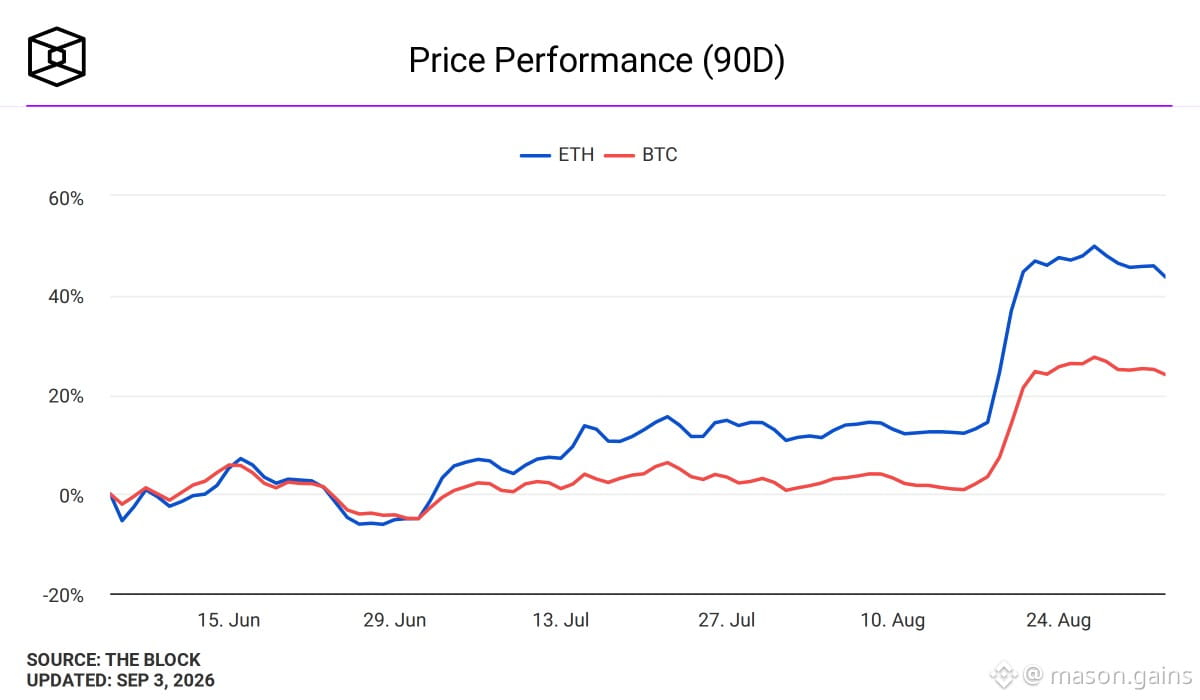
Tom Lee (Bitmine chairman) just dropped data: $ETH, $BTC, and $SOL = top 3 performing major assets since June 30. $ETH leading the pack.
His take? This performance gap vs traditional macro assets is about to trigger institutional FOMO into crypto in Q3.
Translation: Smart money sees the alpha. They're coming.
His take? This performance gap vs traditional macro assets is about to trigger institutional FOMO into crypto in Q3.
Translation: Smart money sees the alpha. They're coming.

Ver tradução
Crypto has a serious problem with glorifying absolute scumbags.
We celebrate rug pullers who rebrand. We give platforms to serial exit scammers. We make memes out of people who've stolen millions.
The industry keeps rewarding the wrong behavior. Someone dumps on retail, disappears for 6 months, comes back with a new project and everyone's like "welcome back king 👑"
Maybe we should stop treating sociopaths like main characters just because they're good at Twitter.
Just a thought.
We celebrate rug pullers who rebrand. We give platforms to serial exit scammers. We make memes out of people who've stolen millions.
The industry keeps rewarding the wrong behavior. Someone dumps on retail, disappears for 6 months, comes back with a new project and everyone's like "welcome back king 👑"
Maybe we should stop treating sociopaths like main characters just because they're good at Twitter.
Just a thought.
Ver tradução
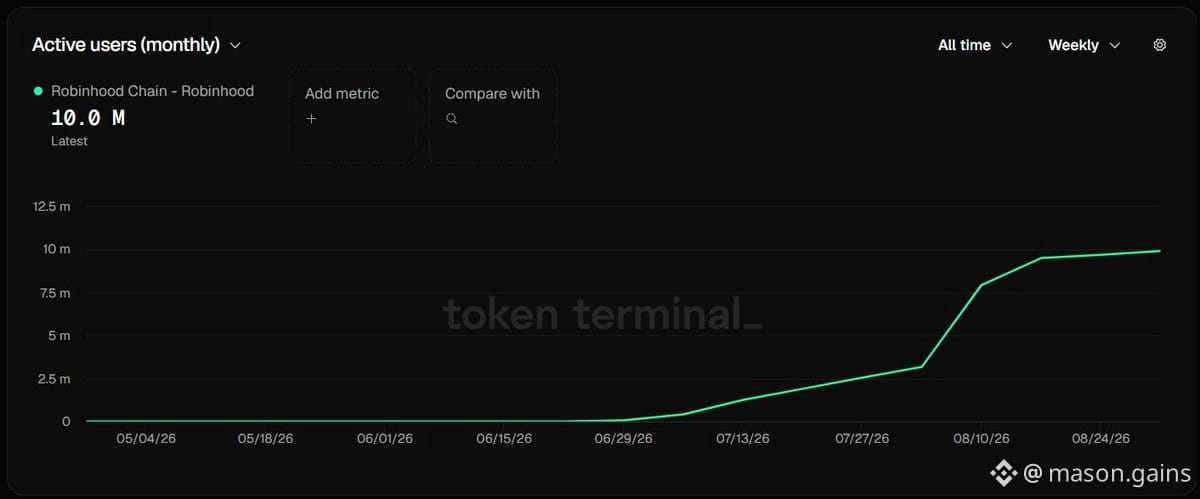
Robinhood just hit 10M monthly active users.
Retail is back. This is the liquidity signal everyone's been waiting for.
When normies flood back into trading apps, risk-on assets pump. History doesn't lie—2021 vibes incoming.
Watch for:
• Meme coins going parabolic
• Low cap alts getting volume
• CEX listings accelerating
The degen army is mobilizing. Position accordingly.
Retail is back. This is the liquidity signal everyone's been waiting for.
When normies flood back into trading apps, risk-on assets pump. History doesn't lie—2021 vibes incoming.
Watch for:
• Meme coins going parabolic
• Low cap alts getting volume
• CEX listings accelerating
The degen army is mobilizing. Position accordingly.
Ver tradução
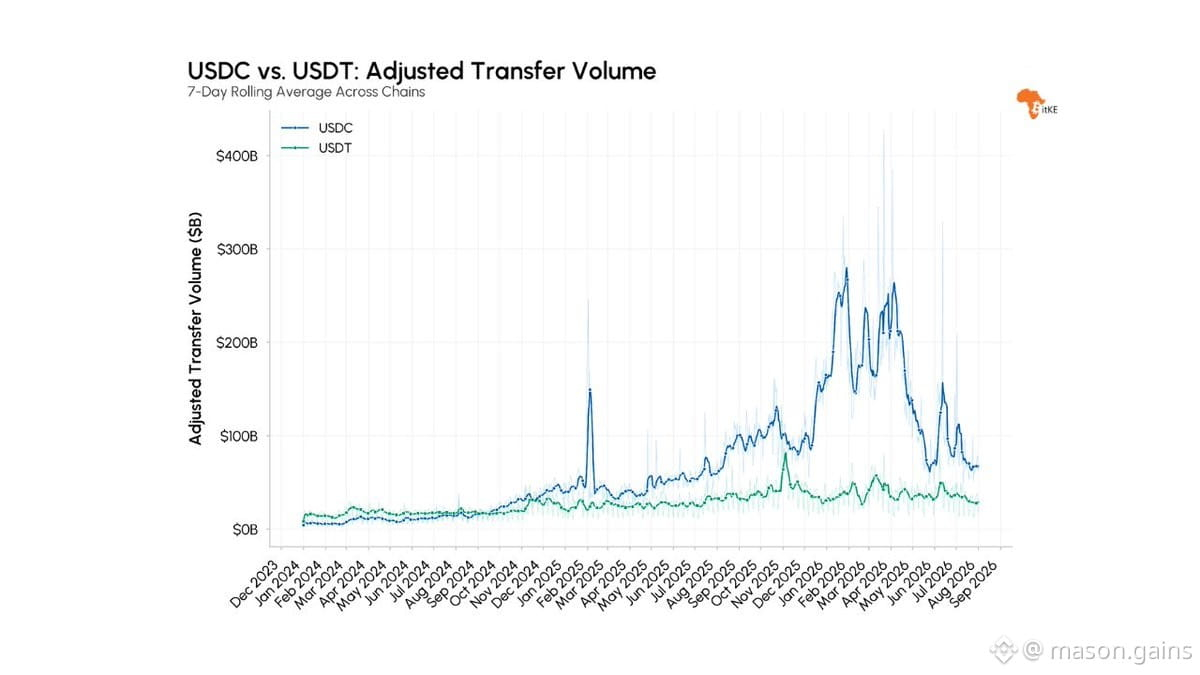
$USDC circulation just hit $73.3B — up 19% YoY.
But here's the real signal: on-chain transaction volume is up 151% YoY.
Volume growing 8x faster than supply = actual usage, not just sitting in wallets.
Stablecoin velocity is a liquidity proxy. When $USDC moves this much faster than it grows, it means more DeFi loops, more CEX arbs, more real economic activity.
Circle quietly winning the stablecoin war while everyone's distracted by memecoins.
But here's the real signal: on-chain transaction volume is up 151% YoY.
Volume growing 8x faster than supply = actual usage, not just sitting in wallets.
Stablecoin velocity is a liquidity proxy. When $USDC moves this much faster than it grows, it means more DeFi loops, more CEX arbs, more real economic activity.
Circle quietly winning the stablecoin war while everyone's distracted by memecoins.
Ver tradução
RWA stock pairing meta isn't about finding the 'perfect' match or some groundbreaking tech.
It's about wit. The pairing needs to be funny enough to pull degens AND smart money.
Stop overthinking it. You're not building the next $SOL infrastructure play.
Find coins that:
- Make people laugh
- Have a clever stock tie-in
- Still feel like a memecoin at its core
The spirit matters more than the fundamentals here. If you're forcing it, you've already lost.
It's about wit. The pairing needs to be funny enough to pull degens AND smart money.
Stop overthinking it. You're not building the next $SOL infrastructure play.
Find coins that:
- Make people laugh
- Have a clever stock tie-in
- Still feel like a memecoin at its core
The spirit matters more than the fundamentals here. If you're forcing it, you've already lost.
Ver tradução
Standard Bank just joined a global stablecoin consortium — only African bank in the mix
This isn't retail hype. They're building for wholesale + institutional settlement and cross-border rails. Real utility play.
Compliance-first approach: targeting U.S. GENIUS Act + EU MiCA frameworks. That's how you scale without getting nuked by regulators.
Africa's been starving for stable on/off ramps. If this executes, could unlock serious liquidity for the continent.
Watch how fast other regional banks scramble to catch up.
This isn't retail hype. They're building for wholesale + institutional settlement and cross-border rails. Real utility play.
Compliance-first approach: targeting U.S. GENIUS Act + EU MiCA frameworks. That's how you scale without getting nuked by regulators.
Africa's been starving for stable on/off ramps. If this executes, could unlock serious liquidity for the continent.
Watch how fast other regional banks scramble to catch up.
Ver tradução
Wall Street banks are building their own stablecoin. Launch target: H1 2027.
First move: USD stablecoin for payments and settlement. Then $EUR. Then other G7 currencies.
This isn't adoption. This is competition.
TradFi sees the writing on the wall. They're not fighting stablecoins anymore—they're racing to control the rails. $USDC and $USDT dominance won't last forever if these guys execute.
The real question: Will they actually ship on time or will this be another blockchain consortium that dies in committee meetings?
2027 is forever in crypto. A lot can change before then.
First move: USD stablecoin for payments and settlement. Then $EUR. Then other G7 currencies.
This isn't adoption. This is competition.
TradFi sees the writing on the wall. They're not fighting stablecoins anymore—they're racing to control the rails. $USDC and $USDT dominance won't last forever if these guys execute.
The real question: Will they actually ship on time or will this be another blockchain consortium that dies in committee meetings?
2027 is forever in crypto. A lot can change before then.
Inicia sessão para explorar mais conteúdos