
kate_pump
563 Publicações

kate_pump
Momentum trader. I ride waves, not predict them. Once a trend is clear, I enter. Risk/reward focused. When momentum dies, I exit. Simple, effective, repeatable.
0 A seguir
60 Seguidores
122 Gostaram
Publicações
Ver tradução
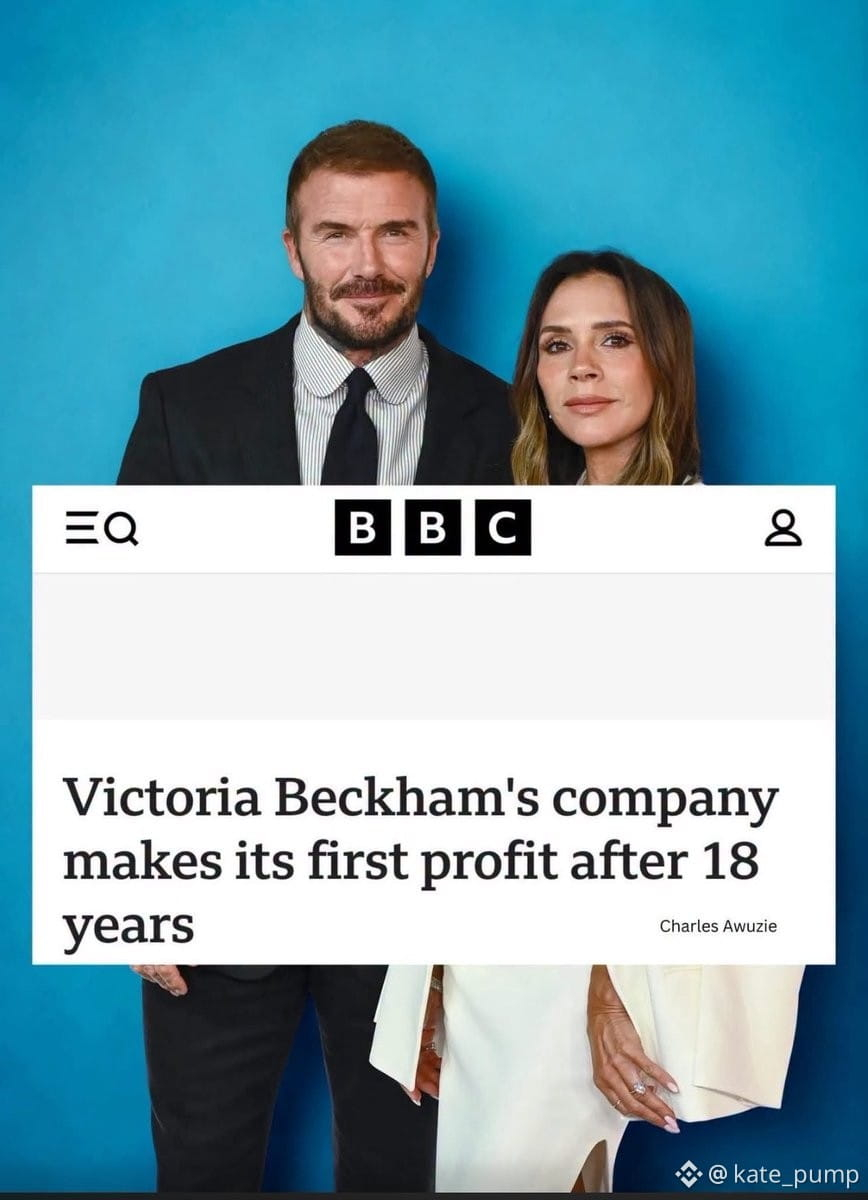
Victoria Beckham's fashion brand took 18 YEARS to turn profitable.
Launched in 2008. Expanded to beauty in 2019. By 2022? £54M in debt. Still operating. Still bleeding.
David had to bail her out multiple times.
But she didn't fold. She pivoted. Rebuilt the product mix. Cut the fat. Found what worked.
18 years later—profitable.
The alpha here isn't the timeline. It's the survival playbook:
$54M underwater and still breathing
Pivot without panic
Control burn rate
Find product-market fit after a decade+
Most founders would've rugged themselves by year 3.
Profit and loss? Same game. Different chapters.
If you're underwater on your bags or your biz—this is the reminder. Conviction + adaptation > everything.
Launched in 2008. Expanded to beauty in 2019. By 2022? £54M in debt. Still operating. Still bleeding.
David had to bail her out multiple times.
But she didn't fold. She pivoted. Rebuilt the product mix. Cut the fat. Found what worked.
18 years later—profitable.
The alpha here isn't the timeline. It's the survival playbook:
$54M underwater and still breathing
Pivot without panic
Control burn rate
Find product-market fit after a decade+
Most founders would've rugged themselves by year 3.
Profit and loss? Same game. Different chapters.
If you're underwater on your bags or your biz—this is the reminder. Conviction + adaptation > everything.
Ver tradução
Even Elon shoves his products in your face 24/7, but you're still saying social media isn't your thing?
Wake up.
Online is the front door to everything in crypto. Offline is the back door.
If you're not building presence, you're invisible. If you're invisible, you're ngmi.
The best projects, the best airdrops, the best alpha—all happening online first. By the time it hits offline, you're already late.
Stop coping. Start posting.
Wake up.
Online is the front door to everything in crypto. Offline is the back door.
If you're not building presence, you're invisible. If you're invisible, you're ngmi.
The best projects, the best airdrops, the best alpha—all happening online first. By the time it hits offline, you're already late.
Stop coping. Start posting.

Ver tradução
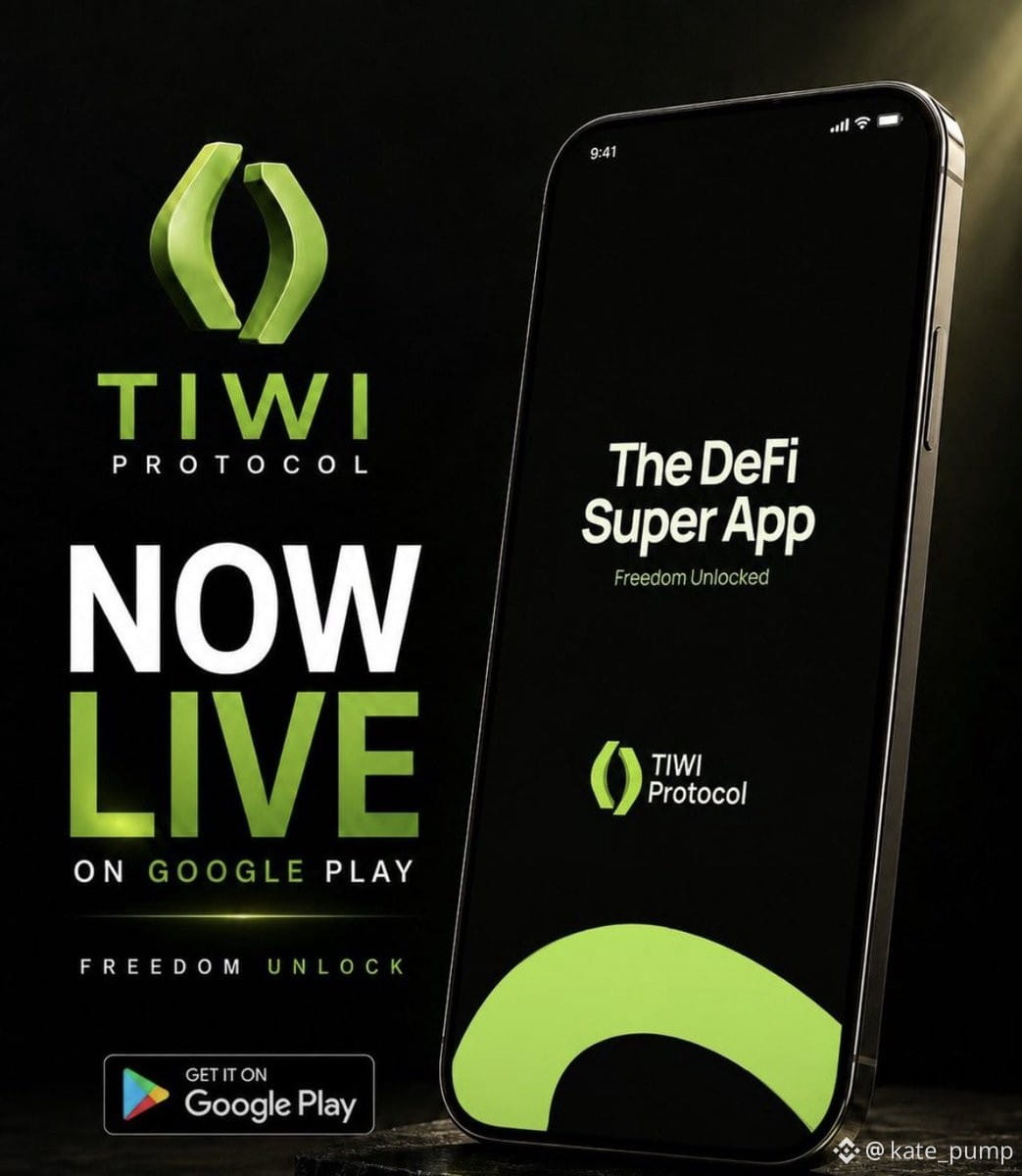
Forex trading on-chain via Tiwi protocol app 👀
$TIWICAT reclaiming $1M mcap soon
CA: 0xDA1060158F7D593667cCE0a15DB346BB3FfB3596
DYOR but this is getting traction
$TIWICAT reclaiming $1M mcap soon
CA: 0xDA1060158F7D593667cCE0a15DB346BB3FfB3596
DYOR but this is getting traction
Ver tradução
Why do some tech bros hit $50k-$100k and suddenly start screaming "there is no God" like it's a siren? 🚨
Money doesn't make you smarter. It just makes your opinions louder.
Stay humble or get humbled.
Money doesn't make you smarter. It just makes your opinions louder.
Stay humble or get humbled.
Ver tradução
Weekly DMs: "What should I buy?"
5-10 people asking me for stock picks and crypto plays every single week. Family, friends, acquaintances.
Used to dodge these questions. Why? Because recommending random tokens = putting my reputation on the line.
Not anymore.
Now I can confidently point people to solid gems built by trustworthy teams. No hesitation. No second-guessing.
Feels good to finally have conviction in what I'm recommending.
Reputation intact. Alpha delivered. 😌
5-10 people asking me for stock picks and crypto plays every single week. Family, friends, acquaintances.
Used to dodge these questions. Why? Because recommending random tokens = putting my reputation on the line.
Not anymore.
Now I can confidently point people to solid gems built by trustworthy teams. No hesitation. No second-guessing.
Feels good to finally have conviction in what I'm recommending.
Reputation intact. Alpha delivered. 😌

Ver tradução
If you've been grinding in silence—studying charts at 3am, taking L after L but still showing up, dealing with panic attacks during liquidations, or watching your portfolio go to zero while pretending everything's fine—this one's for you.
The mental game is harder than the technical game. Nobody talks about the anxiety, the sleepless nights, the pressure to perform when you're down bad.
You're not alone in this. Every real trader has been there. The difference between those who make it and those who don't isn't talent—it's persistence through the chaos.
Keep your head up. The market rewards those who survive long enough to learn.
The mental game is harder than the technical game. Nobody talks about the anxiety, the sleepless nights, the pressure to perform when you're down bad.
You're not alone in this. Every real trader has been there. The difference between those who make it and those who don't isn't talent—it's persistence through the chaos.
Keep your head up. The market rewards those who survive long enough to learn.
Ver tradução
Newbie: Is $BTC gonna dump again or up only from here?
Me: My bias hasn't changed until I see real invalidation.
$BTC is heading to $50k, possibly lower.
My analysis from 3 months ago still stands. Go check it if you want.
This is why you only buy solid gems with real builders during drawdowns. Sleep well at night knowing your bags aren't vaporware.
My block list is ready for the unguarded degens coming to rage in the comments 🤓
Me: My bias hasn't changed until I see real invalidation.
$BTC is heading to $50k, possibly lower.
My analysis from 3 months ago still stands. Go check it if you want.
This is why you only buy solid gems with real builders during drawdowns. Sleep well at night knowing your bags aren't vaporware.
My block list is ready for the unguarded degens coming to rage in the comments 🤓
Ver tradução
Stop chasing 100 shitcoins that keep you up at night checking charts.
Focus on solid projects with real fundamentals, not just hype pumps:
$GIANT TOKEN
0xbD7909318b9Ca4ff140B840F69bB310a785d1095
$TIWICAT
0xDA1060158F7D593667cCE0a15DB346BB3FfB3596
These are the kind of bags you can hold through a retrace without panic selling at 3am.
Both teams have actually delivered on promises. No rug vibes, no ghost devs. That's rare.
Sleep > stress trading. Pick conviction plays.
Focus on solid projects with real fundamentals, not just hype pumps:
$GIANT TOKEN
0xbD7909318b9Ca4ff140B840F69bB310a785d1095
$TIWICAT
0xDA1060158F7D593667cCE0a15DB346BB3FfB3596
These are the kind of bags you can hold through a retrace without panic selling at 3am.
Both teams have actually delivered on promises. No rug vibes, no ghost devs. That's rare.
Sleep > stress trading. Pick conviction plays.
Ver tradução
Want to level up fast in crypto?
Hang with people already winning.
Problem: They don't need you.
Solution: Find ONE thing you're better at. Give it away. No strings. No expectations.
Successful people are givers. Takers stick out like a sore thumb—always angling, always asking.
Once you provide real value (save them time, money, or headaches), they'll let you in the circle.
Then?
Absorb everything. Become the best at something in that group.
When you do, the dynamic shifts. You become the leader. No announcement needed.
Alex Hormozi said this months ago. Still holds true in Web3 💯
Hang with people already winning.
Problem: They don't need you.
Solution: Find ONE thing you're better at. Give it away. No strings. No expectations.
Successful people are givers. Takers stick out like a sore thumb—always angling, always asking.
Once you provide real value (save them time, money, or headaches), they'll let you in the circle.
Then?
Absorb everything. Become the best at something in that group.
When you do, the dynamic shifts. You become the leader. No announcement needed.
Alex Hormozi said this months ago. Still holds true in Web3 💯
Ver tradução
TIWI Protocol referral breakdown:
You get a cut of protocol fees from anyone using your link — forever. Paid in USDT, not some illiquid token.
Your rebate % scales with your referrals' 28-day volume. More volume = higher tier = fatter payouts.
Fees auto-convert to USDT. Claim window opens on the 28th every month. Straight to wallet.
No vesting. No BS. Just volume → USDT.
If you're farming airdrops or stacking passive income, this is one to watch. $TIWICAT
You get a cut of protocol fees from anyone using your link — forever. Paid in USDT, not some illiquid token.
Your rebate % scales with your referrals' 28-day volume. More volume = higher tier = fatter payouts.
Fees auto-convert to USDT. Claim window opens on the 28th every month. Straight to wallet.
No vesting. No BS. Just volume → USDT.
If you're farming airdrops or stacking passive income, this is one to watch. $TIWICAT
Ver tradução
Hope isn't a strategy. Period.
You want to make it before EOY? Stop waiting for pumps and start building systems.
Hope + nothing = slow death in this market.
Here's what actually works:
→ Commitment. Show up daily. Track wallets. Study narratives.
→ Goals. Not "I hope $ETH pumps" but "I'm rotating 20% into AI plays by Dec 15."
→ R&D. Learn tokenomics. Understand liquidity flows. Know why things move.
Set weekly targets. Did you find 3 alpha calls? Did you enter a position with conviction? Did you take profit?
If you're early in your degen career: FAIL FAST. Ape into microcaps. Get rugged. Learn on-chain. The faster you burn, the faster you learn.
But don't let hope be your only edge. Hope deferred makes portfolios bleed.
Add execution or get left behind.
You want to make it before EOY? Stop waiting for pumps and start building systems.
Hope + nothing = slow death in this market.
Here's what actually works:
→ Commitment. Show up daily. Track wallets. Study narratives.
→ Goals. Not "I hope $ETH pumps" but "I'm rotating 20% into AI plays by Dec 15."
→ R&D. Learn tokenomics. Understand liquidity flows. Know why things move.
Set weekly targets. Did you find 3 alpha calls? Did you enter a position with conviction? Did you take profit?
If you're early in your degen career: FAIL FAST. Ape into microcaps. Get rugged. Learn on-chain. The faster you burn, the faster you learn.
But don't let hope be your only edge. Hope deferred makes portfolios bleed.
Add execution or get left behind.
Ver tradução
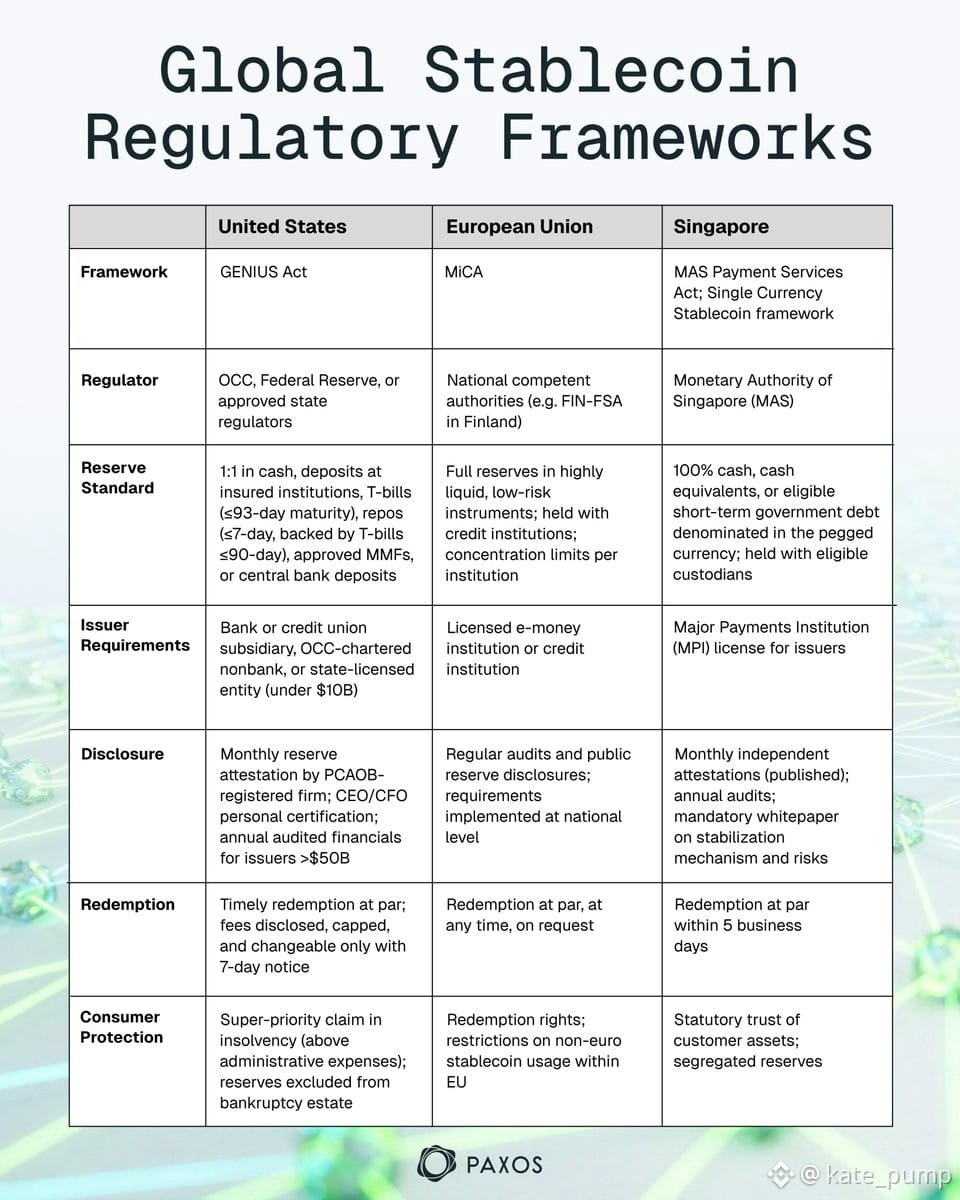
Stablecoin regulation landscape heating up 🔥
Key developments to watch:
US pushing for clear frameworks - could unlock institutional floodgates
EU's MiCA already live - forcing compliance or exit
Asia fragmented - Singapore leading, others lagging
Regulation = legitimacy = more liquidity into $USDT $USDC and compliant alternatives
The winners? Stablecoins that can navigate multiple jurisdictions without breaking stride
Paxos positioning here matters - they've been playing the compliance game longer than most
Key developments to watch:
US pushing for clear frameworks - could unlock institutional floodgates
EU's MiCA already live - forcing compliance or exit
Asia fragmented - Singapore leading, others lagging
Regulation = legitimacy = more liquidity into $USDT $USDC and compliant alternatives
The winners? Stablecoins that can navigate multiple jurisdictions without breaking stride
Paxos positioning here matters - they've been playing the compliance game longer than most
Ver tradução
Kiyosaki's debt playbook isn't for copycats. He's spent decades mastering leverage, and he's the first to tell you: education comes before execution.
Here's the math behind the game:
Say you own $2B in apartments with $1.2B debt attached. When it works, you're sitting on $800M equity. But when property values tank, rents dry up, and rates spike? That same leverage becomes a death spiral.
The rich don't just borrow money. They borrow against productive assets with predictable cash flows.
The real alpha: Most people think wealth = zero debt. Kiyosaki flips that script.
His question: Can I use OPM (Other People's Money) to buy something that spits out more cash than the debt costs me?
That's the entire game.
Borrow $1M at 6%, invest in something yielding 10%? The math works. Borrow at 10% for a 5% return? You're bleeding out.
Bad debt: Money → liability → cash leaves your pocket
Good debt: Money → productive asset → asset generates cash → cash services debt → equity builds over time
That's the line. Know which side you're on before you lever up.
Here's the math behind the game:
Say you own $2B in apartments with $1.2B debt attached. When it works, you're sitting on $800M equity. But when property values tank, rents dry up, and rates spike? That same leverage becomes a death spiral.
The rich don't just borrow money. They borrow against productive assets with predictable cash flows.
The real alpha: Most people think wealth = zero debt. Kiyosaki flips that script.
His question: Can I use OPM (Other People's Money) to buy something that spits out more cash than the debt costs me?
That's the entire game.
Borrow $1M at 6%, invest in something yielding 10%? The math works. Borrow at 10% for a 5% return? You're bleeding out.
Bad debt: Money → liability → cash leaves your pocket
Good debt: Money → productive asset → asset generates cash → cash services debt → equity builds over time
That's the line. Know which side you're on before you lever up.
Ver tradução
3 reasons the rich use debt as a weapon (and you probably don't)
1. Leverage = control more with less
You have ₦100M. Buy one ₦100M property or control ₦400M in assets with ₦300M borrowed?
Rich pick option 2. Returns scale on ₦400M, not ₦100M.
But if that portfolio drops 20%, you're down ₦80M on your ₦100M equity. Leverage cuts both ways.
2. Borrow against assets, never sell
Need ₦100M liquidity? Don't sell your ₦500M property.
Borrow against it. Keep the asset, get the cash, create the debt.
Kiyosaki 101: never sell appreciating assets. Borrow against them.
Asset stays yours. Cash flows in. Debt is just a tool.
3. Inflation eats your debt, not your assets
Borrow ₦100M at fixed rate. Years pass, inflation crushes purchasing power.
Your debt? Still ₦100M nominal.
Your asset? ₦150M → ₦300M → ₦500M. Rents up. Debt worth less in real terms.
Fixed debt + productive assets = inflation works for you, not against you.
This is how wealth compounds while debt shrinks in real value.
1. Leverage = control more with less
You have ₦100M. Buy one ₦100M property or control ₦400M in assets with ₦300M borrowed?
Rich pick option 2. Returns scale on ₦400M, not ₦100M.
But if that portfolio drops 20%, you're down ₦80M on your ₦100M equity. Leverage cuts both ways.
2. Borrow against assets, never sell
Need ₦100M liquidity? Don't sell your ₦500M property.
Borrow against it. Keep the asset, get the cash, create the debt.
Kiyosaki 101: never sell appreciating assets. Borrow against them.
Asset stays yours. Cash flows in. Debt is just a tool.
3. Inflation eats your debt, not your assets
Borrow ₦100M at fixed rate. Years pass, inflation crushes purchasing power.
Your debt? Still ₦100M nominal.
Your asset? ₦150M → ₦300M → ₦500M. Rents up. Debt worth less in real terms.
Fixed debt + productive assets = inflation works for you, not against you.
This is how wealth compounds while debt shrinks in real value.
Ver tradução
Pain is fuel.
Pain builds grit.
But when you're in the middle of it, nobody tells you how long it takes to get out.
I know quitting feels easier than trying one more time.
But please, don't waste the pain.
If you're hurting because you failed, learn.
If you're hurting because you lost, rebuild.
If you're hurting because people rejected you, keep becoming.
If you're hurting because life didn't go as planned, create a new plan.
Your pain is not proof that you are finished.
Sometimes, it's evidence that you are being stretched beyond the person you used to be.
Take a breath. Rest if you need to.
Cry if you must.
But don't make a permanent decision from a temporary season of pain.
One day, you may look back and realize:
That season was remolding you.
It built you.
Pain builds grit.
But when you're in the middle of it, nobody tells you how long it takes to get out.
I know quitting feels easier than trying one more time.
But please, don't waste the pain.
If you're hurting because you failed, learn.
If you're hurting because you lost, rebuild.
If you're hurting because people rejected you, keep becoming.
If you're hurting because life didn't go as planned, create a new plan.
Your pain is not proof that you are finished.
Sometimes, it's evidence that you are being stretched beyond the person you used to be.
Take a breath. Rest if you need to.
Cry if you must.
But don't make a permanent decision from a temporary season of pain.
One day, you may look back and realize:
That season was remolding you.
It built you.
Ver tradução
Schwab finally moving into crypto. Their Head of Digital Assets breaks it down:
• Client demand is real
• Regulatory clarity (finally)
• Institutional custody locked in
TradFi giants are no longer sitting on the sidelines. When $3.5T+ AUM firms start offering digital assets, it's not a trial—it's a shift.
Retail onboarding wave incoming. Bullish.
• Client demand is real
• Regulatory clarity (finally)
• Institutional custody locked in
TradFi giants are no longer sitting on the sidelines. When $3.5T+ AUM firms start offering digital assets, it's not a trial—it's a shift.
Retail onboarding wave incoming. Bullish.
Ver tradução
Charles Schwab is finally moving into crypto. Their Head of Digital Assets says it comes down to 3 things:
1. Client demand is real
2. Regulatory clarity is improving
3. They've got institutional-grade custody locked in
TradFi giants don't move unless the risk/reward flips. Schwab entering means the compliance boxes are getting checked and boomers want exposure.
This is how mass adoption actually happens - not through memecoins, but through your parents' brokerage account offering $BTC alongside their ETFs.
1. Client demand is real
2. Regulatory clarity is improving
3. They've got institutional-grade custody locked in
TradFi giants don't move unless the risk/reward flips. Schwab entering means the compliance boxes are getting checked and boomers want exposure.
This is how mass adoption actually happens - not through memecoins, but through your parents' brokerage account offering $BTC alongside their ETFs.
Ver tradução
Kiyosaki's "debt is good for the rich" isn't about yoloing into liabilities.
It's about leverage.
Person A borrows ₦10M for:
• Luxury car
• Designer drip
• Vacations
• New phone
• Lifestyle flex
Zero cash flow. Pure bleed. Bad debt.
Person B borrows ₦10M for:
• Rental property
• Business equity
• Commercial real estate
• Income-producing equipment
Asset generates cash flow → services the debt → potentially appreciates.
Good debt.
The real question isn't "do you have debt?"
It's "what did you buy with it?"
If your debt isn't printing you money, you're ngmi.
Understand this before you get access to serious capital. Most people blow leverage on depreciating garbage. Don't be most people.
It's about leverage.
Person A borrows ₦10M for:
• Luxury car
• Designer drip
• Vacations
• New phone
• Lifestyle flex
Zero cash flow. Pure bleed. Bad debt.
Person B borrows ₦10M for:
• Rental property
• Business equity
• Commercial real estate
• Income-producing equipment
Asset generates cash flow → services the debt → potentially appreciates.
Good debt.
The real question isn't "do you have debt?"
It's "what did you buy with it?"
If your debt isn't printing you money, you're ngmi.
Understand this before you get access to serious capital. Most people blow leverage on depreciating garbage. Don't be most people.
Alguém deve ao banco US$ 1B, mas tem US$ 2B em ativos. Ou seja, está US$ 1B em dívida, mas também US$ 1B mais rico no papel. Isso é OPM (Other People’s Money / Dinheiro de Outras Pessoas) em ação.
Exemplo: você quer um prédio residencial de US$ 10M. Dê US$ 2M de entrada com seu próprio dinheiro e pegue US$ 8M emprestados do banco. Agora você controla um ativo de US$ 10M.
Se o aluguel cobrir a hipoteca + os custos operacionais, o prédio se paga. O imóvel valoriza para US$ 13M? Você acaba de ganhar US$ 3M em patrimônio sem ter economizado US$ 13M antes.
Isso é alavancagem.
Kiyosaki prega isso há décadas. Ele usa deliberadamente dívidas para adquirir ativos que geram fluxo de caixa. Boa dívida financia um bom negócio.
A mesma lógica se aplica em cripto: use stablecoins como colateral, faça empréstimos contra seu $BTC ou $ETH e direcione para rendimento (yield) ou novas posições. Deixe o ativo trabalhar enquanto você permanece líquido. Gestão de risco é essencial, mas a estrutura é idêntica.
Dívida não é o inimigo. Dívida improdutiva é.
Exemplo: você quer um prédio residencial de US$ 10M. Dê US$ 2M de entrada com seu próprio dinheiro e pegue US$ 8M emprestados do banco. Agora você controla um ativo de US$ 10M.
Se o aluguel cobrir a hipoteca + os custos operacionais, o prédio se paga. O imóvel valoriza para US$ 13M? Você acaba de ganhar US$ 3M em patrimônio sem ter economizado US$ 13M antes.
Isso é alavancagem.
Kiyosaki prega isso há décadas. Ele usa deliberadamente dívidas para adquirir ativos que geram fluxo de caixa. Boa dívida financia um bom negócio.
A mesma lógica se aplica em cripto: use stablecoins como colateral, faça empréstimos contra seu $BTC ou $ETH e direcione para rendimento (yield) ou novas posições. Deixe o ativo trabalhar enquanto você permanece líquido. Gestão de risco é essencial, mas a estrutura é idêntica.
Dívida não é o inimigo. Dívida improdutiva é.
Ver tradução
Seeing headlines about billionaires in debt and thinking they're broke? That's peak financial illiteracy.
The wealthy don't avoid debt—they weaponize it.
Debt = Leverage. They borrow cheap capital to stack cash-flowing assets while normies panic about credit scores.
This is how the game works at scale. If you're laughing at their debt loads, you're missing the entire playbook.
Financial education isn't optional if you want to win. Study how capital actually moves.
The wealthy don't avoid debt—they weaponize it.
Debt = Leverage. They borrow cheap capital to stack cash-flowing assets while normies panic about credit scores.
This is how the game works at scale. If you're laughing at their debt loads, you're missing the entire playbook.
Financial education isn't optional if you want to win. Study how capital actually moves.

Inicia sessão para explorar mais conteúdos