
#binanceweb3wallet
binanceweb3wallet
9.7M visualizações
4,594 a discutir
Popular
Mais recente

·
--
Artigo
Ganhe US$ 10–50 com a Binance Web3 Wallet — Comece com Pouco CapitalGanhe US$ 10–50 com a Binance Web3 Wallet — Comece com Pouco Capital
Se você está procurando maneiras de ganhar cripto sem colocar muito capital, a Binance Web3 Wallet certamente vale a pena explorar. 👇
🔥 Como começar:
1️⃣ Crie e proteja sua conta Binance Web3:
https://web3.binance.com/vi/referral?ref=N7CB1APG
2️⃣ Abra a Binance Web3 Wallet :
3️⃣ Explore campanhas ativas / AirDrops / missões Web3
4️⃣ Verifique os requisitos, recompensas e prazos
5️⃣ Priorize oportunidades GRATUITAS ou de baixo capital para começar
Ganhe US$ 10–50 com a Binance Web3 Wallet — Comece com Pouco Capital
Ganhe US$ 10–50 com a Binance Web3 Wallet — Comece com Pouco Capital
Se você está procurando maneiras de ganhar cripto sem colocar muito capital, a Binance Web3 Wallet certamente vale a pena explorar. 👇
🔥 Como começar:
1️⃣ Crie e proteja sua conta Binance Web3:
https://web3.binance.com/vi/referral?ref=N7CB1APG
2️⃣ Abra a Binance Web3 Wallet :
3️⃣ Explore campanhas ativas / AirDrops / missões Web3
4️⃣ Verifique os requisitos, recompensas e prazos
5️⃣ Priorize oportunidades GRATUITAS ou de baixo capital para começar
Se você está procurando maneiras de ganhar cripto sem colocar muito capital, a Binance Web3 Wallet certamente vale a pena explorar. 👇
🔥 Como começar:
1️⃣ Crie e proteja sua conta Binance Web3:
https://web3.binance.com/vi/referral?ref=N7CB1APG
2️⃣ Abra a Binance Web3 Wallet :
3️⃣ Explore campanhas ativas / AirDrops / missões Web3
4️⃣ Verifique os requisitos, recompensas e prazos
5️⃣ Priorize oportunidades GRATUITAS ou de baixo capital para começar
404

·
--
Talvez você não soubesse que a Binance integra uma Web3 Wallet diretamente no seu aplicativo — não há necessidade de instalar o MetaMask ou uma extensão externa. Em poucos segundos, você cria uma carteira não custodial segura protegida por uma chave que só você controla; depois, você acessa dApps DeFi, NFTs e tokens em múltiplas blockchains sem sair da Binance. Prático para iniciantes que querem explorar a DeFi com segurança, e para avançados que querem centralizar tudo no mesmo lugar. Você já usou para interagir com um protocolo DeFi? #Web3 #BinanceWeb3Wallet
Talvez você não soubesse que a Binance integra uma Web3 Wallet diretamente no seu aplicativo — não há necessidade de instalar o MetaMask ou uma extensão externa. Em poucos segundos, você cria uma carteira não custodial segura protegida por uma chave que só você controla; depois, você acessa dApps DeFi, NFTs e tokens em múltiplas blockchains sem sair da Binance. Prático para iniciantes que querem explorar a DeFi com segurança, e para avançados que querem centralizar tudo no mesmo lugar. Você já usou para interagir com um protocolo DeFi? #Web3 #BinanceWeb3Wallet
27

·
--
🚀 598K XP = Quantos $TMX? 👀
No Binance Web3 Wallet, tenho agora 598K XP acumulados para o TermMax! 🔥
Agora a maior pergunta—a partir desses 598.000 XP, quantos tokens $TMX eu posso receber em TGE/recompensas? 🤔
Se a alocação for baseada em XP, então o resultado para os detentores de 598K XP pode ser bem interessante! 🚀
Quanto XP você tem? Conte nos comentários 👇
#TermMax @termmax #TMX #BinanceWeb3Wallet #defi
🚀 598K XP = Quantos $TMX? 👀
No Binance Web3 Wallet, tenho agora 598K XP acumulados para o TermMax! 🔥
Agora a maior pergunta—a partir desses 598.000 XP, quantos tokens $TMX eu posso receber em TGE/recompensas? 🤔
Se a alocação for baseada em XP, então o resultado para os detentores de 598K XP pode ser bem interessante! 🚀
Quanto XP você tem? Conte nos comentários 👇
#TermMax @TermMax #TMX #BinanceWeb3Wallet #defi
No Binance Web3 Wallet, tenho agora 598K XP acumulados para o TermMax! 🔥
Agora a maior pergunta—a partir desses 598.000 XP, quantos tokens $TMX eu posso receber em TGE/recompensas? 🤔
Se a alocação for baseada em XP, então o resultado para os detentores de 598K XP pode ser bem interessante! 🚀
Quanto XP você tem? Conte nos comentários 👇
#TermMax @TermMax #TMX #BinanceWeb3Wallet #defi
74

·
--
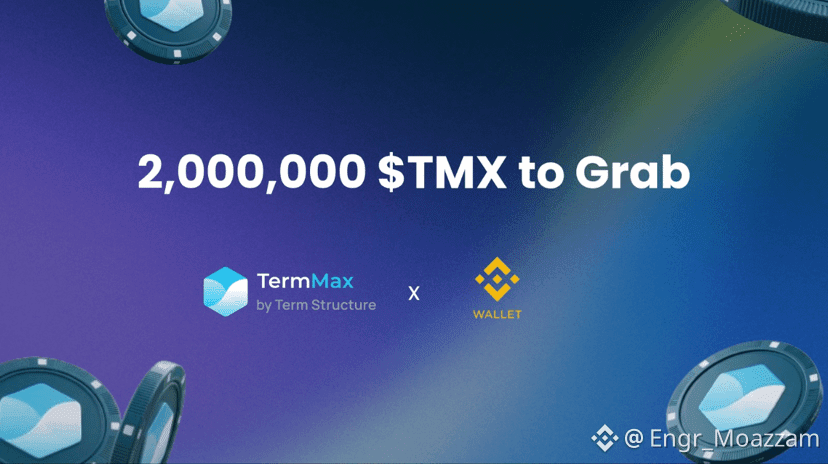
#termmax @termmax TermMax está trazendo uma oportunidade emocionante para a Comunidade da Carteira Web3 da Binance com sua mais recente Campanha Booster, oferecendo 2.000.000 $TMX para serem conquistados. Esta Campanha dá aos usuários de Web3 a chance de participar do ecossistema da TermMax enquanto exploram empréstimos, empréstimos garantidos e negociação de opções de forma descentralizada. A Colaboração entre #termmax and #BinanceWeb3Wallet facilita para os usuários descobrir e se envolver com a plataforma da TermMax. Com recompensas em $TMX disponíveis, esta campanha pode ser uma oportunidade interessante para participantes ativos#Web3 que querem ganhar enquanto aprendem mais sobre a TermMax. Não perca a campanha, conclua as tarefas necessárias e aumente suas recompensas!🚀🔥
#BinanceSquareTalks
#termmax @TermMax TermMax está trazendo uma oportunidade emocionante para a Comunidade da Carteira Web3 da Binance com sua mais recente Campanha Booster, oferecendo 2.000.000 $TMX para serem conquistados. Esta Campanha dá aos usuários de Web3 a chance de participar do ecossistema da TermMax enquanto exploram empréstimos, empréstimos garantidos e negociação de opções de forma descentralizada. A Colaboração entre #termmax and #BinanceWeb3Wallet facilita para os usuários descobrir e se envolver com a plataforma da TermMax. Com recompensas em $TMX disponíveis, esta campanha pode ser uma oportunidade interessante para participantes ativos#Web3 que querem ganhar enquanto aprendem mais sobre a TermMax. Não perca a campanha, conclua as tarefas necessárias e aumente suas recompensas!🚀🔥
#BinanceSquareTalks
#BinanceSquareTalks
76

·
--
Em Alta
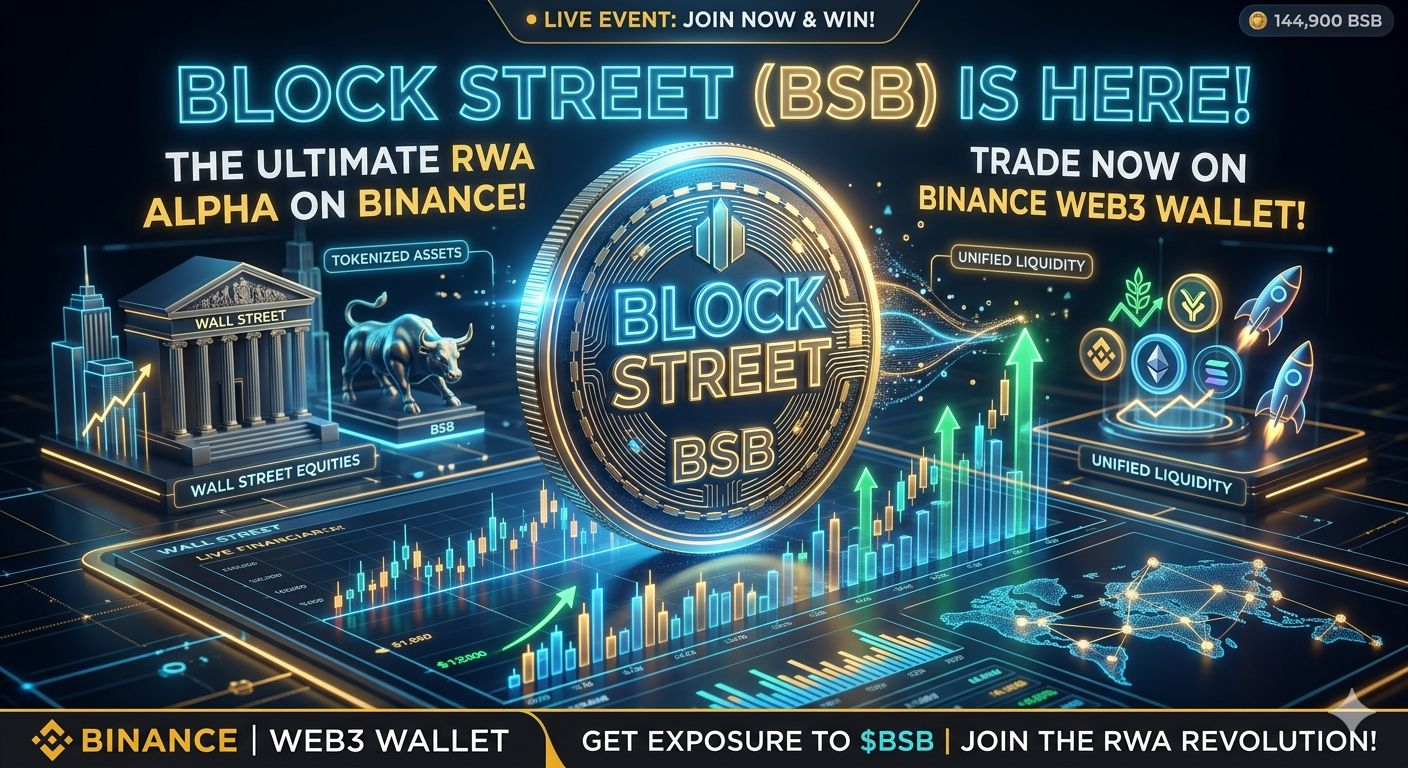
Aqui está um post altamente envolvente, nativo de cripto, otimizado para Binance Square ou Twitter (X), destacando o enorme momentum e o evento de trading da carteira Binance em Block Street (BSB).
🚀 Será que BSB é o Alpha RWA Definitivo de 2026?
A narrativa de Ativos do Mundo Real (RWA) está pegando fogo, e Block Street ($BSB) está bem no centro da tempestade! Atuando como a primeira Camada de Liquidez Unificada para mercados de capital on-chain, BSB está conectando o gap entre as finanças tradicionais de Wall Street e o DeFi descentralizado.
Aqui está exatamente o porquê do dinheiro inteligente estar rastreando BSB em suas watchlists neste momento:
💎 Por que a Empolgação é Real:
🔥 Catalisador Principal da Binance: A Binance acaba de lançar a Competição de Trading do Block Street na Binance Alpha (de 19 de maio a 26 de maio de 2026)! Traders usando a Carteira Sem Chave Web3 da Binance estão competindo por uma parte maciça de 144.900 BSB em recompensas de tokens.
📈 Crescimento Parabólico e Volume: $BSB recentemente imprimiu um ganho maciço de +200% nos últimos 30 dias, atingindo um Máximo Histórico de $2,16 em 20 de maio antes de esfriar em uma zona de acumulação saudável. O volume de trading de 24h está ultrapassando centenas de milhões, mostrando uma liquidez insana.
💼 Apoio de Alto Perfil: Liderado pela veterana de finanças quantitativas Hedy Wong (ex-Apollo, Point72) e apoiado por $11,5M de pesos pesados como Hack VC e DWF Labs. Além disso, grande hype político após as notícias de aquisição por uma firma financeira de IA ligada à família Trump!
⚡ Utilidade do Ecossistema: É um token multi-chain (ERC-20 e BEP-20) usado para governança, enormes descontos em taxas em suas plataformas Aqua e Everst, e recompensas de staking que acabaram de ser lançadas!
⚠️ Nota do Trader (DYOR): BSB está atualmente exibindo alta beta e uma volatilidade de preço maciça (flutuando pesadamente na faixa de $0,68 - $1,00). Com apenas ~21% de seu suprimento total de 1 bilhão atualmente em circulação, a volatilidade de curto prazo é esperada. Gerencie seu risco com cuidado!
#BsB #BinanceWeb3Wallet #CryptoInvesting #DeFi #Altcoins $BSB
{future}(BSBUSDT)
Aqui está um post altamente envolvente, nativo de cripto, otimizado para Binance Square ou Twitter (X), destacando o enorme momentum e o evento de trading da carteira Binance em Block Street (BSB).
🚀 Será que BSB é o Alpha RWA Definitivo de 2026?
A narrativa de Ativos do Mundo Real (RWA) está pegando fogo, e Block Street ($BSB ) está bem no centro da tempestade! Atuando como a primeira Camada de Liquidez Unificada para mercados de capital on-chain, BSB está conectando o gap entre as finanças tradicionais de Wall Street e o DeFi descentralizado.
Aqui está exatamente o porquê do dinheiro inteligente estar rastreando BSB em suas watchlists neste momento:
💎 Por que a Empolgação é Real:
🔥 Catalisador Principal da Binance: A Binance acaba de lançar a Competição de Trading do Block Street na Binance Alpha (de 19 de maio a 26 de maio de 2026)! Traders usando a Carteira Sem Chave Web3 da Binance estão competindo por uma parte maciça de 144.900 BSB em recompensas de tokens.
📈 Crescimento Parabólico e Volume: $BSB recentemente imprimiu um ganho maciço de +200% nos últimos 30 dias, atingindo um Máximo Histórico de $2,16 em 20 de maio antes de esfriar em uma zona de acumulação saudável. O volume de trading de 24h está ultrapassando centenas de milhões, mostrando uma liquidez insana.
💼 Apoio de Alto Perfil: Liderado pela veterana de finanças quantitativas Hedy Wong (ex-Apollo, Point72) e apoiado por $11,5M de pesos pesados como Hack VC e DWF Labs. Além disso, grande hype político após as notícias de aquisição por uma firma financeira de IA ligada à família Trump!
⚡ Utilidade do Ecossistema: É um token multi-chain (ERC-20 e BEP-20) usado para governança, enormes descontos em taxas em suas plataformas Aqua e Everst, e recompensas de staking que acabaram de ser lançadas!
⚠️ Nota do Trader (DYOR): BSB está atualmente exibindo alta beta e uma volatilidade de preço maciça (flutuando pesadamente na faixa de $0,68 - $1,00). Com apenas ~21% de seu suprimento total de 1 bilhão atualmente em circulação, a volatilidade de curto prazo é esperada. Gerencie seu risco com cuidado!
#BsB #BinanceWeb3Wallet #CryptoInvesting #DeFi #Altcoins $BSB
🚀 Será que BSB é o Alpha RWA Definitivo de 2026?
A narrativa de Ativos do Mundo Real (RWA) está pegando fogo, e Block Street ($BSB ) está bem no centro da tempestade! Atuando como a primeira Camada de Liquidez Unificada para mercados de capital on-chain, BSB está conectando o gap entre as finanças tradicionais de Wall Street e o DeFi descentralizado.
Aqui está exatamente o porquê do dinheiro inteligente estar rastreando BSB em suas watchlists neste momento:
💎 Por que a Empolgação é Real:
🔥 Catalisador Principal da Binance: A Binance acaba de lançar a Competição de Trading do Block Street na Binance Alpha (de 19 de maio a 26 de maio de 2026)! Traders usando a Carteira Sem Chave Web3 da Binance estão competindo por uma parte maciça de 144.900 BSB em recompensas de tokens.
📈 Crescimento Parabólico e Volume: $BSB recentemente imprimiu um ganho maciço de +200% nos últimos 30 dias, atingindo um Máximo Histórico de $2,16 em 20 de maio antes de esfriar em uma zona de acumulação saudável. O volume de trading de 24h está ultrapassando centenas de milhões, mostrando uma liquidez insana.
💼 Apoio de Alto Perfil: Liderado pela veterana de finanças quantitativas Hedy Wong (ex-Apollo, Point72) e apoiado por $11,5M de pesos pesados como Hack VC e DWF Labs. Além disso, grande hype político após as notícias de aquisição por uma firma financeira de IA ligada à família Trump!
⚡ Utilidade do Ecossistema: É um token multi-chain (ERC-20 e BEP-20) usado para governança, enormes descontos em taxas em suas plataformas Aqua e Everst, e recompensas de staking que acabaram de ser lançadas!
⚠️ Nota do Trader (DYOR): BSB está atualmente exibindo alta beta e uma volatilidade de preço maciça (flutuando pesadamente na faixa de $0,68 - $1,00). Com apenas ~21% de seu suprimento total de 1 bilhão atualmente em circulação, a volatilidade de curto prazo é esperada. Gerencie seu risco com cuidado!
#BsB #BinanceWeb3Wallet #CryptoInvesting #DeFi #Altcoins $BSB
1
399

·
--
🚀 GRVT x Binance Wallet: A Próxima Era do Trading Cripto
O futuro do trading não é apenas rápido; é seguro, privado e totalmente autocustodiado.
Veja como @grvt_io está redefinindo o trading em Web3 com a ajuda da Binance Web3 Wallet:
* ⚡ Privacidade de Zero Conhecimento: Execute trades instantâneos com velocidade fora da cadeia, sem expor sua pegada financeira e sem arriscar front-running.
* 🏦 Força Institucional: Um order book de alto desempenho encontra liquidação on-chain. Obtenha alta liquidez e zero slippage sem abrir mão de suas chaves privadas.
* 🎒 Onboarding sem atrito: Conecte sua Binance Web3 Wallet de forma perfeita para uma experiência de trading sem taxas de gas, sem chaves e segura.
* 🎁 Pool de 1,5M de Tokens em tempo real: Confira o app da sua Binance Wallet para entrar na Campanha GRVT Booster ativa e garantir sua parte dos prêmios de tokens antes do listing!
👉 @grvt_io #GRVT #BinanceWeb3Wallet
🚀 GRVT x Binance Wallet: A Próxima Era do Trading Cripto
O futuro do trading não é apenas rápido; é seguro, privado e totalmente autocustodiado.
Veja como @grvt_io está redefinindo o trading em Web3 com a ajuda da Binance Web3 Wallet:
* ⚡ Privacidade de Zero Conhecimento: Execute trades instantâneos com velocidade fora da cadeia, sem expor sua pegada financeira e sem arriscar front-running.
* 🏦 Força Institucional: Um order book de alto desempenho encontra liquidação on-chain. Obtenha alta liquidez e zero slippage sem abrir mão de suas chaves privadas.
* 🎒 Onboarding sem atrito: Conecte sua Binance Web3 Wallet de forma perfeita para uma experiência de trading sem taxas de gas, sem chaves e segura.
* 🎁 Pool de 1,5M de Tokens em tempo real: Confira o app da sua Binance Wallet para entrar na Campanha GRVT Booster ativa e garantir sua parte dos prêmios de tokens antes do listing!
👉 @grvt_io #GRVT #BinanceWeb3Wallet
O futuro do trading não é apenas rápido; é seguro, privado e totalmente autocustodiado.
Veja como @grvt_io está redefinindo o trading em Web3 com a ajuda da Binance Web3 Wallet:
* ⚡ Privacidade de Zero Conhecimento: Execute trades instantâneos com velocidade fora da cadeia, sem expor sua pegada financeira e sem arriscar front-running.
* 🏦 Força Institucional: Um order book de alto desempenho encontra liquidação on-chain. Obtenha alta liquidez e zero slippage sem abrir mão de suas chaves privadas.
* 🎒 Onboarding sem atrito: Conecte sua Binance Web3 Wallet de forma perfeita para uma experiência de trading sem taxas de gas, sem chaves e segura.
* 🎁 Pool de 1,5M de Tokens em tempo real: Confira o app da sua Binance Wallet para entrar na Campanha GRVT Booster ativa e garantir sua parte dos prêmios de tokens antes do listing!
👉 @grvt_io #GRVT #BinanceWeb3Wallet
10
7
9
110

·
--
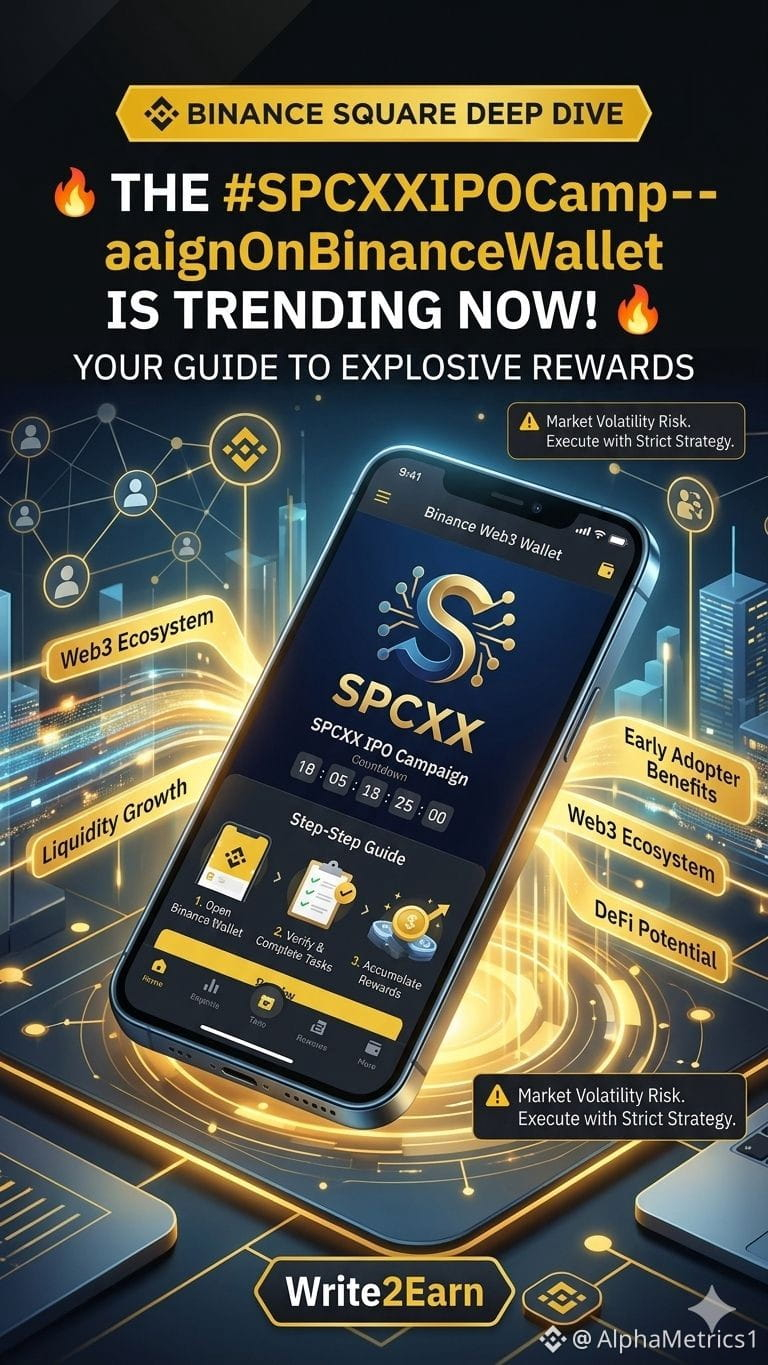
🚀 Não Perca! #SPCXXIPOCampaignOnBinanceWallet está em Alta! 🔥
A comunidade cripto está agitada, e com razão. A campanha de IPO da SPCXX na Binance Web3 Wallet está chamando a atenção do mercado agora!
Para quem está buscando aproveitar as recompensas do ecossistema Web3, a participação antecipada via carteiras descentralizadas é onde a verdadeira ação acontece.
💡 Passos Rápidos de Execução:
1. Abra seu App da Binance -> Navegue até a aba da Web3 Wallet.
2. Localize o banner oficial da campanha de IPO da SPCXX.
3. Revise e complete as tarefas verificadas (Certifique-se de ter taxas de rede suficientes).
⚠️ Protocolo de Risco: Campanhas em estágio inicial oferecem alto potencial de crescimento, mas vêm com a volatilidade inerente do mercado. Sempre execute com uma estratégia clara e gestão de risco rigorosa.
💬 Você está participando da campanha da SPCXX, ou está esperando pelo mercado secundário? Deixe sua estratégia abaixo! 👇
#BinanceWeb3Wallet #Write2Earn #CryptoCampaign #Web3
🚀 Não Perca! #SPCXXIPOCampaignOnBinanceWallet está em Alta! 🔥
A comunidade cripto está agitada, e com razão. A campanha de IPO da SPCXX na Binance Web3 Wallet está chamando a atenção do mercado agora!
Para quem está buscando aproveitar as recompensas do ecossistema Web3, a participação antecipada via carteiras descentralizadas é onde a verdadeira ação acontece.
💡 Passos Rápidos de Execução:
1. Abra seu App da Binance -> Navegue até a aba da Web3 Wallet.
2. Localize o banner oficial da campanha de IPO da SPCXX.
3. Revise e complete as tarefas verificadas (Certifique-se de ter taxas de rede suficientes).
⚠️ Protocolo de Risco: Campanhas em estágio inicial oferecem alto potencial de crescimento, mas vêm com a volatilidade inerente do mercado. Sempre execute com uma estratégia clara e gestão de risco rigorosa.
💬 Você está participando da campanha da SPCXX, ou está esperando pelo mercado secundário? Deixe sua estratégia abaixo! 👇
#BinanceWeb3Wallet #Write2Earn #CryptoCampaign #Web3
A comunidade cripto está agitada, e com razão. A campanha de IPO da SPCXX na Binance Web3 Wallet está chamando a atenção do mercado agora!
Para quem está buscando aproveitar as recompensas do ecossistema Web3, a participação antecipada via carteiras descentralizadas é onde a verdadeira ação acontece.
💡 Passos Rápidos de Execução:
1. Abra seu App da Binance -> Navegue até a aba da Web3 Wallet.
2. Localize o banner oficial da campanha de IPO da SPCXX.
3. Revise e complete as tarefas verificadas (Certifique-se de ter taxas de rede suficientes).
⚠️ Protocolo de Risco: Campanhas em estágio inicial oferecem alto potencial de crescimento, mas vêm com a volatilidade inerente do mercado. Sempre execute com uma estratégia clara e gestão de risco rigorosa.
💬 Você está participando da campanha da SPCXX, ou está esperando pelo mercado secundário? Deixe sua estratégia abaixo! 👇
#BinanceWeb3Wallet #Write2Earn #CryptoCampaign #Web3
102

·
--
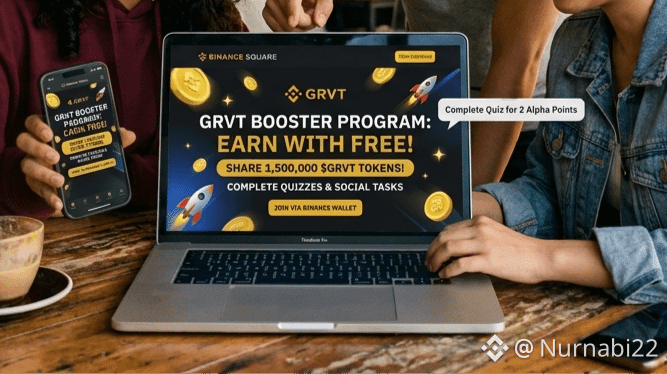
Reivindique sua parte: 1.500.000 tokens $GRVT em oferta! 🚀
O Programa GRVT Booster está dominando a Binance Web3 Wallet, e esta é sua chance perfeita de garantir cripto grátis antes do grande lançamento de 20 de julho.
Se você tiver 2 Binance Alpha Points, você já está pronto para participar. Basta usar esses pontos para entrar na campanha e desbloquear tarefas simples do ecossistema. Ao responder perguntas rápidas de quiz e concluir check-ins simples de redes sociais, você vai ganhar sua parte de um enorme pool de recompensas de 1.500.000 $GRVT.
É totalmente sem risco, altamente recompensador e leva apenas alguns minutos. Abra sua Binance Wallet, conclua as tarefas e acumule seus tokens grátis hoje! 🔥
#GRVT #BinanceWeb3Wallet #FreeCrypto
Reivindique sua parte: 1.500.000 tokens $GRVT em oferta! 🚀
O Programa GRVT Booster está dominando a Binance Web3 Wallet, e esta é sua chance perfeita de garantir cripto grátis antes do grande lançamento de 20 de julho.
Se você tiver 2 Binance Alpha Points, você já está pronto para participar. Basta usar esses pontos para entrar na campanha e desbloquear tarefas simples do ecossistema. Ao responder perguntas rápidas de quiz e concluir check-ins simples de redes sociais, você vai ganhar sua parte de um enorme pool de recompensas de 1.500.000 $GRVT.
É totalmente sem risco, altamente recompensador e leva apenas alguns minutos. Abra sua Binance Wallet, conclua as tarefas e acumule seus tokens grátis hoje! 🔥
#GRVT #BinanceWeb3Wallet #FreeCrypto
O Programa GRVT Booster está dominando a Binance Web3 Wallet, e esta é sua chance perfeita de garantir cripto grátis antes do grande lançamento de 20 de julho.
Se você tiver 2 Binance Alpha Points, você já está pronto para participar. Basta usar esses pontos para entrar na campanha e desbloquear tarefas simples do ecossistema. Ao responder perguntas rápidas de quiz e concluir check-ins simples de redes sociais, você vai ganhar sua parte de um enorme pool de recompensas de 1.500.000 $GRVT.
É totalmente sem risco, altamente recompensador e leva apenas alguns minutos. Abra sua Binance Wallet, conclua as tarefas e acumule seus tokens grátis hoje! 🔥
#GRVT #BinanceWeb3Wallet #FreeCrypto
1
136

·
--
Artigo
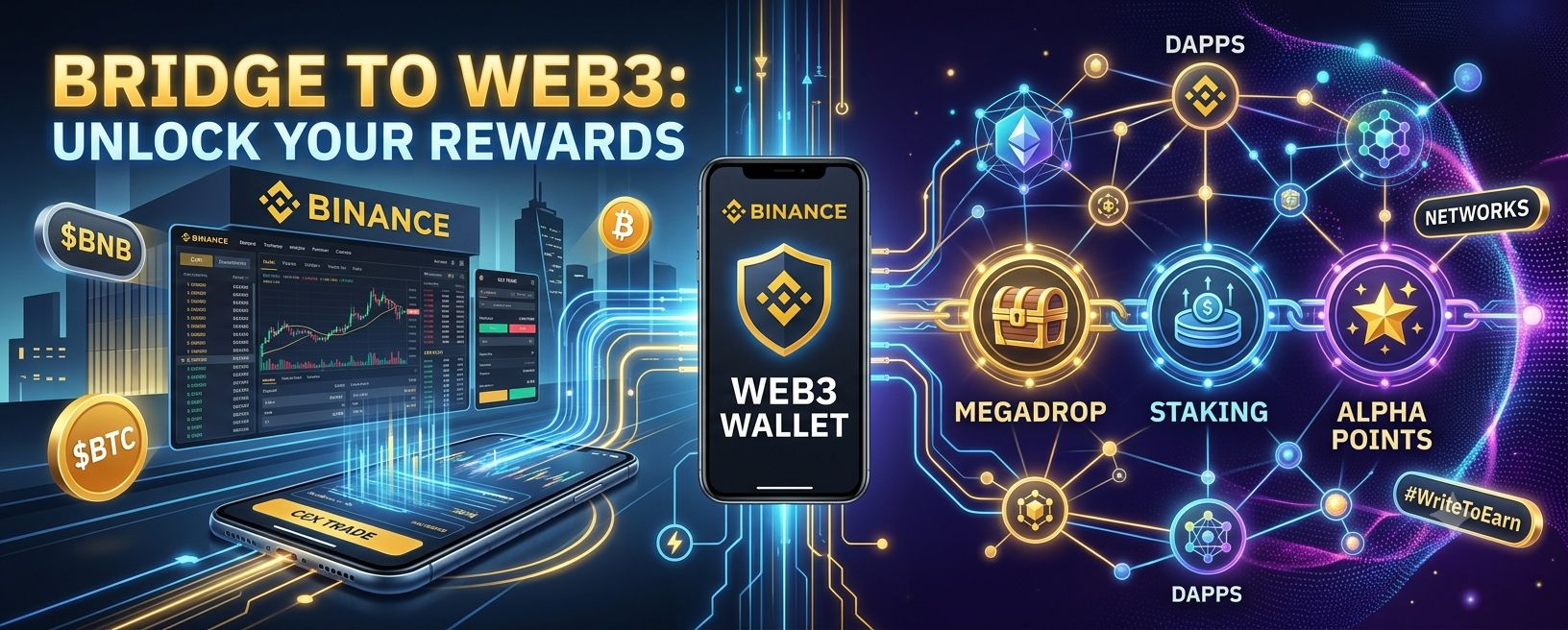
🚨 Por que 95% dos Traders ignoram o recurso mais poderoso no app deles...Muitas pessoas apenas deixam seu capital parado, sem fazer nada, na conta regular da exchange, perdendo completamente as maiores oportunidades. Estamos falando da Binance Web3 Wallet integrada.
Se você achou que uma carteira serve apenas para "armazenar" cripto, está totalmente enganado. Aqui vão 3 fatos difíceis por que essa ferramenta muda completamente o jogo — e como você pode conseguir recompensas reais com ela:
🔐 Sem Frase-Semente, Sem Estresse: Graças à tecnologia avançada de MPC (Multi-Party Computation), sua carteira é 100% segura sem precisar escrever 24 palavras em um pedaço de papel. Sua chave é dividida criptograficamente. Autogestão completa com máxima conveniência!
🚨 Por que 95% dos Traders ignoram o recurso mais poderoso no app deles...
Muitas pessoas apenas deixam seu capital parado, sem fazer nada, na conta regular da exchange, perdendo completamente as maiores oportunidades. Estamos falando da Binance Web3 Wallet integrada.
Se você achou que uma carteira serve apenas para "armazenar" cripto, está totalmente enganado. Aqui vão 3 fatos difíceis por que essa ferramenta muda completamente o jogo — e como você pode conseguir recompensas reais com ela:
🔐 Sem Frase-Semente, Sem Estresse: Graças à tecnologia avançada de MPC (Multi-Party Computation), sua carteira é 100% segura sem precisar escrever 24 palavras em um pedaço de papel. Sua chave é dividida criptograficamente. Autogestão completa com máxima conveniência!
Se você achou que uma carteira serve apenas para "armazenar" cripto, está totalmente enganado. Aqui vão 3 fatos difíceis por que essa ferramenta muda completamente o jogo — e como você pode conseguir recompensas reais com ela:
🔐 Sem Frase-Semente, Sem Estresse: Graças à tecnologia avançada de MPC (Multi-Party Computation), sua carteira é 100% segura sem precisar escrever 24 palavras em um pedaço de papel. Sua chave é dividida criptograficamente. Autogestão completa com máxima conveniência!
4
1
1
161

#termmax @termmax
#DEFİ #BinanceWeb3Wallet
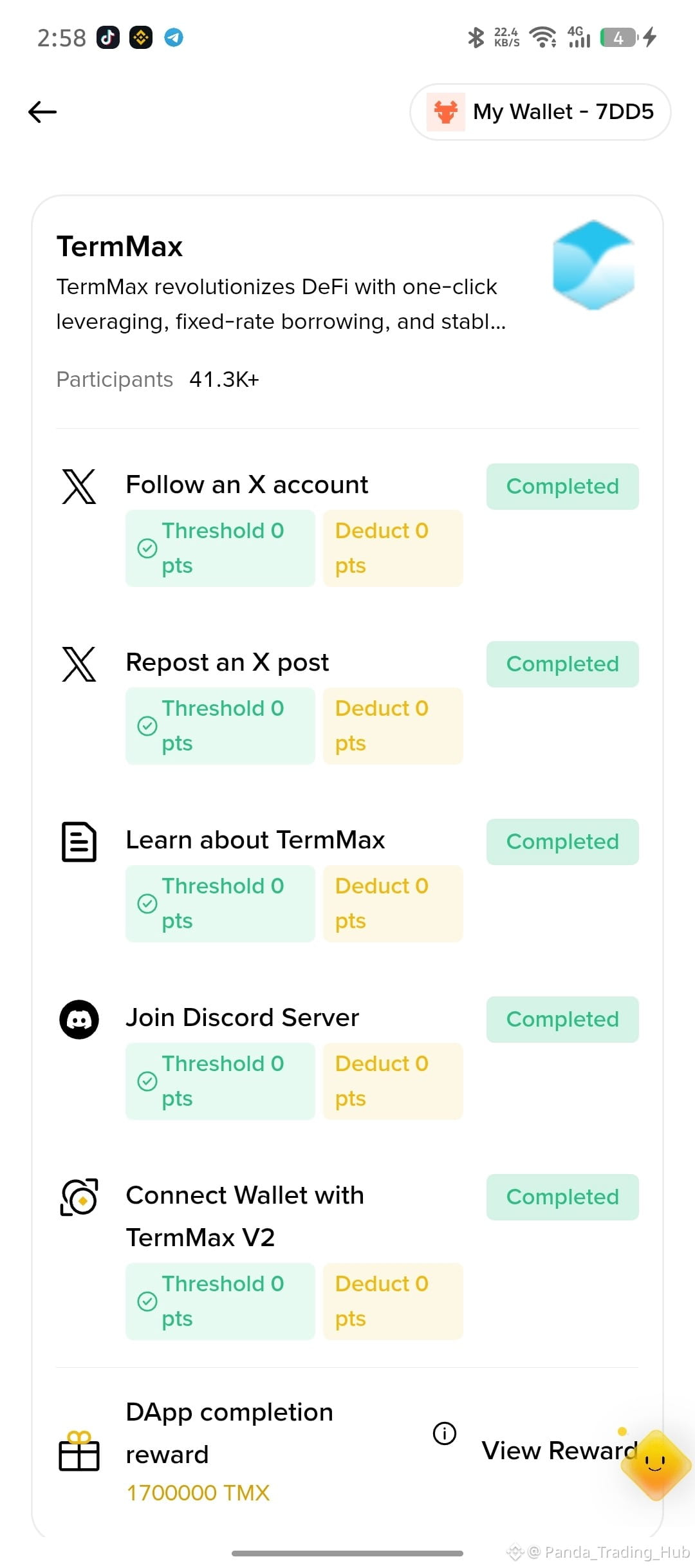
Gerenciar riscos em DeFi exige custos de empréstimo previsíveis e certeza de rendimento. O protocolo @TermMax oferece uma solução poderosa para empréstimos, empréstimos e estratégias de yield alavancado com taxa fixa por meio do seu inovador modelo de taxa de juros do AMM. Com a campanha TermMax Booster atualmente em exibição na Binance Web3 Wallet, este é o momento perfeito para explorar essas ferramentas avançadas enquanto ganha recompensas TMX. Siga o perfil oficial deles em https://www.binance.com/en/square/profile/termmax para obter atualizações importantes.
#termmax @TermMax
#DEFİ #BinanceWeb3Wallet
Gerenciar riscos em DeFi exige custos de empréstimo previsíveis e certeza de rendimento. O protocolo @TermMax oferece uma solução poderosa para empréstimos, empréstimos e estratégias de yield alavancado com taxa fixa por meio do seu inovador modelo de taxa de juros do AMM. Com a campanha TermMax Booster atualmente em exibição na Binance Web3 Wallet, este é o momento perfeito para explorar essas ferramentas avançadas enquanto ganha recompensas TMX. Siga o perfil oficial deles em https://www.binance.com/en/square/profile/termmax para obter atualizações importantes.
#DEFİ #BinanceWeb3Wallet
Gerenciar riscos em DeFi exige custos de empréstimo previsíveis e certeza de rendimento. O protocolo @TermMax oferece uma solução poderosa para empréstimos, empréstimos e estratégias de yield alavancado com taxa fixa por meio do seu inovador modelo de taxa de juros do AMM. Com a campanha TermMax Booster atualmente em exibição na Binance Web3 Wallet, este é o momento perfeito para explorar essas ferramentas avançadas enquanto ganha recompensas TMX. Siga o perfil oficial deles em https://www.binance.com/en/square/profile/termmax para obter atualizações importantes.
1
61

·
--
Não existe um lugar melhor para emprestar e tomar emprestados seus ativos do que no #TermMax
Se você quiser uma taxa fixa, uma margem fixa ou qualquer coisa fixa, @termmax é o lugar certo para você.
Você também pode participar da campanha deles em colaboração com a Binance Web3 Wallet e ter a chance de ganhar prêmios incríveis como o token nativo deles. O que mais você poderia pedir.
Siga as redes sociais quadradas deles para mais informações.
#TermMax #binanceweb3wallet
Não existe um lugar melhor para emprestar e tomar emprestados seus ativos do que no #TermMax
Se você quiser uma taxa fixa, uma margem fixa ou qualquer coisa fixa, @TermMax é o lugar certo para você.
Você também pode participar da campanha deles em colaboração com a Binance Web3 Wallet e ter a chance de ganhar prêmios incríveis como o token nativo deles. O que mais você poderia pedir.
Siga as redes sociais quadradas deles para mais informações.
#TermMax #binanceweb3wallet
Se você quiser uma taxa fixa, uma margem fixa ou qualquer coisa fixa, @TermMax é o lugar certo para você.
Você também pode participar da campanha deles em colaboração com a Binance Web3 Wallet e ter a chance de ganhar prêmios incríveis como o token nativo deles. O que mais você poderia pedir.
Siga as redes sociais quadradas deles para mais informações.
#TermMax #binanceweb3wallet
68

·
--
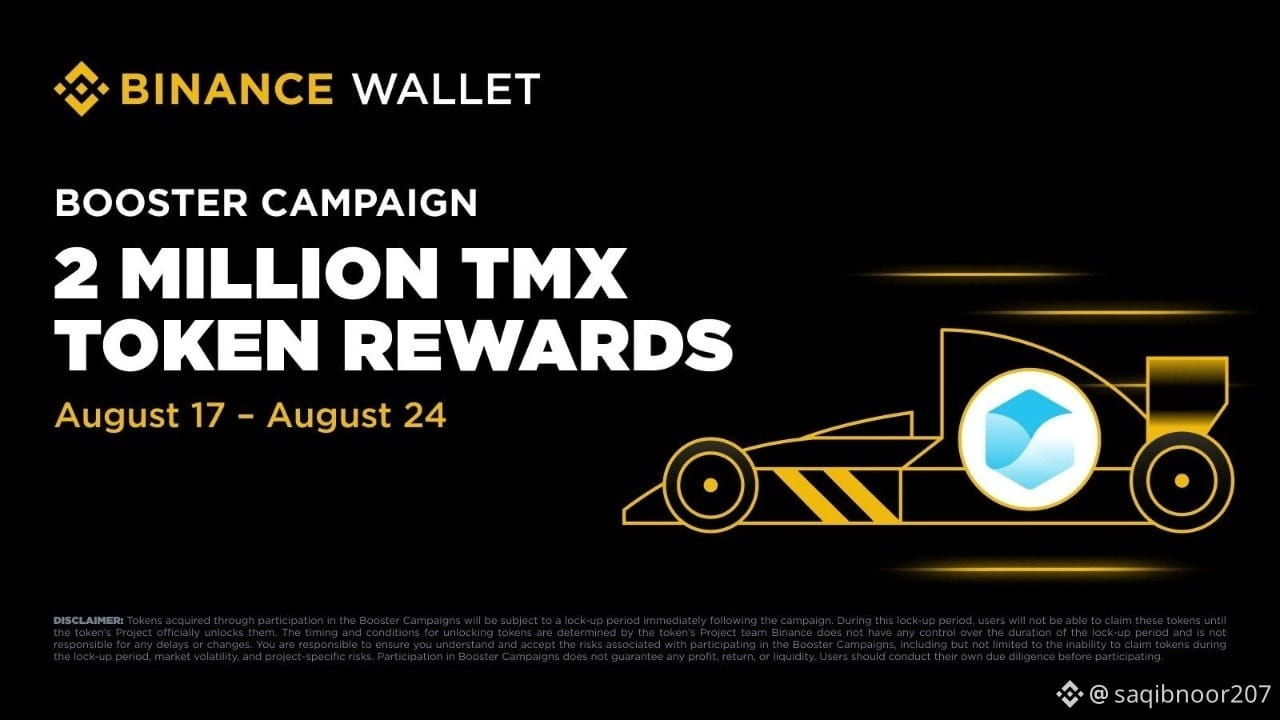
🚀 A campanha TermMax Booster está AO VIVO na Binance!
🎁 Um enorme pool de recompensas de 2.000.000 TMX está disponível!
⭐ Usuários da Binance com 2+ Pontos Alpha podem participar, com 2 Pontos Alpha descontados no momento da entrada.
⚡ Esta é uma ótima oportunidade para explorar o ecossistema do TermMax e potencialmente ganhar recompensas em TMX. FAÇA SUA PESQUISA (DYOR) e sempre entenda os termos de lock-up e os riscos antes de participar.
🔗 Participe via Binance Web3 Wallet e comece sua jornada com o TermMax!
#TermMax
#BinanceWallet
#BinanceWeb3Wallet
🚀 A campanha TermMax Booster está AO VIVO na Binance!
🎁 Um enorme pool de recompensas de 2.000.000 TMX está disponível!
⭐ Usuários da Binance com 2+ Pontos Alpha podem participar, com 2 Pontos Alpha descontados no momento da entrada.
⚡ Esta é uma ótima oportunidade para explorar o ecossistema do TermMax e potencialmente ganhar recompensas em TMX. FAÇA SUA PESQUISA (DYOR) e sempre entenda os termos de lock-up e os riscos antes de participar.
🔗 Participe via Binance Web3 Wallet e comece sua jornada com o TermMax!
#TermMax
#BinanceWallet
#BinanceWeb3Wallet
🎁 Um enorme pool de recompensas de 2.000.000 TMX está disponível!
⭐ Usuários da Binance com 2+ Pontos Alpha podem participar, com 2 Pontos Alpha descontados no momento da entrada.
⚡ Esta é uma ótima oportunidade para explorar o ecossistema do TermMax e potencialmente ganhar recompensas em TMX. FAÇA SUA PESQUISA (DYOR) e sempre entenda os termos de lock-up e os riscos antes de participar.
🔗 Participe via Binance Web3 Wallet e comece sua jornada com o TermMax!
#TermMax
#BinanceWallet
#BinanceWeb3Wallet
1
91


Artigo
A Revolução AI x Web3: Ecossistema OpenLedger Chegando na Binance WalletA convergência da Inteligência Artificial e das Redes de Infraestrutura Física Descentralizada (DePIN) não é mais um conceito futuro—é a narrativa dominante do mercado em 2026. Na vanguarda dessa mudança está a OpenLedger ( $OPEN ), a blockchain nativa de IA projetada para descentralizar a propriedade de dados e o treinamento de modelos.
Com sua integração profunda na Binance Web3 Wallet, acessar a próxima geração de inteligência de propriedade do usuário nunca foi tão tranquilo. Aqui está o motivo pelo qual o ecossistema OpenLedger é um divisor de águas estrutural para a indústria.
A Revolução AI x Web3: Ecossistema OpenLedger Chegando na Binance Wallet
A convergência da Inteligência Artificial e das Redes de Infraestrutura Física Descentralizada (DePIN) não é mais um conceito futuro—é a narrativa dominante do mercado em 2026. Na vanguarda dessa mudança está a OpenLedger ( $OPEN ), a blockchain nativa de IA projetada para descentralizar a propriedade de dados e o treinamento de modelos.
Com sua integração profunda na Binance Web3 Wallet, acessar a próxima geração de inteligência de propriedade do usuário nunca foi tão tranquilo. Aqui está o motivo pelo qual o ecossistema OpenLedger é um divisor de águas estrutural para a indústria.
Com sua integração profunda na Binance Web3 Wallet, acessar a próxima geração de inteligência de propriedade do usuário nunca foi tão tranquilo. Aqui está o motivo pelo qual o ecossistema OpenLedger é um divisor de águas estrutural para a indústria.
2
2
198

🚀 A GRVT é um dos projetos Web3 mais quentes agora!
Acabei de concluir as tarefas da campanha da GRVT no Binance Square, e o processo foi surpreendentemente fácil. 🔥
✅ Repostar um post do X
✅ Aprender sobre a GRVT
✅ Conectar a carteira
✅ Concluir tarefas do DApp
🎁 Pooled de recompensas: até 1.250.000 GRVT
👥 Milhares de usuários já estão participando, mas ainda é uma ótima oportunidade para entrar cedo.
O que eu gosto na GRVT:
Ecossistema Web3 em rápido crescimento 🌐
Tarefas simples para concluir ✅
Potenciais recompensas futuras 🎁
Ótima chance de construir sua atividade on-chain
Se você é ativo no Binance Square, não perca esta campanha. Conclua as tarefas, crie conteúdo de qualidade e mire o Leaderboard! 🏆
#grvt #Binance #AlpahaTrade #BinanceWeb3Wallet
🚀 A GRVT é um dos projetos Web3 mais quentes agora!
Acabei de concluir as tarefas da campanha da GRVT no Binance Square, e o processo foi surpreendentemente fácil. 🔥
✅ Repostar um post do X
✅ Aprender sobre a GRVT
✅ Conectar a carteira
✅ Concluir tarefas do DApp
🎁 Pooled de recompensas: até 1.250.000 GRVT
👥 Milhares de usuários já estão participando, mas ainda é uma ótima oportunidade para entrar cedo.
O que eu gosto na GRVT:
Ecossistema Web3 em rápido crescimento 🌐
Tarefas simples para concluir ✅
Potenciais recompensas futuras 🎁
Ótima chance de construir sua atividade on-chain
Se você é ativo no Binance Square, não perca esta campanha. Conclua as tarefas, crie conteúdo de qualidade e mire o Leaderboard! 🏆
#grvt #Binance #AlpahaTrade #BinanceWeb3Wallet
Acabei de concluir as tarefas da campanha da GRVT no Binance Square, e o processo foi surpreendentemente fácil. 🔥
✅ Repostar um post do X
✅ Aprender sobre a GRVT
✅ Conectar a carteira
✅ Concluir tarefas do DApp
🎁 Pooled de recompensas: até 1.250.000 GRVT
👥 Milhares de usuários já estão participando, mas ainda é uma ótima oportunidade para entrar cedo.
O que eu gosto na GRVT:
Ecossistema Web3 em rápido crescimento 🌐
Tarefas simples para concluir ✅
Potenciais recompensas futuras 🎁
Ótima chance de construir sua atividade on-chain
Se você é ativo no Binance Square, não perca esta campanha. Conclua as tarefas, crie conteúdo de qualidade e mire o Leaderboard! 🏆
#grvt #Binance #AlpahaTrade #BinanceWeb3Wallet
87

·
--
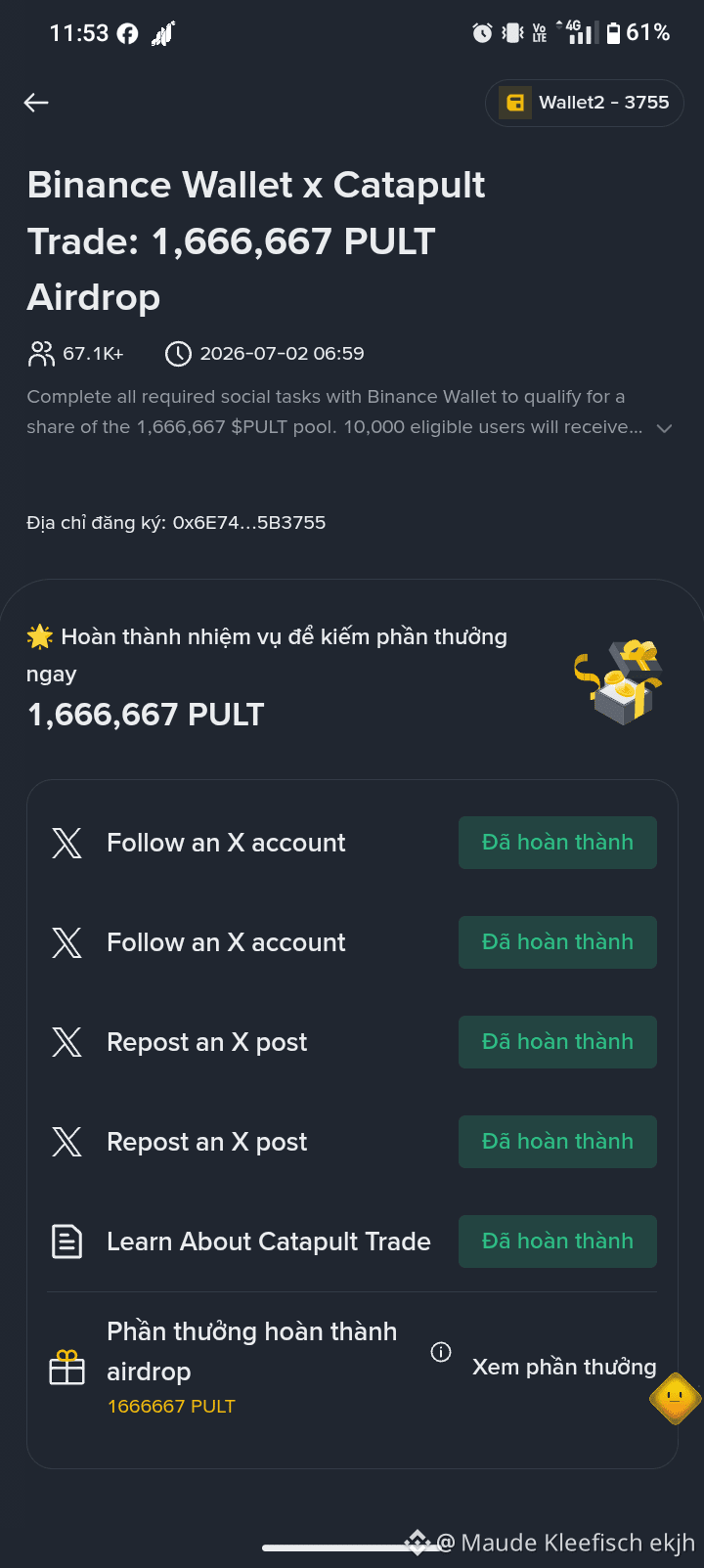
o evento acontece até o dia 2/7/2026
corra que 10k usuários vão receber um prêmio
#BinanceWeb3Wallet
corra aí pessoal, o prêmio é limitado
[links tham gia nhiệm vụ](https://www.binance.com/en/web3-campaign/airdrop/5106085852571419392) clique aqui
o evento acontece até o dia 2/7/2026
corra que 10k usuários vão receber um prêmio
#BinanceWeb3Wallet
corra aí pessoal, o prêmio é limitado
links tham gia nhiệm vụ clique aqui
corra que 10k usuários vão receber um prêmio
#BinanceWeb3Wallet
corra aí pessoal, o prêmio é limitado
links tham gia nhiệm vụ clique aqui
PULTETF0,00%
3
1
117

⚡ GRVT x Web3 Wallet: A Evolução do Trading Descentralizado
O trading deve ser rápido, privado e inteiramente sob seu controle.#grvt #Binance @Binance_Labs
Veja como @grvt_io está redefinindo o ecossistema de ativos digitais em parceria com carteiras Web3 seguras:
🛡️ Privacidade Validada por ZK: Experimente a execução rápida de ordens off-chain que protege completamente sua atividade financeira de front-running e rastreamento.@grvt_io
📈 Liquidez de Nível Profissional: Obtenha a velocidade de uma exchange centralizada combinada com liquidação on-chain segura—maximizando a eficiência sem abrir mão das suas chaves.@grvt_io
🔌 Acesso Plug-and-Play: Conecte sua carteira Web3 para uma experiência de onboarding imediata e sem gás, priorizando a segurança do usuário e a simplicidade. @grvt_io
🏆 Recompensas de 1,5M de Tokens à Espera: Entre no app da sua carteira Web3 para acessar a iniciativa GRVT Booster em andamento e reivindicar sua parte do enorme prêmio antes do listing!@grvt_io
👉 #GRVT #BinanceWeb3Wallet
⚡ GRVT x Web3 Wallet: A Evolução do Trading Descentralizado
O trading deve ser rápido, privado e inteiramente sob seu controle.#grvt #Binance @Binance Labs
Veja como @grvt_io está redefinindo o ecossistema de ativos digitais em parceria com carteiras Web3 seguras:
🛡️ Privacidade Validada por ZK: Experimente a execução rápida de ordens off-chain que protege completamente sua atividade financeira de front-running e rastreamento.@grvt_io
📈 Liquidez de Nível Profissional: Obtenha a velocidade de uma exchange centralizada combinada com liquidação on-chain segura—maximizando a eficiência sem abrir mão das suas chaves.@grvt_io
🔌 Acesso Plug-and-Play: Conecte sua carteira Web3 para uma experiência de onboarding imediata e sem gás, priorizando a segurança do usuário e a simplicidade. @grvt_io
🏆 Recompensas de 1,5M de Tokens à Espera: Entre no app da sua carteira Web3 para acessar a iniciativa GRVT Booster em andamento e reivindicar sua parte do enorme prêmio antes do listing!@grvt_io
👉 #GRVT #BinanceWeb3Wallet
O trading deve ser rápido, privado e inteiramente sob seu controle.#grvt #Binance @Binance Labs
Veja como @grvt_io está redefinindo o ecossistema de ativos digitais em parceria com carteiras Web3 seguras:
🛡️ Privacidade Validada por ZK: Experimente a execução rápida de ordens off-chain que protege completamente sua atividade financeira de front-running e rastreamento.@grvt_io
📈 Liquidez de Nível Profissional: Obtenha a velocidade de uma exchange centralizada combinada com liquidação on-chain segura—maximizando a eficiência sem abrir mão das suas chaves.@grvt_io
🔌 Acesso Plug-and-Play: Conecte sua carteira Web3 para uma experiência de onboarding imediata e sem gás, priorizando a segurança do usuário e a simplicidade. @grvt_io
🏆 Recompensas de 1,5M de Tokens à Espera: Entre no app da sua carteira Web3 para acessar a iniciativa GRVT Booster em andamento e reivindicar sua parte do enorme prêmio antes do listing!@grvt_io
👉 #GRVT #BinanceWeb3Wallet
108

@termmax O próximo Evento de Geração de Tokens do $TMX (TGE) em 25 de agosto está se aproximando rapidamente, e chegou a hora de mergulhar na tokenomics e na utilidade do protocolo!
Se você tem participado do Binance Web3 Wallet Booster, sabe que a empolgação é real, mas o que realmente impulsiona o valor de longo prazo do ecossistema TermMax?
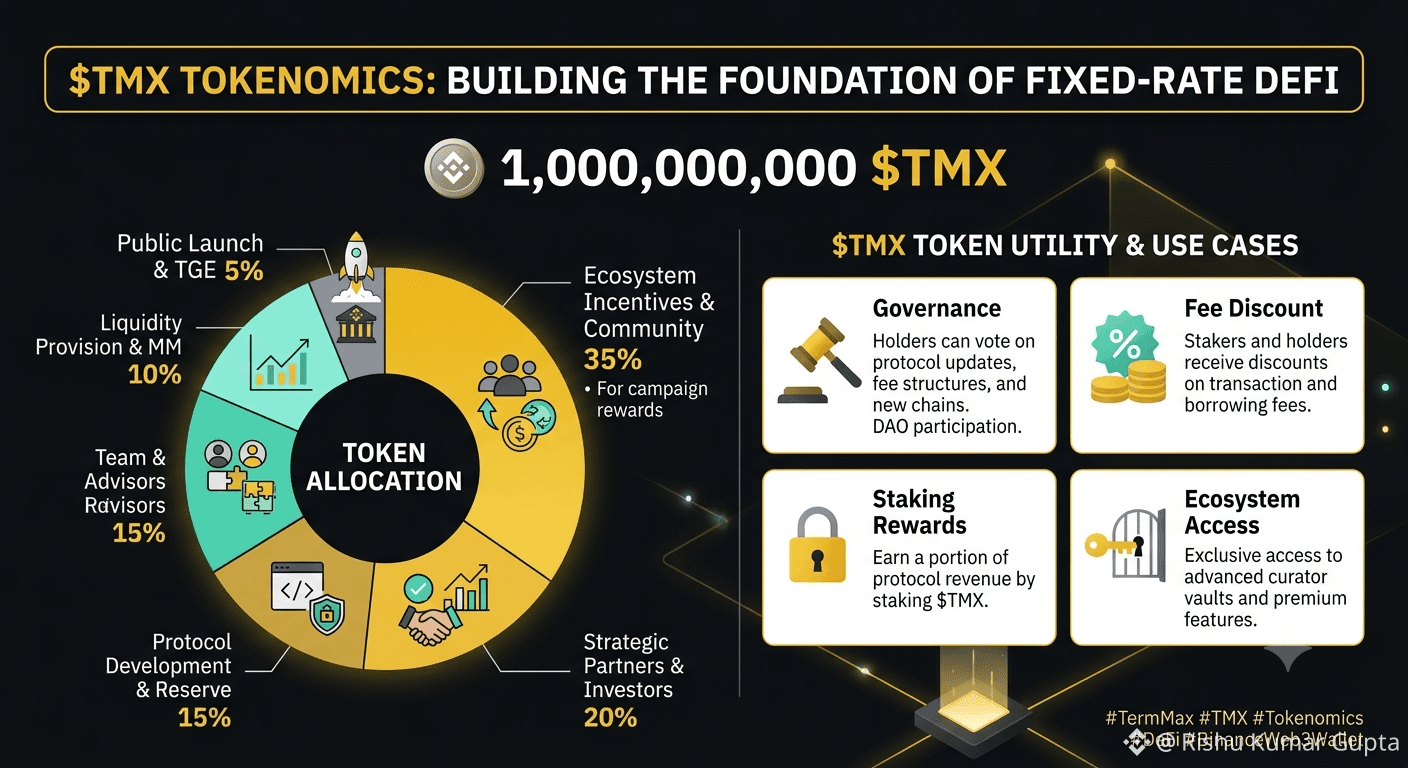
O token $TMX funciona como a espinha dorsal tanto para a governança quanto para a utilidade do ecossistema em todo o protocolo. Em vez de ser apenas uma recompensa do tipo farm-and-dump, ele foi projetado para conectar os usuários diretamente ao amplo ecossistema descentralizado de empréstimos com taxa fixa. Com uma oferta total limitada a 1 bilhão de tokens, a distribuição e os cronogramas de desbloqueio serão variáveis críticas para observar após o lançamento, a fim de avaliar o crescimento sustentável.
No entanto, tokenomics só importam se as pessoas estiverem realmente usando o produto subjacente. As métricas fundamentais por trás deste lançamento são extremamente fortes. A TermMax não é apenas um conceito teórico; é um AMM de empréstimos totalmente funcional, atualmente operando em 10 cadeias EVM.
Eles estão entrando no TGE com um ritmo sério:
* Mais de US$ 90M em Total Value Locked (TVL)
* 1,5 milhão+ de carteiras registradas
* Mais de 90.000 Usuários Ativos Diários
Estamos observando uma grande mudança em direção a rendimentos DeFi previsíveis — permitindo que os usuários garantam termos claros de empréstimo e captação em vez de lutar contra curvas voláteis de APY. O teste real para o $TMX será o desempenho do protocolo ao reter seu TVL e converter esses primeiros adeptos incentivados em provedores de liquidez de longo prazo após o lançamento do token.
O $TMX vai definir o novo padrão para eficiência de capital em DeFi? Certifique-se de DYOR sobre os cronogramas de vesting, mas não há dúvidas de que este é, sem exagero, um dos maiores eventos de Web3 de agosto!
#TermMax #TMX #Tokenomics #DeFi #BinanceWeb3Wallet
@TermMax O próximo Evento de Geração de Tokens do $TMX (TGE) em 25 de agosto está se aproximando rapidamente, e chegou a hora de mergulhar na tokenomics e na utilidade do protocolo!
Se você tem participado do Binance Web3 Wallet Booster, sabe que a empolgação é real, mas o que realmente impulsiona o valor de longo prazo do ecossistema TermMax?
O token $TMX funciona como a espinha dorsal tanto para a governança quanto para a utilidade do ecossistema em todo o protocolo. Em vez de ser apenas uma recompensa do tipo farm-and-dump, ele foi projetado para conectar os usuários diretamente ao amplo ecossistema descentralizado de empréstimos com taxa fixa. Com uma oferta total limitada a 1 bilhão de tokens, a distribuição e os cronogramas de desbloqueio serão variáveis críticas para observar após o lançamento, a fim de avaliar o crescimento sustentável.
No entanto, tokenomics só importam se as pessoas estiverem realmente usando o produto subjacente. As métricas fundamentais por trás deste lançamento são extremamente fortes. A TermMax não é apenas um conceito teórico; é um AMM de empréstimos totalmente funcional, atualmente operando em 10 cadeias EVM.
Eles estão entrando no TGE com um ritmo sério:
* Mais de US$ 90M em Total Value Locked (TVL)
* 1,5 milhão+ de carteiras registradas
* Mais de 90.000 Usuários Ativos Diários
Estamos observando uma grande mudança em direção a rendimentos DeFi previsíveis — permitindo que os usuários garantam termos claros de empréstimo e captação em vez de lutar contra curvas voláteis de APY. O teste real para o $TMX será o desempenho do protocolo ao reter seu TVL e converter esses primeiros adeptos incentivados em provedores de liquidez de longo prazo após o lançamento do token.
O $TMX vai definir o novo padrão para eficiência de capital em DeFi? Certifique-se de DYOR sobre os cronogramas de vesting, mas não há dúvidas de que este é, sem exagero, um dos maiores eventos de Web3 de agosto!
#TermMax #TMX #Tokenomics #DeFi #BinanceWeb3Wallet
Se você tem participado do Binance Web3 Wallet Booster, sabe que a empolgação é real, mas o que realmente impulsiona o valor de longo prazo do ecossistema TermMax?
O token $TMX funciona como a espinha dorsal tanto para a governança quanto para a utilidade do ecossistema em todo o protocolo. Em vez de ser apenas uma recompensa do tipo farm-and-dump, ele foi projetado para conectar os usuários diretamente ao amplo ecossistema descentralizado de empréstimos com taxa fixa. Com uma oferta total limitada a 1 bilhão de tokens, a distribuição e os cronogramas de desbloqueio serão variáveis críticas para observar após o lançamento, a fim de avaliar o crescimento sustentável.
No entanto, tokenomics só importam se as pessoas estiverem realmente usando o produto subjacente. As métricas fundamentais por trás deste lançamento são extremamente fortes. A TermMax não é apenas um conceito teórico; é um AMM de empréstimos totalmente funcional, atualmente operando em 10 cadeias EVM.
Eles estão entrando no TGE com um ritmo sério:
* Mais de US$ 90M em Total Value Locked (TVL)
* 1,5 milhão+ de carteiras registradas
* Mais de 90.000 Usuários Ativos Diários
Estamos observando uma grande mudança em direção a rendimentos DeFi previsíveis — permitindo que os usuários garantam termos claros de empréstimo e captação em vez de lutar contra curvas voláteis de APY. O teste real para o $TMX será o desempenho do protocolo ao reter seu TVL e converter esses primeiros adeptos incentivados em provedores de liquidez de longo prazo após o lançamento do token.
O $TMX vai definir o novo padrão para eficiência de capital em DeFi? Certifique-se de DYOR sobre os cronogramas de vesting, mas não há dúvidas de que este é, sem exagero, um dos maiores eventos de Web3 de agosto!
#TermMax #TMX #Tokenomics #DeFi #BinanceWeb3Wallet
1
99

·
--
#genius $GENIUS
{spot}(GENIUSUSDT)
🔥 Desbloqueando Trading Inteligente com o Genius Terminal ($GENIUS) 🔥
Procurando uma vantagem no mercado? O token $GENIUS é a utilidade central que impulsiona o ecossistema do Genius Terminal. Não é apenas um token; é a chave para uma infraestrutura de trading avançada:
⚡ Ferramentas Premium: Desbloqueie recursos analíticos e de trading de nova geração.
🔐 Ordens Fantasmas: Execute grandes negociações de forma discreta sem afetar o mercado.
💰 Renda Passiva: Coloque seus tokens para trabalhar através de recompensas de staking.
Você já está segurando $GENIUS na sua wallet Web3? Deixe suas opiniões abaixo! 👇
#GeniusTerminal #CryptoTrading #BinanceWeb3Wallet
#genius $GENIUS
🔥 Desbloqueando Trading Inteligente com o Genius Terminal ($GENIUS ) 🔥
Procurando uma vantagem no mercado? O token $GENIUS é a utilidade central que impulsiona o ecossistema do Genius Terminal. Não é apenas um token; é a chave para uma infraestrutura de trading avançada:
⚡ Ferramentas Premium: Desbloqueie recursos analíticos e de trading de nova geração.
🔐 Ordens Fantasmas: Execute grandes negociações de forma discreta sem afetar o mercado.
💰 Renda Passiva: Coloque seus tokens para trabalhar através de recompensas de staking.
Você já está segurando $GENIUS na sua wallet Web3? Deixe suas opiniões abaixo! 👇
#GeniusTerminal #CryptoTrading #BinanceWeb3Wallet
🔥 Desbloqueando Trading Inteligente com o Genius Terminal ($GENIUS ) 🔥
Procurando uma vantagem no mercado? O token $GENIUS é a utilidade central que impulsiona o ecossistema do Genius Terminal. Não é apenas um token; é a chave para uma infraestrutura de trading avançada:
⚡ Ferramentas Premium: Desbloqueie recursos analíticos e de trading de nova geração.
🔐 Ordens Fantasmas: Execute grandes negociações de forma discreta sem afetar o mercado.
💰 Renda Passiva: Coloque seus tokens para trabalhar através de recompensas de staking.
Você já está segurando $GENIUS na sua wallet Web3? Deixe suas opiniões abaixo! 👇
#GeniusTerminal #CryptoTrading #BinanceWeb3Wallet
143

·
--
🎯 Os Mercados de Previsão On-Chain estão Revolucionando os Dias de Jogo
Os dias de jogo estão impulsionando recordes de carteiras ativas diárias em protocolos de previsão na Web3! 🧠
Graças a redes rápidas e de baixas taxas como Solana e BNB Chain, os fãs de futebol estão pulando as casas de apostas tradicionais em favor de mercados de previsão descentralizados, com pagamentos automatizados via contratos inteligentes. Sem intermediários, 100% de transparência. Como você está apoiando o desempenho do seu time neste fim de semana? ⚽💡
$BNB $SOL
#PredictToEarn #BinanceWeb3Wallet #Solana #BNBChain
🎯 Os Mercados de Previsão On-Chain estão Revolucionando os Dias de Jogo
Os dias de jogo estão impulsionando recordes de carteiras ativas diárias em protocolos de previsão na Web3! 🧠
Graças a redes rápidas e de baixas taxas como Solana e BNB Chain, os fãs de futebol estão pulando as casas de apostas tradicionais em favor de mercados de previsão descentralizados, com pagamentos automatizados via contratos inteligentes. Sem intermediários, 100% de transparência. Como você está apoiando o desempenho do seu time neste fim de semana? ⚽💡
$BNB $SOL
#PredictToEarn #BinanceWeb3Wallet #Solana #BNBChain
Os dias de jogo estão impulsionando recordes de carteiras ativas diárias em protocolos de previsão na Web3! 🧠
Graças a redes rápidas e de baixas taxas como Solana e BNB Chain, os fãs de futebol estão pulando as casas de apostas tradicionais em favor de mercados de previsão descentralizados, com pagamentos automatizados via contratos inteligentes. Sem intermediários, 100% de transparência. Como você está apoiando o desempenho do seu time neste fim de semana? ⚽💡
$BNB $SOL
#PredictToEarn #BinanceWeb3Wallet #Solana #BNBChain
82

·
--
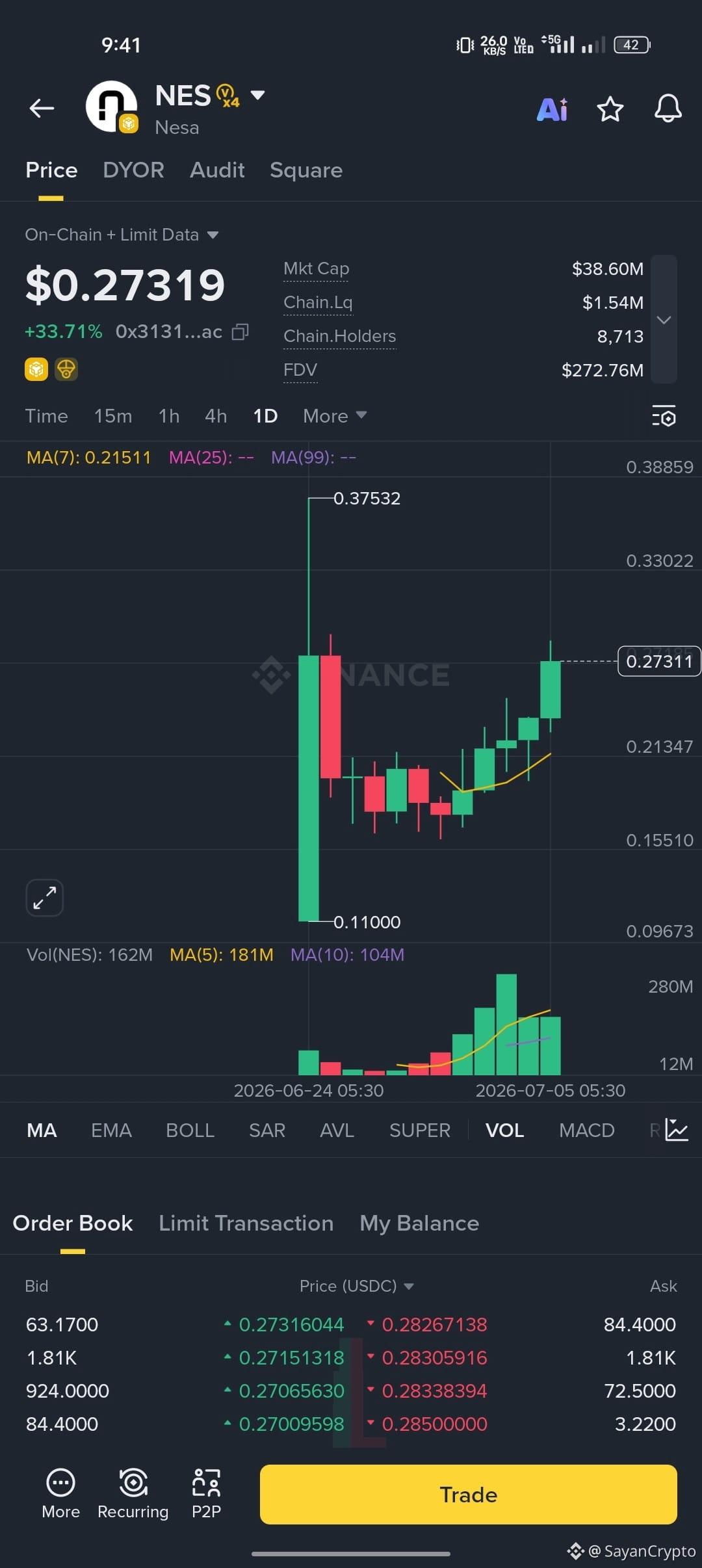
🚨 $NES Alerta de Acumulação: Acumulação Massiva de Base Antes do Próximo Grande Rompimento? 📈🔋
Enquanto a multidão de varejo está ocupada perseguindo moedas que já dispararam e estão em níveis sobrecomprados, o dinheiro inteligente está procurando joias escondidas fazendo algo muito mais interessante: construindo uma base macro sólida e silenciosa.
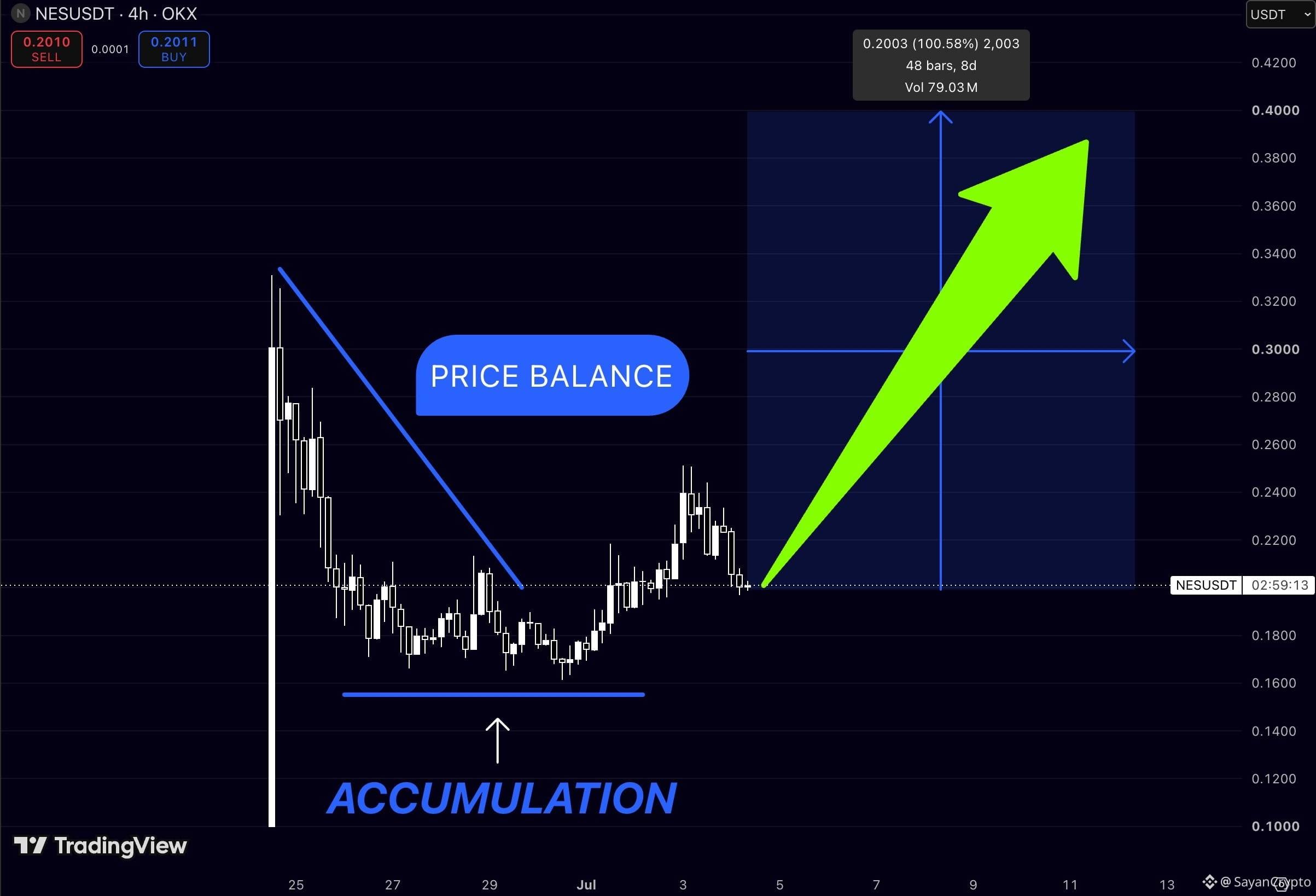
📐 A Zona de Acumulação: Depois de uma correção padrão, ela não só construiu uma base por horas — ela tem consolidado e absorvido pressão de venda há dias. Essa acumulação prolongada criou uma faixa de Equilíbrio de Preço bem definida no gráfico do TradingView.
⚡ Faixas Comprimidas Não Duram Para Sempre: No trading técnico, um equilíbrio de preço apertado dentro de uma zona de acumulação geralmente funciona como uma mola comprimida. Eventualmente, um dos lados assume o controle, e o rompimento dessas faixas de vários dias tende a ser agressivo e vertical.
💼 Sinergia Forte com as Carteiras Binance: Além da estrutura limpa do gráfico, o ecossistema da Nesa está expandindo sua presença diretamente por meio de colaborações oficiais, incluindo a gigantesca campanha Nesa × Binance Wallet Booster! Isso está trazendo uma atividade on-chain massiva e novos olhos para o token.
O Ponto Final:
Seguir velas verdes é altamente arriscado, mas comprar perto do suporte na parte inferior de uma faixa clara de acumulação de vários dias oferece uma configuração excelente de risco-recompensa. $NES definitivamente é uma estrutura que vale a pena manter em seu radar agora.
Qual é a sua estratégia para $NES? 🎯
Você está identificando essa acumulação e adicionando à sua lista de observação, ou está esperando uma confirmação de rompimento limpa acima da faixa de equilíbrio de preço? Vamos discutir nos comentários abaixo! 👇
$NES #BinanceSquare #Nesa #AnáliseTécnica #chartpatterns #ZonaDeAcumulação #cryptotrading #BinanceWeb3Wallet
🚨 $NES Alerta de Acumulação: Acumulação Massiva de Base Antes do Próximo Grande Rompimento? 📈🔋
Enquanto a multidão de varejo está ocupada perseguindo moedas que já dispararam e estão em níveis sobrecomprados, o dinheiro inteligente está procurando joias escondidas fazendo algo muito mais interessante: construindo uma base macro sólida e silenciosa.
📐 A Zona de Acumulação: Depois de uma correção padrão, ela não só construiu uma base por horas — ela tem consolidado e absorvido pressão de venda há dias. Essa acumulação prolongada criou uma faixa de Equilíbrio de Preço bem definida no gráfico do TradingView.
⚡ Faixas Comprimidas Não Duram Para Sempre: No trading técnico, um equilíbrio de preço apertado dentro de uma zona de acumulação geralmente funciona como uma mola comprimida. Eventualmente, um dos lados assume o controle, e o rompimento dessas faixas de vários dias tende a ser agressivo e vertical.
💼 Sinergia Forte com as Carteiras Binance: Além da estrutura limpa do gráfico, o ecossistema da Nesa está expandindo sua presença diretamente por meio de colaborações oficiais, incluindo a gigantesca campanha Nesa × Binance Wallet Booster! Isso está trazendo uma atividade on-chain massiva e novos olhos para o token.
O Ponto Final:
Seguir velas verdes é altamente arriscado, mas comprar perto do suporte na parte inferior de uma faixa clara de acumulação de vários dias oferece uma configuração excelente de risco-recompensa. $NES definitivamente é uma estrutura que vale a pena manter em seu radar agora.
Qual é a sua estratégia para $NES ? 🎯
Você está identificando essa acumulação e adicionando à sua lista de observação, ou está esperando uma confirmação de rompimento limpa acima da faixa de equilíbrio de preço? Vamos discutir nos comentários abaixo! 👇
$NES #BinanceSquare #Nesa #AnáliseTécnica #chartpatterns #ZonaDeAcumulação #cryptotrading #BinanceWeb3Wallet
Enquanto a multidão de varejo está ocupada perseguindo moedas que já dispararam e estão em níveis sobrecomprados, o dinheiro inteligente está procurando joias escondidas fazendo algo muito mais interessante: construindo uma base macro sólida e silenciosa.
📐 A Zona de Acumulação: Depois de uma correção padrão, ela não só construiu uma base por horas — ela tem consolidado e absorvido pressão de venda há dias. Essa acumulação prolongada criou uma faixa de Equilíbrio de Preço bem definida no gráfico do TradingView.
⚡ Faixas Comprimidas Não Duram Para Sempre: No trading técnico, um equilíbrio de preço apertado dentro de uma zona de acumulação geralmente funciona como uma mola comprimida. Eventualmente, um dos lados assume o controle, e o rompimento dessas faixas de vários dias tende a ser agressivo e vertical.
💼 Sinergia Forte com as Carteiras Binance: Além da estrutura limpa do gráfico, o ecossistema da Nesa está expandindo sua presença diretamente por meio de colaborações oficiais, incluindo a gigantesca campanha Nesa × Binance Wallet Booster! Isso está trazendo uma atividade on-chain massiva e novos olhos para o token.
O Ponto Final:
Seguir velas verdes é altamente arriscado, mas comprar perto do suporte na parte inferior de uma faixa clara de acumulação de vários dias oferece uma configuração excelente de risco-recompensa. $NES definitivamente é uma estrutura que vale a pena manter em seu radar agora.
Qual é a sua estratégia para $NES ? 🎯
Você está identificando essa acumulação e adicionando à sua lista de observação, ou está esperando uma confirmação de rompimento limpa acima da faixa de equilíbrio de preço? Vamos discutir nos comentários abaixo! 👇
$NES #BinanceSquare #Nesa #AnáliseTécnica #chartpatterns #ZonaDeAcumulação #cryptotrading #BinanceWeb3Wallet
202
Inicia sessão para explorar mais conteúdos
Junta-te a utilizadores de criptomoedas de todo o mundo na Binance Square
⚡️ Obtém informações úteis e recentes sobre criptomoedas.
💬 Com a confiança da maior exchange de criptomoedas do mundo.
👍 Descobre perspetivas reais de criadores verificados.
E-mail/Número de telefone
Tópicos em Tendência
1
#FedRateWatch
1.4M visualizações
6,545 a discutir
2
#ZcashRises6%
41,039 visualizações
571 a discutir
3
#XRPSinks10%
27,691 visualizações
377 a discutir
4
#BitcoinETFsShed$450M
4,658 visualizações
76 a discutir
5
#CircleOpensArcMainnet
13,288 visualizações
258 a discutir
6
#ZcashHoldersBackNU7Upgrade
24,163 visualizações
427 a discutir
7
#MSTRTradingVolumeSurpassesMorganStanley
23,996 visualizações
580 a discutir
8
#BitcoinFalls4%
49,382 visualizações
896 a discutir
9
#SKHynixInTalksToMakeMemoryChipsInUS
20,084 visualizações
358 a discutir
10
#OpenAIDiscussesNewFundingAt$1.2TValuation
4,871 visualizações
57 a discutir