

Sulaiman 零号猎人
2.5k ပို့စ်များ

Sulaiman 零号猎人
တိုင်ကြားမည်
သုံးစွဲသူကို ဘလော့မည်
ZeroHunter | Hunting 10X potential in micro-caps & RWA with on-chain research. I show how I check a project's data before I trust it. NFA. #ZeroResearch
Open Trade
Frequent Trader
6.2 Years
144 ဖော်လိုလုပ်ထားသည်
1.0K+ ဖော်လိုလုပ်သူများ
2.3K+ လိုက်ခ်လုပ်ထားသည်
ပို့စ်များ
ပိုင်ဆိုင်မှုစာရင်း
အားလုံး
Quotes
တိုက်ရိုက်ထုတ်လွှင့်ခြင်း
ပုံသေထားသည်
🖤 GOT A CRYPTO QUESTION?
Don’t overthink it.
Got a coin you want researched?
Need help understanding a project?
Setting up a new crypto account?
Confused about a chart, narrative or market move?
Ask it here. 👇
🔎 Small research requests
📚 Free educational help
🧠 Quick explanations
⚡ Market observations
🆕 New-user guidance
💬 Community discussion
I may not answer every question,
but if it’s useful to the community, I’ll try to help.
Small questions. Free help.
Real research. No gatekeeping.
And who knows—
your question might help 100 others too. 🤝
— Zero Hunter 🖤
[Zero Hunter Chat Group](https://www.binance.com/groupList?chatId=v1.00.QzJDSWRDcnlwdEZpeGRJVg8wX5x0VtCh1LkEL32sswE&source=squareProfile)
#ZeroHunter #CryptoResearch #cryptoeducation #Web3Community #CryptoCommunity
🖤 GOT A CRYPTO QUESTION?
Don’t overthink it.
Got a coin you want researched?
Need help understanding a project?
Setting up a new crypto account?
Confused about a chart, narrative or market move?
Ask it here. 👇
🔎 Small research requests
📚 Free educational help
🧠 Quick explanations
⚡ Market observations
🆕 New-user guidance
💬 Community discussion
I may not answer every question,
but if it’s useful to the community, I’ll try to help.
Small questions. Free help.
Real research. No gatekeeping.
And who knows—
your question might help 100 others too. 🤝
— Zero Hunter 🖤
Zero Hunter Chat Group
#ZeroHunter #CryptoResearch #cryptoeducation #Web3Community #CryptoCommunity
Don’t overthink it.
Got a coin you want researched?
Need help understanding a project?
Setting up a new crypto account?
Confused about a chart, narrative or market move?
Ask it here. 👇
🔎 Small research requests
📚 Free educational help
🧠 Quick explanations
⚡ Market observations
🆕 New-user guidance
💬 Community discussion
I may not answer every question,
but if it’s useful to the community, I’ll try to help.
Small questions. Free help.
Real research. No gatekeeping.
And who knows—
your question might help 100 others too. 🤝
— Zero Hunter 🖤
Zero Hunter Chat Group
#ZeroHunter #CryptoResearch #cryptoeducation #Web3Community #CryptoCommunity

1
35
ပုံသေထားသည်
🎁 Red Packet Quiz Time! 🧠
Think you know Crypto? 👀
Answer the quiz correctly and you could win a Red Packet! 🧧
👉 Follow me & stay connected for more quizzes and rewards.
Good luck, Crypto Family! 🚀
🎁 Red Packet Quiz Time! 🧠
Think you know Crypto? 👀
Answer the quiz correctly and you could win a Red Packet! 🧧
👉 Follow me & stay connected for more quizzes and rewards.
Good luck, Crypto Family! 🚀
Think you know Crypto? 👀
Answer the quiz correctly and you could win a Red Packet! 🧧
👉 Follow me & stay connected for more quizzes and rewards.
Good luck, Crypto Family! 🚀
11
1
1
68
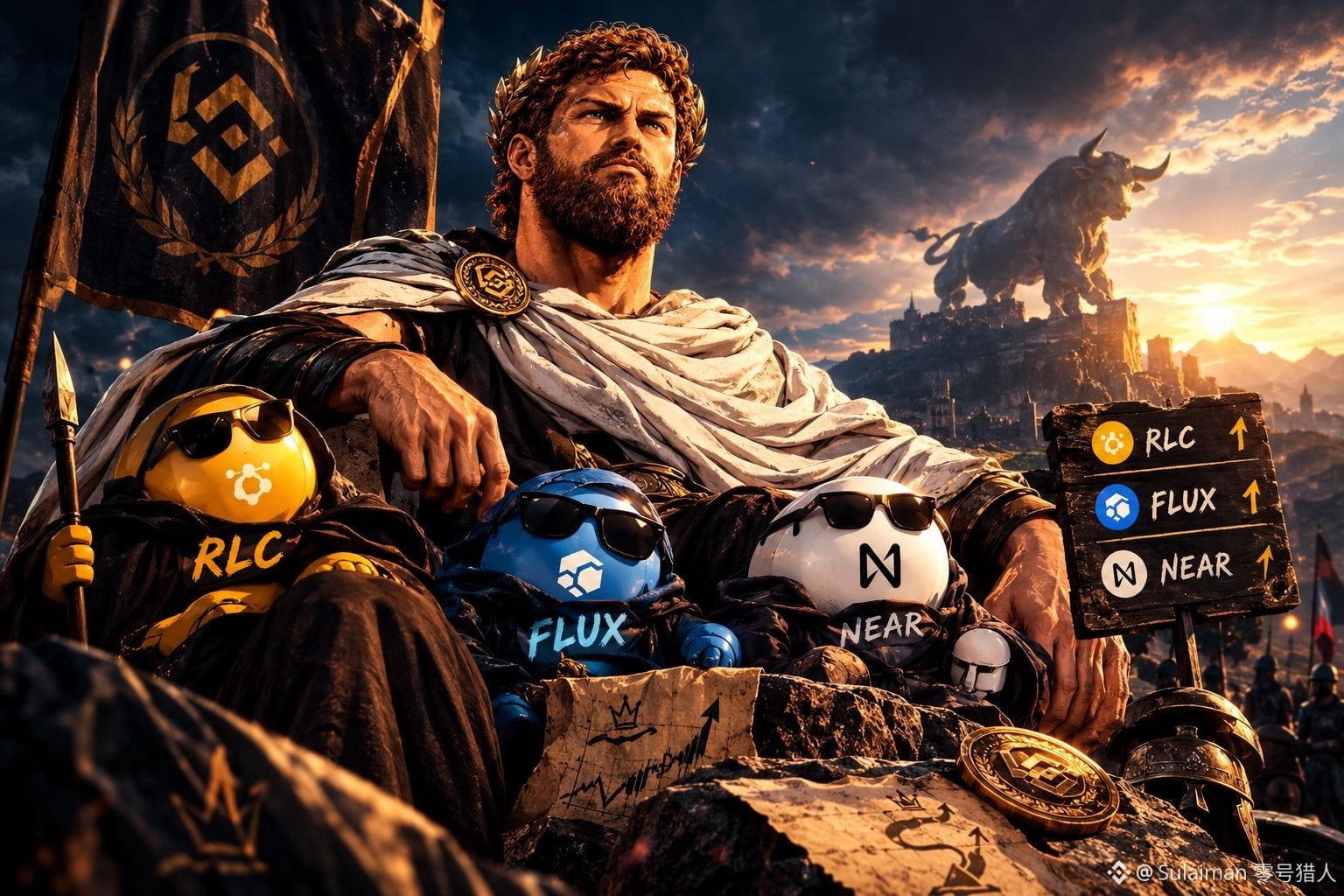
🔥 I’M NOT SELLING THESE 3 YET.
This bull market-এ I’m expecting another big AI rotation 👀
$RLC → $1 → $3 → $5 🚀
$FLUX → $0.15 → $0.30 → $0.50 ⚡
$NEAR → $8 → $12 → $20 🔥
These are my bull-market targets, not guarantees.
I’m holding. I’m NOT selling before these levels.
I want to see how far these 3 can really go. 😏
And if you’re holding RLC, FLUX or NEAR with me,
don’t stay silent. Which one are you holding? 👇
Let’s see how many of us are still holding together.
🔥 I’M NOT SELLING THESE 3 YET.
This bull market-এ I’m expecting another big AI rotation 👀
$RLC → $1 → $3 → $5 🚀
$FLUX → $0.15 → $0.30 → $0.50 ⚡
$NEAR → $8 → $12 → $20 🔥
These are my bull-market targets, not guarantees.
I’m holding. I’m NOT selling before these levels.
I want to see how far these 3 can really go. 😏
And if you’re holding RLC, FLUX or NEAR with me,
don’t stay silent. Which one are you holding? 👇
Let’s see how many of us are still holding together.
This bull market-এ I’m expecting another big AI rotation 👀
$RLC → $1 → $3 → $5 🚀
$FLUX → $0.15 → $0.30 → $0.50 ⚡
$NEAR → $8 → $12 → $20 🔥
These are my bull-market targets, not guarantees.
I’m holding. I’m NOT selling before these levels.
I want to see how far these 3 can really go. 😏
And if you’re holding RLC, FLUX or NEAR with me,
don’t stay silent. Which one are you holding? 👇
Let’s see how many of us are still holding together.
1
249
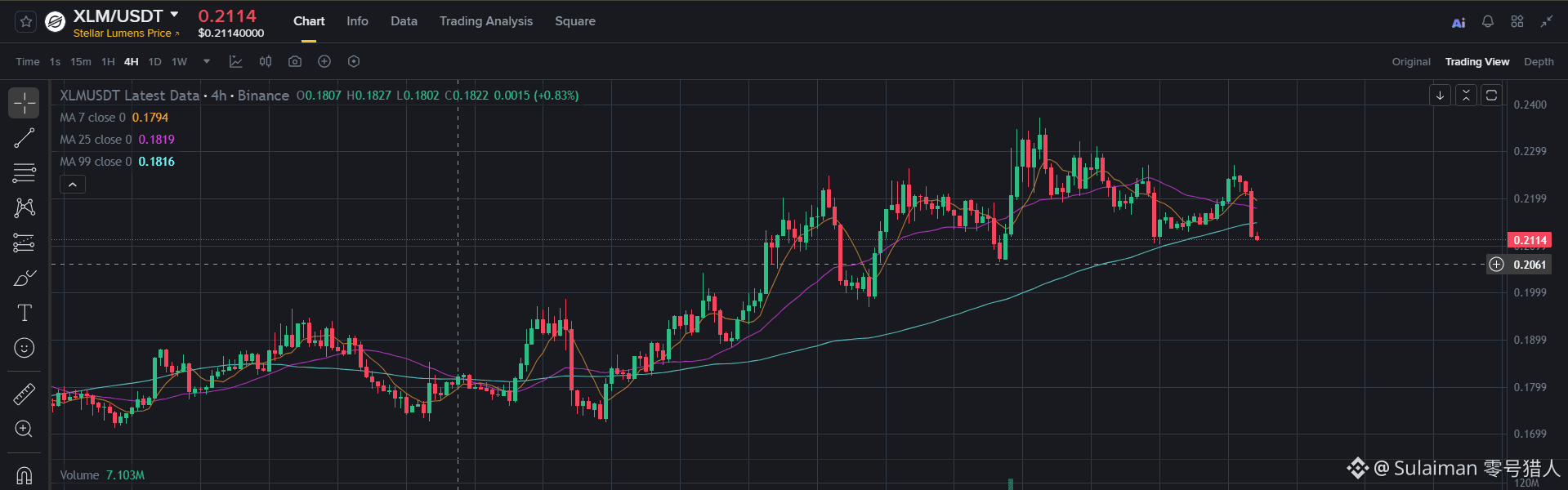
If you hold $XLM , you probably checked the chart more than once today.
37% in a day. Stellar. RWA.
That's not just a pump. That's the story you've been waiting for.
And the first thought is obvious: "Finally. This is the one."
I had it too.
Then a quieter question showed up:
When a tokenized treasury lives on Stellar, who actually gets paid?
Not XLM, at least not directly. The value sits in the treasuries and stablecoins. XLM is just the road they travel on.
And the fee burn is tiny, so more traffic doesn't do much for holders today.
That's the part that gets mixed up:
Stellar's RWA activity is growing.
XLM holders benefit from it.
The first can be true without the second.
Then there's the exchange data. XLM moving to exchanges is up about 160%.
That's not proof of selling. But it's not the confirmation I'd want right after a 37% move either.
So I'm not calling XLM broken.
I'm asking something simpler: did something get repriced, or did one big candle just find a very good story?
What would change my mind:
RWA growth that lasts longer than a day.
Real, sustained demand for XLM.
Fee mechanics that connect Stellar activity to the token.
Until then, it's a candle I'm watching, not a thesis I'm buying.
#XLM #RWA #Stellar #ZeroHunter #ZeroResearch
$RLC
{spot}(RLCUSDT)
If you hold $XLM , you probably checked the chart more than once today.
37% in a day. Stellar. RWA.
That's not just a pump. That's the story you've been waiting for.
And the first thought is obvious: "Finally. This is the one."
I had it too.
Then a quieter question showed up:
When a tokenized treasury lives on Stellar, who actually gets paid?
Not XLM, at least not directly. The value sits in the treasuries and stablecoins. XLM is just the road they travel on.
And the fee burn is tiny, so more traffic doesn't do much for holders today.
That's the part that gets mixed up:
Stellar's RWA activity is growing.
XLM holders benefit from it.
The first can be true without the second.
Then there's the exchange data. XLM moving to exchanges is up about 160%.
That's not proof of selling. But it's not the confirmation I'd want right after a 37% move either.
So I'm not calling XLM broken.
I'm asking something simpler: did something get repriced, or did one big candle just find a very good story?
What would change my mind:
RWA growth that lasts longer than a day.
Real, sustained demand for XLM.
Fee mechanics that connect Stellar activity to the token.
Until then, it's a candle I'm watching, not a thesis I'm buying.
#XLM #RWA #Stellar #ZeroHunter #ZeroResearch
$RLC
37% in a day. Stellar. RWA.
That's not just a pump. That's the story you've been waiting for.
And the first thought is obvious: "Finally. This is the one."
I had it too.
Then a quieter question showed up:
When a tokenized treasury lives on Stellar, who actually gets paid?
Not XLM, at least not directly. The value sits in the treasuries and stablecoins. XLM is just the road they travel on.
And the fee burn is tiny, so more traffic doesn't do much for holders today.
That's the part that gets mixed up:
Stellar's RWA activity is growing.
XLM holders benefit from it.
The first can be true without the second.
Then there's the exchange data. XLM moving to exchanges is up about 160%.
That's not proof of selling. But it's not the confirmation I'd want right after a 37% move either.
So I'm not calling XLM broken.
I'm asking something simpler: did something get repriced, or did one big candle just find a very good story?
What would change my mind:
RWA growth that lasts longer than a day.
Real, sustained demand for XLM.
Fee mechanics that connect Stellar activity to the token.
Until then, it's a candle I'm watching, not a thesis I'm buying.
#XLM #RWA #Stellar #ZeroHunter #ZeroResearch
$RLC
78
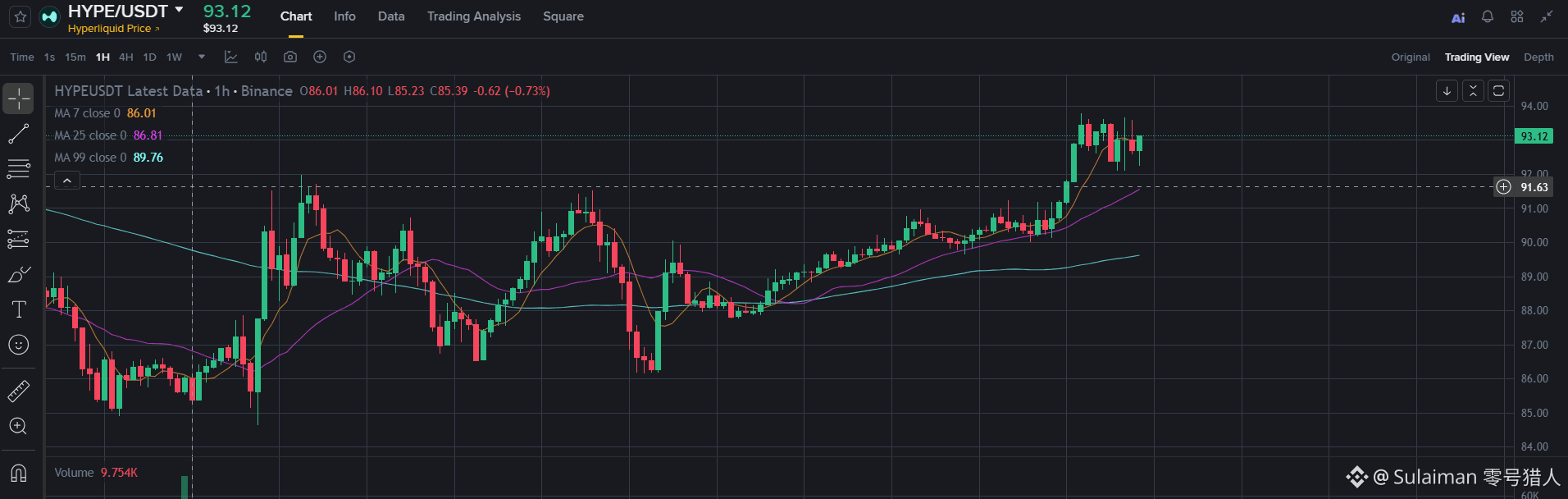
Every $HYPE holder gets the same thought near the 29th:
"Buyback is nice… but what if the unlock is bigger?"
Same. The calendar allows about $918M a month. Scary.
But what actually unlocked on Sept 6 was about $40M.
Buyback run-rate is roughly $79M a month, close to double that. (The new $14.58M hadn't reached the fund yet when I checked.)
So the fear was aimed at the wrong number.
Still, Oct 29 shows 14.2M HYPE, about $1.3B, on the calendar. If actual moves toward schedule, it flips.
Not "is the buyback big enough?" but "how long does actual stay below allowed?"
Not financial advice.
$RAD
{spot}(RADUSDT)
$API3
{spot}(API3USDT)
#HYPE #Hyperliquid #Buyback #ZeroHunter #ZeroResearch
Every $HYPE holder gets the same thought near the 29th:
"Buyback is nice… but what if the unlock is bigger?"
Same. The calendar allows about $918M a month. Scary.
But what actually unlocked on Sept 6 was about $40M.
Buyback run-rate is roughly $79M a month, close to double that. (The new $14.58M hadn't reached the fund yet when I checked.)
So the fear was aimed at the wrong number.
Still, Oct 29 shows 14.2M HYPE, about $1.3B, on the calendar. If actual moves toward schedule, it flips.
Not "is the buyback big enough?" but "how long does actual stay below allowed?"
Not financial advice.
$RAD
$API3
#HYPE #Hyperliquid #Buyback #ZeroHunter #ZeroResearch
"Buyback is nice… but what if the unlock is bigger?"
Same. The calendar allows about $918M a month. Scary.
But what actually unlocked on Sept 6 was about $40M.
Buyback run-rate is roughly $79M a month, close to double that. (The new $14.58M hadn't reached the fund yet when I checked.)
So the fear was aimed at the wrong number.
Still, Oct 29 shows 14.2M HYPE, about $1.3B, on the calendar. If actual moves toward schedule, it flips.
Not "is the buyback big enough?" but "how long does actual stay below allowed?"
Not financial advice.
$RAD
$API3
#HYPE #Hyperliquid #Buyback #ZeroHunter #ZeroResearch
1
164
စိစစ်အတည်ပြုထားသည်
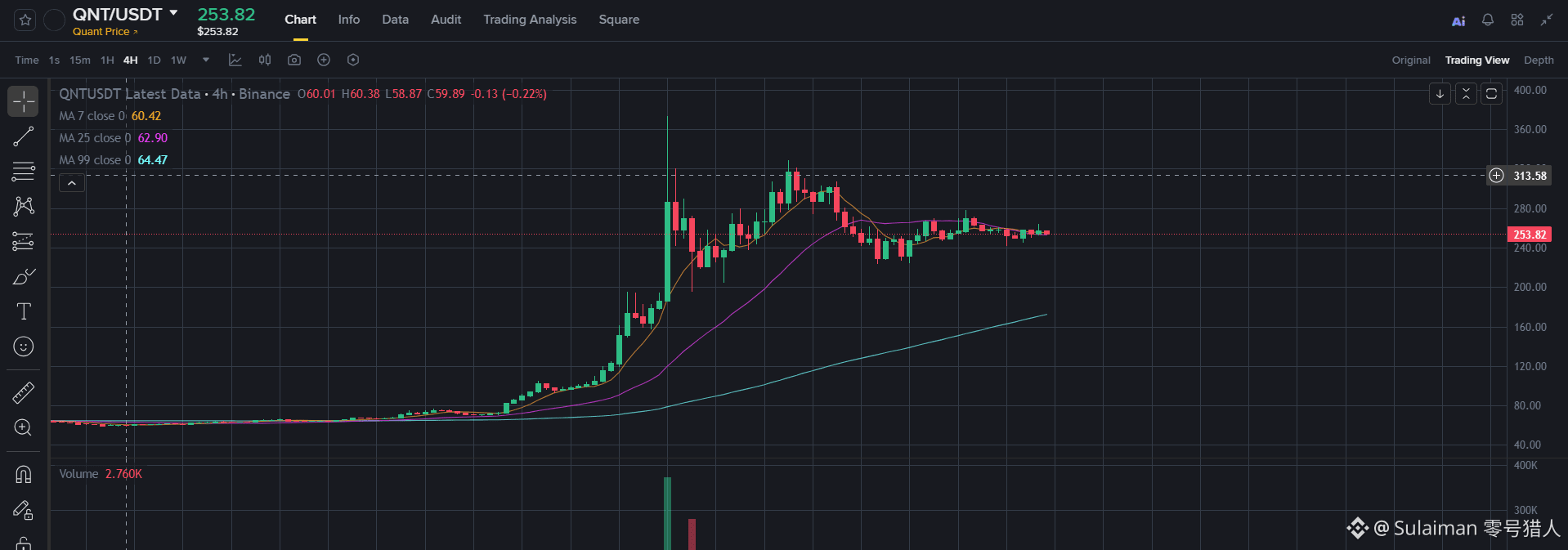
The company that clears $2 trillion a day just picked Quant.
I searched the announcement for one word: $QNT
Nothing.
The token ran from the $60s to a spike near $373 in days. The headline felt like proof, but the middle step is missing.
What we know: Quant will run the interoperability and transaction layer for The Clearing House's On-Chain Money Initiative. TCH is owned by 25 of the biggest US banks. Access opens in H1 2027.
What we don't: any requirement for banks to hold QNT, any fee schedule, any burn tied to volume.
Quant does have a path. Licenses are paid in fiat, and the Quant Treasury converts that into locked QNT. But Quant getting paid and QNT getting bought are two different events.
The partnership is real. I'm still looking for where the money touches the token.
Not financial advice.
#QNT #TokenizedDeposits #CryptoResearch #ZeroHunter #ZeroResearch
$ZRO
{spot}(ZROUSDT)
$STG
{spot}(STGUSDT)
The company that clears $2 trillion a day just picked Quant.
I searched the announcement for one word: $QNT
Nothing.
The token ran from the $60s to a spike near $373 in days. The headline felt like proof, but the middle step is missing.
What we know: Quant will run the interoperability and transaction layer for The Clearing House's On-Chain Money Initiative. TCH is owned by 25 of the biggest US banks. Access opens in H1 2027.
What we don't: any requirement for banks to hold QNT, any fee schedule, any burn tied to volume.
Quant does have a path. Licenses are paid in fiat, and the Quant Treasury converts that into locked QNT. But Quant getting paid and QNT getting bought are two different events.
The partnership is real. I'm still looking for where the money touches the token.
Not financial advice.
#QNT #TokenizedDeposits #CryptoResearch #ZeroHunter #ZeroResearch
$ZRO
$STG
I searched the announcement for one word: $QNT
Nothing.
The token ran from the $60s to a spike near $373 in days. The headline felt like proof, but the middle step is missing.
What we know: Quant will run the interoperability and transaction layer for The Clearing House's On-Chain Money Initiative. TCH is owned by 25 of the biggest US banks. Access opens in H1 2027.
What we don't: any requirement for banks to hold QNT, any fee schedule, any burn tied to volume.
Quant does have a path. Licenses are paid in fiat, and the Quant Treasury converts that into locked QNT. But Quant getting paid and QNT getting bought are two different events.
The partnership is real. I'm still looking for where the money touches the token.
Not financial advice.
#QNT #TokenizedDeposits #CryptoResearch #ZeroHunter #ZeroResearch
$ZRO
$STG
1
1
139
စိစစ်အတည်ပြုထားသည်
If you hold $ONDO , seeing BlackRock next to Ondo feels good.
Same here. But a quiet question probably crossed your mind too:
"Okay… but what do I get out of it?"
Fair question.
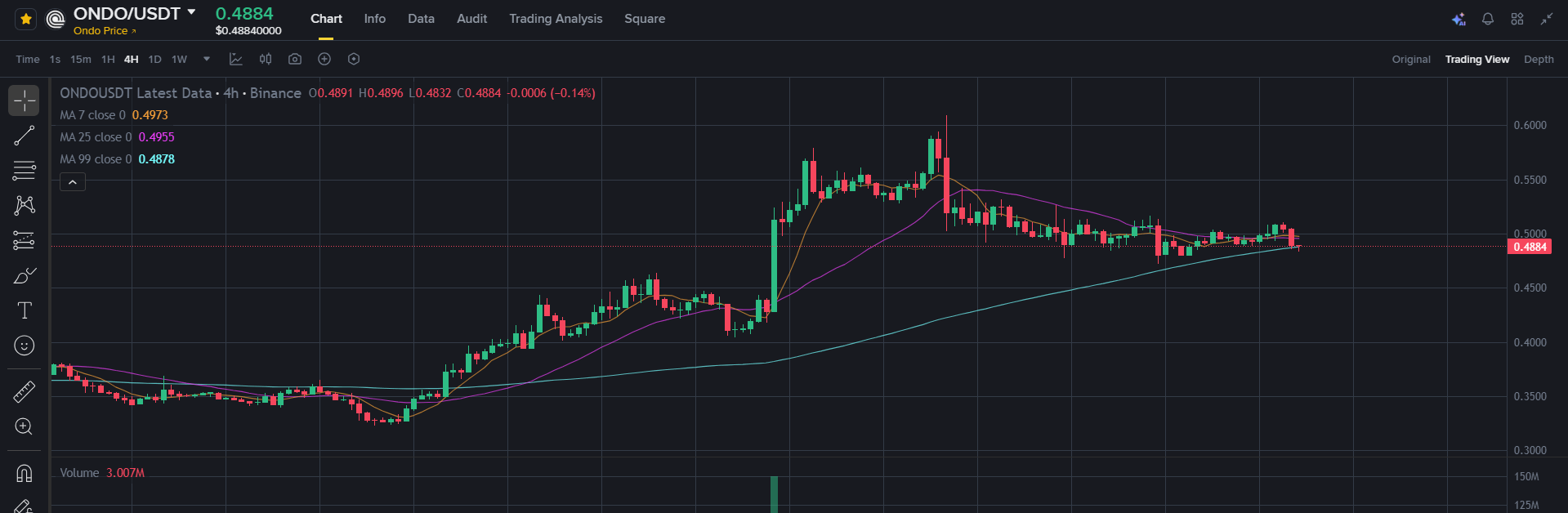
BlackRock built the strategies behind Ondo's first three Intelligent Portfolios. KakaoPay Securities signed an MOU to explore tokenized Korean stocks. That's real progress for Ondo, the company.
But ONDO, the token, is a governance token. It doesn't automatically capture that growth.
It's like having a seat at the residents' meeting while the rent goes to the landlord. The meeting matters. It's just not the rent.
Supply adds to the doubt. About half of the 10B ONDO is already unlocked, and roughly 17-19% of total supply unlocks on Jan 18, 2027.
A fee switch could change the picture. But how it's built matters: revenue paid to holders, or used for buybacks? Those are two very different tokens.
I'm not bearish on Ondo. The RWA growth is real. I'm just separating Ondo's success from ONDO's value capture.
Another partnership won't answer that. The token design will.
Not financial advice.
#ONDO #RWA #Tokenization #ZeroHunter #ZeroResearch
$GMX
{spot}(GMXUSDT)
$RAY
{spot}(RAYUSDT)
If you hold $ONDO , seeing BlackRock next to Ondo feels good.
Same here. But a quiet question probably crossed your mind too:
"Okay… but what do I get out of it?"
Fair question.
BlackRock built the strategies behind Ondo's first three Intelligent Portfolios. KakaoPay Securities signed an MOU to explore tokenized Korean stocks. That's real progress for Ondo, the company.
But ONDO, the token, is a governance token. It doesn't automatically capture that growth.
It's like having a seat at the residents' meeting while the rent goes to the landlord. The meeting matters. It's just not the rent.
Supply adds to the doubt. About half of the 10B ONDO is already unlocked, and roughly 17-19% of total supply unlocks on Jan 18, 2027.
A fee switch could change the picture. But how it's built matters: revenue paid to holders, or used for buybacks? Those are two very different tokens.
I'm not bearish on Ondo. The RWA growth is real. I'm just separating Ondo's success from ONDO's value capture.
Another partnership won't answer that. The token design will.
Not financial advice.
#ONDO #RWA #Tokenization #ZeroHunter #ZeroResearch
$GMX
$RAY
Same here. But a quiet question probably crossed your mind too:
"Okay… but what do I get out of it?"
Fair question.
BlackRock built the strategies behind Ondo's first three Intelligent Portfolios. KakaoPay Securities signed an MOU to explore tokenized Korean stocks. That's real progress for Ondo, the company.
But ONDO, the token, is a governance token. It doesn't automatically capture that growth.
It's like having a seat at the residents' meeting while the rent goes to the landlord. The meeting matters. It's just not the rent.
Supply adds to the doubt. About half of the 10B ONDO is already unlocked, and roughly 17-19% of total supply unlocks on Jan 18, 2027.
A fee switch could change the picture. But how it's built matters: revenue paid to holders, or used for buybacks? Those are two very different tokens.
I'm not bearish on Ondo. The RWA growth is real. I'm just separating Ondo's success from ONDO's value capture.
Another partnership won't answer that. The token design will.
Not financial advice.
#ONDO #RWA #Tokenization #ZeroHunter #ZeroResearch
$GMX
$RAY
40
စိစစ်အတည်ပြုထားသည်
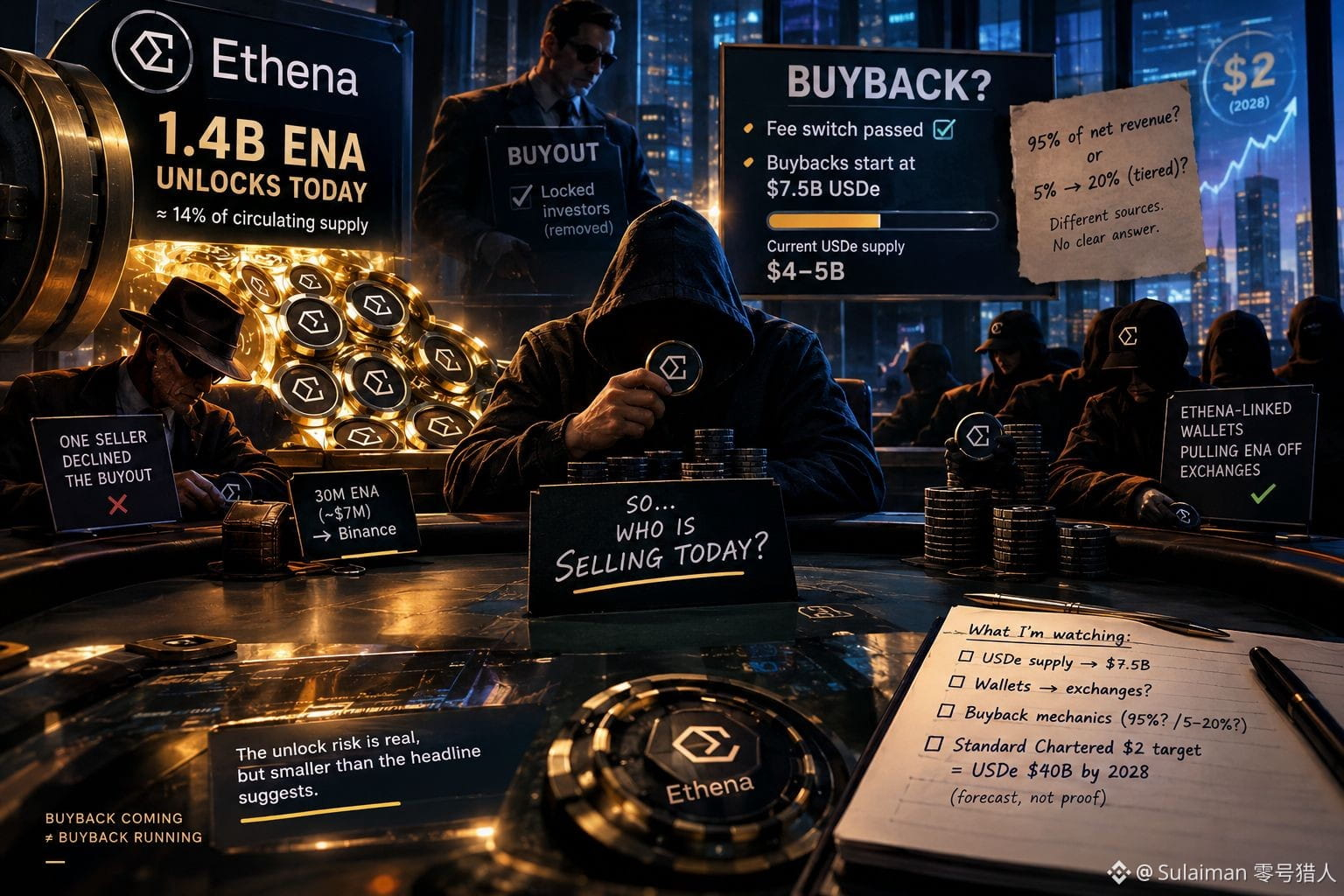
Today, 1.4 billion $ENA unlocks, about 14% of circulating supply. But Ethena already bought out the locked tokens of investors who sold after the peak.
So who is selling today?
And the buyback that's supposed to absorb this supply isn't running. The fee switch passed, but buybacks only start once USDe supply reaches $7.5 billion. Depending on the source, it sits around $4–5 billion. Approved and active are doing different jobs.
Whoever receives tokens today is, by definition, someone who held this long. One seller wallet declined the buyout, and there's no proof the rest keep holding. But it isn't the same seller pool the chart may be bracing for.
The flows disagree too. A wallet dormant for over a year sent 30 million ENA, about $7 million, to Binance. Wallets linked to Ethena were also pulling large amounts of ENA off exchanges. One looks like selling. The other doesn't.
One gap I couldn't close: sources disagree on the buyback mechanics. Is it 95% of net revenue, or a tiered 5% to 20% that scales with USDe supply? I couldn't reconcile them from primary docs, and that difference is most of the mechanism's value.
My read: "buyback coming" is the narrative. "Buyback running" isn't reality yet. The unlock risk is real, but smaller than the headline suggests, because the loudest sellers were removed in advance.
What I'm watching: USDe supply moving toward $7.5B, and whether recipient wallets start sending to exchanges over the next few weeks. Standard Chartered's $2 target assumes USDe reaches $40B by 2028. That's a forecast of the growth the buyback needs, not evidence it's arriving.
(The bigger 3.03B figure in some headlines is a different thing, still gated by Foundation consent. The 1.4B is what opens without restriction today.)
A conditional buyback doesn't pay you for supply arriving today. But a buyout that already removed the sellers might.
#ENA #Ethena #TokenUnlock #ZeroHunter #ZeroResearch
Today, 1.4 billion $ENA unlocks, about 14% of circulating supply. But Ethena already bought out the locked tokens of investors who sold after the peak.
So who is selling today?
And the buyback that's supposed to absorb this supply isn't running. The fee switch passed, but buybacks only start once USDe supply reaches $7.5 billion. Depending on the source, it sits around $4–5 billion. Approved and active are doing different jobs.
Whoever receives tokens today is, by definition, someone who held this long. One seller wallet declined the buyout, and there's no proof the rest keep holding. But it isn't the same seller pool the chart may be bracing for.
The flows disagree too. A wallet dormant for over a year sent 30 million ENA, about $7 million, to Binance. Wallets linked to Ethena were also pulling large amounts of ENA off exchanges. One looks like selling. The other doesn't.
One gap I couldn't close: sources disagree on the buyback mechanics. Is it 95% of net revenue, or a tiered 5% to 20% that scales with USDe supply? I couldn't reconcile them from primary docs, and that difference is most of the mechanism's value.
My read: "buyback coming" is the narrative. "Buyback running" isn't reality yet. The unlock risk is real, but smaller than the headline suggests, because the loudest sellers were removed in advance.
What I'm watching: USDe supply moving toward $7.5B, and whether recipient wallets start sending to exchanges over the next few weeks. Standard Chartered's $2 target assumes USDe reaches $40B by 2028. That's a forecast of the growth the buyback needs, not evidence it's arriving.
(The bigger 3.03B figure in some headlines is a different thing, still gated by Foundation consent. The 1.4B is what opens without restriction today.)
A conditional buyback doesn't pay you for supply arriving today. But a buyout that already removed the sellers might.
#ENA #Ethena #TokenUnlock #ZeroHunter #ZeroResearch
So who is selling today?
And the buyback that's supposed to absorb this supply isn't running. The fee switch passed, but buybacks only start once USDe supply reaches $7.5 billion. Depending on the source, it sits around $4–5 billion. Approved and active are doing different jobs.
Whoever receives tokens today is, by definition, someone who held this long. One seller wallet declined the buyout, and there's no proof the rest keep holding. But it isn't the same seller pool the chart may be bracing for.
The flows disagree too. A wallet dormant for over a year sent 30 million ENA, about $7 million, to Binance. Wallets linked to Ethena were also pulling large amounts of ENA off exchanges. One looks like selling. The other doesn't.
One gap I couldn't close: sources disagree on the buyback mechanics. Is it 95% of net revenue, or a tiered 5% to 20% that scales with USDe supply? I couldn't reconcile them from primary docs, and that difference is most of the mechanism's value.
My read: "buyback coming" is the narrative. "Buyback running" isn't reality yet. The unlock risk is real, but smaller than the headline suggests, because the loudest sellers were removed in advance.
What I'm watching: USDe supply moving toward $7.5B, and whether recipient wallets start sending to exchanges over the next few weeks. Standard Chartered's $2 target assumes USDe reaches $40B by 2028. That's a forecast of the growth the buyback needs, not evidence it's arriving.
(The bigger 3.03B figure in some headlines is a different thing, still gated by Foundation consent. The 1.4B is what opens without restriction today.)
A conditional buyback doesn't pay you for supply arriving today. But a buyout that already removed the sellers might.
#ENA #Ethena #TokenUnlock #ZeroHunter #ZeroResearch
2
69
Solana handles 22.5% of global stablecoin transactions. Yet its network revenue fell 87% in the first half of 2026.
According to 21Shares, Solana processed $1.9 trillion in stablecoin transactions in H1 2026, while holding only about 5% of global stablecoin supply. Over the same period, network revenue dropped to roughly $141M.
How can both be true? A stablecoin transaction pays far less in fees than a memecoin trade does. The usage matured, but the revenue shrank.
And in August, memecoins climbed back to about 34% of Solana's DEX volume.
My read: "Is activity growing?" isn't a good enough question for Solana. The real question is which activity, and how much revenue it brings.
What I'm watching: whether fees recover in the next quarterly reports, and if they do, whether the recovery comes from stablecoins or from memecoins again.
Limits: I haven't verified the base period for the 87% decline, and DEX share figures differ by tracker, so I left that number out.
Where do you think Solana's future revenue comes from: massive stablecoin volume, or memecoins again?
⚠️ Not financial advice.
#Solana #Stablecoins #DeFi #OnChainData
$SOL $PNUT $TRUMP
Solana handles 22.5% of global stablecoin transactions. Yet its network revenue fell 87% in the first half of 2026.
According to 21Shares, Solana processed $1.9 trillion in stablecoin transactions in H1 2026, while holding only about 5% of global stablecoin supply. Over the same period, network revenue dropped to roughly $141M.
How can both be true? A stablecoin transaction pays far less in fees than a memecoin trade does. The usage matured, but the revenue shrank.
And in August, memecoins climbed back to about 34% of Solana's DEX volume.
My read: "Is activity growing?" isn't a good enough question for Solana. The real question is which activity, and how much revenue it brings.
What I'm watching: whether fees recover in the next quarterly reports, and if they do, whether the recovery comes from stablecoins or from memecoins again.
Limits: I haven't verified the base period for the 87% decline, and DEX share figures differ by tracker, so I left that number out.
Where do you think Solana's future revenue comes from: massive stablecoin volume, or memecoins again?
⚠️ Not financial advice.
#Solana #Stablecoins #DeFi #OnChainData
$SOL $PNUT $TRUMP
According to 21Shares, Solana processed $1.9 trillion in stablecoin transactions in H1 2026, while holding only about 5% of global stablecoin supply. Over the same period, network revenue dropped to roughly $141M.
How can both be true? A stablecoin transaction pays far less in fees than a memecoin trade does. The usage matured, but the revenue shrank.
And in August, memecoins climbed back to about 34% of Solana's DEX volume.
My read: "Is activity growing?" isn't a good enough question for Solana. The real question is which activity, and how much revenue it brings.
What I'm watching: whether fees recover in the next quarterly reports, and if they do, whether the recovery comes from stablecoins or from memecoins again.
Limits: I haven't verified the base period for the 87% decline, and DEX share figures differ by tracker, so I left that number out.
Where do you think Solana's future revenue comes from: massive stablecoin volume, or memecoins again?
⚠️ Not financial advice.
#Solana #Stablecoins #DeFi #OnChainData
$SOL $PNUT $TRUMP
1
50
$766M stolen in September. 92% of it came from just two incidents.
PeckShield counted 55 major incidents and about $766M in losses, making September 2026 the worst month of the year.
But break the number down. According to CertiK, Bitget ($387.5M) and Liquid Network ($318.7M) together account for about 92%. Every other incident combined adds up to roughly $62M.
The two cases were also completely different. Per reports, Bitget's hot and warm wallets were hit. At Liquid, a code flaw allowed fake L-BTC to be created.
Neither is the usual DeFi story of "TVL is growing and there's an audit."
My read: risk is more concentrated than it looks. The big losses happen where a lot of assets depend on a few keys or a single mechanism.
Limits: two incidents don't prove a pattern, and I haven't read the full post-mortems yet. Also, about $273M was frozen or returned, so net losses were closer to $495M.
Where you keep your assets, do you know how many people or keys could move everything out?
⚠️ Not financial advice.
#CryptoSecurity #CryptoHacks #Bitget #LiquidNetwork #ZeroHunter
$BTC $ETH $BNB
$766M stolen in September. 92% of it came from just two incidents.
PeckShield counted 55 major incidents and about $766M in losses, making September 2026 the worst month of the year.
But break the number down. According to CertiK, Bitget ($387.5M) and Liquid Network ($318.7M) together account for about 92%. Every other incident combined adds up to roughly $62M.
The two cases were also completely different. Per reports, Bitget's hot and warm wallets were hit. At Liquid, a code flaw allowed fake L-BTC to be created.
Neither is the usual DeFi story of "TVL is growing and there's an audit."
My read: risk is more concentrated than it looks. The big losses happen where a lot of assets depend on a few keys or a single mechanism.
Limits: two incidents don't prove a pattern, and I haven't read the full post-mortems yet. Also, about $273M was frozen or returned, so net losses were closer to $495M.
Where you keep your assets, do you know how many people or keys could move everything out?
⚠️ Not financial advice.
#CryptoSecurity #CryptoHacks #Bitget #LiquidNetwork #ZeroHunter
$BTC $ETH $BNB
PeckShield counted 55 major incidents and about $766M in losses, making September 2026 the worst month of the year.
But break the number down. According to CertiK, Bitget ($387.5M) and Liquid Network ($318.7M) together account for about 92%. Every other incident combined adds up to roughly $62M.
The two cases were also completely different. Per reports, Bitget's hot and warm wallets were hit. At Liquid, a code flaw allowed fake L-BTC to be created.
Neither is the usual DeFi story of "TVL is growing and there's an audit."
My read: risk is more concentrated than it looks. The big losses happen where a lot of assets depend on a few keys or a single mechanism.
Limits: two incidents don't prove a pattern, and I haven't read the full post-mortems yet. Also, about $273M was frozen or returned, so net losses were closer to $495M.
Where you keep your assets, do you know how many people or keys could move everything out?
⚠️ Not financial advice.
#CryptoSecurity #CryptoHacks #Bitget #LiquidNetwork #ZeroHunter
$BTC $ETH $BNB
1
58
$30 billion in turnover, and you still don't own the shares
In under 90 days, cumulative turnover on Binance's bStocks passed $30B. Tokenized equity volume grew more than 33x between January and August.
Big number. But one detail stopped me.
bStocks aren't actual shares. They're certificates issued by a Binance affiliate, and they don't give you direct ownership of the underlying company.
Look at the rest of the chain too. The issuer is Binance's. The shares are bought through Binance's broker-dealer. Trading happens on Binance. Even the collateral and up to 5x leverage come from Binance. The whole stack sits under one roof.
My read: this is a real distribution success for RWAs, but what it proves is trading demand. How many people actually hold these, and for how long, is data I haven't seen yet.
So when I hear "RWA is growing," my first question now is: what's growing, volume or ownership?
Are you a trader or a holder on bStocks? The answer says a lot about what kind of demand this is.
⚠️ Not financial advice. Product availability varies by region.
#RWA #TokenizedStocks #bStocks #Binance
$NVDAB
{spot}(NVDABUSDT)
$CBRSB
{spot}(CBRSBUSDT)
$SPCXB
{spot}(SPCXBUSDT)
$30 billion in turnover, and you still don't own the shares
In under 90 days, cumulative turnover on Binance's bStocks passed $30B. Tokenized equity volume grew more than 33x between January and August.
Big number. But one detail stopped me.
bStocks aren't actual shares. They're certificates issued by a Binance affiliate, and they don't give you direct ownership of the underlying company.
Look at the rest of the chain too. The issuer is Binance's. The shares are bought through Binance's broker-dealer. Trading happens on Binance. Even the collateral and up to 5x leverage come from Binance. The whole stack sits under one roof.
My read: this is a real distribution success for RWAs, but what it proves is trading demand. How many people actually hold these, and for how long, is data I haven't seen yet.
So when I hear "RWA is growing," my first question now is: what's growing, volume or ownership?
Are you a trader or a holder on bStocks? The answer says a lot about what kind of demand this is.
⚠️ Not financial advice. Product availability varies by region.
#RWA #TokenizedStocks #bStocks #Binance
$NVDAB
$CBRSB
$SPCXB
In under 90 days, cumulative turnover on Binance's bStocks passed $30B. Tokenized equity volume grew more than 33x between January and August.
Big number. But one detail stopped me.
bStocks aren't actual shares. They're certificates issued by a Binance affiliate, and they don't give you direct ownership of the underlying company.
Look at the rest of the chain too. The issuer is Binance's. The shares are bought through Binance's broker-dealer. Trading happens on Binance. Even the collateral and up to 5x leverage come from Binance. The whole stack sits under one roof.
My read: this is a real distribution success for RWAs, but what it proves is trading demand. How many people actually hold these, and for how long, is data I haven't seen yet.
So when I hear "RWA is growing," my first question now is: what's growing, volume or ownership?
Are you a trader or a holder on bStocks? The answer says a lot about what kind of demand this is.
⚠️ Not financial advice. Product availability varies by region.
#RWA #TokenizedStocks #bStocks #Binance
$NVDAB
$CBRSB
$SPCXB
68
SEC's custody proposal: everyone is asking about the BTC price. I'm asking something else.
Weren't advisers and funds already able to custody crypto?
Partly, yes. In September 2025, SEC staff issued a no-action letter. If certain conditions were met, a state-chartered trust company could be treated as a qualified custodian.
But that was staff relief, not a rule.
Put yourself in a fund manager's seat. Your compliance team says: "We're not building a new product on permission that can be pulled tomorrow." Being allowed to do something and being able to build on it are two different things.
That's what stands out to me in the October 1 proposal. It's less about opening a new door and more about trying to make a half-open door permanent.
My read: the first effects may show up in product pipelines before they show up in price. Who files for new funds, and which custodians launch new services, will say more than any candle.
Worth keeping in mind:
This is still a proposal, not a final rule
There's usually a comment period of at least 60 days, then a vote
I'm still checking how the full text handles who qualifies as a custodian and under what conditions
What comes first: new fund filings, or custodians announcing new services?
#SEC #CryptoCustody #RWA #Regulation
SEC's custody proposal: everyone is asking about the BTC price. I'm asking something else.
Weren't advisers and funds already able to custody crypto?
Partly, yes. In September 2025, SEC staff issued a no-action letter. If certain conditions were met, a state-chartered trust company could be treated as a qualified custodian.
But that was staff relief, not a rule.
Put yourself in a fund manager's seat. Your compliance team says: "We're not building a new product on permission that can be pulled tomorrow." Being allowed to do something and being able to build on it are two different things.
That's what stands out to me in the October 1 proposal. It's less about opening a new door and more about trying to make a half-open door permanent.
My read: the first effects may show up in product pipelines before they show up in price. Who files for new funds, and which custodians launch new services, will say more than any candle.
Worth keeping in mind:
This is still a proposal, not a final rule
There's usually a comment period of at least 60 days, then a vote
I'm still checking how the full text handles who qualifies as a custodian and under what conditions
What comes first: new fund filings, or custodians announcing new services?
#SEC #CryptoCustody #RWA #Regulation
Weren't advisers and funds already able to custody crypto?
Partly, yes. In September 2025, SEC staff issued a no-action letter. If certain conditions were met, a state-chartered trust company could be treated as a qualified custodian.
But that was staff relief, not a rule.
Put yourself in a fund manager's seat. Your compliance team says: "We're not building a new product on permission that can be pulled tomorrow." Being allowed to do something and being able to build on it are two different things.
That's what stands out to me in the October 1 proposal. It's less about opening a new door and more about trying to make a half-open door permanent.
My read: the first effects may show up in product pipelines before they show up in price. Who files for new funds, and which custodians launch new services, will say more than any candle.
Worth keeping in mind:
This is still a proposal, not a final rule
There's usually a comment period of at least 60 days, then a vote
I'm still checking how the full text handles who qualifies as a custodian and under what conditions
What comes first: new fund filings, or custodians announcing new services?
#SEC #CryptoCustody #RWA #Regulation
18
ETH's exit queue is up 392%. Most of it is one company being careful.
$ETH unstaking queue hit about 850K ETH, a 14.77-day wait. The longest this year.
It looks like panic. But about 523K of that came from MetaMask Staking, which pulled around 17,000 validators as a precaution after a security scare. That's roughly 60% of the queue from one operator.
Also, an exit isn't a sale. The queue measures ETH waiting to leave staking, not ETH hitting the market.
The queue is only about 2% of all staked ETH. MetaMask's exit should finish around Oct 7.
My read: this is more incident than exodus. The real signal is what happens after it clears.
✅ Stronger if the queue shrinks fast after Oct 7
⚠️ Weaker if new exits keep it long
When a big staker exits out of caution, is that a bearish signal or just good hygiene?
Not financial advice. DYOR.
#EthereumValidatorExitQueue #ETH #Staking #CryptoResearch
$ETH
{spot}(ETHUSDT)
$GTC
{spot}(GTCUSDT)
#ethereumvalidatorexitqueuejumps392%
ETH's exit queue is up 392%. Most of it is one company being careful.
$ETH unstaking queue hit about 850K ETH, a 14.77-day wait. The longest this year.
It looks like panic. But about 523K of that came from MetaMask Staking, which pulled around 17,000 validators as a precaution after a security scare. That's roughly 60% of the queue from one operator.
Also, an exit isn't a sale. The queue measures ETH waiting to leave staking, not ETH hitting the market.
The queue is only about 2% of all staked ETH. MetaMask's exit should finish around Oct 7.
My read: this is more incident than exodus. The real signal is what happens after it clears.
✅ Stronger if the queue shrinks fast after Oct 7
⚠️ Weaker if new exits keep it long
When a big staker exits out of caution, is that a bearish signal or just good hygiene?
Not financial advice. DYOR.
#EthereumValidatorExitQueue #ETH #Staking #CryptoResearch
$ETH
$GTC
#ethereumvalidatorexitqueuejumps392%
$ETH unstaking queue hit about 850K ETH, a 14.77-day wait. The longest this year.
It looks like panic. But about 523K of that came from MetaMask Staking, which pulled around 17,000 validators as a precaution after a security scare. That's roughly 60% of the queue from one operator.
Also, an exit isn't a sale. The queue measures ETH waiting to leave staking, not ETH hitting the market.
The queue is only about 2% of all staked ETH. MetaMask's exit should finish around Oct 7.
My read: this is more incident than exodus. The real signal is what happens after it clears.
✅ Stronger if the queue shrinks fast after Oct 7
⚠️ Weaker if new exits keep it long
When a big staker exits out of caution, is that a bearish signal or just good hygiene?
Not financial advice. DYOR.
#EthereumValidatorExitQueue #ETH #Staking #CryptoResearch
$ETH
$GTC
#ethereumvalidatorexitqueuejumps392%
1
38
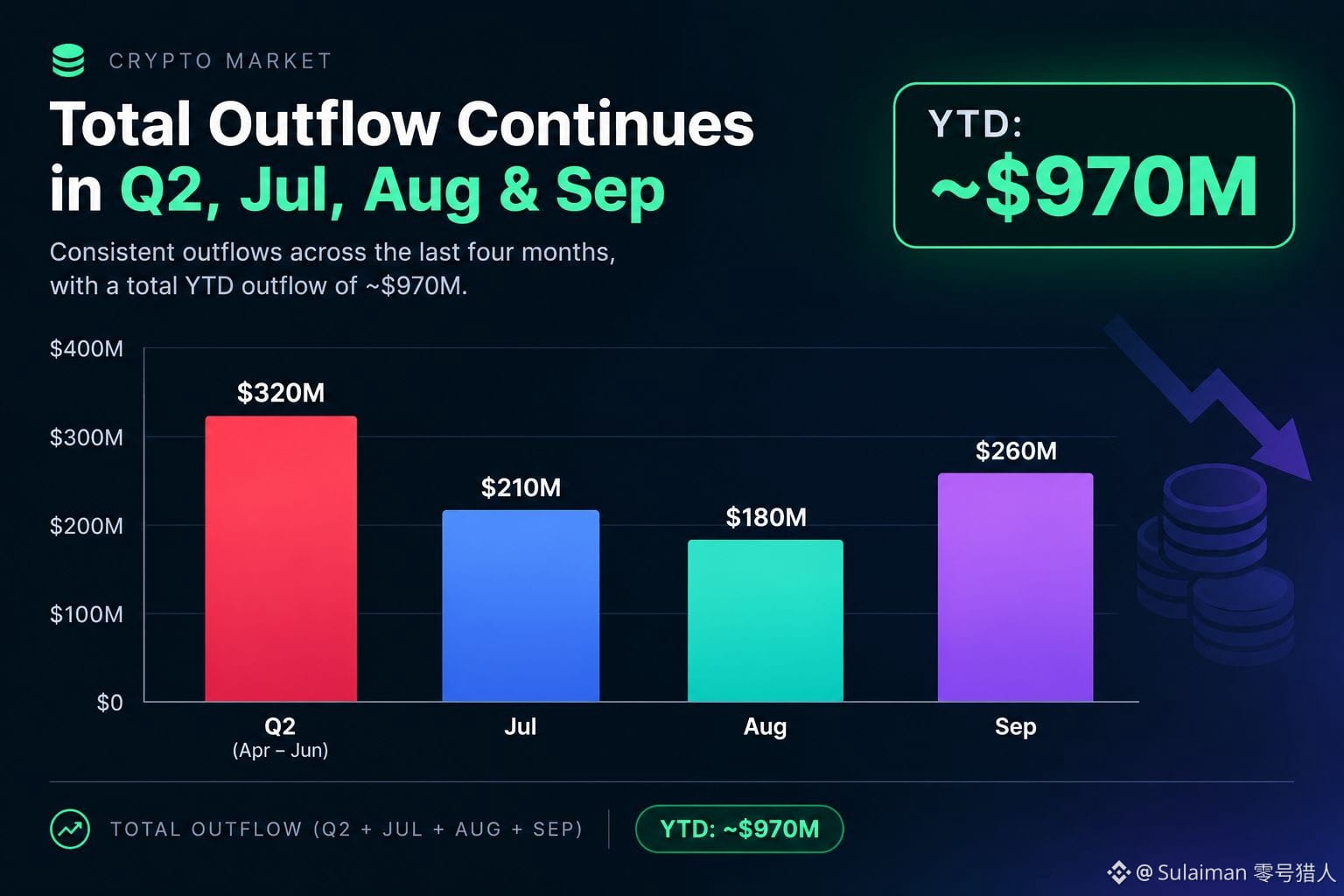
Bitcoin ETFs pulled in $6.34B last quarter. For all of 2026 so far, they're up only about $970M.
$BTC spot ETFs had their best quarter of the year. Q3 inflows: $6.34B. Bitcoin itself rose 42.71%.
But Q2 lost about $5B. So Q3 mostly repaired the damage.
And the quarter faded at the end:
July: $172M
August: $3.52B
September: $2.65B
Nine straight inflow days ended on Sept 30 with a $149M outflow day.
My read: Q3 looks like a repair quarter, not a new regime.
✅ Stronger if October holds near September's pace
⚠️ Weaker if a second outflow quarter follows
Do ETF flows lead the Bitcoin price, or follow it?
Not financial advice. DYOR.
#BitcoinSpotETFsDrawInflowsInQ3 #BTC #BitcoinETF
$BTC
{spot}(BTCUSDT)
$ETH
{spot}(ETHUSDT)
#CryptoResearch
Bitcoin ETFs pulled in $6.34B last quarter. For all of 2026 so far, they're up only about $970M.
$BTC spot ETFs had their best quarter of the year. Q3 inflows: $6.34B. Bitcoin itself rose 42.71%.
But Q2 lost about $5B. So Q3 mostly repaired the damage.
And the quarter faded at the end:
July: $172M
August: $3.52B
September: $2.65B
Nine straight inflow days ended on Sept 30 with a $149M outflow day.
My read: Q3 looks like a repair quarter, not a new regime.
✅ Stronger if October holds near September's pace
⚠️ Weaker if a second outflow quarter follows
Do ETF flows lead the Bitcoin price, or follow it?
Not financial advice. DYOR.
#BitcoinSpotETFsDrawInflowsInQ3 #BTC #BitcoinETF
$BTC
$ETH
#CryptoResearch
$BTC spot ETFs had their best quarter of the year. Q3 inflows: $6.34B. Bitcoin itself rose 42.71%.
But Q2 lost about $5B. So Q3 mostly repaired the damage.
And the quarter faded at the end:
July: $172M
August: $3.52B
September: $2.65B
Nine straight inflow days ended on Sept 30 with a $149M outflow day.
My read: Q3 looks like a repair quarter, not a new regime.
✅ Stronger if October holds near September's pace
⚠️ Weaker if a second outflow quarter follows
Do ETF flows lead the Bitcoin price, or follow it?
Not financial advice. DYOR.
#BitcoinSpotETFsDrawInflowsInQ3 #BTC #BitcoinETF
$BTC
$ETH
#CryptoResearch
1
16
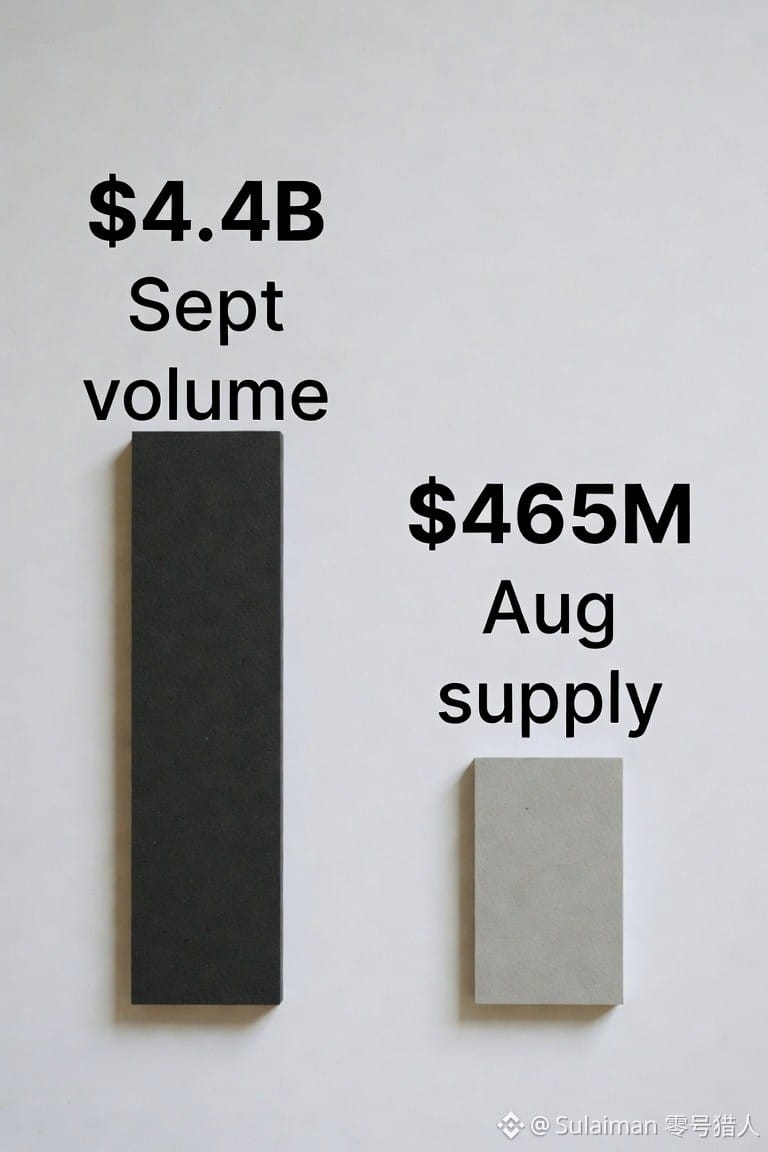
Solana traded $4.4B of tokenized stocks in one month. How much stock is actually sitting on-chain? Far less.
$SOL tokenized stock volume topped $4.4B in September.
Big number. But volume counts the same dollar again and again. It tells you how busy the market is, not how big it is.
For comparison, tokenized stock supply on Solana was about $465M back in August.
What I find more interesting is when people trade. Through August, about 63% of the volume happened outside US stock market hours.
So the product may not be "stocks on a blockchain". It may be "stocks when the stock market is closed".
My read: watch supply, not volume.
✅ Stronger if supply and lending collateral grow with volume
⚠️ Weaker if volume keeps rising while supply stays flat. That looks like churn.
Which tells you more about adoption: volume or supply?
Not financial advice. DYOR.
$ORCA
{spot}(ORCAUSDT)
$FET
{spot}(FETUSDT)
#SolanaTokenizedStock #Solana #RWA #Tokenization #SolanaTokenizedStockVolumeTops$4.4BInSeptember
Solana traded $4.4B of tokenized stocks in one month. How much stock is actually sitting on-chain? Far less.
$SOL tokenized stock volume topped $4.4B in September.
Big number. But volume counts the same dollar again and again. It tells you how busy the market is, not how big it is.
For comparison, tokenized stock supply on Solana was about $465M back in August.
What I find more interesting is when people trade. Through August, about 63% of the volume happened outside US stock market hours.
So the product may not be "stocks on a blockchain". It may be "stocks when the stock market is closed".
My read: watch supply, not volume.
✅ Stronger if supply and lending collateral grow with volume
⚠️ Weaker if volume keeps rising while supply stays flat. That looks like churn.
Which tells you more about adoption: volume or supply?
Not financial advice. DYOR.
$ORCA
$FET
#SolanaTokenizedStock #Solana #RWA #Tokenization #SolanaTokenizedStockVolumeTops$4.4BInSeptember
$SOL tokenized stock volume topped $4.4B in September.
Big number. But volume counts the same dollar again and again. It tells you how busy the market is, not how big it is.
For comparison, tokenized stock supply on Solana was about $465M back in August.
What I find more interesting is when people trade. Through August, about 63% of the volume happened outside US stock market hours.
So the product may not be "stocks on a blockchain". It may be "stocks when the stock market is closed".
My read: watch supply, not volume.
✅ Stronger if supply and lending collateral grow with volume
⚠️ Weaker if volume keeps rising while supply stays flat. That looks like churn.
Which tells you more about adoption: volume or supply?
Not financial advice. DYOR.
$ORCA
$FET
#SolanaTokenizedStock #Solana #RWA #Tokenization #SolanaTokenizedStockVolumeTops$4.4BInSeptember
2
83
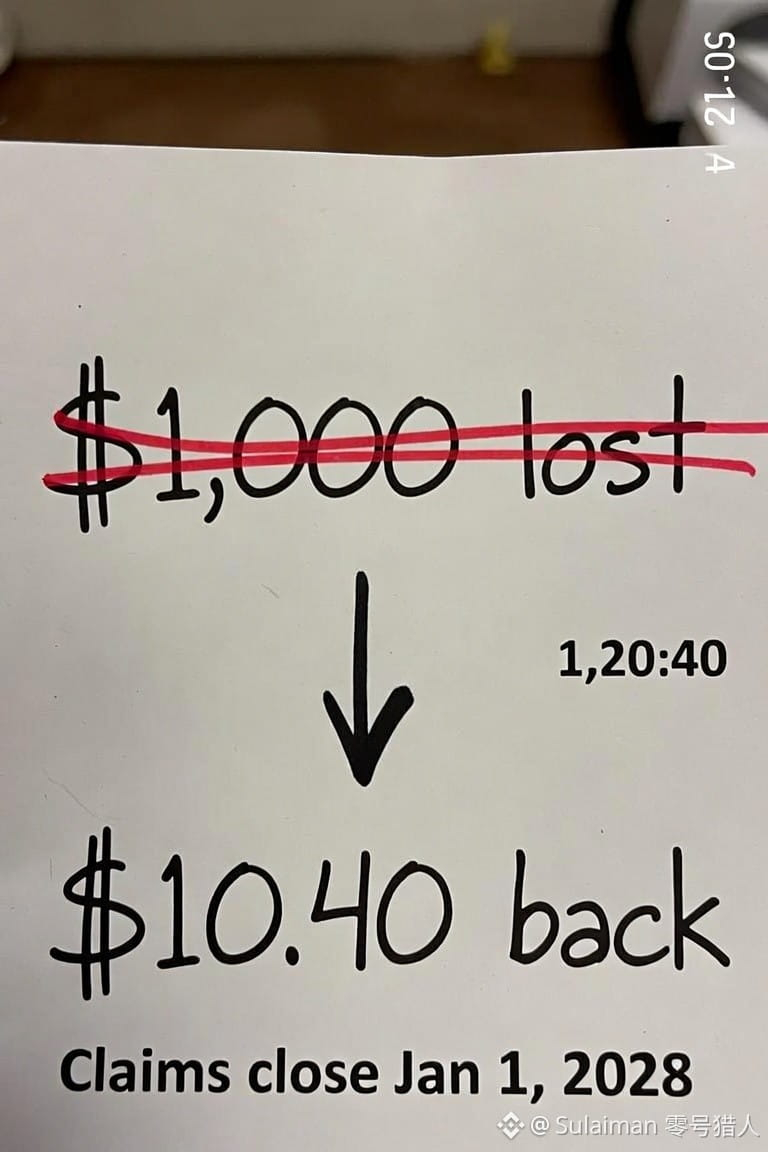
A $1,000 loss. $10.40 back. That's what a hack claim looks like.
$SOL ecosystem's Drift lost $295.4M in April. Claims opened last week.
The recovery pool: about $3.11M. That's roughly 1 cent per dollar.
Victims get a token (DFX), one per dollar lost. They can:
Burn it for cash now
Sell it
Hold it and wait
Burn it, and you give up any future payout on that claim. Hold it, and you're betting more money arrives. Tether has committed up to $127.5M, but that isn't in the pool yet.
Early redemptions are tiny. Maybe that's patience. Maybe most people haven't claimed yet.
My read: this isn't a payout, it's a bet on how long you can wait.
✅ Stronger if the Tether money lands in the pool
⚠️ Weaker if revenue top-ups stay tiny (the first transfer was 31 USDT)
Would you take the cent now, or hold the claim until 2028?
Not financial advice. DYOR.
#ZeroResearch #Drift #Solana #DeFi
$DRIFT
{future}(DRIFTUSDT)
$BTC
{spot}(BTCUSDT)
#drifthackvictimsbeginclaims
A $1,000 loss. $10.40 back. That's what a hack claim looks like.
$SOL ecosystem's Drift lost $295.4M in April. Claims opened last week.
The recovery pool: about $3.11M. That's roughly 1 cent per dollar.
Victims get a token (DFX), one per dollar lost. They can:
Burn it for cash now
Sell it
Hold it and wait
Burn it, and you give up any future payout on that claim. Hold it, and you're betting more money arrives. Tether has committed up to $127.5M, but that isn't in the pool yet.
Early redemptions are tiny. Maybe that's patience. Maybe most people haven't claimed yet.
My read: this isn't a payout, it's a bet on how long you can wait.
✅ Stronger if the Tether money lands in the pool
⚠️ Weaker if revenue top-ups stay tiny (the first transfer was 31 USDT)
Would you take the cent now, or hold the claim until 2028?
Not financial advice. DYOR.
#ZeroResearch #Drift #Solana #DeFi
$DRIFT
$BTC
#drifthackvictimsbeginclaims
$SOL ecosystem's Drift lost $295.4M in April. Claims opened last week.
The recovery pool: about $3.11M. That's roughly 1 cent per dollar.
Victims get a token (DFX), one per dollar lost. They can:
Burn it for cash now
Sell it
Hold it and wait
Burn it, and you give up any future payout on that claim. Hold it, and you're betting more money arrives. Tether has committed up to $127.5M, but that isn't in the pool yet.
Early redemptions are tiny. Maybe that's patience. Maybe most people haven't claimed yet.
My read: this isn't a payout, it's a bet on how long you can wait.
✅ Stronger if the Tether money lands in the pool
⚠️ Weaker if revenue top-ups stay tiny (the first transfer was 31 USDT)
Would you take the cent now, or hold the claim until 2028?
Not financial advice. DYOR.
#ZeroResearch #Drift #Solana #DeFi
$DRIFT
$BTC
#drifthackvictimsbeginclaims
1
96
စိစစ်အတည်ပြုထားသည်
ZEC's upgrade is live. ZEC is down 15-20% this week. Both are true, because 'live' means testnet.
ZEC's upgrade is live. ZEC is down 15-20% this week.
Both are true, because "live" means testnet.
Most of us have bought on "it's live" and then found out it meant "not yet". That's the trap here too.
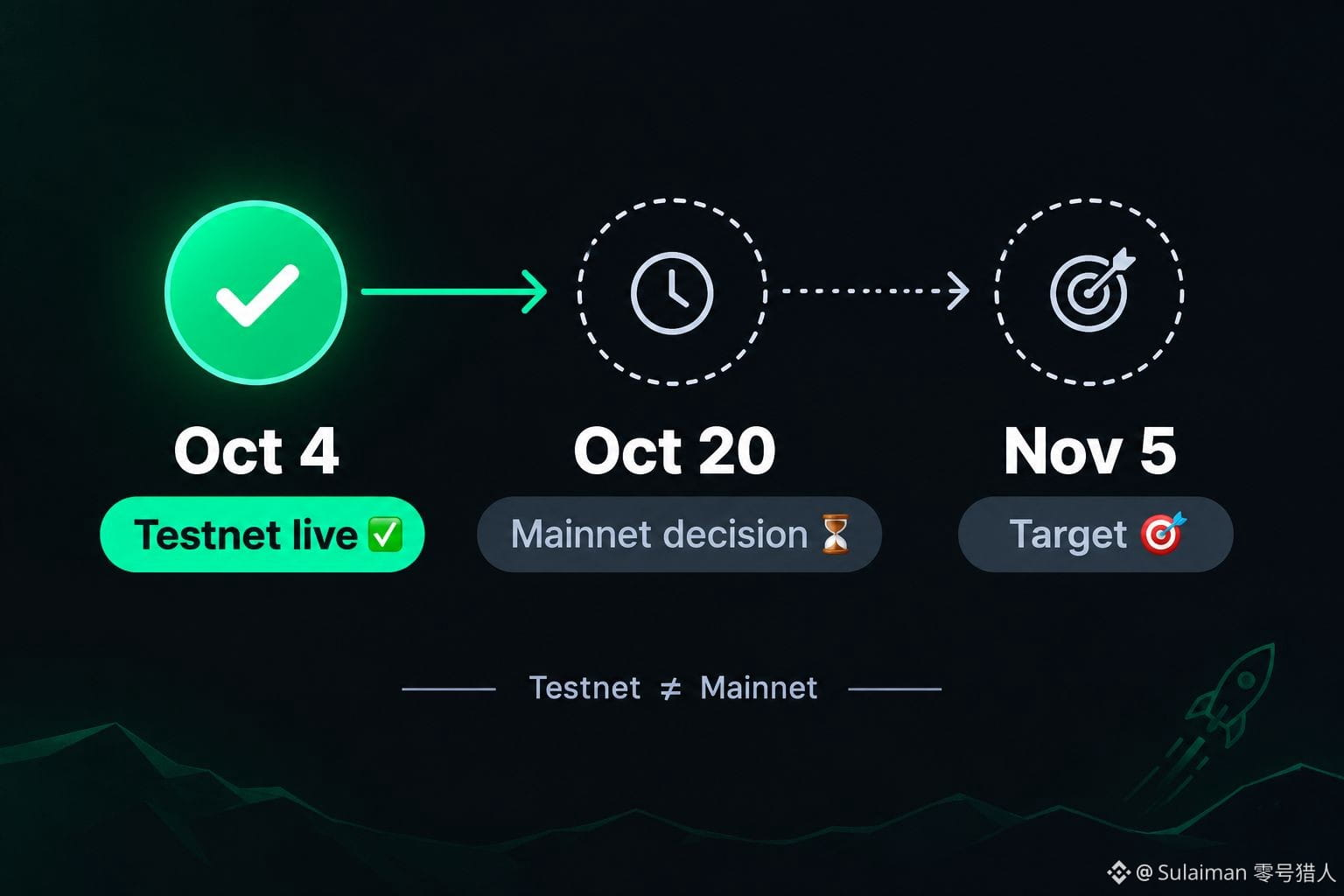
NU7 activated on testnet on Oct 4 (block 4,465,026). Blocks go from 75 seconds to 25. Faster confirmations are nice. But I don't think that's the story.
Two dates matter more:
📅 Oct 20: developers decide on mainnet and set the activation height.
📅 Nov 5: the mainnet target.
A target is not a promise. If Oct 20 slips, the catalyst gets weaker.
One more thing. Futures volume is about 15x spot on one data source, so price may be following leverage more than the upgrade. I haven't verified current funding or open interest, so treat that as a question, not a conclusion.
My read: better usability is real, but it isn't a new reason to hold ZEC today. The date is the catalyst, not the code.
✅ Stronger if an activation height gets set on Oct 20.
⚠️ Weaker if there's a delay, a serious testnet bug, or a withdrawn Nov 5 target.
What matters more here: the upgrade itself, or the date it lands?
#ZEC #Zcash #NU7 #PrivacyCoins #ZcashETFPostsFirstWeeklyOutflow$93.6M
ZEC's upgrade is live. ZEC is down 15-20% this week. Both are true, because 'live' means testnet.
ZEC's upgrade is live. ZEC is down 15-20% this week.
Both are true, because "live" means testnet.
Most of us have bought on "it's live" and then found out it meant "not yet". That's the trap here too.
NU7 activated on testnet on Oct 4 (block 4,465,026). Blocks go from 75 seconds to 25. Faster confirmations are nice. But I don't think that's the story.
Two dates matter more:
📅 Oct 20: developers decide on mainnet and set the activation height.
📅 Nov 5: the mainnet target.
A target is not a promise. If Oct 20 slips, the catalyst gets weaker.
One more thing. Futures volume is about 15x spot on one data source, so price may be following leverage more than the upgrade. I haven't verified current funding or open interest, so treat that as a question, not a conclusion.
My read: better usability is real, but it isn't a new reason to hold ZEC today. The date is the catalyst, not the code.
✅ Stronger if an activation height gets set on Oct 20.
⚠️ Weaker if there's a delay, a serious testnet bug, or a withdrawn Nov 5 target.
What matters more here: the upgrade itself, or the date it lands?
#ZEC #Zcash #NU7 #PrivacyCoins #ZcashETFPostsFirstWeeklyOutflow$93.6M
ZEC's upgrade is live. ZEC is down 15-20% this week.
Both are true, because "live" means testnet.
Most of us have bought on "it's live" and then found out it meant "not yet". That's the trap here too.
NU7 activated on testnet on Oct 4 (block 4,465,026). Blocks go from 75 seconds to 25. Faster confirmations are nice. But I don't think that's the story.
Two dates matter more:
📅 Oct 20: developers decide on mainnet and set the activation height.
📅 Nov 5: the mainnet target.
A target is not a promise. If Oct 20 slips, the catalyst gets weaker.
One more thing. Futures volume is about 15x spot on one data source, so price may be following leverage more than the upgrade. I haven't verified current funding or open interest, so treat that as a question, not a conclusion.
My read: better usability is real, but it isn't a new reason to hold ZEC today. The date is the catalyst, not the code.
✅ Stronger if an activation height gets set on Oct 20.
⚠️ Weaker if there's a delay, a serious testnet bug, or a withdrawn Nov 5 target.
What matters more here: the upgrade itself, or the date it lands?
#ZEC #Zcash #NU7 #PrivacyCoins #ZcashETFPostsFirstWeeklyOutflow$93.6M
1
115
စိစစ်အတည်ပြုထားသည်
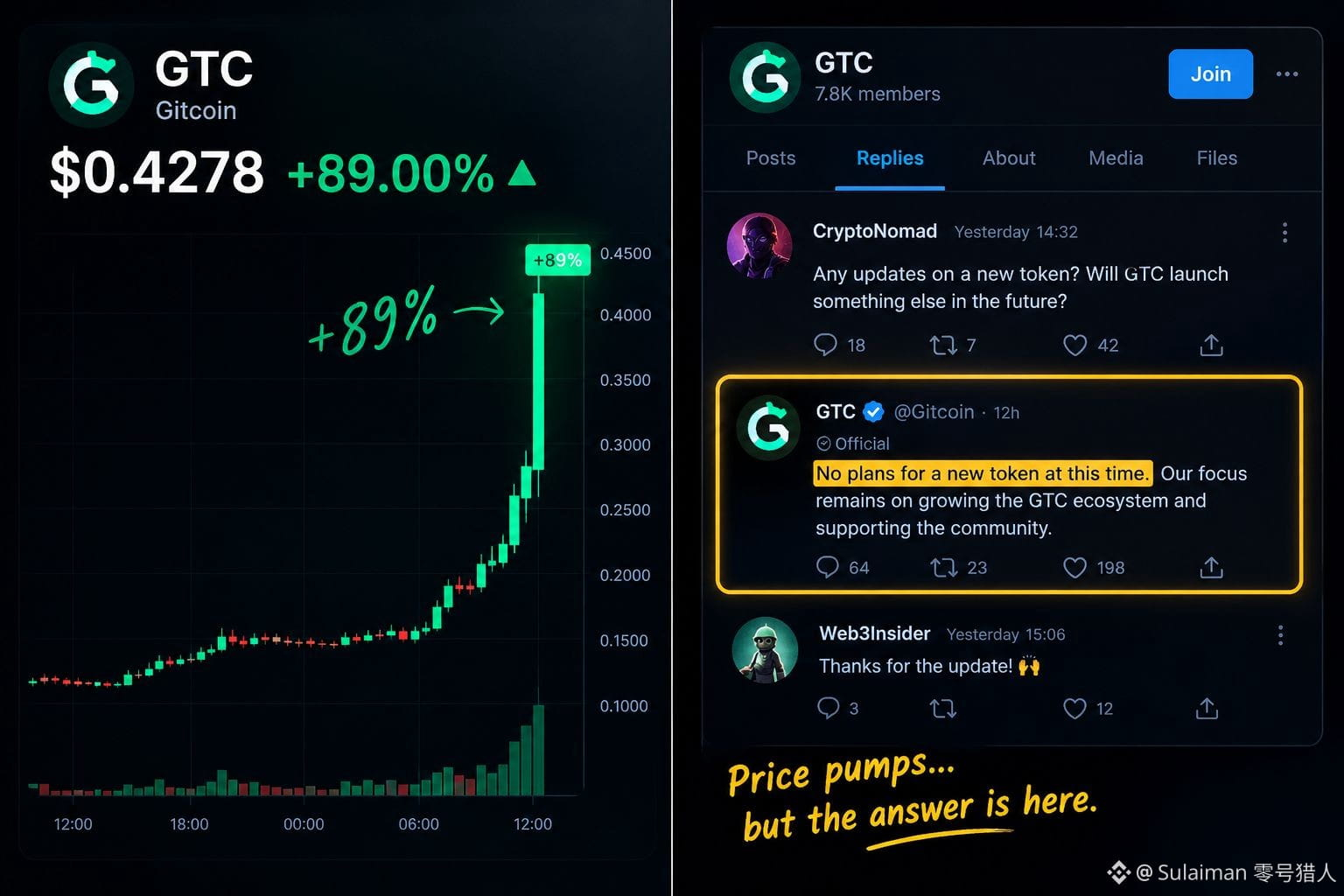
$GTC is up ~89% on a rebrand. Gitcoin's own post says the rebrand has no new token.
Everyone's watching the chart. I went to the forum thread instead.
Someone asked if a new token is coming. The reply: no plans for one.
Techne is a separate brand, planned as a 501(c)(3). The DAO and GTC carry on as before.
The first pilot test had about 10 of 15 invitees show up. The post itself says that's too small to conclude anything. Launch is targeted for mid-December, and legal work is the likeliest delay.
Nobody wants to be the one who watched a coin double and asked what it does. I get it. But that's the question I'd ask. I can't find anything in the announcement that makes someone need to buy GTC.
My read: the market may be pricing a story, not a mechanism. The volume was real though (about 18.9x average, per a secondary source), so I could be wrong about how long the story runs.
I'd change my mind if a governance proposal gives GTC an actual sink. I'd get more skeptical if Techne launches with GTC left out.
Would you rather buy the story early, or wait until the token has a real role in it?
#GTC #Gitcoin #Techne #CryptoResearch
$GTC is up ~89% on a rebrand. Gitcoin's own post says the rebrand has no new token.
Everyone's watching the chart. I went to the forum thread instead.
Someone asked if a new token is coming. The reply: no plans for one.
Techne is a separate brand, planned as a 501(c)(3). The DAO and GTC carry on as before.
The first pilot test had about 10 of 15 invitees show up. The post itself says that's too small to conclude anything. Launch is targeted for mid-December, and legal work is the likeliest delay.
Nobody wants to be the one who watched a coin double and asked what it does. I get it. But that's the question I'd ask. I can't find anything in the announcement that makes someone need to buy GTC.
My read: the market may be pricing a story, not a mechanism. The volume was real though (about 18.9x average, per a secondary source), so I could be wrong about how long the story runs.
I'd change my mind if a governance proposal gives GTC an actual sink. I'd get more skeptical if Techne launches with GTC left out.
Would you rather buy the story early, or wait until the token has a real role in it?
#GTC #Gitcoin #Techne #CryptoResearch
Everyone's watching the chart. I went to the forum thread instead.
Someone asked if a new token is coming. The reply: no plans for one.
Techne is a separate brand, planned as a 501(c)(3). The DAO and GTC carry on as before.
The first pilot test had about 10 of 15 invitees show up. The post itself says that's too small to conclude anything. Launch is targeted for mid-December, and legal work is the likeliest delay.
Nobody wants to be the one who watched a coin double and asked what it does. I get it. But that's the question I'd ask. I can't find anything in the announcement that makes someone need to buy GTC.
My read: the market may be pricing a story, not a mechanism. The volume was real though (about 18.9x average, per a secondary source), so I could be wrong about how long the story runs.
I'd change my mind if a governance proposal gives GTC an actual sink. I'd get more skeptical if Techne launches with GTC left out.
Would you rather buy the story early, or wait until the token has a real role in it?
#GTC #Gitcoin #Techne #CryptoResearch
109
ZERO → 1,000. 🖤
But honestly…
The number is not what I’m celebrating today.
I’m celebrating the PEOPLE behind that number. 🤝
When Zero Hunter was still at ZERO, some of you were already there — supporting, replying, sharing, encouraging, and giving me that little push to keep going.
Today, I want to give those people their flowers. 🌹
Huge respect to:
@CipherXOG
@Solanadiva
@ELENA-13141314
@mdx1688
@Square-Creator-68e610637
@Square-Creator-b47fa46235ac
@CF76887
@Square-Creator-8d488af9f207
@bang-bang
@wanfeng1688
@hpr2008
@Square-Creator-4b74aee82d9b8
@Square-Creator-0a10ed162601
@Square-Creator-4ddf7e61d47fc
@zlh-66778989
@Square-Creator-b10976136
You didn't just give me a follow.
You gave Zero Hunter momentum. 🫡
ZERO → 1K was only the beginning.
I remember the people who helped me get here.
Now the real hunt begins. 🐺
Next stop: 10K.
Much love. Much respect. ❤️
And to everyone who has been part of this journey — even if your name isn't on this list — I see you.
👉 Follow and stay connected. More quizzes, rewards & crypto research coming.
Good luck, Crypto Family! 🚀
—Sulaiman Zero Hunter
#ZeroHunter #ZeroResearch #Sulaiman零号猎人
ZERO → 1,000. 🖤
But honestly…
The number is not what I’m celebrating today.
I’m celebrating the PEOPLE behind that number. 🤝
When Zero Hunter was still at ZERO, some of you were already there — supporting, replying, sharing, encouraging, and giving me that little push to keep going.
Today, I want to give those people their flowers. 🌹
Huge respect to:
@CipherX 零号
@Solana Diva
@Elena神话MUA
@Hawk自由哥
@奋斗Hustle1688
@神秘小K钱
@辛迪cindy
@钞机八蛋
@帮帮Bonnie
@晚风Vesper_1688
@听澜321
@币盈Anna
@蓓蓓大王
@路飞社区糖宝Luffy
@周周1688
@英鸿³³₇
You didn't just give me a follow.
You gave Zero Hunter momentum. 🫡
ZERO → 1K was only the beginning.
I remember the people who helped me get here.
Now the real hunt begins. 🐺
Next stop: 10K.
Much love. Much respect. ❤️
And to everyone who has been part of this journey — even if your name isn't on this list — I see you.
👉 Follow and stay connected. More quizzes, rewards & crypto research coming.
Good luck, Crypto Family! 🚀
—Sulaiman Zero Hunter
#ZeroHunter #ZeroResearch #Sulaiman零号猎人
But honestly…
The number is not what I’m celebrating today.
I’m celebrating the PEOPLE behind that number. 🤝
When Zero Hunter was still at ZERO, some of you were already there — supporting, replying, sharing, encouraging, and giving me that little push to keep going.
Today, I want to give those people their flowers. 🌹
Huge respect to:
@CipherX 零号
@Solana Diva
@Elena神话MUA
@Hawk自由哥
@奋斗Hustle1688
@神秘小K钱
@辛迪cindy
@钞机八蛋
@帮帮Bonnie
@晚风Vesper_1688
@听澜321
@币盈Anna
@蓓蓓大王
@路飞社区糖宝Luffy
@周周1688
@英鸿³³₇
You didn't just give me a follow.
You gave Zero Hunter momentum. 🫡
ZERO → 1K was only the beginning.
I remember the people who helped me get here.
Now the real hunt begins. 🐺
Next stop: 10K.
Much love. Much respect. ❤️
And to everyone who has been part of this journey — even if your name isn't on this list — I see you.
👉 Follow and stay connected. More quizzes, rewards & crypto research coming.
Good luck, Crypto Family! 🚀
—Sulaiman Zero Hunter
#ZeroHunter #ZeroResearch #Sulaiman零号猎人

2
2
104
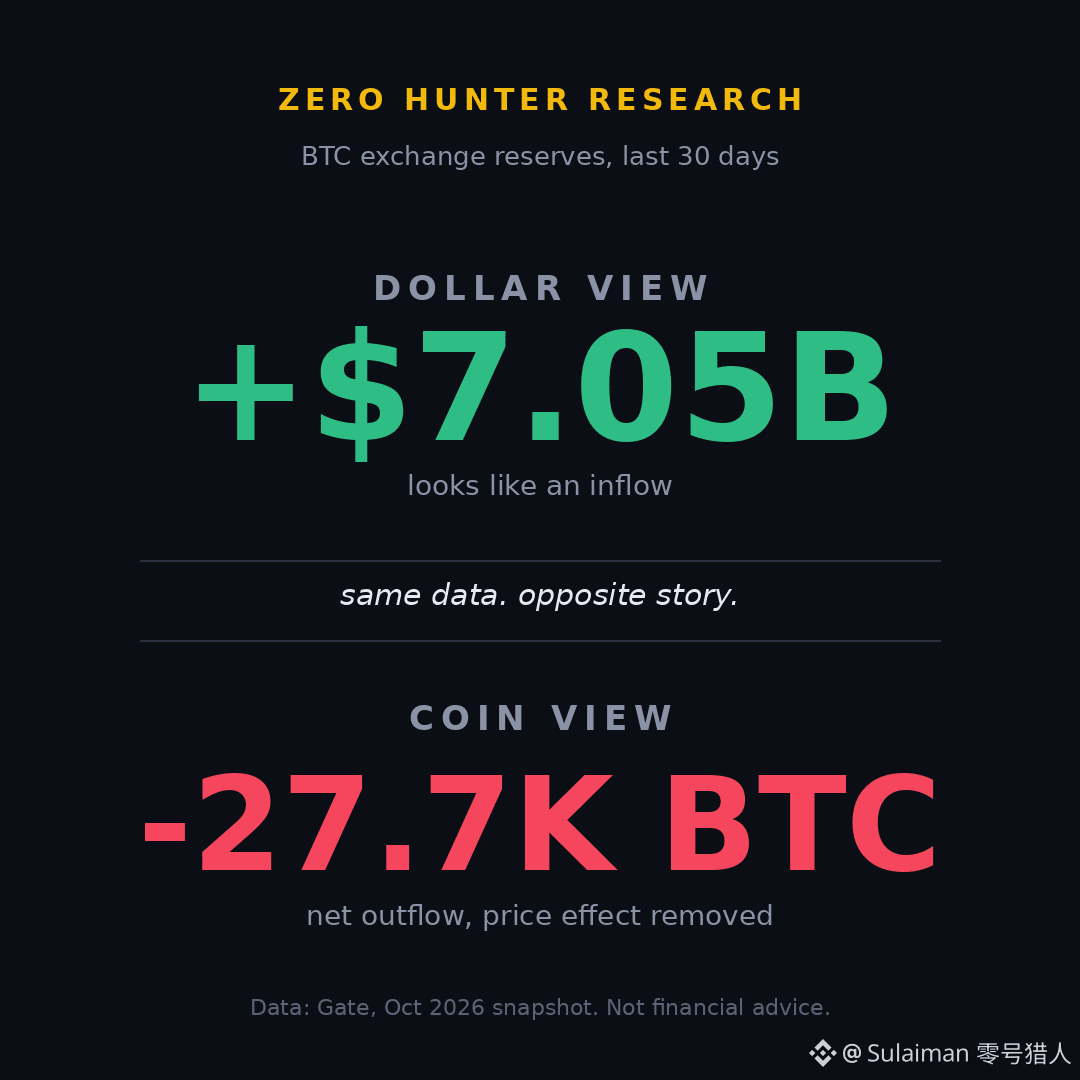
The dashboard said +$7B inflow. The real flow was outflow. 🔎
One number nearly sent me the wrong way.
BTC exchange reserves are up about $7B in 30 days. That looks like coins heading to exchanges to be sold. Scary.
But that's the reserve in dollars. BTC's price rose roughly 6-7% over the same period, and price pushed the dollar number up. Count the coins instead:
30-day net flow: about -27,700 BTC (outflow, roughly 1% of reserves)
7-day net flow: about -6,800 BTC
Sep 22, Binance alone: about -13,600 BTC (~$1.17B), nearly half of the whole month
Everyone is looking at the dollar line. I'd look at the coin count.
My read: the outflow is real but modest, and much of it is one day. I'm not saying whales are buying. Coins leaving an exchange can go to self-custody, ETF custody, or just internal wallet moves.
Stronger if: weekly outflows keep coming after that one big day.
Wrong if: the Binance move turns out to be wallet reshuffling.
Be honest: when a dashboard shows a big green number, do you check what's inside it?
⚠️ Not financial advice. Data comes from public dashboards and may differ between sources. DYOR.
#BTC #Bitcoin #OnChain #ZeroResearch #DYOR
The dashboard said +$7B inflow. The real flow was outflow. 🔎
One number nearly sent me the wrong way.
BTC exchange reserves are up about $7B in 30 days. That looks like coins heading to exchanges to be sold. Scary.
But that's the reserve in dollars. BTC's price rose roughly 6-7% over the same period, and price pushed the dollar number up. Count the coins instead:
30-day net flow: about -27,700 BTC (outflow, roughly 1% of reserves)
7-day net flow: about -6,800 BTC
Sep 22, Binance alone: about -13,600 BTC (~$1.17B), nearly half of the whole month
Everyone is looking at the dollar line. I'd look at the coin count.
My read: the outflow is real but modest, and much of it is one day. I'm not saying whales are buying. Coins leaving an exchange can go to self-custody, ETF custody, or just internal wallet moves.
Stronger if: weekly outflows keep coming after that one big day.
Wrong if: the Binance move turns out to be wallet reshuffling.
Be honest: when a dashboard shows a big green number, do you check what's inside it?
⚠️ Not financial advice. Data comes from public dashboards and may differ between sources. DYOR.
#BTC #Bitcoin #OnChain #ZeroResearch #DYOR
One number nearly sent me the wrong way.
BTC exchange reserves are up about $7B in 30 days. That looks like coins heading to exchanges to be sold. Scary.
But that's the reserve in dollars. BTC's price rose roughly 6-7% over the same period, and price pushed the dollar number up. Count the coins instead:
30-day net flow: about -27,700 BTC (outflow, roughly 1% of reserves)
7-day net flow: about -6,800 BTC
Sep 22, Binance alone: about -13,600 BTC (~$1.17B), nearly half of the whole month
Everyone is looking at the dollar line. I'd look at the coin count.
My read: the outflow is real but modest, and much of it is one day. I'm not saying whales are buying. Coins leaving an exchange can go to self-custody, ETF custody, or just internal wallet moves.
Stronger if: weekly outflows keep coming after that one big day.
Wrong if: the Binance move turns out to be wallet reshuffling.
Be honest: when a dashboard shows a big green number, do you check what's inside it?
⚠️ Not financial advice. Data comes from public dashboards and may differ between sources. DYOR.
#BTC #Bitcoin #OnChain #ZeroResearch #DYOR
2
30
Log in to explore more content
Join global crypto users on Binance Square
⚡️ Get latest and useful information about crypto.
💬 Trusted by the world’s largest crypto exchange.
👍 Discover real insights from verified creators.
အီးမေးလ် / ဖုန်းနံပါတ်
ရေပန်းစားနေသော ခေါင်းစဉ်များ
BinanceLaunchesBinanceIntelligence
14,261 views
222 Discussing
🚨 BINANCE JUST PUT AI DIRECTLY INSIDE THE EXCHANGE — AND THIS COULD CHANGE HOW RETAIL TRADES.
Binance has officially launched Binance Intelligence, a new AI layer built into the Binance ecosystem. It combines three products:
Binance AI for everyday users,
Binance AI Pro for automated trading workflows,
and Agent OS for developers building financial agents.
The part traders should care about?
Binance AI can surface market briefs, smart alerts, PnL recaps and personalized information, while AI Pro is designed to turn a plain-English trading idea into a visual strategy workflow.
That means the next phase of exchange competition may not be:
lowest fees vs deepest liquidity.
It could be:
who gives traders the best AI execution layer.
If Binance Intelligence actually drives heavier user activity, automated strategies and higher trading frequency, watch $BNB first.
AI adoption ↑
→ Binance engagement ↑
→ trading activity ↑
→ ecosystem narrative strengthens.
The catalyst I’d watch now:
global rollout + AI Pro launch + measurable user adoption.
Because once AI stops just telling you what the market is doing…
…and starts helping build the trade itself?
That’s when this gets much bigger than another chatbot. 👀
#binancelaunchesbinanceintelligence #EvernorthXRPTreasuryCompletesSPACMerger #ADAGains10%Above$0.27 #ETHUp70%InQ3ButLiquidityFalls #EthStakingExitQueueHits2026High
KimHotbae
·နှစ်သက်မှု 16 ခု
·20.1k views
EvernorthXRPTreasuryCompletesSPACMerger
17,565 views
159 Discussing
ADAGains10%Above$0.27
25,572 views
195 Discussing