

MarketHitman
63k Жариялаулар

MarketHitman
Хабарлау
Пайдаланушыны блоктау
0 Жазылым
1.1K+ Жазылушылар
3.6K+ лайк басылған
Жазбалар
·
--
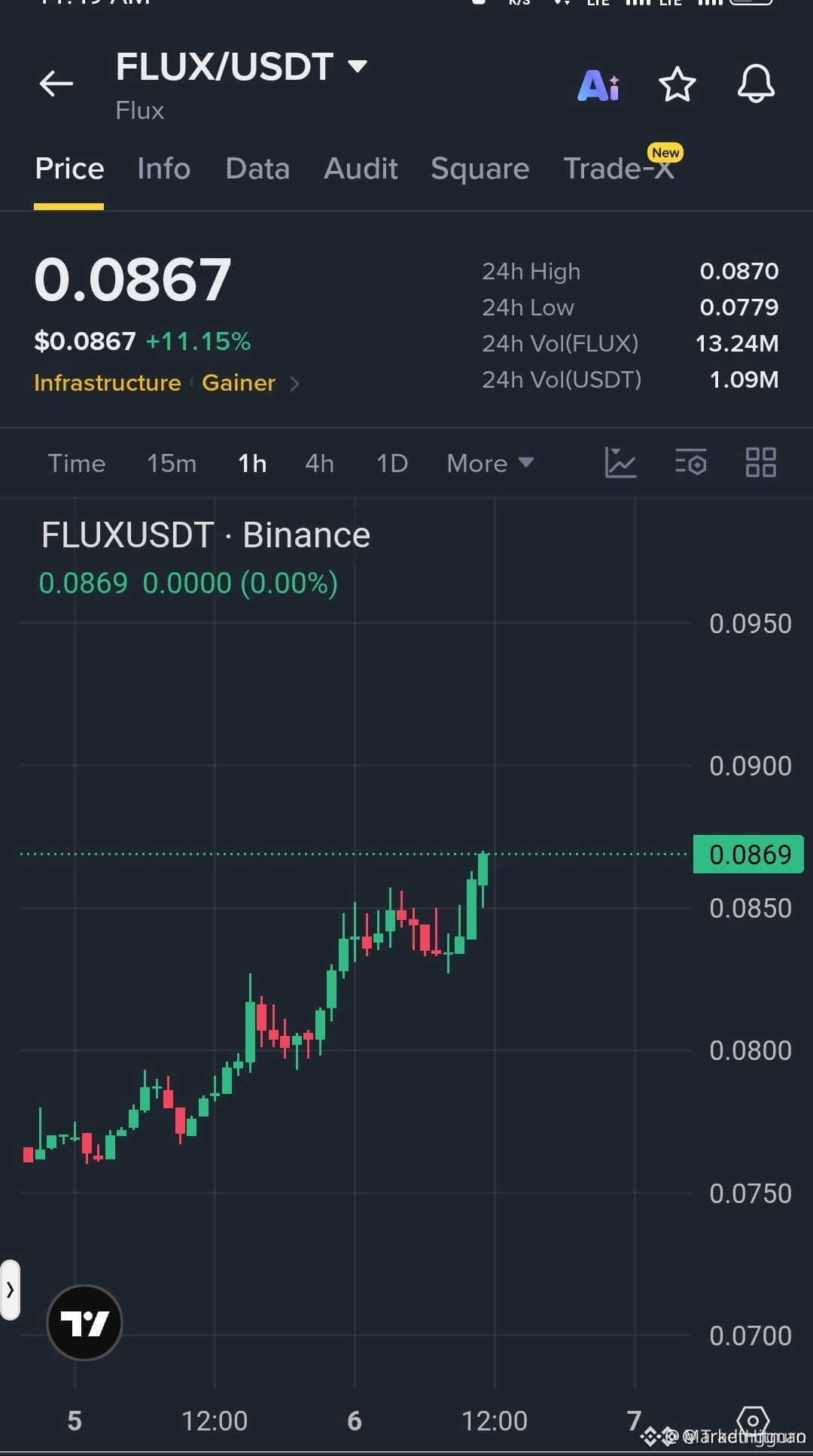
🚀 $FLUX ACCELERATING OFF DEMAND AS BUYERS PUSH FOR THE $0.087 RESISTANCE FLIP! ⚡
Entry: 0.0855 - 0.0870 ⚡
Target: 0.0890 - 0.0940 🚀
Stop Loss: 0.0825 ⚠️
📌 Buyers have been steadily absorbing sell orders since establishing a firm base at the $0.076 level, driving price straight into the $0.087 breakout threshold. 📊 Aggressive market bids are now pressing hard against this overhead supply block, signaling clear momentum expansion.
💡 A confirmed hold above this retest zone opens up a clean liquidity runway toward our higher targets as sellers get caught out of position. 💬 Are you front-running this breakout flip or waiting for a clean confirmation close? 👇
⚠️ Not financial advice. Always manage your risk. 🛡️
🏷️ #FLUX #Breakout #Crypto #Altcoins #Trading
⚡ 🎯
🚀 $FLUX ACCELERATING OFF DEMAND AS BUYERS PUSH FOR THE $0.087 RESISTANCE FLIP! ⚡
Entry: 0.0855 - 0.0870 ⚡
Target: 0.0890 - 0.0940 🚀
Stop Loss: 0.0825 ⚠️
📌 Buyers have been steadily absorbing sell orders since establishing a firm base at the $0.076 level, driving price straight into the $0.087 breakout threshold. 📊 Aggressive market bids are now pressing hard against this overhead supply block, signaling clear momentum expansion.
💡 A confirmed hold above this retest zone opens up a clean liquidity runway toward our higher targets as sellers get caught out of position. 💬 Are you front-running this breakout flip or waiting for a clean confirmation close? 👇
⚠️ Not financial advice. Always manage your risk. 🛡️
🏷️ #FLUX #Breakout #Crypto #Altcoins #Trading
⚡ 🎯
Entry: 0.0855 - 0.0870 ⚡
Target: 0.0890 - 0.0940 🚀
Stop Loss: 0.0825 ⚠️
📌 Buyers have been steadily absorbing sell orders since establishing a firm base at the $0.076 level, driving price straight into the $0.087 breakout threshold. 📊 Aggressive market bids are now pressing hard against this overhead supply block, signaling clear momentum expansion.
💡 A confirmed hold above this retest zone opens up a clean liquidity runway toward our higher targets as sellers get caught out of position. 💬 Are you front-running this breakout flip or waiting for a clean confirmation close? 👇
⚠️ Not financial advice. Always manage your risk. 🛡️
🏷️ #FLUX #Breakout #Crypto #Altcoins #Trading
⚡ 🎯
·
--
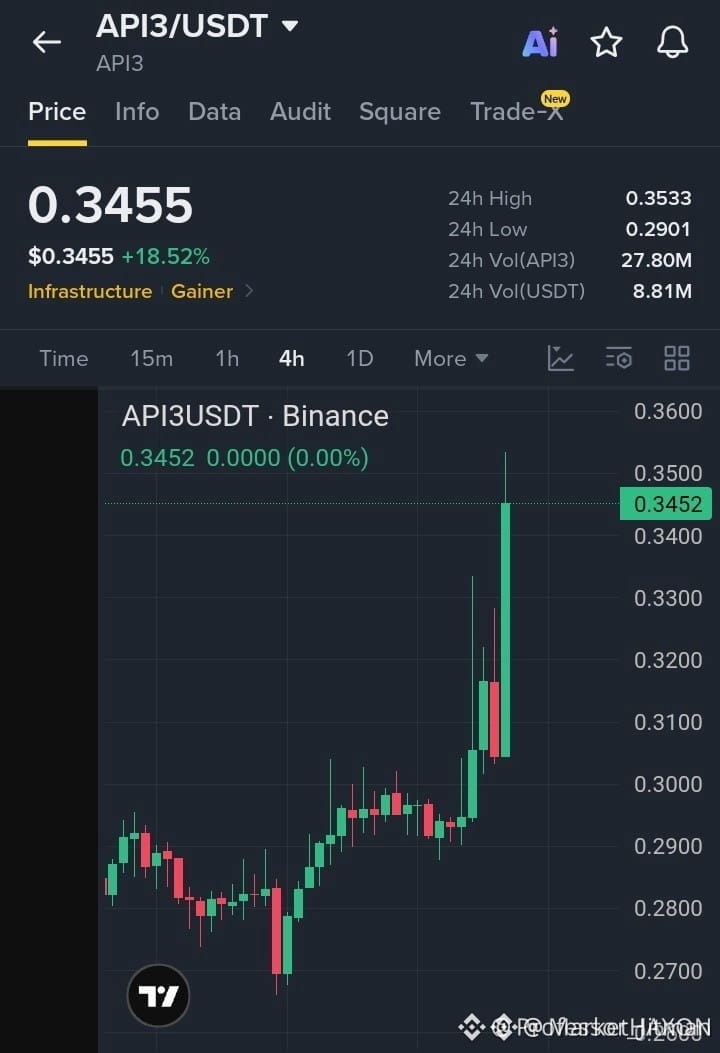
🚨 $API3 SHATTERS KEY RESISTANCE WITH EXPLOSIVE 4H MOMENTUM AND EXPANDING VOLUME! 💥
Entry: 0.3400 - 0.3460 🟢
Target: 0.3550 - 0.3900 🚀
Stop Loss: 0.3280 ⚠️
📌 Buyers just sliced straight through the heavy supply zone at 0.33, flipping former resistance into a firm demand platform on the 4H chart. ⚡ Bulls are aggressively protecting 0.34, showing zero urgency to give back ground as momentum builds for the next leg up.
📊 Order flow is shifting decisively toward expansion, with volume validating this breakout attempt. 💡 As long as price holds above our invalidation level at 0.3280, the path of least resistance points sharply higher toward key targets. 💬 Are you bidding this retest zone or waiting for 0.3550 to clear first? 👇
⚠️ Not financial advice. Always manage your risk. 🛡️
🏷️ #API3 #LongSetup #Breakout #Altcoins #Crypto
🔥 ⚡
🚨 $API3 SHATTERS KEY RESISTANCE WITH EXPLOSIVE 4H MOMENTUM AND EXPANDING VOLUME! 💥
Entry: 0.3400 - 0.3460 🟢
Target: 0.3550 - 0.3900 🚀
Stop Loss: 0.3280 ⚠️
📌 Buyers just sliced straight through the heavy supply zone at 0.33, flipping former resistance into a firm demand platform on the 4H chart. ⚡ Bulls are aggressively protecting 0.34, showing zero urgency to give back ground as momentum builds for the next leg up.
📊 Order flow is shifting decisively toward expansion, with volume validating this breakout attempt. 💡 As long as price holds above our invalidation level at 0.3280, the path of least resistance points sharply higher toward key targets. 💬 Are you bidding this retest zone or waiting for 0.3550 to clear first? 👇
⚠️ Not financial advice. Always manage your risk. 🛡️
🏷️ #API3 #LongSetup #Breakout #Altcoins #Crypto
🔥 ⚡
Entry: 0.3400 - 0.3460 🟢
Target: 0.3550 - 0.3900 🚀
Stop Loss: 0.3280 ⚠️
📌 Buyers just sliced straight through the heavy supply zone at 0.33, flipping former resistance into a firm demand platform on the 4H chart. ⚡ Bulls are aggressively protecting 0.34, showing zero urgency to give back ground as momentum builds for the next leg up.
📊 Order flow is shifting decisively toward expansion, with volume validating this breakout attempt. 💡 As long as price holds above our invalidation level at 0.3280, the path of least resistance points sharply higher toward key targets. 💬 Are you bidding this retest zone or waiting for 0.3550 to clear first? 👇
⚠️ Not financial advice. Always manage your risk. 🛡️
🏷️ #API3 #LongSetup #Breakout #Altcoins #Crypto
🔥 ⚡
15
·
--
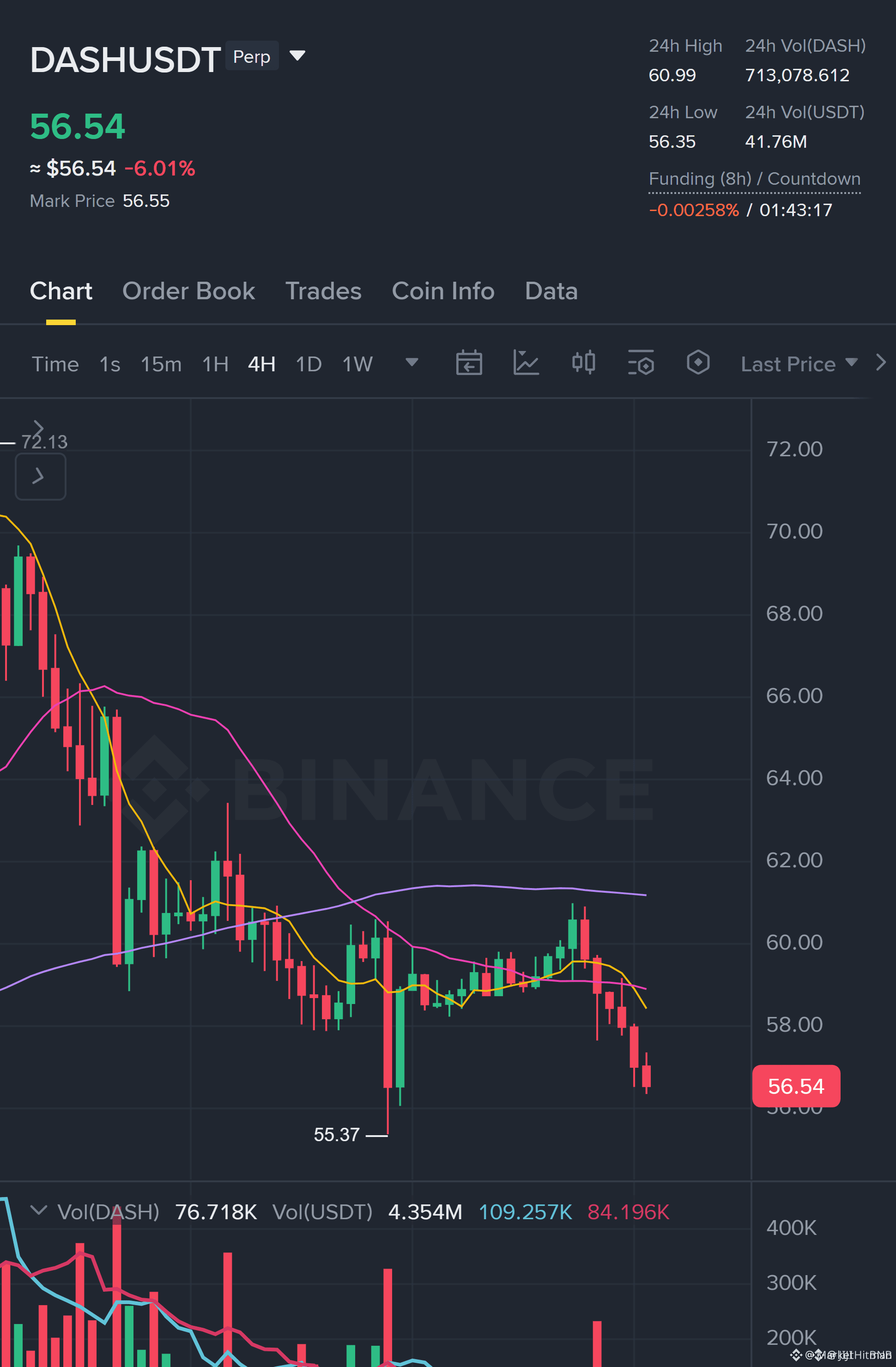
🔻 $DASH HEADS BACK TO CRITICAL RESISTANCE FOR A HIGH-CONVICTION SHORT SWEEP! 📉
Entry: 56.99 - 57.10 🔻
Target 1: 56.52 🎯
Target 2: 56.36 📉
Target 3: 55.37 💣
Stop Loss: 57.45 🛑
📌 The 1H structural trend on $DASH remains heavily skewed downward, with sellers consistently defending local resistance. 📊 Price is currently floating below the prime distribution block between 56.99 and 57.10, making a patience-driven retest essential before unlocking downside velocity toward the final liquidity target.
🔍 Disciplined execution is critical here as lower timeframe confirmation is still forming on the 15M chart. 💡 Smart money is waiting for exhausted buyers to get absorbed before triggering the cascade down to deeper levels. 💬 Are you waiting for the 15M sweep confirmation or already setting your limit orders at resistance? 👇
⚠️ Not financial advice. Always manage your risk. 🛡️
🏷️ #DASH #ShortSetup #CryptoTrading #Bearish #Altcoins
🐻 📉
🔻 $DASH HEADS BACK TO CRITICAL RESISTANCE FOR A HIGH-CONVICTION SHORT SWEEP! 📉
Entry: 56.99 - 57.10 🔻
Target 1: 56.52 🎯
Target 2: 56.36 📉
Target 3: 55.37 💣
Stop Loss: 57.45 🛑
📌 The 1H structural trend on $DASH remains heavily skewed downward, with sellers consistently defending local resistance. 📊 Price is currently floating below the prime distribution block between 56.99 and 57.10, making a patience-driven retest essential before unlocking downside velocity toward the final liquidity target.
🔍 Disciplined execution is critical here as lower timeframe confirmation is still forming on the 15M chart. 💡 Smart money is waiting for exhausted buyers to get absorbed before triggering the cascade down to deeper levels. 💬 Are you waiting for the 15M sweep confirmation or already setting your limit orders at resistance? 👇
⚠️ Not financial advice. Always manage your risk. 🛡️
🏷️ #DASH #ShortSetup #CryptoTrading #Bearish #Altcoins
🐻 📉
Entry: 56.99 - 57.10 🔻
Target 1: 56.52 🎯
Target 2: 56.36 📉
Target 3: 55.37 💣
Stop Loss: 57.45 🛑
📌 The 1H structural trend on $DASH remains heavily skewed downward, with sellers consistently defending local resistance. 📊 Price is currently floating below the prime distribution block between 56.99 and 57.10, making a patience-driven retest essential before unlocking downside velocity toward the final liquidity target.
🔍 Disciplined execution is critical here as lower timeframe confirmation is still forming on the 15M chart. 💡 Smart money is waiting for exhausted buyers to get absorbed before triggering the cascade down to deeper levels. 💬 Are you waiting for the 15M sweep confirmation or already setting your limit orders at resistance? 👇
⚠️ Not financial advice. Always manage your risk. 🛡️
🏷️ #DASH #ShortSetup #CryptoTrading #Bearish #Altcoins
🐻 📉
10
·
--
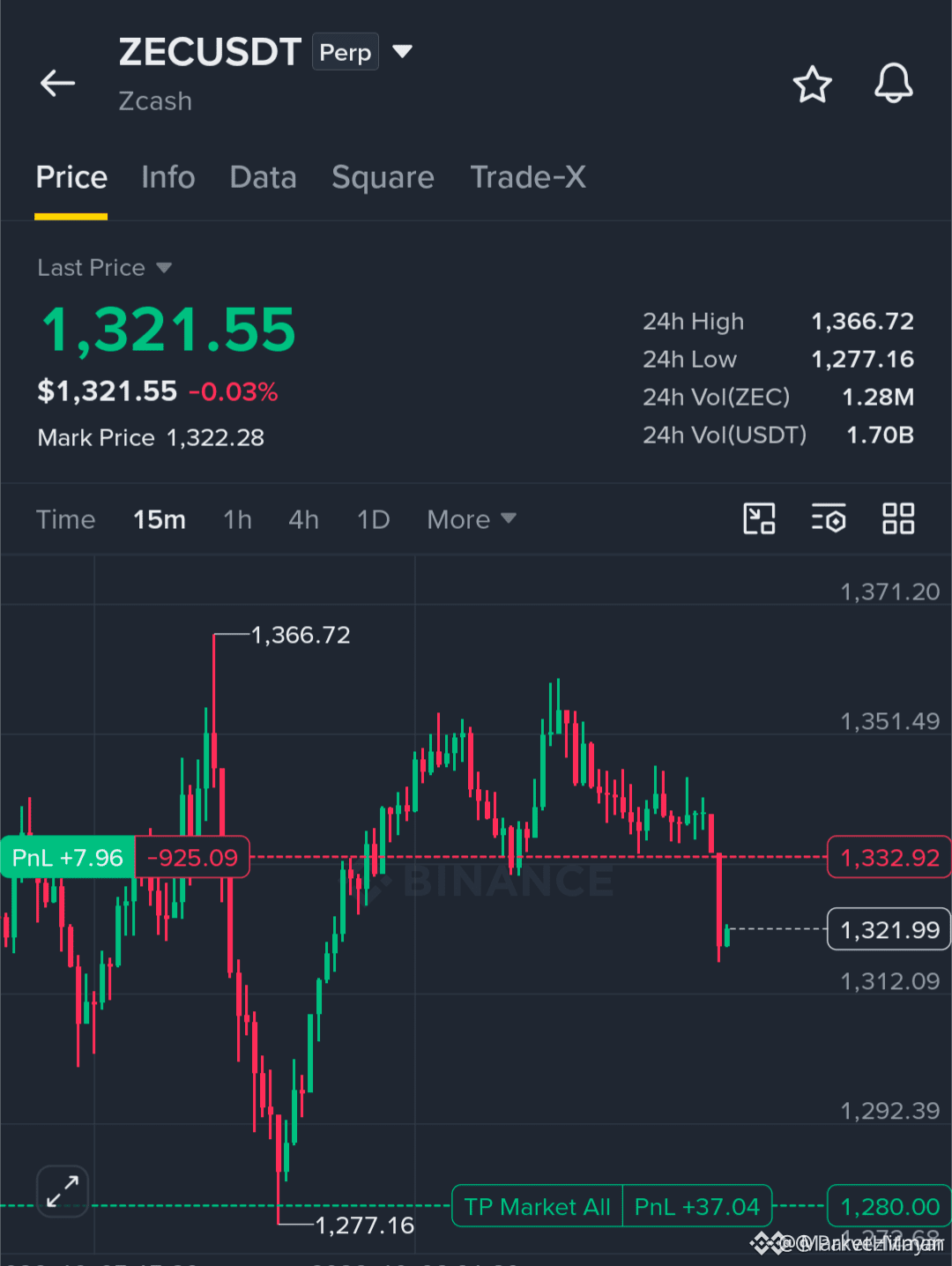
🔻 $ZEC TIGHTENING BEFORE PULLBACK AS ALTS GEAR UP FOR THE NEXT LEG 📉
Target: 1,280 🚀
Stop Loss: 1,410 ⚠️
📌 While the macro thesis on $ZEC points toward a massive long-term expansion targeting $1,850, local order flow shows clear signs of short-term exhaustion. Positioning for a controlled pullback toward $1,280 allows us to extract yield on the retracement. 📊
⚡ Meanwhile, smart capital is immediately rotating into fresh momentum. Long positions in $ADA looking for $0.285 and $SUI targeting $1.245 capture the dynamic altcoin rotation while macro trends mature. 💡
💬 Are you taking tactical shorts on pullbacks or just riding out the volatility in spot? 👇
⚠️ Not financial advice. Always manage your risk. 🛡️
🏷️ #ZEC #ADA #SUI #Altcoins #Crypto
🔥 💎
🔻 $ZEC TIGHTENING BEFORE PULLBACK AS ALTS GEAR UP FOR THE NEXT LEG 📉
Target: 1,280 🚀
Stop Loss: 1,410 ⚠️
📌 While the macro thesis on $ZEC points toward a massive long-term expansion targeting $1,850, local order flow shows clear signs of short-term exhaustion. Positioning for a controlled pullback toward $1,280 allows us to extract yield on the retracement. 📊
⚡ Meanwhile, smart capital is immediately rotating into fresh momentum. Long positions in $ADA looking for $0.285 and $SUI targeting $1.245 capture the dynamic altcoin rotation while macro trends mature. 💡
💬 Are you taking tactical shorts on pullbacks or just riding out the volatility in spot? 👇
⚠️ Not financial advice. Always manage your risk. 🛡️
🏷️ #ZEC #ADA #SUI #Altcoins #Crypto
🔥 💎
Target: 1,280 🚀
Stop Loss: 1,410 ⚠️
📌 While the macro thesis on $ZEC points toward a massive long-term expansion targeting $1,850, local order flow shows clear signs of short-term exhaustion. Positioning for a controlled pullback toward $1,280 allows us to extract yield on the retracement. 📊
⚡ Meanwhile, smart capital is immediately rotating into fresh momentum. Long positions in $ADA looking for $0.285 and $SUI targeting $1.245 capture the dynamic altcoin rotation while macro trends mature. 💡
💬 Are you taking tactical shorts on pullbacks or just riding out the volatility in spot? 👇
⚠️ Not financial advice. Always manage your risk. 🛡️
🏷️ #ZEC #ADA #SUI #Altcoins #Crypto
🔥 💎
53
·
--
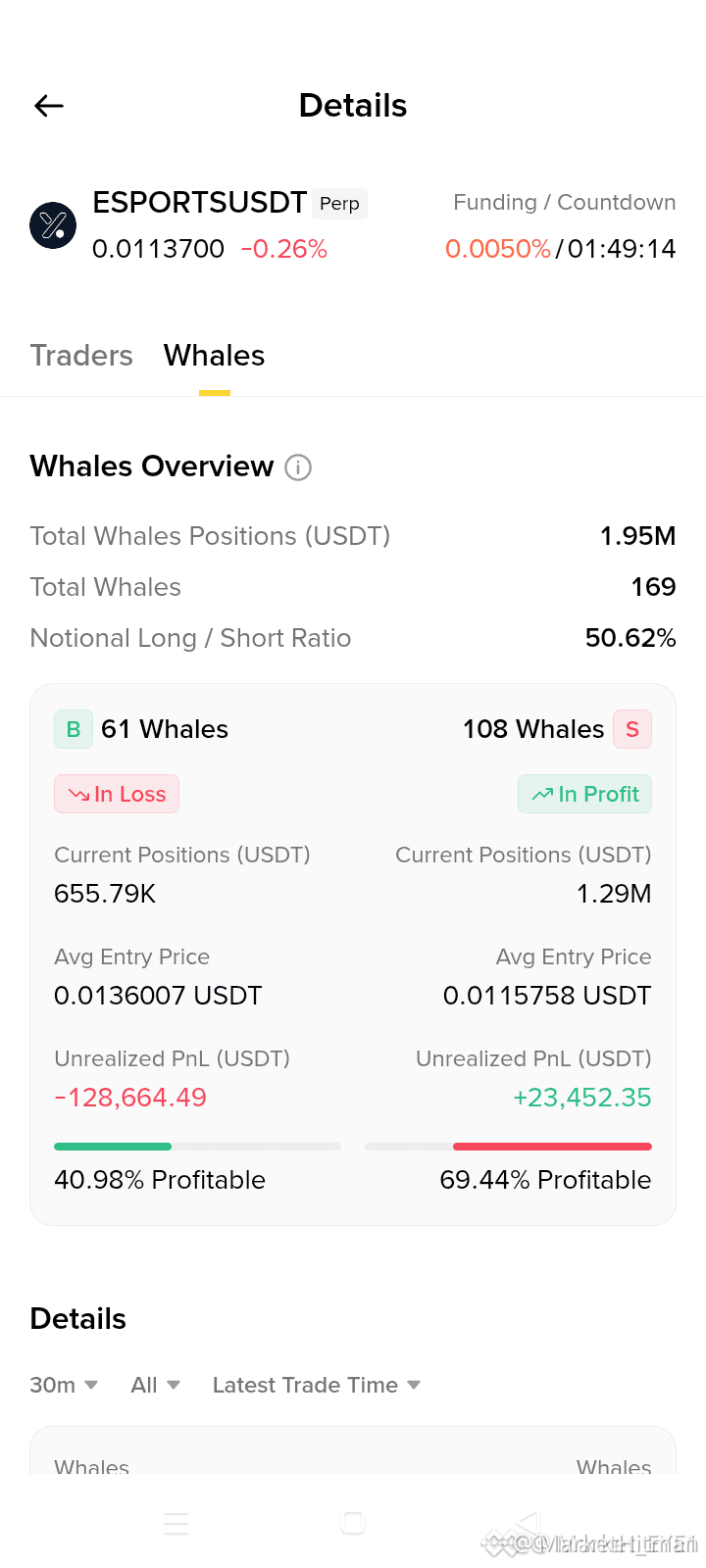
🔴 $ESPORTS FAIR VALUE GAP SWEEP OFFERS TEXTBOOK SHORT CONTINUATION OPPORTUNITY 📉
Entry: 0.01150 - 0.01180 ⚡
Target: 0.01080 - 0.00940 🎯
Stop Loss: 0.01230 ⚠️
Smart money is heavily locked into short positions here as market structure cleanly breaks down. 🦈 We are watching price execute a precise sweep into the fair value gap, setting up a high-probability continuation wave lower. 📊
The momentum heavily favors sellers as liquidity gets absorbed around local resistance. 📉 Risk controls remain tight above structural invalidation to protect capital while riding the downside expansion. 💡
💬 Are you riding this breakdown down to the lower targets or waiting for full confirmation? 👇
⚠️ Not financial advice. Always manage your risk. 🛡️
🏷️ #ESPORTS #ShortSetup #Altcoins #Crypto
🐻 📉
🔴 $ESPORTS FAIR VALUE GAP SWEEP OFFERS TEXTBOOK SHORT CONTINUATION OPPORTUNITY 📉
Entry: 0.01150 - 0.01180 ⚡
Target: 0.01080 - 0.00940 🎯
Stop Loss: 0.01230 ⚠️
Smart money is heavily locked into short positions here as market structure cleanly breaks down. 🦈 We are watching price execute a precise sweep into the fair value gap, setting up a high-probability continuation wave lower. 📊
The momentum heavily favors sellers as liquidity gets absorbed around local resistance. 📉 Risk controls remain tight above structural invalidation to protect capital while riding the downside expansion. 💡
💬 Are you riding this breakdown down to the lower targets or waiting for full confirmation? 👇
⚠️ Not financial advice. Always manage your risk. 🛡️
🏷️ #ESPORTS #ShortSetup #Altcoins #Crypto
🐻 📉
Entry: 0.01150 - 0.01180 ⚡
Target: 0.01080 - 0.00940 🎯
Stop Loss: 0.01230 ⚠️
Smart money is heavily locked into short positions here as market structure cleanly breaks down. 🦈 We are watching price execute a precise sweep into the fair value gap, setting up a high-probability continuation wave lower. 📊
The momentum heavily favors sellers as liquidity gets absorbed around local resistance. 📉 Risk controls remain tight above structural invalidation to protect capital while riding the downside expansion. 💡
💬 Are you riding this breakdown down to the lower targets or waiting for full confirmation? 👇
⚠️ Not financial advice. Always manage your risk. 🛡️
🏷️ #ESPORTS #ShortSetup #Altcoins #Crypto
🐻 📉
11
·
--
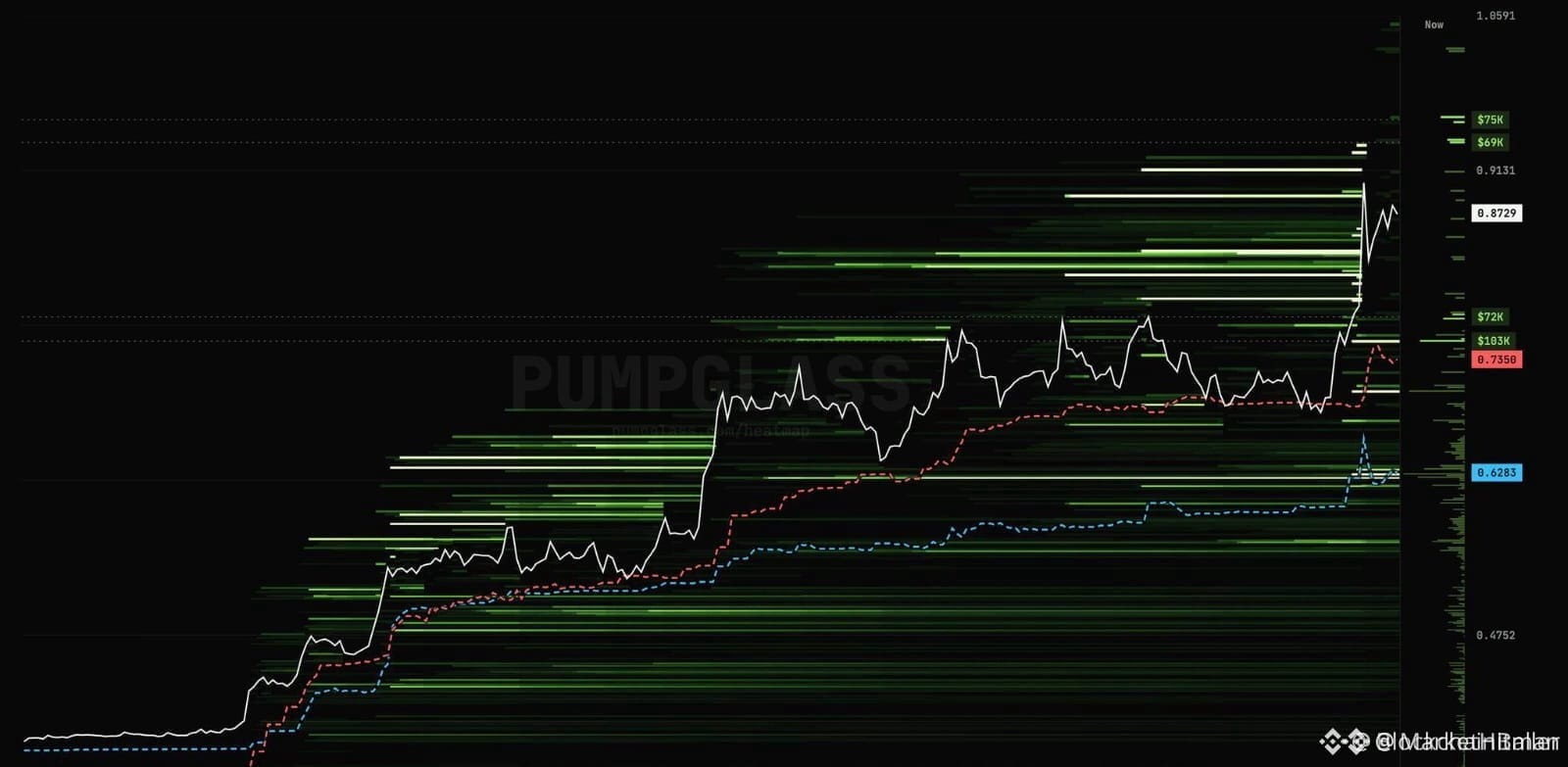
🚨 $RLC WHALES TRAP SHORT SELLERS IN A $5.3M LIQUIDATION CASCADE! 🦈
Smart money just delivered a textbook masterclass on $RLC , ripping price up 133% and torching over $5.3M in leveraged shorts. 📊 While retail traders flipped heavy bearish with long positions collapsing from 71% down to 39%, institutional whales locked in a massive 77% long stance anchored around $0.6275.
📌 The battleground now sits squarely at the crucial $1.00 resistance level. Holding structural acceptance above $1.00 could ignite another violent squeeze phase, while losing $0.7345 would signal momentum exhaustion. 💬 Are you front-running the next whale expansion or betting on a local top here? 👇
⚠️ Not financial advice. Always manage your risk. 🛡️
🏷️ #RLC #ShortSqueeze #Crypto #WhaleAlert #Trading
🦈 ⚡
🚨 $RLC WHALES TRAP SHORT SELLERS IN A $5.3M LIQUIDATION CASCADE! 🦈
Smart money just delivered a textbook masterclass on $RLC , ripping price up 133% and torching over $5.3M in leveraged shorts. 📊 While retail traders flipped heavy bearish with long positions collapsing from 71% down to 39%, institutional whales locked in a massive 77% long stance anchored around $0.6275.
📌 The battleground now sits squarely at the crucial $1.00 resistance level. Holding structural acceptance above $1.00 could ignite another violent squeeze phase, while losing $0.7345 would signal momentum exhaustion. 💬 Are you front-running the next whale expansion or betting on a local top here? 👇
⚠️ Not financial advice. Always manage your risk. 🛡️
🏷️ #RLC #ShortSqueeze #Crypto #WhaleAlert #Trading
🦈 ⚡
Smart money just delivered a textbook masterclass on $RLC , ripping price up 133% and torching over $5.3M in leveraged shorts. 📊 While retail traders flipped heavy bearish with long positions collapsing from 71% down to 39%, institutional whales locked in a massive 77% long stance anchored around $0.6275.
📌 The battleground now sits squarely at the crucial $1.00 resistance level. Holding structural acceptance above $1.00 could ignite another violent squeeze phase, while losing $0.7345 would signal momentum exhaustion. 💬 Are you front-running the next whale expansion or betting on a local top here? 👇
⚠️ Not financial advice. Always manage your risk. 🛡️
🏷️ #RLC #ShortSqueeze #Crypto #WhaleAlert #Trading
🦈 ⚡
142
·
--
🚨 $AMD EXPANDS $10B TAIWAN AI DEAL AS CHIP DEMAND OUTSTRIPS ALL SUPPLY! ⚡
Lisa Su just locked down closed-door meetings with TSMC and key hardware manufacturing titans, confirming $AMD is accelerating its multi-billion-dollar supply chain expansion. The relentless hunger for AI compute has pushed CPU and GPU demand far past current capacity, forcing institutional players into an aggressive production sprint. 📊
When top-tier silicon foundries struggle to match institutional order flow, it signals an explosive macro tailwind across the entire AI ecosystem. 💡 Smart capital is watching these hardware bottlenecks closely as physical infrastructure struggles to keep pace with exponential market demand. 🌊
💬 Do you see this hardware squeeze driving the next massive wave for AI-driven narratives, or is the market underestimating the supply lag? 👇
⚠️ Not financial advice. Always manage your risk. 🛡️
🏷️ #AMD #AI #Tech #Semiconductors #Crypto
🔥 ⚡
🚨 $AMD EXPANDS $10B TAIWAN AI DEAL AS CHIP DEMAND OUTSTRIPS ALL SUPPLY! ⚡
Lisa Su just locked down closed-door meetings with TSMC and key hardware manufacturing titans, confirming $AMD is accelerating its multi-billion-dollar supply chain expansion. The relentless hunger for AI compute has pushed CPU and GPU demand far past current capacity, forcing institutional players into an aggressive production sprint. 📊
When top-tier silicon foundries struggle to match institutional order flow, it signals an explosive macro tailwind across the entire AI ecosystem. 💡 Smart capital is watching these hardware bottlenecks closely as physical infrastructure struggles to keep pace with exponential market demand. 🌊
💬 Do you see this hardware squeeze driving the next massive wave for AI-driven narratives, or is the market underestimating the supply lag? 👇
⚠️ Not financial advice. Always manage your risk. 🛡️
🏷️ #AMD #AI #Tech #Semiconductors #Crypto
🔥 ⚡
Lisa Su just locked down closed-door meetings with TSMC and key hardware manufacturing titans, confirming $AMD is accelerating its multi-billion-dollar supply chain expansion. The relentless hunger for AI compute has pushed CPU and GPU demand far past current capacity, forcing institutional players into an aggressive production sprint. 📊
When top-tier silicon foundries struggle to match institutional order flow, it signals an explosive macro tailwind across the entire AI ecosystem. 💡 Smart capital is watching these hardware bottlenecks closely as physical infrastructure struggles to keep pace with exponential market demand. 🌊
💬 Do you see this hardware squeeze driving the next massive wave for AI-driven narratives, or is the market underestimating the supply lag? 👇
⚠️ Not financial advice. Always manage your risk. 🛡️
🏷️ #AMD #AI #Tech #Semiconductors #Crypto
🔥 ⚡
15
·
--
🚨 $PREDICT TOKEN GENERATION EVENT TEASED AS PREDICTION MARKETS PREPARE TO EXPLODE! ⚡
Predict.fun just dropped a cryptic teaser featuring their iconic purple coin, signaling that their long-awaited TGE is right around the corner. 🔍 Early positioning in prediction market infrastructure has historically rewarded those who track narrative momentum before liquidity hits major venues.
With rival platforms capturing record volume this season, smart money is watching how order flow absorbs this new entry into the sector. ⚡ Early ecosystem catalysts like this often trigger speculative inflows across the entire sector before official distribution details drop. 💬 Will you be farming this debut early or waiting for the post-launch price discovery to settle? 👇
⚠️ Not financial advice. Always manage your risk. 🛡️
🏷️ #PREDICT #PredictionMarket #TGE #Crypto #Altcoins
⚡ 👁️
🚨 $PREDICT TOKEN GENERATION EVENT TEASED AS PREDICTION MARKETS PREPARE TO EXPLODE! ⚡
Predict.fun just dropped a cryptic teaser featuring their iconic purple coin, signaling that their long-awaited TGE is right around the corner. 🔍 Early positioning in prediction market infrastructure has historically rewarded those who track narrative momentum before liquidity hits major venues.
With rival platforms capturing record volume this season, smart money is watching how order flow absorbs this new entry into the sector. ⚡ Early ecosystem catalysts like this often trigger speculative inflows across the entire sector before official distribution details drop. 💬 Will you be farming this debut early or waiting for the post-launch price discovery to settle? 👇
⚠️ Not financial advice. Always manage your risk. 🛡️
🏷️ #PREDICT #PredictionMarket #TGE #Crypto #Altcoins
⚡ 👁️
Predict.fun just dropped a cryptic teaser featuring their iconic purple coin, signaling that their long-awaited TGE is right around the corner. 🔍 Early positioning in prediction market infrastructure has historically rewarded those who track narrative momentum before liquidity hits major venues.
With rival platforms capturing record volume this season, smart money is watching how order flow absorbs this new entry into the sector. ⚡ Early ecosystem catalysts like this often trigger speculative inflows across the entire sector before official distribution details drop. 💬 Will you be farming this debut early or waiting for the post-launch price discovery to settle? 👇
⚠️ Not financial advice. Always manage your risk. 🛡️
🏷️ #PREDICT #PredictionMarket #TGE #Crypto #Altcoins
⚡ 👁️
12
·
--
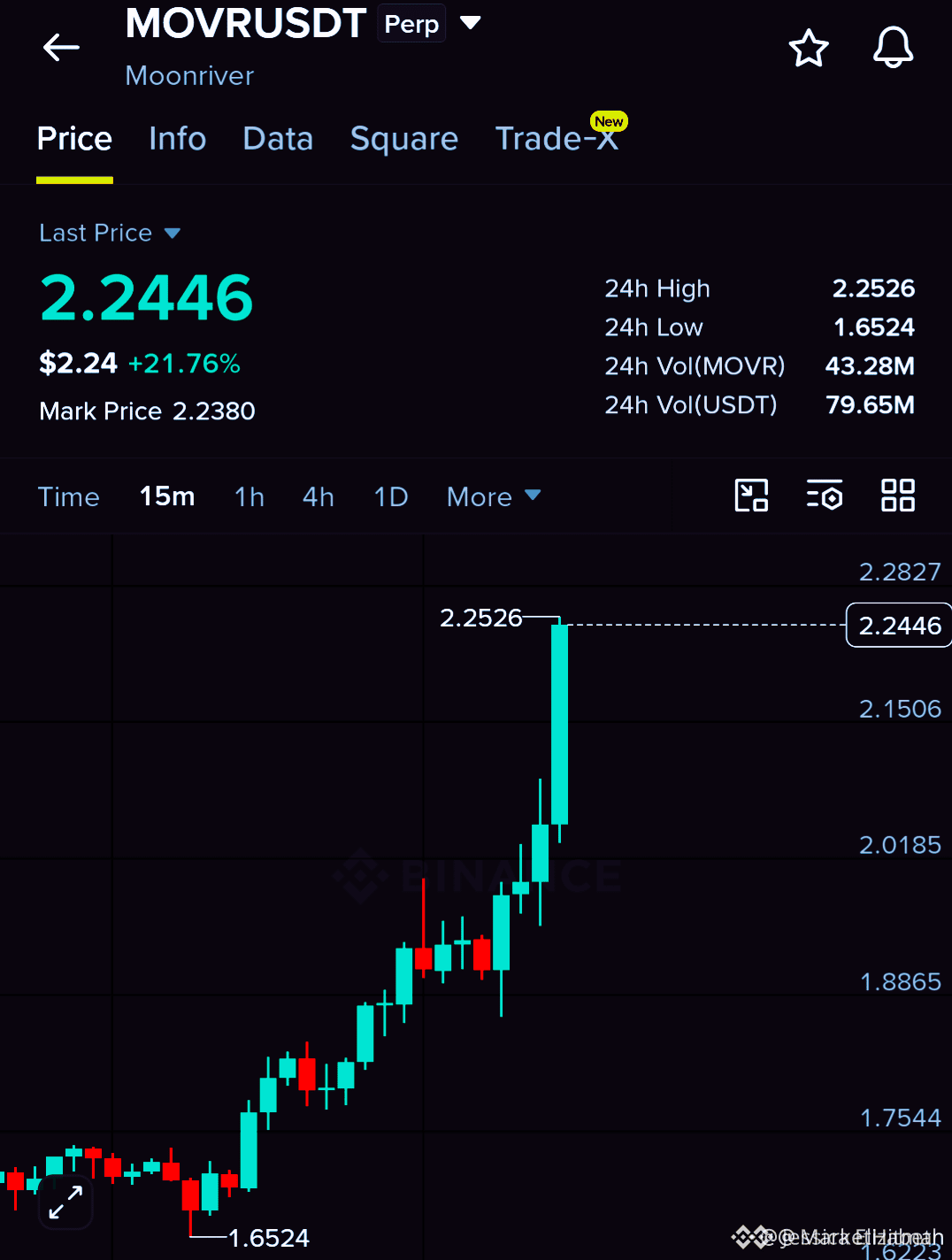
🚀 $MOVR PREPARES FOR AN EXPLOSIVE CHARGE TOWARD THE KEY $5 RESISTANCE LEVEL! ⚡
Target: 5 🚀
$MOVR is coiling tight as aggressive buyers quietly absorb lingering overhead pressure, signaling a clear shift in market momentum. ⚡ Order flow dynamics reveal smart money positioning early before liquidity expands into the upper range.
📌 With seller exhaustion evident across lower timeframes, the path of least resistance points straight toward psychological resistance at $5. 📈 Buyers flexing strength here could trigger rapid upside expansion once the current compression range breaks cleanly.
💬 Are you loading your bids before the breakout volume arrives, or waiting for a structural reclaim above resistance? 👇
⚠️ Not financial advice. Always manage your risk. 🛡️
🏷️ #MOVR #Crypto #Altcoins #Breakout #Momentum
⚡ 🚀
🚀 $MOVR PREPARES FOR AN EXPLOSIVE CHARGE TOWARD THE KEY $5 RESISTANCE LEVEL! ⚡
Target: 5 🚀
$MOVR is coiling tight as aggressive buyers quietly absorb lingering overhead pressure, signaling a clear shift in market momentum. ⚡ Order flow dynamics reveal smart money positioning early before liquidity expands into the upper range.
📌 With seller exhaustion evident across lower timeframes, the path of least resistance points straight toward psychological resistance at $5. 📈 Buyers flexing strength here could trigger rapid upside expansion once the current compression range breaks cleanly.
💬 Are you loading your bids before the breakout volume arrives, or waiting for a structural reclaim above resistance? 👇
⚠️ Not financial advice. Always manage your risk. 🛡️
🏷️ #MOVR #Crypto #Altcoins #Breakout #Momentum
⚡ 🚀
Target: 5 🚀
$MOVR is coiling tight as aggressive buyers quietly absorb lingering overhead pressure, signaling a clear shift in market momentum. ⚡ Order flow dynamics reveal smart money positioning early before liquidity expands into the upper range.
📌 With seller exhaustion evident across lower timeframes, the path of least resistance points straight toward psychological resistance at $5. 📈 Buyers flexing strength here could trigger rapid upside expansion once the current compression range breaks cleanly.
💬 Are you loading your bids before the breakout volume arrives, or waiting for a structural reclaim above resistance? 👇
⚠️ Not financial advice. Always manage your risk. 🛡️
🏷️ #MOVR #Crypto #Altcoins #Breakout #Momentum
⚡ 🚀
52
·
--
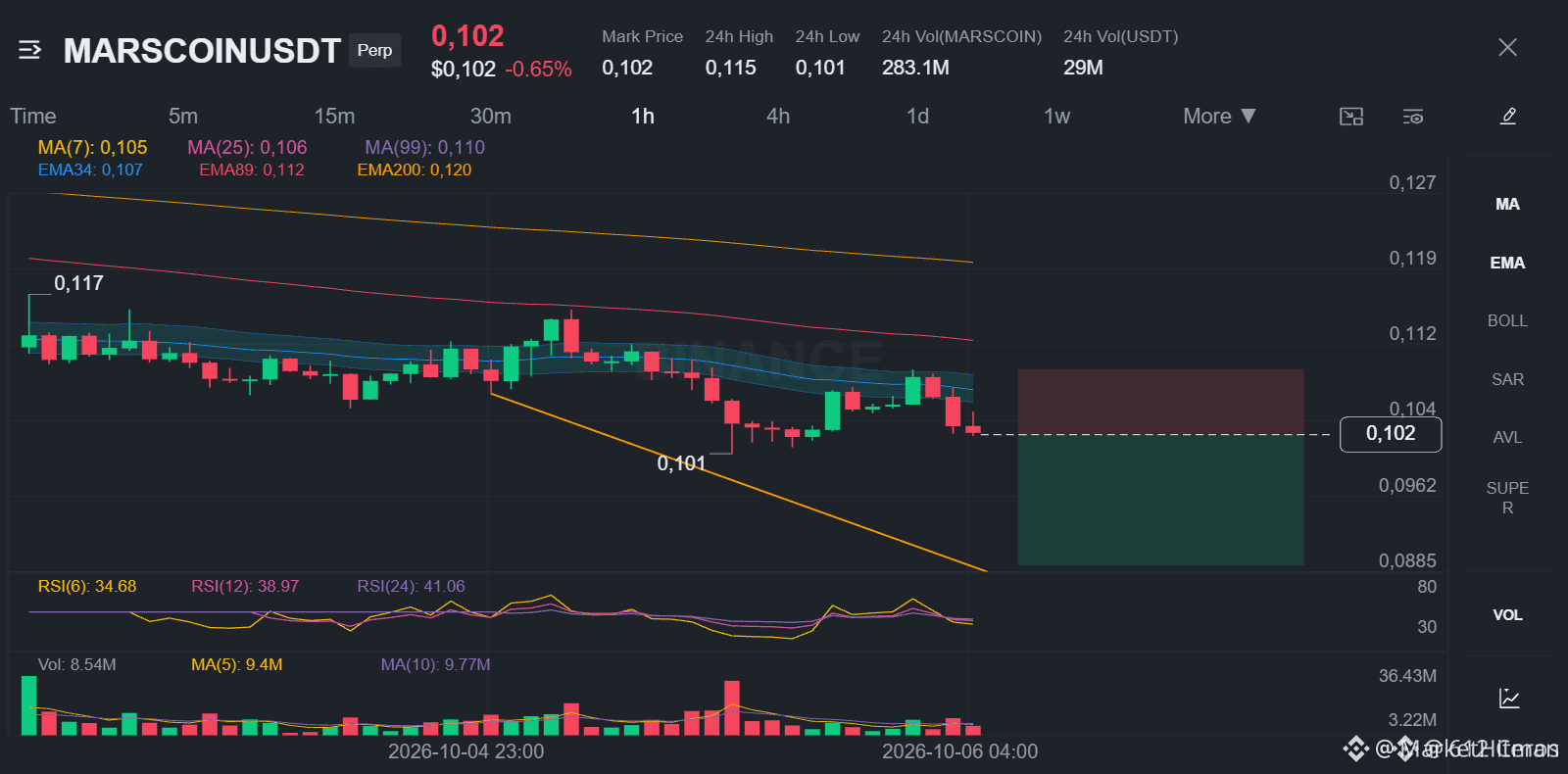
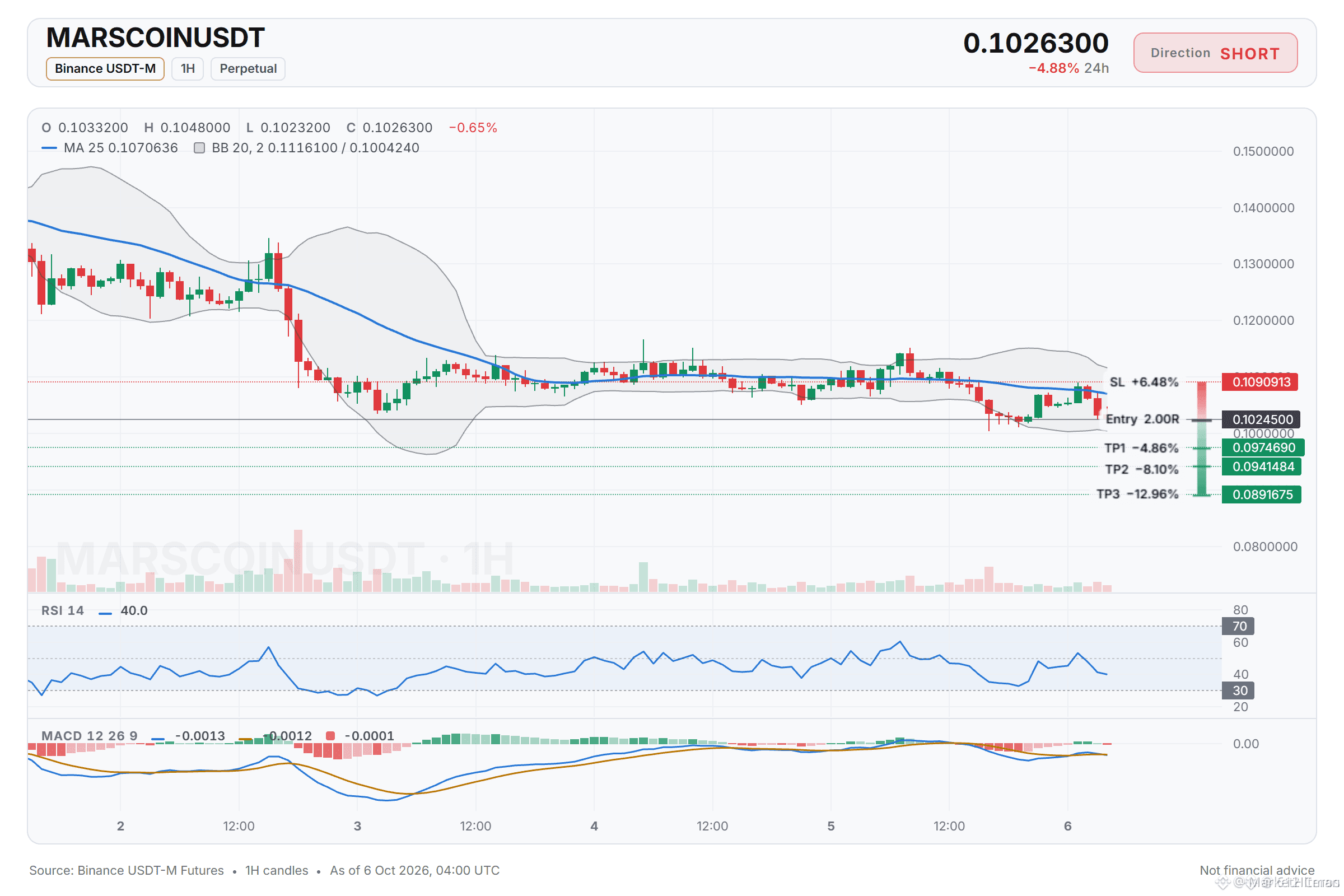
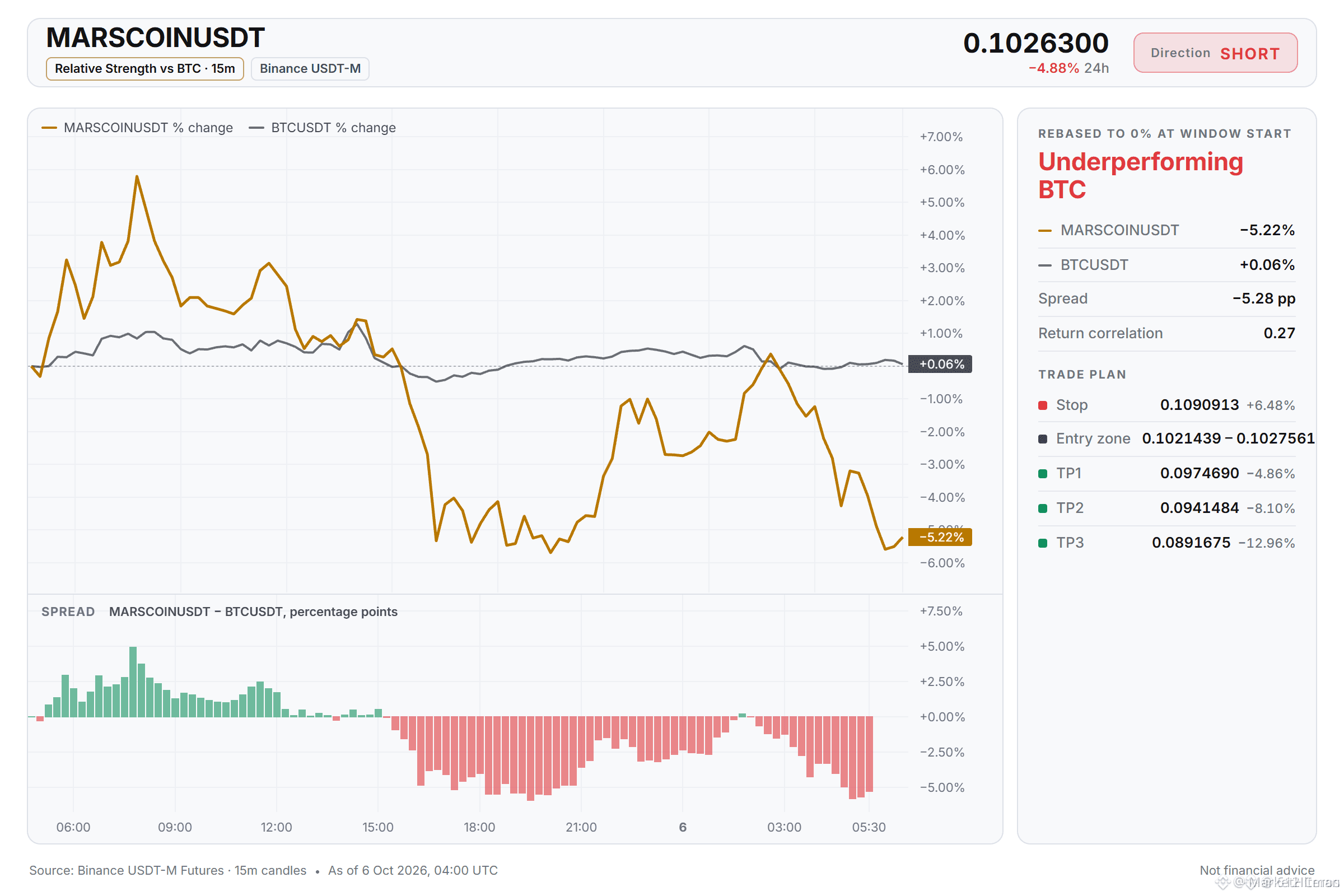
🚨 $MARSCOIN FLIP CONFIRMED AS SELLERS BUILD A HEAVY BEARISH STACK! 🩸
Entry: 0.1021439 - 0.1027561 ⚡
Target: 0.0891675 🎯
Stop Loss: 0.1090913 ⚠️
📉 Both the 4H and 1H timeframes are locked in a complete bearish EMA stack, leaving zero room for buyer momentum to establish a foothold. 📊 Sellers are fully driving price action with ADX sitting strong at 29.8 as DI- completely overpowers the bulls.
📌 A clean breakdown below the 0.1021439 pivot unleashes fresh supply, opening a direct path down toward lower liquidity pools. 💬 Are you shorting this breakdown with the trend or waiting for a relief retest higher? 👇
⚠️ Not financial advice. Always manage your risk. 🛡️
🏷️ #MARSCOIN #ShortSetup #Bearish #Crypto #Trading
📉 🩸
🚨 $MARSCOIN FLIP CONFIRMED AS SELLERS BUILD A HEAVY BEARISH STACK! 🩸
Entry: 0.1021439 - 0.1027561 ⚡
Target: 0.0891675 🎯
Stop Loss: 0.1090913 ⚠️
📉 Both the 4H and 1H timeframes are locked in a complete bearish EMA stack, leaving zero room for buyer momentum to establish a foothold. 📊 Sellers are fully driving price action with ADX sitting strong at 29.8 as DI- completely overpowers the bulls.
📌 A clean breakdown below the 0.1021439 pivot unleashes fresh supply, opening a direct path down toward lower liquidity pools. 💬 Are you shorting this breakdown with the trend or waiting for a relief retest higher? 👇
⚠️ Not financial advice. Always manage your risk. 🛡️
🏷️ #MARSCOIN #ShortSetup #Bearish #Crypto #Trading
📉 🩸
Entry: 0.1021439 - 0.1027561 ⚡
Target: 0.0891675 🎯
Stop Loss: 0.1090913 ⚠️
📉 Both the 4H and 1H timeframes are locked in a complete bearish EMA stack, leaving zero room for buyer momentum to establish a foothold. 📊 Sellers are fully driving price action with ADX sitting strong at 29.8 as DI- completely overpowers the bulls.
📌 A clean breakdown below the 0.1021439 pivot unleashes fresh supply, opening a direct path down toward lower liquidity pools. 💬 Are you shorting this breakdown with the trend or waiting for a relief retest higher? 👇
⚠️ Not financial advice. Always manage your risk. 🛡️
🏷️ #MARSCOIN #ShortSetup #Bearish #Crypto #Trading
📉 🩸
90
·
--
🦈 $XRP EYES $2.16 BREAKOUT BUT $XMR SHOWS CLEANER MOMENTUM FLOW! 📊
Entry: 1.50 ⚡
Target: 2.16 🚀
Technical heavyweights are watching $XRP form a macro cup-and-handle targeting $2.16, but heavy overhead supply between $1.70 and $3.50 creates severe structural resistance. 📌 Trapped liquidity from prior cycles means every rally into resistance must absorb massive sell pressure before true expansion can occur. 📊
In contrast, $XMR has completely absorbed its historical overhead supply near $560, offering a far cleaner order flow environment with minimal resistance ahead. 🌊 While $XRP must fight through multiple legacy supply walls, capital efficiency clearly favors charts with unburdened upside runway. 💡
🤔 Are you bidding the heavy supply wall on $XRP for the eventual $2.16 claim, or rotating into cleaner order flow setups like $XMR ? 👇
⚠️ Not financial advice. Always manage your risk. 🛡️
🏷️ #XRP #XMR #Crypto #Altcoins #TechnicalAnalysis
🔥 💎
🦈 $XRP EYES $2.16 BREAKOUT BUT $XMR SHOWS CLEANER MOMENTUM FLOW! 📊
Entry: 1.50 ⚡
Target: 2.16 🚀
Technical heavyweights are watching $XRP form a macro cup-and-handle targeting $2.16, but heavy overhead supply between $1.70 and $3.50 creates severe structural resistance. 📌 Trapped liquidity from prior cycles means every rally into resistance must absorb massive sell pressure before true expansion can occur. 📊
In contrast, $XMR has completely absorbed its historical overhead supply near $560, offering a far cleaner order flow environment with minimal resistance ahead. 🌊 While $XRP must fight through multiple legacy supply walls, capital efficiency clearly favors charts with unburdened upside runway. 💡
🤔 Are you bidding the heavy supply wall on $XRP for the eventual $2.16 claim, or rotating into cleaner order flow setups like $XMR ? 👇
⚠️ Not financial advice. Always manage your risk. 🛡️
🏷️ #XRP #XMR #Crypto #Altcoins #TechnicalAnalysis
🔥 💎
Entry: 1.50 ⚡
Target: 2.16 🚀
Technical heavyweights are watching $XRP form a macro cup-and-handle targeting $2.16, but heavy overhead supply between $1.70 and $3.50 creates severe structural resistance. 📌 Trapped liquidity from prior cycles means every rally into resistance must absorb massive sell pressure before true expansion can occur. 📊
In contrast, $XMR has completely absorbed its historical overhead supply near $560, offering a far cleaner order flow environment with minimal resistance ahead. 🌊 While $XRP must fight through multiple legacy supply walls, capital efficiency clearly favors charts with unburdened upside runway. 💡
🤔 Are you bidding the heavy supply wall on $XRP for the eventual $2.16 claim, or rotating into cleaner order flow setups like $XMR ? 👇
⚠️ Not financial advice. Always manage your risk. 🛡️
🏷️ #XRP #XMR #Crypto #Altcoins #TechnicalAnalysis
🔥 💎
22
·
--
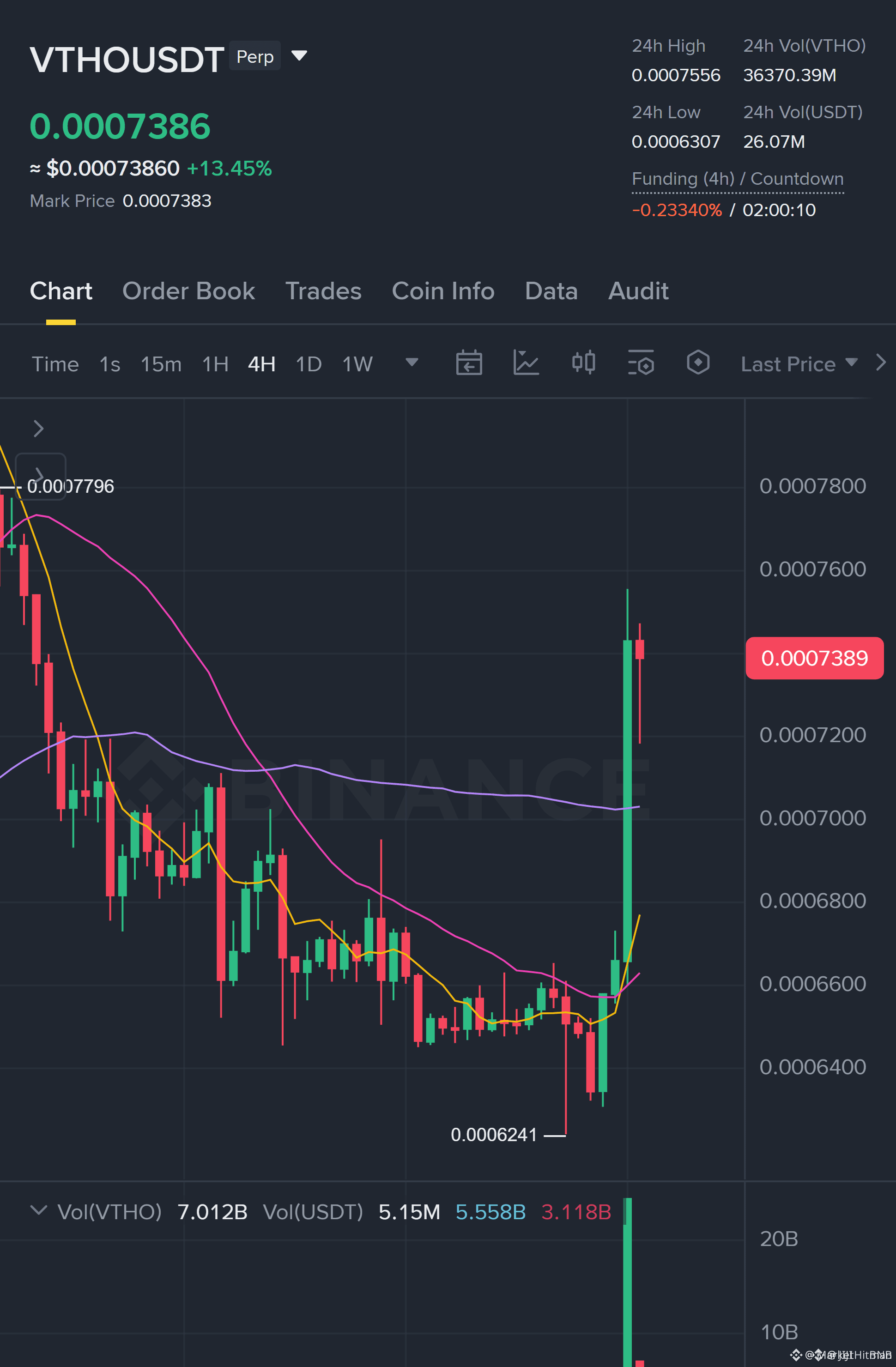
⚡ $VTHO FLASHES 1H BULLISH MOMENTUM BUT PATIENCE IS KEY BEFORE ENTRY! 💥
Entry: 0.0006828 - 0.0006868 ⚡
Target: 0.0007351 - 0.0007682 🚀
Stop Loss: 0.0006644 ⚠️
📌 $VTHO is carving out a clean 1H trend continuation structure as buyers defend higher lows, but sharp traders know never to chase an extended wave. Price has moved away from our primary entry block, leaving lower-timeframe confirmation incomplete for now. 📊
⚡ Smart money remains patient until price retests the demand zone and delivers a firm 15M confirmation signal. If momentum reignites, this setup offers an impressive 4.09R payout across extended targets. 💡
🤔 Are you locking this on your watchlist for a retest, or hunting other setups? 👇
⚠️ Not financial advice. Always manage your risk. 🛡️
🏷️ #VTHO #LongSetup #Altcoins #Trading #Crypto
🔥 💎
⚡ $VTHO FLASHES 1H BULLISH MOMENTUM BUT PATIENCE IS KEY BEFORE ENTRY! 💥
Entry: 0.0006828 - 0.0006868 ⚡
Target: 0.0007351 - 0.0007682 🚀
Stop Loss: 0.0006644 ⚠️
📌 $VTHO is carving out a clean 1H trend continuation structure as buyers defend higher lows, but sharp traders know never to chase an extended wave. Price has moved away from our primary entry block, leaving lower-timeframe confirmation incomplete for now. 📊
⚡ Smart money remains patient until price retests the demand zone and delivers a firm 15M confirmation signal. If momentum reignites, this setup offers an impressive 4.09R payout across extended targets. 💡
🤔 Are you locking this on your watchlist for a retest, or hunting other setups? 👇
⚠️ Not financial advice. Always manage your risk. 🛡️
🏷️ #VTHO #LongSetup #Altcoins #Trading #Crypto
🔥 💎
Entry: 0.0006828 - 0.0006868 ⚡
Target: 0.0007351 - 0.0007682 🚀
Stop Loss: 0.0006644 ⚠️
📌 $VTHO is carving out a clean 1H trend continuation structure as buyers defend higher lows, but sharp traders know never to chase an extended wave. Price has moved away from our primary entry block, leaving lower-timeframe confirmation incomplete for now. 📊
⚡ Smart money remains patient until price retests the demand zone and delivers a firm 15M confirmation signal. If momentum reignites, this setup offers an impressive 4.09R payout across extended targets. 💡
🤔 Are you locking this on your watchlist for a retest, or hunting other setups? 👇
⚠️ Not financial advice. Always manage your risk. 🛡️
🏷️ #VTHO #LongSetup #Altcoins #Trading #Crypto
🔥 💎
19
·
--
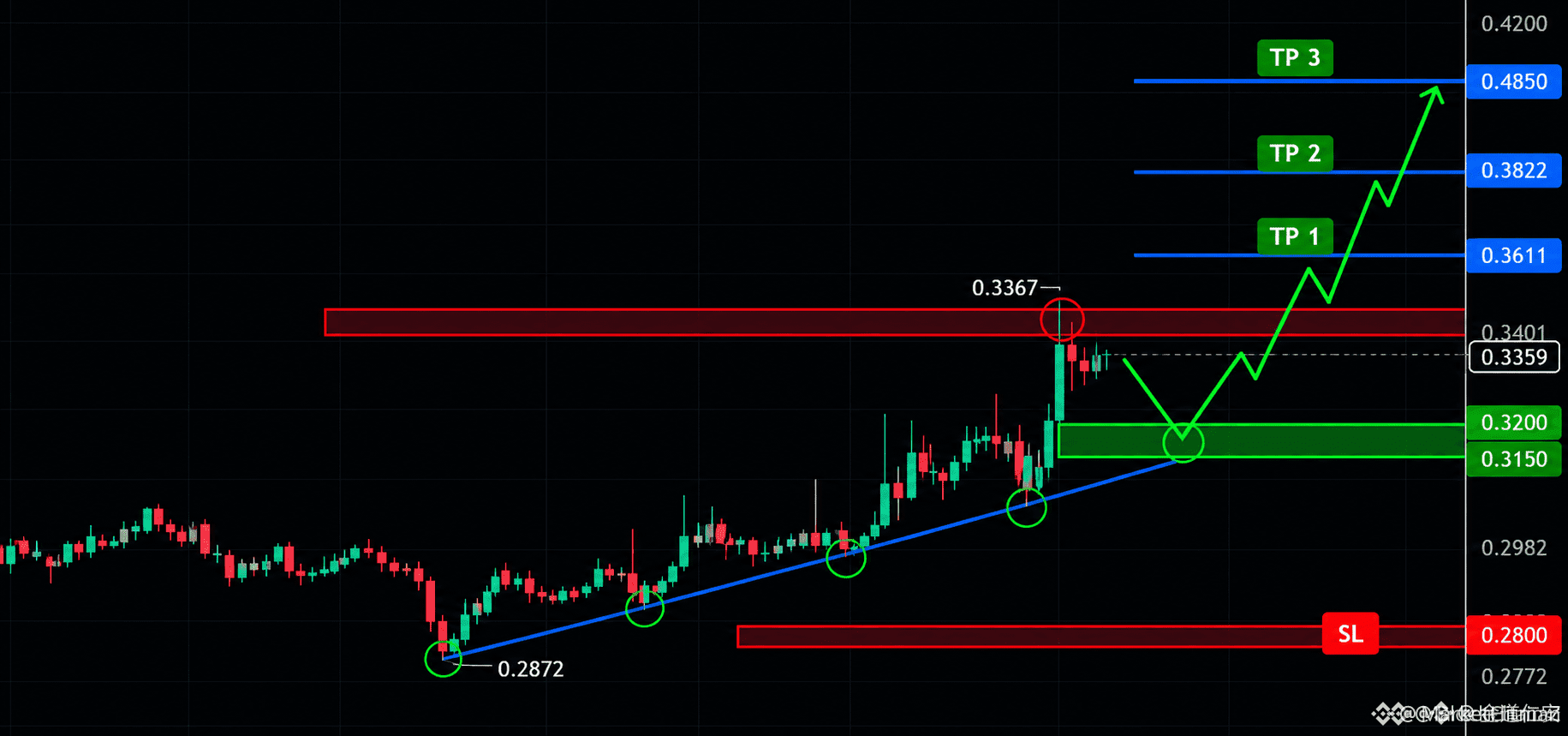
🚀 $API3 BREAKOUT CHARGES HARD AS BUYERS DEFEND BASE AND PUSH HIGHER! 💥
Entry: 0.3260 - 0.3360 ⚡
Target: 0.3401 - 0.3611 - 0.3822 🚀
Stop Loss: 0.3180 ⚠️
📌 Buyers locked in a rock-solid floor at 0.2872 before steadily building a relentless higher-low structure between 0.2982 and 0.3192. 📊 That steady accumulation has now erupted into aggressive expansion on the 1H timeframe, driving price straight into the 0.3361 region.
💡 With demand aggressively sweeping up sell orders, the path of least resistance points toward our upper liquidity targets. 💬 Are you riding this momentum trend or waiting to see if sellers mount a defense near the local highs? 👇
⚠️ Not financial advice. Always manage your risk. 🛡️
🏷️ #API3 #LongSetup #Breakout #Crypto #Trading
🔥 💎
🚀 $API3 BREAKOUT CHARGES HARD AS BUYERS DEFEND BASE AND PUSH HIGHER! 💥
Entry: 0.3260 - 0.3360 ⚡
Target: 0.3401 - 0.3611 - 0.3822 🚀
Stop Loss: 0.3180 ⚠️
📌 Buyers locked in a rock-solid floor at 0.2872 before steadily building a relentless higher-low structure between 0.2982 and 0.3192. 📊 That steady accumulation has now erupted into aggressive expansion on the 1H timeframe, driving price straight into the 0.3361 region.
💡 With demand aggressively sweeping up sell orders, the path of least resistance points toward our upper liquidity targets. 💬 Are you riding this momentum trend or waiting to see if sellers mount a defense near the local highs? 👇
⚠️ Not financial advice. Always manage your risk. 🛡️
🏷️ #API3 #LongSetup #Breakout #Crypto #Trading
🔥 💎
Entry: 0.3260 - 0.3360 ⚡
Target: 0.3401 - 0.3611 - 0.3822 🚀
Stop Loss: 0.3180 ⚠️
📌 Buyers locked in a rock-solid floor at 0.2872 before steadily building a relentless higher-low structure between 0.2982 and 0.3192. 📊 That steady accumulation has now erupted into aggressive expansion on the 1H timeframe, driving price straight into the 0.3361 region.
💡 With demand aggressively sweeping up sell orders, the path of least resistance points toward our upper liquidity targets. 💬 Are you riding this momentum trend or waiting to see if sellers mount a defense near the local highs? 👇
⚠️ Not financial advice. Always manage your risk. 🛡️
🏷️ #API3 #LongSetup #Breakout #Crypto #Trading
🔥 💎
54
·
--
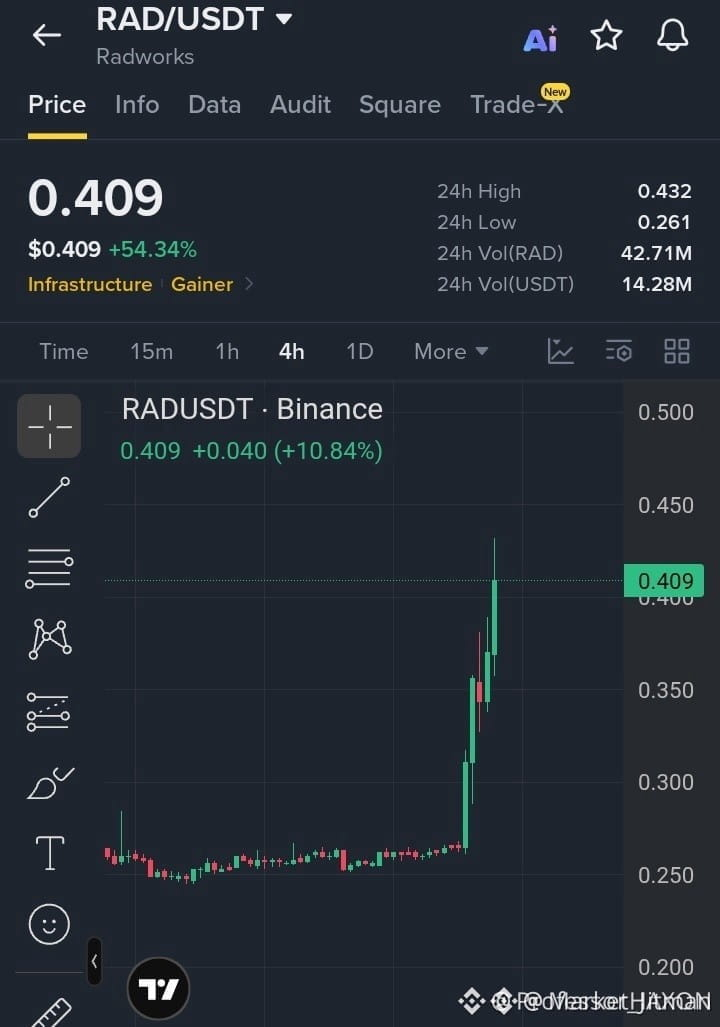
💥 $RAD SLAMS THROUGH CONSOLIDATION AS BUYERS CLAIM CONTROL FOR THE NEXT LEG HIGHER! 📈
Entry: 0.395 - 0.410 ⚡
Target: 0.435 - 0.500 🚀
Stop Loss: 0.365 ⚠️
📌 $RAD just sliced cleanly through its stubborn accumulation range between 0.26 and 0.35, backed by a massive influx of aggressive buyer volume. ⚡ As long as the bulls defend the 0.395 retest zone, this market structure remains primed for expansion into overhead liquidity.
💡 Sellers are getting caught out of position while market makers absorb remaining supply before pushing toward higher key targets. 💬 Are you bidding this retest holding above support or waiting for the expansion target at 0.500? 👇
⚠️ Not financial advice. Always manage your risk. 🛡️
🏷️ #RAD #Breakout #Crypto #LongSetup #Trading
🔥 💎
💥 $RAD SLAMS THROUGH CONSOLIDATION AS BUYERS CLAIM CONTROL FOR THE NEXT LEG HIGHER! 📈
Entry: 0.395 - 0.410 ⚡
Target: 0.435 - 0.500 🚀
Stop Loss: 0.365 ⚠️
📌 $RAD just sliced cleanly through its stubborn accumulation range between 0.26 and 0.35, backed by a massive influx of aggressive buyer volume. ⚡ As long as the bulls defend the 0.395 retest zone, this market structure remains primed for expansion into overhead liquidity.
💡 Sellers are getting caught out of position while market makers absorb remaining supply before pushing toward higher key targets. 💬 Are you bidding this retest holding above support or waiting for the expansion target at 0.500? 👇
⚠️ Not financial advice. Always manage your risk. 🛡️
🏷️ #RAD #Breakout #Crypto #LongSetup #Trading
🔥 💎
Entry: 0.395 - 0.410 ⚡
Target: 0.435 - 0.500 🚀
Stop Loss: 0.365 ⚠️
📌 $RAD just sliced cleanly through its stubborn accumulation range between 0.26 and 0.35, backed by a massive influx of aggressive buyer volume. ⚡ As long as the bulls defend the 0.395 retest zone, this market structure remains primed for expansion into overhead liquidity.
💡 Sellers are getting caught out of position while market makers absorb remaining supply before pushing toward higher key targets. 💬 Are you bidding this retest holding above support or waiting for the expansion target at 0.500? 👇
⚠️ Not financial advice. Always manage your risk. 🛡️
🏷️ #RAD #Breakout #Crypto #LongSetup #Trading
🔥 💎
11
·
--
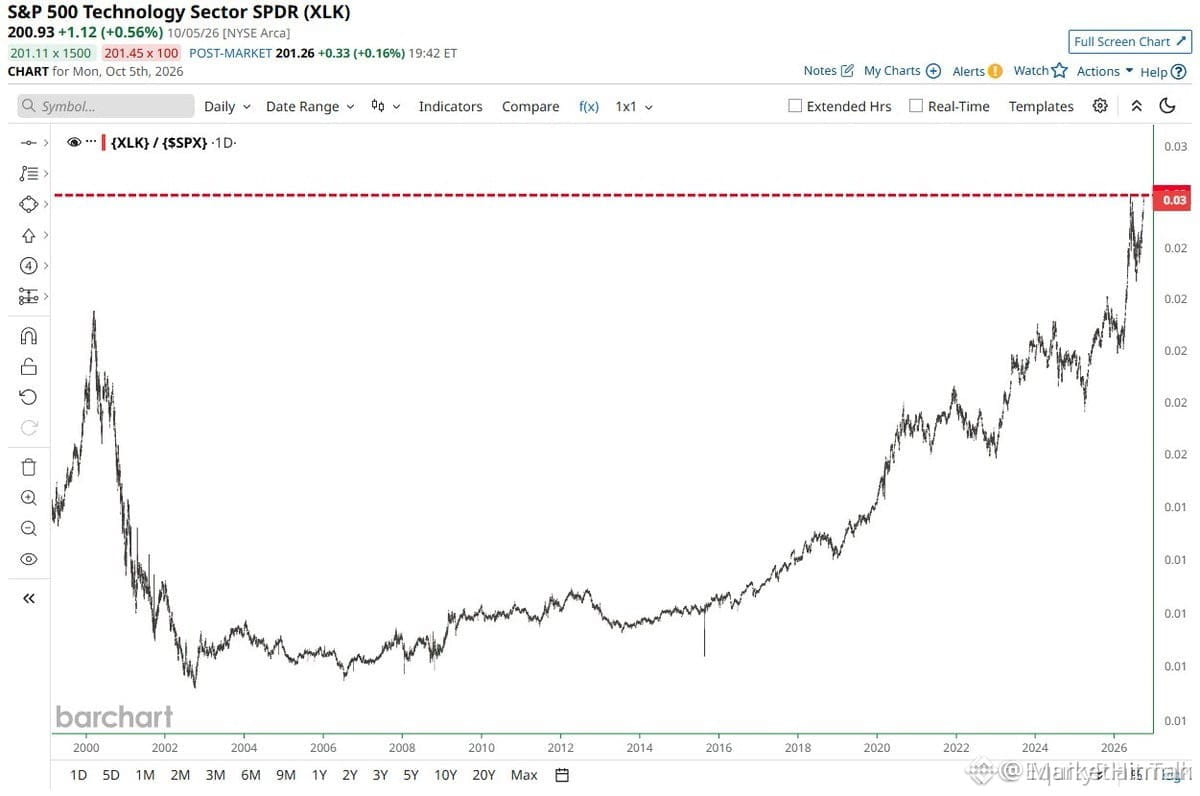
🚨 HISTORIC DIVERGENCE: TECH STOCKS CRUSH THE MARKET AS $QQQ DRIVES UNPRECEDENTED CONCENTRATION! 💥
Tech capital is sucking the air out of the room, pushing market concentration to levels we have literally never seen before. 📊 When single-sector dominance reaches this kind of extreme, capital rarely sits still for long — order flow historically demands a repricing or a massive sector rotation.
Keep your eyes glued to liquidity flows into beaten-down laggards like financials and energy. 🔍 If smart money begins flipping those underperforming sectors, the broader market catches a bid; if tech continues this solo moonshot, we are stepping into completely uncharted structural territory. 💡
🤔 Are you hedging your portfolio for a capital rotation, or riding this tech breakout into unmapped terrain? 👇
⚠️ Not financial advice. Always manage your risk. 🛡️
🏷️ #QQQ #Macro #Trading #Breakout #MarketAnalysis
🔥 ⚡
🚨 HISTORIC DIVERGENCE: TECH STOCKS CRUSH THE MARKET AS $QQQ DRIVES UNPRECEDENTED CONCENTRATION! 💥
Tech capital is sucking the air out of the room, pushing market concentration to levels we have literally never seen before. 📊 When single-sector dominance reaches this kind of extreme, capital rarely sits still for long — order flow historically demands a repricing or a massive sector rotation.
Keep your eyes glued to liquidity flows into beaten-down laggards like financials and energy. 🔍 If smart money begins flipping those underperforming sectors, the broader market catches a bid; if tech continues this solo moonshot, we are stepping into completely uncharted structural territory. 💡
🤔 Are you hedging your portfolio for a capital rotation, or riding this tech breakout into unmapped terrain? 👇
⚠️ Not financial advice. Always manage your risk. 🛡️
🏷️ #QQQ #Macro #Trading #Breakout #MarketAnalysis
🔥 ⚡
Tech capital is sucking the air out of the room, pushing market concentration to levels we have literally never seen before. 📊 When single-sector dominance reaches this kind of extreme, capital rarely sits still for long — order flow historically demands a repricing or a massive sector rotation.
Keep your eyes glued to liquidity flows into beaten-down laggards like financials and energy. 🔍 If smart money begins flipping those underperforming sectors, the broader market catches a bid; if tech continues this solo moonshot, we are stepping into completely uncharted structural territory. 💡
🤔 Are you hedging your portfolio for a capital rotation, or riding this tech breakout into unmapped terrain? 👇
⚠️ Not financial advice. Always manage your risk. 🛡️
🏷️ #QQQ #Macro #Trading #Breakout #MarketAnalysis
🔥 ⚡
29
·
--
🚨 OPENAI PUSHES EU WATERMARKS BUT DETECTION FLOP CREATES UNCERTAINTY FOR $TAO ! 💥
OpenAI is rolling out textGrain invisible watermarks across the EU to satisfy regulatory deadlines, yet internal benchmarks show a simple 25% synonym swap degrades detection accuracy to a mere 17%. Centralized AI models are hitting massive friction as compliance mandates collide with technical limitations. 📊
⚡ Smart money is closely watching how decentralized architecture navigates this shift while API users default to opting out. 💡 As legacy giants struggle with flawed watermark tracking, decentralized compute and verification layers are positioning to capture developer mindshare. 🔍
💬 Do you see regulatory friction accelerating capital flow into decentralized AI protocols, or will Big Tech retain control? 👇
⚠️ Not financial advice. Always manage your risk. 🛡️
🏷️ #TAO #ArtificialIntelligence #Crypto #Altcoins #TechNews
🔥 💎
🚨 OPENAI PUSHES EU WATERMARKS BUT DETECTION FLOP CREATES UNCERTAINTY FOR $TAO ! 💥
OpenAI is rolling out textGrain invisible watermarks across the EU to satisfy regulatory deadlines, yet internal benchmarks show a simple 25% synonym swap degrades detection accuracy to a mere 17%. Centralized AI models are hitting massive friction as compliance mandates collide with technical limitations. 📊
⚡ Smart money is closely watching how decentralized architecture navigates this shift while API users default to opting out. 💡 As legacy giants struggle with flawed watermark tracking, decentralized compute and verification layers are positioning to capture developer mindshare. 🔍
💬 Do you see regulatory friction accelerating capital flow into decentralized AI protocols, or will Big Tech retain control? 👇
⚠️ Not financial advice. Always manage your risk. 🛡️
🏷️ #TAO #ArtificialIntelligence #Crypto #Altcoins #TechNews
🔥 💎
OpenAI is rolling out textGrain invisible watermarks across the EU to satisfy regulatory deadlines, yet internal benchmarks show a simple 25% synonym swap degrades detection accuracy to a mere 17%. Centralized AI models are hitting massive friction as compliance mandates collide with technical limitations. 📊
⚡ Smart money is closely watching how decentralized architecture navigates this shift while API users default to opting out. 💡 As legacy giants struggle with flawed watermark tracking, decentralized compute and verification layers are positioning to capture developer mindshare. 🔍
💬 Do you see regulatory friction accelerating capital flow into decentralized AI protocols, or will Big Tech retain control? 👇
⚠️ Not financial advice. Always manage your risk. 🛡️
🏷️ #TAO #ArtificialIntelligence #Crypto #Altcoins #TechNews
🔥 💎
70
·
--
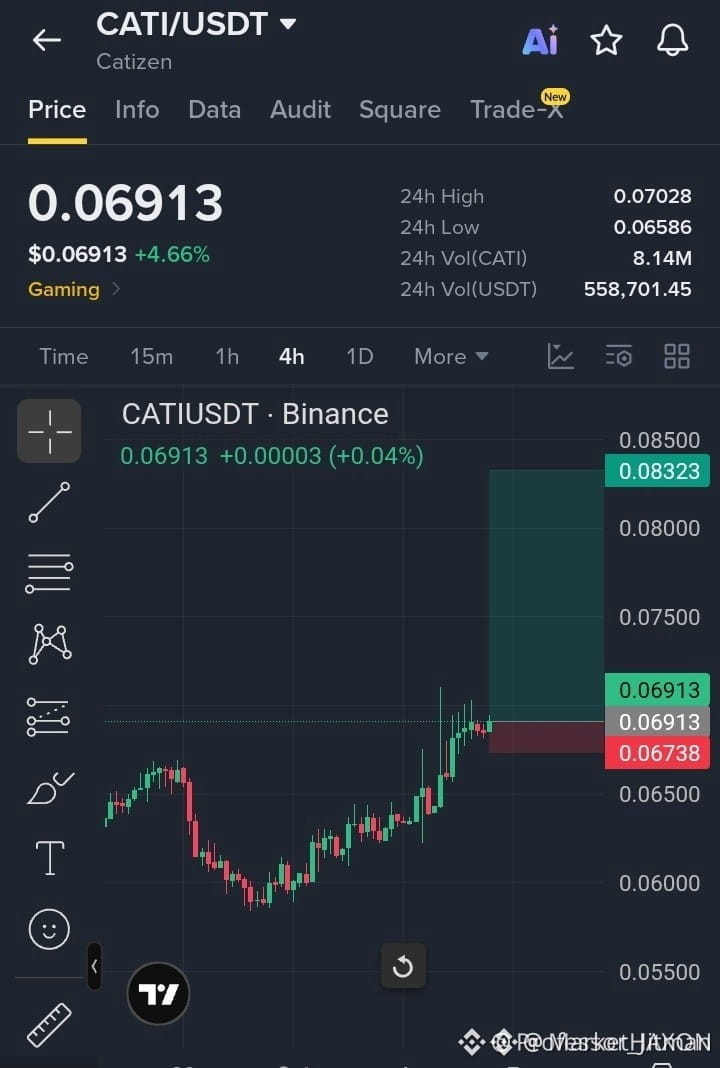
💥 $CATI HOLDS BREAKOUT STRUCTURE AS BUYERS PREPARE FOR NEXT UPWARD SURGE! 🚀
Entry: $0.0688 - $0.0692 ⚡
Target: $0.0720 - $0.08323 🚀
Stop Loss: $0.06738 ⚠️
📌 Buyers are relentlessly defending the $0.0688 zone, flipping prior resistance into solid support while building strong higher lows across the 4H timeframe. 📊 As long as key support at $0.06738 remains secure, order flow heavily favors a sustained expansion toward upper targets.
⚡ Steady accumulation hints that momentum is gathering before the next major push. 💡 Order blocks indicate smart money is quietly absorbing supply right above the breakout baseline. 💬 Are you positioning early on this base or waiting for target confirmation? 👇
⚠️ Not financial advice. Always manage your risk. 🛡️
🏷️ #CATI #LongSetup #Breakout #Crypto
🔥 💎
💥 $CATI HOLDS BREAKOUT STRUCTURE AS BUYERS PREPARE FOR NEXT UPWARD SURGE! 🚀
Entry: $0.0688 - $0.0692 ⚡
Target: $0.0720 - $0.08323 🚀
Stop Loss: $0.06738 ⚠️
📌 Buyers are relentlessly defending the $0.0688 zone, flipping prior resistance into solid support while building strong higher lows across the 4H timeframe. 📊 As long as key support at $0.06738 remains secure, order flow heavily favors a sustained expansion toward upper targets.
⚡ Steady accumulation hints that momentum is gathering before the next major push. 💡 Order blocks indicate smart money is quietly absorbing supply right above the breakout baseline. 💬 Are you positioning early on this base or waiting for target confirmation? 👇
⚠️ Not financial advice. Always manage your risk. 🛡️
🏷️ #CATI #LongSetup #Breakout #Crypto
🔥 💎
Entry: $0.0688 - $0.0692 ⚡
Target: $0.0720 - $0.08323 🚀
Stop Loss: $0.06738 ⚠️
📌 Buyers are relentlessly defending the $0.0688 zone, flipping prior resistance into solid support while building strong higher lows across the 4H timeframe. 📊 As long as key support at $0.06738 remains secure, order flow heavily favors a sustained expansion toward upper targets.
⚡ Steady accumulation hints that momentum is gathering before the next major push. 💡 Order blocks indicate smart money is quietly absorbing supply right above the breakout baseline. 💬 Are you positioning early on this base or waiting for target confirmation? 👇
⚠️ Not financial advice. Always manage your risk. 🛡️
🏷️ #CATI #LongSetup #Breakout #Crypto
🔥 💎
9
·
--
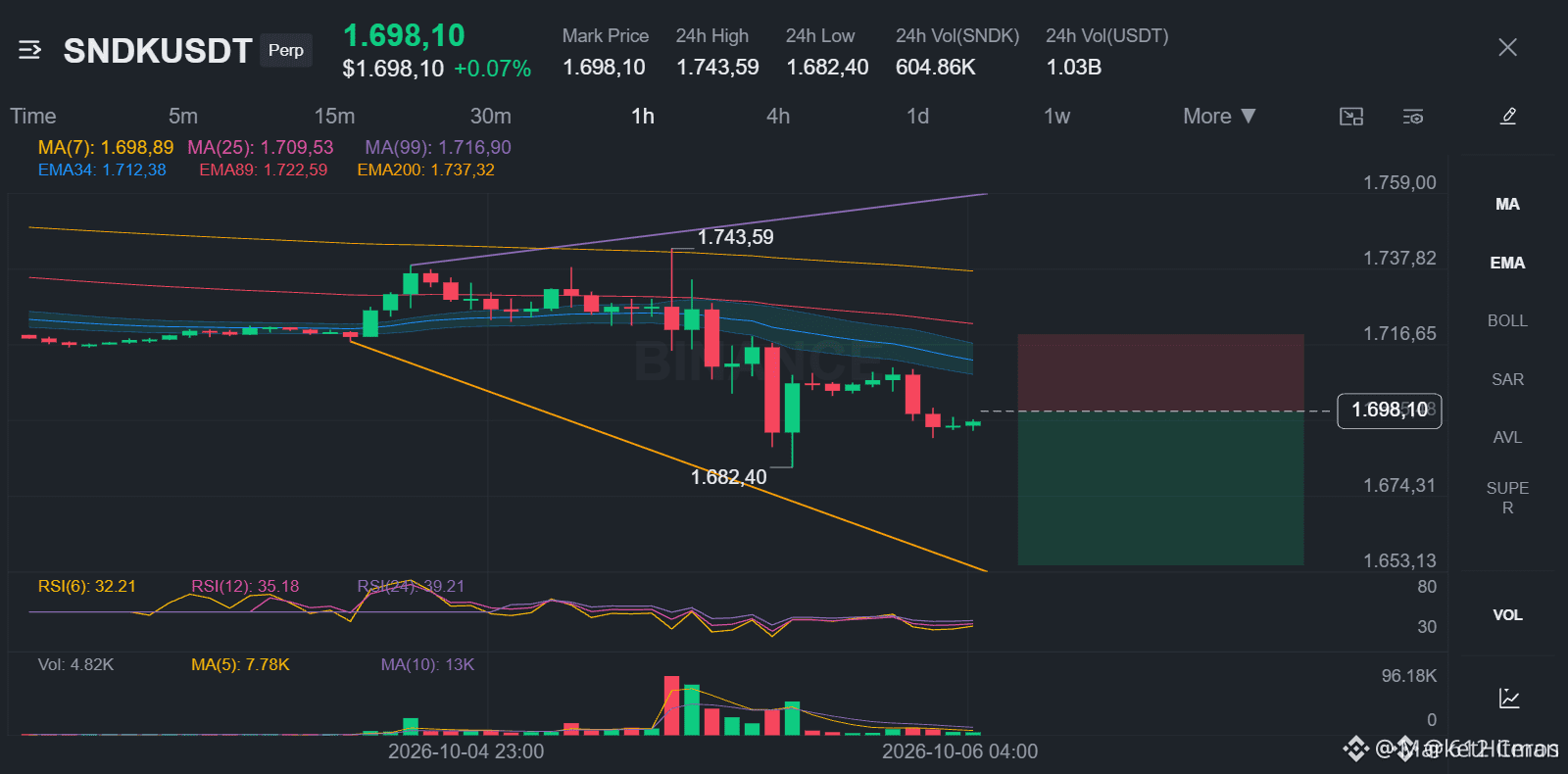
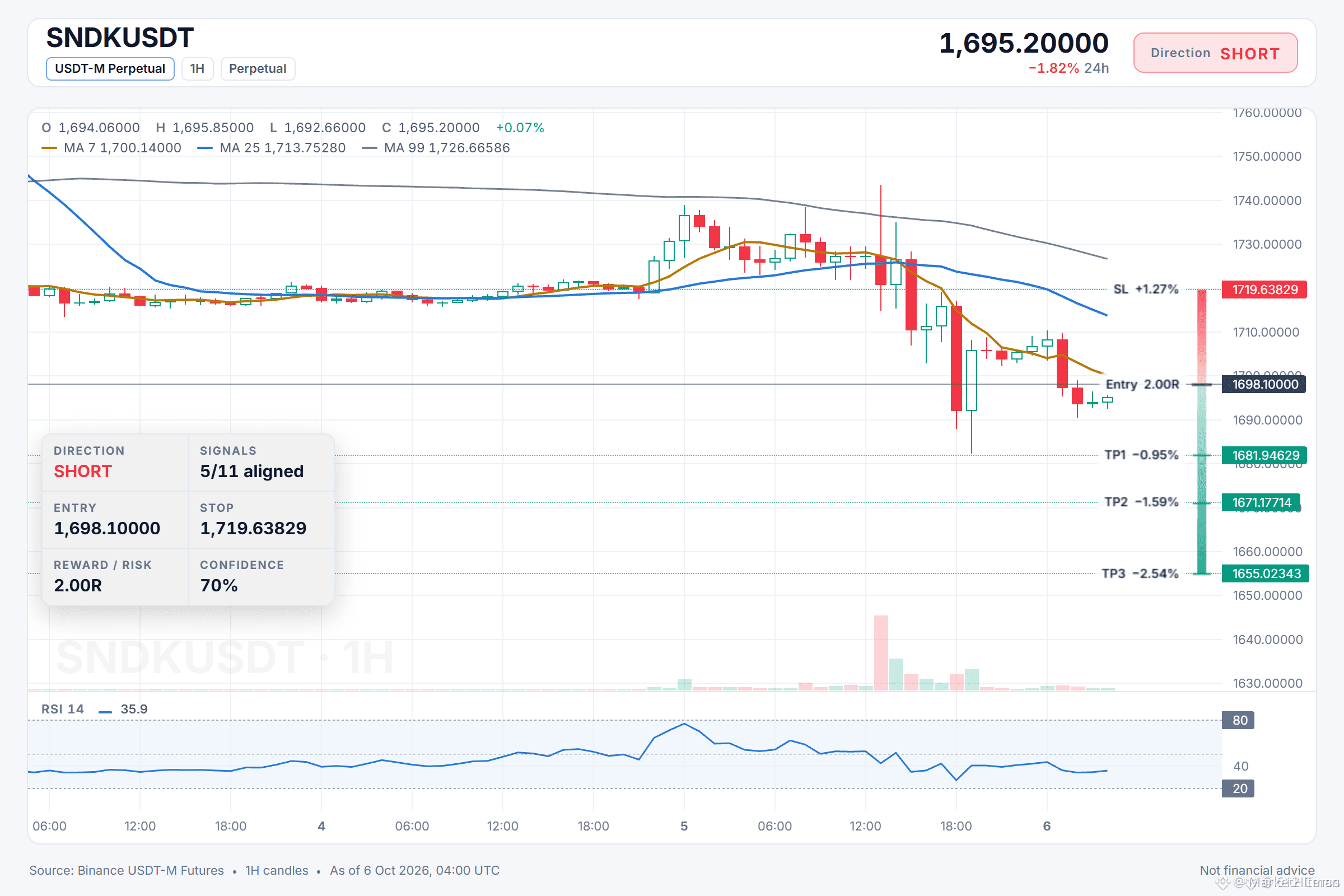
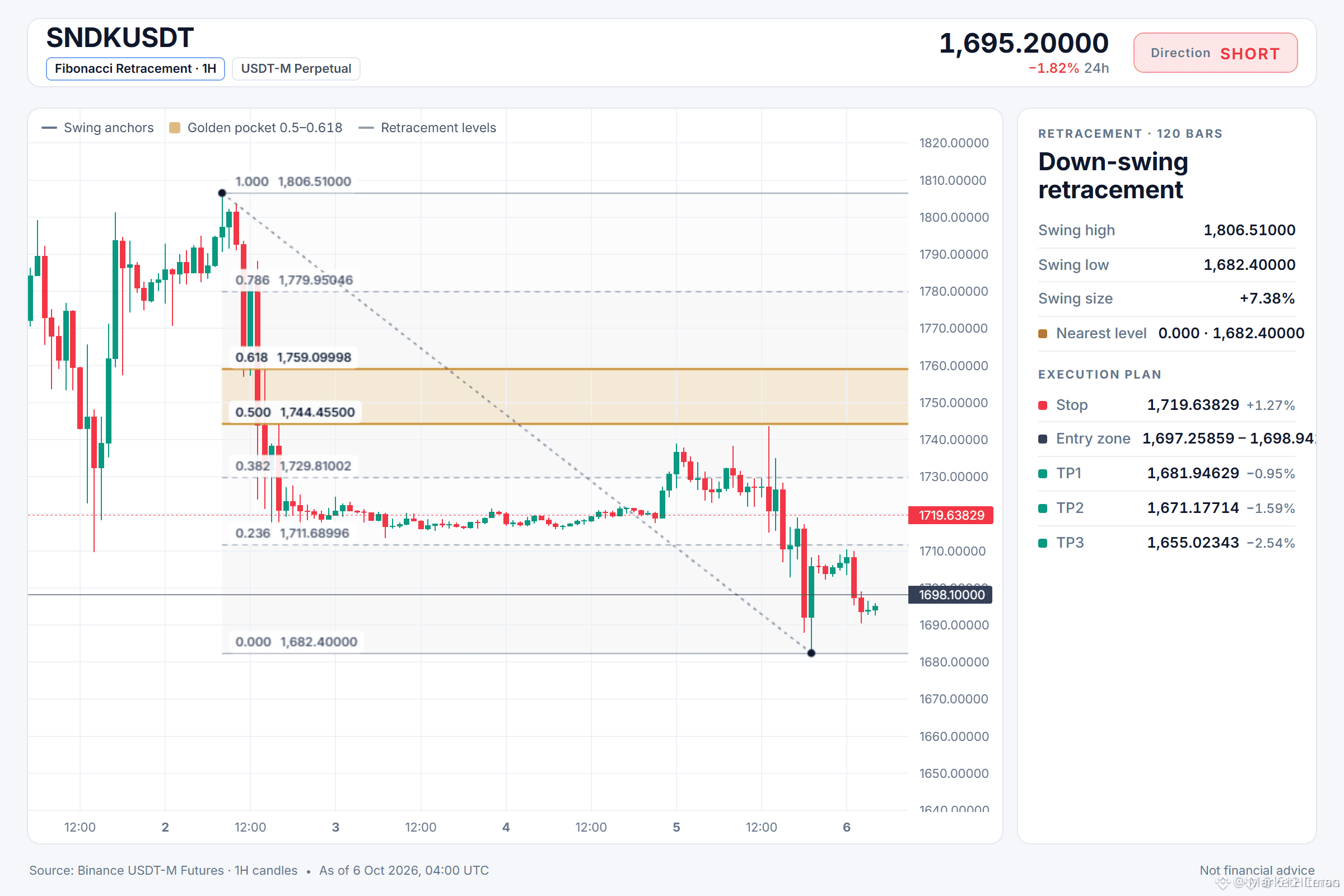
🚨 BEARISH EMA STACK ON $SNDK SIGNALS A SLIDE TOWARD LOWER LIQUIDITY 📉
Entry: 1697.26 - 1698.94 ⚡
Target: 1655.02 🚀
Stop Loss: 1719.64 ⚠️
Sellers are establishing a firm grip on $SNDK as price trades underneath a classic bearish EMA stack on the 1-hour chart. 📊 ADX confirms active sell pressure with DI- leading the drive, while RSI holding at 33 shows momentum remains tilted strictly in favor of the bears.
📌 Bids are fading near the 1698 local high, giving us a clean invalidation zone above resistance to execute a disciplined swing. 💡 With multi-timeframe alignment favoring lower prices, managing position size here allows taking advantage of this momentum shift cleanly. 💬 What level would you set for your invalidation on this short? 👇
⚠️ Not financial advice. Always manage your risk. 🛡️
🏷️ #SNDK #ShortSetup #Bearish #Crypto #Trading
📉 🐻
🚨 BEARISH EMA STACK ON $SNDK SIGNALS A SLIDE TOWARD LOWER LIQUIDITY 📉
Entry: 1697.26 - 1698.94 ⚡
Target: 1655.02 🚀
Stop Loss: 1719.64 ⚠️
Sellers are establishing a firm grip on $SNDK as price trades underneath a classic bearish EMA stack on the 1-hour chart. 📊 ADX confirms active sell pressure with DI- leading the drive, while RSI holding at 33 shows momentum remains tilted strictly in favor of the bears.
📌 Bids are fading near the 1698 local high, giving us a clean invalidation zone above resistance to execute a disciplined swing. 💡 With multi-timeframe alignment favoring lower prices, managing position size here allows taking advantage of this momentum shift cleanly. 💬 What level would you set for your invalidation on this short? 👇
⚠️ Not financial advice. Always manage your risk. 🛡️
🏷️ #SNDK #ShortSetup #Bearish #Crypto #Trading
📉 🐻
Entry: 1697.26 - 1698.94 ⚡
Target: 1655.02 🚀
Stop Loss: 1719.64 ⚠️
Sellers are establishing a firm grip on $SNDK as price trades underneath a classic bearish EMA stack on the 1-hour chart. 📊 ADX confirms active sell pressure with DI- leading the drive, while RSI holding at 33 shows momentum remains tilted strictly in favor of the bears.
📌 Bids are fading near the 1698 local high, giving us a clean invalidation zone above resistance to execute a disciplined swing. 💡 With multi-timeframe alignment favoring lower prices, managing position size here allows taking advantage of this momentum shift cleanly. 💬 What level would you set for your invalidation on this short? 👇
⚠️ Not financial advice. Always manage your risk. 🛡️
🏷️ #SNDK #ShortSetup #Bearish #Crypto #Trading
📉 🐻
11
·
--
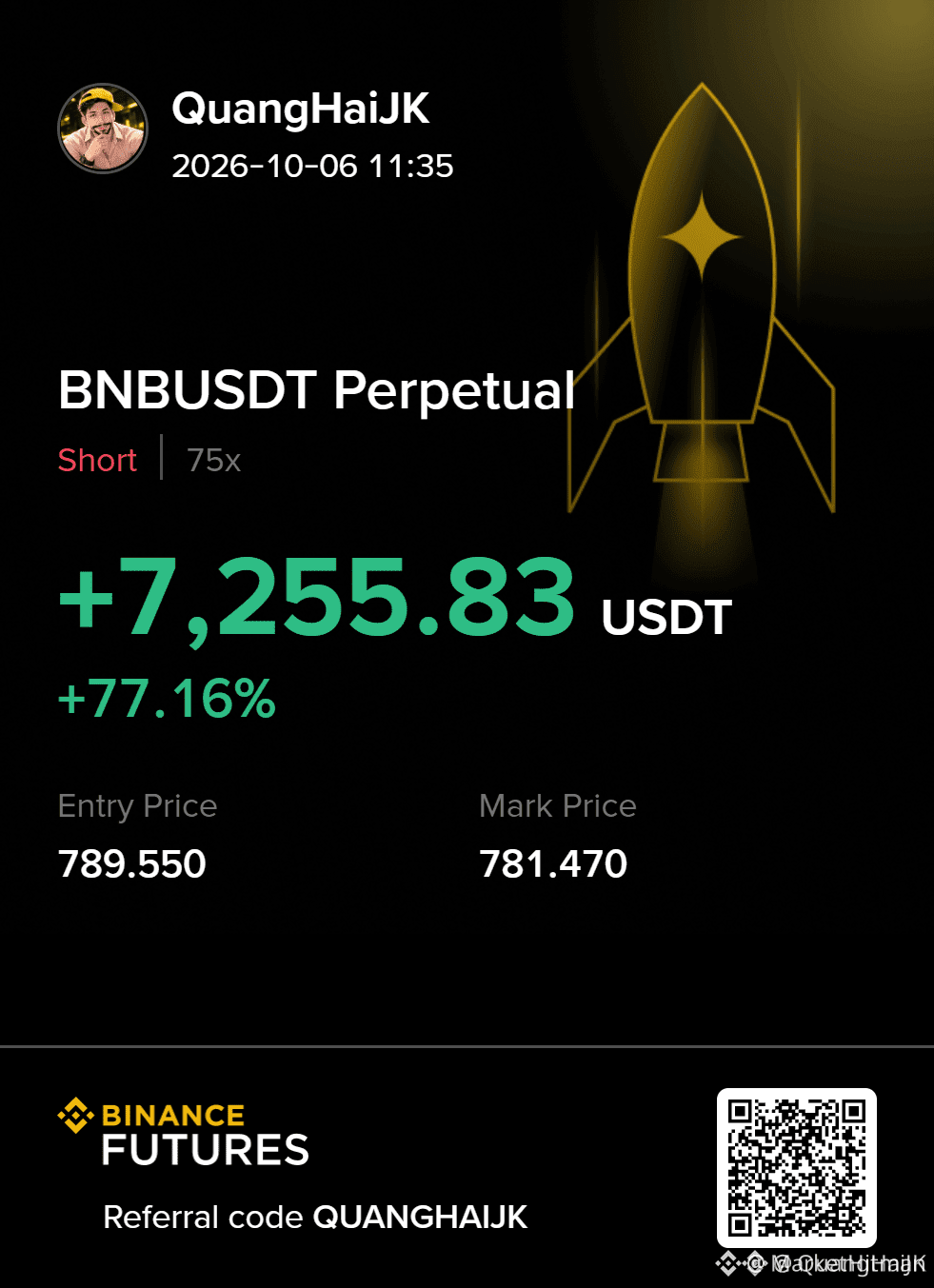
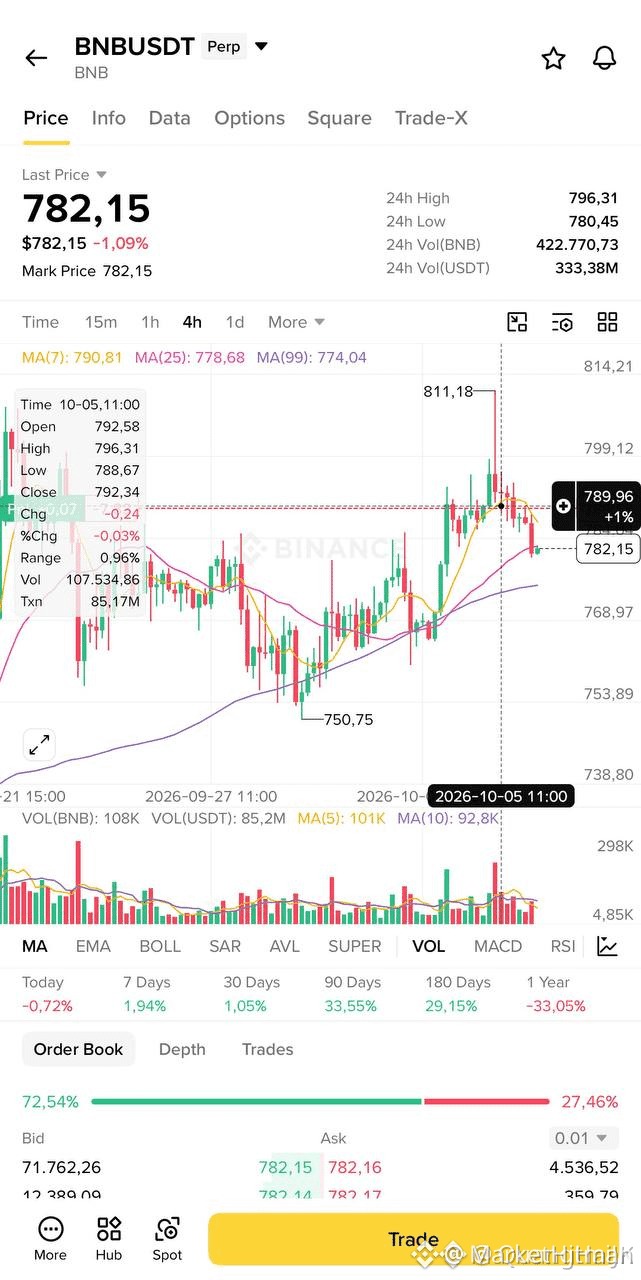
🚨 $BNB REJECTION AT RESISTANCE SETS UP AN EXPLOSIVE DOWNSIDE MOVE TO 680! 🔻
Entry: 781 - 795 🔴
Target: 750 - 680 🎯
Stop Loss: 809 ⚠️
$BNB is flashing severe momentum exhaustion near the upper levels as sellers aggressively defend the key supply zone. 📊 Deep oversold metrics with RSI-6 down at 23.67 and RSI-12 at 33.29 reflect a violent downside drive taking hold.
Any pullback into the 781-795 entry window offers a high-conviction opportunity to ride the expanding distribution leg down to key support. ⚡ Order flow shows supply overhang building up before the next breakdown. 💬 Are you shorting this retest into liquidity or standing on the sidelines? 👇
⚠️ Not financial advice. Always manage your risk. 🛡️
🏷️ #BNB #ShortSetup #Crypto #Bearish
🎯 🔻
🚨 $BNB REJECTION AT RESISTANCE SETS UP AN EXPLOSIVE DOWNSIDE MOVE TO 680! 🔻
Entry: 781 - 795 🔴
Target: 750 - 680 🎯
Stop Loss: 809 ⚠️
$BNB is flashing severe momentum exhaustion near the upper levels as sellers aggressively defend the key supply zone. 📊 Deep oversold metrics with RSI-6 down at 23.67 and RSI-12 at 33.29 reflect a violent downside drive taking hold.
Any pullback into the 781-795 entry window offers a high-conviction opportunity to ride the expanding distribution leg down to key support. ⚡ Order flow shows supply overhang building up before the next breakdown. 💬 Are you shorting this retest into liquidity or standing on the sidelines? 👇
⚠️ Not financial advice. Always manage your risk. 🛡️
🏷️ #BNB #ShortSetup #Crypto #Bearish
🎯 🔻
Entry: 781 - 795 🔴
Target: 750 - 680 🎯
Stop Loss: 809 ⚠️
$BNB is flashing severe momentum exhaustion near the upper levels as sellers aggressively defend the key supply zone. 📊 Deep oversold metrics with RSI-6 down at 23.67 and RSI-12 at 33.29 reflect a violent downside drive taking hold.
Any pullback into the 781-795 entry window offers a high-conviction opportunity to ride the expanding distribution leg down to key support. ⚡ Order flow shows supply overhang building up before the next breakdown. 💬 Are you shorting this retest into liquidity or standing on the sidelines? 👇
⚠️ Not financial advice. Always manage your risk. 🛡️
🏷️ #BNB #ShortSetup #Crypto #Bearish
🎯 🔻
3
·
--
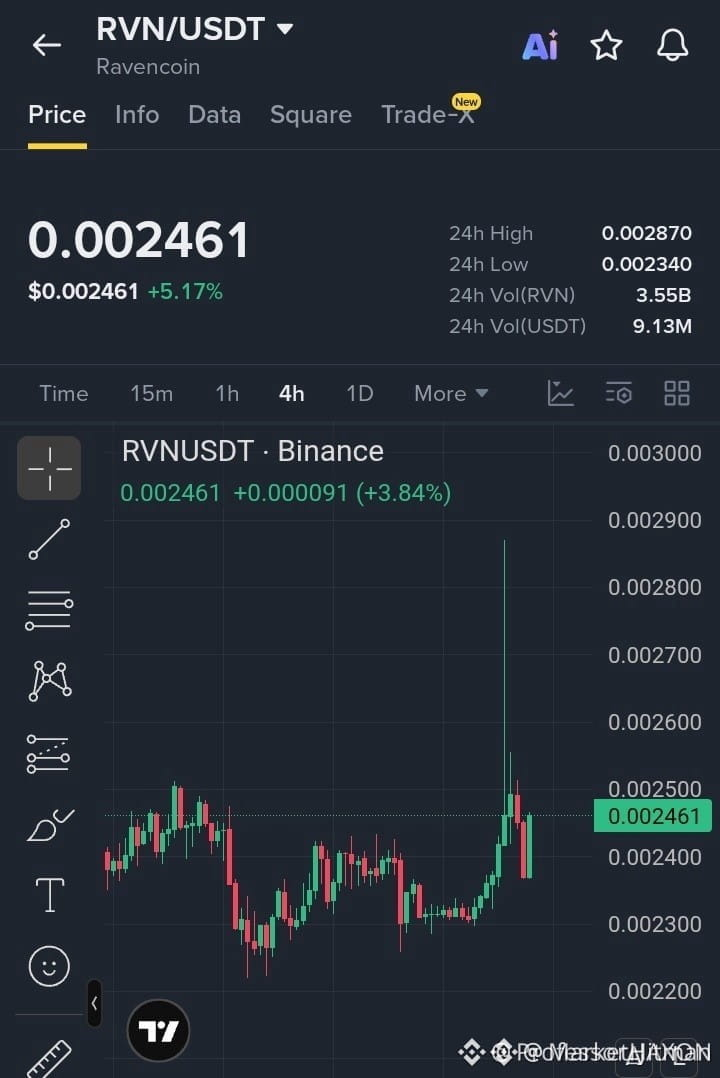
⚡ $RVN DEFENDING KEY SUPPORT AS BUYERS COIL FOR AN EXPANSION TO 0.00285! 🚀
Entry: 0.00242 - 0.00248 ⚡
Target: 0.00285 🚀
Stop Loss: 0.00232 ⚠️
Bulls are stepping back into the 0.00240 demand shelf after that initial upside surge, actively defending structural higher lows. 📌 Reclaiming the 0.00250 level clear of overhead supply should unlock immediate momentum toward higher targets. 📊
Seller pressure is drying up on lower timeframes as volume begins to curl back up right in our demand block. 💡 Risk-to-reward favors the patient buyer ahead of the next volatility spike. 💬 Are you bidding this support retest or waiting for 0.00250 to flip? 👇
⚠️ Not financial advice. Always manage your risk. 🛡️
🏷️ #RVN #LongSetup #Breakout #Crypto
🔥 💎
⚡ $RVN DEFENDING KEY SUPPORT AS BUYERS COIL FOR AN EXPANSION TO 0.00285! 🚀
Entry: 0.00242 - 0.00248 ⚡
Target: 0.00285 🚀
Stop Loss: 0.00232 ⚠️
Bulls are stepping back into the 0.00240 demand shelf after that initial upside surge, actively defending structural higher lows. 📌 Reclaiming the 0.00250 level clear of overhead supply should unlock immediate momentum toward higher targets. 📊
Seller pressure is drying up on lower timeframes as volume begins to curl back up right in our demand block. 💡 Risk-to-reward favors the patient buyer ahead of the next volatility spike. 💬 Are you bidding this support retest or waiting for 0.00250 to flip? 👇
⚠️ Not financial advice. Always manage your risk. 🛡️
🏷️ #RVN #LongSetup #Breakout #Crypto
🔥 💎
Entry: 0.00242 - 0.00248 ⚡
Target: 0.00285 🚀
Stop Loss: 0.00232 ⚠️
Bulls are stepping back into the 0.00240 demand shelf after that initial upside surge, actively defending structural higher lows. 📌 Reclaiming the 0.00250 level clear of overhead supply should unlock immediate momentum toward higher targets. 📊
Seller pressure is drying up on lower timeframes as volume begins to curl back up right in our demand block. 💡 Risk-to-reward favors the patient buyer ahead of the next volatility spike. 💬 Are you bidding this support retest or waiting for 0.00250 to flip? 👇
⚠️ Not financial advice. Always manage your risk. 🛡️
🏷️ #RVN #LongSetup #Breakout #Crypto
🔥 💎
30
Көбірек контент көру үшін кіріңіз
Binance Square платформасында әлемдік криптоқоғамдастыққа қосылыңыз
⚡️ Криптовалюта туралы ең соңғы және пайдалы ақпаратты алыңыз.
💬 Әлемдегі ең ірі криптобиржаның сеніміне ие.
👍 Расталған авторлардың нақты пікірлерін табыңыз.
Электрондық пошта/телефон нөмірі
Трендтегі тақырыптар
BinanceLaunchesBinanceIntelligence
53,939 рет көрілді
748 адам талқылап жатыр
🚨 BINANCE JUST PUT AI DIRECTLY INSIDE THE EXCHANGE — AND THIS COULD CHANGE HOW RETAIL TRADES.
Binance has officially launched Binance Intelligence, a new AI layer built into the Binance ecosystem. It combines three products:
Binance AI for everyday users,
Binance AI Pro for automated trading workflows,
and Agent OS for developers building financial agents.
The part traders should care about?
Binance AI can surface market briefs, smart alerts, PnL recaps and personalized information, while AI Pro is designed to turn a plain-English trading idea into a visual strategy workflow.
That means the next phase of exchange competition may not be:
lowest fees vs deepest liquidity.
It could be:
who gives traders the best AI execution layer.
If Binance Intelligence actually drives heavier user activity, automated strategies and higher trading frequency, watch $BNB first.
AI adoption ↑
→ Binance engagement ↑
→ trading activity ↑
→ ecosystem narrative strengthens.
The catalyst I’d watch now:
global rollout + AI Pro launch + measurable user adoption.
Because once AI stops just telling you what the market is doing…
…and starts helping build the trade itself?
That’s when this gets much bigger than another chatbot. 👀
#binancelaunchesbinanceintelligence #EvernorthXRPTreasuryCompletesSPACMerger #ADAGains10%Above$0.27 #ETHUp70%InQ3ButLiquidityFalls #EthStakingExitQueueHits2026High
KimHotbae
·20 лайк
·26.1k рет көрілді
StriveBuys2000BTCFor$169M
1 рет көрілді
22 адам талқылап жатыр
EvernorthXRPTreasuryCompletesSPACMerger
46,500 рет көрілді
549 адам талқылап жатыр