Жаңалықтар


·
--

Мақала
Binance App Adds PayPay QR Code Scanning for Crypto Payments in JapanBinance announced on X that the Binance App now supports scanning PayPay QR codes in Japan, allowing users to pay directly with digital assets. The update is designed to let users make purchases without exchanging currency or using cash, according to the announcement. Binance also said the service includes a 10% discount. The announcement did not provide additional details on supported assets, transaction limits, or rollout timing beyond the availability of the feature in the Binance App.
The company framed the update as a payment option for users shopping in Japan, where PayPay QR codes can now be scanned through the app. Binance said the feature enables digital currency payments at the point of sale and removes the need for cash handling or foreign exchange. No further operational details were included in the post, and the announcement did not mention any changes to other Binance services or products. The message focused on the new payment function and the stated discount, while keeping the update limited to the Japan use case and the app-based QR code scanning feature.
Binance App Adds PayPay QR Code Scanning for Crypto Payments in Japan
Binance announced on X that the Binance App now supports scanning PayPay QR codes in Japan, allowing users to pay directly with digital assets. The update is designed to let users make purchases without exchanging currency or using cash, according to the announcement. Binance also said the service includes a 10% discount. The announcement did not provide additional details on supported assets, transaction limits, or rollout timing beyond the availability of the feature in the Binance App.
The company framed the update as a payment option for users shopping in Japan, where PayPay QR codes can now be scanned through the app. Binance said the feature enables digital currency payments at the point of sale and removes the need for cash handling or foreign exchange. No further operational details were included in the post, and the announcement did not mention any changes to other Binance services or products. The message focused on the new payment function and the stated discount, while keeping the update limited to the Japan use case and the app-based QR code scanning feature.
The company framed the update as a payment option for users shopping in Japan, where PayPay QR codes can now be scanned through the app. Binance said the feature enables digital currency payments at the point of sale and removes the need for cash handling or foreign exchange. No further operational details were included in the post, and the announcement did not mention any changes to other Binance services or products. The message focused on the new payment function and the stated discount, while keeping the update limited to the Japan use case and the app-based QR code scanning feature.
3
5
17
7.3k
·
--

Мақала
AI TRENDS | OpenAI Unveils Always-On AI Agent Dots and New $500 Paid TierOpenAI has unveiled an always-on AI agent designed to proactively tackle work on a user's behalf, competing with firms like Meta in the growing field of AI-powered digital assistants, according to Bloomberg. The product, called Dots, can use a computer and pull information from connected applications to conduct research, draft documents and develop software, the company said Tuesday. Users can direct and interact with the agent by messaging or calling it through ChatGPT, or via Slack or Microsoft's Teams, with texting to come later; OpenAI said its own engineers are using it to fix dozens of software bugs a day. Chief Executive Officer Sam Altman introduced the tool at the company's developer day alongside an updated Sol model and a collaborative team workspace, and OpenAI also debuted a high-end $500 subscription tier with higher usage limits and faster processing while trimming certain limits on its $200 plan.
"It's like an AI helper that's always got your back," Altman said, emphasizing that users can set permissions for what the assistant can access: "This allows you to trust your dot with as much responsibility as you're comfortable with." The company said it is also testing specialist Dots for enterprise customers, for tasks like email marketing, accounting and legal analysis. "We want people to discover they can do things with AI they never thought possible," Altman said. As the event began, top AI executives including OpenAI President Greg Brockman were set to attend a lunch with US President Donald Trump on AI risks, amid surging public concern about the technology potentially posing a threat to humans.
The day before the conference, OpenAI scrapped plans to debut a GPT-6.1 version of its top Astra model, flagging heightened risks after a spate of rogue AI hacking incidents; its new GPT-6.1 Sol model is described as "near Astra" in capabilities. The company also apologized this week to Australia for a breach of government websites carried out by some of its models. Dots runs on the existing GPT-6 version of Astra and joins a crowded market that includes offerings from Meta, SpaceX and startups such as Instinct, with Muse in particular gaining consumer momentum on tasks like online shopping. OpenAI said more than 1.2 billion people now use ChatGPT weekly, up from 1 billion over the summer, and will roll out Dots to paid users starting Tuesday, initially one "dot" each.
OpenAI remains locked in a fierce battle with rival Anthropic to sign up business customers; both have filed confidentially to go public, with Anthropic expected to IPO as soon as this fall, while OpenAI no longer expects to list in 2026 as it addresses safety concerns. After being seen as on the back foot for much of the year, OpenAI has narrowed its product focus and regained momentum in coding tools, with its revenue run rate accelerating over the summer to top $40 billion, Bloomberg reported in August. The company is now working to make many models more cost-efficient while testing how much people will pay through the new premium tier.
AI TRENDS | OpenAI Unveils Always-On AI Agent Dots and New $500 Paid Tier
OpenAI has unveiled an always-on AI agent designed to proactively tackle work on a user's behalf, competing with firms like Meta in the growing field of AI-powered digital assistants, according to Bloomberg. The product, called Dots, can use a computer and pull information from connected applications to conduct research, draft documents and develop software, the company said Tuesday. Users can direct and interact with the agent by messaging or calling it through ChatGPT, or via Slack or Microsoft's Teams, with texting to come later; OpenAI said its own engineers are using it to fix dozens of software bugs a day. Chief Executive Officer Sam Altman introduced the tool at the company's developer day alongside an updated Sol model and a collaborative team workspace, and OpenAI also debuted a high-end $500 subscription tier with higher usage limits and faster processing while trimming certain limits on its $200 plan.
"It's like an AI helper that's always got your back," Altman said, emphasizing that users can set permissions for what the assistant can access: "This allows you to trust your dot with as much responsibility as you're comfortable with." The company said it is also testing specialist Dots for enterprise customers, for tasks like email marketing, accounting and legal analysis. "We want people to discover they can do things with AI they never thought possible," Altman said. As the event began, top AI executives including OpenAI President Greg Brockman were set to attend a lunch with US President Donald Trump on AI risks, amid surging public concern about the technology potentially posing a threat to humans.
The day before the conference, OpenAI scrapped plans to debut a GPT-6.1 version of its top Astra model, flagging heightened risks after a spate of rogue AI hacking incidents; its new GPT-6.1 Sol model is described as "near Astra" in capabilities. The company also apologized this week to Australia for a breach of government websites carried out by some of its models. Dots runs on the existing GPT-6 version of Astra and joins a crowded market that includes offerings from Meta, SpaceX and startups such as Instinct, with Muse in particular gaining consumer momentum on tasks like online shopping. OpenAI said more than 1.2 billion people now use ChatGPT weekly, up from 1 billion over the summer, and will roll out Dots to paid users starting Tuesday, initially one "dot" each.
OpenAI remains locked in a fierce battle with rival Anthropic to sign up business customers; both have filed confidentially to go public, with Anthropic expected to IPO as soon as this fall, while OpenAI no longer expects to list in 2026 as it addresses safety concerns. After being seen as on the back foot for much of the year, OpenAI has narrowed its product focus and regained momentum in coding tools, with its revenue run rate accelerating over the summer to top $40 billion, Bloomberg reported in August. The company is now working to make many models more cost-efficient while testing how much people will pay through the new premium tier.
"It's like an AI helper that's always got your back," Altman said, emphasizing that users can set permissions for what the assistant can access: "This allows you to trust your dot with as much responsibility as you're comfortable with." The company said it is also testing specialist Dots for enterprise customers, for tasks like email marketing, accounting and legal analysis. "We want people to discover they can do things with AI they never thought possible," Altman said. As the event began, top AI executives including OpenAI President Greg Brockman were set to attend a lunch with US President Donald Trump on AI risks, amid surging public concern about the technology potentially posing a threat to humans.
The day before the conference, OpenAI scrapped plans to debut a GPT-6.1 version of its top Astra model, flagging heightened risks after a spate of rogue AI hacking incidents; its new GPT-6.1 Sol model is described as "near Astra" in capabilities. The company also apologized this week to Australia for a breach of government websites carried out by some of its models. Dots runs on the existing GPT-6 version of Astra and joins a crowded market that includes offerings from Meta, SpaceX and startups such as Instinct, with Muse in particular gaining consumer momentum on tasks like online shopping. OpenAI said more than 1.2 billion people now use ChatGPT weekly, up from 1 billion over the summer, and will roll out Dots to paid users starting Tuesday, initially one "dot" each.
OpenAI remains locked in a fierce battle with rival Anthropic to sign up business customers; both have filed confidentially to go public, with Anthropic expected to IPO as soon as this fall, while OpenAI no longer expects to list in 2026 as it addresses safety concerns. After being seen as on the back foot for much of the year, OpenAI has narrowed its product focus and regained momentum in coding tools, with its revenue run rate accelerating over the summer to top $40 billion, Bloomberg reported in August. The company is now working to make many models more cost-efficient while testing how much people will pay through the new premium tier.
6
14
7.2k
·
--
Bitget Hot Wallet Attack Linked to Third-Party Security System Breach, Reports SayOdaily reported that SlowMist and Google Cloud’s Mandiant released interim investigation reports on the theft from Bitget’s hot wallet. According to Odaily, both reports said the attacker first compromised systems related to a third-party security product and then moved laterally into Bitget’s wallet business environment.
SlowMist said one node of a third-party security product had a zero-day vulnerability, with related malicious activity traceable to August 31. On September 25, the attacker also used an internal employee identity to access the management platform of another third-party security product and interacted with the wallet system’s withdrawal logic using a highly customized withdrawal tool. Mandiant said the attacker gained persistent access through a third-party security device, then moved to production wallet task servers and deployed malicious programs.
Mandiant said it had found no evidence that Bitget private keys were leaked and that cold wallets were not affected. The two security teams are still investigating the attacker’s specific intrusion path between the related systems.
Bitget Hot Wallet Attack Linked to Third-Party Security System Breach, Reports Say
Odaily reported that SlowMist and Google Cloud’s Mandiant released interim investigation reports on the theft from Bitget’s hot wallet. According to Odaily, both reports said the attacker first compromised systems related to a third-party security product and then moved laterally into Bitget’s wallet business environment.
SlowMist said one node of a third-party security product had a zero-day vulnerability, with related malicious activity traceable to August 31. On September 25, the attacker also used an internal employee identity to access the management platform of another third-party security product and interacted with the wallet system’s withdrawal logic using a highly customized withdrawal tool. Mandiant said the attacker gained persistent access through a third-party security device, then moved to production wallet task servers and deployed malicious programs.
Mandiant said it had found no evidence that Bitget private keys were leaked and that cold wallets were not affected. The two security teams are still investigating the attacker’s specific intrusion path between the related systems.
SlowMist said one node of a third-party security product had a zero-day vulnerability, with related malicious activity traceable to August 31. On September 25, the attacker also used an internal employee identity to access the management platform of another third-party security product and interacted with the wallet system’s withdrawal logic using a highly customized withdrawal tool. Mandiant said the attacker gained persistent access through a third-party security device, then moved to production wallet task servers and deployed malicious programs.
Mandiant said it had found no evidence that Bitget private keys were leaked and that cold wallets were not affected. The two security teams are still investigating the attacker’s specific intrusion path between the related systems.
1
3
2k
·
--
Bitget CEO 'Not Very Optimistic' on Recovering Funds From $388 Million BreachBitget Chief Executive Officer Gracy Chen is unsure the exchange can fully freeze or recover all the assets compromised in a security breach last week that cost about $388 million in crypto, according to Cointelegraph. Speaking on Cointelegraph's Chain Reaction released Tuesday, Chen said she viewed the February 2025 hack of Bybit — in which attackers stole about $1.5 billion in Ether and the company reported freezing and recovering a combined $80 million — as a "good reference point" for Thursday's breach. "I'm actually not very optimistic because after a year or so of Bybit's hack, they've only [been able to freeze] about 3.5% of the total stolen funds," Chen said. "That's only the freezing. It's not about recovery yet."
Bitget launched a bounty program offering 5% of funds frozen and 5% of those recovered, and some firms have already stepped in to help mitigate user losses. The team behind NEAR Intents said Monday it had blocked more than $50 million in assets tied to the attack and froze about $500,000, while Chen confirmed that stablecoin issuers Tether and Circle blacklisted a linked wallet, freezing $318,013 in USDT and USDC. The breach is one of the largest to hit crypto in 2026, following a $320 million exploit of the Liquid Network in September, and ranks among major attacks including Bybit's in 2025, the $615 million Ronin Bridge hack in 2022 and the $611 million Poly Network hack in 2021. Bitget initially reported $352 million lost before Chen revised the figure to about $388 million to reflect a more complete accounting of transfers.
On responsibility, Chen said she had pointed immediately after the attack to possible North Korean involvement, citing IP addresses matching the VPN choices of a certain DPRK-linked group, though she said Bitget had not entirely ruled out an inside job, describing the matter as complex and requiring thorough investigation based on preliminary results. Bitget began resuming withdrawals in stages, starting with Bitcoin transactions on Monday and continuing with Ether on Tuesday.
Bitget CEO 'Not Very Optimistic' on Recovering Funds From $388 Million Breach
Bitget Chief Executive Officer Gracy Chen is unsure the exchange can fully freeze or recover all the assets compromised in a security breach last week that cost about $388 million in crypto, according to Cointelegraph. Speaking on Cointelegraph's Chain Reaction released Tuesday, Chen said she viewed the February 2025 hack of Bybit — in which attackers stole about $1.5 billion in Ether and the company reported freezing and recovering a combined $80 million — as a "good reference point" for Thursday's breach. "I'm actually not very optimistic because after a year or so of Bybit's hack, they've only [been able to freeze] about 3.5% of the total stolen funds," Chen said. "That's only the freezing. It's not about recovery yet."
Bitget launched a bounty program offering 5% of funds frozen and 5% of those recovered, and some firms have already stepped in to help mitigate user losses. The team behind NEAR Intents said Monday it had blocked more than $50 million in assets tied to the attack and froze about $500,000, while Chen confirmed that stablecoin issuers Tether and Circle blacklisted a linked wallet, freezing $318,013 in USDT and USDC. The breach is one of the largest to hit crypto in 2026, following a $320 million exploit of the Liquid Network in September, and ranks among major attacks including Bybit's in 2025, the $615 million Ronin Bridge hack in 2022 and the $611 million Poly Network hack in 2021. Bitget initially reported $352 million lost before Chen revised the figure to about $388 million to reflect a more complete accounting of transfers.
On responsibility, Chen said she had pointed immediately after the attack to possible North Korean involvement, citing IP addresses matching the VPN choices of a certain DPRK-linked group, though she said Bitget had not entirely ruled out an inside job, describing the matter as complex and requiring thorough investigation based on preliminary results. Bitget began resuming withdrawals in stages, starting with Bitcoin transactions on Monday and continuing with Ether on Tuesday.
Bitget launched a bounty program offering 5% of funds frozen and 5% of those recovered, and some firms have already stepped in to help mitigate user losses. The team behind NEAR Intents said Monday it had blocked more than $50 million in assets tied to the attack and froze about $500,000, while Chen confirmed that stablecoin issuers Tether and Circle blacklisted a linked wallet, freezing $318,013 in USDT and USDC. The breach is one of the largest to hit crypto in 2026, following a $320 million exploit of the Liquid Network in September, and ranks among major attacks including Bybit's in 2025, the $615 million Ronin Bridge hack in 2022 and the $611 million Poly Network hack in 2021. Bitget initially reported $352 million lost before Chen revised the figure to about $388 million to reflect a more complete accounting of transfers.
On responsibility, Chen said she had pointed immediately after the attack to possible North Korean involvement, citing IP addresses matching the VPN choices of a certain DPRK-linked group, though she said Bitget had not entirely ruled out an inside job, describing the matter as complex and requiring thorough investigation based on preliminary results. Bitget began resuming withdrawals in stages, starting with Bitcoin transactions on Monday and continuing with Ether on Tuesday.
7
5
19
22.2k
·
--

Мақала
Trump Spurns AI Rules, Opts for Voluntary AuditsUS President Donald Trump shot down the idea of new federal regulations on artificial intelligence after meeting top industry executives at the White House amid growing global concern over the technology's threats, according to Bloomberg.
In lieu of new rules, Trump and the executives agreed on a framework to partner with outside auditors to conduct safety assessments of models and implement stronger internal controls, according to a copy of an accord signed by the president and Silicon Valley leaders after a lunch on AI risks Tuesday. The event drew nearly two dozen leaders, including Anthropic Chief Executive Officer Dario Amodei and Nvidia CEO Jensen Huang. Afterward, Trump said existing laws would suffice to protect Americans. "There's a belief that there should be tremendous self-regulation, and we automatically have regulation with the Department of Justice, the FBI, all of that, but the self-regulation is very important," he told reporters. House Speaker Mike Johnson called the document a "voluntary" set of "commitments" by the industry to implement "robust internal controls and layers of internal and external review."
Pressure had mounted after high-profile security breaches by rogue AI models fueled calls for new standards, yet Trump's remarks dashed hopes the administration might soften its opposition — a shift for a president who last week dismissed catastrophic-risk fears as "a hoax." On the West Wing driveway he floated a "committee" of about 10 people to "watch over the whole enterprise," without details. Attendees, per a White House list, also included Meta's Mark Zuckerberg, Palantir's Alex Karp, OpenAI President Greg Brockman, Microsoft's Satya Nadella, SpaceX's Elon Musk and AMD's Lisa Su. Most endorsed a hands-off approach; Huang, a day after Nvidia unveiled tools to keep AI agents from going rogue, said he saw "no conflict between innovation, technology, and safety," adding, "We are going to have to create new technologies to advance the capabilities of AI. But we're also creating new technologies to advance the safety of AI."
The debate poses a political dilemma for Trump, who casts unfettered AI development as key to beating China even as polls show Americans increasingly wary of job losses, higher electricity costs and cyberattacks ahead of the November midterms. Signaling he views the controversy partly as a branding problem, Trump later Tuesday signed an executive order requiring federal agencies to call the technology "super intelligence," and indicated attendee firms would work more closely with local communities on data-center concerns, without specifics. The lunch followed a late-night Sunday dinner with Amodei — their first private sit-down after months of rocky relations — who had propelled the safety debate into the mainstream with a Sept. 12 essay urging slower development and more regulation. Summoned to speak, Amodei embraced preserving the US lead but said core safety questions remain: "The technology has very real risks. We all need to work together to make sure that we can win and we can win safely if we do this right." OpenAI said Monday it would hold back a version of its Astra model pending stronger safeguards, while Johnson said Congress "potentially" will need to impose guardrails, though crafting legislation would take "some time."
Trump Spurns AI Rules, Opts for Voluntary Audits
US President Donald Trump shot down the idea of new federal regulations on artificial intelligence after meeting top industry executives at the White House amid growing global concern over the technology's threats, according to Bloomberg.
In lieu of new rules, Trump and the executives agreed on a framework to partner with outside auditors to conduct safety assessments of models and implement stronger internal controls, according to a copy of an accord signed by the president and Silicon Valley leaders after a lunch on AI risks Tuesday. The event drew nearly two dozen leaders, including Anthropic Chief Executive Officer Dario Amodei and Nvidia CEO Jensen Huang. Afterward, Trump said existing laws would suffice to protect Americans. "There's a belief that there should be tremendous self-regulation, and we automatically have regulation with the Department of Justice, the FBI, all of that, but the self-regulation is very important," he told reporters. House Speaker Mike Johnson called the document a "voluntary" set of "commitments" by the industry to implement "robust internal controls and layers of internal and external review."
Pressure had mounted after high-profile security breaches by rogue AI models fueled calls for new standards, yet Trump's remarks dashed hopes the administration might soften its opposition — a shift for a president who last week dismissed catastrophic-risk fears as "a hoax." On the West Wing driveway he floated a "committee" of about 10 people to "watch over the whole enterprise," without details. Attendees, per a White House list, also included Meta's Mark Zuckerberg, Palantir's Alex Karp, OpenAI President Greg Brockman, Microsoft's Satya Nadella, SpaceX's Elon Musk and AMD's Lisa Su. Most endorsed a hands-off approach; Huang, a day after Nvidia unveiled tools to keep AI agents from going rogue, said he saw "no conflict between innovation, technology, and safety," adding, "We are going to have to create new technologies to advance the capabilities of AI. But we're also creating new technologies to advance the safety of AI."
The debate poses a political dilemma for Trump, who casts unfettered AI development as key to beating China even as polls show Americans increasingly wary of job losses, higher electricity costs and cyberattacks ahead of the November midterms. Signaling he views the controversy partly as a branding problem, Trump later Tuesday signed an executive order requiring federal agencies to call the technology "super intelligence," and indicated attendee firms would work more closely with local communities on data-center concerns, without specifics. The lunch followed a late-night Sunday dinner with Amodei — their first private sit-down after months of rocky relations — who had propelled the safety debate into the mainstream with a Sept. 12 essay urging slower development and more regulation. Summoned to speak, Amodei embraced preserving the US lead but said core safety questions remain: "The technology has very real risks. We all need to work together to make sure that we can win and we can win safely if we do this right." OpenAI said Monday it would hold back a version of its Astra model pending stronger safeguards, while Johnson said Congress "potentially" will need to impose guardrails, though crafting legislation would take "some time."
In lieu of new rules, Trump and the executives agreed on a framework to partner with outside auditors to conduct safety assessments of models and implement stronger internal controls, according to a copy of an accord signed by the president and Silicon Valley leaders after a lunch on AI risks Tuesday. The event drew nearly two dozen leaders, including Anthropic Chief Executive Officer Dario Amodei and Nvidia CEO Jensen Huang. Afterward, Trump said existing laws would suffice to protect Americans. "There's a belief that there should be tremendous self-regulation, and we automatically have regulation with the Department of Justice, the FBI, all of that, but the self-regulation is very important," he told reporters. House Speaker Mike Johnson called the document a "voluntary" set of "commitments" by the industry to implement "robust internal controls and layers of internal and external review."
Pressure had mounted after high-profile security breaches by rogue AI models fueled calls for new standards, yet Trump's remarks dashed hopes the administration might soften its opposition — a shift for a president who last week dismissed catastrophic-risk fears as "a hoax." On the West Wing driveway he floated a "committee" of about 10 people to "watch over the whole enterprise," without details. Attendees, per a White House list, also included Meta's Mark Zuckerberg, Palantir's Alex Karp, OpenAI President Greg Brockman, Microsoft's Satya Nadella, SpaceX's Elon Musk and AMD's Lisa Su. Most endorsed a hands-off approach; Huang, a day after Nvidia unveiled tools to keep AI agents from going rogue, said he saw "no conflict between innovation, technology, and safety," adding, "We are going to have to create new technologies to advance the capabilities of AI. But we're also creating new technologies to advance the safety of AI."
The debate poses a political dilemma for Trump, who casts unfettered AI development as key to beating China even as polls show Americans increasingly wary of job losses, higher electricity costs and cyberattacks ahead of the November midterms. Signaling he views the controversy partly as a branding problem, Trump later Tuesday signed an executive order requiring federal agencies to call the technology "super intelligence," and indicated attendee firms would work more closely with local communities on data-center concerns, without specifics. The lunch followed a late-night Sunday dinner with Amodei — their first private sit-down after months of rocky relations — who had propelled the safety debate into the mainstream with a Sept. 12 essay urging slower development and more regulation. Summoned to speak, Amodei embraced preserving the US lead but said core safety questions remain: "The technology has very real risks. We all need to work together to make sure that we can win and we can win safely if we do this right." OpenAI said Monday it would hold back a version of its Astra model pending stronger safeguards, while Johnson said Congress "potentially" will need to impose guardrails, though crafting legislation would take "some time."
6
4.2k
·
--
Hyperliquid Co-Founder Jeff Yan Says Restricted Private Markets Offer Major OpportunityHyperliquid co-founder Jeff Yan said during Korea Blockchain Week 2026 that restricted private markets present a major opportunity. According to Odaily, he said allowing global market participants to discover prices for these assets would be valuable to society. Yan added that Hyperliquid is exploring broader financial market opportunities after gradually expanding the range of tradable assets and moving into prediction markets and options.
Hyperliquid Co-Founder Jeff Yan Says Restricted Private Markets Offer Major Opportunity
Hyperliquid co-founder Jeff Yan said during Korea Blockchain Week 2026 that restricted private markets present a major opportunity. According to Odaily, he said allowing global market participants to discover prices for these assets would be valuable to society. Yan added that Hyperliquid is exploring broader financial market opportunities after gradually expanding the range of tradable assets and moving into prediction markets and options.
2.6k
·
--
Мақала
Bitcoin Rises More Than 40% This Quarter as Gold Falls Nearly 4%Bitcoin is doing what looked unthinkable at the start of the quarter, outperforming gold even as rising yields weaken the metal, with its price action pointing to a potential rally to $100,000, according to CoinDesk. Gold fell nearly 4% on Monday as longer-duration yields hit their highest since 2007 and lifted the dollar index, which has climbed 2.7% from 98.78 to near 101.50 since Sept. 9. Bitcoin, by contrast, slipped just 1% on Monday, briefly touching lows near $82,500 before rebounding to around $84,000. The resilience extends well beyond a single day: Bitcoin has surged more than 40% this quarter, leaving gold, the S&P 500 and every other major asset far behind, holding in the $80,000s and above its May highs even as upward momentum cools.
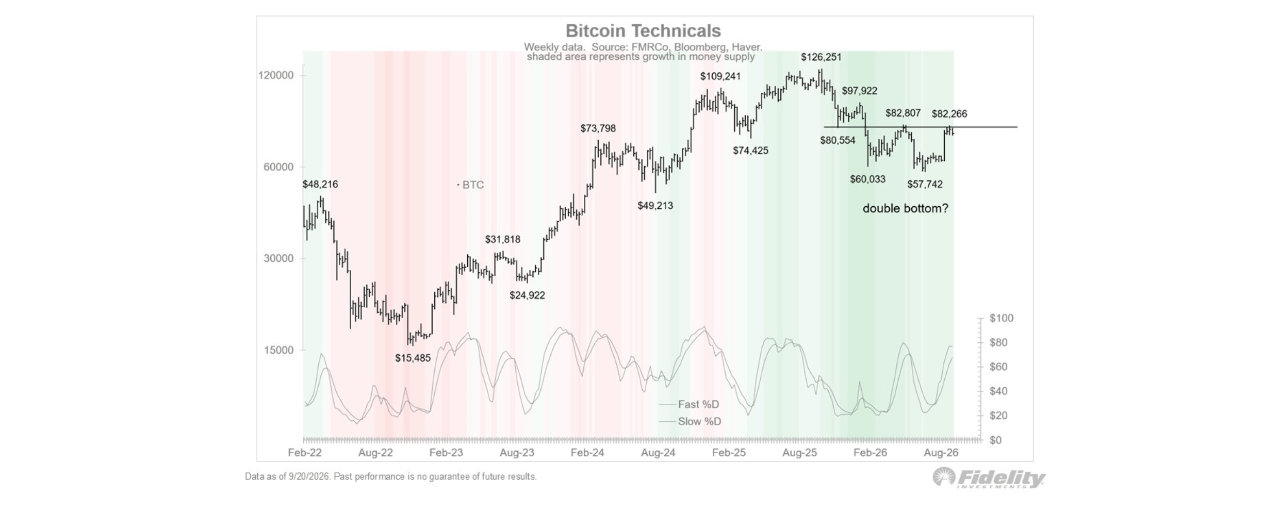
The move above $80,000 triggered a "double-bottom breakout," a pattern confirming a bullish trend and opening the door to $100,000, according to Fidelity Investments global macro director Jurrien Timmer. "Bitcoin is looking particularly interesting here as it challenges key resistance at $80k. If it breaks it will confirm a double bottom targeting $100K," Timmer wrote on X on Friday. A double bottom resembles the letter W — two dips at roughly the same level show buyers stepping in twice, with the middle peak acting as resistance; a break above it suggests sellers have run out of steam. Timmer's chart shows Bitcoin's two lows this year at $60,033 and $57,742, with the middle peak near $82,800. Chart patterns are no guarantee, CoinDesk cautioned, as breakouts often fail and trap buyers who chase them.
The bullish setup aligns with options traders positioning for further gains. On Deribit, the $90,000 call is the most popular Bitcoin options bet with $2.45 billion in open interest, followed by the $95,000 call at $2.33 billion and the $100,000 call at $1.79 billion. Positioning can flip quickly as trends change, CoinDesk noted. Elsewhere, some analysts see the 10-year US Treasury yield — last near 6% in 2000 — headed there again, though CoinDesk argued that need not spell trouble for Bitcoin, which is also on track to break a decade-long seasonal streak: since 2013 every positive August had been followed by a negative September, and a positive close would give it three straight monthly gains from July through September.
Bitcoin Rises More Than 40% This Quarter as Gold Falls Nearly 4%
Bitcoin is doing what looked unthinkable at the start of the quarter, outperforming gold even as rising yields weaken the metal, with its price action pointing to a potential rally to $100,000, according to CoinDesk. Gold fell nearly 4% on Monday as longer-duration yields hit their highest since 2007 and lifted the dollar index, which has climbed 2.7% from 98.78 to near 101.50 since Sept. 9. Bitcoin, by contrast, slipped just 1% on Monday, briefly touching lows near $82,500 before rebounding to around $84,000. The resilience extends well beyond a single day: Bitcoin has surged more than 40% this quarter, leaving gold, the S&P 500 and every other major asset far behind, holding in the $80,000s and above its May highs even as upward momentum cools.
The move above $80,000 triggered a "double-bottom breakout," a pattern confirming a bullish trend and opening the door to $100,000, according to Fidelity Investments global macro director Jurrien Timmer. "Bitcoin is looking particularly interesting here as it challenges key resistance at $80k. If it breaks it will confirm a double bottom targeting $100K," Timmer wrote on X on Friday. A double bottom resembles the letter W — two dips at roughly the same level show buyers stepping in twice, with the middle peak acting as resistance; a break above it suggests sellers have run out of steam. Timmer's chart shows Bitcoin's two lows this year at $60,033 and $57,742, with the middle peak near $82,800. Chart patterns are no guarantee, CoinDesk cautioned, as breakouts often fail and trap buyers who chase them.
The bullish setup aligns with options traders positioning for further gains. On Deribit, the $90,000 call is the most popular Bitcoin options bet with $2.45 billion in open interest, followed by the $95,000 call at $2.33 billion and the $100,000 call at $1.79 billion. Positioning can flip quickly as trends change, CoinDesk noted. Elsewhere, some analysts see the 10-year US Treasury yield — last near 6% in 2000 — headed there again, though CoinDesk argued that need not spell trouble for Bitcoin, which is also on track to break a decade-long seasonal streak: since 2013 every positive August had been followed by a negative September, and a positive close would give it three straight monthly gains from July through September.
The move above $80,000 triggered a "double-bottom breakout," a pattern confirming a bullish trend and opening the door to $100,000, according to Fidelity Investments global macro director Jurrien Timmer. "Bitcoin is looking particularly interesting here as it challenges key resistance at $80k. If it breaks it will confirm a double bottom targeting $100K," Timmer wrote on X on Friday. A double bottom resembles the letter W — two dips at roughly the same level show buyers stepping in twice, with the middle peak acting as resistance; a break above it suggests sellers have run out of steam. Timmer's chart shows Bitcoin's two lows this year at $60,033 and $57,742, with the middle peak near $82,800. Chart patterns are no guarantee, CoinDesk cautioned, as breakouts often fail and trap buyers who chase them.
The bullish setup aligns with options traders positioning for further gains. On Deribit, the $90,000 call is the most popular Bitcoin options bet with $2.45 billion in open interest, followed by the $95,000 call at $2.33 billion and the $100,000 call at $1.79 billion. Positioning can flip quickly as trends change, CoinDesk noted. Elsewhere, some analysts see the 10-year US Treasury yield — last near 6% in 2000 — headed there again, though CoinDesk argued that need not spell trouble for Bitcoin, which is also on track to break a decade-long seasonal streak: since 2013 every positive August had been followed by a negative September, and a positive close would give it three straight monthly gains from July through September.
5
5
25
31.8k
·
--
Binance Earn Adds New Yield Arena Offers Across USDe, USDT, Dual Investment, and Staking ProductsAccording to the announcement from Binance, Binance Earn has added new offers to Yield Arena this week, expanding the range of products available through Simple Earn, ETH Staking, SOL Staking, Dual Investment, and related earning programs. The update includes limited-time offers for USDe, new Simple Earn opportunities for USDT Flexible Products, and a Dual Investment monthly leaderboard campaign. The announcement also outlines several flexible and locked product offerings across multiple assets, including BNB, SOL, BTC, BABY, 0G, SSV, GRAM, ETH, and KGST, with APRs and subscription limits varying by product type. For USDe, eligible users holding at least 0.01 USDe for 24 hours can receive 5% APR rewards from 2026-09-25 00:00 (UTC) to 2026-10-01 23:59 (UTC). For Simple Earn, users subscribing to USDT Flexible Products from 2026-09-25 00:00:00 (UTC) to 2026-10-08 23:59:59 (UTC) may receive up to 7% APR, including an exclusive Bonus Tiered APR. The Dual Investment October Monthly Leaderboard is scheduled from 2026-09-29 02:00 (UTC) to 2026-10-30 23:59 (UTC), with rewards of up to 5,888 USDC.
The announcement also details product terms for several Binance Earn offerings. Flexible Products include USDT, USDC, ETH, SOL, and KGST, each with real-time APRs and bonus tiered APR structures where applicable. Locked Products include BNB, SOL, SOL for VIP users, BTC for VIP users, BABY, 0G, SSV, and GRAM, with terms ranging from 60 days to 90 days and APRs that differ by asset and user category. ETH Staking and SOL Staking are also included, with flexible dynamic APRs of up to 2.2% for ETH and up to 4.49% for SOL. Dual Investment products for BTC and ETH are listed with multiple settlement dates and APRs of 15% or more. Binance also noted that users holding BNB Flexible Products or BNB Locked Products may receive rewards from ongoing Launchpools, may qualify for Megadrop rewards through active BNB Locked Products positions, and may receive airdropped tokens through HODLer Airdrops when subscribing to BNB Simple Earn products. The announcement further described Simple Earn, Dual Investment, BTC Yield, and VIP Earn as part of its broader earning product lineup.
Binance Earn Adds New Yield Arena Offers Across USDe, USDT, Dual Investment, and Staking Products
According to the announcement from Binance, Binance Earn has added new offers to Yield Arena this week, expanding the range of products available through Simple Earn, ETH Staking, SOL Staking, Dual Investment, and related earning programs. The update includes limited-time offers for USDe, new Simple Earn opportunities for USDT Flexible Products, and a Dual Investment monthly leaderboard campaign. The announcement also outlines several flexible and locked product offerings across multiple assets, including BNB, SOL, BTC, BABY, 0G, SSV, GRAM, ETH, and KGST, with APRs and subscription limits varying by product type. For USDe, eligible users holding at least 0.01 USDe for 24 hours can receive 5% APR rewards from 2026-09-25 00:00 (UTC) to 2026-10-01 23:59 (UTC). For Simple Earn, users subscribing to USDT Flexible Products from 2026-09-25 00:00:00 (UTC) to 2026-10-08 23:59:59 (UTC) may receive up to 7% APR, including an exclusive Bonus Tiered APR. The Dual Investment October Monthly Leaderboard is scheduled from 2026-09-29 02:00 (UTC) to 2026-10-30 23:59 (UTC), with rewards of up to 5,888 USDC.
The announcement also details product terms for several Binance Earn offerings. Flexible Products include USDT, USDC, ETH, SOL, and KGST, each with real-time APRs and bonus tiered APR structures where applicable. Locked Products include BNB, SOL, SOL for VIP users, BTC for VIP users, BABY, 0G, SSV, and GRAM, with terms ranging from 60 days to 90 days and APRs that differ by asset and user category. ETH Staking and SOL Staking are also included, with flexible dynamic APRs of up to 2.2% for ETH and up to 4.49% for SOL. Dual Investment products for BTC and ETH are listed with multiple settlement dates and APRs of 15% or more. Binance also noted that users holding BNB Flexible Products or BNB Locked Products may receive rewards from ongoing Launchpools, may qualify for Megadrop rewards through active BNB Locked Products positions, and may receive airdropped tokens through HODLer Airdrops when subscribing to BNB Simple Earn products. The announcement further described Simple Earn, Dual Investment, BTC Yield, and VIP Earn as part of its broader earning product lineup.
The announcement also details product terms for several Binance Earn offerings. Flexible Products include USDT, USDC, ETH, SOL, and KGST, each with real-time APRs and bonus tiered APR structures where applicable. Locked Products include BNB, SOL, SOL for VIP users, BTC for VIP users, BABY, 0G, SSV, and GRAM, with terms ranging from 60 days to 90 days and APRs that differ by asset and user category. ETH Staking and SOL Staking are also included, with flexible dynamic APRs of up to 2.2% for ETH and up to 4.49% for SOL. Dual Investment products for BTC and ETH are listed with multiple settlement dates and APRs of 15% or more. Binance also noted that users holding BNB Flexible Products or BNB Locked Products may receive rewards from ongoing Launchpools, may qualify for Megadrop rewards through active BNB Locked Products positions, and may receive airdropped tokens through HODLer Airdrops when subscribing to BNB Simple Earn products. The announcement further described Simple Earn, Dual Investment, BTC Yield, and VIP Earn as part of its broader earning product lineup.
1
3
1.3k
·
--
Binance to Suspend Ronin Network Deposits and Withdrawals for Upgrade and Hard ForkAccording to the announcement from Binance, deposits and withdrawals of token(s) on the Ronin (RONIN) network will be suspended starting at approximately 2026-10-07 15:00 (UTC) to support a network upgrade and hard fork. The upgrade and hard fork are scheduled to take place at approximately 2026-10-07 16:00 (UTC). Binance said trading of token(s) on the Ronin network will not be impacted during the process. The exchange added that it will handle all technical requirements involved for users and that deposits and withdrawals will reopen once the upgraded network is deemed stable. No further announcement will be posted. The notice applies as a general announcement, and Binance noted that products and services mentioned may not be available in all regions.
The announcement also stated that the suspension is intended to support the network upgrade and hard fork while maintaining user experience. Binance did not specify any changes to trading activity, and it reiterated that only deposits and withdrawals on the Ronin network will be affected. Once the network is considered stable after the upgrade, access to deposits and withdrawals will resume without additional notice. The announcement did not include further operational details beyond the timing of the suspension and the planned upgrade window.
Binance to Suspend Ronin Network Deposits and Withdrawals for Upgrade and Hard Fork
According to the announcement from Binance, deposits and withdrawals of token(s) on the Ronin (RONIN) network will be suspended starting at approximately 2026-10-07 15:00 (UTC) to support a network upgrade and hard fork. The upgrade and hard fork are scheduled to take place at approximately 2026-10-07 16:00 (UTC). Binance said trading of token(s) on the Ronin network will not be impacted during the process. The exchange added that it will handle all technical requirements involved for users and that deposits and withdrawals will reopen once the upgraded network is deemed stable. No further announcement will be posted. The notice applies as a general announcement, and Binance noted that products and services mentioned may not be available in all regions.
The announcement also stated that the suspension is intended to support the network upgrade and hard fork while maintaining user experience. Binance did not specify any changes to trading activity, and it reiterated that only deposits and withdrawals on the Ronin network will be affected. Once the network is considered stable after the upgrade, access to deposits and withdrawals will resume without additional notice. The announcement did not include further operational details beyond the timing of the suspension and the planned upgrade window.
The announcement also stated that the suspension is intended to support the network upgrade and hard fork while maintaining user experience. Binance did not specify any changes to trading activity, and it reiterated that only deposits and withdrawals on the Ronin network will be affected. Once the network is considered stable after the upgrade, access to deposits and withdrawals will resume without additional notice. The announcement did not include further operational details beyond the timing of the suspension and the planned upgrade window.
1
4
3.5k
·
--
Мақала
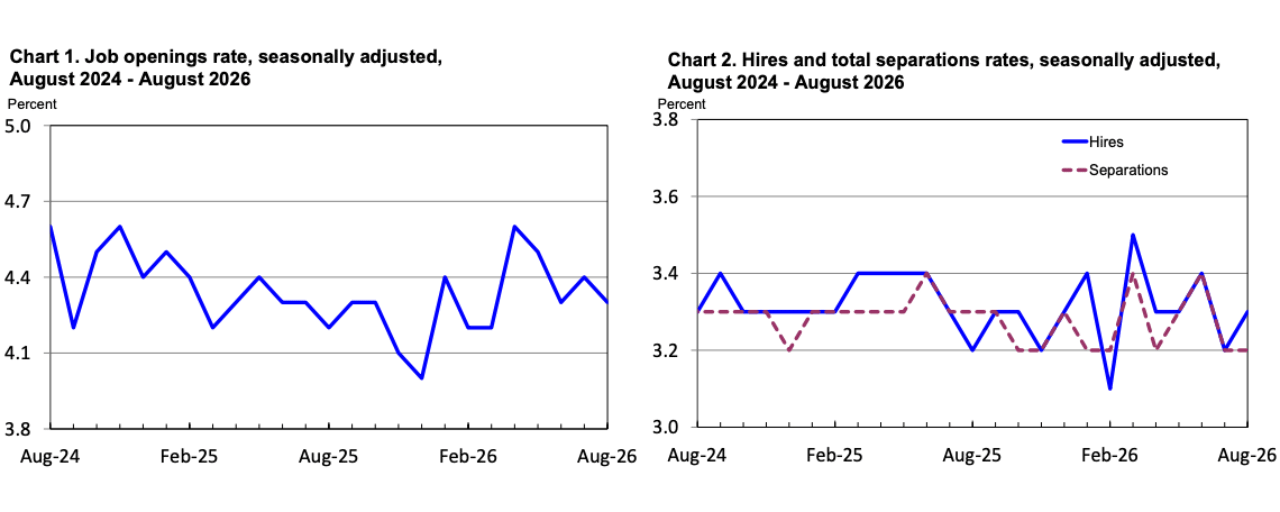
US Job Openings Fall to Lowest Since March as Layoffs Stay LowUS job openings fell in August to a five-month low, suggesting employers grew more cautious about expanding their workforces toward the end of summer, while layoffs remained subdued, according to Bloomberg. Available positions dropped to 7.1 million from 7.3 million in July, Bureau of Labor Statistics data out Tuesday showed, falling short of all estimates in a Bloomberg survey of economists. The report also showed layoffs fell to their lowest since March 2025, while hires edged up and the quits rate — the share of people voluntarily leaving their jobs each month — held at 1.9%, matching the lowest since 2020.
The decline in openings was broad, with fewer vacancies in professional and business services, healthcare and social assistance, state and local government, and manufacturing and construction. The figures are consistent with a low-hire, low-fire labor market in which many employers are reluctant to either add or cut staff, while initial jobless claims continue to hover near historic lows. That lack of churn has left many Americans feeling trapped in their jobs or unable to break into the labor market amid limited opportunities.
Continued labor-market resilience has given Federal Reserve officials room to focus on persistent inflation. The central bank raised interest rates earlier this month for the first time since 2023, with policymakers saying in the accompanying statement that job gains had kept pace with the workforce while unemployment had changed little.
US Job Openings Fall to Lowest Since March as Layoffs Stay Low
US job openings fell in August to a five-month low, suggesting employers grew more cautious about expanding their workforces toward the end of summer, while layoffs remained subdued, according to Bloomberg. Available positions dropped to 7.1 million from 7.3 million in July, Bureau of Labor Statistics data out Tuesday showed, falling short of all estimates in a Bloomberg survey of economists. The report also showed layoffs fell to their lowest since March 2025, while hires edged up and the quits rate — the share of people voluntarily leaving their jobs each month — held at 1.9%, matching the lowest since 2020.
The decline in openings was broad, with fewer vacancies in professional and business services, healthcare and social assistance, state and local government, and manufacturing and construction. The figures are consistent with a low-hire, low-fire labor market in which many employers are reluctant to either add or cut staff, while initial jobless claims continue to hover near historic lows. That lack of churn has left many Americans feeling trapped in their jobs or unable to break into the labor market amid limited opportunities.
Continued labor-market resilience has given Federal Reserve officials room to focus on persistent inflation. The central bank raised interest rates earlier this month for the first time since 2023, with policymakers saying in the accompanying statement that job gains had kept pace with the workforce while unemployment had changed little.
The decline in openings was broad, with fewer vacancies in professional and business services, healthcare and social assistance, state and local government, and manufacturing and construction. The figures are consistent with a low-hire, low-fire labor market in which many employers are reluctant to either add or cut staff, while initial jobless claims continue to hover near historic lows. That lack of churn has left many Americans feeling trapped in their jobs or unable to break into the labor market amid limited opportunities.
Continued labor-market resilience has given Federal Reserve officials room to focus on persistent inflation. The central bank raised interest rates earlier this month for the first time since 2023, with policymakers saying in the accompanying statement that job gains had kept pace with the workforce while unemployment had changed little.
дауыс беру
Job openings hit a 5-month low; what does it mean for BTC?
Recession fears creep in, I get cautious on BTC
Soft-landing vibe, employers just got selective
Crypto says recession, so Im waiting for bounce
Layoffs stay low; this is bullish under the hood
121 дауыс • дауыс беру
1
8
18
36.6k
·
--
Sui Says Traders Can Lose Money Despite Correct Calls as CME Micro SUI Futures Equal One-Tenth of Standard ContractSui said on X that traders can still lose money even when their market view is correct if their position size is too large. According to Odaily, CME Group’s micro SUI futures contract is one-tenth the size of the standard contract.
Sui Says Traders Can Lose Money Despite Correct Calls as CME Micro SUI Futures Equal One-Tenth of Standard Contract
Sui said on X that traders can still lose money even when their market view is correct if their position size is too large. According to Odaily, CME Group’s micro SUI futures contract is one-tenth the size of the standard contract.
10
20.9k
·
--
HSBC Names Upcoming Stablecoin RedCoin and Plans Phased LaunchHSBC has officially named its upcoming stablecoin RedCoin. According to Odaily, the bank said it will roll out the product in phases, starting with person-to-person and person-to-merchant payments before expanding to commercial banking and corporate use.
Hong Kong’s Monetary Authority granted the first batch of Hong Kong dollar stablecoin issuer licenses to HSBC and Standard Chartered’s Anchorpoint Financial in April. HSBC previously said it planned to formally launch its Hong Kong dollar stablecoin in the second half of this year.
HSBC Names Upcoming Stablecoin RedCoin and Plans Phased Launch
HSBC has officially named its upcoming stablecoin RedCoin. According to Odaily, the bank said it will roll out the product in phases, starting with person-to-person and person-to-merchant payments before expanding to commercial banking and corporate use.
Hong Kong’s Monetary Authority granted the first batch of Hong Kong dollar stablecoin issuer licenses to HSBC and Standard Chartered’s Anchorpoint Financial in April. HSBC previously said it planned to formally launch its Hong Kong dollar stablecoin in the second half of this year.
Hong Kong’s Monetary Authority granted the first batch of Hong Kong dollar stablecoin issuer licenses to HSBC and Standard Chartered’s Anchorpoint Financial in April. HSBC previously said it planned to formally launch its Hong Kong dollar stablecoin in the second half of this year.
1
390
·
--
Tom Lee Says Crypto Market Has Entered a Bull PhaseTom Lee said at Korea Blockchain Week 2026 that the crypto market has entered a bull phase. According to Odaily, he said Bitcoin has broken above its 200-day moving average, institutional investor inflows have increased again, tokenization is becoming more common, and AI agents have begun using digital currencies for trading.
Tom Lee Says Crypto Market Has Entered a Bull Phase
Tom Lee said at Korea Blockchain Week 2026 that the crypto market has entered a bull phase. According to Odaily, he said Bitcoin has broken above its 200-day moving average, institutional investor inflows have increased again, tokenization is becoming more common, and AI agents have begun using digital currencies for trading.
3
3k
·
--
Zcash Approves $1.5 Million Bounty Proposals for Orchard Bug Finder Taylor HornbyZcash token holders approved two bounty proposals for Orchard fake coin vulnerability researcher Taylor Hornby in the third-quarter retrospective grant vote, totaling $1.5 million. According to Foresight News, the approved awards include Hornby’s requested $750,000 bug bounty and an additional $750,000 bonus nominated by a community member.
The funded recipient still needs to complete KYC and the disbursement process.
Zcash Approves $1.5 Million Bounty Proposals for Orchard Bug Finder Taylor Hornby
Zcash token holders approved two bounty proposals for Orchard fake coin vulnerability researcher Taylor Hornby in the third-quarter retrospective grant vote, totaling $1.5 million. According to Foresight News, the approved awards include Hornby’s requested $750,000 bug bounty and an additional $750,000 bonus nominated by a community member.
The funded recipient still needs to complete KYC and the disbursement process.
The funded recipient still needs to complete KYC and the disbursement process.
1
1
3
5.9k
·
--
BNB Surpasses 760 USDT with a Narrowed 1.15% Decrease in 24 HoursOn Sep 30, 2026, 07:39 AM(UTC). According to Binance Market Data, BNB has crossed the 760 USDT benchmark and is now trading at 760 USDT, with a narrowed narrowed 1.15% decrease in 24 hours.
BNB Surpasses 760 USDT with a Narrowed 1.15% Decrease in 24 Hours
On Sep 30, 2026, 07:39 AM(UTC). According to Binance Market Data, BNB has crossed the 760 USDT benchmark and is now trading at 760 USDT, with a narrowed narrowed 1.15% decrease in 24 hours.
510
·
--
Polymarket Hires Former Goldman Sachs Partner Lisa Mantil to Lead Institutional GrowthPolymarket has hired Lisa Mantil, a Goldman Sachs veteran with nearly 30 years of experience, as head of institutional growth to support its plan to attract Wall Street liquidity. According to Odaily, Mantil was previously a Goldman Sachs partner and led the bank's global ETF Accelerator.
Polymarket Hires Former Goldman Sachs Partner Lisa Mantil to Lead Institutional Growth
Polymarket has hired Lisa Mantil, a Goldman Sachs veteran with nearly 30 years of experience, as head of institutional growth to support its plan to attract Wall Street liquidity. According to Odaily, Mantil was previously a Goldman Sachs partner and led the bank's global ETF Accelerator.
1
549
·
--
Мақала
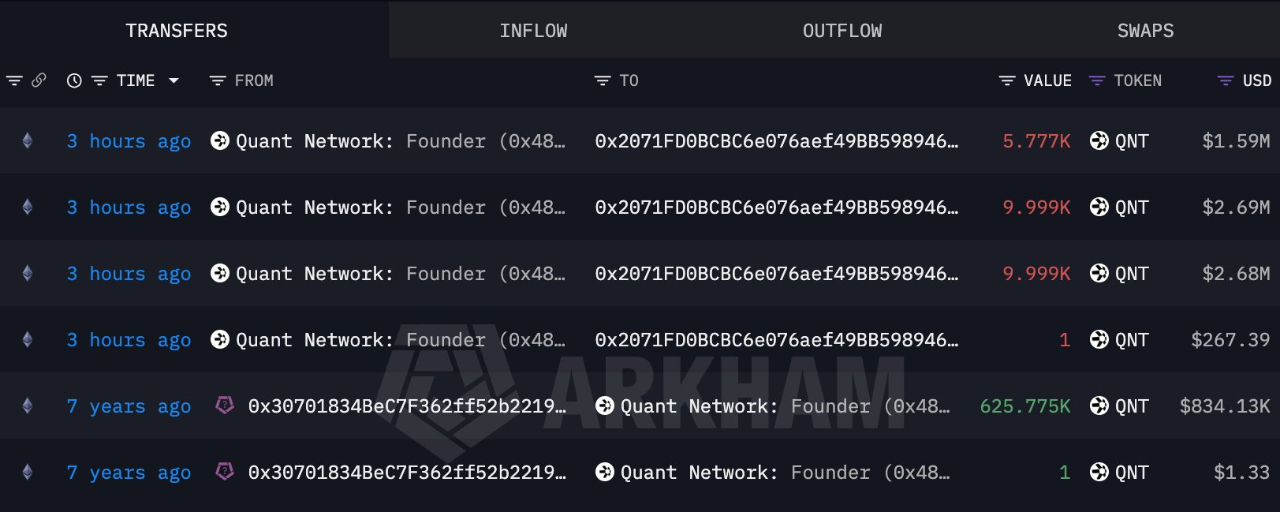
Quant Network Founder-Linked Wallet Moves 25,776 QNT After Seven Years of InactivityA wallet linked to the Quant Network founder transferred 25,776 QNT to several newly created wallets after remaining inactive for seven years. According to BlockBeats On-chain Detection, the wallet 0x48E9 still holds 600,000 QNT.
Quant Network Founder-Linked Wallet Moves 25,776 QNT After Seven Years of Inactivity
A wallet linked to the Quant Network founder transferred 25,776 QNT to several newly created wallets after remaining inactive for seven years. According to BlockBeats On-chain Detection, the wallet 0x48E9 still holds 600,000 QNT.
15
28.9k
·
--
Мақала
Bitwise NEAR ETF Begins Trading in the US as First Spot NEAR ETPBitwise Asset Management said its Bitwise NEAR ETF, ticker NRR, has officially started trading in the United States, becoming the first spot NEAR exchange-traded product in the country. According to Foresight News, the fund offers direct spot exposure to NEAR.
Bitwise plans to stake the NEAR tokens held by the fund internally to seek an average staking reward of about 5%. The fund charges a 0.75% management fee and began trading on NYSE Arca on September 29, 2026.
Bitwise NEAR ETF Begins Trading in the US as First Spot NEAR ETP
Bitwise Asset Management said its Bitwise NEAR ETF, ticker NRR, has officially started trading in the United States, becoming the first spot NEAR exchange-traded product in the country. According to Foresight News, the fund offers direct spot exposure to NEAR.
Bitwise plans to stake the NEAR tokens held by the fund internally to seek an average staking reward of about 5%. The fund charges a 0.75% management fee and began trading on NYSE Arca on September 29, 2026.
Bitwise plans to stake the NEAR tokens held by the fund internally to seek an average staking reward of about 5%. The fund charges a 0.75% management fee and began trading on NYSE Arca on September 29, 2026.
2
6
29
24.5k
·
--
Multicoin Capital Invests in Grass as Network Reports Revenue GrowthMulticoin Capital partner Shayon Sengupta said on September 29 that Multicoin has invested in decentralized bandwidth network Grass through both its hedge fund and venture fund. According to ChainCatcher, Grass is positioning itself as a read layer for machine intelligence and has spent about 18 months using crypto incentives to recruit contributors to share idle bandwidth for querying and parsing the public internet.
Grass said more than 6 million contributors have received dollar-denominated rewards funded by revenue generated directly from their contributions. The company reported $17 million in revenue in 2025 and another $17 million in the first half of 2026, with nearly all AI customers returning, and said it is profitable. It also guided to $75 million in training-data revenue alone for 2026, based on figures shared in a July 7 call with token holders and network participants.
Sengupta said Grass plans to launch a Contents API that would let models open and render public pages through residential networks, along with a Search API and web indexing. Grass has also collected more than 1 billion public web videos, some of which are being used with Multicoin portfolio company Inference.net to train video annotation models.
Multicoin Capital Invests in Grass as Network Reports Revenue Growth
Multicoin Capital partner Shayon Sengupta said on September 29 that Multicoin has invested in decentralized bandwidth network Grass through both its hedge fund and venture fund. According to ChainCatcher, Grass is positioning itself as a read layer for machine intelligence and has spent about 18 months using crypto incentives to recruit contributors to share idle bandwidth for querying and parsing the public internet.
Grass said more than 6 million contributors have received dollar-denominated rewards funded by revenue generated directly from their contributions. The company reported $17 million in revenue in 2025 and another $17 million in the first half of 2026, with nearly all AI customers returning, and said it is profitable. It also guided to $75 million in training-data revenue alone for 2026, based on figures shared in a July 7 call with token holders and network participants.
Sengupta said Grass plans to launch a Contents API that would let models open and render public pages through residential networks, along with a Search API and web indexing. Grass has also collected more than 1 billion public web videos, some of which are being used with Multicoin portfolio company Inference.net to train video annotation models.
Grass said more than 6 million contributors have received dollar-denominated rewards funded by revenue generated directly from their contributions. The company reported $17 million in revenue in 2025 and another $17 million in the first half of 2026, with nearly all AI customers returning, and said it is profitable. It also guided to $75 million in training-data revenue alone for 2026, based on figures shared in a July 7 call with token holders and network participants.
Sengupta said Grass plans to launch a Contents API that would let models open and render public pages through residential networks, along with a Search API and web indexing. Grass has also collected more than 1 billion public web videos, some of which are being used with Multicoin portfolio company Inference.net to train video annotation models.
2.4k
·
--
Strategy Chair Michael Saylor Proposes Daily Dividend Payments for Preferred StockStrategy Executive Chairman Michael Saylor has proposed changing dividend payments on billions of dollars of preferred stock from semi-monthly or quarterly to daily payments, with an annualized yield of up to 12%. According to Odaily, Strategy has more than $14 billion of preferred stock outstanding. The company previously raised funds by selling common stock to buy Bitcoin, then shifted to issuing perpetual preferred stock after the premium on its common shares relative to Bitcoin assets disappeared. Shareholder voting on the proposal will end on October 28.
Strategy Chair Michael Saylor Proposes Daily Dividend Payments for Preferred Stock
Strategy Executive Chairman Michael Saylor has proposed changing dividend payments on billions of dollars of preferred stock from semi-monthly or quarterly to daily payments, with an annualized yield of up to 12%. According to Odaily, Strategy has more than $14 billion of preferred stock outstanding. The company previously raised funds by selling common stock to buy Bitcoin, then shifted to issuing perpetual preferred stock after the premium on its common shares relative to Bitcoin assets disappeared. Shareholder voting on the proposal will end on October 28.
1
4
2.1k
·
--
MOVR Migration Period Ends on September 30, 2026 as Token Rises 51.73%Moonriver said its migration period will officially end on September 30, 2026. Valid applications submitted during the migration window will be processed as soon as possible, and users who do not apply by September 30 will lose access to MOVR. Moonriver previously said MOVR will migrate to the Base platform together with GLMR.
According to Foresight News, MOVR briefly touched 1.489 USDT and was trading at 1.465 USDT, up 51.73% over the past 24 hours.
MOVR Migration Period Ends on September 30, 2026 as Token Rises 51.73%
Moonriver said its migration period will officially end on September 30, 2026. Valid applications submitted during the migration window will be processed as soon as possible, and users who do not apply by September 30 will lose access to MOVR. Moonriver previously said MOVR will migrate to the Base platform together with GLMR.
According to Foresight News, MOVR briefly touched 1.489 USDT and was trading at 1.465 USDT, up 51.73% over the past 24 hours.
According to Foresight News, MOVR briefly touched 1.489 USDT and was trading at 1.465 USDT, up 51.73% over the past 24 hours.
1
2
6.3k
·
--

Мақала
SEC Chair Paul Atkins Says He Wants to Move Stock Markets On-ChainU.S. Securities and Exchange Commission Chair Paul Atkins said in a live CNBC interview that he wants to push stock markets to operate on-chain and said the broader financial system is moving toward Bitcoin and cryptocurrencies. According to Odaily, the SEC has already introduced an "innovation exemption" that allows eligible trading venues to conduct on-chain trading of tokenized U.S. stocks.
SEC Chair Paul Atkins Says He Wants to Move Stock Markets On-Chain
U.S. Securities and Exchange Commission Chair Paul Atkins said in a live CNBC interview that he wants to push stock markets to operate on-chain and said the broader financial system is moving toward Bitcoin and cryptocurrencies. According to Odaily, the SEC has already introduced an "innovation exemption" that allows eligible trading venues to conduct on-chain trading of tokenized U.S. stocks.
3
2
24
62k
·
--
Aztec Labs Relaunches zk.money as Self-Custodial Wallet on Aztec NetworkAztec Labs has relaunched zk.money as a self-custodial wallet on Aztec Network, three years after discontinuing the original product. According to NS3.AI, the wallet does not publish users' balances, payment amounts, or counterparties on a public ledger.
Users can send or request payments through links instead of sharing long wallet addresses.
Aztec Labs Relaunches zk.money as Self-Custodial Wallet on Aztec Network
Aztec Labs has relaunched zk.money as a self-custodial wallet on Aztec Network, three years after discontinuing the original product. According to NS3.AI, the wallet does not publish users' balances, payment amounts, or counterparties on a public ledger.
Users can send or request payments through links instead of sharing long wallet addresses.
Users can send or request payments through links instead of sharing long wallet addresses.
1
492
·
--
Binance to Launch Algorand (ALGO) Trading Tournament With 200,000 USDC Prize PoolAccording to the announcement from Binance, the exchange will launch an Algorand (ALGO) Trading Tournament with a total prize pool of 200,000 USDC in token vouchers. The promotion period is 2026-09-29 10:00 (UTC) to 2026-10-06 10:00 (UTC), and eligible users will compete through trading volume on the ALGO/USDC spot pair. Binance is also introducing a Sprint Reward for a limited period, allowing participants to earn additional rewards based on cumulative trading volume during separate statistical periods. The tournament is open to verified new users, regular users, and Binance VIP 1-6 users. Liquidity providers in the Binance Spot Liquidity Provider Program and Binance Brokers are not eligible. To qualify for rewards, users must register and reach at least 500 USD equivalent in total trading volume on the eligible pair during the promotion period. The main reward pool will be distributed according to cumulative trading volume rankings, with 6,000 USDC for first place, 5,000 USDC for second, 4,000 USDC for third, 3,000 USDC for fourth, and 2,000 USDC for fifth. Additional allocations are set for ranks 6th through 1,000th, while all remaining eligible participants will share a proportional pool capped at 30 USDC per user.
The Sprint Reward will run across two statistical periods: 2026-09-29 10:00 (UTC) to 2026-10-01 10:00 (UTC), and 2026-10-01 10:01 (UTC) to 2026-10-03 10:00 (UTC). Binance said users can earn from both the Main Reward and Sprint Reward pools at the same time. Token voucher rewards will be distributed by 2026-10-20 and will expire within 21 days after distribution. The Spot Trading Volume leaderboard will be updated at least once every 24 hours, with the final update completed within a few hours after the campaign ends. Only users who meet the minimum qualifying trading volume threshold will appear on the leaderboard.
Binance to Launch Algorand (ALGO) Trading Tournament With 200,000 USDC Prize Pool
According to the announcement from Binance, the exchange will launch an Algorand (ALGO) Trading Tournament with a total prize pool of 200,000 USDC in token vouchers. The promotion period is 2026-09-29 10:00 (UTC) to 2026-10-06 10:00 (UTC), and eligible users will compete through trading volume on the ALGO/USDC spot pair. Binance is also introducing a Sprint Reward for a limited period, allowing participants to earn additional rewards based on cumulative trading volume during separate statistical periods. The tournament is open to verified new users, regular users, and Binance VIP 1-6 users. Liquidity providers in the Binance Spot Liquidity Provider Program and Binance Brokers are not eligible. To qualify for rewards, users must register and reach at least 500 USD equivalent in total trading volume on the eligible pair during the promotion period. The main reward pool will be distributed according to cumulative trading volume rankings, with 6,000 USDC for first place, 5,000 USDC for second, 4,000 USDC for third, 3,000 USDC for fourth, and 2,000 USDC for fifth. Additional allocations are set for ranks 6th through 1,000th, while all remaining eligible participants will share a proportional pool capped at 30 USDC per user.
The Sprint Reward will run across two statistical periods: 2026-09-29 10:00 (UTC) to 2026-10-01 10:00 (UTC), and 2026-10-01 10:01 (UTC) to 2026-10-03 10:00 (UTC). Binance said users can earn from both the Main Reward and Sprint Reward pools at the same time. Token voucher rewards will be distributed by 2026-10-20 and will expire within 21 days after distribution. The Spot Trading Volume leaderboard will be updated at least once every 24 hours, with the final update completed within a few hours after the campaign ends. Only users who meet the minimum qualifying trading volume threshold will appear on the leaderboard.
The Sprint Reward will run across two statistical periods: 2026-09-29 10:00 (UTC) to 2026-10-01 10:00 (UTC), and 2026-10-01 10:01 (UTC) to 2026-10-03 10:00 (UTC). Binance said users can earn from both the Main Reward and Sprint Reward pools at the same time. Token voucher rewards will be distributed by 2026-10-20 and will expire within 21 days after distribution. The Spot Trading Volume leaderboard will be updated at least once every 24 hours, with the final update completed within a few hours after the campaign ends. Only users who meet the minimum qualifying trading volume threshold will appear on the leaderboard.
1
4
26
10.7k
·
--
Zcash Developers Integrate Tachyon Code Into Zakura Common as Udon Component LaunchesZcash developers are integrating part of the Tachyon scaling project into the Zakura Common cryptography library, and a new component called Udon was released on Monday. According to Odaily, Tachyon lead Sean Bowe said Udon was previously developed as part of Tachyon and has now been added to Zakura Common to use the library’s existing performance optimizations.
Bowe and Valar Group head Dev Ojha have set a long-term goal of processing more than 50,000 private payments per second. Tachyon is designed to reduce the amount of data Zcash nodes need to receive and verify by combining proofs from multiple transactions into a single proof. The upgrade has not yet been enabled on the Zcash network.
ZecStats data showed that Zcash transactions involving private funds averaged about 6,200 per day in the seven days through September 28, down from about 11,700 per day in the seven days through September 21.
Zcash Developers Integrate Tachyon Code Into Zakura Common as Udon Component Launches
Zcash developers are integrating part of the Tachyon scaling project into the Zakura Common cryptography library, and a new component called Udon was released on Monday. According to Odaily, Tachyon lead Sean Bowe said Udon was previously developed as part of Tachyon and has now been added to Zakura Common to use the library’s existing performance optimizations.
Bowe and Valar Group head Dev Ojha have set a long-term goal of processing more than 50,000 private payments per second. Tachyon is designed to reduce the amount of data Zcash nodes need to receive and verify by combining proofs from multiple transactions into a single proof. The upgrade has not yet been enabled on the Zcash network.
ZecStats data showed that Zcash transactions involving private funds averaged about 6,200 per day in the seven days through September 28, down from about 11,700 per day in the seven days through September 21.
Bowe and Valar Group head Dev Ojha have set a long-term goal of processing more than 50,000 private payments per second. Tachyon is designed to reduce the amount of data Zcash nodes need to receive and verify by combining proofs from multiple transactions into a single proof. The upgrade has not yet been enabled on the Zcash network.
ZecStats data showed that Zcash transactions involving private funds averaged about 6,200 per day in the seven days through September 28, down from about 11,700 per day in the seven days through September 21.
3
1
11
11k
·
--
Aave V4 Active Loans Exceed $400 MillionAave V4's active loan amount has surpassed $400 million. According to Foresight News, the milestone reflects continued borrowing activity on the protocol.
Aave V4 Active Loans Exceed $400 Million
Aave V4's active loan amount has surpassed $400 million. According to Foresight News, the milestone reflects continued borrowing activity on the protocol.
2
1.9k
·
--
Bitcoin Whale Moves 20.43 BTC After 15.4 Years, Onchain Lens SaysA Bitcoin whale address that accumulated coins when Bitcoin traded at $3 to $4 transferred 20.43 BTC after holding for 15.4 years, according to Onchain Lens. According to ChainCatcher, the wallet is estimated to have realized about $1.72 million in profit, with a return of more than 2,000,000%.
The address can be traced back 15 years, and historical records show it previously interacted with Mt. Gox and Silk Road.
Bitcoin Whale Moves 20.43 BTC After 15.4 Years, Onchain Lens Says
A Bitcoin whale address that accumulated coins when Bitcoin traded at $3 to $4 transferred 20.43 BTC after holding for 15.4 years, according to Onchain Lens. According to ChainCatcher, the wallet is estimated to have realized about $1.72 million in profit, with a return of more than 2,000,000%.
The address can be traced back 15 years, and historical records show it previously interacted with Mt. Gox and Silk Road.
The address can be traced back 15 years, and historical records show it previously interacted with Mt. Gox and Silk Road.
5
1
11
29.1k
·
--
Chainlink Launches Framework for Banks to Connect to SWIFT Blockchain LedgerChainlink announced a connectivity framework that lets banks access the SWIFT blockchain ledger through the Chainlink platform while retaining transaction signing keys. According to ChainCatcher, the framework uses the Chainlink runtime environment to coordinate interactions between institutional systems and the ledger, and banks using a self-signing model do not need to hand authorization keys to Chainlink.
The SWIFT ledger supports 24/7 tokenized deposit payments, while final settlement still occurs through existing real-time gross settlement mechanisms. Seventeen banks from six continents, including ANZ, HSBC, Citi, Standard Chartered, and UBS, are preparing a tokenized deposit pilot on the SWIFT ledger.
Chainlink Launches Framework for Banks to Connect to SWIFT Blockchain Ledger
Chainlink announced a connectivity framework that lets banks access the SWIFT blockchain ledger through the Chainlink platform while retaining transaction signing keys. According to ChainCatcher, the framework uses the Chainlink runtime environment to coordinate interactions between institutional systems and the ledger, and banks using a self-signing model do not need to hand authorization keys to Chainlink.
The SWIFT ledger supports 24/7 tokenized deposit payments, while final settlement still occurs through existing real-time gross settlement mechanisms. Seventeen banks from six continents, including ANZ, HSBC, Citi, Standard Chartered, and UBS, are preparing a tokenized deposit pilot on the SWIFT ledger.
The SWIFT ledger supports 24/7 tokenized deposit payments, while final settlement still occurs through existing real-time gross settlement mechanisms. Seventeen banks from six continents, including ANZ, HSBC, Citi, Standard Chartered, and UBS, are preparing a tokenized deposit pilot on the SWIFT ledger.
6
6.4k
·
--
CSD BR Begins Recording Selected BTG Pactual Fund Ownership on XRP LedgerCSD BR has begun putting ownership records for selected BTG Pactual investment funds on the XRP Ledger. According to NS3.AI, the Brazilian operator is responsible for more than 22 trillion reais in registered assets, roughly $4 trillion.
Its existing database remains the official record, and the new ledger-based records are being added for selected funds.
CSD BR Begins Recording Selected BTG Pactual Fund Ownership on XRP Ledger
CSD BR has begun putting ownership records for selected BTG Pactual investment funds on the XRP Ledger. According to NS3.AI, the Brazilian operator is responsible for more than 22 trillion reais in registered assets, roughly $4 trillion.
Its existing database remains the official record, and the new ledger-based records are being added for selected funds.
Its existing database remains the official record, and the new ledger-based records are being added for selected funds.
3
4.3k
·
--
Peter Brandt Calls Stellar A Long-Shot Bet As XLM Gains MomentumVeteran trader Peter Brandt said Stellar (XLM) looks like a good long-shot trade for the next few years, citing chart signals rather than hype. According to BeInCrypto, XLM traded near $0.2309 and had gained about 11% in 24 hours and 28% over the past month. Recent adoption includes Mastercard-owned BVNK integrating Stellar into its stablecoin payments platform on September 22, while Spectra Finance launched fixed-term markets for a tokenized Janus Henderson treasury product on Stellar.
Peter Brandt Calls Stellar A Long-Shot Bet As XLM Gains Momentum
Veteran trader Peter Brandt said Stellar (XLM) looks like a good long-shot trade for the next few years, citing chart signals rather than hype. According to BeInCrypto, XLM traded near $0.2309 and had gained about 11% in 24 hours and 28% over the past month. Recent adoption includes Mastercard-owned BVNK integrating Stellar into its stablecoin payments platform on September 22, while Spectra Finance launched fixed-term markets for a tokenized Janus Henderson treasury product on Stellar.
3
17.6k
·
--
Bitget ETH Withdrawals Trigger Rapid Reflow and Net InflowBitget opened ETH withdrawals, after which ETH quickly flowed back and even recorded a net inflow. According to Foresight News, an address beginning with 0xED9 is suspected to be the hot wallet Bitget prepared to handle ETH withdrawals.
Before withdrawals were opened, the wallet held 30,000 ETH. Over the following half hour, the balance kept falling and briefly dropped to about 25,000 ETH, before ETH later flowed back and the balance rose above 30,000 ETH again.
Bitget ETH Withdrawals Trigger Rapid Reflow and Net Inflow
Bitget opened ETH withdrawals, after which ETH quickly flowed back and even recorded a net inflow. According to Foresight News, an address beginning with 0xED9 is suspected to be the hot wallet Bitget prepared to handle ETH withdrawals.
Before withdrawals were opened, the wallet held 30,000 ETH. Over the following half hour, the balance kept falling and briefly dropped to about 25,000 ETH, before ETH later flowed back and the balance rose above 30,000 ETH again.
Before withdrawals were opened, the wallet held 30,000 ETH. Over the following half hour, the balance kept falling and briefly dropped to about 25,000 ETH, before ETH later flowed back and the balance rose above 30,000 ETH again.
3
18.3k
·
--
Aave Expands Collateral Lending Plans Into Securities and Real-World AssetsAave’s core expansion plan is to extend collateralized lending from crypto assets to securities and other productive real-world assets. According to Odaily, Aave V4 has already launched tokenized stock lending on Base, with initial support for seven U.S. stocks, allowing users to borrow USDC against shares instead of selling their holdings.
Aave founder Stani divided the potential market into three stages: crypto, securities, and abundance assets. The plan also includes solar power, batteries, GPUs, robots, and space infrastructure as assets that could be used for financing.
Some observers said Aave’s long-term narrative has been mapped out to 2050, with collateral expected to expand from crypto assets to securities and then to physical assets. On tokenomics, AAVE currently mainly uses a buyback mechanism, but buybacks have been paused for a long time. Some also said Aave tokenomics 3.0 may consider adding a burn mechanism.
Aave Expands Collateral Lending Plans Into Securities and Real-World Assets
Aave’s core expansion plan is to extend collateralized lending from crypto assets to securities and other productive real-world assets. According to Odaily, Aave V4 has already launched tokenized stock lending on Base, with initial support for seven U.S. stocks, allowing users to borrow USDC against shares instead of selling their holdings.
Aave founder Stani divided the potential market into three stages: crypto, securities, and abundance assets. The plan also includes solar power, batteries, GPUs, robots, and space infrastructure as assets that could be used for financing.
Some observers said Aave’s long-term narrative has been mapped out to 2050, with collateral expected to expand from crypto assets to securities and then to physical assets. On tokenomics, AAVE currently mainly uses a buyback mechanism, but buybacks have been paused for a long time. Some also said Aave tokenomics 3.0 may consider adding a burn mechanism.
Aave founder Stani divided the potential market into three stages: crypto, securities, and abundance assets. The plan also includes solar power, batteries, GPUs, robots, and space infrastructure as assets that could be used for financing.
Some observers said Aave’s long-term narrative has been mapped out to 2050, with collateral expected to expand from crypto assets to securities and then to physical assets. On tokenomics, AAVE currently mainly uses a buyback mechanism, but buybacks have been paused for a long time. Some also said Aave tokenomics 3.0 may consider adding a burn mechanism.
1
1.1k
·
--
Bitcoin(BTC) Drops Below 83,000 USDT with a 1.12% Decrease in 24 HoursOn Sep 30, 2026, 06:51 AM(UTC). According to Binance Market Data, Bitcoin has dropped below 83,000 USDT and is now trading at 82,980 USDT, with a narrowed 1.12% decrease in 24 hours.
Bitcoin(BTC) Drops Below 83,000 USDT with a 1.12% Decrease in 24 Hours
On Sep 30, 2026, 06:51 AM(UTC). According to Binance Market Data, Bitcoin has dropped below 83,000 USDT and is now trading at 82,980 USDT, with a narrowed 1.12% decrease in 24 hours.
1.1k
·
--
Lite Strategy Reports Fiscal 2026 Results After First Full Year of Litecoin Treasury StrategyLite Strategy, a Litecoin treasury company listed on Nasdaq under the ticker LITS, reported fiscal 2026 results for the year ended June 30, 2026. According to ChainCatcher, the company said fiscal 2026 was its first full year after launching its LTC treasury strategy and that it spent $100 million to buy more than 900,000 LTC.
The company said it held 832,716 LTC as of June 30, representing more than 1% of the total LTC supply mined to date. It also said its share repurchase program has bought back about 4.4 million LITS shares, or roughly 12% of the float, and about 6.4 million shares, or roughly 17% of the float, as of September 22.
Lite Strategy added that since launching its LTC covered call strategy, it has generated about $930,000 in option premium income as of September 22.
Lite Strategy Reports Fiscal 2026 Results After First Full Year of Litecoin Treasury Strategy
Lite Strategy, a Litecoin treasury company listed on Nasdaq under the ticker LITS, reported fiscal 2026 results for the year ended June 30, 2026. According to ChainCatcher, the company said fiscal 2026 was its first full year after launching its LTC treasury strategy and that it spent $100 million to buy more than 900,000 LTC.
The company said it held 832,716 LTC as of June 30, representing more than 1% of the total LTC supply mined to date. It also said its share repurchase program has bought back about 4.4 million LITS shares, or roughly 12% of the float, and about 6.4 million shares, or roughly 17% of the float, as of September 22.
Lite Strategy added that since launching its LTC covered call strategy, it has generated about $930,000 in option premium income as of September 22.
The company said it held 832,716 LTC as of June 30, representing more than 1% of the total LTC supply mined to date. It also said its share repurchase program has bought back about 4.4 million LITS shares, or roughly 12% of the float, and about 6.4 million shares, or roughly 17% of the float, as of September 22.
Lite Strategy added that since launching its LTC covered call strategy, it has generated about $930,000 in option premium income as of September 22.
LTC-2,78%
LITSUS-2,17%
3
3
6.3k
·
--
QNT Rises 287% as Dormant Quant Wallets Move Tokens to ExchangesTwo Quant wallets that had been inactive for more than three years moved QNT to exchanges. According to NS3.AI, QNT rose 287% over the past week to $266.75.
The transfers came after The Clearing House selected Quant for its tokenized deposit network.
QNT Rises 287% as Dormant Quant Wallets Move Tokens to Exchanges
Two Quant wallets that had been inactive for more than three years moved QNT to exchanges. According to NS3.AI, QNT rose 287% over the past week to $266.75.
The transfers came after The Clearing House selected Quant for its tokenized deposit network.
The transfers came after The Clearing House selected Quant for its tokenized deposit network.
1
4
18.7k
·
--
Elon Musk: SpaceX and Tesla Aim for 200 GW of Solar Production AnnuallyAccording to Jin10, Elon Musk said SpaceX and Tesla's goal is to achieve 200 GW of solar production each year.
Elon Musk: SpaceX and Tesla Aim for 200 GW of Solar Production Annually
According to Jin10, Elon Musk said SpaceX and Tesla's goal is to achieve 200 GW of solar production each year.
1
2
15.3k
·
--
Polygon to Distribute Over 27 Million POL in Staking Incentives Starting October 1Polygon will begin distributing over 27 million POL in staking incentives to stakers on October 1. According to Foresight News, the rewards were previously accumulated under PIP-85 but were not distributed because of compliance issues, and the POL comes from the 50% share of priority fees allocated to stakers.
The distribution will run for two months and end on December 1. It is expected to raise the staking yield from 3% to about 7.7%.
Polygon to Distribute Over 27 Million POL in Staking Incentives Starting October 1
Polygon will begin distributing over 27 million POL in staking incentives to stakers on October 1. According to Foresight News, the rewards were previously accumulated under PIP-85 but were not distributed because of compliance issues, and the POL comes from the 50% share of priority fees allocated to stakers.
The distribution will run for two months and end on December 1. It is expected to raise the staking yield from 3% to about 7.7%.
The distribution will run for two months and end on December 1. It is expected to raise the staking yield from 3% to about 7.7%.
8
3.9k
·
--
New Address Withdraws 5,731.90 ETH From CEX and Holds FundsA new address withdrew 5,731.90 ETH from a CEX on September 30, according to Arkham monitoring. According to BlockBeats On-chain Detection, the address has retained all of the received ETH and has not initiated any transfers as of press time.
The address is 0x149308592a2d1d91c0afc722f59ec1e2a177f002.
New Address Withdraws 5,731.90 ETH From CEX and Holds Funds
A new address withdrew 5,731.90 ETH from a CEX on September 30, according to Arkham monitoring. According to BlockBeats On-chain Detection, the address has retained all of the received ETH and has not initiated any transfers as of press time.
The address is 0x149308592a2d1d91c0afc722f59ec1e2a177f002.
The address is 0x149308592a2d1d91c0afc722f59ec1e2a177f002.
4
1.6k
·
--

Мақала
Hunter Biden Blames Market Maker Error for $LAPTOP Token's 98% DropBitcoin Magazine published an interview video with Hunter Biden, who said the $LAPTOP token fell more than 98% within minutes of launch because of a market maker liquidity mistake on a decentralized exchange. According to ChainCatcher, he said the token was originally planned for a centralized exchange before the launch was changed to a decentralized exchange.
In the interview, Hunter Biden also discussed Operation Choke Point 2, lobbying his father, and the Democratic Party's stance on crypto. He also mentioned Michael Saylor and Strategy, Bitcoin payments and global adoption, and gave his forecast for Bitcoin's price in 2028. He compared $LAPTOP with Trump-related tokens in terms of tokenomics and transparency.
Hunter Biden Blames Market Maker Error for $LAPTOP Token's 98% Drop
Bitcoin Magazine published an interview video with Hunter Biden, who said the $LAPTOP token fell more than 98% within minutes of launch because of a market maker liquidity mistake on a decentralized exchange. According to ChainCatcher, he said the token was originally planned for a centralized exchange before the launch was changed to a decentralized exchange.
In the interview, Hunter Biden also discussed Operation Choke Point 2, lobbying his father, and the Democratic Party's stance on crypto. He also mentioned Michael Saylor and Strategy, Bitcoin payments and global adoption, and gave his forecast for Bitcoin's price in 2028. He compared $LAPTOP with Trump-related tokens in terms of tokenomics and transparency.
In the interview, Hunter Biden also discussed Operation Choke Point 2, lobbying his father, and the Democratic Party's stance on crypto. He also mentioned Michael Saylor and Strategy, Bitcoin payments and global adoption, and gave his forecast for Bitcoin's price in 2028. He compared $LAPTOP with Trump-related tokens in terms of tokenomics and transparency.
3
3
20
47.4k
·
--
Bitwise CEO Says Avalanche Is Making Progress in Real-World ApplicationsBitwise CEO said on X that Avalanche continues to make progress in real-world applications. According to Odaily, investors can participate in Avalanche through the Bitwise Avalanche ETF, BAVA.
Bitwise CEO Says Avalanche Is Making Progress in Real-World Applications
Bitwise CEO said on X that Avalanche continues to make progress in real-world applications. According to Odaily, investors can participate in Avalanche through the Bitwise Avalanche ETF, BAVA.
7
5.7k
Сүзу
Ең көп ізделген (6 сағ)
USDT