

LearnBits
2.7k Жариялаулар

LearnBits
Хабарлау
Пайдаланушыны блоктау
BP-630E14DD5474
Ашық сауда
Жоғары жиілікті трейдер
7.9 жыл
119 Жазылым
4.5K+ Жазылушылар
6.8K+ лайк басылған
Жазбалар
Портфолио
Барлығы
Баға ұсыныстары
Видеолар
Тікелей эфир
·
--
Micron Just Dropped a Monster Quarter 🚀
Micron crushed fiscal Q4 expectations with $54.23B in revenue and $33.42 adjusted EPS, beating analyst estimates of about $51.1B and $31.6, respectively. AI-driven demand for memory and data-center chips is fueling the surge.
But the real headline is guidance: Micron expects $61.5B in Q1 revenue and $38.15 adjusted EPS, both well above Wall Street forecasts. Its long-term customer commitments also jumped to $32B.
Micron now expects memory supply-demand conditions to stay much tighter through fiscal 2027 and 2028. AI infrastructure demand is translating into a massive memory boom.
#MicronBeatsEarningsLiftsGuidance
$MU
{future}(MUUSDT)
Micron Just Dropped a Monster Quarter 🚀
Micron crushed fiscal Q4 expectations with $54.23B in revenue and $33.42 adjusted EPS, beating analyst estimates of about $51.1B and $31.6, respectively. AI-driven demand for memory and data-center chips is fueling the surge.
But the real headline is guidance: Micron expects $61.5B in Q1 revenue and $38.15 adjusted EPS, both well above Wall Street forecasts. Its long-term customer commitments also jumped to $32B.
Micron now expects memory supply-demand conditions to stay much tighter through fiscal 2027 and 2028. AI infrastructure demand is translating into a massive memory boom.
#MicronBeatsEarningsLiftsGuidance
$MU
Micron crushed fiscal Q4 expectations with $54.23B in revenue and $33.42 adjusted EPS, beating analyst estimates of about $51.1B and $31.6, respectively. AI-driven demand for memory and data-center chips is fueling the surge.
But the real headline is guidance: Micron expects $61.5B in Q1 revenue and $38.15 adjusted EPS, both well above Wall Street forecasts. Its long-term customer commitments also jumped to $32B.
Micron now expects memory supply-demand conditions to stay much tighter through fiscal 2027 and 2028. AI infrastructure demand is translating into a massive memory boom.
#MicronBeatsEarningsLiftsGuidance
$MU

Best Wishes!
LearnBits атынан
1
54
·
--
MetaMask Pulls Lido Validators After Security Incident 🚨
MetaMask is proactively exiting affected Ethereum validators from Lido after disclosing a security incident involving part of its infrastructure. The company says it’s working with external security advisers and has found no immediate threat to MetaMask wallets.
Lido says the affected validators are expected to exit by October 7. The ETH will then return gradually through the exit, withdrawal and re-entry process, which could take up to 45 days because of Ethereum’s validator queue. ⚠️
MetaMask hasn’t disclosed what was compromised. The precautionary move is focused on its non-custodial staking operations, while Lido says stETH holders don’t need to take action.
{future}(LDOUSDT)
{future}(ETHUSDT)
#MetaMaskExitsLidoValidatorsAfterSecurityIncident
MetaMask Pulls Lido Validators After Security Incident 🚨
MetaMask is proactively exiting affected Ethereum validators from Lido after disclosing a security incident involving part of its infrastructure. The company says it’s working with external security advisers and has found no immediate threat to MetaMask wallets.
Lido says the affected validators are expected to exit by October 7. The ETH will then return gradually through the exit, withdrawal and re-entry process, which could take up to 45 days because of Ethereum’s validator queue. ⚠️
MetaMask hasn’t disclosed what was compromised. The precautionary move is focused on its non-custodial staking operations, while Lido says stETH holders don’t need to take action.
#MetaMaskExitsLidoValidatorsAfterSecurityIncident
MetaMask is proactively exiting affected Ethereum validators from Lido after disclosing a security incident involving part of its infrastructure. The company says it’s working with external security advisers and has found no immediate threat to MetaMask wallets.
Lido says the affected validators are expected to exit by October 7. The ETH will then return gradually through the exit, withdrawal and re-entry process, which could take up to 45 days because of Ethereum’s validator queue. ⚠️
MetaMask hasn’t disclosed what was compromised. The precautionary move is focused on its non-custodial staking operations, while Lido says stETH holders don’t need to take action.
#MetaMaskExitsLidoValidatorsAfterSecurityIncident
28
·
--
🚨 Cardano Just Crashed Into Big Oil — And This Is Bigger Than Another Token Narrative.
Cardano is now being tested by Petrobras, Brazil’s state-controlled energy giant, in two research projects focused on tracking renewable fuel and environmental claims.
One project targets sustainable aviation fuel.
The idea is simple but important: use blockchain to create a verifiable record showing where an environmental benefit came from, who received it, and when it was claimed.
That could help prevent the same emissions reduction from being counted twice.
The second project focuses on Petrobras’ renewable diesel, creating a digital trail across production, transportation and usage.
And this is where things get interesting. 👀
This isn’t about putting another token on a blockchain.
It’s about using blockchain as infrastructure for a massive real-world industry where traceability and verification actually matter.
There’s still a major caveat: both initiatives are in the research stage, with no disclosed timeline for broad deployment or details on how much fuel could eventually be covered.
But enterprise adoption often starts exactly this way — small pilots testing whether blockchain can solve a problem traditional databases struggle with.
If projects like this move from R&D into production, the narrative around blockchain utility could shift from speculation to infrastructure.
Is real-world adoption becoming Cardano’s biggest story?
{future}(ADAUSDT)
🚨 Cardano Just Crashed Into Big Oil — And This Is Bigger Than Another Token Narrative.
Cardano is now being tested by Petrobras, Brazil’s state-controlled energy giant, in two research projects focused on tracking renewable fuel and environmental claims.
One project targets sustainable aviation fuel.
The idea is simple but important: use blockchain to create a verifiable record showing where an environmental benefit came from, who received it, and when it was claimed.
That could help prevent the same emissions reduction from being counted twice.
The second project focuses on Petrobras’ renewable diesel, creating a digital trail across production, transportation and usage.
And this is where things get interesting. 👀
This isn’t about putting another token on a blockchain.
It’s about using blockchain as infrastructure for a massive real-world industry where traceability and verification actually matter.
There’s still a major caveat: both initiatives are in the research stage, with no disclosed timeline for broad deployment or details on how much fuel could eventually be covered.
But enterprise adoption often starts exactly this way — small pilots testing whether blockchain can solve a problem traditional databases struggle with.
If projects like this move from R&D into production, the narrative around blockchain utility could shift from speculation to infrastructure.
Is real-world adoption becoming Cardano’s biggest story?
Cardano is now being tested by Petrobras, Brazil’s state-controlled energy giant, in two research projects focused on tracking renewable fuel and environmental claims.
One project targets sustainable aviation fuel.
The idea is simple but important: use blockchain to create a verifiable record showing where an environmental benefit came from, who received it, and when it was claimed.
That could help prevent the same emissions reduction from being counted twice.
The second project focuses on Petrobras’ renewable diesel, creating a digital trail across production, transportation and usage.
And this is where things get interesting. 👀
This isn’t about putting another token on a blockchain.
It’s about using blockchain as infrastructure for a massive real-world industry where traceability and verification actually matter.
There’s still a major caveat: both initiatives are in the research stage, with no disclosed timeline for broad deployment or details on how much fuel could eventually be covered.
But enterprise adoption often starts exactly this way — small pilots testing whether blockchain can solve a problem traditional databases struggle with.
If projects like this move from R&D into production, the narrative around blockchain utility could shift from speculation to infrastructure.
Is real-world adoption becoming Cardano’s biggest story?
114
·
--
Losers page is a straight up crime scene. 龙虾 down 45%, LYN down 30%. BR down 12%. This is exactly why I don't FOMO green candles. Who bounces first? 🧐
Losers page is a straight up crime scene. 龙虾 down 45%, LYN down 30%. BR down 12%. This is exactly why I don't FOMO green candles. Who bounces first? 🧐
龙虾
LYN
BR
Neither
16 сағат қалды
Best Wishes!
LearnBits атынан
4
605
·
--
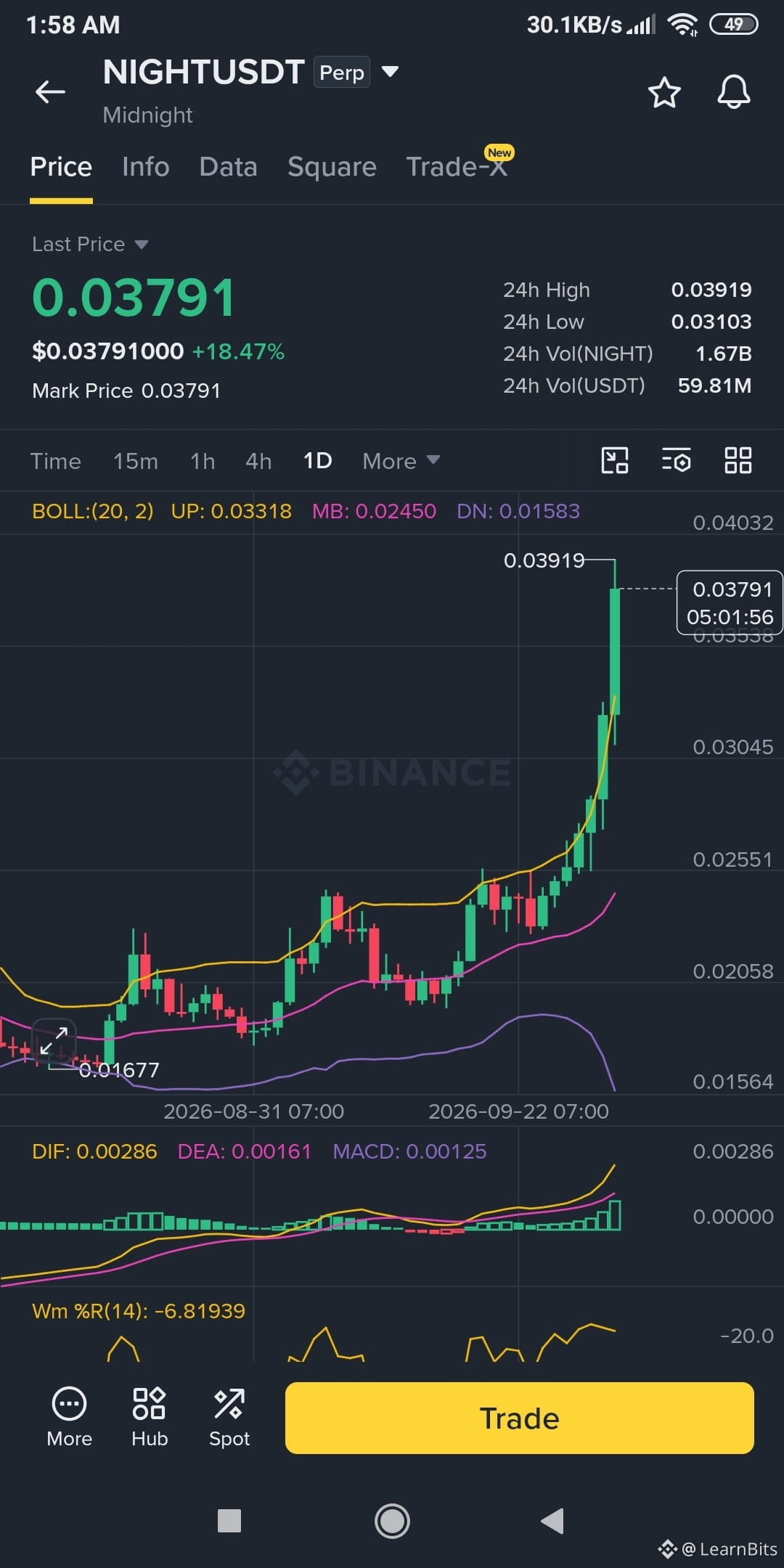
$NIGHT Momentum is loud but Let it come back to 0.033 first.
$NIGHT Momentum is loud but Let it come back to 0.033 first.
1
244
·
--
$ZEC slid off 1699 and now it's sitting right on the mid band. MACD fading. If 1412 holds, maybe a bounce—lose it and we go hunting lower.
{future}(ZECUSDT)
$ZEC slid off 1699 and now it's sitting right on the mid band. MACD fading. If 1412 holds, maybe a bounce—lose it and we go hunting lower.
Best Wishes!
LearnBits атынан
4
443
·
--
Robinhood Unveils AI Trading Agents and Weekend Markets 🤖
Robinhood has introduced Robinhood Agents, an embedded AI system designed to analyze markets, build strategies and execute trades on behalf of users. The company also announced Agent Apps that connect these AI tools with institutional-grade data and specialized third-party services.
The new lineup extends beyond AI. Robinhood plans to offer 24/7 weekend trading for selected U.S. equities, pending regulatory approval, alongside perpetual futures for eligible U.S. customers and earnings contracts tied to company metrics.
The products were unveiled at Robinhood’s HOOD Summit 2026 as the brokerage expands its platform beyond traditional stock and options trading. The company says the weekend equity service is planned for early next year, while the broader rollout adds automated trading, derivatives and event-based products to its existing platform.
Robinhood Unveils AI Trading Agents and Weekend Markets 🤖
Robinhood has introduced Robinhood Agents, an embedded AI system designed to analyze markets, build strategies and execute trades on behalf of users. The company also announced Agent Apps that connect these AI tools with institutional-grade data and specialized third-party services.
The new lineup extends beyond AI. Robinhood plans to offer 24/7 weekend trading for selected U.S. equities, pending regulatory approval, alongside perpetual futures for eligible U.S. customers and earnings contracts tied to company metrics.
The products were unveiled at Robinhood’s HOOD Summit 2026 as the brokerage expands its platform beyond traditional stock and options trading. The company says the weekend equity service is planned for early next year, while the broader rollout adds automated trading, derivatives and event-based products to its existing platform.
Robinhood has introduced Robinhood Agents, an embedded AI system designed to analyze markets, build strategies and execute trades on behalf of users. The company also announced Agent Apps that connect these AI tools with institutional-grade data and specialized third-party services.
The new lineup extends beyond AI. Robinhood plans to offer 24/7 weekend trading for selected U.S. equities, pending regulatory approval, alongside perpetual futures for eligible U.S. customers and earnings contracts tied to company metrics.
The products were unveiled at Robinhood’s HOOD Summit 2026 as the brokerage expands its platform beyond traditional stock and options trading. The company says the weekend equity service is planned for early next year, while the broader rollout adds automated trading, derivatives and event-based products to its existing platform.
1
294
·
--
HPE Lands $1.2B AI Infrastructure Order from Vultr 🤖
Hewlett Packard Enterprise has secured a $1.2 billion order from cloud infrastructure provider Vultr for AMD-powered AI server racks. The systems will be deployed across Vultr’s U.S. data centers, marking HPE’s first order for AMD’s new Helios AI rack platform.
The deal was announced alongside an upgraded long-term outlook for HPE’s networking business. The company now expects networking revenue to grow at a high-teens annual rate through fiscal 2029, supported by rising demand for AI infrastructure.
The Vultr agreement adds a major customer deployment to HPE’s AI infrastructure business as data centers require higher-performance computing and networking. The AMD Helios systems combine AI compute with HPE networking technology, creating an integrated rack-scale platform designed for large AI workloads.
HPE Lands $1.2B AI Infrastructure Order from Vultr 🤖
Hewlett Packard Enterprise has secured a $1.2 billion order from cloud infrastructure provider Vultr for AMD-powered AI server racks. The systems will be deployed across Vultr’s U.S. data centers, marking HPE’s first order for AMD’s new Helios AI rack platform.
The deal was announced alongside an upgraded long-term outlook for HPE’s networking business. The company now expects networking revenue to grow at a high-teens annual rate through fiscal 2029, supported by rising demand for AI infrastructure.
The Vultr agreement adds a major customer deployment to HPE’s AI infrastructure business as data centers require higher-performance computing and networking. The AMD Helios systems combine AI compute with HPE networking technology, creating an integrated rack-scale platform designed for large AI workloads.
Hewlett Packard Enterprise has secured a $1.2 billion order from cloud infrastructure provider Vultr for AMD-powered AI server racks. The systems will be deployed across Vultr’s U.S. data centers, marking HPE’s first order for AMD’s new Helios AI rack platform.
The deal was announced alongside an upgraded long-term outlook for HPE’s networking business. The company now expects networking revenue to grow at a high-teens annual rate through fiscal 2029, supported by rising demand for AI infrastructure.
The Vultr agreement adds a major customer deployment to HPE’s AI infrastructure business as data centers require higher-performance computing and networking. The AMD Helios systems combine AI compute with HPE networking technology, creating an integrated rack-scale platform designed for large AI workloads.
Best Wishes!
LearnBits атынан
1
5
389
·
--
KOSPI Suffers Its Worst Quarter Since 2020 📉
South Korea’s KOSPI fell 19.3% in the third quarter, marking its biggest quarterly decline since Q1 2020. The index closed Wednesday at 6,838.04 after giving up an early gain of more than 1%.
The selloff was driven in part by weakness in major memory-chip stocks such as Samsung Electronics and SK Hynix, while rising bond yields and foreign selling added pressure. Foreign investors were net sellers during the latest session. 👀
It’s a sharp reversal after six straight quarters of gains. Yet despite the brutal quarter, the KOSPI is still up 62.3% for the year, showing just how strong the earlier rally was.#KospiPostsWorstQuarterSince2020
KOSPI Suffers Its Worst Quarter Since 2020 📉
South Korea’s KOSPI fell 19.3% in the third quarter, marking its biggest quarterly decline since Q1 2020. The index closed Wednesday at 6,838.04 after giving up an early gain of more than 1%.
The selloff was driven in part by weakness in major memory-chip stocks such as Samsung Electronics and SK Hynix, while rising bond yields and foreign selling added pressure. Foreign investors were net sellers during the latest session. 👀
It’s a sharp reversal after six straight quarters of gains. Yet despite the brutal quarter, the KOSPI is still up 62.3% for the year, showing just how strong the earlier rally was.#KospiPostsWorstQuarterSince2020
South Korea’s KOSPI fell 19.3% in the third quarter, marking its biggest quarterly decline since Q1 2020. The index closed Wednesday at 6,838.04 after giving up an early gain of more than 1%.
The selloff was driven in part by weakness in major memory-chip stocks such as Samsung Electronics and SK Hynix, while rising bond yields and foreign selling added pressure. Foreign investors were net sellers during the latest session. 👀
It’s a sharp reversal after six straight quarters of gains. Yet despite the brutal quarter, the KOSPI is still up 62.3% for the year, showing just how strong the earlier rally was.#KospiPostsWorstQuarterSince2020
2
378
·
--
$ARK went parabolic. Price way above band. Next? 🔥
{future}(ARKUSDT)
$ARK went parabolic. Price way above band. Next? 🔥
Sends $0.42
Rejects to $0.30
Ranges $0.35-$0.38
9 сағат қалды
Best Wishes!
LearnBits атынан
1
2
464
·
--
🚨 Quant Just Landed Inside a U.S. Banking Infrastructure Play.
Quant is suddenly one of the biggest stories in crypto — but the catalyst has almost nothing to do with a new DeFi app.
The Clearing House selected Quant to power its On-Chain Money Initiative, a planned network designed to let financial institutions clear and settle tokenized bank deposits.
And this isn't some isolated crypto experiment.
The network is being designed to connect blockchain-based deposits with existing U.S. payment infrastructure, including RTP and CHIPS.
That means banks could potentially move programmable, tokenized deposits while staying connected to the payment rails they already use.
The project is expected to become available to participating institutions in the first half of 2027, so this isn't live banking infrastructure yet.
But the market is already paying attention.
Quant's token has seen a massive surge, with 24-hour gains and trading volume accelerating sharply as traders digest the institutional partnership.
There is one important detail, though: the partnership confirms Quant's technology role, but it does not establish that the QNT token itself will be required for every transaction on the network.
That's the part the market still needs to figure out.
The bigger story is that tokenized deposits are moving from blockchain demos toward actual banking infrastructure.
And Quant just got a seat at the table. 👀
Is tokenized bank money becoming crypto's next major growth story?
🚨 Quant Just Landed Inside a U.S. Banking Infrastructure Play.
Quant is suddenly one of the biggest stories in crypto — but the catalyst has almost nothing to do with a new DeFi app.
The Clearing House selected Quant to power its On-Chain Money Initiative, a planned network designed to let financial institutions clear and settle tokenized bank deposits.
And this isn't some isolated crypto experiment.
The network is being designed to connect blockchain-based deposits with existing U.S. payment infrastructure, including RTP and CHIPS.
That means banks could potentially move programmable, tokenized deposits while staying connected to the payment rails they already use.
The project is expected to become available to participating institutions in the first half of 2027, so this isn't live banking infrastructure yet.
But the market is already paying attention.
Quant's token has seen a massive surge, with 24-hour gains and trading volume accelerating sharply as traders digest the institutional partnership.
There is one important detail, though: the partnership confirms Quant's technology role, but it does not establish that the QNT token itself will be required for every transaction on the network.
That's the part the market still needs to figure out.
The bigger story is that tokenized deposits are moving from blockchain demos toward actual banking infrastructure.
And Quant just got a seat at the table. 👀
Is tokenized bank money becoming crypto's next major growth story?
Quant is suddenly one of the biggest stories in crypto — but the catalyst has almost nothing to do with a new DeFi app.
The Clearing House selected Quant to power its On-Chain Money Initiative, a planned network designed to let financial institutions clear and settle tokenized bank deposits.
And this isn't some isolated crypto experiment.
The network is being designed to connect blockchain-based deposits with existing U.S. payment infrastructure, including RTP and CHIPS.
That means banks could potentially move programmable, tokenized deposits while staying connected to the payment rails they already use.
The project is expected to become available to participating institutions in the first half of 2027, so this isn't live banking infrastructure yet.
But the market is already paying attention.
Quant's token has seen a massive surge, with 24-hour gains and trading volume accelerating sharply as traders digest the institutional partnership.
There is one important detail, though: the partnership confirms Quant's technology role, but it does not establish that the QNT token itself will be required for every transaction on the network.
That's the part the market still needs to figure out.
The bigger story is that tokenized deposits are moving from blockchain demos toward actual banking infrastructure.
And Quant just got a seat at the table. 👀
Is tokenized bank money becoming crypto's next major growth story?
2
453
·
--
UK Opens the Door to Crypto Authorization 🇬🇧
The UK’s Financial Conduct Authority has opened its authorization gateway for crypto firms, allowing businesses to apply under the country’s new regulatory framework. The application window runs from September 30, 2026 through February 28, 2027.
The framework covers activities including crypto trading platforms, custody, dealing and arranging transactions, qualifying stablecoins and staking. Existing AML registrations won’t automatically convert into FCA authorization, meaning firms need to apply or vary existing permissions.
The full regime is scheduled to take effect on October 25, 2027. For crypto businesses operating in Britain, the transition from registration to full financial regulation is officially underway.
#UKFCAOpensCryptoFirmAuthorization
UK Opens the Door to Crypto Authorization 🇬🇧
The UK’s Financial Conduct Authority has opened its authorization gateway for crypto firms, allowing businesses to apply under the country’s new regulatory framework. The application window runs from September 30, 2026 through February 28, 2027.
The framework covers activities including crypto trading platforms, custody, dealing and arranging transactions, qualifying stablecoins and staking. Existing AML registrations won’t automatically convert into FCA authorization, meaning firms need to apply or vary existing permissions.
The full regime is scheduled to take effect on October 25, 2027. For crypto businesses operating in Britain, the transition from registration to full financial regulation is officially underway.
#UKFCAOpensCryptoFirmAuthorization
The UK’s Financial Conduct Authority has opened its authorization gateway for crypto firms, allowing businesses to apply under the country’s new regulatory framework. The application window runs from September 30, 2026 through February 28, 2027.
The framework covers activities including crypto trading platforms, custody, dealing and arranging transactions, qualifying stablecoins and staking. Existing AML registrations won’t automatically convert into FCA authorization, meaning firms need to apply or vary existing permissions.
The full regime is scheduled to take effect on October 25, 2027. For crypto businesses operating in Britain, the transition from registration to full financial regulation is officially underway.
#UKFCAOpensCryptoFirmAuthorization
1
280
·
--
TRON Rings Cboe Bell for Staked TRX ETF 🔔
TRON DAO is set to ring the closing bell at Cboe in Chicago to celebrate the debut of the Canary Staked TRX ETF. The fund began trading on Cboe on September 9 under TRXS, giving investors spot exposure to TRX plus potential staking rewards.
The ETF marks another step for TRX into traditional markets. Canary’s fund uses TRON’s delegated proof-of-stake system, with net staking rewards reflected in the fund’s NAV. 🚀
TRON says its network now supports more than $94 billion in circulating USDT and has processed about $6.1 trillion in USDT transfers year-to-date. The ETF launch puts that stablecoin infrastructure story in front of traditional investors.
TRON Rings Cboe Bell for Staked TRX ETF 🔔
TRON DAO is set to ring the closing bell at Cboe in Chicago to celebrate the debut of the Canary Staked TRX ETF. The fund began trading on Cboe on September 9 under TRXS, giving investors spot exposure to TRX plus potential staking rewards.
The ETF marks another step for TRX into traditional markets. Canary’s fund uses TRON’s delegated proof-of-stake system, with net staking rewards reflected in the fund’s NAV. 🚀
TRON says its network now supports more than $94 billion in circulating USDT and has processed about $6.1 trillion in USDT transfers year-to-date. The ETF launch puts that stablecoin infrastructure story in front of traditional investors.
TRON DAO is set to ring the closing bell at Cboe in Chicago to celebrate the debut of the Canary Staked TRX ETF. The fund began trading on Cboe on September 9 under TRXS, giving investors spot exposure to TRX plus potential staking rewards.
The ETF marks another step for TRX into traditional markets. Canary’s fund uses TRON’s delegated proof-of-stake system, with net staking rewards reflected in the fund’s NAV. 🚀
TRON says its network now supports more than $94 billion in circulating USDT and has processed about $6.1 trillion in USDT transfers year-to-date. The ETF launch puts that stablecoin infrastructure story in front of traditional investors.
Best Wishes!
LearnBits атынан
4
415
·
--
$AGPU Axe Compute Adds $266M in New AI Contracts 🤖
Axe Compute has signed more than $266 million in new AI infrastructure contracts since reporting its second-quarter results on August 17. The company also received more than $184 million in customer prepayments tied to new and existing agreements, providing capital ahead of infrastructure delivery.
The latest contracts push Axe Compute’s total signed contract value over the past seven months above $3.45 billion. The agreements include dedicated AI infrastructure featuring Grace Blackwell 300-class systems, CPU nodes, high-speed storage and network connectivity. ⚙️
The company is using the incoming customer payments to support deployment as it expands its GPU-as-a-Service operations. The contracts include terms of up to 60 months, covering customers building AI cloud platforms as well as those running inference, fine-tuning and other production workloads. 💰
{future}(AGPUUSDT)
$AGPU Axe Compute Adds $266M in New AI Contracts 🤖
Axe Compute has signed more than $266 million in new AI infrastructure contracts since reporting its second-quarter results on August 17. The company also received more than $184 million in customer prepayments tied to new and existing agreements, providing capital ahead of infrastructure delivery.
The latest contracts push Axe Compute’s total signed contract value over the past seven months above $3.45 billion. The agreements include dedicated AI infrastructure featuring Grace Blackwell 300-class systems, CPU nodes, high-speed storage and network connectivity. ⚙️
The company is using the incoming customer payments to support deployment as it expands its GPU-as-a-Service operations. The contracts include terms of up to 60 months, covering customers building AI cloud platforms as well as those running inference, fine-tuning and other production workloads. 💰
Axe Compute has signed more than $266 million in new AI infrastructure contracts since reporting its second-quarter results on August 17. The company also received more than $184 million in customer prepayments tied to new and existing agreements, providing capital ahead of infrastructure delivery.
The latest contracts push Axe Compute’s total signed contract value over the past seven months above $3.45 billion. The agreements include dedicated AI infrastructure featuring Grace Blackwell 300-class systems, CPU nodes, high-speed storage and network connectivity. ⚙️
The company is using the incoming customer payments to support deployment as it expands its GPU-as-a-Service operations. The contracts include terms of up to 60 months, covering customers building AI cloud platforms as well as those running inference, fine-tuning and other production workloads. 💰
1
341
·
--
Bitwise Launches First Spot NEAR ETF 🚀
Bitwise has officially launched its NEAR ETF on NYSE Arca, giving U.S. investors direct spot exposure to NEAR through a traditional brokerage account. The fund trades under NRR and carries a 0.75% management fee.
There’s an extra twist: Bitwise plans to stake the fund’s NEAR in-house, with staking rewards accruing to shareholders through the ETF’s NAV. The firm says NEAR’s current annualized staking rate is around 5%, though rewards aren't guaranteed.
This marks Bitwise’s expansion into another major altcoin ETF category, while positioning NEAR around the growing intersection of AI agents and blockchain infrastructure.
#BitwiseLaunchesFirstSpotNEARETF
{future}(NEARUSDT)
Bitwise Launches First Spot NEAR ETF 🚀
Bitwise has officially launched its NEAR ETF on NYSE Arca, giving U.S. investors direct spot exposure to NEAR through a traditional brokerage account. The fund trades under NRR and carries a 0.75% management fee.
There’s an extra twist: Bitwise plans to stake the fund’s NEAR in-house, with staking rewards accruing to shareholders through the ETF’s NAV. The firm says NEAR’s current annualized staking rate is around 5%, though rewards aren't guaranteed.
This marks Bitwise’s expansion into another major altcoin ETF category, while positioning NEAR around the growing intersection of AI agents and blockchain infrastructure.
#BitwiseLaunchesFirstSpotNEARETF
Bitwise has officially launched its NEAR ETF on NYSE Arca, giving U.S. investors direct spot exposure to NEAR through a traditional brokerage account. The fund trades under NRR and carries a 0.75% management fee.
There’s an extra twist: Bitwise plans to stake the fund’s NEAR in-house, with staking rewards accruing to shareholders through the ETF’s NAV. The firm says NEAR’s current annualized staking rate is around 5%, though rewards aren't guaranteed.
This marks Bitwise’s expansion into another major altcoin ETF category, while positioning NEAR around the growing intersection of AI agents and blockchain infrastructure.
#BitwiseLaunchesFirstSpotNEARETF
491
·
--
$MOVR went full send. Price is so far above the band it’s not even funny. Late apes beware.
$MOVR went full send. Price is so far above the band it’s not even funny. Late apes beware.
Best Wishes!
LearnBits атынан
1
6
684
·
--
$OURA Oura Delays $2.2 Billion IPO Amid Market Uncertainty 💍
Oura has postponed its planned Nasdaq initial public offering, just one day before its expected debut. The smart-ring maker had planned to sell 50 million shares at $40–$44 each, targeting proceeds of up to $2.2 billion and a valuation of about $15.6 billion.
The company said it made the decision despite strong demand for the offering, citing uncertainty in the IPO market. Oura had been preparing for the listing after its latest filing showed strong business momentum, including 5.7 million paid members and an expected 90% year-over-year increase in fiscal 2026 revenue.
The delay keeps Oura private for now while it continues operating its growing wearable-health business. The company launched Oura Ring 5 in May and has been expanding its subscription-based health platform, which uses data from the rings to provide personalized insights.
{future}(OURAUSDT)
$OURA Oura Delays $2.2 Billion IPO Amid Market Uncertainty 💍
Oura has postponed its planned Nasdaq initial public offering, just one day before its expected debut. The smart-ring maker had planned to sell 50 million shares at $40–$44 each, targeting proceeds of up to $2.2 billion and a valuation of about $15.6 billion.
The company said it made the decision despite strong demand for the offering, citing uncertainty in the IPO market. Oura had been preparing for the listing after its latest filing showed strong business momentum, including 5.7 million paid members and an expected 90% year-over-year increase in fiscal 2026 revenue.
The delay keeps Oura private for now while it continues operating its growing wearable-health business. The company launched Oura Ring 5 in May and has been expanding its subscription-based health platform, which uses data from the rings to provide personalized insights.
Oura has postponed its planned Nasdaq initial public offering, just one day before its expected debut. The smart-ring maker had planned to sell 50 million shares at $40–$44 each, targeting proceeds of up to $2.2 billion and a valuation of about $15.6 billion.
The company said it made the decision despite strong demand for the offering, citing uncertainty in the IPO market. Oura had been preparing for the listing after its latest filing showed strong business momentum, including 5.7 million paid members and an expected 90% year-over-year increase in fiscal 2026 revenue.
The delay keeps Oura private for now while it continues operating its growing wearable-health business. The company launched Oura Ring 5 in May and has been expanding its subscription-based health platform, which uses data from the rings to provide personalized insights.
386
·
--
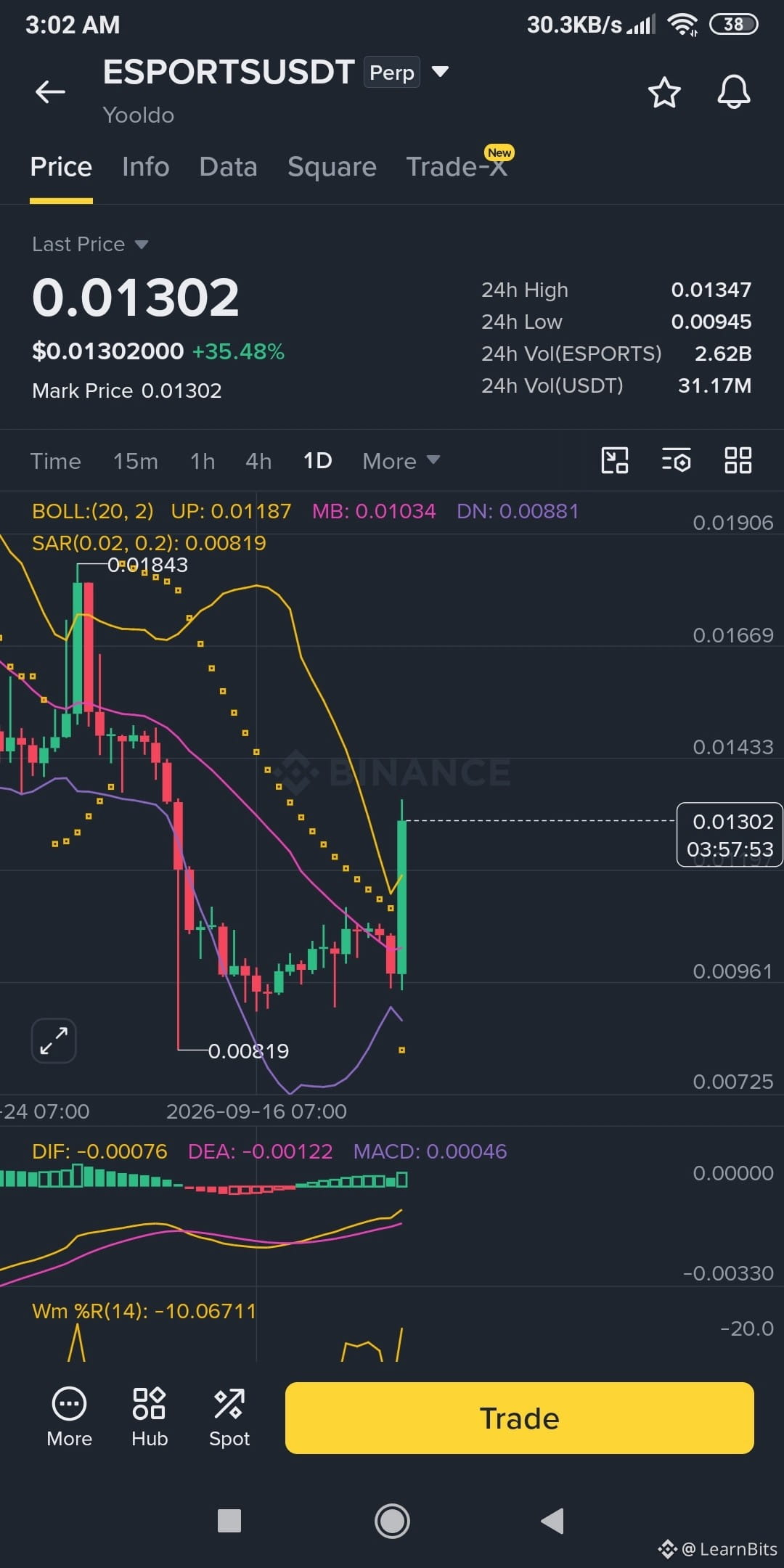
$ESPORTS Not chasing this candle. If 0.0118 holds, maybe more. If not, back to the basement.
{future}(ESPORTSUSDT)
$ESPORTS Not chasing this candle. If 0.0118 holds, maybe more. If not, back to the basement.
1
497
·
--
$BTW tapped 1.44 and got denied. What now? 🧐
{future}(BTWUSDT)
$BTW tapped 1.44 and got denied. What now? 🧐
1.29 holds, send
47%
Dump to 0.91
40%
Chop
13%
15 дауыс • Дауыс беру жабық
Best Wishes!
LearnBits атынан
8
688
·
--
BitMine Crosses 6 Million ETH 🚀
BitMine Immersion Technologies now holds 6,001,302 ETH after adding another 17,362 ETH over the past week. At the company’s reported reference price of $2,698 per ETH, the position was worth about $16.2 billion.
That stash represents roughly 4.9% of Ethereum’s total supply, putting BitMine just 2% short of its stated 5% “Alchemy of 5%” target. More than 5.06 million of its ETH is already staked.
BitMine says it has bought ETH every week since launching its treasury strategy in June 2025. The latest purchase pushes its accumulation into another major milestone.
#BitMineETHHoldingsTop6Million
$BMNR
{future}(BMNRUSDT)
$ETH
{future}(ETHUSDT)
BitMine Crosses 6 Million ETH 🚀
BitMine Immersion Technologies now holds 6,001,302 ETH after adding another 17,362 ETH over the past week. At the company’s reported reference price of $2,698 per ETH, the position was worth about $16.2 billion.
That stash represents roughly 4.9% of Ethereum’s total supply, putting BitMine just 2% short of its stated 5% “Alchemy of 5%” target. More than 5.06 million of its ETH is already staked.
BitMine says it has bought ETH every week since launching its treasury strategy in June 2025. The latest purchase pushes its accumulation into another major milestone.
#BitMineETHHoldingsTop6Million
$BMNR
$ETH
BitMine Immersion Technologies now holds 6,001,302 ETH after adding another 17,362 ETH over the past week. At the company’s reported reference price of $2,698 per ETH, the position was worth about $16.2 billion.
That stash represents roughly 4.9% of Ethereum’s total supply, putting BitMine just 2% short of its stated 5% “Alchemy of 5%” target. More than 5.06 million of its ETH is already staked.
BitMine says it has bought ETH every week since launching its treasury strategy in June 2025. The latest purchase pushes its accumulation into another major milestone.
#BitMineETHHoldingsTop6Million
$BMNR
$ETH
1
287
Көбірек контент көру үшін кіріңіз
Binance Square платформасында әлемдік криптоқоғамдастыққа қосылыңыз
⚡️ Криптовалюта туралы ең соңғы және пайдалы ақпаратты алыңыз.
💬 Әлемдегі ең ірі криптобиржаның сеніміне ие.
👍 Расталған авторлардың нақты пікірлерін табыңыз.
Электрондық пошта/телефон нөмірі
Трендтегі тақырыптар
MetaMaskExitsLidoValidatorsAfterSecurityIncident
172 рет көрілді
32 адам талқылап жатыр
#metamaskexitslidovalidatorsaftersecurityincident
🦊 MetaMask & Lido: Is the honeymoon officially over?! 💔
MetaMask just hit the "Emergency Exit" button on its Lido Ethereum validators after a security scare! 😱 While MetaMask assures everyone that wallet funds are totally safe, they aren't taking any chances with their non-custodial staking infrastructure.
🔮 What happened to Lido?
No drama on Lido's side, but MetaMask is proactively pulling its affected nodes out of the Lido protocol. The validators are exiting by October 7, 2026, and the full re-entry process could take around 45 days. Good news? If you hold stETH, you can relax—no action is needed! 🛡️
🧠 What should traders do?
Don't panic-dump your bags. Keep your funds secure, double-check your staking setups, and always monitor security updates!
Not financial advice.
Support me by using code VINHTOCDO or link: https://www.binance.com/register?ref=VINHTOCDO
👇 Click trade below to support me:
$BTC
$ETH
$LDO
#MetaMask #LidoFinance #CryptoSecurity #EthereumStaking #CryptoNews #VINHTOCDO
Vinhtocdo
·2 лайк
·23 рет көрілді
MicronBeatsEarningsLiftsGuidance
1,558 рет көрілді
60 адам талқылап жатыр
CFTCSubmitsTwoEventContractRulesToWhiteHouse
2,601 рет көрілді
96 адам талқылап жатыр