
C Y R O N
5.5k Posting

C Y R O N
Laporkan
Blokir Pengguna
Binance KOL & Web3 Mentor

Pemilik XPL
Pedagang Rutin
4.8 Tahun
291 Mengikuti
18.3K+ Pengikut
18.0K+ Disukai
Posting
Semua
Kuotasi
Video
Live
·
--
Bullish
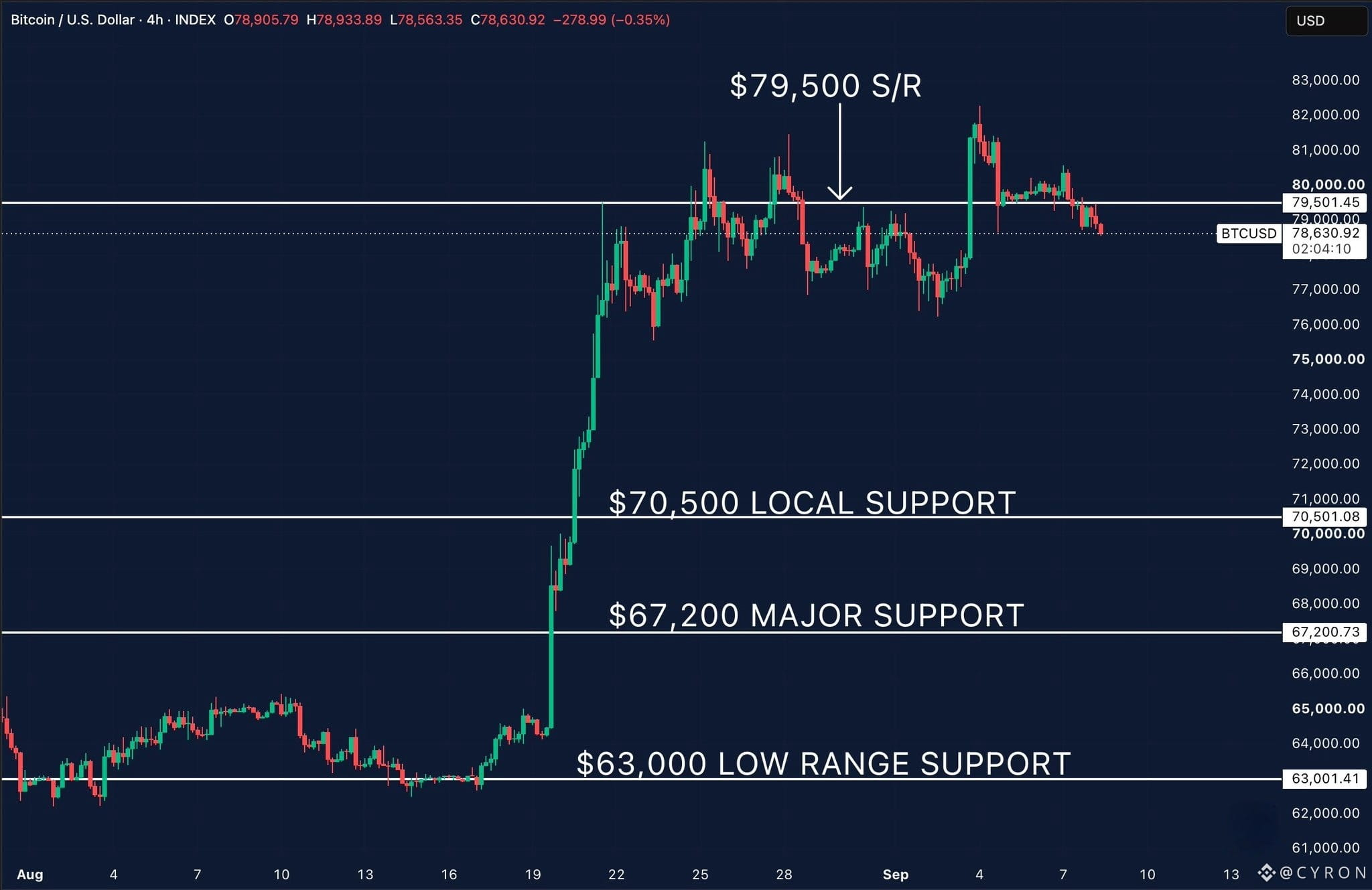
Bitcoin berada pada level kunci.
$79,500 telah berbalik dari support menjadi resistance setelah $BTC gagal bertahan di atasnya.
Jika kita berhasil merebut kembali $79.5K dan bertahan, saya akan mencari pergerakan kembali menuju $81K+.
Jika kita kehilangan $78K, saya memperkirakan likuiditas di bawah akan diambil terlebih dahulu.
Level sederhana yang perlu diperhatikan.
Reclaim $79.5K = bullish.
Kehilangan $78K = bearish.
Sampai saat itu, saya menunggu...
{spot}(BTCUSDT)
#SaudiHaltsSouthernEnergySitesAfterAttacks
#YenBreaks155NearingYearHigh
#USIranTradeTankerStrikesEscalate
Bitcoin berada pada level kunci.
$79,500 telah berbalik dari support menjadi resistance setelah $BTC gagal bertahan di atasnya.
Jika kita berhasil merebut kembali $79.5K dan bertahan, saya akan mencari pergerakan kembali menuju $81K+.
Jika kita kehilangan $78K, saya memperkirakan likuiditas di bawah akan diambil terlebih dahulu.
Level sederhana yang perlu diperhatikan.
Reclaim $79.5K = bullish.
Kehilangan $78K = bearish.
Sampai saat itu, saya menunggu...
#SaudiHaltsSouthernEnergySitesAfterAttacks
#YenBreaks155NearingYearHigh
#USIranTradeTankerStrikesEscalate
$79,500 telah berbalik dari support menjadi resistance setelah $BTC gagal bertahan di atasnya.
Jika kita berhasil merebut kembali $79.5K dan bertahan, saya akan mencari pergerakan kembali menuju $81K+.
Jika kita kehilangan $78K, saya memperkirakan likuiditas di bawah akan diambil terlebih dahulu.
Level sederhana yang perlu diperhatikan.
Reclaim $79.5K = bullish.
Kehilangan $78K = bearish.
Sampai saat itu, saya menunggu...
#SaudiHaltsSouthernEnergySitesAfterAttacks
#YenBreaks155NearingYearHigh
#USIranTradeTankerStrikesEscalate
114
·
--
Bullish
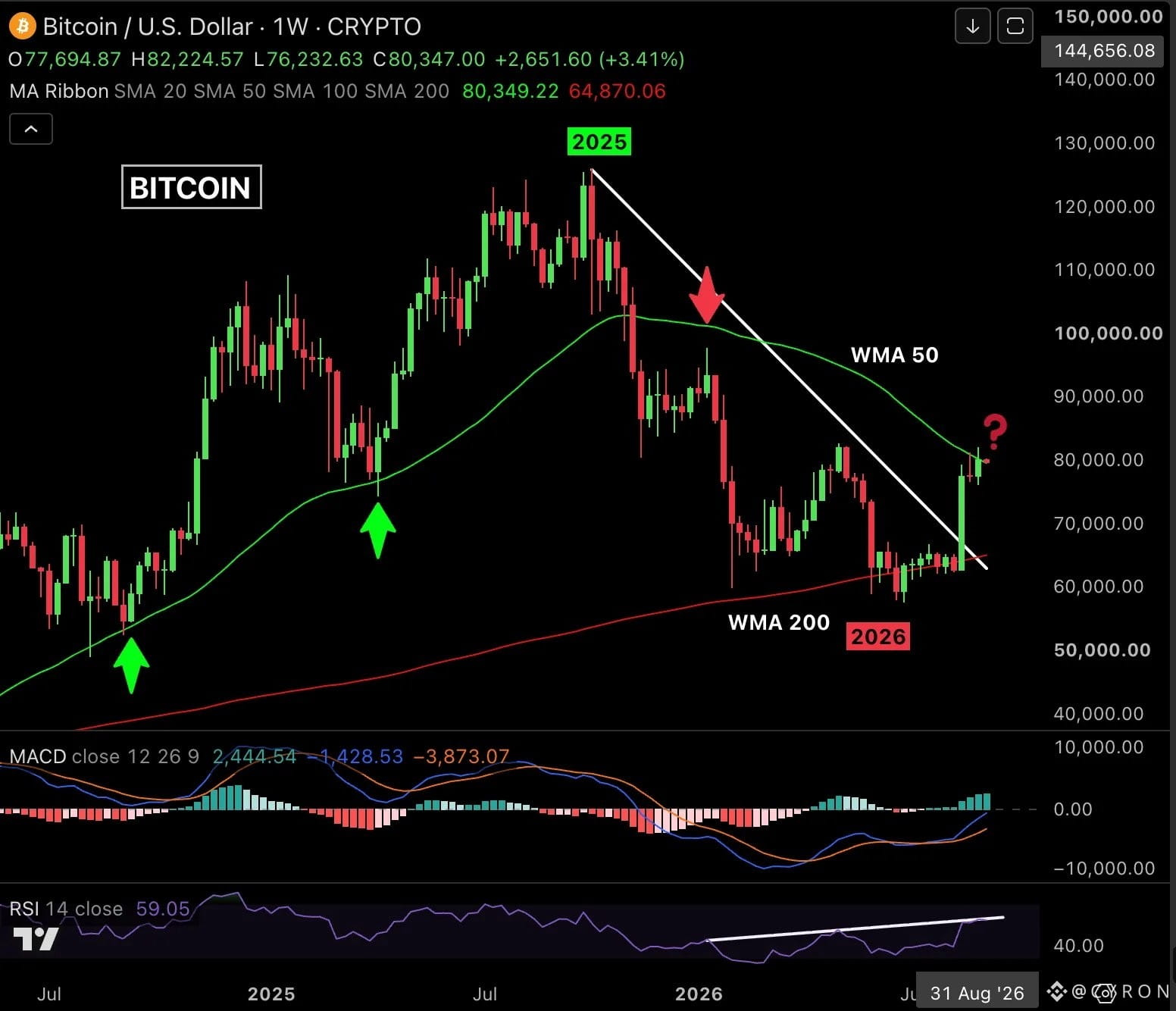
ANALISIS MINGGUAN BITCOIN
Bitcoin menutup minggu tepat di sekitar Weekly MA 50 dekat $80,349.
Ini adalah ujian besar untuk $BTC , belum menjadi breakout yang terkonfirmasi.
Berikut yang saya pantau selanjutnya 🧵
{spot}(BTCUSDT)
#USIranTradeTankerStrikesEscalate
#IMFSaysElSalvadorBTCNoPublicFunds
#IranSaysItHit3USShips3Tankers
ANALISIS MINGGUAN BITCOIN
Bitcoin menutup minggu tepat di sekitar Weekly MA 50 dekat $80,349.
Ini adalah ujian besar untuk $BTC , belum menjadi breakout yang terkonfirmasi.
Berikut yang saya pantau selanjutnya 🧵
#USIranTradeTankerStrikesEscalate
#IMFSaysElSalvadorBTCNoPublicFunds
#IranSaysItHit3USShips3Tankers
Bitcoin menutup minggu tepat di sekitar Weekly MA 50 dekat $80,349.
Ini adalah ujian besar untuk $BTC , belum menjadi breakout yang terkonfirmasi.
Berikut yang saya pantau selanjutnya 🧵
#USIranTradeTankerStrikesEscalate
#IMFSaysElSalvadorBTCNoPublicFunds
#IranSaysItHit3USShips3Tankers
206
·
--
Bullish
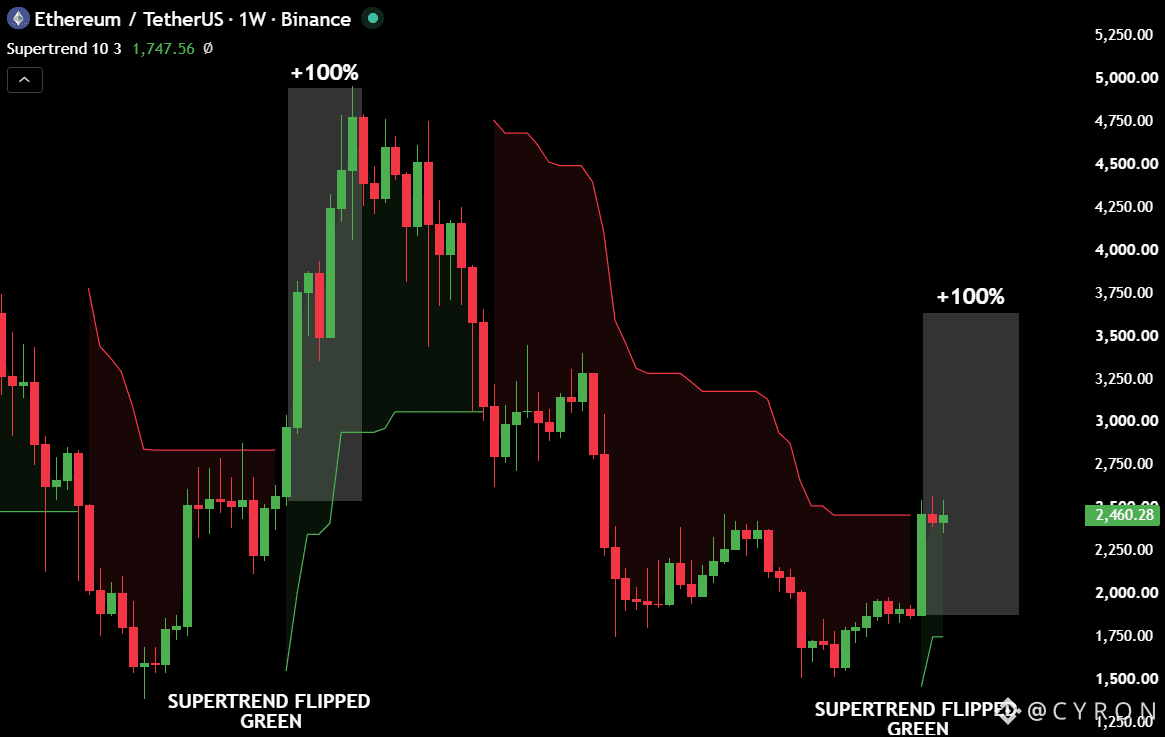
$ETH Supertrend mingguan telah beralih menjadi hijau. 🟢
Terakhir kali ini terjadi, ETH naik lebih dari 100% hanya dalam 6 minggu.
Jika sejarah berulang, pergerakan serupa bisa membawa ETH ke sekitar $3.600 pada bulan Oktober.
Satu sinyal tidak menjamin hasil yang sama.
Namun ini jelas layak dipantau. 👀
{spot}(ETHUSDT)
#ZECHitsANewAllTimeHigh
#BitcoinETFsBiggestDailyInflowSinceJanuary
#USAugustJobGrowthNearlyTriplesForecast
$ETH Supertrend mingguan telah beralih menjadi hijau. 🟢
Terakhir kali ini terjadi, ETH naik lebih dari 100% hanya dalam 6 minggu.
Jika sejarah berulang, pergerakan serupa bisa membawa ETH ke sekitar $3.600 pada bulan Oktober.
Satu sinyal tidak menjamin hasil yang sama.
Namun ini jelas layak dipantau. 👀
#ZECHitsANewAllTimeHigh
#BitcoinETFsBiggestDailyInflowSinceJanuary
#USAugustJobGrowthNearlyTriplesForecast
Terakhir kali ini terjadi, ETH naik lebih dari 100% hanya dalam 6 minggu.
Jika sejarah berulang, pergerakan serupa bisa membawa ETH ke sekitar $3.600 pada bulan Oktober.
Satu sinyal tidak menjamin hasil yang sama.
Namun ini jelas layak dipantau. 👀
#ZECHitsANewAllTimeHigh
#BitcoinETFsBiggestDailyInflowSinceJanuary
#USAugustJobGrowthNearlyTriplesForecast
160
·
--
Bullish
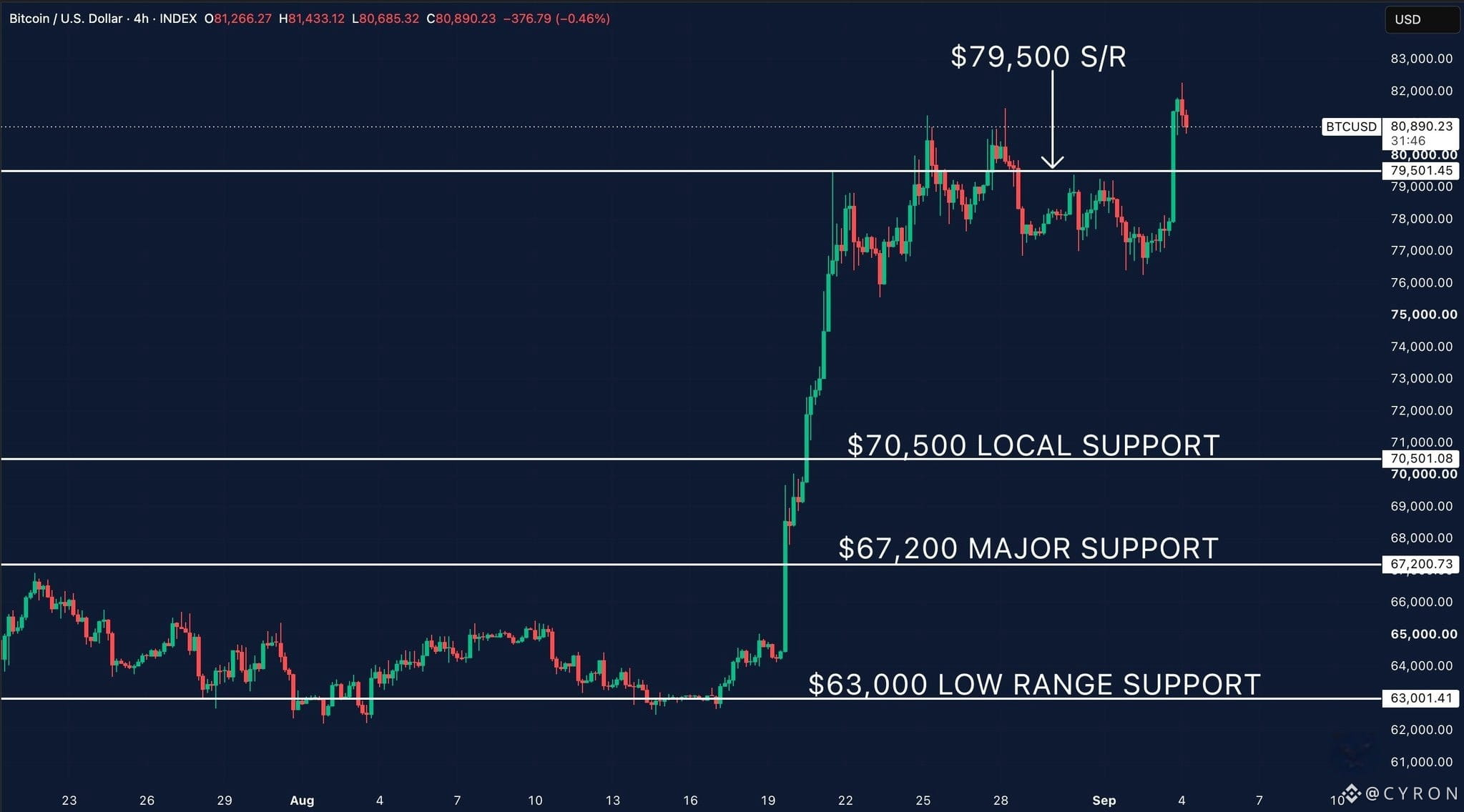
BITCOIN BARU SAJA MENGUBAH $79,500 JADI SUPPORT 🚨
Bitcoin menembus resistance $79,500 yang selama ini saya pantau dan mendorong di atas $80K.
$BTC kini diperdagangkan sekitar $80.9K setelah sempat mencapai di atas $82K.
Level kunci sekarang sederhana: $79.5K.
Jika Bitcoin bertahan di atas level itu, saya memantau $82K berikutnya.
Jika turun di bawah $79.5K, reli/breakout ini mulai terlihat jauh kurang meyakinkan.
Untuk saat ini, struktur telah membaik secara signifikan.
{spot}(BTCUSDT)
#USWeeklyInitialJoblessClaimsRiseTo206000
#HousePressesSenateOnCLARITYAct
BITCOIN BARU SAJA MENGUBAH $79,500 JADI SUPPORT 🚨
Bitcoin menembus resistance $79,500 yang selama ini saya pantau dan mendorong di atas $80K.
$BTC kini diperdagangkan sekitar $80.9K setelah sempat mencapai di atas $82K.
Level kunci sekarang sederhana: $79.5K.
Jika Bitcoin bertahan di atas level itu, saya memantau $82K berikutnya.
Jika turun di bawah $79.5K, reli/breakout ini mulai terlihat jauh kurang meyakinkan.
Untuk saat ini, struktur telah membaik secara signifikan.
#USWeeklyInitialJoblessClaimsRiseTo206000
#HousePressesSenateOnCLARITYAct
Bitcoin menembus resistance $79,500 yang selama ini saya pantau dan mendorong di atas $80K.
$BTC kini diperdagangkan sekitar $80.9K setelah sempat mencapai di atas $82K.
Level kunci sekarang sederhana: $79.5K.
Jika Bitcoin bertahan di atas level itu, saya memantau $82K berikutnya.
Jika turun di bawah $79.5K, reli/breakout ini mulai terlihat jauh kurang meyakinkan.
Untuk saat ini, struktur telah membaik secara signifikan.
#USWeeklyInitialJoblessClaimsRiseTo206000
#HousePressesSenateOnCLARITYAct
1
1
141
·
--
Bullish
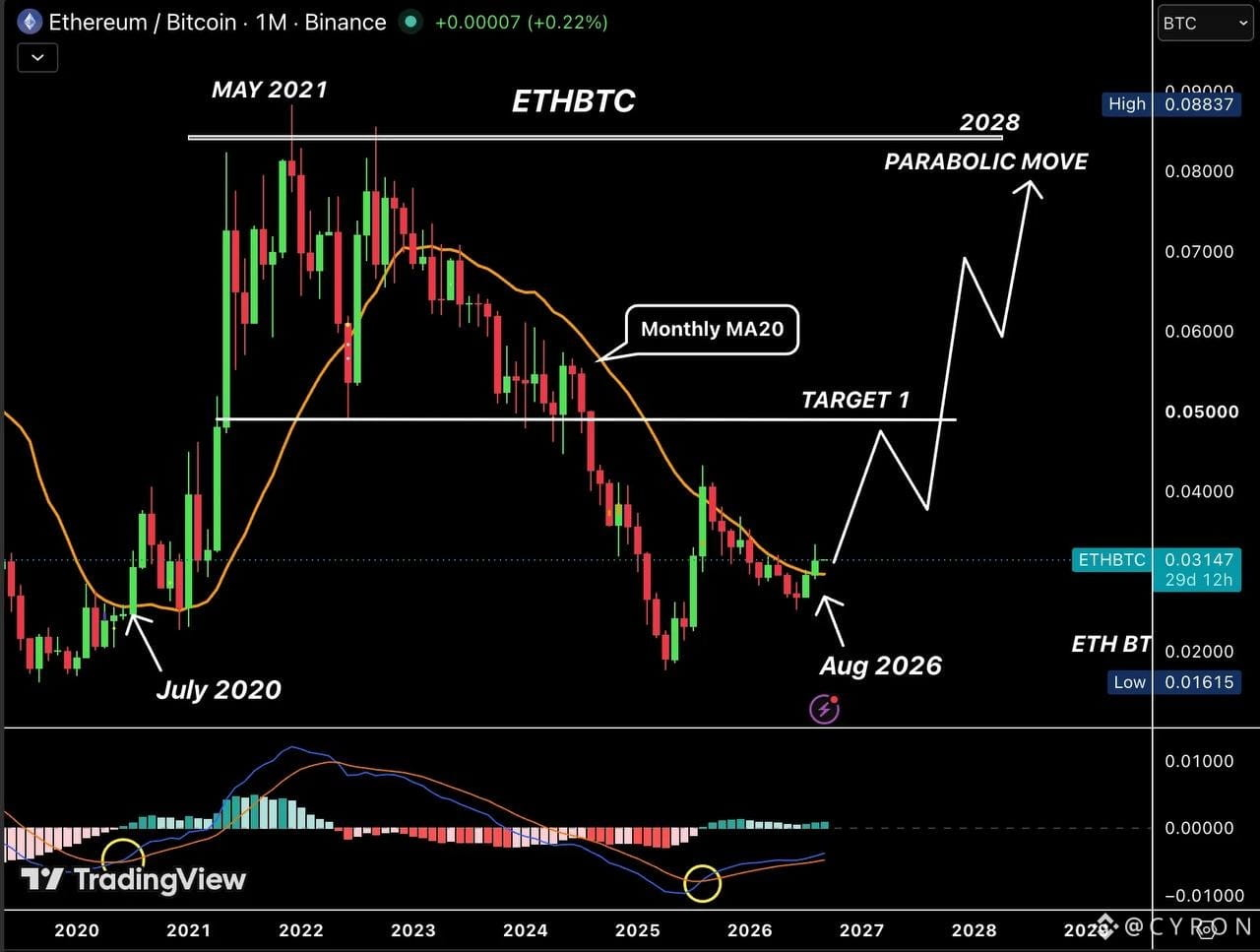
Grafik bulanan ETH/BTC mulai terlihat menarik.
Harga telah ditutup di atas MA 20.
Reclaim bersih terakhir dari level ini terjadi pada Juli 2020.
Apa yang terjadi setelahnya?
ETH/BTC: 0.0315 → 0.088
ETH: $225 → $4,372
Pada Agustus 2025, harga juga menyentuh rata-rata ini, tetapi gagal mempertahankannya dan akhirnya jatuh kembali menuju level terendah.
Itu perbedaan utamanya sekarang.
ETH/BTC perlu bertahan di atas MA 20.
MACD juga sedang berbalik menguat dari area yang mirip dengan yang mendahului breakout 2020.
Jika penahanannya berhasil:
Target pertama → 0.050
Target lanjutan → 0.088
Sementara itu, ISM berada di 54,6 vs 55,2 yang diperkirakan, yang menunjukkan pertumbuhan masih bertahan tetapi mulai melambat.
Jika kondisi makro terus bergerak menuju kebijakan moneter yang lebih longgar, ETH bisa punya lebih banyak ruang untuk mengungguli.
Setup ini jelas layak untuk dipantau. 👀
{spot}(BTCUSDT)
{spot}(ETHUSDT)
#BitcoinETFBuyersReturn
#FedHikeOddsRiseTo68%
#G20StatementCitesDigitalAssets
Grafik bulanan ETH/BTC mulai terlihat menarik.
Harga telah ditutup di atas MA 20.
Reclaim bersih terakhir dari level ini terjadi pada Juli 2020.
Apa yang terjadi setelahnya?
ETH/BTC: 0.0315 → 0.088
ETH: $225 → $4,372
Pada Agustus 2025, harga juga menyentuh rata-rata ini, tetapi gagal mempertahankannya dan akhirnya jatuh kembali menuju level terendah.
Itu perbedaan utamanya sekarang.
ETH/BTC perlu bertahan di atas MA 20.
MACD juga sedang berbalik menguat dari area yang mirip dengan yang mendahului breakout 2020.
Jika penahanannya berhasil:
Target pertama → 0.050
Target lanjutan → 0.088
Sementara itu, ISM berada di 54,6 vs 55,2 yang diperkirakan, yang menunjukkan pertumbuhan masih bertahan tetapi mulai melambat.
Jika kondisi makro terus bergerak menuju kebijakan moneter yang lebih longgar, ETH bisa punya lebih banyak ruang untuk mengungguli.
Setup ini jelas layak untuk dipantau. 👀
#BitcoinETFBuyersReturn
#FedHikeOddsRiseTo68%
#G20StatementCitesDigitalAssets
Harga telah ditutup di atas MA 20.
Reclaim bersih terakhir dari level ini terjadi pada Juli 2020.
Apa yang terjadi setelahnya?
ETH/BTC: 0.0315 → 0.088
ETH: $225 → $4,372
Pada Agustus 2025, harga juga menyentuh rata-rata ini, tetapi gagal mempertahankannya dan akhirnya jatuh kembali menuju level terendah.
Itu perbedaan utamanya sekarang.
ETH/BTC perlu bertahan di atas MA 20.
MACD juga sedang berbalik menguat dari area yang mirip dengan yang mendahului breakout 2020.
Jika penahanannya berhasil:
Target pertama → 0.050
Target lanjutan → 0.088
Sementara itu, ISM berada di 54,6 vs 55,2 yang diperkirakan, yang menunjukkan pertumbuhan masih bertahan tetapi mulai melambat.
Jika kondisi makro terus bergerak menuju kebijakan moneter yang lebih longgar, ETH bisa punya lebih banyak ruang untuk mengungguli.
Setup ini jelas layak untuk dipantau. 👀
#BitcoinETFBuyersReturn
#FedHikeOddsRiseTo68%
#G20StatementCitesDigitalAssets
1
108
·
--
Bullish
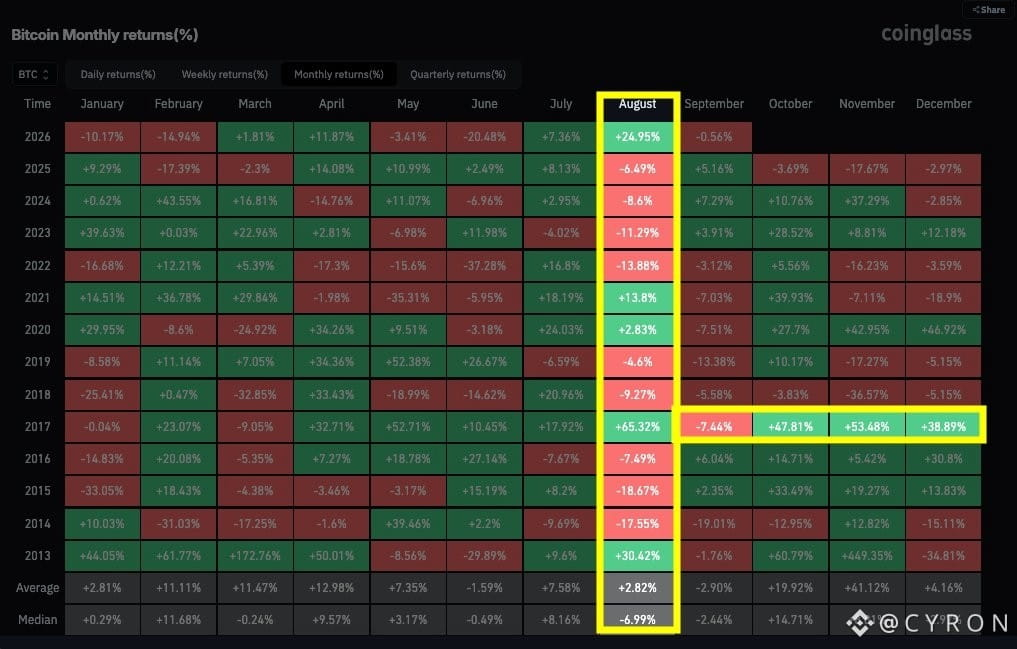
Bitcoin baru saja mengalami AUGUST TERBAIK sejak 2017.
Agustus 2026: +24.95%
Agustus 2017: +65.32%
Tapi ini yang terjadi setelah Agustus 2017:
Oktober: +47.81%
November: +53.48%
Desember: +38.89%
Sejarah tidak harus terulang.
Tapi ketika Anda melihat pola seperti ini, rasanya sulit untuk tidak memperhatikan. 👀
{spot}(BTCUSDT)
#ARBRises30%OnRobinhoodChainRevenue
#Japan10YYieldHits3%FirstSince1996
#WTIOilRisesAsOpenInterestShrinks
Bitcoin baru saja mengalami AUGUST TERBAIK sejak 2017.
Agustus 2026: +24.95%
Agustus 2017: +65.32%
Tapi ini yang terjadi setelah Agustus 2017:
Oktober: +47.81%
November: +53.48%
Desember: +38.89%
Sejarah tidak harus terulang.
Tapi ketika Anda melihat pola seperti ini, rasanya sulit untuk tidak memperhatikan. 👀
#ARBRises30%OnRobinhoodChainRevenue
#Japan10YYieldHits3%FirstSince1996
#WTIOilRisesAsOpenInterestShrinks
Agustus 2026: +24.95%
Agustus 2017: +65.32%
Tapi ini yang terjadi setelah Agustus 2017:
Oktober: +47.81%
November: +53.48%
Desember: +38.89%
Sejarah tidak harus terulang.
Tapi ketika Anda melihat pola seperti ini, rasanya sulit untuk tidak memperhatikan. 👀
#ARBRises30%OnRobinhoodChainRevenue
#Japan10YYieldHits3%FirstSince1996
#WTIOilRisesAsOpenInterestShrinks
183
·
--
Bearish
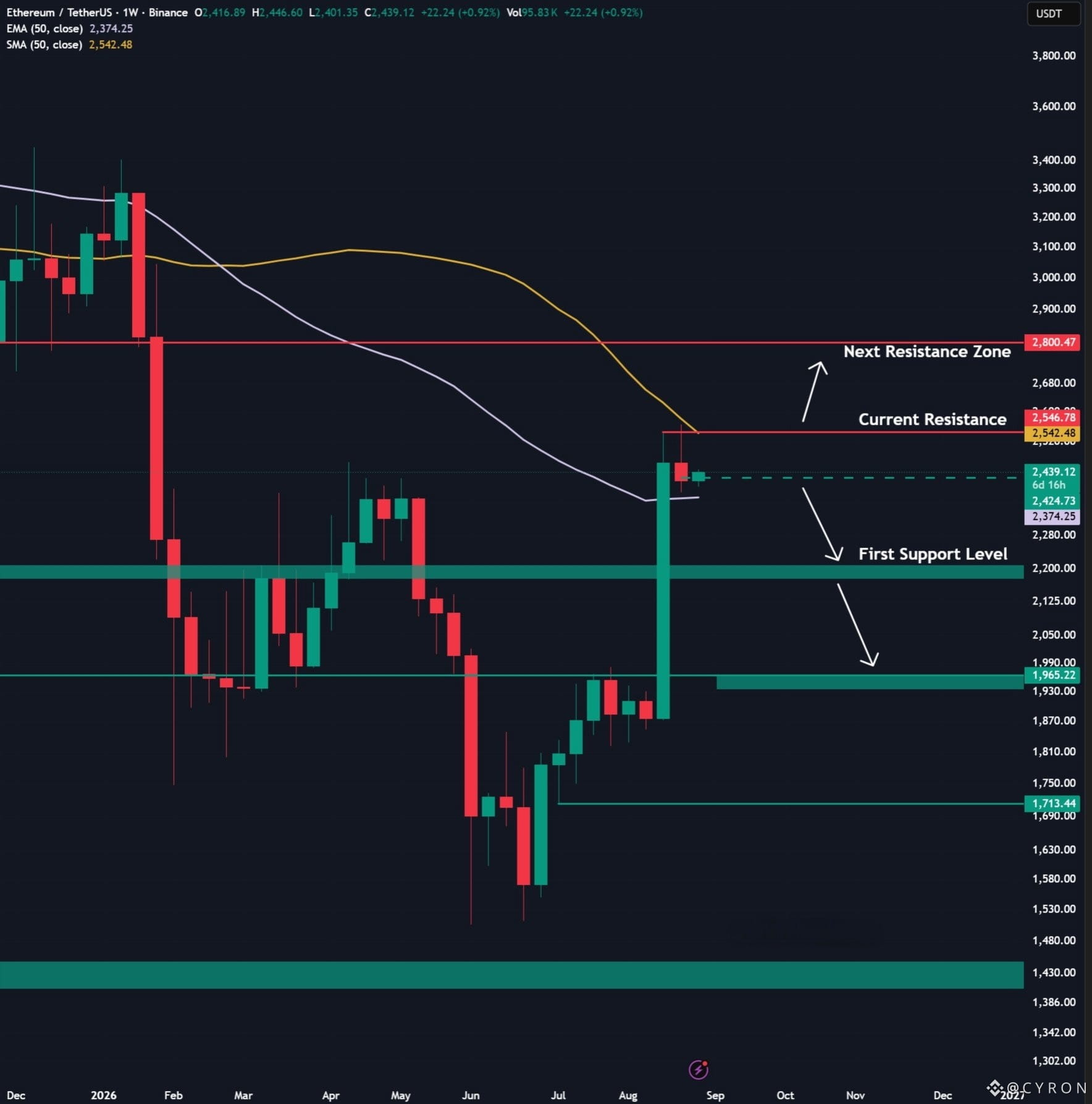
$ETH mencoba menembus di atas level $2.550 tetapi gagal lagi.
Untuk saat ini, menurut saya potensi kenaikan jangka pendek Ethereum sebagian besar mungkin sudah diperhitungkan.
Mengharapkan lebih banyak pergerakan sideways di level-level ini, dengan kemungkinan satu lagi kapitulation kecil sebelum adanya pembalikan yang benar.
Bersabar di sini.
{spot}(ETHUSDT)
#SKHynixStudiesJapanMemoryChipVenture
#KospiDrops3.6%AsSamsungSKHynixWeaken
#UKReleasesFirstCryptoGainsTaxStats
$ETH mencoba menembus di atas level $2.550 tetapi gagal lagi.
Untuk saat ini, menurut saya potensi kenaikan jangka pendek Ethereum sebagian besar mungkin sudah diperhitungkan.
Mengharapkan lebih banyak pergerakan sideways di level-level ini, dengan kemungkinan satu lagi kapitulation kecil sebelum adanya pembalikan yang benar.
Bersabar di sini.
#SKHynixStudiesJapanMemoryChipVenture
#KospiDrops3.6%AsSamsungSKHynixWeaken
#UKReleasesFirstCryptoGainsTaxStats
Untuk saat ini, menurut saya potensi kenaikan jangka pendek Ethereum sebagian besar mungkin sudah diperhitungkan.
Mengharapkan lebih banyak pergerakan sideways di level-level ini, dengan kemungkinan satu lagi kapitulation kecil sebelum adanya pembalikan yang benar.
Bersabar di sini.
#SKHynixStudiesJapanMemoryChipVenture
#KospiDrops3.6%AsSamsungSKHynixWeaken
#UKReleasesFirstCryptoGainsTaxStats
143
·
--
Bullish
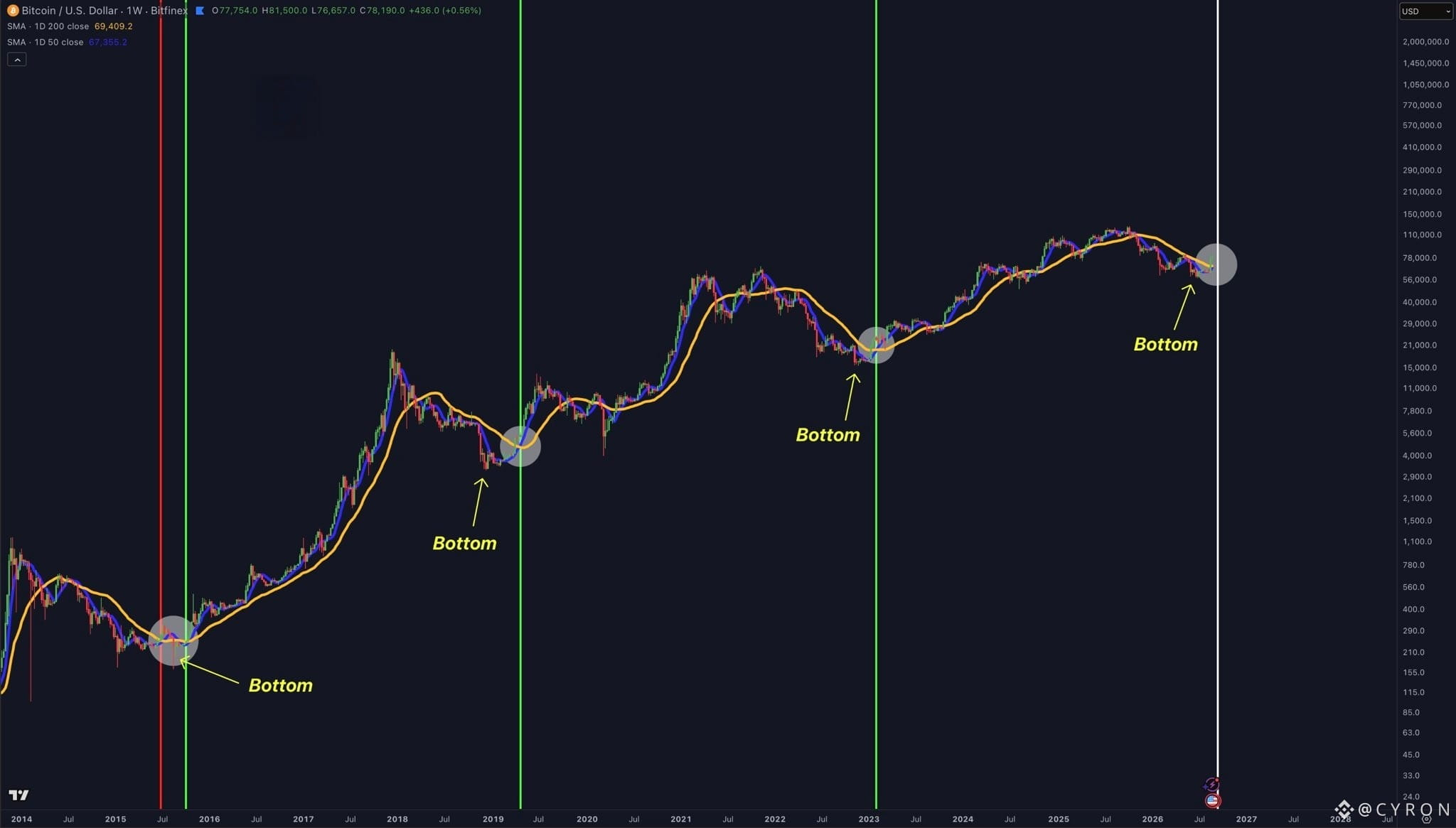
BITCOIN GOLDEN CROSS SEGERA HADIR.
Jika $BTC bisa bertahan di sini atau melanjutkan naik hingga bulan September, Golden Cross harian akan secara resmi mengonfirmasi.
Ini sudah muncul 4 kali menjelang akhir pasar beruang.
3 kali, arahnya tepat.
Apakah Bitcoin sedang bersiap untuk pembalikan tren besar lainnya? 🚀
{spot}(BTCUSDT)
#KoreaSingleStockLeveragedETFTradingFalls
#VietnamPilotsCryptoAssetMarket
#GoldFalls3.24%ThisWeek
BITCOIN GOLDEN CROSS SEGERA HADIR.
Jika $BTC bisa bertahan di sini atau melanjutkan naik hingga bulan September, Golden Cross harian akan secara resmi mengonfirmasi.
Ini sudah muncul 4 kali menjelang akhir pasar beruang.
3 kali, arahnya tepat.
Apakah Bitcoin sedang bersiap untuk pembalikan tren besar lainnya? 🚀
#KoreaSingleStockLeveragedETFTradingFalls
#VietnamPilotsCryptoAssetMarket
#GoldFalls3.24%ThisWeek
Jika $BTC bisa bertahan di sini atau melanjutkan naik hingga bulan September, Golden Cross harian akan secara resmi mengonfirmasi.
Ini sudah muncul 4 kali menjelang akhir pasar beruang.
3 kali, arahnya tepat.
Apakah Bitcoin sedang bersiap untuk pembalikan tren besar lainnya? 🚀
#KoreaSingleStockLeveragedETFTradingFalls
#VietnamPilotsCryptoAssetMarket
#GoldFalls3.24%ThisWeek
116
·
--
Bullish
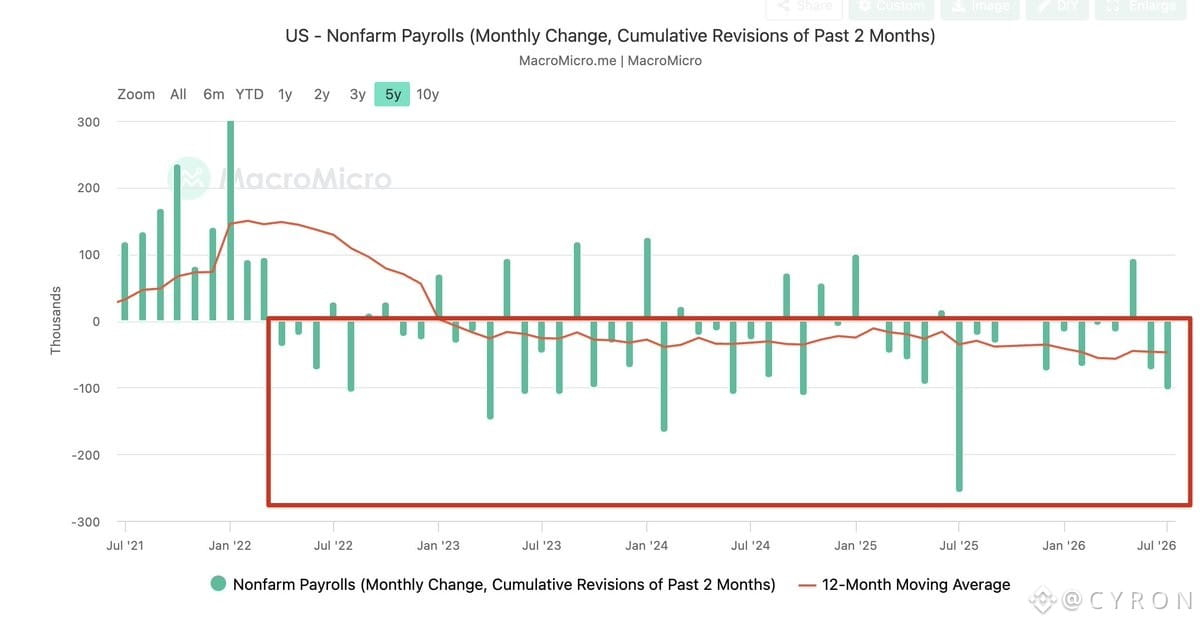
Berikut tren selama beberapa tahun terakhir.
Data payroll non-pertanian selalu dapat mengalami revisi karena angka awal hanyalah estimasi sementara.
Angka revisi dapat menunjukkan gambaran yang sangat berbeda.
Sejak 2022, terlihat pola yang jelas berupa sebagian besar revisi yang cenderung turun.
Sebagai contoh, laporan yang awalnya menunjukkan +50K pekerjaan bisa kemudian direvisi menjadi +25K.
Artinya, pasar tenaga kerja lebih lemah daripada yang dilaporkan pada awalnya.
Kini, revisi tahunan NFP tahun 2025 tercatat sebesar -911K pekerjaan, yang menegaskan betapa besar penyesuaian ini.
Jadi, jika data NFP hari ini masuk dengan kuat, pasar mungkin akan melihat lebih sedikit alasan bagi The Fed untuk memangkas suku bunga.
Hal itu dapat memberi tekanan pada aset berisiko seperti $BTC
{spot}(BTCUSDT)
#SOLJumps20%OnTheWeek
#CaliforniaBillWouldBarOfficialMemeCoins
#TRONMainnetActivatesTVMPragueOsaka
Berikut tren selama beberapa tahun terakhir.
Data payroll non-pertanian selalu dapat mengalami revisi karena angka awal hanyalah estimasi sementara.
Angka revisi dapat menunjukkan gambaran yang sangat berbeda.
Sejak 2022, terlihat pola yang jelas berupa sebagian besar revisi yang cenderung turun.
Sebagai contoh, laporan yang awalnya menunjukkan +50K pekerjaan bisa kemudian direvisi menjadi +25K.
Artinya, pasar tenaga kerja lebih lemah daripada yang dilaporkan pada awalnya.
Kini, revisi tahunan NFP tahun 2025 tercatat sebesar -911K pekerjaan, yang menegaskan betapa besar penyesuaian ini.
Jadi, jika data NFP hari ini masuk dengan kuat, pasar mungkin akan melihat lebih sedikit alasan bagi The Fed untuk memangkas suku bunga.
Hal itu dapat memberi tekanan pada aset berisiko seperti $BTC
#SOLJumps20%OnTheWeek
#CaliforniaBillWouldBarOfficialMemeCoins
#TRONMainnetActivatesTVMPragueOsaka
Data payroll non-pertanian selalu dapat mengalami revisi karena angka awal hanyalah estimasi sementara.
Angka revisi dapat menunjukkan gambaran yang sangat berbeda.
Sejak 2022, terlihat pola yang jelas berupa sebagian besar revisi yang cenderung turun.
Sebagai contoh, laporan yang awalnya menunjukkan +50K pekerjaan bisa kemudian direvisi menjadi +25K.
Artinya, pasar tenaga kerja lebih lemah daripada yang dilaporkan pada awalnya.
Kini, revisi tahunan NFP tahun 2025 tercatat sebesar -911K pekerjaan, yang menegaskan betapa besar penyesuaian ini.
Jadi, jika data NFP hari ini masuk dengan kuat, pasar mungkin akan melihat lebih sedikit alasan bagi The Fed untuk memangkas suku bunga.
Hal itu dapat memberi tekanan pada aset berisiko seperti $BTC
#SOLJumps20%OnTheWeek
#CaliforniaBillWouldBarOfficialMemeCoins
#TRONMainnetActivatesTVMPragueOsaka
114
·
--
Bullish
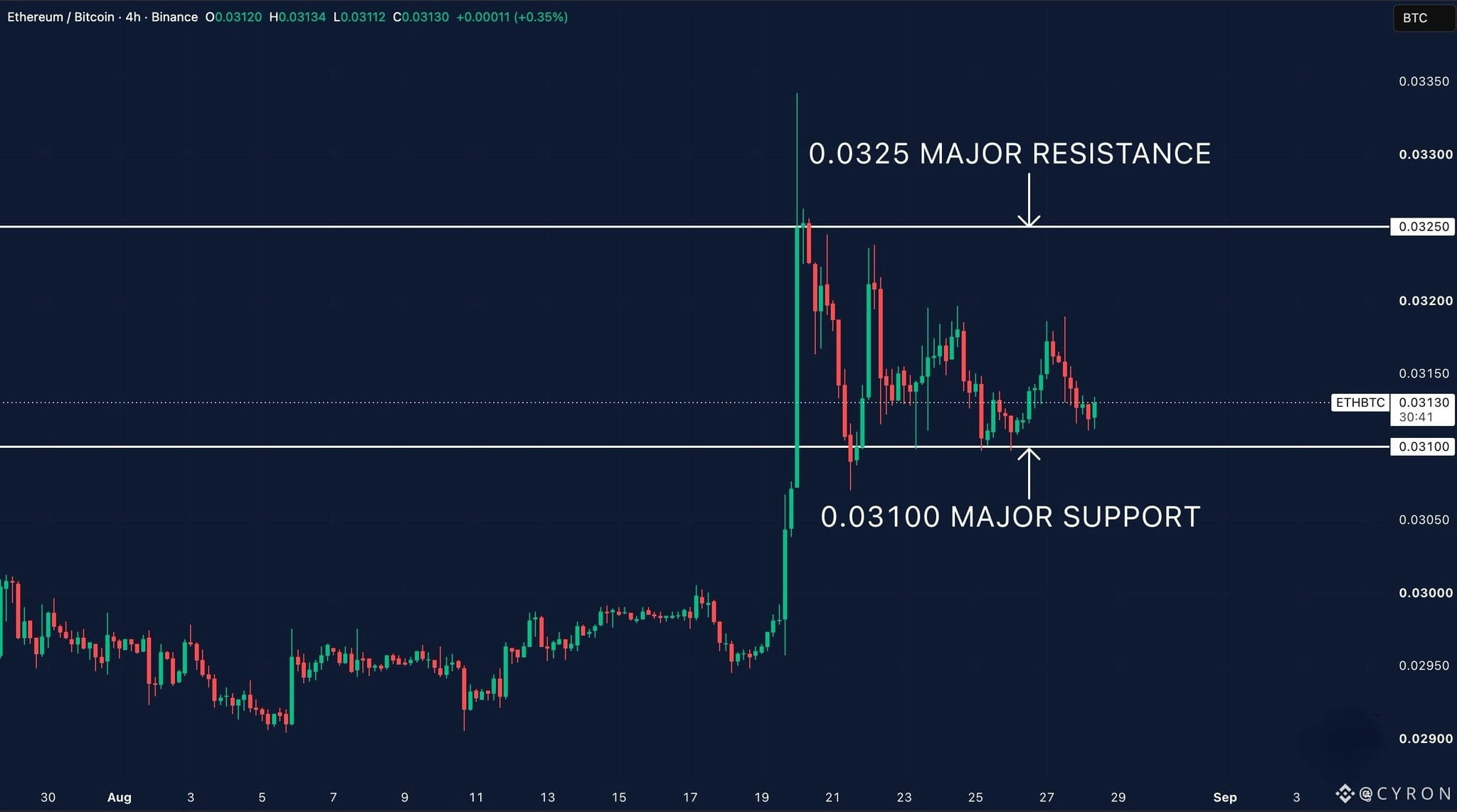
ETH/BTC sedang bertahan pada level yang bisa berdampak untuk langkah berikutnya.
Dukungan 0.03100 telah diuji berkali-kali, dan sejauh ini, para pembeli mempertahankannya.
Bertahan di atas sini → 0.03250 adalah level berikutnya.
Jika 0.03250 tembus dengan bersih → ETH bisa mulai menunjukkan performa relatif yang lebih kuat dibanding BTC.
Jatuh di bawah 0.03100 → skenarionya berubah.
Untuk saat ini, ETH/BTC masih bertahan pada breakout-nya.
Bersabar sebelum mengejar.
{spot}(ETHUSDT)
{spot}(BTCUSDT)
#GoldRisesAbout14%InAugust
#KospiFallsAsAITradingEuphoriaCools
#TaiwanTAIEXRetakes46500OnChipRally
ETH/BTC sedang bertahan pada level yang bisa berdampak untuk langkah berikutnya.
Dukungan 0.03100 telah diuji berkali-kali, dan sejauh ini, para pembeli mempertahankannya.
Bertahan di atas sini → 0.03250 adalah level berikutnya.
Jika 0.03250 tembus dengan bersih → ETH bisa mulai menunjukkan performa relatif yang lebih kuat dibanding BTC.
Jatuh di bawah 0.03100 → skenarionya berubah.
Untuk saat ini, ETH/BTC masih bertahan pada breakout-nya.
Bersabar sebelum mengejar.
#GoldRisesAbout14%InAugust
#KospiFallsAsAITradingEuphoriaCools
#TaiwanTAIEXRetakes46500OnChipRally
Dukungan 0.03100 telah diuji berkali-kali, dan sejauh ini, para pembeli mempertahankannya.
Bertahan di atas sini → 0.03250 adalah level berikutnya.
Jika 0.03250 tembus dengan bersih → ETH bisa mulai menunjukkan performa relatif yang lebih kuat dibanding BTC.
Jatuh di bawah 0.03100 → skenarionya berubah.
Untuk saat ini, ETH/BTC masih bertahan pada breakout-nya.
Bersabar sebelum mengejar.
#GoldRisesAbout14%InAugust
#KospiFallsAsAITradingEuphoriaCools
#TaiwanTAIEXRetakes46500OnChipRally
120
·
--
Bearish
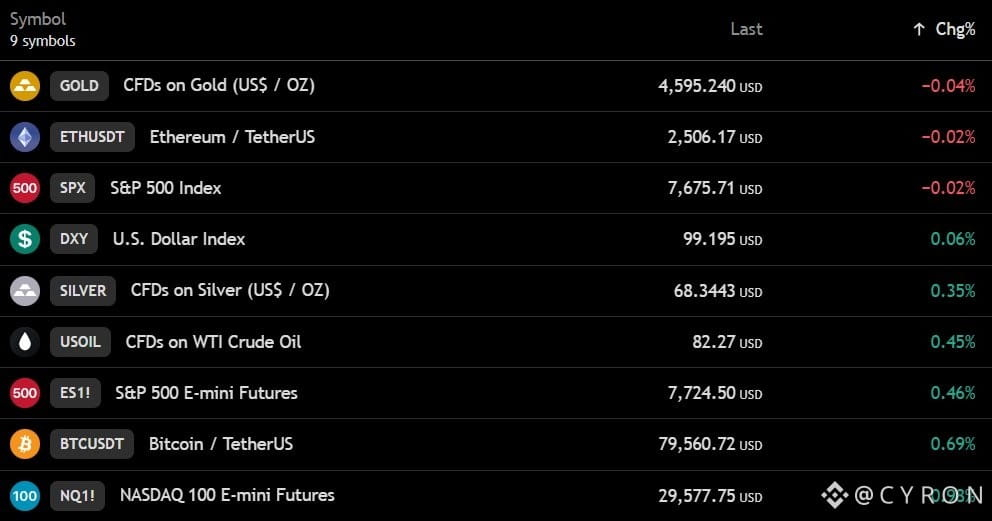
$BTC telah turun di bawah $80.000.
Sementara itu, futures saham AS diperdagangkan lebih tinggi, dengan minyak dan DXY juga ikut naik.
Pembaruan pra-pasar:
▫️ Nasdaq futures: +0,98% 🟠
▫️ S&P 500 futures: +0,46% 🟠
Bitcoin menunjukkan sedikit pelemahan meski pasar yang lebih luas memulai dengan positif.
{spot}(BTCUSDT)
#KospiClosesAtRecordHigh
#ChinaOpposesUSProposed7.5%Tariff
#BankOfKoreaHikesRatesTo3%
$BTC telah turun di bawah $80.000.
Sementara itu, futures saham AS diperdagangkan lebih tinggi, dengan minyak dan DXY juga ikut naik.
Pembaruan pra-pasar:
▫️ Nasdaq futures: +0,98% 🟠
▫️ S&P 500 futures: +0,46% 🟠
Bitcoin menunjukkan sedikit pelemahan meski pasar yang lebih luas memulai dengan positif.
#KospiClosesAtRecordHigh
#ChinaOpposesUSProposed7.5%Tariff
#BankOfKoreaHikesRatesTo3%
Sementara itu, futures saham AS diperdagangkan lebih tinggi, dengan minyak dan DXY juga ikut naik.
Pembaruan pra-pasar:
▫️ Nasdaq futures: +0,98% 🟠
▫️ S&P 500 futures: +0,46% 🟠
Bitcoin menunjukkan sedikit pelemahan meski pasar yang lebih luas memulai dengan positif.
#KospiClosesAtRecordHigh
#ChinaOpposesUSProposed7.5%Tariff
#BankOfKoreaHikesRatesTo3%
2
323
·
--
Bullish
Saya mengerjakan tugas CreatorPad di @Dusk_Foundation minggu ini, dan hal yang paling menempel di kepala saya sama sekali bukan yang tertulis di brief tugas—melainkan fakta bahwa bridge $DUSK kini telah dijeda selama lebih dari sepuluh hari, dan tak ada siapa pun di Dusk yang tampak tergesa-gesa untuk membukanya kembali. #dusk
Konteks singkat bagi siapa pun yang melewatkannya: pada 16 Agustus tim menandai aktivitas yang tidak biasa pada sebuah wallet yang digunakan untuk operasi bridge, mendaur ulang alamat yang terdampak, dan mendorong daftar pemblokiran penerima melalui Web Wallet setelah sebagian alur sempat menyentuh Binance. Mainnet DuskDS sendiri tidak pernah berhenti menghasilkan blok. Itulah bagian yang terus saya pikirkan.
Saya sempat mengira L1 yang berfokus pada privasi akan memusatkan risikonya di satu tempat, yaitu lapisan dasar. Menyaksikan rantai berjalan bersih sementara bridge membeku membuat jelas bahwa cara batas kepercayaan di sini sebenarnya tidak terbagi seperti itu. Bridge adalah tanggung jawabnya sendiri, mengikuti timeline-nya sendiri, terlepas dari kesehatan konsensus.
Pengguna Binance barangkali terlindungi lebih dulu, hanya karena daftar pemblokiran sudah ada sebelum penarikan bisa merutekan melalui. Yang lainnya masih menunggu “sementara.”
Belum yakin ambang batas sebenarnya apa sebelum “sementara” mulai berarti hal lain.
{spot}(DUSKUSDT)
{spot}(BMTUSDT)
{spot}(EDENUSDT)
Yang mana yang lebih penting di sini?
Saya mengerjakan tugas CreatorPad di @Dusk minggu ini, dan hal yang paling menempel di kepala saya sama sekali bukan yang tertulis di brief tugas—melainkan fakta bahwa bridge $DUSK kini telah dijeda selama lebih dari sepuluh hari, dan tak ada siapa pun di Dusk yang tampak tergesa-gesa untuk membukanya kembali. #dusk
Konteks singkat bagi siapa pun yang melewatkannya: pada 16 Agustus tim menandai aktivitas yang tidak biasa pada sebuah wallet yang digunakan untuk operasi bridge, mendaur ulang alamat yang terdampak, dan mendorong daftar pemblokiran penerima melalui Web Wallet setelah sebagian alur sempat menyentuh Binance. Mainnet DuskDS sendiri tidak pernah berhenti menghasilkan blok. Itulah bagian yang terus saya pikirkan.
Saya sempat mengira L1 yang berfokus pada privasi akan memusatkan risikonya di satu tempat, yaitu lapisan dasar. Menyaksikan rantai berjalan bersih sementara bridge membeku membuat jelas bahwa cara batas kepercayaan di sini sebenarnya tidak terbagi seperti itu. Bridge adalah tanggung jawabnya sendiri, mengikuti timeline-nya sendiri, terlepas dari kesehatan konsensus.
Pengguna Binance barangkali terlindungi lebih dulu, hanya karena daftar pemblokiran sudah ada sebelum penarikan bisa merutekan melalui. Yang lainnya masih menunggu “sementara.”
Belum yakin ambang batas sebenarnya apa sebelum “sementara” mulai berarti hal lain.
Yang mana yang lebih penting di sini?
Konteks singkat bagi siapa pun yang melewatkannya: pada 16 Agustus tim menandai aktivitas yang tidak biasa pada sebuah wallet yang digunakan untuk operasi bridge, mendaur ulang alamat yang terdampak, dan mendorong daftar pemblokiran penerima melalui Web Wallet setelah sebagian alur sempat menyentuh Binance. Mainnet DuskDS sendiri tidak pernah berhenti menghasilkan blok. Itulah bagian yang terus saya pikirkan.
Saya sempat mengira L1 yang berfokus pada privasi akan memusatkan risikonya di satu tempat, yaitu lapisan dasar. Menyaksikan rantai berjalan bersih sementara bridge membeku membuat jelas bahwa cara batas kepercayaan di sini sebenarnya tidak terbagi seperti itu. Bridge adalah tanggung jawabnya sendiri, mengikuti timeline-nya sendiri, terlepas dari kesehatan konsensus.
Pengguna Binance barangkali terlindungi lebih dulu, hanya karena daftar pemblokiran sudah ada sebelum penarikan bisa merutekan melalui. Yang lainnya masih menunggu “sementara.”
Belum yakin ambang batas sebenarnya apa sebelum “sementara” mulai berarti hal lain.
Yang mana yang lebih penting di sini?
🟢 Mainnet's clean uptime
100%
🔴 Bridge still closed
0%
⚖️ Both equally
0%
🤷 Too early to say
0%
1 Voting • Voting ditutup
1
1
186
·
--
Bullish
Tadi minggu ini saya menjalankan transfer kecil lewat Web Wallet milik Dusk sambil menyelesaikan tugas CreatorPad, lalu prosesnya terhenti di tengah jalan oleh peringatan blocklist yang tidak saya perkirakan sebelumnya. Tidak ada yang dramatis—sekadar tanda merah sebelum transaksi bisa terkirim. Untuk sebuah chain yang dibangun di sekitar model privasi selective-disclosure milik $DUSK , #dusk , @Dusk_Foundation , itu terasa seperti hal yang aneh untuk ditemui.
Ternyata, peringatan itu merujuk ke blocklist penerima yang tim mereka kirimkan ke Web Wallet setelah insiden pertengahan Agustus yang melibatkan wallet operasional bridge yang kompromi. Pihaknya menyaring transfer yang keluar terhadap alamat-alamat yang sudah diberi tanda sebelum Anda dapat mengirim.
Saya mengira pendekatan yang mengutamakan privasi berarti lebih sedikit pos pemeriksaan, bukan lebih banyak. Melihat itu benar-benar aktif saat ada upaya nyata mengubah sedikit cara pandang saya. Mekanismenya hanya bekerja jika ada pihak yang memelihara dan memperbarui daftar tersebut dalam hampir waktu nyata, yang berarti ada lapisan kurasi yang diam-diam berada di bawah gaya pemasaran "confidential by default".
Bukan berarti itu salah, hanya memperhatikan. Selective disclosure dan penyaringan alamat bukan hal yang sama, tapi sekarang keduanya hidup di dalam wallet yang sama. Saya masih mencari tahu seberapa nyaman saya dengan itu, dan siapa tepatnya yang memutuskan apa yang akan ditambahkan ke daftar ke depan.
{spot}(DUSKUSDT)
{spot}(ONGUSDT)
{spot}(JASMYUSDT)
Bagian mana dari ini yang paling menonjol bagi Anda? 👀
Tadi minggu ini saya menjalankan transfer kecil lewat Web Wallet milik Dusk sambil menyelesaikan tugas CreatorPad, lalu prosesnya terhenti di tengah jalan oleh peringatan blocklist yang tidak saya perkirakan sebelumnya. Tidak ada yang dramatis—sekadar tanda merah sebelum transaksi bisa terkirim. Untuk sebuah chain yang dibangun di sekitar model privasi selective-disclosure milik $DUSK , #dusk , @Dusk , itu terasa seperti hal yang aneh untuk ditemui.
Ternyata, peringatan itu merujuk ke blocklist penerima yang tim mereka kirimkan ke Web Wallet setelah insiden pertengahan Agustus yang melibatkan wallet operasional bridge yang kompromi. Pihaknya menyaring transfer yang keluar terhadap alamat-alamat yang sudah diberi tanda sebelum Anda dapat mengirim.
Saya mengira pendekatan yang mengutamakan privasi berarti lebih sedikit pos pemeriksaan, bukan lebih banyak. Melihat itu benar-benar aktif saat ada upaya nyata mengubah sedikit cara pandang saya. Mekanismenya hanya bekerja jika ada pihak yang memelihara dan memperbarui daftar tersebut dalam hampir waktu nyata, yang berarti ada lapisan kurasi yang diam-diam berada di bawah gaya pemasaran "confidential by default".
Bukan berarti itu salah, hanya memperhatikan. Selective disclosure dan penyaringan alamat bukan hal yang sama, tapi sekarang keduanya hidup di dalam wallet yang sama. Saya masih mencari tahu seberapa nyaman saya dengan itu, dan siapa tepatnya yang memutuskan apa yang akan ditambahkan ke daftar ke depan.
Bagian mana dari ini yang paling menonjol bagi Anda? 👀
Ternyata, peringatan itu merujuk ke blocklist penerima yang tim mereka kirimkan ke Web Wallet setelah insiden pertengahan Agustus yang melibatkan wallet operasional bridge yang kompromi. Pihaknya menyaring transfer yang keluar terhadap alamat-alamat yang sudah diberi tanda sebelum Anda dapat mengirim.
Saya mengira pendekatan yang mengutamakan privasi berarti lebih sedikit pos pemeriksaan, bukan lebih banyak. Melihat itu benar-benar aktif saat ada upaya nyata mengubah sedikit cara pandang saya. Mekanismenya hanya bekerja jika ada pihak yang memelihara dan memperbarui daftar tersebut dalam hampir waktu nyata, yang berarti ada lapisan kurasi yang diam-diam berada di bawah gaya pemasaran "confidential by default".
Bukan berarti itu salah, hanya memperhatikan. Selective disclosure dan penyaringan alamat bukan hal yang sama, tapi sekarang keduanya hidup di dalam wallet yang sama. Saya masih mencari tahu seberapa nyaman saya dengan itu, dan siapa tepatnya yang memutuskan apa yang akan ditambahkan ke daftar ke depan.
Bagian mana dari ini yang paling menonjol bagi Anda? 👀
🚫 The blocklist itself
50%
🔑 Who maintains the list
50%
⚖️ Privacy vs. gatekeeping
0%
💭 Something else
0%
2 Voting • Voting ditutup
1
1
193
·
--
Bullish
Memeriksa lagi halaman status jembatan Dusk minggu ini, dan masih menampilkan status terjeda, sama seperti sejak insiden 16 Agustus ketika tim menandai aktivitas mencurigakan pada sebuah dompet yang digunakan untuk operasi jembatan. Detail itulah yang paling membekas saat saya menyelesaikan tugas CreatorPad ini pada @Dusk_Foundation , $DUSK , #dusk : lebih dari sembilan hari kemudian, alamatnya didaur ulang, daftar blok aktif, tapi jembatan itu sendiri belum kembali online.
Pernyataan resmi terkesan rapi: bukan masalah tingkat protokol, DuskDS tetap menghasilkan blok secara normal, tidak ada dana pengguna yang terdampak. Dan secara teknis itu benar. Tapi saya masuk dengan asumsi bahwa "bukan bug protokol" berarti "perbaikan cepat." Ternyata tidak. Infrastruktur operasional yang dikelola oleh sebuah tim—bahkan pada sebuah rantai yang dibangun di sekitar penyelesaian deterministik dan privasi setara audit—tetap bergerak mengikuti tenggat manusia ketika ada sesuatu yang menyentuh alur yang terpusat.
Yang paling membuat saya tergerak bukan hanya insiden itu sendiri, melainkan jarak antara keyakinan pesan penenang dan lamanya waktu perbaikan yang benar-benar berjalan. Dua hal itu tidak harus saling bertentangan, tapi saat diletakkan berdampingan, kesannya jadi berbeda.
Belum yakin ini hanya proses yang hati-hati atau ada sesuatu yang lebih struktural dalam cara jembatan diperlakukan setelah insiden. Saya akan terus memantau kapan jembatan itu benar-benar dibuka kembali.
{spot}(DUSKUSDT)
{spot}(ZROUSDT)
{spot}(ENAUSDT)
Bagian mana yang paling menonjol bagi Anda? 🤔
Memeriksa lagi halaman status jembatan Dusk minggu ini, dan masih menampilkan status terjeda, sama seperti sejak insiden 16 Agustus ketika tim menandai aktivitas mencurigakan pada sebuah dompet yang digunakan untuk operasi jembatan. Detail itulah yang paling membekas saat saya menyelesaikan tugas CreatorPad ini pada @Dusk , $DUSK , #dusk : lebih dari sembilan hari kemudian, alamatnya didaur ulang, daftar blok aktif, tapi jembatan itu sendiri belum kembali online.
Pernyataan resmi terkesan rapi: bukan masalah tingkat protokol, DuskDS tetap menghasilkan blok secara normal, tidak ada dana pengguna yang terdampak. Dan secara teknis itu benar. Tapi saya masuk dengan asumsi bahwa "bukan bug protokol" berarti "perbaikan cepat." Ternyata tidak. Infrastruktur operasional yang dikelola oleh sebuah tim—bahkan pada sebuah rantai yang dibangun di sekitar penyelesaian deterministik dan privasi setara audit—tetap bergerak mengikuti tenggat manusia ketika ada sesuatu yang menyentuh alur yang terpusat.
Yang paling membuat saya tergerak bukan hanya insiden itu sendiri, melainkan jarak antara keyakinan pesan penenang dan lamanya waktu perbaikan yang benar-benar berjalan. Dua hal itu tidak harus saling bertentangan, tapi saat diletakkan berdampingan, kesannya jadi berbeda.
Belum yakin ini hanya proses yang hati-hati atau ada sesuatu yang lebih struktural dalam cara jembatan diperlakukan setelah insiden. Saya akan terus memantau kapan jembatan itu benar-benar dibuka kembali.
Bagian mana yang paling menonjol bagi Anda? 🤔
Pernyataan resmi terkesan rapi: bukan masalah tingkat protokol, DuskDS tetap menghasilkan blok secara normal, tidak ada dana pengguna yang terdampak. Dan secara teknis itu benar. Tapi saya masuk dengan asumsi bahwa "bukan bug protokol" berarti "perbaikan cepat." Ternyata tidak. Infrastruktur operasional yang dikelola oleh sebuah tim—bahkan pada sebuah rantai yang dibangun di sekitar penyelesaian deterministik dan privasi setara audit—tetap bergerak mengikuti tenggat manusia ketika ada sesuatu yang menyentuh alur yang terpusat.
Yang paling membuat saya tergerak bukan hanya insiden itu sendiri, melainkan jarak antara keyakinan pesan penenang dan lamanya waktu perbaikan yang benar-benar berjalan. Dua hal itu tidak harus saling bertentangan, tapi saat diletakkan berdampingan, kesannya jadi berbeda.
Belum yakin ini hanya proses yang hati-hati atau ada sesuatu yang lebih struktural dalam cara jembatan diperlakukan setelah insiden. Saya akan terus memantau kapan jembatan itu benar-benar dibuka kembali.
Bagian mana yang paling menonjol bagi Anda? 🤔
🛠️ The framing
50%
⏳ The timeline
0%
🔐 Wallet risk
0%
🤷 Just normal caution
50%
2 Voting • Voting ditutup
4
6
305
·
--
Bullish
🚨 BERITA TERBARU:
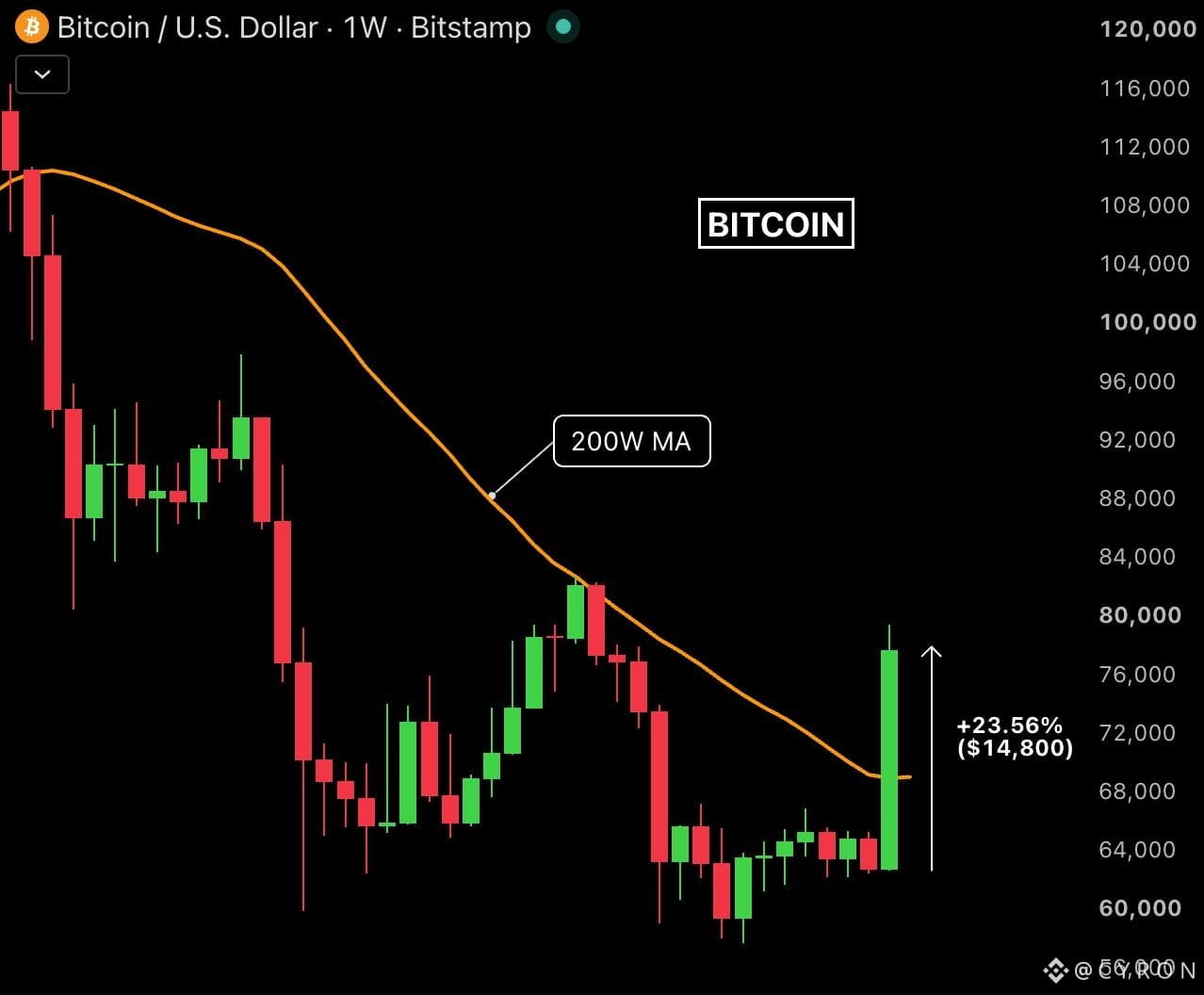
Bitcoin baru saja mencetak candle mingguan terbesarnya sejak Maret 2023.
$BTC naik 23,56%, menambah sekitar $14.800 hanya dalam satu minggu.
Ini adalah pergerakan besar untuk Bitcoin dalam waktu yang sangat singkat.
Momentum-nya kembali. 🚀
{spot}(BTCUSDT)
#BitcoinStrongestWeekSinceMarch2023
#CanadaUSTradeTalksCollapse
🚨 BERITA TERBARU:
Bitcoin baru saja mencetak candle mingguan terbesarnya sejak Maret 2023.
$BTC naik 23,56%, menambah sekitar $14.800 hanya dalam satu minggu.
Ini adalah pergerakan besar untuk Bitcoin dalam waktu yang sangat singkat.
Momentum-nya kembali. 🚀
#BitcoinStrongestWeekSinceMarch2023
#CanadaUSTradeTalksCollapse
Bitcoin baru saja mencetak candle mingguan terbesarnya sejak Maret 2023.
$BTC naik 23,56%, menambah sekitar $14.800 hanya dalam satu minggu.
Ini adalah pergerakan besar untuk Bitcoin dalam waktu yang sangat singkat.
Momentum-nya kembali. 🚀
#BitcoinStrongestWeekSinceMarch2023
#CanadaUSTradeTalksCollapse
2
119
·
--
Bullish
Membaca ringkasan CreatorPad tentang $DUSK , saya jadi tersangkut pada satu baris dalam pemberitahuan insiden bridge milik Dusk: tim menonaktifkan dan mendaur ulang sekumpulan alamat setelah menandai aktivitas yang tidak biasa pada dompet terkelola tim yang digunakan untuk operasi bridge, lalu menghentikan layanan bridge sepenuhnya sementara mereka bereskan. #dusk
Itulah bagian yang membuat saya terpaku. Bukan insidennya, tapi bentuk responsnya. @Dusk_Foundation menghabiskan sebagian besar pesannya untuk privasi dari sisi pengguna, pengungkapan yang selektif, jalur kepatuhan, semua hal yang dibuat untuk orang yang memegang dompet. Ini bukan itu. Ini kunci operasional internal yang perilakunya dipicu ketika dikompromikan, dan perbaikannya terasa tegas: hentikan semuanya, bangun ulang kumpulan alamat, lalu kirim daftar blok penerima untuk menangkap apa pun yang mencoba bergerak melalui web wallet.
Saya mengira bingkai "infra teregulasi" berarti sisi operasionalnya juga sudah diperkeras—mungkin lebih dari kebanyakan L1 mengingat materi penawaran institusionalnya. Ternyata mode kegagalannya bukan eksploit smart contract atau pemungutan suara tata kelola yang berantakan; itu adalah dompet terkelola, masalah yang jauh lebih membosankan dan jauh lebih universal.
Tapi saya masih belum yakin apakah ini menenangkan atau justru sebaliknya.
{spot}(DUSKUSDT)
{spot}(SPKUSDT)
{spot}(MORPHOUSDT)
Apa yang paling menonjol dari respons bridge Dusk?
Membaca ringkasan CreatorPad tentang $DUSK , saya jadi tersangkut pada satu baris dalam pemberitahuan insiden bridge milik Dusk: tim menonaktifkan dan mendaur ulang sekumpulan alamat setelah menandai aktivitas yang tidak biasa pada dompet terkelola tim yang digunakan untuk operasi bridge, lalu menghentikan layanan bridge sepenuhnya sementara mereka bereskan. #dusk
Itulah bagian yang membuat saya terpaku. Bukan insidennya, tapi bentuk responsnya. @Dusk menghabiskan sebagian besar pesannya untuk privasi dari sisi pengguna, pengungkapan yang selektif, jalur kepatuhan, semua hal yang dibuat untuk orang yang memegang dompet. Ini bukan itu. Ini kunci operasional internal yang perilakunya dipicu ketika dikompromikan, dan perbaikannya terasa tegas: hentikan semuanya, bangun ulang kumpulan alamat, lalu kirim daftar blok penerima untuk menangkap apa pun yang mencoba bergerak melalui web wallet.
Saya mengira bingkai "infra teregulasi" berarti sisi operasionalnya juga sudah diperkeras—mungkin lebih dari kebanyakan L1 mengingat materi penawaran institusionalnya. Ternyata mode kegagalannya bukan eksploit smart contract atau pemungutan suara tata kelola yang berantakan; itu adalah dompet terkelola, masalah yang jauh lebih membosankan dan jauh lebih universal.
Tapi saya masih belum yakin apakah ini menenangkan atau justru sebaliknya.
Apa yang paling menonjol dari respons bridge Dusk?
Itulah bagian yang membuat saya terpaku. Bukan insidennya, tapi bentuk responsnya. @Dusk menghabiskan sebagian besar pesannya untuk privasi dari sisi pengguna, pengungkapan yang selektif, jalur kepatuhan, semua hal yang dibuat untuk orang yang memegang dompet. Ini bukan itu. Ini kunci operasional internal yang perilakunya dipicu ketika dikompromikan, dan perbaikannya terasa tegas: hentikan semuanya, bangun ulang kumpulan alamat, lalu kirim daftar blok penerima untuk menangkap apa pun yang mencoba bergerak melalui web wallet.
Saya mengira bingkai "infra teregulasi" berarti sisi operasionalnya juga sudah diperkeras—mungkin lebih dari kebanyakan L1 mengingat materi penawaran institusionalnya. Ternyata mode kegagalannya bukan eksploit smart contract atau pemungutan suara tata kelola yang berantakan; itu adalah dompet terkelola, masalah yang jauh lebih membosankan dan jauh lebih universal.
Tapi saya masih belum yakin apakah ini menenangkan atau justru sebaliknya.
Apa yang paling menonjol dari respons bridge Dusk?
🛑 Full pause
60%
🔑 Team wallet risk
40%
🧊 "No impact" claim
0%
🤷 Not surprised
0%
5 Voting • Voting ditutup
2
4
960
·
--
Bullish
Menghabiskan minggu ini untuk menyelidiki infrastruktur jembatan milik Dusk untuk putaran CreatorPad kali ini, dan yang menghentikan saya bukanlah sebuah fitur—melainkan pemberitahuan insiden 16 Agustus. Tim menemukan aktivitas mencurigakan di sebuah wallet yang mereka kendalikan untuk operasi jembatan, dan terpaksa menonaktifkan serta mendaur ulang sekelompok alamat di tempat. $DUSK , #dusk , @Dusk_Foundation , saya masuk dengan ekspektasi untuk menulis tentang momentum testnet DuskEVM. Saya justru pergi dengan memikirkan hal lain sepenuhnya.
Ini yang membuat saya terpikir: jembatan itu sendiri tidak rusak. Lapisan zk, konsensus, tidak ada yang disentuh. Yang jebol adalah sebuah wallet yang dikelola tim—jenis komponen operasional yang diam-diam menjadi tumpuan setiap jembatan, namun tidak benar-benar diaudit secara terbuka. Dusk bergerak cepat, menghentikan layanan, dan berkoordinasi dengan Binance begitu sebagian alur yang terkait muncul di sana. Respons yang wajar. Tapi itu memperlihatkan celah antara “keamanan tingkat protokol” dan “manusia yang menjalankan lapisan infrastruktur”—dua hal yang selama ini saya anggap sebagai satu.
Saya mengira risiko jembatan sebagian besar hidup di kode kontrak. Ternyata permukaan yang lebih “lembut”, yang operasional, sama-sama menjadi penopang beban. Masih belum yakin bagaimana cara mengaudit itu.
{spot}(TRUMPUSDT)
{spot}(STXUSDT)
{spot}(POLUSDT)
Apa risiko jembatan yang sesungguhnya?
Menghabiskan minggu ini untuk menyelidiki infrastruktur jembatan milik Dusk untuk putaran CreatorPad kali ini, dan yang menghentikan saya bukanlah sebuah fitur—melainkan pemberitahuan insiden 16 Agustus. Tim menemukan aktivitas mencurigakan di sebuah wallet yang mereka kendalikan untuk operasi jembatan, dan terpaksa menonaktifkan serta mendaur ulang sekelompok alamat di tempat. $DUSK , #dusk , @Dusk , saya masuk dengan ekspektasi untuk menulis tentang momentum testnet DuskEVM. Saya justru pergi dengan memikirkan hal lain sepenuhnya.
Ini yang membuat saya terpikir: jembatan itu sendiri tidak rusak. Lapisan zk, konsensus, tidak ada yang disentuh. Yang jebol adalah sebuah wallet yang dikelola tim—jenis komponen operasional yang diam-diam menjadi tumpuan setiap jembatan, namun tidak benar-benar diaudit secara terbuka. Dusk bergerak cepat, menghentikan layanan, dan berkoordinasi dengan Binance begitu sebagian alur yang terkait muncul di sana. Respons yang wajar. Tapi itu memperlihatkan celah antara “keamanan tingkat protokol” dan “manusia yang menjalankan lapisan infrastruktur”—dua hal yang selama ini saya anggap sebagai satu.
Saya mengira risiko jembatan sebagian besar hidup di kode kontrak. Ternyata permukaan yang lebih “lembut”, yang operasional, sama-sama menjadi penopang beban. Masih belum yakin bagaimana cara mengaudit itu.
Apa risiko jembatan yang sesungguhnya?
Ini yang membuat saya terpikir: jembatan itu sendiri tidak rusak. Lapisan zk, konsensus, tidak ada yang disentuh. Yang jebol adalah sebuah wallet yang dikelola tim—jenis komponen operasional yang diam-diam menjadi tumpuan setiap jembatan, namun tidak benar-benar diaudit secara terbuka. Dusk bergerak cepat, menghentikan layanan, dan berkoordinasi dengan Binance begitu sebagian alur yang terkait muncul di sana. Respons yang wajar. Tapi itu memperlihatkan celah antara “keamanan tingkat protokol” dan “manusia yang menjalankan lapisan infrastruktur”—dua hal yang selama ini saya anggap sebagai satu.
Saya mengira risiko jembatan sebagian besar hidup di kode kontrak. Ternyata permukaan yang lebih “lembut”, yang operasional, sama-sama menjadi penopang beban. Masih belum yakin bagaimana cara mengaudit itu.
Apa risiko jembatan yang sesungguhnya?
🔐 Contract code
0%
👤 Team wallets
50%
🌉 Message relay
0%
🧩 Upgrade keys
50%
2 Voting • Voting ditutup
2
3
521
·
--
Bullish
Jalankan pemeriksaan RPC cepat terhadap testnet DuskEVM sebelum men-deploy apa pun, hanya untuk memastikan saya benar-benar berada di jaringan yang tepat. Langkah kecil, tetapi itu membuat tugas CreatorPad berlandaskan sesuatu yang nyata, bukan screenshot dokumentasi. Menjembatani batch sejumlah $DUSK dari DuskDS untuk mendanai deployment wallet, lalu mendorong kontrak Solidity dasar melalui Hardhat. #dusk @Dusk_Foundation
Yang sebenarnya menghentikan saya bukan karena proses deployment berhasil atau tidak, melainkan rincian biayanya setelah itu. Saya mengira "privacy-preserving EVM" berarti privasi otomatis sudah tertanam di setiap transaksi. Ternyata tidak. Biaya eksekusi dan biaya ketersediaan data untuk mem-posting batch kembali ke DuskDS sama-sama terlihat penuh, bergaya OP-Stack standar. Tidak ada yang disamarkan kecuali Anda sengaja merutekannya melalui Hedger.
Itu asumsi yang wajar untuk keliru. Pesan Dusk sangat menekankan kerahasiaan, jadi mudah mengharapkan lapisan EVM mewarisi hal itu secara default, bukan sebagai sesuatu yang Anda pilih secara terpisah.
Masuk akal secara arsitektur: settlement dan alat privasi tetap terpisah dari eksekusi tujuan umum. Tapi saya penasaran, berapa banyak dev yang membangun di sini sekarang yang benar-benar mengarah ke Hedger, dibanding hanya mengirim kontrak EVM standar lalu lanjut. Ini observasi saya sendiri dari pengujian, bukan nasihat keuangan—jadi tidak perlu menggali lebih jauh jika Anda sedang menilai ekosistem.
{spot}(DUSKUSDT)
{spot}(PROMUSDT)
{spot}(NEIROUSDT)
Bagian mana dari membangun di DuskEVM yang ingin Anda coba pertama kali? 👇
Jalankan pemeriksaan RPC cepat terhadap testnet DuskEVM sebelum men-deploy apa pun, hanya untuk memastikan saya benar-benar berada di jaringan yang tepat. Langkah kecil, tetapi itu membuat tugas CreatorPad berlandaskan sesuatu yang nyata, bukan screenshot dokumentasi. Menjembatani batch sejumlah $DUSK dari DuskDS untuk mendanai deployment wallet, lalu mendorong kontrak Solidity dasar melalui Hardhat. #dusk @Dusk
Yang sebenarnya menghentikan saya bukan karena proses deployment berhasil atau tidak, melainkan rincian biayanya setelah itu. Saya mengira "privacy-preserving EVM" berarti privasi otomatis sudah tertanam di setiap transaksi. Ternyata tidak. Biaya eksekusi dan biaya ketersediaan data untuk mem-posting batch kembali ke DuskDS sama-sama terlihat penuh, bergaya OP-Stack standar. Tidak ada yang disamarkan kecuali Anda sengaja merutekannya melalui Hedger.
Itu asumsi yang wajar untuk keliru. Pesan Dusk sangat menekankan kerahasiaan, jadi mudah mengharapkan lapisan EVM mewarisi hal itu secara default, bukan sebagai sesuatu yang Anda pilih secara terpisah.
Masuk akal secara arsitektur: settlement dan alat privasi tetap terpisah dari eksekusi tujuan umum. Tapi saya penasaran, berapa banyak dev yang membangun di sini sekarang yang benar-benar mengarah ke Hedger, dibanding hanya mengirim kontrak EVM standar lalu lanjut. Ini observasi saya sendiri dari pengujian, bukan nasihat keuangan—jadi tidak perlu menggali lebih jauh jika Anda sedang menilai ekosistem.
Bagian mana dari membangun di DuskEVM yang ingin Anda coba pertama kali? 👇
Yang sebenarnya menghentikan saya bukan karena proses deployment berhasil atau tidak, melainkan rincian biayanya setelah itu. Saya mengira "privacy-preserving EVM" berarti privasi otomatis sudah tertanam di setiap transaksi. Ternyata tidak. Biaya eksekusi dan biaya ketersediaan data untuk mem-posting batch kembali ke DuskDS sama-sama terlihat penuh, bergaya OP-Stack standar. Tidak ada yang disamarkan kecuali Anda sengaja merutekannya melalui Hedger.
Itu asumsi yang wajar untuk keliru. Pesan Dusk sangat menekankan kerahasiaan, jadi mudah mengharapkan lapisan EVM mewarisi hal itu secara default, bukan sebagai sesuatu yang Anda pilih secara terpisah.
Masuk akal secara arsitektur: settlement dan alat privasi tetap terpisah dari eksekusi tujuan umum. Tapi saya penasaran, berapa banyak dev yang membangun di sini sekarang yang benar-benar mengarah ke Hedger, dibanding hanya mengirim kontrak EVM standar lalu lanjut. Ini observasi saya sendiri dari pengujian, bukan nasihat keuangan—jadi tidak perlu menggali lebih jauh jika Anda sedang menilai ekosistem.
Bagian mana dari membangun di DuskEVM yang ingin Anda coba pertama kali? 👇
🔧 Standard Solidity contract
0%
🕶️ Hedger private execution
0%
🌉 Just the bridge
0%
🤔 Still deciding
0%
0 Voting • Voting ditutup
8
5
181
·
--
Bullish
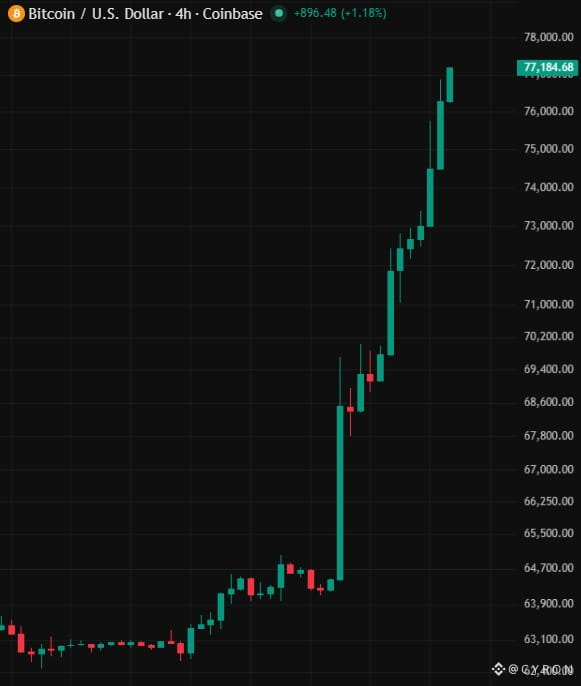
Sungguh-Sungguh HISTORIS.
Bitcoin bergerak 140x lebih cepat daripada pasar saham saat ini.
$BTC telah melonjak lebih dari 20% dalam waktu kurang dari lima hari, naik dari sekitar $63K menjadi di atas $77K.
Sebagai perbandingan, S&P 500 secara historis menghasilkan sekitar 10% per tahun.
Bitcoin baru saja memberikan jenis pengembalian itu dalam waktu kurang dari lima hari.
Hampir 3 bulan kerugian terhapus hanya dalam 5 hari.
Dan ini sekarang adalah reli mingguan Bitcoin terkuat sejak Februari 2024.
Ini tidak masuk akal. 🚀
{spot}(BTCUSDT)
#USJoblessClaimsFallTo206000
#TrumpPressesCongressToPassClarityAct
Sungguh-Sungguh HISTORIS.
Bitcoin bergerak 140x lebih cepat daripada pasar saham saat ini.
$BTC telah melonjak lebih dari 20% dalam waktu kurang dari lima hari, naik dari sekitar $63K menjadi di atas $77K.
Sebagai perbandingan, S&P 500 secara historis menghasilkan sekitar 10% per tahun.
Bitcoin baru saja memberikan jenis pengembalian itu dalam waktu kurang dari lima hari.
Hampir 3 bulan kerugian terhapus hanya dalam 5 hari.
Dan ini sekarang adalah reli mingguan Bitcoin terkuat sejak Februari 2024.
Ini tidak masuk akal. 🚀
#USJoblessClaimsFallTo206000
#TrumpPressesCongressToPassClarityAct
Bitcoin bergerak 140x lebih cepat daripada pasar saham saat ini.
$BTC telah melonjak lebih dari 20% dalam waktu kurang dari lima hari, naik dari sekitar $63K menjadi di atas $77K.
Sebagai perbandingan, S&P 500 secara historis menghasilkan sekitar 10% per tahun.
Bitcoin baru saja memberikan jenis pengembalian itu dalam waktu kurang dari lima hari.
Hampir 3 bulan kerugian terhapus hanya dalam 5 hari.
Dan ini sekarang adalah reli mingguan Bitcoin terkuat sejak Februari 2024.
Ini tidak masuk akal. 🚀
#USJoblessClaimsFallTo206000
#TrumpPressesCongressToPassClarityAct
2
234
·
--
Bullish
Menjembatani beberapa DUSK testnet ke DuskEVM minggu ini hanya untuk melakukan deployment kontrak dasar lewat Hardhat—sebagian besar untuk melihat seberapa dekat sebenarnya "setara EVM" di praktik. @Dusk_Foundation , $DUSK , #dusk deployment-nya sendiri berjalan normal, chain ID lolos di 745, kontraknya berhasil, alamatnya memiliki bytecode. Tidak ada yang dramatis.
Yang menghentikan saya adalah setelah itu, ketika mencoba menonton transaksi tersebut duduk di mempool sebelum konfirmasi, seperti yang biasa Anda lakukan saat mengecek di rantai EVM mana pun. Tidak ada. DuskEVM saat ini berjalan sequencer-only, jadi tidak ada mempool publik yang bisa diintip. Saya mengira "setara EVM" berarti seluruh permukaan (surface area) berperilaku identik, termasuk bagian-bagian yang biasanya tidak terpikirkan orang sampai semuanya sudah hilang.
Ini hal kecil, tapi mengubah cara memaknai apa yang dilakukan "kompatibel" di sini. Tooling-nya cocok, Solidity dan Hardhat bekerja seperti yang diharapkan, tetapi model eksekusi di bawahnya membuat seperangkat tradeoff yang berbeda—kemungkinan demi privasi dan jaminan penyelesaian (settlement) yang terus ditekankan proyek ini.
Saya masih belum yakin bagaimana ini membentuk paparan MEV atau urutan transaksi begitu lalu lintas mainnet mulai masuk. Ada baiknya dipelajari dulu sebelum menarik kesimpulan.
{spot}(DUSKUSDT)
{spot}(ONGUSDT)
{spot}(PEOPLEUSDT)
Apa yang lebih penting buat Anda di sebuah chain yang kompatibel dengan EVM?
Menjembatani beberapa DUSK testnet ke DuskEVM minggu ini hanya untuk melakukan deployment kontrak dasar lewat Hardhat—sebagian besar untuk melihat seberapa dekat sebenarnya "setara EVM" di praktik. @Dusk , $DUSK , #dusk deployment-nya sendiri berjalan normal, chain ID lolos di 745, kontraknya berhasil, alamatnya memiliki bytecode. Tidak ada yang dramatis.
Yang menghentikan saya adalah setelah itu, ketika mencoba menonton transaksi tersebut duduk di mempool sebelum konfirmasi, seperti yang biasa Anda lakukan saat mengecek di rantai EVM mana pun. Tidak ada. DuskEVM saat ini berjalan sequencer-only, jadi tidak ada mempool publik yang bisa diintip. Saya mengira "setara EVM" berarti seluruh permukaan (surface area) berperilaku identik, termasuk bagian-bagian yang biasanya tidak terpikirkan orang sampai semuanya sudah hilang.
Ini hal kecil, tapi mengubah cara memaknai apa yang dilakukan "kompatibel" di sini. Tooling-nya cocok, Solidity dan Hardhat bekerja seperti yang diharapkan, tetapi model eksekusi di bawahnya membuat seperangkat tradeoff yang berbeda—kemungkinan demi privasi dan jaminan penyelesaian (settlement) yang terus ditekankan proyek ini.
Saya masih belum yakin bagaimana ini membentuk paparan MEV atau urutan transaksi begitu lalu lintas mainnet mulai masuk. Ada baiknya dipelajari dulu sebelum menarik kesimpulan.
Apa yang lebih penting buat Anda di sebuah chain yang kompatibel dengan EVM?
Yang menghentikan saya adalah setelah itu, ketika mencoba menonton transaksi tersebut duduk di mempool sebelum konfirmasi, seperti yang biasa Anda lakukan saat mengecek di rantai EVM mana pun. Tidak ada. DuskEVM saat ini berjalan sequencer-only, jadi tidak ada mempool publik yang bisa diintip. Saya mengira "setara EVM" berarti seluruh permukaan (surface area) berperilaku identik, termasuk bagian-bagian yang biasanya tidak terpikirkan orang sampai semuanya sudah hilang.
Ini hal kecil, tapi mengubah cara memaknai apa yang dilakukan "kompatibel" di sini. Tooling-nya cocok, Solidity dan Hardhat bekerja seperti yang diharapkan, tetapi model eksekusi di bawahnya membuat seperangkat tradeoff yang berbeda—kemungkinan demi privasi dan jaminan penyelesaian (settlement) yang terus ditekankan proyek ini.
Saya masih belum yakin bagaimana ini membentuk paparan MEV atau urutan transaksi begitu lalu lintas mainnet mulai masuk. Ada baiknya dipelajari dulu sebelum menarik kesimpulan.
Apa yang lebih penting buat Anda di sebuah chain yang kompatibel dengan EVM?
🔍 Mempool visibility
100%
🛡️ Privacy over transparency
0%
⚡ Speed and low gas
0%
🤷 Never thought about it
0%
1 Voting • Voting ditutup
8
6
191
Masuk untuk menjelajahi konten lainnya
Bergabunglah dengan pengguna kripto global di Binance Square
⚡️ Dapatkan informasi terbaru dan berguna tentang kripto.
💬 Dipercayai oleh bursa kripto terbesar di dunia.
👍 Temukan wawasan nyata dari kreator terverifikasi.
Email/Nomor Ponsel
Topik Sedang Tren
SECReceivesGrayscaleLitecoinTrustETFFiling
19,917 penayangan
420 Berdiskusi
💎 Perhatian Institusional Meningkat ke Litecoin
Pengajuan ETF Grayscale telah menempatkan $LTC dalam percakapan yang lebih besar. Untuk trader spot, perkembangan seperti ini adalah pengingat untuk mempelajari aset yang kuat sebelum membuat keputusan masuk.
#secreceivesgrayscalelitecointrustetffiling
CryptoMahibaloch
·Disukai 1 Kali
·974 penayangan
ClarityActFacesProceduralVoteSept15
121,981 penayangan
1,415 Berdiskusi
US10YearTreasuryYieldNears5%
41,677 penayangan
727 Berdiskusi