
AREWA CRYPTO
2.6k Posting
AREWA CRYPTO
 Square Terverifikasi+
Laporkan
Blokir Pengguna
Trusted Voice that Connect Projects with People, Helping Crypto Projects Grow & Engage Communities | Verified on Binance, CMC & Bitgét.

Level 2 Creator
Perdagangan Terbuka

Pemilik AMB
Pedagang Rutin
5.8 Tahun
100 Mengikuti
53.9K+ Pengikut
92.8K+ Disukai
1 Lencana
Posting
Portofolio
Semua
Kuotasi
Video
Live
PINNED
·
--
Bearish
"Saya kehilangan segalanya...\n\nDari sesuatu menjadi Tidak ada\n\nTrading futures menghabiskan portofolio saya...\n\nMasa depan menghancurkan saya\n\nTidak ada stop loss....\n\n😭😭😭\n\n😭😭😭\n\n😭😭😭\n\nBukan saya Ooo...\n\nSejujurnya, ini adalah kisah yang terus saya lihat berulang kali 😂🤣\n\nGerakan pasar kecil... akun habis jadi nol.\nLeverage tinggi... disiplin rendah... hasilnya bisa diprediksi 😹\n\nTapi tidak mungkin saya.\n\nSaya tetap di SPOT — sederhana, terkontrol, dan yang terpenting... terlindungi.\nSetiap trade punya rencana, setiap entry punya stop loss.\n\nKarena di pasar ini, bertahan hidup bukanlah keberuntungan... itu adalah struktur.\n\nTrading cerdas... atau belajar dengan cara yang sulit 😂📉"
"Saya kehilangan segalanya...\n\nDari sesuatu menjadi Tidak ada\n\nTrading futures menghabiskan portofolio saya...\n\nMasa depan menghancurkan saya\n\nTidak ada stop loss....\n\n😭😭😭\n\n😭😭😭\n\n😭😭😭\n\nBukan saya Ooo...\n\nSejujurnya, ini adalah kisah yang terus saya lihat berulang kali 😂🤣\n\nGerakan pasar kecil... akun habis jadi nol.\nLeverage tinggi... disiplin rendah... hasilnya bisa diprediksi 😹\n\nTapi tidak mungkin saya.\n\nSaya tetap di SPOT — sederhana, terkontrol, dan yang terpenting... terlindungi.\nSetiap trade punya rencana, setiap entry punya stop loss.\n\nKarena di pasar ini, bertahan hidup bukanlah keberuntungan... itu adalah struktur.\n\nTrading cerdas... atau belajar dengan cara yang sulit 😂📉"

91
8
184
125.2k
PINNED
·
--

Artikel
JIKA ANDA ADALAH PEMEGANG CRYPTO HARUS MEMBACA INI JIKA TIDAK ANDA AKAN KEHILANGAN DANA.Pemegang cryptocurrency harus familiar dengan hal-hal berikut:
Teknologi di balik cryptocurrency yang mereka miliki, termasuk prinsip-prinsip kriptografi dan sifat terdesentralisasi dari blockchain.
Risiko dan imbalan potensial dari investasi dalam cryptocurrency, dan bagaimana cara mengelola risiko tersebut dengan efektif.
Berbagai jenis dompet dan opsi penyimpanan yang tersedia, dan bagaimana mengelola kunci privat mereka dengan aman.
Berita dan perkembangan terbaru di dunia cryptocurrency, agar dapat membuat keputusan yang tepat tentang kapan dan di mana untuk berinvestasi.
JIKA ANDA ADALAH PEMEGANG CRYPTO HARUS MEMBACA INI JIKA TIDAK ANDA AKAN KEHILANGAN DANA.
Pemegang cryptocurrency harus familiar dengan hal-hal berikut:
Teknologi di balik cryptocurrency yang mereka miliki, termasuk prinsip-prinsip kriptografi dan sifat terdesentralisasi dari blockchain.
Risiko dan imbalan potensial dari investasi dalam cryptocurrency, dan bagaimana cara mengelola risiko tersebut dengan efektif.
Berbagai jenis dompet dan opsi penyimpanan yang tersedia, dan bagaimana mengelola kunci privat mereka dengan aman.
Berita dan perkembangan terbaru di dunia cryptocurrency, agar dapat membuat keputusan yang tepat tentang kapan dan di mana untuk berinvestasi.
Teknologi di balik cryptocurrency yang mereka miliki, termasuk prinsip-prinsip kriptografi dan sifat terdesentralisasi dari blockchain.
Risiko dan imbalan potensial dari investasi dalam cryptocurrency, dan bagaimana cara mengelola risiko tersebut dengan efektif.
Berbagai jenis dompet dan opsi penyimpanan yang tersedia, dan bagaimana mengelola kunci privat mereka dengan aman.
Berita dan perkembangan terbaru di dunia cryptocurrency, agar dapat membuat keputusan yang tepat tentang kapan dan di mana untuk berinvestasi.
24
56
23.1k
·
--
🟠 Opsi Bitcoin cenderung bullish saat derivatif menyentuh $98B
Bukaaan interest derivatif Bitcoin telah naik menjadi sekitar $98 miliar gabungan — $56 miliar pada futures dan $42 miliar pada opsi — dengan BTC diperdagangkan di dekat $81.273.
Kecenderungan opsi patut diperhatikan: call menyumbang 60,74% dari open interest, dengan kontrak terbesar terkonsentrasi pada strike September antara $70.000 dan level yang lebih tinggi. Posisi ini menunjukkan trader sedang melakukan lindung nilai atau berspekulasi pada kenaikan, bukan penurunan, dalam jangka menengah.
Tidak ada satu katalis spesifik yang disebutkan untuk kenaikan tersebut, tetapi besarnya open interest mencerminkan keterlibatan institusional dan ritel yang berkelanjutan dengan pasar derivatif Bitcoin pada level harga saat ini.
🟠 Opsi Bitcoin cenderung bullish saat derivatif menyentuh $98B
Bukaaan interest derivatif Bitcoin telah naik menjadi sekitar $98 miliar gabungan — $56 miliar pada futures dan $42 miliar pada opsi — dengan BTC diperdagangkan di dekat $81.273.
Kecenderungan opsi patut diperhatikan: call menyumbang 60,74% dari open interest, dengan kontrak terbesar terkonsentrasi pada strike September antara $70.000 dan level yang lebih tinggi. Posisi ini menunjukkan trader sedang melakukan lindung nilai atau berspekulasi pada kenaikan, bukan penurunan, dalam jangka menengah.
Tidak ada satu katalis spesifik yang disebutkan untuk kenaikan tersebut, tetapi besarnya open interest mencerminkan keterlibatan institusional dan ritel yang berkelanjutan dengan pasar derivatif Bitcoin pada level harga saat ini.
Bukaaan interest derivatif Bitcoin telah naik menjadi sekitar $98 miliar gabungan — $56 miliar pada futures dan $42 miliar pada opsi — dengan BTC diperdagangkan di dekat $81.273.
Kecenderungan opsi patut diperhatikan: call menyumbang 60,74% dari open interest, dengan kontrak terbesar terkonsentrasi pada strike September antara $70.000 dan level yang lebih tinggi. Posisi ini menunjukkan trader sedang melakukan lindung nilai atau berspekulasi pada kenaikan, bukan penurunan, dalam jangka menengah.
Tidak ada satu katalis spesifik yang disebutkan untuk kenaikan tersebut, tetapi besarnya open interest mencerminkan keterlibatan institusional dan ritel yang berkelanjutan dengan pasar derivatif Bitcoin pada level harga saat ini.
1
225
·
--
$BTC ANALYSIS
$BTC/USDT diperdagangkan pada $81,795, menembus rekor tertinggi baru setelah mempertahankan level $75,000 sebagai support melalui beberapa kali pengujian ulang, memperpanjang laju kuat setelah reli dari $61,350 yang terjadi pada awal Juli. Para pembeli terus masuk di setiap penurunan ke garis itu.
Tembus $82,000 dan harga akan melaju ke wilayah baru dengan ruang untuk terus melanjutkan. Kehilangan $78,000 dan harga kembali turun untuk menguji ulang support $75,000 yang telah bertahan sepanjang bulan ini. Tren yang dominan: level di bawah adalah garis batas sesungguhnya.
$BTC ANALYSIS
$BTC/USDT diperdagangkan pada $81,795, menembus rekor tertinggi baru setelah mempertahankan level $75,000 sebagai support melalui beberapa kali pengujian ulang, memperpanjang laju kuat setelah reli dari $61,350 yang terjadi pada awal Juli. Para pembeli terus masuk di setiap penurunan ke garis itu.
Tembus $82,000 dan harga akan melaju ke wilayah baru dengan ruang untuk terus melanjutkan. Kehilangan $78,000 dan harga kembali turun untuk menguji ulang support $75,000 yang telah bertahan sepanjang bulan ini. Tren yang dominan: level di bawah adalah garis batas sesungguhnya.
$BTC/USDT diperdagangkan pada $81,795, menembus rekor tertinggi baru setelah mempertahankan level $75,000 sebagai support melalui beberapa kali pengujian ulang, memperpanjang laju kuat setelah reli dari $61,350 yang terjadi pada awal Juli. Para pembeli terus masuk di setiap penurunan ke garis itu.
Tembus $82,000 dan harga akan melaju ke wilayah baru dengan ruang untuk terus melanjutkan. Kehilangan $78,000 dan harga kembali turun untuk menguji ulang support $75,000 yang telah bertahan sepanjang bulan ini. Tren yang dominan: level di bawah adalah garis batas sesungguhnya.
129
·
--
🔐 Peretas Korea Utara menyerang 7.000 dompet kripto di 100 negara
Badan Kepolisian Nasional Jepang telah mengaitkan kelompok Korea Utara WaterPlum dengan kampanye malware yang menyasar pengguna kripto antara Desember 2025 hingga Juli 2026.
Kelompok ini menginfeksi lebih dari 30.000 perangkat di lebih dari 100 negara dan wilayah, mencuri data yang terkait dengan lebih dari 7.000 dompet kripto. Otoritas melacak sekitar $10,71 juta dalam transfer ke dompet yang dikendalikan oleh WaterPlum.
Aktor yang terhubung dengan Korea Utara telah bertanggung jawab atas beberapa pencurian kripto terbesar dalam beberapa tahun terakhir, dengan kelompok peretasan yang didukung negara semakin menargetkan pemegang dompet individu selain bursa dan protokol.
🔐 Peretas Korea Utara menyerang 7.000 dompet kripto di 100 negara
Badan Kepolisian Nasional Jepang telah mengaitkan kelompok Korea Utara WaterPlum dengan kampanye malware yang menyasar pengguna kripto antara Desember 2025 hingga Juli 2026.
Kelompok ini menginfeksi lebih dari 30.000 perangkat di lebih dari 100 negara dan wilayah, mencuri data yang terkait dengan lebih dari 7.000 dompet kripto. Otoritas melacak sekitar $10,71 juta dalam transfer ke dompet yang dikendalikan oleh WaterPlum.
Aktor yang terhubung dengan Korea Utara telah bertanggung jawab atas beberapa pencurian kripto terbesar dalam beberapa tahun terakhir, dengan kelompok peretasan yang didukung negara semakin menargetkan pemegang dompet individu selain bursa dan protokol.
Badan Kepolisian Nasional Jepang telah mengaitkan kelompok Korea Utara WaterPlum dengan kampanye malware yang menyasar pengguna kripto antara Desember 2025 hingga Juli 2026.
Kelompok ini menginfeksi lebih dari 30.000 perangkat di lebih dari 100 negara dan wilayah, mencuri data yang terkait dengan lebih dari 7.000 dompet kripto. Otoritas melacak sekitar $10,71 juta dalam transfer ke dompet yang dikendalikan oleh WaterPlum.
Aktor yang terhubung dengan Korea Utara telah bertanggung jawab atas beberapa pencurian kripto terbesar dalam beberapa tahun terakhir, dengan kelompok peretasan yang didukung negara semakin menargetkan pemegang dompet individu selain bursa dan protokol.
1
389
·
--
🪙 Bank penantang asal Inggris akan menghadirkan simpanan tokenized untuk ritel
JPMorgan dan Citi telah memindahkan miliaran dolar dalam simpanan tokenized melalui infrastruktur blockchain—namun secara eksklusif di antara cabang institusional mereka sendiri. Sebuah bank penantang (challenger) di Inggris sedang menyiapkan perluasan fungsionalitas simpanan tokenized bagi konsumen reguler, langkah yang belum dilakukan oleh raksasa Wall Street tersebut.
Simpanan tokenized merepresentasikan kewajiban bank yang dicatat di blockchain, sehingga memungkinkan penyelesaian yang lebih cepat dan dapat diprogram. Sejauh ini, adopsinya terbatas pada kasus penggunaan antarbIank skala besar, di mana institusi besar memindahkan nilai secara internal tanpa mengekspos teknologinya kepada klien ritel.
Langkah bank penantang asal Inggris yang tidak disebutkan namanya itu akan menandai pertama kalinya simpanan tokenized menjangkau pemegang akun sehari-hari, sehingga berpotensi membuka babak baru dalam persaingan yang lebih luas untuk membawa tokenisasi melampaui jalur institusional dan masuk ke perbankan konsumen.
🪙 Bank penantang asal Inggris akan menghadirkan simpanan tokenized untuk ritel
JPMorgan dan Citi telah memindahkan miliaran dolar dalam simpanan tokenized melalui infrastruktur blockchain—namun secara eksklusif di antara cabang institusional mereka sendiri. Sebuah bank penantang (challenger) di Inggris sedang menyiapkan perluasan fungsionalitas simpanan tokenized bagi konsumen reguler, langkah yang belum dilakukan oleh raksasa Wall Street tersebut.
Simpanan tokenized merepresentasikan kewajiban bank yang dicatat di blockchain, sehingga memungkinkan penyelesaian yang lebih cepat dan dapat diprogram. Sejauh ini, adopsinya terbatas pada kasus penggunaan antarbIank skala besar, di mana institusi besar memindahkan nilai secara internal tanpa mengekspos teknologinya kepada klien ritel.
Langkah bank penantang asal Inggris yang tidak disebutkan namanya itu akan menandai pertama kalinya simpanan tokenized menjangkau pemegang akun sehari-hari, sehingga berpotensi membuka babak baru dalam persaingan yang lebih luas untuk membawa tokenisasi melampaui jalur institusional dan masuk ke perbankan konsumen.
JPMorgan dan Citi telah memindahkan miliaran dolar dalam simpanan tokenized melalui infrastruktur blockchain—namun secara eksklusif di antara cabang institusional mereka sendiri. Sebuah bank penantang (challenger) di Inggris sedang menyiapkan perluasan fungsionalitas simpanan tokenized bagi konsumen reguler, langkah yang belum dilakukan oleh raksasa Wall Street tersebut.
Simpanan tokenized merepresentasikan kewajiban bank yang dicatat di blockchain, sehingga memungkinkan penyelesaian yang lebih cepat dan dapat diprogram. Sejauh ini, adopsinya terbatas pada kasus penggunaan antarbIank skala besar, di mana institusi besar memindahkan nilai secara internal tanpa mengekspos teknologinya kepada klien ritel.
Langkah bank penantang asal Inggris yang tidak disebutkan namanya itu akan menandai pertama kalinya simpanan tokenized menjangkau pemegang akun sehari-hari, sehingga berpotensi membuka babak baru dalam persaingan yang lebih luas untuk membawa tokenisasi melampaui jalur institusional dan masuk ke perbankan konsumen.
1
216
·
--
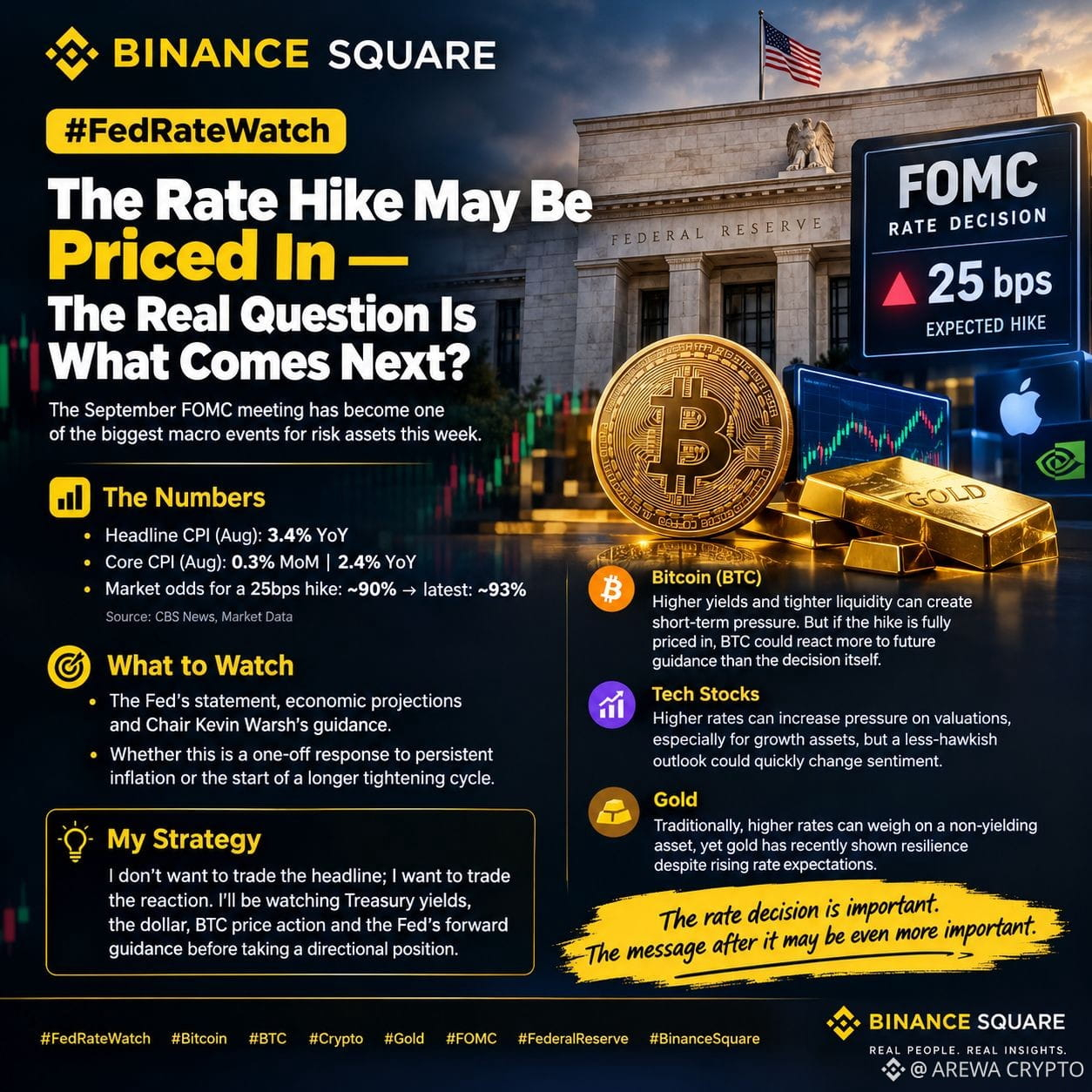
#FedRateWatch
Kenaikan Suku Bunga Mungkin Sudah Diperhitungkan — Pertanyaan Nyatanya: Apa yang Akan Terjadi Berikutnya
Pertemuan FOMC bulan September telah menjadi salah satu peristiwa makro terbesar bagi aset berisiko minggu ini.
CPI AS Agustus menunjukkan inflasi headline sebesar 3,4% year-over-year, sementara core CPI naik 0,3% month-over-month dan 2,4% secara tahunan. Setelah laporan tersebut, ekspektasi pasar terhadap kenaikan suku bunga The Fed sebesar 25 basis poin bergerak tajam lebih tinggi, mencapai sekitar 90%, dengan harga pasar terbaru sekitar 93% menjelang keputusan hari ini.
Namun bagi saya, pertanyaan yang lebih besar bukan sekadar “Apakah The Fed akan menaikkan suku bunga?”
Melainkan: Apa sinyal The Fed tentang langkah berikutnya?
Kenaikan 25bps mungkin sudah sebagian besar tercermin dalam BTC, saham teknologi, dan imbal hasil Treasury. Volatilitas yang lebih besar mungkin muncul dari pernyataan, proyeksi ekonomi, dan arahan Ketua Kevin Warsh mengenai apakah ini respons sekali jalan terhadap inflasi yang persisten atau dimulainya siklus pengetatan yang lebih panjang.
Untuk Bitcoin, imbal hasil yang lebih tinggi dan likuiditas yang lebih ketat dapat menciptakan tekanan jangka pendek, tetapi jika pasar melihat kenaikan tersebut sepenuhnya sudah diperhitungkan, BTC bisa bereaksi lebih banyak terhadap panduan ke depan ketimbang keputusan itu sendiri.
Saham teknologi menghadapi persamaan yang serupa. Suku bunga yang lebih tinggi dapat meningkatkan tekanan pada valuasi, terutama untuk aset bertumbuh, tetapi pandangan yang kurang hawkish bisa dengan cepat mengubah sentimen.
Emas bahkan lebih menarik. Secara tradisional, suku bunga yang lebih tinggi dapat membebani aset yang tidak memberikan imbal hasil, namun emas baru-baru ini menunjukkan ketahanan meskipun ekspektasi suku bunga meningkat.
Pendekatan saya sederhana: saya tidak ingin melakukan trading berdasarkan berita utama; saya ingin trading berdasarkan reaksinya.
Saya akan memantau imbal hasil Treasury, dolar, pergerakan harga BTC, dan arahan The Fed ke depan sebelum mengambil posisi berdasarkan arah.
Keputusan suku bunga itu penting. Pesan setelah keputusan tersebut mungkin bahkan lebih penting.
#FedRateWatch #Bitcoin #BTC #Crypto #Gold #FOMC #FederalReserve #BinanceSquare
#FedRateWatch
Kenaikan Suku Bunga Mungkin Sudah Diperhitungkan — Pertanyaan Nyatanya: Apa yang Akan Terjadi Berikutnya
Pertemuan FOMC bulan September telah menjadi salah satu peristiwa makro terbesar bagi aset berisiko minggu ini.
CPI AS Agustus menunjukkan inflasi headline sebesar 3,4% year-over-year, sementara core CPI naik 0,3% month-over-month dan 2,4% secara tahunan. Setelah laporan tersebut, ekspektasi pasar terhadap kenaikan suku bunga The Fed sebesar 25 basis poin bergerak tajam lebih tinggi, mencapai sekitar 90%, dengan harga pasar terbaru sekitar 93% menjelang keputusan hari ini.
Namun bagi saya, pertanyaan yang lebih besar bukan sekadar “Apakah The Fed akan menaikkan suku bunga?”
Melainkan: Apa sinyal The Fed tentang langkah berikutnya?
Kenaikan 25bps mungkin sudah sebagian besar tercermin dalam BTC, saham teknologi, dan imbal hasil Treasury. Volatilitas yang lebih besar mungkin muncul dari pernyataan, proyeksi ekonomi, dan arahan Ketua Kevin Warsh mengenai apakah ini respons sekali jalan terhadap inflasi yang persisten atau dimulainya siklus pengetatan yang lebih panjang.
Untuk Bitcoin, imbal hasil yang lebih tinggi dan likuiditas yang lebih ketat dapat menciptakan tekanan jangka pendek, tetapi jika pasar melihat kenaikan tersebut sepenuhnya sudah diperhitungkan, BTC bisa bereaksi lebih banyak terhadap panduan ke depan ketimbang keputusan itu sendiri.
Saham teknologi menghadapi persamaan yang serupa. Suku bunga yang lebih tinggi dapat meningkatkan tekanan pada valuasi, terutama untuk aset bertumbuh, tetapi pandangan yang kurang hawkish bisa dengan cepat mengubah sentimen.
Emas bahkan lebih menarik. Secara tradisional, suku bunga yang lebih tinggi dapat membebani aset yang tidak memberikan imbal hasil, namun emas baru-baru ini menunjukkan ketahanan meskipun ekspektasi suku bunga meningkat.
Pendekatan saya sederhana: saya tidak ingin melakukan trading berdasarkan berita utama; saya ingin trading berdasarkan reaksinya.
Saya akan memantau imbal hasil Treasury, dolar, pergerakan harga BTC, dan arahan The Fed ke depan sebelum mengambil posisi berdasarkan arah.
Keputusan suku bunga itu penting. Pesan setelah keputusan tersebut mungkin bahkan lebih penting.
#FedRateWatch #Bitcoin #BTC #Crypto #Gold #FOMC #FederalReserve #BinanceSquare
Kenaikan Suku Bunga Mungkin Sudah Diperhitungkan — Pertanyaan Nyatanya: Apa yang Akan Terjadi Berikutnya
Pertemuan FOMC bulan September telah menjadi salah satu peristiwa makro terbesar bagi aset berisiko minggu ini.
CPI AS Agustus menunjukkan inflasi headline sebesar 3,4% year-over-year, sementara core CPI naik 0,3% month-over-month dan 2,4% secara tahunan. Setelah laporan tersebut, ekspektasi pasar terhadap kenaikan suku bunga The Fed sebesar 25 basis poin bergerak tajam lebih tinggi, mencapai sekitar 90%, dengan harga pasar terbaru sekitar 93% menjelang keputusan hari ini.
Namun bagi saya, pertanyaan yang lebih besar bukan sekadar “Apakah The Fed akan menaikkan suku bunga?”
Melainkan: Apa sinyal The Fed tentang langkah berikutnya?
Kenaikan 25bps mungkin sudah sebagian besar tercermin dalam BTC, saham teknologi, dan imbal hasil Treasury. Volatilitas yang lebih besar mungkin muncul dari pernyataan, proyeksi ekonomi, dan arahan Ketua Kevin Warsh mengenai apakah ini respons sekali jalan terhadap inflasi yang persisten atau dimulainya siklus pengetatan yang lebih panjang.
Untuk Bitcoin, imbal hasil yang lebih tinggi dan likuiditas yang lebih ketat dapat menciptakan tekanan jangka pendek, tetapi jika pasar melihat kenaikan tersebut sepenuhnya sudah diperhitungkan, BTC bisa bereaksi lebih banyak terhadap panduan ke depan ketimbang keputusan itu sendiri.
Saham teknologi menghadapi persamaan yang serupa. Suku bunga yang lebih tinggi dapat meningkatkan tekanan pada valuasi, terutama untuk aset bertumbuh, tetapi pandangan yang kurang hawkish bisa dengan cepat mengubah sentimen.
Emas bahkan lebih menarik. Secara tradisional, suku bunga yang lebih tinggi dapat membebani aset yang tidak memberikan imbal hasil, namun emas baru-baru ini menunjukkan ketahanan meskipun ekspektasi suku bunga meningkat.
Pendekatan saya sederhana: saya tidak ingin melakukan trading berdasarkan berita utama; saya ingin trading berdasarkan reaksinya.
Saya akan memantau imbal hasil Treasury, dolar, pergerakan harga BTC, dan arahan The Fed ke depan sebelum mengambil posisi berdasarkan arah.
Keputusan suku bunga itu penting. Pesan setelah keputusan tersebut mungkin bahkan lebih penting.
#FedRateWatch #Bitcoin #BTC #Crypto #Gold #FOMC #FederalReserve #BinanceSquare
1
230
·
--
Terverifikasi
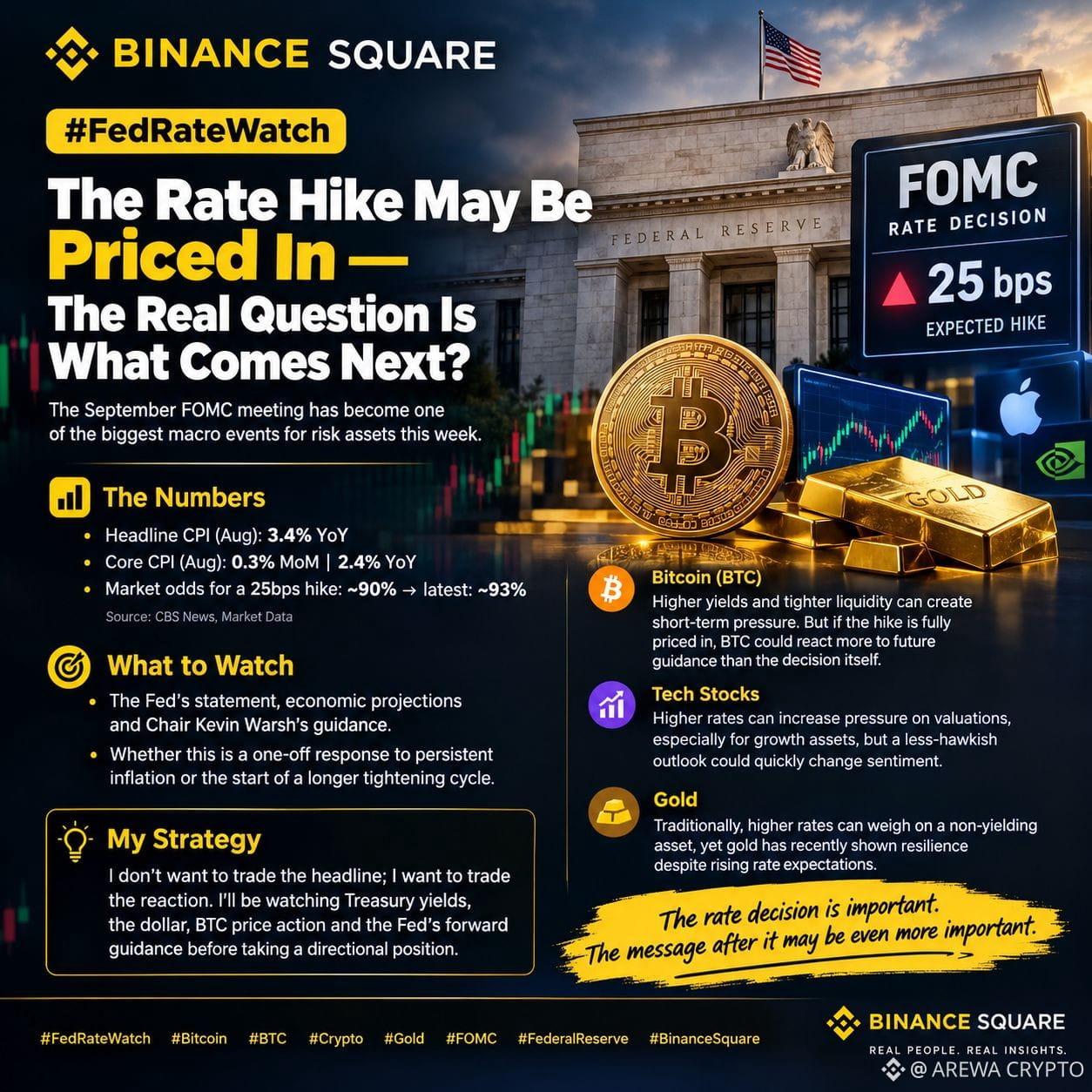
#FedRateWatch: Kenaikan Suku Bunga Mungkin Sudah Diperhitungkan — Pertanyaannya yang Sebenarnya Adalah Apa yang Terjadi Selanjutnya
Pertemuan FOMC September telah menjadi salah satu peristiwa makro terbesar bagi aset berisiko minggu ini.
CPI AS Agustus menunjukkan inflasi headline sebesar 3,4% year-over-year, sementara CPI inti naik 0,3% month-over-month dan 2,4% secara tahunan. Setelah laporan tersebut, ekspektasi berbasis pasar untuk kenaikan suku bunga The Fed sebesar 25 basis poin bergerak tajam lebih tinggi, mencapai sekitar 90%, dengan harga pasar terbaru sekitar 93% menjelang keputusan hari ini.
Namun bagi saya, pertanyaan yang lebih besar bukan sekadar “Apakah The Fed akan menaikkan suku bunga?”
Melainkan: Apa sinyal The Fed mengenai langkah berikutnya?
Kenaikan 25bps mungkin sudah sebagian besar tercermin dalam BTC, saham teknologi, dan imbal hasil Treasury. Volatilitas yang lebih besar kemungkinan datang dari pernyataan, proyeksi ekonomi, serta arahan Ketua Kevin Warsh tentang apakah ini respons satu kali terhadap inflasi yang persisten atau dimulainya siklus pengetatan yang lebih panjang.
Untuk Bitcoin, imbal hasil yang lebih tinggi dan likuiditas yang lebih ketat dapat menciptakan tekanan jangka pendek, tetapi jika pasar menganggap kenaikan tersebut sudah sepenuhnya diperhitungkan, BTC bisa bereaksi lebih banyak terhadap panduan ke depan daripada keputusan itu sendiri.
Saham teknologi menghadapi persamaan yang serupa. Suku bunga yang lebih tinggi dapat meningkatkan tekanan pada valuasi, terutama untuk aset bertumbuh, namun pandangan yang tidak terlalu hawkish bisa dengan cepat mengubah sentimen.
Emas bahkan lebih menarik. Secara tradisional, suku bunga yang lebih tinggi dapat membebani aset yang tidak memberikan imbal hasil, namun emas belakangan ini menunjukkan ketahanan meski ekspektasi suku bunga meningkat.
Pendekatan saya sederhana: saya tidak ingin memperdagangkan judul beritanya; saya ingin memperdagangkan reaksinya.
Saya akan memantau imbal hasil Treasury, pergerakan dolar, pergerakan harga BTC, dan arahan forward The Fed sebelum mengambil posisi yang mengarah.
Keputusan suku bunga itu penting. Pesan setelahnya mungkin bahkan lebih penting.
#FedRateWatch #FedRateWatchCreate #BTC #Crypto #FOMC #FederalReserve #BinanceSquare
#FedRateWatch: Kenaikan Suku Bunga Mungkin Sudah Diperhitungkan — Pertanyaannya yang Sebenarnya Adalah Apa yang Terjadi Selanjutnya
Pertemuan FOMC September telah menjadi salah satu peristiwa makro terbesar bagi aset berisiko minggu ini.
CPI AS Agustus menunjukkan inflasi headline sebesar 3,4% year-over-year, sementara CPI inti naik 0,3% month-over-month dan 2,4% secara tahunan. Setelah laporan tersebut, ekspektasi berbasis pasar untuk kenaikan suku bunga The Fed sebesar 25 basis poin bergerak tajam lebih tinggi, mencapai sekitar 90%, dengan harga pasar terbaru sekitar 93% menjelang keputusan hari ini.
Namun bagi saya, pertanyaan yang lebih besar bukan sekadar “Apakah The Fed akan menaikkan suku bunga?”
Melainkan: Apa sinyal The Fed mengenai langkah berikutnya?
Kenaikan 25bps mungkin sudah sebagian besar tercermin dalam BTC, saham teknologi, dan imbal hasil Treasury. Volatilitas yang lebih besar kemungkinan datang dari pernyataan, proyeksi ekonomi, serta arahan Ketua Kevin Warsh tentang apakah ini respons satu kali terhadap inflasi yang persisten atau dimulainya siklus pengetatan yang lebih panjang.
Untuk Bitcoin, imbal hasil yang lebih tinggi dan likuiditas yang lebih ketat dapat menciptakan tekanan jangka pendek, tetapi jika pasar menganggap kenaikan tersebut sudah sepenuhnya diperhitungkan, BTC bisa bereaksi lebih banyak terhadap panduan ke depan daripada keputusan itu sendiri.
Saham teknologi menghadapi persamaan yang serupa. Suku bunga yang lebih tinggi dapat meningkatkan tekanan pada valuasi, terutama untuk aset bertumbuh, namun pandangan yang tidak terlalu hawkish bisa dengan cepat mengubah sentimen.
Emas bahkan lebih menarik. Secara tradisional, suku bunga yang lebih tinggi dapat membebani aset yang tidak memberikan imbal hasil, namun emas belakangan ini menunjukkan ketahanan meski ekspektasi suku bunga meningkat.
Pendekatan saya sederhana: saya tidak ingin memperdagangkan judul beritanya; saya ingin memperdagangkan reaksinya.
Saya akan memantau imbal hasil Treasury, pergerakan dolar, pergerakan harga BTC, dan arahan forward The Fed sebelum mengambil posisi yang mengarah.
Keputusan suku bunga itu penting. Pesan setelahnya mungkin bahkan lebih penting.
#FedRateWatch #FedRateWatchCreate #BTC #Crypto #FOMC #FederalReserve #BinanceSquare
Pertemuan FOMC September telah menjadi salah satu peristiwa makro terbesar bagi aset berisiko minggu ini.
CPI AS Agustus menunjukkan inflasi headline sebesar 3,4% year-over-year, sementara CPI inti naik 0,3% month-over-month dan 2,4% secara tahunan. Setelah laporan tersebut, ekspektasi berbasis pasar untuk kenaikan suku bunga The Fed sebesar 25 basis poin bergerak tajam lebih tinggi, mencapai sekitar 90%, dengan harga pasar terbaru sekitar 93% menjelang keputusan hari ini.
Namun bagi saya, pertanyaan yang lebih besar bukan sekadar “Apakah The Fed akan menaikkan suku bunga?”
Melainkan: Apa sinyal The Fed mengenai langkah berikutnya?
Kenaikan 25bps mungkin sudah sebagian besar tercermin dalam BTC, saham teknologi, dan imbal hasil Treasury. Volatilitas yang lebih besar kemungkinan datang dari pernyataan, proyeksi ekonomi, serta arahan Ketua Kevin Warsh tentang apakah ini respons satu kali terhadap inflasi yang persisten atau dimulainya siklus pengetatan yang lebih panjang.
Untuk Bitcoin, imbal hasil yang lebih tinggi dan likuiditas yang lebih ketat dapat menciptakan tekanan jangka pendek, tetapi jika pasar menganggap kenaikan tersebut sudah sepenuhnya diperhitungkan, BTC bisa bereaksi lebih banyak terhadap panduan ke depan daripada keputusan itu sendiri.
Saham teknologi menghadapi persamaan yang serupa. Suku bunga yang lebih tinggi dapat meningkatkan tekanan pada valuasi, terutama untuk aset bertumbuh, namun pandangan yang tidak terlalu hawkish bisa dengan cepat mengubah sentimen.
Emas bahkan lebih menarik. Secara tradisional, suku bunga yang lebih tinggi dapat membebani aset yang tidak memberikan imbal hasil, namun emas belakangan ini menunjukkan ketahanan meski ekspektasi suku bunga meningkat.
Pendekatan saya sederhana: saya tidak ingin memperdagangkan judul beritanya; saya ingin memperdagangkan reaksinya.
Saya akan memantau imbal hasil Treasury, pergerakan dolar, pergerakan harga BTC, dan arahan forward The Fed sebelum mengambil posisi yang mengarah.
Keputusan suku bunga itu penting. Pesan setelahnya mungkin bahkan lebih penting.
#FedRateWatch #FedRateWatchCreate #BTC #Crypto #FOMC #FederalReserve #BinanceSquare
1
2
826
·
--
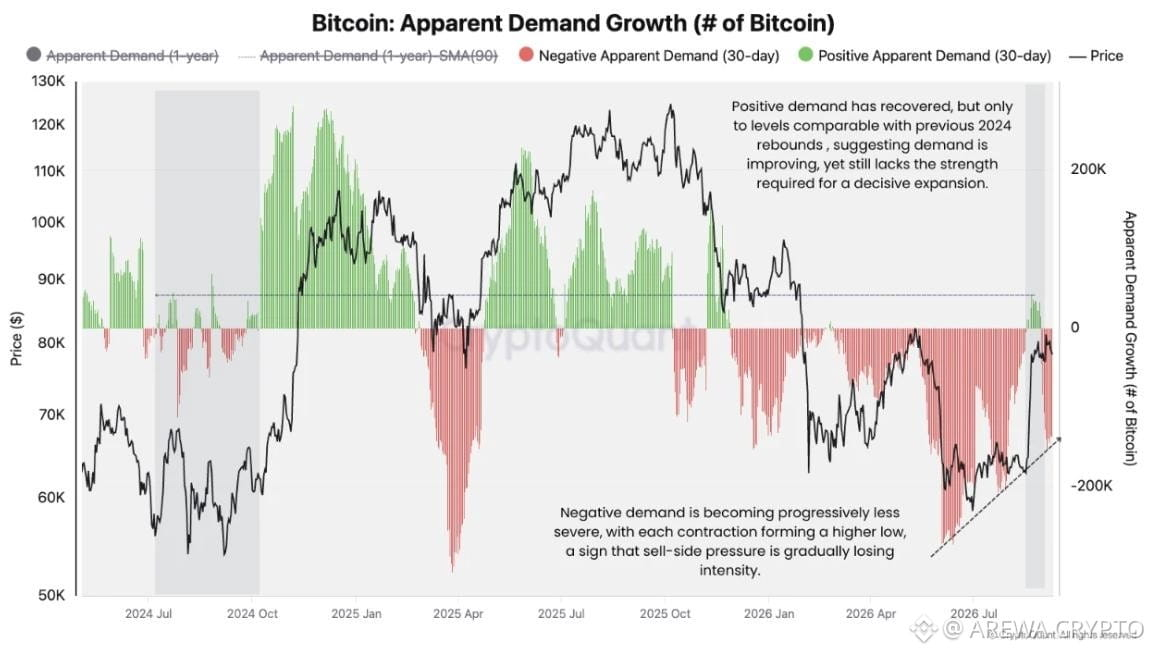
Struktur permintaan Bitcoin membaik, tetapi belum menunjukkan kekuatan dari rezim bullish yang berkelanjutan.
Palung permintaan yang negatif menjadi semakin dangkal, yang menunjukkan pasar bergerak menjauh dari fase kontraksi. Namun, permintaan positif terbaru masih bersifat sederhana dan jauh di bawah ekspansi yang lebih kuat yang terlihat pada akhir 2024 dan 2025.
Untuk saat ini, Bitcoin tampaknya sedang bertransisi menuju stabilisasi permintaan, bukan ekspansi permintaan penuh. Reli yang berkelanjutan memerlukan pertumbuhan permintaan yang lebih kuat dan lebih persisten.
Struktur permintaan Bitcoin membaik, tetapi belum menunjukkan kekuatan dari rezim bullish yang berkelanjutan.
Palung permintaan yang negatif menjadi semakin dangkal, yang menunjukkan pasar bergerak menjauh dari fase kontraksi. Namun, permintaan positif terbaru masih bersifat sederhana dan jauh di bawah ekspansi yang lebih kuat yang terlihat pada akhir 2024 dan 2025.
Untuk saat ini, Bitcoin tampaknya sedang bertransisi menuju stabilisasi permintaan, bukan ekspansi permintaan penuh. Reli yang berkelanjutan memerlukan pertumbuhan permintaan yang lebih kuat dan lebih persisten.
Palung permintaan yang negatif menjadi semakin dangkal, yang menunjukkan pasar bergerak menjauh dari fase kontraksi. Namun, permintaan positif terbaru masih bersifat sederhana dan jauh di bawah ekspansi yang lebih kuat yang terlihat pada akhir 2024 dan 2025.
Untuk saat ini, Bitcoin tampaknya sedang bertransisi menuju stabilisasi permintaan, bukan ekspansi permintaan penuh. Reli yang berkelanjutan memerlukan pertumbuhan permintaan yang lebih kuat dan lebih persisten.
293
·
--
Bitcoin sedang mematahkan garis tren turun dan telah memantul dari area support. Saat pasar global dibuka, mari kita lihat apakah harga dapat mempertahankan pergerakan naiknya.
Bitcoin sedang mematahkan garis tren turun dan telah memantul dari area support. Saat pasar global dibuka, mari kita lihat apakah harga dapat mempertahankan pergerakan naiknya.
1
183
·
--
🐶 Dogecoin Tembus Solana via Sunrise Protocol
Dogecoin mulai bergerak melampaui rantai asalnya — protokol Sunrise telah mengintegrasikan DOGE dengan Solana, memberi para pemegang akses ke ekosistem Solana tanpa kerumitan bridging yang biasa.
Dari sisi harga, DOGE diperdagangkan di sekitar $0.089, turun 1,6% dalam 24 jam terakhir. Dua analis sedang memantau struktur breakout yang berbeda, keduanya menargetkan level $0.10.
DOGE lintas-chain dan target angka bulat — anjing punya PR.
🐶 Dogecoin Tembus Solana via Sunrise Protocol
Dogecoin mulai bergerak melampaui rantai asalnya — protokol Sunrise telah mengintegrasikan DOGE dengan Solana, memberi para pemegang akses ke ekosistem Solana tanpa kerumitan bridging yang biasa.
Dari sisi harga, DOGE diperdagangkan di sekitar $0.089, turun 1,6% dalam 24 jam terakhir. Dua analis sedang memantau struktur breakout yang berbeda, keduanya menargetkan level $0.10.
DOGE lintas-chain dan target angka bulat — anjing punya PR.
Dogecoin mulai bergerak melampaui rantai asalnya — protokol Sunrise telah mengintegrasikan DOGE dengan Solana, memberi para pemegang akses ke ekosistem Solana tanpa kerumitan bridging yang biasa.
Dari sisi harga, DOGE diperdagangkan di sekitar $0.089, turun 1,6% dalam 24 jam terakhir. Dua analis sedang memantau struktur breakout yang berbeda, keduanya menargetkan level $0.10.
DOGE lintas-chain dan target angka bulat — anjing punya PR.
604
·
--
Terverifikasi
Token $LAPTOP baru milik Hunter Biden anjlok keras, menghapus sekitar 99% dari puncaknya dalam hitungan jam.
Sekarang para investor mengajukan pertanyaan yang jelas: apakah ini sekadar peluncuran koin meme yang kacau, atau apakah pembeli menjadi korban Rug Pull besar-besaran?
Menurut data, token sempat melonjak setinggi $315 dalam hitungan menit sebelum kemudian ambruk ke sekitar $1,6 hanya beberapa jam kemudian. Itu penurunan luar biasa sebesar 99% dari puncak awal. Ketika token yang baru diluncurkan meledak harganya lalu kehilangan hampir semuanya dalam hitungan jam, investor tentu mulai mempertanyakan siapa yang berhasil keluar lebih dulu dan siapa yang tersisa memegang “bag”. Tonton video lengkap saat kami mengungkap kisahnya.
Token $LAPTOP baru milik Hunter Biden anjlok keras, menghapus sekitar 99% dari puncaknya dalam hitungan jam.
Sekarang para investor mengajukan pertanyaan yang jelas: apakah ini sekadar peluncuran koin meme yang kacau, atau apakah pembeli menjadi korban Rug Pull besar-besaran?
Menurut data, token sempat melonjak setinggi $315 dalam hitungan menit sebelum kemudian ambruk ke sekitar $1,6 hanya beberapa jam kemudian. Itu penurunan luar biasa sebesar 99% dari puncak awal. Ketika token yang baru diluncurkan meledak harganya lalu kehilangan hampir semuanya dalam hitungan jam, investor tentu mulai mempertanyakan siapa yang berhasil keluar lebih dulu dan siapa yang tersisa memegang “bag”. Tonton video lengkap saat kami mengungkap kisahnya.
Sekarang para investor mengajukan pertanyaan yang jelas: apakah ini sekadar peluncuran koin meme yang kacau, atau apakah pembeli menjadi korban Rug Pull besar-besaran?
Menurut data, token sempat melonjak setinggi $315 dalam hitungan menit sebelum kemudian ambruk ke sekitar $1,6 hanya beberapa jam kemudian. Itu penurunan luar biasa sebesar 99% dari puncak awal. Ketika token yang baru diluncurkan meledak harganya lalu kehilangan hampir semuanya dalam hitungan jam, investor tentu mulai mempertanyakan siapa yang berhasil keluar lebih dulu dan siapa yang tersisa memegang “bag”. Tonton video lengkap saat kami mengungkap kisahnya.
2
666
·
--
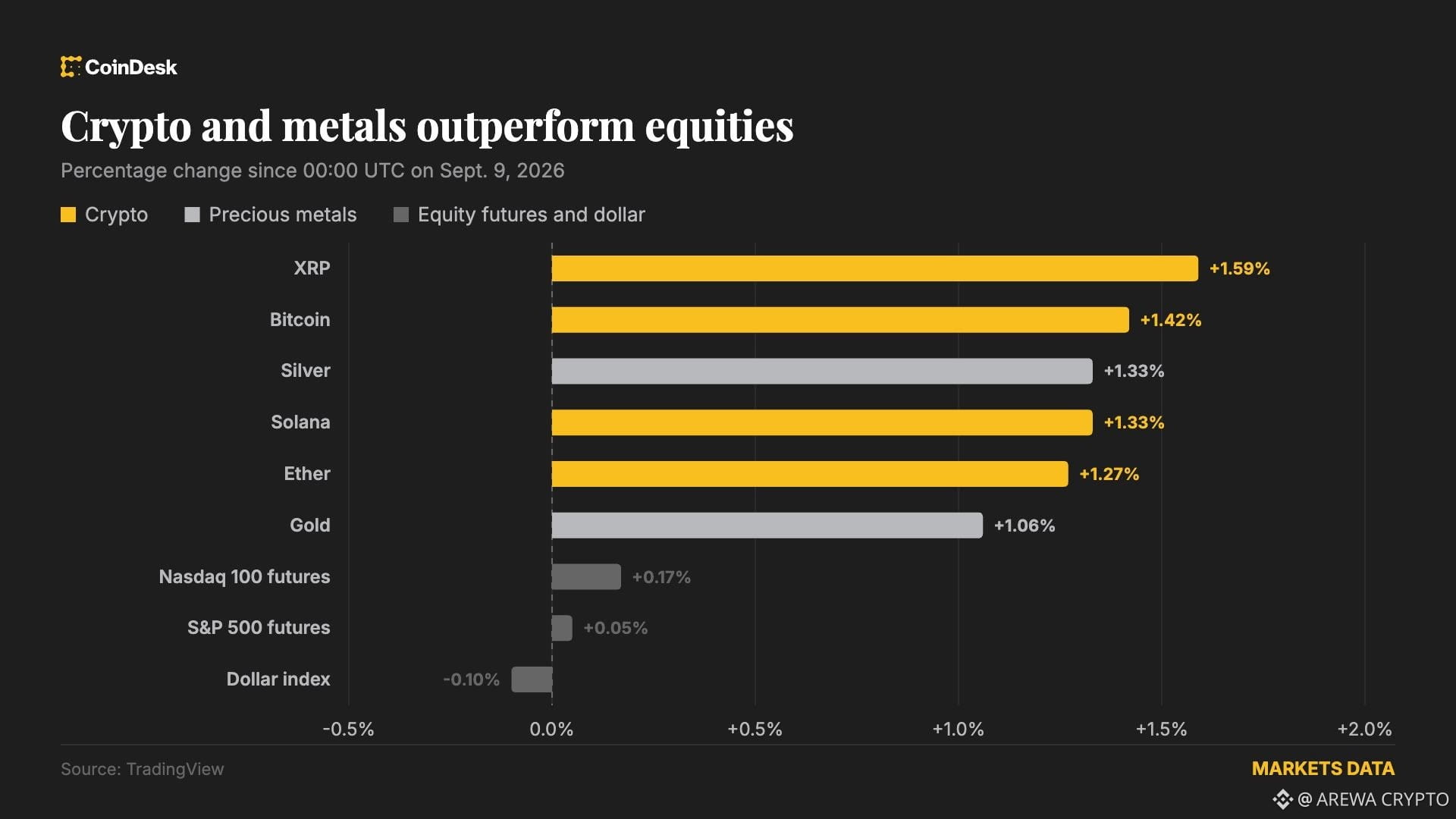
🟠 Bitcoin Tembus $79.700 saat Pasar Bereaksi terhadap Serangan Iran
Bitcoin naik ke $79.700 karena ketegangan geopolitik mendorong minyak Brent di atas $100 per barel dan membuat saham Eropa turun. Langkah ini menunjukkan bahwa kripto mengikuti perilaku safe-haven seperti emas, bukan aset berisiko seperti saham, selama eskalasi terjadi.
🟠 Bitcoin Tembus $79.700 saat Pasar Bereaksi terhadap Serangan Iran
Bitcoin naik ke $79.700 karena ketegangan geopolitik mendorong minyak Brent di atas $100 per barel dan membuat saham Eropa turun. Langkah ini menunjukkan bahwa kripto mengikuti perilaku safe-haven seperti emas, bukan aset berisiko seperti saham, selama eskalasi terjadi.
Bitcoin naik ke $79.700 karena ketegangan geopolitik mendorong minyak Brent di atas $100 per barel dan membuat saham Eropa turun. Langkah ini menunjukkan bahwa kripto mengikuti perilaku safe-haven seperti emas, bukan aset berisiko seperti saham, selama eskalasi terjadi.
1
399
·
--
Bearish
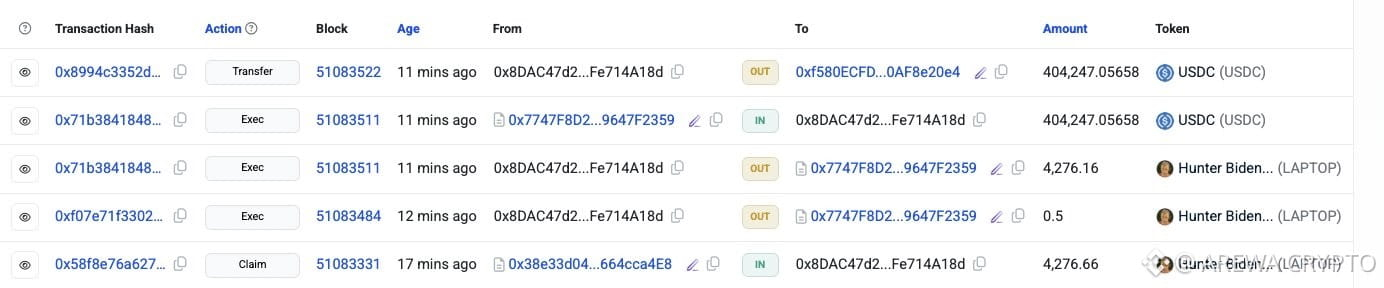
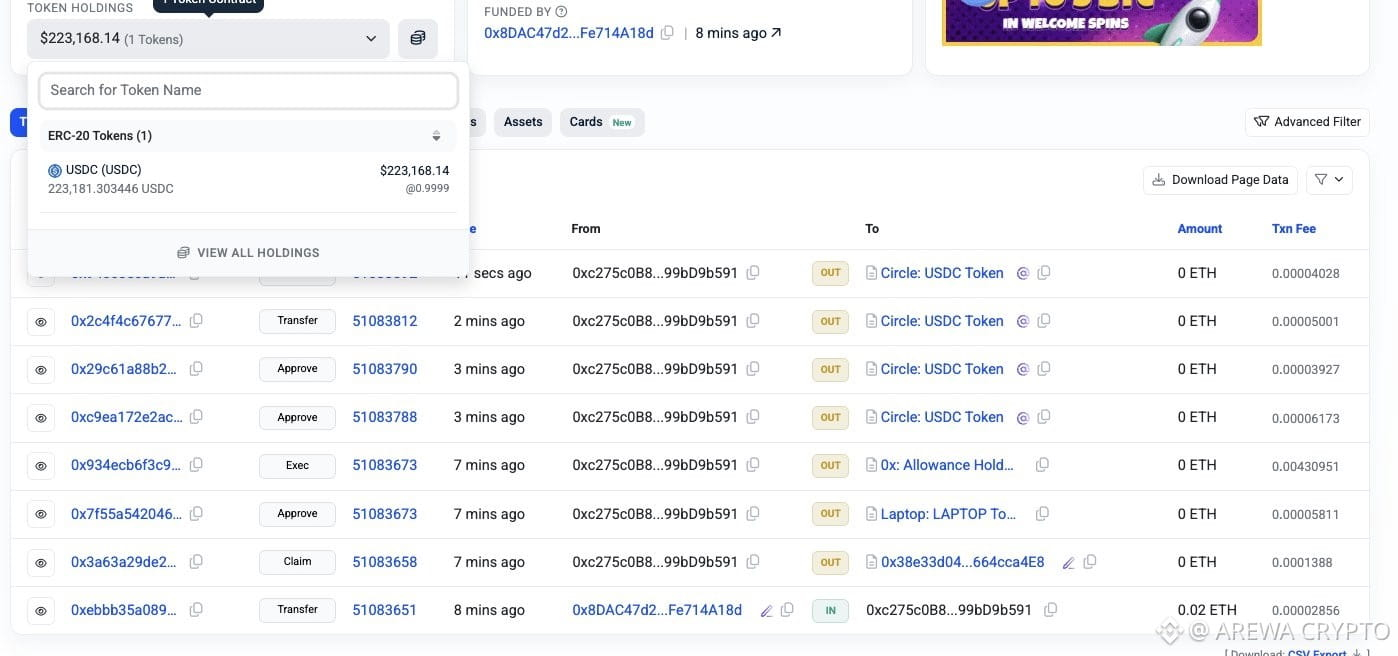
$LAPTOP sedang jadi aneh
dompet baru (0x8DA...A18d) mengklaim 4276 token secara gratis
dan menjualnya seharga $400,000
tapi yang lebih aneh lagi
dompet yang sama mengirim 0.02 ETH ke dompet baru lainnya (0xc27...b591)
yang juga mengklaim 4276 secara gratis, dan langsung menjualnya seharga $200,000 saat harga turun dari penjualan sebelumnya
#Laptop
$LAPTOP sedang jadi aneh
dompet baru (0x8DA...A18d) mengklaim 4276 token secara gratis
dan menjualnya seharga $400,000
tapi yang lebih aneh lagi
dompet yang sama mengirim 0.02 ETH ke dompet baru lainnya (0xc27...b591)
yang juga mengklaim 4276 secara gratis, dan langsung menjualnya seharga $200,000 saat harga turun dari penjualan sebelumnya
#Laptop
dompet baru (0x8DA...A18d) mengklaim 4276 token secara gratis
dan menjualnya seharga $400,000
tapi yang lebih aneh lagi
dompet yang sama mengirim 0.02 ETH ke dompet baru lainnya (0xc27...b591)
yang juga mengklaim 4276 secara gratis, dan langsung menjualnya seharga $200,000 saat harga turun dari penjualan sebelumnya
#Laptop
1
1.9k
·
--
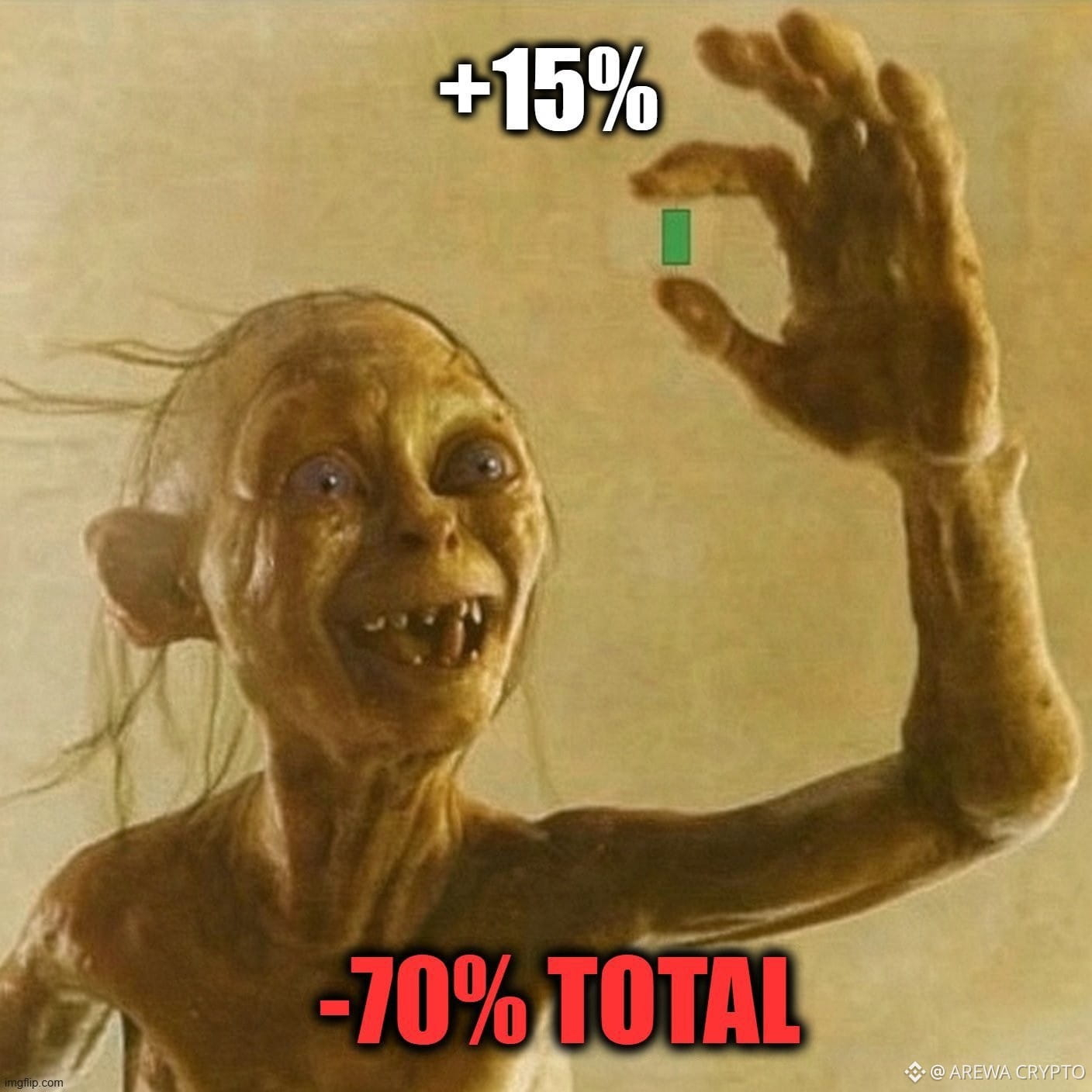
$LAPTOP sedang LIVE. 🚨
Dan jujur, aku tidak merasa ini adalah saat yang tepat untuk FOMO.
Pump saat peluncuran sudah besar. Ketika semua orang tiba-tiba mulai bertanya, “Apa aku harus beli sekarang?”—itulah saat kamu perlu melambat.
Pendapatku:
Jangan kejar candle pertama. Tunggu. 👀
Biarkan hype awal mereda. Perhatikan likuiditas, volume, holder, dan aktivitas wallet.
Mungkin ada peluang lain setelah gelombang FOMO pertama—tapi tidak perlu menjadi exit liquidity untuk orang yang sudah masuk lebih dulu.
Tetap sabar. Lindungi modalmu.
Kamu tidak perlu menangkap pump pertama untuk bisa menangkap langkah berikutnya. 🧠📊
$LAPTOP sedang LIVE. 🚨
Dan jujur, aku tidak merasa ini adalah saat yang tepat untuk FOMO.
Pump saat peluncuran sudah besar. Ketika semua orang tiba-tiba mulai bertanya, “Apa aku harus beli sekarang?”—itulah saat kamu perlu melambat.
Pendapatku:
Jangan kejar candle pertama. Tunggu. 👀
Biarkan hype awal mereda. Perhatikan likuiditas, volume, holder, dan aktivitas wallet.
Mungkin ada peluang lain setelah gelombang FOMO pertama—tapi tidak perlu menjadi exit liquidity untuk orang yang sudah masuk lebih dulu.
Tetap sabar. Lindungi modalmu.
Kamu tidak perlu menangkap pump pertama untuk bisa menangkap langkah berikutnya. 🧠📊
Dan jujur, aku tidak merasa ini adalah saat yang tepat untuk FOMO.
Pump saat peluncuran sudah besar. Ketika semua orang tiba-tiba mulai bertanya, “Apa aku harus beli sekarang?”—itulah saat kamu perlu melambat.
Pendapatku:
Jangan kejar candle pertama. Tunggu. 👀
Biarkan hype awal mereda. Perhatikan likuiditas, volume, holder, dan aktivitas wallet.
Mungkin ada peluang lain setelah gelombang FOMO pertama—tapi tidak perlu menjadi exit liquidity untuk orang yang sudah masuk lebih dulu.
Tetap sabar. Lindungi modalmu.
Kamu tidak perlu menangkap pump pertama untuk bisa menangkap langkah berikutnya. 🧠📊
2
1.1k
·
--
📊 Bitcoin tetap bergerak dalam kisaran karena pasokan dari pemegang jangka panjang terus membatasi momentum kenaikan.
Data Glassnode menunjukkan pasokan besar di antara $83K–$86K, menciptakan zona resistensi utama setelah short squeeze terbaru. Hingga pasokan ini terserap, BTC kemungkinan akan terus berkonsolidasi dalam kisaran yang lebih luas.
Batas Pasar Utama:
• 🔴 Resistensi di Atas: $83K–$86K
• 🟢 Dukungan Makro: $62K–$65K
• 📅 Katalis Opsi: ~$14B OI berakhir 25 Sept
👉 Penembusan bersih di atas $86K dapat membuka kenaikan besar berikutnya, sementara kehilangan zona dukungan akan melemahkan struktur secara signifikan.
📊 Bitcoin tetap bergerak dalam kisaran karena pasokan dari pemegang jangka panjang terus membatasi momentum kenaikan.
Data Glassnode menunjukkan pasokan besar di antara $83K–$86K, menciptakan zona resistensi utama setelah short squeeze terbaru. Hingga pasokan ini terserap, BTC kemungkinan akan terus berkonsolidasi dalam kisaran yang lebih luas.
Batas Pasar Utama:
• 🔴 Resistensi di Atas: $83K–$86K
• 🟢 Dukungan Makro: $62K–$65K
• 📅 Katalis Opsi: ~$14B OI berakhir 25 Sept
👉 Penembusan bersih di atas $86K dapat membuka kenaikan besar berikutnya, sementara kehilangan zona dukungan akan melemahkan struktur secara signifikan.
Data Glassnode menunjukkan pasokan besar di antara $83K–$86K, menciptakan zona resistensi utama setelah short squeeze terbaru. Hingga pasokan ini terserap, BTC kemungkinan akan terus berkonsolidasi dalam kisaran yang lebih luas.
Batas Pasar Utama:
• 🔴 Resistensi di Atas: $83K–$86K
• 🟢 Dukungan Makro: $62K–$65K
• 📅 Katalis Opsi: ~$14B OI berakhir 25 Sept
👉 Penembusan bersih di atas $86K dapat membuka kenaikan besar berikutnya, sementara kehilangan zona dukungan akan melemahkan struktur secara signifikan.
193
·
--
📊 Serangan AS ke Iran membuat pasar kripto melemah
Pasukan AS menyerang target-target Iran dekat Selat Hormuz, memicu aksi jual risk-off yang meluas di seluruh pasar global. Bitcoin turun 2,2% menjadi $76.926, dengan Ethereum dan XRP ikut menurun. Harga minyak melonjak ke level tertinggi dalam 40 hari setelah kabar tersebut.
Presiden Trump mengonfirmasi serangan itu, yang mengguncang investor di pasar saham, kripto, dan komoditas secara bersamaan. Langkah ini mencerminkan meningkatnya korelasi kripto dengan sentimen risiko makro — ketika guncangan geopolitik terjadi, aset digital ikut dijual bersama pasar tradisional alih-alih bertindak sebagai aset aman.
📊 Serangan AS ke Iran membuat pasar kripto melemah
Pasukan AS menyerang target-target Iran dekat Selat Hormuz, memicu aksi jual risk-off yang meluas di seluruh pasar global. Bitcoin turun 2,2% menjadi $76.926, dengan Ethereum dan XRP ikut menurun. Harga minyak melonjak ke level tertinggi dalam 40 hari setelah kabar tersebut.
Presiden Trump mengonfirmasi serangan itu, yang mengguncang investor di pasar saham, kripto, dan komoditas secara bersamaan. Langkah ini mencerminkan meningkatnya korelasi kripto dengan sentimen risiko makro — ketika guncangan geopolitik terjadi, aset digital ikut dijual bersama pasar tradisional alih-alih bertindak sebagai aset aman.
Pasukan AS menyerang target-target Iran dekat Selat Hormuz, memicu aksi jual risk-off yang meluas di seluruh pasar global. Bitcoin turun 2,2% menjadi $76.926, dengan Ethereum dan XRP ikut menurun. Harga minyak melonjak ke level tertinggi dalam 40 hari setelah kabar tersebut.
Presiden Trump mengonfirmasi serangan itu, yang mengguncang investor di pasar saham, kripto, dan komoditas secara bersamaan. Langkah ini mencerminkan meningkatnya korelasi kripto dengan sentimen risiko makro — ketika guncangan geopolitik terjadi, aset digital ikut dijual bersama pasar tradisional alih-alih bertindak sebagai aset aman.
1
2
539
·
--
Bitcoin menghadapi penolakan dari area resistance setelah mengujinya. Harga mengumpulkan likuiditas dari zona tersebut, dan kita mungkin melihat upaya lain untuk menembus level ini. Ini adalah zona krusial untuk kelanjutan pergerakan naik.
Bitcoin menghadapi penolakan dari area resistance setelah mengujinya. Harga mengumpulkan likuiditas dari zona tersebut, dan kita mungkin melihat upaya lain untuk menembus level ini. Ini adalah zona krusial untuk kelanjutan pergerakan naik.
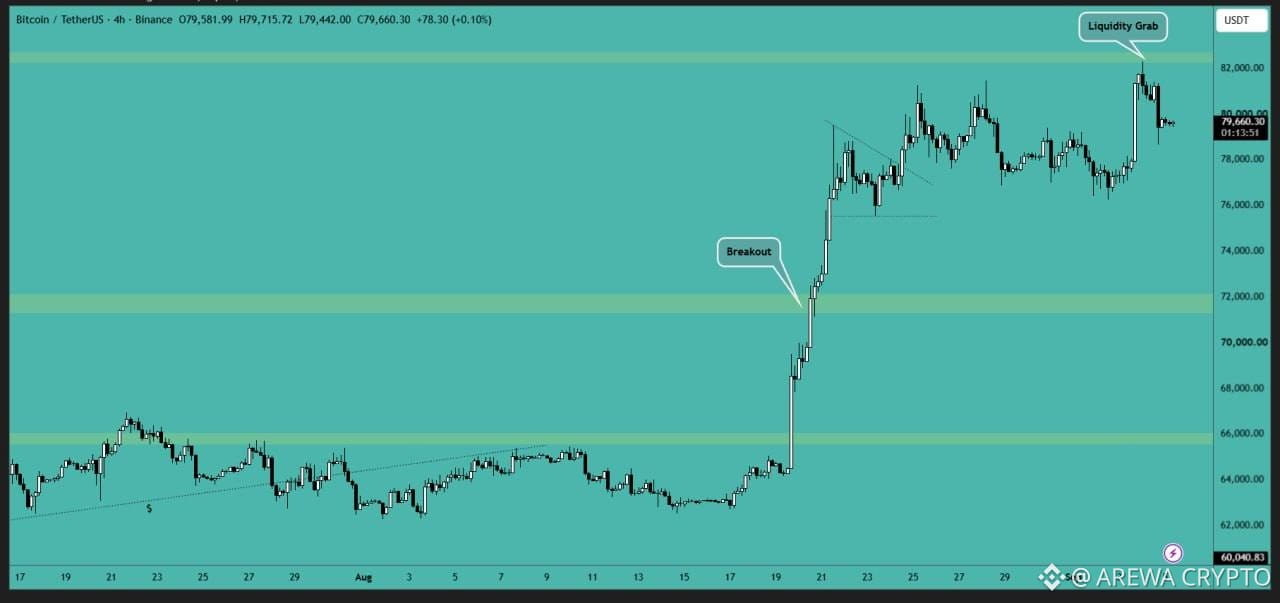
1
151
·
--
🟠 Bitcoin turun di bawah $80.000 setelah data pekerjaan AS yang kuat
Bitcoin jatuh di bawah level $80.000 setelah data penggajian AS menunjukkan penambahan 162.000 pekerjaan, memicu kembali kekhawatiran bahwa Federal Reserve mungkin akan mempertahankan suku bunga tetap tinggi lebih lama.
Angka ketenagakerjaan yang lebih kuat dari perkiraan mendorong imbal hasil Treasury dan dolar — keduanya menjadi hambatan bagi aset berisiko termasuk kripto. Aksi jual awal berlangsung tidak merata di seluruh pasar, dengan penurunan yang tidak terjadi secara seragam di semua aset.
Ekspektasi suku bunga tetap menjadi pendorong makro utama bagi Bitcoin, karena kebijakan moneter yang lebih ketat cenderung memberi tekanan pada aset spekulatif dengan meningkatkan biaya peluang untuk menahannya.
🟠 Bitcoin turun di bawah $80.000 setelah data pekerjaan AS yang kuat
Bitcoin jatuh di bawah level $80.000 setelah data penggajian AS menunjukkan penambahan 162.000 pekerjaan, memicu kembali kekhawatiran bahwa Federal Reserve mungkin akan mempertahankan suku bunga tetap tinggi lebih lama.
Angka ketenagakerjaan yang lebih kuat dari perkiraan mendorong imbal hasil Treasury dan dolar — keduanya menjadi hambatan bagi aset berisiko termasuk kripto. Aksi jual awal berlangsung tidak merata di seluruh pasar, dengan penurunan yang tidak terjadi secara seragam di semua aset.
Ekspektasi suku bunga tetap menjadi pendorong makro utama bagi Bitcoin, karena kebijakan moneter yang lebih ketat cenderung memberi tekanan pada aset spekulatif dengan meningkatkan biaya peluang untuk menahannya.
Bitcoin jatuh di bawah level $80.000 setelah data penggajian AS menunjukkan penambahan 162.000 pekerjaan, memicu kembali kekhawatiran bahwa Federal Reserve mungkin akan mempertahankan suku bunga tetap tinggi lebih lama.
Angka ketenagakerjaan yang lebih kuat dari perkiraan mendorong imbal hasil Treasury dan dolar — keduanya menjadi hambatan bagi aset berisiko termasuk kripto. Aksi jual awal berlangsung tidak merata di seluruh pasar, dengan penurunan yang tidak terjadi secara seragam di semua aset.
Ekspektasi suku bunga tetap menjadi pendorong makro utama bagi Bitcoin, karena kebijakan moneter yang lebih ketat cenderung memberi tekanan pada aset spekulatif dengan meningkatkan biaya peluang untuk menahannya.
197
Masuk untuk menjelajahi konten lainnya
Bergabunglah dengan pengguna kripto global di Binance Square
⚡️ Dapatkan informasi terbaru dan berguna tentang kripto.
💬 Dipercayai oleh bursa kripto terbesar di dunia.
👍 Temukan wawasan nyata dari kreator terverifikasi.
Email/Nomor Ponsel
Topik Sedang Tren
SaylorHintsStrategyBitcoinBuy
2.2M penayangan
11,282 Berdiskusi
🚨 BERITA TERAKHIR: Saylor memberi petunjuk kemungkinan pembelian Bitcoin lainnya.
Strategi bisa sedang bersiap untuk menambah lebih banyak $BTC.
Pedagang spot sedang menunggu konfirmasi.
Pembelian yang terkonfirmasi dapat memicu volume dan volatilitas baru.
Tidak perlu leverage — pedagang spot cukup memantau reaksi pasar.
Pembaruan resmi berikutnya bisa sangat penting.
#saylorhintsstrategybitcoinbuy
CryptoMahibaloch
·Disukai 1 Kali
·4 penayangan
BOJRaisesRatesTo31YearHigh
174,356 penayangan
2,606 Berdiskusi
BuffettStepsDownAsBerkshireChairman
84,341 penayangan
1,336 Berdiskusi