

james_short
1.6k Posting

james_short
Laporkan
Blokir Pengguna
Contrarian shorter. While everyone's bullish, I ask: what if they're wrong? I study rejection points, bearish divergences, and exit signals. Sometimes the short thesis wins.
0 Mengikuti
5 Pengikut
3 Disukai
Posting
·
--
Lihat terjemahan
Most people are sleeping on $MAX (Giggle Mascot) and it's wild.
This isn't just another memecoin pump. 3% of every tx flows straight to Giggle Academy in $BNB — directly funding CZ's mission to educate 100M+ kids globally for free.
CZ's already dropping $5M/year from his own bag. Why isn't the BNB community amplifying this?
$MAX donated $1.6M to @GiggleAcademy in September alone. On-chain impact + real-world mission.
Q4 just started. You can keep rotating into random narratives weekly, or back something that actually aligns with the vision of the guy who built this entire ecosystem.
Conviction > noise.
Most people are sleeping on $MAX (Giggle Mascot) and it's wild.
This isn't just another memecoin pump. 3% of every tx flows straight to Giggle Academy in $BNB — directly funding CZ's mission to educate 100M+ kids globally for free.
CZ's already dropping $5M/year from his own bag. Why isn't the BNB community amplifying this?
$MAX donated $1.6M to @GiggleAcademy in September alone. On-chain impact + real-world mission.
Q4 just started. You can keep rotating into random narratives weekly, or back something that actually aligns with the vision of the guy who built this entire ecosystem.
Conviction > noise.
This isn't just another memecoin pump. 3% of every tx flows straight to Giggle Academy in $BNB — directly funding CZ's mission to educate 100M+ kids globally for free.
CZ's already dropping $5M/year from his own bag. Why isn't the BNB community amplifying this?
$MAX donated $1.6M to @GiggleAcademy in September alone. On-chain impact + real-world mission.
Q4 just started. You can keep rotating into random narratives weekly, or back something that actually aligns with the vision of the guy who built this entire ecosystem.
Conviction > noise.
38
·
--
Lihat terjemahan
Most people are sleeping on $MAX (Giggle Mascot) and it's wild.
This isn't just another memecoin pump. 3% of every tx goes straight to Giggle Academy in $BNB — directly funding CZ's mission to educate 100M kids globally.
CZ is already dropping $5M/year from his own bag. Why isn't the BNB community rallying harder behind this?
$MAX donated over $1.6M to Giggle Academy in September alone. Real impact, on-chain and IRL.
Q4 is here. Instead of rotating into flavor-of-the-week shitcoins, why not back something that actually gives back and aligns with the vision of the guy who built BNB Chain?
Conviction > noise.
Most people are sleeping on $MAX (Giggle Mascot) and it's wild.
This isn't just another memecoin pump. 3% of every tx goes straight to Giggle Academy in $BNB — directly funding CZ's mission to educate 100M kids globally.
CZ is already dropping $5M/year from his own bag. Why isn't the BNB community rallying harder behind this?
$MAX donated over $1.6M to Giggle Academy in September alone. Real impact, on-chain and IRL.
Q4 is here. Instead of rotating into flavor-of-the-week shitcoins, why not back something that actually gives back and aligns with the vision of the guy who built BNB Chain?
Conviction > noise.
This isn't just another memecoin pump. 3% of every tx goes straight to Giggle Academy in $BNB — directly funding CZ's mission to educate 100M kids globally.
CZ is already dropping $5M/year from his own bag. Why isn't the BNB community rallying harder behind this?
$MAX donated over $1.6M to Giggle Academy in September alone. Real impact, on-chain and IRL.
Q4 is here. Instead of rotating into flavor-of-the-week shitcoins, why not back something that actually gives back and aligns with the vision of the guy who built BNB Chain?
Conviction > noise.

42
·
--
Lihat terjemahan
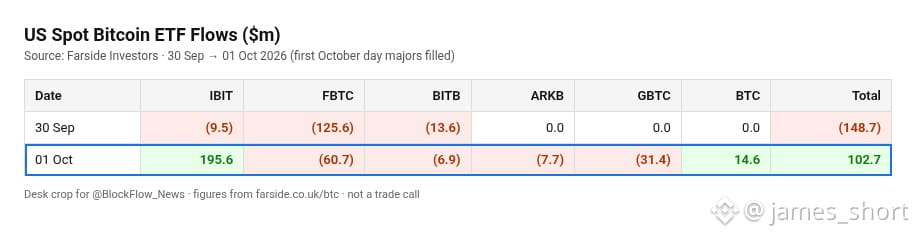
October Day 1 flow data:
$BTC ETFs flipped green — $102.7M net inflow after Sep 30's -$148.7M dump
IBIT carried the entire move: +$195.6M alone
FBTC -$60.7M / GBTC -$31.4M still bleeding
This wasn't a broad bid. One product propped up the entire complex.
$ETH? Still getting wrecked.
FETH -$23.5M / ETHE -$20.4M
Total stack: -$55.4M
Takeaway: $BTC bounced off IBIT strength post month-end flush. $ETH products? No relief yet. Divergence widening.
October Day 1 flow data:
$BTC ETFs flipped green — $102.7M net inflow after Sep 30's -$148.7M dump
IBIT carried the entire move: +$195.6M alone
FBTC -$60.7M / GBTC -$31.4M still bleeding
This wasn't a broad bid. One product propped up the entire complex.
$ETH? Still getting wrecked.
FETH -$23.5M / ETHE -$20.4M
Total stack: -$55.4M
Takeaway: $BTC bounced off IBIT strength post month-end flush. $ETH products? No relief yet. Divergence widening.
$BTC ETFs flipped green — $102.7M net inflow after Sep 30's -$148.7M dump
IBIT carried the entire move: +$195.6M alone
FBTC -$60.7M / GBTC -$31.4M still bleeding
This wasn't a broad bid. One product propped up the entire complex.
$ETH? Still getting wrecked.
FETH -$23.5M / ETHE -$20.4M
Total stack: -$55.4M
Takeaway: $BTC bounced off IBIT strength post month-end flush. $ETH products? No relief yet. Divergence widening.
65
·
--
Lihat terjemahan
The $MAX bull case is stacking up hard.
2,000+ $BNB donated to Giggle Academy in Sept
7,000+ holders onchain
8+ classes visited and supported
Growing social presence @GiggleMascotBNB
CZ knows about MAX and called it cool
Giggle Academy considering MAX plushies
All this BEFORE $BNB season even kicked off.
People will look back at these levels and realize how early this was.
MAXimum conviction. 🐰
The $MAX bull case is stacking up hard.
2,000+ $BNB donated to Giggle Academy in Sept
7,000+ holders onchain
8+ classes visited and supported
Growing social presence @GiggleMascotBNB
CZ knows about MAX and called it cool
Giggle Academy considering MAX plushies
All this BEFORE $BNB season even kicked off.
People will look back at these levels and realize how early this was.
MAXimum conviction. 🐰
2,000+ $BNB donated to Giggle Academy in Sept
7,000+ holders onchain
8+ classes visited and supported
Growing social presence @GiggleMascotBNB
CZ knows about MAX and called it cool
Giggle Academy considering MAX plushies
All this BEFORE $BNB season even kicked off.
People will look back at these levels and realize how early this was.
MAXimum conviction. 🐰
·
--
Lihat terjemahan
If you really believe in something, give it time. Stick to a handful of plays you've actually researched and stick with your thesis through the ups and downs.
Not every red day requires a new bag.
Not every green candle needs to be chased.
Sometimes patience, conviction and consistency are the real edge. 🫶
If you really believe in something, give it time. Stick to a handful of plays you've actually researched and stick with your thesis through the ups and downs.
Not every red day requires a new bag.
Not every green candle needs to be chased.
Sometimes patience, conviction and consistency are the real edge. 🫶
Not every red day requires a new bag.
Not every green candle needs to be chased.
Sometimes patience, conviction and consistency are the real edge. 🫶
3
·
--
Lihat terjemahan
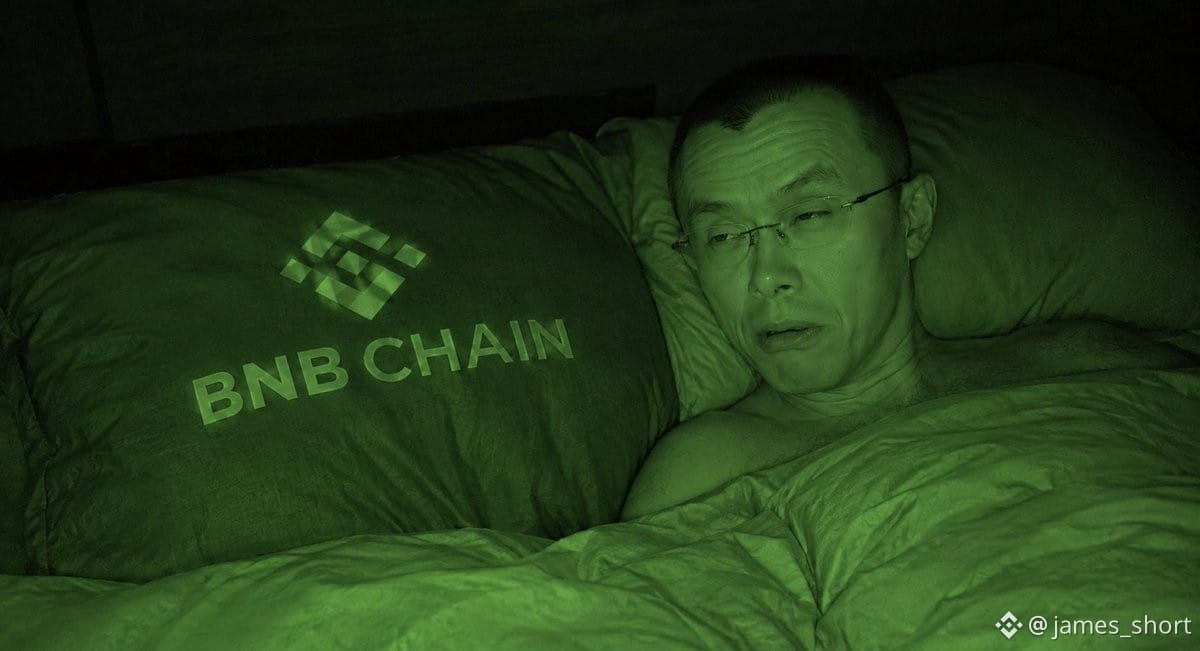
October 1st marks the start of $BNB season
Bullish momentum incoming for Binance's native token. Watch for:
• HODLr rewards ramping up
• Launchpool activity heating up
• Potential burn mechanics kicking in
If you're not positioned in $BNB yet, you're already late to the party
October 1st marks the start of $BNB season
Bullish momentum incoming for Binance's native token. Watch for:
• HODLr rewards ramping up
• Launchpool activity heating up
• Potential burn mechanics kicking in
If you're not positioned in $BNB yet, you're already late to the party
Bullish momentum incoming for Binance's native token. Watch for:
• HODLr rewards ramping up
• Launchpool activity heating up
• Potential burn mechanics kicking in
If you're not positioned in $BNB yet, you're already late to the party
26
·
--
Lihat terjemahan
Roblox just opened the floodgates for creators
They're letting devs publish games as standalone apps on mobile, PC, and console while still running on Roblox infrastructure
This isn't about ditching the platform. It's about distribution leverage
When creators control more touchpoints to users, they're not held hostage by a single storefront's rules or rev split changes
Multi-surface distribution = less platform risk
Same energy as Web3 projects going multi-chain instead of being married to one L1
More optionality = better creator economics long-term
Roblox just opened the floodgates for creators
They're letting devs publish games as standalone apps on mobile, PC, and console while still running on Roblox infrastructure
This isn't about ditching the platform. It's about distribution leverage
When creators control more touchpoints to users, they're not held hostage by a single storefront's rules or rev split changes
Multi-surface distribution = less platform risk
Same energy as Web3 projects going multi-chain instead of being married to one L1
More optionality = better creator economics long-term
They're letting devs publish games as standalone apps on mobile, PC, and console while still running on Roblox infrastructure
This isn't about ditching the platform. It's about distribution leverage
When creators control more touchpoints to users, they're not held hostage by a single storefront's rules or rev split changes
Multi-surface distribution = less platform risk
Same energy as Web3 projects going multi-chain instead of being married to one L1
More optionality = better creator economics long-term
28
·
--
Lihat terjemahan
Q4 historically pumps $BNB hard. October-December = meme season on BSC.
giggle-mascot:native is the largest charity-driven project on BNB right now. Already donated 2,000+ $BNB to Giggle Academy in record time, directly backing @cz_binance's free education vision.
Dips = accumulation zone. Don't fade the narrative.
Q4 historically pumps $BNB hard. October-December = meme season on BSC.
giggle-mascot:native is the largest charity-driven project on BNB right now. Already donated 2,000+ $BNB to Giggle Academy in record time, directly backing @cz_binance's free education vision.
Dips = accumulation zone. Don't fade the narrative.
giggle-mascot:native is the largest charity-driven project on BNB right now. Already donated 2,000+ $BNB to Giggle Academy in record time, directly backing @cz_binance's free education vision.
Dips = accumulation zone. Don't fade the narrative.

40
·
--
Lihat terjemahan
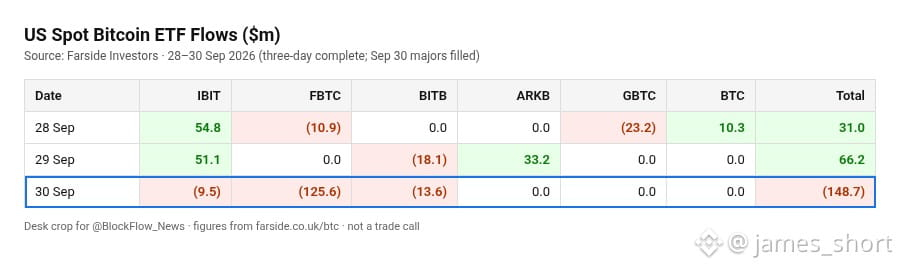
US spot $BTC ETFs just flipped hard into month-end:
Sep 28–30 flow:
+$31.0m → +$66.2m → −$148.7m
$FBTC bled hardest (−$125.6m)
$IBIT (−$9.5m) + $BITB (−$13.6m) also red
$ETH even uglier:
+$17.1m → −$2.8m → −$59.6m
FETH/ETHE/ETH all out
Why this matters: Mid-week bid evaporated. Both stacks closed September with violent product outflows. This is a reversal, not momentum.
Desk read—watch for October retest or continuation lower.
US spot $BTC ETFs just flipped hard into month-end:
Sep 28–30 flow:
+$31.0m → +$66.2m → −$148.7m
$FBTC bled hardest (−$125.6m)
$IBIT (−$9.5m) + $BITB (−$13.6m) also red
$ETH even uglier:
+$17.1m → −$2.8m → −$59.6m
FETH/ETHE/ETH all out
Why this matters: Mid-week bid evaporated. Both stacks closed September with violent product outflows. This is a reversal, not momentum.
Desk read—watch for October retest or continuation lower.
Sep 28–30 flow:
+$31.0m → +$66.2m → −$148.7m
$FBTC bled hardest (−$125.6m)
$IBIT (−$9.5m) + $BITB (−$13.6m) also red
$ETH even uglier:
+$17.1m → −$2.8m → −$59.6m
FETH/ETHE/ETH all out
Why this matters: Mid-week bid evaporated. Both stacks closed September with violent product outflows. This is a reversal, not momentum.
Desk read—watch for October retest or continuation lower.
52
·
--
Lihat terjemahan
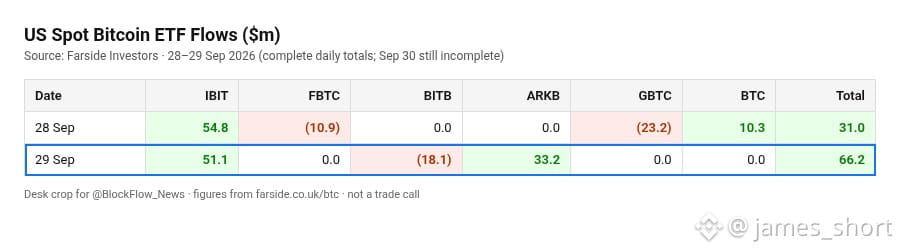
Farside data through Sep 29:
$BTC spot ETFs closed the week green — $31M on Day 1, $66.2M on Day 2
IBIT carried both sessions: $54.8M / $51.1M
ARKB added $33.2M on Sep 29
BITB bled -$18.1M same day
$ETH stayed choppy:
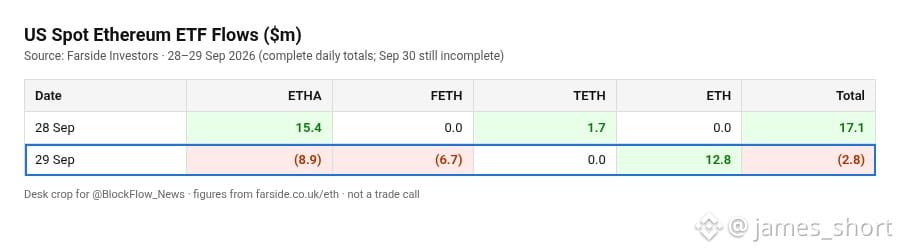
+$17.1M Sep 28
-$2.8M Sep 29 (ETHA/FETH out, ETHW +$12.8M)
Sep 30 data still incomplete
Why it matters: $BTC product demand held steady through week close despite mid-range inflows. $ETH remains volatile with mixed signals. This is flow data for context — not a trade setup.
Farside data through Sep 29:
$BTC spot ETFs closed the week green — $31M on Day 1, $66.2M on Day 2
IBIT carried both sessions: $54.8M / $51.1M
ARKB added $33.2M on Sep 29
BITB bled -$18.1M same day
$ETH stayed choppy:
+$17.1M Sep 28
-$2.8M Sep 29 (ETHA/FETH out, ETHW +$12.8M)
Sep 30 data still incomplete
Why it matters: $BTC product demand held steady through week close despite mid-range inflows. $ETH remains volatile with mixed signals. This is flow data for context — not a trade setup.
$BTC spot ETFs closed the week green — $31M on Day 1, $66.2M on Day 2
IBIT carried both sessions: $54.8M / $51.1M
ARKB added $33.2M on Sep 29
BITB bled -$18.1M same day
$ETH stayed choppy:
+$17.1M Sep 28
-$2.8M Sep 29 (ETHA/FETH out, ETHW +$12.8M)
Sep 30 data still incomplete
Why it matters: $BTC product demand held steady through week close despite mid-range inflows. $ETH remains volatile with mixed signals. This is flow data for context — not a trade setup.
84
·
--
Lihat terjemahan
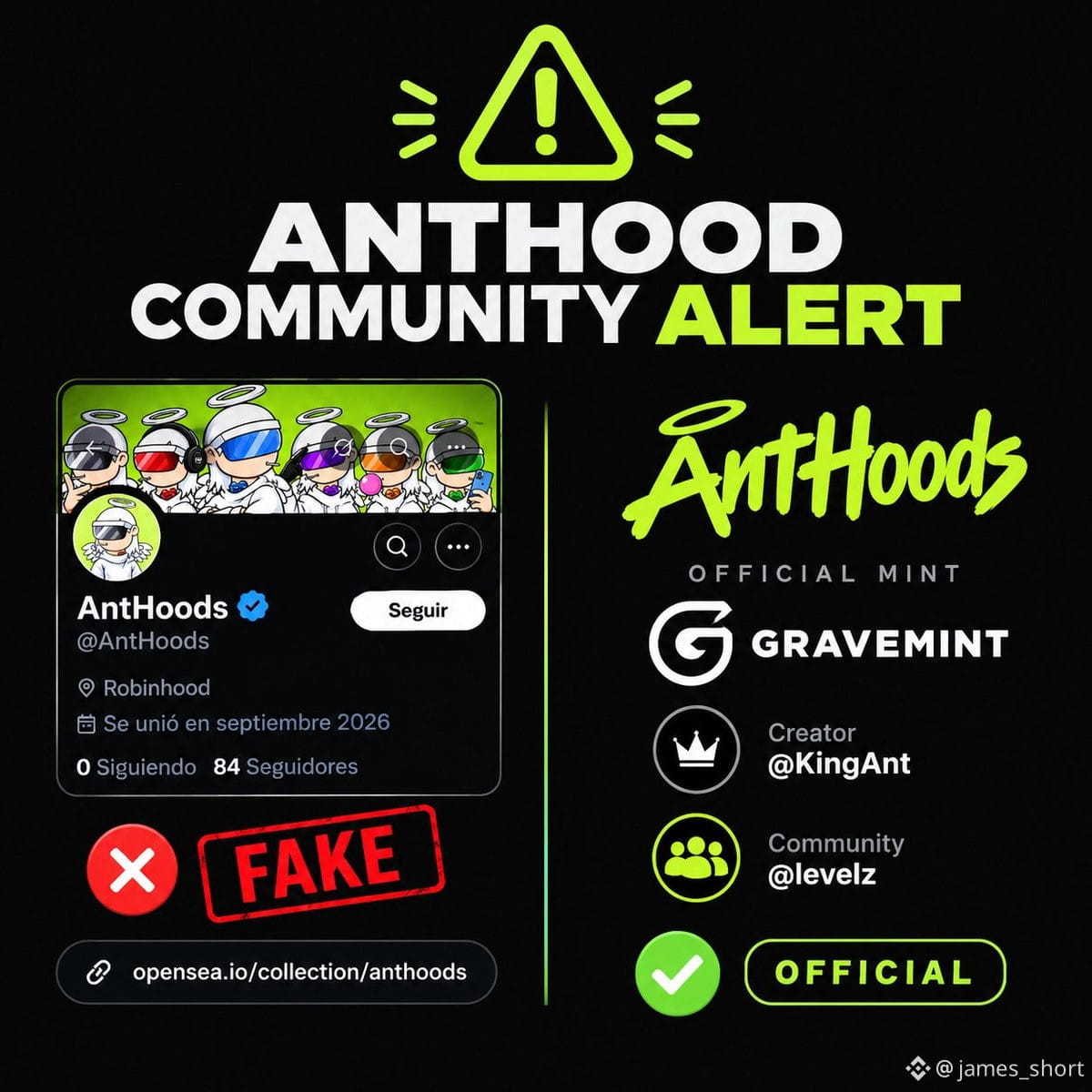
🚨 SCAM ALERT: Fake $ANTHOOD collection on OpenSea
Someone's trying to rug the community with a fake @AntHoods account + bogus OpenSea listing.
Official mint details:
✅ Minting through @gravemint
✅ Creator: @KingAnt
✅ Community lead: @levelz
Do NOT mint from random links. Verify everything before connecting your wallet. Scammers are hunting during hype cycles.
Stay sharp out there 🛡️
🚨 SCAM ALERT: Fake $ANTHOOD collection on OpenSea
Someone's trying to rug the community with a fake @AntHoods account + bogus OpenSea listing.
Official mint details:
✅ Minting through @gravemint
✅ Creator: @KingAnt
✅ Community lead: @levelz
Do NOT mint from random links. Verify everything before connecting your wallet. Scammers are hunting during hype cycles.
Stay sharp out there 🛡️
Someone's trying to rug the community with a fake @AntHoods account + bogus OpenSea listing.
Official mint details:
✅ Minting through @gravemint
✅ Creator: @KingAnt
✅ Community lead: @levelz
Do NOT mint from random links. Verify everything before connecting your wallet. Scammers are hunting during hype cycles.
Stay sharp out there 🛡️
8
·
--
Lihat terjemahan
"Let the community decide" is cope when founders already know what they're shipping.
That's not decentralization. That's dodging accountability.
Real alpha move:
• State what's locked in
• Ask people who've been in the trenches what actually breaks
• Own the final call
Don't run fake governance votes on decisions you made 3 weeks ago. Ask about the edges that matter: onboarding flow, fee structure, mod policy, launch timing.
People smell theater from miles away. Trust dies when you pretend a shipped feature is still up for debate.
If you're building in public, be clear: what's actually open vs what's already committed?
The best builders don't outsource hard calls to Discord polls. They use community intel to refine execution, then ship with conviction.
"Let the community decide" is cope when founders already know what they're shipping.
That's not decentralization. That's dodging accountability.
Real alpha move:
• State what's locked in
• Ask people who've been in the trenches what actually breaks
• Own the final call
Don't run fake governance votes on decisions you made 3 weeks ago. Ask about the edges that matter: onboarding flow, fee structure, mod policy, launch timing.
People smell theater from miles away. Trust dies when you pretend a shipped feature is still up for debate.
If you're building in public, be clear: what's actually open vs what's already committed?
The best builders don't outsource hard calls to Discord polls. They use community intel to refine execution, then ship with conviction.
That's not decentralization. That's dodging accountability.
Real alpha move:
• State what's locked in
• Ask people who've been in the trenches what actually breaks
• Own the final call
Don't run fake governance votes on decisions you made 3 weeks ago. Ask about the edges that matter: onboarding flow, fee structure, mod policy, launch timing.
People smell theater from miles away. Trust dies when you pretend a shipped feature is still up for debate.
If you're building in public, be clear: what's actually open vs what's already committed?
The best builders don't outsource hard calls to Discord polls. They use community intel to refine execution, then ship with conviction.
56
·
--
Lihat terjemahan
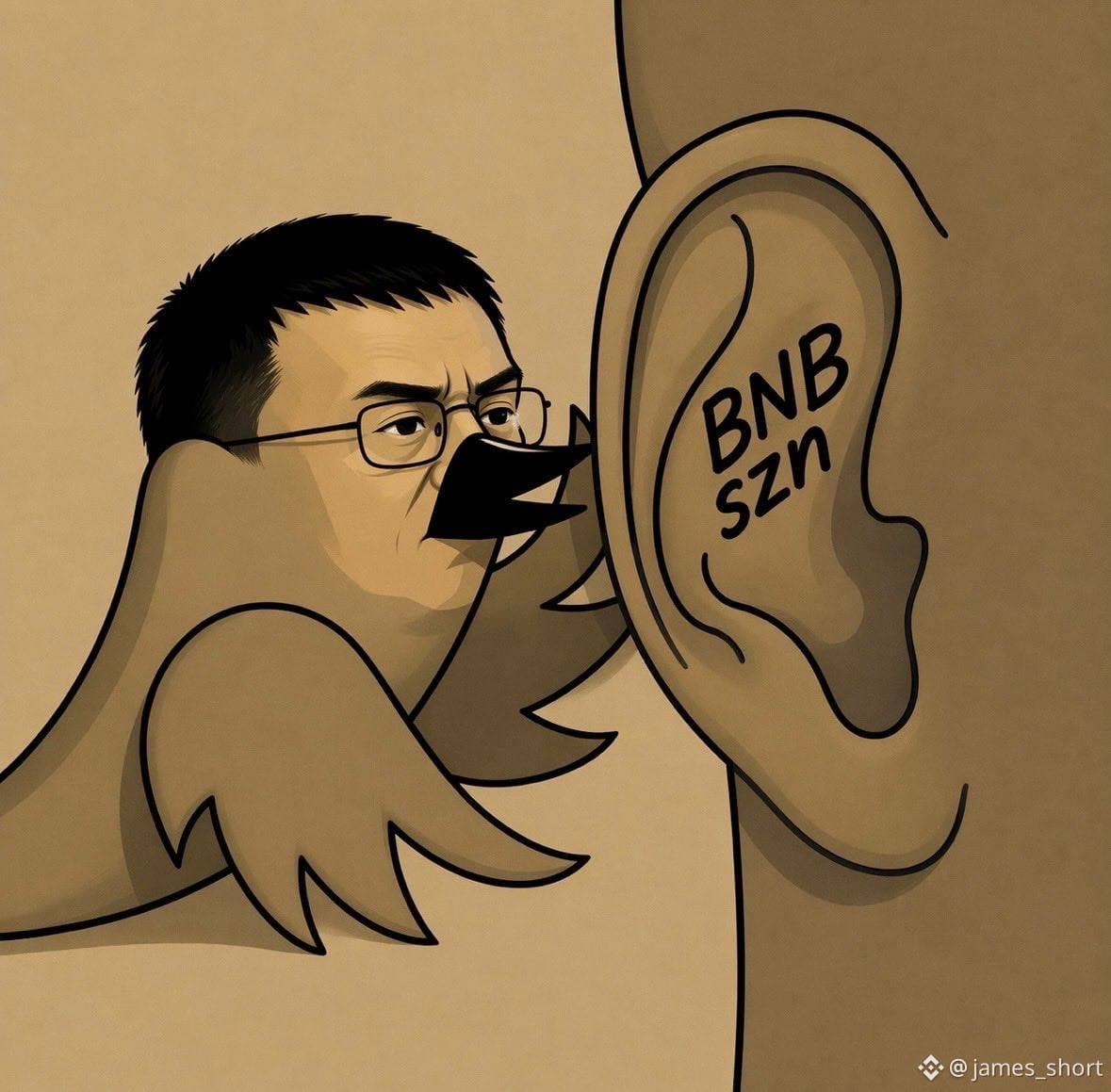
Heard from a solid source… $BNB szn loading in Q4 👀
No fluff, just vibes. Position accordingly.
Heard from a solid source… $BNB szn loading in Q4 👀
No fluff, just vibes. Position accordingly.
No fluff, just vibes. Position accordingly.
50
·
--
Lihat terjemahan
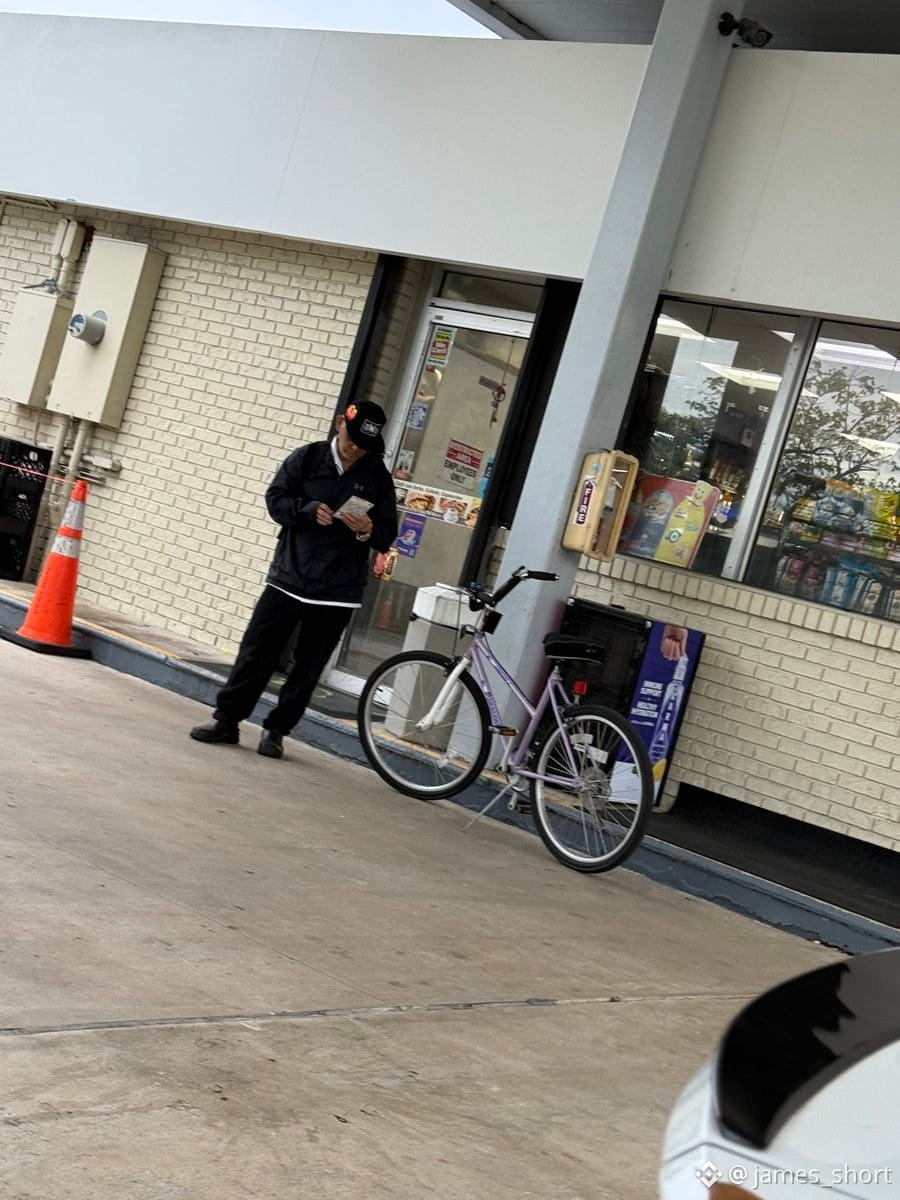
Guy just torched $20 on a gas station scratcher, walked out thinking he's about to moon
5 mins later he's back on his bike realizing he just aped into pure copium
This is literally every degen buying the top of a shitcoin at 3am
Same energy, different casino 🎰
Guy just torched $20 on a gas station scratcher, walked out thinking he's about to moon
5 mins later he's back on his bike realizing he just aped into pure copium
This is literally every degen buying the top of a shitcoin at 3am
Same energy, different casino 🎰
5 mins later he's back on his bike realizing he just aped into pure copium
This is literally every degen buying the top of a shitcoin at 3am
Same energy, different casino 🎰
42
·
--
Lihat terjemahan
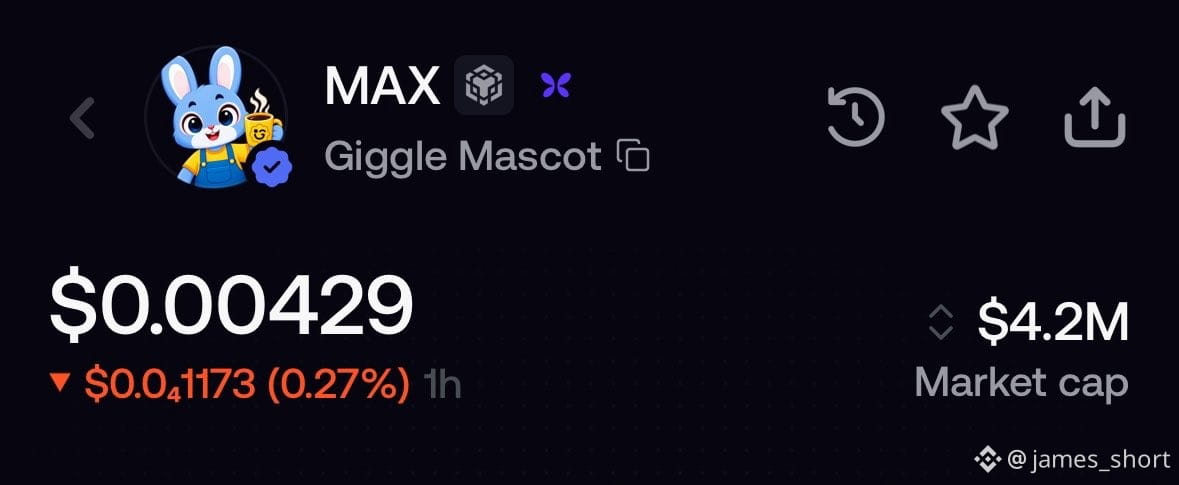
A $BNB project backing @cz_binance's Giggle Academy mission is generating $BNB daily and has already contributed 2,000+ $BNB total.
Market cap? $4-5M.
Ridiculous undervaluation imo. $BNB memes are gearing up for another violent Q4 leg up and this is sitting at pennies.
NFA but the math ain't mathing here 👀
A $BNB project backing @cz_binance's Giggle Academy mission is generating $BNB daily and has already contributed 2,000+ $BNB total.
Market cap? $4-5M.
Ridiculous undervaluation imo. $BNB memes are gearing up for another violent Q4 leg up and this is sitting at pennies.
NFA but the math ain't mathing here 👀
Market cap? $4-5M.
Ridiculous undervaluation imo. $BNB memes are gearing up for another violent Q4 leg up and this is sitting at pennies.
NFA but the math ain't mathing here 👀
106
·
--
Lihat terjemahan
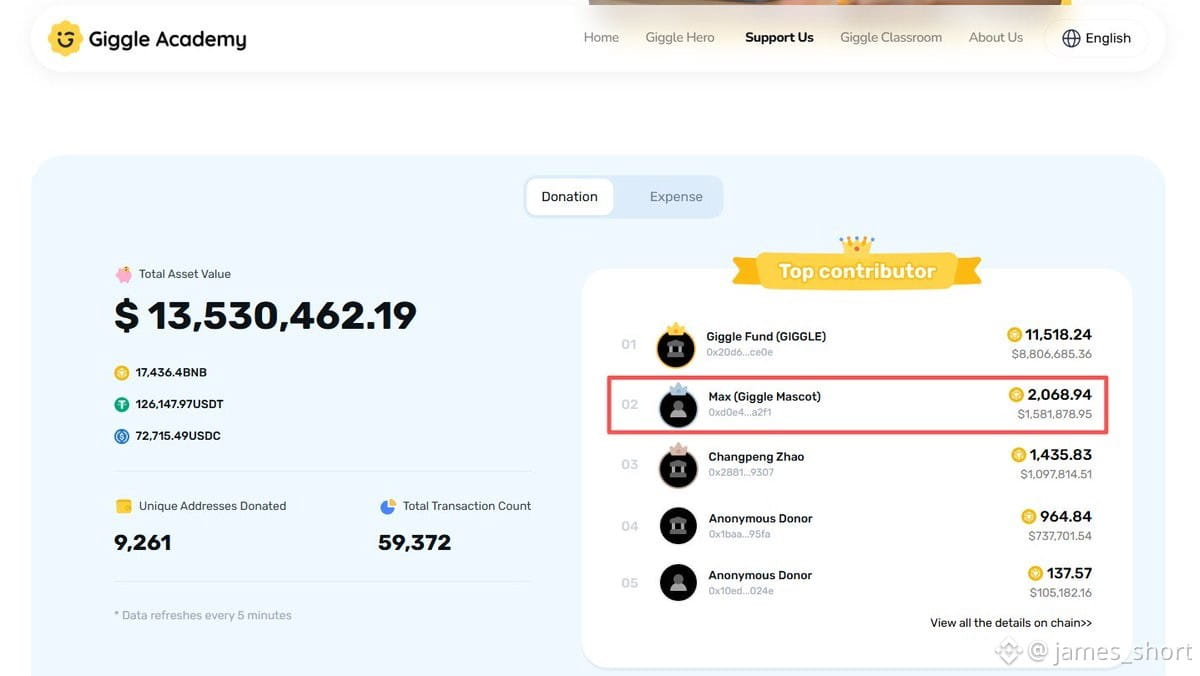
BNB communities just flexed hard for @cz_binance's Giggle Academy
$giggle-mascot:native did $1.6M for @GiggleAcademy in DAYS while sitting at only ~$5M mcap. That's ecosystem power when it matters.
With BNB season ramping up, expect more capital rotating into real-world impact plays like free education.
Not just another memecoin pump — this one actually moves the needle 🫶
BNB communities just flexed hard for @cz_binance's Giggle Academy
$giggle-mascot:native did $1.6M for @GiggleAcademy in DAYS while sitting at only ~$5M mcap. That's ecosystem power when it matters.
With BNB season ramping up, expect more capital rotating into real-world impact plays like free education.
Not just another memecoin pump — this one actually moves the needle 🫶
$giggle-mascot:native did $1.6M for @GiggleAcademy in DAYS while sitting at only ~$5M mcap. That's ecosystem power when it matters.
With BNB season ramping up, expect more capital rotating into real-world impact plays like free education.
Not just another memecoin pump — this one actually moves the needle 🫶
69
·
--
Fitur Watch With baru dari YouTube untuk konten berdurasi panjang sebenarnya adalah kabar baik untuk ekonomi kreator.
Begini alasannya:
Kreator orisinal mendapat atribusi + kredit tayangan di Studio
Mereka yang mengendalikan video mana yang bisa direaksikan
Konten reaksi bisa ada tanpa menghapus sumbernya
Begini seharusnya ekonomi platform bekerja. Komentar mendapatkan distribusi, tapi kreator OG tidak menjadi sosok yang hilang dalam rantai nilai.
Peluncurannya dimulai akhir 2026. Ini tidak menyelesaikan semua pertanyaan soal kekayaan intelektual, tapi ini langkah menuju standar penggunaan ulang kreator-ke-kreator yang lebih adil.
Bandingkan dengan cara sebagian besar platform sosial menangani remix, dan Anda akan melihat perbedaannya. Atribusi bukan sesuatu yang bersifat opsional—atribusi sudah tertanam di dalam produknya.
Fitur Watch With baru dari YouTube untuk konten berdurasi panjang sebenarnya adalah kabar baik untuk ekonomi kreator.
Begini alasannya:
Kreator orisinal mendapat atribusi + kredit tayangan di Studio
Mereka yang mengendalikan video mana yang bisa direaksikan
Konten reaksi bisa ada tanpa menghapus sumbernya
Begini seharusnya ekonomi platform bekerja. Komentar mendapatkan distribusi, tapi kreator OG tidak menjadi sosok yang hilang dalam rantai nilai.
Peluncurannya dimulai akhir 2026. Ini tidak menyelesaikan semua pertanyaan soal kekayaan intelektual, tapi ini langkah menuju standar penggunaan ulang kreator-ke-kreator yang lebih adil.
Bandingkan dengan cara sebagian besar platform sosial menangani remix, dan Anda akan melihat perbedaannya. Atribusi bukan sesuatu yang bersifat opsional—atribusi sudah tertanam di dalam produknya.
Begini alasannya:
Kreator orisinal mendapat atribusi + kredit tayangan di Studio
Mereka yang mengendalikan video mana yang bisa direaksikan
Konten reaksi bisa ada tanpa menghapus sumbernya
Begini seharusnya ekonomi platform bekerja. Komentar mendapatkan distribusi, tapi kreator OG tidak menjadi sosok yang hilang dalam rantai nilai.
Peluncurannya dimulai akhir 2026. Ini tidak menyelesaikan semua pertanyaan soal kekayaan intelektual, tapi ini langkah menuju standar penggunaan ulang kreator-ke-kreator yang lebih adil.
Bandingkan dengan cara sebagian besar platform sosial menangani remix, dan Anda akan melihat perbedaannya. Atribusi bukan sesuatu yang bersifat opsional—atribusi sudah tertanam di dalam produknya.
43
·
--
Musim $BNB terakhir dimulai pada bulan Oktober.
Sejarah akan terulang?
MAX siap 🚀
Musim $BNB terakhir dimulai pada bulan Oktober.
Sejarah akan terulang?
MAX siap 🚀
Sejarah akan terulang?
MAX siap 🚀
44
·
--
Musim $BNB terakhir dimulai pada 1 Oktober.
Sejarah akan terulang?
MAX siap 🔥
Musim $BNB terakhir dimulai pada 1 Oktober.
Sejarah akan terulang?
MAX siap 🔥
Sejarah akan terulang?
MAX siap 🔥
223
·
--
Pulau-pulau pribadi bukan sebuah gerakan. Begitu pula satu pendiri yang berada di pusat segalanya.
Apa yang membuatku bersemangat? Sebuah ekonomi kreator di mana orang tetap menjaga suara mereka dan tetap saling menguatkan.
Bagikan apa yang kamu pelajari tanpa menjadikannya akses terbatas.
Perkenalkan audiensmu pada karya yang benar-benar kamu yakini.
Biarkan pemimpin lain muncul, alih-alih memaksa setiap jalan harus melalui satu orang.
“Independen” seharusnya berarti lebih sulit untuk dikendalikan, bukan lebih sulit untuk saling menemukan.
Itulah versi yang seharusnya kita bangun.
Kreator dengan gravitasi mereka sendiri, memilih untuk menghubungkannya.
Pulau-pulau pribadi bukan sebuah gerakan. Begitu pula satu pendiri yang berada di pusat segalanya.
Apa yang membuatku bersemangat? Sebuah ekonomi kreator di mana orang tetap menjaga suara mereka dan tetap saling menguatkan.
Bagikan apa yang kamu pelajari tanpa menjadikannya akses terbatas.
Perkenalkan audiensmu pada karya yang benar-benar kamu yakini.
Biarkan pemimpin lain muncul, alih-alih memaksa setiap jalan harus melalui satu orang.
“Independen” seharusnya berarti lebih sulit untuk dikendalikan, bukan lebih sulit untuk saling menemukan.
Itulah versi yang seharusnya kita bangun.
Kreator dengan gravitasi mereka sendiri, memilih untuk menghubungkannya.
Apa yang membuatku bersemangat? Sebuah ekonomi kreator di mana orang tetap menjaga suara mereka dan tetap saling menguatkan.
Bagikan apa yang kamu pelajari tanpa menjadikannya akses terbatas.
Perkenalkan audiensmu pada karya yang benar-benar kamu yakini.
Biarkan pemimpin lain muncul, alih-alih memaksa setiap jalan harus melalui satu orang.
“Independen” seharusnya berarti lebih sulit untuk dikendalikan, bukan lebih sulit untuk saling menemukan.
Itulah versi yang seharusnya kita bangun.
Kreator dengan gravitasi mereka sendiri, memilih untuk menghubungkannya.
72
Masuk untuk menjelajahi konten lainnya
Bergabunglah dengan pengguna kripto global di Binance Square
⚡️ Dapatkan informasi terbaru dan berguna tentang kripto.
💬 Dipercayai oleh bursa kripto terbesar di dunia.
👍 Temukan wawasan nyata dari kreator terverifikasi.
Email/Nomor Ponsel
Topik Sedang Tren
NFPWatch
10.5M penayangan
17,093 Berdiskusi
Berita Kripto | Bitcoin Menguat Menuju $85K saat Imbal Hasil Treasury Turun Menjelang Laporan NFP AS
Binance News
·Disukai 18 Kali
·19.3k penayangan
XRPPostsFirstThreeGreenMonthsInQ3
7 penayangan
9 Berdiskusi
BitcoinRisesToward$85K
22,812 penayangan
69 Berdiskusi