
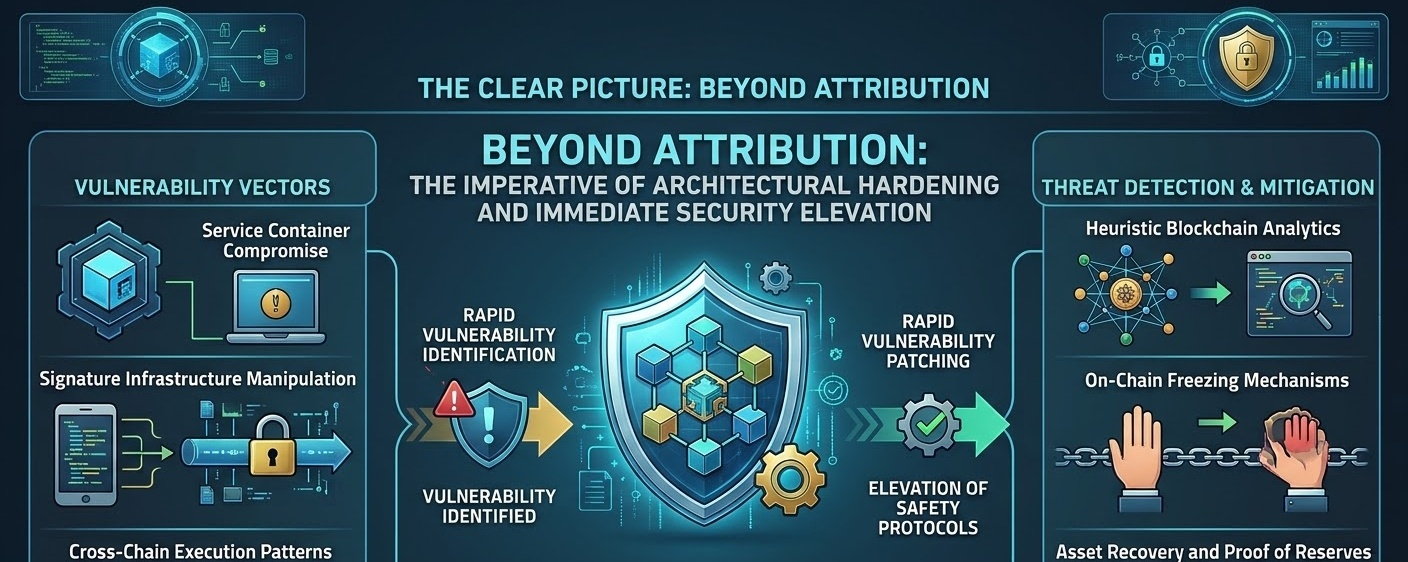

In the rapidly evolving landscape of decentralized finance and centralized cryptocurrency exchanges, high-profile security breaches invariably trigger intense speculation regarding the identity of the perpetrators. However, focusing excessively on who executed the attack deflects attention from the critical systemic reality: the identity of the actor is secondary to the existence of the vulnerability itself. The recent massive security incident on Binance underscores a vital lesson for the entire digital asset industry—proactive infrastructure hardening, rapid vulnerability patching, and the aggressive elevation of safety protocols are the only effective bulwarks against catastrophic future threats.
1. The Anatomy of the Vulnerability: Technical Vectors
Understanding how unauthorized access occurred requires analyzing the technical vectors rather than political attributions. Preliminary forensic investigations into the Binance breach indicated that attackers leveraged sophisticated entry points into operational infrastructure, such as a compromised DevOps engineer's workstation.
From a computer science and cybersecurity perspective, this type of breach typically exploits several architectural vulnerabilities:
Service Container Compromise: Gaining unauthorized entry to isolated runtime environments or service containers allows malicious actors to bypass standard perimeter security layers.
Signature Infrastructure Manipulation: Rather than breaking core cryptographic primitives (such as leaking wallet private keys, which initial reports found no evidence of), sophisticated attackers often target transaction-signing infrastructure and automated execution pipelines. This permits the submission of unauthorized withdrawal transactions that appear cryptographically valid to automated validation systems.
Cross-Chain Execution Patterns: Advanced multi-chain attacks utilize automated scripts to rapidly disperse assets across numerous blockchain networks (such as Ethereum, Bitcoin, Tron, and others) within minutes, exploiting the inherent latency in cross-chain monitoring.
2. Scientific and Forensic Methods for Threat Detection
Detecting and analyzing modern cyber attacks on distributed ledgers requires advanced cryptographic and data-driven methodologies. Security and blockchain intelligence firms deploy several scientific techniques to identify intrusions and track malicious actors:
Heuristic Blockchain Analytics: Utilizing machine learning algorithms and graph theory to map transaction flows across multiple blockchains in real-time, isolating anomalous outflows from standard liquidity patterns.
Smart Contract and Signature Forensics: Analyzing transaction calldata and execution parameters—including mechanisms like EIP-7702 or multi-signature validation structures—to determine how execution privileges were delegated or hijacked.
Digital Forensics and Incident Response (DFIR): Examining endpoint telemetry, memory dumps, and container logs on compromised developer infrastructure to reconstruct the exact timeline of unauthorized access and privilege escalation.
3. Mitigation and Recovery Protocols: Securing the Ecosystem
When a breach of this magnitude occurs, mitigation must be immediate, synchronized, and technologically rigorous. The rapid containment of the Binance incident relied heavily on coordinated counter-measures:
On-Chain Freezing Mechanisms: Stablecoin issuers (such as Tether and Circle) and blockchain partners rapidly blacklisted and froze billions of dollars worth of affected assets on-chain, preventing the perpetrators from liquidating stolen funds.
Revocation of Authorizations: Instantly revoking compromised address authorizations and temporarily suspending deposits and withdrawals to halt the bleeding.
Comprehensive Asset Recovery and Proof of Reserves: Engaging blockchain intelligence and law enforcement partners to trace assets, coupled with transparent post-incident audits and updated Proof of Reserves to restore market confidence.
Conclusion
The primary takeaway from the Binance security incident is clear: as the monetary value managed by digital platforms scales exponentially, the architecture protecting these assets must evolve at an equal or greater pace. Dwelling on the threat actor is a distraction; the core mandate for exchanges and financial institutions is to accelerate security enhancements, enforce strict Zero-Trust architecture, audit third-party and internal access controls, and patch structural vulnerabilities before malicious agents can exploit them. True digital resilience is measured not by who attacks, but by how rapidly vulnerabilities are closed and how effectively user trust is safeguarded.
#CryptoSecurity #Binance #CyberSecurity #blockchain #PlatformHardening
