
technical detail to actually be the most interesting part of Newton 🧠
so when i first looked into how Newton actually writes and enforces its rules, i figured it'd be pretty dry — some code, some logic, transaction goes through or it doesn't. but the deeper i went, the more i realized there's this quiet little "checkpoint" built into every single transaction that most people will never even notice happening
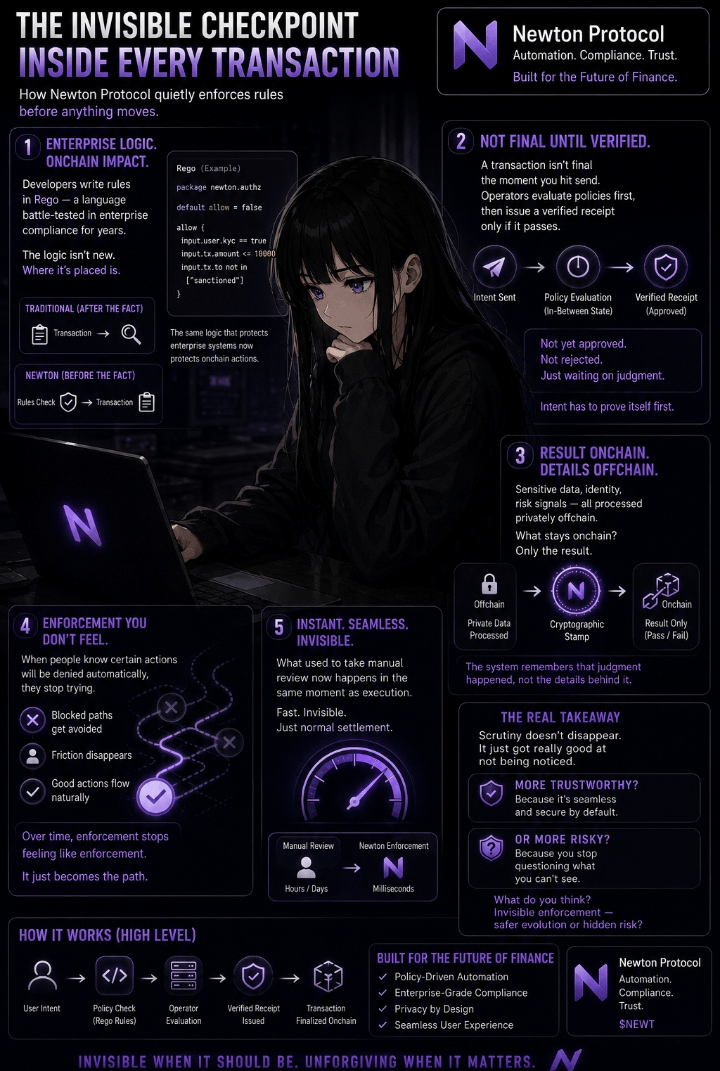
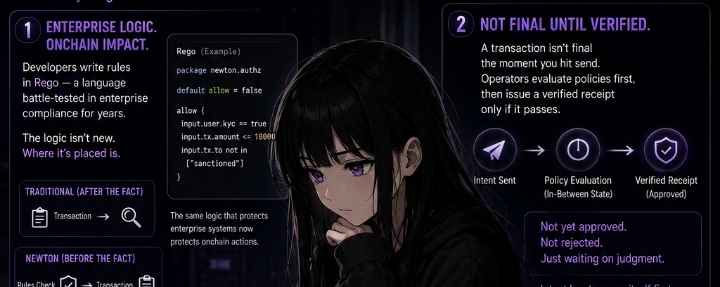
here's the first thing that got me: developers write these rules using something called Rego — which honestly isn't even a crypto-native language. it's been used for YEARS by regular enterprise IT teams for compliance stuff, way before blockchain automation was even a thing. so the same basic logic that gates access in some corporate bank system is now literally deciding whether a DeFi transaction is allowed to happen. nothing about the logic itself is new — what's actually new is WHERE it's placed. instead of checking things after the fact (like traditional audits), it sits directly inside the settlement path, checking BEFORE anything moves
second thing that stood out to me — a transaction isn't really "final" the moment you hit send. Newton's operators actually evaluate the relevant policies first and only THEN issue something like a verified receipt confirming it passed. so technically your transaction exists in this weird in-between state for a second — not yet approved, not rejected either, just... waiting on judgment. which sounds small, but it's kind of a big shift. it means the system isn't blindly trusting intent, it's making intent prove itself first
what really got me thinking tho is how little actual "evidence" sticks around afterward. all the sensitive stuff — identity info, risk data, whatever triggered the check — stays completely offchain, processed privately. what gets left onchain isn't the reasoning, it's just the RESULT. a cryptographic stamp that basically says "yep, this passed" without exposing what was actually checked. it's such a specific kind of memory — the system remembers that judgment happened, but not the details behind it. kind of wild when you sit with that for a min
and here's the part i didn't expect at all — once people know certain actions will just get denied automatically, they naturally stop even trying those paths. so over time the enforcement stops "feeling" like enforcement, because nobody's hitting the wall anymore, they're just not going near it in the first place. combine that with how FAST all this happens (stuff that used to take actual review time now happens instantly, same moment as execution), and the whole system starts feeling less like "being checked" and more like just... normal settlement. invisible
and that's honestly the part that stuck with me most. just because scrutiny doesn't FEEL like scrutiny anymore doesn't mean it disappeared — it just got really good at not being noticed. and i genuinely don't know if that makes the system MORE trustworthy because it's seamless, or if it just makes people stop questioning it altogether
curious what you all think about this one — does invisible enforcement feel safer to you, or does it feel like something to be more cautious about specifically because you can't feel it happening? 👇