

ZhenyaMan
541 Publications

ZhenyaMan
Signaler
Bloquer l’utilisateur
Trader
Trade fréquemment
3.1 an(s)
3.2K+ Suivis
9.7K+ Abonnés
7.4K+ J’aime
Publications
Tous
Citations
Direct
PINNED
·
--
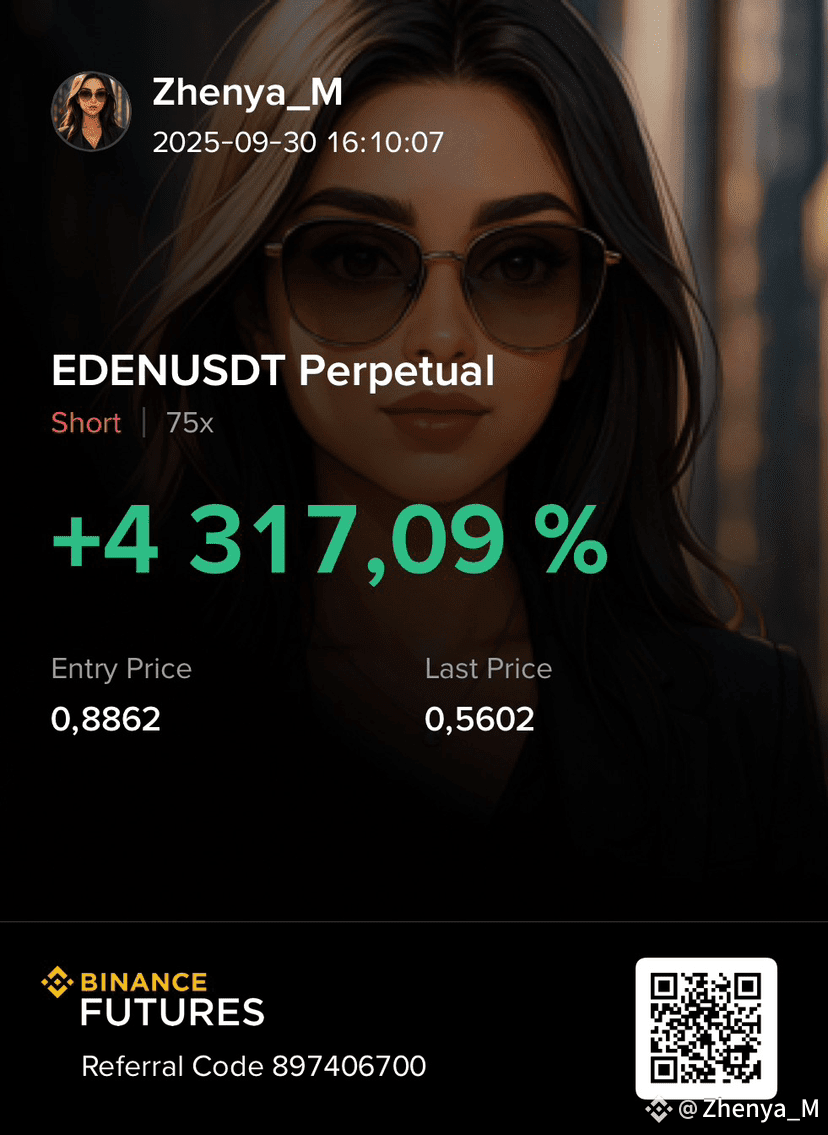
Closed my short on $EDENUSDT ✅
Fresh listing today and it delivered perfectly — +4,317% 🚀📉
Hope you caught this move too! 🔥
$BTC $BNB $EDEN
#FutureTarding #cryptotrading #BinanceArmenia #altcoins #TradingCommunity
{future}(EDENUSDT)
Closed my short on $EDENUSDT ✅
Fresh listing today and it delivered perfectly — +4,317% 🚀📉
Hope you caught this move too! 🔥
$BTC $BNB $EDEN
#FutureTarding #cryptotrading #BinanceArmenia #altcoins #TradingCommunity
Fresh listing today and it delivered perfectly — +4,317% 🚀📉
Hope you caught this move too! 🔥
$BTC $BNB $EDEN
#FutureTarding #cryptotrading #BinanceArmenia #altcoins #TradingCommunity
8
6
20
1.8k
·
--
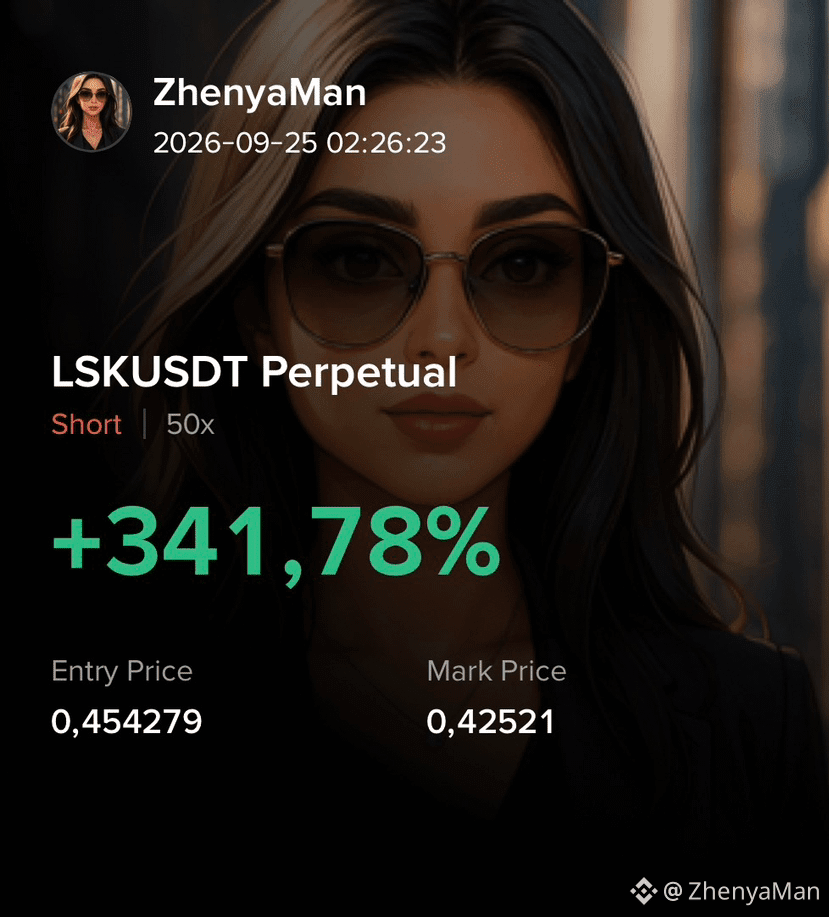
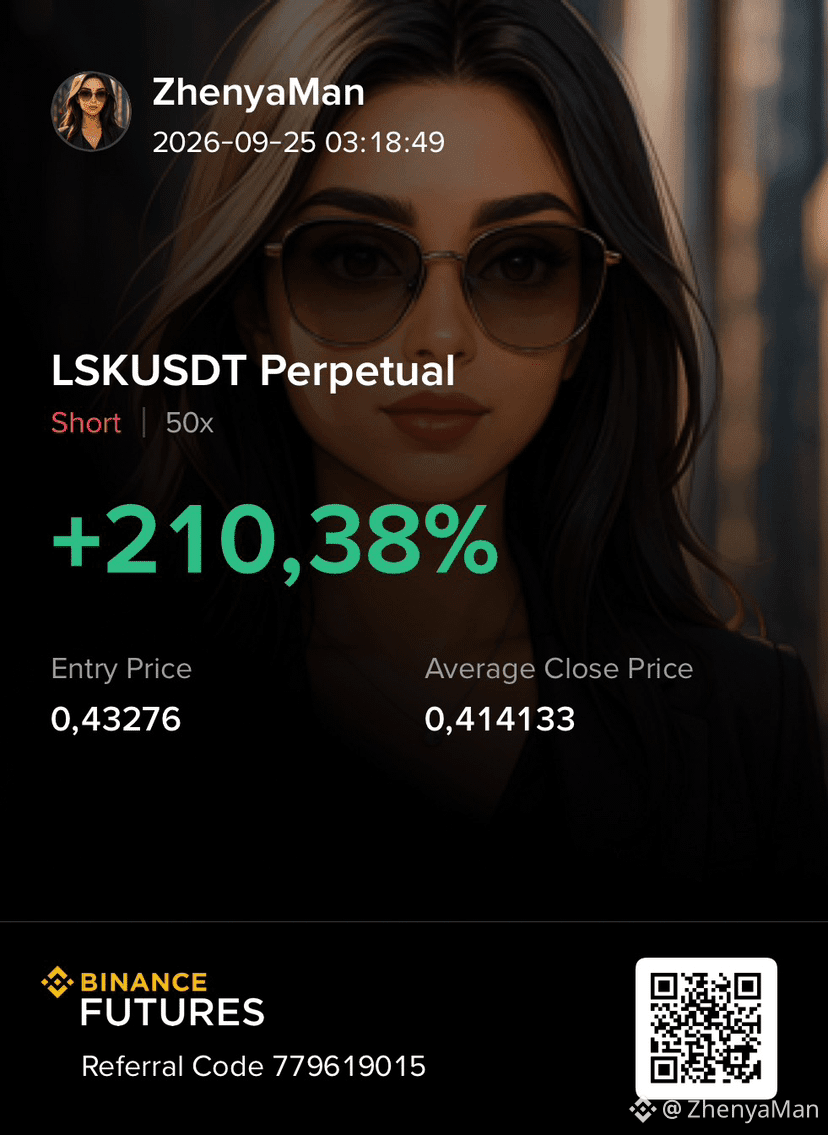
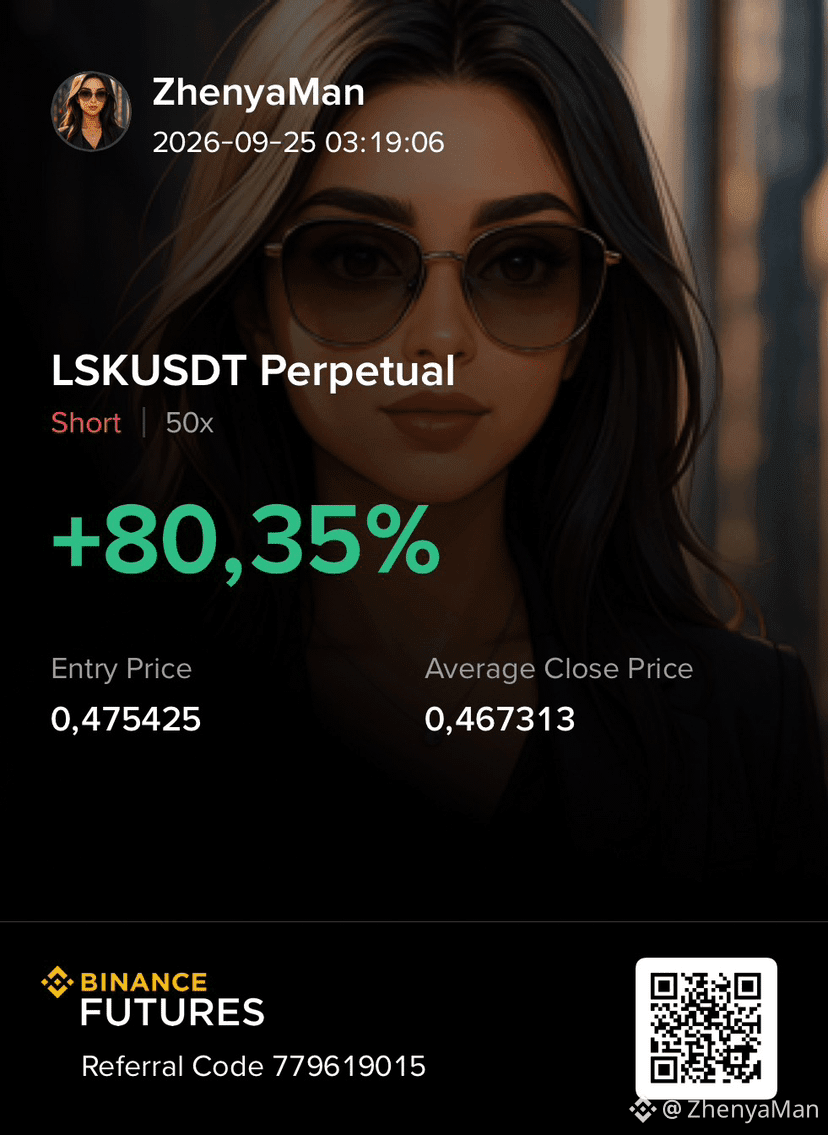
LSKUSDT Short 📉
0.454279 ➔ 0.42521 | +341.78%
0.43276 ➔ 0.414133 | +210.38%
0.475425 ➔ 0.467313 | +80.35%
High leverage requires strict risk management and clear exit targets. Never hold blindly—lock in profits as the market gives them.
$LSK $BTC $BNB
#TradingSignals #TradingCommunity #FutureTarding #altcoins #RiskManagement
{future}(LSKUSDT)
LSKUSDT Short 📉
0.454279 ➔ 0.42521 | +341.78%
0.43276 ➔ 0.414133 | +210.38%
0.475425 ➔ 0.467313 | +80.35%
High leverage requires strict risk management and clear exit targets. Never hold blindly—lock in profits as the market gives them.
$LSK $BTC $BNB
#TradingSignals #TradingCommunity #FutureTarding #altcoins #RiskManagement
0.454279 ➔ 0.42521 | +341.78%
0.43276 ➔ 0.414133 | +210.38%
0.475425 ➔ 0.467313 | +80.35%
High leverage requires strict risk management and clear exit targets. Never hold blindly—lock in profits as the market gives them.
$LSK $BTC $BNB
#TradingSignals #TradingCommunity #FutureTarding #altcoins #RiskManagement
355
1
27
355
·
--
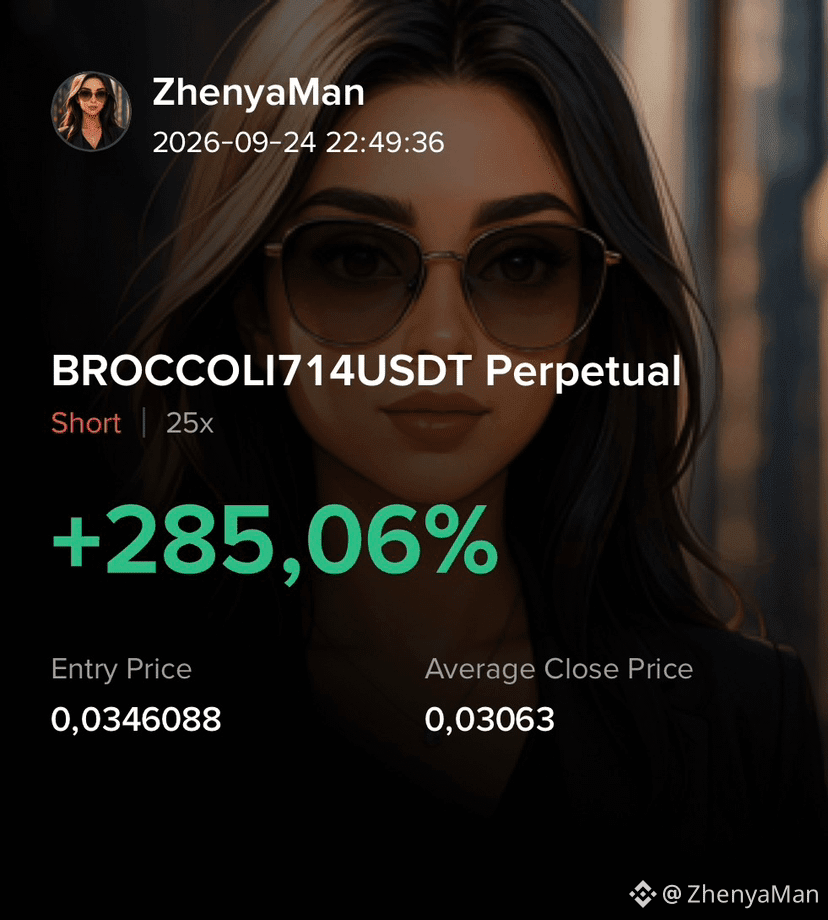
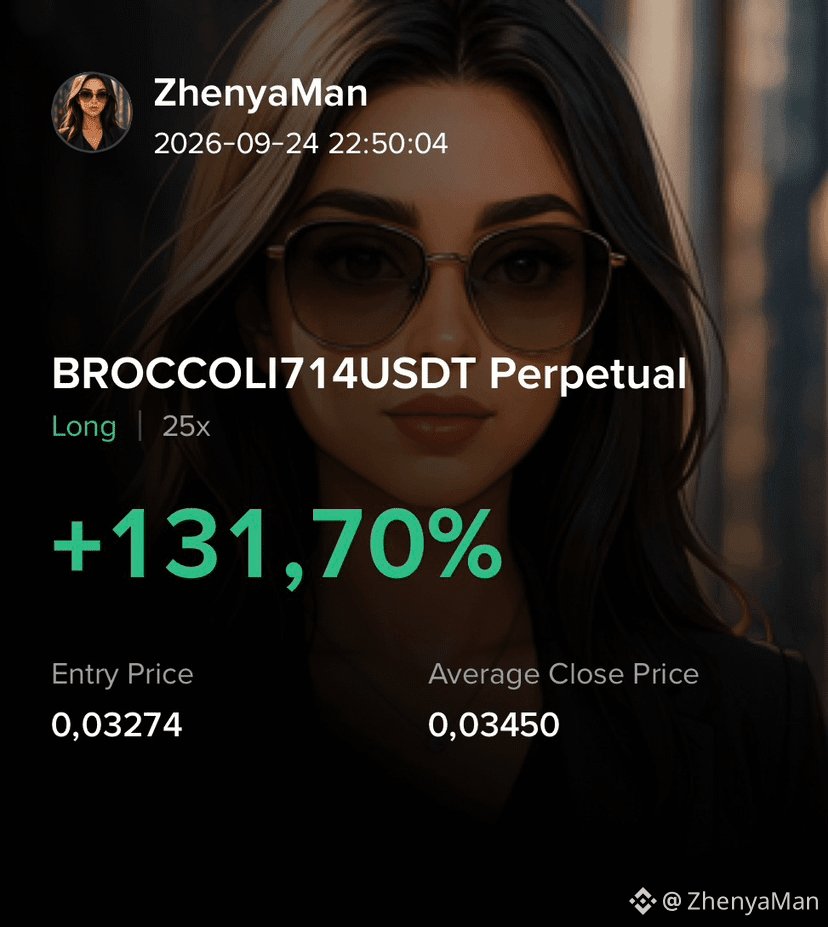
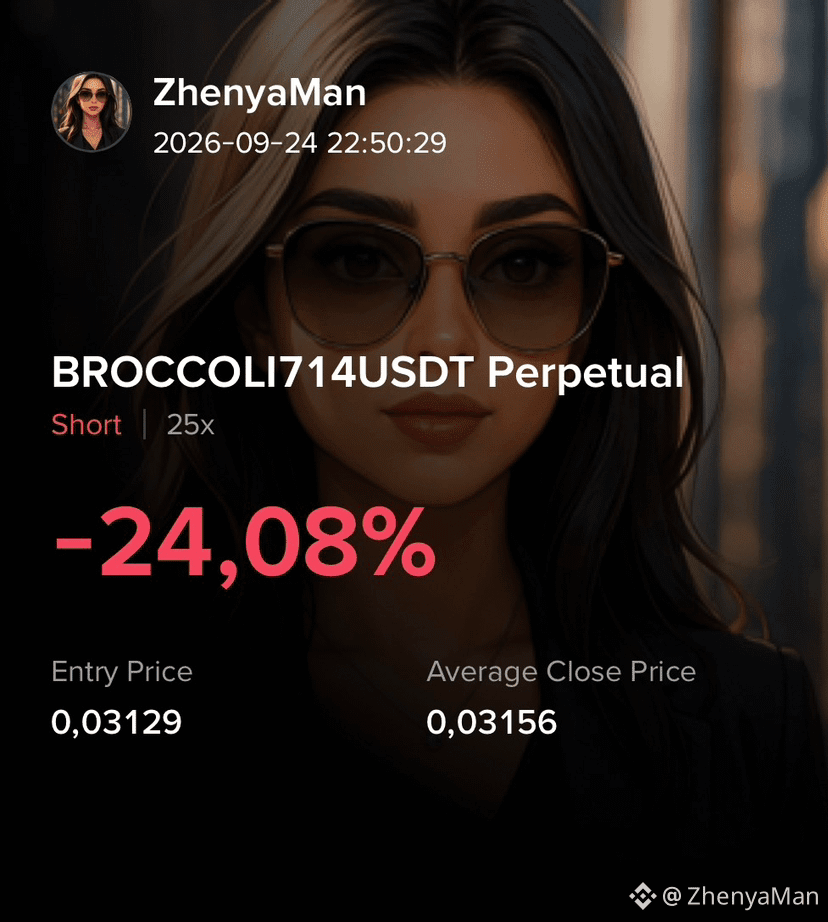
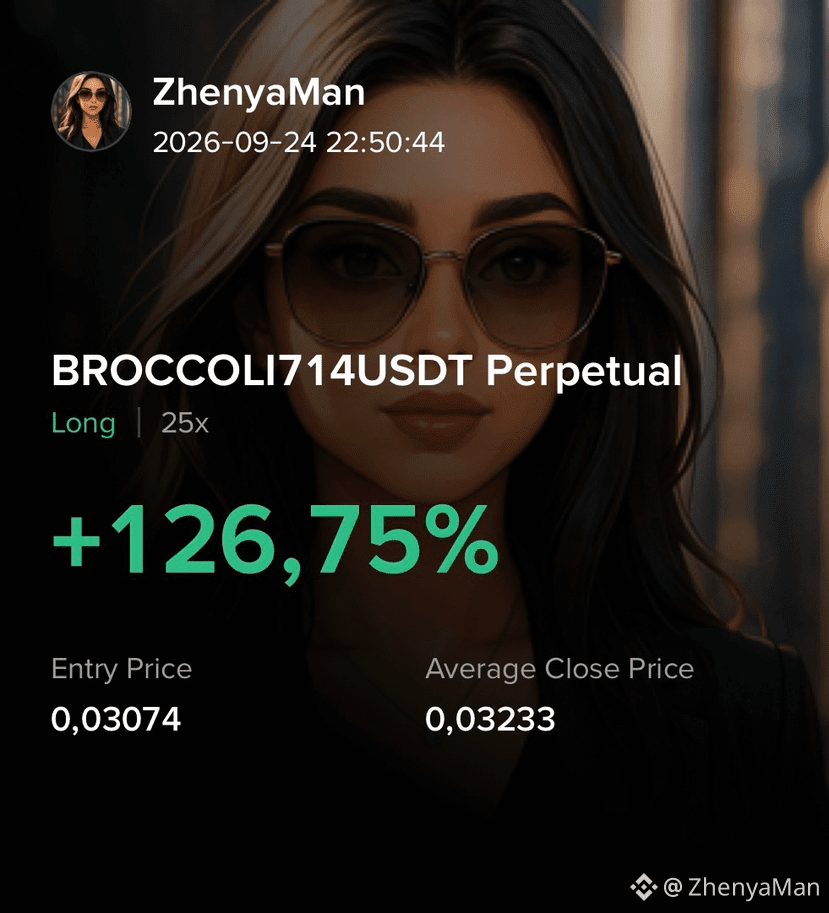
Today’s Trade Recap: BROCCOLI714USDT Futures (25x)
Solid session trading both sides of the market today. Took 5 trades—4 massive wins and 1 small cut. Consistency and disciplined execution over everything 📈
Trade Breakdown:
Short: Entry 0.0346088 ➔ Close 0.03063 | +285.06% 🚀
Long: Entry 0.03274 ➔ Close 0.03450 | +131.70% 🔥
Long: Entry 0.03074 ➔ Close 0.03233 | +126.75% 🎯
Long: Entry 0.03150 ➔ Close 0.03237 | +66.51% 🟢
Short: Entry 0.03129 ➔ Close 0.03156 | -24.08% 🔴
$BROCCOLI714 $BTC $ETH
#TradingCommunity #FutureTarding #TradingSignals #altcoins #trading
{future}(BROCCOLI714USDT)
Today’s Trade Recap: BROCCOLI714USDT Futures (25x)
Solid session trading both sides of the market today. Took 5 trades—4 massive wins and 1 small cut. Consistency and disciplined execution over everything 📈
Trade Breakdown:
Short: Entry 0.0346088 ➔ Close 0.03063 | +285.06% 🚀
Long: Entry 0.03274 ➔ Close 0.03450 | +131.70% 🔥
Long: Entry 0.03074 ➔ Close 0.03233 | +126.75% 🎯
Long: Entry 0.03150 ➔ Close 0.03237 | +66.51% 🟢
Short: Entry 0.03129 ➔ Close 0.03156 | -24.08% 🔴
$BROCCOLI714 $BTC $ETH
#TradingCommunity #FutureTarding #TradingSignals #altcoins #trading
Solid session trading both sides of the market today. Took 5 trades—4 massive wins and 1 small cut. Consistency and disciplined execution over everything 📈
Trade Breakdown:
Short: Entry 0.0346088 ➔ Close 0.03063 | +285.06% 🚀
Long: Entry 0.03274 ➔ Close 0.03450 | +131.70% 🔥
Long: Entry 0.03074 ➔ Close 0.03233 | +126.75% 🎯
Long: Entry 0.03150 ➔ Close 0.03237 | +66.51% 🟢
Short: Entry 0.03129 ➔ Close 0.03156 | -24.08% 🔴
$BROCCOLI714 $BTC $ETH
#TradingCommunity #FutureTarding #TradingSignals #altcoins #trading
1
2
353
·
--
🎙️ Whoever loves Muhammad, support the birth of the Messenger of God
Fin
02 h 16 min 07 sec
282
0
0
·
--
The next step for bStocks isn’t another listing — it’s utility.
Today’s Binance update caught my attention: GameStop bStocks ($GMEB ) can now be used as eligible collateral across Cross Margin, Portfolio Margin and Portfolio Margin Pro for eligible users.
That changes the way I think about tokenized securities.
A bStock isn’t only about getting exposure to a company’s price movement. As more assets gain additional utility, the bigger RWA question becomes: what can you actually do with a tokenized asset after you buy it?
We’ve already seen bStocks expand from the original five assets to dozens of listings, including technology, semiconductor and other sectors. Now collateral functionality adds another layer to the ecosystem.
Of course, more utility also means more responsibility. Margin can amplify both gains and losses, and Binance specifically recommends strict risk management when bStocks are used as collateral.
For me, this is where tokenization gets genuinely interesting: the future may not be about putting traditional assets on-chain just for the sake of it, but making those assets more programmable and useful.
What should bStocks add next?
1️⃣ More collateral assets
2️⃣ More dividend-paying companies
3️⃣ More DeFi integrations
4️⃣ More global companies
What would make the biggest difference to you?
@BinanceCIS #bStocksCIS $GMEB
#bstockscis
The next step for bStocks isn’t another listing — it’s utility.
Today’s Binance update caught my attention: GameStop bStocks ($GMEB ) can now be used as eligible collateral across Cross Margin, Portfolio Margin and Portfolio Margin Pro for eligible users.
That changes the way I think about tokenized securities.
A bStock isn’t only about getting exposure to a company’s price movement. As more assets gain additional utility, the bigger RWA question becomes: what can you actually do with a tokenized asset after you buy it?
We’ve already seen bStocks expand from the original five assets to dozens of listings, including technology, semiconductor and other sectors. Now collateral functionality adds another layer to the ecosystem.
Of course, more utility also means more responsibility. Margin can amplify both gains and losses, and Binance specifically recommends strict risk management when bStocks are used as collateral.
For me, this is where tokenization gets genuinely interesting: the future may not be about putting traditional assets on-chain just for the sake of it, but making those assets more programmable and useful.
What should bStocks add next?
1️⃣ More collateral assets
2️⃣ More dividend-paying companies
3️⃣ More DeFi integrations
4️⃣ More global companies
What would make the biggest difference to you?
@BinanceCIS #bStocksCIS $GMEB
#bstockscis
Today’s Binance update caught my attention: GameStop bStocks ($GMEB ) can now be used as eligible collateral across Cross Margin, Portfolio Margin and Portfolio Margin Pro for eligible users.
That changes the way I think about tokenized securities.
A bStock isn’t only about getting exposure to a company’s price movement. As more assets gain additional utility, the bigger RWA question becomes: what can you actually do with a tokenized asset after you buy it?
We’ve already seen bStocks expand from the original five assets to dozens of listings, including technology, semiconductor and other sectors. Now collateral functionality adds another layer to the ecosystem.
Of course, more utility also means more responsibility. Margin can amplify both gains and losses, and Binance specifically recommends strict risk management when bStocks are used as collateral.
For me, this is where tokenization gets genuinely interesting: the future may not be about putting traditional assets on-chain just for the sake of it, but making those assets more programmable and useful.
What should bStocks add next?
1️⃣ More collateral assets
2️⃣ More dividend-paying companies
3️⃣ More DeFi integrations
4️⃣ More global companies
What would make the biggest difference to you?
@BinanceCIS #bStocksCIS $GMEB
#bstockscis
1
3
196
·
--
bStocks: The Interesting Part May Be What Happens After You Buy
When people talk about tokenised stocks, the conversation usually starts with trading. But I think the more interesting question is what happens after you hold the asset.
Binance recently announced support for cash dividend distributions through bStocks for eligible holders of $AAPLB and $IBMB . That matters because it shows tokenised securities are moving beyond simply tracking stock prices and toward reflecting more of the economics investors associate with traditional equities. (Binance)
At the same time, Binance has continued expanding the bStocks universe, most recently adding 10 assets including $NFLXB , $ASMLB and $SMCIB. (Binance)
To me, this raises a bigger RWA question: if tokenized stocks can combine exposure to real-world companies with blockchain-based trading infrastructure, dividends, and additional portfolio utility, could they eventually become a normal part of diversified digital portfolios?
The technology is interesting, but adoption will ultimately depend on utility, liquidity, transparency and trust.
What feature would make you most interested in bStocks?
@BinanceCIS #bStocksCİS
#bstockscis
bStocks: The Interesting Part May Be What Happens After You Buy
When people talk about tokenised stocks, the conversation usually starts with trading. But I think the more interesting question is what happens after you hold the asset.
Binance recently announced support for cash dividend distributions through bStocks for eligible holders of $AAPLB and $IBMB . That matters because it shows tokenised securities are moving beyond simply tracking stock prices and toward reflecting more of the economics investors associate with traditional equities. (Binance)
At the same time, Binance has continued expanding the bStocks universe, most recently adding 10 assets including $NFLXB , $ASMLB and $SMCIB. (Binance)
To me, this raises a bigger RWA question: if tokenized stocks can combine exposure to real-world companies with blockchain-based trading infrastructure, dividends, and additional portfolio utility, could they eventually become a normal part of diversified digital portfolios?
The technology is interesting, but adoption will ultimately depend on utility, liquidity, transparency and trust.
What feature would make you most interested in bStocks?
@BinanceCIS #bStocksCİS
#bstockscis
When people talk about tokenised stocks, the conversation usually starts with trading. But I think the more interesting question is what happens after you hold the asset.
Binance recently announced support for cash dividend distributions through bStocks for eligible holders of $AAPLB and $IBMB . That matters because it shows tokenised securities are moving beyond simply tracking stock prices and toward reflecting more of the economics investors associate with traditional equities. (Binance)
At the same time, Binance has continued expanding the bStocks universe, most recently adding 10 assets including $NFLXB , $ASMLB and $SMCIB. (Binance)
To me, this raises a bigger RWA question: if tokenized stocks can combine exposure to real-world companies with blockchain-based trading infrastructure, dividends, and additional portfolio utility, could they eventually become a normal part of diversified digital portfolios?
The technology is interesting, but adoption will ultimately depend on utility, liquidity, transparency and trust.
What feature would make you most interested in bStocks?
@BinanceCIS #bStocksCİS
#bstockscis
Dividend support 💰
50%
24/7 trading 🌐
50%
Collateral utility 📊
0%
More global companies 🚀
0%
2 Votes • Vote fermé
4
500
·
--
Terafab + bStocks: why this story is bigger than Tesla
The Terafab announcement caught my attention because it connects three major themes: AI, semiconductors and real-world infrastructure.
Tesla and SpaceX plan to invest an initial $16.8B in Terafab, a semiconductor complex in Grimes County, Texas. The planned site is expected to cover about 100 million sq ft and target more than 1 terawatt of AI compute capacity annually. The project is designed to support applications ranging from Tesla’s Optimus and Cybercab programs to SpaceX’s planned space-based data centers.
What I find interesting from an investor perspective is the supply chain behind AI. Everyone talks about AI models, but those models need chips, memory, manufacturing capacity and enormous amounts of compute.
That makes Tesla an interesting company to watch from another angle. And with Tesla’s tokenized bStock, $TSLAB , investors can follow this real-world story through a blockchain-based asset. Binance currently lists TSLAB as Tesla Tokenized bStocks.
Terafab is still a planned project, so execution will matter. But if the vision becomes reality, it could become an important piece of the AI infrastructure race.
What will matter most for AI stocks over the next few years?
@BinanceCIS
#bstockscis #SpaceX
Terafab + bStocks: why this story is bigger than Tesla
The Terafab announcement caught my attention because it connects three major themes: AI, semiconductors and real-world infrastructure.
Tesla and SpaceX plan to invest an initial $16.8B in Terafab, a semiconductor complex in Grimes County, Texas. The planned site is expected to cover about 100 million sq ft and target more than 1 terawatt of AI compute capacity annually. The project is designed to support applications ranging from Tesla’s Optimus and Cybercab programs to SpaceX’s planned space-based data centers.
What I find interesting from an investor perspective is the supply chain behind AI. Everyone talks about AI models, but those models need chips, memory, manufacturing capacity and enormous amounts of compute.
That makes Tesla an interesting company to watch from another angle. And with Tesla’s tokenized bStock, $TSLAB , investors can follow this real-world story through a blockchain-based asset. Binance currently lists TSLAB as Tesla Tokenized bStocks.
Terafab is still a planned project, so execution will matter. But if the vision becomes reality, it could become an important piece of the AI infrastructure race.
What will matter most for AI stocks over the next few years?
@BinanceCIS
#bstockscis #SpaceX
The Terafab announcement caught my attention because it connects three major themes: AI, semiconductors and real-world infrastructure.
Tesla and SpaceX plan to invest an initial $16.8B in Terafab, a semiconductor complex in Grimes County, Texas. The planned site is expected to cover about 100 million sq ft and target more than 1 terawatt of AI compute capacity annually. The project is designed to support applications ranging from Tesla’s Optimus and Cybercab programs to SpaceX’s planned space-based data centers.
What I find interesting from an investor perspective is the supply chain behind AI. Everyone talks about AI models, but those models need chips, memory, manufacturing capacity and enormous amounts of compute.
That makes Tesla an interesting company to watch from another angle. And with Tesla’s tokenized bStock, $TSLAB , investors can follow this real-world story through a blockchain-based asset. Binance currently lists TSLAB as Tesla Tokenized bStocks.
Terafab is still a planned project, so execution will matter. But if the vision becomes reality, it could become an important piece of the AI infrastructure race.
What will matter most for AI stocks over the next few years?
@BinanceCIS
#bstockscis #SpaceX
AI demand
0%
Chip production
0%
Compute infrastructure
100%
Execution & profitability
0%
3 Votes • Vote fermé
4
189
·
--
I’ve been thinking about one thing with bStocks: utility matters more than the word “tokenised.”
Putting a stock on blockchain is interesting, but what really matters is what that changes for the investor—access, flexibility, portfolio management, and eventually new ways to use the asset.
That’s where I think the real RWA story gets interesting.
What would convince you to actually use tokenised stocks?
@BinanceCIS
#bstockscis #bstocks
I’ve been thinking about one thing with bStocks: utility matters more than the word “tokenised.”
Putting a stock on blockchain is interesting, but what really matters is what that changes for the investor—access, flexibility, portfolio management, and eventually new ways to use the asset.
That’s where I think the real RWA story gets interesting.
What would convince you to actually use tokenised stocks?
@BinanceCIS
#bstockscis #bstocks
Putting a stock on blockchain is interesting, but what really matters is what that changes for the investor—access, flexibility, portfolio management, and eventually new ways to use the asset.
That’s where I think the real RWA story gets interesting.
What would convince you to actually use tokenised stocks?
@BinanceCIS
#bstockscis #bstocks
More assets
0%
Better liquidity
34%
More utility
33%
Lower costs
33%
3 Votes • Vote fermé
3
108
·
--
SanDisk (SNDK): A Perfect Earnings Report That Still Couldn’t Satisfy Wall StreetSanDisk’s 2026 journey has been nothing short of a roller coaster.
The stock surged from its 52-week lows to a record high of around $2,354, fuelled by the AI boom and expectations for massive storage demand. But after a sharp correction — including a nearly 47% drop in July — the stock entered earnings with extremely high expectations.
Then came the paradox:
📈 Record-breaking results
Q4 revenue jumped 372% YoY to $8.97 billionAdjusted EPS reached $39.25Gross margin expanded to a record 84.6%The company announced a $14 billion buyback plan
Yet the stock still fell:
Down 5.4% after earningsAnother decline in after-hours trading
Why?
The problem wasn’t the quarter — it was the expectations.
SanDisk’s next-quarter revenue guidance midpoint of $10.55 billion came in slightly below analyst expectations of around $10.8 billion. In a market where investors are pricing in continuous upside surprises, “excellent” is no longer enough — the outlook has to keep beating already elevated forecasts.
The AI storage story remains powerful, but the market is reminding investors of one lesson:
Great companies can deliver great earnings, but stocks move on the gap between reality and expectations.
$SNDK
#SanDisk #SNDK #AI #Semiconductors #Investing
{future}(SNDKUSDT)
SanDisk (SNDK): A Perfect Earnings Report That Still Couldn’t Satisfy Wall Street
SanDisk’s 2026 journey has been nothing short of a roller coaster.
The stock surged from its 52-week lows to a record high of around $2,354, fuelled by the AI boom and expectations for massive storage demand. But after a sharp correction — including a nearly 47% drop in July — the stock entered earnings with extremely high expectations.
Then came the paradox:
📈 Record-breaking results
Q4 revenue jumped 372% YoY to $8.97 billionAdjusted EPS reached $39.25Gross margin expanded to a record 84.6%The company announced a $14 billion buyback plan
Yet the stock still fell:
Down 5.4% after earningsAnother decline in after-hours trading
Why?
The problem wasn’t the quarter — it was the expectations.
SanDisk’s next-quarter revenue guidance midpoint of $10.55 billion came in slightly below analyst expectations of around $10.8 billion. In a market where investors are pricing in continuous upside surprises, “excellent” is no longer enough — the outlook has to keep beating already elevated forecasts.
The AI storage story remains powerful, but the market is reminding investors of one lesson:
Great companies can deliver great earnings, but stocks move on the gap between reality and expectations.
$SNDK
#SanDisk #SNDK #AI #Semiconductors #Investing
The stock surged from its 52-week lows to a record high of around $2,354, fuelled by the AI boom and expectations for massive storage demand. But after a sharp correction — including a nearly 47% drop in July — the stock entered earnings with extremely high expectations.
Then came the paradox:
📈 Record-breaking results
Q4 revenue jumped 372% YoY to $8.97 billionAdjusted EPS reached $39.25Gross margin expanded to a record 84.6%The company announced a $14 billion buyback plan
Yet the stock still fell:
Down 5.4% after earningsAnother decline in after-hours trading
Why?
The problem wasn’t the quarter — it was the expectations.
SanDisk’s next-quarter revenue guidance midpoint of $10.55 billion came in slightly below analyst expectations of around $10.8 billion. In a market where investors are pricing in continuous upside surprises, “excellent” is no longer enough — the outlook has to keep beating already elevated forecasts.
The AI storage story remains powerful, but the market is reminding investors of one lesson:
Great companies can deliver great earnings, but stocks move on the gap between reality and expectations.
$SNDK
#SanDisk #SNDK #AI #Semiconductors #Investing
506
4
30
506
·
--
Binance BStocks: Are Tokenised Stocks Becoming the Next Evolution of Investing?
For years, traditional markets and blockchain have existed as two separate worlds. Stocks represented ownership in companies, while crypto introduced a new way to transfer and manage value. Binance bStocks is an interesting example of how these two worlds are starting to connect.
The biggest change is not only the ability to access tokenised stocks, but the additional flexibility that blockchain technology can bring. In traditional markets, an asset is usually just something you hold. With tokenised assets, the conversation moves toward utility, accessibility, and how these assets can interact with a broader financial ecosystem.
The recent expansion of bStocks and the ability to use them as collateral creates a new discussion around capital efficiency. Instead of thinking only about buying and selling, investors can explore new ways to manage their portfolios while keeping exposure to real-world companies.
Another important point is accessibility. Global investors often face different market restrictions, time zones, and barriers when accessing traditional assets. Tokenisation has the potential to make financial markets more connected and available to a wider audience.
Of course, this sector is still developing, and education, transparency, and risk management remain essential. But the direction is interesting: real-world assets are moving closer to blockchain, and platforms like Binance are becoming part of this transition.
The question is not only “Can stocks exist on-chain?” but also “What new possibilities appear when they do?”
What matters most for the future of tokenised stocks?
@BinanceCIS #bStocksCIS $NFLXB
Binance BStocks: Are Tokenised Stocks Becoming the Next Evolution of Investing?
For years, traditional markets and blockchain have existed as two separate worlds. Stocks represented ownership in companies, while crypto introduced a new way to transfer and manage value. Binance bStocks is an interesting example of how these two worlds are starting to connect.
The biggest change is not only the ability to access tokenised stocks, but the additional flexibility that blockchain technology can bring. In traditional markets, an asset is usually just something you hold. With tokenised assets, the conversation moves toward utility, accessibility, and how these assets can interact with a broader financial ecosystem.
The recent expansion of bStocks and the ability to use them as collateral creates a new discussion around capital efficiency. Instead of thinking only about buying and selling, investors can explore new ways to manage their portfolios while keeping exposure to real-world companies.
Another important point is accessibility. Global investors often face different market restrictions, time zones, and barriers when accessing traditional assets. Tokenisation has the potential to make financial markets more connected and available to a wider audience.
Of course, this sector is still developing, and education, transparency, and risk management remain essential. But the direction is interesting: real-world assets are moving closer to blockchain, and platforms like Binance are becoming part of this transition.
The question is not only “Can stocks exist on-chain?” but also “What new possibilities appear when they do?”
What matters most for the future of tokenised stocks?
@BinanceCIS #bStocksCIS $NFLXB
For years, traditional markets and blockchain have existed as two separate worlds. Stocks represented ownership in companies, while crypto introduced a new way to transfer and manage value. Binance bStocks is an interesting example of how these two worlds are starting to connect.
The biggest change is not only the ability to access tokenised stocks, but the additional flexibility that blockchain technology can bring. In traditional markets, an asset is usually just something you hold. With tokenised assets, the conversation moves toward utility, accessibility, and how these assets can interact with a broader financial ecosystem.
The recent expansion of bStocks and the ability to use them as collateral creates a new discussion around capital efficiency. Instead of thinking only about buying and selling, investors can explore new ways to manage their portfolios while keeping exposure to real-world companies.
Another important point is accessibility. Global investors often face different market restrictions, time zones, and barriers when accessing traditional assets. Tokenisation has the potential to make financial markets more connected and available to a wider audience.
Of course, this sector is still developing, and education, transparency, and risk management remain essential. But the direction is interesting: real-world assets are moving closer to blockchain, and platforms like Binance are becoming part of this transition.
The question is not only “Can stocks exist on-chain?” but also “What new possibilities appear when they do?”
What matters most for the future of tokenised stocks?
@BinanceCIS #bStocksCIS $NFLXB
Easier global market access 🌍
67%
More portfolio flexibility 📊
0%
New financial tools 💼
0%
Growth of real-world assets 🚀
33%
3 Votes • Vote fermé
3
84
·
--
Traditional stocks have always been limited by market hours, borders, and access barriers. Binance BStocks represents an interesting step toward connecting real-world assets with blockchain technology, offering a new perspective on how investors can interact with global markets. Looking forward to seeing how this space evolves with @BinanceCIS #bStocksCIS
#bstockscis
Traditional stocks have always been limited by market hours, borders, and access barriers. Binance BStocks represents an interesting step toward connecting real-world assets with blockchain technology, offering a new perspective on how investors can interact with global markets. Looking forward to seeing how this space evolves with @BinanceCIS #bStocksCIS
#bstockscis
#bstockscis
4
108
·
--
Discovering Babylon’s New Campaign: Why Trustless Bitcoin Vaults MatterI recently came across the new Babylon Leaderboard Campaign on Binance Square, and it encouraged me to take a deeper look at what @babylonlabs_io is building. Beyond the campaign itself, the project’s vision for Trust-less Bitcoin Vaults (TBV) is what truly stands out.
As Bitcoin adoption continues to grow, protecting BTC without sacrificing self-custody is becoming increasingly important. Trust-less Bitcoin Vaults introduce an approach designed to strengthen asset security through programmable protection and recovery mechanisms while allowing users to remain in full control of their Bitcoin. This reflects Bitcoin’s core principles of decentralisation and trust minimisation.
Innovation in Bitcoin infrastructure is just as important as innovation in scalability. Solutions like TBV could help reduce the risks associated with compromised private keys while making long-term Bitcoin storage more resilient and secure.
I’m looking forward to following the progress of @babylonlabs_io and seeing how the ecosystem around $BABY evolves.
#baby $BABY
{future}(BABYUSDT)
Discovering Babylon’s New Campaign: Why Trustless Bitcoin Vaults Matter
I recently came across the new Babylon Leaderboard Campaign on Binance Square, and it encouraged me to take a deeper look at what @BabylonLabs_io is building. Beyond the campaign itself, the project’s vision for Trust-less Bitcoin Vaults (TBV) is what truly stands out.
As Bitcoin adoption continues to grow, protecting BTC without sacrificing self-custody is becoming increasingly important. Trust-less Bitcoin Vaults introduce an approach designed to strengthen asset security through programmable protection and recovery mechanisms while allowing users to remain in full control of their Bitcoin. This reflects Bitcoin’s core principles of decentralisation and trust minimisation.
Innovation in Bitcoin infrastructure is just as important as innovation in scalability. Solutions like TBV could help reduce the risks associated with compromised private keys while making long-term Bitcoin storage more resilient and secure.
I’m looking forward to following the progress of @BabylonLabs_io and seeing how the ecosystem around $BABY evolves.
#baby $BABY
As Bitcoin adoption continues to grow, protecting BTC without sacrificing self-custody is becoming increasingly important. Trust-less Bitcoin Vaults introduce an approach designed to strengthen asset security through programmable protection and recovery mechanisms while allowing users to remain in full control of their Bitcoin. This reflects Bitcoin’s core principles of decentralisation and trust minimisation.
Innovation in Bitcoin infrastructure is just as important as innovation in scalability. Solutions like TBV could help reduce the risks associated with compromised private keys while making long-term Bitcoin storage more resilient and secure.
I’m looking forward to following the progress of @BabylonLabs_io and seeing how the ecosystem around $BABY evolves.
#baby $BABY
3
144
·
--

Article
Why OpenLedger Could Become One of the Most Important AI Projects in CryptoLately I’ve been thinking a lot about where AI is actually heading — not just the hype, but the long-term impact. Every week we see new AI tools launching, but almost nobody talks about the people behind the data that powers these systems.
That’s honestly why @Openledger caught my attention.
Right now, the AI industry feels extremely centralized. Big companies collect huge amounts of data, train powerful models, and keep everything locked inside closed ecosystems. Users contribute value every single day, but very little of that value comes back to the community.
OpenLedger is trying to approach things differently.
Instead of building another short-term AI narrative token, the project is creating infrastructure for decentralised AI. The idea of making datasets, models, and contributors part of an open economy actually makes a lot of sense to me, especially as AI becomes more integrated into daily life.
One thing I find really interesting is the focus on attribution and transparency. In the future, businesses and even governments will probably need ways to verify where AI-generated information comes from and whether the underlying data can be trusted. That problem is much bigger than most people realise today.
I also think the timing is smart. The market is slowly shifting away from pure speculation and starting to pay more attention to projects with real infrastructure and long-term utility. AI + blockchain could become one of the strongest sectors over the next few years, and OpenLedger seems positioned right in the middle of that trend.
The concept of rewarding contributors fairly instead of allowing centralised platforms to capture all the value feels like a natural evolution of Web3.
Personally, I’m watching the $OPEN ecosystem closely because projects building foundational infrastructure usually end up becoming much more important later in the cycle.
Curious to see how far OpenLedger can push the decentralised AI movement from here.
$OPEN #OpenLedger
{future}(OPENUSDT)
Why OpenLedger Could Become One of the Most Important AI Projects in Crypto
Lately I’ve been thinking a lot about where AI is actually heading — not just the hype, but the long-term impact. Every week we see new AI tools launching, but almost nobody talks about the people behind the data that powers these systems.
That’s honestly why @OpenLedger caught my attention.
Right now, the AI industry feels extremely centralized. Big companies collect huge amounts of data, train powerful models, and keep everything locked inside closed ecosystems. Users contribute value every single day, but very little of that value comes back to the community.
OpenLedger is trying to approach things differently.
Instead of building another short-term AI narrative token, the project is creating infrastructure for decentralised AI. The idea of making datasets, models, and contributors part of an open economy actually makes a lot of sense to me, especially as AI becomes more integrated into daily life.
One thing I find really interesting is the focus on attribution and transparency. In the future, businesses and even governments will probably need ways to verify where AI-generated information comes from and whether the underlying data can be trusted. That problem is much bigger than most people realise today.
I also think the timing is smart. The market is slowly shifting away from pure speculation and starting to pay more attention to projects with real infrastructure and long-term utility. AI + blockchain could become one of the strongest sectors over the next few years, and OpenLedger seems positioned right in the middle of that trend.
The concept of rewarding contributors fairly instead of allowing centralised platforms to capture all the value feels like a natural evolution of Web3.
Personally, I’m watching the $OPEN ecosystem closely because projects building foundational infrastructure usually end up becoming much more important later in the cycle.
Curious to see how far OpenLedger can push the decentralised AI movement from here.
$OPEN #OpenLedger
That’s honestly why @OpenLedger caught my attention.
Right now, the AI industry feels extremely centralized. Big companies collect huge amounts of data, train powerful models, and keep everything locked inside closed ecosystems. Users contribute value every single day, but very little of that value comes back to the community.
OpenLedger is trying to approach things differently.
Instead of building another short-term AI narrative token, the project is creating infrastructure for decentralised AI. The idea of making datasets, models, and contributors part of an open economy actually makes a lot of sense to me, especially as AI becomes more integrated into daily life.
One thing I find really interesting is the focus on attribution and transparency. In the future, businesses and even governments will probably need ways to verify where AI-generated information comes from and whether the underlying data can be trusted. That problem is much bigger than most people realise today.
I also think the timing is smart. The market is slowly shifting away from pure speculation and starting to pay more attention to projects with real infrastructure and long-term utility. AI + blockchain could become one of the strongest sectors over the next few years, and OpenLedger seems positioned right in the middle of that trend.
The concept of rewarding contributors fairly instead of allowing centralised platforms to capture all the value feels like a natural evolution of Web3.
Personally, I’m watching the $OPEN ecosystem closely because projects building foundational infrastructure usually end up becoming much more important later in the cycle.
Curious to see how far OpenLedger can push the decentralised AI movement from here.
$OPEN #OpenLedger
2
168
·
--
Article
Why OpenLedger Could Be One of the Most Important AI-Crypto Projects to WatchEveryone talks about AI as the future, but very few people ask the important question: who actually owns the intelligence being created?
Right now, the AI industry is heavily centralised. Large corporations collect massive amounts of data, train models behind closed doors, and monetize everything while contributors receive almost nothing. This imbalance is becoming one of the biggest issues in the next wave of technology.
That’s exactly why @Openledger has started attracting attention in the crypto and AI sectors.
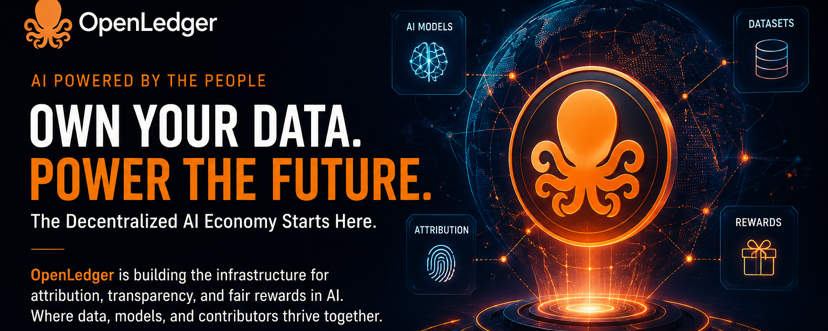
Instead of treating data as a free resource, OpenLedger is building an ecosystem where datasets, AI models, and contributors can finally become part of an open economic system. The idea is simple but powerful: if data powers AI, then the people providing value should also share in the rewards.
What makes OpenLedger different from many “AI narrative” projects is that it focuses on infrastructure rather than hype. The project is building decentralized frameworks for attribution, AI verification, and monetization. In my opinion, this is one of the most important missing layers in the current AI market.
Another interesting point is timing. The market is entering a phase where investors are becoming more selective. Random meme narratives may create temporary attention, but long-term capital usually flows toward projects solving real structural problems. AI transparency and ownership are problems that still remain unsolved globally.
OpenLedger’s approach to Datanets and decentralized AI coordination could become extremely relevant as regulations around AI accountability continue to grow. Governments and enterprises are increasingly asking where AI outputs come from, how models are trained, and whether data usage can be verified. OpenLedger seems to be positioning itself early for that future.
The combination of blockchain transparency with AI attribution creates a narrative that feels much stronger than simple “AI tokens.” If execution matches vision, OpenLedger could evolve into critical infrastructure for decentralised intelligence economies.
Personally, I think the next major crypto winners won’t only be consumer apps — they’ll be protocols powering entirely new digital economies. OpenLedger and the $OPEN ecosystem are trying to build exactly that foundation.
Definitely a project worth watching closely in the coming months.
$OPEN #OpenLedger
{spot}(OPENUSDT)
Why OpenLedger Could Be One of the Most Important AI-Crypto Projects to Watch
Everyone talks about AI as the future, but very few people ask the important question: who actually owns the intelligence being created?
Right now, the AI industry is heavily centralised. Large corporations collect massive amounts of data, train models behind closed doors, and monetize everything while contributors receive almost nothing. This imbalance is becoming one of the biggest issues in the next wave of technology.
That’s exactly why @OpenLedger has started attracting attention in the crypto and AI sectors.
Instead of treating data as a free resource, OpenLedger is building an ecosystem where datasets, AI models, and contributors can finally become part of an open economic system. The idea is simple but powerful: if data powers AI, then the people providing value should also share in the rewards.
What makes OpenLedger different from many “AI narrative” projects is that it focuses on infrastructure rather than hype. The project is building decentralized frameworks for attribution, AI verification, and monetization. In my opinion, this is one of the most important missing layers in the current AI market.
Another interesting point is timing. The market is entering a phase where investors are becoming more selective. Random meme narratives may create temporary attention, but long-term capital usually flows toward projects solving real structural problems. AI transparency and ownership are problems that still remain unsolved globally.
OpenLedger’s approach to Datanets and decentralized AI coordination could become extremely relevant as regulations around AI accountability continue to grow. Governments and enterprises are increasingly asking where AI outputs come from, how models are trained, and whether data usage can be verified. OpenLedger seems to be positioning itself early for that future.
The combination of blockchain transparency with AI attribution creates a narrative that feels much stronger than simple “AI tokens.” If execution matches vision, OpenLedger could evolve into critical infrastructure for decentralised intelligence economies.
Personally, I think the next major crypto winners won’t only be consumer apps — they’ll be protocols powering entirely new digital economies. OpenLedger and the $OPEN ecosystem are trying to build exactly that foundation.
Definitely a project worth watching closely in the coming months.
$OPEN #OpenLedger
Right now, the AI industry is heavily centralised. Large corporations collect massive amounts of data, train models behind closed doors, and monetize everything while contributors receive almost nothing. This imbalance is becoming one of the biggest issues in the next wave of technology.
That’s exactly why @OpenLedger has started attracting attention in the crypto and AI sectors.
Instead of treating data as a free resource, OpenLedger is building an ecosystem where datasets, AI models, and contributors can finally become part of an open economic system. The idea is simple but powerful: if data powers AI, then the people providing value should also share in the rewards.
What makes OpenLedger different from many “AI narrative” projects is that it focuses on infrastructure rather than hype. The project is building decentralized frameworks for attribution, AI verification, and monetization. In my opinion, this is one of the most important missing layers in the current AI market.
Another interesting point is timing. The market is entering a phase where investors are becoming more selective. Random meme narratives may create temporary attention, but long-term capital usually flows toward projects solving real structural problems. AI transparency and ownership are problems that still remain unsolved globally.
OpenLedger’s approach to Datanets and decentralized AI coordination could become extremely relevant as regulations around AI accountability continue to grow. Governments and enterprises are increasingly asking where AI outputs come from, how models are trained, and whether data usage can be verified. OpenLedger seems to be positioning itself early for that future.
The combination of blockchain transparency with AI attribution creates a narrative that feels much stronger than simple “AI tokens.” If execution matches vision, OpenLedger could evolve into critical infrastructure for decentralised intelligence economies.
Personally, I think the next major crypto winners won’t only be consumer apps — they’ll be protocols powering entirely new digital economies. OpenLedger and the $OPEN ecosystem are trying to build exactly that foundation.
Definitely a project worth watching closely in the coming months.
$OPEN #OpenLedger
2
6
324
·
--
GM ☀️
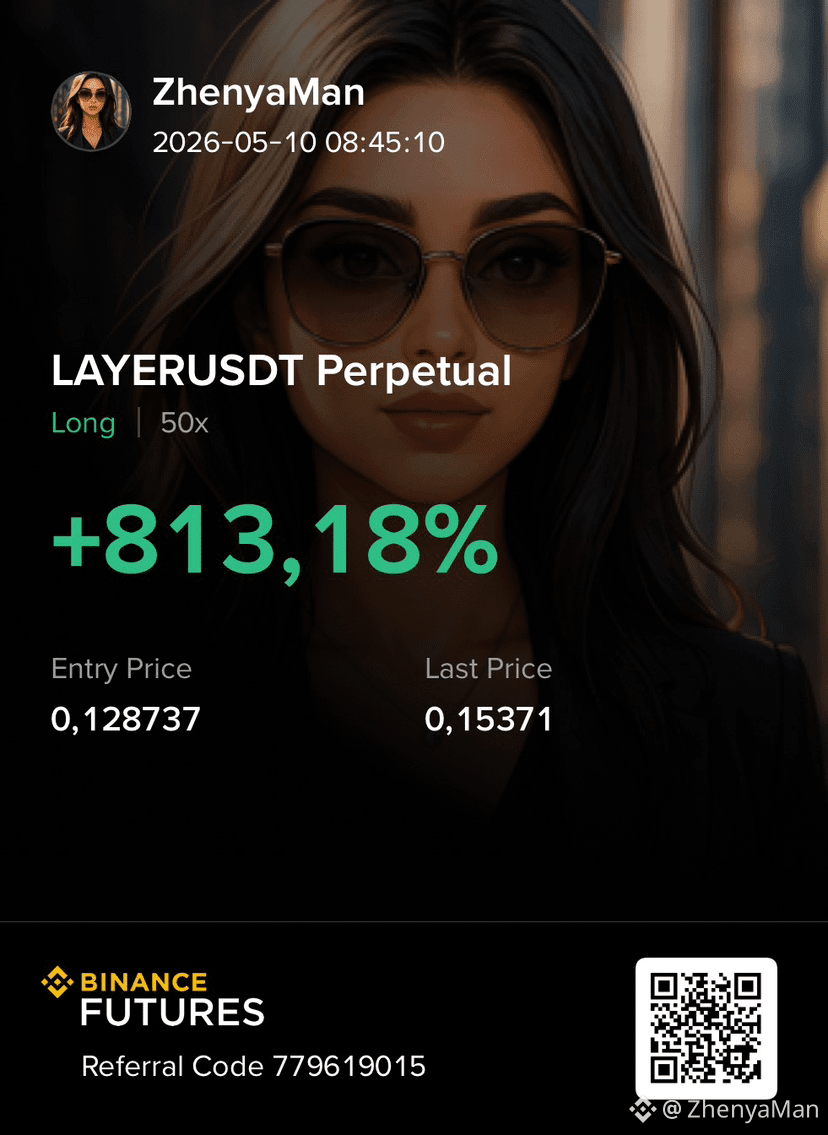
Started the day with a clean LAYERUSDT long 📈
50x leverage, strong momentum, and a solid reaction from entry.
Entry: 0.128737
Current: 0.15371
+813.18% secured so far 🔥
Hope everyone’s catching good moves today too.
$LAYER
{spot}(LAYERUSDT)
GM ☀️
Started the day with a clean LAYERUSDT long 📈
50x leverage, strong momentum, and a solid reaction from entry.
Entry: 0.128737
Current: 0.15371
+813.18% secured so far 🔥
Hope everyone’s catching good moves today too.
$LAYER
Started the day with a clean LAYERUSDT long 📈
50x leverage, strong momentum, and a solid reaction from entry.
Entry: 0.128737
Current: 0.15371
+813.18% secured so far 🔥
Hope everyone’s catching good moves today too.
$LAYER

Best Wishes!
De ZhenyaMan
100
3
42
423
·
--
TONUSDT short closed ✅
Almost forgot to share the close 😄
Trade was shared at the beginning — hope some of you caught the move too 📉🔥
Entry: 2.5420
Exit: 2.4731
Leverage: 75x
+209.07% secured.
Discipline and patience always pay off
$TON $BTC $ETH
{future}(TONUSDT)
TONUSDT short closed ✅
Almost forgot to share the close 😄
Trade was shared at the beginning — hope some of you caught the move too 📉🔥
Entry: 2.5420
Exit: 2.4731
Leverage: 75x
+209.07% secured.
Discipline and patience always pay off
$TON $BTC $ETH
Almost forgot to share the close 😄
Trade was shared at the beginning — hope some of you caught the move too 📉🔥
Entry: 2.5420
Exit: 2.4731
Leverage: 75x
+209.07% secured.
Discipline and patience always pay off
$TON $BTC $ETH
ZhenyaMan
·
--
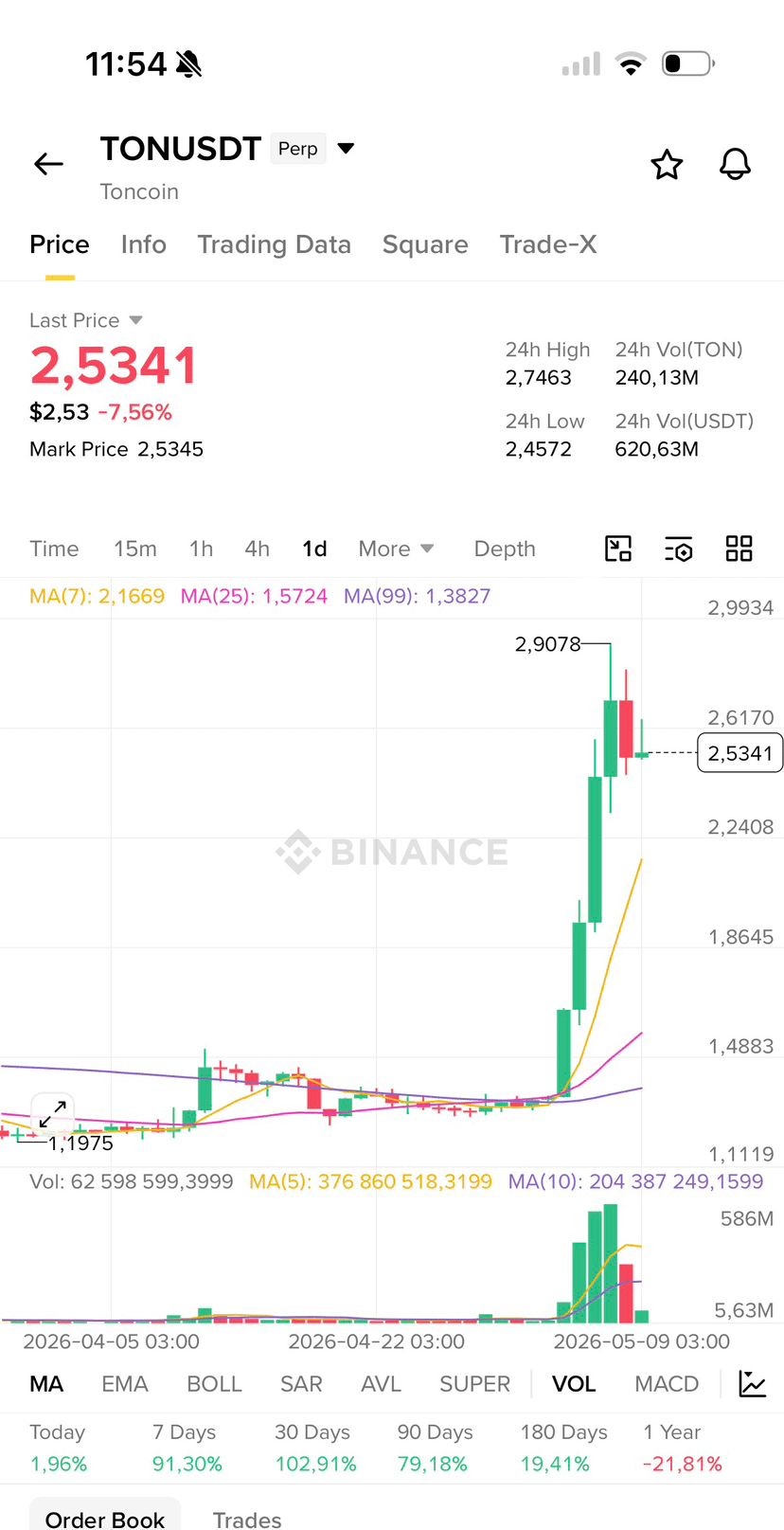
Opened a TONUSDT short position 📉
After the strong pump, I’m expecting a pullback from this area.
Let’s see
$BTC $ETH $TON
#FutureTarding #TradingCommunity #TradingSignals #altcoins #crypto
After the strong pump, I’m expecting a pullback from this area.
Let’s see
$BTC $ETH $TON
#FutureTarding #TradingCommunity #TradingSignals #altcoins #crypto
Best Wishes!
De ZhenyaMan
118
2
39
284
·
--
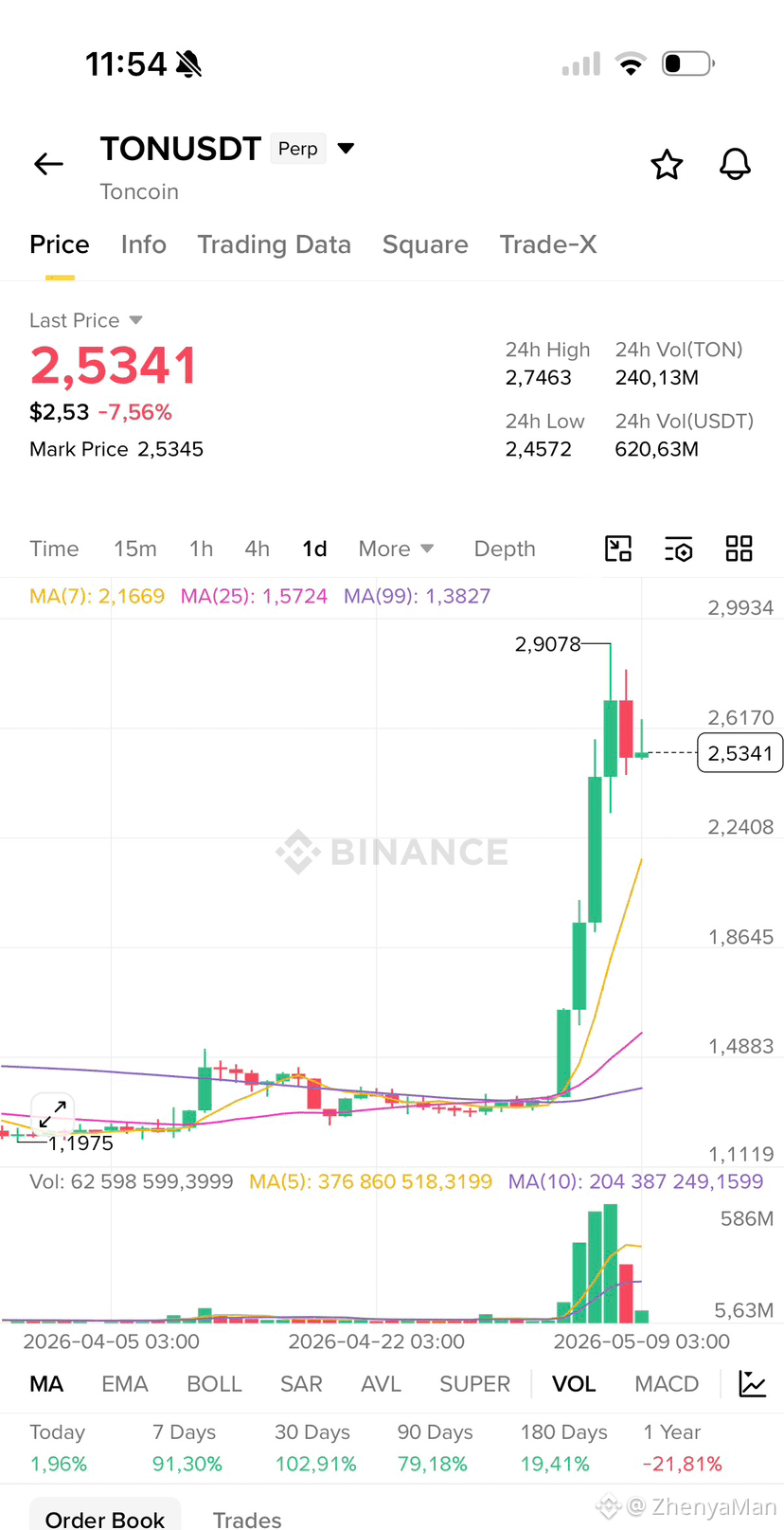
Opened a TONUSDT short position 📉
After the strong pump, I’m expecting a pullback from this area.
Let’s see
$BTC $ETH $TON
#FutureTarding #TradingCommunity #TradingSignals #altcoins #crypto
{future}(TONUSDT)
Opened a TONUSDT short position 📉
After the strong pump, I’m expecting a pullback from this area.
Let’s see
$BTC $ETH $TON
#FutureTarding #TradingCommunity #TradingSignals #altcoins #crypto
After the strong pump, I’m expecting a pullback from this area.
Let’s see
$BTC $ETH $TON
#FutureTarding #TradingCommunity #TradingSignals #altcoins #crypto
1
1
2
255
·
--
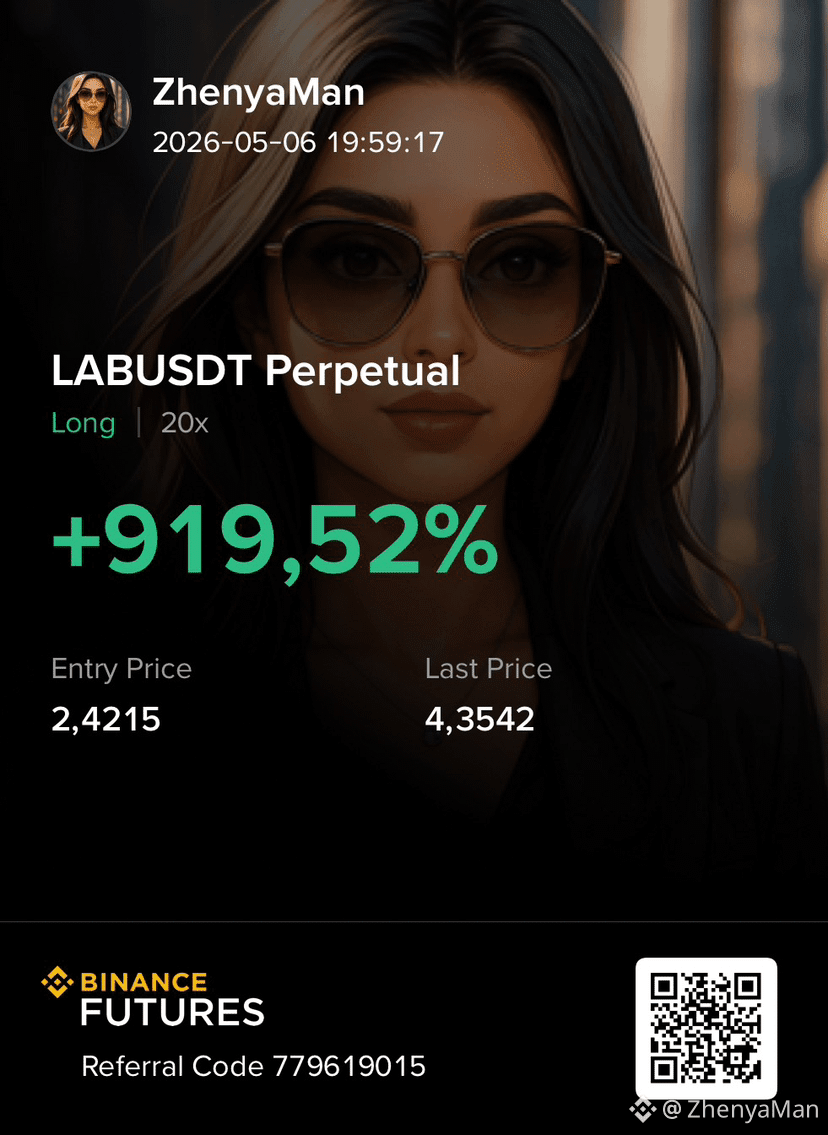
Closed my LABUSDT long
Entry: 2.4215
Exit: 4.3542
Leverage: 20x
+919.52% secured 📈
Patience paid off.
$LAB
{future}(LABUSDT)
Closed my LABUSDT long
Entry: 2.4215
Exit: 4.3542
Leverage: 20x
+919.52% secured 📈
Patience paid off.
$LAB
Entry: 2.4215
Exit: 4.3542
Leverage: 20x
+919.52% secured 📈
Patience paid off.
$LAB
ZhenyaMan
·
--
Opened a long on LABUSDT at 2.4215 with 20x leverage 📈
Still holding.
Risk is high, but so is the potential.
Let’s see how this plays out
$LAB $BTC $ETH
#FutureTarding #crypto #TradingCommunity #altcoins #TradingSignals
Still holding.
Risk is high, but so is the potential.
Let’s see how this plays out
$LAB $BTC $ETH
#FutureTarding #crypto #TradingCommunity #altcoins #TradingSignals
Best Wishes!
De ZhenyaMan
81
1
28
368
·
--
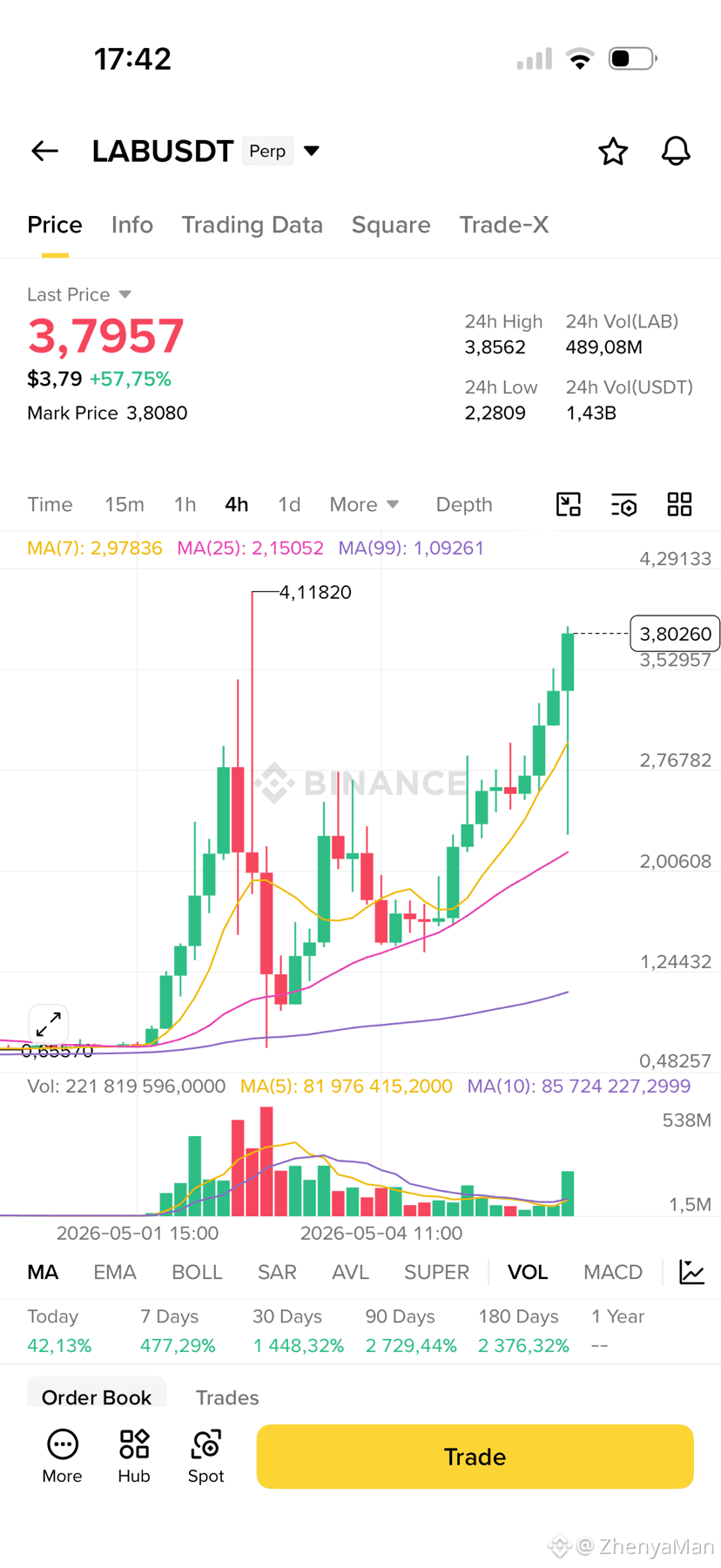
Opened a long on LABUSDT at 2.4215 with 20x leverage 📈
Still holding.
Risk is high, but so is the potential.
Let’s see how this plays out
$LAB $BTC $ETH
#FutureTarding #crypto #TradingCommunity #altcoins #TradingSignals
Opened a long on LABUSDT at 2.4215 with 20x leverage 📈
Still holding.
Risk is high, but so is the potential.
Let’s see how this plays out
$LAB $BTC $ETH
#FutureTarding #crypto #TradingCommunity #altcoins #TradingSignals
Still holding.
Risk is high, but so is the potential.
Let’s see how this plays out
$LAB $BTC $ETH
#FutureTarding #crypto #TradingCommunity #altcoins #TradingSignals
1
4
748
·
--
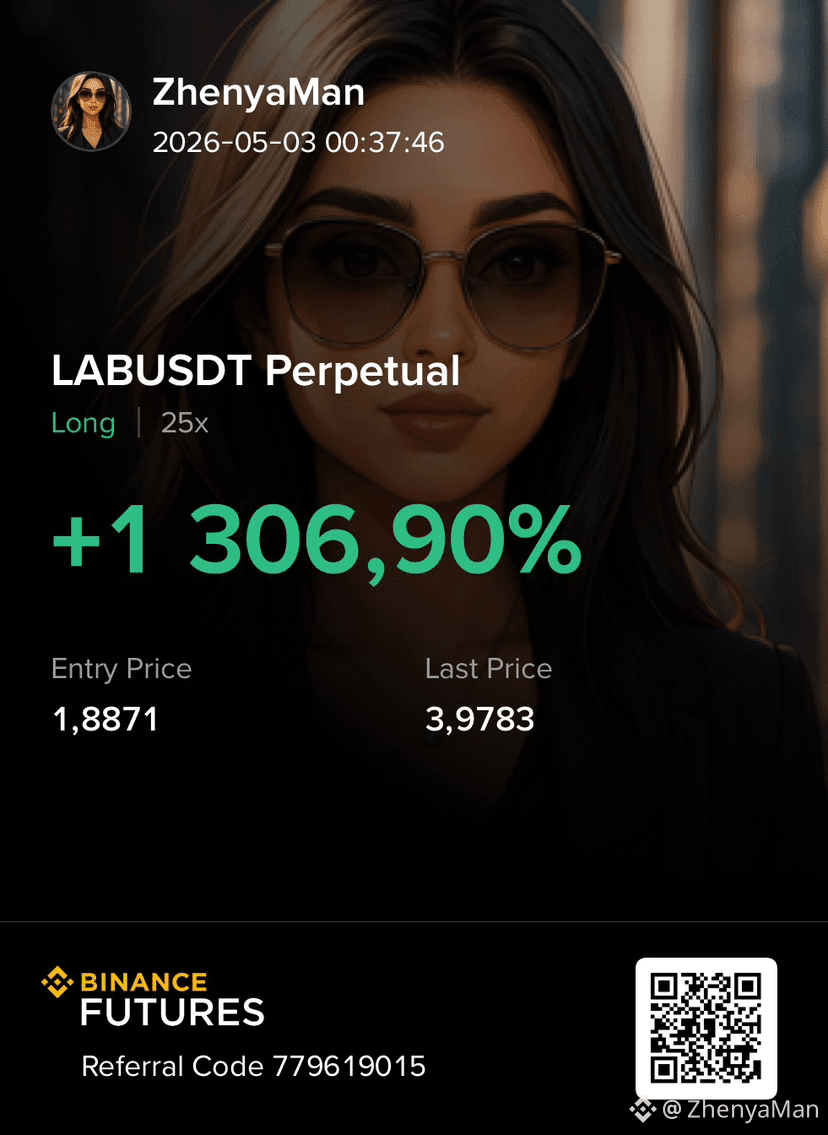
LABUSDT Long — 25x
Entry: 1.8871 → 3.9783
Closed: +1306%
Not bad for a 25x setup.
$BTC $ETH $LAB
#TradingSignals #trading #FutureTarding #altcoins #crypto
{alpha}(560x7ec43cf65f1663f820427c62a5780b8f2e25593a)
LABUSDT Long — 25x
Entry: 1.8871 → 3.9783
Closed: +1306%
Not bad for a 25x setup.
$BTC $ETH $LAB
#TradingSignals #trading #FutureTarding #altcoins #crypto
Entry: 1.8871 → 3.9783
Closed: +1306%
Not bad for a 25x setup.
$BTC $ETH $LAB
#TradingSignals #trading #FutureTarding #altcoins #crypto
ZhenyaMan
·
--
LABUSDT Long Open
Entered a long on LABUSDT at 1.8871 — saw a good opportunity and decided to take it. 👀
Holding for now and watching how the momentum plays out. Let’s see where this goes…
$LAB $BTC $ETH
#crypto #trading #BinanceFutures #altcoins #TradingSignals
Entered a long on LABUSDT at 1.8871 — saw a good opportunity and decided to take it. 👀
Holding for now and watching how the momentum plays out. Let’s see where this goes…
$LAB $BTC $ETH
#crypto #trading #BinanceFutures #altcoins #TradingSignals
3
514
Connectez-vous pour découvrir plus de contenu
Rejoignez la communauté mondiale des adeptes de cryptomonnaies sur Binance Square
⚡️ Suviez les dernières informations importantes sur les cryptomonnaies.
💬 Jugé digne de confiance par la plus grande plateforme d’échange de cryptomonnaies au monde.
👍 Découvrez les connaissances que partagent les créateurs vérifiés.
Adresse e-mail/Nº de téléphone
Sujets d’actualité
ZcashETFPostsFirstWeeklyOutflow$93.6M
16,556 vues
56 mentions
#ZcashETFPostsFirstWeeklyOutflow$93.6M 📊 Grayscale’s Spot Zcash (ZEC) ETF Records $93.6M in Weekly Outflows
Institutional capital flows are showing a new dynamic. Grayscale’s spot Zcash ETF has just posted its first major weekly net outflow, marking a notable shift from its strong initial launch momentum.
🔹The Numbers Grayscale’s spot ZEC ETF (ticker: ZCSH) recorded approximately $93.6 million in net outflows over the past week, with notable withdrawals occurring at the end of September and early October.
🔹 The Context This follows a robust initial period. After converting from the Grayscale Zcash Trust and listing on NYSE Arca in late August, the fund previously saw cumulative net inflows reach $271 million by mid-September.
💡 Market Impact Analysis
•Short-Term Dynamics Large ETF outflows can introduce temporary selling pressure on the underlying asset as the fund adjusts its holdings to meet redemption requests.
• Sentiment & Rebalancing This pullback may reflect routine profit-taking or portfolio rebalancing by early institutional investors, rather than a fundamental change in Zcash’s long-term utility or privacy-focused value proposition.
• Ecosystem Watch Market participants will be monitoring whether this is an isolated event for ZCSH or indicative of a broader cooling in institutional appetite for privacy-centric digital assets.
💬 What’s your take? Do you view this weekly outflow as a healthy market correction after a strong launch, or a signal of changing institutional sentiment toward privacy coins? Share your thoughts in the comments below!
#Zcash #ZEC #CryptoETF #InstitutionalCrypto #MarketUpdate
This is for educational purposes only. Not Financial Advice (NFA). Always Do Your Own Research (DYOR).
$GLMR $QI $ONE
piknkkk
·0 mentions J’aime
·21 vues
GreekPoliceBustCryptoScamRingArrest17
23,072 vues
279 mentions
BitcoinRejectedAt$87K
90,362 vues
118 mentions