

piknkkk
298 Publications

piknkkk
Signaler
Bloquer l’utilisateur
28 Suivis
44 Abonnés
175 J’aime
Publications
PINNED
·
--
Baissier
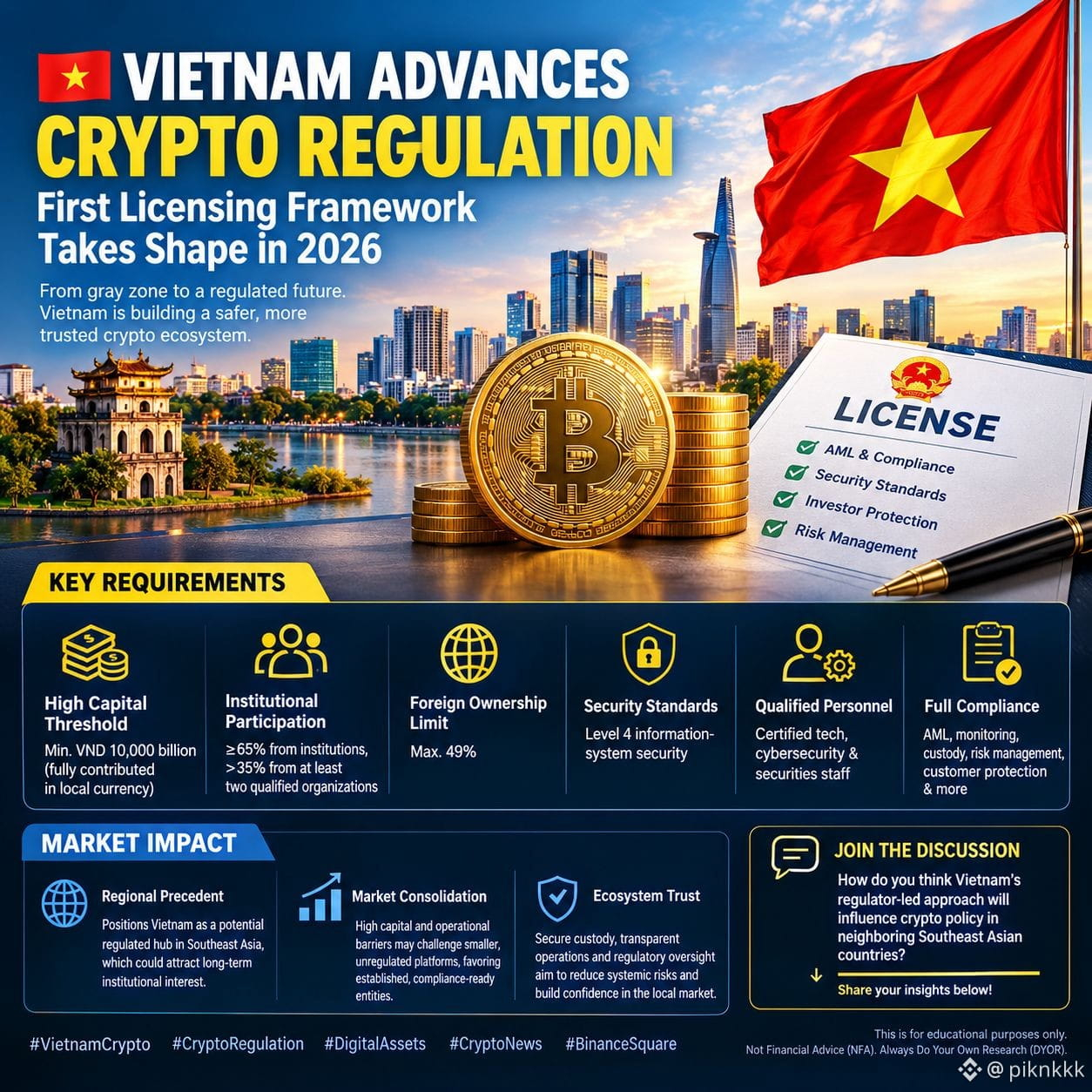
#vietnamplansfirstcryptolicensesin2026 🇻🇳 Vietnam Advances Crypto Regulation: First Licensing Framework Takes Shape in 2026
Vietnam is officially stepping out of the regulatory gray zone. The country has launched its pilot licensing framework for crypto asset trading platforms, marking a major milestone for digital asset adoption in Southeast Asia.
📰 Core News
In 2026, Vietnam’s Ministry of Finance initiated a pilot program to issue the country’s first crypto asset service licenses. Key highlights of the framework include
• Strict Capital Requirements Applicants must be Vietnamese enterprises with a minimum capital of VND 10,000 billion, fully contributed in local currency.
• Enhanced Compliance The model aligns with FATF recommendations, emphasizing robust anti-money laundering (AML) controls, investor protection, and risk management.
• Operational Standards Platforms must maintain Level 4 information security standards and employ certified cybersecurity and securities personnel.
📊 Market Impact
• 🌏 Regional Precedent This structured approach positions Vietnam as a potential regulated hub for digital assets in Southeast Asia, which could attract long-term institutional interest.
• Market Consolidation High capital and operational barriers mean smaller, unregulated platforms may face challenges, favoring established, compliance-ready entities.
Ecosystem Trust The focus on secure custody, transparent operations, and regulatory oversight aims to reduce systemic risks and build confidence in the local crypto market.
💬 Join the Discussion
How do you think Vietnam’s cautious, regulator-led licensing approach will influence crypto policy in neighboring Southeast Asian countries? Share your insights in the comments below! 👇
#VietnamCrypto #CryptoRegulation #DigitalAssets #CryptoNews #BinanceSquare
This is for educational purposes only. Not Financial Advice (NFA). Always Do Your Own Research (DYOR).
$SOL $BNB $ZEC
{future}(ZECUSDT)
{future}(BNBUSDT)
{future}(SOLUSDT)
#vietnamplansfirstcryptolicensesin2026 🇻🇳 Vietnam Advances Crypto Regulation: First Licensing Framework Takes Shape in 2026
Vietnam is officially stepping out of the regulatory gray zone. The country has launched its pilot licensing framework for crypto asset trading platforms, marking a major milestone for digital asset adoption in Southeast Asia.
📰 Core News
In 2026, Vietnam’s Ministry of Finance initiated a pilot program to issue the country’s first crypto asset service licenses. Key highlights of the framework include
• Strict Capital Requirements Applicants must be Vietnamese enterprises with a minimum capital of VND 10,000 billion, fully contributed in local currency.
• Enhanced Compliance The model aligns with FATF recommendations, emphasizing robust anti-money laundering (AML) controls, investor protection, and risk management.
• Operational Standards Platforms must maintain Level 4 information security standards and employ certified cybersecurity and securities personnel.
📊 Market Impact
• 🌏 Regional Precedent This structured approach positions Vietnam as a potential regulated hub for digital assets in Southeast Asia, which could attract long-term institutional interest.
• Market Consolidation High capital and operational barriers mean smaller, unregulated platforms may face challenges, favoring established, compliance-ready entities.
Ecosystem Trust The focus on secure custody, transparent operations, and regulatory oversight aims to reduce systemic risks and build confidence in the local crypto market.
💬 Join the Discussion
How do you think Vietnam’s cautious, regulator-led licensing approach will influence crypto policy in neighboring Southeast Asian countries? Share your insights in the comments below! 👇
#VietnamCrypto #CryptoRegulation #DigitalAssets #CryptoNews #BinanceSquare
This is for educational purposes only. Not Financial Advice (NFA). Always Do Your Own Research (DYOR).
$SOL $BNB $ZEC
Vietnam is officially stepping out of the regulatory gray zone. The country has launched its pilot licensing framework for crypto asset trading platforms, marking a major milestone for digital asset adoption in Southeast Asia.
📰 Core News
In 2026, Vietnam’s Ministry of Finance initiated a pilot program to issue the country’s first crypto asset service licenses. Key highlights of the framework include
• Strict Capital Requirements Applicants must be Vietnamese enterprises with a minimum capital of VND 10,000 billion, fully contributed in local currency.
• Enhanced Compliance The model aligns with FATF recommendations, emphasizing robust anti-money laundering (AML) controls, investor protection, and risk management.
• Operational Standards Platforms must maintain Level 4 information security standards and employ certified cybersecurity and securities personnel.
📊 Market Impact
• 🌏 Regional Precedent This structured approach positions Vietnam as a potential regulated hub for digital assets in Southeast Asia, which could attract long-term institutional interest.
• Market Consolidation High capital and operational barriers mean smaller, unregulated platforms may face challenges, favoring established, compliance-ready entities.
Ecosystem Trust The focus on secure custody, transparent operations, and regulatory oversight aims to reduce systemic risks and build confidence in the local crypto market.
💬 Join the Discussion
How do you think Vietnam’s cautious, regulator-led licensing approach will influence crypto policy in neighboring Southeast Asian countries? Share your insights in the comments below! 👇
#VietnamCrypto #CryptoRegulation #DigitalAssets #CryptoNews #BinanceSquare
This is for educational purposes only. Not Financial Advice (NFA). Always Do Your Own Research (DYOR).
$SOL $BNB $ZEC
6
2
10
7.3k
PINNED
·
--
Haussier
Vérifié
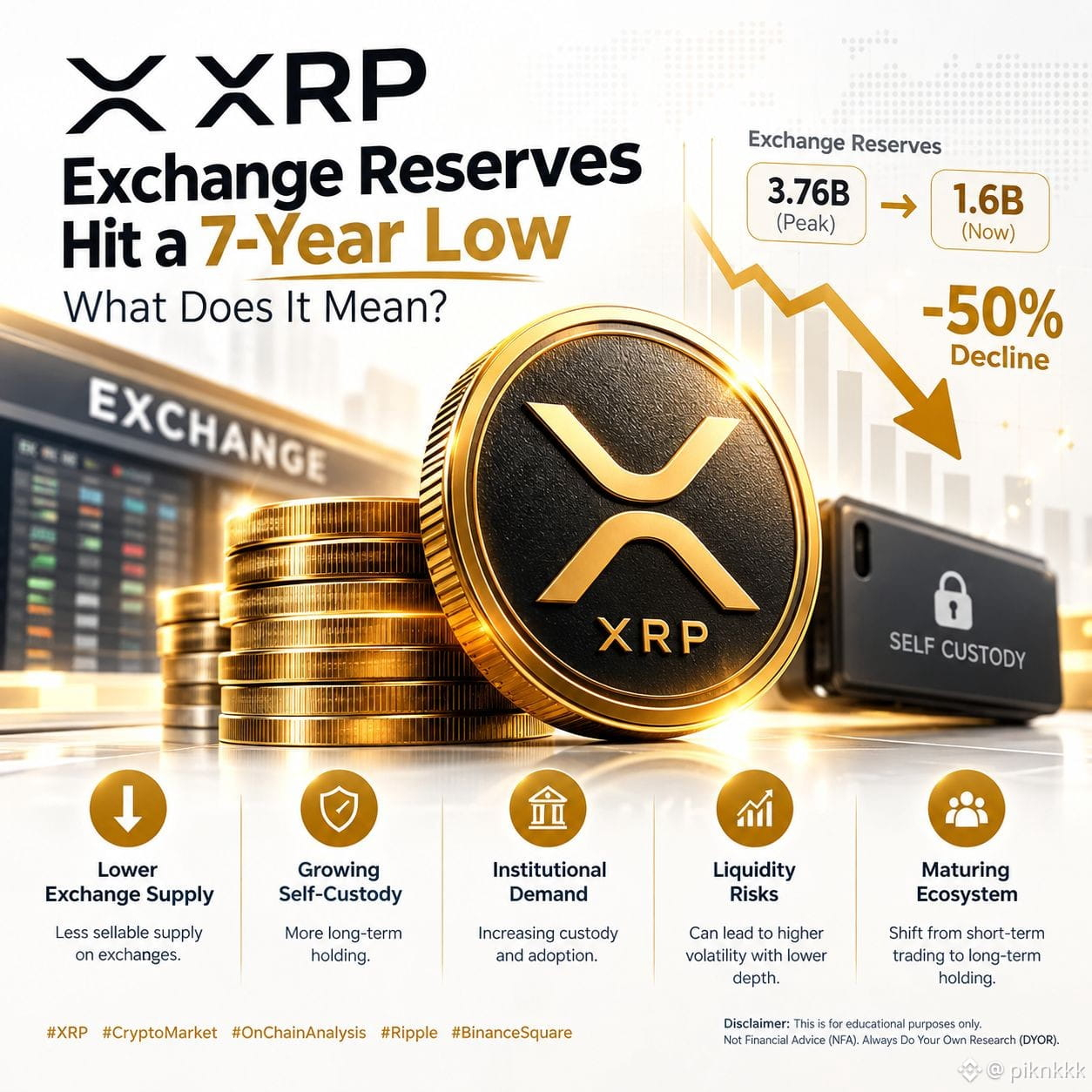
#xrpexchangereserveshitsevenyearlow 📊 XRP Exchange Reserves Hit 7-Year Low: Analyzing the Supply Shift
XRP holdings on major cryptocurrency exchanges have recently plummeted to their lowest level in seven years. But what is driving this massive withdrawal, and how does it impact the broader market ecosystem?
🔹 Significant Outflow Recent on-chain data reveals that XRP exchange reserves have dropped by over 50%, falling from a peak of roughly 3.76 billion tokens to approximately 1.6 billion tokens [[15]].
🔹Key Drivers This steady decline is largely attributed to long-term holders moving assets to cold storage, increased whale accumulation, and growing institutional custody demands [[2]].
🔹Supply Dynamics A reduction in exchange reserves typically indicates a decrease in immediate sellable supply, which can strengthen the "supply shock" narrative if market demand remains steady or increases [[8]].
🔹Liquidity Considerations While lower reserves suggest strong holding conviction, analysts caution that thinner exchange balances can sometimes lead to heightened short-term price volatility due to reduced order book depth [[10]].
🔹Maturing Ecosystem This trend highlights a broader shift in the crypto market, where investors increasingly prioritize self-custody and long-term holding over active, short-term exchange trading [[13]].
💬Do you view this decline in exchange reserves as a strong bullish signal for long-term holders, or simply a reflection of evolving institutional custody trends? Share your thoughts in the comments below! 👇
#XRP #CryptoMarket #OnChainAnalysis #Ripple #BinanceSquare
This is for educational purposes only. Not Financial Advice (NFA). Always Do Your Own Research (DYOR).
$SAGA $STRK $ENA
{future}(ENAUSDT)
{future}(STRKUSDT)
{future}(SAGAUSDT)
#xrpexchangereserveshitsevenyearlow 📊 XRP Exchange Reserves Hit 7-Year Low: Analyzing the Supply Shift
XRP holdings on major cryptocurrency exchanges have recently plummeted to their lowest level in seven years. But what is driving this massive withdrawal, and how does it impact the broader market ecosystem?
🔹 Significant Outflow Recent on-chain data reveals that XRP exchange reserves have dropped by over 50%, falling from a peak of roughly 3.76 billion tokens to approximately 1.6 billion tokens [[15]].
🔹Key Drivers This steady decline is largely attributed to long-term holders moving assets to cold storage, increased whale accumulation, and growing institutional custody demands [[2]].
🔹Supply Dynamics A reduction in exchange reserves typically indicates a decrease in immediate sellable supply, which can strengthen the "supply shock" narrative if market demand remains steady or increases [[8]].
🔹Liquidity Considerations While lower reserves suggest strong holding conviction, analysts caution that thinner exchange balances can sometimes lead to heightened short-term price volatility due to reduced order book depth [[10]].
🔹Maturing Ecosystem This trend highlights a broader shift in the crypto market, where investors increasingly prioritize self-custody and long-term holding over active, short-term exchange trading [[13]].
💬Do you view this decline in exchange reserves as a strong bullish signal for long-term holders, or simply a reflection of evolving institutional custody trends? Share your thoughts in the comments below! 👇
#XRP #CryptoMarket #OnChainAnalysis #Ripple #BinanceSquare
This is for educational purposes only. Not Financial Advice (NFA). Always Do Your Own Research (DYOR).
$SAGA $STRK $ENA
XRP holdings on major cryptocurrency exchanges have recently plummeted to their lowest level in seven years. But what is driving this massive withdrawal, and how does it impact the broader market ecosystem?
🔹 Significant Outflow Recent on-chain data reveals that XRP exchange reserves have dropped by over 50%, falling from a peak of roughly 3.76 billion tokens to approximately 1.6 billion tokens [[15]].
🔹Key Drivers This steady decline is largely attributed to long-term holders moving assets to cold storage, increased whale accumulation, and growing institutional custody demands [[2]].
🔹Supply Dynamics A reduction in exchange reserves typically indicates a decrease in immediate sellable supply, which can strengthen the "supply shock" narrative if market demand remains steady or increases [[8]].
🔹Liquidity Considerations While lower reserves suggest strong holding conviction, analysts caution that thinner exchange balances can sometimes lead to heightened short-term price volatility due to reduced order book depth [[10]].
🔹Maturing Ecosystem This trend highlights a broader shift in the crypto market, where investors increasingly prioritize self-custody and long-term holding over active, short-term exchange trading [[13]].
💬Do you view this decline in exchange reserves as a strong bullish signal for long-term holders, or simply a reflection of evolving institutional custody trends? Share your thoughts in the comments below! 👇
#XRP #CryptoMarket #OnChainAnalysis #Ripple #BinanceSquare
This is for educational purposes only. Not Financial Advice (NFA). Always Do Your Own Research (DYOR).
$SAGA $STRK $ENA
8
4.6k
·
--
Baissier
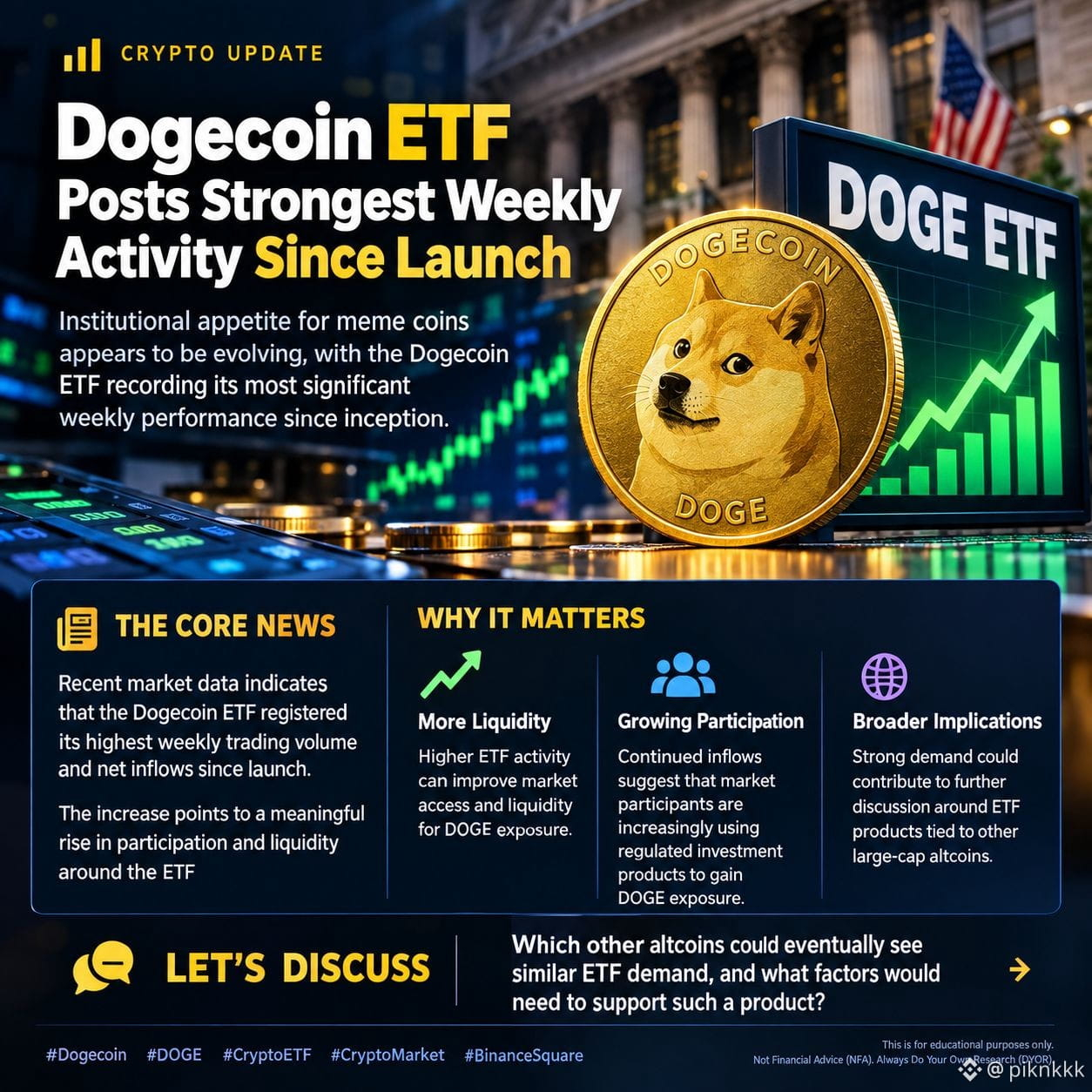
#dogecoinetfspostbiggestweeksincelaunch 📊 Dogecoin ETF Reports Strongest Weekly Performance Since Inception
Institutional appetite for meme coins appears to be evolving. The Dogecoin ETF has just recorded its most significant weekly activity since its initial launch.
📰 The Core News
According to recent market data, the Dogecoin exchange-traded fund has seen its highest weekly trading volume and inflows since it first became available. This marks a notable milestone for the product, highlighting a distinct surge in investor participation and liquidity for the fund over the past seven days.
📊 Market Impact & Analysis
Here is how this development could influence the broader market:
* 📈 Enhanced Liquidity Elevated trading volumes within the ETF structure can contribute to deeper overall market liquidity for DOGE, potentially reducing volatility during large trades.
* 🏢 Institutional Validation Consistent inflows suggest that traditional market participants are increasingly exploring allocations to established, high-cap meme assets, moving beyond just retail-driven hype.
* 🌐 Ecosystem Precedent This milestone may influence future product development in traditional finance, potentially paving the way for more diverse altcoin or meme-coin financial instruments.
💬 Let’s Discuss
With institutional interest in Dogecoin growing through ETF products, which other altcoins do you think could be next in line for similar financial instruments? Share your analysis in the comments below! 👇
#Dogecoin #DOGE #CryptoETF #CryptoMarket #BinanceSquare
This is for educational purposes only. Not Financial Advice (NFA). Always Do Your Own Research (DYOR).
$INTWB $AR $BCH
{future}(BCHUSDT)
{future}(ARUSDT)
{spot}(INTWBUSDT)
#dogecoinetfspostbiggestweeksincelaunch 📊 Dogecoin ETF Reports Strongest Weekly Performance Since Inception
Institutional appetite for meme coins appears to be evolving. The Dogecoin ETF has just recorded its most significant weekly activity since its initial launch.
📰 The Core News
According to recent market data, the Dogecoin exchange-traded fund has seen its highest weekly trading volume and inflows since it first became available. This marks a notable milestone for the product, highlighting a distinct surge in investor participation and liquidity for the fund over the past seven days.
📊 Market Impact & Analysis
Here is how this development could influence the broader market:
* 📈 Enhanced Liquidity Elevated trading volumes within the ETF structure can contribute to deeper overall market liquidity for DOGE, potentially reducing volatility during large trades.
* 🏢 Institutional Validation Consistent inflows suggest that traditional market participants are increasingly exploring allocations to established, high-cap meme assets, moving beyond just retail-driven hype.
* 🌐 Ecosystem Precedent This milestone may influence future product development in traditional finance, potentially paving the way for more diverse altcoin or meme-coin financial instruments.
💬 Let’s Discuss
With institutional interest in Dogecoin growing through ETF products, which other altcoins do you think could be next in line for similar financial instruments? Share your analysis in the comments below! 👇
#Dogecoin #DOGE #CryptoETF #CryptoMarket #BinanceSquare
This is for educational purposes only. Not Financial Advice (NFA). Always Do Your Own Research (DYOR).
$INTWB $AR $BCH
Institutional appetite for meme coins appears to be evolving. The Dogecoin ETF has just recorded its most significant weekly activity since its initial launch.
📰 The Core News
According to recent market data, the Dogecoin exchange-traded fund has seen its highest weekly trading volume and inflows since it first became available. This marks a notable milestone for the product, highlighting a distinct surge in investor participation and liquidity for the fund over the past seven days.
📊 Market Impact & Analysis
Here is how this development could influence the broader market:
* 📈 Enhanced Liquidity Elevated trading volumes within the ETF structure can contribute to deeper overall market liquidity for DOGE, potentially reducing volatility during large trades.
* 🏢 Institutional Validation Consistent inflows suggest that traditional market participants are increasingly exploring allocations to established, high-cap meme assets, moving beyond just retail-driven hype.
* 🌐 Ecosystem Precedent This milestone may influence future product development in traditional finance, potentially paving the way for more diverse altcoin or meme-coin financial instruments.
💬 Let’s Discuss
With institutional interest in Dogecoin growing through ETF products, which other altcoins do you think could be next in line for similar financial instruments? Share your analysis in the comments below! 👇
#Dogecoin #DOGE #CryptoETF #CryptoMarket #BinanceSquare
This is for educational purposes only. Not Financial Advice (NFA). Always Do Your Own Research (DYOR).
$INTWB $AR $BCH
13
·
--
Baissier
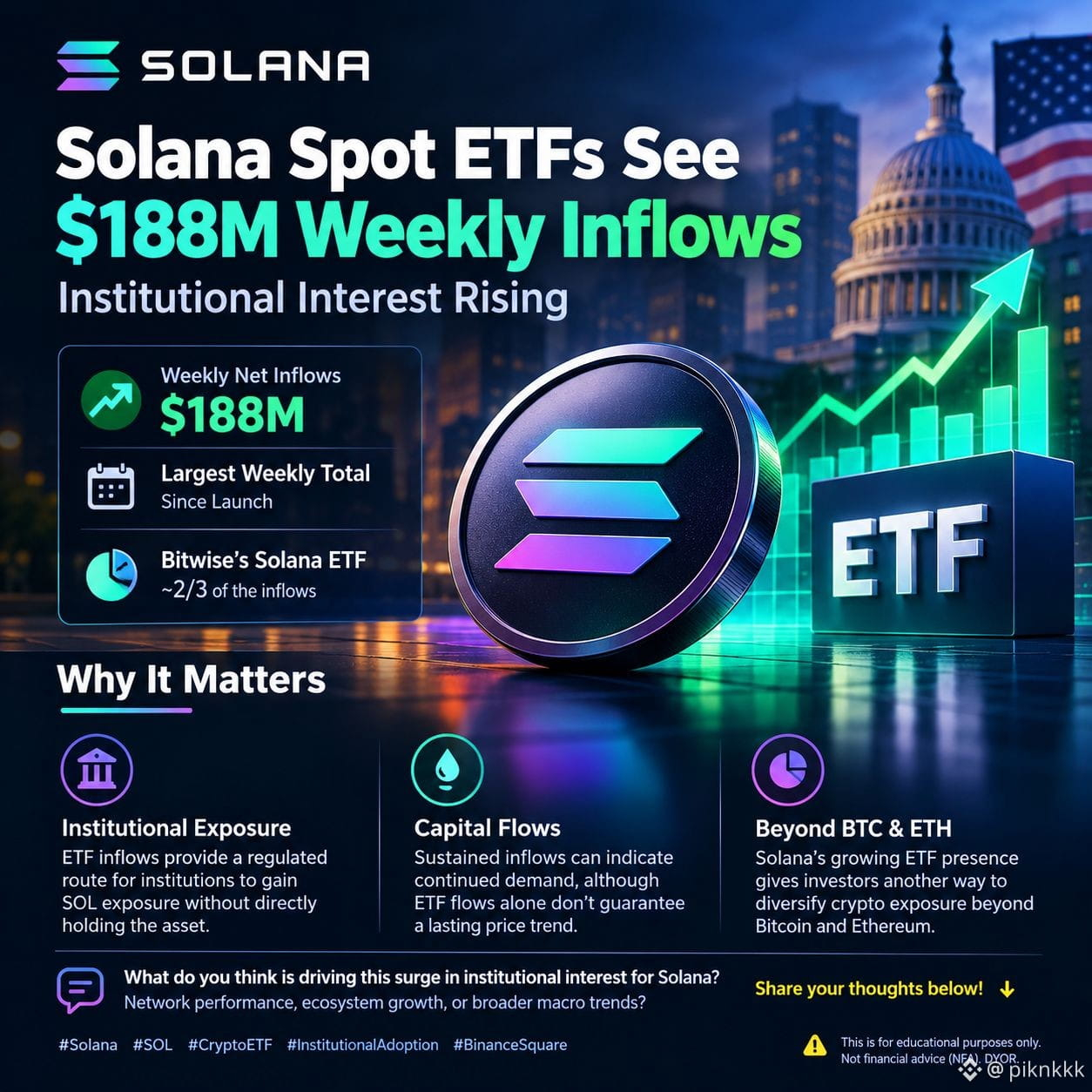
#SOLSpotETFWeeklyInflow$188M 📈 Solana Spot ETFs Record $188M in Weekly Inflows: Institutional Interest Grows
Institutional capital is flowing into Solana at an accelerating pace. U.S. spot Solana ETFs have just posted their highest weekly net inflows since launch, signaling strong market conviction.
📰 Core News
• According to recent market data, U.S. Solana spot ETFs attracted approximately $188 million in net inflows over the past week [[1]].
• This marks the largest weekly total since these products were introduced, with Bitwise’s Solana ETF capturing roughly two-thirds of this volume [[4]].
📊 Market Impact
• 🏛️ Institutional Validation Consistent ETF inflows indicate growing institutional confidence in Solana’s network performance and long-term ecosystem viability.
• 💧Liquidity Dynamics Sustained net inflows at the ETF product level reflect steady buying pressure, which can contribute to broader market stability over time [15]
• 🔀 Portfolio Diversification As institutional investors look to diversify beyond Bitcoin and Ethereum, Solana is increasingly becoming a strategic focal point for crypto portfolio exposure.
💬 Join the Discussion
What factors do you think are driving this surge in institutional interest for Solana? Is it the network’s technical performance, ecosystem growth, or broader macroeconomic trends? Share your thoughts below! 👇
#Solana #SOL #CryptoETF #InstitutionalAdoption #BinanceSquare
This is for educational purposes only. Not Financial Advice (NFA). Always Do Your Own Research (DYOR).
$ZRO $STG $ARK
{future}(ARKUSDT)
{spot}(STGUSDT)
{future}(ZROUSDT)
#SOLSpotETFWeeklyInflow$188M 📈 Solana Spot ETFs Record $188M in Weekly Inflows: Institutional Interest Grows
Institutional capital is flowing into Solana at an accelerating pace. U.S. spot Solana ETFs have just posted their highest weekly net inflows since launch, signaling strong market conviction.
📰 Core News
• According to recent market data, U.S. Solana spot ETFs attracted approximately $188 million in net inflows over the past week [[1]].
• This marks the largest weekly total since these products were introduced, with Bitwise’s Solana ETF capturing roughly two-thirds of this volume [[4]].
📊 Market Impact
• 🏛️ Institutional Validation Consistent ETF inflows indicate growing institutional confidence in Solana’s network performance and long-term ecosystem viability.
• 💧Liquidity Dynamics Sustained net inflows at the ETF product level reflect steady buying pressure, which can contribute to broader market stability over time [15]
• 🔀 Portfolio Diversification As institutional investors look to diversify beyond Bitcoin and Ethereum, Solana is increasingly becoming a strategic focal point for crypto portfolio exposure.
💬 Join the Discussion
What factors do you think are driving this surge in institutional interest for Solana? Is it the network’s technical performance, ecosystem growth, or broader macroeconomic trends? Share your thoughts below! 👇
#Solana #SOL #CryptoETF #InstitutionalAdoption #BinanceSquare
This is for educational purposes only. Not Financial Advice (NFA). Always Do Your Own Research (DYOR).
$ZRO $STG $ARK
Institutional capital is flowing into Solana at an accelerating pace. U.S. spot Solana ETFs have just posted their highest weekly net inflows since launch, signaling strong market conviction.
📰 Core News
• According to recent market data, U.S. Solana spot ETFs attracted approximately $188 million in net inflows over the past week [[1]].
• This marks the largest weekly total since these products were introduced, with Bitwise’s Solana ETF capturing roughly two-thirds of this volume [[4]].
📊 Market Impact
• 🏛️ Institutional Validation Consistent ETF inflows indicate growing institutional confidence in Solana’s network performance and long-term ecosystem viability.
• 💧Liquidity Dynamics Sustained net inflows at the ETF product level reflect steady buying pressure, which can contribute to broader market stability over time [15]
• 🔀 Portfolio Diversification As institutional investors look to diversify beyond Bitcoin and Ethereum, Solana is increasingly becoming a strategic focal point for crypto portfolio exposure.
💬 Join the Discussion
What factors do you think are driving this surge in institutional interest for Solana? Is it the network’s technical performance, ecosystem growth, or broader macroeconomic trends? Share your thoughts below! 👇
#Solana #SOL #CryptoETF #InstitutionalAdoption #BinanceSquare
This is for educational purposes only. Not Financial Advice (NFA). Always Do Your Own Research (DYOR).
$ZRO $STG $ARK
12
·
--
Baissier
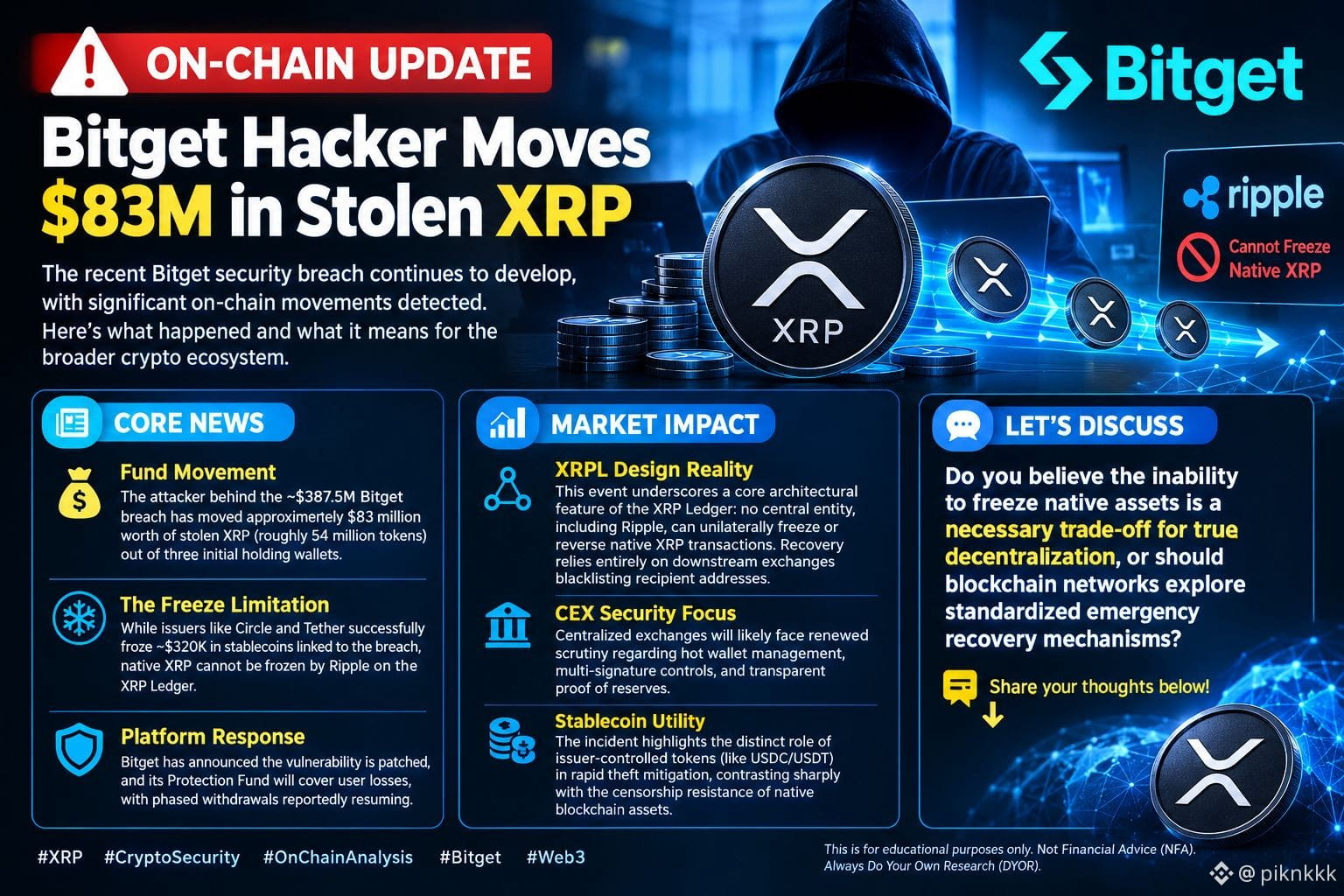
#BitwiseFilesFinalNEARSpotETFProspectus 🚨 On-Chain Update Bitget Hacker Moves $83M in Stolen XRP
The recent Bitget security breach continues to develop, with significant on-chain movements detected. Here is a clear, objective breakdown of what happened and what it means for the broader crypto ecosystem.
📰 Core News
• 💸 Fund Movement The attacker behind the ~$387.5M Bitget breach has moved approximately $83 million worth of stolen XRP (roughly 54 million tokens) out of three initial holding wallets.
• ⚖️ The Freeze Limitation While issuers like Circle and Tether successfully froze ~$320K in stablecoins linked to the breach, native XRP cannot be frozen by Ripple on the XRP Ledger.
• 🛡️ Platform Response Bitget has announced the vulnerability is patched, and its Protection Fund will cover user losses, with phased withdrawals reportedly resuming.
📊 Market Impact
• 🔗 XRPL Design Reality This event underscores a core architectural feature of the XRP Ledger: no central entity, including Ripple, can unilaterally freeze or reverse native XRP transactions. Recovery relies entirely on downstream exchanges blacklisting recipient addresses.
• 🏦 CEX Security Focus Centralized exchanges will likely face renewed scrutiny regarding hot wallet management, multi-signature controls, and transparent proof of reserves.
• 💵 Stablecoin Utility The incident highlights the distinct role of issuer-controlled tokens (like USDC/USDT) in rapid theft mitigation, contrasting sharply with the censorship resistance of native blockchain assets.
💬 Let’s Discuss
Do you believe the inability to freeze native assets is a necessary trade-off for true decentralization, or should blockchain networks explore standardized emergency recovery mechanisms? Share your thoughts below! 👇
#XRP #CryptoSecurity #OnChainAnalysis #Bitget #Web3
This is for educational purposes only. Not Financial Advice (NFA). Always Do Your Own Research (DYOR).
$NIL $GLMR $PHA
{future}(PHAUSDT)
{spot}(GLMRUSDT)
{future}(NILUSDT)
#BitwiseFilesFinalNEARSpotETFProspectus 🚨 On-Chain Update Bitget Hacker Moves $83M in Stolen XRP
The recent Bitget security breach continues to develop, with significant on-chain movements detected. Here is a clear, objective breakdown of what happened and what it means for the broader crypto ecosystem.
📰 Core News
• 💸 Fund Movement The attacker behind the ~$387.5M Bitget breach has moved approximately $83 million worth of stolen XRP (roughly 54 million tokens) out of three initial holding wallets.
• ⚖️ The Freeze Limitation While issuers like Circle and Tether successfully froze ~$320K in stablecoins linked to the breach, native XRP cannot be frozen by Ripple on the XRP Ledger.
• 🛡️ Platform Response Bitget has announced the vulnerability is patched, and its Protection Fund will cover user losses, with phased withdrawals reportedly resuming.
📊 Market Impact
• 🔗 XRPL Design Reality This event underscores a core architectural feature of the XRP Ledger: no central entity, including Ripple, can unilaterally freeze or reverse native XRP transactions. Recovery relies entirely on downstream exchanges blacklisting recipient addresses.
• 🏦 CEX Security Focus Centralized exchanges will likely face renewed scrutiny regarding hot wallet management, multi-signature controls, and transparent proof of reserves.
• 💵 Stablecoin Utility The incident highlights the distinct role of issuer-controlled tokens (like USDC/USDT) in rapid theft mitigation, contrasting sharply with the censorship resistance of native blockchain assets.
💬 Let’s Discuss
Do you believe the inability to freeze native assets is a necessary trade-off for true decentralization, or should blockchain networks explore standardized emergency recovery mechanisms? Share your thoughts below! 👇
#XRP #CryptoSecurity #OnChainAnalysis #Bitget #Web3
This is for educational purposes only. Not Financial Advice (NFA). Always Do Your Own Research (DYOR).
$NIL $GLMR $PHA
The recent Bitget security breach continues to develop, with significant on-chain movements detected. Here is a clear, objective breakdown of what happened and what it means for the broader crypto ecosystem.
📰 Core News
• 💸 Fund Movement The attacker behind the ~$387.5M Bitget breach has moved approximately $83 million worth of stolen XRP (roughly 54 million tokens) out of three initial holding wallets.
• ⚖️ The Freeze Limitation While issuers like Circle and Tether successfully froze ~$320K in stablecoins linked to the breach, native XRP cannot be frozen by Ripple on the XRP Ledger.
• 🛡️ Platform Response Bitget has announced the vulnerability is patched, and its Protection Fund will cover user losses, with phased withdrawals reportedly resuming.
📊 Market Impact
• 🔗 XRPL Design Reality This event underscores a core architectural feature of the XRP Ledger: no central entity, including Ripple, can unilaterally freeze or reverse native XRP transactions. Recovery relies entirely on downstream exchanges blacklisting recipient addresses.
• 🏦 CEX Security Focus Centralized exchanges will likely face renewed scrutiny regarding hot wallet management, multi-signature controls, and transparent proof of reserves.
• 💵 Stablecoin Utility The incident highlights the distinct role of issuer-controlled tokens (like USDC/USDT) in rapid theft mitigation, contrasting sharply with the censorship resistance of native blockchain assets.
💬 Let’s Discuss
Do you believe the inability to freeze native assets is a necessary trade-off for true decentralization, or should blockchain networks explore standardized emergency recovery mechanisms? Share your thoughts below! 👇
#XRP #CryptoSecurity #OnChainAnalysis #Bitget #Web3
This is for educational purposes only. Not Financial Advice (NFA). Always Do Your Own Research (DYOR).
$NIL $GLMR $PHA
1
11
·
--
Haussier
#chinamayletalibababytedancebuynvidiachips 📰 The Core Context
Ethereum continues to demonstrate network resilience amid broader market fluctuations. With ongoing Layer 2 scaling advancements, steady staking participation, and sustained institutional interest in blockchain infrastructure, ETH remains a primary focal point for market participants monitoring this key threshold.
📊 Market Impact & Ecosystem Analysis
How does this price action reflect the broader health of the crypto ecosystem? Here is an objective breakdown:
Layer 2 Ecosystem Growth: Increased transaction volume and total value locked (TVL) on L2 networks continue to drive real-world utility. This supports long-term fundamental value, independent of short-term price volatility.Broader Market Sentiment: ETH’s ability to consolidate or break through key technical levels often sets the tone for the wider altcoin market, influencing liquidity flows across DeFi, GameFi, and Web3 sectors.Staking Dynamics: A robust staking yield environment continues to attract long-term holders. This steady accumulation helps reduce circulating supply volatility, creating a more stable network foundation.
💬 Let’s Discuss!
Do you believe Ethereum’s expanding Layer 2 ecosystem and deflationary staking mechanics are the primary drivers for its long-term market positioning?
Share your technical or fundamental analysis in the comments below! 👇
#Ethereum #ETH #CryptoMarket #DeFi #Web3
This is for educational purposes only. Not Financial Advice (NFA). Always Do Your Own Research (DYOR).
$SOXSB $IMX $MARSCOIN
{future}(MARSCOINUSDT)
{future}(IMXUSDT)
{spot}(SOXSBUSDT)
#chinamayletalibababytedancebuynvidiachips 📰 The Core Context
Ethereum continues to demonstrate network resilience amid broader market fluctuations. With ongoing Layer 2 scaling advancements, steady staking participation, and sustained institutional interest in blockchain infrastructure, ETH remains a primary focal point for market participants monitoring this key threshold.
📊 Market Impact & Ecosystem Analysis
How does this price action reflect the broader health of the crypto ecosystem? Here is an objective breakdown:
Layer 2 Ecosystem Growth: Increased transaction volume and total value locked (TVL) on L2 networks continue to drive real-world utility. This supports long-term fundamental value, independent of short-term price volatility.Broader Market Sentiment: ETH’s ability to consolidate or break through key technical levels often sets the tone for the wider altcoin market, influencing liquidity flows across DeFi, GameFi, and Web3 sectors.Staking Dynamics: A robust staking yield environment continues to attract long-term holders. This steady accumulation helps reduce circulating supply volatility, creating a more stable network foundation.
💬 Let’s Discuss!
Do you believe Ethereum’s expanding Layer 2 ecosystem and deflationary staking mechanics are the primary drivers for its long-term market positioning?
Share your technical or fundamental analysis in the comments below! 👇
#Ethereum #ETH #CryptoMarket #DeFi #Web3
This is for educational purposes only. Not Financial Advice (NFA). Always Do Your Own Research (DYOR).
$SOXSB $IMX $MARSCOIN
Ethereum continues to demonstrate network resilience amid broader market fluctuations. With ongoing Layer 2 scaling advancements, steady staking participation, and sustained institutional interest in blockchain infrastructure, ETH remains a primary focal point for market participants monitoring this key threshold.
📊 Market Impact & Ecosystem Analysis
How does this price action reflect the broader health of the crypto ecosystem? Here is an objective breakdown:
Layer 2 Ecosystem Growth: Increased transaction volume and total value locked (TVL) on L2 networks continue to drive real-world utility. This supports long-term fundamental value, independent of short-term price volatility.Broader Market Sentiment: ETH’s ability to consolidate or break through key technical levels often sets the tone for the wider altcoin market, influencing liquidity flows across DeFi, GameFi, and Web3 sectors.Staking Dynamics: A robust staking yield environment continues to attract long-term holders. This steady accumulation helps reduce circulating supply volatility, creating a more stable network foundation.
💬 Let’s Discuss!
Do you believe Ethereum’s expanding Layer 2 ecosystem and deflationary staking mechanics are the primary drivers for its long-term market positioning?
Share your technical or fundamental analysis in the comments below! 👇
#Ethereum #ETH #CryptoMarket #DeFi #Web3
This is for educational purposes only. Not Financial Advice (NFA). Always Do Your Own Research (DYOR).
$SOXSB $IMX $MARSCOIN

226
·
--
Haussier
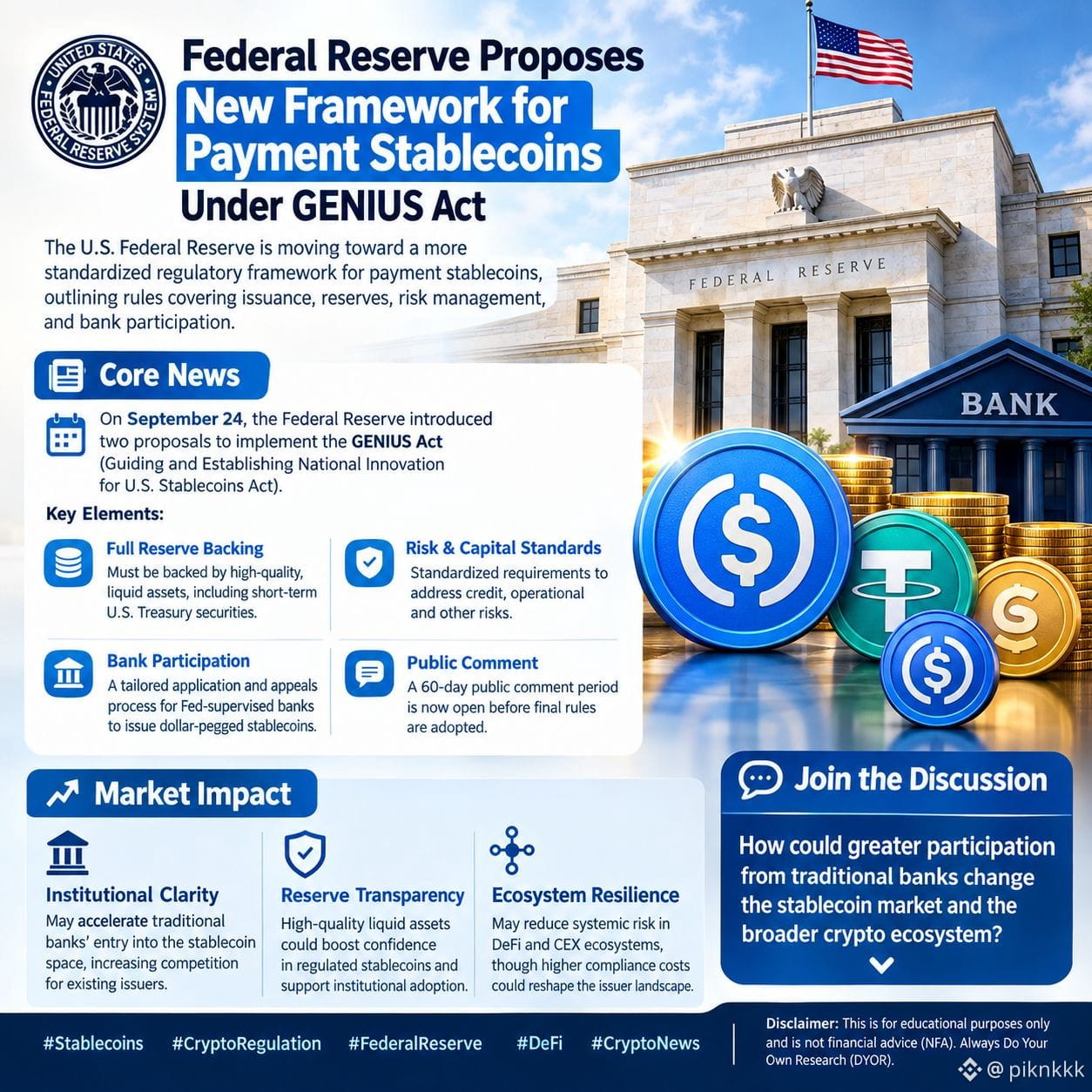
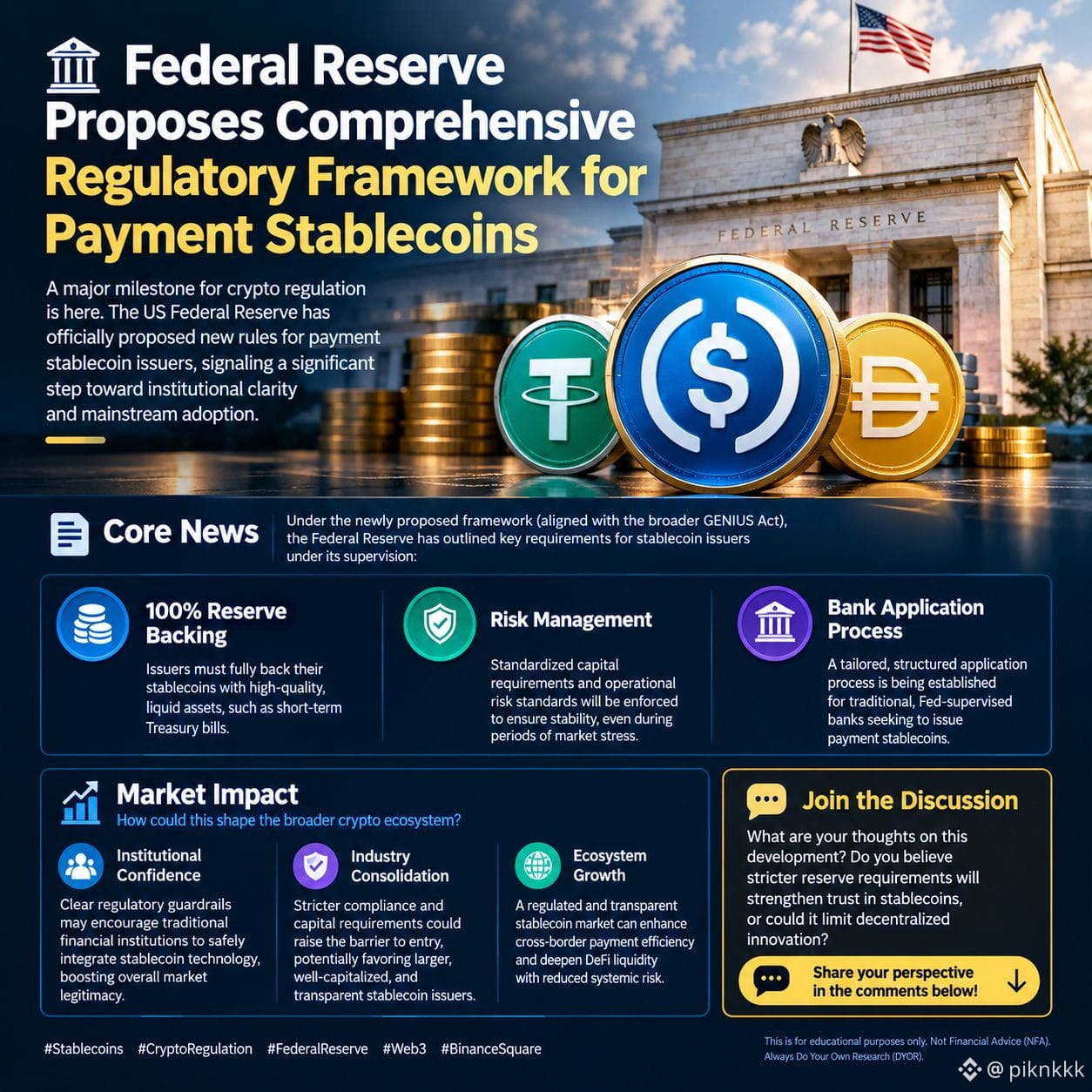
#fedproposespaymentstablecoinrules 🏛️ Fed Unveils New Regulatory Framework for Payment Stablecoins
The regulatory landscape for digital assets is taking a major step forward. The U.S. Federal Reserve has introduced proposals to standardize how payment stablecoins are issued and managed.
📰 Core News Breakdown
On Sept 24, the Fed released rules to implement the GENIUS Act. Key pillars include:
• Full Reserve Backing: Issuers must maintain 1:1 backing of tokens with high-quality, liquid assets like short-term U.S. Treasury bills.
• Strict Capital Standards: Issuers face standardized capital requirements and robust risk-management frameworks to mitigate operational risks.
• Bank Integration: A tailored application process is established for Fed-supervised banks to legally issue dollar-pegged stablecoins.
• A 60-day public comment period is now open before finalization.
📊 Market Impact Analysis
• Institutional Clarity: Clear pathways will accelerate traditional bank entry into the stablecoin sector, fostering healthy competition.
• Enhanced Trust: Mandating high-quality liquid assets strengthens the safety of regulated stablecoins, boosting institutional confidence.
• Ecosystem Resilience: Standardized frameworks reduce systemic risk in DeFi and CEX ecosystems, though compliance costs may reshape issuers.
💬 Join the Discussion
How will traditional banks entering the stablecoin space impact current market leaders and the broader DeFi ecosystem? Share your insights below! 👇
#Stablecoins #CryptoRegulation #FederalReserve #DeFi #CryptoNews
This content is for educational purposes only. Not Financial Advice (NFA). Always Do Your Own Research (DYOR).
$GRT $SEI $PUMP
{future}(PUMPUSDT)
{future}(SEIUSDT)
{future}(GRTUSDT)
#fedproposespaymentstablecoinrules 🏛️ Fed Unveils New Regulatory Framework for Payment Stablecoins
The regulatory landscape for digital assets is taking a major step forward. The U.S. Federal Reserve has introduced proposals to standardize how payment stablecoins are issued and managed.
📰 Core News Breakdown
On Sept 24, the Fed released rules to implement the GENIUS Act. Key pillars include:
• Full Reserve Backing: Issuers must maintain 1:1 backing of tokens with high-quality, liquid assets like short-term U.S. Treasury bills.
• Strict Capital Standards: Issuers face standardized capital requirements and robust risk-management frameworks to mitigate operational risks.
• Bank Integration: A tailored application process is established for Fed-supervised banks to legally issue dollar-pegged stablecoins.
• A 60-day public comment period is now open before finalization.
📊 Market Impact Analysis
• Institutional Clarity: Clear pathways will accelerate traditional bank entry into the stablecoin sector, fostering healthy competition.
• Enhanced Trust: Mandating high-quality liquid assets strengthens the safety of regulated stablecoins, boosting institutional confidence.
• Ecosystem Resilience: Standardized frameworks reduce systemic risk in DeFi and CEX ecosystems, though compliance costs may reshape issuers.
💬 Join the Discussion
How will traditional banks entering the stablecoin space impact current market leaders and the broader DeFi ecosystem? Share your insights below! 👇
#Stablecoins #CryptoRegulation #FederalReserve #DeFi #CryptoNews
This content is for educational purposes only. Not Financial Advice (NFA). Always Do Your Own Research (DYOR).
$GRT $SEI $PUMP
The regulatory landscape for digital assets is taking a major step forward. The U.S. Federal Reserve has introduced proposals to standardize how payment stablecoins are issued and managed.
📰 Core News Breakdown
On Sept 24, the Fed released rules to implement the GENIUS Act. Key pillars include:
• Full Reserve Backing: Issuers must maintain 1:1 backing of tokens with high-quality, liquid assets like short-term U.S. Treasury bills.
• Strict Capital Standards: Issuers face standardized capital requirements and robust risk-management frameworks to mitigate operational risks.
• Bank Integration: A tailored application process is established for Fed-supervised banks to legally issue dollar-pegged stablecoins.
• A 60-day public comment period is now open before finalization.
📊 Market Impact Analysis
• Institutional Clarity: Clear pathways will accelerate traditional bank entry into the stablecoin sector, fostering healthy competition.
• Enhanced Trust: Mandating high-quality liquid assets strengthens the safety of regulated stablecoins, boosting institutional confidence.
• Ecosystem Resilience: Standardized frameworks reduce systemic risk in DeFi and CEX ecosystems, though compliance costs may reshape issuers.
💬 Join the Discussion
How will traditional banks entering the stablecoin space impact current market leaders and the broader DeFi ecosystem? Share your insights below! 👇
#Stablecoins #CryptoRegulation #FederalReserve #DeFi #CryptoNews
This content is for educational purposes only. Not Financial Advice (NFA). Always Do Your Own Research (DYOR).
$GRT $SEI $PUMP
532
·
--
Haussier
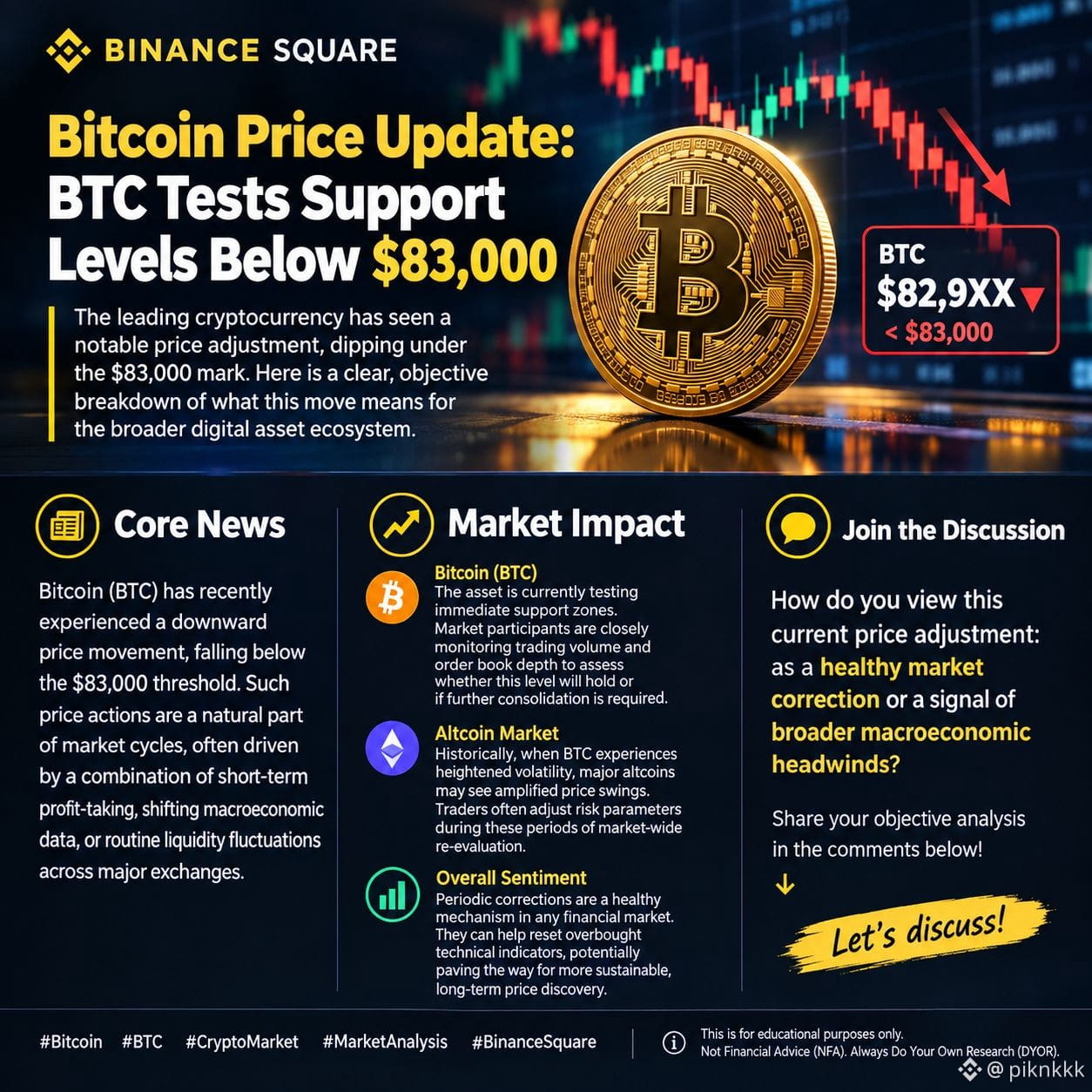
#BTCFallsBelow$83000 📊 Bitcoin Price Update BTC Tests Support Levels Below $83,000
The leading cryptocurrency has seen a notable price adjustment, dipping under the $83,000 mark. Here is a clear, objective breakdown of what this move means for the broader digital asset ecosystem.
📰 Core News
Bitcoin (BTC) has recently experienced a downward price movement, falling below the $83,000 threshold. Such price actions are a natural part of market cycles, often driven by a combination of short-term profit-taking, shifting macroeconomic data, or routine liquidity fluctuations across major exchanges.
📈 Market Impact
• Bitcoin (BTC) The asset is currently testing immediate support zones. Market participants are closely monitoring trading volume and order book depth to assess whether this level will hold or if further consolidation is required.
• Altcoin Market Historically, when BTC experiences heightened volatility, major altcoins may see amplified price swings. Traders often adjust risk parameters during these periods of market-wide re-evaluation.
• Overall Sentiment Periodic corrections are a healthy mechanism in any financial market. They can help reset overbought technical indicators, potentially paving the way for more sustainable, long-term price discovery.
💬 Join the Discussion
How do you view this current price adjustment: as a healthy market correction or a signal of broader macroeconomic headwinds? Share your objective analysis in the comments below! 👇
#Bitcoin #BTC #CryptoMarket #MarketAnalysis #BinanceSquare
This is for educational purposes only. Not Financial Advice (NFA). Always Do Your Own Research (DYOR).
$QNT $AUDIO $ONE
{future}(ONEUSDT)
{spot}(AUDIOUSDT)
{future}(QNTUSDT)
#BTCFallsBelow$83000 📊 Bitcoin Price Update BTC Tests Support Levels Below $83,000
The leading cryptocurrency has seen a notable price adjustment, dipping under the $83,000 mark. Here is a clear, objective breakdown of what this move means for the broader digital asset ecosystem.
📰 Core News
Bitcoin (BTC) has recently experienced a downward price movement, falling below the $83,000 threshold. Such price actions are a natural part of market cycles, often driven by a combination of short-term profit-taking, shifting macroeconomic data, or routine liquidity fluctuations across major exchanges.
📈 Market Impact
• Bitcoin (BTC) The asset is currently testing immediate support zones. Market participants are closely monitoring trading volume and order book depth to assess whether this level will hold or if further consolidation is required.
• Altcoin Market Historically, when BTC experiences heightened volatility, major altcoins may see amplified price swings. Traders often adjust risk parameters during these periods of market-wide re-evaluation.
• Overall Sentiment Periodic corrections are a healthy mechanism in any financial market. They can help reset overbought technical indicators, potentially paving the way for more sustainable, long-term price discovery.
💬 Join the Discussion
How do you view this current price adjustment: as a healthy market correction or a signal of broader macroeconomic headwinds? Share your objective analysis in the comments below! 👇
#Bitcoin #BTC #CryptoMarket #MarketAnalysis #BinanceSquare
This is for educational purposes only. Not Financial Advice (NFA). Always Do Your Own Research (DYOR).
$QNT $AUDIO $ONE
The leading cryptocurrency has seen a notable price adjustment, dipping under the $83,000 mark. Here is a clear, objective breakdown of what this move means for the broader digital asset ecosystem.
📰 Core News
Bitcoin (BTC) has recently experienced a downward price movement, falling below the $83,000 threshold. Such price actions are a natural part of market cycles, often driven by a combination of short-term profit-taking, shifting macroeconomic data, or routine liquidity fluctuations across major exchanges.
📈 Market Impact
• Bitcoin (BTC) The asset is currently testing immediate support zones. Market participants are closely monitoring trading volume and order book depth to assess whether this level will hold or if further consolidation is required.
• Altcoin Market Historically, when BTC experiences heightened volatility, major altcoins may see amplified price swings. Traders often adjust risk parameters during these periods of market-wide re-evaluation.
• Overall Sentiment Periodic corrections are a healthy mechanism in any financial market. They can help reset overbought technical indicators, potentially paving the way for more sustainable, long-term price discovery.
💬 Join the Discussion
How do you view this current price adjustment: as a healthy market correction or a signal of broader macroeconomic headwinds? Share your objective analysis in the comments below! 👇
#Bitcoin #BTC #CryptoMarket #MarketAnalysis #BinanceSquare
This is for educational purposes only. Not Financial Advice (NFA). Always Do Your Own Research (DYOR).
$QNT $AUDIO $ONE
242
·
--
Baissier
Vérifié
#bitwisefilesfinalnearspotetfprospectus 📄 Bitwise Submits Final Prospectus for NEAR Protocol Spot ETF
The institutional push for altcoin exchange-traded funds continues to expand. Bitwise is taking the final regulatory steps to bring NEAR Protocol to traditional financial markets.
📰 The Core News
Bitwise, a leading digital asset manager, has officially filed the final prospectus for a spot NEAR Protocol (NEAR) ETF. This filing marks a critical milestone in the regulatory process, paving the way for the potential launch of an exchange-traded fund that holds NEAR tokens directly. This move mirrors the structural framework of the recently approved Bitcoin and Ethereum spot ETFs.
📊 Market & Ecosystem Impact
What does this development mean for the broader crypto landscape?
• Institutional Access A spot ETF provides a regulated, traditional finance (TradFi) wrapper. This allows institutional and retail investors to gain exposure to NEAR through standard brokerage accounts without the complexities of self-custody.
• Narrative Validation NEAR’s strong focus on AI integration and decentralized compute is gaining recognition. An ETF filing from a major asset manager highlights the growing institutional interest in Layer 1 protocols with strong technological utility.
• Broadening the ETF Landscape This reinforces the ongoing trend of crypto asset managers expanding their ETF product lines beyond BTC and ETH, diversifying the types of digital assets available in traditional markets.
💬 Let’s Discuss
With the ETF landscape steadily expanding beyond Bitcoin and Ethereum, which altcoin ecosystem do you think has the strongest fundamentals and institutional interest for a spot ETF next?
Share your thoughts in the comments below! 👇
#NEAR #Bitwise #CryptoETF #NEARProtocol #CryptoNews
This is for educational purposes only. Not Financial Advice (NFA). Always Do Your Own Research (DYOR).
$INTWB $AR $BCH
{future}(BCHUSDT)
{future}(ARUSDT)
{spot}(INTWBUSDT)
#bitwisefilesfinalnearspotetfprospectus 📄 Bitwise Submits Final Prospectus for NEAR Protocol Spot ETF
The institutional push for altcoin exchange-traded funds continues to expand. Bitwise is taking the final regulatory steps to bring NEAR Protocol to traditional financial markets.
📰 The Core News
Bitwise, a leading digital asset manager, has officially filed the final prospectus for a spot NEAR Protocol (NEAR) ETF. This filing marks a critical milestone in the regulatory process, paving the way for the potential launch of an exchange-traded fund that holds NEAR tokens directly. This move mirrors the structural framework of the recently approved Bitcoin and Ethereum spot ETFs.
📊 Market & Ecosystem Impact
What does this development mean for the broader crypto landscape?
• Institutional Access A spot ETF provides a regulated, traditional finance (TradFi) wrapper. This allows institutional and retail investors to gain exposure to NEAR through standard brokerage accounts without the complexities of self-custody.
• Narrative Validation NEAR’s strong focus on AI integration and decentralized compute is gaining recognition. An ETF filing from a major asset manager highlights the growing institutional interest in Layer 1 protocols with strong technological utility.
• Broadening the ETF Landscape This reinforces the ongoing trend of crypto asset managers expanding their ETF product lines beyond BTC and ETH, diversifying the types of digital assets available in traditional markets.
💬 Let’s Discuss
With the ETF landscape steadily expanding beyond Bitcoin and Ethereum, which altcoin ecosystem do you think has the strongest fundamentals and institutional interest for a spot ETF next?
Share your thoughts in the comments below! 👇
#NEAR #Bitwise #CryptoETF #NEARProtocol #CryptoNews
This is for educational purposes only. Not Financial Advice (NFA). Always Do Your Own Research (DYOR).
$INTWB $AR $BCH
The institutional push for altcoin exchange-traded funds continues to expand. Bitwise is taking the final regulatory steps to bring NEAR Protocol to traditional financial markets.
📰 The Core News
Bitwise, a leading digital asset manager, has officially filed the final prospectus for a spot NEAR Protocol (NEAR) ETF. This filing marks a critical milestone in the regulatory process, paving the way for the potential launch of an exchange-traded fund that holds NEAR tokens directly. This move mirrors the structural framework of the recently approved Bitcoin and Ethereum spot ETFs.
📊 Market & Ecosystem Impact
What does this development mean for the broader crypto landscape?
• Institutional Access A spot ETF provides a regulated, traditional finance (TradFi) wrapper. This allows institutional and retail investors to gain exposure to NEAR through standard brokerage accounts without the complexities of self-custody.
• Narrative Validation NEAR’s strong focus on AI integration and decentralized compute is gaining recognition. An ETF filing from a major asset manager highlights the growing institutional interest in Layer 1 protocols with strong technological utility.
• Broadening the ETF Landscape This reinforces the ongoing trend of crypto asset managers expanding their ETF product lines beyond BTC and ETH, diversifying the types of digital assets available in traditional markets.
💬 Let’s Discuss
With the ETF landscape steadily expanding beyond Bitcoin and Ethereum, which altcoin ecosystem do you think has the strongest fundamentals and institutional interest for a spot ETF next?
Share your thoughts in the comments below! 👇
#NEAR #Bitwise #CryptoETF #NEARProtocol #CryptoNews
This is for educational purposes only. Not Financial Advice (NFA). Always Do Your Own Research (DYOR).
$INTWB $AR $BCH

1
1.4k
·
--
Baissier
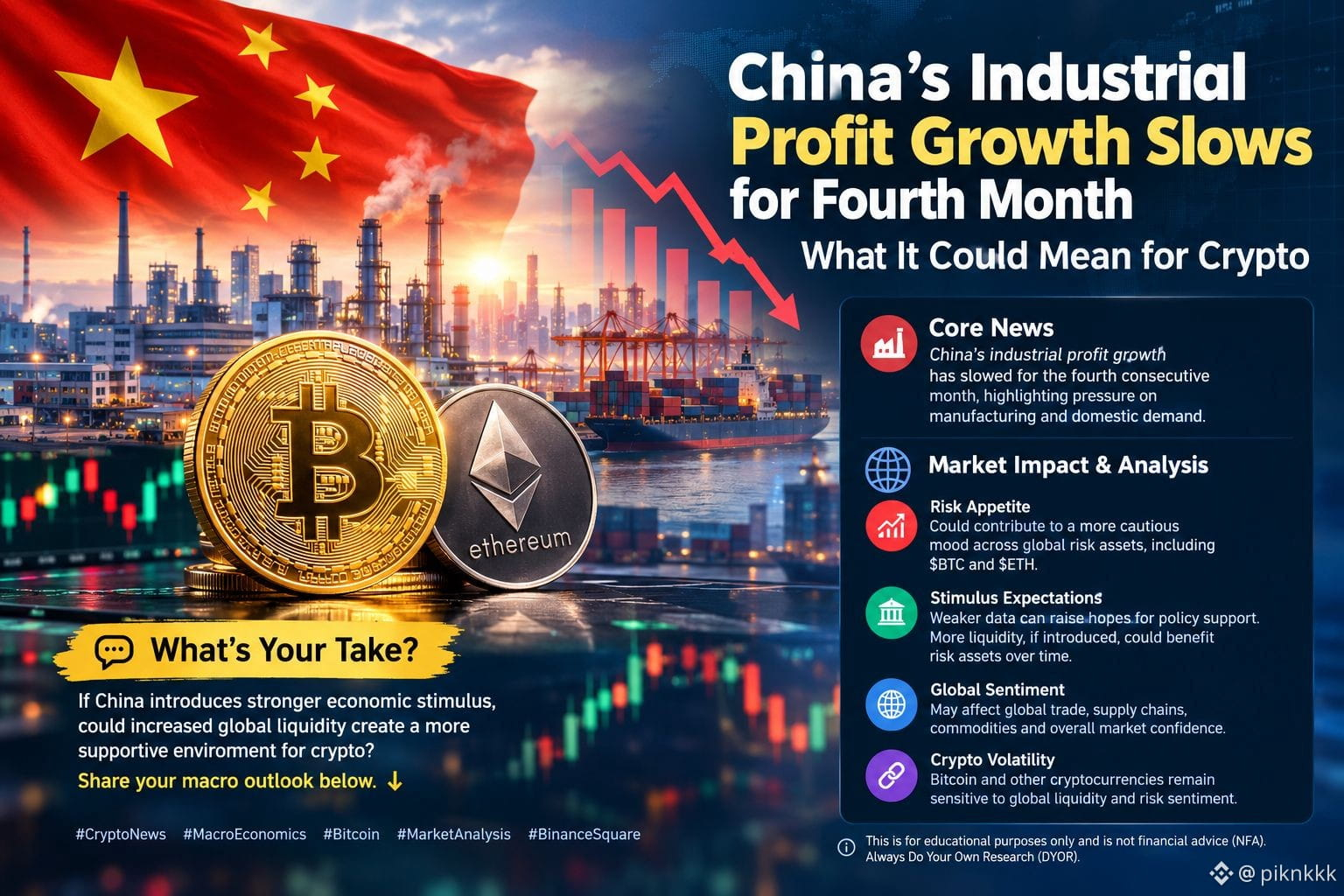
#chinaindustrialprofitgrowthslowsfourthmonth 📉 China’s Industrial Profit Growth Slows for Fourth Month: Macro Implications for Crypto
Global macroeconomic shifts continue to shape market sentiment. The latest data from China is prompting traders to reassess risk asset positioning.
🏭 The Core News
According to recent economic data, China's industrial profit growth has decelerated for the fourth consecutive month. This ongoing trend highlights persistent challenges in domestic demand and manufacturing momentum within the world's second-largest economy, sparking discussions about potential future policy interventions.
🌐 Market Impact & Analysis
How does this macroeconomic shift potentially impact the broader crypto ecosystem?
• Risk Appetite Slowing industrial profits can signal a broader economic cooling. Historically, this correlates with a cautious "risk-off" environment, which may lead to short-term volatility in risk assets, including major cryptocurrencies like $BTC and $ETH.
•Stimulus Expectations On the flip side, weaker economic data often increases market expectations for government stimulus and monetary easing. If policymakers inject more liquidity to stabilize growth, it could eventually benefit digital assets as investors search for yield.
• Global Sentiment As a central pillar of global trade, a slowdown in China's industrial sector can influence global supply chains and overall market confidence, keeping institutional traders measured in their short-term strategies.
💡 What’s Your Take?
How do you think the crypto market will react if global policymakers respond to this economic slowdown with increased liquidity injections? Share your macro outlook in the comments below! 👇
#CryptoNews #MacroEconomics #Bitcoin #MarketAnalysis #BinanceSquare
This is for educational purposes only. Not Financial Advice (NFA). Always Do Your Own Research (DYOR).
$ZRO $STG $ARK
{future}(ARKUSDT)
{spot}(STGUSDT)
{future}(ZROUSDT)
#chinaindustrialprofitgrowthslowsfourthmonth 📉 China’s Industrial Profit Growth Slows for Fourth Month: Macro Implications for Crypto
Global macroeconomic shifts continue to shape market sentiment. The latest data from China is prompting traders to reassess risk asset positioning.
🏭 The Core News
According to recent economic data, China's industrial profit growth has decelerated for the fourth consecutive month. This ongoing trend highlights persistent challenges in domestic demand and manufacturing momentum within the world's second-largest economy, sparking discussions about potential future policy interventions.
🌐 Market Impact & Analysis
How does this macroeconomic shift potentially impact the broader crypto ecosystem?
• Risk Appetite Slowing industrial profits can signal a broader economic cooling. Historically, this correlates with a cautious "risk-off" environment, which may lead to short-term volatility in risk assets, including major cryptocurrencies like $BTC and $ETH.
•Stimulus Expectations On the flip side, weaker economic data often increases market expectations for government stimulus and monetary easing. If policymakers inject more liquidity to stabilize growth, it could eventually benefit digital assets as investors search for yield.
• Global Sentiment As a central pillar of global trade, a slowdown in China's industrial sector can influence global supply chains and overall market confidence, keeping institutional traders measured in their short-term strategies.
💡 What’s Your Take?
How do you think the crypto market will react if global policymakers respond to this economic slowdown with increased liquidity injections? Share your macro outlook in the comments below! 👇
#CryptoNews #MacroEconomics #Bitcoin #MarketAnalysis #BinanceSquare
This is for educational purposes only. Not Financial Advice (NFA). Always Do Your Own Research (DYOR).
$ZRO $STG $ARK
Global macroeconomic shifts continue to shape market sentiment. The latest data from China is prompting traders to reassess risk asset positioning.
🏭 The Core News
According to recent economic data, China's industrial profit growth has decelerated for the fourth consecutive month. This ongoing trend highlights persistent challenges in domestic demand and manufacturing momentum within the world's second-largest economy, sparking discussions about potential future policy interventions.
🌐 Market Impact & Analysis
How does this macroeconomic shift potentially impact the broader crypto ecosystem?
• Risk Appetite Slowing industrial profits can signal a broader economic cooling. Historically, this correlates with a cautious "risk-off" environment, which may lead to short-term volatility in risk assets, including major cryptocurrencies like $BTC and $ETH.
•Stimulus Expectations On the flip side, weaker economic data often increases market expectations for government stimulus and monetary easing. If policymakers inject more liquidity to stabilize growth, it could eventually benefit digital assets as investors search for yield.
• Global Sentiment As a central pillar of global trade, a slowdown in China's industrial sector can influence global supply chains and overall market confidence, keeping institutional traders measured in their short-term strategies.
💡 What’s Your Take?
How do you think the crypto market will react if global policymakers respond to this economic slowdown with increased liquidity injections? Share your macro outlook in the comments below! 👇
#CryptoNews #MacroEconomics #Bitcoin #MarketAnalysis #BinanceSquare
This is for educational purposes only. Not Financial Advice (NFA). Always Do Your Own Research (DYOR).
$ZRO $STG $ARK
580
·
--
Baissier
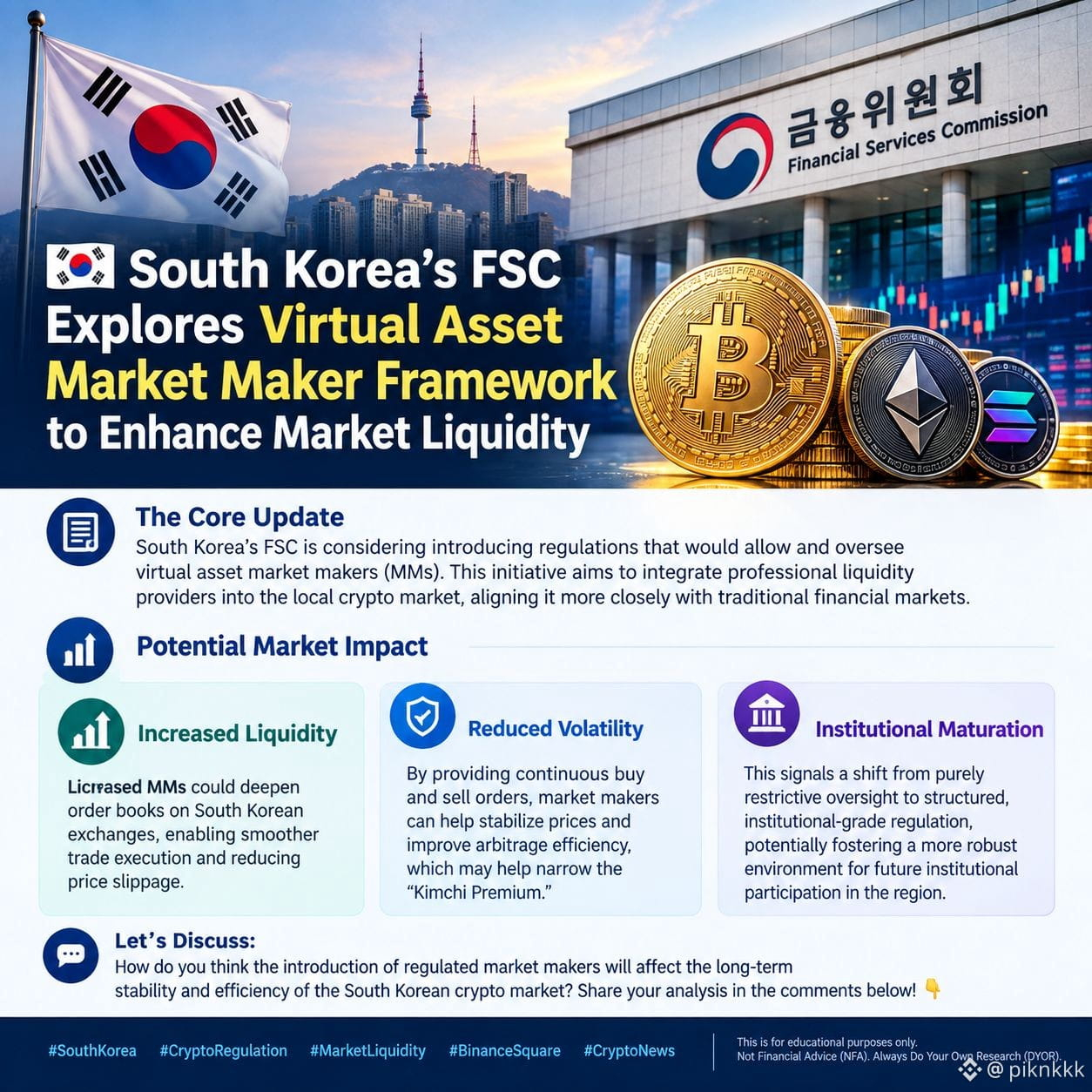
#skoreafscconsidersvirtualassetmarketmaker 🇰🇷 South Korea’s FSC Explores Virtual Asset Market Maker Framework to Enhance Market Liquidity**
South Korea is taking a significant step toward institutionalizing its digital asset ecosystem. The Financial Services Commission (FSC) is actively exploring a formal framework for virtual asset market makers.
📰 The Core Update
South Korea’s FSC is considering introducing regulations that would allow and oversee virtual asset market makers (MMs). This initiative aims to integrate professional liquidity providers into the local crypto market, aligning digital asset trading more closely with the structured environment of traditional financial markets.
📊 Potential Market Impact
• 📈 Increased Liquidity Introducing licensed MMs could significantly deepen order books on South Korean exchanges, allowing for smoother trade execution and reduced price slippage.
• 📉 Reduced Volatility By providing continuous buy and sell orders, market makers can help stabilize prices and improve arbitrage efficiency, which may help narrow the "Kimchi Premium" (the price discrepancy between local and global exchanges).
• 🏛️ Institutional Maturation This signals a strategic shift from purely restrictive oversight to structured, institutional-grade regulation, potentially fostering a more robust environment for future institutional participation in the region.
💬 Let’s Discuss
How do you think the introduction of regulated market makers will affect the long-term stability and efficiency of the South Korean crypto market? Share your analysis in the comments below! 👇
#SouthKorea #CryptoRegulation #MarketLiquidity #BinanceSquare #CryptoNews
This is for educational purposes only. Not Financial Advice (NFA). Always Do Your Own Research (DYOR).
$NIL $GLMR $PHA
{future}(PHAUSDT)
{spot}(GLMRUSDT)
{future}(NILUSDT)
#skoreafscconsidersvirtualassetmarketmaker 🇰🇷 South Korea’s FSC Explores Virtual Asset Market Maker Framework to Enhance Market Liquidity**
South Korea is taking a significant step toward institutionalizing its digital asset ecosystem. The Financial Services Commission (FSC) is actively exploring a formal framework for virtual asset market makers.
📰 The Core Update
South Korea’s FSC is considering introducing regulations that would allow and oversee virtual asset market makers (MMs). This initiative aims to integrate professional liquidity providers into the local crypto market, aligning digital asset trading more closely with the structured environment of traditional financial markets.
📊 Potential Market Impact
• 📈 Increased Liquidity Introducing licensed MMs could significantly deepen order books on South Korean exchanges, allowing for smoother trade execution and reduced price slippage.
• 📉 Reduced Volatility By providing continuous buy and sell orders, market makers can help stabilize prices and improve arbitrage efficiency, which may help narrow the "Kimchi Premium" (the price discrepancy between local and global exchanges).
• 🏛️ Institutional Maturation This signals a strategic shift from purely restrictive oversight to structured, institutional-grade regulation, potentially fostering a more robust environment for future institutional participation in the region.
💬 Let’s Discuss
How do you think the introduction of regulated market makers will affect the long-term stability and efficiency of the South Korean crypto market? Share your analysis in the comments below! 👇
#SouthKorea #CryptoRegulation #MarketLiquidity #BinanceSquare #CryptoNews
This is for educational purposes only. Not Financial Advice (NFA). Always Do Your Own Research (DYOR).
$NIL $GLMR $PHA
South Korea is taking a significant step toward institutionalizing its digital asset ecosystem. The Financial Services Commission (FSC) is actively exploring a formal framework for virtual asset market makers.
📰 The Core Update
South Korea’s FSC is considering introducing regulations that would allow and oversee virtual asset market makers (MMs). This initiative aims to integrate professional liquidity providers into the local crypto market, aligning digital asset trading more closely with the structured environment of traditional financial markets.
📊 Potential Market Impact
• 📈 Increased Liquidity Introducing licensed MMs could significantly deepen order books on South Korean exchanges, allowing for smoother trade execution and reduced price slippage.
• 📉 Reduced Volatility By providing continuous buy and sell orders, market makers can help stabilize prices and improve arbitrage efficiency, which may help narrow the "Kimchi Premium" (the price discrepancy between local and global exchanges).
• 🏛️ Institutional Maturation This signals a strategic shift from purely restrictive oversight to structured, institutional-grade regulation, potentially fostering a more robust environment for future institutional participation in the region.
💬 Let’s Discuss
How do you think the introduction of regulated market makers will affect the long-term stability and efficiency of the South Korean crypto market? Share your analysis in the comments below! 👇
#SouthKorea #CryptoRegulation #MarketLiquidity #BinanceSquare #CryptoNews
This is for educational purposes only. Not Financial Advice (NFA). Always Do Your Own Research (DYOR).
$NIL $GLMR $PHA
1.2k
·
--
Haussier
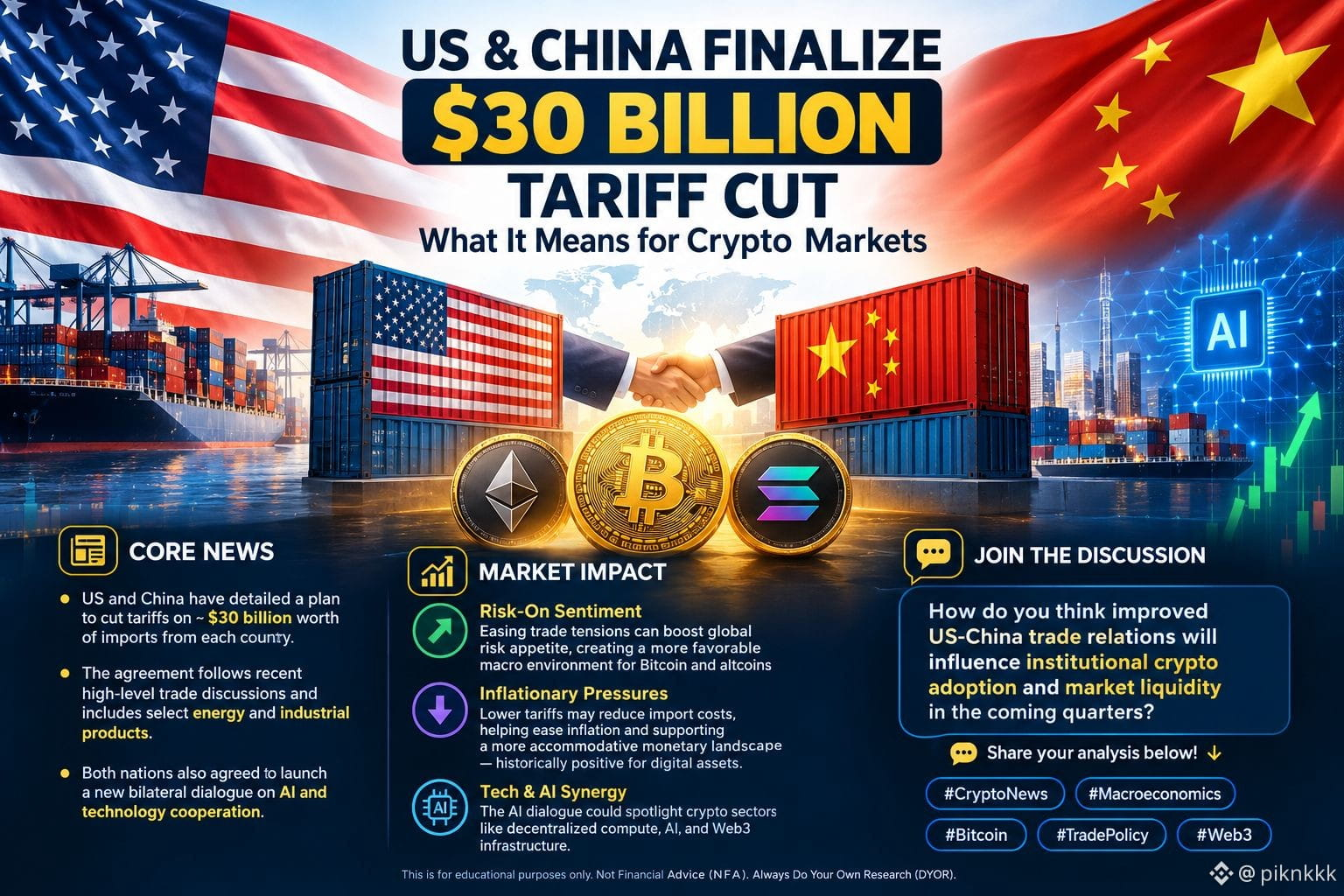
#USChinaRelease$30BTariffCutProductLists 🇺🇸🇨🇳 US & China Finalize $30 Billion Tariff Cut: What It Means for Crypto Markets
A major macroeconomic shift is underway. The US and China have officially released product lists for a reciprocal $30 billion tariff reduction, signaling a notable thaw in global trade tensions.
📰 Core News
🔹 The United States and China have detailed a plan to cut tariffs on approximately $30 billion worth of imports from each country [[27]].
🔹 This reciprocal agreement follows recent high-level trade discussions and aims to ease barriers on specific goods, including select energy and industrial products [[5]].
🔹 Alongside the tariff cuts, both nations agreed to launch a new bilateral dialogue focused on artificial intelligence and technology cooperation [[31]].
📊 Market Impact
📈 Risk-On Sentiment Easing trade tensions between the world’s two largest economies typically boosts global risk appetite, which can create a more favorable macroeconomic environment for risk assets like Bitcoin and major altcoins [[20]].
📉 Inflationary Pressures Lower tariffs can help reduce import costs, potentially easing inflationary pressures and supporting a more accommodative monetary landscape, which historically benefits digital assets [22]
🤖 Tech & AI Synergy The newly announced AI dialogue could indirectly spotlight crypto sectors that intersect with artificial intelligence, decentralized compute, and Web3 infrastructure [[33]].
💬 Join the Discussion
How do you think improved US-China trade relations will influence institutional crypto adoption and market liquidity in the coming quarters? Share your analysis below! 👇
#CryptoNews #Macroeconomics #Bitcoin #TradePolicy #Web3
This is for educational purposes only. Not Financial Advice (NFA). Always Do Your Own Research (DYOR).
$SOXSB $IMX $MARSCOIN
{future}(MARSCOINUSDT)
{future}(IMXUSDT)
{spot}(SOXSBUSDT)
#USChinaRelease$30BTariffCutProductLists 🇺🇸🇨🇳 US & China Finalize $30 Billion Tariff Cut: What It Means for Crypto Markets
A major macroeconomic shift is underway. The US and China have officially released product lists for a reciprocal $30 billion tariff reduction, signaling a notable thaw in global trade tensions.
📰 Core News
🔹 The United States and China have detailed a plan to cut tariffs on approximately $30 billion worth of imports from each country [[27]].
🔹 This reciprocal agreement follows recent high-level trade discussions and aims to ease barriers on specific goods, including select energy and industrial products [[5]].
🔹 Alongside the tariff cuts, both nations agreed to launch a new bilateral dialogue focused on artificial intelligence and technology cooperation [[31]].
📊 Market Impact
📈 Risk-On Sentiment Easing trade tensions between the world’s two largest economies typically boosts global risk appetite, which can create a more favorable macroeconomic environment for risk assets like Bitcoin and major altcoins [[20]].
📉 Inflationary Pressures Lower tariffs can help reduce import costs, potentially easing inflationary pressures and supporting a more accommodative monetary landscape, which historically benefits digital assets [22]
🤖 Tech & AI Synergy The newly announced AI dialogue could indirectly spotlight crypto sectors that intersect with artificial intelligence, decentralized compute, and Web3 infrastructure [[33]].
💬 Join the Discussion
How do you think improved US-China trade relations will influence institutional crypto adoption and market liquidity in the coming quarters? Share your analysis below! 👇
#CryptoNews #Macroeconomics #Bitcoin #TradePolicy #Web3
This is for educational purposes only. Not Financial Advice (NFA). Always Do Your Own Research (DYOR).
$SOXSB $IMX $MARSCOIN
A major macroeconomic shift is underway. The US and China have officially released product lists for a reciprocal $30 billion tariff reduction, signaling a notable thaw in global trade tensions.
📰 Core News
🔹 The United States and China have detailed a plan to cut tariffs on approximately $30 billion worth of imports from each country [[27]].
🔹 This reciprocal agreement follows recent high-level trade discussions and aims to ease barriers on specific goods, including select energy and industrial products [[5]].
🔹 Alongside the tariff cuts, both nations agreed to launch a new bilateral dialogue focused on artificial intelligence and technology cooperation [[31]].
📊 Market Impact
📈 Risk-On Sentiment Easing trade tensions between the world’s two largest economies typically boosts global risk appetite, which can create a more favorable macroeconomic environment for risk assets like Bitcoin and major altcoins [[20]].
📉 Inflationary Pressures Lower tariffs can help reduce import costs, potentially easing inflationary pressures and supporting a more accommodative monetary landscape, which historically benefits digital assets [22]
🤖 Tech & AI Synergy The newly announced AI dialogue could indirectly spotlight crypto sectors that intersect with artificial intelligence, decentralized compute, and Web3 infrastructure [[33]].
💬 Join the Discussion
How do you think improved US-China trade relations will influence institutional crypto adoption and market liquidity in the coming quarters? Share your analysis below! 👇
#CryptoNews #Macroeconomics #Bitcoin #TradePolicy #Web3
This is for educational purposes only. Not Financial Advice (NFA). Always Do Your Own Research (DYOR).
$SOXSB $IMX $MARSCOIN
45
·
--
Haussier
#chinamayletalibababytedancebuynvidiachips 🌍 Market Update
China Reportedly Weighs Allowing Alibaba & ByteDance to Purchase New Nvidia Chips
The global AI hardware landscape is witnessing a potential strategic shift. New reports indicate a possible easing of restrictions for major tech giants seeking advanced computing power.
📰 Core News
• According to recent reports, Chinese officials have signaled they may allow companies like Alibaba and ByteDance to purchase Nvidia’s new RTX Pro 5500 chips [1]
• These domestic firms are reportedly being asked to outline their purchasing plans, marking a notable development in cross-border tech hardware access [7]
📊 Market Impact
• 🤖 AI Narrative Strength Sustained institutional demand for high-end AI compute reinforces the broader AI sector's growth, which often influences market sentiment around decentralized AI crypto projects.
• ⚙️ DePIN Relevance Geopolitical friction in centralized semiconductor supply chains highlights the core value proposition of Decentralized Physical Infrastructure Networks (DePIN). Borderless, decentralized GPU compute protocols may gain narrative traction as alternative, censorship-resistant infrastructure solutions.
• 🌐Macro Sentiment Any easing of tech trade restrictions can help reduce macro-level uncertainty, contributing to a more stable environment for risk assets, including digital commodities.
💬 Join the Discussion
How do you think geopolitical shifts in AI hardware access will influence the long-term adoption of decentralized compute networks? Share your analysis below! 👇
#AI #DePIN #CryptoMarket #Web3 #TechNews
This is for educational purposes only. Not Financial Advice (NFA). Always Do Your Own Research (DYOR).
$GRT $SEI $PUMP
{future}(PUMPUSDT)
{future}(SEIUSDT)
{future}(GRTUSDT)
#chinamayletalibababytedancebuynvidiachips 🌍 Market Update
China Reportedly Weighs Allowing Alibaba & ByteDance to Purchase New Nvidia Chips
The global AI hardware landscape is witnessing a potential strategic shift. New reports indicate a possible easing of restrictions for major tech giants seeking advanced computing power.
📰 Core News
• According to recent reports, Chinese officials have signaled they may allow companies like Alibaba and ByteDance to purchase Nvidia’s new RTX Pro 5500 chips [1]
• These domestic firms are reportedly being asked to outline their purchasing plans, marking a notable development in cross-border tech hardware access [7]
📊 Market Impact
• 🤖 AI Narrative Strength Sustained institutional demand for high-end AI compute reinforces the broader AI sector's growth, which often influences market sentiment around decentralized AI crypto projects.
• ⚙️ DePIN Relevance Geopolitical friction in centralized semiconductor supply chains highlights the core value proposition of Decentralized Physical Infrastructure Networks (DePIN). Borderless, decentralized GPU compute protocols may gain narrative traction as alternative, censorship-resistant infrastructure solutions.
• 🌐Macro Sentiment Any easing of tech trade restrictions can help reduce macro-level uncertainty, contributing to a more stable environment for risk assets, including digital commodities.
💬 Join the Discussion
How do you think geopolitical shifts in AI hardware access will influence the long-term adoption of decentralized compute networks? Share your analysis below! 👇
#AI #DePIN #CryptoMarket #Web3 #TechNews
This is for educational purposes only. Not Financial Advice (NFA). Always Do Your Own Research (DYOR).
$GRT $SEI $PUMP
China Reportedly Weighs Allowing Alibaba & ByteDance to Purchase New Nvidia Chips
The global AI hardware landscape is witnessing a potential strategic shift. New reports indicate a possible easing of restrictions for major tech giants seeking advanced computing power.
📰 Core News
• According to recent reports, Chinese officials have signaled they may allow companies like Alibaba and ByteDance to purchase Nvidia’s new RTX Pro 5500 chips [1]
• These domestic firms are reportedly being asked to outline their purchasing plans, marking a notable development in cross-border tech hardware access [7]
📊 Market Impact
• 🤖 AI Narrative Strength Sustained institutional demand for high-end AI compute reinforces the broader AI sector's growth, which often influences market sentiment around decentralized AI crypto projects.
• ⚙️ DePIN Relevance Geopolitical friction in centralized semiconductor supply chains highlights the core value proposition of Decentralized Physical Infrastructure Networks (DePIN). Borderless, decentralized GPU compute protocols may gain narrative traction as alternative, censorship-resistant infrastructure solutions.
• 🌐Macro Sentiment Any easing of tech trade restrictions can help reduce macro-level uncertainty, contributing to a more stable environment for risk assets, including digital commodities.
💬 Join the Discussion
How do you think geopolitical shifts in AI hardware access will influence the long-term adoption of decentralized compute networks? Share your analysis below! 👇
#AI #DePIN #CryptoMarket #Web3 #TechNews
This is for educational purposes only. Not Financial Advice (NFA). Always Do Your Own Research (DYOR).
$GRT $SEI $PUMP

1
1
4.3k
·
--
Haussier
#fedproposespaymentstablecoinrules 🐋 Massive Institutional Move: 1,700 BTC ($142M) Shifts Off Coinbase Custody
A massive $142 million Bitcoin transfer just hit the blockchain, catching the attention of on-chain analysts and highlighting continued institutional maneuvering. 🕵️♂️
📰 Core News
Blockchain trackers recently flagged a significant outflow of 1,700 BTC from Coinbase Institutional to an anonymous, untagged wallet [[11]]. This isn't an isolated event; similar large-scale transfers have occurred throughout 2026, including 2,258 BTC in June and 826 BTC just days prior [11]
📊 Market Impact
What does a $142M move from an institutional custody platform actually mean for the broader market?
• 🏦 Custody vs. Exchange Activity Coinbase Institutional primarily serves heavyweight clients like hedge funds, family offices, and spot Bitcoin ETF issuers [11] Outflows from these platforms usually indicate moving assets into deep cold storage, rebalancing across multiple custodians, or preparing for Over-The-Counter (OTC) trades, rather than immediate selling pressure on public order books [11]
• 💰 The $83,500 Benchmark The implied transaction price for this transfer sits at roughly $83,500 per BTC, offering a clear data point on where major institutional players are comfortable transacting at scale [11]
• 🔄 Two-Way Traffic Despite these large outflows, Coinbase Institutional also recently received massive inflows, including 2,400 BTC ($202M) and 2,269 BTC ($171M) in recent weeks, showing that institutional portfolio management remains highly active [[11]].
💬 Join the Discussion
Are you actively tracking on-chain institutional flows, or do you prefer focusing on macroeconomic indicators and technical price action? Let us know your strategy in the comments! 👇
#Bitcoin #OnChainData #CryptoWhales #BTC #BinanceSquare
This is for educational purposes only. Not Financial Advice (NFA). Always Do Your Own Research (DYOR).
$QNT $AUDIO $ONE
{future}(ONEUSDT)
{spot}(AUDIOUSDT)
{future}(QNTUSDT)
#fedproposespaymentstablecoinrules 🐋 Massive Institutional Move: 1,700 BTC ($142M) Shifts Off Coinbase Custody
A massive $142 million Bitcoin transfer just hit the blockchain, catching the attention of on-chain analysts and highlighting continued institutional maneuvering. 🕵️♂️
📰 Core News
Blockchain trackers recently flagged a significant outflow of 1,700 BTC from Coinbase Institutional to an anonymous, untagged wallet [[11]]. This isn't an isolated event; similar large-scale transfers have occurred throughout 2026, including 2,258 BTC in June and 826 BTC just days prior [11]
📊 Market Impact
What does a $142M move from an institutional custody platform actually mean for the broader market?
• 🏦 Custody vs. Exchange Activity Coinbase Institutional primarily serves heavyweight clients like hedge funds, family offices, and spot Bitcoin ETF issuers [11] Outflows from these platforms usually indicate moving assets into deep cold storage, rebalancing across multiple custodians, or preparing for Over-The-Counter (OTC) trades, rather than immediate selling pressure on public order books [11]
• 💰 The $83,500 Benchmark The implied transaction price for this transfer sits at roughly $83,500 per BTC, offering a clear data point on where major institutional players are comfortable transacting at scale [11]
• 🔄 Two-Way Traffic Despite these large outflows, Coinbase Institutional also recently received massive inflows, including 2,400 BTC ($202M) and 2,269 BTC ($171M) in recent weeks, showing that institutional portfolio management remains highly active [[11]].
💬 Join the Discussion
Are you actively tracking on-chain institutional flows, or do you prefer focusing on macroeconomic indicators and technical price action? Let us know your strategy in the comments! 👇
#Bitcoin #OnChainData #CryptoWhales #BTC #BinanceSquare
This is for educational purposes only. Not Financial Advice (NFA). Always Do Your Own Research (DYOR).
$QNT $AUDIO $ONE
A massive $142 million Bitcoin transfer just hit the blockchain, catching the attention of on-chain analysts and highlighting continued institutional maneuvering. 🕵️♂️
📰 Core News
Blockchain trackers recently flagged a significant outflow of 1,700 BTC from Coinbase Institutional to an anonymous, untagged wallet [[11]]. This isn't an isolated event; similar large-scale transfers have occurred throughout 2026, including 2,258 BTC in June and 826 BTC just days prior [11]
📊 Market Impact
What does a $142M move from an institutional custody platform actually mean for the broader market?
• 🏦 Custody vs. Exchange Activity Coinbase Institutional primarily serves heavyweight clients like hedge funds, family offices, and spot Bitcoin ETF issuers [11] Outflows from these platforms usually indicate moving assets into deep cold storage, rebalancing across multiple custodians, or preparing for Over-The-Counter (OTC) trades, rather than immediate selling pressure on public order books [11]
• 💰 The $83,500 Benchmark The implied transaction price for this transfer sits at roughly $83,500 per BTC, offering a clear data point on where major institutional players are comfortable transacting at scale [11]
• 🔄 Two-Way Traffic Despite these large outflows, Coinbase Institutional also recently received massive inflows, including 2,400 BTC ($202M) and 2,269 BTC ($171M) in recent weeks, showing that institutional portfolio management remains highly active [[11]].
💬 Join the Discussion
Are you actively tracking on-chain institutional flows, or do you prefer focusing on macroeconomic indicators and technical price action? Let us know your strategy in the comments! 👇
#Bitcoin #OnChainData #CryptoWhales #BTC #BinanceSquare
This is for educational purposes only. Not Financial Advice (NFA). Always Do Your Own Research (DYOR).
$QNT $AUDIO $ONE
272
·
--
Baissier
#trumprejectsiranhormuzreopening 🌍 Geopolitical Update: US Rejects Iran’s Proposal to Reopen Strait of Hormuz
Rising tensions in the Middle East are drawing close attention from global markets. A recent diplomatic development could introduce new volatility across both traditional and digital asset classes.
📰 Core News
🔹 US President Donald Trump has officially rejected Iran’s latest proposal to reopen the Strait of Hormuz to international shipping [4]
🔹 Iran had previously offered to reopen the critical waterway within seven days if the US agreed to end its naval blockade and ease military pressure [1].
🔹 The US administration indicated that Tehran’s proposal was driven by economic strain from the ongoing blockade, maintaining a firm stance on current policies [4]
📊 Market Impact
🛢️Energy & Traditional Markets The Strait of Hormuz is a vital global oil transit chokepoint. Prolonged tensions or supply chain disruptions in this region historically introduce volatility into global energy markets, which can ripple into broader financial indices.
📈 Crypto Market Dynamics Geopolitical instability often triggers risk-off sentiment in traditional finance. While some market participants monitor Bitcoin as a potential hedge against macroeconomic instability, short-term crypto volatility may increase as traders react to broader market uncertainty, shifting liquidity, and fluctuating risk appetites.
💬 Join the Discussion
How do you think prolonged geopolitical tension in the Middle East will influence institutional sentiment and price action in the crypto market? Share your analysis below! 👇
#Geopolitics #CryptoMarket #Bitcoin #MacroEconomics #BinanceSquare
This is for educational purposes only. Not Financial Advice (NFA). Always Do Your Own Research (DYOR).
$ORDI $SENT $XPL
{future}(XPLUSDT)
{future}(SENTUSDT)
{future}(ORDIUSDT)
#trumprejectsiranhormuzreopening 🌍 Geopolitical Update: US Rejects Iran’s Proposal to Reopen Strait of Hormuz
Rising tensions in the Middle East are drawing close attention from global markets. A recent diplomatic development could introduce new volatility across both traditional and digital asset classes.
📰 Core News
🔹 US President Donald Trump has officially rejected Iran’s latest proposal to reopen the Strait of Hormuz to international shipping [4]
🔹 Iran had previously offered to reopen the critical waterway within seven days if the US agreed to end its naval blockade and ease military pressure [1].
🔹 The US administration indicated that Tehran’s proposal was driven by economic strain from the ongoing blockade, maintaining a firm stance on current policies [4]
📊 Market Impact
🛢️Energy & Traditional Markets The Strait of Hormuz is a vital global oil transit chokepoint. Prolonged tensions or supply chain disruptions in this region historically introduce volatility into global energy markets, which can ripple into broader financial indices.
📈 Crypto Market Dynamics Geopolitical instability often triggers risk-off sentiment in traditional finance. While some market participants monitor Bitcoin as a potential hedge against macroeconomic instability, short-term crypto volatility may increase as traders react to broader market uncertainty, shifting liquidity, and fluctuating risk appetites.
💬 Join the Discussion
How do you think prolonged geopolitical tension in the Middle East will influence institutional sentiment and price action in the crypto market? Share your analysis below! 👇
#Geopolitics #CryptoMarket #Bitcoin #MacroEconomics #BinanceSquare
This is for educational purposes only. Not Financial Advice (NFA). Always Do Your Own Research (DYOR).
$ORDI $SENT $XPL
Rising tensions in the Middle East are drawing close attention from global markets. A recent diplomatic development could introduce new volatility across both traditional and digital asset classes.
📰 Core News
🔹 US President Donald Trump has officially rejected Iran’s latest proposal to reopen the Strait of Hormuz to international shipping [4]
🔹 Iran had previously offered to reopen the critical waterway within seven days if the US agreed to end its naval blockade and ease military pressure [1].
🔹 The US administration indicated that Tehran’s proposal was driven by economic strain from the ongoing blockade, maintaining a firm stance on current policies [4]
📊 Market Impact
🛢️Energy & Traditional Markets The Strait of Hormuz is a vital global oil transit chokepoint. Prolonged tensions or supply chain disruptions in this region historically introduce volatility into global energy markets, which can ripple into broader financial indices.
📈 Crypto Market Dynamics Geopolitical instability often triggers risk-off sentiment in traditional finance. While some market participants monitor Bitcoin as a potential hedge against macroeconomic instability, short-term crypto volatility may increase as traders react to broader market uncertainty, shifting liquidity, and fluctuating risk appetites.
💬 Join the Discussion
How do you think prolonged geopolitical tension in the Middle East will influence institutional sentiment and price action in the crypto market? Share your analysis below! 👇
#Geopolitics #CryptoMarket #Bitcoin #MacroEconomics #BinanceSquare
This is for educational purposes only. Not Financial Advice (NFA). Always Do Your Own Research (DYOR).
$ORDI $SENT $XPL
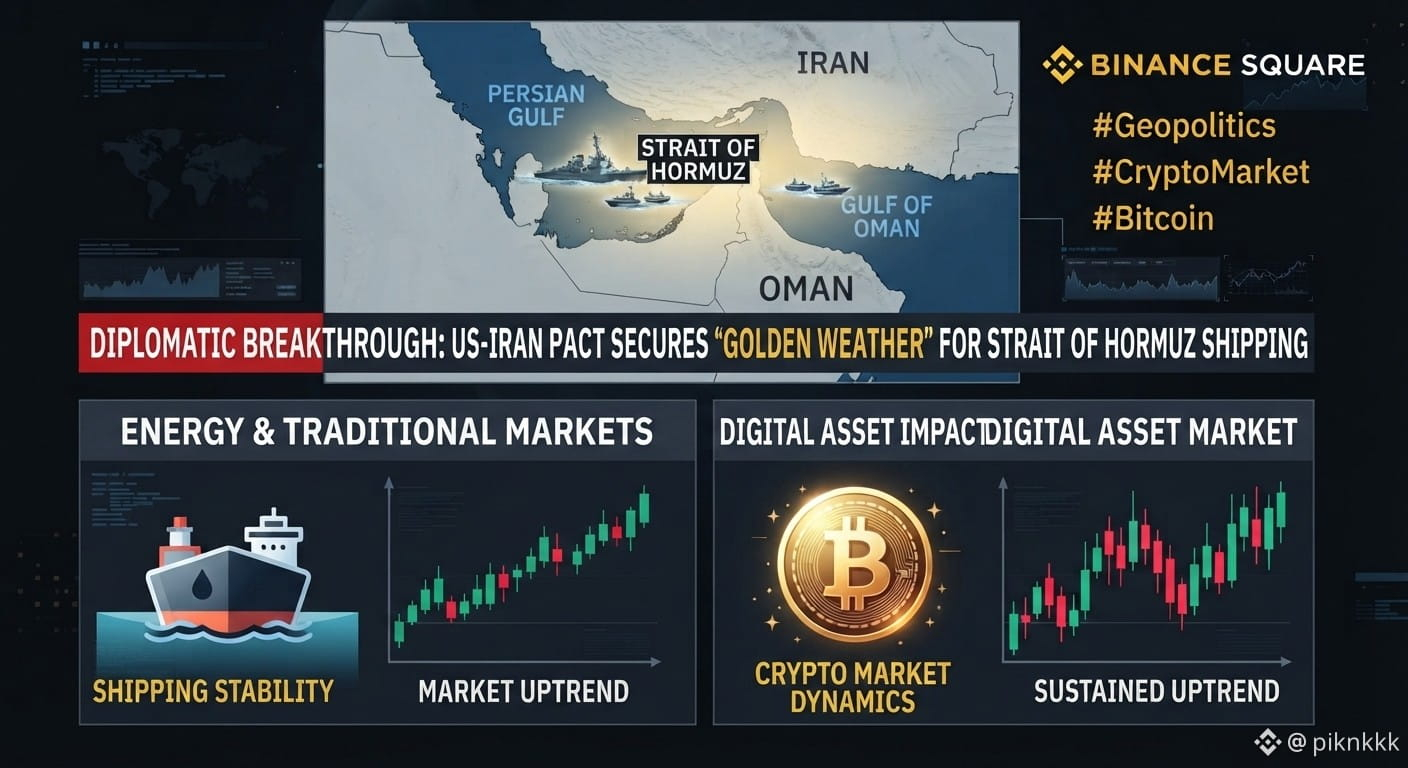
3
3.5k
·
--
Baissier
#strategystriveadd2305bitcointhisweek 📊 Bitcoin Weekly Outlook: Navigating Market Strategy and Key Levels
As we enter the final week of September Bitcoin is displaying critical price action that could set the tone for the rest of Q4 Let’s break down the key strategies and market dynamics to watch this week
The Core Market Update
This week the crypto market is closely monitoring Bitcoin’s current consolidation phase following recent macroeconomic data releases Rather than reactive trading the focus for many market participants is on strategic portfolio management and evaluating key support and resistance zones The overarching theme for the week revolves around liquidity flows institutional ETF activity and how traditional macroeconomic indicators are shaping short-term volatility
📈 Potential Market Impact
Here is an objective look at how this week's dynamics could influence the broader ecosystem
Bitcoin (BTC) Continued consolidation often precedes larger market moves. How BTC interacts with its current structural support and resistance levels will be critical in determining the short-term trend and overall market direction
Altcoin Ecosystem Bitcoin's price action and dominance will heavily dictate altcoin performance If BTC finds stability and establishes a clear trend we may eventually see a rotation of liquidity into high-cap altcoins and emerging Layer 1 ecosystems.
Macro Correlation With traditional markets reacting to end-of-quarter rebalancing, crypto's correlation with equities and bond yields remains a vital factor for short-term price discovery.
Let’s Discuss
What is your primary strategy for navigating Bitcoin's price action this week are you focusing on technical chart levels, macroeconomic indicators or on-chain data? Let me know your thoughts in the comments below!
#Bitcoin #CryptoMarket #CryptoStrategy #BinanceSquare #BTC
This is for educational purposes only. Not Financial Advice (NFA) Always Do Your Own Research (DYOR)
$ZAMA $KMNO $CHIP
{future}(CHIPUSDT)
{future}(KMNOUSDT)
{future}(ZAMAUSDT)
#strategystriveadd2305bitcointhisweek 📊 Bitcoin Weekly Outlook: Navigating Market Strategy and Key Levels
As we enter the final week of September Bitcoin is displaying critical price action that could set the tone for the rest of Q4 Let’s break down the key strategies and market dynamics to watch this week
The Core Market Update
This week the crypto market is closely monitoring Bitcoin’s current consolidation phase following recent macroeconomic data releases Rather than reactive trading the focus for many market participants is on strategic portfolio management and evaluating key support and resistance zones The overarching theme for the week revolves around liquidity flows institutional ETF activity and how traditional macroeconomic indicators are shaping short-term volatility
📈 Potential Market Impact
Here is an objective look at how this week's dynamics could influence the broader ecosystem
Bitcoin (BTC) Continued consolidation often precedes larger market moves. How BTC interacts with its current structural support and resistance levels will be critical in determining the short-term trend and overall market direction
Altcoin Ecosystem Bitcoin's price action and dominance will heavily dictate altcoin performance If BTC finds stability and establishes a clear trend we may eventually see a rotation of liquidity into high-cap altcoins and emerging Layer 1 ecosystems.
Macro Correlation With traditional markets reacting to end-of-quarter rebalancing, crypto's correlation with equities and bond yields remains a vital factor for short-term price discovery.
Let’s Discuss
What is your primary strategy for navigating Bitcoin's price action this week are you focusing on technical chart levels, macroeconomic indicators or on-chain data? Let me know your thoughts in the comments below!
#Bitcoin #CryptoMarket #CryptoStrategy #BinanceSquare #BTC
This is for educational purposes only. Not Financial Advice (NFA) Always Do Your Own Research (DYOR)
$ZAMA $KMNO $CHIP
As we enter the final week of September Bitcoin is displaying critical price action that could set the tone for the rest of Q4 Let’s break down the key strategies and market dynamics to watch this week
The Core Market Update
This week the crypto market is closely monitoring Bitcoin’s current consolidation phase following recent macroeconomic data releases Rather than reactive trading the focus for many market participants is on strategic portfolio management and evaluating key support and resistance zones The overarching theme for the week revolves around liquidity flows institutional ETF activity and how traditional macroeconomic indicators are shaping short-term volatility
📈 Potential Market Impact
Here is an objective look at how this week's dynamics could influence the broader ecosystem
Bitcoin (BTC) Continued consolidation often precedes larger market moves. How BTC interacts with its current structural support and resistance levels will be critical in determining the short-term trend and overall market direction
Altcoin Ecosystem Bitcoin's price action and dominance will heavily dictate altcoin performance If BTC finds stability and establishes a clear trend we may eventually see a rotation of liquidity into high-cap altcoins and emerging Layer 1 ecosystems.
Macro Correlation With traditional markets reacting to end-of-quarter rebalancing, crypto's correlation with equities and bond yields remains a vital factor for short-term price discovery.
Let’s Discuss
What is your primary strategy for navigating Bitcoin's price action this week are you focusing on technical chart levels, macroeconomic indicators or on-chain data? Let me know your thoughts in the comments below!
#Bitcoin #CryptoMarket #CryptoStrategy #BinanceSquare #BTC
This is for educational purposes only. Not Financial Advice (NFA) Always Do Your Own Research (DYOR)
$ZAMA $KMNO $CHIP
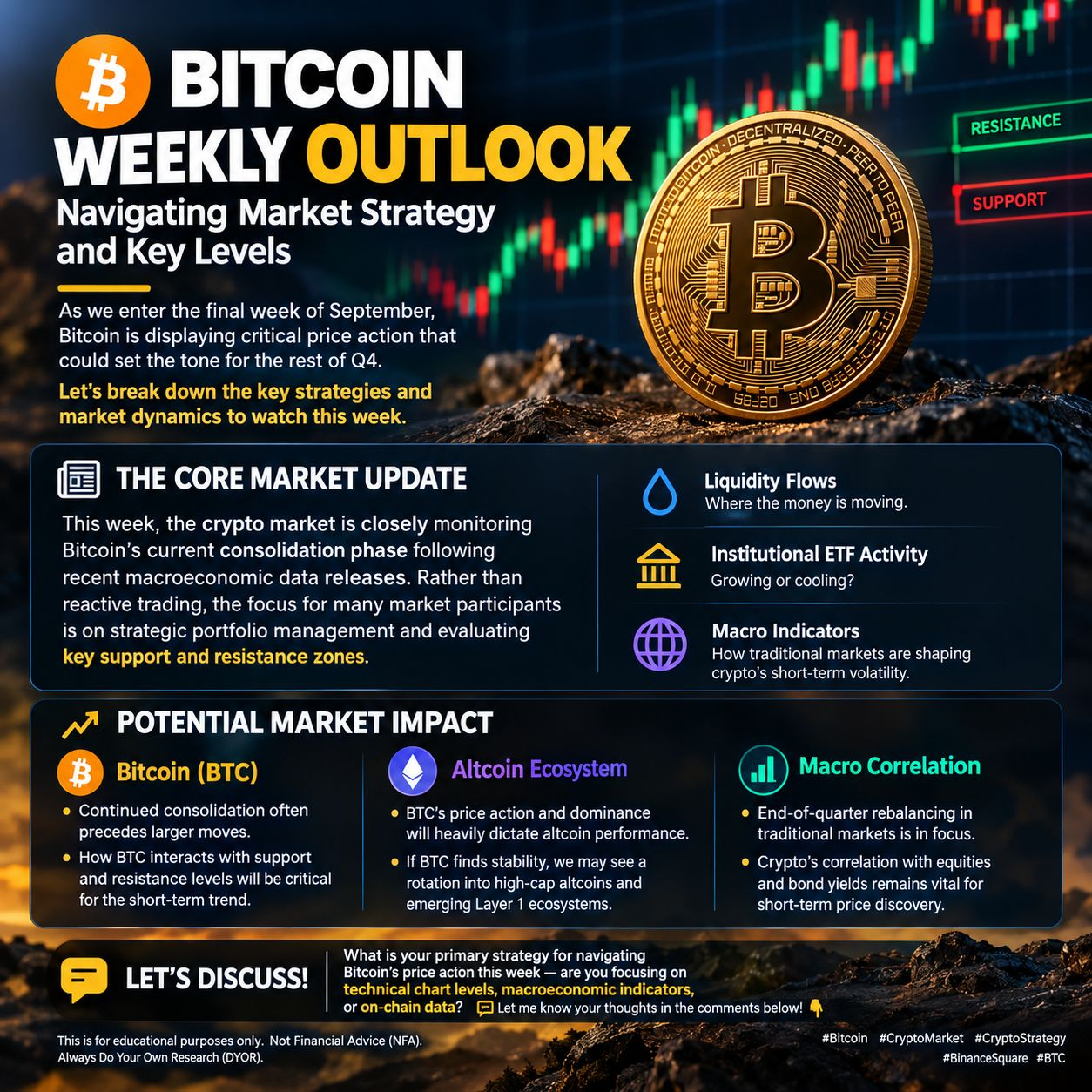
332
·
--
Baissier
#dogecoinetfspostbiggestweeksincelaunch 📊 Dogecoin ETF Records Strongest Weekly Performance Since Launch
Institutional interest in digital assets continues to evolve beyond traditional blue chips. The Dogecoin ETF has just recorded its most significant week of activity and inflows since its inception.
The Core News
Recent market data reveals that the spot Dogecoin ETF has posted its highest weekly metrics since the fund's initial launch. This milestone marks a notable development in the integration of meme coins into regulated, traditional financial products, showing that investor appetite is expanding across different sectors of the crypto market.
Market Impact & Analysis
What does this milestone mean for the broader crypto ecosystem?
🏦 Institutional Validation Increased ETF activity suggests a growing institutional comfort with crypto assets extending beyond just Bitcoin and Ethereum.
💧 Enhanced Accessibility ETFs provide a regulated, familiar bridge for traditional investors, potentially increasing overall market liquidity and accessibility for $DOGE.
⚖️ Ecosystem Maturation The expansion of ETF products into alternative crypto sectors reflects the ongoing maturation and diversification of digital asset investment vehicles.
Join the Discussion
How do you think the expansion of regulated ETF products into meme coins will impact the long-term adoption and market dynamics of assets like Dogecoin? Share your analysis in the comments below! 👇
#Dogecoin #DOGE #CryptoETF #BinanceSquare #CryptoNews
This is for educational purposes only. Not Financial Advice (NFA). Always Do Your Own Research (DYOR).
$PHA $ACE $RARE
{future}(RAREUSDT)
{future}(ACEUSDT)
{future}(PHAUSDT)
#dogecoinetfspostbiggestweeksincelaunch 📊 Dogecoin ETF Records Strongest Weekly Performance Since Launch
Institutional interest in digital assets continues to evolve beyond traditional blue chips. The Dogecoin ETF has just recorded its most significant week of activity and inflows since its inception.
The Core News
Recent market data reveals that the spot Dogecoin ETF has posted its highest weekly metrics since the fund's initial launch. This milestone marks a notable development in the integration of meme coins into regulated, traditional financial products, showing that investor appetite is expanding across different sectors of the crypto market.
Market Impact & Analysis
What does this milestone mean for the broader crypto ecosystem?
🏦 Institutional Validation Increased ETF activity suggests a growing institutional comfort with crypto assets extending beyond just Bitcoin and Ethereum.
💧 Enhanced Accessibility ETFs provide a regulated, familiar bridge for traditional investors, potentially increasing overall market liquidity and accessibility for $DOGE.
⚖️ Ecosystem Maturation The expansion of ETF products into alternative crypto sectors reflects the ongoing maturation and diversification of digital asset investment vehicles.
Join the Discussion
How do you think the expansion of regulated ETF products into meme coins will impact the long-term adoption and market dynamics of assets like Dogecoin? Share your analysis in the comments below! 👇
#Dogecoin #DOGE #CryptoETF #BinanceSquare #CryptoNews
This is for educational purposes only. Not Financial Advice (NFA). Always Do Your Own Research (DYOR).
$PHA $ACE $RARE
Institutional interest in digital assets continues to evolve beyond traditional blue chips. The Dogecoin ETF has just recorded its most significant week of activity and inflows since its inception.
The Core News
Recent market data reveals that the spot Dogecoin ETF has posted its highest weekly metrics since the fund's initial launch. This milestone marks a notable development in the integration of meme coins into regulated, traditional financial products, showing that investor appetite is expanding across different sectors of the crypto market.
Market Impact & Analysis
What does this milestone mean for the broader crypto ecosystem?
🏦 Institutional Validation Increased ETF activity suggests a growing institutional comfort with crypto assets extending beyond just Bitcoin and Ethereum.
💧 Enhanced Accessibility ETFs provide a regulated, familiar bridge for traditional investors, potentially increasing overall market liquidity and accessibility for $DOGE.
⚖️ Ecosystem Maturation The expansion of ETF products into alternative crypto sectors reflects the ongoing maturation and diversification of digital asset investment vehicles.
Join the Discussion
How do you think the expansion of regulated ETF products into meme coins will impact the long-term adoption and market dynamics of assets like Dogecoin? Share your analysis in the comments below! 👇
#Dogecoin #DOGE #CryptoETF #BinanceSquare #CryptoNews
This is for educational purposes only. Not Financial Advice (NFA). Always Do Your Own Research (DYOR).
$PHA $ACE $RARE
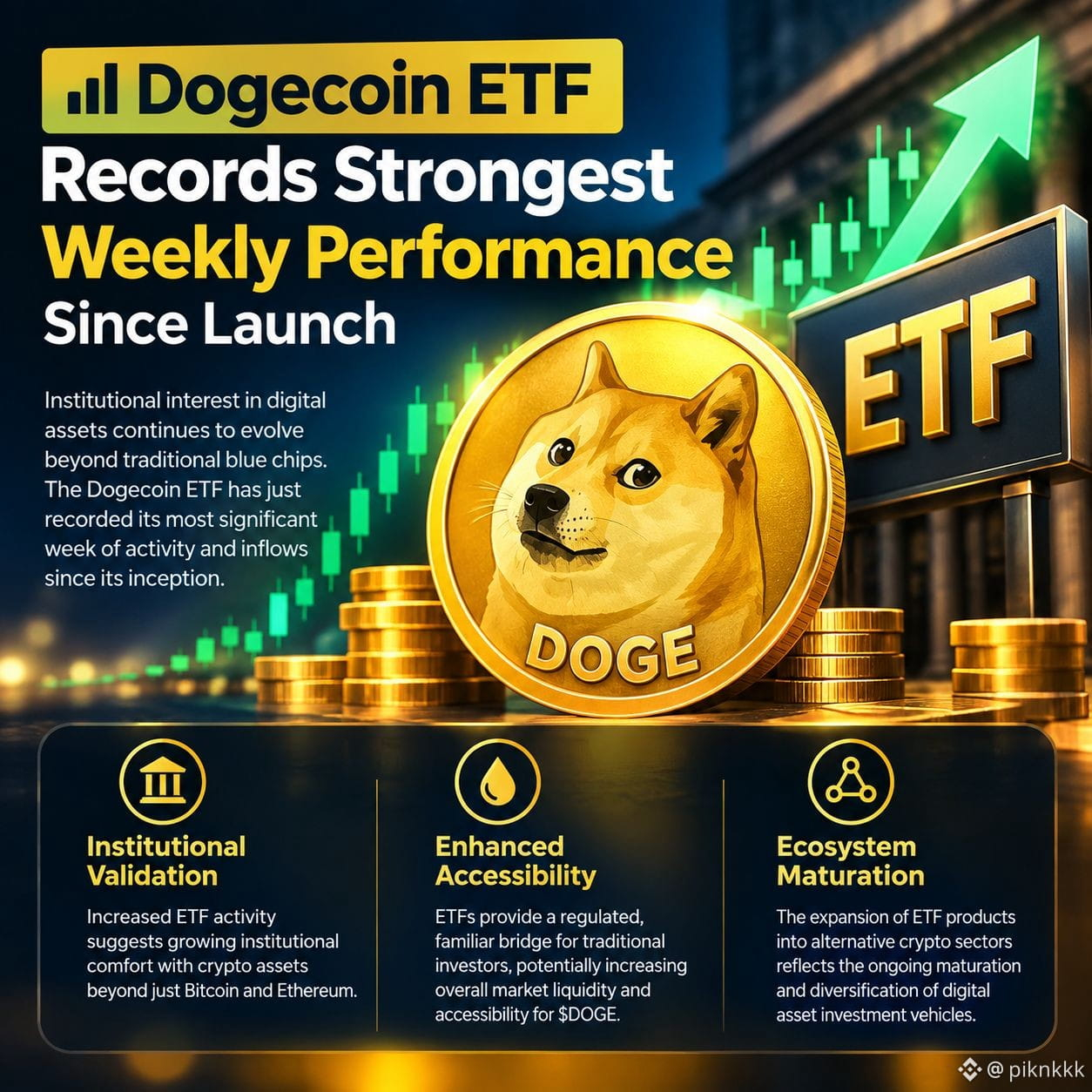
1.2k
·
--
Haussier
#SOLSpotETFWeeklyInflow$188M 📈 U.S. Spot Solana (SOL) ETFs Record $188M in Weekly Net Inflows
Institutional interest in Solana continues to build. U.S. spot SOL ETFs have just logged their second-highest weekly net inflow since launch, signaling growing mainstream confidence in the ecosystem.
📰 Core News
According to recent market data, U.S. spot Solana exchange-traded funds (ETFs) recorded approximately $188 million in combined net inflows over the past week [[10]]. This marks a notable milestone, representing the second-highest weekly inflow since these investment products were first introduced to the market [[18]].
📊 Market Impact
Here is an objective look at what this data could mean for the broader crypto landscape
• 🏛️ Institutional Validation Consistent ETF inflows suggest that traditional finance players are increasingly allocating capital to SOL as a core digital asset class.
• 🌐 Ecosystem Momentum Sustained institutional interest can reinforce Solana’s market positioning, potentially supporting long-term network activity and developer confidence.
• 📈 Market Diversification Strong altcoin ETF performance contributes to a more mature and diversified crypto market, demonstrating steady demand beyond just Bitcoin and Ethereum.
💬 Join the Discussion
Do you think sustained institutional ETF inflows will make Solana a permanent staple in traditional finance portfolios? Share your perspective in the comments below! 👇
#Solana #SOL #CryptoETF #InstitutionalAdoption #BinanceSquare
This is for educational purposes only. Not Financial Advice (NFA). Always Do Your Own Research (DYOR).
$AUDIO $GLMR $W
{future}(WUSDT)
{spot}(GLMRUSDT)
{spot}(AUDIOUSDT)
#SOLSpotETFWeeklyInflow$188M 📈 U.S. Spot Solana (SOL) ETFs Record $188M in Weekly Net Inflows
Institutional interest in Solana continues to build. U.S. spot SOL ETFs have just logged their second-highest weekly net inflow since launch, signaling growing mainstream confidence in the ecosystem.
📰 Core News
According to recent market data, U.S. spot Solana exchange-traded funds (ETFs) recorded approximately $188 million in combined net inflows over the past week [[10]]. This marks a notable milestone, representing the second-highest weekly inflow since these investment products were first introduced to the market [[18]].
📊 Market Impact
Here is an objective look at what this data could mean for the broader crypto landscape
• 🏛️ Institutional Validation Consistent ETF inflows suggest that traditional finance players are increasingly allocating capital to SOL as a core digital asset class.
• 🌐 Ecosystem Momentum Sustained institutional interest can reinforce Solana’s market positioning, potentially supporting long-term network activity and developer confidence.
• 📈 Market Diversification Strong altcoin ETF performance contributes to a more mature and diversified crypto market, demonstrating steady demand beyond just Bitcoin and Ethereum.
💬 Join the Discussion
Do you think sustained institutional ETF inflows will make Solana a permanent staple in traditional finance portfolios? Share your perspective in the comments below! 👇
#Solana #SOL #CryptoETF #InstitutionalAdoption #BinanceSquare
This is for educational purposes only. Not Financial Advice (NFA). Always Do Your Own Research (DYOR).
$AUDIO $GLMR $W
Institutional interest in Solana continues to build. U.S. spot SOL ETFs have just logged their second-highest weekly net inflow since launch, signaling growing mainstream confidence in the ecosystem.
📰 Core News
According to recent market data, U.S. spot Solana exchange-traded funds (ETFs) recorded approximately $188 million in combined net inflows over the past week [[10]]. This marks a notable milestone, representing the second-highest weekly inflow since these investment products were first introduced to the market [[18]].
📊 Market Impact
Here is an objective look at what this data could mean for the broader crypto landscape
• 🏛️ Institutional Validation Consistent ETF inflows suggest that traditional finance players are increasingly allocating capital to SOL as a core digital asset class.
• 🌐 Ecosystem Momentum Sustained institutional interest can reinforce Solana’s market positioning, potentially supporting long-term network activity and developer confidence.
• 📈 Market Diversification Strong altcoin ETF performance contributes to a more mature and diversified crypto market, demonstrating steady demand beyond just Bitcoin and Ethereum.
💬 Join the Discussion
Do you think sustained institutional ETF inflows will make Solana a permanent staple in traditional finance portfolios? Share your perspective in the comments below! 👇
#Solana #SOL #CryptoETF #InstitutionalAdoption #BinanceSquare
This is for educational purposes only. Not Financial Advice (NFA). Always Do Your Own Research (DYOR).
$AUDIO $GLMR $W
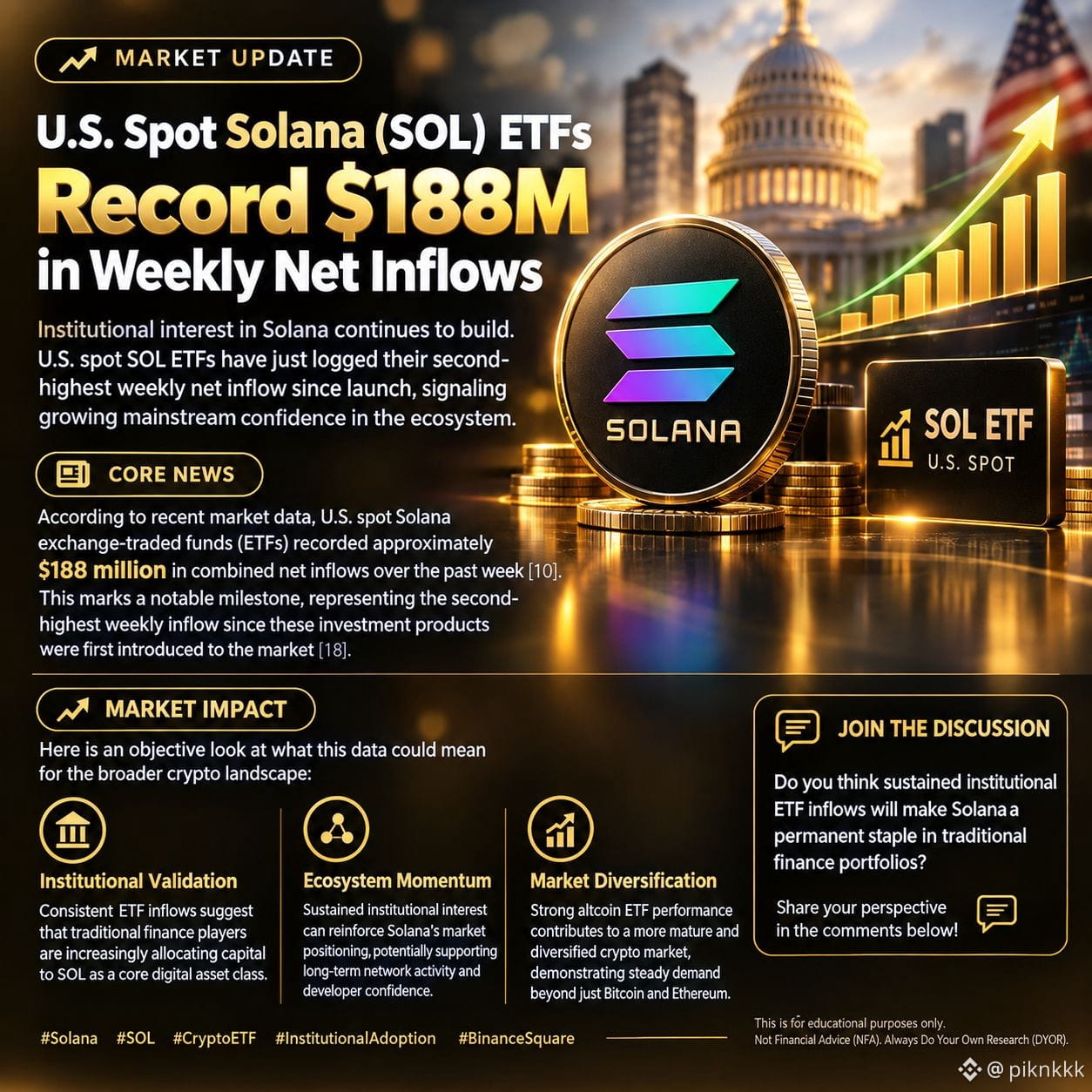
3
·
--
Haussier
#BitgetHackerMoves$83MStolenXRP 📊 Market Update: $83M in Stolen XRP Moved Following Bitget Breach
The aftermath of the recent Bitget security breach continues to unfold on-chain. A significant portion of the stolen XRP has just been activated, highlighting critical dynamics in blockchain security and asset recovery.
🔍 Core News
• Fund Movement The attacker behind the ~$387.5M Bitget breach has moved approximately $83 million worth of stolen XRP from three holding wallets [1].
• Freezing Limitations Roughly $75 million remains untouched in the original wallets. Notably, Ripple cannot freeze native XRP on the XRP Ledger, as its freezing mechanisms only apply to tokens issued on the network not the native currency itself [1].
Mitigation Efforts While Ripple cannot block these transactions, centralized exchanges can restrict accounts that attempt to deposit the stolen funds. Additionally, stablecoin issuers like Circle and Tether have already frozen around $320,000 in related stablecoins connected to the breach [1]
📉 Market Impact
XRP Ecosystem This event underscores the immutable nature of the XRP Ledger. While decentralization ensures censorship resistance it also presents inherent challenges for post-hack fund recovery. Exchange Security Expect heightened scrutiny and stricter deposit monitoring across major exchanges as they actively work to blacklist the attacker’s known wallet addresses.
Broader Crypto Market Large-scale exploits often introduce short-term volatility and reinforce the ongoing industry push for enhanced exchange security protocols and user self-custody education.
💬 Join the Discussion
How do you think the crypto industry should balance the need for censorship resistance with the ability to intercept or recover stolen funds? Share your thoughts below!
#XRP #CryptoSecurity #Bitget #BlockchainAnalysis #CryptoNews
This is for educational purposes only. Not Financial Advice (NFA). Always Do Your Own Research (DYOR).
$ZEC $NEAR $BNB
{future}(BNBUSDT)
{future}(NEARUSDT)
{future}(ZECUSDT)
#BitgetHackerMoves$83MStolenXRP 📊 Market Update: $83M in Stolen XRP Moved Following Bitget Breach
The aftermath of the recent Bitget security breach continues to unfold on-chain. A significant portion of the stolen XRP has just been activated, highlighting critical dynamics in blockchain security and asset recovery.
🔍 Core News
• Fund Movement The attacker behind the ~$387.5M Bitget breach has moved approximately $83 million worth of stolen XRP from three holding wallets [1].
• Freezing Limitations Roughly $75 million remains untouched in the original wallets. Notably, Ripple cannot freeze native XRP on the XRP Ledger, as its freezing mechanisms only apply to tokens issued on the network not the native currency itself [1].
Mitigation Efforts While Ripple cannot block these transactions, centralized exchanges can restrict accounts that attempt to deposit the stolen funds. Additionally, stablecoin issuers like Circle and Tether have already frozen around $320,000 in related stablecoins connected to the breach [1]
📉 Market Impact
XRP Ecosystem This event underscores the immutable nature of the XRP Ledger. While decentralization ensures censorship resistance it also presents inherent challenges for post-hack fund recovery. Exchange Security Expect heightened scrutiny and stricter deposit monitoring across major exchanges as they actively work to blacklist the attacker’s known wallet addresses.
Broader Crypto Market Large-scale exploits often introduce short-term volatility and reinforce the ongoing industry push for enhanced exchange security protocols and user self-custody education.
💬 Join the Discussion
How do you think the crypto industry should balance the need for censorship resistance with the ability to intercept or recover stolen funds? Share your thoughts below!
#XRP #CryptoSecurity #Bitget #BlockchainAnalysis #CryptoNews
This is for educational purposes only. Not Financial Advice (NFA). Always Do Your Own Research (DYOR).
$ZEC $NEAR $BNB
The aftermath of the recent Bitget security breach continues to unfold on-chain. A significant portion of the stolen XRP has just been activated, highlighting critical dynamics in blockchain security and asset recovery.
🔍 Core News
• Fund Movement The attacker behind the ~$387.5M Bitget breach has moved approximately $83 million worth of stolen XRP from three holding wallets [1].
• Freezing Limitations Roughly $75 million remains untouched in the original wallets. Notably, Ripple cannot freeze native XRP on the XRP Ledger, as its freezing mechanisms only apply to tokens issued on the network not the native currency itself [1].
Mitigation Efforts While Ripple cannot block these transactions, centralized exchanges can restrict accounts that attempt to deposit the stolen funds. Additionally, stablecoin issuers like Circle and Tether have already frozen around $320,000 in related stablecoins connected to the breach [1]
📉 Market Impact
XRP Ecosystem This event underscores the immutable nature of the XRP Ledger. While decentralization ensures censorship resistance it also presents inherent challenges for post-hack fund recovery. Exchange Security Expect heightened scrutiny and stricter deposit monitoring across major exchanges as they actively work to blacklist the attacker’s known wallet addresses.
Broader Crypto Market Large-scale exploits often introduce short-term volatility and reinforce the ongoing industry push for enhanced exchange security protocols and user self-custody education.
💬 Join the Discussion
How do you think the crypto industry should balance the need for censorship resistance with the ability to intercept or recover stolen funds? Share your thoughts below!
#XRP #CryptoSecurity #Bitget #BlockchainAnalysis #CryptoNews
This is for educational purposes only. Not Financial Advice (NFA). Always Do Your Own Research (DYOR).
$ZEC $NEAR $BNB
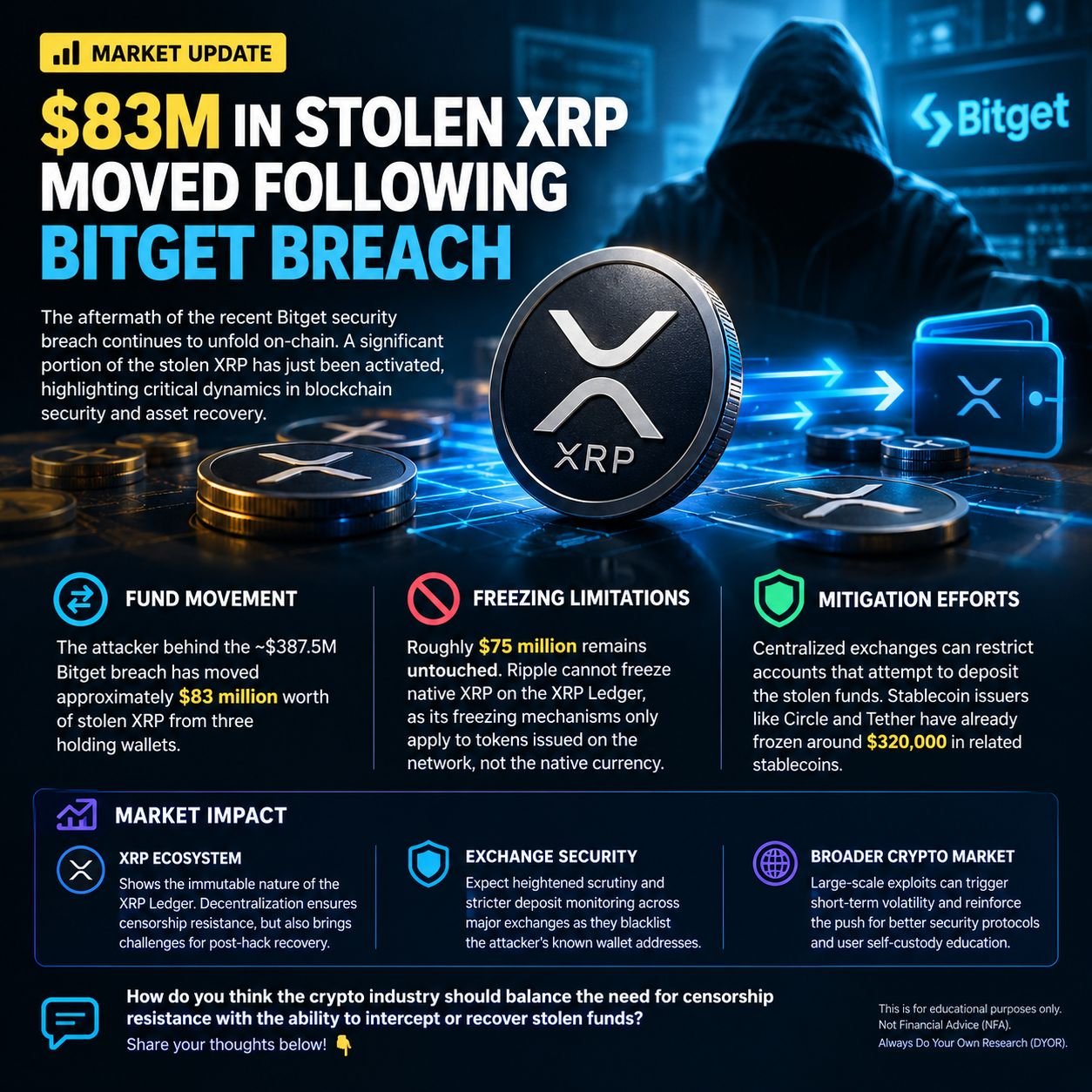
10
·
--
Haussier
#bitwisefilesfinalnearspotetfprospectus 📄 Institutional Milestone: Bitwise Submits Final Prospectus for NEAR Spot ETF
The ETF narrative is expanding beyond Bitcoin and Ethereum. Bitwise just took a major regulatory step for NEAR Protocol.
The Core News
Asset management firm Bitwise has officially filed the final prospectus for a spot NEAR Protocol (NEAR) ETF. This crucial regulatory filing marks a significant step forward in the potential approval of an exchange-traded fund dedicated to the Layer-1 blockchain, signaling growing institutional interest in alternative smart contract platforms.
Market Impact
Here is an objective look at how this development could influence the broader market:
• Broadening the ETF Narrative This move expands the conversation around crypto ETFs beyond the top two assets, potentially paving the way for more regulated investment products in the future.
•Institutional Focus on L1s It highlights growing institutional interest in Layer-1 ecosystems, particularly those with unique technological value propositions like NEAR's focus on AI integration and consumer usability.
• Regulatory Precedent This adds to the growing roster of altcoin ETF filings, providing further insight into the regulatory landscape and testing the appetite for a wider variety of crypto assets.
With the ETF narrative expanding to Layer-1 tokens like NEAR, which other altcoins do you think are positioned for a similar institutional push next? Share your analysis in the comments! 👇
#NEAR #Bitwise #CryptoETF #InstitutionalCrypto #MarketUpdate
This is for educational purposes only. Not Financial Advice (NFA). Always Do Your Own Research (DYOR).
$BTC $ETH $SOL
{future}(SOLUSDT)
{future}(ETHUSDT)
{future}(BTCUSDT)
#bitwisefilesfinalnearspotetfprospectus 📄 Institutional Milestone: Bitwise Submits Final Prospectus for NEAR Spot ETF
The ETF narrative is expanding beyond Bitcoin and Ethereum. Bitwise just took a major regulatory step for NEAR Protocol.
The Core News
Asset management firm Bitwise has officially filed the final prospectus for a spot NEAR Protocol (NEAR) ETF. This crucial regulatory filing marks a significant step forward in the potential approval of an exchange-traded fund dedicated to the Layer-1 blockchain, signaling growing institutional interest in alternative smart contract platforms.
Market Impact
Here is an objective look at how this development could influence the broader market:
• Broadening the ETF Narrative This move expands the conversation around crypto ETFs beyond the top two assets, potentially paving the way for more regulated investment products in the future.
•Institutional Focus on L1s It highlights growing institutional interest in Layer-1 ecosystems, particularly those with unique technological value propositions like NEAR's focus on AI integration and consumer usability.
• Regulatory Precedent This adds to the growing roster of altcoin ETF filings, providing further insight into the regulatory landscape and testing the appetite for a wider variety of crypto assets.
With the ETF narrative expanding to Layer-1 tokens like NEAR, which other altcoins do you think are positioned for a similar institutional push next? Share your analysis in the comments! 👇
#NEAR #Bitwise #CryptoETF #InstitutionalCrypto #MarketUpdate
This is for educational purposes only. Not Financial Advice (NFA). Always Do Your Own Research (DYOR).
$BTC $ETH $SOL
The ETF narrative is expanding beyond Bitcoin and Ethereum. Bitwise just took a major regulatory step for NEAR Protocol.
The Core News
Asset management firm Bitwise has officially filed the final prospectus for a spot NEAR Protocol (NEAR) ETF. This crucial regulatory filing marks a significant step forward in the potential approval of an exchange-traded fund dedicated to the Layer-1 blockchain, signaling growing institutional interest in alternative smart contract platforms.
Market Impact
Here is an objective look at how this development could influence the broader market:
• Broadening the ETF Narrative This move expands the conversation around crypto ETFs beyond the top two assets, potentially paving the way for more regulated investment products in the future.
•Institutional Focus on L1s It highlights growing institutional interest in Layer-1 ecosystems, particularly those with unique technological value propositions like NEAR's focus on AI integration and consumer usability.
• Regulatory Precedent This adds to the growing roster of altcoin ETF filings, providing further insight into the regulatory landscape and testing the appetite for a wider variety of crypto assets.
With the ETF narrative expanding to Layer-1 tokens like NEAR, which other altcoins do you think are positioned for a similar institutional push next? Share your analysis in the comments! 👇
#NEAR #Bitwise #CryptoETF #InstitutionalCrypto #MarketUpdate
This is for educational purposes only. Not Financial Advice (NFA). Always Do Your Own Research (DYOR).
$BTC $ETH $SOL
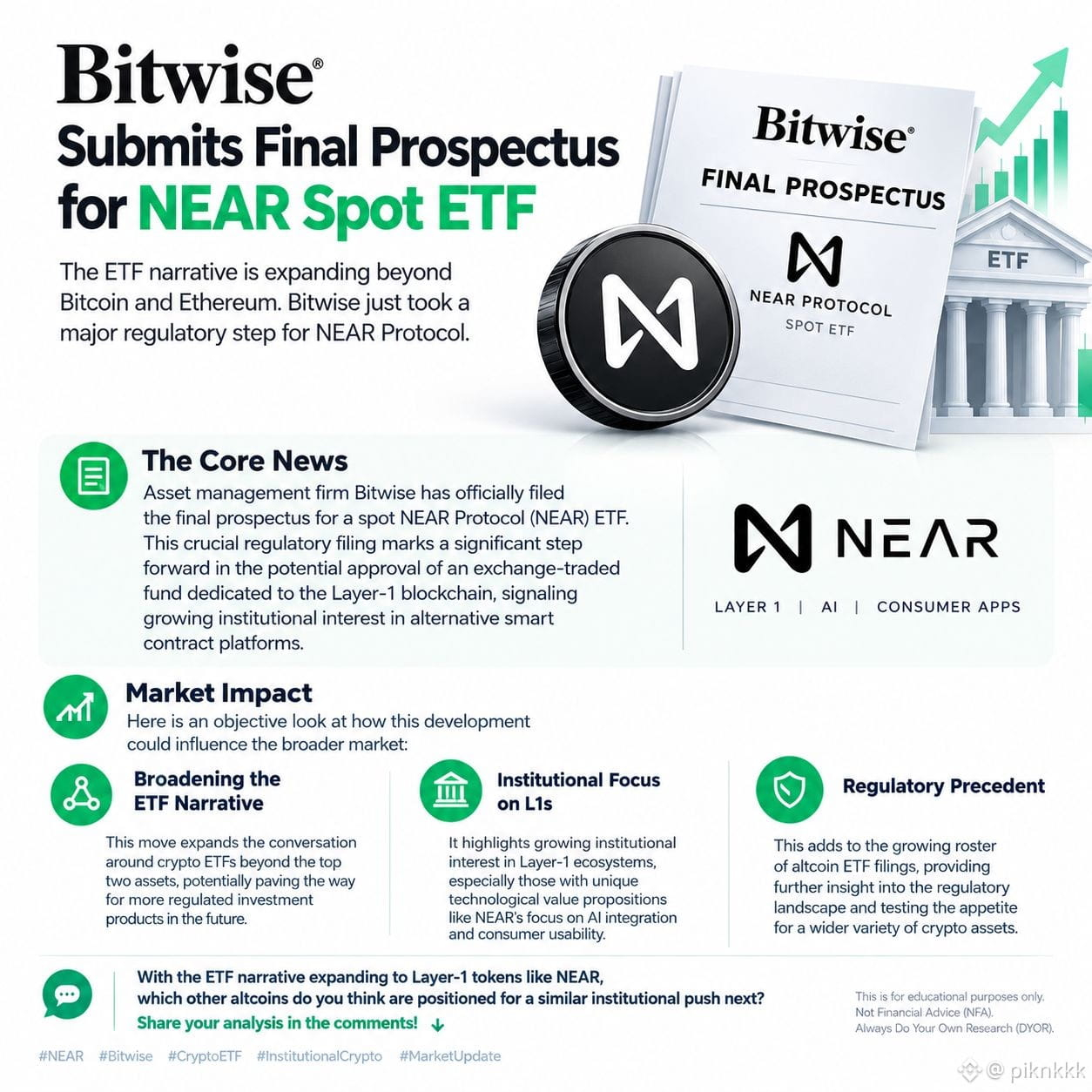
1
1
1.6k
Connectez-vous pour découvrir plus de contenu
Rejoignez la communauté mondiale des adeptes de cryptomonnaies sur Binance Square
⚡️ Suviez les dernières informations importantes sur les cryptomonnaies.
💬 Jugé digne de confiance par la plus grande plateforme d’échange de cryptomonnaies au monde.
👍 Découvrez les connaissances que partagent les créateurs vérifiés.
Adresse e-mail/Nº de téléphone
Sujets d’actualité
GoldFallsTo$4144
141 vues
9 mentions
#GoldFallsTo$4144
🚨 GOLD PLUNGES TO $4,144 — A MAJOR SHIFT IN GLOBAL MARKETS? 🟡📉
Gold has come under heavy selling pressure today, September 28, with prices briefly falling to around $4,144 per ounce.
📉 What’s driving the decline?
* 🛢️ Rising oil prices are increasing inflation concerns.
* 🇺🇸 Expectations of further Fed rate hikes are putting pressure on gold.
* 💵 Higher bond yields and dollar strength are weighing on precious metals.
👀 WHAT’S NEXT?
The $4,144 area is now an important level to watch. Whether gold stabilizes or continues falling will depend on upcoming economic data, interest-rate expectations and market sentiment.
₿ CRYPTO MARKET WATCH: Gold’s decline also raises questions about how investors may position themselves across traditional and digital assets. However, Bitcoin doesn’t necessarily follow gold’s direction.
🔥 One important question for traders: Will gold recover, or will selling pressure continue?
💬 Share your thoughts in the comments.
$CL $BZ $XAU
#GOLD
#XAUUSD
#Bitcoin #CryptoMarket #MarketNews
Suficryptoanalaysis
·0 mentions J’aime
·108 vues
QNTFallsOver40%FromMorningHigh
563 vues
47 mentions
BitgetCEOConfirms$388MStolenInHack
14 vues
4 mentions