

Long8xx
69 Publications

Long8xx
Signaler
Bloquer l’utilisateur
Ouvert au trading
Trade occasionnellement
7.1 an(s)
4 Suivis
3 Abonnés
36 J’aime
Publications
Portefeuille
Tous
Citations
·
--
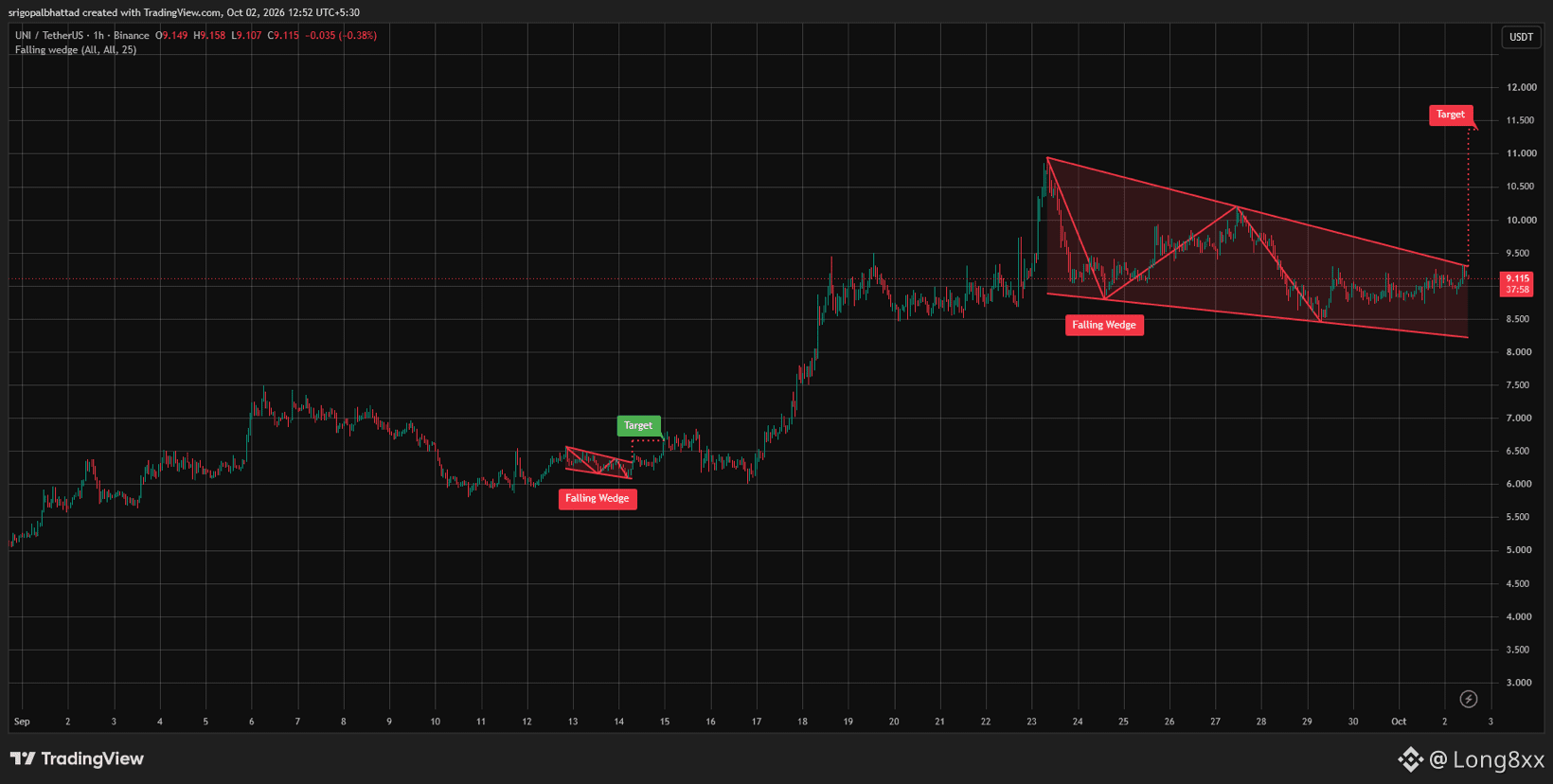
$UNI I is forming a clear Falling Wedge on the 1H chart 👀📉
Price is consolidating inside the wedge around $8.50–$10.00, with lower highs and lower lows creating a tightening structure. The recent bounce from the lower boundary shows buyers defending the support zone.
A clean breakout above the upper wedge trendline could trigger a strong reversal toward the chart target near $11.50 🔥. Until then, the wedge remains a compression setup
$UNI I is forming a clear Falling Wedge on the 1H chart 👀📉
Price is consolidating inside the wedge around $8.50–$10.00, with lower highs and lower lows creating a tightening structure. The recent bounce from the lower boundary shows buyers defending the support zone.
A clean breakout above the upper wedge trendline could trigger a strong reversal toward the chart target near $11.50 🔥. Until then, the wedge remains a compression setup
Price is consolidating inside the wedge around $8.50–$10.00, with lower highs and lower lows creating a tightening structure. The recent bounce from the lower boundary shows buyers defending the support zone.
A clean breakout above the upper wedge trendline could trigger a strong reversal toward the chart target near $11.50 🔥. Until then, the wedge remains a compression setup
1
66
·
--
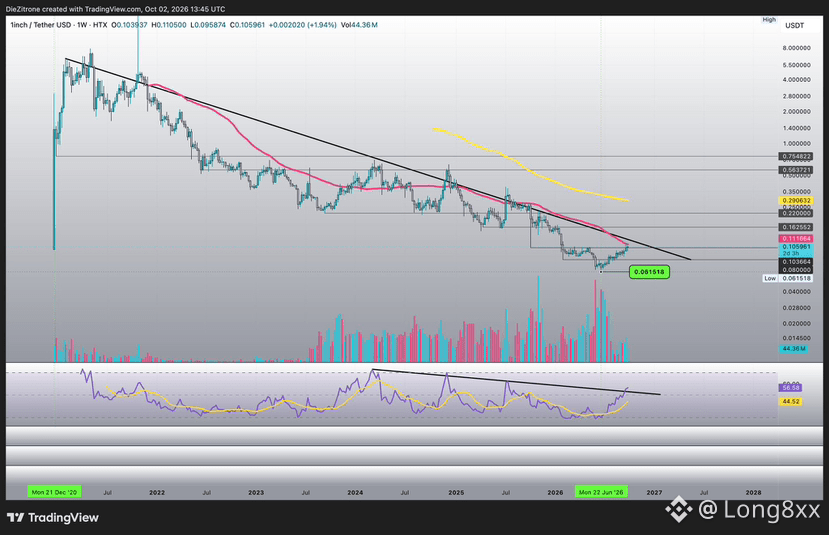
$1INCH Waiting for price to flip $0.1 into support and break out of the multi-year downtrend.
Weekly RSI is already breaking out, while price is pushing toward the weekly downtrend line.
All weekly indicators are bullish
I believe the bottom is in at 0.06 since Jun
$1INCH Waiting for price to flip $0.1 into support and break out of the multi-year downtrend.
Weekly RSI is already breaking out, while price is pushing toward the weekly downtrend line.
All weekly indicators are bullish
I believe the bottom is in at 0.06 since Jun
Weekly RSI is already breaking out, while price is pushing toward the weekly downtrend line.
All weekly indicators are bullish
I believe the bottom is in at 0.06 since Jun
1
75
·
--
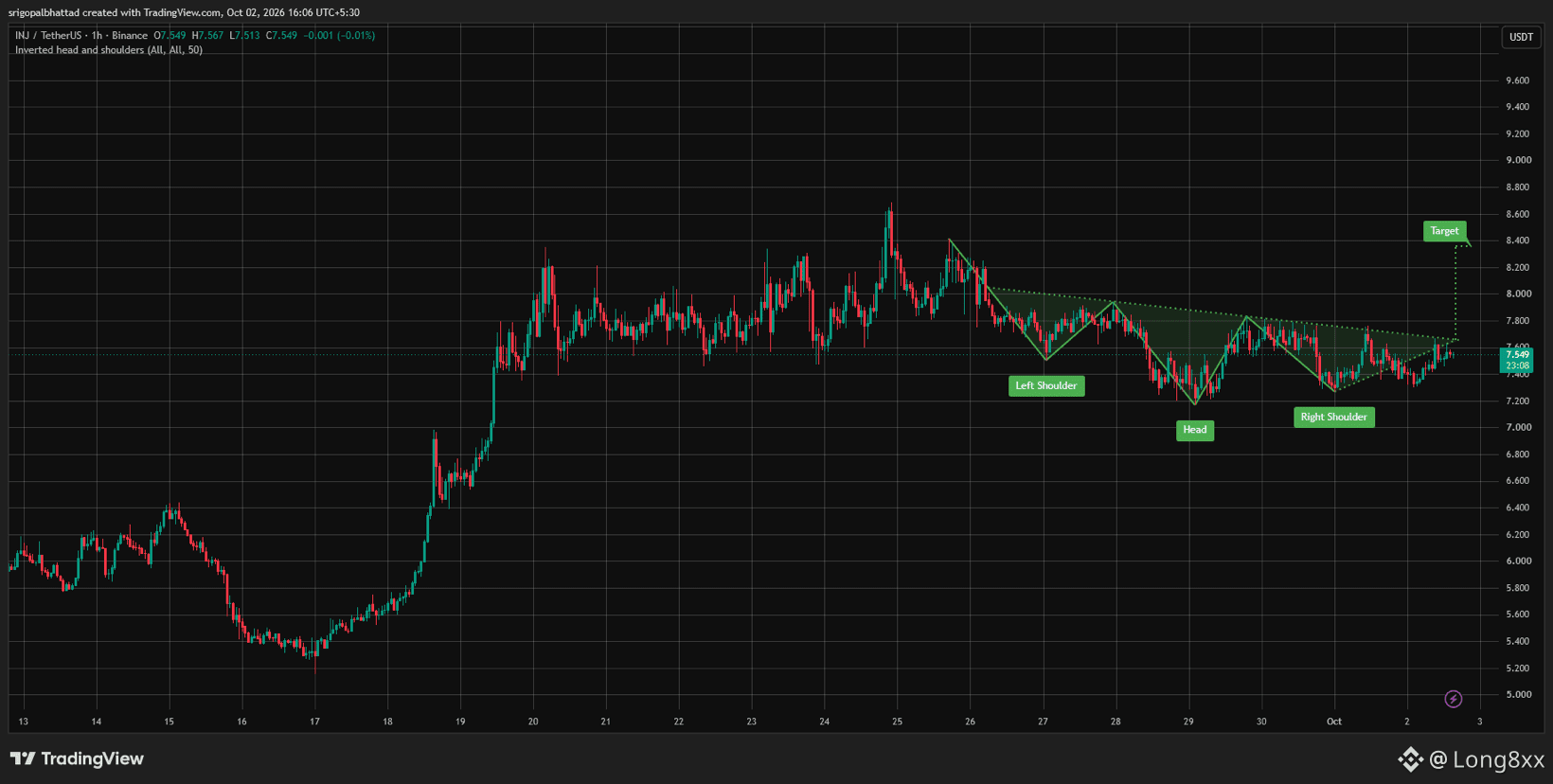
$INJ is forming a clear Inverse Head & Shoulders on the 1H chart 👀📐
Price is around $7.55, with the neckline near $7.75–$7.80. The right shoulder is holding above the head low, suggesting buyers are defending the structure.
A clean breakout above the neckline could activate the chart’s projected target near $8.40 🔥📈
Market sentiment: bullish breakout watch 👀⚡
$INJ is forming a clear Inverse Head & Shoulders on the 1H chart 👀📐
Price is around $7.55, with the neckline near $7.75–$7.80. The right shoulder is holding above the head low, suggesting buyers are defending the structure.
A clean breakout above the neckline could activate the chart’s projected target near $8.40 🔥📈
Market sentiment: bullish breakout watch 👀⚡
Price is around $7.55, with the neckline near $7.75–$7.80. The right shoulder is holding above the head low, suggesting buyers are defending the structure.
A clean breakout above the neckline could activate the chart’s projected target near $8.40 🔥📈
Market sentiment: bullish breakout watch 👀⚡
2
229
·
--
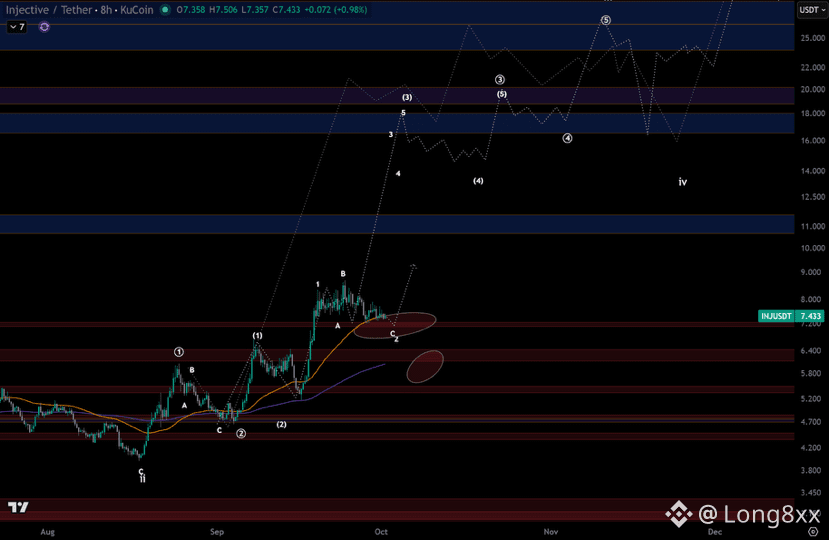
$INJ [Short Term Update]
The previous orange outlook is now the main outlook.
I'm expecting ~ $7.15 to complete the correction then have a race back up.
Of all the #Altcoins I can rationalize the nested 1-2's here better than any other coin.
Good Luck Degen
$INJ [Short Term Update]
The previous orange outlook is now the main outlook.
I'm expecting ~ $7.15 to complete the correction then have a race back up.
Of all the #Altcoins I can rationalize the nested 1-2's here better than any other coin.
Good Luck Degen
The previous orange outlook is now the main outlook.
I'm expecting ~ $7.15 to complete the correction then have a race back up.
Of all the #Altcoins I can rationalize the nested 1-2's here better than any other coin.
Good Luck Degen
1
196
·
--
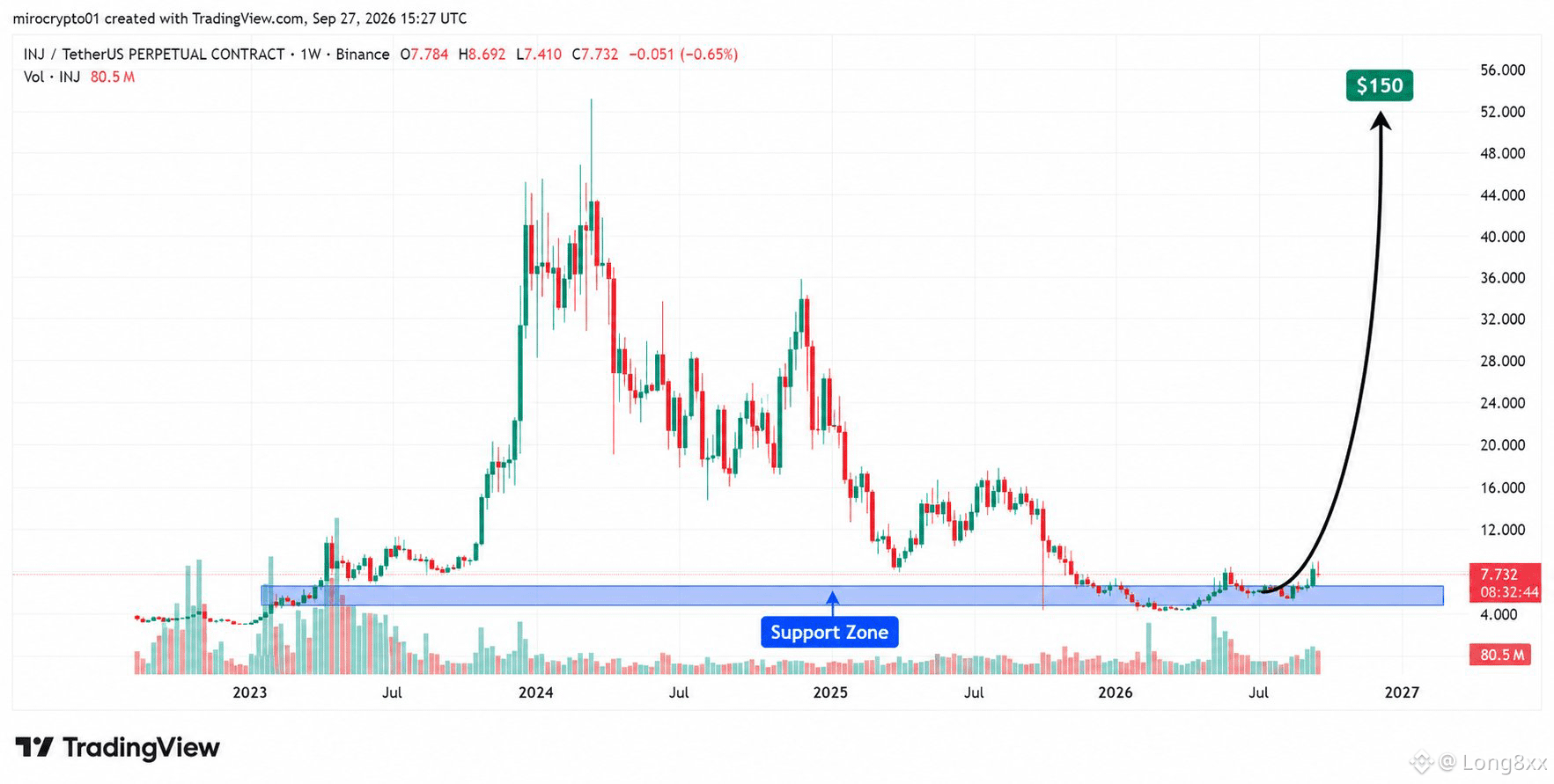
Next Pump circle INJ$INJ ETF + $100 in the next bull market
$INJ already showed what it can do in 2024, reaching a $52.75 ATH
If the next cycle rewards projects with history, adoption and institutional credibility
I believe a repeat with 2x performance from that previous ATH, around $100
Over the last few years, Web3 has seen an enormous number of projects disappear
CoinGecko reports that 53.2% of cryptocurrencies tracked on GeckoTerminal had failed by the end of 2025, with 11.6M tokens failing in 2025 alone
A separate survival study of 28,123 CoinMarketCap tokens found only 17% survived five years under its primary definition
That changes what “long-term” means
When thousands of projects launch every cycle and many disappear within a few years, surviving 5+ years becomes more than just an age number
It gives users, developers and institutions a longer track record to evaluate, execution, network activity, liquidity, security, governance and whether the ecosystem is still building after the hype fades
That matters because institutional capital cannot simply follow every new narrative
It needs data, history and infrastructure that can be evaluated
And this is where I think $INJ becomes interesting
Injective mainnet went live in November 2021, meaning it has already built a multi-year track record through multiple market conditions
Its 2024 cycle showed that an established project can still deliver major upside rather than simply becoming an “old coin”
Now add the ETF angle
21Shares has filed an S-1/A for a U.S. $INJ ETF that is designed to track INJ through the FTSE Injective Index
With the filing explicitly describing the fund as holding INJ and potentially staking a portion of its holdings, subject to regulatory and legal consideration
The filing is still a registration statement
That’s important because an ETF structure could give traditional investors another regulated route to gain exposure to $INJ
It’s not simply “$INJ is old, therefore $100”
It’s about 5+ years of survival creating more historical data, a stronger track record, and a longer period for users and institutions to evaluate the network through different market conditions
Add the institutional infrastructure developing around the asset, the potential ETF access, and a new crypto cycle where established projects may receive more attention
That $100 scenario becomes a more interesting possibility to watch
If that narrative plays out and $INJ repeats its 2024 strength with another 2x from its previous ATH, $100 becomes a scenario I’m watching closely
Next Pump circle INJ
$INJ ETF + $100 in the next bull market
$INJ already showed what it can do in 2024, reaching a $52.75 ATH
If the next cycle rewards projects with history, adoption and institutional credibility
I believe a repeat with 2x performance from that previous ATH, around $100
Over the last few years, Web3 has seen an enormous number of projects disappear
CoinGecko reports that 53.2% of cryptocurrencies tracked on GeckoTerminal had failed by the end of 2025, with 11.6M tokens failing in 2025 alone
A separate survival study of 28,123 CoinMarketCap tokens found only 17% survived five years under its primary definition
That changes what “long-term” means
When thousands of projects launch every cycle and many disappear within a few years, surviving 5+ years becomes more than just an age number
It gives users, developers and institutions a longer track record to evaluate, execution, network activity, liquidity, security, governance and whether the ecosystem is still building after the hype fades
That matters because institutional capital cannot simply follow every new narrative
It needs data, history and infrastructure that can be evaluated
And this is where I think $INJ becomes interesting
Injective mainnet went live in November 2021, meaning it has already built a multi-year track record through multiple market conditions
Its 2024 cycle showed that an established project can still deliver major upside rather than simply becoming an “old coin”
Now add the ETF angle
21Shares has filed an S-1/A for a U.S. $INJ ETF that is designed to track INJ through the FTSE Injective Index
With the filing explicitly describing the fund as holding INJ and potentially staking a portion of its holdings, subject to regulatory and legal consideration
The filing is still a registration statement
That’s important because an ETF structure could give traditional investors another regulated route to gain exposure to $INJ
It’s not simply “$INJ is old, therefore $100”
It’s about 5+ years of survival creating more historical data, a stronger track record, and a longer period for users and institutions to evaluate the network through different market conditions
Add the institutional infrastructure developing around the asset, the potential ETF access, and a new crypto cycle where established projects may receive more attention
That $100 scenario becomes a more interesting possibility to watch
If that narrative plays out and $INJ repeats its 2024 strength with another 2x from its previous ATH, $100 becomes a scenario I’m watching closely
$INJ already showed what it can do in 2024, reaching a $52.75 ATH
If the next cycle rewards projects with history, adoption and institutional credibility
I believe a repeat with 2x performance from that previous ATH, around $100
Over the last few years, Web3 has seen an enormous number of projects disappear
CoinGecko reports that 53.2% of cryptocurrencies tracked on GeckoTerminal had failed by the end of 2025, with 11.6M tokens failing in 2025 alone
A separate survival study of 28,123 CoinMarketCap tokens found only 17% survived five years under its primary definition
That changes what “long-term” means
When thousands of projects launch every cycle and many disappear within a few years, surviving 5+ years becomes more than just an age number
It gives users, developers and institutions a longer track record to evaluate, execution, network activity, liquidity, security, governance and whether the ecosystem is still building after the hype fades
That matters because institutional capital cannot simply follow every new narrative
It needs data, history and infrastructure that can be evaluated
And this is where I think $INJ becomes interesting
Injective mainnet went live in November 2021, meaning it has already built a multi-year track record through multiple market conditions
Its 2024 cycle showed that an established project can still deliver major upside rather than simply becoming an “old coin”
Now add the ETF angle
21Shares has filed an S-1/A for a U.S. $INJ ETF that is designed to track INJ through the FTSE Injective Index
With the filing explicitly describing the fund as holding INJ and potentially staking a portion of its holdings, subject to regulatory and legal consideration
The filing is still a registration statement
That’s important because an ETF structure could give traditional investors another regulated route to gain exposure to $INJ
It’s not simply “$INJ is old, therefore $100”
It’s about 5+ years of survival creating more historical data, a stronger track record, and a longer period for users and institutions to evaluate the network through different market conditions
Add the institutional infrastructure developing around the asset, the potential ETF access, and a new crypto cycle where established projects may receive more attention
That $100 scenario becomes a more interesting possibility to watch
If that narrative plays out and $INJ repeats its 2024 strength with another 2x from its previous ATH, $100 becomes a scenario I’m watching closely
1
156
·
--
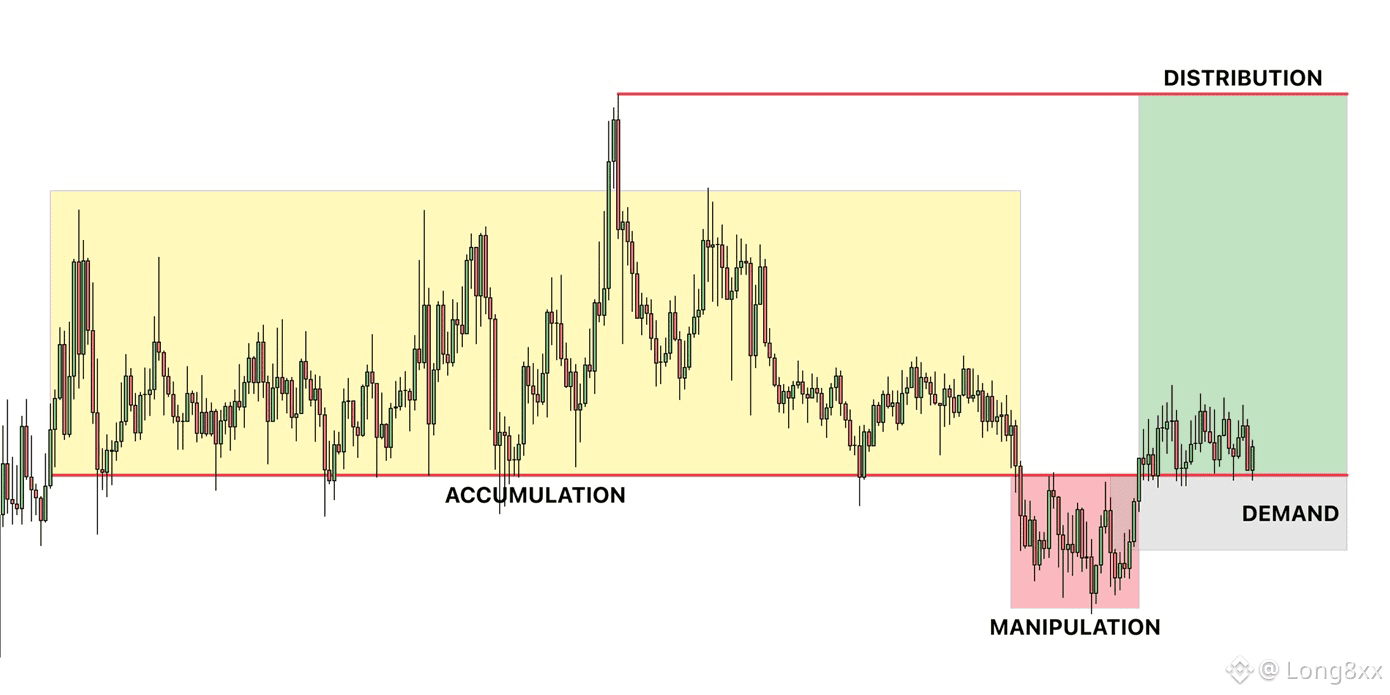
#INJ Seems that $INJ is trading in a nice Power of 3 on the lower time frame.
As long as we hold around that demand area, we are potentially going to expand higher into the distribution phase.
Accumulation and manipulation are done, so it’s time to pay attention
#INJ Seems that $INJ is trading in a nice Power of 3 on the lower time frame.
As long as we hold around that demand area, we are potentially going to expand higher into the distribution phase.
Accumulation and manipulation are done, so it’s time to pay attention
As long as we hold around that demand area, we are potentially going to expand higher into the distribution phase.
Accumulation and manipulation are done, so it’s time to pay attention
1
41
·
--
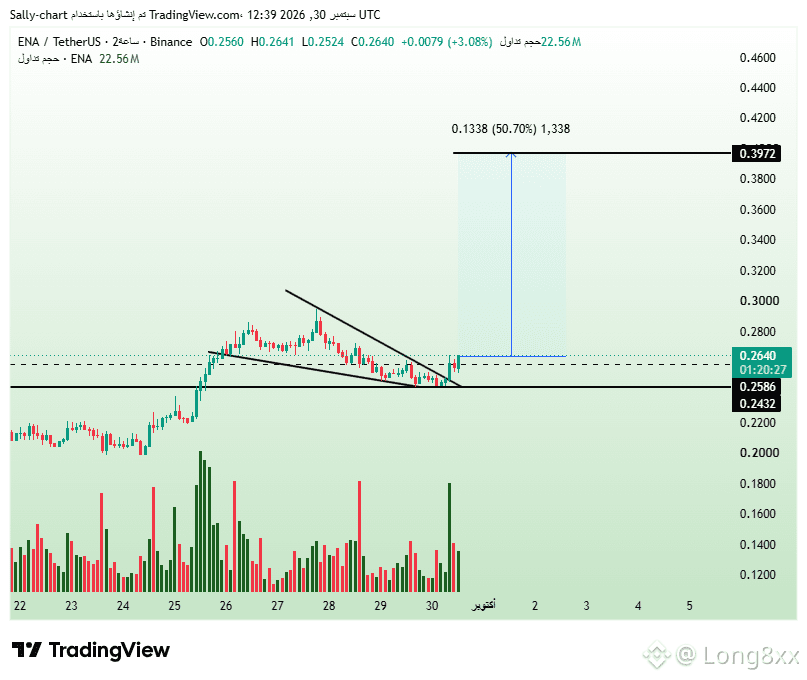
$ENA BREAKOUT IS STARTING. 👀🔥
ㅤ
After days of compression, $ENA is pushing out of the descending structure.
ㅤ
Momentum is waking up — and the road above looks wide open. 🚀
ㅤㅤ
Keep your eyes on this one
$ENA BREAKOUT IS STARTING. 👀🔥
ㅤ
After days of compression, $ENA is pushing out of the descending structure.
ㅤ
Momentum is waking up — and the road above looks wide open. 🚀
ㅤㅤ
Keep your eyes on this one
ㅤ
After days of compression, $ENA is pushing out of the descending structure.
ㅤ
Momentum is waking up — and the road above looks wide open. 🚀
ㅤㅤ
Keep your eyes on this one
1
74
·
--
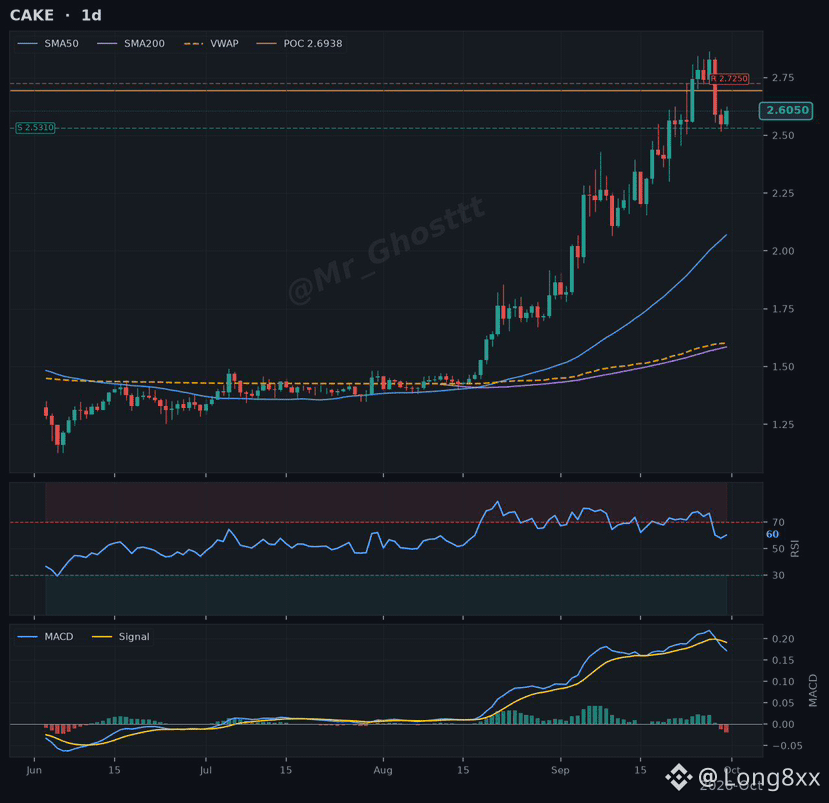
$CAKE The trend is still bullish but momentum is weakening.
🟢 Price: $2.598
🟢 Above SMA20/50/200
🟢 ADX: 53.3
🟢 CVD: Rising
🟡 RSI: 60
🔴 MACD momentum: Weakening
🔴 Spot volume: -45.6% vs 7D avg
🟡 OI: -2.1%
Key levels:
Support: $2.531
Resistance: $2.725
500D VWAP: $2.623
$CAKE The trend is still bullish but momentum is weakening.
🟢 Price: $2.598
🟢 Above SMA20/50/200
🟢 ADX: 53.3
🟢 CVD: Rising
🟡 RSI: 60
🔴 MACD momentum: Weakening
🔴 Spot volume: -45.6% vs 7D avg
🟡 OI: -2.1%
Key levels:
Support: $2.531
Resistance: $2.725
500D VWAP: $2.623
🟢 Price: $2.598
🟢 Above SMA20/50/200
🟢 ADX: 53.3
🟢 CVD: Rising
🟡 RSI: 60
🔴 MACD momentum: Weakening
🔴 Spot volume: -45.6% vs 7D avg
🟡 OI: -2.1%
Key levels:
Support: $2.531
Resistance: $2.725
500D VWAP: $2.623
1
1
273
·
--
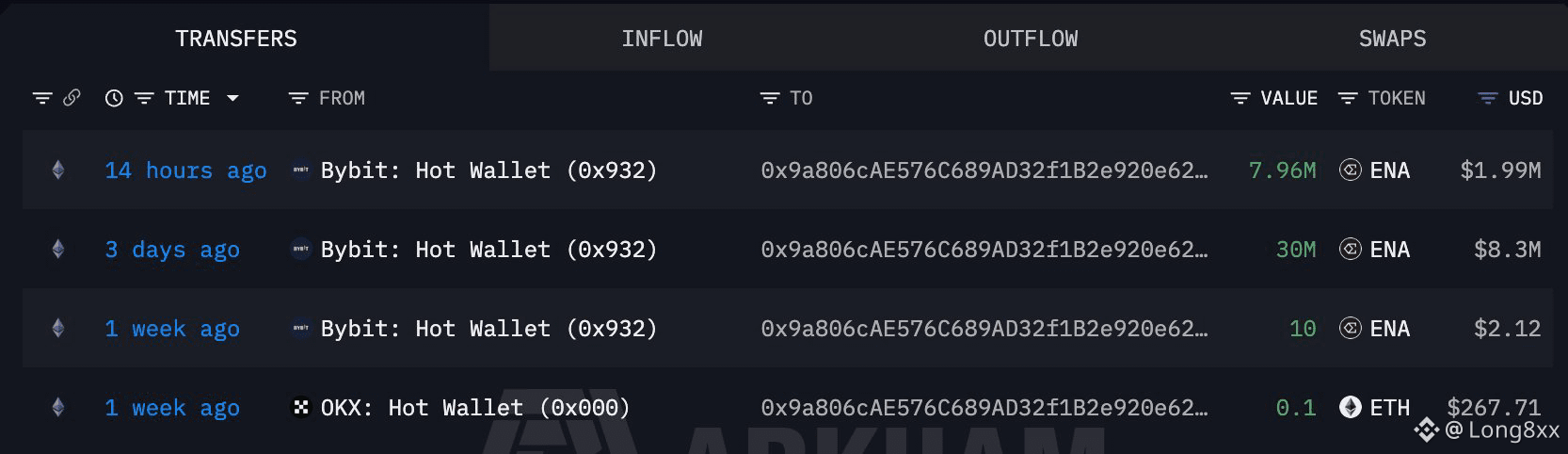
$ENA Whale 0x9a80, who bought 30M $ENA($8.3M) 3 days ago, bought another 7.96M $ENA($1.99M) today.
https://arkm.com/explorer/address/0x9a806cAE576C689AD32f1B2e920e62Efb78ae750
$ENA Whale 0x9a80, who bought 30M $ENA ($8.3M) 3 days ago, bought another 7.96M $ENA ($1.99M) today.
https://arkm.com/explorer/address/0x9a806cAE576C689AD32f1B2e920e62Efb78ae750
https://arkm.com/explorer/address/0x9a806cAE576C689AD32f1B2e920e62Efb78ae750
1
87
·
--
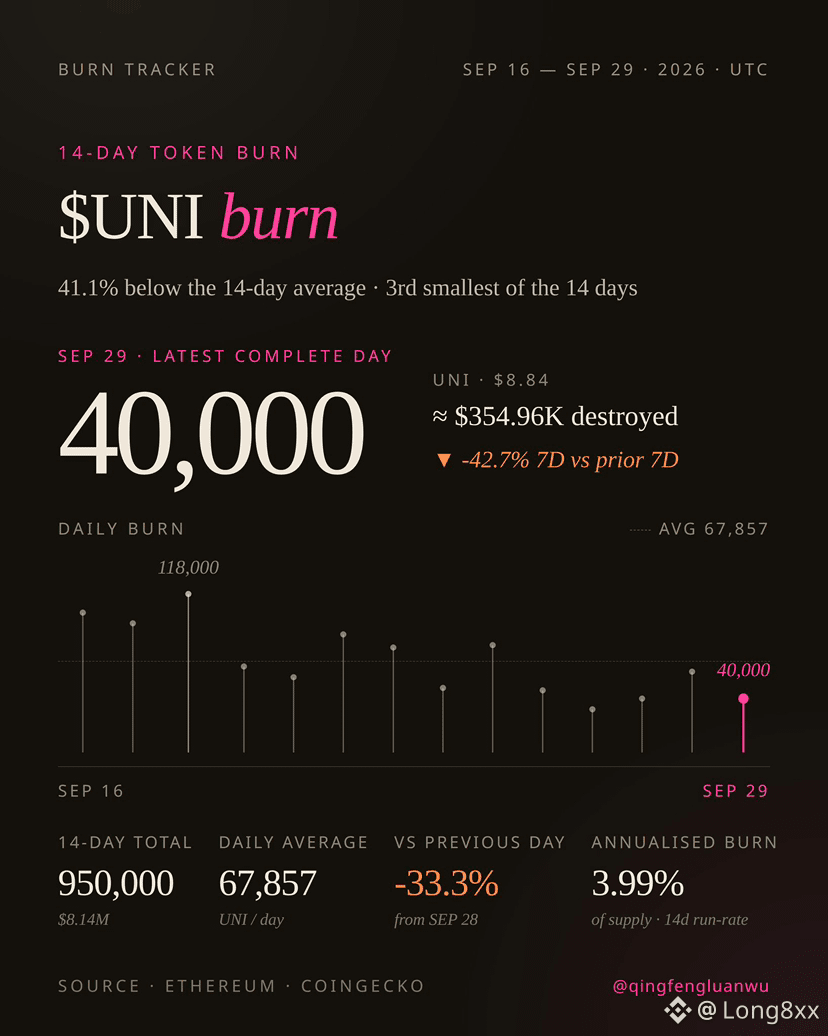
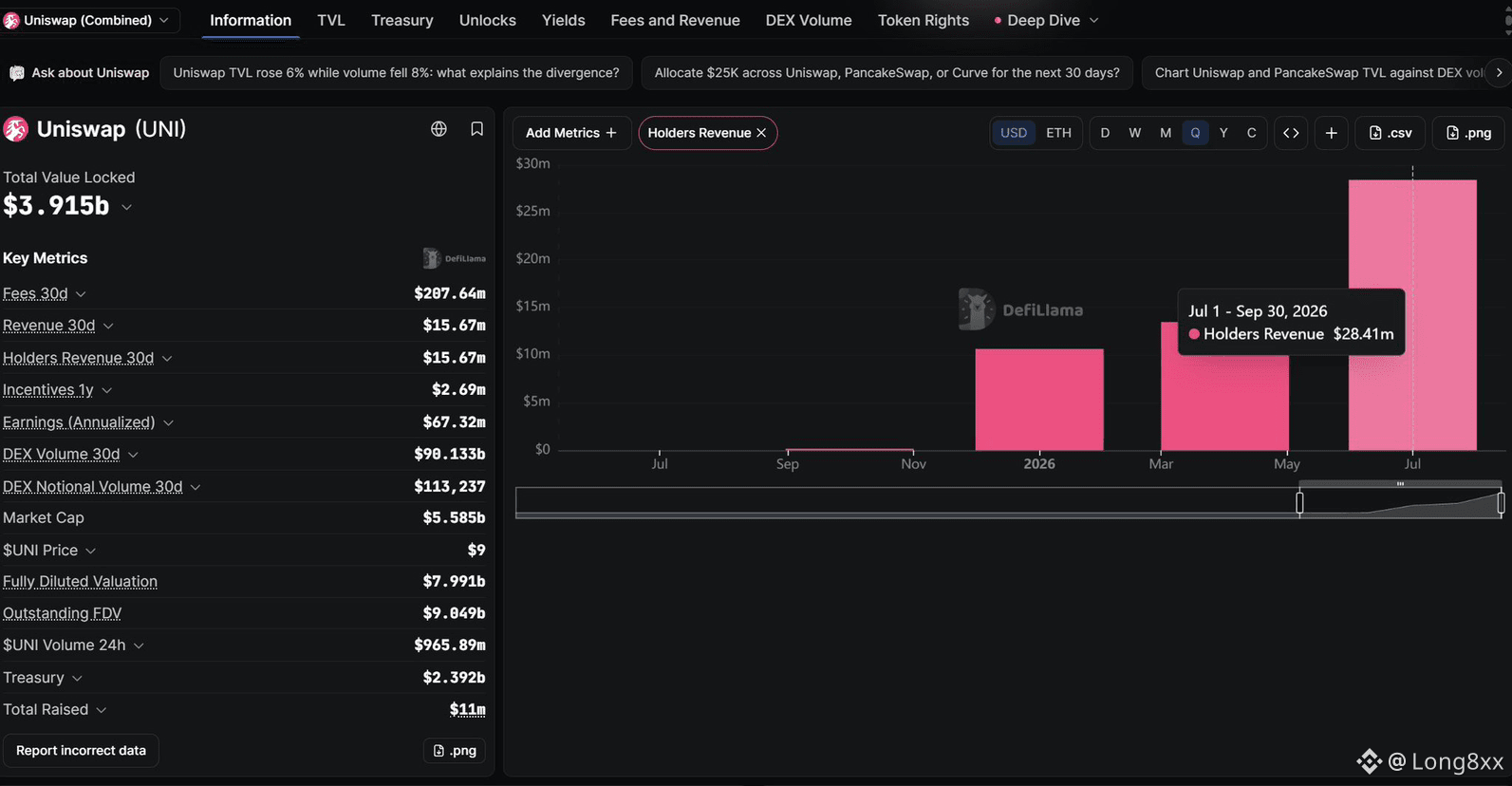
$UNI New ATH for Uniswap's holders' revenue.
Uniswap is now the 6th-largest project by revenue passed to token holders and $UNI has been surging thanks to this.
The revenue meta is the best thing that has happened to this industry.
$UNI New ATH for Uniswap's holders' revenue.
Uniswap is now the 6th-largest project by revenue passed to token holders and $UNI has been surging thanks to this.
The revenue meta is the best thing that has happened to this industry.
Uniswap is now the 6th-largest project by revenue passed to token holders and $UNI has been surging thanks to this.
The revenue meta is the best thing that has happened to this industry.
1
109
·
--

Article
CAKE & UNIWhat does cake really need to be at 8$ ?
This is what the numbers say👇🏻
#Uniswap is roughly 10x bigger as a business.
But #CAKE sends far more of its earnings to token holders.
The market values #UNI at 6.7x CAKE mostly because it pays a much higher multiple for UNI's brand and position, not because UNI's token earns more.
1️⃣Fees (business size)
• UNI generates about $5.0M a day in fees
• CAKE's $519K, roughly 9.7x more.
This is the real gap.
2️⃣Revenue capture
• CAKE keeps about 33% of its fees as revenue ($170.5K of $519K).
• UNI keeps only about 8% ($412K of $5.02M). So UNI's revenue lead shrinks to about 2.4x.
3️⃣ Valuation
• On P/F, UNI is actually cheaper (3.0x vs 4.34x), meaning you get more protocol activity per dollar of market cap.
• On P/S, CAKE is about 2.8x cheaper (13.2x vs 36.5x).
The market is paying for UNI's fee base and brand, not for what currently accrues to the token.
4️⃣Dilution
• CAKE's FDV is almost equal to its market cap, so there's very little supply overhang.
• UNI's FDV is about 43% above its market cap, so more unlock pressure lies ahead.
5️⃣Liquidity
• UNI turns over about 18.5% of its market cap daily, compared with about 11% for CAKE.
•UNI has deeper, more institutional trading.
6️⃣Conclusion
If CAKE traded at UNI's 36.5x P/S on today's revenue, its market cap would be about $2.3B, or roughly $7 a token.
Even 20x would put it near $1.24B, about $3.90.
That requires the market to trust CAKE's revenue as durable, which comes from things like broader exchange access, institutional attention, and a consistent burn story.
CAKE & UNI
What does cake really need to be at 8$ ?
This is what the numbers say👇🏻
#Uniswap is roughly 10x bigger as a business.
But #CAKE sends far more of its earnings to token holders.
The market values #UNI at 6.7x CAKE mostly because it pays a much higher multiple for UNI's brand and position, not because UNI's token earns more.
1️⃣Fees (business size)
• UNI generates about $5.0M a day in fees
• CAKE's $519K, roughly 9.7x more.
This is the real gap.
2️⃣Revenue capture
• CAKE keeps about 33% of its fees as revenue ($170.5K of $519K).
• UNI keeps only about 8% ($412K of $5.02M). So UNI's revenue lead shrinks to about 2.4x.
3️⃣ Valuation
• On P/F, UNI is actually cheaper (3.0x vs 4.34x), meaning you get more protocol activity per dollar of market cap.
• On P/S, CAKE is about 2.8x cheaper (13.2x vs 36.5x).
The market is paying for UNI's fee base and brand, not for what currently accrues to the token.
4️⃣Dilution
• CAKE's FDV is almost equal to its market cap, so there's very little supply overhang.
• UNI's FDV is about 43% above its market cap, so more unlock pressure lies ahead.
5️⃣Liquidity
• UNI turns over about 18.5% of its market cap daily, compared with about 11% for CAKE.
•UNI has deeper, more institutional trading.
6️⃣Conclusion
If CAKE traded at UNI's 36.5x P/S on today's revenue, its market cap would be about $2.3B, or roughly $7 a token.
Even 20x would put it near $1.24B, about $3.90.
That requires the market to trust CAKE's revenue as durable, which comes from things like broader exchange access, institutional attention, and a consistent burn story.
This is what the numbers say👇🏻
#Uniswap is roughly 10x bigger as a business.
But #CAKE sends far more of its earnings to token holders.
The market values #UNI at 6.7x CAKE mostly because it pays a much higher multiple for UNI's brand and position, not because UNI's token earns more.
1️⃣Fees (business size)
• UNI generates about $5.0M a day in fees
• CAKE's $519K, roughly 9.7x more.
This is the real gap.
2️⃣Revenue capture
• CAKE keeps about 33% of its fees as revenue ($170.5K of $519K).
• UNI keeps only about 8% ($412K of $5.02M). So UNI's revenue lead shrinks to about 2.4x.
3️⃣ Valuation
• On P/F, UNI is actually cheaper (3.0x vs 4.34x), meaning you get more protocol activity per dollar of market cap.
• On P/S, CAKE is about 2.8x cheaper (13.2x vs 36.5x).
The market is paying for UNI's fee base and brand, not for what currently accrues to the token.
4️⃣Dilution
• CAKE's FDV is almost equal to its market cap, so there's very little supply overhang.
• UNI's FDV is about 43% above its market cap, so more unlock pressure lies ahead.
5️⃣Liquidity
• UNI turns over about 18.5% of its market cap daily, compared with about 11% for CAKE.
•UNI has deeper, more institutional trading.
6️⃣Conclusion
If CAKE traded at UNI's 36.5x P/S on today's revenue, its market cap would be about $2.3B, or roughly $7 a token.
Even 20x would put it near $1.24B, about $3.90.
That requires the market to trust CAKE's revenue as durable, which comes from things like broader exchange access, institutional attention, and a consistent burn story.
2
766
·
--
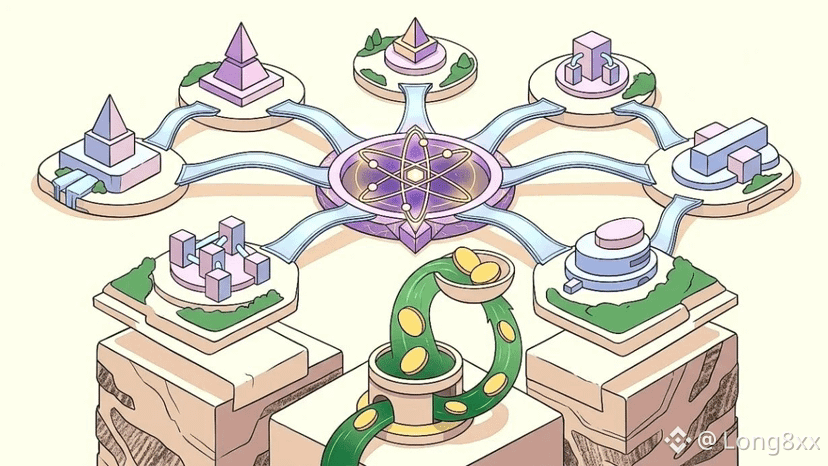
$ATOM Roadmap to be announced soon.
What are your expectations? What do you want this to include?
$ATOM Roadmap to be announced soon.
What are your expectations? What do you want this to include?
What are your expectations? What do you want this to include?
3
289
·
--
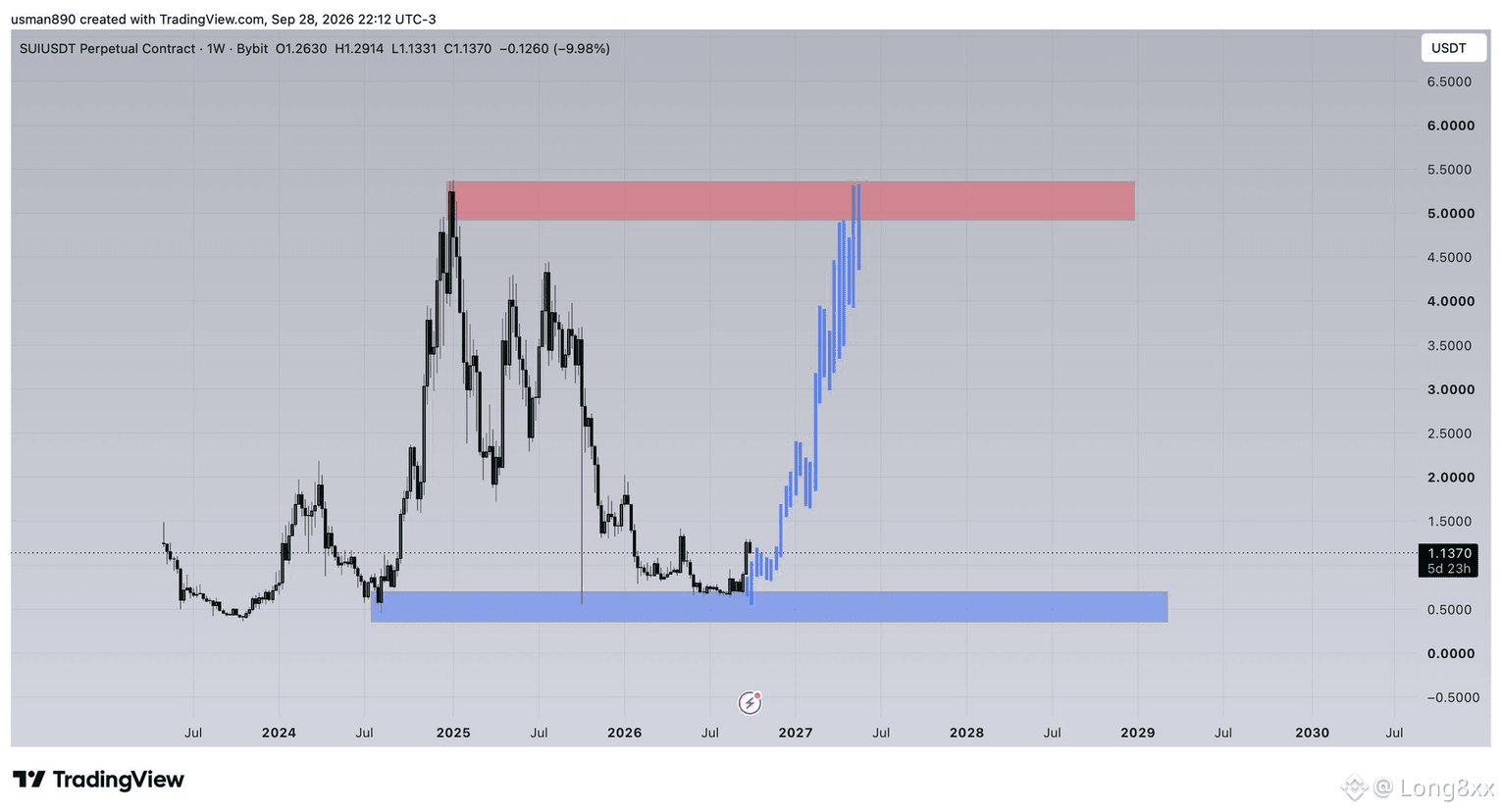
$SUI some consolidation here before a move towards $2 #SUI
$SUI some consolidation here before a move towards $2 #SUI
183
·
--
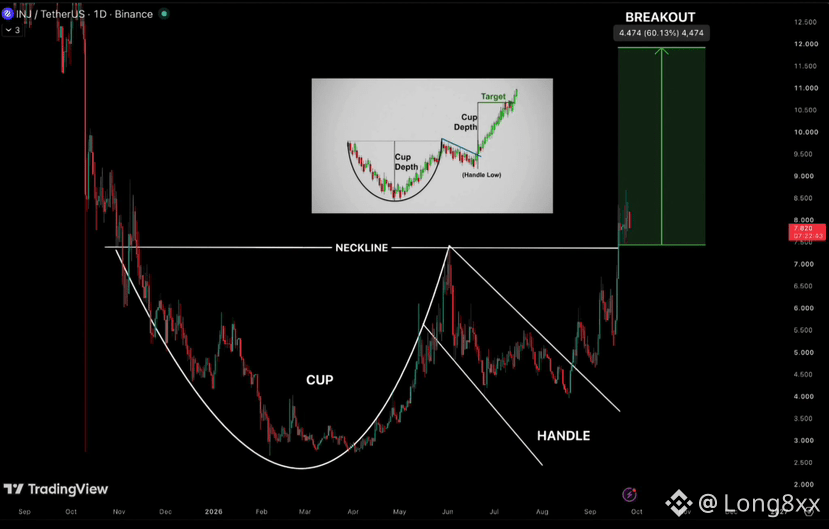
$INJ FINALLY BROKE OUT
After months of consolidation, $INJ has broken above the cup-and-handle neckline.
Now I’m watching for a retest.
If old resistance flips into support, buyers could step back in fast.
Months of buildup.
Now we see if $INJ can push toward new highs.
$INJ FINALLY BROKE OUT
After months of consolidation, $INJ has broken above the cup-and-handle neckline.
Now I’m watching for a retest.
If old resistance flips into support, buyers could step back in fast.
Months of buildup.
Now we see if $INJ can push toward new highs.
After months of consolidation, $INJ has broken above the cup-and-handle neckline.
Now I’m watching for a retest.
If old resistance flips into support, buyers could step back in fast.
Months of buildup.
Now we see if $INJ can push toward new highs.
45
·
--
99
·
--
Vérifié
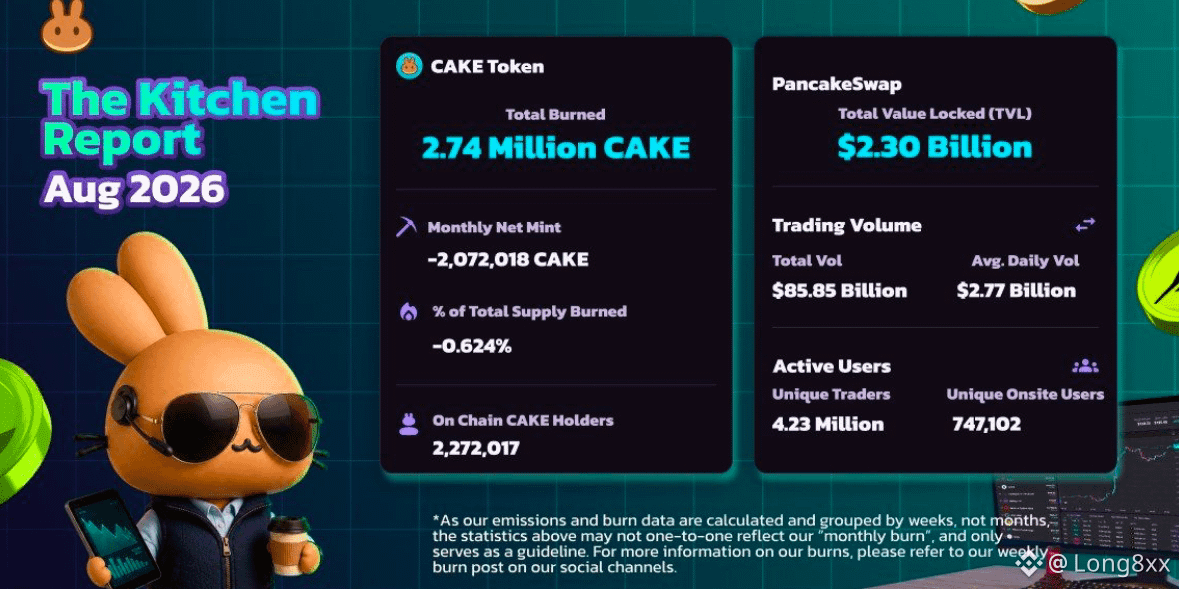
$CAKE Deflation and supply squeeze
Thesis.
1/8
🔥 15–23% of spot trading fees → CAKE burns
🔥 20% of perpetual trading profits → burns
🔥 100% of CAKE.PAD fees → burns
🔥 3% of every Prediction round → burns
🔥 20% of CAKE played in Lottery → burns
$CAKE Deflation and supply squeeze
Thesis.
1/8
🔥 15–23% of spot trading fees → CAKE burns
🔥 20% of perpetual trading profits → burns
🔥 100% of CAKE.PAD fees → burns
🔥 3% of every Prediction round → burns
🔥 20% of CAKE played in Lottery → burns
Thesis.
1/8
🔥 15–23% of spot trading fees → CAKE burns
🔥 20% of perpetual trading profits → burns
🔥 100% of CAKE.PAD fees → burns
🔥 3% of every Prediction round → burns
🔥 20% of CAKE played in Lottery → burns
1
597
Connectez-vous pour découvrir plus de contenu
Rejoignez la communauté mondiale des adeptes de cryptomonnaies sur Binance Square
⚡️ Suviez les dernières informations importantes sur les cryptomonnaies.
💬 Jugé digne de confiance par la plus grande plateforme d’échange de cryptomonnaies au monde.
👍 Découvrez les connaissances que partagent les créateurs vérifiés.
Adresse e-mail/Nº de téléphone