

LALA Crypto 2
12.6k Publications

LALA Crypto 2
Signaler
Bloquer l’utilisateur
@ha85293583
636 Suivis
22.1K+ Abonnés
8.2K+ J’aime
Publications
Tous
Direct
·
--
Haussier
Will CPI Trigger a Rate Hike?
The CPI print is becoming one of the biggest catalysts for the market right now, but I’m leaning bullish.
A softer-than-expected CPI could reduce pressure on the central bank, strengthen expectations for easier monetary policy, and push liquidity back toward risk assets. For crypto, that could be especially important because lower rate expectations often improve appetite for higher-beta assets like Bitcoin and altcoins.
Even if CPI comes in slightly hot, I don’t think one data point automatically guarantees a rate hike. The market will also be watching core inflation, jobs data, consumer spending, and the broader trend.
For me, the bullish setup is simple: CPI cools, yields ease, the dollar weakens, and risk appetite returns.
If that combination appears, Bitcoin could lead the move, followed by stronger altcoins.
I’m watching the CPI reaction more than the headline itself. Sometimes the market’s interpretation matters more than the number.
Educational market analysis, not financial advice.
$MET
{future}(METUSDT)
$RAYSOL
{future}(RAYSOLUSDT)
$LSK
{future}(LSKUSDT)
#CPIWatch
Will CPI Trigger a Rate Hike?
The CPI print is becoming one of the biggest catalysts for the market right now, but I’m leaning bullish.
A softer-than-expected CPI could reduce pressure on the central bank, strengthen expectations for easier monetary policy, and push liquidity back toward risk assets. For crypto, that could be especially important because lower rate expectations often improve appetite for higher-beta assets like Bitcoin and altcoins.
Even if CPI comes in slightly hot, I don’t think one data point automatically guarantees a rate hike. The market will also be watching core inflation, jobs data, consumer spending, and the broader trend.
For me, the bullish setup is simple: CPI cools, yields ease, the dollar weakens, and risk appetite returns.
If that combination appears, Bitcoin could lead the move, followed by stronger altcoins.
I’m watching the CPI reaction more than the headline itself. Sometimes the market’s interpretation matters more than the number.
Educational market analysis, not financial advice.
$MET
$RAYSOL
$LSK
#CPIWatch
The CPI print is becoming one of the biggest catalysts for the market right now, but I’m leaning bullish.
A softer-than-expected CPI could reduce pressure on the central bank, strengthen expectations for easier monetary policy, and push liquidity back toward risk assets. For crypto, that could be especially important because lower rate expectations often improve appetite for higher-beta assets like Bitcoin and altcoins.
Even if CPI comes in slightly hot, I don’t think one data point automatically guarantees a rate hike. The market will also be watching core inflation, jobs data, consumer spending, and the broader trend.
For me, the bullish setup is simple: CPI cools, yields ease, the dollar weakens, and risk appetite returns.
If that combination appears, Bitcoin could lead the move, followed by stronger altcoins.
I’m watching the CPI reaction more than the headline itself. Sometimes the market’s interpretation matters more than the number.
Educational market analysis, not financial advice.
$MET
$RAYSOL
$LSK
#CPIWatch

5
7
601
·
--
Baissier
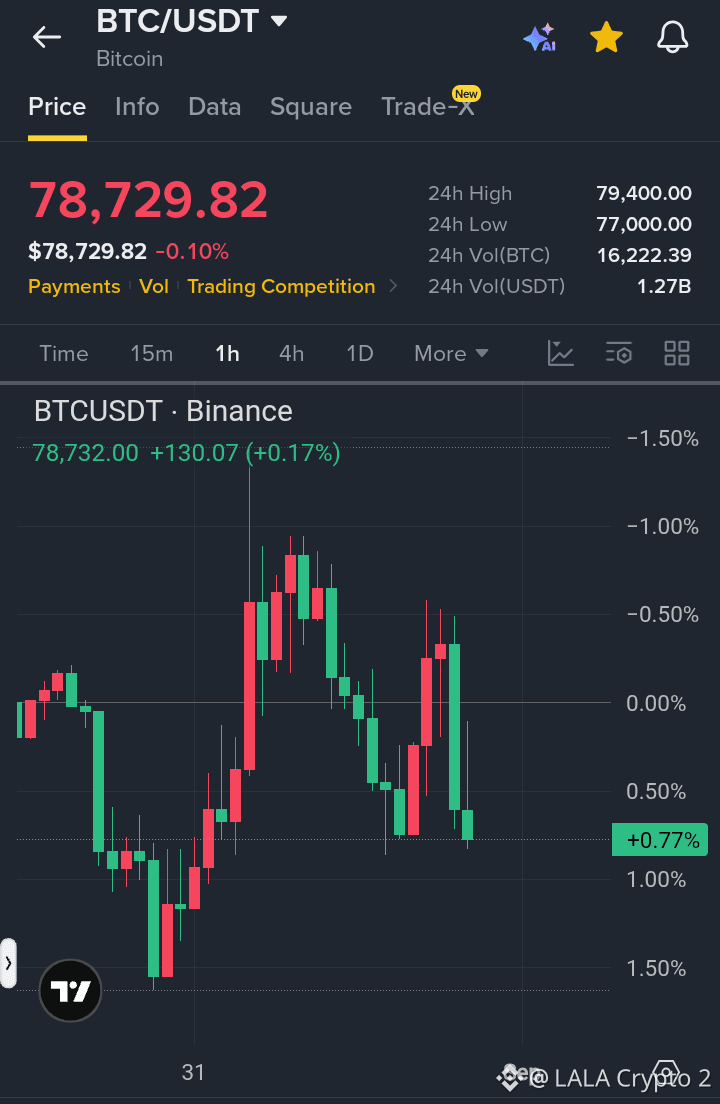
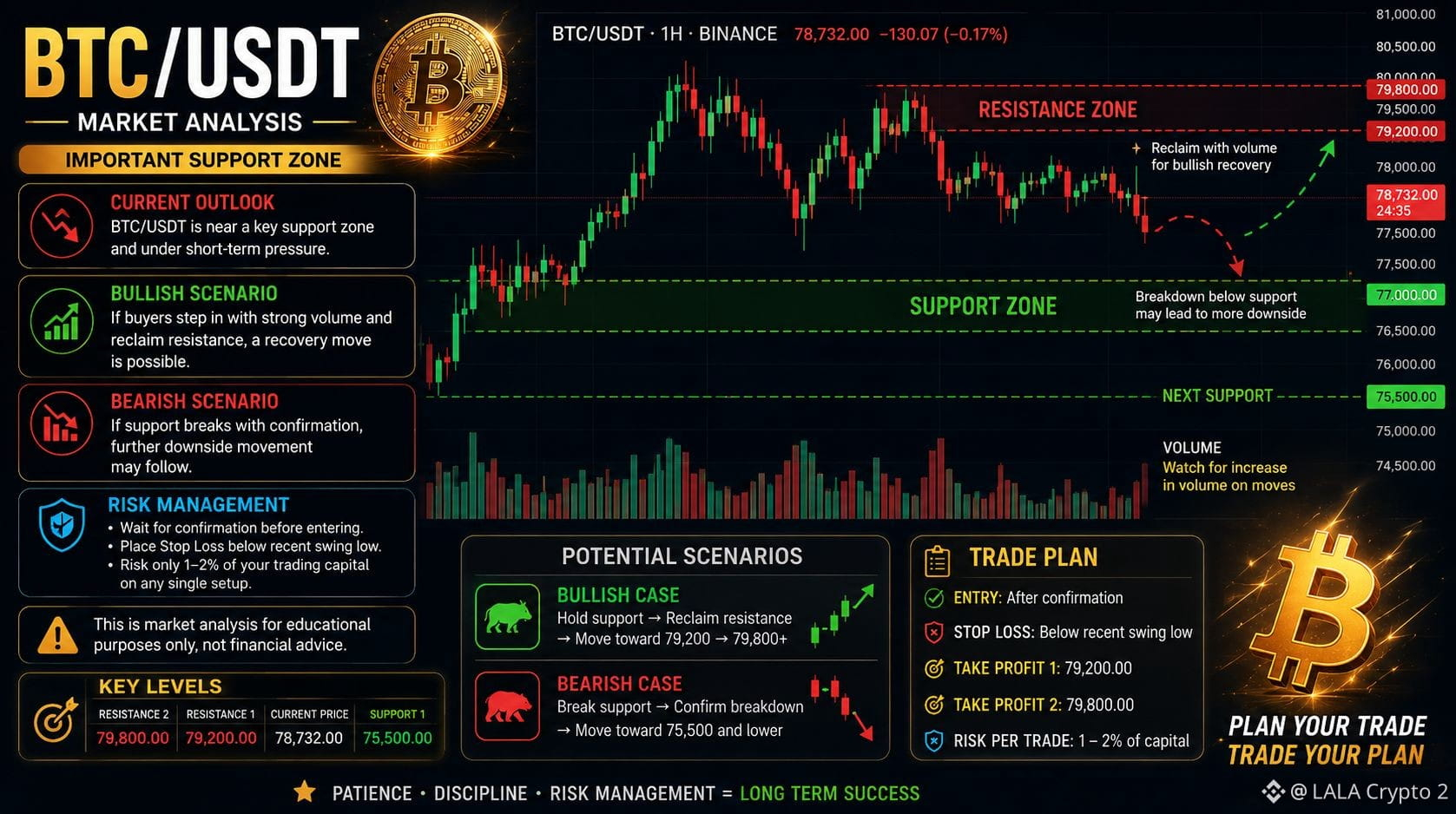
$BTC /USDT is currently trading near an important support zone and facing short-term selling pressure. If buyers return with strong volume and reclaim the nearby resistance, a recovery move could develop. However, if support breaks with confirmation, further downside may follow. Wait for confirmation before entering a trade. Keep the Stop Loss below the recent swing low and manage risk carefully. Never risk more than 1–2% of your trading capital on a single setup. This is market analysis for educational purposes only, not financial advice.
#BTC #sol板块 #bnb一輩子 #bank
{spot}(BTCUSDT)
$BTC /USDT is currently trading near an important support zone and facing short-term selling pressure. If buyers return with strong volume and reclaim the nearby resistance, a recovery move could develop. However, if support breaks with confirmation, further downside may follow. Wait for confirmation before entering a trade. Keep the Stop Loss below the recent swing low and manage risk carefully. Never risk more than 1–2% of your trading capital on a single setup. This is market analysis for educational purposes only, not financial advice.
#BTC #sol板块 #bnb一輩子 #bank
#BTC #sol板块 #bnb一輩子 #bank
1
108
·
--
Baissier
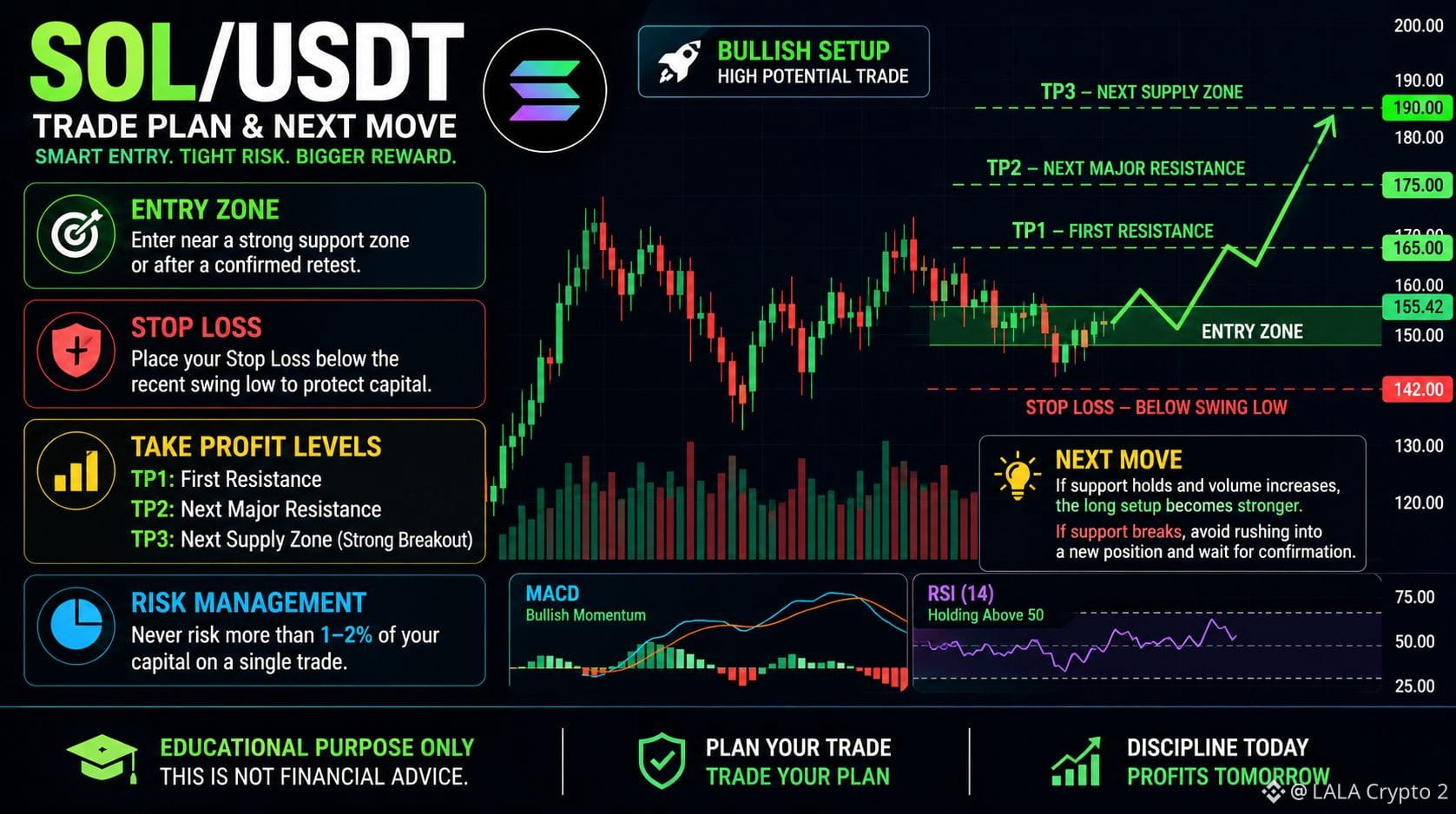
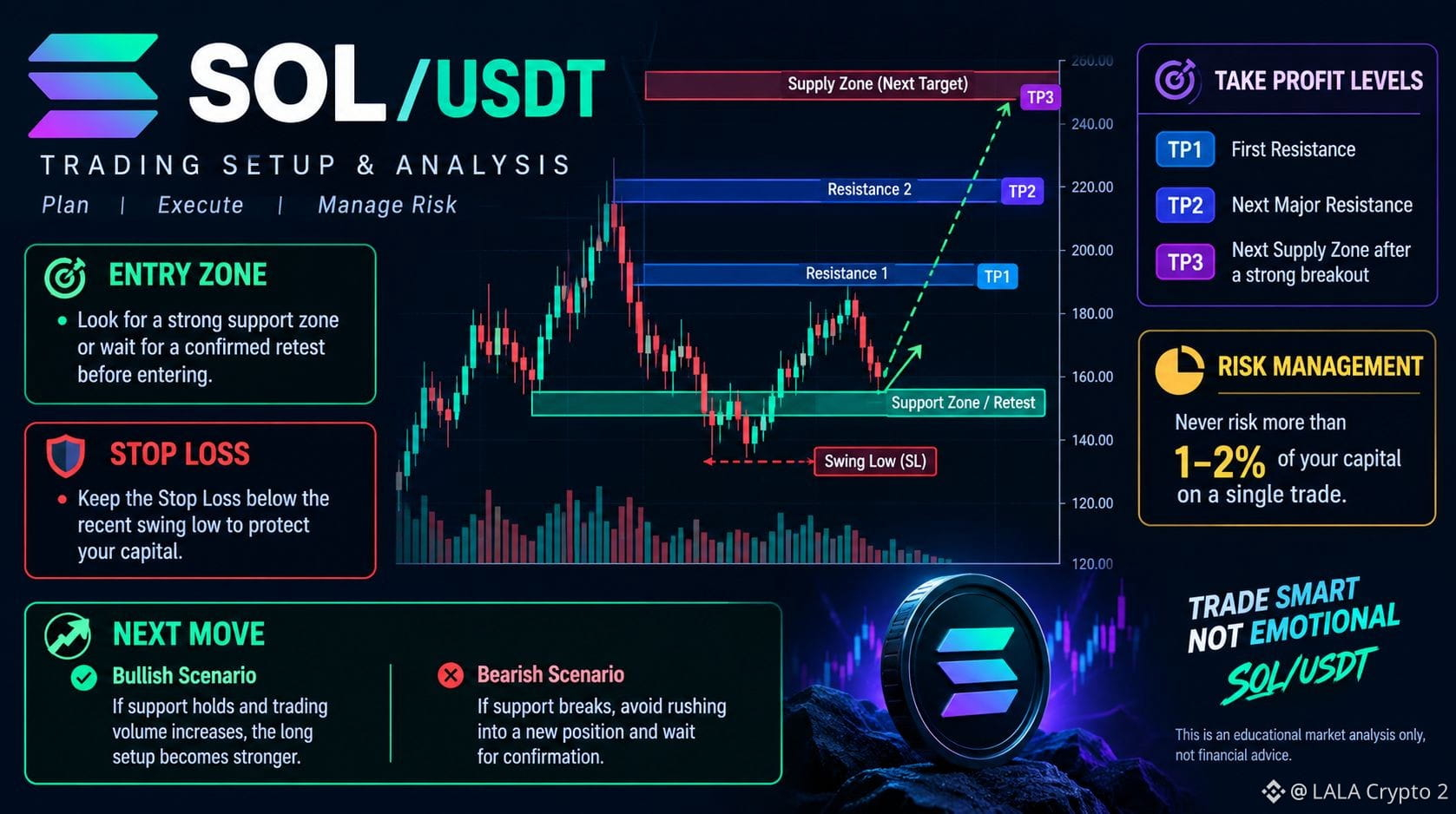
$SOL /USDT, look for an entry near a strong support zone or after a confirmed retest. Keep the Stop Loss below the recent swing low to protect your capital. Set Take Profit 1 at the first resistance, Take Profit 2 at the next major resistance, and Take Profit 3 near the next supply zone after a strong breakout.
Risk Management: Never risk more than 1–2% of your capital on a single trade.
Next Move: If support holds and volume increases, the long setup becomes stronger. If support breaks, avoid opening a new position immediately and wait for confirmation.
This is educational market analysis only, not financial advice.
#sol板块 #bnb一輩子 #BTC走势分析 #THETA
{spot}(SOLUSDT)
$SOL /USDT, look for an entry near a strong support zone or after a confirmed retest. Keep the Stop Loss below the recent swing low to protect your capital. Set Take Profit 1 at the first resistance, Take Profit 2 at the next major resistance, and Take Profit 3 near the next supply zone after a strong breakout.
Risk Management: Never risk more than 1–2% of your capital on a single trade.
Next Move: If support holds and volume increases, the long setup becomes stronger. If support breaks, avoid opening a new position immediately and wait for confirmation.
This is educational market analysis only, not financial advice.
#sol板块 #bnb一輩子 #BTC走势分析 #THETA
Risk Management: Never risk more than 1–2% of your capital on a single trade.
Next Move: If support holds and volume increases, the long setup becomes stronger. If support breaks, avoid opening a new position immediately and wait for confirmation.
This is educational market analysis only, not financial advice.
#sol板块 #bnb一輩子 #BTC走势分析 #THETA
1
121
·
--
Haussier
$DEBIT
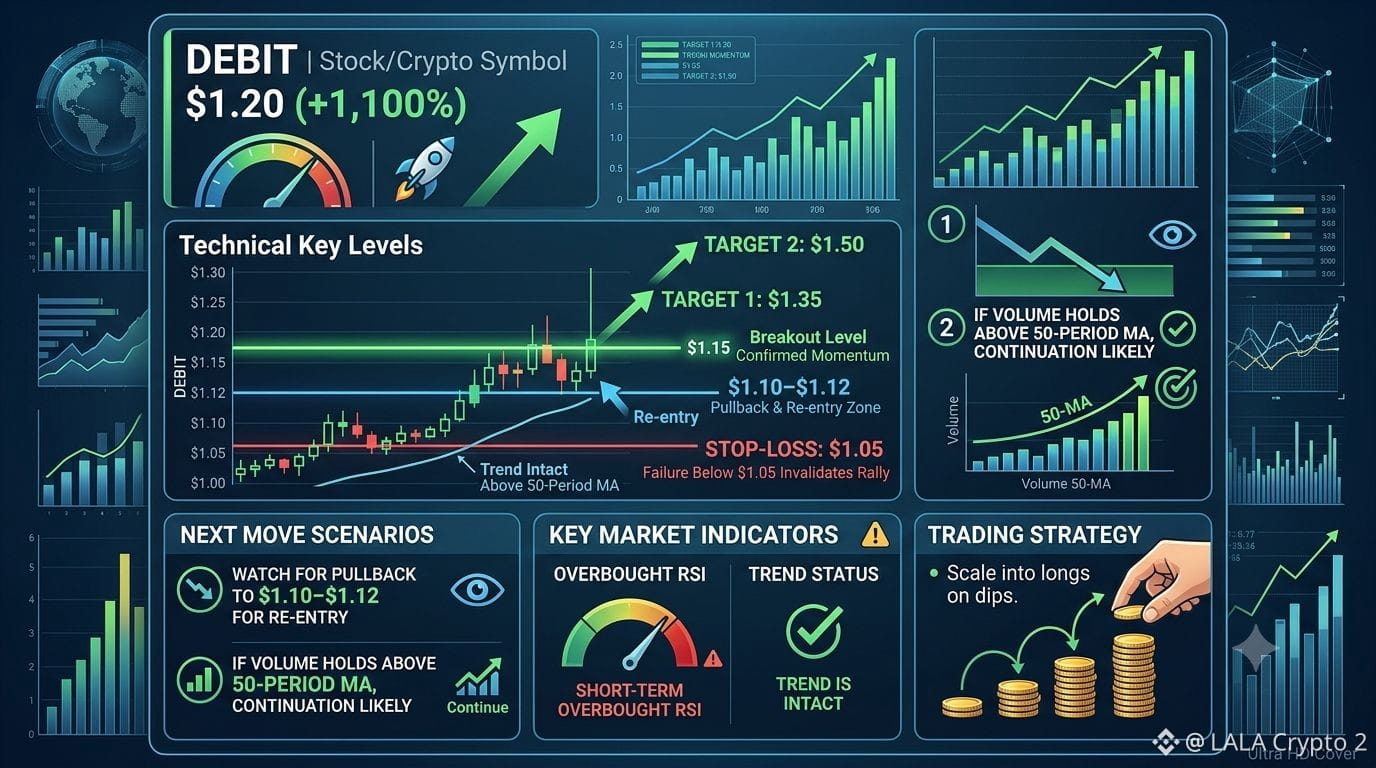
Current: $1.20 (+1,100%). Breakout above $1.15 confirms strong momentum. Target 1: $1.35, Target 2: $1.50. Stop-loss: $1.05. Next move: watch for pullback to $1.10–$1.12 for re-entry. If volume holds above 50-period MA, continuation likely. Failure below $1.05 invalidates rally. Short-term overbought RSI, but trend is intact. Scale into longs on dips.
{alpha}(560x66661c7229901f568f16bd1551b3ba826f83ce49)
#XRPLeadsCryptoPullbackDropsNearly7% #DollarPostsBiggestGainInNearlyFourWeeks #SECSendsCryptoCustodyRuleToWhiteHouse #IranSaysHormuzOmanDealNotFinalized
$DEBIT
Current: $1.20 (+1,100%). Breakout above $1.15 confirms strong momentum. Target 1: $1.35, Target 2: $1.50. Stop-loss: $1.05. Next move: watch for pullback to $1.10–$1.12 for re-entry. If volume holds above 50-period MA, continuation likely. Failure below $1.05 invalidates rally. Short-term overbought RSI, but trend is intact. Scale into longs on dips.
#XRPLeadsCryptoPullbackDropsNearly7% #DollarPostsBiggestGainInNearlyFourWeeks #SECSendsCryptoCustodyRuleToWhiteHouse #IranSaysHormuzOmanDealNotFinalized
Current: $1.20 (+1,100%). Breakout above $1.15 confirms strong momentum. Target 1: $1.35, Target 2: $1.50. Stop-loss: $1.05. Next move: watch for pullback to $1.10–$1.12 for re-entry. If volume holds above 50-period MA, continuation likely. Failure below $1.05 invalidates rally. Short-term overbought RSI, but trend is intact. Scale into longs on dips.
#XRPLeadsCryptoPullbackDropsNearly7% #DollarPostsBiggestGainInNearlyFourWeeks #SECSendsCryptoCustodyRuleToWhiteHouse #IranSaysHormuzOmanDealNotFinalized
291
·
--
Baissier
To be honest, I had to look at Dusk a second time before the idea really clicked for me.
At first privacy blockchain for financial applications sounds like a familiar crypto narrative.
But if you go a little deeper I think the real problem is not privacy.
It is how financial markets can become more transparent without making sensitive financial information completely visible.
That sounds contradictory but it matters.
Traditional finance usually solves this by separating everything. Banks brokers custodians and private databases each control different pieces of information. Privacy is easier, but the system becomes fragmented and dependent on intermediaries.
Dusk is taking a different approach with its Layer-1 confidential smart contracts and XSC standard: put financial logic and ownership on-chain while trying to keep sensitive details confidential.
Imagine a tokenized private-market asset.
An investor might need to prove they are eligible to buy it while the rest of the market should not necessarily see their identity, holdings or complete transaction history.
That creates some interesting questions.
Can regulators still get the visibility they need?
Can institutions verify what matters without exposing everything?
And can confidential blockchain infrastructure actually be simpler than the systems already in place?
The skeptical side is obvious: traditional finance has spent decades building privacy and compliance systems. Why would institutions replace them?
For me the real value is selective transparency proving what needs to be proven without revealing everything else.
I could be wrong. A technically strong solution means little if real financial activity never moves onto it.
So the question I care about is:
Will Dusk become infrastructure that financial markets genuinely need or simply infrastructure that sounds good on paper?
I think adoption will be the only honest answer.
Time will tell.
@Dusk_Foundation #dusk $DUSK
{future}(DUSKUSDT)
To be honest, I had to look at Dusk a second time before the idea really clicked for me.
At first privacy blockchain for financial applications sounds like a familiar crypto narrative.
But if you go a little deeper I think the real problem is not privacy.
It is how financial markets can become more transparent without making sensitive financial information completely visible.
That sounds contradictory but it matters.
Traditional finance usually solves this by separating everything. Banks brokers custodians and private databases each control different pieces of information. Privacy is easier, but the system becomes fragmented and dependent on intermediaries.
Dusk is taking a different approach with its Layer-1 confidential smart contracts and XSC standard: put financial logic and ownership on-chain while trying to keep sensitive details confidential.
Imagine a tokenized private-market asset.
An investor might need to prove they are eligible to buy it while the rest of the market should not necessarily see their identity, holdings or complete transaction history.
That creates some interesting questions.
Can regulators still get the visibility they need?
Can institutions verify what matters without exposing everything?
And can confidential blockchain infrastructure actually be simpler than the systems already in place?
The skeptical side is obvious: traditional finance has spent decades building privacy and compliance systems. Why would institutions replace them?
For me the real value is selective transparency proving what needs to be proven without revealing everything else.
I could be wrong. A technically strong solution means little if real financial activity never moves onto it.
So the question I care about is:
Will Dusk become infrastructure that financial markets genuinely need or simply infrastructure that sounds good on paper?
I think adoption will be the only honest answer.
Time will tell.
@Dusk #dusk $DUSK
At first privacy blockchain for financial applications sounds like a familiar crypto narrative.
But if you go a little deeper I think the real problem is not privacy.
It is how financial markets can become more transparent without making sensitive financial information completely visible.
That sounds contradictory but it matters.
Traditional finance usually solves this by separating everything. Banks brokers custodians and private databases each control different pieces of information. Privacy is easier, but the system becomes fragmented and dependent on intermediaries.
Dusk is taking a different approach with its Layer-1 confidential smart contracts and XSC standard: put financial logic and ownership on-chain while trying to keep sensitive details confidential.
Imagine a tokenized private-market asset.
An investor might need to prove they are eligible to buy it while the rest of the market should not necessarily see their identity, holdings or complete transaction history.
That creates some interesting questions.
Can regulators still get the visibility they need?
Can institutions verify what matters without exposing everything?
And can confidential blockchain infrastructure actually be simpler than the systems already in place?
The skeptical side is obvious: traditional finance has spent decades building privacy and compliance systems. Why would institutions replace them?
For me the real value is selective transparency proving what needs to be proven without revealing everything else.
I could be wrong. A technically strong solution means little if real financial activity never moves onto it.
So the question I care about is:
Will Dusk become infrastructure that financial markets genuinely need or simply infrastructure that sounds good on paper?
I think adoption will be the only honest answer.
Time will tell.
@Dusk #dusk $DUSK

4
7
147
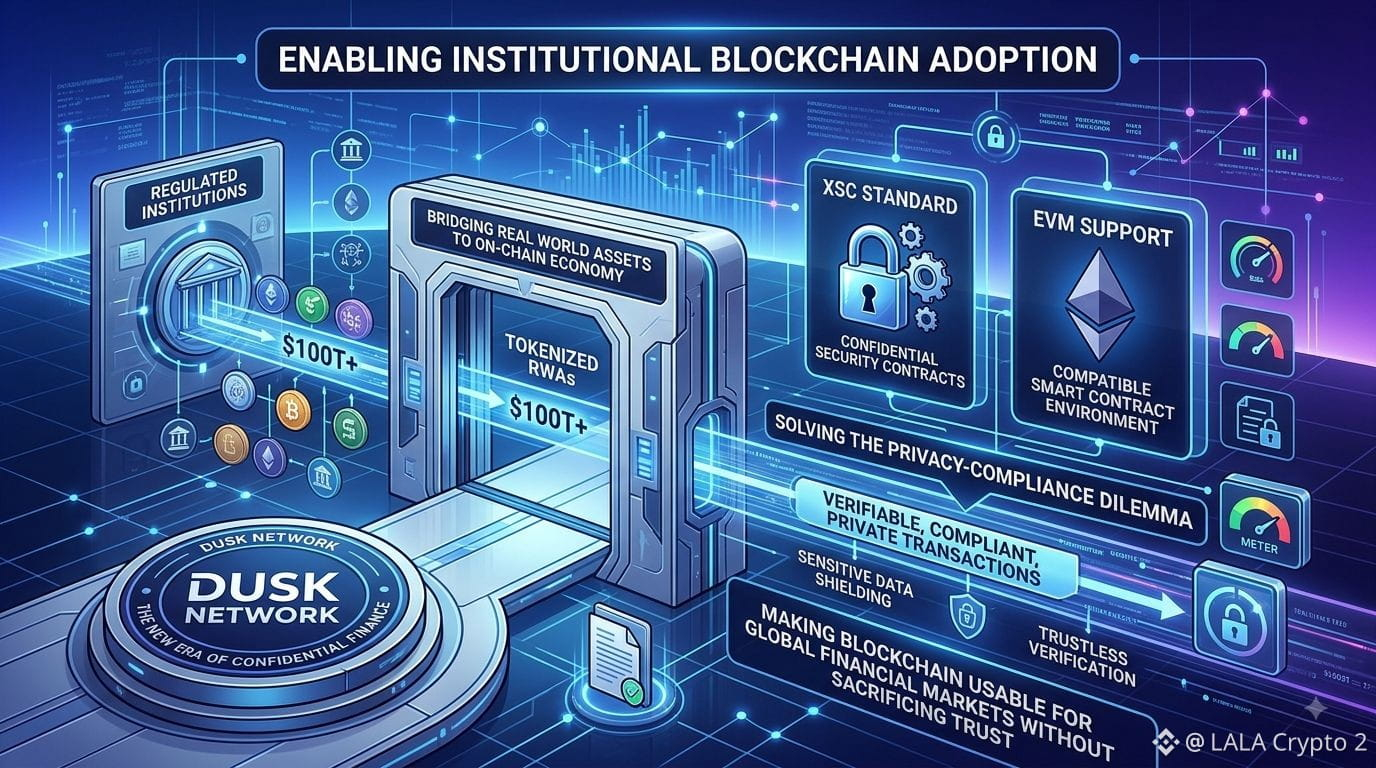
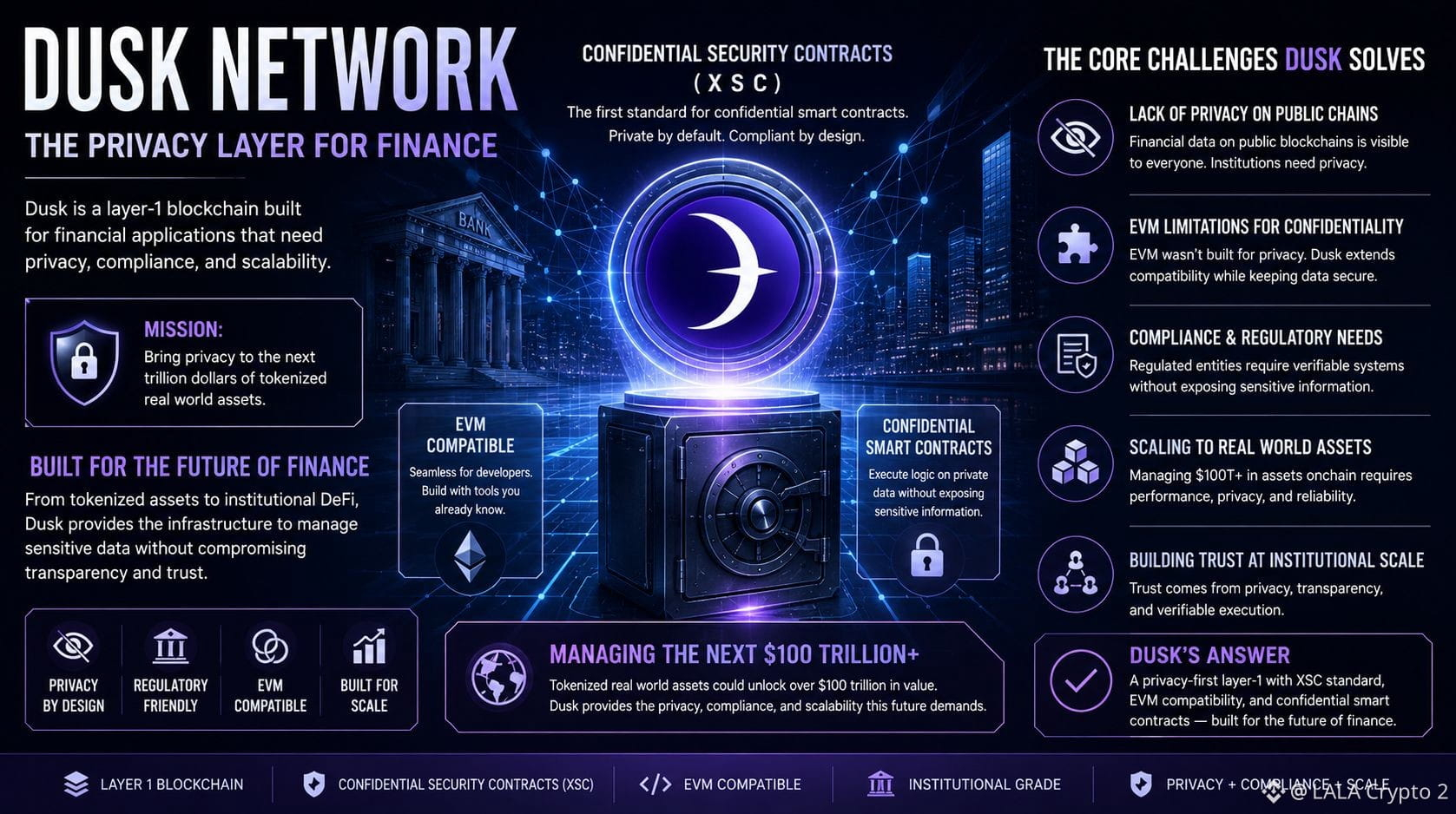
I’ve been looking more closely at Dusk Network, and what interests me is the problem it is trying to solve.
Financial assets are moving onchain, but public blockchains often expose too much information. For banks and regulated institutions, that can be a serious issue. They need privacy, but they also need transactions to remain verifiable and compliant.
Dusk is building a Layer 1 around this problem. Its Confidential Security Contract (XSC) standard is designed for financial applications where sensitive data should not be openly visible.
Another interesting part is EVM support. Developers already understand the Ethereum environment, so EVM compatibility can make it easier to bring existing smart contract ideas into a privacy focused network.
Dusk also uses confidential smart contracts to handle sensitive logic without putting everything in public view.
The bigger opportunity is tokenizing real world assets. If even a fraction of the often discussed $100 trillion+ asset market moves onchain, privacy and compliance become much more important.
For me, Dusk is not simply about hiding transactions. The real challenge is making blockchain usable for serious financial markets without sacrificing verification and trust.
@Dusk_Foundation #dusk $DUSK
{spot}(DUSKUSDT)
I’ve been looking more closely at Dusk Network, and what interests me is the problem it is trying to solve.
Financial assets are moving onchain, but public blockchains often expose too much information. For banks and regulated institutions, that can be a serious issue. They need privacy, but they also need transactions to remain verifiable and compliant.
Dusk is building a Layer 1 around this problem. Its Confidential Security Contract (XSC) standard is designed for financial applications where sensitive data should not be openly visible.
Another interesting part is EVM support. Developers already understand the Ethereum environment, so EVM compatibility can make it easier to bring existing smart contract ideas into a privacy focused network.
Dusk also uses confidential smart contracts to handle sensitive logic without putting everything in public view.
The bigger opportunity is tokenizing real world assets. If even a fraction of the often discussed $100 trillion+ asset market moves onchain, privacy and compliance become much more important.
For me, Dusk is not simply about hiding transactions. The real challenge is making blockchain usable for serious financial markets without sacrificing verification and trust.
@Dusk #dusk $DUSK
Financial assets are moving onchain, but public blockchains often expose too much information. For banks and regulated institutions, that can be a serious issue. They need privacy, but they also need transactions to remain verifiable and compliant.
Dusk is building a Layer 1 around this problem. Its Confidential Security Contract (XSC) standard is designed for financial applications where sensitive data should not be openly visible.
Another interesting part is EVM support. Developers already understand the Ethereum environment, so EVM compatibility can make it easier to bring existing smart contract ideas into a privacy focused network.
Dusk also uses confidential smart contracts to handle sensitive logic without putting everything in public view.
The bigger opportunity is tokenizing real world assets. If even a fraction of the often discussed $100 trillion+ asset market moves onchain, privacy and compliance become much more important.
For me, Dusk is not simply about hiding transactions. The real challenge is making blockchain usable for serious financial markets without sacrificing verification and trust.
@Dusk #dusk $DUSK
5
7
69
·
--
Haussier
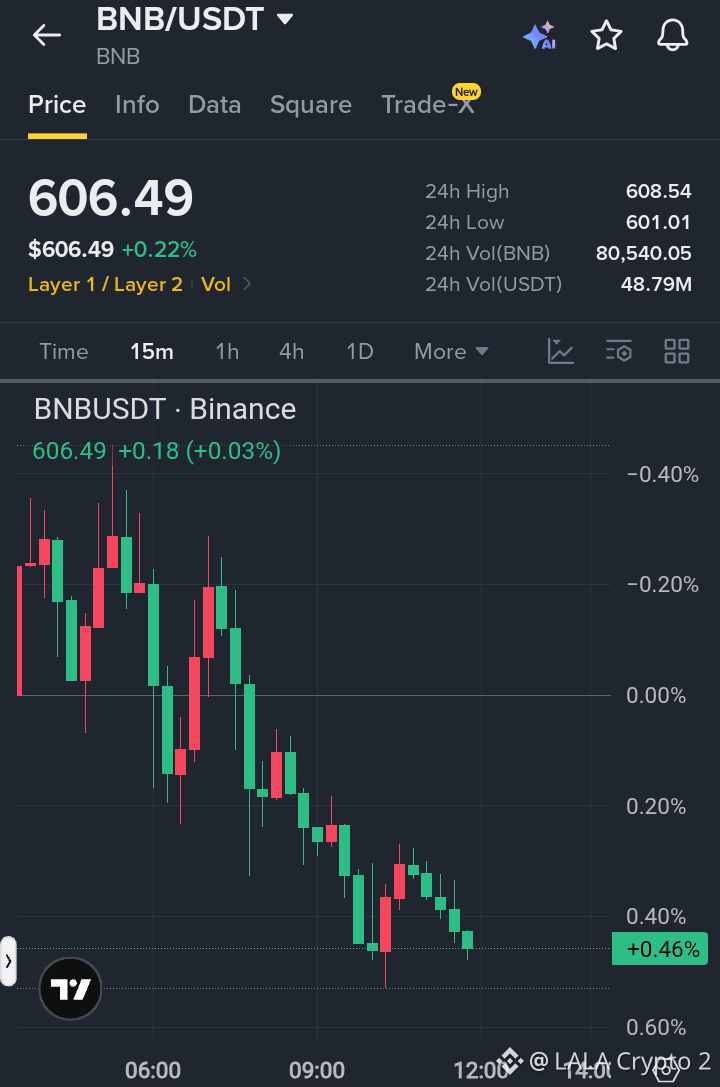
$BNB looks ready for another drop. Short EP: 606–608. SL: 611. TP1: 603, TP2: 601, TP3: 598. Pro tip: wait for rejection before entering; protect capital first.
{spot}(BNBUSDT)
#bnb
#IsraelStrikesLebanonKillsHezbollahCommander #CardanoSplitsDijkstraUpgradeIntoTwoPhases #SECCancelsCryptoRulemakingMeeting
$BNB looks ready for another drop. Short EP: 606–608. SL: 611. TP1: 603, TP2: 601, TP3: 598. Pro tip: wait for rejection before entering; protect capital first.
#bnb
#IsraelStrikesLebanonKillsHezbollahCommander #CardanoSplitsDijkstraUpgradeIntoTwoPhases #SECCancelsCryptoRulemakingMeeting
#bnb
#IsraelStrikesLebanonKillsHezbollahCommander #CardanoSplitsDijkstraUpgradeIntoTwoPhases #SECCancelsCryptoRulemakingMeeting
1
109
·
--
Haussier
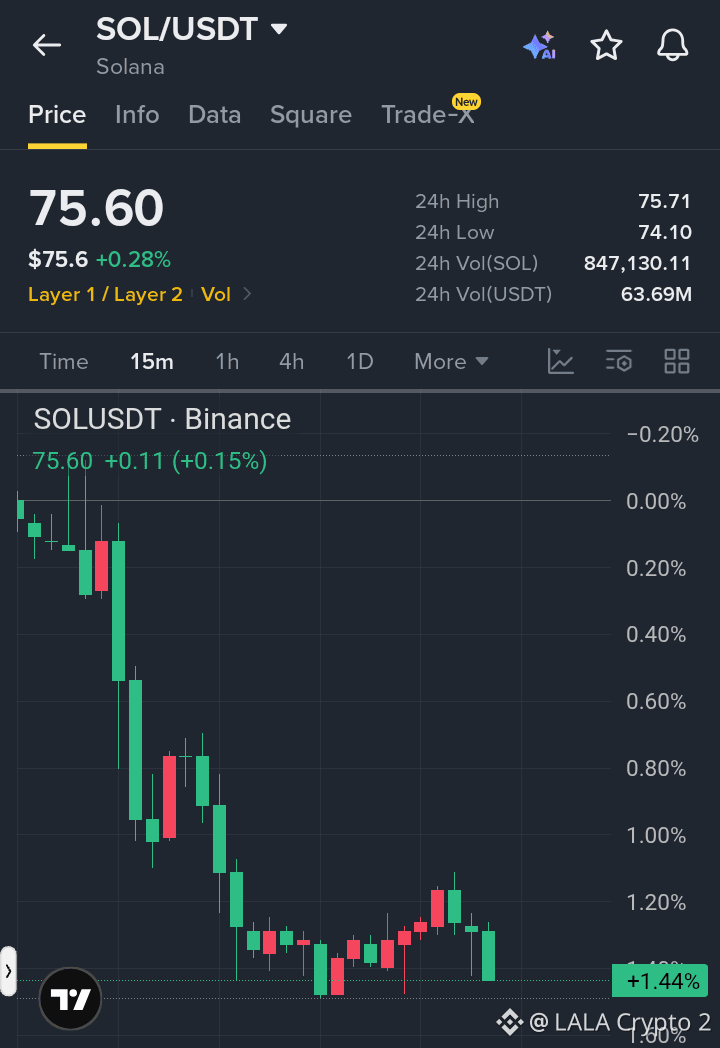
$SOL is sitting near a key support zone after a sharp 15M downtrend. This is where the next move could get interesting.
EP: $75.50–$75.70
SL: $74.80
TP1: $76.20
TP2: $77.00
TP3: $77.80
The bullish setup becomes stronger if SOL gets a 15M candle close above $75.75 with solid buying volume. If that happens, momentum could accelerate toward the higher targets.
If $74.80 breaks with strong selling pressure, cancel the long idea because the structure could turn bearish again.
Pro Tip: Don’t chase the first green candle. Wait for confirmation and preferably a retest of the breakout zone before entering. Keep position size controlled because SOL is still showing short-term weakness.
Trade the setup, not the excitement. Always protect your capital.
{spot}(SOLUSDT)
#sol #CardanoSplitsDijkstraUpgradeIntoTwoPhases
#SECReviewsSix3xLeveragedCommodityETFs
#IsraelStrikesLebanonKillsHezbollahCommander
$SOL is sitting near a key support zone after a sharp 15M downtrend. This is where the next move could get interesting.
EP: $75.50–$75.70
SL: $74.80
TP1: $76.20
TP2: $77.00
TP3: $77.80
The bullish setup becomes stronger if SOL gets a 15M candle close above $75.75 with solid buying volume. If that happens, momentum could accelerate toward the higher targets.
If $74.80 breaks with strong selling pressure, cancel the long idea because the structure could turn bearish again.
Pro Tip: Don’t chase the first green candle. Wait for confirmation and preferably a retest of the breakout zone before entering. Keep position size controlled because SOL is still showing short-term weakness.
Trade the setup, not the excitement. Always protect your capital.
#sol #CardanoSplitsDijkstraUpgradeIntoTwoPhases
#SECReviewsSix3xLeveragedCommodityETFs
#IsraelStrikesLebanonKillsHezbollahCommander
EP: $75.50–$75.70
SL: $74.80
TP1: $76.20
TP2: $77.00
TP3: $77.80
The bullish setup becomes stronger if SOL gets a 15M candle close above $75.75 with solid buying volume. If that happens, momentum could accelerate toward the higher targets.
If $74.80 breaks with strong selling pressure, cancel the long idea because the structure could turn bearish again.
Pro Tip: Don’t chase the first green candle. Wait for confirmation and preferably a retest of the breakout zone before entering. Keep position size controlled because SOL is still showing short-term weakness.
Trade the setup, not the excitement. Always protect your capital.
#sol #CardanoSplitsDijkstraUpgradeIntoTwoPhases
#SECReviewsSix3xLeveragedCommodityETFs
#IsraelStrikesLebanonKillsHezbollahCommander
1
112
#dusk $DUSK @Dusk_Foundation
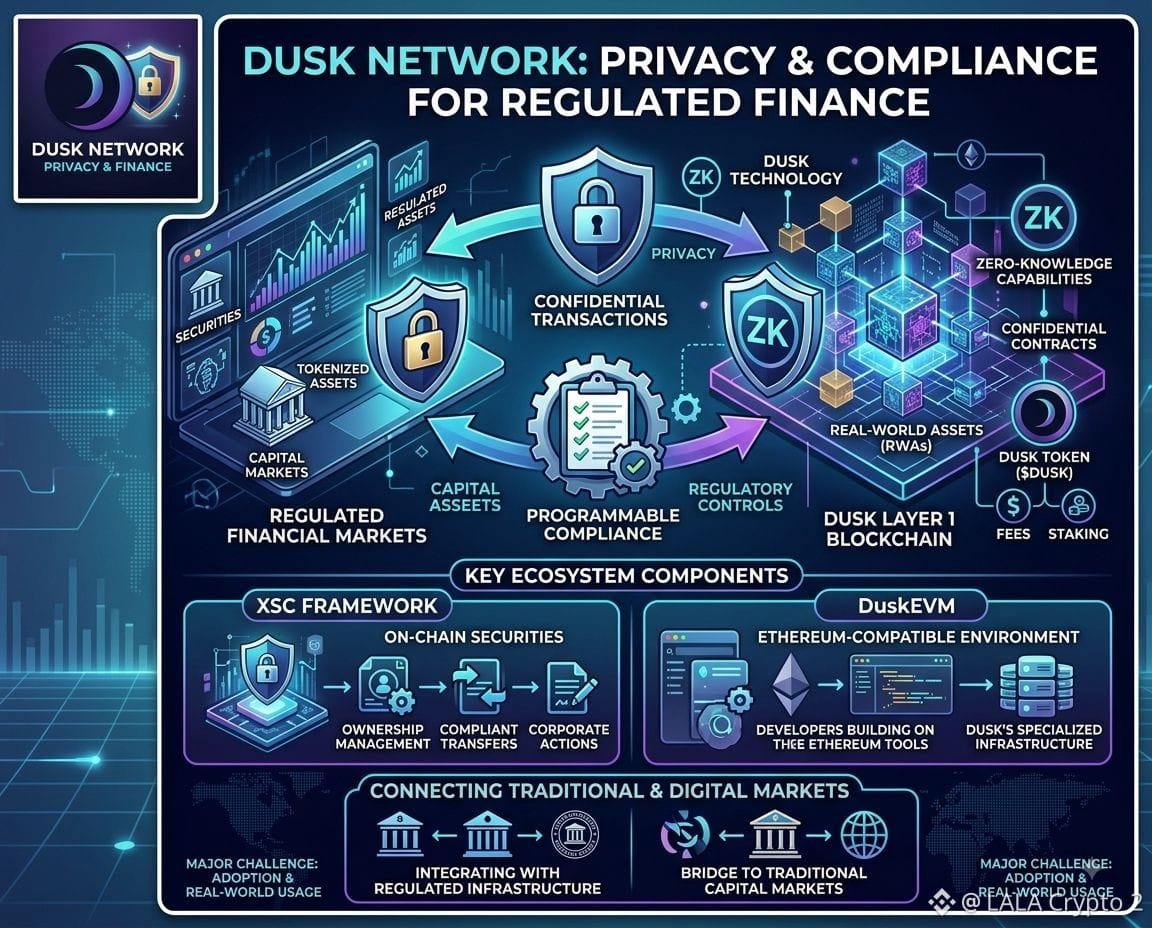
Dusk Network is taking a different approach to blockchain by focusing on privacy, compliance and regulated financial markets.
At its core, Dusk is a Layer 1 designed for financial applications where sensitive information cannot always be exposed publicly. Its technology combines confidential transactions, zero knowledge capabilities and programmable compliance to support assets that need both privacy and regulatory controls.
One of the most important parts of the ecosystem is the XSC framework, which is designed to bring securities and other financial assets on-chain while supporting features such as ownership management, transfers, compliance rules and corporate actions.
Dusk is also expanding its technology through DuskEVM, giving developers an Ethereum compatible environment for building applications while maintaining access to Dusk’s specialized financial infrastructure.
The project’s direction is increasingly focused on real world assets and tokenized securities. Partnerships involving regulated financial infrastructure show that Dusk is trying to connect blockchain technology with traditional capital markets rather than focusing only on crypto native applications.
The DUSK token plays an important role in network activity, including transaction fees and staking.
What makes Dusk interesting to me is the combination of privacy and regulation. Financial institutions need confidentiality, but they also need verification and compliance. Dusk is attempting to solve both problems within one blockchain ecosystem.
The major challenge now is adoption. Technology and partnerships are promising, but sustained real world usage will ultimately determine whether Dusk can become meaningful infrastructure for the next generation of digital financial markets.
$VIC
{spot}(VICUSDT)
$COW
{spot}(COWUSDT)
{spot}(DUSKUSDT)
#dusk $DUSK @Dusk
Dusk Network is taking a different approach to blockchain by focusing on privacy, compliance and regulated financial markets.
At its core, Dusk is a Layer 1 designed for financial applications where sensitive information cannot always be exposed publicly. Its technology combines confidential transactions, zero knowledge capabilities and programmable compliance to support assets that need both privacy and regulatory controls.
One of the most important parts of the ecosystem is the XSC framework, which is designed to bring securities and other financial assets on-chain while supporting features such as ownership management, transfers, compliance rules and corporate actions.
Dusk is also expanding its technology through DuskEVM, giving developers an Ethereum compatible environment for building applications while maintaining access to Dusk’s specialized financial infrastructure.
The project’s direction is increasingly focused on real world assets and tokenized securities. Partnerships involving regulated financial infrastructure show that Dusk is trying to connect blockchain technology with traditional capital markets rather than focusing only on crypto native applications.
The DUSK token plays an important role in network activity, including transaction fees and staking.
What makes Dusk interesting to me is the combination of privacy and regulation. Financial institutions need confidentiality, but they also need verification and compliance. Dusk is attempting to solve both problems within one blockchain ecosystem.
The major challenge now is adoption. Technology and partnerships are promising, but sustained real world usage will ultimately determine whether Dusk can become meaningful infrastructure for the next generation of digital financial markets.
$VIC
$COW
Dusk Network is taking a different approach to blockchain by focusing on privacy, compliance and regulated financial markets.
At its core, Dusk is a Layer 1 designed for financial applications where sensitive information cannot always be exposed publicly. Its technology combines confidential transactions, zero knowledge capabilities and programmable compliance to support assets that need both privacy and regulatory controls.
One of the most important parts of the ecosystem is the XSC framework, which is designed to bring securities and other financial assets on-chain while supporting features such as ownership management, transfers, compliance rules and corporate actions.
Dusk is also expanding its technology through DuskEVM, giving developers an Ethereum compatible environment for building applications while maintaining access to Dusk’s specialized financial infrastructure.
The project’s direction is increasingly focused on real world assets and tokenized securities. Partnerships involving regulated financial infrastructure show that Dusk is trying to connect blockchain technology with traditional capital markets rather than focusing only on crypto native applications.
The DUSK token plays an important role in network activity, including transaction fees and staking.
What makes Dusk interesting to me is the combination of privacy and regulation. Financial institutions need confidentiality, but they also need verification and compliance. Dusk is attempting to solve both problems within one blockchain ecosystem.
The major challenge now is adoption. Technology and partnerships are promising, but sustained real world usage will ultimately determine whether Dusk can become meaningful infrastructure for the next generation of digital financial markets.
$VIC
$COW
13
11
151
·
--
Haussier
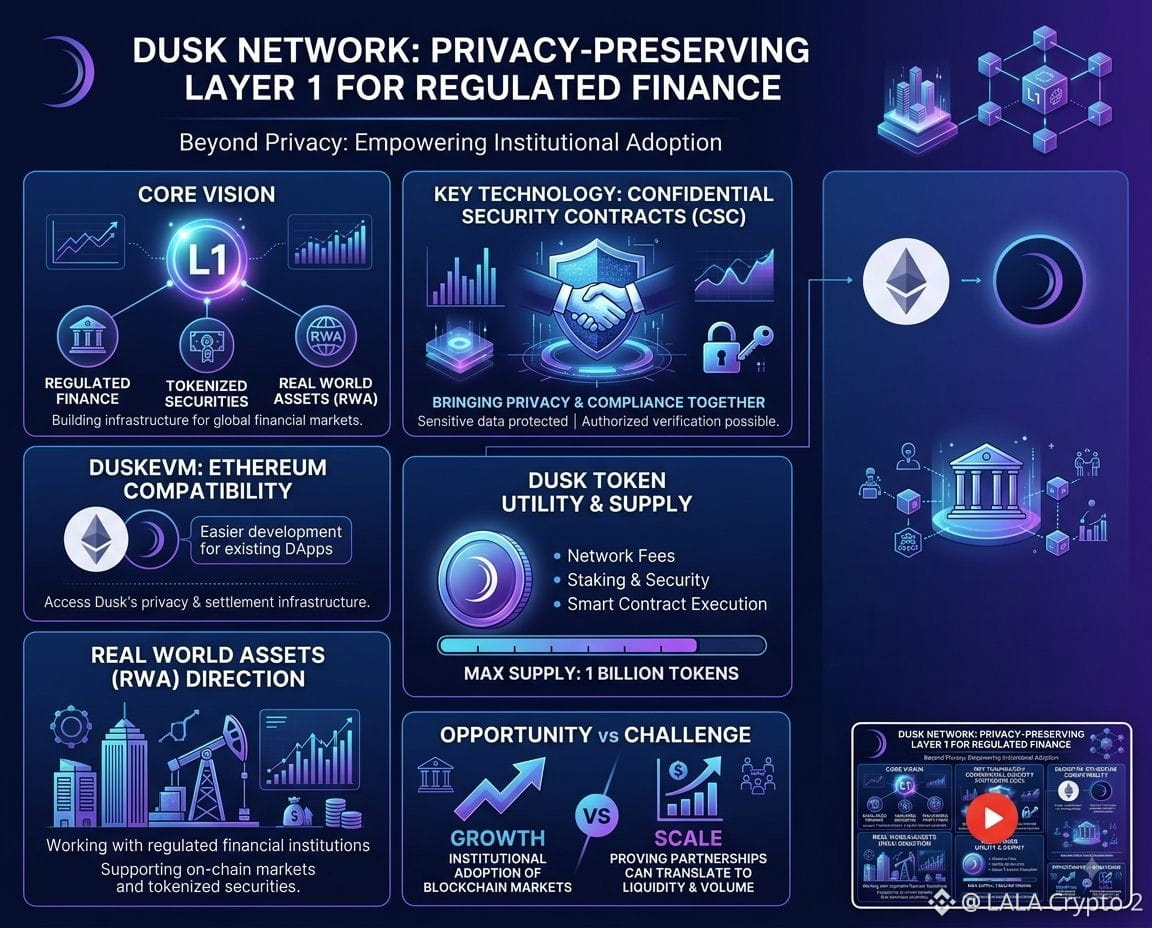
Dusk Network is becoming more interesting to me because its vision has moved beyond simply being a privacy blockchain. The project is building Layer 1 infrastructure focused on regulated finance, tokenized securities, real world assets, and confidential settlement.
Its Confidential Security Contract standard is designed to bring privacy and compliance together. Instead of making every financial transaction completely public, Dusk aims to let sensitive information remain protected while authorized parties can still verify what is necessary.
Another important development is DuskEVM, which brings Ethereum compatibility into the ecosystem. This could make it easier for existing developers to build applications while accessing Dusk’s privacy and settlement infrastructure.
The RWA direction is also worth watching. Dusk has been working with regulated financial infrastructure to support tokenized securities and on-chain markets, giving the project a practical use case beyond speculation.
The DUSK token is used for network fees, staking, security, and smart contract execution, while the network has a maximum supply of one billion tokens.
The biggest opportunity is institutional adoption of blockchain-based financial markets. The biggest challenge is proving that partnerships and technology can translate into meaningful transaction volume, liquidity, and users.
For me, Dusk is a project to watch closely as privacy, compliance, and tokenized finance continue converging.
@Dusk_Foundation #dusk $DUSK
{spot}(DUSKUSDT)
Dusk Network is becoming more interesting to me because its vision has moved beyond simply being a privacy blockchain. The project is building Layer 1 infrastructure focused on regulated finance, tokenized securities, real world assets, and confidential settlement.
Its Confidential Security Contract standard is designed to bring privacy and compliance together. Instead of making every financial transaction completely public, Dusk aims to let sensitive information remain protected while authorized parties can still verify what is necessary.
Another important development is DuskEVM, which brings Ethereum compatibility into the ecosystem. This could make it easier for existing developers to build applications while accessing Dusk’s privacy and settlement infrastructure.
The RWA direction is also worth watching. Dusk has been working with regulated financial infrastructure to support tokenized securities and on-chain markets, giving the project a practical use case beyond speculation.
The DUSK token is used for network fees, staking, security, and smart contract execution, while the network has a maximum supply of one billion tokens.
The biggest opportunity is institutional adoption of blockchain-based financial markets. The biggest challenge is proving that partnerships and technology can translate into meaningful transaction volume, liquidity, and users.
For me, Dusk is a project to watch closely as privacy, compliance, and tokenized finance continue converging.
@Dusk #dusk $DUSK
Its Confidential Security Contract standard is designed to bring privacy and compliance together. Instead of making every financial transaction completely public, Dusk aims to let sensitive information remain protected while authorized parties can still verify what is necessary.
Another important development is DuskEVM, which brings Ethereum compatibility into the ecosystem. This could make it easier for existing developers to build applications while accessing Dusk’s privacy and settlement infrastructure.
The RWA direction is also worth watching. Dusk has been working with regulated financial infrastructure to support tokenized securities and on-chain markets, giving the project a practical use case beyond speculation.
The DUSK token is used for network fees, staking, security, and smart contract execution, while the network has a maximum supply of one billion tokens.
The biggest opportunity is institutional adoption of blockchain-based financial markets. The biggest challenge is proving that partnerships and technology can translate into meaningful transaction volume, liquidity, and users.
For me, Dusk is a project to watch closely as privacy, compliance, and tokenized finance continue converging.
@Dusk #dusk $DUSK
14
8
183
·
--
Baissier
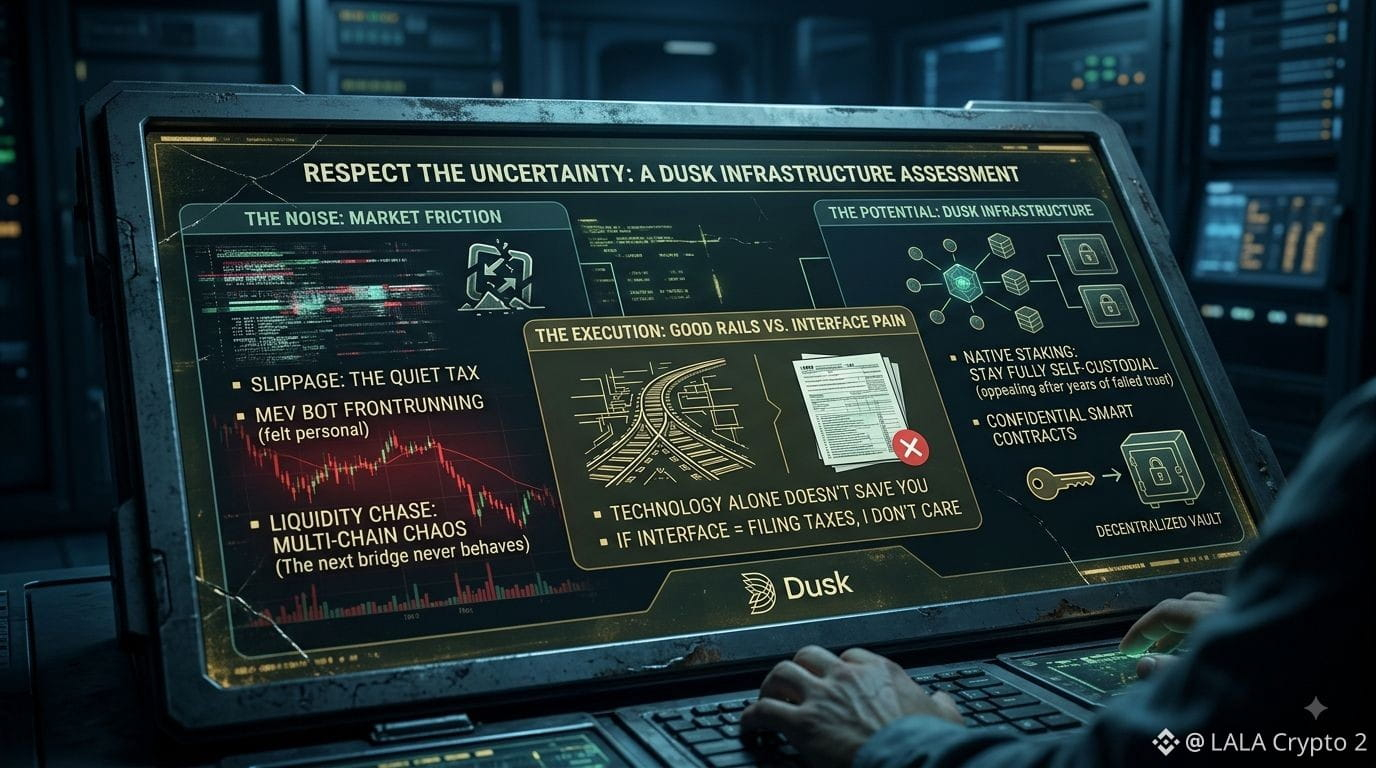
I’ve spent enough late nights watching order books bleed to know that price action is the least interesting part of this industry. The real pain is slippage, the quiet tax of every trade. I’ve had positions front-run by MEV bots so fast it felt personal, and I’ve chased liquidity across five chains like a fool hoping the next bridge would finally behave. It never does.
That’s why I keep coming back to infrastructure, even when it’s boring. Dusk is one of those projects I’ve circled for a while. The idea of native staking while staying fully self-custodial is genuinely appealing, especially after years of trusting custodians who didn’t deserve it. But technology alone doesn’t save you. If the interface makes me feel like I’m filing taxes, I don’t care how confidential the smart contract is.
Good rails matter, but execution is everything. I’ve learned that the hard way. So I’m watching, not cheering. Dusk could carve a real niche, or it could become another footnote in a bear market. Either way, I’d rather respect the uncertainty than pretend I see the ending.
@Dusk_Foundation #dusk $DUSK
{spot}(DUSKUSDT)
I’ve spent enough late nights watching order books bleed to know that price action is the least interesting part of this industry. The real pain is slippage, the quiet tax of every trade. I’ve had positions front-run by MEV bots so fast it felt personal, and I’ve chased liquidity across five chains like a fool hoping the next bridge would finally behave. It never does.
That’s why I keep coming back to infrastructure, even when it’s boring. Dusk is one of those projects I’ve circled for a while. The idea of native staking while staying fully self-custodial is genuinely appealing, especially after years of trusting custodians who didn’t deserve it. But technology alone doesn’t save you. If the interface makes me feel like I’m filing taxes, I don’t care how confidential the smart contract is.
Good rails matter, but execution is everything. I’ve learned that the hard way. So I’m watching, not cheering. Dusk could carve a real niche, or it could become another footnote in a bear market. Either way, I’d rather respect the uncertainty than pretend I see the ending.
@Dusk #dusk $DUSK
That’s why I keep coming back to infrastructure, even when it’s boring. Dusk is one of those projects I’ve circled for a while. The idea of native staking while staying fully self-custodial is genuinely appealing, especially after years of trusting custodians who didn’t deserve it. But technology alone doesn’t save you. If the interface makes me feel like I’m filing taxes, I don’t care how confidential the smart contract is.
Good rails matter, but execution is everything. I’ve learned that the hard way. So I’m watching, not cheering. Dusk could carve a real niche, or it could become another footnote in a bear market. Either way, I’d rather respect the uncertainty than pretend I see the ending.
@Dusk #dusk $DUSK
7
4
137
·
--
Haussier
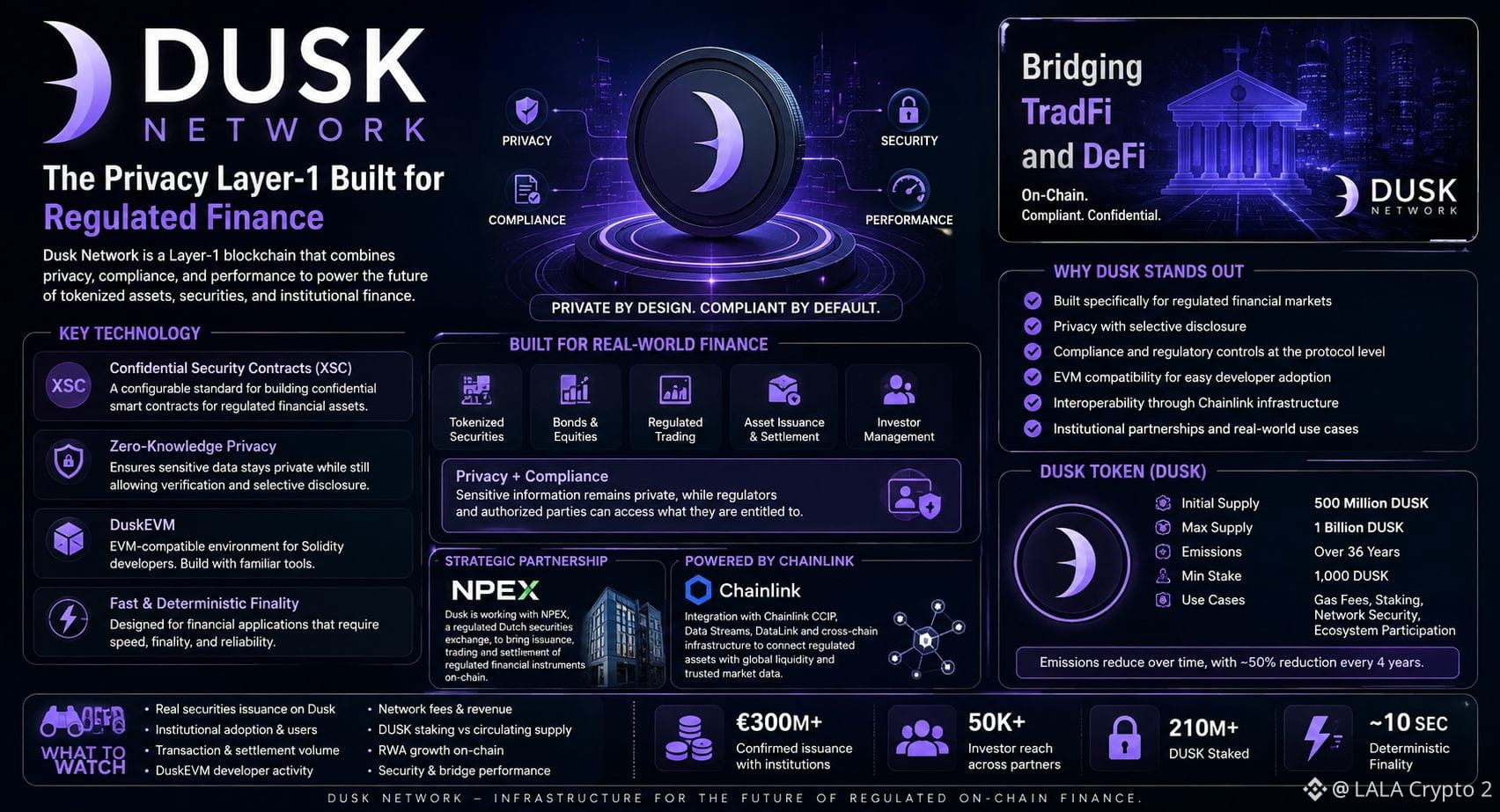
Dusk Network is one of those projects I think deserves a closer look beyond the simple “privacy blockchain” label.
The project started with a strong focus on privacy and its Confidential Security Contract (XSC) standard but the bigger thesis today is regulated finance moving on-chain.
Dusk is building a Layer-1 designed for tokenized securities, compliant financial assets, private transactions and institutional settlement. Its approach combines privacy with compliance instead of treating them as opposites. That matters because financial institutions cannot simply put every sensitive investor or transaction detail publicly on-chain.
Another interesting development is DuskEVM, which gives developers an Ethereum-compatible environment and makes it easier to bring Solidity applications into the ecosystem.
The NPEX relationship is also important. NPEX is a regulated Dutch securities exchange, and Dusk is positioning its infrastructure for issuing, trading and settling regulated financial instruments.
Dusk is also expanding interoperability through Chainlink infrastructure, which could become important if tokenized assets eventually need to move across multiple networks.
For me, the biggest question isn't whether Dusk has interesting technology. It does.
The real question is adoption.
I would watch actual securities issued, transaction volume, institutional users, DuskEVM activity, staking, network fees and real RWA growth.
If Dusk can convert its regulatory and privacy infrastructure into genuine financial activity, the project could have a much stronger long-term thesis than its current market narrative suggests.
@Dusk_Foundation #dusk $DUSK
Dusk Network is one of those projects I think deserves a closer look beyond the simple “privacy blockchain” label.
The project started with a strong focus on privacy and its Confidential Security Contract (XSC) standard but the bigger thesis today is regulated finance moving on-chain.
Dusk is building a Layer-1 designed for tokenized securities, compliant financial assets, private transactions and institutional settlement. Its approach combines privacy with compliance instead of treating them as opposites. That matters because financial institutions cannot simply put every sensitive investor or transaction detail publicly on-chain.
Another interesting development is DuskEVM, which gives developers an Ethereum-compatible environment and makes it easier to bring Solidity applications into the ecosystem.
The NPEX relationship is also important. NPEX is a regulated Dutch securities exchange, and Dusk is positioning its infrastructure for issuing, trading and settling regulated financial instruments.
Dusk is also expanding interoperability through Chainlink infrastructure, which could become important if tokenized assets eventually need to move across multiple networks.
For me, the biggest question isn't whether Dusk has interesting technology. It does.
The real question is adoption.
I would watch actual securities issued, transaction volume, institutional users, DuskEVM activity, staking, network fees and real RWA growth.
If Dusk can convert its regulatory and privacy infrastructure into genuine financial activity, the project could have a much stronger long-term thesis than its current market narrative suggests.
@Dusk #dusk $DUSK
The project started with a strong focus on privacy and its Confidential Security Contract (XSC) standard but the bigger thesis today is regulated finance moving on-chain.
Dusk is building a Layer-1 designed for tokenized securities, compliant financial assets, private transactions and institutional settlement. Its approach combines privacy with compliance instead of treating them as opposites. That matters because financial institutions cannot simply put every sensitive investor or transaction detail publicly on-chain.
Another interesting development is DuskEVM, which gives developers an Ethereum-compatible environment and makes it easier to bring Solidity applications into the ecosystem.
The NPEX relationship is also important. NPEX is a regulated Dutch securities exchange, and Dusk is positioning its infrastructure for issuing, trading and settling regulated financial instruments.
Dusk is also expanding interoperability through Chainlink infrastructure, which could become important if tokenized assets eventually need to move across multiple networks.
For me, the biggest question isn't whether Dusk has interesting technology. It does.
The real question is adoption.
I would watch actual securities issued, transaction volume, institutional users, DuskEVM activity, staking, network fees and real RWA growth.
If Dusk can convert its regulatory and privacy infrastructure into genuine financial activity, the project could have a much stronger long-term thesis than its current market narrative suggests.
@Dusk #dusk $DUSK
6
3
145
·
--
Baissier
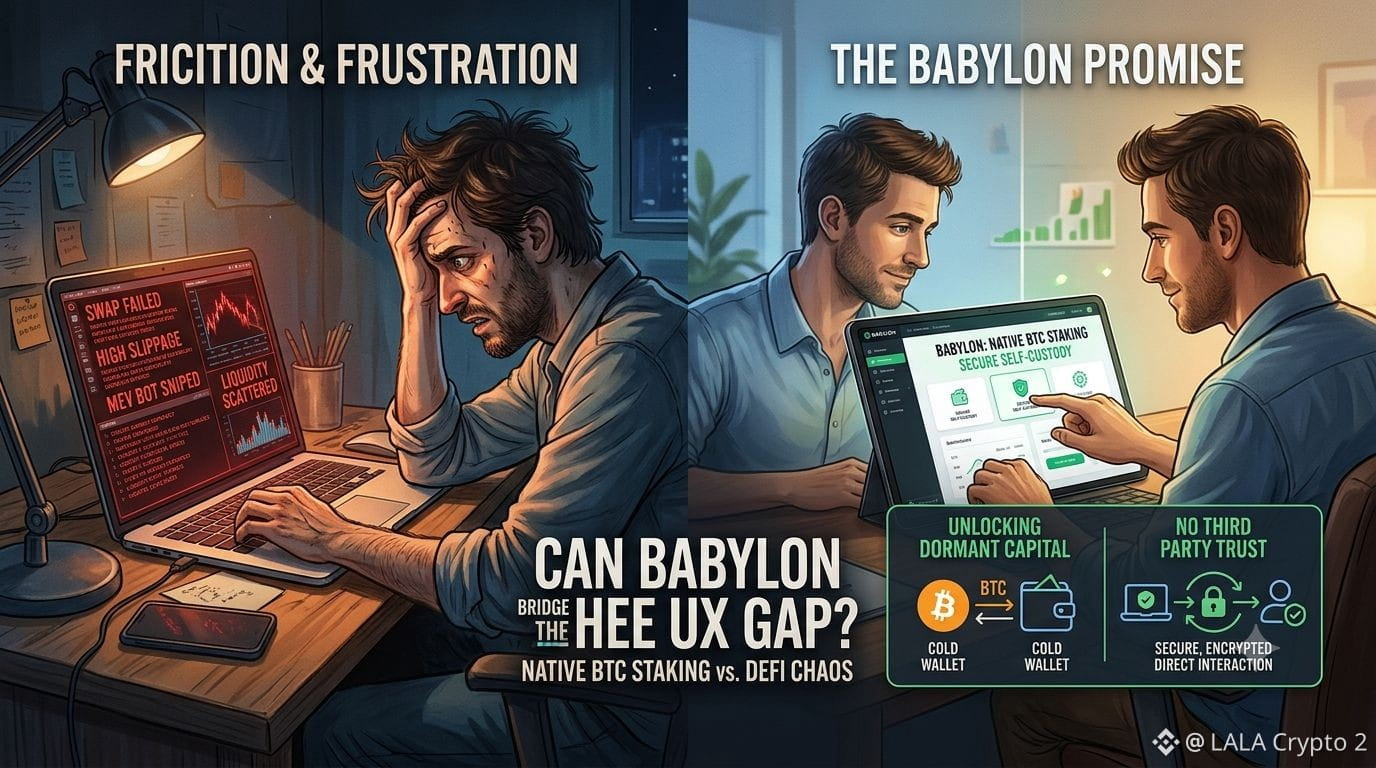
I’ve spent enough late nights staring at a failing swap to know that the real war in crypto isn’t about who has the best whitepaper. It’s about who doesn’t make you want to throw your laptop across the room when you try to move value. Slippage on a volatile pair, a MEV bot sniping your limit order, liquidity scattered across five chains like confetti—that’s the daily grind. You don’t feel the blockchain’s promise; you feel the friction.
So when Babylon (BABY) talks about native BTC staking while keeping self-custody, I nod. That’s a genuinely interesting idea, unlocking dormant capital without trusting a third party. But I’ve been burned by “interesting ideas” that ship a protocol yet forget the interface. If interacting with BTC staking means wrestling with fragmented pools or clunky cross-chain bridges, the tech doesn’t matter—I’ll just sit on my hands instead.
Infrastructure wins when it disappears. Babylon has a shot if the execution feels boring and seamless. I’m watching, but I’m not holding my breath. Maybe it sticks, maybe it becomes another lesson in how good ideas die on bad UX. Time tells, not tweets.
@babylonlabs_io #baby $BABY
{spot}(BABYUSDT)
I’ve spent enough late nights staring at a failing swap to know that the real war in crypto isn’t about who has the best whitepaper. It’s about who doesn’t make you want to throw your laptop across the room when you try to move value. Slippage on a volatile pair, a MEV bot sniping your limit order, liquidity scattered across five chains like confetti—that’s the daily grind. You don’t feel the blockchain’s promise; you feel the friction.
So when Babylon (BABY) talks about native BTC staking while keeping self-custody, I nod. That’s a genuinely interesting idea, unlocking dormant capital without trusting a third party. But I’ve been burned by “interesting ideas” that ship a protocol yet forget the interface. If interacting with BTC staking means wrestling with fragmented pools or clunky cross-chain bridges, the tech doesn’t matter—I’ll just sit on my hands instead.
Infrastructure wins when it disappears. Babylon has a shot if the execution feels boring and seamless. I’m watching, but I’m not holding my breath. Maybe it sticks, maybe it becomes another lesson in how good ideas die on bad UX. Time tells, not tweets.
@BabylonLabs_io #baby $BABY
So when Babylon (BABY) talks about native BTC staking while keeping self-custody, I nod. That’s a genuinely interesting idea, unlocking dormant capital without trusting a third party. But I’ve been burned by “interesting ideas” that ship a protocol yet forget the interface. If interacting with BTC staking means wrestling with fragmented pools or clunky cross-chain bridges, the tech doesn’t matter—I’ll just sit on my hands instead.
Infrastructure wins when it disappears. Babylon has a shot if the execution feels boring and seamless. I’m watching, but I’m not holding my breath. Maybe it sticks, maybe it becomes another lesson in how good ideas die on bad UX. Time tells, not tweets.
@BabylonLabs_io #baby $BABY
5
8
76
·
--
Haussier
$SOL /USDT – Daily Trade Setup
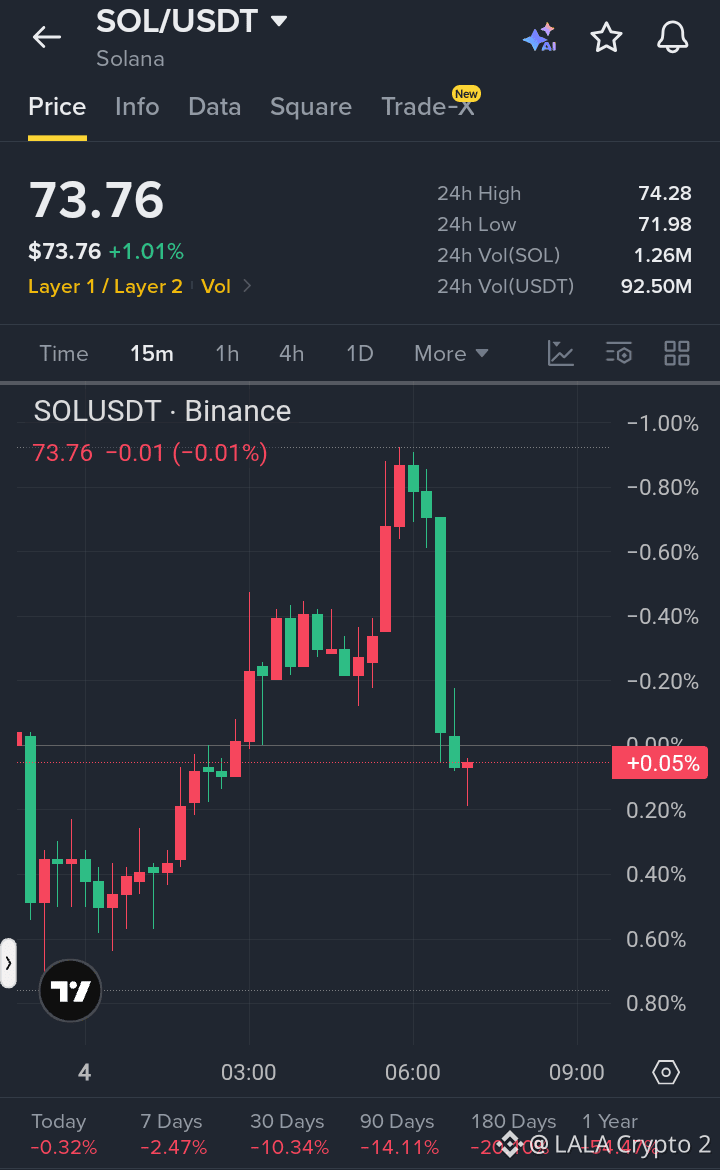
Solana is holding above $73.76, recovering from the daily low of $71.98 with resistance at $74.28. The 1-hour chart indicates a short-term consolidation, with momentum attempting to flip bullish above the $74.00 level. However, the weekly loss of -2.47% and 30-day drop of -10.34% signal that upside momentum remains fragile. A breakout above $74.50 would open the door for a move toward $76.00 and $78.00 in the coming sessions. On the downside, failure to hold $73.00 could lead to a retest of $71.50. Volume has been moderate, so confirmation is needed before aggressive entries. Scalpers can target $75.20 with a stop below $72.80, while swing traders should wait for a clean break above $74.80 to target $77.50. This is a high-risk environment—manage position sizes tightly. The market is at a decision point, and direction hinges on broader BTC stability.
{spot}(SOLUSDT)
#ColdcardExploitDrains1367BTC #CoinbaseBTCPremiumNegative77Days #AmazonJumps15%OnAWS37%Growth #PalantirJumps10%OnQ2Beat
$SOL /USDT – Daily Trade Setup
Solana is holding above $73.76, recovering from the daily low of $71.98 with resistance at $74.28. The 1-hour chart indicates a short-term consolidation, with momentum attempting to flip bullish above the $74.00 level. However, the weekly loss of -2.47% and 30-day drop of -10.34% signal that upside momentum remains fragile. A breakout above $74.50 would open the door for a move toward $76.00 and $78.00 in the coming sessions. On the downside, failure to hold $73.00 could lead to a retest of $71.50. Volume has been moderate, so confirmation is needed before aggressive entries. Scalpers can target $75.20 with a stop below $72.80, while swing traders should wait for a clean break above $74.80 to target $77.50. This is a high-risk environment—manage position sizes tightly. The market is at a decision point, and direction hinges on broader BTC stability.
#ColdcardExploitDrains1367BTC #CoinbaseBTCPremiumNegative77Days #AmazonJumps15%OnAWS37%Growth #PalantirJumps10%OnQ2Beat
Solana is holding above $73.76, recovering from the daily low of $71.98 with resistance at $74.28. The 1-hour chart indicates a short-term consolidation, with momentum attempting to flip bullish above the $74.00 level. However, the weekly loss of -2.47% and 30-day drop of -10.34% signal that upside momentum remains fragile. A breakout above $74.50 would open the door for a move toward $76.00 and $78.00 in the coming sessions. On the downside, failure to hold $73.00 could lead to a retest of $71.50. Volume has been moderate, so confirmation is needed before aggressive entries. Scalpers can target $75.20 with a stop below $72.80, while swing traders should wait for a clean break above $74.80 to target $77.50. This is a high-risk environment—manage position sizes tightly. The market is at a decision point, and direction hinges on broader BTC stability.
#ColdcardExploitDrains1367BTC #CoinbaseBTCPremiumNegative77Days #AmazonJumps15%OnAWS37%Growth #PalantirJumps10%OnQ2Beat
1
62
·
--
Haussier
$VIC /USDT – Daily Trade Setup
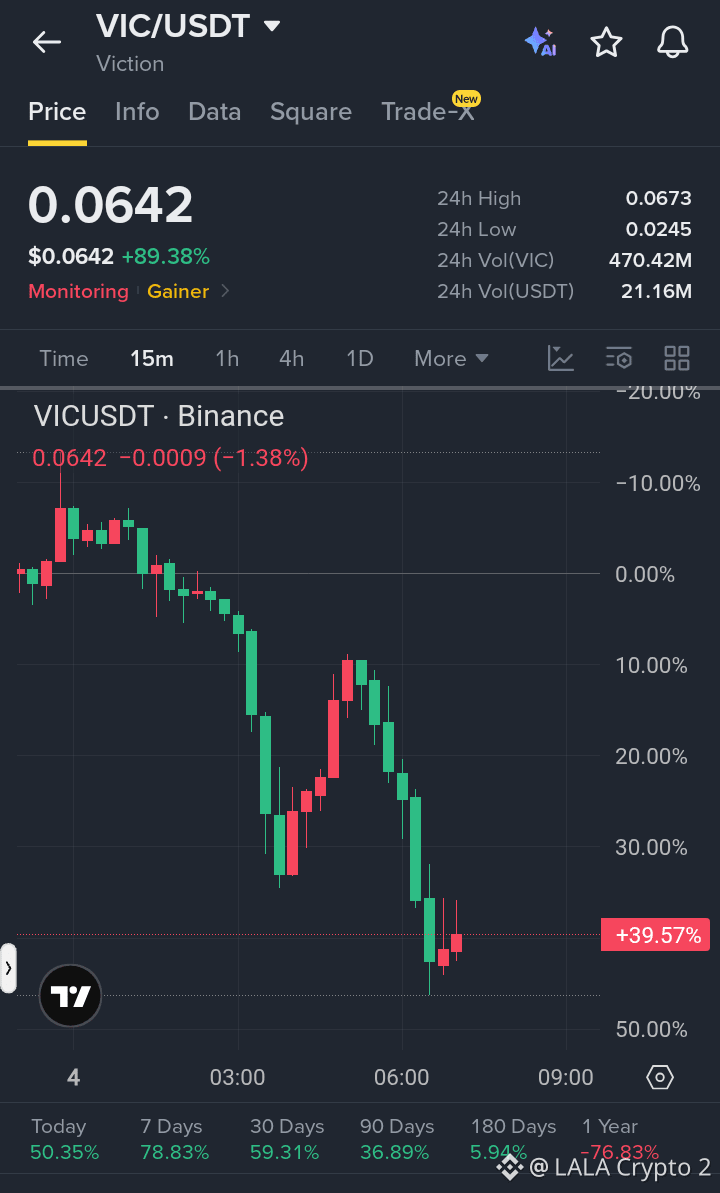
Viction exploded +89% today, trading at $0.0642 after hitting a low of $0.0245. The massive volume spike (470M VIC) confirms strong buyer interest, but the recent pullback from $0.0673 suggests profit-taking is underway. The 4-hour chart shows an overextended rally, with RSI likely in overbought territory. A retest of $0.0550–$0.0580 would provide a better risk-reward entry for a continuation trade. If bulls defend $0.0600, the next targets are $0.0750 and $0.0900. Conversely, a break below $0.0550 could trigger a deeper correction toward $0.0450. This is a high-volatility play—aggressive traders may scale in near $0.0600 with a stop at $0.0530, targeting $0.0740. For safer plays, wait for a pullback and consolidation. Momentum remains strong, but chasing at current levels is dangerous. Monitor volume and broader altcoin sentiment closely.
{spot}(VICUSDT)
#AmazonJumps15%OnAWS37%Growth #CoinbaseBTCPremiumNegative77Days #USIranDealOrNoDeal #USIranTalksToBegin
$VIC /USDT – Daily Trade Setup
Viction exploded +89% today, trading at $0.0642 after hitting a low of $0.0245. The massive volume spike (470M VIC) confirms strong buyer interest, but the recent pullback from $0.0673 suggests profit-taking is underway. The 4-hour chart shows an overextended rally, with RSI likely in overbought territory. A retest of $0.0550–$0.0580 would provide a better risk-reward entry for a continuation trade. If bulls defend $0.0600, the next targets are $0.0750 and $0.0900. Conversely, a break below $0.0550 could trigger a deeper correction toward $0.0450. This is a high-volatility play—aggressive traders may scale in near $0.0600 with a stop at $0.0530, targeting $0.0740. For safer plays, wait for a pullback and consolidation. Momentum remains strong, but chasing at current levels is dangerous. Monitor volume and broader altcoin sentiment closely.
#AmazonJumps15%OnAWS37%Growth #CoinbaseBTCPremiumNegative77Days #USIranDealOrNoDeal #USIranTalksToBegin
Viction exploded +89% today, trading at $0.0642 after hitting a low of $0.0245. The massive volume spike (470M VIC) confirms strong buyer interest, but the recent pullback from $0.0673 suggests profit-taking is underway. The 4-hour chart shows an overextended rally, with RSI likely in overbought territory. A retest of $0.0550–$0.0580 would provide a better risk-reward entry for a continuation trade. If bulls defend $0.0600, the next targets are $0.0750 and $0.0900. Conversely, a break below $0.0550 could trigger a deeper correction toward $0.0450. This is a high-volatility play—aggressive traders may scale in near $0.0600 with a stop at $0.0530, targeting $0.0740. For safer plays, wait for a pullback and consolidation. Momentum remains strong, but chasing at current levels is dangerous. Monitor volume and broader altcoin sentiment closely.
#AmazonJumps15%OnAWS37%Growth #CoinbaseBTCPremiumNegative77Days #USIranDealOrNoDeal #USIranTalksToBegin
1
120
·
--
Baissier
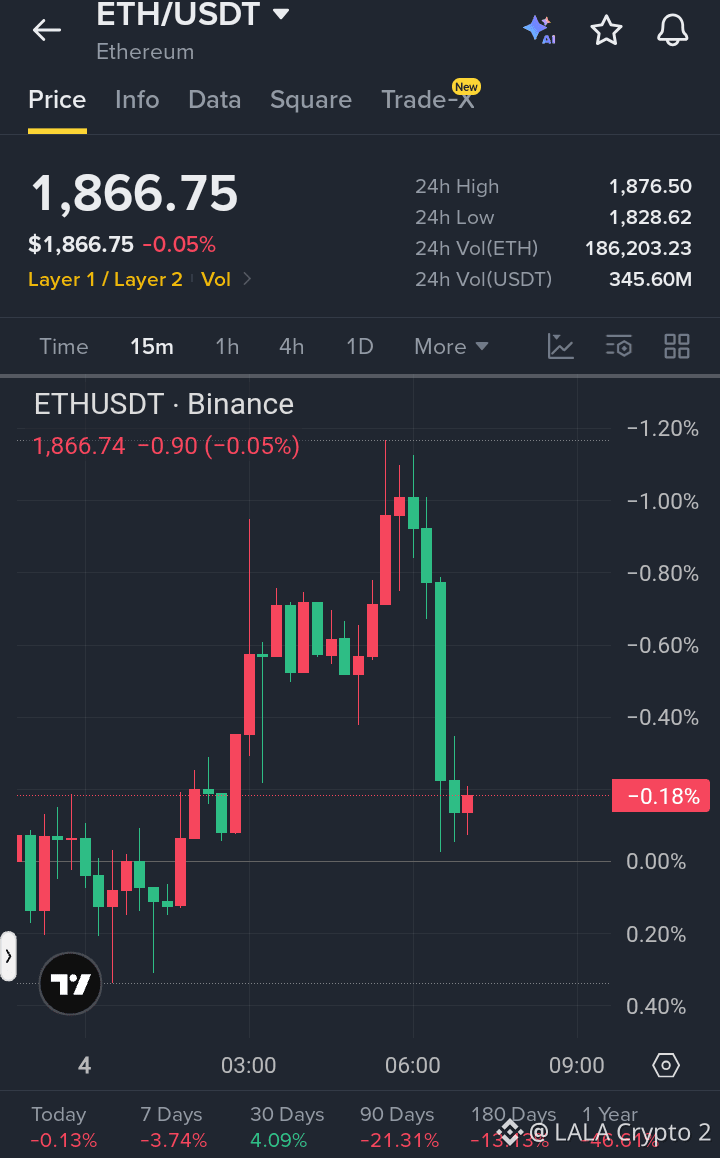
$ETH /USDT – Daily Trade Setup
Ethereum is hovering around $1,866.75, showing little directional conviction after touching the 24h low of $1,828.62. Resistance sits at $1,876.50, and a clean break above this could ignite a run toward $1,920 and $1,950. The daily chart shows ETH has gained +4.09% over 30 days, but losses of -21.31% over 90 days indicate underlying weakness. The 1-hour chart suggests a tight range, with support at $1,850. A breakdown below $1,830 would expose $1,800 and possibly $1,770. Entry strategy: go long on a confirmed push above $1,880 with targets at $1,910 and $1,940, stop at $1,840. For shorts, look for rejection near $1,875 targeting $1,835. Volume is moderate, so volatility may pick up with BTC movement. Overall, ETH is range-bound and requires a catalyst. Trade with defined risk and avoid over-leveraging.
{spot}(ETHUSDT)
#PalantirJumps10%OnQ2Beat #CoinbaseBTCPremiumNegative77Days
#OilCrashes9% #USIranDealOrNoDeal
$ETH /USDT – Daily Trade Setup
Ethereum is hovering around $1,866.75, showing little directional conviction after touching the 24h low of $1,828.62. Resistance sits at $1,876.50, and a clean break above this could ignite a run toward $1,920 and $1,950. The daily chart shows ETH has gained +4.09% over 30 days, but losses of -21.31% over 90 days indicate underlying weakness. The 1-hour chart suggests a tight range, with support at $1,850. A breakdown below $1,830 would expose $1,800 and possibly $1,770. Entry strategy: go long on a confirmed push above $1,880 with targets at $1,910 and $1,940, stop at $1,840. For shorts, look for rejection near $1,875 targeting $1,835. Volume is moderate, so volatility may pick up with BTC movement. Overall, ETH is range-bound and requires a catalyst. Trade with defined risk and avoid over-leveraging.
#PalantirJumps10%OnQ2Beat #CoinbaseBTCPremiumNegative77Days
#OilCrashes9% #USIranDealOrNoDeal
Ethereum is hovering around $1,866.75, showing little directional conviction after touching the 24h low of $1,828.62. Resistance sits at $1,876.50, and a clean break above this could ignite a run toward $1,920 and $1,950. The daily chart shows ETH has gained +4.09% over 30 days, but losses of -21.31% over 90 days indicate underlying weakness. The 1-hour chart suggests a tight range, with support at $1,850. A breakdown below $1,830 would expose $1,800 and possibly $1,770. Entry strategy: go long on a confirmed push above $1,880 with targets at $1,910 and $1,940, stop at $1,840. For shorts, look for rejection near $1,875 targeting $1,835. Volume is moderate, so volatility may pick up with BTC movement. Overall, ETH is range-bound and requires a catalyst. Trade with defined risk and avoid over-leveraging.
#PalantirJumps10%OnQ2Beat #CoinbaseBTCPremiumNegative77Days
#OilCrashes9% #USIranDealOrNoDeal
16
·
--
Haussier
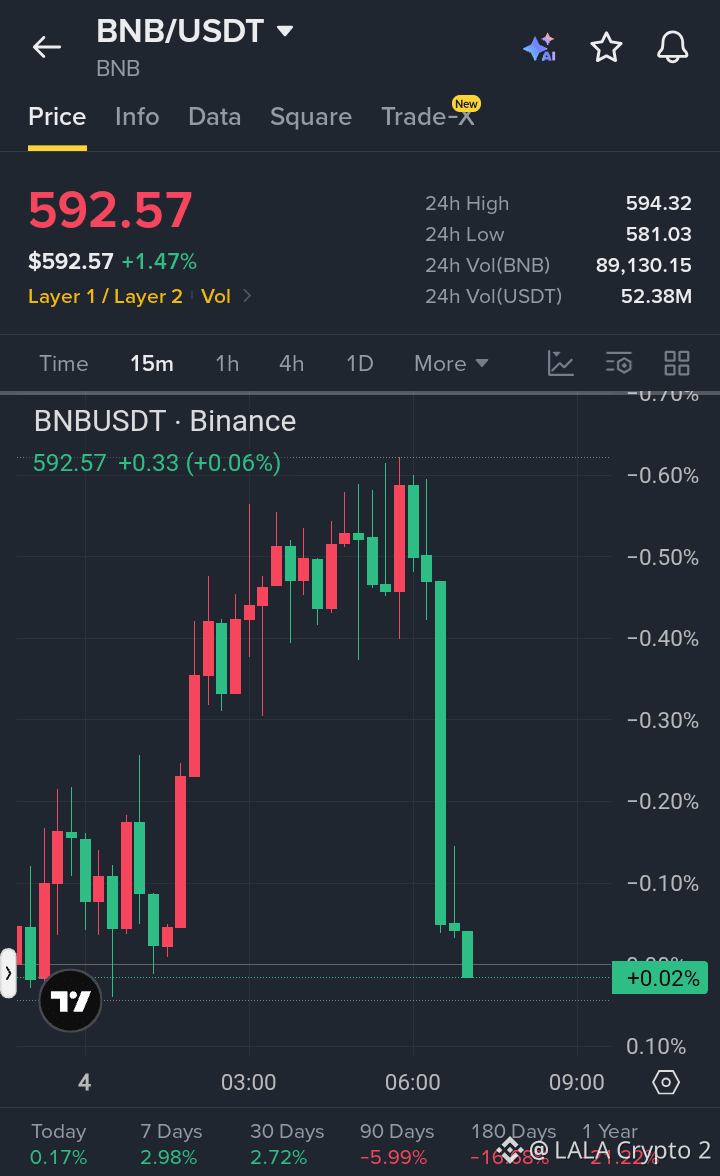
$BNB /USDT – Daily Trade Setup
BNB is showing relative strength at $592.57, with resistance at $594.32 and support at $581.03. The coin has gained +1.47% today and is up +2.98% over the past week, making it one of the stronger performers among major caps. A breakout above $595 would clear the path toward $605 and $615. The 1-hour chart shows steady buying pressure with higher lows, though volume remains average. A pullback to $585 could offer a good entry opportunity. On the downside, losing $580 would shift momentum bearish, exposing $570 and $560. Long strategy: buy on a break above $594 with targets at $602 and $610, stop at $586. Alternatively, accumulate near $585 with a tight stop. BNB's 30-day gain of +2.72% shows resilience, making it a good candidate for long exposure. Monitor ETH and BTC for directional cues. Keep position sizes manageable as volatility may increase.
{spot}(BNBUSDT)
#USIranDealOrNoDeal #PalantirJumps10%OnQ2Beat #AmazonJumps15%OnAWS37%Growth #ColdcardExploitDrains1367BTC
$BNB /USDT – Daily Trade Setup
BNB is showing relative strength at $592.57, with resistance at $594.32 and support at $581.03. The coin has gained +1.47% today and is up +2.98% over the past week, making it one of the stronger performers among major caps. A breakout above $595 would clear the path toward $605 and $615. The 1-hour chart shows steady buying pressure with higher lows, though volume remains average. A pullback to $585 could offer a good entry opportunity. On the downside, losing $580 would shift momentum bearish, exposing $570 and $560. Long strategy: buy on a break above $594 with targets at $602 and $610, stop at $586. Alternatively, accumulate near $585 with a tight stop. BNB's 30-day gain of +2.72% shows resilience, making it a good candidate for long exposure. Monitor ETH and BTC for directional cues. Keep position sizes manageable as volatility may increase.
#USIranDealOrNoDeal #PalantirJumps10%OnQ2Beat #AmazonJumps15%OnAWS37%Growth #ColdcardExploitDrains1367BTC
BNB is showing relative strength at $592.57, with resistance at $594.32 and support at $581.03. The coin has gained +1.47% today and is up +2.98% over the past week, making it one of the stronger performers among major caps. A breakout above $595 would clear the path toward $605 and $615. The 1-hour chart shows steady buying pressure with higher lows, though volume remains average. A pullback to $585 could offer a good entry opportunity. On the downside, losing $580 would shift momentum bearish, exposing $570 and $560. Long strategy: buy on a break above $594 with targets at $602 and $610, stop at $586. Alternatively, accumulate near $585 with a tight stop. BNB's 30-day gain of +2.72% shows resilience, making it a good candidate for long exposure. Monitor ETH and BTC for directional cues. Keep position sizes manageable as volatility may increase.
#USIranDealOrNoDeal #PalantirJumps10%OnQ2Beat #AmazonJumps15%OnAWS37%Growth #ColdcardExploitDrains1367BTC
37
·
--
Haussier
$BTC /USDT
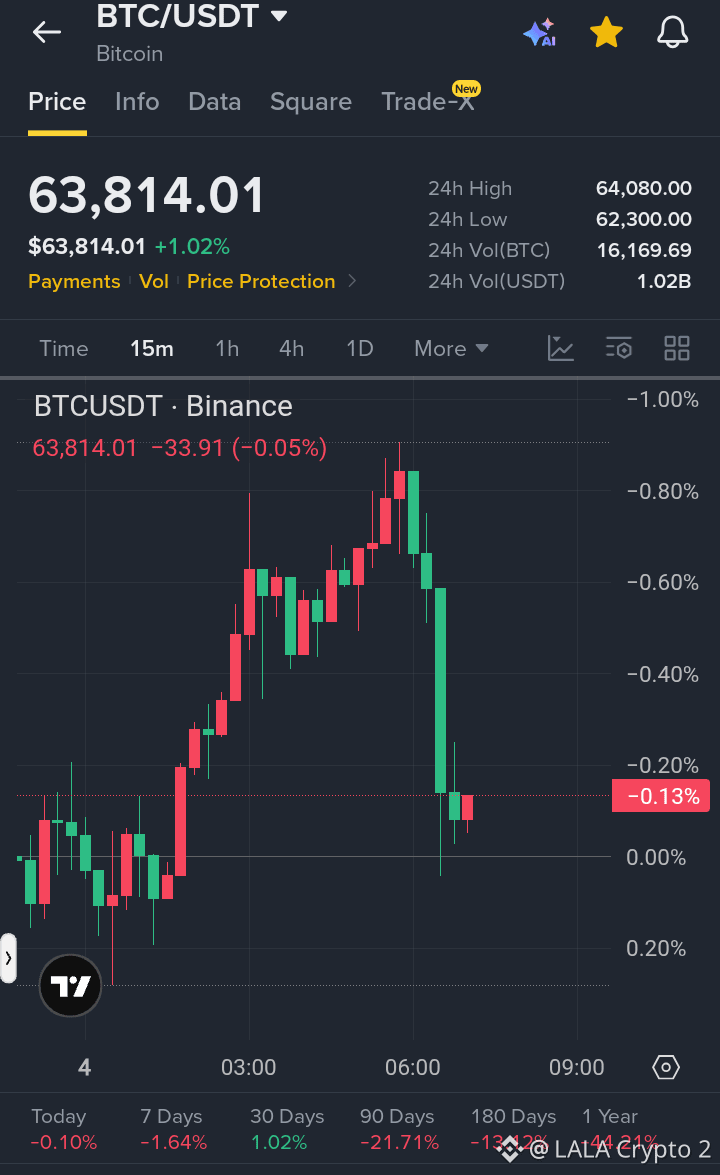
Bitcoin just delivered a sharp rejection after testing higher levels, showing that sellers are still defending resistance. The quick drop shook out weak hands, but price is now trying to stabilize around the current support zone. If buyers protect this level, BTC could build momentum for another push toward the recent high. A clean breakout above resistance may trigger fresh bullish volume, while losing support could invite another wave of selling. Patience is the key here—let the market confirm direction before entering. Smart traders wait for confirmation instead of chasing candles. Volatility is back, and the next move could be explosive. Keep your risk under control, respect your stop loss, and stay focused on the bigger trend. The next few candles may decide whether Bitcoin resumes its rally or extends the correction. Stay ready—the market rewards discipline, not emotion.
{spot}(BTCUSDT)
#USIranDealOrNoDeal #PalantirJumps10%OnQ2Beat #AmazonJumps15%OnAWS37%Growth #CoinbaseBTCPremiumNegative77Days
$BTC /USDT
Bitcoin just delivered a sharp rejection after testing higher levels, showing that sellers are still defending resistance. The quick drop shook out weak hands, but price is now trying to stabilize around the current support zone. If buyers protect this level, BTC could build momentum for another push toward the recent high. A clean breakout above resistance may trigger fresh bullish volume, while losing support could invite another wave of selling. Patience is the key here—let the market confirm direction before entering. Smart traders wait for confirmation instead of chasing candles. Volatility is back, and the next move could be explosive. Keep your risk under control, respect your stop loss, and stay focused on the bigger trend. The next few candles may decide whether Bitcoin resumes its rally or extends the correction. Stay ready—the market rewards discipline, not emotion.
#USIranDealOrNoDeal #PalantirJumps10%OnQ2Beat #AmazonJumps15%OnAWS37%Growth #CoinbaseBTCPremiumNegative77Days
Bitcoin just delivered a sharp rejection after testing higher levels, showing that sellers are still defending resistance. The quick drop shook out weak hands, but price is now trying to stabilize around the current support zone. If buyers protect this level, BTC could build momentum for another push toward the recent high. A clean breakout above resistance may trigger fresh bullish volume, while losing support could invite another wave of selling. Patience is the key here—let the market confirm direction before entering. Smart traders wait for confirmation instead of chasing candles. Volatility is back, and the next move could be explosive. Keep your risk under control, respect your stop loss, and stay focused on the bigger trend. The next few candles may decide whether Bitcoin resumes its rally or extends the correction. Stay ready—the market rewards discipline, not emotion.
#USIranDealOrNoDeal #PalantirJumps10%OnQ2Beat #AmazonJumps15%OnAWS37%Growth #CoinbaseBTCPremiumNegative77Days
1
58
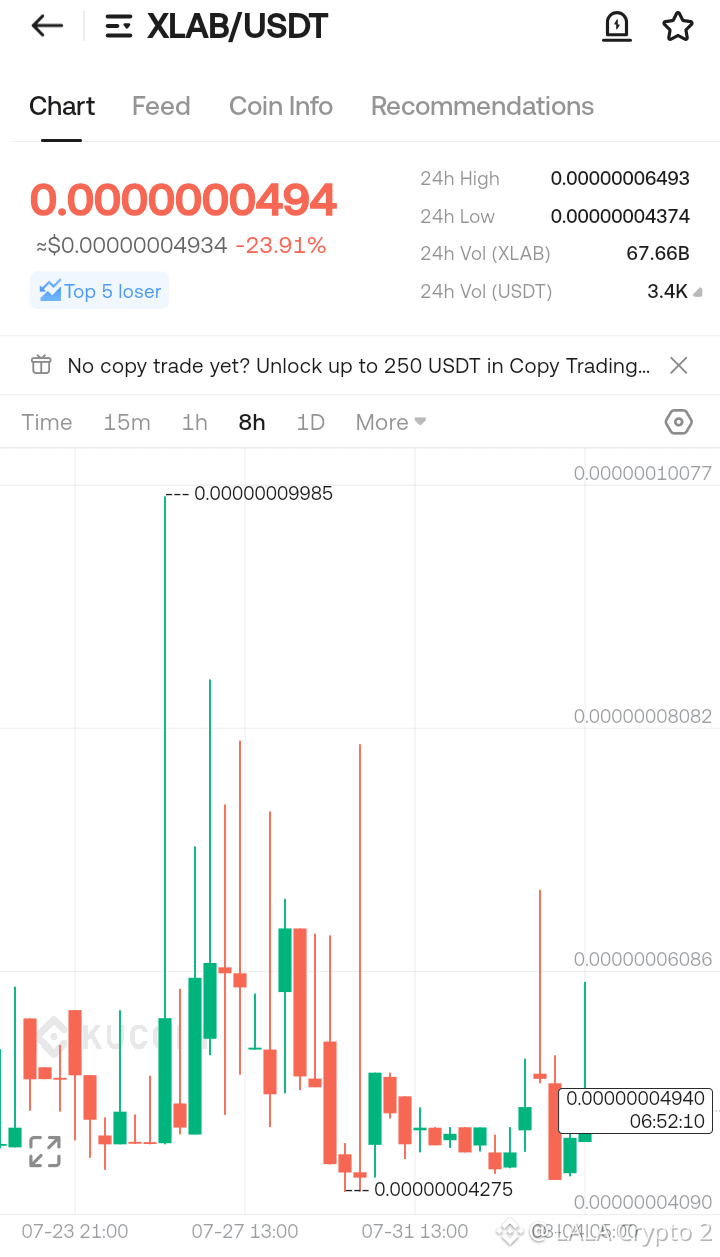
$XLAB is testing support after a sharp decline. Buyers need to reclaim 0.0000000550 for momentum to return. If support holds, a relief bounce is possible.
Entry: 0.0000000490–0.0000000510
Target: 0.0000000560 / 0.0000000600 / 0.0000000650
Stop Loss: 0.0000000420
#ColdcardExploitDrains1367BTC #CoinbaseBTCPremiumNegative77Days #PalantirJumps10%OnQ2Beat #AmazonJumps15%OnAWS37%Growth
$XLAB is testing support after a sharp decline. Buyers need to reclaim 0.0000000550 for momentum to return. If support holds, a relief bounce is possible.
Entry: 0.0000000490–0.0000000510
Target: 0.0000000560 / 0.0000000600 / 0.0000000650
Stop Loss: 0.0000000420
#ColdcardExploitDrains1367BTC #CoinbaseBTCPremiumNegative77Days #PalantirJumps10%OnQ2Beat #AmazonJumps15%OnAWS37%Growth
Entry: 0.0000000490–0.0000000510
Target: 0.0000000560 / 0.0000000600 / 0.0000000650
Stop Loss: 0.0000000420
#ColdcardExploitDrains1367BTC #CoinbaseBTCPremiumNegative77Days #PalantirJumps10%OnQ2Beat #AmazonJumps15%OnAWS37%Growth
1
139
·
--
Haussier
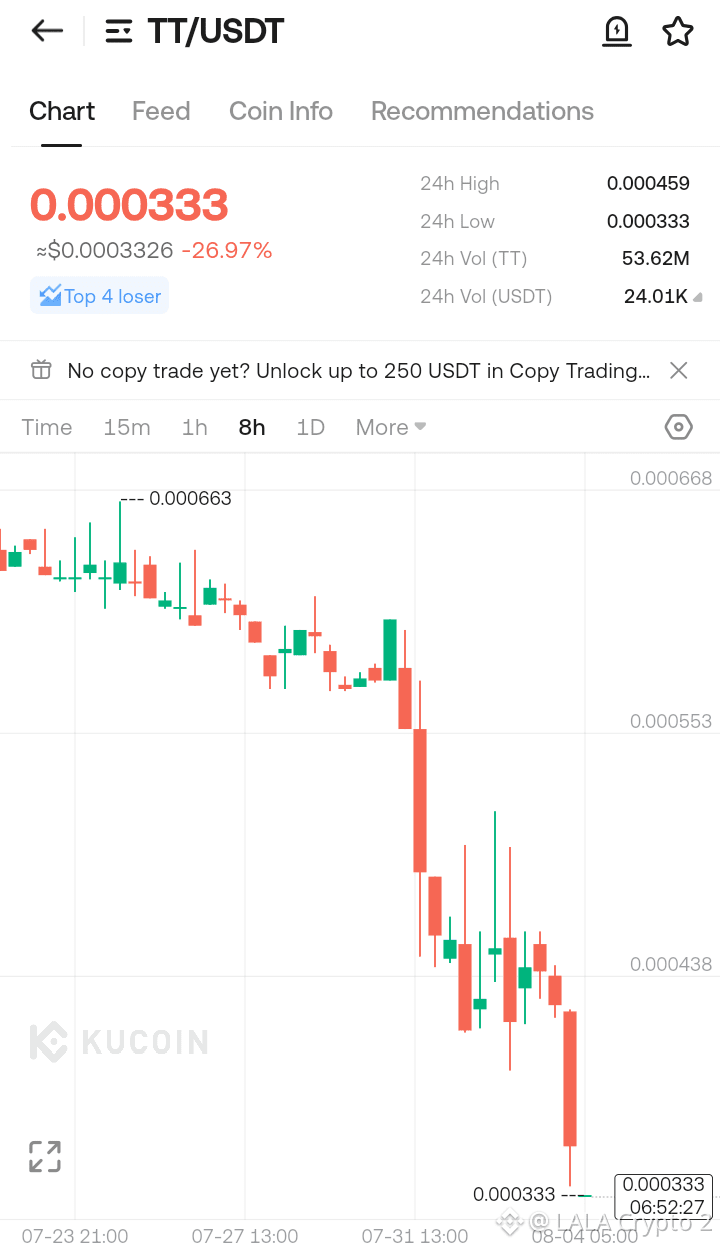
$TT.US /USDT
TT remains under heavy selling pressure. Wait for confirmation before entering. A break above resistance could trigger a short-term recovery.
Entry: 0.000335–0.000345
Target: 0.000370 / 0.000400 / 0.000440
Stop Loss: 0.000320
#ColdcardExploitDrains1367BTC #AmazonJumps15%OnAWS37%Growth #PalantirJumps10%OnQ2Beat #USIranDealOrNoDeal
{stock_us}(TT.US)
$TT.US /USDT
TT remains under heavy selling pressure. Wait for confirmation before entering. A break above resistance could trigger a short-term recovery.
Entry: 0.000335–0.000345
Target: 0.000370 / 0.000400 / 0.000440
Stop Loss: 0.000320
#ColdcardExploitDrains1367BTC #AmazonJumps15%OnAWS37%Growth #PalantirJumps10%OnQ2Beat #USIranDealOrNoDeal
TT remains under heavy selling pressure. Wait for confirmation before entering. A break above resistance could trigger a short-term recovery.
Entry: 0.000335–0.000345
Target: 0.000370 / 0.000400 / 0.000440
Stop Loss: 0.000320
#ColdcardExploitDrains1367BTC #AmazonJumps15%OnAWS37%Growth #PalantirJumps10%OnQ2Beat #USIranDealOrNoDeal
TTUS+1,03%
58
Connectez-vous pour découvrir plus de contenu
Rejoignez la communauté mondiale des adeptes de cryptomonnaies sur Binance Square
⚡️ Suviez les dernières informations importantes sur les cryptomonnaies.
💬 Jugé digne de confiance par la plus grande plateforme d’échange de cryptomonnaies au monde.
👍 Découvrez les connaissances que partagent les créateurs vérifiés.
Adresse e-mail/Nº de téléphone
Sujets d’actualité
ZcashETFPostsFirstWeeklyOutflow$93.6M
38,110 vues
129 mentions
#ZcashETFPostsFirstWeeklyOutflow$93.6M
🚨🚨🚨🚨🚨🚨🚨🚨🚨🚨🚨🚨🚨🚨✅ 🚨 ZCASH ETF FLOWS TURN NEGATIVE FOR THE FIRST TIME! 📉
$ZEC is facing a notable shift in institutional fund flows, with Zcash investment products recording their first weekly net outflow since launching in August.
According to fund-flow data, around $93.6M was withdrawn from Zcash products during the latest week, while ZEC price action also cooled significantly.
📊 WHAT HAPPENED?
• Weekly Zcash ETF outflow: $93.6M
• September 30 daily outflow: $30.25M
• ZCSH previously attracted around $98.2M in one week
• ZEC is trading near $1,300
• Recent high: around $1,690
• Weekly decline: roughly 17%+
🔍 LEVELS TO WATCH
🟢 Support: $1,280–$1,300
🔴 Resistance: $1,450–$1,500
The key question now is whether the $1,300 area can hold and attract fresh buyers.
Institutional flows will also be important. A return of consistent positive inflows could signal renewed confidence, while continued outflows may keep pressure on $ZEC .
👀 Is this simply profit-taking after ZEC’s huge rally, or could we see another deeper pullback before buyers return?
Share your view below. 👇
#Zcash #ZEC #ZcashETF #Crypto
#analysis
owhggwiohsjowve
·0 mentions J’aime
·176 vues
GreekPoliceBustCryptoScamRingArrest17
88,602 vues
747 mentions
BitcoinRejectedAt$87K
128,369 vues
185 mentions