

Jengoms
451 Publications

Jengoms
Signaler
Bloquer l’utilisateur
13 Suivis
9 Abonnés
34 J’aime
Publications
Tous
Citations
·
--
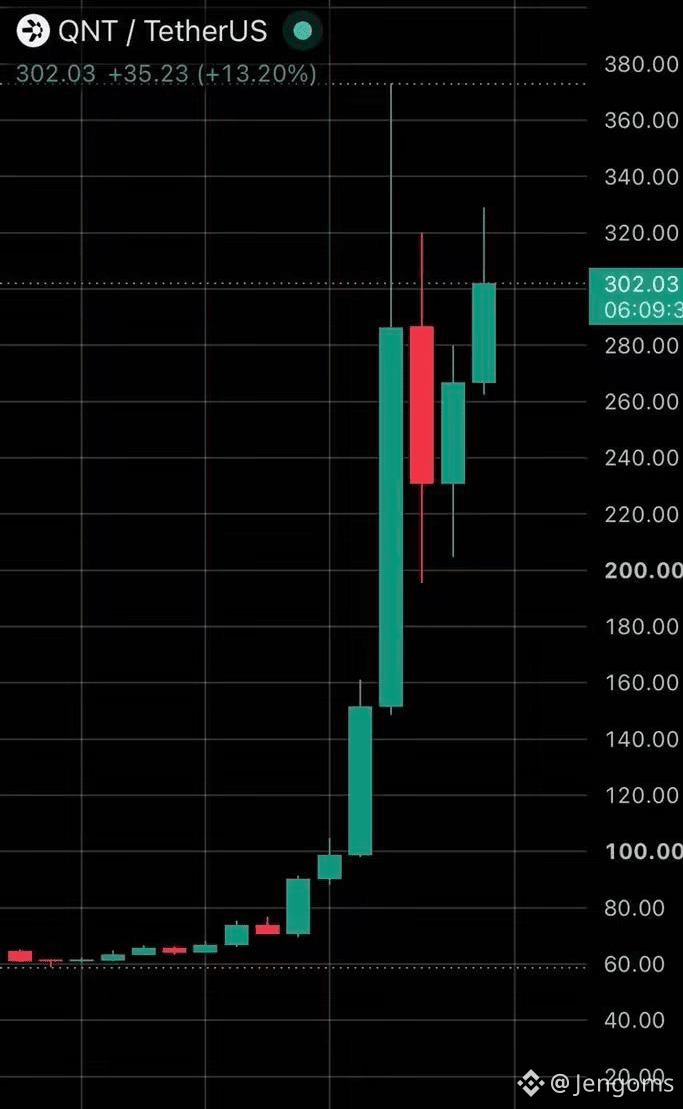
🚨 Quant founder-linked wallet moves $7 MILLION in QNT after seven years of dormancy, as the token surges over +350% in a week.
The wallet transferred 25,776 QNT and still holds 600,000 tokens worth roughly $160.39 MILLION, per lookonchain.
The move comes as The Clearing House, which settles over $2 TRILLION daily, selected Quant to connect its tokenized-deposit network.
Quant-built infrastructure is also supporting live customer transactions at major UK banks, including Barclays, HSBC, Lloyds and NatWest.
$QNT has jumped nearly 4x in price in the past week.
#Quant
🚨 Quant founder-linked wallet moves $7 MILLION in QNT after seven years of dormancy, as the token surges over +350% in a week.
The wallet transferred 25,776 QNT and still holds 600,000 tokens worth roughly $160.39 MILLION, per lookonchain.
The move comes as The Clearing House, which settles over $2 TRILLION daily, selected Quant to connect its tokenized-deposit network.
Quant-built infrastructure is also supporting live customer transactions at major UK banks, including Barclays, HSBC, Lloyds and NatWest.
$QNT has jumped nearly 4x in price in the past week.
#Quant
The wallet transferred 25,776 QNT and still holds 600,000 tokens worth roughly $160.39 MILLION, per lookonchain.
The move comes as The Clearing House, which settles over $2 TRILLION daily, selected Quant to connect its tokenized-deposit network.
Quant-built infrastructure is also supporting live customer transactions at major UK banks, including Barclays, HSBC, Lloyds and NatWest.
$QNT has jumped nearly 4x in price in the past week.
#Quant
2
·
--
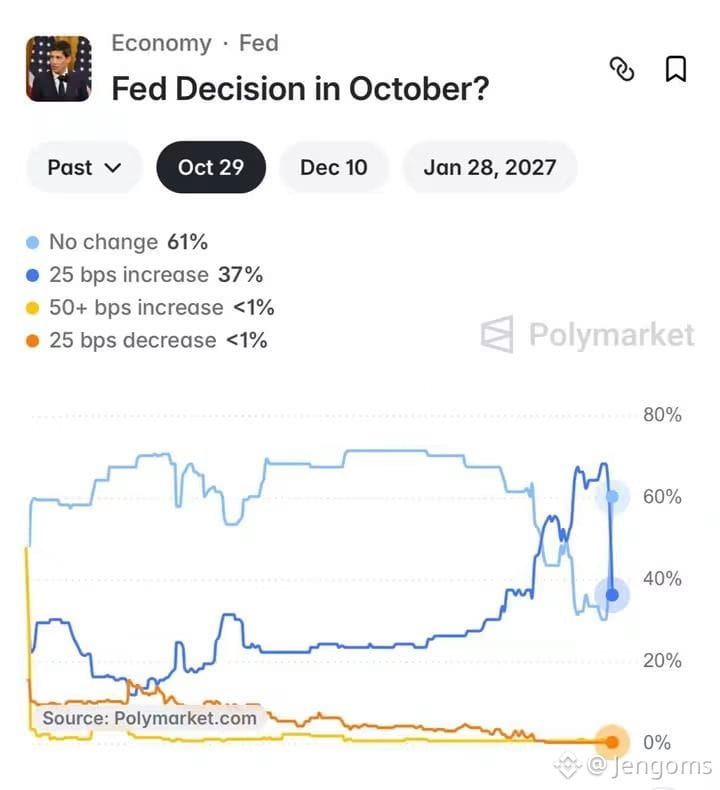
Polymarket puts October Fed rate hike odds at 37%, with a 61% chance of no change.
Polymarket puts October Fed rate hike odds at 37%, with a 61% chance of no change.
4
·
--
⚡ Robinhood unveiled AI trading agents, crypto perpetuals with up to 10x leverage on BTC and ETH, and plans for weekend stock trading at HOOD Summit.
⚡ Robinhood unveiled AI trading agents, crypto perpetuals with up to 10x leverage on BTC and ETH, and plans for weekend stock trading at HOOD Summit.

6
·
--
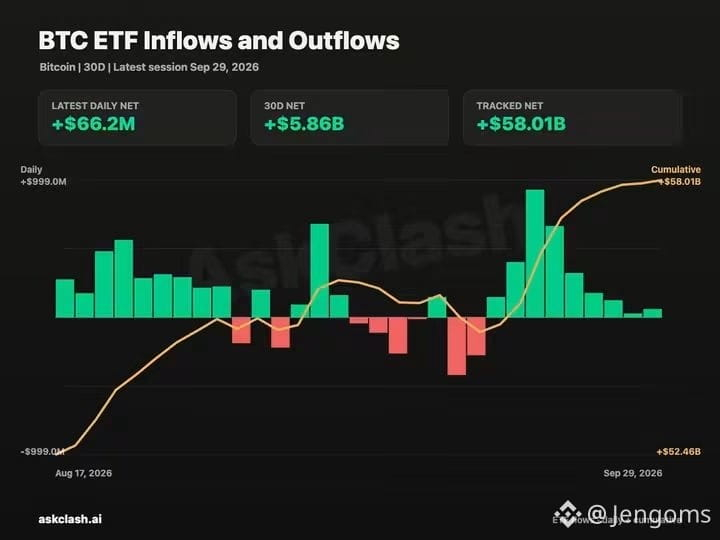
U.S. spot #Bitcoin ETFs have recorded pulled in roughly $3.1 BILLION over 9 straight sessions, marking a sharp change from the earlier period of persistent outflows.
The contrast with #ETH ETFs (which have turned negative 📉) shows institutional demand is currently concentrating more heavily in #BTC than across the broader crypto market.
U.S. spot #Bitcoin ETFs have recorded pulled in roughly $3.1 BILLION over 9 straight sessions, marking a sharp change from the earlier period of persistent outflows.
The contrast with #ETH ETFs (which have turned negative 📉) shows institutional demand is currently concentrating more heavily in #BTC than across the broader crypto market.
The contrast with #ETH ETFs (which have turned negative 📉) shows institutional demand is currently concentrating more heavily in #BTC than across the broader crypto market.
50
·
--
🇧🇷 JUST IN: Brazil's CSD BR partners with Ripple to mirror securities ownership records on the XRP Ledger, starting with BTG Pactual fund shares.
🇧🇷 JUST IN: Brazil's CSD BR partners with Ripple to mirror securities ownership records on the XRP Ledger, starting with BTG Pactual fund shares.

39
·
--
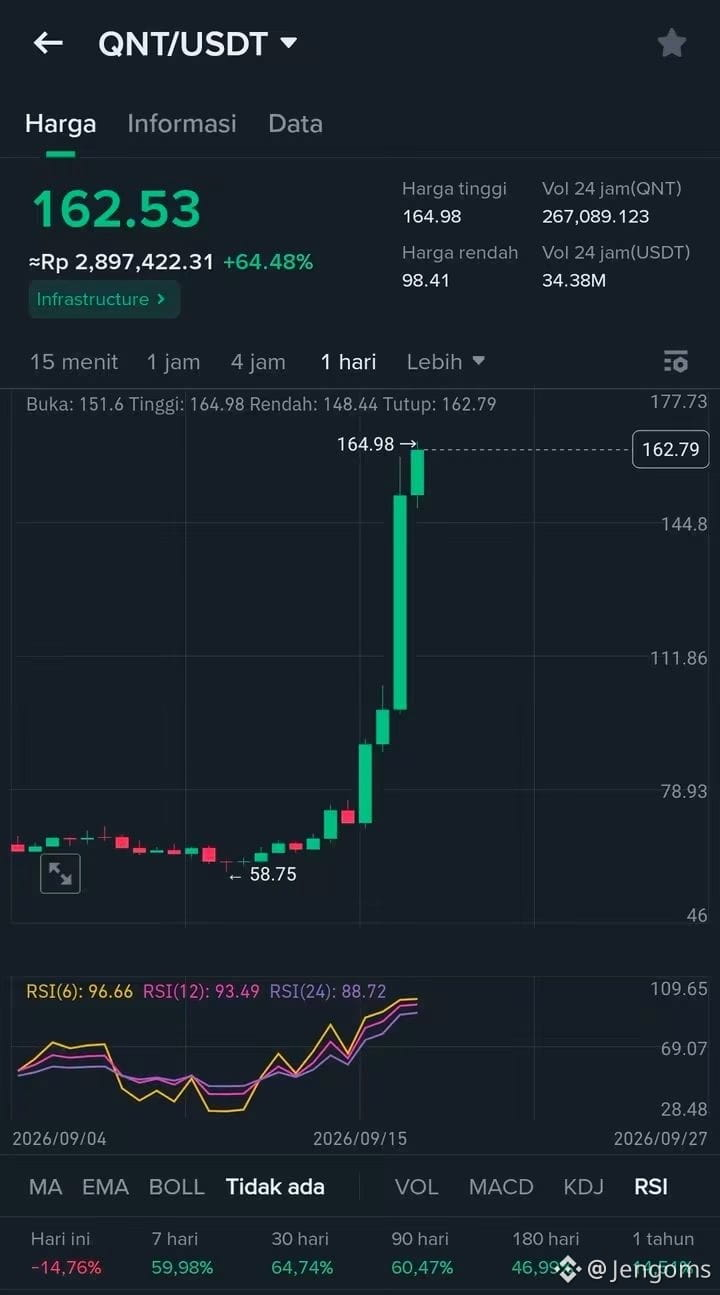
🏆 Top 10 Performing Altcoins this month:
1. Quant ($QNT): +336%
2. Akedo ($AKE): +300%
3. Bitway ($BTW): +211%
4. Near Protocol ($NEAR): +154%
5. Arbitrum ($ARB): +138%
6. Uniswap ($UNI): +85.7%
7. Aerodrome Finance ($AERO): +73.6%
8. Venice Token ($VVV): +71.3%
9. Pyth Network ($PYTH): +68.9%
10. Kaspa ($KAS): +68.5%
Which do you own? $QNT
{spot}(QNTUSDT)
🏆 Top 10 Performing Altcoins this month:
1. Quant ($QNT ): +336%
2. Akedo ($AKE): +300%
3. Bitway ($BTW): +211%
4. Near Protocol ($NEAR): +154%
5. Arbitrum ($ARB): +138%
6. Uniswap ($UNI): +85.7%
7. Aerodrome Finance ($AERO): +73.6%
8. Venice Token ($VVV): +71.3%
9. Pyth Network ($PYTH): +68.9%
10. Kaspa ($KAS): +68.5%
Which do you own? $QNT
1. Quant ($QNT ): +336%
2. Akedo ($AKE): +300%
3. Bitway ($BTW): +211%
4. Near Protocol ($NEAR): +154%
5. Arbitrum ($ARB): +138%
6. Uniswap ($UNI): +85.7%
7. Aerodrome Finance ($AERO): +73.6%
8. Venice Token ($VVV): +71.3%
9. Pyth Network ($PYTH): +68.9%
10. Kaspa ($KAS): +68.5%
Which do you own? $QNT

1.3k
·
--
: 🇬🇷 Greece now has its first MiCA-registered providers: BCash, Xenios Blockchain Group, Capital Wallet Greece, and Piraeus Bank.
: 🇬🇷 Greece now has its first MiCA-registered providers: BCash, Xenios Blockchain Group, Capital Wallet Greece, and Piraeus Bank.

5
·
--
LATEST: ⚡️ Aztec Labs relaunched zk.money in alpha, a self-custodial wallet hiding balances, payment amounts and counterparties on its Ethereum Layer 2.
LATEST: ⚡️ Aztec Labs relaunched zk.money in alpha, a self-custodial wallet hiding balances, payment amounts and counterparties on its Ethereum Layer 2.

78
·
--
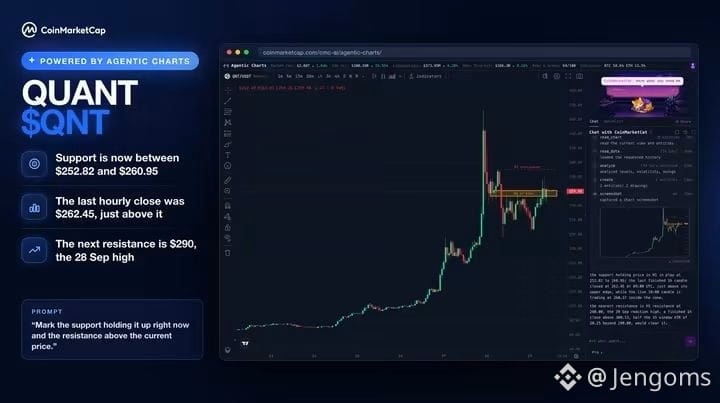
25 US banks just picked Quant ($QNT) to connect their payment systems.
It tripled in price, so we asked our agent to read the chart!
🔹 Support is now between $252.82 and $260.95
🔹 The last hourly close was $262.45, just above it
🔹 The next resistance is $290, the 28 Sep high $QNT #USJobOpeningsFallToFiveMonthLow
25 US banks just picked Quant ($QNT ) to connect their payment systems.
It tripled in price, so we asked our agent to read the chart!
🔹 Support is now between $252.82 and $260.95
🔹 The last hourly close was $262.45, just above it
🔹 The next resistance is $290, the 28 Sep high $QNT #USJobOpeningsFallToFiveMonthLow
It tripled in price, so we asked our agent to read the chart!
🔹 Support is now between $252.82 and $260.95
🔹 The last hourly close was $262.45, just above it
🔹 The next resistance is $290, the 28 Sep high $QNT #USJobOpeningsFallToFiveMonthLow
2
·
--
🚨 NEAR Intents blocked over $50M in attempted transfers tied to the $387.5M Bitget hack, froze $503K, and waived its recovery bounty so Bitget can recover more. $NEAR
{spot}(NEARUSDT)
#EarningsSeason #BitgetHackerFailsToMoveStolenFunds
🚨 NEAR Intents blocked over $50M in attempted transfers tied to the $387.5M Bitget hack, froze $503K, and waived its recovery bounty so Bitget can recover more. $NEAR
#EarningsSeason #BitgetHackerFailsToMoveStolenFunds
#EarningsSeason #BitgetHackerFailsToMoveStolenFunds
48
·
--

Article
oil prices and the latest U.S.–Iran diplomatic situation.Oil prices have been volatile because two opposing developments are affecting the market:
U.S.–Iran diplomacy is showing little clear progress. Mediated discussions have not produced a firm breakthrough, keeping concerns about prolonged Middle East supply disruptions elevated. (Reuters)Saudi Arabia has restarted its East-West Pipeline, which is helping restore crude exports through the Red Sea. Saudi Arabia has also resumed oil loadings at Yanbu, at roughly 2 million barrels per day initially. (Reuters)On Tuesday, however, oil prices later moved lower as the increase in Saudi and other Middle Eastern exports eased some immediate supply concerns. Reuters reported Brent at about $103.32/barrel and WTI at $90.65/barrel during Tuesday's trading. (Reuters)Despite that decline, Brent was still on track for roughly a 14% monthly gain, showing how much geopolitical risk has already been priced into crude.
“Oil rebounds as Iran diplomacy stalls despite Saudi pipeline restarting” essentially means:
Investors are worried that the Iran conflict may continue because diplomacy isn't producing a clear breakthrough. That concern can push oil prices higher, even though Saudi Arabia restarting an important pipeline is increasing available oil supply.
So the market is balancing more Saudi oil supply against the risk of continued disruption around Iran and the Strait of Hormuz. #EarningsSeason #news_update #usa
.
oil prices and the latest U.S.–Iran diplomatic situation.
Oil prices have been volatile because two opposing developments are affecting the market:
U.S.–Iran diplomacy is showing little clear progress. Mediated discussions have not produced a firm breakthrough, keeping concerns about prolonged Middle East supply disruptions elevated. (Reuters)Saudi Arabia has restarted its East-West Pipeline, which is helping restore crude exports through the Red Sea. Saudi Arabia has also resumed oil loadings at Yanbu, at roughly 2 million barrels per day initially. (Reuters)On Tuesday, however, oil prices later moved lower as the increase in Saudi and other Middle Eastern exports eased some immediate supply concerns. Reuters reported Brent at about $103.32/barrel and WTI at $90.65/barrel during Tuesday's trading. (Reuters)Despite that decline, Brent was still on track for roughly a 14% monthly gain, showing how much geopolitical risk has already been priced into crude.
“Oil rebounds as Iran diplomacy stalls despite Saudi pipeline restarting” essentially means:
Investors are worried that the Iran conflict may continue because diplomacy isn't producing a clear breakthrough. That concern can push oil prices higher, even though Saudi Arabia restarting an important pipeline is increasing available oil supply.
So the market is balancing more Saudi oil supply against the risk of continued disruption around Iran and the Strait of Hormuz. #EarningsSeason #news_update #usa
.
U.S.–Iran diplomacy is showing little clear progress. Mediated discussions have not produced a firm breakthrough, keeping concerns about prolonged Middle East supply disruptions elevated. (Reuters)Saudi Arabia has restarted its East-West Pipeline, which is helping restore crude exports through the Red Sea. Saudi Arabia has also resumed oil loadings at Yanbu, at roughly 2 million barrels per day initially. (Reuters)On Tuesday, however, oil prices later moved lower as the increase in Saudi and other Middle Eastern exports eased some immediate supply concerns. Reuters reported Brent at about $103.32/barrel and WTI at $90.65/barrel during Tuesday's trading. (Reuters)Despite that decline, Brent was still on track for roughly a 14% monthly gain, showing how much geopolitical risk has already been priced into crude.
“Oil rebounds as Iran diplomacy stalls despite Saudi pipeline restarting” essentially means:
Investors are worried that the Iran conflict may continue because diplomacy isn't producing a clear breakthrough. That concern can push oil prices higher, even though Saudi Arabia restarting an important pipeline is increasing available oil supply.
So the market is balancing more Saudi oil supply against the risk of continued disruption around Iran and the Strait of Hormuz. #EarningsSeason #news_update #usa
.
262
·
--
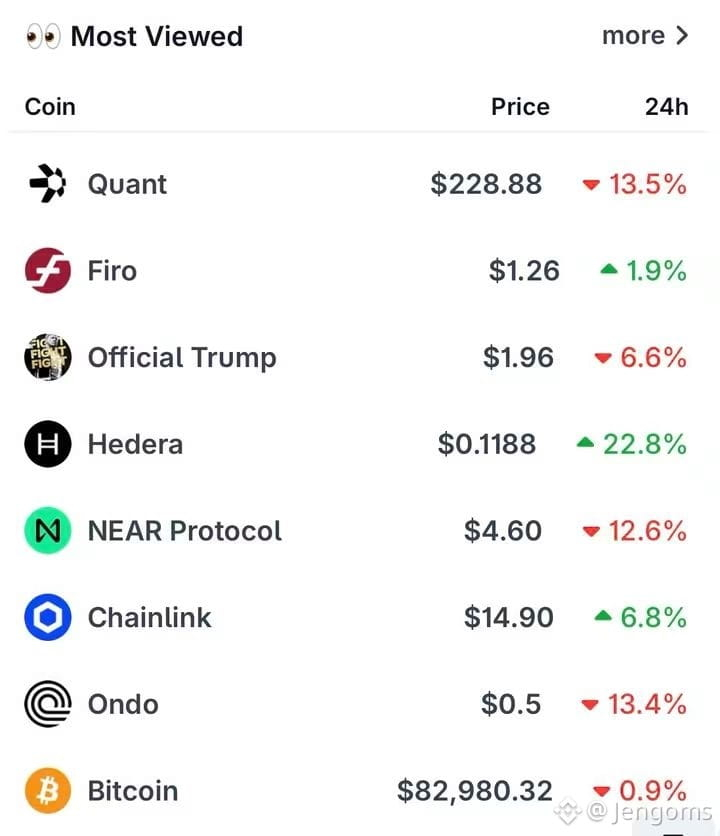
🚨 BREAKING: Quant just smashed through $300!
QNT has gained nearly 500% and returned above $300 for the first time since 2021. But this rally didn’t appear out of nowhere.
The Clearing House - one of the most important payment infrastructure companies in the United States—officially selected Quant’s technology for its On-Chain Money Initiative.
The project is designed to help financial institutions clear and settle tokenized bank deposits while connecting blockchain activity with traditional payment networks such as RTP and CHIPS.
Why is this so significant?
The Clearing House is owned by 25 of America’s largest financial institutions and processes more than $2 trillion in payments every day. Quant could now become part of the infrastructure connecting traditional banking with tokenized money.
Combine that news with QNT’s extremely limited circulating supply, rising trading volume, and a breakout from an accumulation period that lasted around 1,500 days - and the explosive move starts to make sense.
But is this only the beginning? Could QNT reclaim its previous all-time high—and eventually reach $1,000?
I posted my complete Quant analysis, price targets, and personal exit strategy on YouTube. The link is in the comments below. 👇
#Quant #Crypto_Jobs🎯
🚨 BREAKING: Quant just smashed through $300!
QNT has gained nearly 500% and returned above $300 for the first time since 2021. But this rally didn’t appear out of nowhere.
The Clearing House - one of the most important payment infrastructure companies in the United States—officially selected Quant’s technology for its On-Chain Money Initiative.
The project is designed to help financial institutions clear and settle tokenized bank deposits while connecting blockchain activity with traditional payment networks such as RTP and CHIPS.
Why is this so significant?
The Clearing House is owned by 25 of America’s largest financial institutions and processes more than $2 trillion in payments every day. Quant could now become part of the infrastructure connecting traditional banking with tokenized money.
Combine that news with QNT’s extremely limited circulating supply, rising trading volume, and a breakout from an accumulation period that lasted around 1,500 days - and the explosive move starts to make sense.
But is this only the beginning? Could QNT reclaim its previous all-time high—and eventually reach $1,000?
I posted my complete Quant analysis, price targets, and personal exit strategy on YouTube. The link is in the comments below. 👇
#Quant #Crypto_Jobs🎯
QNT has gained nearly 500% and returned above $300 for the first time since 2021. But this rally didn’t appear out of nowhere.
The Clearing House - one of the most important payment infrastructure companies in the United States—officially selected Quant’s technology for its On-Chain Money Initiative.
The project is designed to help financial institutions clear and settle tokenized bank deposits while connecting blockchain activity with traditional payment networks such as RTP and CHIPS.
Why is this so significant?
The Clearing House is owned by 25 of America’s largest financial institutions and processes more than $2 trillion in payments every day. Quant could now become part of the infrastructure connecting traditional banking with tokenized money.
Combine that news with QNT’s extremely limited circulating supply, rising trading volume, and a breakout from an accumulation period that lasted around 1,500 days - and the explosive move starts to make sense.
But is this only the beginning? Could QNT reclaim its previous all-time high—and eventually reach $1,000?
I posted my complete Quant analysis, price targets, and personal exit strategy on YouTube. The link is in the comments below. 👇
#Quant #Crypto_Jobs🎯
204
·
--
$SOL
{spot}(SOLUSDT)
💰 Nasdaq-listed DeFi Development Corp. added 47,706 SOL since Sept. 21, growing its Solana treasury about 10% in six weeks to roughly 2.54M SOL and equivalents. #SolanaStrong #OpenAIDelaysGPT6.1OverSafetyIssues #ChainlinkLaunchesCCIP2WithEnterpriseVerification #news_update
$SOL
💰 Nasdaq-listed DeFi Development Corp. added 47,706 SOL since Sept. 21, growing its Solana treasury about 10% in six weeks to roughly 2.54M SOL and equivalents. #SolanaStrong #OpenAIDelaysGPT6.1OverSafetyIssues #ChainlinkLaunchesCCIP2WithEnterpriseVerification #news_update
💰 Nasdaq-listed DeFi Development Corp. added 47,706 SOL since Sept. 21, growing its Solana treasury about 10% in six weeks to roughly 2.54M SOL and equivalents. #SolanaStrong #OpenAIDelaysGPT6.1OverSafetyIssues #ChainlinkLaunchesCCIP2WithEnterpriseVerification #news_update
46
·
--
NEW: Nvidia just made two huge moves in one day. 🔥
🛡️ Launched a new AI agent safety platform to contain rogue or misbehaving agents
💰 Added $150B to its share buyback program, bringing remaining authorization to $235B
AI safety + massive capital return. $NVDAB
{spot}(NVDABUSDT)
#ChainlinkLaunchesCCIP2WithEnterpriseVerification #newscrypto #QNTFallsOver40%FromMorningHigh #MiningCompanies #NVİDA
NEW: Nvidia just made two huge moves in one day. 🔥
🛡️ Launched a new AI agent safety platform to contain rogue or misbehaving agents
💰 Added $150B to its share buyback program, bringing remaining authorization to $235B
AI safety + massive capital return. $NVDAB
#ChainlinkLaunchesCCIP2WithEnterpriseVerification #newscrypto #QNTFallsOver40%FromMorningHigh #MiningCompanies #NVİDA
🛡️ Launched a new AI agent safety platform to contain rogue or misbehaving agents
💰 Added $150B to its share buyback program, bringing remaining authorization to $235B
AI safety + massive capital return. $NVDAB
#ChainlinkLaunchesCCIP2WithEnterpriseVerification #newscrypto #QNTFallsOver40%FromMorningHigh #MiningCompanies #NVİDA
74
·
--
💹🏦 Oracle is integrating with Swift's blockchain ledger to host Swift commitment contracts and bridge tokenized deposit flows to banks' existing ISO 20022 payment processing via Oracle Banking Payments.
💹🏦 Oracle is integrating with Swift's blockchain ledger to host Swift commitment contracts and bridge tokenized deposit flows to banks' existing ISO 20022 payment processing via Oracle Banking Payments.

68
·
--
JUST IN: Chainlink has launched CCIP 2.0, a cross-chain transfer system that allows companies to add their own security verifiers instead of relying on a single verification layer.
The change is aimed at a major weakness identified in the $292 million Kelp DAO bridge hack.
More independent verification could improve confidence in cross-chain infrastructure, but the practical test will be how widely projects adopt the added security model.#USDTAdds845900HoldersInPast7Days #ChainlinkLaunchesCCIP2WithEnterpriseVerification #cz判罚
JUST IN: Chainlink has launched CCIP 2.0, a cross-chain transfer system that allows companies to add their own security verifiers instead of relying on a single verification layer.
The change is aimed at a major weakness identified in the $292 million Kelp DAO bridge hack.
More independent verification could improve confidence in cross-chain infrastructure, but the practical test will be how widely projects adopt the added security model.#USDTAdds845900HoldersInPast7Days #ChainlinkLaunchesCCIP2WithEnterpriseVerification #cz判罚
The change is aimed at a major weakness identified in the $292 million Kelp DAO bridge hack.
More independent verification could improve confidence in cross-chain infrastructure, but the practical test will be how widely projects adopt the added security model.#USDTAdds845900HoldersInPast7Days #ChainlinkLaunchesCCIP2WithEnterpriseVerification #cz判罚

7
·
--
LATEST: ⚡ Ondo Perps has launched spot trading for 12 tokenized stocks and ETFs, which traders can use as collateral to open short perpetual positions. #ChainlinkLaunchesCCIP2WithEnterpriseVerification #USDTAdds845900HoldersInPast7Days #KospiFalls2.7%SamsungSKHynixDropOver5% #BTC☀️ #dailyearnings $ONDO
{spot}(ONDOUSDT)
LATEST: ⚡ Ondo Perps has launched spot trading for 12 tokenized stocks and ETFs, which traders can use as collateral to open short perpetual positions. #ChainlinkLaunchesCCIP2WithEnterpriseVerification #USDTAdds845900HoldersInPast7Days #KospiFalls2.7%SamsungSKHynixDropOver5% #BTC☀️ #dailyearnings $ONDO
6
Connectez-vous pour découvrir plus de contenu
Rejoignez la communauté mondiale des adeptes de cryptomonnaies sur Binance Square
⚡️ Suviez les dernières informations importantes sur les cryptomonnaies.
💬 Jugé digne de confiance par la plus grande plateforme d’échange de cryptomonnaies au monde.
👍 Découvrez les connaissances que partagent les créateurs vérifiés.
Adresse e-mail/Nº de téléphone
Sujets d’actualité
BitcoinClears$85200
12,979 vues
215 mentions
We got the move, and $BTC is standing exactly where we were before the data. That’s what actual patience for a trade looks like.
The data came in mixed but with some important numbers. ADP Non-Farm Employment Change came at 90K vs 73K forecast, while Core PCE came in at 0.2% vs 0.3% expected. Final GDP was also stronger at 2.2% vs 1.5% forecast, while Personal Spending came in at 0.9% vs 0.8% expected. At the same time, Personal Income missed at 0.2% vs 0.5% forecast.
BTC initially surged to $85,600 and is now back where it needs to be. I’m still looking toward the lower ranges at $82,759 and the $80,000 liquidity, because the overhead liquidity is done and dusted.
We had a live session during the data, and during that session we saw the market at $83,800, then $85,600, and then back toward $83,000 and we still didn’t enter a trade.
That’s what patience is.
We can’t force an entry when the market has no clear direction. The same range is still in focus, and we’ll wait for the market to give us the setup.
Let me know, guys, how was the session? And should we have more regular sessions with our respected members so we can have proper discussions regarding the market?
#BitcoinClears$85200 #AltcoinSeasonIndexHoldsAbove60For5Days #USADPAdds90000JobsInSeptember #BitcoinSlipsBelow$84000 #SECToClarifyOnChainFundraisingRules
Crypto_LUX
·26 mentions J’aime
·19.7k vues
AltcoinSeasonIndexHoldsAbove60For5Days
62,865 vues
1,191 mentions
USADPAdds90000JobsInSeptember
29,302 vues
669 mentions