

Afnova Avian
19.6k Publications

Afnova Avian
 Compte Square Vérifié+
Signaler
Bloquer l’utilisateur
Empowering the future through blockchain innovation #CryptoGirl #BinanceLady X:Afnova786
Ouvert au trading
Trade régulièrement
3.1 an(s)
47 Suivis
45.7K+ Abonnés
36.3K+ J’aime
Publications
Portefeuille
Tous
Citations
Vidéos
Direct

·
--
The Real Difference: Haedal Moves With Rates
The interesting part of Haedal isn’t the deposit. It’s what happens after.
When I first looked at the Haedal Lending Vault on $SUI the “one deposit, multiple lending markets” part sounded useful.
But the part that actually caught my attention was the way the vault handles changing rates.
Normally, if you lend across different markets, you have to keep checking which venue has better conditions, move funds yourself, pay transaction costs, and repeat the process when incentives change.
That becomes annoying very quickly.
Haedal takes a different approach.
The vault can reallocate positions based on things like available liquidity, market conditions and incentive intensity.
So instead of the user constantly asking:
“Where should my capital be right now?”
the strategy is designed to handle that allocation process.
And the other pieces start making more sense from there.
Rewards can be claimed and reinvested automatically, which removes another manual step. The structure is also curator-driven, with the curator visible rather than hiding the allocation decisions behind a black box.
I also like the idea of diversification underneath the vault. Capital isn't simply tied to one lending venue, which changes the way I think about a lending strategy.
For me, the bigger idea here is simple:
DeFi doesn't always need another place to deposit. Sometimes it needs better capital management after the deposit.
That is the part of Haedal I’m watching more closely.
Not financial advice.
$HAEDAL
{future}(HAEDALUSDT)
#Haedal @HaedalProtocol
The Real Difference: Haedal Moves With Rates
The interesting part of Haedal isn’t the deposit. It’s what happens after.
When I first looked at the Haedal Lending Vault on $SUI the “one deposit, multiple lending markets” part sounded useful.
But the part that actually caught my attention was the way the vault handles changing rates.
Normally, if you lend across different markets, you have to keep checking which venue has better conditions, move funds yourself, pay transaction costs, and repeat the process when incentives change.
That becomes annoying very quickly.
Haedal takes a different approach.
The vault can reallocate positions based on things like available liquidity, market conditions and incentive intensity.
So instead of the user constantly asking:
“Where should my capital be right now?”
the strategy is designed to handle that allocation process.
And the other pieces start making more sense from there.
Rewards can be claimed and reinvested automatically, which removes another manual step. The structure is also curator-driven, with the curator visible rather than hiding the allocation decisions behind a black box.
I also like the idea of diversification underneath the vault. Capital isn't simply tied to one lending venue, which changes the way I think about a lending strategy.
For me, the bigger idea here is simple:
DeFi doesn't always need another place to deposit. Sometimes it needs better capital management after the deposit.
That is the part of Haedal I’m watching more closely.
Not financial advice.
$HAEDAL
#Haedal @Haedal Protocol
The interesting part of Haedal isn’t the deposit. It’s what happens after.
When I first looked at the Haedal Lending Vault on $SUI the “one deposit, multiple lending markets” part sounded useful.
But the part that actually caught my attention was the way the vault handles changing rates.
Normally, if you lend across different markets, you have to keep checking which venue has better conditions, move funds yourself, pay transaction costs, and repeat the process when incentives change.
That becomes annoying very quickly.
Haedal takes a different approach.
The vault can reallocate positions based on things like available liquidity, market conditions and incentive intensity.
So instead of the user constantly asking:
“Where should my capital be right now?”
the strategy is designed to handle that allocation process.
And the other pieces start making more sense from there.
Rewards can be claimed and reinvested automatically, which removes another manual step. The structure is also curator-driven, with the curator visible rather than hiding the allocation decisions behind a black box.
I also like the idea of diversification underneath the vault. Capital isn't simply tied to one lending venue, which changes the way I think about a lending strategy.
For me, the bigger idea here is simple:
DeFi doesn't always need another place to deposit. Sometimes it needs better capital management after the deposit.
That is the part of Haedal I’m watching more closely.
Not financial advice.
$HAEDAL
#Haedal @Haedal Protocol

18
20
758
·
--
😴 Good Night Fam 😴
Grab $BTC in Reward and Share With Others 😍
{future}(BTCUSDT)
😴 Good Night Fam 😴
Grab $BTC in Reward and Share With Others 😍
Grab $BTC in Reward and Share With Others 😍

678
3
46
678
·
--
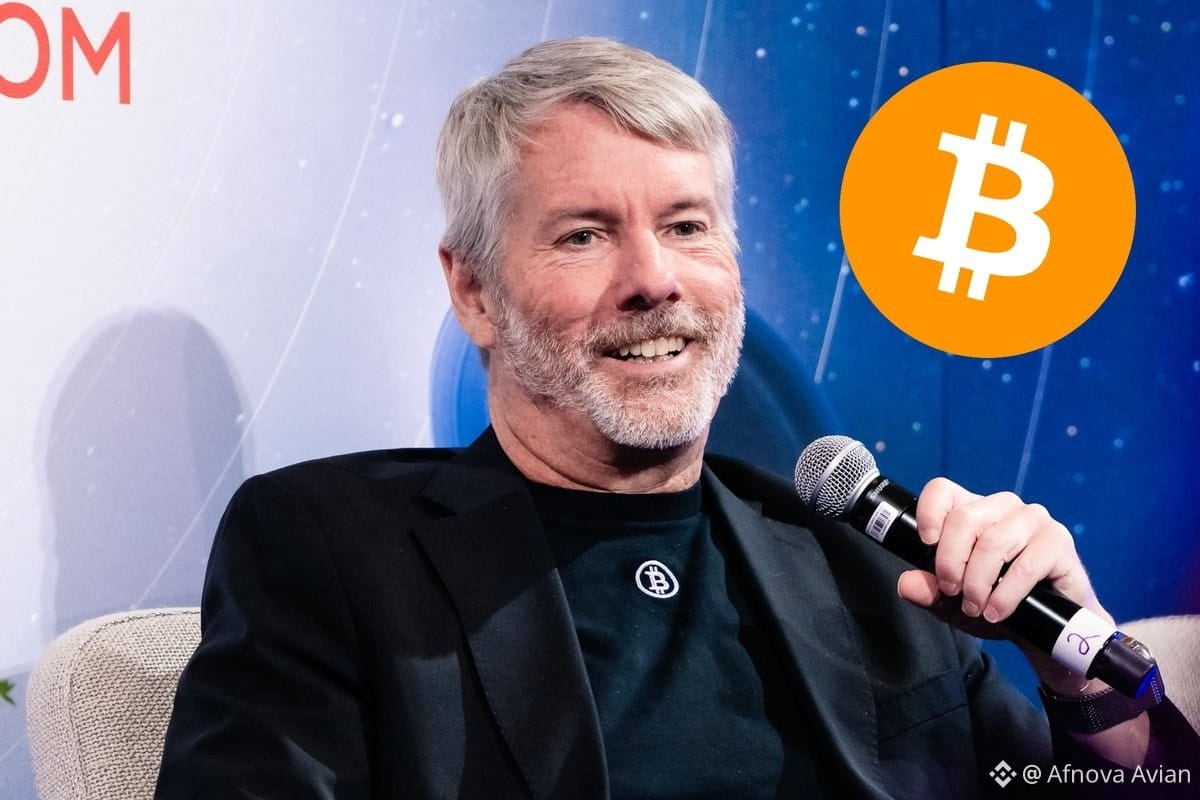
Strategy and Strive Add 2,305 Bitcoin to Holdings
Corporate Bitcoin buying is picking up again.
Strategy just added 950 BTC for $75.7M, bringing its total holdings to 846,000 BTC.
Strive bought another 1,355 BTC for $107.7M, taking its stash to 26,355 BTC.
Together, that’s 2,305 BTC worth about $183.4M based on the companies’ disclosed purchase prices.
What’s interesting is the scale: Strategy’s purchase barely moves its massive treasury, while Strive’s latest buy increased its holdings by roughly 5.4%.
And Bitcoin is currently trading around the $85K area, near its highest level since January, adding another layer to the story.
Corporate Bitcoin accumulation clearly remains an active trend. The bigger question is how long this demand can continue.
$BTC
{future}(BTCUSDT)
#SaylorHintsStrategyBitcoinBuy
Strategy and Strive Add 2,305 Bitcoin to Holdings
Corporate Bitcoin buying is picking up again.
Strategy just added 950 BTC for $75.7M, bringing its total holdings to 846,000 BTC.
Strive bought another 1,355 BTC for $107.7M, taking its stash to 26,355 BTC.
Together, that’s 2,305 BTC worth about $183.4M based on the companies’ disclosed purchase prices.
What’s interesting is the scale: Strategy’s purchase barely moves its massive treasury, while Strive’s latest buy increased its holdings by roughly 5.4%.
And Bitcoin is currently trading around the $85K area, near its highest level since January, adding another layer to the story.
Corporate Bitcoin accumulation clearly remains an active trend. The bigger question is how long this demand can continue.
$BTC
#SaylorHintsStrategyBitcoinBuy
Corporate Bitcoin buying is picking up again.
Strategy just added 950 BTC for $75.7M, bringing its total holdings to 846,000 BTC.
Strive bought another 1,355 BTC for $107.7M, taking its stash to 26,355 BTC.
Together, that’s 2,305 BTC worth about $183.4M based on the companies’ disclosed purchase prices.
What’s interesting is the scale: Strategy’s purchase barely moves its massive treasury, while Strive’s latest buy increased its holdings by roughly 5.4%.
And Bitcoin is currently trading around the $85K area, near its highest level since January, adding another layer to the story.
Corporate Bitcoin accumulation clearly remains an active trend. The bigger question is how long this demand can continue.
$BTC
#SaylorHintsStrategyBitcoinBuy

2
159
·
--
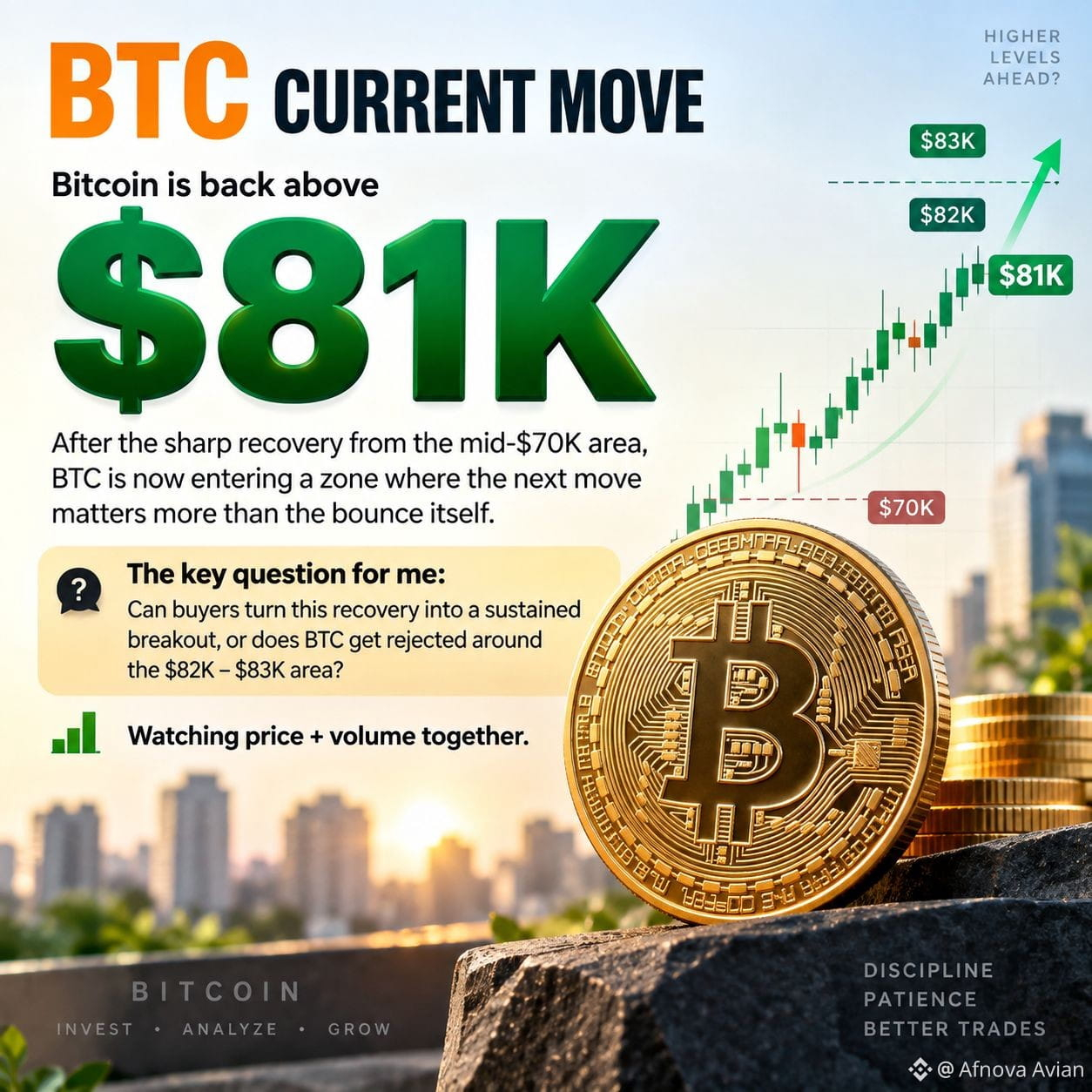
BTC Current Move?
Bitcoin is back above $81K.
After the sharp recovery from the mid-$70K area, BTC is now entering a zone where the next move matters more than the bounce itself.
The key question for me:
Can buyers turn this recovery into a sustained breakout, or does BTC get rejected around the $82K–$83K area?
Watching price + volume together.
$BTC #SaylorHintsStrategyBitcoinBuy
{future}(BTCUSDT)
BTC Current Move?
Bitcoin is back above $81K.
After the sharp recovery from the mid-$70K area, BTC is now entering a zone where the next move matters more than the bounce itself.
The key question for me:
Can buyers turn this recovery into a sustained breakout, or does BTC get rejected around the $82K–$83K area?
Watching price + volume together.
$BTC #SaylorHintsStrategyBitcoinBuy
Bitcoin is back above $81K.
After the sharp recovery from the mid-$70K area, BTC is now entering a zone where the next move matters more than the bounce itself.
The key question for me:
Can buyers turn this recovery into a sustained breakout, or does BTC get rejected around the $82K–$83K area?
Watching price + volume together.
$BTC #SaylorHintsStrategyBitcoinBuy
2
125
·
--
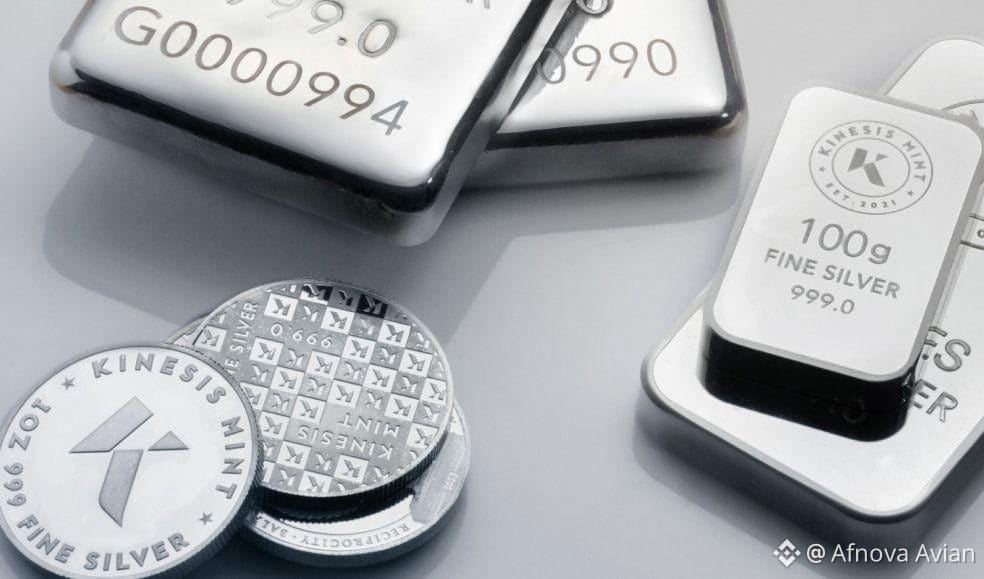
Theo’s thSLVR: Silver Meets On-Chain Yield
RWA is starting to move beyond simply putting real-world assets on-chain.
Theo is pushing that idea further with thSLVR, a yield-bearing tokenized silver product backed by more than $40 million in active silver leases, according to CoinDesk.
The interesting part is that holders aren’t only getting exposure to the price of silver.
They can also receive a share of the income generated when the underlying silver is leased to institutional borrowers.
That changes the RWA narrative.
Instead of just tokenizing an asset and tracking its price, the goal is now to bring the cash flow generated by that asset on-chain as well.
And silver could be an interesting market for this, especially with ongoing supply constraints and existing demand for silver leasing.
The broader RWA sector is also expanding beyond U.S. Treasuries and gold, with tokenized commodities now covering around $4.9 billion across roughly 130 products.
For now, thSLVR is limited to institutional and whitelisted investors. The next big test will be whether Theo can expand liquidity and eventually reach a much wider user base.
RWA is evolving: from tokenizing assets to tokenizing the yield they generate.
#RWAS #yield #Onchain
Theo’s thSLVR: Silver Meets On-Chain Yield
RWA is starting to move beyond simply putting real-world assets on-chain.
Theo is pushing that idea further with thSLVR, a yield-bearing tokenized silver product backed by more than $40 million in active silver leases, according to CoinDesk.
The interesting part is that holders aren’t only getting exposure to the price of silver.
They can also receive a share of the income generated when the underlying silver is leased to institutional borrowers.
That changes the RWA narrative.
Instead of just tokenizing an asset and tracking its price, the goal is now to bring the cash flow generated by that asset on-chain as well.
And silver could be an interesting market for this, especially with ongoing supply constraints and existing demand for silver leasing.
The broader RWA sector is also expanding beyond U.S. Treasuries and gold, with tokenized commodities now covering around $4.9 billion across roughly 130 products.
For now, thSLVR is limited to institutional and whitelisted investors. The next big test will be whether Theo can expand liquidity and eventually reach a much wider user base.
RWA is evolving: from tokenizing assets to tokenizing the yield they generate.
#RWAS #yield #Onchain
RWA is starting to move beyond simply putting real-world assets on-chain.
Theo is pushing that idea further with thSLVR, a yield-bearing tokenized silver product backed by more than $40 million in active silver leases, according to CoinDesk.
The interesting part is that holders aren’t only getting exposure to the price of silver.
They can also receive a share of the income generated when the underlying silver is leased to institutional borrowers.
That changes the RWA narrative.
Instead of just tokenizing an asset and tracking its price, the goal is now to bring the cash flow generated by that asset on-chain as well.
And silver could be an interesting market for this, especially with ongoing supply constraints and existing demand for silver leasing.
The broader RWA sector is also expanding beyond U.S. Treasuries and gold, with tokenized commodities now covering around $4.9 billion across roughly 130 products.
For now, thSLVR is limited to institutional and whitelisted investors. The next big test will be whether Theo can expand liquidity and eventually reach a much wider user base.
RWA is evolving: from tokenizing assets to tokenizing the yield they generate.
#RWAS #yield #Onchain
1
295
·
--
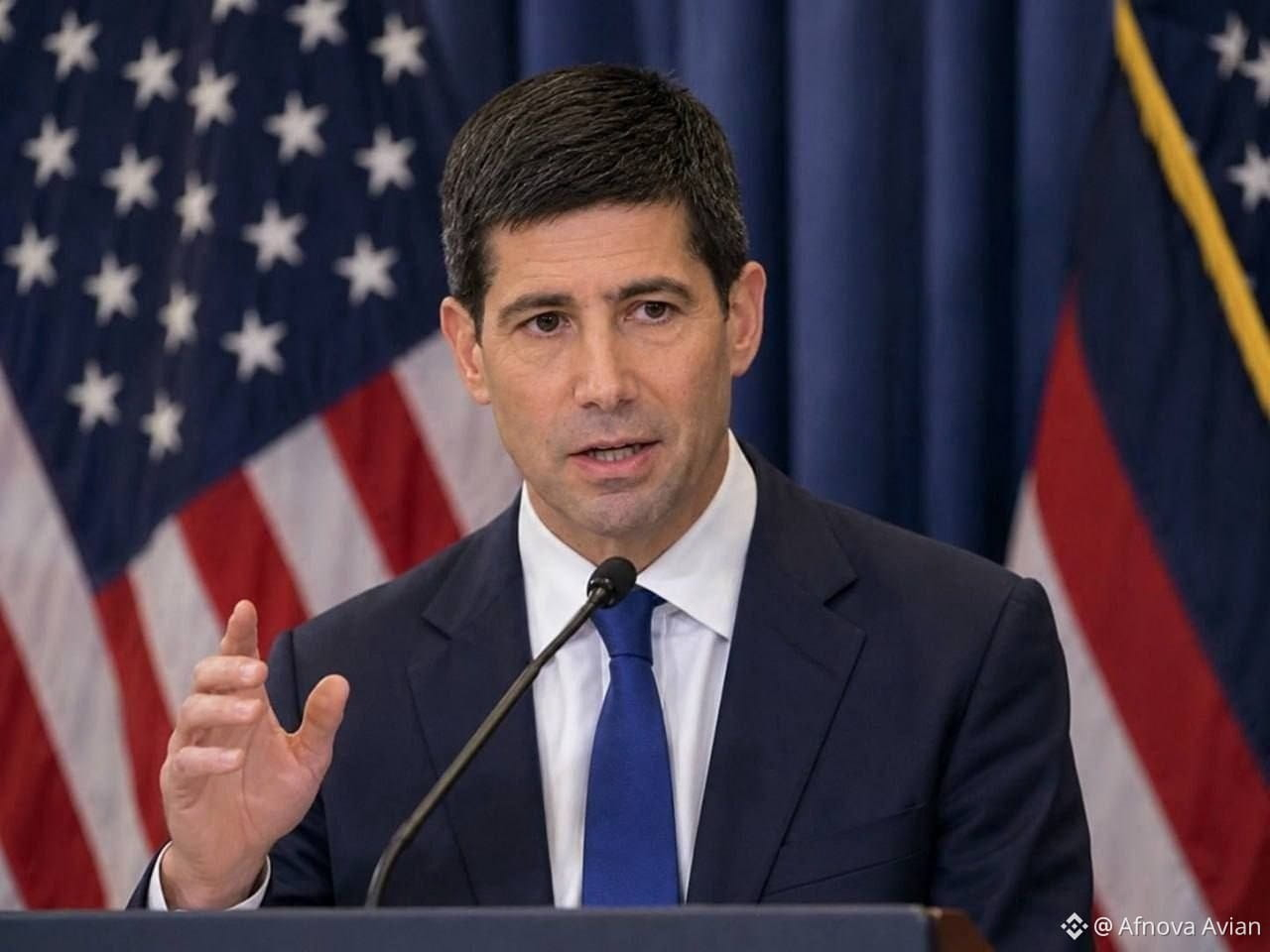
Federal Reserve Raises Rates by 25 Basis Points
The Federal Reserve has increased interest rates by 0.25%, signaling a tighter monetary policy stance.
Markets will now be watching closely for the Fed’s next moves, especially for their impact on Bitcoin, crypto, stocks, and the U.S. dollar.
The key question now: How will markets react to the rate hike?
#FedralReserve
Federal Reserve Raises Rates by 25 Basis Points
The Federal Reserve has increased interest rates by 0.25%, signaling a tighter monetary policy stance.
Markets will now be watching closely for the Fed’s next moves, especially for their impact on Bitcoin, crypto, stocks, and the U.S. dollar.
The key question now: How will markets react to the rate hike?
#FedralReserve
The Federal Reserve has increased interest rates by 0.25%, signaling a tighter monetary policy stance.
Markets will now be watching closely for the Fed’s next moves, especially for their impact on Bitcoin, crypto, stocks, and the U.S. dollar.
The key question now: How will markets react to the rate hike?
#FedralReserve
123
·
--
😴Goodnight Fam😴
Grab $BTC and Share With Others 🤩😍
{future}(BTCUSDT)
😴Goodnight Fam😴
Grab $BTC and Share With Others 🤩😍
Grab $BTC and Share With Others 🤩😍

1.2k
5
84
1.2k
·
--
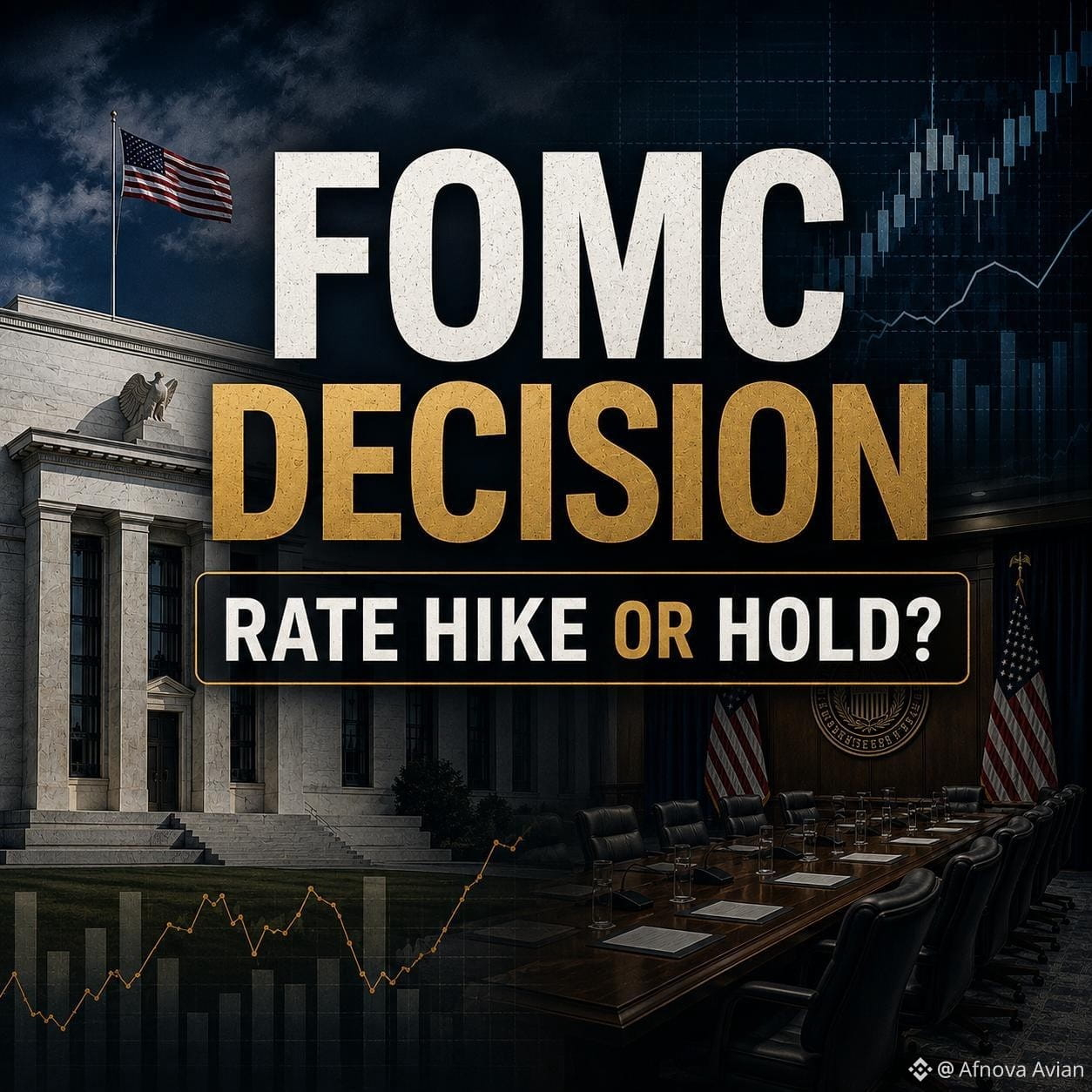
FOMC DECISION TODAY: RATE HIKE OR HOLD?
A major day for global markets is finally here.
The Federal Reserve is wrapping up its September meeting today, and traders are watching closely for one big question:
Will the Fed raise rates by 25 basis points, or surprise the market with a hold?
What is the market expecting?
Current market pricing is pointing strongly toward a 25 bps rate hike, with expectations around 93%.
That would move the Fed funds target range from 3.50%–3.75% to 3.75%–4.00%.
But the rate decision itself may not be the biggest story…
Why is the Fed under pressure?
1️⃣ Inflation remains sticky
Inflation is still above the Fed’s 2% target, while recent economic data has kept inflation concerns alive.
2️⃣ Oil prices are adding pressure
Higher crude oil prices could create another source of inflation, especially if elevated prices persist.
3️⃣ The Fed’s future guidance matters
Markets will be listening closely to Chair Kevin Warsh for clues about what comes next.
What could this mean for markets?
Bitcoin, Gold, stocks, the U.S. Dollar and Treasury yields could all see significant volatility around the announcement.
And traders should remember:
The rate decision is only part of the story.
The Dot Plot, the Fed’s economic projections and the Chair’s press conference could give markets a much clearer signal about the path ahead.
⏰ FOMC Decision: 2:00 PM ET
🎙️ Press Conference: 2:30 PM ET
🇵🇰 Pakistan Time: 11:00 PM / 11:30 PM PKT
Expect volatility. Avoid blindly chasing the first move.
The real question tonight isn't just “Hike or Hold?”
It’s:
👉 What will the Fed signal about its next moves?
What are you watching most closely Bitcoin, Gold, the Dollar, or Treasury yields? 👇
#FedRateWatch #BitcoinFalls4%
FOMC DECISION TODAY: RATE HIKE OR HOLD?
A major day for global markets is finally here.
The Federal Reserve is wrapping up its September meeting today, and traders are watching closely for one big question:
Will the Fed raise rates by 25 basis points, or surprise the market with a hold?
What is the market expecting?
Current market pricing is pointing strongly toward a 25 bps rate hike, with expectations around 93%.
That would move the Fed funds target range from 3.50%–3.75% to 3.75%–4.00%.
But the rate decision itself may not be the biggest story…
Why is the Fed under pressure?
1️⃣ Inflation remains sticky
Inflation is still above the Fed’s 2% target, while recent economic data has kept inflation concerns alive.
2️⃣ Oil prices are adding pressure
Higher crude oil prices could create another source of inflation, especially if elevated prices persist.
3️⃣ The Fed’s future guidance matters
Markets will be listening closely to Chair Kevin Warsh for clues about what comes next.
What could this mean for markets?
Bitcoin, Gold, stocks, the U.S. Dollar and Treasury yields could all see significant volatility around the announcement.
And traders should remember:
The rate decision is only part of the story.
The Dot Plot, the Fed’s economic projections and the Chair’s press conference could give markets a much clearer signal about the path ahead.
⏰ FOMC Decision: 2:00 PM ET
🎙️ Press Conference: 2:30 PM ET
🇵🇰 Pakistan Time: 11:00 PM / 11:30 PM PKT
Expect volatility. Avoid blindly chasing the first move.
The real question tonight isn't just “Hike or Hold?”
It’s:
👉 What will the Fed signal about its next moves?
What are you watching most closely Bitcoin, Gold, the Dollar, or Treasury yields? 👇
#FedRateWatch #BitcoinFalls4%
A major day for global markets is finally here.
The Federal Reserve is wrapping up its September meeting today, and traders are watching closely for one big question:
Will the Fed raise rates by 25 basis points, or surprise the market with a hold?
What is the market expecting?
Current market pricing is pointing strongly toward a 25 bps rate hike, with expectations around 93%.
That would move the Fed funds target range from 3.50%–3.75% to 3.75%–4.00%.
But the rate decision itself may not be the biggest story…
Why is the Fed under pressure?
1️⃣ Inflation remains sticky
Inflation is still above the Fed’s 2% target, while recent economic data has kept inflation concerns alive.
2️⃣ Oil prices are adding pressure
Higher crude oil prices could create another source of inflation, especially if elevated prices persist.
3️⃣ The Fed’s future guidance matters
Markets will be listening closely to Chair Kevin Warsh for clues about what comes next.
What could this mean for markets?
Bitcoin, Gold, stocks, the U.S. Dollar and Treasury yields could all see significant volatility around the announcement.
And traders should remember:
The rate decision is only part of the story.
The Dot Plot, the Fed’s economic projections and the Chair’s press conference could give markets a much clearer signal about the path ahead.
⏰ FOMC Decision: 2:00 PM ET
🎙️ Press Conference: 2:30 PM ET
🇵🇰 Pakistan Time: 11:00 PM / 11:30 PM PKT
Expect volatility. Avoid blindly chasing the first move.
The real question tonight isn't just “Hike or Hold?”
It’s:
👉 What will the Fed signal about its next moves?
What are you watching most closely Bitcoin, Gold, the Dollar, or Treasury yields? 👇
#FedRateWatch #BitcoinFalls4%
3
289
·
--
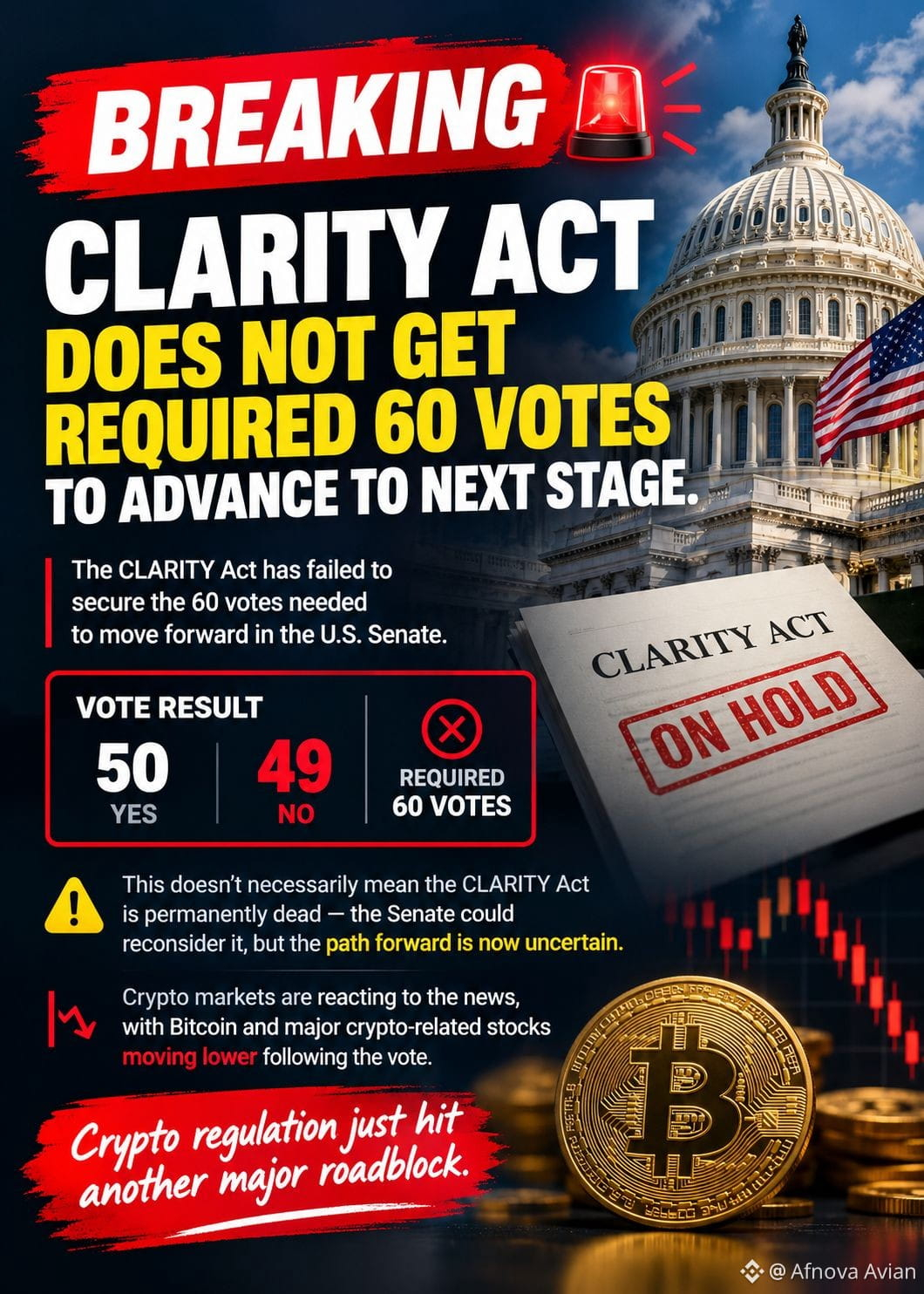
⚠️ CLARITY Act Vote Falls Short in Senate
The CLARITY Act has FAILED to get the 60 votes needed to advance in the U.S. Senate.
The procedural vote ended 50–49, falling short of the required threshold. The bill is now stalled, putting a major piece of U.S. crypto market-structure legislation on hold.
This doesn’t necessarily mean the CLARITY Act is permanently dead the Senate could potentially reconsider it, but the path forward is now uncertain.
Crypto markets are reacting to the news, with Bitcoin and major crypto-related stocks moving lower following the vote.
Crypto regulation just hit another major roadblock.
#CryptoNews #CLARITYActSenateVoteDelayedPastRecess
⚠️ CLARITY Act Vote Falls Short in Senate
The CLARITY Act has FAILED to get the 60 votes needed to advance in the U.S. Senate.
The procedural vote ended 50–49, falling short of the required threshold. The bill is now stalled, putting a major piece of U.S. crypto market-structure legislation on hold.
This doesn’t necessarily mean the CLARITY Act is permanently dead the Senate could potentially reconsider it, but the path forward is now uncertain.
Crypto markets are reacting to the news, with Bitcoin and major crypto-related stocks moving lower following the vote.
Crypto regulation just hit another major roadblock.
#CryptoNews #CLARITYActSenateVoteDelayedPastRecess
The CLARITY Act has FAILED to get the 60 votes needed to advance in the U.S. Senate.
The procedural vote ended 50–49, falling short of the required threshold. The bill is now stalled, putting a major piece of U.S. crypto market-structure legislation on hold.
This doesn’t necessarily mean the CLARITY Act is permanently dead the Senate could potentially reconsider it, but the path forward is now uncertain.
Crypto markets are reacting to the news, with Bitcoin and major crypto-related stocks moving lower following the vote.
Crypto regulation just hit another major roadblock.
#CryptoNews #CLARITYActSenateVoteDelayedPastRecess
1
1
168
·
--
Haussier
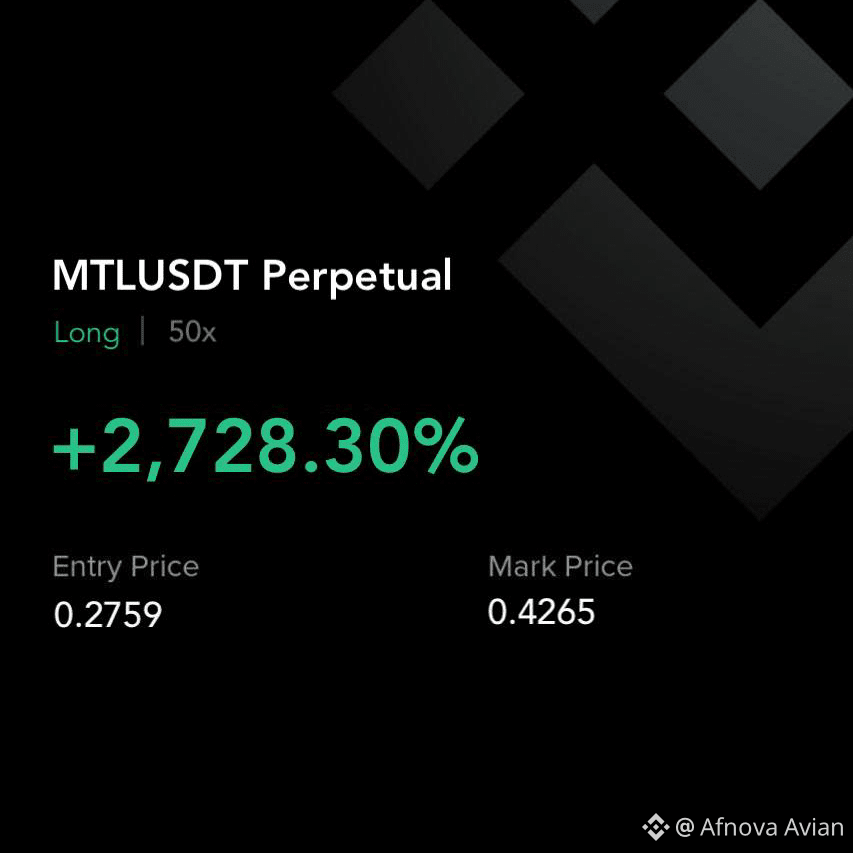
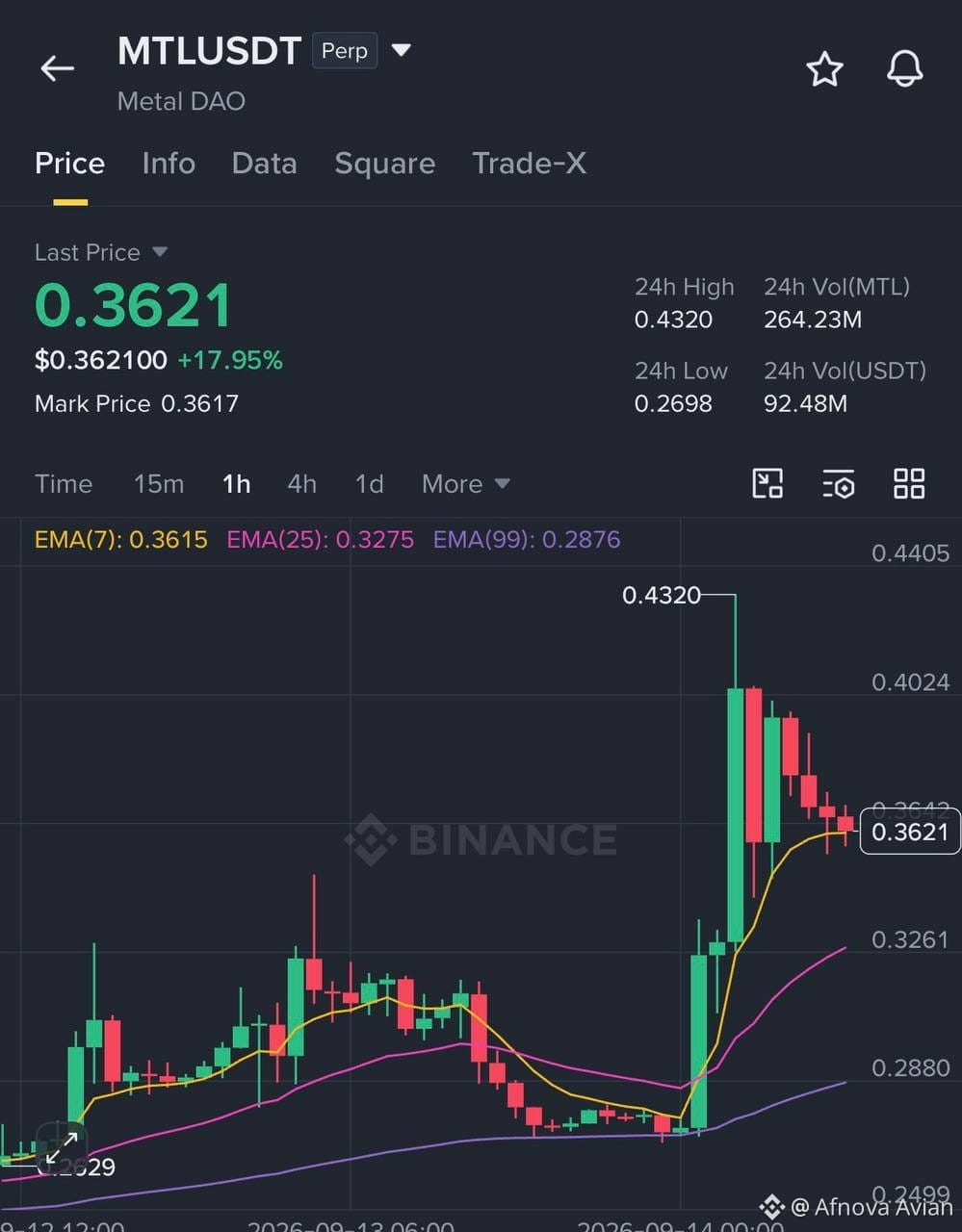
I’m watching $MTL here after that strong breakout. Price is holding around the 0.36 area, and the 1H trend is still looking bullish while it stays above the short-term EMA.
I’m looking for a move back toward 0.385 first, then 0.402–0.432 if momentum picks up again.
Entry: 0.355–0.365
TP1: 0.385
TP2: 0.402
TP3: 0.432
SL: 0.342
If 0.342 breaks cleanly, I’d step aside and wait for a better setup.
$MTL
{future}(MTLUSDT)
I’m watching $MTL here after that strong breakout. Price is holding around the 0.36 area, and the 1H trend is still looking bullish while it stays above the short-term EMA.
I’m looking for a move back toward 0.385 first, then 0.402–0.432 if momentum picks up again.
Entry: 0.355–0.365
TP1: 0.385
TP2: 0.402
TP3: 0.432
SL: 0.342
If 0.342 breaks cleanly, I’d step aside and wait for a better setup.
$MTL
I’m looking for a move back toward 0.385 first, then 0.402–0.432 if momentum picks up again.
Entry: 0.355–0.365
TP1: 0.385
TP2: 0.402
TP3: 0.432
SL: 0.342
If 0.342 breaks cleanly, I’d step aside and wait for a better setup.
$MTL
1
4
371
·
--
Haussier
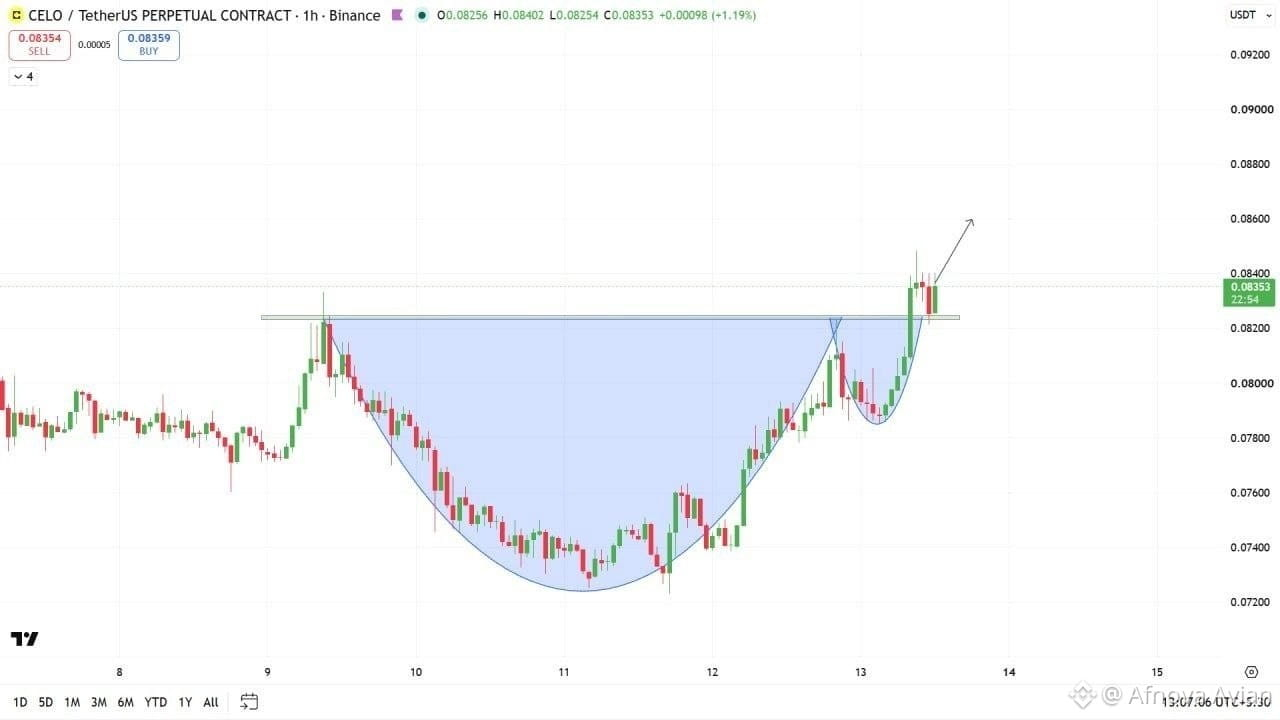
Traders, look at $CELO /USDT. I’m watching this one for a bullish continuation after that successful retest of the breakout zone.
If price holds above 0.0820–0.0825, I’m looking for the next move higher.
Entry: 0.0830–0.0836
TP1: 0.0848
TP2: 0.0860
TP3: 0.0880
SL: 0.0815
The setup looks promising, but I’ll only stay in if the breakout level keeps holding. Trade with proper risk management.
$CELO
{future}(CELOUSDT)
Traders, look at $CELO /USDT. I’m watching this one for a bullish continuation after that successful retest of the breakout zone.
If price holds above 0.0820–0.0825, I’m looking for the next move higher.
Entry: 0.0830–0.0836
TP1: 0.0848
TP2: 0.0860
TP3: 0.0880
SL: 0.0815
The setup looks promising, but I’ll only stay in if the breakout level keeps holding. Trade with proper risk management.
$CELO
If price holds above 0.0820–0.0825, I’m looking for the next move higher.
Entry: 0.0830–0.0836
TP1: 0.0848
TP2: 0.0860
TP3: 0.0880
SL: 0.0815
The setup looks promising, but I’ll only stay in if the breakout level keeps holding. Trade with proper risk management.
$CELO
1
199
·
--
Haussier
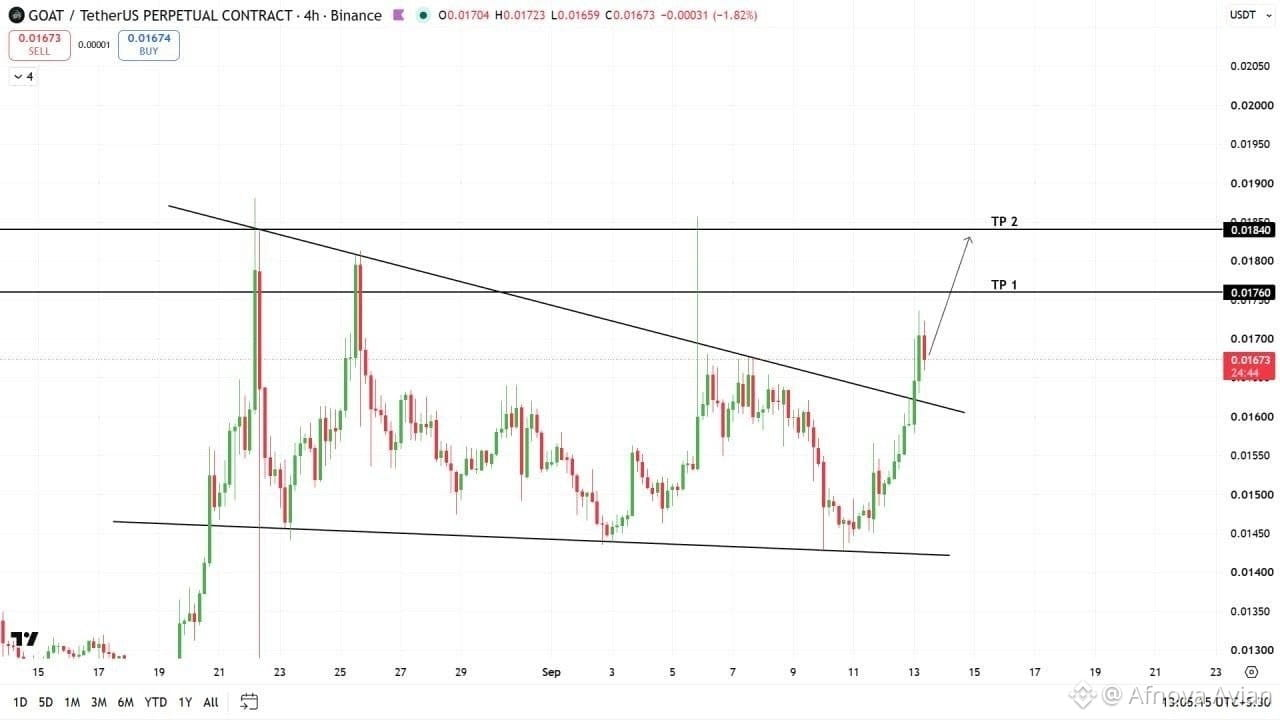
Guys, I’m going to keep an eye on $GOAT /USDT here.
Price has broken above the descending trendline on the 4H chart, and if the breakout holds, I’m expecting a move toward the upper resistance levels.
Entry: 0.0167–0.0169
TP1: 0.01760
TP2: 0.01840
SL: 0.01600
I’m watching for confirmation above the breakout area. If momentum stays strong, those upper targets could come into play soon. Trade with proper risk management.
$GOAT
{future}(GOATUSDT)
Guys, I’m going to keep an eye on $GOAT /USDT here.
Price has broken above the descending trendline on the 4H chart, and if the breakout holds, I’m expecting a move toward the upper resistance levels.
Entry: 0.0167–0.0169
TP1: 0.01760
TP2: 0.01840
SL: 0.01600
I’m watching for confirmation above the breakout area. If momentum stays strong, those upper targets could come into play soon. Trade with proper risk management.
$GOAT
Price has broken above the descending trendline on the 4H chart, and if the breakout holds, I’m expecting a move toward the upper resistance levels.
Entry: 0.0167–0.0169
TP1: 0.01760
TP2: 0.01840
SL: 0.01600
I’m watching for confirmation above the breakout area. If momentum stays strong, those upper targets could come into play soon. Trade with proper risk management.
$GOAT
1
201
·
--
Haussier
POWER BULLISH
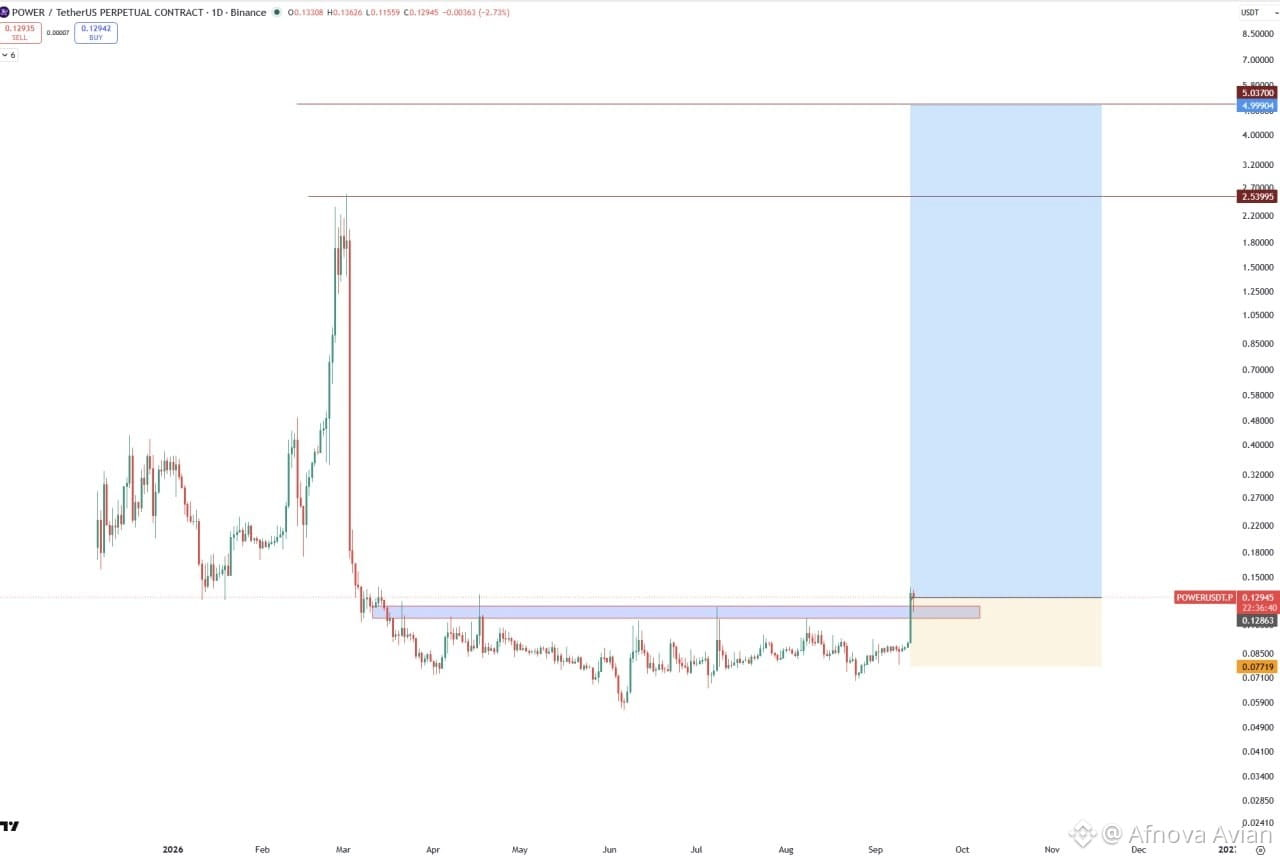
Guys, I’m going to keep a close eye on POWER here because the chart is finally showing a strong breakout from a long accumulation range.
Price has reclaimed the resistance zone around $0.12–$0.13, which is an important level after months of sideways movement.
My setup is:
Entry: $0.12–$0.13
Stop Loss: $0.077
TP1: $2.54
TP2: $5.04
The risk is still high because this is a volatile altcoin, so I wouldn’t chase a huge position after a vertical move. I’d rather see the breakout hold and use the previous resistance as support.
If $POWER keeps building above this zone, the upside could be significant.
This is my chart setup, not financial advice.
$POWER
{future}(POWERUSDT)
POWER BULLISH
Guys, I’m going to keep a close eye on POWER here because the chart is finally showing a strong breakout from a long accumulation range.
Price has reclaimed the resistance zone around $0.12–$0.13, which is an important level after months of sideways movement.
My setup is:
Entry: $0.12–$0.13
Stop Loss: $0.077
TP1: $2.54
TP2: $5.04
The risk is still high because this is a volatile altcoin, so I wouldn’t chase a huge position after a vertical move. I’d rather see the breakout hold and use the previous resistance as support.
If $POWER keeps building above this zone, the upside could be significant.
This is my chart setup, not financial advice.
$POWER
Guys, I’m going to keep a close eye on POWER here because the chart is finally showing a strong breakout from a long accumulation range.
Price has reclaimed the resistance zone around $0.12–$0.13, which is an important level after months of sideways movement.
My setup is:
Entry: $0.12–$0.13
Stop Loss: $0.077
TP1: $2.54
TP2: $5.04
The risk is still high because this is a volatile altcoin, so I wouldn’t chase a huge position after a vertical move. I’d rather see the breakout hold and use the previous resistance as support.
If $POWER keeps building above this zone, the upside could be significant.
This is my chart setup, not financial advice.
$POWER
1
153
·
--
Haussier
$BTC BOTTOM IS IN 👀
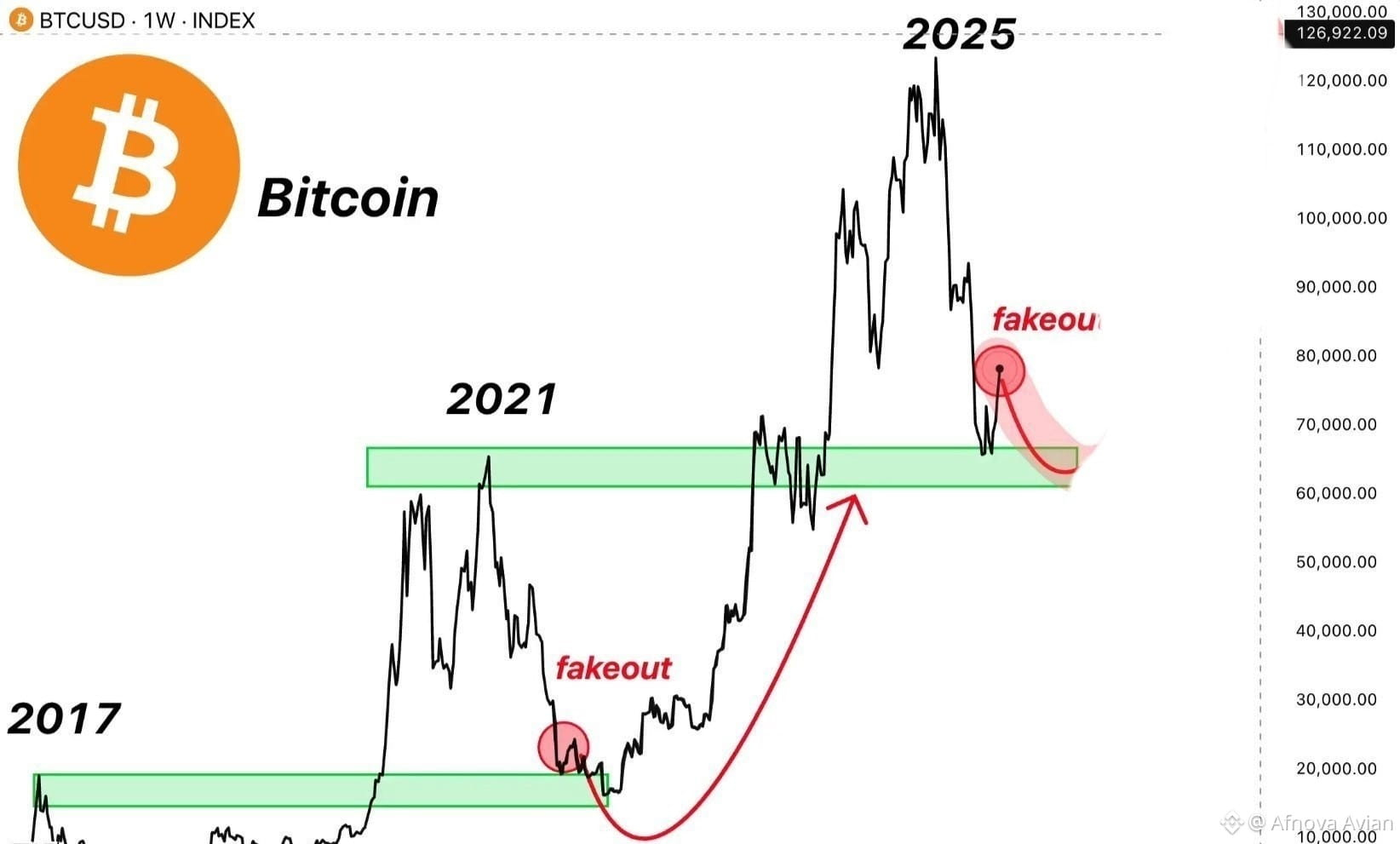
Bitcoin may be setting up for another move that looks surprisingly similar to previous cycles.
If you look back at 2017 and 2021, BTC had a similar pattern: a major breakout, a sharp correction, then a “fakeout” around an important support zone before the next big move higher.
Right now, price is showing a similar structure.
The key area to watch is around $60K–$67K. If this zone continues to hold as support, the current pullback could end up being another shakeout rather than the start of a deeper bear market.
Of course, history doesn’t repeat perfectly but the structure is definitely interesting.
Maybe the real question isn’t “How low can BTC go?”
It’s whether we’re already looking at the bottom before the next major leg up.
$BTC
{future}(BTCUSDT)
$BTC BOTTOM IS IN 👀
Bitcoin may be setting up for another move that looks surprisingly similar to previous cycles.
If you look back at 2017 and 2021, BTC had a similar pattern: a major breakout, a sharp correction, then a “fakeout” around an important support zone before the next big move higher.
Right now, price is showing a similar structure.
The key area to watch is around $60K–$67K. If this zone continues to hold as support, the current pullback could end up being another shakeout rather than the start of a deeper bear market.
Of course, history doesn’t repeat perfectly but the structure is definitely interesting.
Maybe the real question isn’t “How low can BTC go?”
It’s whether we’re already looking at the bottom before the next major leg up.
$BTC
Bitcoin may be setting up for another move that looks surprisingly similar to previous cycles.
If you look back at 2017 and 2021, BTC had a similar pattern: a major breakout, a sharp correction, then a “fakeout” around an important support zone before the next big move higher.
Right now, price is showing a similar structure.
The key area to watch is around $60K–$67K. If this zone continues to hold as support, the current pullback could end up being another shakeout rather than the start of a deeper bear market.
Of course, history doesn’t repeat perfectly but the structure is definitely interesting.
Maybe the real question isn’t “How low can BTC go?”
It’s whether we’re already looking at the bottom before the next major leg up.
$BTC
1
65
·
--
Haussier
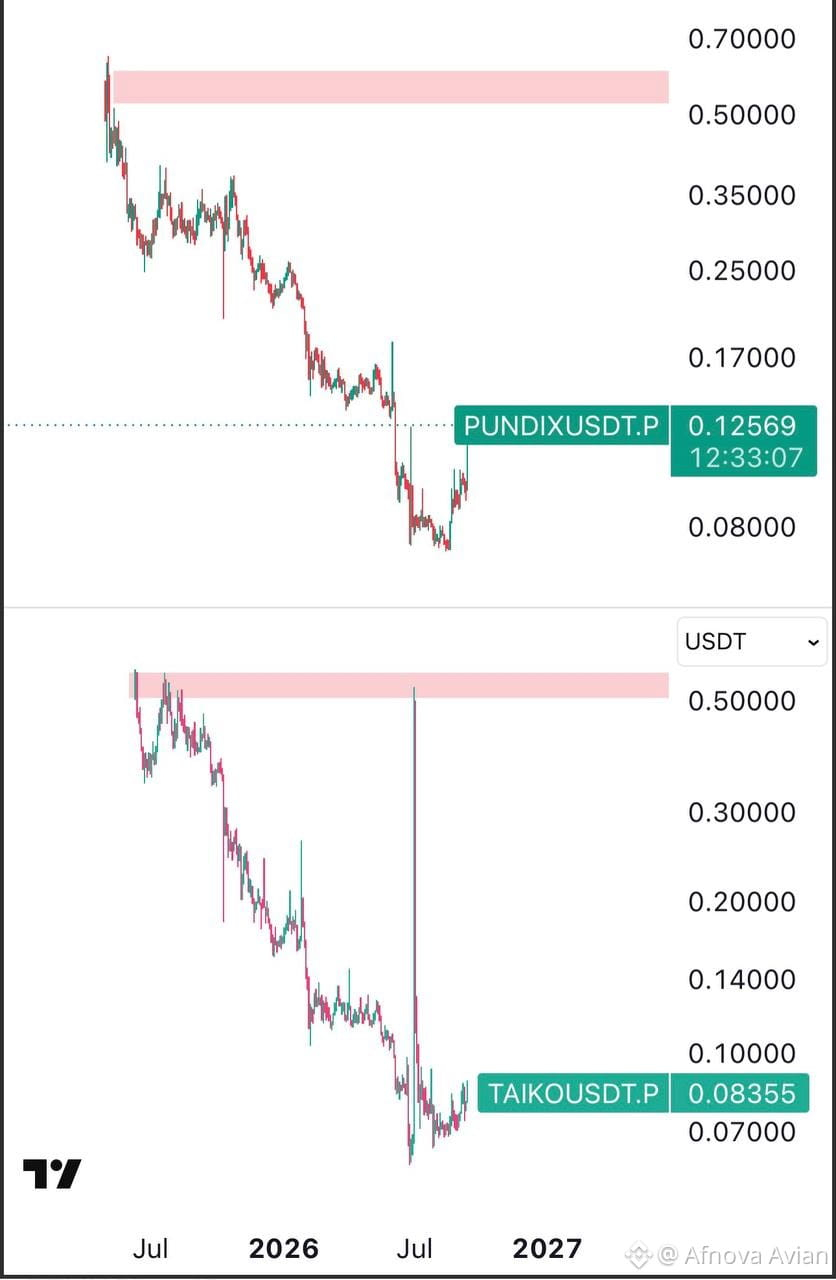
Guys both PUNDIX and TAIKO are currently trading near their lower price ranges after a long bearish trend.
The charts show that both coins have experienced significant declines from the 0.50 area and are now trying to build support around their current levels.
For PUNDIX, the key area to watch is around 0.08–0.13. A stronger recovery could bring higher resistance levels into focus.
TAIKO is also holding near the 0.07–0.08 zone after a major decline. If buyers continue to step in, this area could become an important base for a potential recovery.
Both charts remain high risk while the broader trend is still weak. Confirmation of a reversal is important before expecting a major move upward.
$PUNDIX
{future}(PUNDIXUSDT)
$TAIKO
{future}(TAIKOUSDT)
Guys both PUNDIX and TAIKO are currently trading near their lower price ranges after a long bearish trend.
The charts show that both coins have experienced significant declines from the 0.50 area and are now trying to build support around their current levels.
For PUNDIX, the key area to watch is around 0.08–0.13. A stronger recovery could bring higher resistance levels into focus.
TAIKO is also holding near the 0.07–0.08 zone after a major decline. If buyers continue to step in, this area could become an important base for a potential recovery.
Both charts remain high risk while the broader trend is still weak. Confirmation of a reversal is important before expecting a major move upward.
$PUNDIX
$TAIKO
The charts show that both coins have experienced significant declines from the 0.50 area and are now trying to build support around their current levels.
For PUNDIX, the key area to watch is around 0.08–0.13. A stronger recovery could bring higher resistance levels into focus.
TAIKO is also holding near the 0.07–0.08 zone after a major decline. If buyers continue to step in, this area could become an important base for a potential recovery.
Both charts remain high risk while the broader trend is still weak. Confirmation of a reversal is important before expecting a major move upward.
$PUNDIX
$TAIKO
2
280
·
--
Haussier
$API3 /USDT
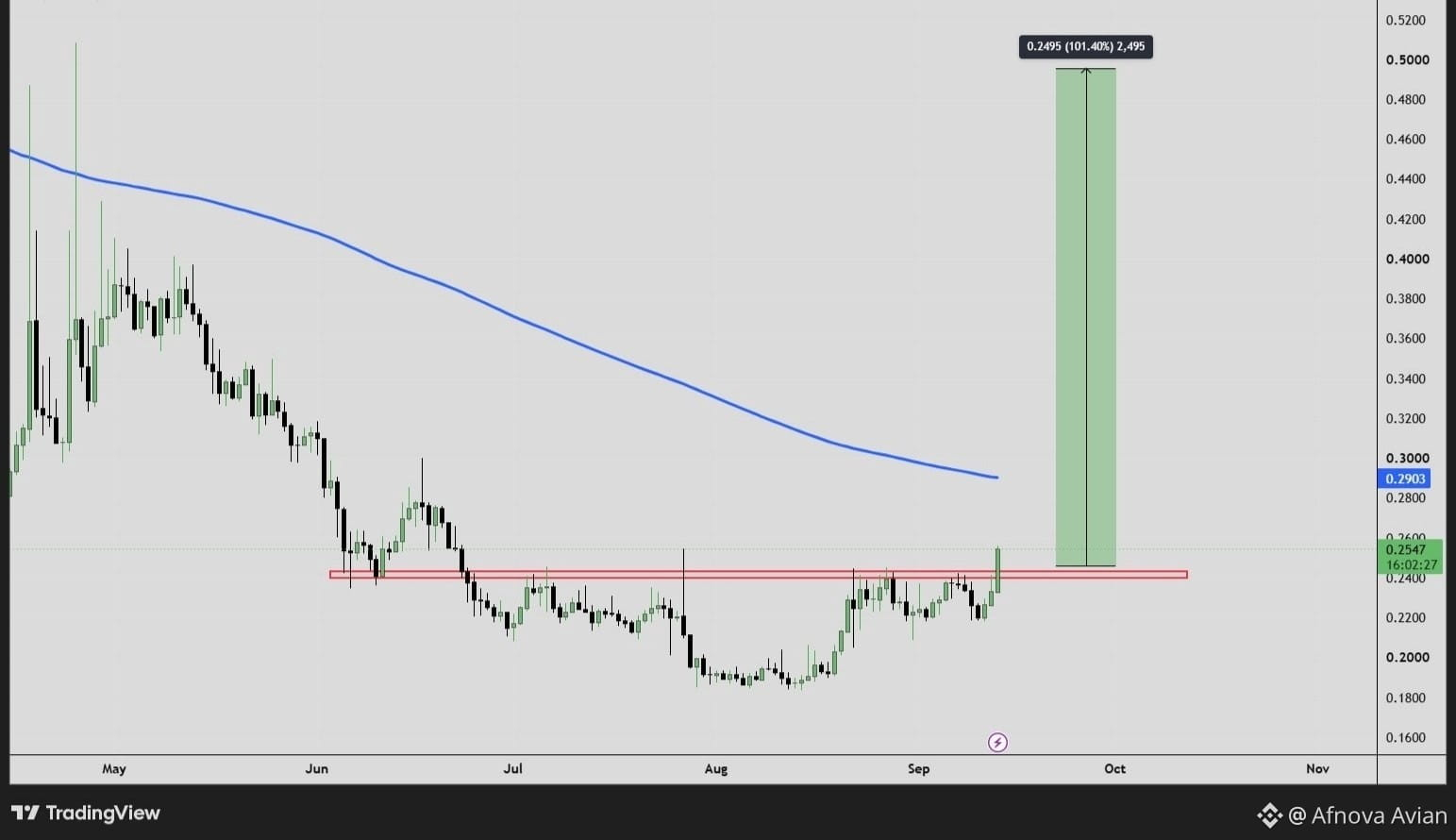
Guys I'm going to hold API3 because its showing signs of strength after building a solid base and reclaiming an important resistance zone around the current price area. A successful hold above this level could trigger a strong bullish move in the coming weeks.
Entry Zone: $0.245 – $0.255
Stop Loss: $0.225
TP1: $0.300
TP2: $0.400
TP3: $0.500
The key is for API3 to hold above the breakout zone and continue building bullish momentum. If the structure remains strong, a major upside move could follow.
Buy and hold with proper risk management.
$API3
{future}(API3USDT)
$API3 /USDT
Guys I'm going to hold API3 because its showing signs of strength after building a solid base and reclaiming an important resistance zone around the current price area. A successful hold above this level could trigger a strong bullish move in the coming weeks.
Entry Zone: $0.245 – $0.255
Stop Loss: $0.225
TP1: $0.300
TP2: $0.400
TP3: $0.500
The key is for API3 to hold above the breakout zone and continue building bullish momentum. If the structure remains strong, a major upside move could follow.
Buy and hold with proper risk management.
$API3
Guys I'm going to hold API3 because its showing signs of strength after building a solid base and reclaiming an important resistance zone around the current price area. A successful hold above this level could trigger a strong bullish move in the coming weeks.
Entry Zone: $0.245 – $0.255
Stop Loss: $0.225
TP1: $0.300
TP2: $0.400
TP3: $0.500
The key is for API3 to hold above the breakout zone and continue building bullish momentum. If the structure remains strong, a major upside move could follow.
Buy and hold with proper risk management.
$API3
277
·
--
Haussier
$STEEM /USDT
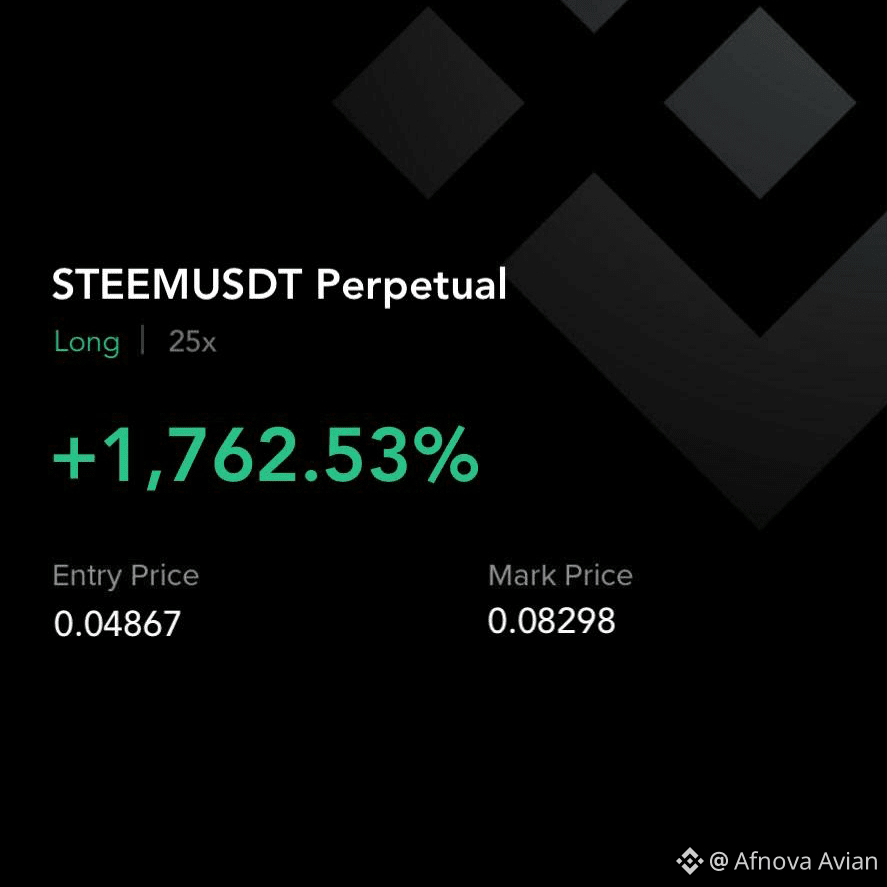
Another strong move from STEEM/USDT.
Profit has reached +1,762.53%, showing an incredible return from this setup.
Congratulations to everyone who caught this move and managed the trade patiently. Strong momentum and proper risk management always make a difference.
Profit: +1,762.53%
$STEEM
{future}(STEEMUSDT)
$STEEM /USDT
Another strong move from STEEM/USDT.
Profit has reached +1,762.53%, showing an incredible return from this setup.
Congratulations to everyone who caught this move and managed the trade patiently. Strong momentum and proper risk management always make a difference.
Profit: +1,762.53%
$STEEM
Another strong move from STEEM/USDT.
Profit has reached +1,762.53%, showing an incredible return from this setup.
Congratulations to everyone who caught this move and managed the trade patiently. Strong momentum and proper risk management always make a difference.
Profit: +1,762.53%
$STEEM
Afnova Avian
·
--
Haussier$STEEM BULLISH
STEEM is showing a strong bullish move after breaking out from its previous range. Momentum is picking up, but this setup is considered high risk because of the sharp move already seen.
Small position size is recommended, and proper risk management is important.
Entry Zone: 0.0700 – 0.0750
Stop Loss: 0.0475
TP1: 0.1000
TP2: 0.1800
TP3: 0.3300
High Risk Setup
Small size only. Wait for the price to hold above the breakout area for better confirmation.
$STEEM
STEEM is showing a strong bullish move after breaking out from its previous range. Momentum is picking up, but this setup is considered high risk because of the sharp move already seen.
Small position size is recommended, and proper risk management is important.
Entry Zone: 0.0700 – 0.0750
Stop Loss: 0.0475
TP1: 0.1000
TP2: 0.1800
TP3: 0.3300
High Risk Setup
Small size only. Wait for the price to hold above the breakout area for better confirmation.
$STEEM
232
·
--
Haussier
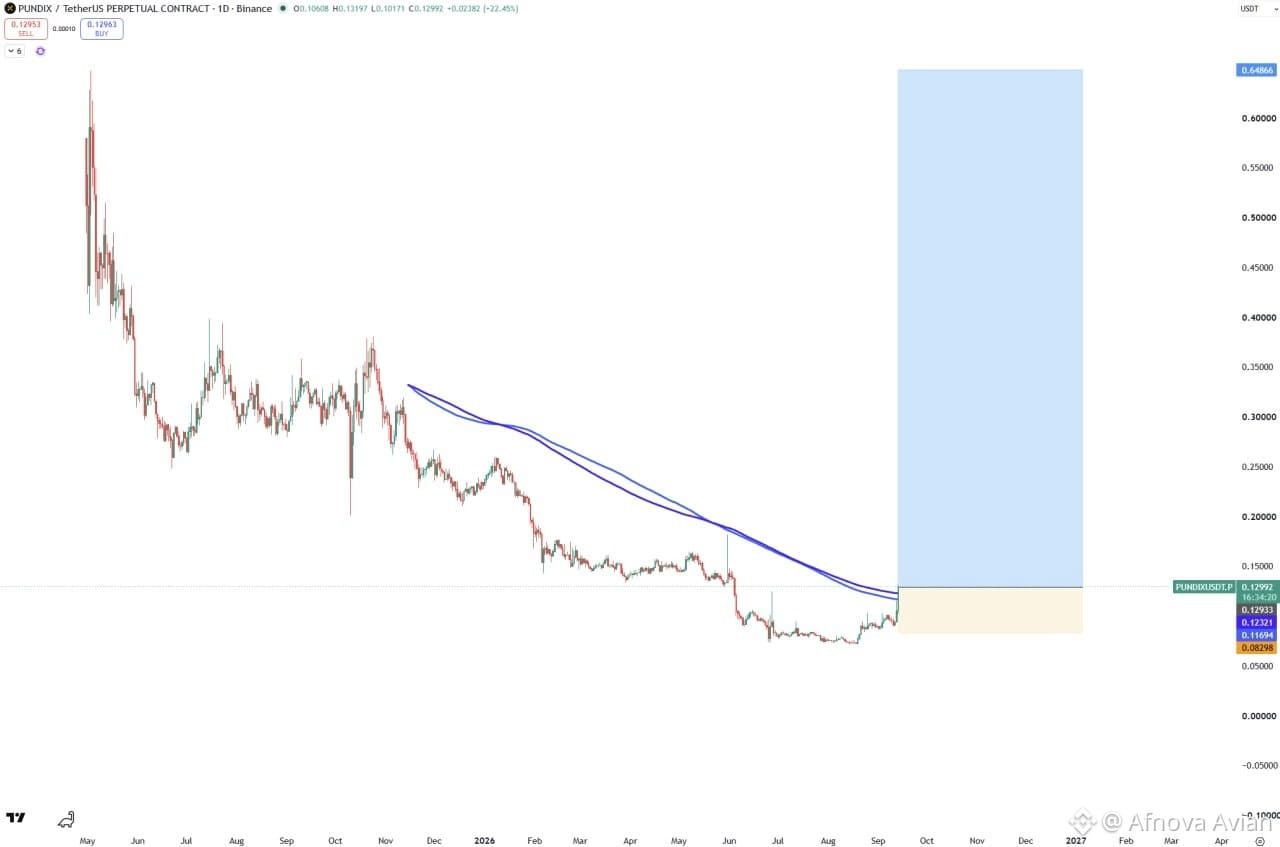
$PUNDIX /USDT LONG SETUP
PUNDIX is currently showing a potential reversal setup after a long downtrend. Price is holding near an important support area, while the risk-to-reward setup looks favorable for a possible bullish move.
This is a high-risk trade, so proper risk management and small position sizing are important.
Trade Setup: LONG
Entry Zone: $0.1230 – $0.1300
Stop Loss: $0.0898
TP1: $0.2000
TP2: $0.3000
TP3: $0.4500
TP4: $0.6486
A sustained move above the current resistance area could confirm stronger bullish momentum. Manage the trade carefully and consider securing profits at each target.
$PUNDIX
{future}(PUNDIXUSDT)
$PUNDIX /USDT LONG SETUP
PUNDIX is currently showing a potential reversal setup after a long downtrend. Price is holding near an important support area, while the risk-to-reward setup looks favorable for a possible bullish move.
This is a high-risk trade, so proper risk management and small position sizing are important.
Trade Setup: LONG
Entry Zone: $0.1230 – $0.1300
Stop Loss: $0.0898
TP1: $0.2000
TP2: $0.3000
TP3: $0.4500
TP4: $0.6486
A sustained move above the current resistance area could confirm stronger bullish momentum. Manage the trade carefully and consider securing profits at each target.
$PUNDIX
PUNDIX is currently showing a potential reversal setup after a long downtrend. Price is holding near an important support area, while the risk-to-reward setup looks favorable for a possible bullish move.
This is a high-risk trade, so proper risk management and small position sizing are important.
Trade Setup: LONG
Entry Zone: $0.1230 – $0.1300
Stop Loss: $0.0898
TP1: $0.2000
TP2: $0.3000
TP3: $0.4500
TP4: $0.6486
A sustained move above the current resistance area could confirm stronger bullish momentum. Manage the trade carefully and consider securing profits at each target.
$PUNDIX
179
·
--
Italy’s second-largest bank, UniCredit, is reportedly considering offering crypto asset custody services, according to Bloomberg.
This could mark another major step in the growing adoption of digital assets by traditional banks. As more financial institutions explore crypto services, the gap between traditional finance and the crypto industry continues to shrink.
Big players are paying attention.
$BTC #Unicredit
{future}(BTCUSDT)
Italy’s second-largest bank, UniCredit, is reportedly considering offering crypto asset custody services, according to Bloomberg.
This could mark another major step in the growing adoption of digital assets by traditional banks. As more financial institutions explore crypto services, the gap between traditional finance and the crypto industry continues to shrink.
Big players are paying attention.
$BTC #Unicredit
This could mark another major step in the growing adoption of digital assets by traditional banks. As more financial institutions explore crypto services, the gap between traditional finance and the crypto industry continues to shrink.
Big players are paying attention.
$BTC #Unicredit

69
Connectez-vous pour découvrir plus de contenu
Rejoignez la communauté mondiale des adeptes de cryptomonnaies sur Binance Square
⚡️ Suviez les dernières informations importantes sur les cryptomonnaies.
💬 Jugé digne de confiance par la plus grande plateforme d’échange de cryptomonnaies au monde.
👍 Découvrez les connaissances que partagent les créateurs vérifiés.
Adresse e-mail/Nº de téléphone
Sujets d’actualité
SECHaltsCryptoETFReviewsAmidFundingLapse
57,104 vues
669 mentions
🚨🔥 BREAKING: SEC FUNDING LAPSE JUST FREEZES NEW CRYPTO ETF REVIEWS! 🇺🇸
⚠️ Following the start of the U.S. fiscal year on October 1, a lapse in federal funding has temporarily disrupted SEC operations.
📄 Reviews and effective approvals for new crypto ETF registration statements are reportedly paused during the funding disruption.
👀 ETF APPROVALS ON HOLD — CRYPTO MARKET WATCHING!
🚀 Could this create a major delay for the next wave of crypto ETFs?
💬 BULLISH OR BEARISH FOR CRYPTO? DROP YOUR TAKE! 👇
🔔 Follow for more SEC, ETF & crypto breaking news.
$AIN $BEAMX $GLMR
#SECHaltsCryptoETFReviewsAmidFundingLapse
Salotra Crypto
·0 mentions J’aime
·71 vues
ZcashETFPostsFirstWeeklyOutflow$93.6M
65,491 vues
200 mentions
GreekPoliceBustCryptoScamRingArrest17
217,350 vues
1,535 mentions