

SollyCrypto Onchain
531 Publications
SollyCrypto Onchain
Signaler
Bloquer l’utilisateur
I track crypto in real time, technicals, onchain data, fundamentals, all in one place. Actionable setups,. Follow, read, decide, trade.BP-8EF50D567FE7
Trade occasionnellement
2.7 an(s)
39 Suivis
200 Abonnés
246 J’aime
Publications
Tous
Citations
Vidéos
·
--
Haussier
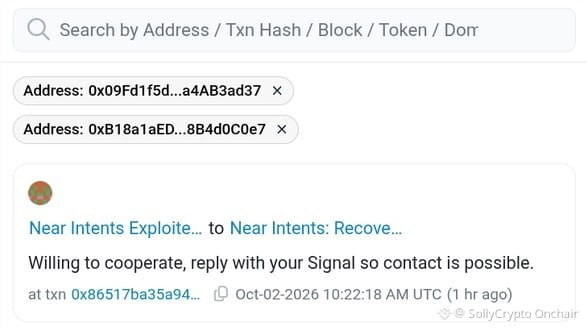
The NEAR Intents attacker has responded. A recovery wallet received 1 BNB with a message saying they are willing to cooperate and asking for a Signal contact. The response came inside the 48-hour window offered for cooperation, fund return, and a possible bounty path.
Why this happened
Once the team said the exploiter was identified, the next fork was simple: launder or negotiate. Sending a small onchain message and asking for contact is the attacker choosing the negotiation door, at least for now.
Why it matters
This is better than silence. If talks hold, the exploit can move toward recovery instead of a long laundering mess. For $NEAR, that reduces tail-risk around the Near Intents incident. Important catch: cooperation messages are not returned millions.
How it can benefit you
If negotiations lead to funds coming back, sentiment around $NEAR can stabilize quickly. Markets prefer closed incidents over open wounds.
How it can harm you
Talk is cheap. The attacker can stall, demand terms, or disappear after contact. People who buy only on “willing to cooperate” can get trapped if recovery fails.
SollyCrypto opinion
Mild relief pump lean for $NEAR. Best path so far, still not a completed recovery.
You buying $NEAR on the negotiation signal, or waiting for actual returned funds?
Follow me, or you may not see the next one.
The NEAR Intents attacker has responded. A recovery wallet received 1 BNB with a message saying they are willing to cooperate and asking for a Signal contact. The response came inside the 48-hour window offered for cooperation, fund return, and a possible bounty path.
Why this happened
Once the team said the exploiter was identified, the next fork was simple: launder or negotiate. Sending a small onchain message and asking for contact is the attacker choosing the negotiation door, at least for now.
Why it matters
This is better than silence. If talks hold, the exploit can move toward recovery instead of a long laundering mess. For $NEAR, that reduces tail-risk around the Near Intents incident. Important catch: cooperation messages are not returned millions.
How it can benefit you
If negotiations lead to funds coming back, sentiment around $NEAR can stabilize quickly. Markets prefer closed incidents over open wounds.
How it can harm you
Talk is cheap. The attacker can stall, demand terms, or disappear after contact. People who buy only on “willing to cooperate” can get trapped if recovery fails.
SollyCrypto opinion
Mild relief pump lean for $NEAR. Best path so far, still not a completed recovery.
You buying $NEAR on the negotiation signal, or waiting for actual returned funds?
Follow me, or you may not see the next one.
Why this happened
Once the team said the exploiter was identified, the next fork was simple: launder or negotiate. Sending a small onchain message and asking for contact is the attacker choosing the negotiation door, at least for now.
Why it matters
This is better than silence. If talks hold, the exploit can move toward recovery instead of a long laundering mess. For $NEAR, that reduces tail-risk around the Near Intents incident. Important catch: cooperation messages are not returned millions.
How it can benefit you
If negotiations lead to funds coming back, sentiment around $NEAR can stabilize quickly. Markets prefer closed incidents over open wounds.
How it can harm you
Talk is cheap. The attacker can stall, demand terms, or disappear after contact. People who buy only on “willing to cooperate” can get trapped if recovery fails.
SollyCrypto opinion
Mild relief pump lean for $NEAR. Best path so far, still not a completed recovery.
You buying $NEAR on the negotiation signal, or waiting for actual returned funds?
Follow me, or you may not see the next one.

1
137
·
--
Baissier
Near Intents GM Alex Shevchenko says yesterday’s hacker has been identified and has a 48-hour window before responsible disclosure closes.
Why this happened
After the exploit, the team is moving from damage control into recovery pressure. Naming that the attacker is identified and setting a hard 48-hour clock is meant to force a return of funds before the situation turns fully adversarial.
Why it matters
For $NEAR, this is still an exploit overhang story. The constructive angle is simple: identification plus a return window can reduce the worst-case narrative if money comes back. The negative angle is also simple: the incident already happened, and recovery is not guaranteed just because a deadline was posted.
How it can benefit you
If funds are returned inside the window, sentiment around Near Intents and $NEAR can stabilize fast. Markets like clean endings more than open-ended hacks.
How it can harm you
If the attacker ignores the deadline, the story flips from “manageable incident” to “unresolved loss.” People who buy only on “hacker identified” language can get trapped if recovery fails.
SollyCrypto opinion
Mixed, with a mild relief lean only if funds actually come back. Identification helps optics. Return of funds is what matters.
You buying $NEAR on the recovery clock, or waiting for proof the money returns?
Follow me, or you may not see the next one.
Near Intents GM Alex Shevchenko says yesterday’s hacker has been identified and has a 48-hour window before responsible disclosure closes.
Why this happened
After the exploit, the team is moving from damage control into recovery pressure. Naming that the attacker is identified and setting a hard 48-hour clock is meant to force a return of funds before the situation turns fully adversarial.
Why it matters
For $NEAR, this is still an exploit overhang story. The constructive angle is simple: identification plus a return window can reduce the worst-case narrative if money comes back. The negative angle is also simple: the incident already happened, and recovery is not guaranteed just because a deadline was posted.
How it can benefit you
If funds are returned inside the window, sentiment around Near Intents and $NEAR can stabilize fast. Markets like clean endings more than open-ended hacks.
How it can harm you
If the attacker ignores the deadline, the story flips from “manageable incident” to “unresolved loss.” People who buy only on “hacker identified” language can get trapped if recovery fails.
SollyCrypto opinion
Mixed, with a mild relief lean only if funds actually come back. Identification helps optics. Return of funds is what matters.
You buying $NEAR on the recovery clock, or waiting for proof the money returns?
Follow me, or you may not see the next one.
Why this happened
After the exploit, the team is moving from damage control into recovery pressure. Naming that the attacker is identified and setting a hard 48-hour clock is meant to force a return of funds before the situation turns fully adversarial.
Why it matters
For $NEAR, this is still an exploit overhang story. The constructive angle is simple: identification plus a return window can reduce the worst-case narrative if money comes back. The negative angle is also simple: the incident already happened, and recovery is not guaranteed just because a deadline was posted.
How it can benefit you
If funds are returned inside the window, sentiment around Near Intents and $NEAR can stabilize fast. Markets like clean endings more than open-ended hacks.
How it can harm you
If the attacker ignores the deadline, the story flips from “manageable incident” to “unresolved loss.” People who buy only on “hacker identified” language can get trapped if recovery fails.
SollyCrypto opinion
Mixed, with a mild relief lean only if funds actually come back. Identification helps optics. Return of funds is what matters.
You buying $NEAR on the recovery clock, or waiting for proof the money returns?
Follow me, or you may not see the next one.

1
121
·
--
Haussier
Aave founder Stani Kulechov says the roughly $310K exploit flagged by SlowMist hit a third-party adapter built on top of Aave, not Aave v3 itself, which remains unaffected.
Why this happened
External tools built around Aave can carry their own bugs. In this case, the weak point was reportedly an adapter used with Safe-style workflows, not the core Aave v3 contracts. That distinction matters a lot when headlines just say “Aave exploit.”
Why it matters
Core protocol risk and satellite-tool risk are different. If Aave v3 is untouched, the damage is reputational noise more than a solvency event. For $AAVE, clarification from the founder is a relief signal after the initial scare.
How it can benefit you
If you hold $AAVE, “not the core protocol” reduces the worst-case reading. Markets often bounce once fear of a base-layer failure fades.
How it can harm you
Users of third-party adapters can still lose funds. Ecosystem tools remain an attack surface. People who ignore peripheral risk just because core contracts are fine can get burned next time around.
SollyCrypto opinion
Mild relief pump lean for $AAVE. Ugly headline, but the key claim is Aave v3 itself was not the broken contract.
You buying the relief, or staying cautious around Aave ecosystem tools?
Follow me, or you may not see the next one.
Aave founder Stani Kulechov says the roughly $310K exploit flagged by SlowMist hit a third-party adapter built on top of Aave, not Aave v3 itself, which remains unaffected.
Why this happened
External tools built around Aave can carry their own bugs. In this case, the weak point was reportedly an adapter used with Safe-style workflows, not the core Aave v3 contracts. That distinction matters a lot when headlines just say “Aave exploit.”
Why it matters
Core protocol risk and satellite-tool risk are different. If Aave v3 is untouched, the damage is reputational noise more than a solvency event. For $AAVE, clarification from the founder is a relief signal after the initial scare.
How it can benefit you
If you hold $AAVE, “not the core protocol” reduces the worst-case reading. Markets often bounce once fear of a base-layer failure fades.
How it can harm you
Users of third-party adapters can still lose funds. Ecosystem tools remain an attack surface. People who ignore peripheral risk just because core contracts are fine can get burned next time around.
SollyCrypto opinion
Mild relief pump lean for $AAVE. Ugly headline, but the key claim is Aave v3 itself was not the broken contract.
You buying the relief, or staying cautious around Aave ecosystem tools?
Follow me, or you may not see the next one.
Why this happened
External tools built around Aave can carry their own bugs. In this case, the weak point was reportedly an adapter used with Safe-style workflows, not the core Aave v3 contracts. That distinction matters a lot when headlines just say “Aave exploit.”
Why it matters
Core protocol risk and satellite-tool risk are different. If Aave v3 is untouched, the damage is reputational noise more than a solvency event. For $AAVE, clarification from the founder is a relief signal after the initial scare.
How it can benefit you
If you hold $AAVE, “not the core protocol” reduces the worst-case reading. Markets often bounce once fear of a base-layer failure fades.
How it can harm you
Users of third-party adapters can still lose funds. Ecosystem tools remain an attack surface. People who ignore peripheral risk just because core contracts are fine can get burned next time around.
SollyCrypto opinion
Mild relief pump lean for $AAVE. Ugly headline, but the key claim is Aave v3 itself was not the broken contract.
You buying the relief, or staying cautious around Aave ecosystem tools?
Follow me, or you may not see the next one.

1
84
·
--
Haussier
Last year’s 10/10 was one of the biggest liquidation events in crypto history. 👀
Opened X today and everyone is ultra bullish again.
HTF BTC structure can still be bullish while a short-term dump/correction happens.
Don’t get too comfortable. Watch liquidity, OI & leverage. ⚠️
One flush doesn’t automatically kill the HTF trend.
Last year’s 10/10 was one of the biggest liquidation events in crypto history. 👀
Opened X today and everyone is ultra bullish again.
HTF BTC structure can still be bullish while a short-term dump/correction happens.
Don’t get too comfortable. Watch liquidity, OI & leverage. ⚠️
One flush doesn’t automatically kill the HTF trend.
Opened X today and everyone is ultra bullish again.
HTF BTC structure can still be bullish while a short-term dump/correction happens.
Don’t get too comfortable. Watch liquidity, OI & leverage. ⚠️
One flush doesn’t automatically kill the HTF trend.
1
97
·
--
Haussier
NEAR Protocol is weighing a governance proposal to cut token issuance from 2.5% to 1.6% over 24 months, with a longer-term path toward a fixed total supply.
Why this happened
High ongoing issuance dilutes holders. Teams and delegates often push lower emissions once a network is mature enough to compete on scarcity as well as usage. This proposal phases the cut over two years instead of slamming the rate overnight.
Why it matters
Lower issuance means less new $NEAR hitting the market over time. A path toward fixed supply is even more bullish in narrative terms because it reframes $NEAR closer to hard-cap asset talk. This is still a proposal under discussion, not a finished vote.
How it can benefit you
If you hold $NEAR, reduced emissions are constructive for long-term supply dynamics. Less dilution can support the investment case if demand holds or grows.
How it can harm you
Governance can delay, amend, or reject the plan. Staking yields may also compress as issuance falls, which can annoy yield-focused holders. People who buy only on “issuance cut” headlines can get trapped if the vote disappoints.
SollyCrypto opinion
Mild pump lean for $NEAR. An issuance cut toward 1.6% and fixed-supply research is constructive, but it needs to pass.
You buying $NEAR on the proposal, or waiting for the actual vote?
Follow me, or you may not see the next one.
NEAR Protocol is weighing a governance proposal to cut token issuance from 2.5% to 1.6% over 24 months, with a longer-term path toward a fixed total supply.
Why this happened
High ongoing issuance dilutes holders. Teams and delegates often push lower emissions once a network is mature enough to compete on scarcity as well as usage. This proposal phases the cut over two years instead of slamming the rate overnight.
Why it matters
Lower issuance means less new $NEAR hitting the market over time. A path toward fixed supply is even more bullish in narrative terms because it reframes $NEAR closer to hard-cap asset talk. This is still a proposal under discussion, not a finished vote.
How it can benefit you
If you hold $NEAR, reduced emissions are constructive for long-term supply dynamics. Less dilution can support the investment case if demand holds or grows.
How it can harm you
Governance can delay, amend, or reject the plan. Staking yields may also compress as issuance falls, which can annoy yield-focused holders. People who buy only on “issuance cut” headlines can get trapped if the vote disappoints.
SollyCrypto opinion
Mild pump lean for $NEAR. An issuance cut toward 1.6% and fixed-supply research is constructive, but it needs to pass.
You buying $NEAR on the proposal, or waiting for the actual vote?
Follow me, or you may not see the next one.
Why this happened
High ongoing issuance dilutes holders. Teams and delegates often push lower emissions once a network is mature enough to compete on scarcity as well as usage. This proposal phases the cut over two years instead of slamming the rate overnight.
Why it matters
Lower issuance means less new $NEAR hitting the market over time. A path toward fixed supply is even more bullish in narrative terms because it reframes $NEAR closer to hard-cap asset talk. This is still a proposal under discussion, not a finished vote.
How it can benefit you
If you hold $NEAR, reduced emissions are constructive for long-term supply dynamics. Less dilution can support the investment case if demand holds or grows.
How it can harm you
Governance can delay, amend, or reject the plan. Staking yields may also compress as issuance falls, which can annoy yield-focused holders. People who buy only on “issuance cut” headlines can get trapped if the vote disappoints.
SollyCrypto opinion
Mild pump lean for $NEAR. An issuance cut toward 1.6% and fixed-supply research is constructive, but it needs to pass.
You buying $NEAR on the proposal, or waiting for the actual vote?
Follow me, or you may not see the next one.
1
159
·
--
Haussier
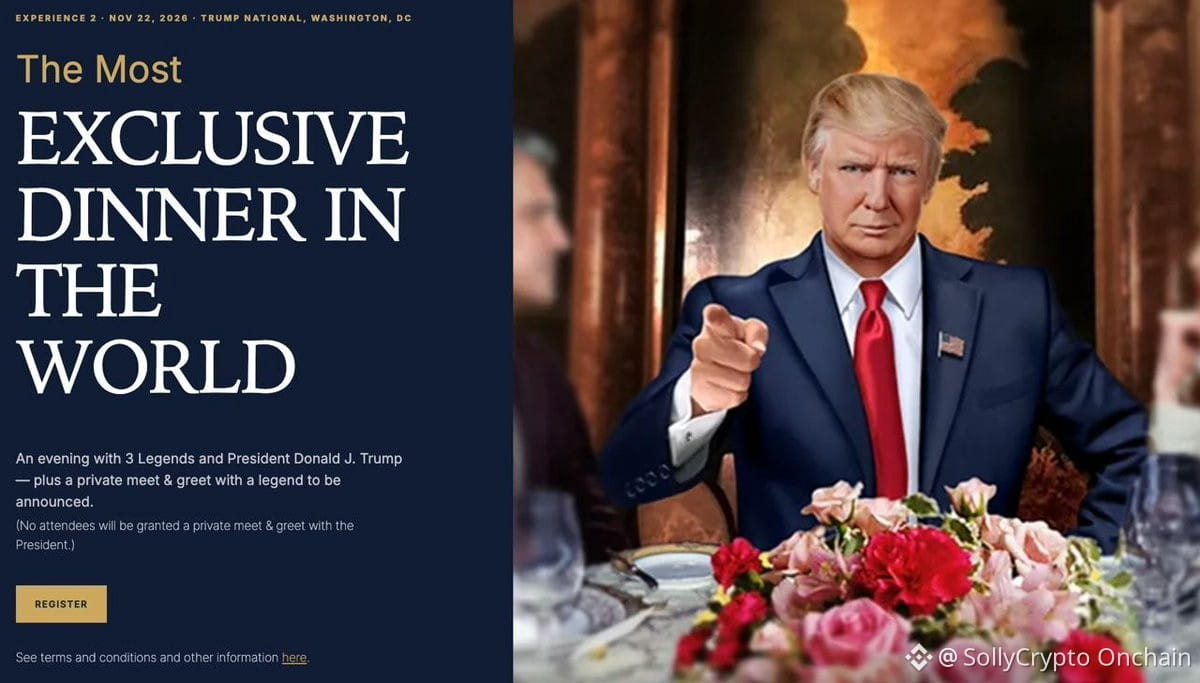
Top 185 $TRUMP holders will be invited to a Nov. 22 dinner with President Trump, with a VIP reception for the top 29.
Why this happened
Holder events are how personality tokens keep attention alive. Ranking the top wallets and dangling a dinner with Trump is a direct incentive for people to hold, climb the leaderboard, and stay engaged into mid-November.
Why it matters
This is classic meme-coin utility: access, status, and proximity to the brand. It can support short-term demand if traders chase leaderboard positioning before the snapshot. For $TRUMP, the event itself matters less than whether the announcement sparks another round of speculative flow.
How it can benefit you
If you trade narrative beta, exclusive holder dinners can lift social volume and create temporary bid. Top-holder incentives sometimes reduce near-term sell pressure from wallets hunting a seat.
How it can harm you
These events have been done before. Markets often buy the invite and sell the actual night. People who ape only on “dinner with Trump” language can get trapped once the leaderboard race ends and attention fades.
SollyCrypto opinion
Mild pump lean for $TRUMP on attention and holder-incentive flow. Short-term narrative fuel, not a fundamental re-rating.
You buying $TRUMP for the dinner race, or fading the event hype?
Follow me, or you may not see the next one.
Top 185 $TRUMP holders will be invited to a Nov. 22 dinner with President Trump, with a VIP reception for the top 29.
Why this happened
Holder events are how personality tokens keep attention alive. Ranking the top wallets and dangling a dinner with Trump is a direct incentive for people to hold, climb the leaderboard, and stay engaged into mid-November.
Why it matters
This is classic meme-coin utility: access, status, and proximity to the brand. It can support short-term demand if traders chase leaderboard positioning before the snapshot. For $TRUMP, the event itself matters less than whether the announcement sparks another round of speculative flow.
How it can benefit you
If you trade narrative beta, exclusive holder dinners can lift social volume and create temporary bid. Top-holder incentives sometimes reduce near-term sell pressure from wallets hunting a seat.
How it can harm you
These events have been done before. Markets often buy the invite and sell the actual night. People who ape only on “dinner with Trump” language can get trapped once the leaderboard race ends and attention fades.
SollyCrypto opinion
Mild pump lean for $TRUMP on attention and holder-incentive flow. Short-term narrative fuel, not a fundamental re-rating.
You buying $TRUMP for the dinner race, or fading the event hype?
Follow me, or you may not see the next one.
Why this happened
Holder events are how personality tokens keep attention alive. Ranking the top wallets and dangling a dinner with Trump is a direct incentive for people to hold, climb the leaderboard, and stay engaged into mid-November.
Why it matters
This is classic meme-coin utility: access, status, and proximity to the brand. It can support short-term demand if traders chase leaderboard positioning before the snapshot. For $TRUMP, the event itself matters less than whether the announcement sparks another round of speculative flow.
How it can benefit you
If you trade narrative beta, exclusive holder dinners can lift social volume and create temporary bid. Top-holder incentives sometimes reduce near-term sell pressure from wallets hunting a seat.
How it can harm you
These events have been done before. Markets often buy the invite and sell the actual night. People who ape only on “dinner with Trump” language can get trapped once the leaderboard race ends and attention fades.
SollyCrypto opinion
Mild pump lean for $TRUMP on attention and holder-incentive flow. Short-term narrative fuel, not a fundamental re-rating.
You buying $TRUMP for the dinner race, or fading the event hype?
Follow me, or you may not see the next one.
3
356
·
--
Haussier
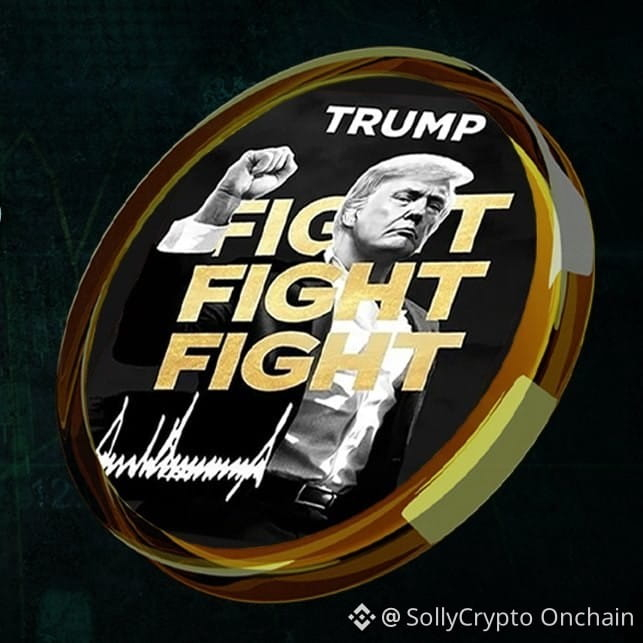
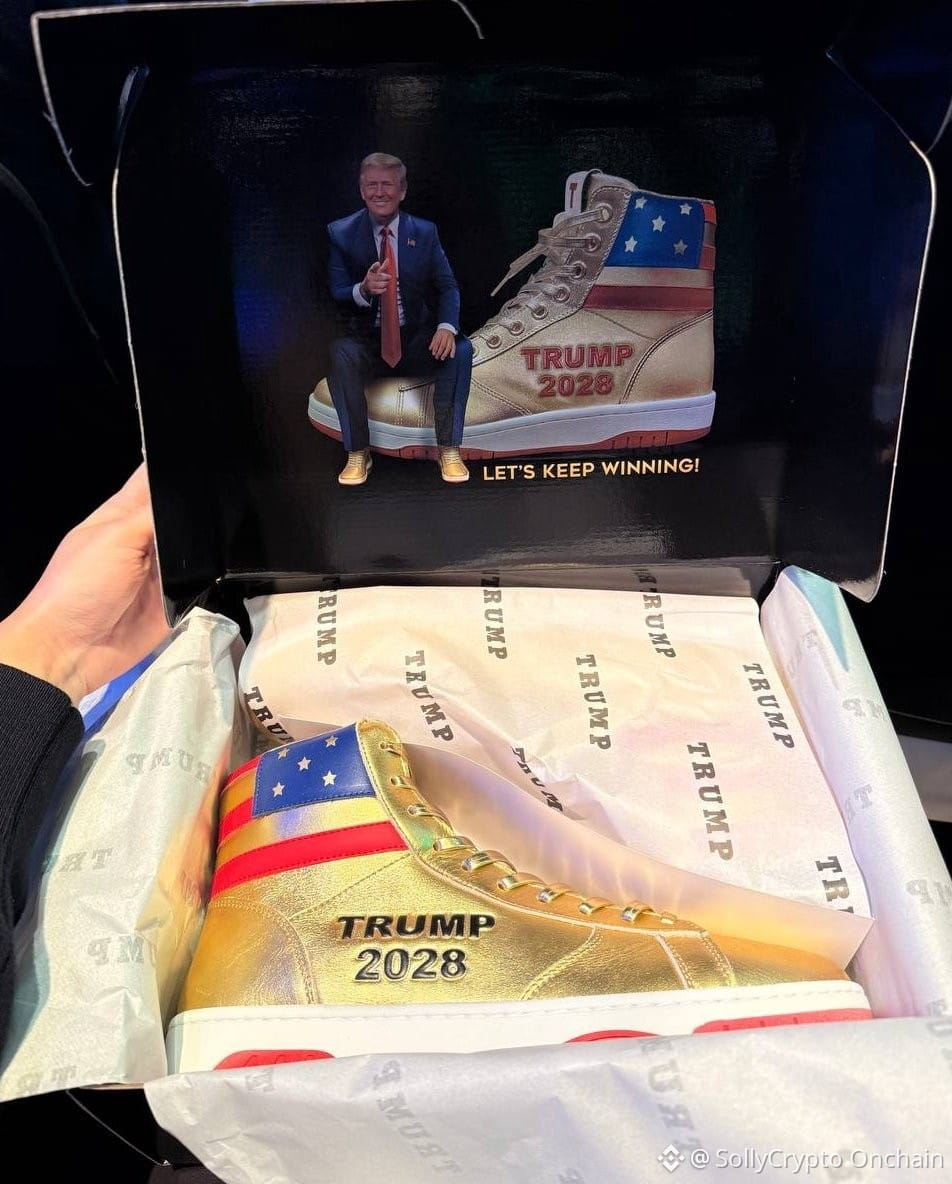
$TRUMP co-founder Bill Zanker said the team plans a Trump mobile game, a Shark Tank-style TV show that gives coins to winners, and possibly a Trump amusement park, speaking at Korea Blockchain Week 2026.
Why this happened
Meme coins need ongoing attention. After the pure speculation phase, teams lean on branded entertainment and “utility” teasers to keep holders engaged. Zanker is selling a broader lifestyle and media roadmap around the token.
Why it matters
Headlines like mobile games and TV formats can spark short-term narrative flow. But plans announced on stage are not the same as shipped products. For $TRUMP, this is brand-extension talk more than onchain fundamentals.
How it can benefit you
If you trade narrative beta, fresh media plans can support temporary interest and social volume around $TRUMP.
How it can harm you
Roadmaps without delivery dates often fade. People who buy only on “game + TV + park” language can get trapped when the market demands proof. Meme tokens tied to personality brands also carry extra political and regulatory headline risk.
SollyCrypto opinion
Mild mixed-to-pump lean only on short-term narrative. Treat it as attention fuel, not confirmed utility.
You buying $TRUMP on the roadmap talk, or waiting for something that actually ships?
Follow me, or you may not see the next one.
$TRUMP co-founder Bill Zanker said the team plans a Trump mobile game, a Shark Tank-style TV show that gives coins to winners, and possibly a Trump amusement park, speaking at Korea Blockchain Week 2026.
Why this happened
Meme coins need ongoing attention. After the pure speculation phase, teams lean on branded entertainment and “utility” teasers to keep holders engaged. Zanker is selling a broader lifestyle and media roadmap around the token.
Why it matters
Headlines like mobile games and TV formats can spark short-term narrative flow. But plans announced on stage are not the same as shipped products. For $TRUMP, this is brand-extension talk more than onchain fundamentals.
How it can benefit you
If you trade narrative beta, fresh media plans can support temporary interest and social volume around $TRUMP.
How it can harm you
Roadmaps without delivery dates often fade. People who buy only on “game + TV + park” language can get trapped when the market demands proof. Meme tokens tied to personality brands also carry extra political and regulatory headline risk.
SollyCrypto opinion
Mild mixed-to-pump lean only on short-term narrative. Treat it as attention fuel, not confirmed utility.
You buying $TRUMP on the roadmap talk, or waiting for something that actually ships?
Follow me, or you may not see the next one.
Why this happened
Meme coins need ongoing attention. After the pure speculation phase, teams lean on branded entertainment and “utility” teasers to keep holders engaged. Zanker is selling a broader lifestyle and media roadmap around the token.
Why it matters
Headlines like mobile games and TV formats can spark short-term narrative flow. But plans announced on stage are not the same as shipped products. For $TRUMP, this is brand-extension talk more than onchain fundamentals.
How it can benefit you
If you trade narrative beta, fresh media plans can support temporary interest and social volume around $TRUMP.
How it can harm you
Roadmaps without delivery dates often fade. People who buy only on “game + TV + park” language can get trapped when the market demands proof. Meme tokens tied to personality brands also carry extra political and regulatory headline risk.
SollyCrypto opinion
Mild mixed-to-pump lean only on short-term narrative. Treat it as attention fuel, not confirmed utility.
You buying $TRUMP on the roadmap talk, or waiting for something that actually ships?
Follow me, or you may not see the next one.
3
557
·
--
Haussier
with $XDP binance alpha competition under way 0.05 is the next target
with $XDP binance alpha competition under way 0.05 is the next target
2
4
586
·
--
Haussier
ONDO X KOREA STOCKS — PUMP?
Kakao Pay Securities has signed agreements with Ondo Finance and Dinari to explore offering tokenized South Korean stocks to overseas investors.
Why this happened
Korean brokers want global distribution. Ondo and Dinari already live in the tokenized-equity lane. An exploratory deal lets Kakao Pay study how to source local shares, issue tokens, handle redemption, and reach overseas wallets without building the whole stack alone.
Why it matters
This widens the tokenized-stocks map beyond U.S. names. If Korean equities can be packaged for foreign investors onchain, RWA rails get another real market. For $ONDO, pairing with a major local securities firm is constructive distribution optics, even while the work is still in study and task-force stage.
How it can benefit you
If you hold $ONDO, more broker-led tokenization pipelines support the long-term platform thesis. Asia equity access is a meaningful new vertical if it graduates from MOU to product.
How it can harm you
“Explore” is not launch. Regulatory design, custody, and shareholder-rights handling can slow everything down. People who buy only on the Kakao headline can get trapped if timelines slip.
SollyCrypto opinion
Mild pump lean for $ONDO. Tokenized Korean stocks with Kakao Pay is a strong narrative step, still early execution.
You buying $ONDO on the Korea deal, or waiting for a live product?
Follow me, or you may not see the next one.
ONDO X KOREA STOCKS — PUMP?
Kakao Pay Securities has signed agreements with Ondo Finance and Dinari to explore offering tokenized South Korean stocks to overseas investors.
Why this happened
Korean brokers want global distribution. Ondo and Dinari already live in the tokenized-equity lane. An exploratory deal lets Kakao Pay study how to source local shares, issue tokens, handle redemption, and reach overseas wallets without building the whole stack alone.
Why it matters
This widens the tokenized-stocks map beyond U.S. names. If Korean equities can be packaged for foreign investors onchain, RWA rails get another real market. For $ONDO, pairing with a major local securities firm is constructive distribution optics, even while the work is still in study and task-force stage.
How it can benefit you
If you hold $ONDO, more broker-led tokenization pipelines support the long-term platform thesis. Asia equity access is a meaningful new vertical if it graduates from MOU to product.
How it can harm you
“Explore” is not launch. Regulatory design, custody, and shareholder-rights handling can slow everything down. People who buy only on the Kakao headline can get trapped if timelines slip.
SollyCrypto opinion
Mild pump lean for $ONDO. Tokenized Korean stocks with Kakao Pay is a strong narrative step, still early execution.
You buying $ONDO on the Korea deal, or waiting for a live product?
Follow me, or you may not see the next one.
Kakao Pay Securities has signed agreements with Ondo Finance and Dinari to explore offering tokenized South Korean stocks to overseas investors.
Why this happened
Korean brokers want global distribution. Ondo and Dinari already live in the tokenized-equity lane. An exploratory deal lets Kakao Pay study how to source local shares, issue tokens, handle redemption, and reach overseas wallets without building the whole stack alone.
Why it matters
This widens the tokenized-stocks map beyond U.S. names. If Korean equities can be packaged for foreign investors onchain, RWA rails get another real market. For $ONDO, pairing with a major local securities firm is constructive distribution optics, even while the work is still in study and task-force stage.
How it can benefit you
If you hold $ONDO, more broker-led tokenization pipelines support the long-term platform thesis. Asia equity access is a meaningful new vertical if it graduates from MOU to product.
How it can harm you
“Explore” is not launch. Regulatory design, custody, and shareholder-rights handling can slow everything down. People who buy only on the Kakao headline can get trapped if timelines slip.
SollyCrypto opinion
Mild pump lean for $ONDO. Tokenized Korean stocks with Kakao Pay is a strong narrative step, still early execution.
You buying $ONDO on the Korea deal, or waiting for a live product?
Follow me, or you may not see the next one.
1
204
·
--
Haussier
Grayscale has filed with the SEC for its ZCSH High Income ETF, which would sell call options on Zcash ETPs to generate income for investors.
Why this happened
After spot-style Zcash products gained traction, the next product layer is income. Grayscale wants a fund that harvests option premium on Zcash ETPs instead of only offering plain price exposure. That is a covered-call style pitch for investors who want yield more than full upside.
Why it matters
Product expansion keeps $ZEC inside the regulated wrapper conversation. An income ETF filing signals that issuers see enough investor interest to build beyond simple holding products. For $ZEC, that is constructive distribution optics. The flip side is structural: call-selling products can lag in violent upside melts because upside is partially sold away.
How it can benefit you
If you hold $ZEC, more Grayscale product surface area supports the institutionalization narrative. Extra ETF wrappers can widen the set of brokerage users who can get Zcash-linked exposure.
How it can harm you
A filing is not a launch. Income products also attract a different buyer than pure momentum traders. People who buy $ZEC only on the ETF headline can get trapped if approval timelines slip or if the market fades “sell the news.”
SollyCrypto opinion
Mild pump lean for $ZEC. Grayscale filing a Zcash high-income ETF is constructive product depth, not an automatic melt-up signal.
You buying $ZEC on the income ETF filing, or waiting for approval and launch?
Follow me, or you may not see the next one.
Grayscale has filed with the SEC for its ZCSH High Income ETF, which would sell call options on Zcash ETPs to generate income for investors.
Why this happened
After spot-style Zcash products gained traction, the next product layer is income. Grayscale wants a fund that harvests option premium on Zcash ETPs instead of only offering plain price exposure. That is a covered-call style pitch for investors who want yield more than full upside.
Why it matters
Product expansion keeps $ZEC inside the regulated wrapper conversation. An income ETF filing signals that issuers see enough investor interest to build beyond simple holding products. For $ZEC, that is constructive distribution optics. The flip side is structural: call-selling products can lag in violent upside melts because upside is partially sold away.
How it can benefit you
If you hold $ZEC, more Grayscale product surface area supports the institutionalization narrative. Extra ETF wrappers can widen the set of brokerage users who can get Zcash-linked exposure.
How it can harm you
A filing is not a launch. Income products also attract a different buyer than pure momentum traders. People who buy $ZEC only on the ETF headline can get trapped if approval timelines slip or if the market fades “sell the news.”
SollyCrypto opinion
Mild pump lean for $ZEC. Grayscale filing a Zcash high-income ETF is constructive product depth, not an automatic melt-up signal.
You buying $ZEC on the income ETF filing, or waiting for approval and launch?
Follow me, or you may not see the next one.
Why this happened
After spot-style Zcash products gained traction, the next product layer is income. Grayscale wants a fund that harvests option premium on Zcash ETPs instead of only offering plain price exposure. That is a covered-call style pitch for investors who want yield more than full upside.
Why it matters
Product expansion keeps $ZEC inside the regulated wrapper conversation. An income ETF filing signals that issuers see enough investor interest to build beyond simple holding products. For $ZEC, that is constructive distribution optics. The flip side is structural: call-selling products can lag in violent upside melts because upside is partially sold away.
How it can benefit you
If you hold $ZEC, more Grayscale product surface area supports the institutionalization narrative. Extra ETF wrappers can widen the set of brokerage users who can get Zcash-linked exposure.
How it can harm you
A filing is not a launch. Income products also attract a different buyer than pure momentum traders. People who buy $ZEC only on the ETF headline can get trapped if approval timelines slip or if the market fades “sell the news.”
SollyCrypto opinion
Mild pump lean for $ZEC. Grayscale filing a Zcash high-income ETF is constructive product depth, not an automatic melt-up signal.
You buying $ZEC on the income ETF filing, or waiting for approval and launch?
Follow me, or you may not see the next one.
1
250
·
--
Haussier
Chainlink launched CCIP 2.0 to help bring stocks and other assets onchain. Major names including Fidelity, ANZ, and Deutsche Börse are already working with the standard.
Why this happened
Institutions will not rebuild their whole stack for every chain. They need a neutral interoperability layer that can move tokenized value with compliance and control. CCIP 2.0 is Chainlink’s bid to be that rail for stocks and broader digital assets.
Why it matters
Interoperability is the bottleneck once assets go onchain. If big firms use CCIP to distribute tokenized stocks and funds across networks, $LINK sits in the middle of the RWA plumbing story. Fidelity, ANZ, and Deutsche Börse-linked involvement makes this more than a whitepaper upgrade.
How it can benefit you
If you hold $LINK, institutional CCIP adoption is core thesis fuel. More tokenized assets moving cross-chain can support long-term demand for the network’s messaging and settlement layer.
How it can harm you
Launch partners are not the same as massive settled volume tomorrow. People who buy only on “Fidelity + CCIP 2.0” language can get trapped if usage ramps slower than the headline.
SollyCrypto opinion
This should lean as a pump for $LINK. CCIP 2.0 with serious institutional names is strong infrastructure validation.
You buying $LINK on CCIP 2.0, or waiting for actual cross-chain asset flow?
Follow me, or you may not see the next one.
Chainlink launched CCIP 2.0 to help bring stocks and other assets onchain. Major names including Fidelity, ANZ, and Deutsche Börse are already working with the standard.
Why this happened
Institutions will not rebuild their whole stack for every chain. They need a neutral interoperability layer that can move tokenized value with compliance and control. CCIP 2.0 is Chainlink’s bid to be that rail for stocks and broader digital assets.
Why it matters
Interoperability is the bottleneck once assets go onchain. If big firms use CCIP to distribute tokenized stocks and funds across networks, $LINK sits in the middle of the RWA plumbing story. Fidelity, ANZ, and Deutsche Börse-linked involvement makes this more than a whitepaper upgrade.
How it can benefit you
If you hold $LINK, institutional CCIP adoption is core thesis fuel. More tokenized assets moving cross-chain can support long-term demand for the network’s messaging and settlement layer.
How it can harm you
Launch partners are not the same as massive settled volume tomorrow. People who buy only on “Fidelity + CCIP 2.0” language can get trapped if usage ramps slower than the headline.
SollyCrypto opinion
This should lean as a pump for $LINK. CCIP 2.0 with serious institutional names is strong infrastructure validation.
You buying $LINK on CCIP 2.0, or waiting for actual cross-chain asset flow?
Follow me, or you may not see the next one.
Why this happened
Institutions will not rebuild their whole stack for every chain. They need a neutral interoperability layer that can move tokenized value with compliance and control. CCIP 2.0 is Chainlink’s bid to be that rail for stocks and broader digital assets.
Why it matters
Interoperability is the bottleneck once assets go onchain. If big firms use CCIP to distribute tokenized stocks and funds across networks, $LINK sits in the middle of the RWA plumbing story. Fidelity, ANZ, and Deutsche Börse-linked involvement makes this more than a whitepaper upgrade.
How it can benefit you
If you hold $LINK, institutional CCIP adoption is core thesis fuel. More tokenized assets moving cross-chain can support long-term demand for the network’s messaging and settlement layer.
How it can harm you
Launch partners are not the same as massive settled volume tomorrow. People who buy only on “Fidelity + CCIP 2.0” language can get trapped if usage ramps slower than the headline.
SollyCrypto opinion
This should lean as a pump for $LINK. CCIP 2.0 with serious institutional names is strong infrastructure validation.
You buying $LINK on CCIP 2.0, or waiting for actual cross-chain asset flow?
Follow me, or you may not see the next one.
1
105
·
--
Baissier
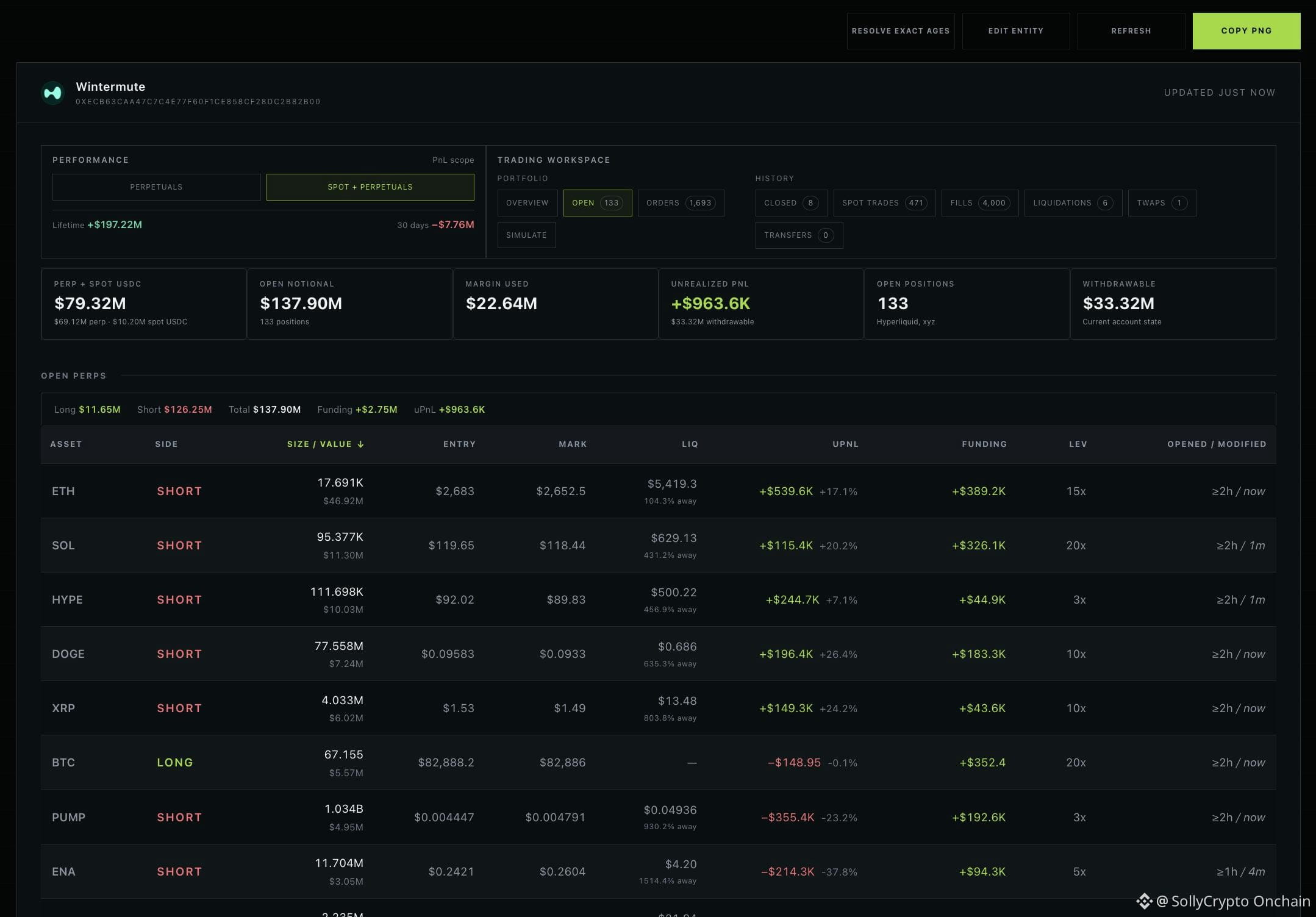
Wintermute is short about $126.25M across Hyperliquid, led by a $46.92M $ETH short. Other large positions include roughly $11.30M short $SOL and $10.03M short $HYPE. The book is up about $963.6K right now, with lifetime PnL around +$197.22M.
Why this happened
Market makers and big desks hedge, express relative views, or lean bearish when they expect softer tape. A six-figure-million short book led by $ETH means Wintermute is comfortable sitting against upside in ether and selected alts on Hyperliquid right now.
Why it matters
Wintermute size gets watched. A $46.9M $ETH short is not retail noise. It can pressure near-term sentiment in $ETH, with secondary caution on $SOL and $HYPE. The book being slightly green and lifetime PnL deeply positive also means this desk is not forced. It can hold or add if price cooperates.
How it can benefit you
If you were looking for a reason not to chase crowded longs, this is one. Smart-money short interest can mark zones where upside needs real demand to push through.
How it can harm you
Copying a market maker’s open short after it is public is late by default. If price rips, shorts get squeezed. Wintermute can also hedge off-venue in ways the Hyperliquid book alone does not show.
SollyCrypto opinion
Near-term dump lean for $ETH, with milder caution on $SOL and $HYPE while this short book stays large. Respect the size, do not blindly mirror it.
You fading $ETH with this flow, or waiting to see if the shorts get squeezed?
Follow me, or you may not see the next one.
Wintermute is short about $126.25M across Hyperliquid, led by a $46.92M $ETH short. Other large positions include roughly $11.30M short $SOL and $10.03M short $HYPE. The book is up about $963.6K right now, with lifetime PnL around +$197.22M.
Why this happened
Market makers and big desks hedge, express relative views, or lean bearish when they expect softer tape. A six-figure-million short book led by $ETH means Wintermute is comfortable sitting against upside in ether and selected alts on Hyperliquid right now.
Why it matters
Wintermute size gets watched. A $46.9M $ETH short is not retail noise. It can pressure near-term sentiment in $ETH, with secondary caution on $SOL and $HYPE. The book being slightly green and lifetime PnL deeply positive also means this desk is not forced. It can hold or add if price cooperates.
How it can benefit you
If you were looking for a reason not to chase crowded longs, this is one. Smart-money short interest can mark zones where upside needs real demand to push through.
How it can harm you
Copying a market maker’s open short after it is public is late by default. If price rips, shorts get squeezed. Wintermute can also hedge off-venue in ways the Hyperliquid book alone does not show.
SollyCrypto opinion
Near-term dump lean for $ETH, with milder caution on $SOL and $HYPE while this short book stays large. Respect the size, do not blindly mirror it.
You fading $ETH with this flow, or waiting to see if the shorts get squeezed?
Follow me, or you may not see the next one.
Why this happened
Market makers and big desks hedge, express relative views, or lean bearish when they expect softer tape. A six-figure-million short book led by $ETH means Wintermute is comfortable sitting against upside in ether and selected alts on Hyperliquid right now.
Why it matters
Wintermute size gets watched. A $46.9M $ETH short is not retail noise. It can pressure near-term sentiment in $ETH, with secondary caution on $SOL and $HYPE. The book being slightly green and lifetime PnL deeply positive also means this desk is not forced. It can hold or add if price cooperates.
How it can benefit you
If you were looking for a reason not to chase crowded longs, this is one. Smart-money short interest can mark zones where upside needs real demand to push through.
How it can harm you
Copying a market maker’s open short after it is public is late by default. If price rips, shorts get squeezed. Wintermute can also hedge off-venue in ways the Hyperliquid book alone does not show.
SollyCrypto opinion
Near-term dump lean for $ETH, with milder caution on $SOL and $HYPE while this short book stays large. Respect the size, do not blindly mirror it.
You fading $ETH with this flow, or waiting to see if the shorts get squeezed?
Follow me, or you may not see the next one.
1
215
·
--
Baissier
California Governor Gavin Newsom signed legislation barring state public officials from issuing meme coins. The law also restricts companies from listing meme coins that use a public official’s likeness. It tightens restitution rules for crypto fraud victims, strengthens enforcement against crypto-related money laundering, and creates a process to seize digital assets tied to transnational criminal networks.
Why this happened
California is drawing a hard line between public office and speculative token promotion. Newsom’s office framed it as an anti-corruption push and pointed to official-linked meme coin risks as the problem being targeted.
Why it matters
This is a direct hit on the “politician launches a coin” model inside California. For tokens built around public figures, the listing and issuance path just got narrower in the biggest U.S. state economy. Broader crypto still gets clearer fraud and seizure rules, which is mixed: more consumer protection, more enforcement teeth.
How it can benefit you
If you trade clean infrastructure or regulated names, anti-corruption framing can support the “serious crypto” narrative. Clearer restitution and enforcement tools may also reduce pure scam flow over time.
How it can harm you
Official-linked meme coins face a colder California regime. Sentiment around politician tokens can weaken fast when lawmakers move from talk to signed bills. People holding those names for pure narrative beta carry extra regulatory headline risk.
SollyCrypto opinion
Dump lean for official-linked meme coins. Constructive for cleaner market-structure rules, negative for the politician-token trade.
You fading official meme coins on this bill, or treating it as California-only noise?
Follow me, or you may not see the next one.
California Governor Gavin Newsom signed legislation barring state public officials from issuing meme coins. The law also restricts companies from listing meme coins that use a public official’s likeness. It tightens restitution rules for crypto fraud victims, strengthens enforcement against crypto-related money laundering, and creates a process to seize digital assets tied to transnational criminal networks.
Why this happened
California is drawing a hard line between public office and speculative token promotion. Newsom’s office framed it as an anti-corruption push and pointed to official-linked meme coin risks as the problem being targeted.
Why it matters
This is a direct hit on the “politician launches a coin” model inside California. For tokens built around public figures, the listing and issuance path just got narrower in the biggest U.S. state economy. Broader crypto still gets clearer fraud and seizure rules, which is mixed: more consumer protection, more enforcement teeth.
How it can benefit you
If you trade clean infrastructure or regulated names, anti-corruption framing can support the “serious crypto” narrative. Clearer restitution and enforcement tools may also reduce pure scam flow over time.
How it can harm you
Official-linked meme coins face a colder California regime. Sentiment around politician tokens can weaken fast when lawmakers move from talk to signed bills. People holding those names for pure narrative beta carry extra regulatory headline risk.
SollyCrypto opinion
Dump lean for official-linked meme coins. Constructive for cleaner market-structure rules, negative for the politician-token trade.
You fading official meme coins on this bill, or treating it as California-only noise?
Follow me, or you may not see the next one.
Why this happened
California is drawing a hard line between public office and speculative token promotion. Newsom’s office framed it as an anti-corruption push and pointed to official-linked meme coin risks as the problem being targeted.
Why it matters
This is a direct hit on the “politician launches a coin” model inside California. For tokens built around public figures, the listing and issuance path just got narrower in the biggest U.S. state economy. Broader crypto still gets clearer fraud and seizure rules, which is mixed: more consumer protection, more enforcement teeth.
How it can benefit you
If you trade clean infrastructure or regulated names, anti-corruption framing can support the “serious crypto” narrative. Clearer restitution and enforcement tools may also reduce pure scam flow over time.
How it can harm you
Official-linked meme coins face a colder California regime. Sentiment around politician tokens can weaken fast when lawmakers move from talk to signed bills. People holding those names for pure narrative beta carry extra regulatory headline risk.
SollyCrypto opinion
Dump lean for official-linked meme coins. Constructive for cleaner market-structure rules, negative for the politician-token trade.
You fading official meme coins on this bill, or treating it as California-only noise?
Follow me, or you may not see the next one.


1
31
·
--
Haussier
If you've been tracking decentralized payment projects lately, bPay is definitely worth keeping on your radar. The platform is focusing on streamlining crypto transactions and bringing practical utility to everyday payments without the usual complexity.
Instead of dealing with high friction and slow processing times, bPay aims to make digital asset transfers quick, efficient, and direct. It's interesting to see how the ecosystem is building out around this.
For those looking into the contract details or participating in the campaign, here is the official information:
CA: 0xb13003bf44de426dd2a3aae3df9c3400de0a7777
Code: BP-8EF50D567FE7
What are your thoughts on where crypto payment solutions are headed this quarter? Let me know in the comments
#bPay #CryptoPayments #BinanceSquare #CryptoNews
If you've been tracking decentralized payment projects lately, bPay is definitely worth keeping on your radar. The platform is focusing on streamlining crypto transactions and bringing practical utility to everyday payments without the usual complexity.
Instead of dealing with high friction and slow processing times, bPay aims to make digital asset transfers quick, efficient, and direct. It's interesting to see how the ecosystem is building out around this.
For those looking into the contract details or participating in the campaign, here is the official information:
CA: 0xb13003bf44de426dd2a3aae3df9c3400de0a7777
Code: BP-8EF50D567FE7
What are your thoughts on where crypto payment solutions are headed this quarter? Let me know in the comments
#bPay #CryptoPayments #BinanceSquare #CryptoNews
Instead of dealing with high friction and slow processing times, bPay aims to make digital asset transfers quick, efficient, and direct. It's interesting to see how the ecosystem is building out around this.
For those looking into the contract details or participating in the campaign, here is the official information:
CA: 0xb13003bf44de426dd2a3aae3df9c3400de0a7777
Code: BP-8EF50D567FE7
What are your thoughts on where crypto payment solutions are headed this quarter? Let me know in the comments
#bPay #CryptoPayments #BinanceSquare #CryptoNews
2
43
·
--
Haussier
Bitwise’s $NEAR ETF has the green light to list on NYSE Arca under ticker $NRR. Bitwise also raised its $NEAR base-case price target to $155, with a bull case at $562.
Why this happened
Spot-style product access is the next distribution layer for major L1s. Bitwise clearing the path to list a $NEAR ETF on NYSE Arca gives traditional brokerage users a cleaner way to get exposure. The higher long-term targets are Bitwise’s own framing of upside scenarios, not a promise of near-term price.
Why it matters
ETF access can change who is able to hold an asset. A listed $NEAR product under $NRR is a legitimacy and distribution win. For $NEAR, that supports the institutionalization narrative after recent product and privacy-trading momentum. Long-term targets grab headlines, but the listing path is the real structural point.
How it can benefit you
If you hold $NEAR, a Bitwise ETF listing path is constructive. More regulated access can broaden the buyer universe over time and keep attention on the token.
How it can harm you
Approval-to-list is not the same as instant heavy inflows. Price targets far above spot can also fuel FOMO entries right before a cool-off. People who buy only on “$155 base case / $562 bull case” language can get trapped if the market fades the news after the first impulse.
SollyCrypto opinion
This should lean as a pump for $NEAR. NYSE Arca listing green light for Bitwise’s $NRR is strong access news. Treat the big targets as long-horizon scenarios, not tomorrow’s print.
You buying $NEAR on the ETF green light, or waiting for actual launch flows?
Follow me, or you may not see the next one.
Bitwise’s $NEAR ETF has the green light to list on NYSE Arca under ticker $NRR. Bitwise also raised its $NEAR base-case price target to $155, with a bull case at $562.
Why this happened
Spot-style product access is the next distribution layer for major L1s. Bitwise clearing the path to list a $NEAR ETF on NYSE Arca gives traditional brokerage users a cleaner way to get exposure. The higher long-term targets are Bitwise’s own framing of upside scenarios, not a promise of near-term price.
Why it matters
ETF access can change who is able to hold an asset. A listed $NEAR product under $NRR is a legitimacy and distribution win. For $NEAR, that supports the institutionalization narrative after recent product and privacy-trading momentum. Long-term targets grab headlines, but the listing path is the real structural point.
How it can benefit you
If you hold $NEAR, a Bitwise ETF listing path is constructive. More regulated access can broaden the buyer universe over time and keep attention on the token.
How it can harm you
Approval-to-list is not the same as instant heavy inflows. Price targets far above spot can also fuel FOMO entries right before a cool-off. People who buy only on “$155 base case / $562 bull case” language can get trapped if the market fades the news after the first impulse.
SollyCrypto opinion
This should lean as a pump for $NEAR. NYSE Arca listing green light for Bitwise’s $NRR is strong access news. Treat the big targets as long-horizon scenarios, not tomorrow’s print.
You buying $NEAR on the ETF green light, or waiting for actual launch flows?
Follow me, or you may not see the next one.
Why this happened
Spot-style product access is the next distribution layer for major L1s. Bitwise clearing the path to list a $NEAR ETF on NYSE Arca gives traditional brokerage users a cleaner way to get exposure. The higher long-term targets are Bitwise’s own framing of upside scenarios, not a promise of near-term price.
Why it matters
ETF access can change who is able to hold an asset. A listed $NEAR product under $NRR is a legitimacy and distribution win. For $NEAR, that supports the institutionalization narrative after recent product and privacy-trading momentum. Long-term targets grab headlines, but the listing path is the real structural point.
How it can benefit you
If you hold $NEAR, a Bitwise ETF listing path is constructive. More regulated access can broaden the buyer universe over time and keep attention on the token.
How it can harm you
Approval-to-list is not the same as instant heavy inflows. Price targets far above spot can also fuel FOMO entries right before a cool-off. People who buy only on “$155 base case / $562 bull case” language can get trapped if the market fades the news after the first impulse.
SollyCrypto opinion
This should lean as a pump for $NEAR. NYSE Arca listing green light for Bitwise’s $NRR is strong access news. Treat the big targets as long-horizon scenarios, not tomorrow’s print.
You buying $NEAR on the ETF green light, or waiting for actual launch flows?
Follow me, or you may not see the next one.
2
65
·
--
Haussier
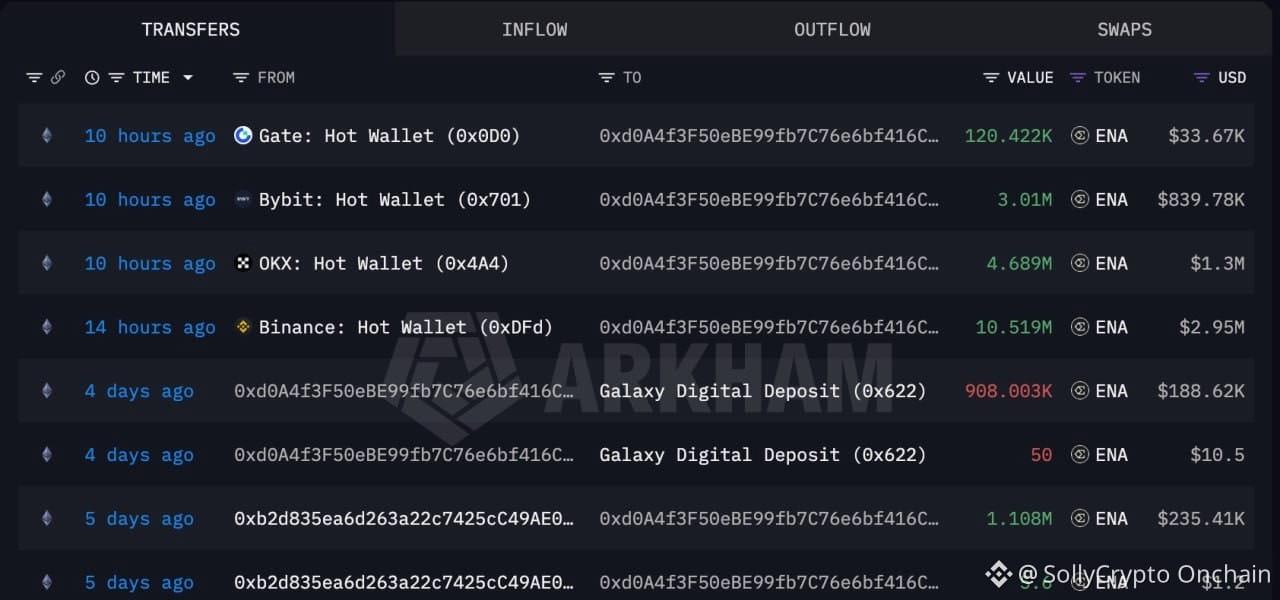
A whale withdrew about 18.34M $ENA worth roughly $5.13M from Gate, Bybit, OKX, and Binance today.
Why this happened
Pulling coins off multiple exchanges usually means the wallet wants exposure away from the CEX order books. When size leaves Gate, Bybit, OKX, and Binance in the same window, traders read it as accumulation or custody repositioning, not an immediate sell setup on those venues.
Why it matters
Exchange outflows reduce near-term liquid supply. About $5.1M is not enough to reprice $ENA alone, but multi-venue withdrawals are cleaner than a single transfer. For $ENA, this supports a short-term demand narrative, especially if the coins stay off-market.
How it can benefit you
If you are long $ENA, whale outflows are a constructive flow signal. Less inventory on exchanges can help dips get bought when broader sentiment is stable.
How it can harm you
Withdrawals are not a permanent lockup. Coins can return to exchanges later. People who chase only because “whale withdrew” often enter after the easy part and become exit liquidity if distribution follows.
SollyCrypto opinion
This should lean as a mild pump for $ENA. Multi-exchange withdrawals are constructive. Confirmation is whether the bag stays off CEX.
You treating this $ENA outflow as real demand, or just temporary wallet staging?
Follow me, or you may not see the next one.
A whale withdrew about 18.34M $ENA worth roughly $5.13M from Gate, Bybit, OKX, and Binance today.
Why this happened
Pulling coins off multiple exchanges usually means the wallet wants exposure away from the CEX order books. When size leaves Gate, Bybit, OKX, and Binance in the same window, traders read it as accumulation or custody repositioning, not an immediate sell setup on those venues.
Why it matters
Exchange outflows reduce near-term liquid supply. About $5.1M is not enough to reprice $ENA alone, but multi-venue withdrawals are cleaner than a single transfer. For $ENA, this supports a short-term demand narrative, especially if the coins stay off-market.
How it can benefit you
If you are long $ENA, whale outflows are a constructive flow signal. Less inventory on exchanges can help dips get bought when broader sentiment is stable.
How it can harm you
Withdrawals are not a permanent lockup. Coins can return to exchanges later. People who chase only because “whale withdrew” often enter after the easy part and become exit liquidity if distribution follows.
SollyCrypto opinion
This should lean as a mild pump for $ENA. Multi-exchange withdrawals are constructive. Confirmation is whether the bag stays off CEX.
You treating this $ENA outflow as real demand, or just temporary wallet staging?
Follow me, or you may not see the next one.
Why this happened
Pulling coins off multiple exchanges usually means the wallet wants exposure away from the CEX order books. When size leaves Gate, Bybit, OKX, and Binance in the same window, traders read it as accumulation or custody repositioning, not an immediate sell setup on those venues.
Why it matters
Exchange outflows reduce near-term liquid supply. About $5.1M is not enough to reprice $ENA alone, but multi-venue withdrawals are cleaner than a single transfer. For $ENA, this supports a short-term demand narrative, especially if the coins stay off-market.
How it can benefit you
If you are long $ENA, whale outflows are a constructive flow signal. Less inventory on exchanges can help dips get bought when broader sentiment is stable.
How it can harm you
Withdrawals are not a permanent lockup. Coins can return to exchanges later. People who chase only because “whale withdrew” often enter after the easy part and become exit liquidity if distribution follows.
SollyCrypto opinion
This should lean as a mild pump for $ENA. Multi-exchange withdrawals are constructive. Confirmation is whether the bag stays off CEX.
You treating this $ENA outflow as real demand, or just temporary wallet staging?
Follow me, or you may not see the next one.
3
266
BlackRock is promising a machine economy, while we break down the coins that stand to gain from it 🕯
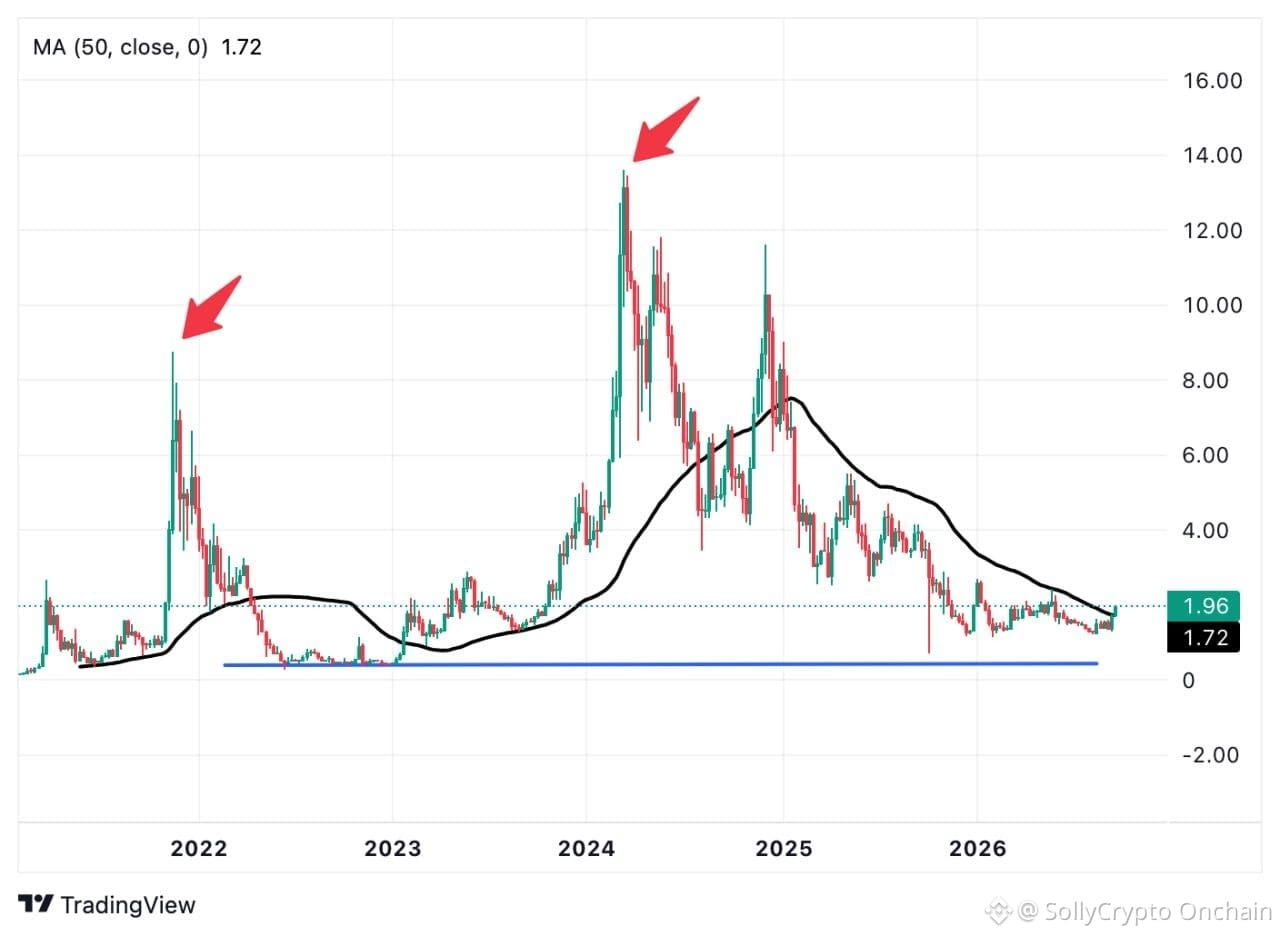
Render
🖤 Down 90% from its peak, yet it didn't break the previous cycle's low
🖤 Set a new all-time high, exceeding the previous peak by 50%
🖤 Price broke above the 50 WMA
❤️ Repeating the pattern of the last two cycles could push the coin toward $4 first, with an ambitious target of $20 (+900%)
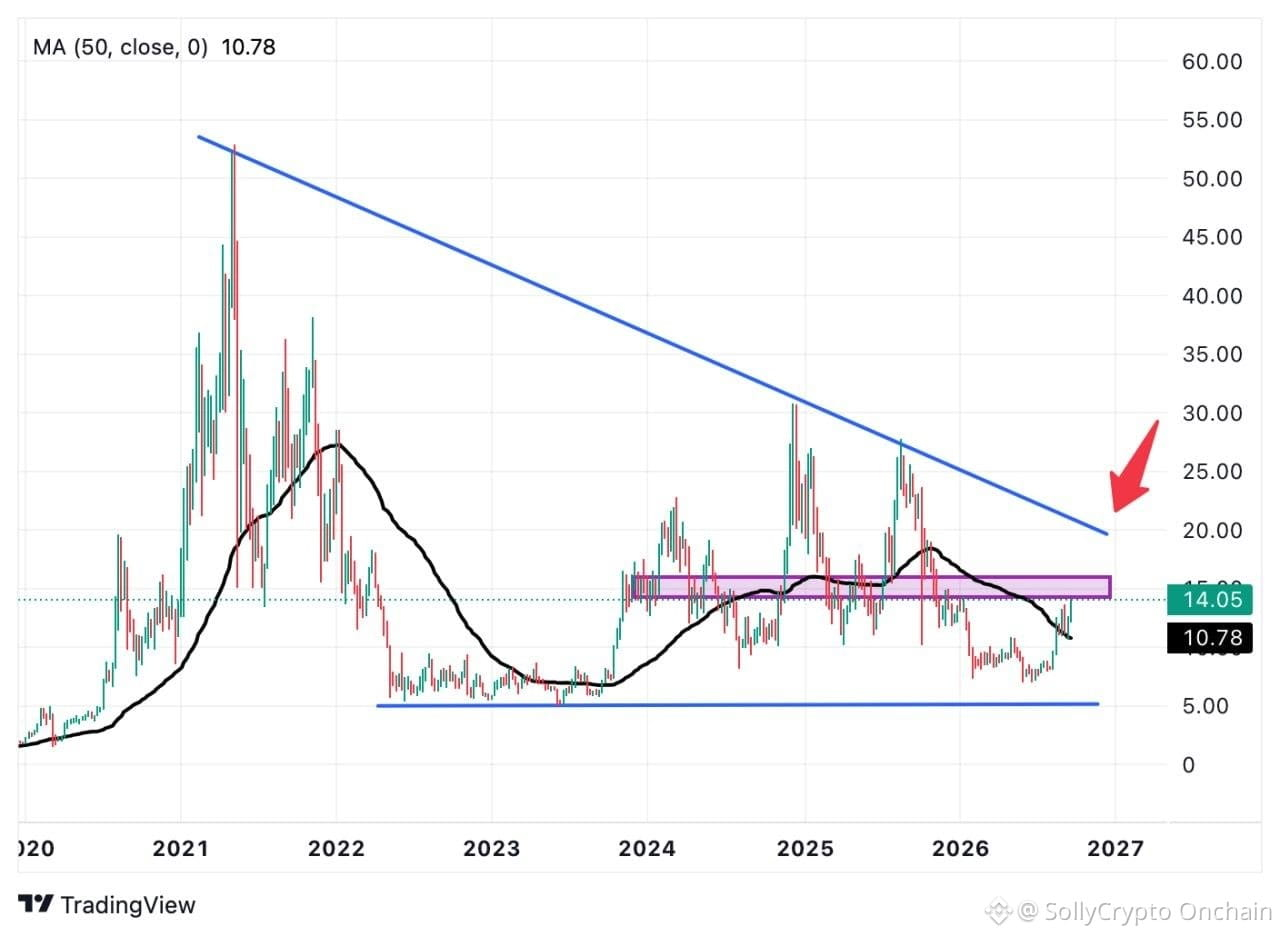
Chainlink
🖤 Down only 78% from its prior peak; held above the previous cycle's low
🖤 Macro downtrend that requires a breakout around $20
🖤 Broke above the 50 WMA and hit strong resistance at $14
❤️ Massive bets and bold forecasts are targeting $280 within 18 months, but it first needs to break the macro downtrend at $20
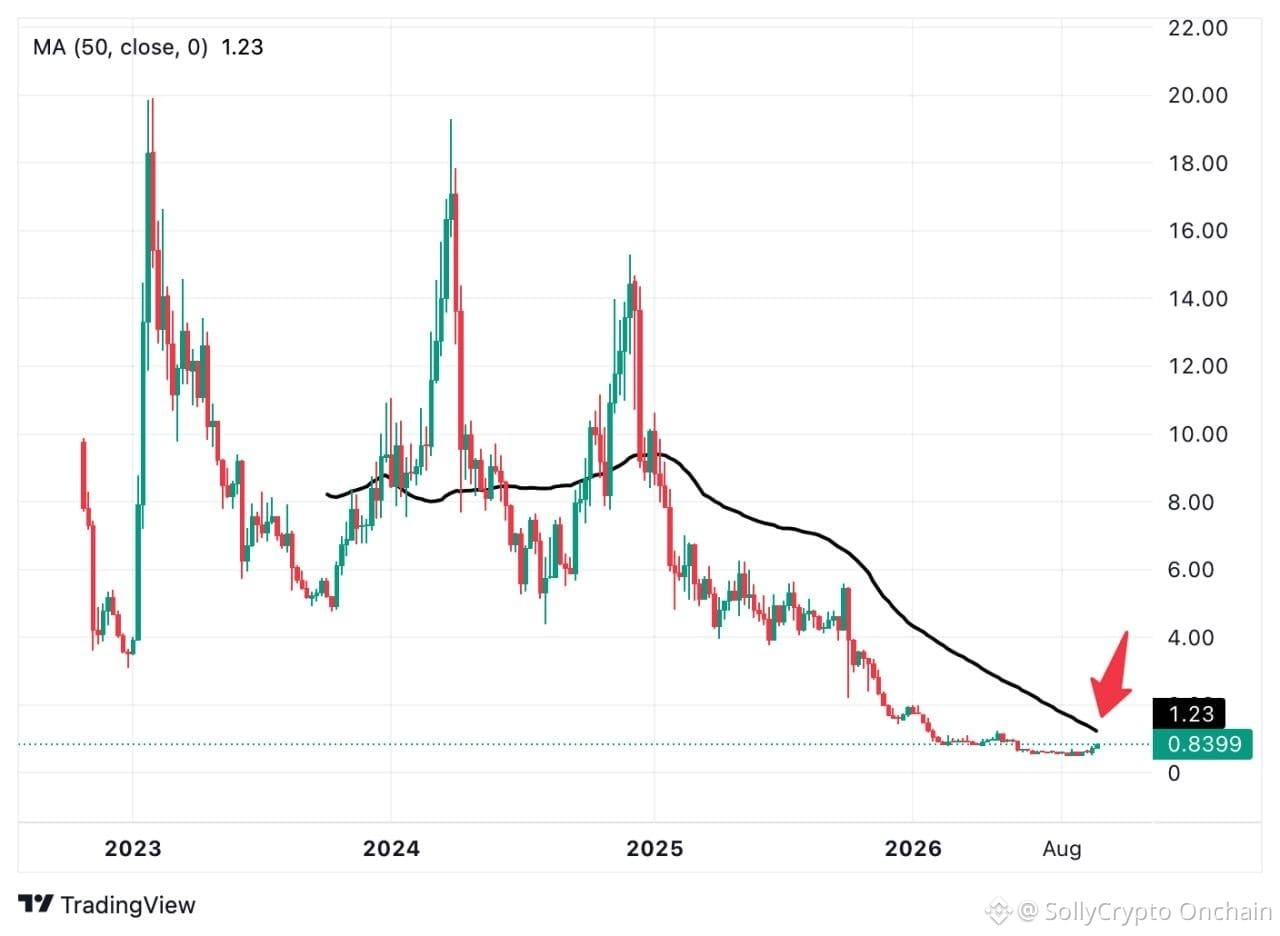
Aptos
💙 Aptos fans, forgive me, but it's dead
❤️ Miracles and loud comebacks happen in crypto—look at Zcash. If Aptos climbs back above the 50 WMA ($1.23), I'll re-evaluate
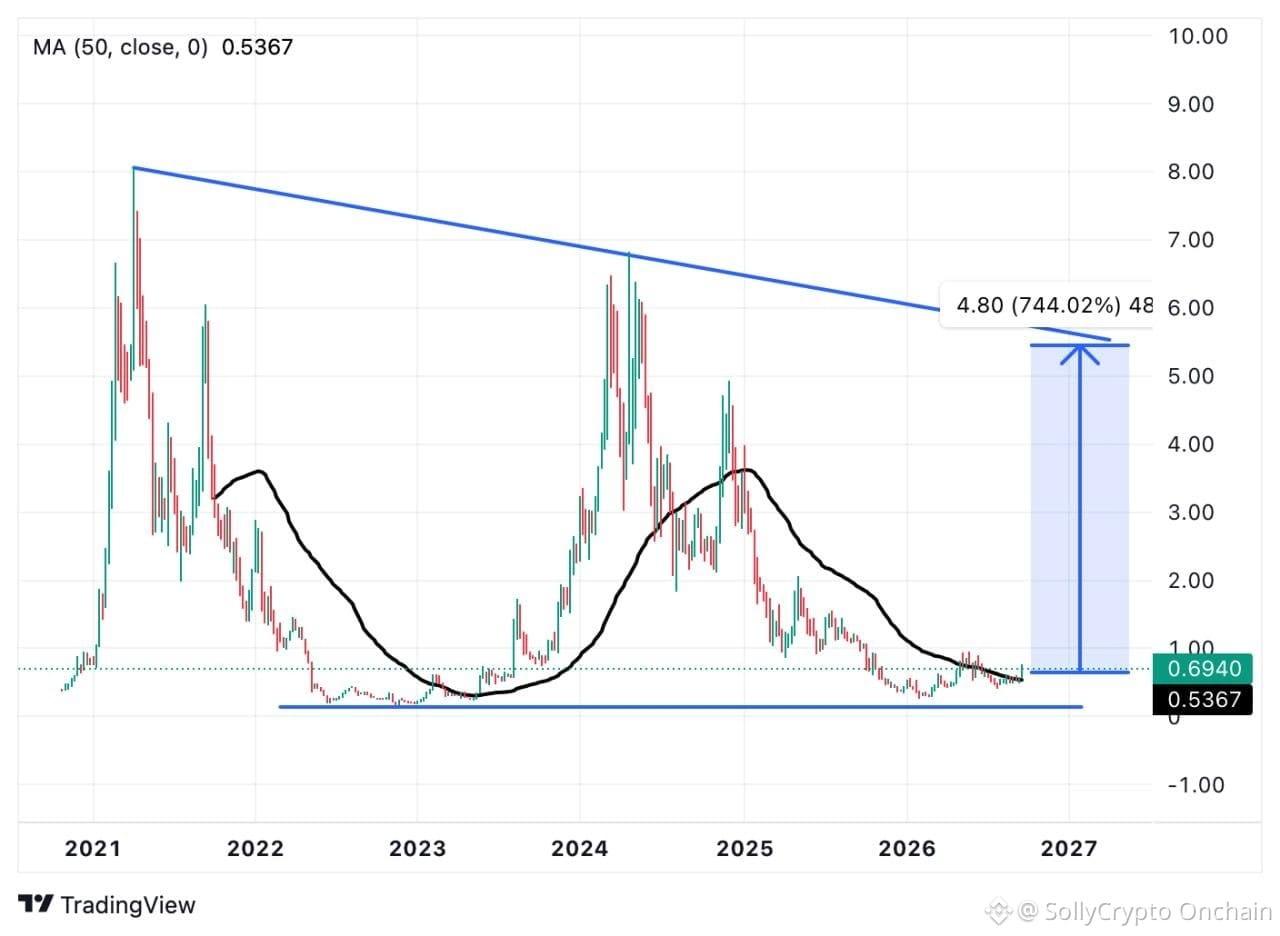
Akash Network
🖤 Down 95% from its last peak, but left the previous cycle's low intact
🖤 Broke above the 50 WMA; the previous cycle's pattern suggests sideways consolidation along the line before turning parabolic
❤️ Macro downtrend that is unlikely to break, yet even an attempt to test it offers a +700% upside potential
P.S. Thanks for the 👍 on the previous post. If you want more content like this, you know what to do.
BlackRock is promising a machine economy, while we break down the coins that stand to gain from it 🕯
Render
🖤 Down 90% from its peak, yet it didn't break the previous cycle's low
🖤 Set a new all-time high, exceeding the previous peak by 50%
🖤 Price broke above the 50 WMA
❤️ Repeating the pattern of the last two cycles could push the coin toward $4 first, with an ambitious target of $20 (+900%)
Chainlink
🖤 Down only 78% from its prior peak; held above the previous cycle's low
🖤 Macro downtrend that requires a breakout around $20
🖤 Broke above the 50 WMA and hit strong resistance at $14
❤️ Massive bets and bold forecasts are targeting $280 within 18 months, but it first needs to break the macro downtrend at $20
Aptos
💙 Aptos fans, forgive me, but it's dead
❤️ Miracles and loud comebacks happen in crypto—look at Zcash. If Aptos climbs back above the 50 WMA ($1.23), I'll re-evaluate
Akash Network
🖤 Down 95% from its last peak, but left the previous cycle's low intact
🖤 Broke above the 50 WMA; the previous cycle's pattern suggests sideways consolidation along the line before turning parabolic
❤️ Macro downtrend that is unlikely to break, yet even an attempt to test it offers a +700% upside potential
P.S. Thanks for the 👍 on the previous post. If you want more content like this, you know what to do.
Render
🖤 Down 90% from its peak, yet it didn't break the previous cycle's low
🖤 Set a new all-time high, exceeding the previous peak by 50%
🖤 Price broke above the 50 WMA
❤️ Repeating the pattern of the last two cycles could push the coin toward $4 first, with an ambitious target of $20 (+900%)
Chainlink
🖤 Down only 78% from its prior peak; held above the previous cycle's low
🖤 Macro downtrend that requires a breakout around $20
🖤 Broke above the 50 WMA and hit strong resistance at $14
❤️ Massive bets and bold forecasts are targeting $280 within 18 months, but it first needs to break the macro downtrend at $20
Aptos
💙 Aptos fans, forgive me, but it's dead
❤️ Miracles and loud comebacks happen in crypto—look at Zcash. If Aptos climbs back above the 50 WMA ($1.23), I'll re-evaluate
Akash Network
🖤 Down 95% from its last peak, but left the previous cycle's low intact
🖤 Broke above the 50 WMA; the previous cycle's pattern suggests sideways consolidation along the line before turning parabolic
❤️ Macro downtrend that is unlikely to break, yet even an attempt to test it offers a +700% upside potential
P.S. Thanks for the 👍 on the previous post. If you want more content like this, you know what to do.
2
646
·
--
Haussier
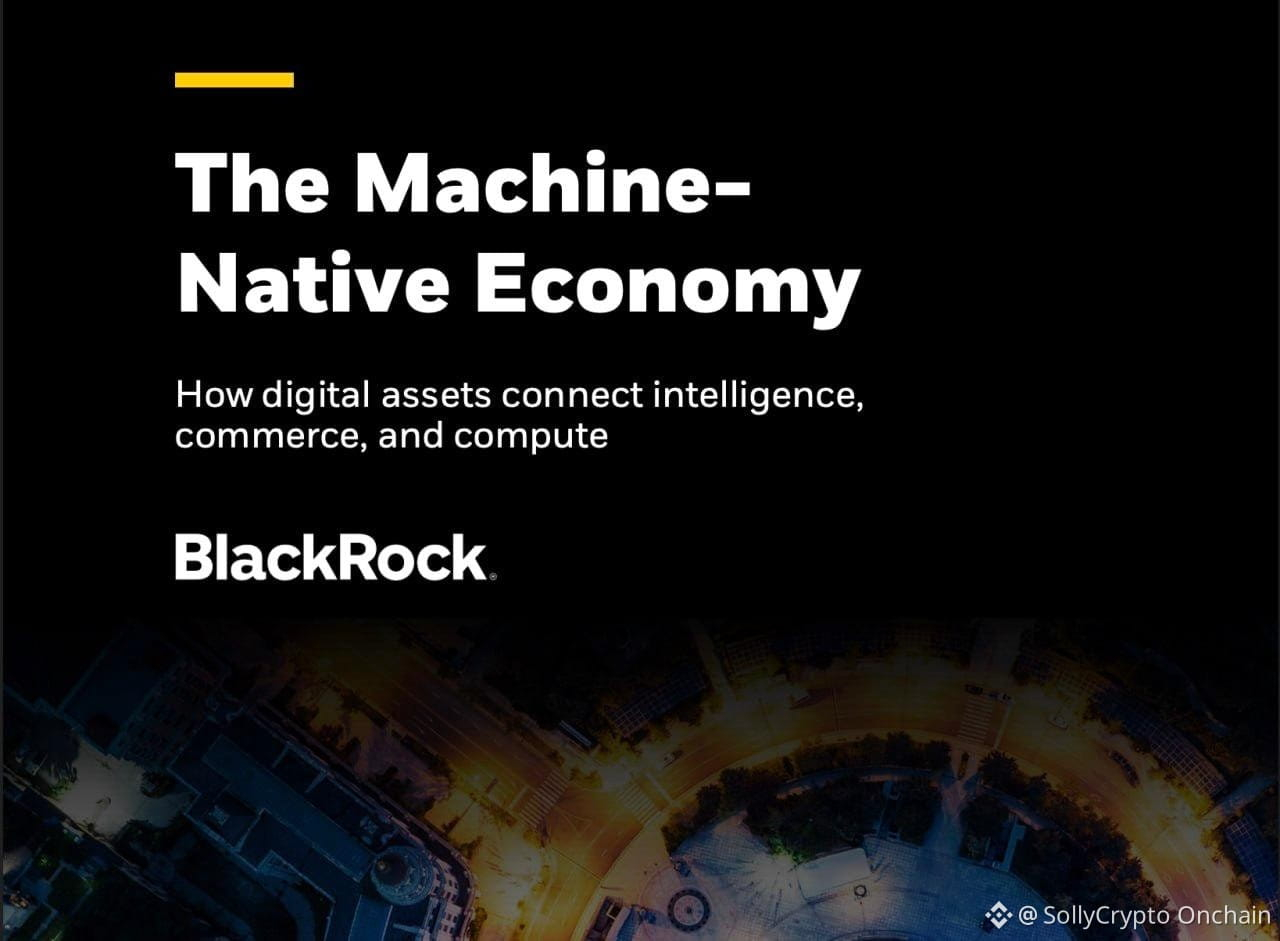
BlackRock highlights the synergy between AI and crypto in its new report, The Machine-Native Economy 🧚
The premise: as AI agents evolve, hundreds of thousands of autonomous models will form a new economic layer, purchasing servers, paying for APIs, and executing microtransactions on their own. Legacy payment rails aren’t built for this scale and velocity, making blockchain the natural backbone.
While BlackRock doesn't explicitly name specific tokens, reading between the lines points to strong potential for several key projects:
🖤 BTC – the premier digital reserve asset for AI agents to store accumulated capital
🖤 Solana & Ethereum – the core settlement infrastructure for stablecoin payments
🖤 Aptos, Sui, NEAR Protocol – next-gen networks designed for autonomous agents to manage crypto wallets seamlessly and securely
🖤 Render, Akash Network – decentralized compute marketplaces
🖤 Bittensor – an incentivized network where AI models compete, share data, and train collaboratively
🖤 Chainlink – the oracle standard for verifying, securing, and validating AI agent workloads
Drop a 👍 if you want a chart breakdown for these altcoins.
BlackRock highlights the synergy between AI and crypto in its new report, The Machine-Native Economy 🧚
The premise: as AI agents evolve, hundreds of thousands of autonomous models will form a new economic layer, purchasing servers, paying for APIs, and executing microtransactions on their own. Legacy payment rails aren’t built for this scale and velocity, making blockchain the natural backbone.
While BlackRock doesn't explicitly name specific tokens, reading between the lines points to strong potential for several key projects:
🖤 BTC – the premier digital reserve asset for AI agents to store accumulated capital
🖤 Solana & Ethereum – the core settlement infrastructure for stablecoin payments
🖤 Aptos, Sui, NEAR Protocol – next-gen networks designed for autonomous agents to manage crypto wallets seamlessly and securely
🖤 Render, Akash Network – decentralized compute marketplaces
🖤 Bittensor – an incentivized network where AI models compete, share data, and train collaboratively
🖤 Chainlink – the oracle standard for verifying, securing, and validating AI agent workloads
Drop a 👍 if you want a chart breakdown for these altcoins.
The premise: as AI agents evolve, hundreds of thousands of autonomous models will form a new economic layer, purchasing servers, paying for APIs, and executing microtransactions on their own. Legacy payment rails aren’t built for this scale and velocity, making blockchain the natural backbone.
While BlackRock doesn't explicitly name specific tokens, reading between the lines points to strong potential for several key projects:
🖤 BTC – the premier digital reserve asset for AI agents to store accumulated capital
🖤 Solana & Ethereum – the core settlement infrastructure for stablecoin payments
🖤 Aptos, Sui, NEAR Protocol – next-gen networks designed for autonomous agents to manage crypto wallets seamlessly and securely
🖤 Render, Akash Network – decentralized compute marketplaces
🖤 Bittensor – an incentivized network where AI models compete, share data, and train collaboratively
🖤 Chainlink – the oracle standard for verifying, securing, and validating AI agent workloads
Drop a 👍 if you want a chart breakdown for these altcoins.
1
206
·
--
Baissier
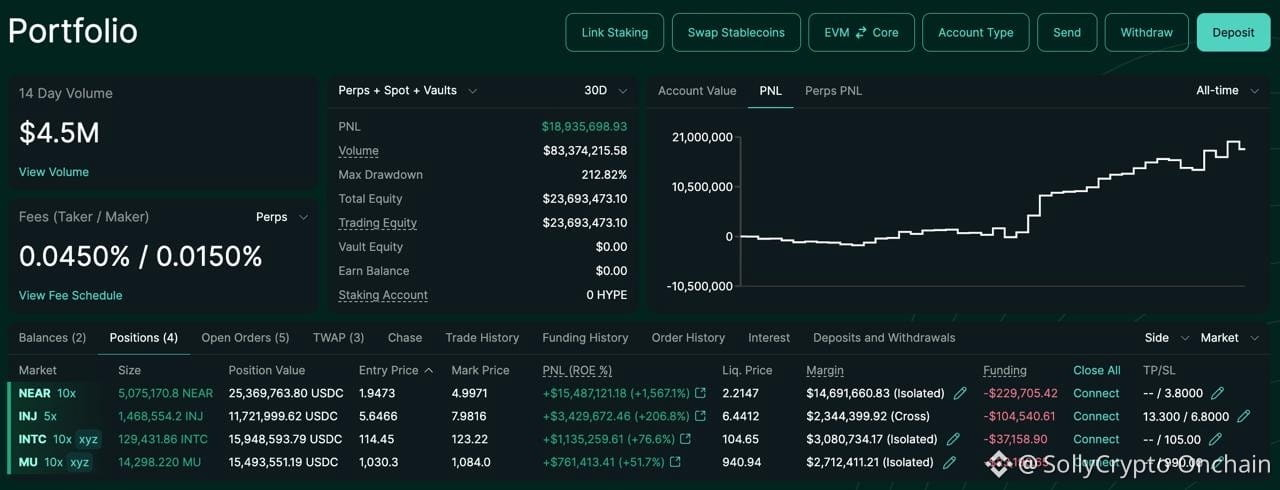
The wallet holding the second-largest $NEAR and largest $INJ long on Hyperliquid has started closing both positions through multiple 6-hour TWAPs. The book still shows about 5.11M $NEAR worth roughly $25.3M with around $15.4M unrealized profit, and about 1.48M $INJ worth roughly $11.7M with around $3.3M unrealized profit. The same wallet is keeping more than $30M combined long exposure in $INTC and $MU for now and is up about $19M over the past month.
Why this happened
Big winners eventually take profit. Using multi-hour TWAPs usually means the trader wants out without smashing the book in one hit. Closing $NEAR and $INJ while leaving equity-linked longs open looks like selective de-risking, not a full risk-off panic.
Why it matters
When the largest or second-largest longs on a venue start exiting, near-term tape can soften. TWAP selling is orderly, but it is still supply. For $NEAR and $INJ, this is a caution signal after strong unrealized gains. The fact that equity longs remain open suggests the wallet is rotating risk, not abandoning markets entirely.
How it can benefit you
If you were late long, this is a warning to respect distribution risk. Profit-taking from a highly profitable book can create better re-entry levels later if the broader trend is still intact.
How it can harm you
Blindly shorting just because one whale is selling can backfire if fresh demand absorbs the TWAPs. Also, position data can change quickly. Copying the exit after it is already public means you are late to the information.
SollyCrypto opinion
Near-term dump lean for $NEAR and $INJ while this TWAP exit is active. Constructive reminder that big longs do sell strength. Not automatically a long-term thesis break.
You fading $NEAR and $INJ with the whale, or waiting to see if the TWAPs get absorbed?
Follow me, or you may not see the next one.
The wallet holding the second-largest $NEAR and largest $INJ long on Hyperliquid has started closing both positions through multiple 6-hour TWAPs. The book still shows about 5.11M $NEAR worth roughly $25.3M with around $15.4M unrealized profit, and about 1.48M $INJ worth roughly $11.7M with around $3.3M unrealized profit. The same wallet is keeping more than $30M combined long exposure in $INTC and $MU for now and is up about $19M over the past month.
Why this happened
Big winners eventually take profit. Using multi-hour TWAPs usually means the trader wants out without smashing the book in one hit. Closing $NEAR and $INJ while leaving equity-linked longs open looks like selective de-risking, not a full risk-off panic.
Why it matters
When the largest or second-largest longs on a venue start exiting, near-term tape can soften. TWAP selling is orderly, but it is still supply. For $NEAR and $INJ, this is a caution signal after strong unrealized gains. The fact that equity longs remain open suggests the wallet is rotating risk, not abandoning markets entirely.
How it can benefit you
If you were late long, this is a warning to respect distribution risk. Profit-taking from a highly profitable book can create better re-entry levels later if the broader trend is still intact.
How it can harm you
Blindly shorting just because one whale is selling can backfire if fresh demand absorbs the TWAPs. Also, position data can change quickly. Copying the exit after it is already public means you are late to the information.
SollyCrypto opinion
Near-term dump lean for $NEAR and $INJ while this TWAP exit is active. Constructive reminder that big longs do sell strength. Not automatically a long-term thesis break.
You fading $NEAR and $INJ with the whale, or waiting to see if the TWAPs get absorbed?
Follow me, or you may not see the next one.
Why this happened
Big winners eventually take profit. Using multi-hour TWAPs usually means the trader wants out without smashing the book in one hit. Closing $NEAR and $INJ while leaving equity-linked longs open looks like selective de-risking, not a full risk-off panic.
Why it matters
When the largest or second-largest longs on a venue start exiting, near-term tape can soften. TWAP selling is orderly, but it is still supply. For $NEAR and $INJ, this is a caution signal after strong unrealized gains. The fact that equity longs remain open suggests the wallet is rotating risk, not abandoning markets entirely.
How it can benefit you
If you were late long, this is a warning to respect distribution risk. Profit-taking from a highly profitable book can create better re-entry levels later if the broader trend is still intact.
How it can harm you
Blindly shorting just because one whale is selling can backfire if fresh demand absorbs the TWAPs. Also, position data can change quickly. Copying the exit after it is already public means you are late to the information.
SollyCrypto opinion
Near-term dump lean for $NEAR and $INJ while this TWAP exit is active. Constructive reminder that big longs do sell strength. Not automatically a long-term thesis break.
You fading $NEAR and $INJ with the whale, or waiting to see if the TWAPs get absorbed?
Follow me, or you may not see the next one.
5
2.7k
Circle Foundation is partnering with the UN Development Programme and World Food Programme to pilot stablecoin payments for humanitarian aid, testing $USDC-based disbursements in conflict zones and low-connectivity regions.
Why this happened
Aid groups need faster, more traceable ways to move money where banks are weak or connectivity is poor. Circle Foundation is backing pilots that use regulated stablecoin rails for disbursements, with UNDP and WFP testing how $USDC payments work in tough real-world settings.
Why it matters
This is utility beyond trading. If $USDC can help move aid in conflict zones and low-connectivity regions, it strengthens the payments and public-goods case for regulated dollars onchain. For Circle and $USDC, humanitarian rails are reputational and practical distribution at the same time.
How it can benefit you
If you are constructive on $USDC, real-world payment pilots support the long-term adoption narrative. More non-trading use cases make the stablecoin story broader than exchange liquidity alone.
How it can harm you
Pilots are not global scale. Humanitarian deployments face compliance, custody, and operational hurdles. People who treat every aid headline as a near-term trading catalyst can overstate the immediate market impact.
SollyCrypto opinion
Mild constructive lean for $USDC. UNDP and WFP pilot activity is meaningful real-world validation, still early in size.
You treating humanitarian $USDC pilots as real adoption fuel, or just soft branding?
Follow me, or you may not see the next one.
Circle Foundation is partnering with the UN Development Programme and World Food Programme to pilot stablecoin payments for humanitarian aid, testing $USDC-based disbursements in conflict zones and low-connectivity regions.
Why this happened
Aid groups need faster, more traceable ways to move money where banks are weak or connectivity is poor. Circle Foundation is backing pilots that use regulated stablecoin rails for disbursements, with UNDP and WFP testing how $USDC payments work in tough real-world settings.
Why it matters
This is utility beyond trading. If $USDC can help move aid in conflict zones and low-connectivity regions, it strengthens the payments and public-goods case for regulated dollars onchain. For Circle and $USDC, humanitarian rails are reputational and practical distribution at the same time.
How it can benefit you
If you are constructive on $USDC, real-world payment pilots support the long-term adoption narrative. More non-trading use cases make the stablecoin story broader than exchange liquidity alone.
How it can harm you
Pilots are not global scale. Humanitarian deployments face compliance, custody, and operational hurdles. People who treat every aid headline as a near-term trading catalyst can overstate the immediate market impact.
SollyCrypto opinion
Mild constructive lean for $USDC. UNDP and WFP pilot activity is meaningful real-world validation, still early in size.
You treating humanitarian $USDC pilots as real adoption fuel, or just soft branding?
Follow me, or you may not see the next one.
Why this happened
Aid groups need faster, more traceable ways to move money where banks are weak or connectivity is poor. Circle Foundation is backing pilots that use regulated stablecoin rails for disbursements, with UNDP and WFP testing how $USDC payments work in tough real-world settings.
Why it matters
This is utility beyond trading. If $USDC can help move aid in conflict zones and low-connectivity regions, it strengthens the payments and public-goods case for regulated dollars onchain. For Circle and $USDC, humanitarian rails are reputational and practical distribution at the same time.
How it can benefit you
If you are constructive on $USDC, real-world payment pilots support the long-term adoption narrative. More non-trading use cases make the stablecoin story broader than exchange liquidity alone.
How it can harm you
Pilots are not global scale. Humanitarian deployments face compliance, custody, and operational hurdles. People who treat every aid headline as a near-term trading catalyst can overstate the immediate market impact.
SollyCrypto opinion
Mild constructive lean for $USDC. UNDP and WFP pilot activity is meaningful real-world validation, still early in size.
You treating humanitarian $USDC pilots as real adoption fuel, or just soft branding?
Follow me, or you may not see the next one.


3
39
Connectez-vous pour découvrir plus de contenu
Rejoignez la communauté mondiale des adeptes de cryptomonnaies sur Binance Square
⚡️ Suviez les dernières informations importantes sur les cryptomonnaies.
💬 Jugé digne de confiance par la plus grande plateforme d’échange de cryptomonnaies au monde.
👍 Découvrez les connaissances que partagent les créateurs vérifiés.
Adresse e-mail/Nº de téléphone