I almost treated $TMX leverage like a normal loop today: borrow, swap, deposit, repeat. Then I noticed something I’d been overlooking in @TermMax Leverager.
The whole leverage build happens atomically.
Borrowed debt tokens and my initial contribution are combined, used to buy collateral, and locked into a Gearing Token in the same transaction.
On my small test, the part I liked most wasn't the leverage itself. It was knowing there wasn't a borrowed-funds-in-between state sitting there while I waited for the next step.
With a normal loop, that gap can mean extra slippage, a failed transaction, or simply a final position different from what I planned.
There’s still a tradeoff. Atomic execution reduces that execution gap, but I lose the ability to pause and resize after each loop.
I’m watching how this behaves during volatile pricing.
If that holds up, I think the flexibility tradeoff may be worth it.
I spent more time with $DUSK ’s consensus docs last night, and I think I was looking at decentralization from the wrong angle.
The obvious metric is the number of provisioners. But Dusk’s design makes the distribution of consensus influence more interesting than the raw count. Provisioners need at least 1,000 DUSK to participate, while DuskDS uses deterministic sortition to select provisioners for proposal and committee duties.
That matters because a network could have plenty of eligible provisioners while a smaller group still gets disproportionate consensus exposure.
I also found the risk controls interesting. Dusk uses soft penalties for failed participation and hard penalties for provably invalid behavior, including conflicting votes or proposals.
So I’m less interested in simply asking, “How many provisioners are there?”
I want to know: how evenly is consensus power actually distributed, and how sensitive is that distribution to the eligibility parameters?
Don’t mistake temporary trending momentum for actual portfolio growth! 📉
Chasing tokens in the "Alpha" tab might look exciting with double-digit green numbers, but high daily percentage spikes don't guarantee long-term value or real account growth. Many of these trending assets carry extreme volatility and low liquidity, leading to sudden drawdowns just as fast as they pump.
Always look past short-term hype, manage your exposure, and stick to a solid risk management strategy. DYOR! 🧠💡
The crypto market is moving fast, with top gainers like TRUMP (+62.39%), MUBARAK (+45.04%), and ZEC (+42.79%) showing massive 24-hour surges. Momentum is building across spot and futures trading, opening up prime opportunities for traders looking to capture short-term price action. Don't let market volatility pass you by—track the trends, execute smart strategies, and manage your risk wisely.
Before jumping in, what is your risk tolerance, trading strategy, or budget?
The biggest crypto headline this week is NOT “CLARITY Act passed.”
It hasn’t.
What actually changed is more interesting: on Aug. 19, Trump publicly pushed Congress to advance the crypto market-structure bill, while the Senate has a Sept. 15 procedural vote lined up.
That matters because regulatory clarity could eventually give banks, exchanges and institutions a clearer framework for handling digital assets.
But I’m not pricing in the full victory yet.
The bill still faces political disputes, and a procedural vote is not the same as becoming law.
My view: the market may be front-running the possibility of clarity before Washington actually delivers it.
If the bill survives the political process, $BTC and ETH could benefit first, while other major assets may gain from reduced regulatory uncertainty.
The real question: does Congress turn this momentum into law in 2026—or does the biggest institutional catalyst get pushed into 2027?
$BTC just showed why chasing vertical candles can be dangerous.
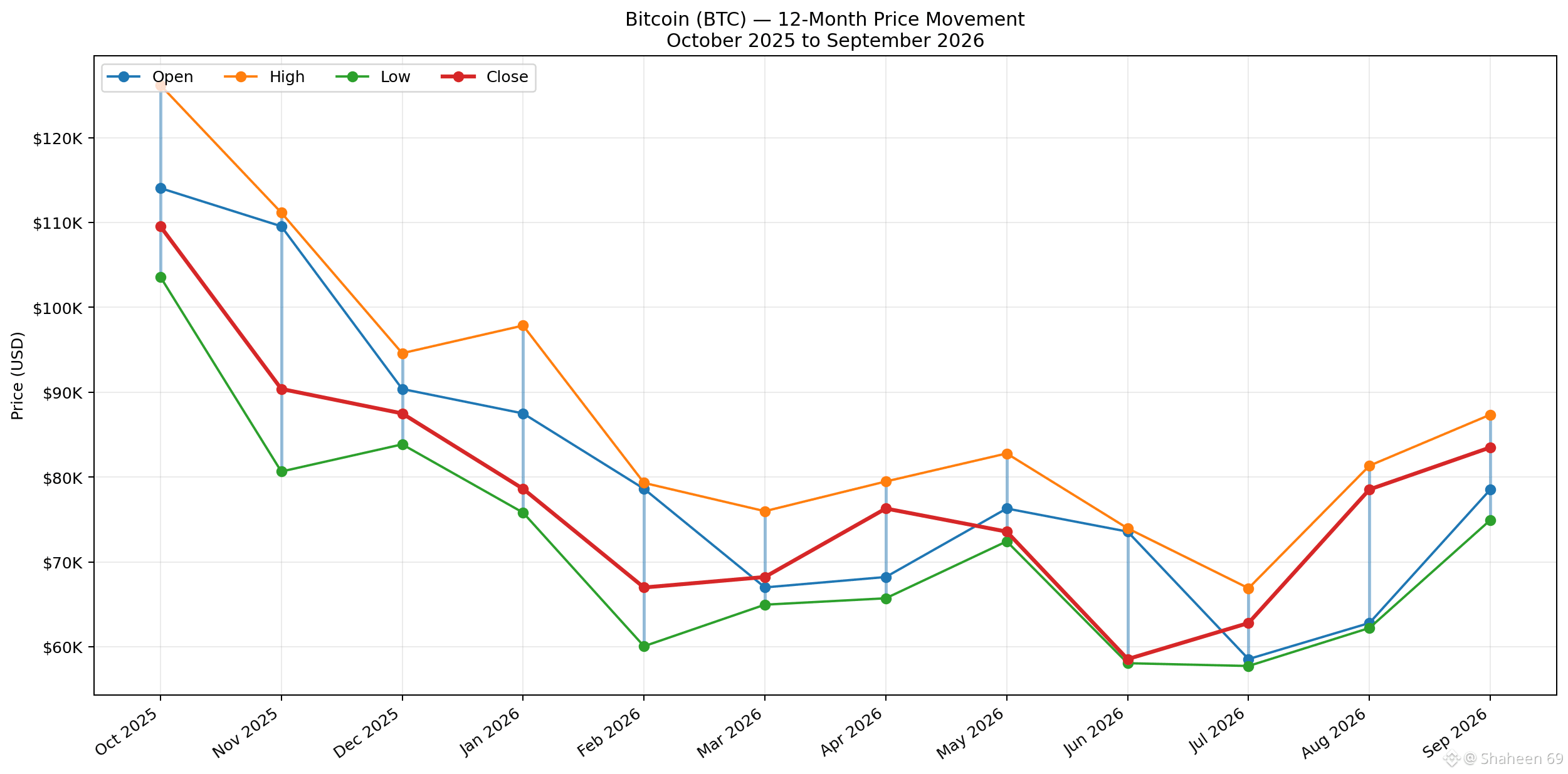
From roughly $64.7K on Aug. 18 to $79.3K on Aug. 21, Bitcoin gained about 22.6% in just three days. That is a serious expansion, not a normal grind higher.
What caught my attention is the speed. A large part of the move was amplified by short covering, while spot Bitcoin ETFs also recorded strong inflows.
That doesn’t automatically make the rally bearish. It simply means I want to see what happens after the forced buying cools down.
For me, the important test is whether $BTC can consolidate above the breakout area instead of immediately giving back a large portion of the move.
I’m not fading Bitcoin here. I’m refusing to FOMO.
Would you rather buy strength now, or wait for the market to prove this breakout can hold?
Visual: BTC 3-day chart showing the breakout, volume and liquidation spike.
I went deeper into Hedger expecting another “private blockchain” pitch. The more interesting discovery was that Dusk isn’t really chasing secrecy for its own sake.
Hedger combines homomorphic encryption with zero-knowledge proofs so EVM applications can keep balances, positions and transaction details confidential while still allowing verifiable execution and regulatory auditability.
Then I checked Dusk’s bridge incident response. On January 16, 2026, a team-managed bridge signing wallet was compromised. Dusk paused the bridge, disabled affected addresses and deployed a Web Wallet recipient blocklist to prevent transfers to known dangerous addresses. Importantly, Dusk said the incident was a bridge compromise, not a DuskDS protocol failure.
That changed my view of $DUSK .
The real proposition isn’t Monero-style anonymity. It’s controlled confidentiality: keep financial information private while preserving the ability to enforce rules when necessary.
That could be exactly what regulated markets need. But it creates my biggest question: who ultimately controls disclosure and intervention?
I almost added to my BTC position after reading Trump’s latest comments, but I stopped myself. The headline sounds huge: the U.S. has discussed accumulating a large Bitcoin position.
What caught my attention wasn’t the size of the claim. It was the wording.
There’s still no confirmed purchase amount or timeline, so I’m treating this as a policy signal, not a guaranteed buy. That distinction matters when trading BTC around headlines.
The part I find more interesting is how Bitcoin is now being discussed alongside the CLARITY Act. One is about potential government demand; the other is about creating rules that could make institutional participation easier.
For my own trade, I kept it small rather than chasing the first reaction. I’d rather miss a few dollars of upside than enter because of one political headline and watch the market cool off.
My takeaway: if the U.S. eventually moves from discussing Bitcoin accumulation to actually buying, the market impact wouldn’t just come from the BTC purchased. The bigger effect could be the signal that Bitcoin is becoming part of long-term U.S. financial strategy.
For now, I’m watching the policy follow-through, not just the headline.
As of August 21, 2026, $BTC has surged roughly 23% this week, reaching $79,400 before pulling back toward the $77K area. That makes this Bitcoin’s strongest weekly performance since March 2023.
The move is even more impressive considering BTC was around $62K–$65K earlier this month.
What changed?
📌 U.S. Treasury bond-buying plans 📌 A weaker dollar 📌 Stronger institutional/ETF demand 📌 Short positions getting squeezed 📌 Renewed optimism around U.S. crypto regulation
But I’m not calling this a guaranteed new bull market yet.
For me, $80K is the psychological battlefield. A clean breakout and hold above it could change market sentiment dramatically.
Bitcoin just reminded everyone:
When BTC wakes up, the entire crypto market listens. 🔥
Most traders get caught buying the exact top of local breakouts.
$ETH made a high of 2,380.82 on rising volume, but short-term momentum is cooling down as price consolidates right near the 7 MA (2,352.98). Holding above the 25 MA (2,348.56) retains the bullish market structure for a higher low setup.
I almost dismissed $TMX after a small test position went nowhere, but I’ve been looking at TermMax differently lately.
The retail side is obvious: XP, badges, leverage, Alpha products and campaigns keep users active and help create liquidity.
What I initially missed is what’s underneath that activity.
TermMax has been building fixed-rate markets with institutional use in mind, including KYC infrastructure through Fireblocks. The roadmap also points toward structured products, market makers and broader RWA integration.
That makes the retail side more interesting to me. It may not be the end goal — it could be the distribution layer.
Institutions need predictable funding, defined maturities and capital efficiency. That’s where fixed-rate markets make sense.
The real test, though, is whether retail liquidity can eventually make institutional participation easier, rather than the two sides growing separately.
I was looking at $DUSK again today and caught myself thinking about a small position I took earlier. I entered around $0.065, mostly as a test, and honestly I’m still watching the mechanics more than the PNL.
Dusk’s fork-resolution design is what grabbed my attention.
Think of two routes to the same destination. One starts first but gets delayed, while the other starts later and arrives first. You wouldn’t automatically say the later route was the right one.
That’s roughly how Dusk approaches competing consensus candidates. If iteration 2 and iteration 5 both reach quorum, iteration 5 doesn’t simply win because it finished successfully later. The lower iteration gets priority.
With rolling finality, unresolved earlier candidates are still considered instead of blindly finalizing the newest result.
That creates an interesting validator incentive: resolving earlier attempts can matter more than just chasing the latest one.
For financial infrastructure, I think that distinction is worth watching.
A sudden surge in volume often signals trap liquidity rather than genuine reversal.
On the $DOGE 4-hour chart, price staged a sharp breakout toward $0.07418 backed by a massive volume spike. However, the long upper wick indicates immediate overhead rejection, showing sellers absorbed aggressive market buys. Because moving averages remain flat, this expansion lacks sustained trend momentum and risks retracing toward previous range lows.
Trade Setup ($DOGE /USDT):
Bias: SHORT
Entry Zone: $0.07250 – $0.07350
SL: $0.07460
TP1: $0.07080
TP2: $0.06980
TP3: $0.06890
Mentioning $BTC, ETH, andBNB for market context.
Do you view this volume expansion as a bull trap or genuine accumulation?
Chasing vertical green candles is how retail accounts get wiped out.
$ZEC just expansion-surged past 560 on massive volume spikes, driving short-term technicals heavily into overbought territory. Buying this resistance expansion risk-reward-wise is dangerous. A healthy pull-back toward broken consolidation levels offers a much cleaner opportunity.
Is $HEMI preparing for its next explosive leg up, or is this a trap?
After holding strong support near $0.00457, market structure flipped bullish with higher highs on the 4H chart. Price is holding above the 7 and 25 moving averages, pointing toward growing momentum. However, local resistance around $0.00750 must clear for continuation.
Trade Setup: $HEMI
Bias: LONG
Entry Zone: $0.00680 – $0.00720
Stop-Loss: $0.00620
TP1: $0.00820
TP2: $0.00900
TP3: $0.01020
USDTBTC
Are you buying this retest or waiting for a breakout above resistance?
Smart money is stepping into BRUSDT after a strong consolidation base above the 99 MA.
The 4-hour chart displays a clean breakout structure. Price pushed past the 7 MA and 25 MA around 0.202, confirming a trend reversal with rising buying volume. As long as price holds above the recent higher-low support zone, momentum favors buyers aiming for prior liquidity highs.
Trade Setup:
Bias: LONG
Entry Zone: $0.208 – $0.213
SL: $0.198
TP1: $0.228
TP2: $0.252
TP3: $0.278
Do you expect a direct continuation or a quick retest of the moving averages first? $BR
This morning I caught myself hesitating before opening my DeFi positions again. I’ve had too many nights where variable rates moved against me and quietly changed the whole trade.
That’s what got me looking harder at @TermMax.
I tested a small position first, rather than jumping in, and the fixed-rate setup made more sense to me than constantly guessing where borrowing costs would be tomorrow. You choose the term and rate upfront, so the cost is actually part of the trade plan.
The less obvious part is the fixed-rate tokens working like zero-coupon bonds. That makes the payoff easier to calculate before entering, which matters when you’re trying to manage risk instead of just chasing yield.
I’m also watching the one-click leverage and Alpha features, but I’m keeping my position small for now.
For me, $TMX isn’t interesting because of hype. It’s interesting because predictable rates make on-chain positions easier to plan.
A few days ago I took a small DUSK test position, then caught myself hesitating.
I’ve followed Dusk for a while, but what clicked for me recently is that it isn’t really trying to make privacy “invisible.” It’s trying to make privacy usable without removing the compliance layer.
That distinction matters.
Dusk is designed around real-world financial assets, where you can’t just hide everything and expect institutions or regulators to accept it. Zero-knowledge proofs can keep sensitive details private while still allowing the required information to be verified.
That’s a much more practical approach than simply saying, “everything is private.”
I also like that DUSK has an actual network role—gas and staking—rather than being treated as a token added after the fact.
My position is still small, and I’m not pretending I’ve figured out the trade yet. But the more I look at Dusk, the more I understand why the slow build caught my attention.
Solana just swept the liquidity below 74.10, triggering a sharp bullish reversal back above key moving averages.
The 4H candle close near 77.24 signals strong absorption of selling pressure, pushing price above MA(7) and MA(25). Momentum is shifting rapidly as buyers defend structural support.
Trade Setup:
Asset: $SOL
Bias: LONG
Entry Zone: 76.50 – 77.20
Stop-Loss: 74.00
TP1: 78.50
TP2: 80.20
TP3: 82.50
Risk management remains essential as SOL tests local resistance nearBTC levels.
Are you buying this breakout or waiting for a pullback?