

Sahil987
13.1k Publications

Sahil987
 Compte Square Vérifié+
Signaler
Bloquer l’utilisateur
@Sahil_987_ 🔶 Web3 Learner | Trends & Market Understanding | Mistakes & Market Lessons In Real Time. No Shortcuts - Just Consistency.
Trade fréquemment
2.3 an(s)
189 Suivis
71.2K+ Abonnés
56.9K+ J’aime
Publications
Tous
Citations
Vidéos
Direct
·
--
$BROCCOLI714 holding near 0.0285 after a sharp breakout from the 0.024–0.025 area. The move came with a clear expansion in volume, showing that the recent push had real participation behind it.
#BROCCOLİ714 Price reached 0.02988 and has started cooling slightly from that spike. For me, the interesting part now is whether buyers can keep defending the breakout zone instead of chasing the next candle. A pause here would be healthier than another vertical move.
$BROCCOLI714 holding near 0.0285 after a sharp breakout from the 0.024–0.025 area. The move came with a clear expansion in volume, showing that the recent push had real participation behind it.
#BROCCOLİ714 Price reached 0.02988 and has started cooling slightly from that spike. For me, the interesting part now is whether buyers can keep defending the breakout zone instead of chasing the next candle. A pause here would be healthier than another vertical move.
#BROCCOLİ714 Price reached 0.02988 and has started cooling slightly from that spike. For me, the interesting part now is whether buyers can keep defending the breakout zone instead of chasing the next candle. A pause here would be healthier than another vertical move.
127
·
--
$LSK is showing a strong intraday recovery, climbing from the lower range toward 0.37 after pushing through several consolidation zones. The move is supported by noticeably higher activity, but price has already faced rejection near 0.388.
#LSK What stands out is how buyers are still holding the recent breakout area instead of giving back the entire move. The next few candles should reveal whether this strength has follow-through or needs a cooldown.
$LSK is showing a strong intraday recovery, climbing from the lower range toward 0.37 after pushing through several consolidation zones. The move is supported by noticeably higher activity, but price has already faced rejection near 0.388.
#LSK What stands out is how buyers are still holding the recent breakout area instead of giving back the entire move. The next few candles should reveal whether this strength has follow-through or needs a cooldown.
#LSK What stands out is how buyers are still holding the recent breakout area instead of giving back the entire move. The next few candles should reveal whether this strength has follow-through or needs a cooldown.
220
·
--
Cardano is considering a change that looks small on paper but could matter quite a bit for both delegators and stake pool operators.
The minimum fixed fee could drop from 170 $ADA to 75 ADA without needing a stake pool operator ballot. The proposal still needs approval from DReps and the Constitutional Committee, so it’s not a done deal yet.
The interesting part is how differently this could affect the two sides.
For delegators, a lower fixed fee could mean more of the pool’s rewards being distributed but only if the pool actually lowers its fee. On a 300 #ADA epoch reward, the fixed charge would go from roughly 57% to 25%.
For operators, though, the picture isn’t as simple. Lowering the minimum fee means less guaranteed income, while some pools are already dealing with uneven block production.
So this isn’t simply a “lower fees = better” story.
It’s really a question of where Cardano wants to draw the balance between making delegation more attractive and keeping smaller stake pools economically viable.
#CardanoJoinsX402PaymentStandard
#Market_Update #Cardano #CryptoNews
Cardano is considering a change that looks small on paper but could matter quite a bit for both delegators and stake pool operators.
The minimum fixed fee could drop from 170 $ADA to 75 ADA without needing a stake pool operator ballot. The proposal still needs approval from DReps and the Constitutional Committee, so it’s not a done deal yet.
The interesting part is how differently this could affect the two sides.
For delegators, a lower fixed fee could mean more of the pool’s rewards being distributed but only if the pool actually lowers its fee. On a 300 #ADA epoch reward, the fixed charge would go from roughly 57% to 25%.
For operators, though, the picture isn’t as simple. Lowering the minimum fee means less guaranteed income, while some pools are already dealing with uneven block production.
So this isn’t simply a “lower fees = better” story.
It’s really a question of where Cardano wants to draw the balance between making delegation more attractive and keeping smaller stake pools economically viable.
#CardanoJoinsX402PaymentStandard
#Market_Update #Cardano #CryptoNews
The minimum fixed fee could drop from 170 $ADA to 75 ADA without needing a stake pool operator ballot. The proposal still needs approval from DReps and the Constitutional Committee, so it’s not a done deal yet.
The interesting part is how differently this could affect the two sides.
For delegators, a lower fixed fee could mean more of the pool’s rewards being distributed but only if the pool actually lowers its fee. On a 300 #ADA epoch reward, the fixed charge would go from roughly 57% to 25%.
For operators, though, the picture isn’t as simple. Lowering the minimum fee means less guaranteed income, while some pools are already dealing with uneven block production.
So this isn’t simply a “lower fees = better” story.
It’s really a question of where Cardano wants to draw the balance between making delegation more attractive and keeping smaller stake pools economically viable.
#CardanoJoinsX402PaymentStandard
#Market_Update #Cardano #CryptoNews

1
298
·
--
$ETH has been stuck in a relatively tight range around $2,680, with the earlier bounce from $2,648 losing some momentum near $2,699.
#ETH The interesting part is the hesitation. Sellers haven’t pushed price back to the lows, but buyers haven’t taken control either. A break from this range should give a clearer signal than trying to predict the next move early.
$ETH has been stuck in a relatively tight range around $2,680, with the earlier bounce from $2,648 losing some momentum near $2,699.
#ETH The interesting part is the hesitation. Sellers haven’t pushed price back to the lows, but buyers haven’t taken control either. A break from this range should give a clearer signal than trying to predict the next move early.
#ETH The interesting part is the hesitation. Sellers haven’t pushed price back to the lows, but buyers haven’t taken control either. A break from this range should give a clearer signal than trying to predict the next move early.
209
·
--
Nearly $20 million worth of $XRP disappearing from thousands of wallets is the kind of incident that makes you stop and look closer.
Between Sept. 15 and Sept. 20, around 6,678 wallets were hit across six separate attack waves. What makes the story more interesting is that the stolen transactions were properly signed, which means the attackers somehow got access to the keys rather than simply exploiting a bad transaction.
More than 5.6 million XRP was later moved through #THORChain adding another layer to the investigation.
And right now, there’s still a major unanswered question: how did the attackers get the keys in the first place?
That part matters more than the dollar amount. If the root cause isn’t understood, it becomes difficult for users to know whether the problem was isolated or part of a wider security issue.
For me, this is another reminder that self-custody isn’t just about owning the keys. It’s also about understanding how those keys can potentially be exposed.
#Market_Update #CryptoNews
#MarketSentimentToday #xrp
Nearly $20 million worth of $XRP disappearing from thousands of wallets is the kind of incident that makes you stop and look closer.
Between Sept. 15 and Sept. 20, around 6,678 wallets were hit across six separate attack waves. What makes the story more interesting is that the stolen transactions were properly signed, which means the attackers somehow got access to the keys rather than simply exploiting a bad transaction.
More than 5.6 million XRP was later moved through #THORChain adding another layer to the investigation.
And right now, there’s still a major unanswered question: how did the attackers get the keys in the first place?
That part matters more than the dollar amount. If the root cause isn’t understood, it becomes difficult for users to know whether the problem was isolated or part of a wider security issue.
For me, this is another reminder that self-custody isn’t just about owning the keys. It’s also about understanding how those keys can potentially be exposed.
#Market_Update #CryptoNews
#MarketSentimentToday #xrp
Between Sept. 15 and Sept. 20, around 6,678 wallets were hit across six separate attack waves. What makes the story more interesting is that the stolen transactions were properly signed, which means the attackers somehow got access to the keys rather than simply exploiting a bad transaction.
More than 5.6 million XRP was later moved through #THORChain adding another layer to the investigation.
And right now, there’s still a major unanswered question: how did the attackers get the keys in the first place?
That part matters more than the dollar amount. If the root cause isn’t understood, it becomes difficult for users to know whether the problem was isolated or part of a wider security issue.
For me, this is another reminder that self-custody isn’t just about owning the keys. It’s also about understanding how those keys can potentially be exposed.
#Market_Update #CryptoNews
#MarketSentimentToday #xrp

3
303
·
--
$SOL around $114.9 is showing a quieter battle after the sharp move down toward $112.8. Buyers have managed to stabilize price, but the recovery still needs more strength to change the short-term mood.
A move back above $115.8 could bring fresh momentum, while losing the $113.6 area would weaken the recovery. For now, this feels like a patience zone where the next reaction matters more than forcing a direction.
$SOL around $114.9 is showing a quieter battle after the sharp move down toward $112.8. Buyers have managed to stabilize price, but the recovery still needs more strength to change the short-term mood.
A move back above $115.8 could bring fresh momentum, while losing the $113.6 area would weaken the recovery. For now, this feels like a patience zone where the next reaction matters more than forcing a direction.
A move back above $115.8 could bring fresh momentum, while losing the $113.6 area would weaken the recovery. For now, this feels like a patience zone where the next reaction matters more than forcing a direction.
3
409
·
--
Haussier
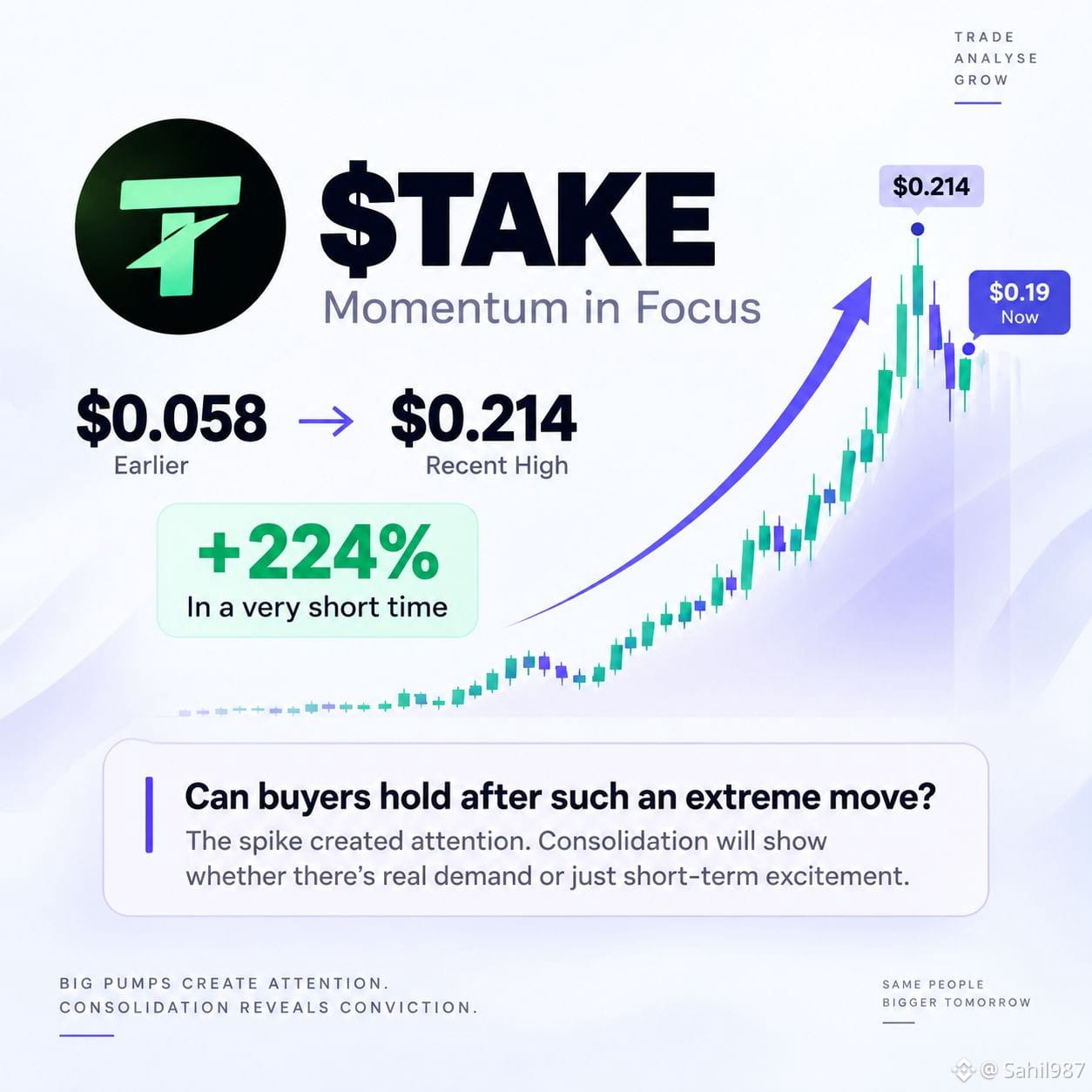
$TAKE just reminded everyone how fast attention can turn into momentum.
From around $0.058 to $0.214 and now sitting near $0.19, that’s a move of more than 224% in a very short window. But after a move like this, the next phase matters more than the spike itself.
{future}(TAKEUSDT)
Can buyers keep defending the higher range, or does the excitement start fading as early holders take profit? The real story now is whether $TAKE can turn a momentum-driven move into sustained demand.
Big pumps create attention.
Strong consolidation reveals conviction.
What matters next: momentum, or real buyers stepping in?
#MarketSentimentToday #MomentumStrategies
$TAKE just reminded everyone how fast attention can turn into momentum.
From around $0.058 to $0.214 and now sitting near $0.19, that’s a move of more than 224% in a very short window. But after a move like this, the next phase matters more than the spike itself.
Can buyers keep defending the higher range, or does the excitement start fading as early holders take profit? The real story now is whether $TAKE can turn a momentum-driven move into sustained demand.
Big pumps create attention.
Strong consolidation reveals conviction.
What matters next: momentum, or real buyers stepping in?
#MarketSentimentToday #MomentumStrategies
From around $0.058 to $0.214 and now sitting near $0.19, that’s a move of more than 224% in a very short window. But after a move like this, the next phase matters more than the spike itself.
Can buyers keep defending the higher range, or does the excitement start fading as early holders take profit? The real story now is whether $TAKE can turn a momentum-driven move into sustained demand.
Big pumps create attention.
Strong consolidation reveals conviction.
What matters next: momentum, or real buyers stepping in?
#MarketSentimentToday #MomentumStrategies
1
5
318
·
--
$XRP is holding around $1.57 after pushing up to $1.5958. The interesting part is how quickly buyers stepped back in after the sharp pullback.
Now the focus is less on the spike and more on whether this higher range can hold. If buyers stay active here, the recent strength still has room to develop without needing another immediate breakout.
$XRP is holding around $1.57 after pushing up to $1.5958. The interesting part is how quickly buyers stepped back in after the sharp pullback.
Now the focus is less on the spike and more on whether this higher range can hold. If buyers stay active here, the recent strength still has room to develop without needing another immediate breakout.
Now the focus is less on the spike and more on whether this higher range can hold. If buyers stay active here, the recent strength still has room to develop without needing another immediate breakout.
5
1.5k
·
--
Haussier
AI stocks are getting most of the attention right now, but I’m starting to look at the companies that make the AI boom possible.
The obvious names are already well known. The less obvious part is everything happening underneath them data centers need power, chips need memory, AI models need networking, and all that compute needs cooling and security.
That’s what makes this cycle interesting to me. AI isn’t just a software story anymore. It’s becoming a much bigger infrastructure story.
I wouldn’t want to blindly chase every company with “AI” in its description. I’d rather understand where the actual spending is going and which parts of the ecosystem are becoming essential.
Sometimes the next opportunity isn’t the headline everyone is talking about. It’s the infrastructure quietly supporting it.
Which AI sector are you watching beyond the big chip names?
$NVDA #AIStocksWhatNext
AI stocks are getting most of the attention right now, but I’m starting to look at the companies that make the AI boom possible.
The obvious names are already well known. The less obvious part is everything happening underneath them data centers need power, chips need memory, AI models need networking, and all that compute needs cooling and security.
That’s what makes this cycle interesting to me. AI isn’t just a software story anymore. It’s becoming a much bigger infrastructure story.
I wouldn’t want to blindly chase every company with “AI” in its description. I’d rather understand where the actual spending is going and which parts of the ecosystem are becoming essential.
Sometimes the next opportunity isn’t the headline everyone is talking about. It’s the infrastructure quietly supporting it.
Which AI sector are you watching beyond the big chip names?
$NVDA #AIStocksWhatNext
The obvious names are already well known. The less obvious part is everything happening underneath them data centers need power, chips need memory, AI models need networking, and all that compute needs cooling and security.
That’s what makes this cycle interesting to me. AI isn’t just a software story anymore. It’s becoming a much bigger infrastructure story.
I wouldn’t want to blindly chase every company with “AI” in its description. I’d rather understand where the actual spending is going and which parts of the ecosystem are becoming essential.
Sometimes the next opportunity isn’t the headline everyone is talking about. It’s the infrastructure quietly supporting it.
Which AI sector are you watching beyond the big chip names?
$NVDA #AIStocksWhatNext

1
6
1.3k
·
--
$RHEA has made a strong move from around $0.0274 to $0.0418, with buyers steadily stepping in along the way.
Now around $0.0408, price is holding close to the recent high despite some profit-taking. After an 84%+ move, the important part is whether this strength can hold rather than how quickly it can extend.
Big pumps create attention. Strong consolidation creates conviction.
$RHEA has made a strong move from around $0.0274 to $0.0418, with buyers steadily stepping in along the way.
Now around $0.0408, price is holding close to the recent high despite some profit-taking. After an 84%+ move, the important part is whether this strength can hold rather than how quickly it can extend.
Big pumps create attention. Strong consolidation creates conviction.
Now around $0.0408, price is holding close to the recent high despite some profit-taking. After an 84%+ move, the important part is whether this strength can hold rather than how quickly it can extend.
Big pumps create attention. Strong consolidation creates conviction.
4
244
·
--
Article
Bitcoin’s $85K Move Comes as Oil Finally CoolsBitcoin is moving back into the spotlight.
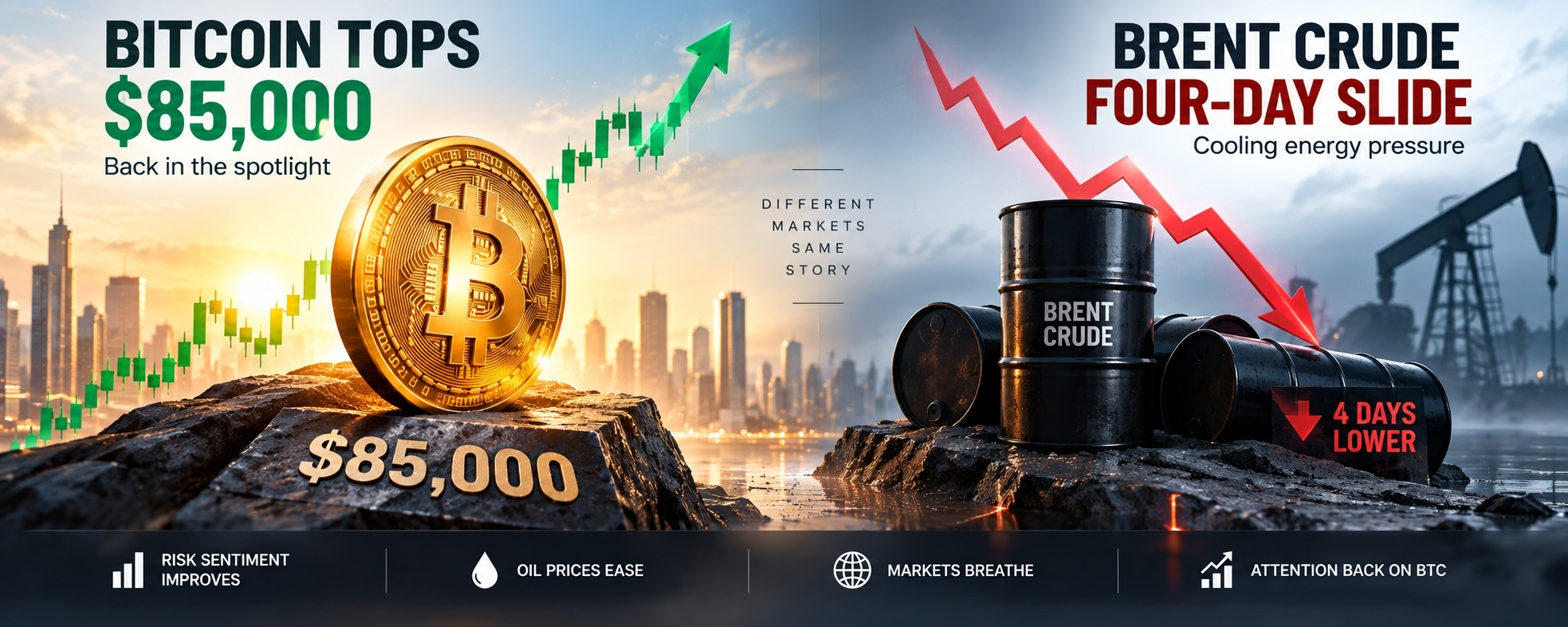
$BTC briefly pushed above $85,000 on September 21, reaching its highest level since January after gaining more than 5% in 24 hours. At the same time, Brent crude extended its decline for a fourth straight session, creating an interesting shift in the macro backdrop.
That combination matters.
For much of September, expensive oil had been one of the problems hanging over risk assets. Brent had moved above $100 a barrel, raising concerns about inflation and keeping pressure on interest-rate expectations. Now, with oil moving lower, some of that pressure is easing.
Bitcoin’s rebound also has another force behind it: short sellers are getting squeezed. More than $700 million in crypto positions were liquidated over the past day, with shorts making up most of the forced closures. That kind of positioning can accelerate a move once Bitcoin starts climbing.
What makes the move interesting is how quickly sentiment has changed. Bitcoin was trading near $75,000 just days ago. Now it is testing levels that looked difficult to reach during last week’s selloff.
$CL Still, one strong move doesn’t settle the bigger picture. #oil rates #etf flows and broader risk appetite will continue to matter.
For now, the market is showing an interesting relationship: falling energy pressure and recovering Bitcoin are arriving at the same time.
The question is whether this is simply a relief rally or the beginning of a more meaningful shift in market sentiment.
#BitcoinHits$85K #SaylorHintsStrategyBitcoinBuy
Bitcoin’s $85K Move Comes as Oil Finally Cools
Bitcoin is moving back into the spotlight.
$BTC briefly pushed above $85,000 on September 21, reaching its highest level since January after gaining more than 5% in 24 hours. At the same time, Brent crude extended its decline for a fourth straight session, creating an interesting shift in the macro backdrop.
That combination matters.
For much of September, expensive oil had been one of the problems hanging over risk assets. Brent had moved above $100 a barrel, raising concerns about inflation and keeping pressure on interest-rate expectations. Now, with oil moving lower, some of that pressure is easing.
Bitcoin’s rebound also has another force behind it: short sellers are getting squeezed. More than $700 million in crypto positions were liquidated over the past day, with shorts making up most of the forced closures. That kind of positioning can accelerate a move once Bitcoin starts climbing.
What makes the move interesting is how quickly sentiment has changed. Bitcoin was trading near $75,000 just days ago. Now it is testing levels that looked difficult to reach during last week’s selloff.
$CL Still, one strong move doesn’t settle the bigger picture. #oil rates #etf flows and broader risk appetite will continue to matter.
For now, the market is showing an interesting relationship: falling energy pressure and recovering Bitcoin are arriving at the same time.
The question is whether this is simply a relief rally or the beginning of a more meaningful shift in market sentiment.
#BitcoinHits$85K #SaylorHintsStrategyBitcoinBuy
$BTC briefly pushed above $85,000 on September 21, reaching its highest level since January after gaining more than 5% in 24 hours. At the same time, Brent crude extended its decline for a fourth straight session, creating an interesting shift in the macro backdrop.
That combination matters.
For much of September, expensive oil had been one of the problems hanging over risk assets. Brent had moved above $100 a barrel, raising concerns about inflation and keeping pressure on interest-rate expectations. Now, with oil moving lower, some of that pressure is easing.
Bitcoin’s rebound also has another force behind it: short sellers are getting squeezed. More than $700 million in crypto positions were liquidated over the past day, with shorts making up most of the forced closures. That kind of positioning can accelerate a move once Bitcoin starts climbing.
What makes the move interesting is how quickly sentiment has changed. Bitcoin was trading near $75,000 just days ago. Now it is testing levels that looked difficult to reach during last week’s selloff.
$CL Still, one strong move doesn’t settle the bigger picture. #oil rates #etf flows and broader risk appetite will continue to matter.
For now, the market is showing an interesting relationship: falling energy pressure and recovering Bitcoin are arriving at the same time.
The question is whether this is simply a relief rally or the beginning of a more meaningful shift in market sentiment.
#BitcoinHits$85K #SaylorHintsStrategyBitcoinBuy
2
171
·
--
$UAI has been climbing steadily, moving from around $0.41 to $0.54 without giving back much of the move.
Now near $0.5335, price is holding close to the recent high while the momentum starts to cool. After a 30%+ move, that pause can be healthy if buyers continue defending the higher range.
Sometimes strength isn’t about moving faster — it’s about refusing to give the move back.
$UAI has been climbing steadily, moving from around $0.41 to $0.54 without giving back much of the move.
Now near $0.5335, price is holding close to the recent high while the momentum starts to cool. After a 30%+ move, that pause can be healthy if buyers continue defending the higher range.
Sometimes strength isn’t about moving faster — it’s about refusing to give the move back.
Now near $0.5335, price is holding close to the recent high while the momentum starts to cool. After a 30%+ move, that pause can be healthy if buyers continue defending the higher range.
Sometimes strength isn’t about moving faster — it’s about refusing to give the move back.
2
385


·
--
$PHA is moving with serious momentum, climbing from around $0.038 to $0.0665 and still holding near $0.064.
The interesting part is how buyers kept stepping in through the move instead of giving back the gains immediately. After a 79%+ run, some cooling would be normal, but holding above the recent breakout area keeps the momentum story alive.
Fast moves attract attention. Strong reactions after the move tell the real story.
$PHA is moving with serious momentum, climbing from around $0.038 to $0.0665 and still holding near $0.064.
The interesting part is how buyers kept stepping in through the move instead of giving back the gains immediately. After a 79%+ run, some cooling would be normal, but holding above the recent breakout area keeps the momentum story alive.
Fast moves attract attention. Strong reactions after the move tell the real story.
The interesting part is how buyers kept stepping in through the move instead of giving back the gains immediately. After a 79%+ run, some cooling would be normal, but holding above the recent breakout area keeps the momentum story alive.
Fast moves attract attention. Strong reactions after the move tell the real story.
3
332
·
--
$ZETA has had a serious momentum shift, moving from around $0.038 to nearly $0.070.
After that sharp move, price is now holding near $0.0662 instead of immediately giving everything back. That’s the part I find interesting.
The first pump gets attention, but staying strong after the pump is what separates real demand from temporary excitement.
$ZETA has had a serious momentum shift, moving from around $0.038 to nearly $0.070.
After that sharp move, price is now holding near $0.0662 instead of immediately giving everything back. That’s the part I find interesting.
The first pump gets attention, but staying strong after the pump is what separates real demand from temporary excitement.
After that sharp move, price is now holding near $0.0662 instead of immediately giving everything back. That’s the part I find interesting.
The first pump gets attention, but staying strong after the pump is what separates real demand from temporary excitement.
2
295
·
--
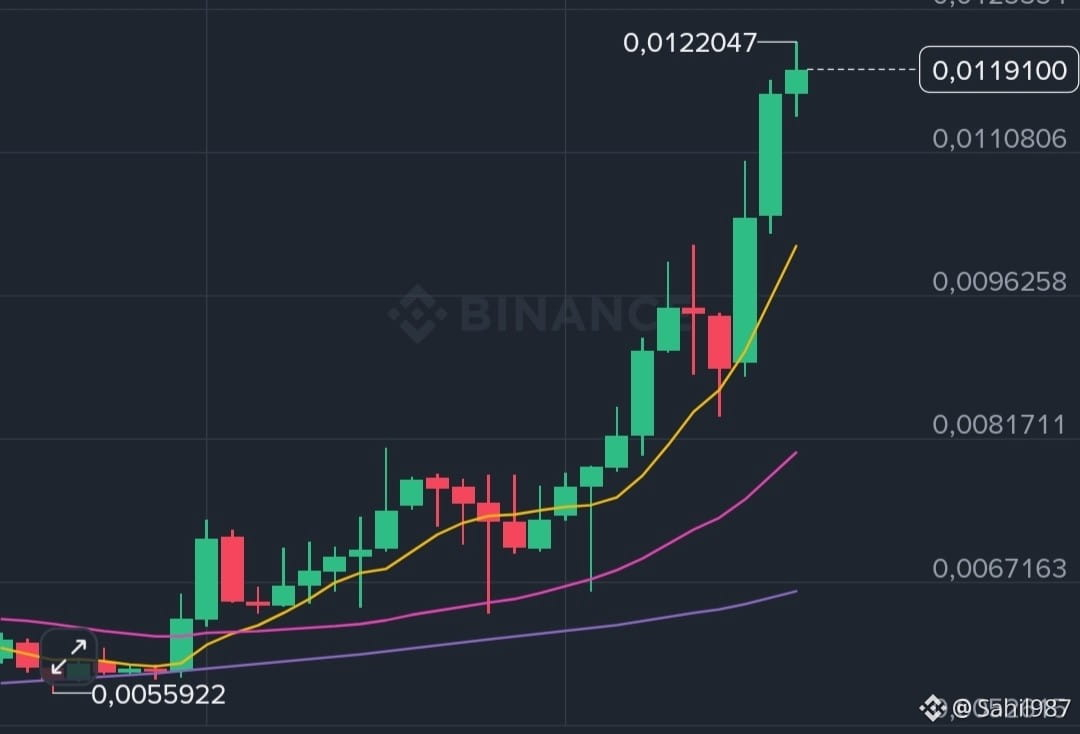
$R2 is moving fast, climbing from around $0.0056 to $0.0122 in a short window.
That kind of move naturally brings attention, but after a 143%+ jump, the real question is whether buyers can hold the new range instead of simply extending the spike.
Momentum can create the move. Holding it is what gives the move credibility.
$R2 is moving fast, climbing from around $0.0056 to $0.0122 in a short window.
That kind of move naturally brings attention, but after a 143%+ jump, the real question is whether buyers can hold the new range instead of simply extending the spike.
Momentum can create the move. Holding it is what gives the move credibility.
That kind of move naturally brings attention, but after a 143%+ jump, the real question is whether buyers can hold the new range instead of simply extending the spike.
Momentum can create the move. Holding it is what gives the move credibility.
3
320
·
--
$HBAR is showing a healthy shift in momentum, but the move from $0.080 to $0.090 happened quickly.
Now around $0.0869, some cooling is natural. I’m more interested in whether buyers can turn this higher range into support rather than immediately chasing another spike.
The best moves usually become clearer after the first excitement fades.
$HBAR is showing a healthy shift in momentum, but the move from $0.080 to $0.090 happened quickly.
Now around $0.0869, some cooling is natural. I’m more interested in whether buyers can turn this higher range into support rather than immediately chasing another spike.
The best moves usually become clearer after the first excitement fades.
Now around $0.0869, some cooling is natural. I’m more interested in whether buyers can turn this higher range into support rather than immediately chasing another spike.
The best moves usually become clearer after the first excitement fades.
3
271
·
--
$FIL has made a strong push from around $0.97 to $1.13, but the first wave of excitement is cooling near $1.07.
The interesting part now is whether buyers can keep the new range intact after such a fast move. If they can absorb the profit-taking, momentum may return. Sometimes the strength after the pump matters more than the pump itself.
$FIL has made a strong push from around $0.97 to $1.13, but the first wave of excitement is cooling near $1.07.
The interesting part now is whether buyers can keep the new range intact after such a fast move. If they can absorb the profit-taking, momentum may return. Sometimes the strength after the pump matters more than the pump itself.
The interesting part now is whether buyers can keep the new range intact after such a fast move. If they can absorb the profit-taking, momentum may return. Sometimes the strength after the pump matters more than the pump itself.
4
427
·
--
$B2 has had a huge move today, up more than 70%, but the pace has clearly cooled near $0.73 after touching $0.913.
At this stage, I’m more interested in how well it holds the new range than chasing the earlier spike. If buyers can stabilize around $0.72–$0.76, the move still has room to develop. If not, profit-taking could get heavier.
Big moves attract attention; holding the gains is what gives them meaning.
$B2 has had a huge move today, up more than 70%, but the pace has clearly cooled near $0.73 after touching $0.913.
At this stage, I’m more interested in how well it holds the new range than chasing the earlier spike. If buyers can stabilize around $0.72–$0.76, the move still has room to develop. If not, profit-taking could get heavier.
Big moves attract attention; holding the gains is what gives them meaning.
At this stage, I’m more interested in how well it holds the new range than chasing the earlier spike. If buyers can stabilize around $0.72–$0.76, the move still has room to develop. If not, profit-taking could get heavier.
Big moves attract attention; holding the gains is what gives them meaning.
2
1
2
206
Connectez-vous pour découvrir plus de contenu
Rejoignez la communauté mondiale des adeptes de cryptomonnaies sur Binance Square
⚡️ Suviez les dernières informations importantes sur les cryptomonnaies.
💬 Jugé digne de confiance par la plus grande plateforme d’échange de cryptomonnaies au monde.
👍 Découvrez les connaissances que partagent les créateurs vérifiés.
Adresse e-mail/Nº de téléphone