

JOON _RAMBO
7.8k Publications

JOON _RAMBO
Signaler
Bloquer l’utilisateur
Trading Binance markets with precision and discipline.
Ouvert au trading
Trade régulièrement
1 an(s)
1.9K+ Suivis
14.7K+ Abonnés
4.1K+ J’aime
Publications
Portefeuille
Tous
Citations
Direct
·
--
$FLOCK — Trade Setup 🚀
$FLOCK is flying: 0.07788 (+31.93%). The chart looks bullish while sellers are still looking for the emergency exit. 😂
Entry Zone: 0.0750–0.0780
SL: 0.0710
🎯 TP1: 0.0820
🎯 TP2: 0.0880
🎯 TP3: 0.0950
As long as buyers defend support, momentum can continue. Avoid chasing a vertical candle; a pullback and reclaim gives a cleaner setup. Risk management first.#ClarityActFacesProceduralVoteSept15 #RevolutConfirmsFakeGovEmailDataBreach #USBankCompletesCrossBorderPaymentPilotOnStellar
$FLOCK — Trade Setup 🚀
$FLOCK is flying: 0.07788 (+31.93%). The chart looks bullish while sellers are still looking for the emergency exit. 😂
Entry Zone: 0.0750–0.0780
SL: 0.0710
🎯 TP1: 0.0820
🎯 TP2: 0.0880
🎯 TP3: 0.0950
As long as buyers defend support, momentum can continue. Avoid chasing a vertical candle; a pullback and reclaim gives a cleaner setup. Risk management first.#ClarityActFacesProceduralVoteSept15 #RevolutConfirmsFakeGovEmailDataBreach #USBankCompletesCrossBorderPaymentPilotOnStellar
$FLOCK is flying: 0.07788 (+31.93%). The chart looks bullish while sellers are still looking for the emergency exit. 😂
Entry Zone: 0.0750–0.0780
SL: 0.0710
🎯 TP1: 0.0820
🎯 TP2: 0.0880
🎯 TP3: 0.0950
As long as buyers defend support, momentum can continue. Avoid chasing a vertical candle; a pullback and reclaim gives a cleaner setup. Risk management first.#ClarityActFacesProceduralVoteSept15 #RevolutConfirmsFakeGovEmailDataBreach #USBankCompletesCrossBorderPaymentPilotOnStellar
110
·
--
Haussier
$ILV Trade Setup 🎯
$ILV is showing serious strength at 4.014 (+27.15%). Bulls are clearly making noise while bears are suddenly very quiet. 😂
Entry Zone: 3.90–4.02
SL: 3.70
🎯 TP1: 4.25
🎯 TP2: 4.50
🎯 TP3: 4.90
Holding above 4.00 would keep momentum interesting. If buyers push through 4.25, continuation could accelerate. Don’t overleverage after a strong pump. Protect the account#SECReceivesGrayscaleLitecoinTrustETFFiling .#EtherRalliesAsBearishBetsLiquidate #RevolutConfirmsFakeGovEmailDataBreach
{future}(ILVUSDT)
$ILV Trade Setup 🎯
$ILV is showing serious strength at 4.014 (+27.15%). Bulls are clearly making noise while bears are suddenly very quiet. 😂
Entry Zone: 3.90–4.02
SL: 3.70
🎯 TP1: 4.25
🎯 TP2: 4.50
🎯 TP3: 4.90
Holding above 4.00 would keep momentum interesting. If buyers push through 4.25, continuation could accelerate. Don’t overleverage after a strong pump. Protect the account#SECReceivesGrayscaleLitecoinTrustETFFiling .#EtherRalliesAsBearishBetsLiquidate #RevolutConfirmsFakeGovEmailDataBreach
$ILV is showing serious strength at 4.014 (+27.15%). Bulls are clearly making noise while bears are suddenly very quiet. 😂
Entry Zone: 3.90–4.02
SL: 3.70
🎯 TP1: 4.25
🎯 TP2: 4.50
🎯 TP3: 4.90
Holding above 4.00 would keep momentum interesting. If buyers push through 4.25, continuation could accelerate. Don’t overleverage after a strong pump. Protect the account#SECReceivesGrayscaleLitecoinTrustETFFiling .#EtherRalliesAsBearishBetsLiquidate #RevolutConfirmsFakeGovEmailDataBreach
133
·
--
Haussier
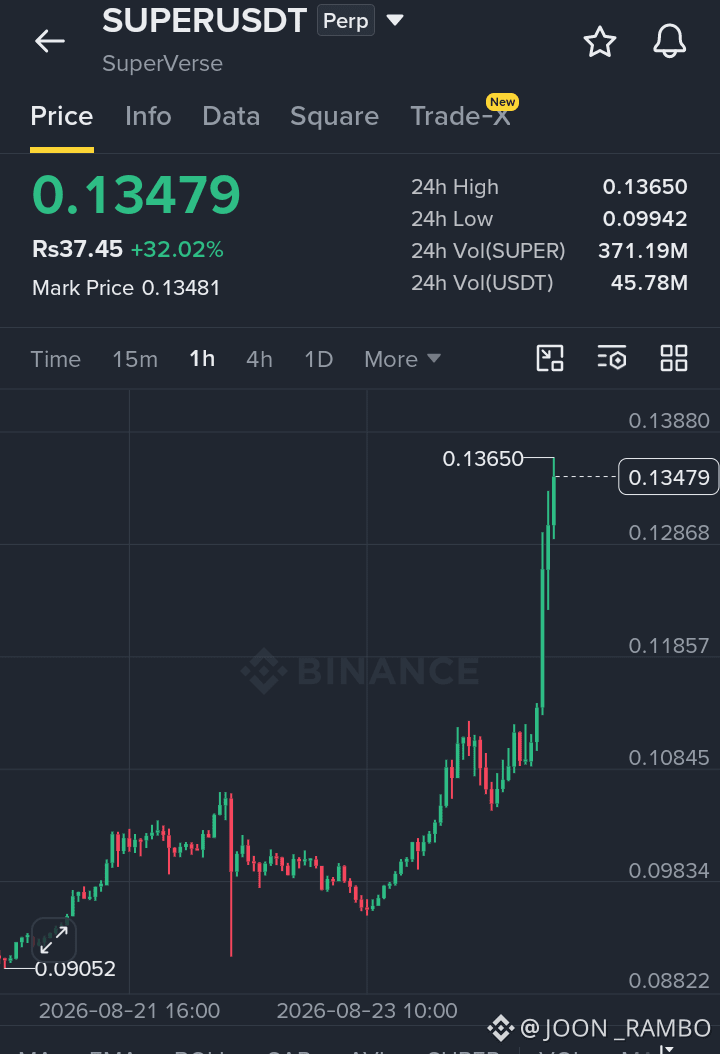
$SUPER just went vertical 😈 $SUPER
Price: 0.13479
Short Entry: 0.1350–0.1365
TP1: 0.1320
TP2: 0.1287
TP3: 0.1240
SL: 0.1388
+32% already… chasing here is asking for a lesson. 🎯#BitcoinRises23.6%Weekly #BrentDrops1.87% #BitcoinOpenInterestFallsToTwoMonthLow
$SUPER just went vertical 😈 $SUPER
Price: 0.13479
Short Entry: 0.1350–0.1365
TP1: 0.1320
TP2: 0.1287
TP3: 0.1240
SL: 0.1388
+32% already… chasing here is asking for a lesson. 🎯#BitcoinRises23.6%Weekly #BrentDrops1.87% #BitcoinOpenInterestFallsToTwoMonthLow
Price: 0.13479
Short Entry: 0.1350–0.1365
TP1: 0.1320
TP2: 0.1287
TP3: 0.1240
SL: 0.1388
+32% already… chasing here is asking for a lesson. 🎯#BitcoinRises23.6%Weekly #BrentDrops1.87% #BitcoinOpenInterestFallsToTwoMonthLow
97
·
--
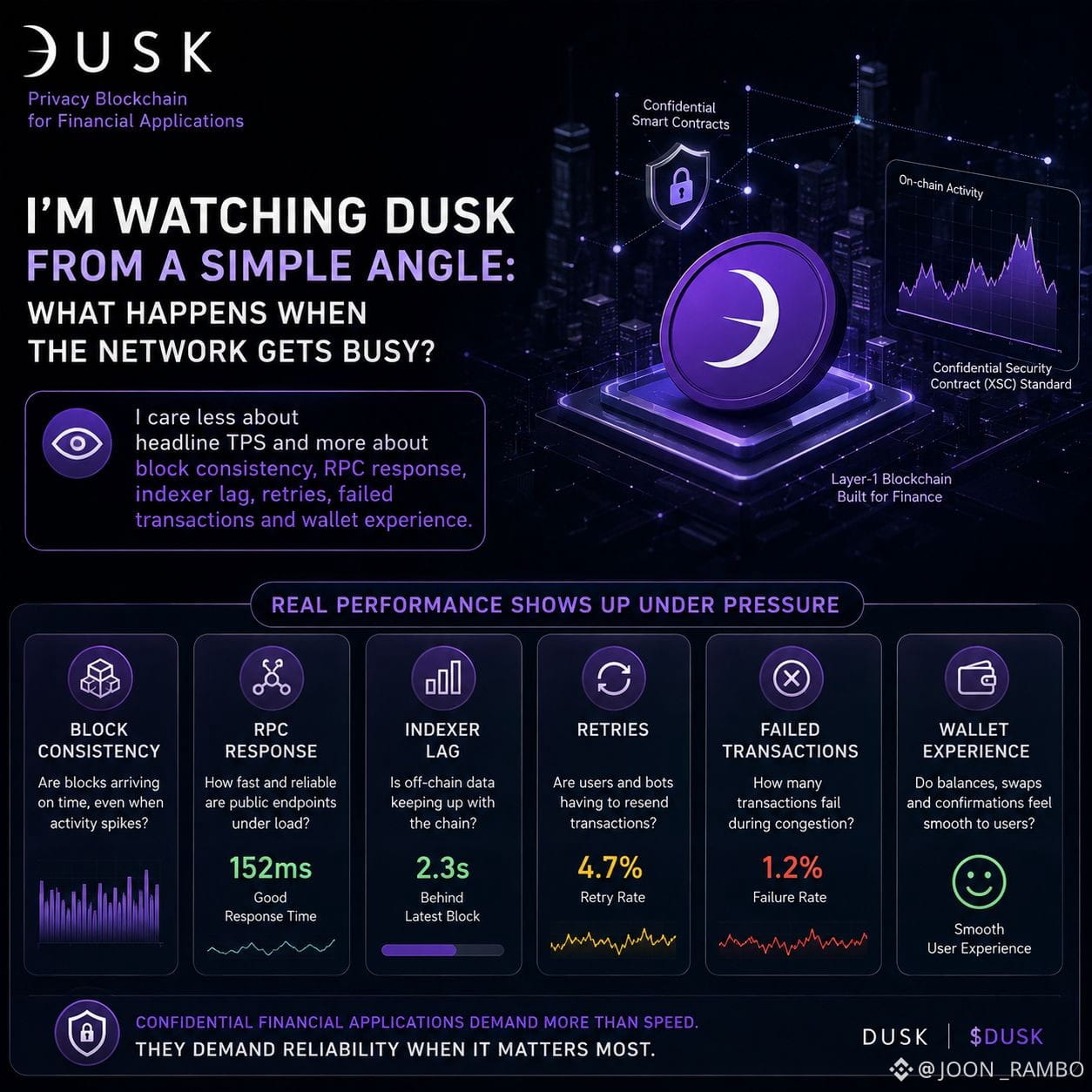
#dusk $DUSK @Dusk_Foundation I’m watching Dusk from a simple angle: what happens when the network gets busy?
I care less about headline TPS and more about block consistency, RPC response, indexer lag, retries, failed transactions and wallet experience.
With confidential financial applications, real performance shows up under pressure—not when everything is quiet.
@Dusk_Foundation $DUSK #dusk
#dusk $DUSK @Dusk I’m watching Dusk from a simple angle: what happens when the network gets busy?
I care less about headline TPS and more about block consistency, RPC response, indexer lag, retries, failed transactions and wallet experience.
With confidential financial applications, real performance shows up under pressure—not when everything is quiet.
@Dusk $DUSK #dusk
I care less about headline TPS and more about block consistency, RPC response, indexer lag, retries, failed transactions and wallet experience.
With confidential financial applications, real performance shows up under pressure—not when everything is quiet.
@Dusk $DUSK #dusk
154
·
--
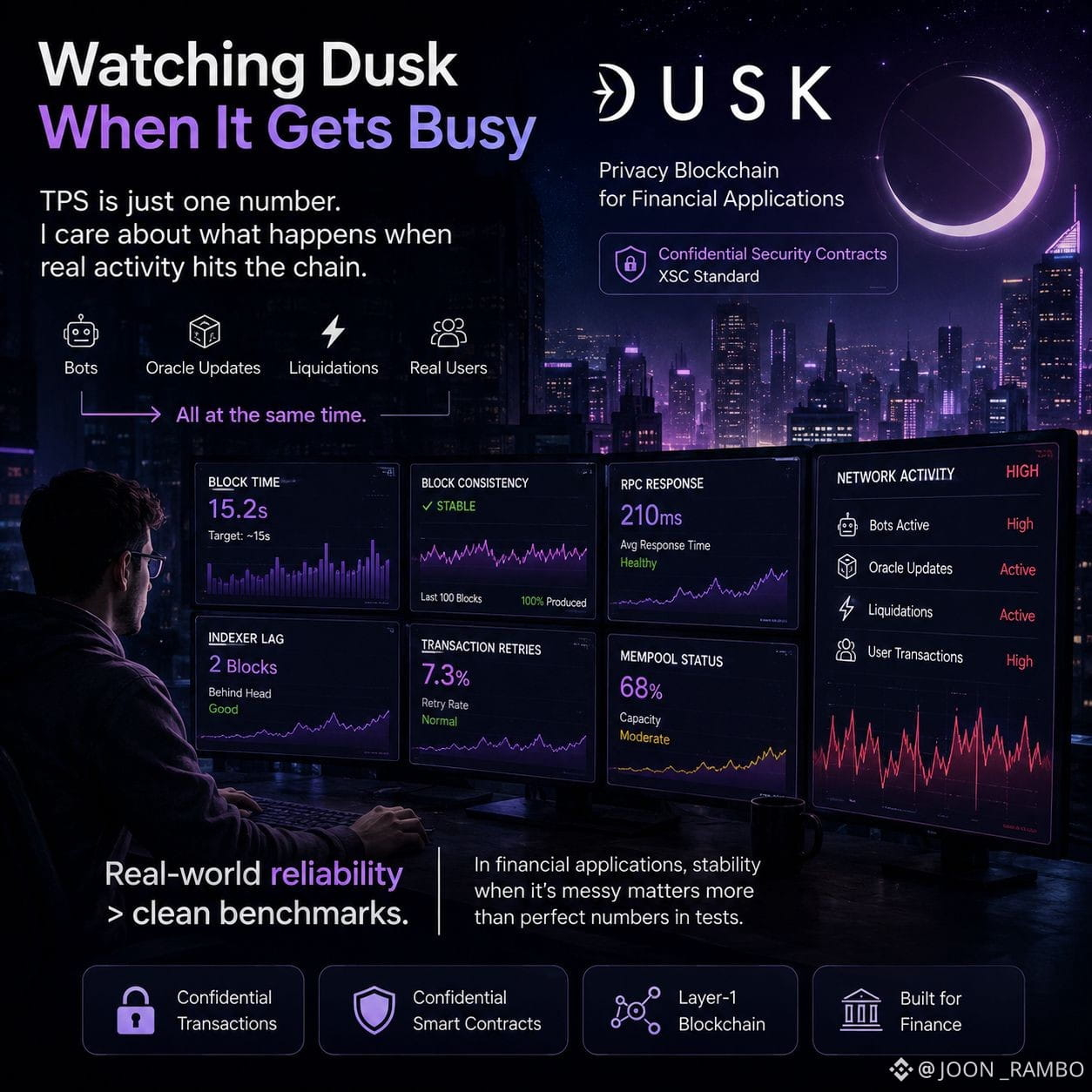
#dusk $DUSK @Dusk_Foundation I’ve been watching Dusk from a simple angle: what happens when the network gets busy?
TPS is only one part of the story. I’m more interested in block consistency, RPC response, indexer lag, transaction retries and what happens when bots, oracle updates and liquidations all hit at once.
Dusk is building around confidential financial applications, so real-world reliability matters more to me than a clean benchmark.
@Dusk_Foundation $DUSK #dusk
#dusk $DUSK @Dusk I’ve been watching Dusk from a simple angle: what happens when the network gets busy?
TPS is only one part of the story. I’m more interested in block consistency, RPC response, indexer lag, transaction retries and what happens when bots, oracle updates and liquidations all hit at once.
Dusk is building around confidential financial applications, so real-world reliability matters more to me than a clean benchmark.
@Dusk $DUSK #dusk
TPS is only one part of the story. I’m more interested in block consistency, RPC response, indexer lag, transaction retries and what happens when bots, oracle updates and liquidations all hit at once.
Dusk is building around confidential financial applications, so real-world reliability matters more to me than a clean benchmark.
@Dusk $DUSK #dusk
98
·
--
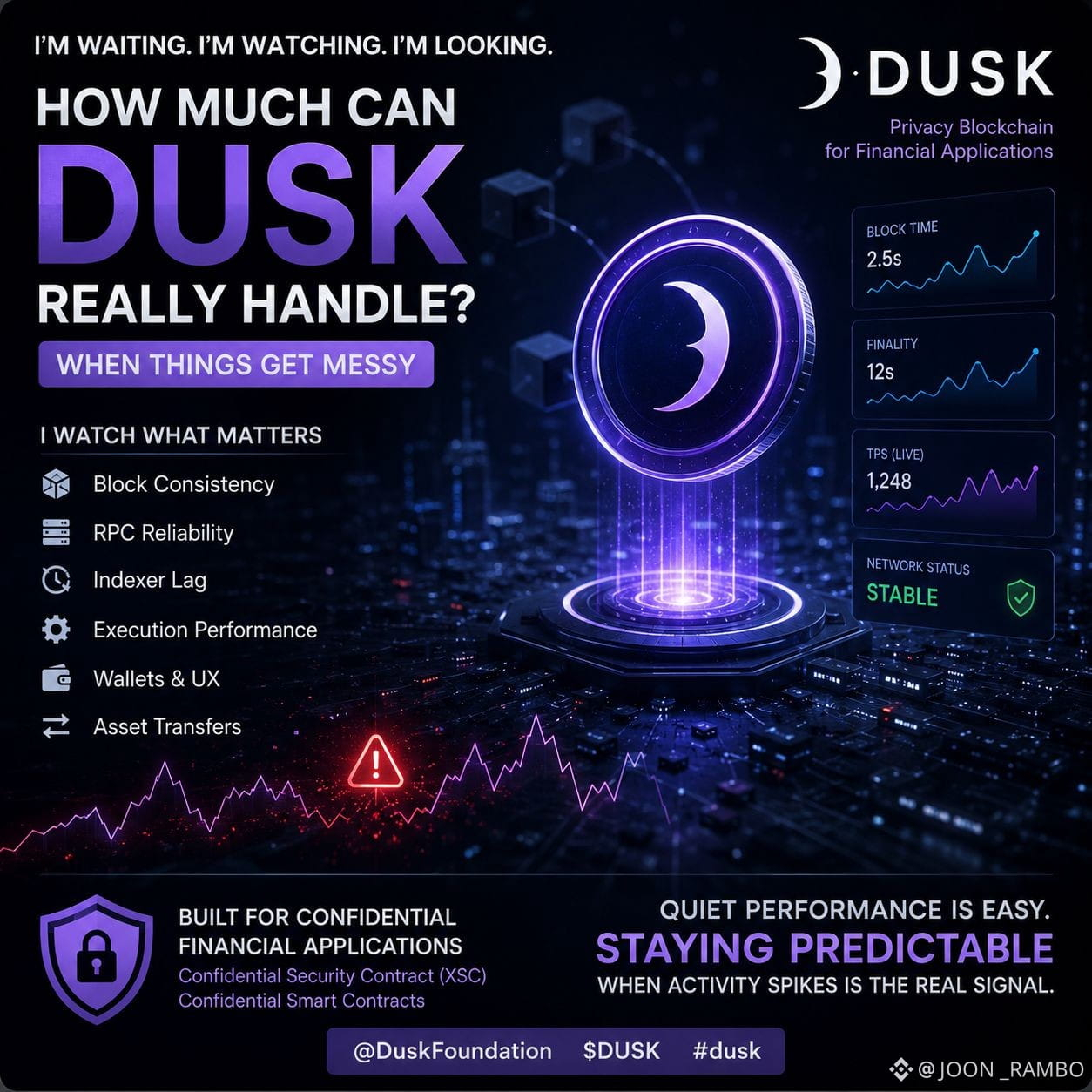
#dusk $DUSK @Dusk_Foundation I’m waiting. I’m watching. I’m looking. I keep coming back to the same question: how much can Dusk really handle when things get messy?
I care less about headline TPS and more about what happens under pressure: block consistency, RPC reliability, indexer lag, execution, wallets and asset transfers.
Dusk is built for confidential financial applications, so that’s the environment I want to see tested. Quiet performance is easy. Staying predictable when activity spikes is the real signal.
@Dusk_Foundation
#dusk $DUSK
#dusk $DUSK @Dusk I’m waiting. I’m watching. I’m looking. I keep coming back to the same question: how much can Dusk really handle when things get messy?
I care less about headline TPS and more about what happens under pressure: block consistency, RPC reliability, indexer lag, execution, wallets and asset transfers.
Dusk is built for confidential financial applications, so that’s the environment I want to see tested. Quiet performance is easy. Staying predictable when activity spikes is the real signal.
@Dusk
#dusk $DUSK
I care less about headline TPS and more about what happens under pressure: block consistency, RPC reliability, indexer lag, execution, wallets and asset transfers.
Dusk is built for confidential financial applications, so that’s the environment I want to see tested. Quiet performance is easy. Staying predictable when activity spikes is the real signal.
@Dusk
#dusk $DUSK
89
·
--
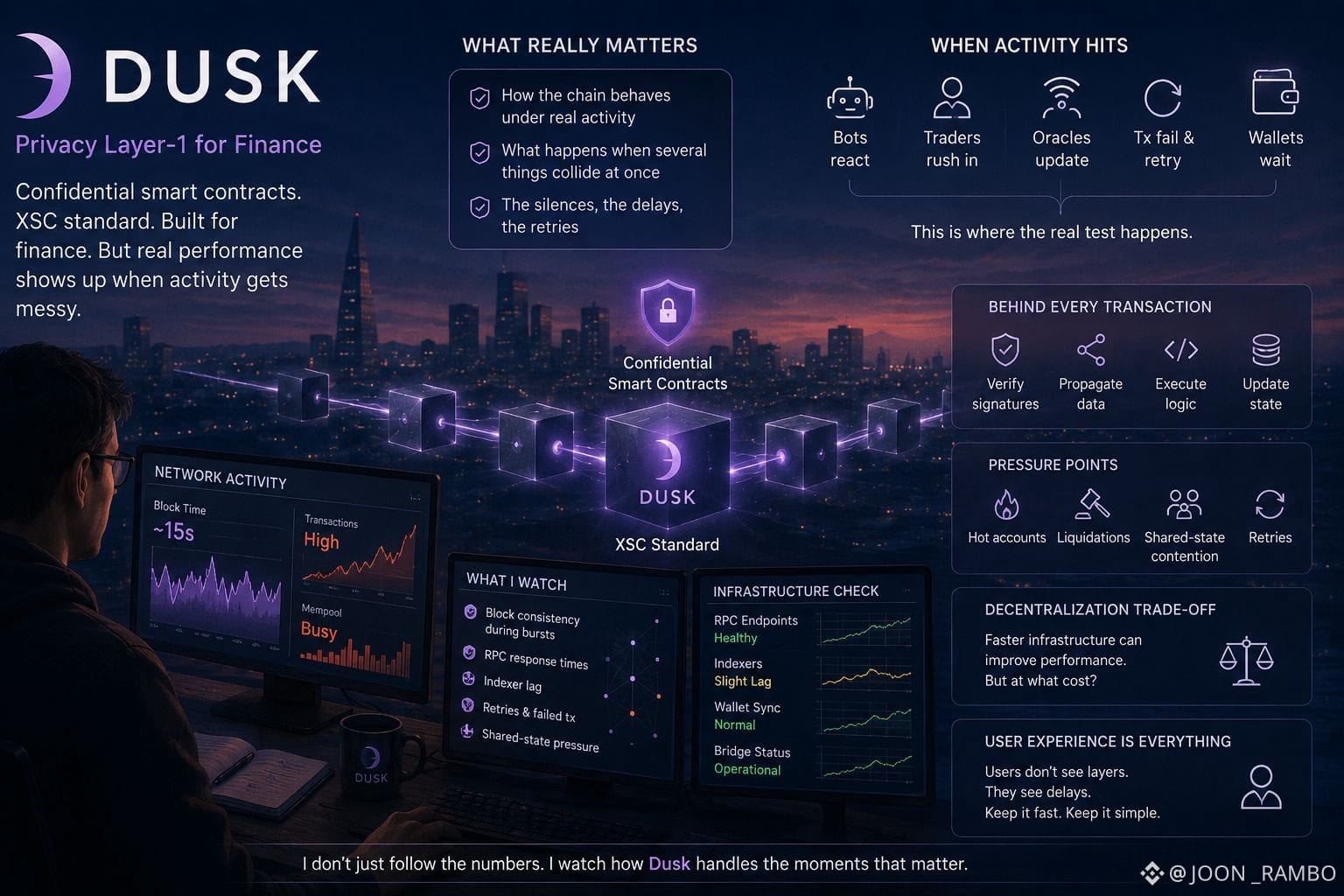
#dusk $DUSK @Dusk_Foundation I’ve been looking at Dusk from that angle lately. The headline is easy: a privacy-focused Layer 1 built with financial applications in mind. What interests me more is what happens underneath when the network has to deal with actual activity. Dusk is built around confidential smart contracts and the XSC standard, but none of that tells me how the chain feels when several things happen at once.
@Dusk_Foundation #dusk $DUSK
#dusk $DUSK @Dusk I’ve been looking at Dusk from that angle lately. The headline is easy: a privacy-focused Layer 1 built with financial applications in mind. What interests me more is what happens underneath when the network has to deal with actual activity. Dusk is built around confidential smart contracts and the XSC standard, but none of that tells me how the chain feels when several things happen at once.
@Dusk #dusk $DUSK
@Dusk #dusk $DUSK
95
·
--
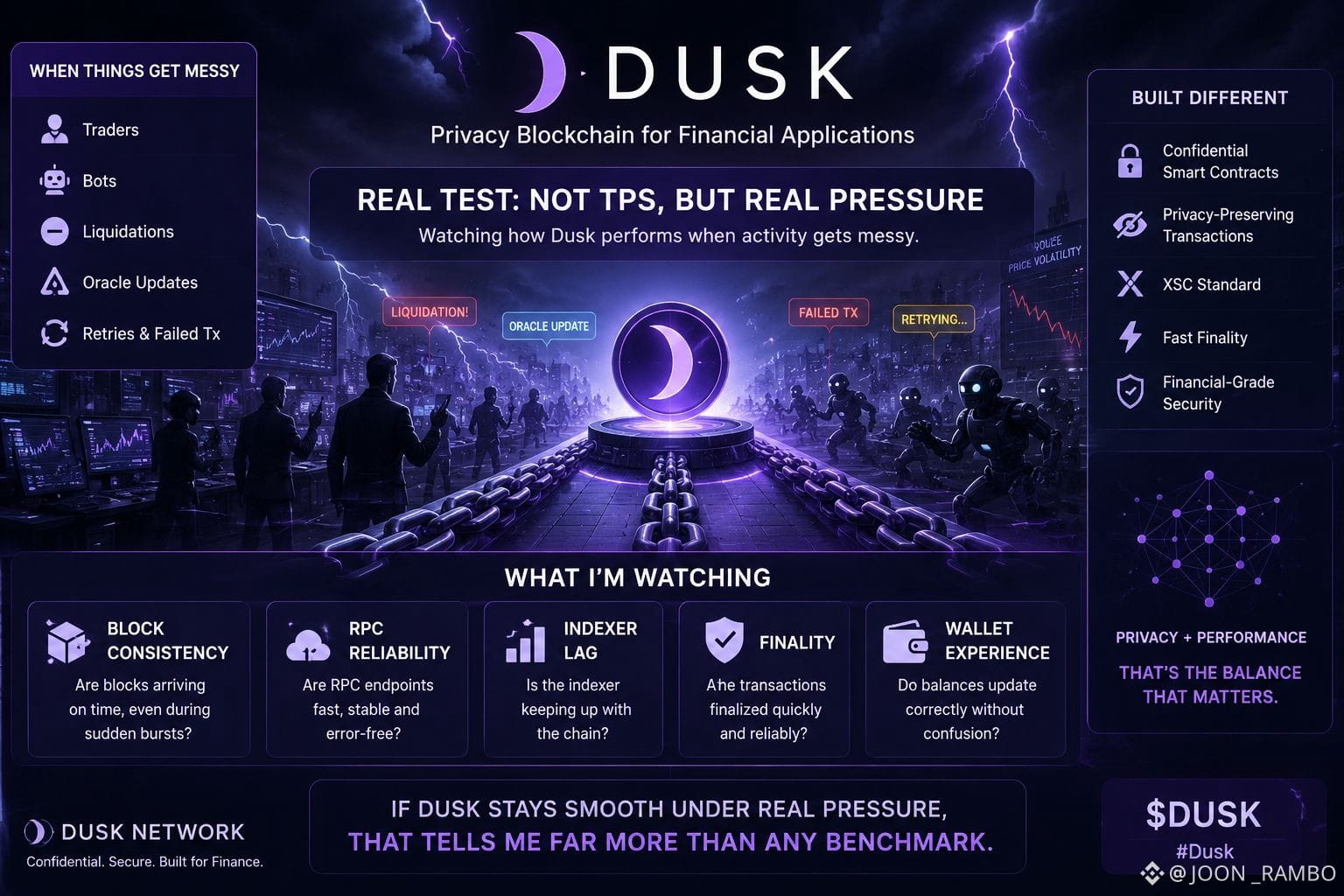
#dusk $DUSK @Dusk_Foundation I’m watching Dusk from a practical angle. The real test isn’t a big TPS number, it’s how the network behaves when activity gets messy—traders, bots, liquidations, oracle updates and retries all hitting at once. I’m looking at block consistency, RPC reliability, indexer lag, finality and wallet experience. If Dusk stays smooth under real pressure, that tells me far more than any benchmark. $DUSK #dusk
#dusk $DUSK @Dusk I’m watching Dusk from a practical angle. The real test isn’t a big TPS number, it’s how the network behaves when activity gets messy—traders, bots, liquidations, oracle updates and retries all hitting at once. I’m looking at block consistency, RPC reliability, indexer lag, finality and wallet experience. If Dusk stays smooth under real pressure, that tells me far more than any benchmark. $DUSK #dusk
1
1
123
·
--
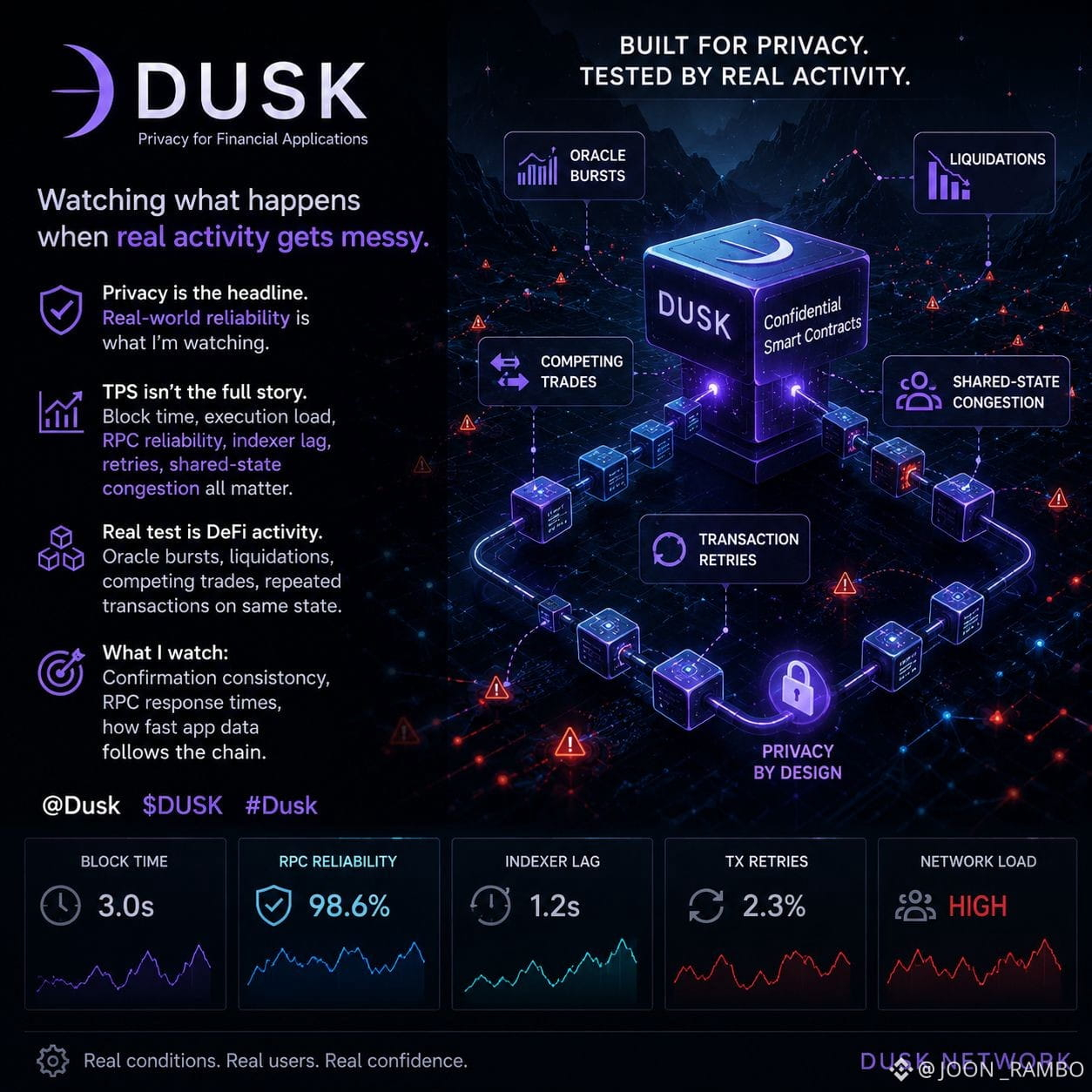
#dusk $DUSK @Dusk_Foundation I’m watching Dusk from a simple angle: what happens when real activity gets messy?$DUSK is built around privacy-focused financial applications, but the part I find more interesting is how the network behaves under pressure. TPS alone doesn’t tell the full story. Block time, execution load, RPC reliability, indexer lag, transaction retries and shared-state congestion all matter when users and bots start hitting the chain together.
For me, the real test is DeFi activity: oracle bursts, liquidations, competing trades and repeated transactions touching the same state. That’s where clean benchmarks meet real network conditions.
I’ll be watching confirmation consistency, RPC response times and how quickly application data follows the chain. If Dusk can stay predictable during those stressful periods, that tells me much more than a headline throughput number.
Privacy is the headline. Real-world reliability is what I’m watching.
@Dusk_Foundation $DUSK #dusk
#dusk $DUSK @Dusk I’m watching Dusk from a simple angle: what happens when real activity gets messy?$DUSK is built around privacy-focused financial applications, but the part I find more interesting is how the network behaves under pressure. TPS alone doesn’t tell the full story. Block time, execution load, RPC reliability, indexer lag, transaction retries and shared-state congestion all matter when users and bots start hitting the chain together.
For me, the real test is DeFi activity: oracle bursts, liquidations, competing trades and repeated transactions touching the same state. That’s where clean benchmarks meet real network conditions.
I’ll be watching confirmation consistency, RPC response times and how quickly application data follows the chain. If Dusk can stay predictable during those stressful periods, that tells me much more than a headline throughput number.
Privacy is the headline. Real-world reliability is what I’m watching.
@Dusk $DUSK #dusk
For me, the real test is DeFi activity: oracle bursts, liquidations, competing trades and repeated transactions touching the same state. That’s where clean benchmarks meet real network conditions.
I’ll be watching confirmation consistency, RPC response times and how quickly application data follows the chain. If Dusk can stay predictable during those stressful periods, that tells me much more than a headline throughput number.
Privacy is the headline. Real-world reliability is what I’m watching.
@Dusk $DUSK #dusk
64
·
--
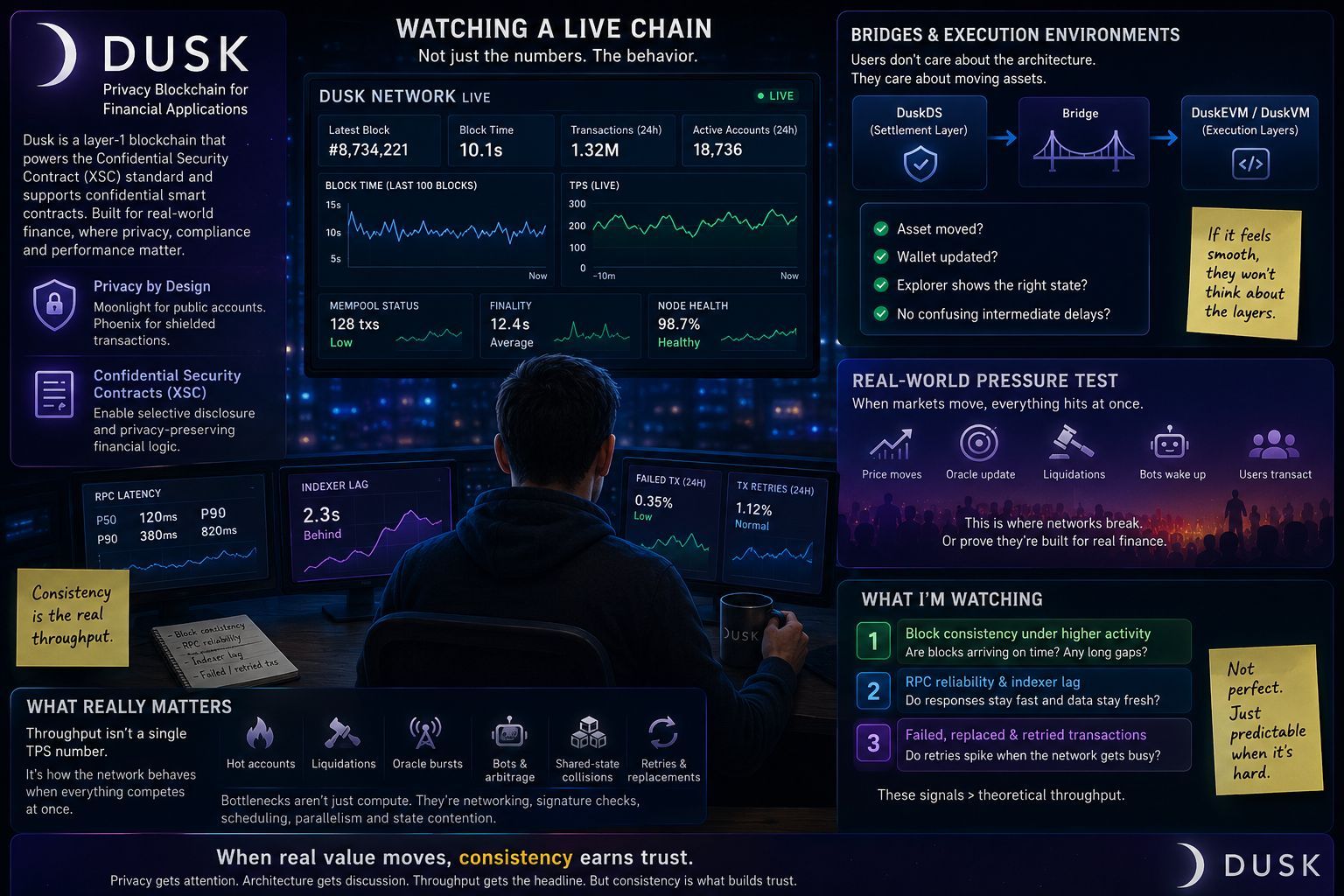
#dusk $DUSK @Dusk_Foundation also wouldn't ignore bridges and movement between different execution environments. Architecture can look clean on a diagram, but users don't interact with diagrams. They move assets. They connect wallets. They wait for balances to update. They check explorers.
If that process is smooth, most people won't even think about the architecture underneath it.
That's exactly how I think good infrastructure should feel.
For now, the things I'd actually watch are pretty simple. First, block consistency when activity increases. Second, RPC reliability and indexer lag. Third, failed, replaced and retried transactions when the network gets hit by a sudden burst.
Those signals would tell me much more than another theoretical throughput figure.
If Dusk can go through a genuinely busy period, with traders, bots, applications and market activity all competing for resources, while blocks remain steady and users continue getting clear and timely transaction results, I'd take that seriously.
Not because it would prove Dusk is perfect. No network is.
It would simply show me that the system can stay predictable when things stop being easy.
And for a blockchain aimed at financial applications, that's probably the part I care about most. Privacy gets the attention, architecture gets the discussion, and throughput gets the headline.
But when real users are moving real value, consistency is what I end up watching.#dus @Dusk_Foundation $DUSK
#dusk $DUSK @Dusk also wouldn't ignore bridges and movement between different execution environments. Architecture can look clean on a diagram, but users don't interact with diagrams. They move assets. They connect wallets. They wait for balances to update. They check explorers.
If that process is smooth, most people won't even think about the architecture underneath it.
That's exactly how I think good infrastructure should feel.
For now, the things I'd actually watch are pretty simple. First, block consistency when activity increases. Second, RPC reliability and indexer lag. Third, failed, replaced and retried transactions when the network gets hit by a sudden burst.
Those signals would tell me much more than another theoretical throughput figure.
If Dusk can go through a genuinely busy period, with traders, bots, applications and market activity all competing for resources, while blocks remain steady and users continue getting clear and timely transaction results, I'd take that seriously.
Not because it would prove Dusk is perfect. No network is.
It would simply show me that the system can stay predictable when things stop being easy.
And for a blockchain aimed at financial applications, that's probably the part I care about most. Privacy gets the attention, architecture gets the discussion, and throughput gets the headline.
But when real users are moving real value, consistency is what I end up watching.#dus @Dusk $DUSK
If that process is smooth, most people won't even think about the architecture underneath it.
That's exactly how I think good infrastructure should feel.
For now, the things I'd actually watch are pretty simple. First, block consistency when activity increases. Second, RPC reliability and indexer lag. Third, failed, replaced and retried transactions when the network gets hit by a sudden burst.
Those signals would tell me much more than another theoretical throughput figure.
If Dusk can go through a genuinely busy period, with traders, bots, applications and market activity all competing for resources, while blocks remain steady and users continue getting clear and timely transaction results, I'd take that seriously.
Not because it would prove Dusk is perfect. No network is.
It would simply show me that the system can stay predictable when things stop being easy.
And for a blockchain aimed at financial applications, that's probably the part I care about most. Privacy gets the attention, architecture gets the discussion, and throughput gets the headline.
But when real users are moving real value, consistency is what I end up watching.#dus @Dusk $DUSK
13
·
--
#dusk $DUSK @Dusk_Foundation I’ve been watching Dusk because the privacy side is interesting, but that alone isn’t enough for me. A blockchain can have a good idea and still struggle once real users start putting pressure on it. With Dusk, I’m more interested in what happens when financial activity picks up, bots start reacting, several transactions compete for the same contracts, and users simply expect everything to work without thinking about what is happening underneath.
I don’t put much weight on one big TPS number. It can look impressive in a controlled test and still say very little about everyday usage. What matters to me is how the network behaves when activity stays elevated for a while. Are transactions getting included without noticeable delays? Do blocks keep coming normally? Do RPCs remain responsive? Do wallets and explorers keep showing accurate balances and transactions? Those small details are where I usually find the real picture.#dusk$DUSK @Square-Creator-59ab1d063798c
#dusk $DUSK @Dusk I’ve been watching Dusk because the privacy side is interesting, but that alone isn’t enough for me. A blockchain can have a good idea and still struggle once real users start putting pressure on it. With Dusk, I’m more interested in what happens when financial activity picks up, bots start reacting, several transactions compete for the same contracts, and users simply expect everything to work without thinking about what is happening underneath.
I don’t put much weight on one big TPS number. It can look impressive in a controlled test and still say very little about everyday usage. What matters to me is how the network behaves when activity stays elevated for a while. Are transactions getting included without noticeable delays? Do blocks keep coming normally? Do RPCs remain responsive? Do wallets and explorers keep showing accurate balances and transactions? Those small details are where I usually find the real picture.#dusk$DUSK @Dusk line
I don’t put much weight on one big TPS number. It can look impressive in a controlled test and still say very little about everyday usage. What matters to me is how the network behaves when activity stays elevated for a while. Are transactions getting included without noticeable delays? Do blocks keep coming normally? Do RPCs remain responsive? Do wallets and explorers keep showing accurate balances and transactions? Those small details are where I usually find the real picture.#dusk$DUSK @Dusk line
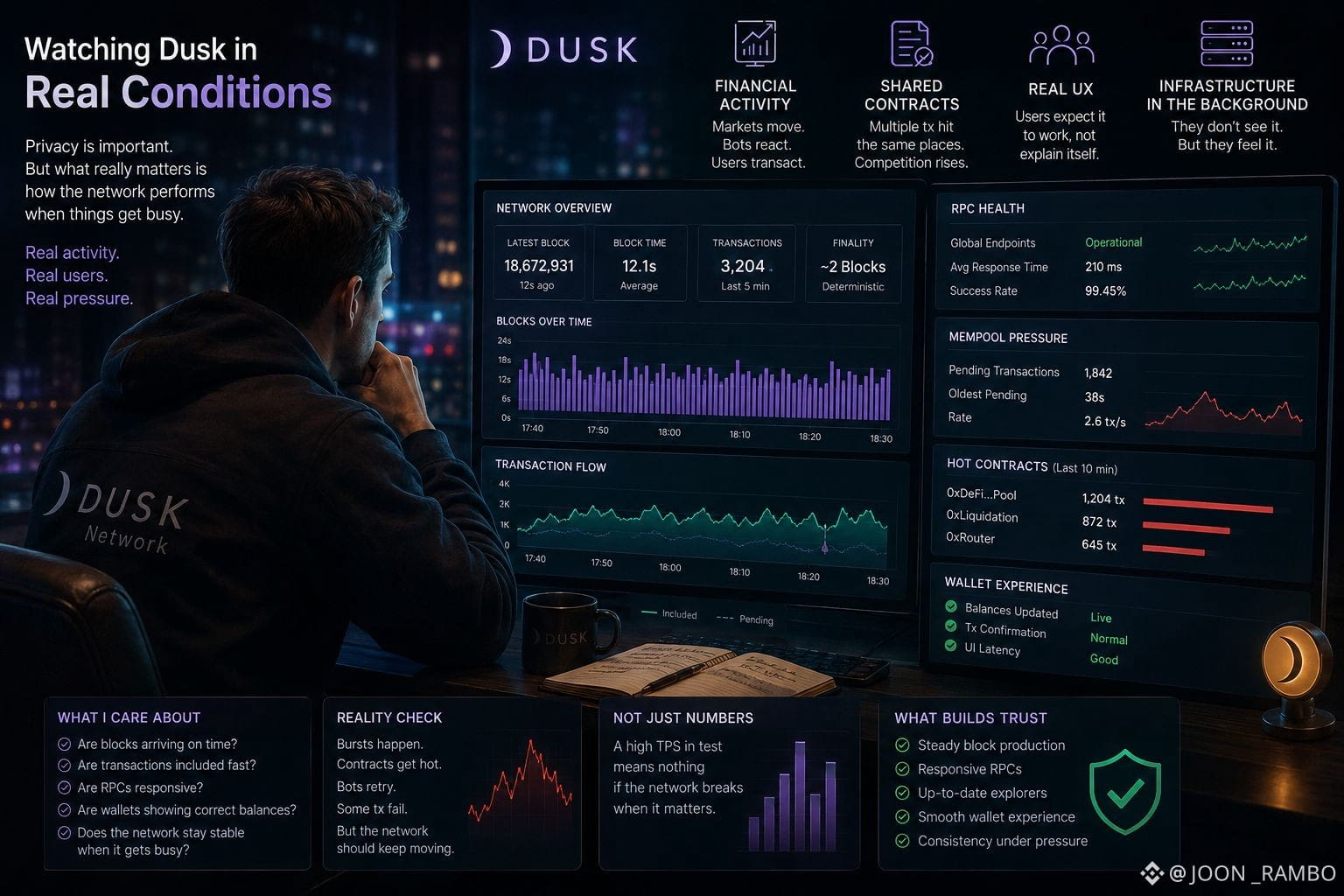
2
1
101
·
--
Haussier
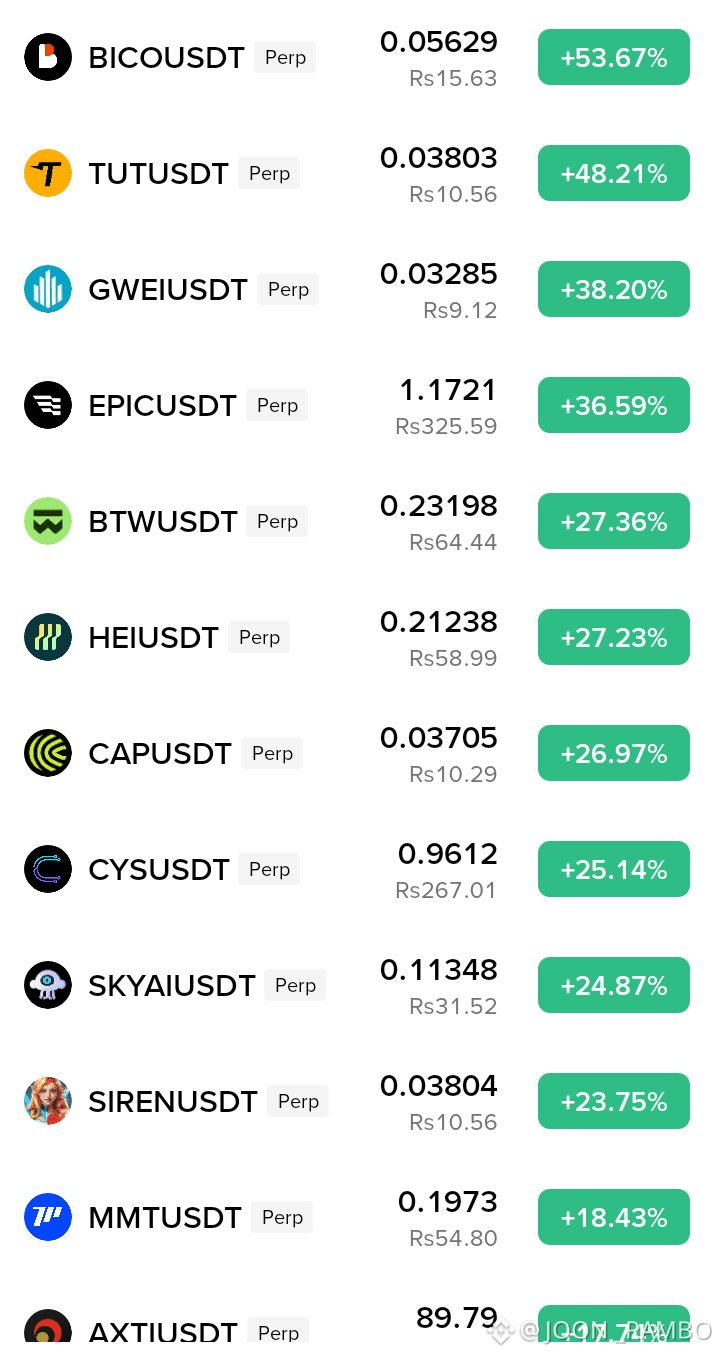
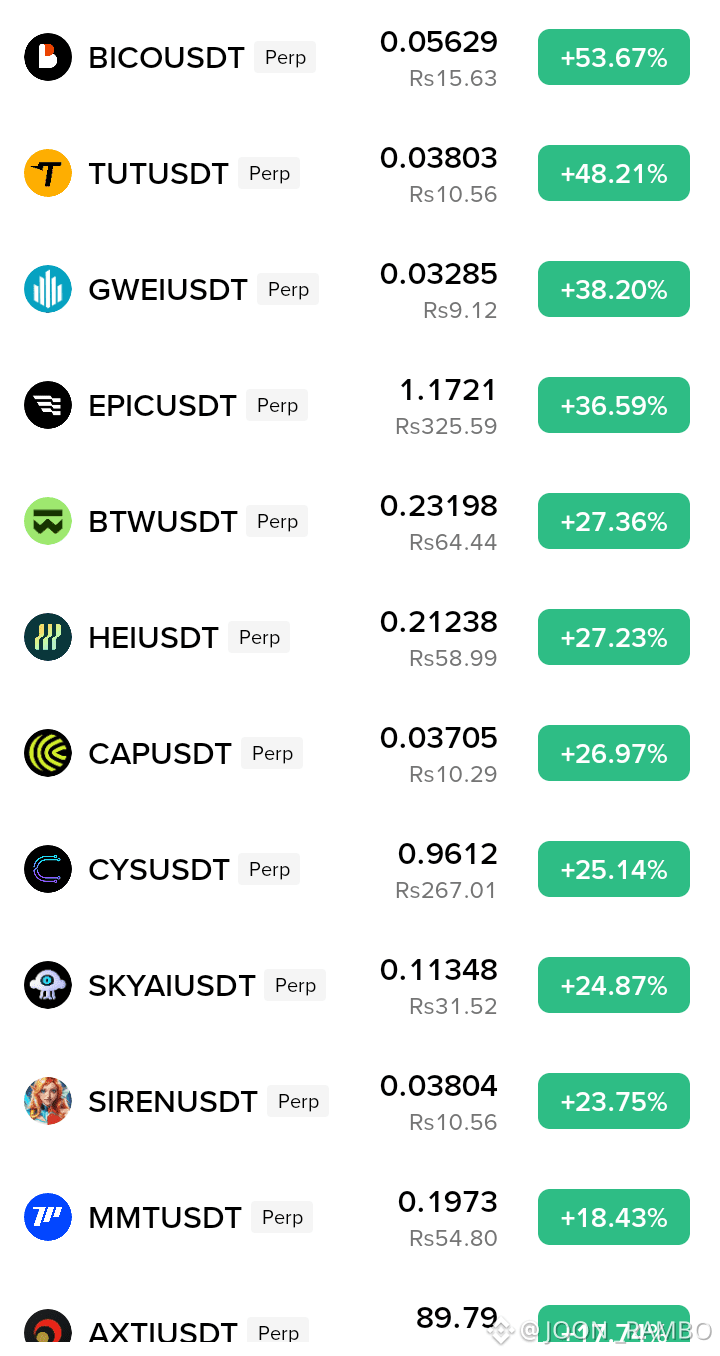
$BICO just pumped +53.67% and the chart is acting like gravity got liquidated 😂. I’m not chasing this green candle blindly. Trade setup: Entry 0.0560–0.0568, TP1 0.0595, TP2 0.0625, TP3 0.0660, SL 0.0530. If price loses the entry zone, I’m out. Momentum is strong, but after a 53% move, a pullback can arrive faster than comments. Manage risk and don’t FOMO.#DollarSetForBestDayInTwoWeeks #GoldBreaksOutFromJanuaryDowntrend #USJulyJobsUnexpectedlyFall
{spot}(BICOUSDT)
$BICO just pumped +53.67% and the chart is acting like gravity got liquidated 😂. I’m not chasing this green candle blindly. Trade setup: Entry 0.0560–0.0568, TP1 0.0595, TP2 0.0625, TP3 0.0660, SL 0.0530. If price loses the entry zone, I’m out. Momentum is strong, but after a 53% move, a pullback can arrive faster than comments. Manage risk and don’t FOMO.#DollarSetForBestDayInTwoWeeks #GoldBreaksOutFromJanuaryDowntrend #USJulyJobsUnexpectedlyFall
1
178
·
--
Haussier
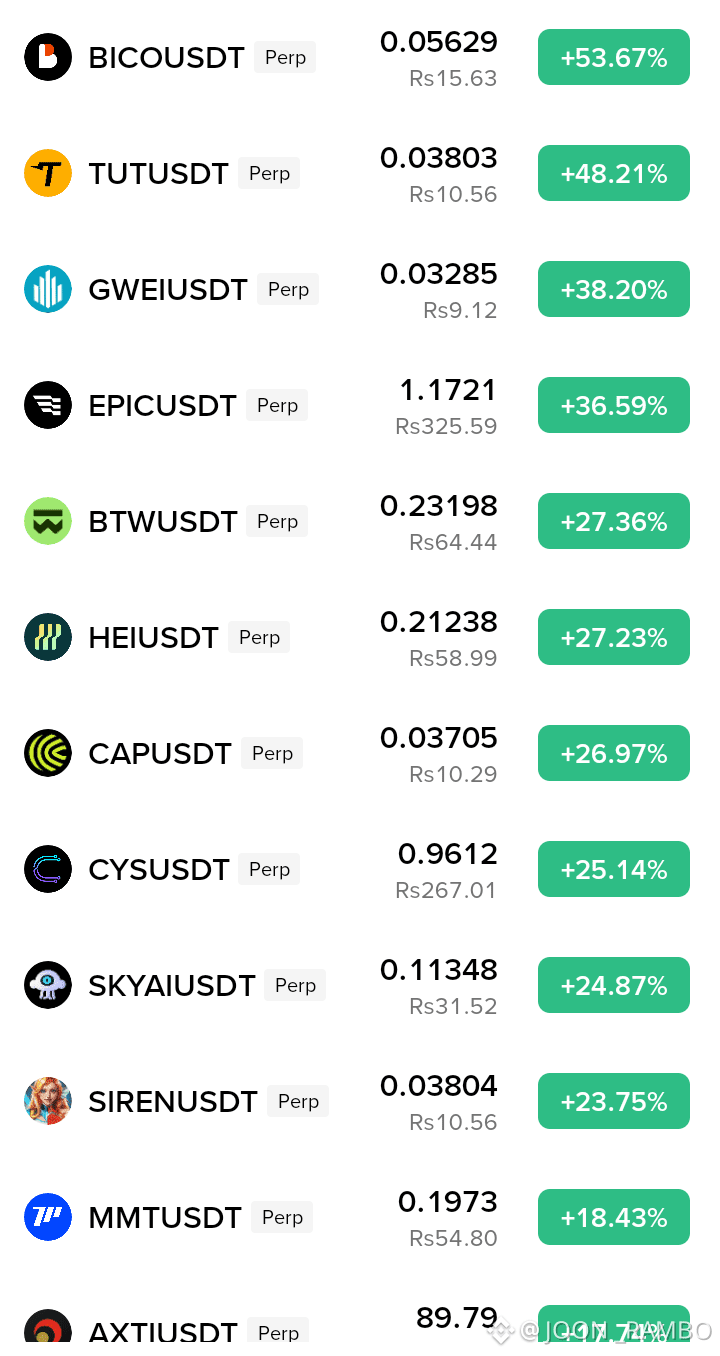
$TUT is up +48.21% and apparently decided sleep is optional 😂. I’m watching the breakout, but I won’t chase a vertical candle. Trade setup: Entry 0.0377–0.0383, TP1 0.0400, TP2 0.0425, TP3 0.0450, SL 0.0360. If the entry zone holds, momentum can continue. If it breaks, I’m stepping aside. +48% already means volatility is serious, so position size matters more than ego here.#TSEPlansReReviewForMajorBusinessChanges #SpaceXMayCompleteCursorDealAsEarlyAsNextWeekend #USJulyJobsUnexpectedlyFall
$TUT is up +48.21% and apparently decided sleep is optional 😂. I’m watching the breakout, but I won’t chase a vertical candle. Trade setup: Entry 0.0377–0.0383, TP1 0.0400, TP2 0.0425, TP3 0.0450, SL 0.0360. If the entry zone holds, momentum can continue. If it breaks, I’m stepping aside. +48% already means volatility is serious, so position size matters more than ego here.#TSEPlansReReviewForMajorBusinessChanges #SpaceXMayCompleteCursorDealAsEarlyAsNextWeekend #USJulyJobsUnexpectedlyFall
1
432
·
--
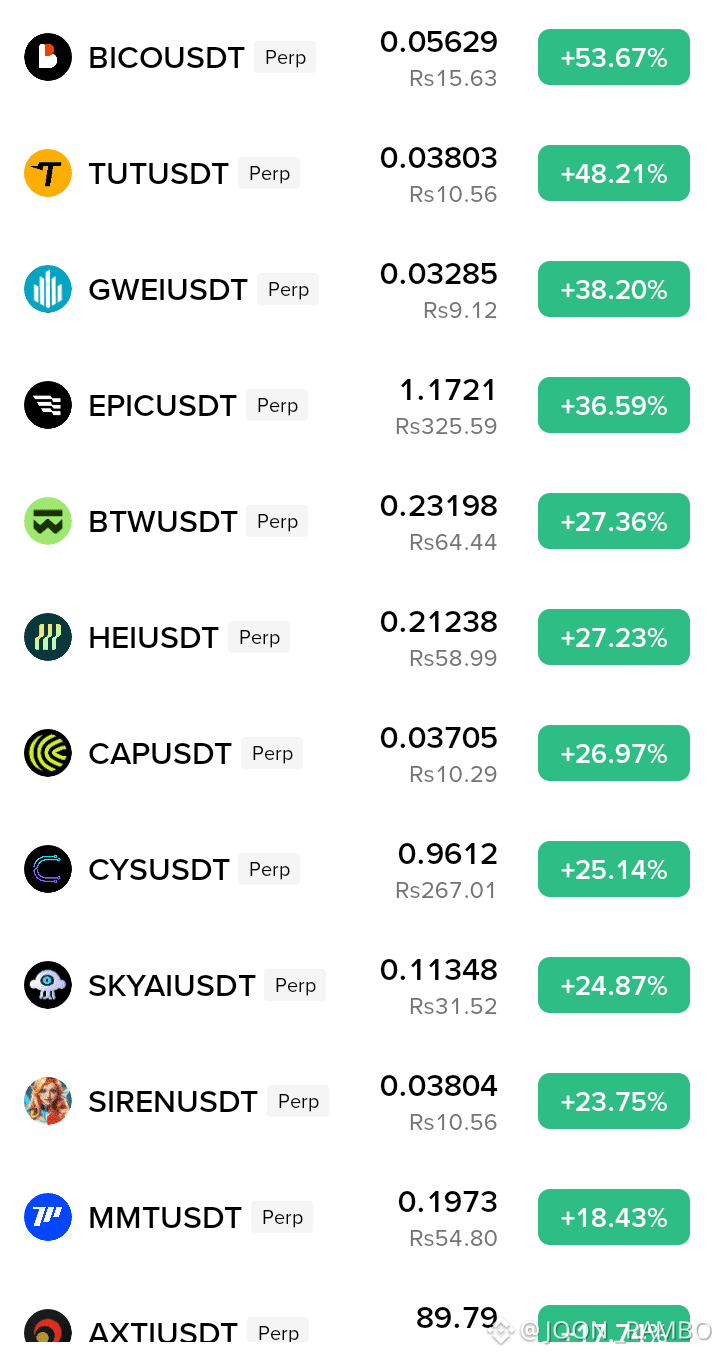
$GWEI just printed +38.20% and the chart looks like it missed the elevator 😂. I’m interested, but chasing after a big move is how traders become exit liquidity. Trade setup: Entry 0.0324–0.0330, TP1 0.0348, TP2 0.0370, TP3 0.0400, SL 0.0310. Holding above entry keeps the setup alive. Losing support cancels it. Momentum is impressive, but I’m keeping risk tight because #TSEPlansReReviewForMajorBusinessChanges #USJulyJobsUnexpectedlyFall #DollarSetForBestDayInTwoWeeks
$GWEI just printed +38.20% and the chart looks like it missed the elevator 😂. I’m interested, but chasing after a big move is how traders become exit liquidity. Trade setup: Entry 0.0324–0.0330, TP1 0.0348, TP2 0.0370, TP3 0.0400, SL 0.0310. Holding above entry keeps the setup alive. Losing support cancels it. Momentum is impressive, but I’m keeping risk tight because #TSEPlansReReviewForMajorBusinessChanges #USJulyJobsUnexpectedlyFall #DollarSetForBestDayInTwoWeeks
1
204
·
--
Haussier
$EPIC is up +36.59% and apparently chose violence against the bears 😂. I’m not buying the top just because the screen is green. Trade setup: Entry 1.155–1.180, TP1 1.215, TP2 1.250, TP3 1.300, SL 1.115. If price consolidates and holds the entry zone, I’ll watch for continuation. Lose it, and I’m gone. After a 36% move, protecting capital matters more than catching every last candle#TSEPlansReReviewForMajorBusinessChanges #USJulyJobsUnexpectedlyFall #SpaceXMayCompleteCursorDealAsEarlyAsNextWeekend
$EPIC is up +36.59% and apparently chose violence against the bears 😂. I’m not buying the top just because the screen is green. Trade setup: Entry 1.155–1.180, TP1 1.215, TP2 1.250, TP3 1.300, SL 1.115. If price consolidates and holds the entry zone, I’ll watch for continuation. Lose it, and I’m gone. After a 36% move, protecting capital matters more than catching every last candle#TSEPlansReReviewForMajorBusinessChanges #USJulyJobsUnexpectedlyFall #SpaceXMayCompleteCursorDealAsEarlyAsNextWeekend
1
220
·
--
$BTW is up +27.36% and the ticker is basically saying “by the way, I’m flying” 😂. I’m watching for a clean continuation, not a FOMO entry. Trade setup: Entry 0.229–0.233, TP1 0.242, TP2 0.250, TP3 0.260, SL 0.220. If the zone holds, bulls remain interesting. If it breaks, setup is invalid. A 27% pump can punish late buyers, so I’d rather miss a move than chase bad risk.#SKHynixToInvest19.1TWonInM17Plant #SpaceXMayCompleteCursorDealAsEarlyAsNextWeekend #GoldBreaksOutFromJanuaryDowntrend
$BTW is up +27.36% and the ticker is basically saying “by the way, I’m flying” 😂. I’m watching for a clean continuation, not a FOMO entry. Trade setup: Entry 0.229–0.233, TP1 0.242, TP2 0.250, TP3 0.260, SL 0.220. If the zone holds, bulls remain interesting. If it breaks, setup is invalid. A 27% pump can punish late buyers, so I’d rather miss a move than chase bad risk.#SKHynixToInvest19.1TWonInM17Plant #SpaceXMayCompleteCursorDealAsEarlyAsNextWeekend #GoldBreaksOutFromJanuaryDowntrend
1
445
·
--
#baby $BABY I'm watching Babylon because self-custodial BTC staking only proves itself when real network activity increases. Quiet days don't tell me much. I pay more attention to consistent RPC responses, smooth wallet performance, reliable staking, and infrastructure that stays predictable under pressure. If @babylonlabs_io keeps delivering the same stable experience as more users participate and more PoS chains rely on Bitcoin-backed security, that's the kind of progress I'll trust over time—not hype, just steady execution. $BABY
#bab @babylonlabs_io
#baby $BABY I'm watching Babylon because self-custodial BTC staking only proves itself when real network activity increases. Quiet days don't tell me much. I pay more attention to consistent RPC responses, smooth wallet performance, reliable staking, and infrastructure that stays predictable under pressure. If @BabylonLabs_io keeps delivering the same stable experience as more users participate and more PoS chains rely on Bitcoin-backed security, that's the kind of progress I'll trust over time—not hype, just steady execution. $BABY
#bab @BabylonLabs_io
#bab @BabylonLabs_io
1
1
83
·
--
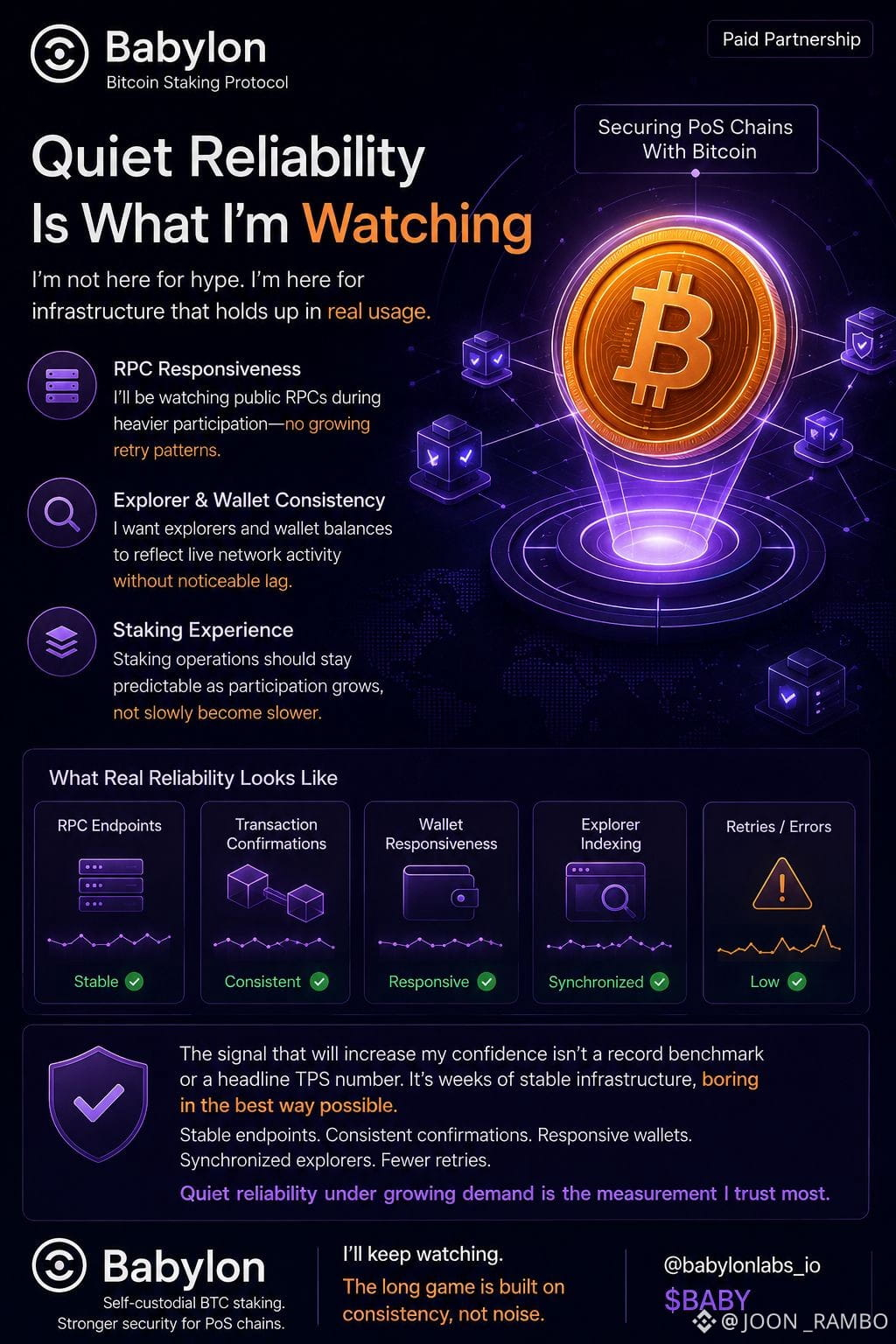
#baby $BABY Over the next several weeks I will be watching whether public RPC responsiveness remains consistent during periods of heavier participation instead of showing growing retry patterns beneath the surface. I will also watch whether explorer indexing and wallet balances continue reflecting network activity without noticeable lag when connected ecosystems become busier. Finally, I want to see whether staking-related operations maintain the same predictable experience as participation increases rather than gradually introducing delays that users simply begin accepting as normal.
The signal that would genuinely increase my confidence is not a record benchmark or a headline throughput claim. It would be several consecutive weeks where those ordinary pieces of infrastructure remain boring despite higher activity. Stable endpoints, consistent transaction confirmation behavior, responsive wallets, synchronized explorers, and the absence of widespread retries tell me far more than impressive theoretical capacity ever could. Quiet reliability under growing demand is still the measurement I trust most, and that is what I will keep watching.#BAB @babylonlabs_io $BABY
#baby $BABY Over the next several weeks I will be watching whether public RPC responsiveness remains consistent during periods of heavier participation instead of showing growing retry patterns beneath the surface. I will also watch whether explorer indexing and wallet balances continue reflecting network activity without noticeable lag when connected ecosystems become busier. Finally, I want to see whether staking-related operations maintain the same predictable experience as participation increases rather than gradually introducing delays that users simply begin accepting as normal.
The signal that would genuinely increase my confidence is not a record benchmark or a headline throughput claim. It would be several consecutive weeks where those ordinary pieces of infrastructure remain boring despite higher activity. Stable endpoints, consistent transaction confirmation behavior, responsive wallets, synchronized explorers, and the absence of widespread retries tell me far more than impressive theoretical capacity ever could. Quiet reliability under growing demand is still the measurement I trust most, and that is what I will keep watching.#BAB @BabylonLabs_io $BABY
The signal that would genuinely increase my confidence is not a record benchmark or a headline throughput claim. It would be several consecutive weeks where those ordinary pieces of infrastructure remain boring despite higher activity. Stable endpoints, consistent transaction confirmation behavior, responsive wallets, synchronized explorers, and the absence of widespread retries tell me far more than impressive theoretical capacity ever could. Quiet reliability under growing demand is still the measurement I trust most, and that is what I will keep watching.#BAB @BabylonLabs_io $BABY
109
·
--
#baby $BABY I'm watching Babylon because self-custodial BTC staking only matters if it stays dependable when real activity increases. I'm paying attention to staking responsiveness, wallet reliability, transaction consistency, and how smoothly Bitcoin-backed security scales across connected PoS chains. Quiet days prove very little. Busy days reveal everything. If @babylonlabs_io keeps delivering stable performance instead of just impressive metrics, that's the signal I'll trust. $BABY #Babylon @babylonlabs_io
#baby $BABY I'm watching Babylon because self-custodial BTC staking only matters if it stays dependable when real activity increases. I'm paying attention to staking responsiveness, wallet reliability, transaction consistency, and how smoothly Bitcoin-backed security scales across connected PoS chains. Quiet days prove very little. Busy days reveal everything. If @BabylonLabs_io keeps delivering stable performance instead of just impressive metrics, that's the signal I'll trust. $BABY #Babylon @BabylonLabs_io

4
2
87
·
--
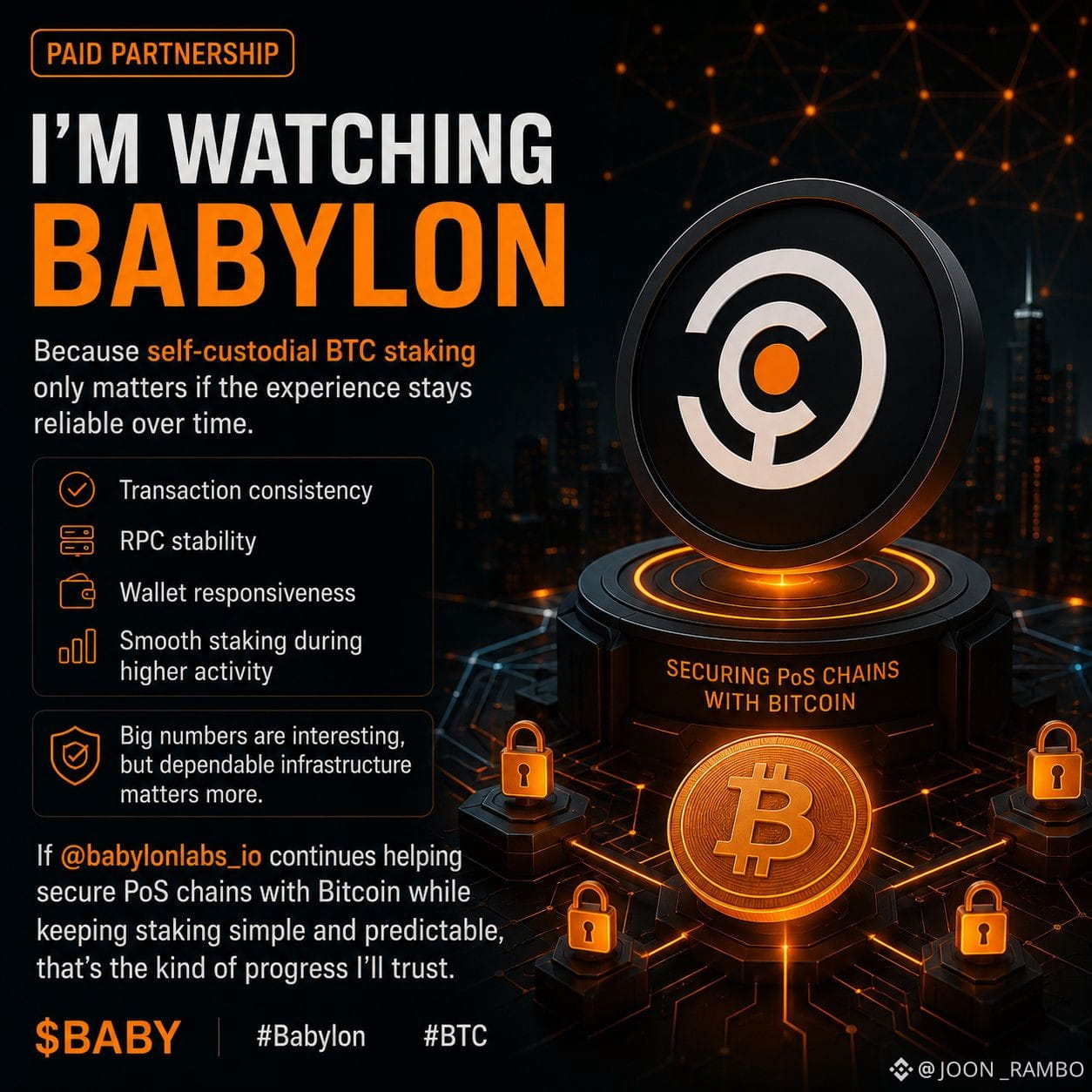
#baby $BABY I'm watching Babylon because self-custodial BTC staking only matters if the experience stays reliable over time. I'm paying attention to transaction consistency, RPC stability, wallet responsiveness, and how smoothly staking works during periods of higher activity. Big numbers are interesting, but dependable infrastructure matters more. If @babylonlabs_io continues helping secure PoS chains with Bitcoin while keeping staking simple and predictable, that's the kind of progress I'll trust. $BABY #Babylon #BTC @babylonlabs_io
#baby $BABY I'm watching Babylon because self-custodial BTC staking only matters if the experience stays reliable over time. I'm paying attention to transaction consistency, RPC stability, wallet responsiveness, and how smoothly staking works during periods of higher activity. Big numbers are interesting, but dependable infrastructure matters more. If @BabylonLabs_io continues helping secure PoS chains with Bitcoin while keeping staking simple and predictable, that's the kind of progress I'll trust. $BABY #Babylon #BTC @BabylonLabs_io
1
1
108
Connectez-vous pour découvrir plus de contenu
Rejoignez la communauté mondiale des adeptes de cryptomonnaies sur Binance Square
⚡️ Suviez les dernières informations importantes sur les cryptomonnaies.
💬 Jugé digne de confiance par la plus grande plateforme d’échange de cryptomonnaies au monde.
👍 Découvrez les connaissances que partagent les créateurs vérifiés.
Adresse e-mail/Nº de téléphone
Sujets d’actualité
NEARFallsToAround$4.70Down14%
376 vues
11 mentions
🚨 $NEAR — FROM ETF HYPE TO A 14% SLAP IN THE FACE.
NEAR has dropped toward $4.70, giving back a big chunk of its recent run after briefly trading above $5.50. The selloff also came as NEAR Intents disclosed a security incident tied to its cross-chain infrastructure, with reported losses around $3.8M. The underlying NEAR blockchain itself was not reported as compromised.
Here’s the part traders should care about:
$4.69–$4.74 is now the key support zone.
Hold it, and this could simply be a violent retest after the September breakout.
Lose it?
The next downside references sit closer to $4.58, then ~$4.30.
And the irony?
The new Bitwise NEAR ETF was still seeing positive inflows around launch week.
So this isn’t a simple “nobody wants NEAR” story.
It’s a battle between:
fresh institutional access
vs.
post-rally profit-taking + security fear.
$NEAR doesn’t need hype right now. It needs $4.70 to hold. 👀
#NEARFallsToAround$4.70Down14% #EvernorthPlansNasdaqListingOct8 #SECProposesCryptoCustodyFramework #IMFApproves$139MDisbursementToElSalvador #AnthropicTargetsIPOAsSoonAsMidNovember
KimHotbae
·0 mentions J’aime
·203 vues
EthereumFoundationLaunchesZkAPIOnMainnet
0 vues
5 mentions
EvernorthPlansNasdaqListingOct8
491 vues
47 mentions