

0xr1
10.3k Publications

0xr1
 Compte Square Vérifié+
Signaler
Bloquer l’utilisateur
I RedOne I Network and Systems Engineer | IT Specialist | AI Orchestrator | Cybersecurity & Blockchain enthusiast | 😎🤞🏻
320 Suivis
36.5K+ Abonnés
45.9K+ J’aime
Publications
Tous
Citations
Vidéos
Direct
PINNED
·
--
Security is not a feature you add later. It is the foundation you build on. 🛡️
Before touching any token, ask: Is the contract audited? Is liquidity locked? Is the team verified?
If any answer is no, walk away. Your money deserves better than hope. 🔐
#KeepItLegit #StaySAFU
#CryptoSecurity #DYOR .
Security is not a feature you add later. It is the foundation you build on. 🛡️
Before touching any token, ask: Is the contract audited? Is liquidity locked? Is the team verified?
If any answer is no, walk away. Your money deserves better than hope. 🔐
#KeepItLegit #StaySAFU
#CryptoSecurity #DYOR .
Before touching any token, ask: Is the contract audited? Is liquidity locked? Is the team verified?
If any answer is no, walk away. Your money deserves better than hope. 🔐
#KeepItLegit #StaySAFU
#CryptoSecurity #DYOR .

2
1k
·
--
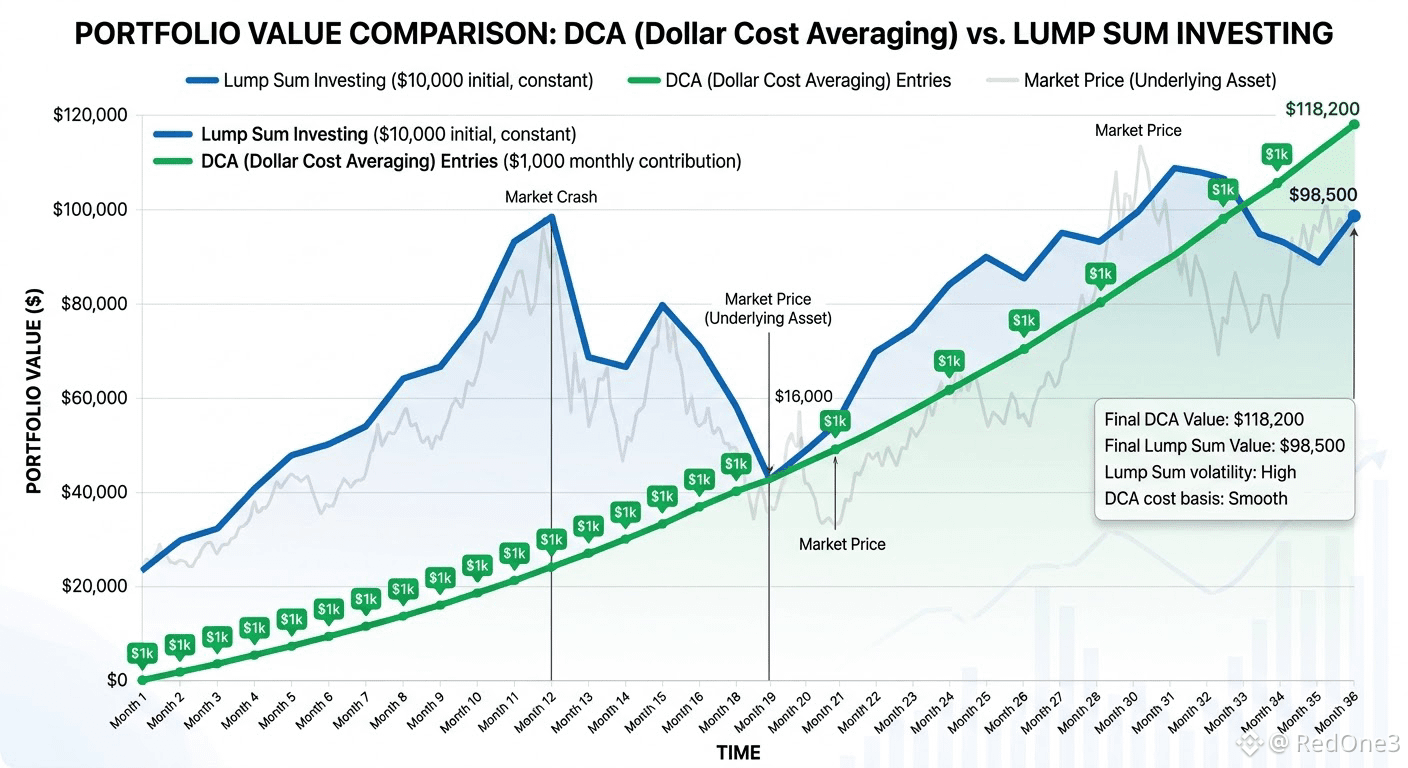
Dollar-Cost Averaging (DCA) beats timing the market 📈
Instead of buying all at once, invest fixed amounts weekly/monthly regardless of price 💵
This removes emotion and reduces average cost per unit over time ⏰
⚠️ Not Financial Advice - Research First
#ᴰʸᴼᴿ #SmartInvesting .
Dollar-Cost Averaging (DCA) beats timing the market 📈
Instead of buying all at once, invest fixed amounts weekly/monthly regardless of price 💵
This removes emotion and reduces average cost per unit over time ⏰
⚠️ Not Financial Advice - Research First
#ᴰʸᴼᴿ #SmartInvesting .
Instead of buying all at once, invest fixed amounts weekly/monthly regardless of price 💵
This removes emotion and reduces average cost per unit over time ⏰
⚠️ Not Financial Advice - Research First
#ᴰʸᴼᴿ #SmartInvesting .
26
·
--
Haussier
🚀 Top Gainers right now — early market momentum is building with some strong breakout moves across futures contracts.
$AIN is leading the charge in a massive way, surging +112.62% in the last 24 hours and trading at $0.05054.
$SPORTFUN follows with a solid +29.94% gain at $0.02270, while STRK holds strong momentum, up +23.31% sitting around $0.05147.
$VELVET and ONE round out the top five, posting strong double-digit gains of +22.66% ($0.08530) and +20.46% ($0.0025005) respectively 📈
{spot}(ONEUSDT)
🚀 Top Gainers right now — early market momentum is building with some strong breakout moves across futures contracts.
$AIN is leading the charge in a massive way, surging +112.62% in the last 24 hours and trading at $0.05054.
$SPORTFUN follows with a solid +29.94% gain at $0.02270, while STRK holds strong momentum, up +23.31% sitting around $0.05147.
$VELVET and ONE round out the top five, posting strong double-digit gains of +22.66% ($0.08530) and +20.46% ($0.0025005) respectively 📈
$AIN is leading the charge in a massive way, surging +112.62% in the last 24 hours and trading at $0.05054.
$SPORTFUN follows with a solid +29.94% gain at $0.02270, while STRK holds strong momentum, up +23.31% sitting around $0.05147.
$VELVET and ONE round out the top five, posting strong double-digit gains of +22.66% ($0.08530) and +20.46% ($0.0025005) respectively 📈
482
·
--
When a missing safety check in a liquidation system led to a $197 million disaster . 📉
In March 2023 a decentralized lending protocol named Euler Finance was hit by a massive exploit . 🚨
The protocol had recently introduced a new feature allowing users to donate funds to the liquidity pool to help keep positions healthy . 💸
However the developers forgot to include a critical validation check when those donated funds interacted with the protocol's internal leverage system . ⚠️
The attacker noticed this flaw and realized they could create a artificially bad debt position on purpose . 🧠
By donating a large amount of borrowed funds and immediately triggering a self-liquidation the system miscalculated the balance and granted the attacker millions of dollars in unbacked credit . 💥
In just a few minutes the hacker drained over $197 million in Dai Staked Ethereum and Wrapped Bitcoin . 💰
The protocol team immediately launched on-chain negotiations sending encrypted messages directly to the hacker's wallet . 💬
After weeks of tense public communication and international law enforcement pressure the hacker apologized and returned nearly all the stolen funds . 🤝
It highlights how even the smallest overlooked logic flaw in liquidity code can expose hundreds of millions to instant risk . 🛡️
If a protocol can be restored through on-chain diplomacy does it show the resilience or the vulnerability of Web3 . 🤔
#CryptoSecurity #EulerFinance #DeFi #Web3Safety #FlashLoan .
When a missing safety check in a liquidation system led to a $197 million disaster . 📉
In March 2023 a decentralized lending protocol named Euler Finance was hit by a massive exploit . 🚨
The protocol had recently introduced a new feature allowing users to donate funds to the liquidity pool to help keep positions healthy . 💸
However the developers forgot to include a critical validation check when those donated funds interacted with the protocol's internal leverage system . ⚠️
The attacker noticed this flaw and realized they could create a artificially bad debt position on purpose . 🧠
By donating a large amount of borrowed funds and immediately triggering a self-liquidation the system miscalculated the balance and granted the attacker millions of dollars in unbacked credit . 💥
In just a few minutes the hacker drained over $197 million in Dai Staked Ethereum and Wrapped Bitcoin . 💰
The protocol team immediately launched on-chain negotiations sending encrypted messages directly to the hacker's wallet . 💬
After weeks of tense public communication and international law enforcement pressure the hacker apologized and returned nearly all the stolen funds . 🤝
It highlights how even the smallest overlooked logic flaw in liquidity code can expose hundreds of millions to instant risk . 🛡️
If a protocol can be restored through on-chain diplomacy does it show the resilience or the vulnerability of Web3 . 🤔
#CryptoSecurity #EulerFinance #DeFi #Web3Safety #FlashLoan .
In March 2023 a decentralized lending protocol named Euler Finance was hit by a massive exploit . 🚨
The protocol had recently introduced a new feature allowing users to donate funds to the liquidity pool to help keep positions healthy . 💸
However the developers forgot to include a critical validation check when those donated funds interacted with the protocol's internal leverage system . ⚠️
The attacker noticed this flaw and realized they could create a artificially bad debt position on purpose . 🧠
By donating a large amount of borrowed funds and immediately triggering a self-liquidation the system miscalculated the balance and granted the attacker millions of dollars in unbacked credit . 💥
In just a few minutes the hacker drained over $197 million in Dai Staked Ethereum and Wrapped Bitcoin . 💰
The protocol team immediately launched on-chain negotiations sending encrypted messages directly to the hacker's wallet . 💬
After weeks of tense public communication and international law enforcement pressure the hacker apologized and returned nearly all the stolen funds . 🤝
It highlights how even the smallest overlooked logic flaw in liquidity code can expose hundreds of millions to instant risk . 🛡️
If a protocol can be restored through on-chain diplomacy does it show the resilience or the vulnerability of Web3 . 🤔
#CryptoSecurity #EulerFinance #DeFi #Web3Safety #FlashLoan .
243
·
--
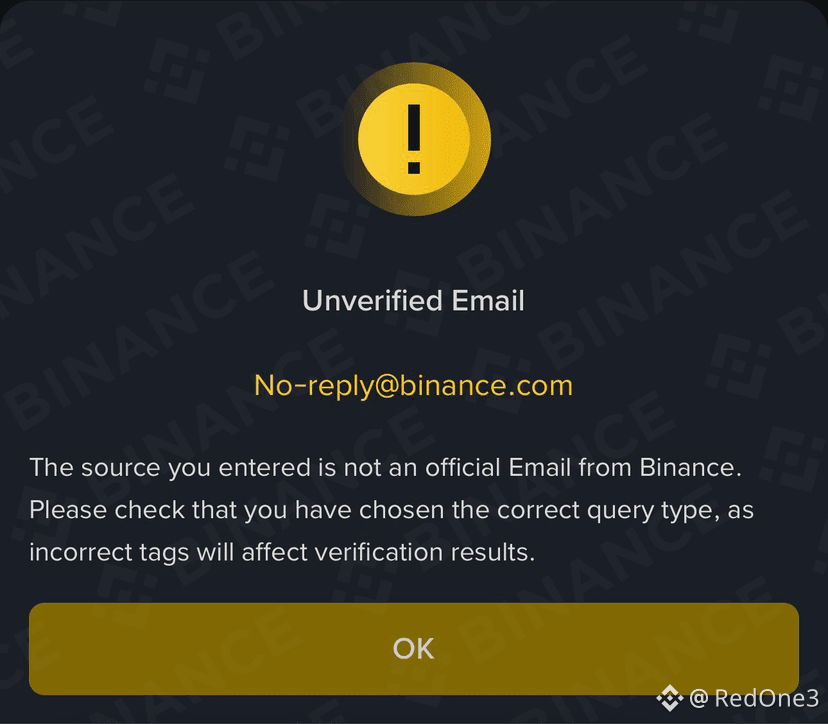
Bookmark official sites. Never Google them. 🔖 Search results can be hijacked by ads. Scammers buy top spots for popular wallets and exchanges. Save the real URL once, use it forever.
#KeepItLegit #ᴰʸᴼᴿ
#StaySAFU #AntiPhising .
Bookmark official sites. Never Google them. 🔖 Search results can be hijacked by ads. Scammers buy top spots for popular wallets and exchanges. Save the real URL once, use it forever.
#KeepItLegit #ᴰʸᴼᴿ
#StaySAFU #AntiPhising .
#KeepItLegit #ᴰʸᴼᴿ
#StaySAFU #AntiPhising .

1
860
·
--
Never buy crypto from a DM. 💬 Strangers offering deals, tokens, or help are scammers. Real projects do not slide into your inbox.
Block, report, and move on.
#ᴰʸᴼᴿ #KeepItLegit #CryptoSecurity .
Never buy crypto from a DM. 💬 Strangers offering deals, tokens, or help are scammers. Real projects do not slide into your inbox.
Block, report, and move on.
#ᴰʸᴼᴿ #KeepItLegit #CryptoSecurity .
Block, report, and move on.
#ᴰʸᴼᴿ #KeepItLegit #CryptoSecurity .

1.1k
·
--
Vérifié
🔐 Ethereum zkAPI: Is Privacy the Ultimate Catalyst for ETH?
Privacy has long been the missing piece for mainstream institutional and retail adoption on public blockchains. With the introduction of zkAPI on Ethereum, zero-knowledge technology is transforming on-chain payments by enabling privacy-preserving transactions directly on the layer-1 network.
💡 How zkAPI Transforms On-Chain Payments
Traditional public ledgers expose all transactional details, including wallet balances and counterparties. The integration of zkAPI allows users and institutions to execute payments while revealing only the necessary cryptographic proofs, ensuring complete confidentiality without compromising security or regulatory compliance.
🚀 Why This Is Highly Bullish for ETH
🌐 1. Increased Institutional Capital Flows
Institutions have hesitated to move major treasury operations on-chain due to corporate privacy concerns. zkAPI removes this barrier, enabling compliant corporate payments, payroll, and high-value settlements on Ethereum.
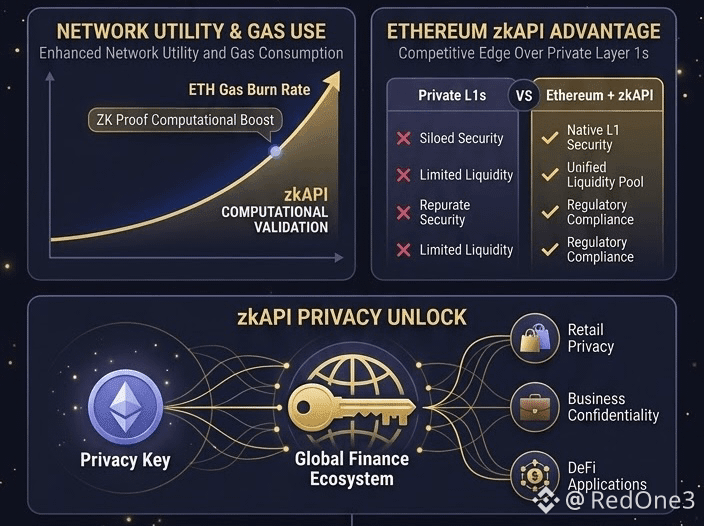
🔥 2. Enhanced Network Utility and Gas Consumption
Privacy-focused smart contract interactions require additional computational validation. As adoption scales, demand for ETH as gas will rise, directly driving network revenue and burn rate under EIP-1559.
🛡️ 3. Competitive Edge Over Private Layer 1s
By embedding zero-knowledge privacy tooling into its ecosystem, Ethereum diminishes the market share of dedicated privacy chains while offering native security and liquidity.
📉 Conclusion
The launch of zkAPI bridges the gap between decentralized transparency and enterprise privacy requirements. This milestone strengthens the long-term utility proposition for ETH, solidifying its place as the settlement layer for global finance.
#Ethereum #ETH #zkAPI
#ethereumfoundationlauncheszkapionmainnet .
🔐 Ethereum zkAPI: Is Privacy the Ultimate Catalyst for ETH?
Privacy has long been the missing piece for mainstream institutional and retail adoption on public blockchains. With the introduction of zkAPI on Ethereum, zero-knowledge technology is transforming on-chain payments by enabling privacy-preserving transactions directly on the layer-1 network.
💡 How zkAPI Transforms On-Chain Payments
Traditional public ledgers expose all transactional details, including wallet balances and counterparties. The integration of zkAPI allows users and institutions to execute payments while revealing only the necessary cryptographic proofs, ensuring complete confidentiality without compromising security or regulatory compliance.
🚀 Why This Is Highly Bullish for ETH
🌐 1. Increased Institutional Capital Flows
Institutions have hesitated to move major treasury operations on-chain due to corporate privacy concerns. zkAPI removes this barrier, enabling compliant corporate payments, payroll, and high-value settlements on Ethereum.
🔥 2. Enhanced Network Utility and Gas Consumption
Privacy-focused smart contract interactions require additional computational validation. As adoption scales, demand for ETH as gas will rise, directly driving network revenue and burn rate under EIP-1559.
🛡️ 3. Competitive Edge Over Private Layer 1s
By embedding zero-knowledge privacy tooling into its ecosystem, Ethereum diminishes the market share of dedicated privacy chains while offering native security and liquidity.
📉 Conclusion
The launch of zkAPI bridges the gap between decentralized transparency and enterprise privacy requirements. This milestone strengthens the long-term utility proposition for ETH, solidifying its place as the settlement layer for global finance.
#Ethereum #ETH #zkAPI
#ethereumfoundationlauncheszkapionmainnet .
Privacy has long been the missing piece for mainstream institutional and retail adoption on public blockchains. With the introduction of zkAPI on Ethereum, zero-knowledge technology is transforming on-chain payments by enabling privacy-preserving transactions directly on the layer-1 network.
💡 How zkAPI Transforms On-Chain Payments
Traditional public ledgers expose all transactional details, including wallet balances and counterparties. The integration of zkAPI allows users and institutions to execute payments while revealing only the necessary cryptographic proofs, ensuring complete confidentiality without compromising security or regulatory compliance.
🚀 Why This Is Highly Bullish for ETH
🌐 1. Increased Institutional Capital Flows
Institutions have hesitated to move major treasury operations on-chain due to corporate privacy concerns. zkAPI removes this barrier, enabling compliant corporate payments, payroll, and high-value settlements on Ethereum.
🔥 2. Enhanced Network Utility and Gas Consumption
Privacy-focused smart contract interactions require additional computational validation. As adoption scales, demand for ETH as gas will rise, directly driving network revenue and burn rate under EIP-1559.
🛡️ 3. Competitive Edge Over Private Layer 1s
By embedding zero-knowledge privacy tooling into its ecosystem, Ethereum diminishes the market share of dedicated privacy chains while offering native security and liquidity.
📉 Conclusion
The launch of zkAPI bridges the gap between decentralized transparency and enterprise privacy requirements. This milestone strengthens the long-term utility proposition for ETH, solidifying its place as the settlement layer for global finance.
#Ethereum #ETH #zkAPI
#ethereumfoundationlauncheszkapionmainnet .
243
·
--
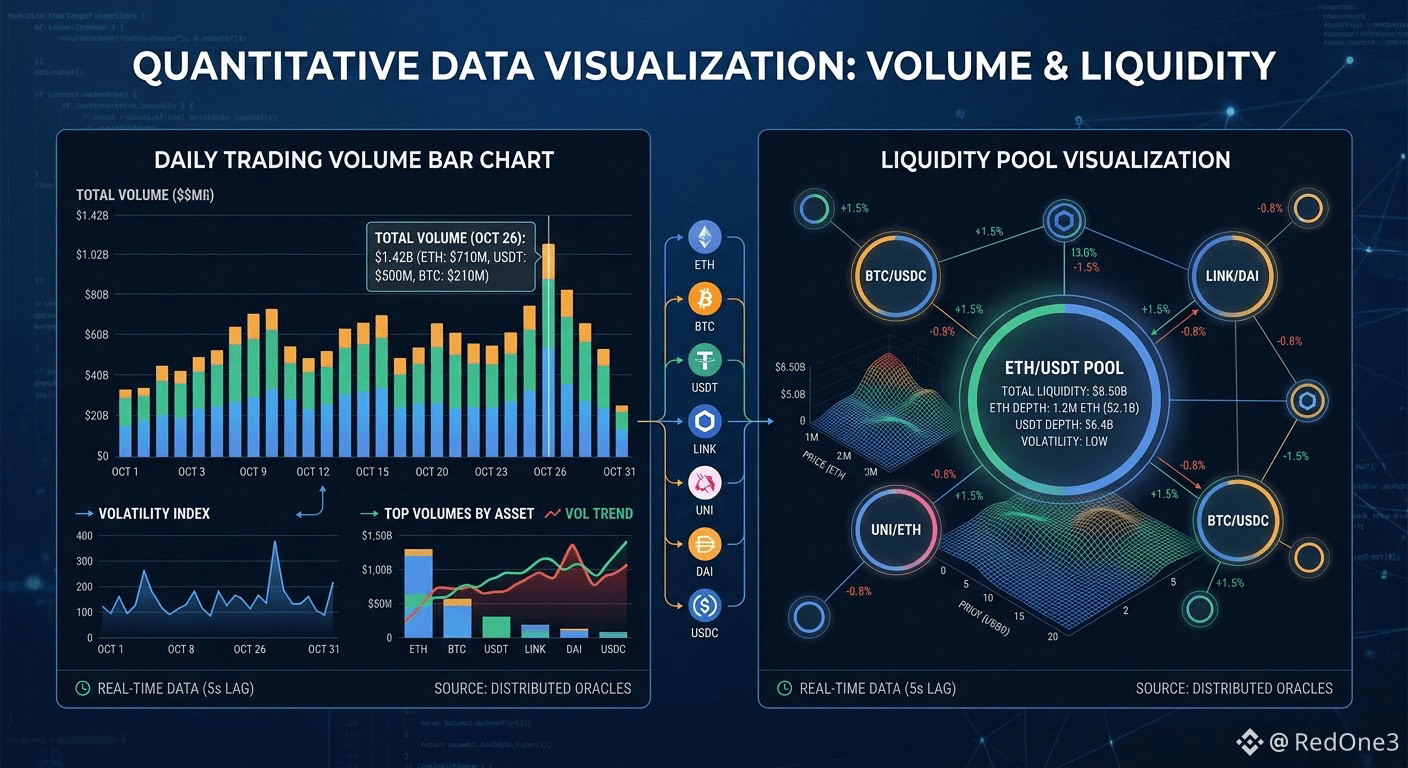
Liquidity is crucial in crypto 💧
Low liquidity = harder to exit positions = slippage 📉
Always check 24h volume before buying any altcoin 📊
If volume is under $1M, be very careful - you might get stuck 🚪
⚠️ Not Financial Advice
#ᴰʸᴼᴿ #Liquidity .
Liquidity is crucial in crypto 💧
Low liquidity = harder to exit positions = slippage 📉
Always check 24h volume before buying any altcoin 📊
If volume is under $1M, be very careful - you might get stuck 🚪
⚠️ Not Financial Advice
#ᴰʸᴼᴿ #Liquidity .
Low liquidity = harder to exit positions = slippage 📉
Always check 24h volume before buying any altcoin 📊
If volume is under $1M, be very careful - you might get stuck 🚪
⚠️ Not Financial Advice
#ᴰʸᴼᴿ #Liquidity .
206
·
--
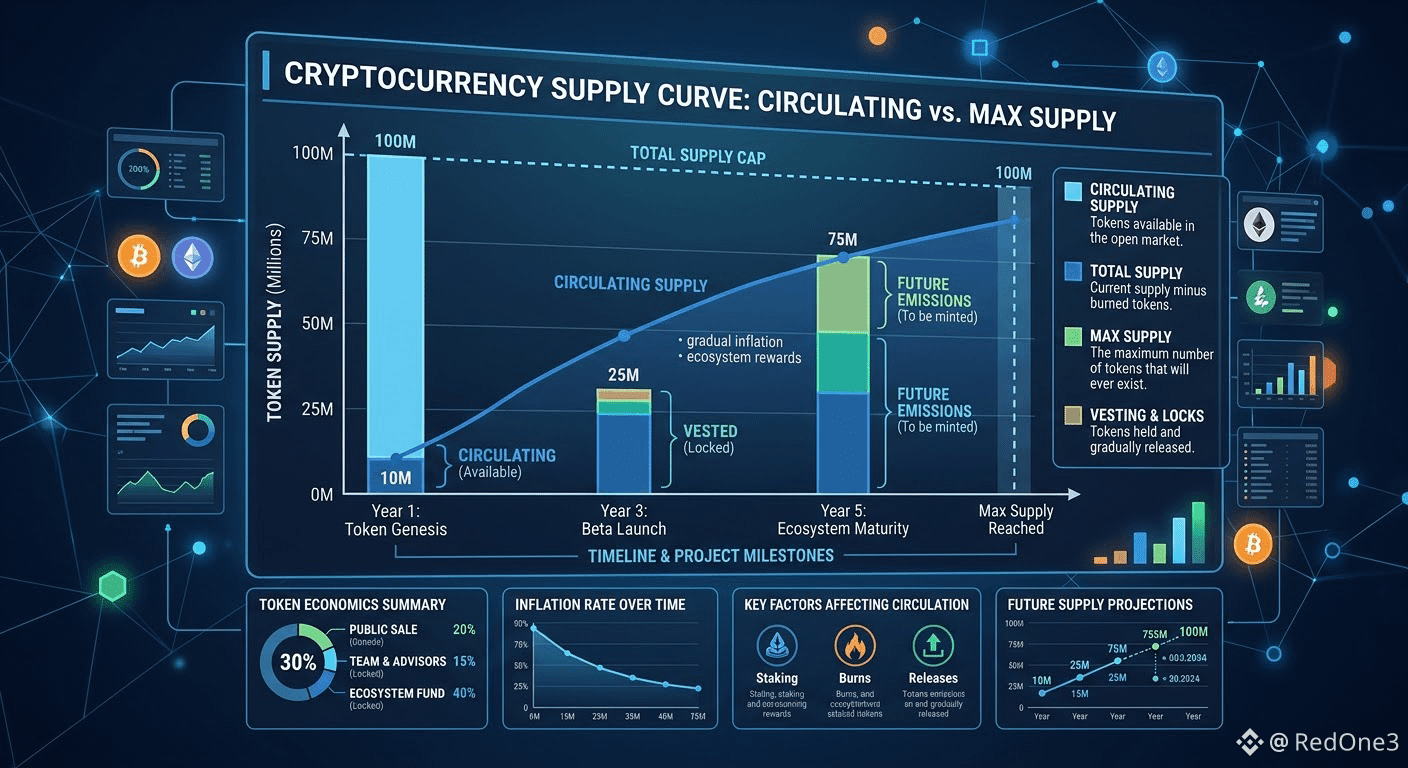
Tokenomics 👀👇🏻
Circulating Supply = coins currently available 🪙
Max Supply = absolute limit that will ever exist 📈
Inflation rate = how fast new coins are created ⏳
Bad tokenomics = unlimited supply = price pressure forever 📉
#ᴰʸᴼᴿ #SAFU #Tokenomics .
Tokenomics 👀👇🏻
Circulating Supply = coins currently available 🪙
Max Supply = absolute limit that will ever exist 📈
Inflation rate = how fast new coins are created ⏳
Bad tokenomics = unlimited supply = price pressure forever 📉
#ᴰʸᴼᴿ #SAFU #Tokenomics .
Circulating Supply = coins currently available 🪙
Max Supply = absolute limit that will ever exist 📈
Inflation rate = how fast new coins are created ⏳
Bad tokenomics = unlimited supply = price pressure forever 📉
#ᴰʸᴼᴿ #SAFU #Tokenomics .
1
668
·
--
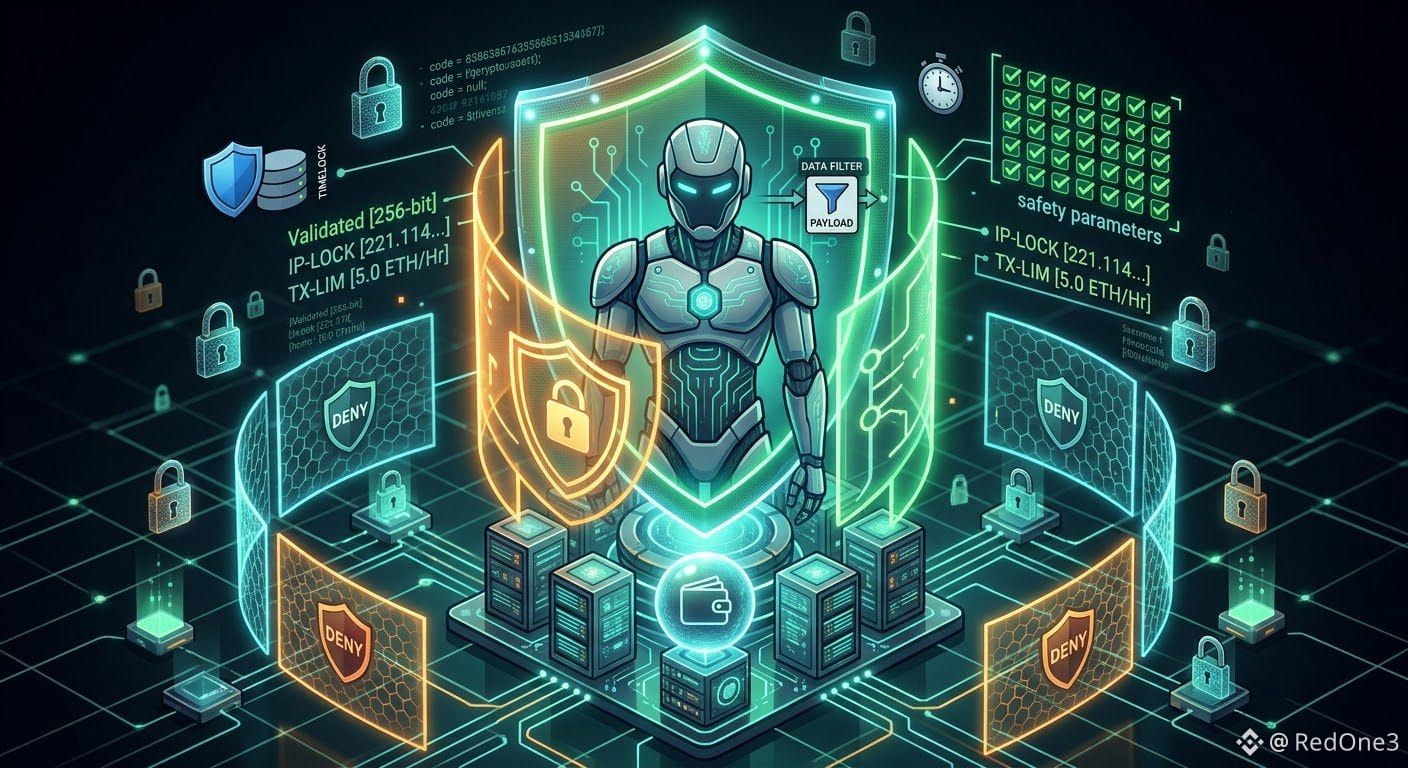
AI Agent Security & Policy Layers
As AI agents gain execution authority over crypto assets, security must move from an afterthought to a core requirement.
Why We Need Deterministic Security Wrappers
Primary Risk Vectors:
⚠️ Prompt Injection Attacks: Malicious actors attempting to hijack agent logic through manipulated inputs.
💥 Unbounded Execution: Bots executing trades without hard cap risk limits or slippage protections.
🔓 Privileged Access Vulnerabilities: Exposing private keys through insecure API endpoints.
Essential Defensive Safeguards:
🛡️ Strict Policy Engines: Pre-execution validation layers checking all outgoing transaction payloads. ⏱️ Timelocks & Spending Limits: Hard caps on transactional volume per period.
🔍 Multi-Sig Authorization: Human-in-the-loop sign-offs for high-value portfolio movements.
Security is what separates sustainable Web3 AI projects from vulnerable experiments.
#KeepItLegit #DYOR
#CryptoSecurity #AIAgents #DeFi .
AI Agent Security & Policy Layers
As AI agents gain execution authority over crypto assets, security must move from an afterthought to a core requirement.
Why We Need Deterministic Security Wrappers
Primary Risk Vectors:
⚠️ Prompt Injection Attacks: Malicious actors attempting to hijack agent logic through manipulated inputs.
💥 Unbounded Execution: Bots executing trades without hard cap risk limits or slippage protections.
🔓 Privileged Access Vulnerabilities: Exposing private keys through insecure API endpoints.
Essential Defensive Safeguards:
🛡️ Strict Policy Engines: Pre-execution validation layers checking all outgoing transaction payloads. ⏱️ Timelocks & Spending Limits: Hard caps on transactional volume per period.
🔍 Multi-Sig Authorization: Human-in-the-loop sign-offs for high-value portfolio movements.
Security is what separates sustainable Web3 AI projects from vulnerable experiments.
#KeepItLegit #DYOR
#CryptoSecurity #AIAgents #DeFi .
As AI agents gain execution authority over crypto assets, security must move from an afterthought to a core requirement.
Why We Need Deterministic Security Wrappers
Primary Risk Vectors:
⚠️ Prompt Injection Attacks: Malicious actors attempting to hijack agent logic through manipulated inputs.
💥 Unbounded Execution: Bots executing trades without hard cap risk limits or slippage protections.
🔓 Privileged Access Vulnerabilities: Exposing private keys through insecure API endpoints.
Essential Defensive Safeguards:
🛡️ Strict Policy Engines: Pre-execution validation layers checking all outgoing transaction payloads. ⏱️ Timelocks & Spending Limits: Hard caps on transactional volume per period.
🔍 Multi-Sig Authorization: Human-in-the-loop sign-offs for high-value portfolio movements.
Security is what separates sustainable Web3 AI projects from vulnerable experiments.
#KeepItLegit #DYOR
#CryptoSecurity #AIAgents #DeFi .
1
802
·
--
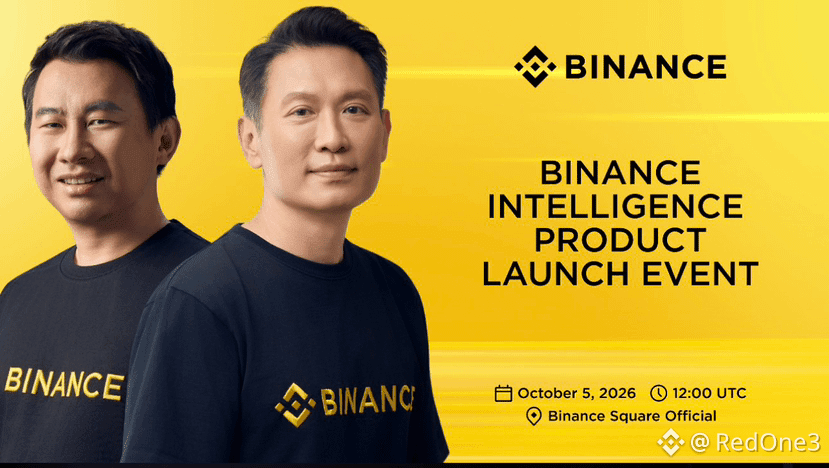
Hey @BiBi I think we are going to have a brand new AI product.
What’s your take on the upcoming Binance Intelligence Product Launch Event? 😁🤔
Hey @Binance BiBi I think we are going to have a brand new AI product.
What’s your take on the upcoming Binance Intelligence Product Launch Event? 😁🤔
What’s your take on the upcoming Binance Intelligence Product Launch Event? 😁🤔

1
1
48
·
--
Public Key vs Private Key explained 🔑
Your Public Key = Your bank account number (safe to share) 💳
Your Private Key = Your ATM PIN + password combined (guard with your life) 🤐
One is for receiving, one is for controlling - never mix them up!
#KeepItLegit #DYOR
#CryptoBasics #KeyManagement
#Web3Education .
Public Key vs Private Key explained 🔑
Your Public Key = Your bank account number (safe to share) 💳
Your Private Key = Your ATM PIN + password combined (guard with your life) 🤐
One is for receiving, one is for controlling - never mix them up!
#KeepItLegit #DYOR
#CryptoBasics #KeyManagement
#Web3Education .
Your Public Key = Your bank account number (safe to share) 💳
Your Private Key = Your ATM PIN + password combined (guard with your life) 🤐
One is for receiving, one is for controlling - never mix them up!
#KeepItLegit #DYOR
#CryptoBasics #KeyManagement
#Web3Education .

209
·
--
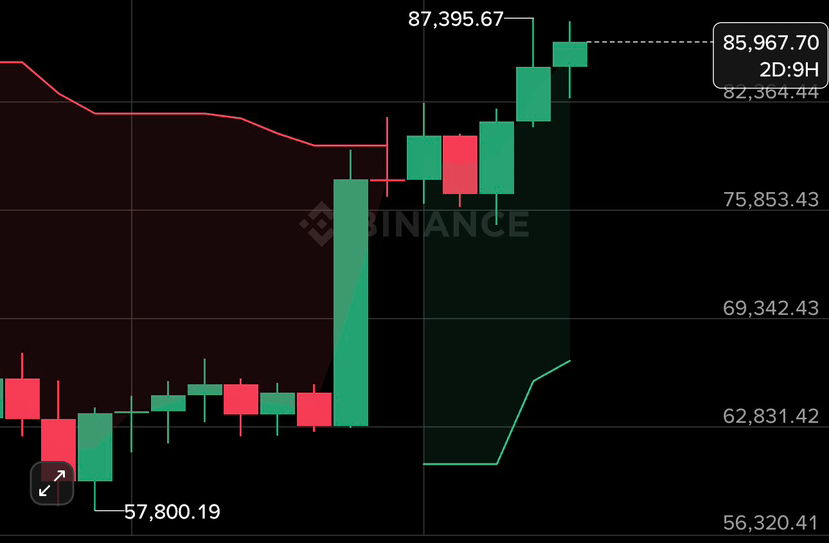
When BTC goes green, even the cat starts performing live! 😹
Trust the process and HODL 💎🙌🏻
#Bitcoin #BTC #BitcoinHodl $BTC
When BTC goes green, even the cat starts performing live! 😹
Trust the process and HODL 💎🙌🏻
#Bitcoin #BTC #BitcoinHodl $BTC
Trust the process and HODL 💎🙌🏻
#Bitcoin #BTC #BitcoinHodl $BTC
2
171
·
--
0xr1
·
--
#BitcoinHodl 👀
$BTC
$BTC
196
·
--
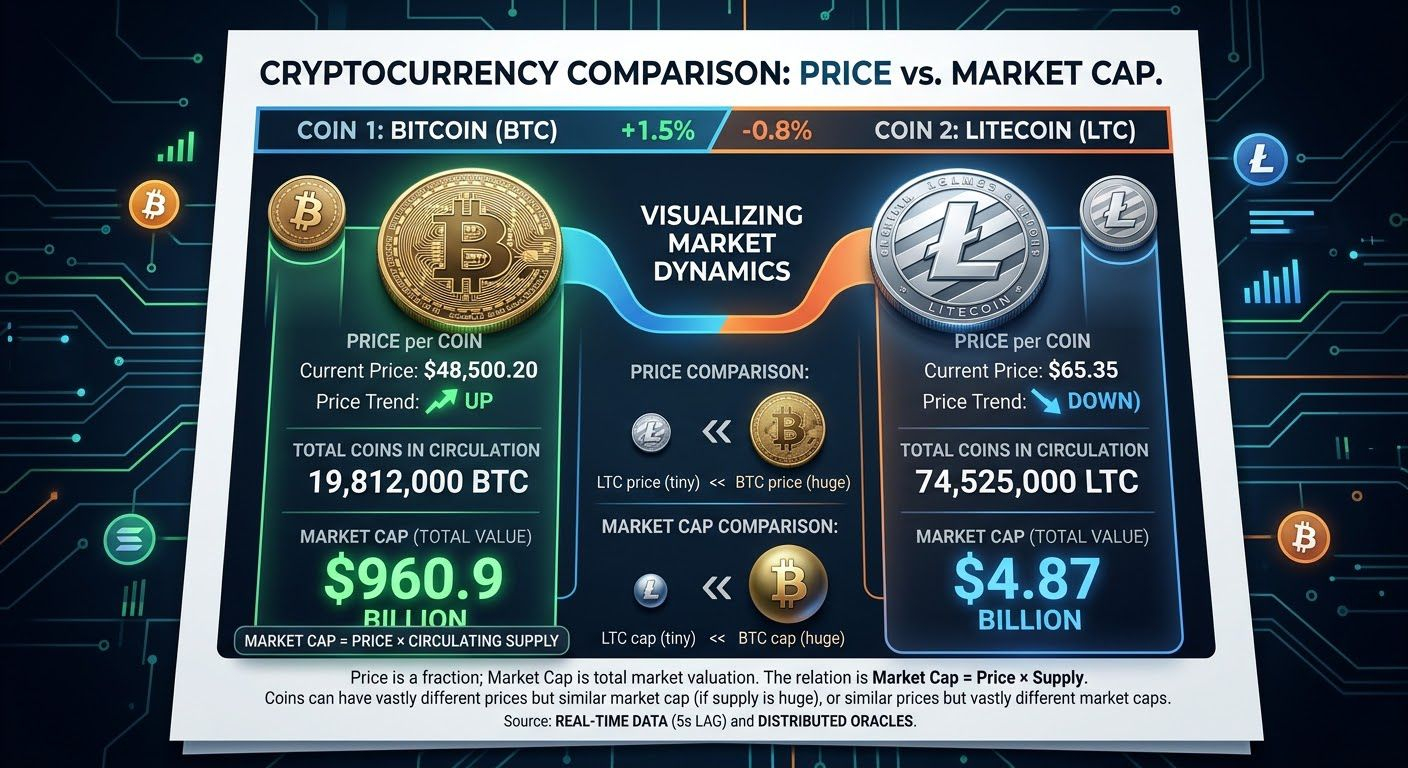
Market cap vs Price trap 📊
A coin with $0.001 price isn't necessarily "cheap" 💎
Check market cap instead: (Price × Circulating Supply) = Market Cap 🧮
A small cap coin can 10x, a large cap struggles to 2x 📈
⚠️ Not Financial Advice
#ᴰʸᴼᴿ #KeepItLegit .
Market cap vs Price trap 📊
A coin with $0.001 price isn't necessarily "cheap" 💎
Check market cap instead: (Price × Circulating Supply) = Market Cap 🧮
A small cap coin can 10x, a large cap struggles to 2x 📈
⚠️ Not Financial Advice
#ᴰʸᴼᴿ #KeepItLegit .
A coin with $0.001 price isn't necessarily "cheap" 💎
Check market cap instead: (Price × Circulating Supply) = Market Cap 🧮
A small cap coin can 10x, a large cap struggles to 2x 📈
⚠️ Not Financial Advice
#ᴰʸᴼᴿ #KeepItLegit .
480


·
--
Vérifié
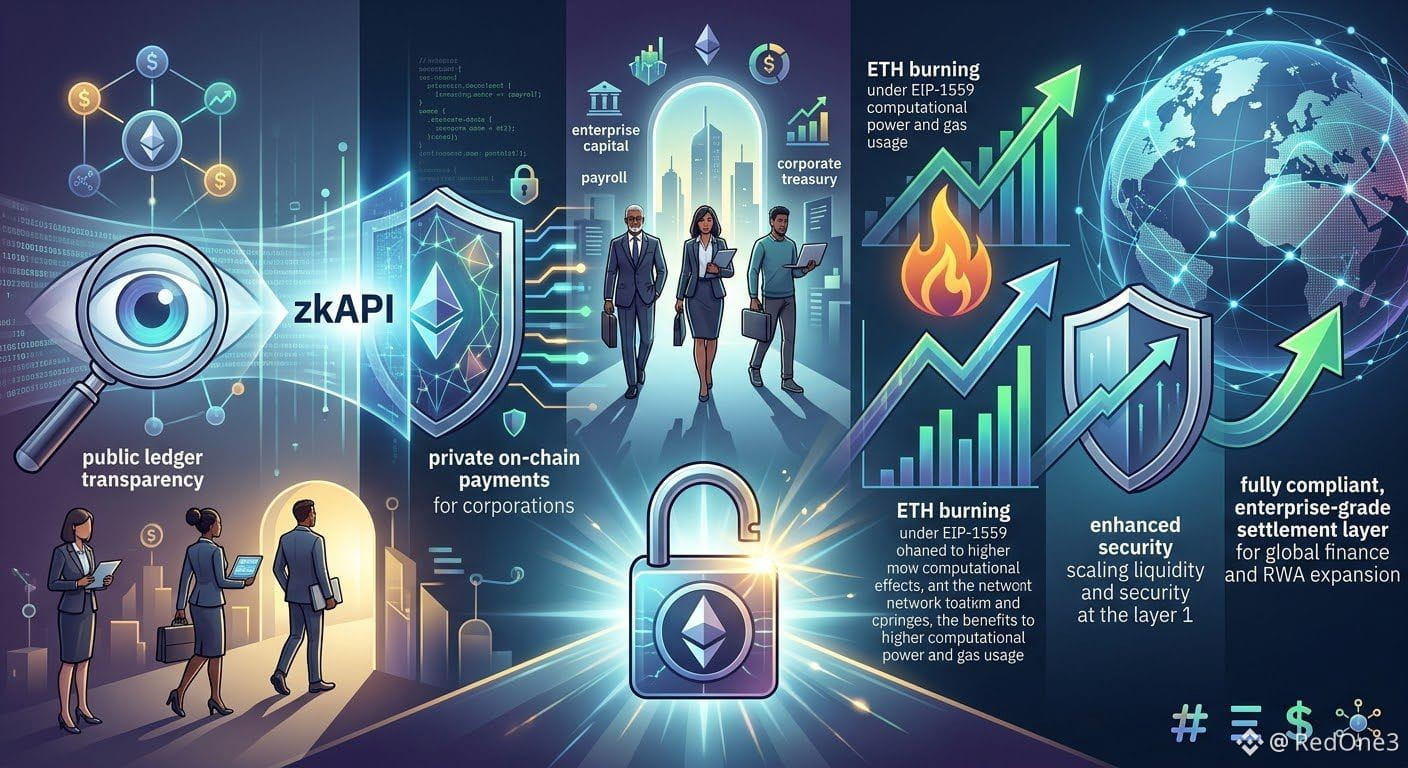
🔐 Ethereum zkAPI is officially live, and it completely changes the narrative around ETH privacy and enterprise adoption!
Up until now, public ledgers meant total transparency, which was the single biggest dealbreaker for real-world institutions looking to handle payroll, corporate treasury, or high-value settlements on-chain.
💡 With zkAPI, Ethereum enables private on-chain payments backed by zero-knowledge proofs. This unlocks a massive wave of enterprise capital that was previously sitting on the sidelines due to confidentiality concerns 📈.
🔥 On top of that, ZK-proof validation requires more computational power, meaning higher gas usage, increased ETH burning under EIP-1559, and direct supply pressure. By pulling privacy natively into its L1, Ethereum effectively neutralizes dedicated privacy chains while scaling its liquidity and security 🛡️.
🚀 This upgrade turns Ethereum into a fully compliant, enterprise-grade settlement layer for global finance and RWA expansion. Privacy was always the missing piece, and ETH just claimed it ✨.
#ᴰʸᴼᴿ
#Ethereum #ETH #zkAPI #DeFi .
🔐 Ethereum zkAPI is officially live, and it completely changes the narrative around ETH privacy and enterprise adoption!
Up until now, public ledgers meant total transparency, which was the single biggest dealbreaker for real-world institutions looking to handle payroll, corporate treasury, or high-value settlements on-chain.
💡 With zkAPI, Ethereum enables private on-chain payments backed by zero-knowledge proofs. This unlocks a massive wave of enterprise capital that was previously sitting on the sidelines due to confidentiality concerns 📈.
🔥 On top of that, ZK-proof validation requires more computational power, meaning higher gas usage, increased ETH burning under EIP-1559, and direct supply pressure. By pulling privacy natively into its L1, Ethereum effectively neutralizes dedicated privacy chains while scaling its liquidity and security 🛡️.
🚀 This upgrade turns Ethereum into a fully compliant, enterprise-grade settlement layer for global finance and RWA expansion. Privacy was always the missing piece, and ETH just claimed it ✨.
#ᴰʸᴼᴿ
#Ethereum #ETH #zkAPI #DeFi .
Up until now, public ledgers meant total transparency, which was the single biggest dealbreaker for real-world institutions looking to handle payroll, corporate treasury, or high-value settlements on-chain.
💡 With zkAPI, Ethereum enables private on-chain payments backed by zero-knowledge proofs. This unlocks a massive wave of enterprise capital that was previously sitting on the sidelines due to confidentiality concerns 📈.
🔥 On top of that, ZK-proof validation requires more computational power, meaning higher gas usage, increased ETH burning under EIP-1559, and direct supply pressure. By pulling privacy natively into its L1, Ethereum effectively neutralizes dedicated privacy chains while scaling its liquidity and security 🛡️.
🚀 This upgrade turns Ethereum into a fully compliant, enterprise-grade settlement layer for global finance and RWA expansion. Privacy was always the missing piece, and ETH just claimed it ✨.
#ᴰʸᴼᴿ
#Ethereum #ETH #zkAPI #DeFi .
2
237
·
--
SIM Swap attacks explained 📱
Hackers call your telecom provider, convince them you're you, and swap your SIM to their phone 😱
Result? They access 2FA codes and drain your accounts 🚨
Protection: Use authenticator apps (Google Authenticator, Authy) instead of SMS 🔐
#KeepItLegit #StaySAFU
#CyberSecurity #2FA #ProtectYourself .
SIM Swap attacks explained 📱
Hackers call your telecom provider, convince them you're you, and swap your SIM to their phone 😱
Result? They access 2FA codes and drain your accounts 🚨
Protection: Use authenticator apps (Google Authenticator, Authy) instead of SMS 🔐
#KeepItLegit #StaySAFU
#CyberSecurity #2FA #ProtectYourself .
Hackers call your telecom provider, convince them you're you, and swap your SIM to their phone 😱
Result? They access 2FA codes and drain your accounts 🚨
Protection: Use authenticator apps (Google Authenticator, Authy) instead of SMS 🔐
#KeepItLegit #StaySAFU
#CyberSecurity #2FA #ProtectYourself .

3
206
Connectez-vous pour découvrir plus de contenu
Rejoignez la communauté mondiale des adeptes de cryptomonnaies sur Binance Square
⚡️ Suviez les dernières informations importantes sur les cryptomonnaies.
💬 Jugé digne de confiance par la plus grande plateforme d’échange de cryptomonnaies au monde.
👍 Découvrez les connaissances que partagent les créateurs vérifiés.
Adresse e-mail/Nº de téléphone
Sujets d’actualité
SECHaltsCryptoETFReviewsAmidFundingLapse
17,822 vues
260 mentions
🚨 CRYPTO ETF APPROVALS JUST HIT A ROADBLOCK!$AIN
The SEC has reportedly paused crypto ETF reviews amid a funding lapse a delay that could keep the market waiting for key decisions. 👀📉$STRK $PUMP
#etf #SECHaltsCryptoETFReviewsAmidFundingLapse #CryptoNews
Adeem Jutt
·2 mentions J’aime
·245 vues
ZcashETFPostsFirstWeeklyOutflow$93.6M
57,805 vues
175 mentions
GreekPoliceBustCryptoScamRingArrest17
179,680 vues
1,245 mentions