EIA: US crude inventories down by 6.2 million barrels !
Commercial crude oil inventories in the United States, not considering those in the Strategic Petroleum Reserve (SPR), declined by 2.3 million barrels to 459.5 million barrels in the week ending April 24, the Energy Information Administration (EIA) said in its report published on Wednesday. Crude oil refinery inputs averaged 16.1 million barrels per day (bpd), 85,000 bpd more than the previous week's average. Refineries operated at 89.6% of their operable capacity. Gasoline production declined to an average of 9.8 million bpd. Crude oil imports averaged 5.8 million bpd, down by 329,000 bpd week-on-week. Meanwhile, total commercial petroleum inventories went down by 17 million barrels. #oil #BrentCrude #EIA $CL $BZ
$BR is consolidating near support with potential breakout ahead.🚨
Entry: 0.159$ - 0.164$ 💪🏻
Stop-loss: 0.154$
TP1: 0.166$
TP2: 0.169$
TP3: 0.172$
Price is holding above key support with stable liquidity, indicating accumulation. A break above 805$ with volume can trigger continuation, while holding 0.18$ keeps the bullish structure intact.
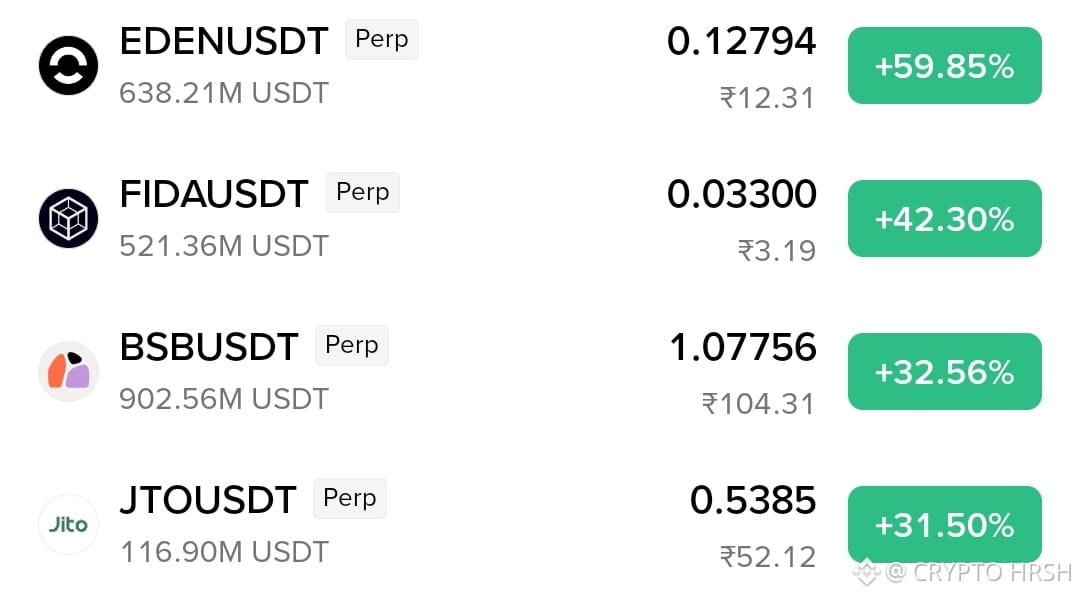
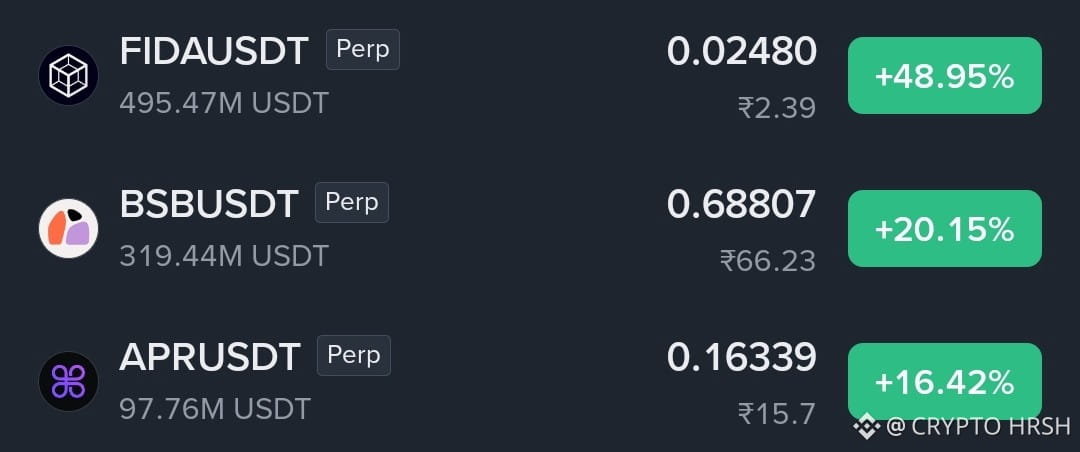
$BSB is consolidating near support with potential breakout ahead.
Entry:0.618 $ - 0.62$
Stop-loss: 0.605$
TP1: 0.623 $
TP2: 0.635 $
TP3: 0.656$
Price is holding above key support with stable liquidity, indicating accumulation. A break above 1.25$ B with volume can trigger continuation, while holding 63$ keeps the bullish structure intact.
Oil prices retreat after touching four-year high as traders focus on Iran developments.
Hopes are dimming for a quick and full reopening of the Strait of Hormuz to tanker and other shipping traffic
Oil prices turned lower after touching a four-year high early Thursday morning.
Oil futures eased early Thursday, reversing direction after reaching a four-year high on a report that President Donald Trump is considering escalating the war in Iran.
Demonstrating the level of volatility in the market, the West Texas Intermediate contract for June delivery (CL.1) (CLM26) fell 1.4% to $105.250 a barrel, after reaching nearly $111 overnight. Brent crude futures for June delivery (BRN00) (BRNM26) declined 3.2% to $114.20 a barrel after rising to a high of $126.41 early Thursday morning - the highest since 2022. The June contract expires today, which means prices may be volatile. It has been a particularly tumultuous week for oil prices, as the U.S. and Iran appear far apart on any lasting peace deal. That's dimming hopes for a quick and full reopening of the Strait of Hormuz to tanker and other shipping traffic.
The stalemate also puts focus back on the depletion of global crude supplies and the real-world consequences of that trend, such as inflation pressures that can prevent central banks from cutting interest rates and jet-fuel shortages that have already prompted the airline industry to announce cutbacks to flights through the summer.
Big picture, Thursday's reversal in oil prices has been modest in comparison with silver's historic drop a few months ago, said Bob Savage, head of markets macro strategy at BNY. "High volatility in a market that spikes higher and reverses isn't a shock," he said.
The latest surge in oil prices came after Axios reported late Wednesday night that Trump will receive a briefing on Thursday from ?Adm. Brad Cooper, the head of U.S. Central Command, on plans for potential further military action against Iran. Centcom has prepared a proposal for a "short and powerful" round of strikes against Iran, which will likely include energy infrastructure targets, according to Axios, which cited two people familiar with the situation. Mohamed El-Erian, chief economic adviser at Allianz and former CEO of Pimco, wrote in a post on X that markets are focusing on three main issues: "the stalemate in the Middle East War, with the balance of risk shifting toward escalation, the depletion of energy inventories in Asia and Europe, and the structural supply uncertainties in the Gulf region."
Trump told Axios on Tuesday that he will not be removing the naval blockade of Iranian ports until the Islamic Republic agrees to a deal that includes addressing the White House's concerns about its nuclear concessions.
Deutsche Bank's Jim Reid wrote in a note on Thursday that the continued closure of the shipping route has "fed growing fears about an extended stagflationary shock." #oil #BrentCrude #us #OilPrice Trade Oil Here 👇🏻 $CL $BZ
Bitcoin 'trapped below' key resistance level as ETF outflows stretch to three days amid Fed split
#BTC Bitcoin held near $76,000 on Thursday after the Federal Reserve kept rates unchanged, but analysts say the market's attention has shifted quickly from the hold itself to the cracks underneath it.
Thomas Perfumo, Kraken's chief economist, said the hold was the least interesting part of the meeting and that markets are instead weighing policy uncertainty tied to Jerome Powell's continued presence on the board alongside Kevin Warsh's expected leadership.
"The absence of a clean handoff to Warsh, who is nearing Senate confirmation as Chair, suggests the potential for discord over policy at the Fed," Perfumo stated. "With markets now pricing a nearly 90% chance of rates holding flat through year-end, they may be weighing Powell's continued presence at the Fed over Warsh's appointment, a net negative dynamic for assets like crypto and growth equities."
The Block's price page shows bitcoin was trading at about $76,100 shortly before the U.S. market open, after touching an intraday high of $77,583 and a low of $75,014. It means bitcoin (BTC) is still boxed in below the $78,000-$79,000 ceiling that Glassnode has flagged as the key resistance zone. In its latest report, the analysts at the firm said bitcoin remains "trapped below" the True Market Mean, with support clustered between $65,000 and $70,000, spot selling pressure easing, and institutional flows beginning to stabilize.
Yet, demand is too weak for a sustained break higher, they said.
Post-Fed macro scene
The macro backdrop did not help either.
Alvin Kan, chief operating officer at Bitget Wallet, said bitcoin's failure to hold momentum above the $77,000-$78,000 area reflects a market trying to balance structural support from institutional demand against macro caution.
Previously, bitcoin had slipped after the Fed held rates steady and delivered the deepest split among central bank officials in decades. That split is now a key trading signal across desks.
Bitunix analyst Chen Dean said the market is no longer focused on "no rate cut," but on the Fed losing internal consensus over inflation itself. In his view, the real repricing risk is whether repeated energy and supply shocks force policymakers to treat higher-for-longer as a structural reality rather than a temporary stance.
Similarly, Matt Mena, senior crypto research strategist at 21Shares, said the hold was no surprise, but the hawkish dissenters "threw a bucket of ice on the market's pivot party."
Jake Kennis, a research analyst at Nansen, took a similar line. Kennis noted that the Fed's higher-for-longer signal has kept bitcoin stuck below $78,000 and pushed crypto into a waiting game shaped by restrictive policy and energy risk. Institutional limbo
Flows have turned alongside that shift in tone.
After snapping a nine-day inflow streak earlier this week, U.S. spot bitcoin ETFs posted a third consecutive day of net outflows on April 29.
SoSoValue data showed $138 million in total net outflows, even as Morgan Stanley's MSBT logged the largest single-day inflow among the products at $10.8 million. Spot ether ETFs lost another $87.7 million, led by Fidelity's FETH.
The weakening in ETF demand also fits a more careful tone showing up elsewhere in the market.
According to Glassnode, ETF assets under management and CME open interest are stabilizing after earlier outflows. They said it points to tentative institutional re-entry, but notably, not full conviction.
Analysts also flagged another important wrinkle: the perpetual futures market has flipped to its deepest net short bias on record, leaving room for squeezes if sentiment improves or spot demand firms up.
At the same time, implied and realized volatility have both drifted lower, and analysts said this reinforces a calmer yet indecisive, range-bound setup.
So, bitcoin is holding up, but only just, per multiple analysts' insights reviewed by The Block.
The sell pressure is lighter, shorts are crowded, and support is better defined than it was a few weeks ago. Yet three straight days of ETF outflows, a fractured Fed, and sticky macro risk are keeping the market pinned under the same ceiling. Disclaimer: The Block is an independent media outlet
that delivers news, research, and data. As of November 2023, Foresight Ventures is a majority investor of The Block. Foresight Ventures invests in other companies in the crypto space. Crypto exchange Bitget is an anchor LP for Foresight Ventures. The Block continues to operate independently to deliver objective, impactful, and timely information about the crypto industry. Here are our current financial disclosures. #StrategyBTCPurchase TRADE $BTC HERE 👇🏻
Brent crude futures steadied around $110.5 per barrel on Thursday after briefly jumping above $114, its highest intraday level since June 2022, as markets reacted to reports that US President Donald Trump will be briefed on expanded military options in Iran.
According to Axios, the briefing from US Central Command chief Admiral Brad Cooper signals that renewed combat operations are being seriously considered, with a plan for a short and intense wave of strikes reportedly under review.
Tensions remain elevated despite a ceasefire holding since early April, as US and Iranian blockades have effectively shut the Strait of Hormuz, cutting off a major share of global oil flows and driving what the International Energy Agency has called an unprecedented supply shock.
Meanwhile, US crude exports have surged to record levels as buyers seek alternative supply. #oil #BrentCrude #us
$ZBT is consolidating near support with potential breakout ahead.🔥
Entry: 0.178$ - 0.181$ 🎯
Stop-loss: 0.174$ 💪🏻
TP1: 0.183$ 🍅
TP2: 0.185$ 🍅
TP3: 0.191$ 🍅
Price is holding above key support with stable liquidity, indicating accumulation. A break above 82$+ with volume can trigger continuation, while holding 0.19$ keeps the bullish structure intact.
How To Deposit Money In Binance In Easy Way = Full Steps.
Deposit funds from your bank account to Binance in these steps. The exact options and wording vary by country and KYC level; the outline below covers the common flows (SEPA/ACH/bank transfer, wire, debit/credit card, Faster Payments, local rails).
1) Prepare account and verify identity
Create and verify your Binance account (email, phone, identity documents). Higher daily/monthly limits require full KYC (ID + selfie + address for some jurisdictions). Enable 2FA (Google Authenticator or SMS) for withdrawal/deposit security. 2) Choose deposit currency and method
On Binance web or app: Wallet → Fiat and Spot → Deposit. Select the fiat currency you want to deposit (e.g., EUR, USD, GBP, NGN). Binance will list available deposit methods for your region: Bank Transfer (SEPA, ACH, Faster Payments), SWIFT, Local bank transfer partners, or card. 3) Bank transfer (recommended for lower fees)
Select “Bank Transfer” or the specific rail (e.g., SEPA for EUR, ACH for USD, Faster Payments for GBP). Binance provides beneficiary details (account name, IBAN or account number, BIC/SWIFT, reference/memo). Important: copy the deposit reference/memo exactly. Some transfers require a unique reference so Binance credits your account. From your bank’s online banking, set up a transfer to the provided beneficiary details and paste the reference into the transfer reference field. Processing time: SEPA: typically same day to 1–2 business days. ACH (US): 1–5 business days (may be instant with some partners). Faster Payments (UK): usually within minutes to a day. SWIFT: 1–5 business days and may incur intermediary bank fees. 4) Local third-party partners or P2P (when available)
Binance may offer local payment partners (e.g., bank apps, payment services). Follow on-screen instructions; you’ll be redirected to the partner to complete the transfer. Binance P2P: you can buy crypto directly from other users using bank transfer. Select P2P, pick an offer, follow the escrow and payment instructions, then mark as paid. Funds are released from escrow to your Binance spot wallet after seller confirms. 5) Card/top-up (fast but costlier)
Select “Debit/Credit Card” or “Buy Crypto” options. Enter amount and card details. Instant crediting but higher fees and possible limits. 6) Confirm and wait
After initiating the bank transfer, check transaction status in your Binance Deposit History. If you used a required reference and correct beneficiary details, the deposit will be credited once the transfer reaches Binance. Keep your bank transfer receipt and transaction ID until funds appear. 7) Troubleshooting and fees
If deposit is delayed > expected time, check: Correct account number/IBAN and reference used. Bank used the exact reference (some mobile apps strip symbols). Whether intermediary banks may have removed the memo. Open a support ticket in Binance: Support → Deposit History → select transaction → Report issue. Attach bank transfer receipt and SWIFT/transaction ID. Fees: bank transfer fees vary. SEPA is often free or low-fee; SWIFT and card payments usually incur fees. Binance shows any inbound processing fees or limits on the deposit page. 8) After deposit: convert or trade
Deposited fiat appears in Fiat and Spot wallet. Use Convert (instant, low fee) or Market/Limit orders in Trade to buy crypto, or withdraw fiat to a bank account if supported. Security and compliance reminders
Only send funds from a bank account in your name to avoid AML blockers. Do not share deposit QR codes or private keys. Use official Binance domains and the mobile app from official app stores. Be aware of country-specific restrictions; some jurisdictions have limited Binance services. Information reflects available options and typical timings through May 2024; services or rails may change. Example common flows (typical)
EU (EUR): SEPA bank transfer → enter IBAN + reference → credited in hours to 1–2 days. UK (GBP): Faster Payments/local partner → credited within minutes to hours. US (USD): ACH or bank transfer via partners → 1–5 days; some instant options through partners. Card: immediate, higher fees. Concise checklist before sending money
Account fully verified, 2FA enabled. Select fiat currency and appropriate deposit rail. Copy beneficiary details and mandatory reference exactly. Send from a same-name bank account. Save bank transaction proof (confirmation/SWIFT). Monitor Deposit History in Binance and contact support with receipts if needed.
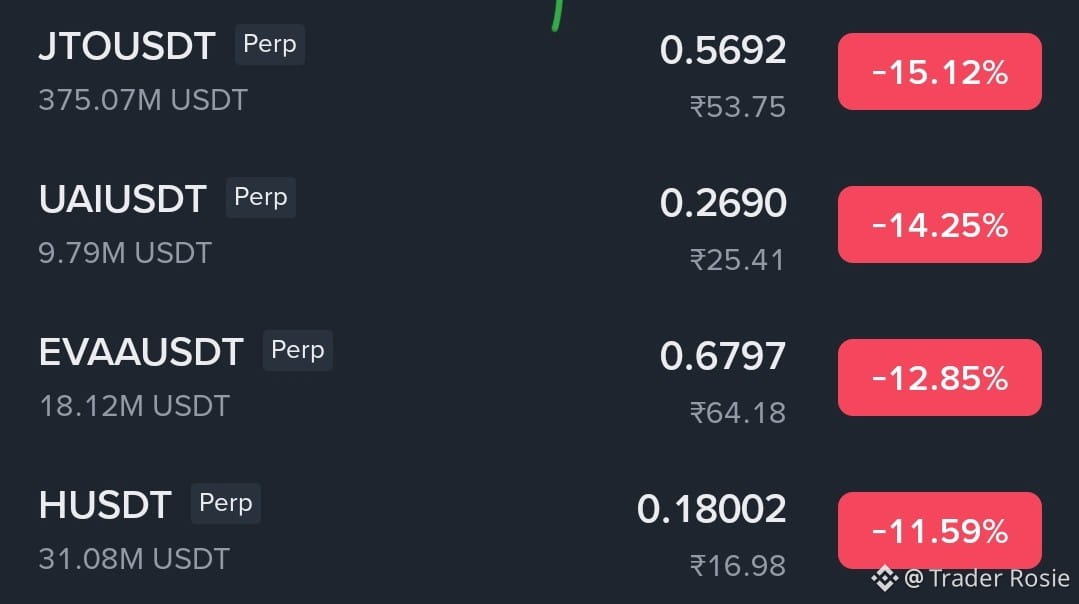
#HUSDT is consolidating near support with potential breakout ahead.
Entry: 0.177$ - 0.179$
Stop-loss: 0.174$
TP1: 0.181$
TP2: 0.183$
TP3: 0.185$
Price is holding above key support with stable liquidity, indicating accumulation. A break above 0.19$ with volume can trigger continuation, while holding 0.179$ keeps the bullish structure intact.
🔥 SEC and CFTC Chairs Signal U.S. Digital Asset Regulatory Reset
SEC Chair Paul Atkins and CFTC Chair Mike Selig indicated a shift in regulatory approach for U.S. digital assets at the Bitcoin 2026 event. Atkins emphasized the SEC's intention for crypto activities to occur within the U.S. and announced upcoming clarity on tokenization.
⚡ Bitcoin ETFs End Inflow Streak with $263 Million in Outflows
U.S. spot Bitcoin ETFs recorded approximately $263.2 million in net outflows on April 27, marking the end of a ten-day streak of net inflows. This development has drawn significant attention from the market.
📉 Japan Issues Guidance on Cryptocurrency Use in Real Estate to Combat Money Laundering
Japanese financial, judicial, and real estate authorities have jointly issued guidance to address the potential use of cryptocurrency in real estate transactions for money laundering purposes. The guidance mandates real estate agents to verify customer identities and report suspicious transactions.
📈 Mainstream Asset Performance (24h)
BTC: -0.9% — Current Price: $76,016.17
ETH: +0.3% — Current Price: $2,278.43
SOL: -0.8% — Current Price: $83.42
BNB: +0.3% — Current Price: $622.57
🚀 Today's Top Gainers (Selected 2–3)
BIO: +23.5% — Significant increase in trading volume with continuous capital inflow.
APE: +22.6% — Significant increase in trading volume with continuous capital inflow. $BTC $ETH $BNB
Israel strikes southern Lebanon despite nominal ceasefire, tensions rise
Israel continues strikes in southern Lebanon despite a nominal ceasefire, pushing the Israel x Hezbollah ceasefire by June 30 market down to 99.8% YES from 70% a week ago.
The Israel x Hezbollah ceasefire by June 30 market at 99.8% YES prices in real skepticism about the ceasefire holding. The extension by April 26 trades at 99.8%, which means traders expect the nominal ceasefire state to last through the month even as violations continue on the ground.
Daily volume is at $3.1M actual USDC. The largest recent move was a 50-point drop, showing traders reacting sharply to new developments. Order book depth requires over $1.6M to shift prices by 5 points, which points to institutional-sized positioning.
Mutual violations and retaliatory strikes have become routine, making the ceasefire increasingly fragile. At 99.8¢, the market implies a 45% chance the ceasefire doesn’t hold, offering a potential 1.82x payout for YES bets. Bearish positions on ceasefire continuation carry real upside if strikes escalate further.
Watch for statements from Netanyahu and Hezbollah’s Nasrallah. Any shift in rhetoric or a notable military operation could move these markets fast. #StrategyBTCPurchase $BTC $ETH