Binance Square

Justcryptopays

Crypto enthusiast | Exploring blockchain | insightful and Trader | CMC KOL
25 Suivis
727 Abonnés
3.3K+ J’aime
359 Partagé(s)
Publications
PINNED
·
--
Article
Crypto Volatility: How Traders Can Profit From Market SwingsCryptocurrency markets are famous for one defining characteristic volatility. Unlike traditional equities or bonds, major digital assets like $BTC and Litecoin (LTC) can swing 10–30% or more in a single day sometimes much more. While volatility scares conservative investors, it creates opportunities for knowledgeable traders to profit from price movements in both directions. What Is Crypto Volatility? Volatility measures how dramatically prices move over time. In crypto: Bitcoin : historically has seen annualized volatility far above most stocks Litecoin : correlated with BTC but often more erratic has experienced huge range-bound swings from its lows to all-time highs This volatility is driven by factors like 24/7 trading, sentiment-driven news cycles, shifting liquidity, and macroeconomic events that affect risk assets. Historical BTC & LTC Spikes Bitcoin 2020–2021 Rally + Crash: Bitcoin surged from roughly $10,000 to over $64,000 in less than a year, before crashing back toward $30,000 within months a move of nearly ±50%+ peak-to-trough 2011–2013 Experiences: Early in its life, BTC bounced from $31 to nearly $300, then collapsed again COVID Crash (March 2020): BTC’s largest one-day drop was about 50%, followed by an aggressive rebound the kind of volatility that infuses opportunity and risk. Litecoin (LTC) $LTC , one of the oldest Bitcoin forks, has shown even larger historical percentage moves: In the 2013–2015 era, LTC fell 97% from its peak to valley, then rallied to a new high in 2017 a 27,600% gain from earlier lows. Its all-time high of over $400 remains a landmark of crypto volatility. These dramatic movements underline why volatility isn’t just noise it fuels tradable price swings. How Traders Make Money From Volatility Swing Trading Swing traders hold positions for days to weeks to capture significant price swings as markets trend up or down. They use tools like RSI, MACD, and Fibonacci retracements to time entries and exits This strategy works in BTC and LTC alike watch for sharp pullbacks followed by momentum continuation to enter positions. Scalping Scalpers make many small trades within short timeframes aiming to profit from frequent mini-swings. Volatility creates constant opportunities for quick entry/exit patterns. It requires discipline, fast reactions, and platforms with low fees. Arbitrage During volatile periods, price spreads between exchanges often widen. Traders buy on a cheaper exchange and sell on a more expensive one. Crypto arbitrage is especially relevant across global exchanges where liquidity imbalances arise.This strategy works well in highly volatile regimes where prices momentarily dislocate across platforms. Derivatives Advanced traders use futures, options, and other derivatives to tailor risk and amplify profits: Futures allow directional bets on price movement with leverage. Options strategies (like straddles or strangles) profit when price swings either way, even if direction is uncertain. Why Volatility Is the Trader’s Friend Traditional investors often interpret volatility as instability and heightened risk. Traders, on the other hand, see it as opportunity in motion. Rapid price swings create clear entry and exit points. Temporary imbalances in price open the door for strategic positioning. Different market conditions allow traders to apply multiple approaches, from short-term scalping to longer-term swing setups. Most importantly, volatility rewards those who stay disciplined, manage risk carefully, and stick to a well-defined plan. In conclusion BTC and LTC volatility isn’t randomly chaotic it’s systematic and repeatable. Historical spikes give traders a roadmap for patterns, reactions, and range boundaries. With a solid strategy, good risk controls, and technical discipline, crypto market swings are not just fluctuations they’re opportunities. #CZAMAonBinanceSquare

Crypto Volatility: How Traders Can Profit From Market Swings

Cryptocurrency markets are famous for one defining characteristic volatility. Unlike traditional equities or bonds, major digital assets like $BTC and Litecoin (LTC) can swing 10–30% or more in a single day sometimes much more.
While volatility scares conservative investors, it creates opportunities for knowledgeable traders to profit from price movements in both directions.
What Is Crypto Volatility?
Volatility measures how dramatically prices move over time. In crypto:
Bitcoin : historically has seen annualized volatility far above most stocks
Litecoin : correlated with BTC but often more erratic has experienced huge range-bound swings from its lows to all-time highs
This volatility is driven by factors like 24/7 trading, sentiment-driven news cycles, shifting liquidity, and macroeconomic events that affect risk assets.
Historical BTC & LTC Spikes
Bitcoin
2020–2021 Rally + Crash:
Bitcoin surged from roughly $10,000 to over $64,000 in less than a year, before crashing back toward $30,000 within months a move of nearly ±50%+ peak-to-trough
2011–2013 Experiences:
Early in its life, BTC bounced from $31 to nearly $300, then collapsed again
COVID Crash (March 2020):
BTC’s largest one-day drop was about 50%, followed by an aggressive rebound the kind of volatility that infuses opportunity and risk.

Litecoin (LTC)
$LTC , one of the oldest Bitcoin forks, has shown even larger historical percentage moves:
In the 2013–2015 era, LTC fell 97% from its peak to valley, then rallied to a new high in 2017 a 27,600% gain from earlier lows.
Its all-time high of over $400 remains a landmark of crypto volatility.

These dramatic movements underline why volatility isn’t just noise it fuels tradable price swings.
How Traders Make Money From Volatility
Swing Trading
Swing traders hold positions for days to weeks to capture significant price swings as markets trend up or down. They use tools like RSI, MACD, and Fibonacci retracements to time entries and exits
This strategy works in BTC and LTC alike watch for sharp pullbacks followed by momentum continuation to enter positions.
Scalping
Scalpers make many small trades within short timeframes aiming to profit from frequent mini-swings. Volatility creates constant opportunities for quick entry/exit patterns. It requires discipline, fast reactions, and platforms with low fees.
Arbitrage
During volatile periods, price spreads between exchanges often widen.
Traders buy on a cheaper exchange and sell on a more expensive one. Crypto arbitrage is especially relevant across global exchanges where liquidity imbalances arise.This strategy works well in highly volatile regimes where prices momentarily dislocate across platforms.
Derivatives
Advanced traders use futures, options, and other derivatives to tailor risk and amplify profits:
Futures allow directional bets on price movement with leverage. Options strategies (like straddles or strangles) profit when price swings either way, even if direction is uncertain.
Why Volatility Is the Trader’s Friend
Traditional investors often interpret volatility as instability and heightened risk. Traders, on the other hand, see it as opportunity in motion. Rapid price swings create clear entry and exit points. Temporary imbalances in price open the door for strategic positioning.
Different market conditions allow traders to apply multiple approaches, from short-term scalping to longer-term swing setups. Most importantly, volatility rewards those who stay disciplined, manage risk carefully, and stick to a well-defined plan.
In conclusion BTC and LTC volatility isn’t randomly chaotic it’s systematic and repeatable. Historical spikes give traders a roadmap for patterns, reactions, and range boundaries. With a solid strategy, good risk controls, and technical discipline, crypto market swings are not just fluctuations they’re opportunities.
#CZAMAonBinanceSquare
PINNED
Article
AI-Driven Trading Bots vs Manual Trading: Who Wins in Volatile Markets?Volatility is the lifeblood of financial markets and nowhere is this more evident than in crypto. When $BTC spikes 8% in an hour or altcoins swing double digits overnight, traders face a defining question: Do algorithms outperform human intuition when markets turn chaotic? Let's break it down What Are AI-Driven Trading Bots AI-driven trading bots are automated software programs that use artificial intelligence and machine learning to analyze market data and execute trades without human intervention. Instead of a trader manually watching charts, these bots: Scan large amounts of real-time data Identify patterns and probabilities Generate buy/sell signals Execute trades automatically Manage risk based on preset rules Why Bots Thrive in Volatile Markets 1. Speed & Execution Markets can move in milliseconds. Bots execute instantly no hesitation, no emotional delay. 2. 24/7 Operation Crypto never sleeps. Bots monitor markets around the clock without fatigue. 3. Data Processing Power AI models analyze order books, funding rates, volatility clusters, and on-chain metrics simultaneously. 4. Emotionless Decisions Fear and greed destroy human traders during flash crashes. Bots follow predefined rules. Where Bots Struggle Overfitting to past data Poor performance during black swan events Strategy breakdown in regime shifts Dependence on clean liquidity and stable infrastructure When volatility becomes irrational rather than statistical, bots can malfunction or amplify losses. What Is Manual Trading? Manual trading is when a human trader personally analyzes the market and executes buy or sell orders without automated systems making decisions for them. Every step from chart analysis to clicking buy or sell is controlled by the trader. The Case for Manual Trading Manual trading relies on discretion, macro interpretation, market psychology, and experience. Why Humans Still Matter 1. Context Awareness Humans understand narratives ETF approvals, regulatory shocks, geopolitical risk. For example, during major news tied to Bitcoin or Ethereum, discretionary traders can react to tone and sentiment before models adjust. 2. Adaptive Thinking Markets change regimes trending, ranging, panic-driven. Experienced traders can shift strategies faster than rigid algorithms. 3. Creative Risk Management Humans can reduce exposure, hedge creatively, or step aside entirely during extreme uncertainty. Where Humans Fail Emotional bias (revenge trading, FOMO, panic selling) Inconsistent discipline Slower execution Fatigue in 24/7 markets In highly volatile environments, emotions become the biggest liability. Performance in Volatile Markets: Who Has the Edge? 1. Structured Volatility (Trending + Liquidity Present) Bots often outperform. Momentum models and breakout algorithms thrive. 2. News-Driven Spikes Manual traders may win. Context and interpretation beat pure pattern recognition. 3. Flash Crashes / Liquidity Gaps Mixed results. Bots can either capture arbitrage instantly or get liquidated rapidly. 4. Extended Sideways Chop Both struggle but disciplined humans may preserve capital better. What Is the Hybrid Model in Trading? The hybrid model in trading is a combination of AI-driven automation and human decision making. Instead of choosing between bots or manual trading, traders use both allowing technology to handle speed and data, while humans manage strategy and risk. How the Hybrid Model Works 1. AI Handles the Heavy Lifting Scans markets 24/7 Detects patterns and volatility shifts Generates trade signals Executes trades instantly 2. Humans Provide Oversight Adjust strategy during regime changes Interpret macro events and narratives Manage portfolio-level risk Override or pause systems during extreme conditions The Hybrid Model: The Real Winner Increasingly, professional traders combine both approaches: AI for signal generation Automation for execution Human oversight for risk control Institutional desks use algorithms to exploit micro-inefficiencies while portfolio managers oversee macro exposure. The edge is no longer bot vs human. It’s bot plus human. Key comparison between AI trading and Manual trading 1.Speed AI Bots: Instant Manual Trading: Slower 2. Emotional Control AI Bots: Perfect Manual Trading: Vulnerable 3. Adaptability AI Bots: Depends on model Manual Trading: High (if experienced) 4. 24/7 Capability AI Bots: Yes Manual Trading: Limited 5. Narrative Awareness AI Bots: Weak Manual Trading: Strong In conclusion, In highly volatile crypto markets, the winner often depends on the type of movement unfolding. During short-term, high-frequency chaos, AI-driven bots typically have the advantage thanks to their speed and precision. But when markets shift due to powerful narratives or macro regime changes, experienced human traders tend to perform better because they can interpret context and adapt quickly. Over the long run, however, neither speed nor intuition guarantees success disciplined risk management does. The real edge isn’t about ego or raw intelligence; it’s about structure and consistency. Markets don’t consistently reward who is smartest they reward who manages risk best. And in volatile conditions, the trader who controls downside exposure whether human or algorithm is the one who ultimately survives and wins. #CPIWatch

AI-Driven Trading Bots vs Manual Trading: Who Wins in Volatile Markets?

Volatility is the lifeblood of financial markets and nowhere is this more evident than in crypto. When $BTC spikes 8% in an hour or altcoins swing double digits overnight, traders face a defining question:
Do algorithms outperform human intuition when markets turn chaotic?

Let's break it down

What Are AI-Driven Trading Bots
AI-driven trading bots are automated software programs that use artificial intelligence and machine learning to analyze market data and execute trades without human intervention.
Instead of a trader manually watching charts, these bots:
Scan large amounts of real-time data
Identify patterns and probabilities
Generate buy/sell signals
Execute trades automatically
Manage risk based on preset rules

Why Bots Thrive in Volatile Markets
1. Speed & Execution Markets can move in milliseconds. Bots execute instantly no hesitation, no emotional delay.
2. 24/7 Operation Crypto never sleeps. Bots monitor markets around the clock without fatigue.
3. Data Processing Power AI models analyze order books, funding rates, volatility clusters, and on-chain metrics simultaneously.
4. Emotionless Decisions Fear and greed destroy human traders during flash crashes. Bots follow predefined rules.

Where Bots Struggle
Overfitting to past data
Poor performance during black swan events
Strategy breakdown in regime shifts
Dependence on clean liquidity and stable infrastructure
When volatility becomes irrational rather than statistical, bots can malfunction or amplify losses.

What Is Manual Trading?
Manual trading is when a human trader personally analyzes the market and executes buy or sell orders without automated systems making decisions for them.
Every step from chart analysis to clicking buy or sell is controlled by the trader.

The Case for Manual Trading
Manual trading relies on discretion, macro interpretation, market psychology, and experience.

Why Humans Still Matter
1. Context Awareness Humans understand narratives ETF approvals, regulatory shocks, geopolitical risk.
For example, during major news tied to Bitcoin or Ethereum, discretionary traders can react to tone and sentiment before models adjust.
2. Adaptive Thinking Markets change regimes trending, ranging, panic-driven. Experienced traders can shift strategies faster than rigid algorithms.
3. Creative Risk Management Humans can reduce exposure, hedge creatively, or step aside entirely during extreme uncertainty.

Where Humans Fail
Emotional bias (revenge trading, FOMO, panic selling)
Inconsistent discipline
Slower execution
Fatigue in 24/7 markets
In highly volatile environments, emotions become the biggest liability.

Performance in Volatile Markets: Who Has the Edge?

1. Structured Volatility (Trending + Liquidity Present)
Bots often outperform.
Momentum models and breakout algorithms thrive.
2. News-Driven Spikes
Manual traders may win.
Context and interpretation beat pure pattern recognition.
3. Flash Crashes / Liquidity Gaps
Mixed results.
Bots can either capture arbitrage instantly or get liquidated rapidly.
4. Extended Sideways Chop
Both struggle but disciplined humans may preserve capital better.

What Is the Hybrid Model in Trading?
The hybrid model in trading is a combination of AI-driven automation and human decision making.
Instead of choosing between bots or manual trading, traders use both allowing technology to handle speed and data, while humans manage strategy and risk.

How the Hybrid Model Works

1. AI Handles the Heavy Lifting
Scans markets 24/7
Detects patterns and volatility shifts
Generates trade signals
Executes trades instantly

2. Humans Provide Oversight
Adjust strategy during regime changes
Interpret macro events and narratives
Manage portfolio-level risk
Override or pause systems during extreme conditions

The Hybrid Model: The Real Winner
Increasingly, professional traders combine both approaches:
AI for signal generation
Automation for execution
Human oversight for risk control
Institutional desks use algorithms to exploit micro-inefficiencies while portfolio managers oversee macro exposure.
The edge is no longer bot vs human.
It’s bot plus human.

Key comparison between AI trading and Manual trading
1.Speed
AI Bots: Instant
Manual Trading: Slower

2. Emotional Control
AI Bots: Perfect
Manual Trading: Vulnerable

3. Adaptability
AI Bots: Depends on model
Manual Trading: High (if experienced)

4. 24/7 Capability
AI Bots: Yes
Manual Trading: Limited

5. Narrative Awareness
AI Bots: Weak
Manual Trading: Strong

In conclusion, In highly volatile crypto markets, the winner often depends on the type of movement unfolding. During short-term, high-frequency chaos, AI-driven bots typically have the advantage thanks to their speed and precision. But when markets shift due to powerful narratives or macro regime changes, experienced human traders tend to perform better because they can interpret context and adapt quickly.
Over the long run, however, neither speed nor intuition guarantees success disciplined risk management does. The real edge isn’t about ego or raw intelligence; it’s about structure and consistency. Markets don’t consistently reward who is smartest they reward who manages risk best. And in volatile conditions, the trader who controls downside exposure whether human or algorithm is the one who ultimately survives and wins.
#CPIWatch
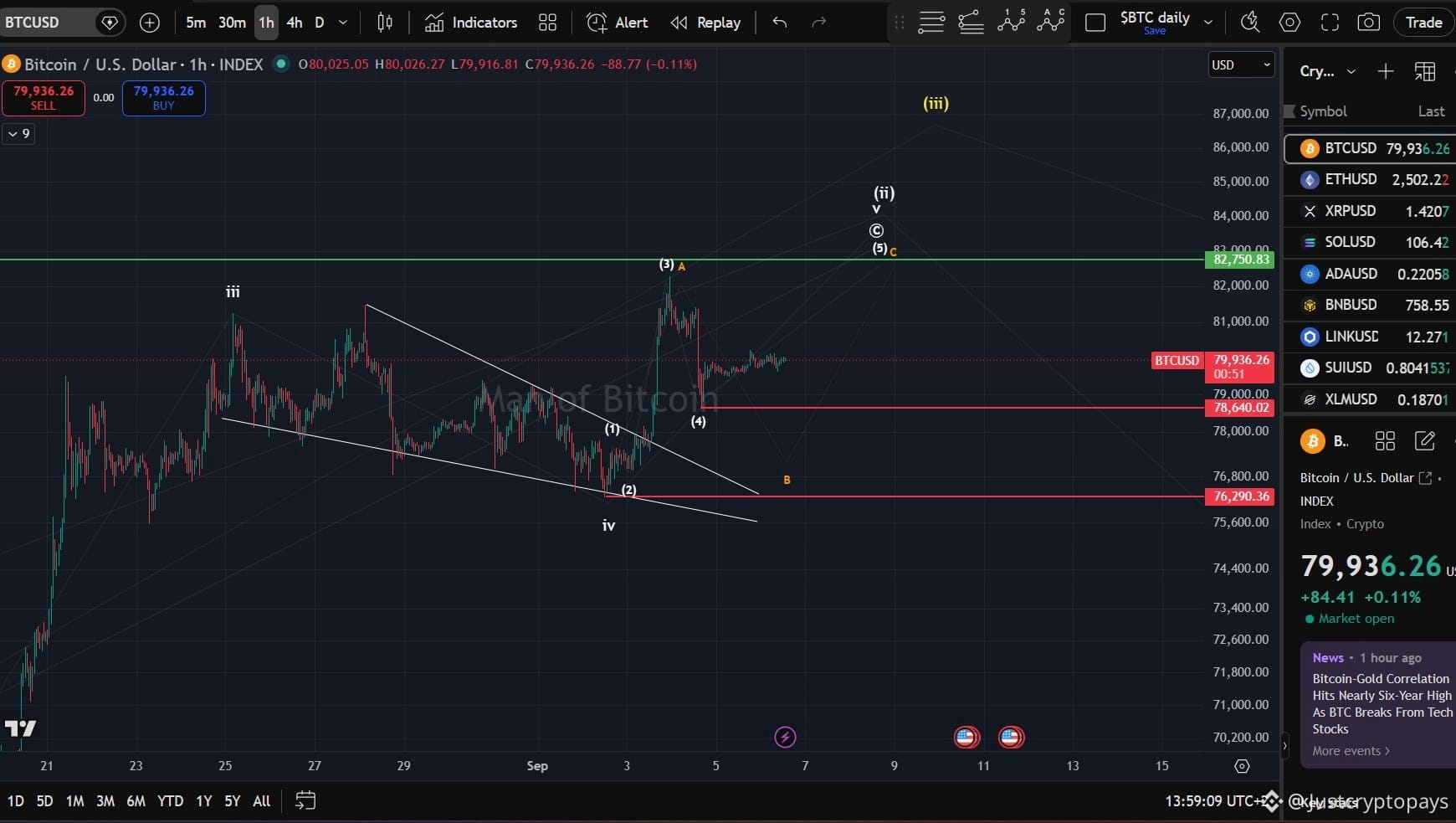
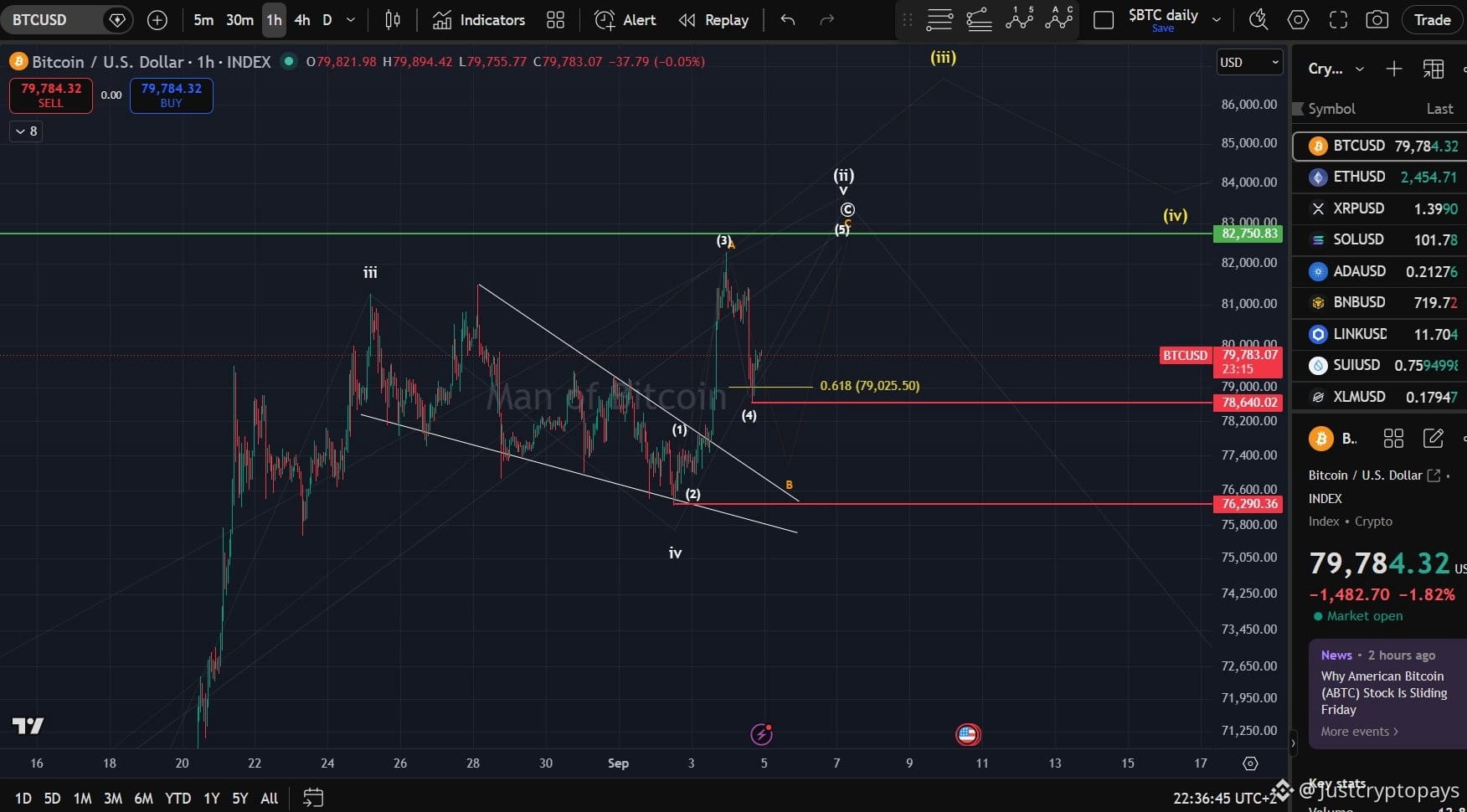
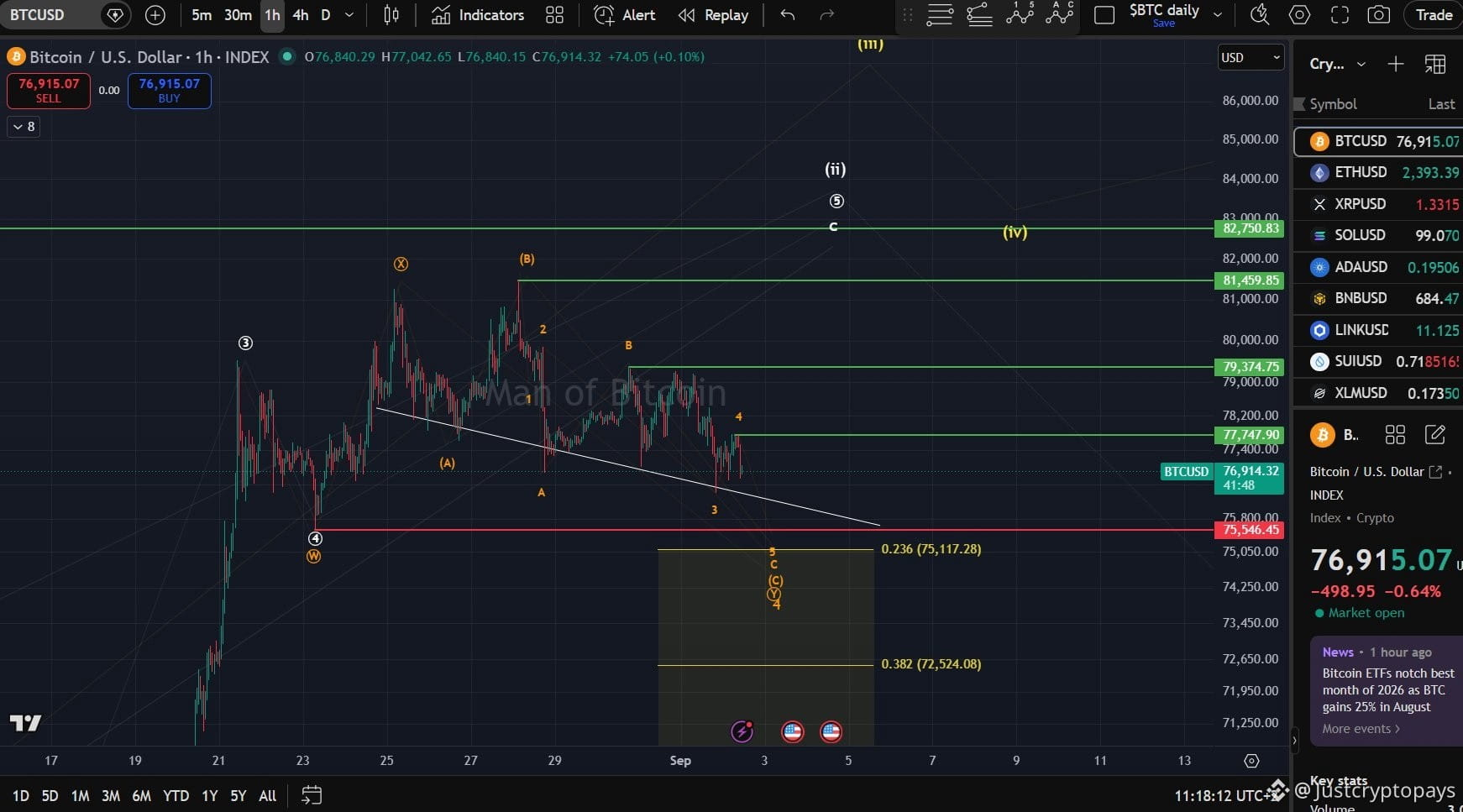
$BTC appears to have completed its wave-(4) low and is now likely progressing into wave-(5) of 1 to the upside. The ideal area for a potential local top sits between $74,055 and $77,960. #StrategyBTCPurchase
$BTC appears to have completed its wave-(4) low and is now likely progressing into wave-(5) of 1 to the upside. The ideal area for a potential local top sits between $74,055 and $77,960.
#StrategyBTCPurchase
$ETH is currently mirroring Bitcoin’s structure. The broader corrective move to the upside could still continue from here. On any pullback, the key level to watch is $2,027 as long as that holds, the overall structure remains intact #USDCFreezeDebate
$ETH is currently mirroring Bitcoin’s structure. The broader corrective move to the upside could still continue from here.

On any pullback, the key level to watch is $2,027 as long as that holds, the overall structure remains intact
#USDCFreezeDebate
$BTC may be entering a wave (4) correction, having already tapped the 38.2% Fibonacci level. A bounce from this area is still possible. However, a drop below 67,707 would invalidate this structure and point to further downside. #MarketCorrectionBuyOrHODL?
$BTC may be entering a wave (4) correction, having already tapped the 38.2% Fibonacci level. A bounce from this area is still possible.

However, a drop below 67,707 would invalidate this structure and point to further downside.
#MarketCorrectionBuyOrHODL?
🚨 XRP led all ETP inflows last week as global demand picked up again $XRP recorded the highest inflows, pulling in $120M out of a total $224M surpassing Bitcoin’s $107M. Meanwhile, Ether funds continued to experience outflows. #MarketCorrectionBuyOrHODL?
🚨 XRP led all ETP inflows last week as global demand picked up again

$XRP recorded the highest inflows, pulling in $120M out of a total $224M surpassing Bitcoin’s $107M. Meanwhile, Ether funds continued to experience outflows.
#MarketCorrectionBuyOrHODL?
🇺🇸 ETF Flows Update: Spot ETFs for $BTC , $ETH , and XRP recorded net inflows last week, while SOL spot ETFs experienced net outflows. BTC: $786.31M ETH: $187.07M SOL: -$5.62M XRP: $11.75M #MarketCorrectionBuyOrHODL?
🇺🇸 ETF Flows Update: Spot ETFs for $BTC , $ETH , and XRP recorded net inflows last week, while SOL spot ETFs experienced net outflows.

BTC: $786.31M

ETH: $187.07M

SOL: -$5.62M

XRP: $11.75M
#MarketCorrectionBuyOrHODL?
$BTC : Price may have begun a wave (4) pullback. Key support lies between $70,609 and $68,694. A drop below 67,707 would be the first indication that this structure is breaking to the downside. #HighestCPISince2022
$BTC : Price may have begun a wave (4) pullback. Key support lies between $70,609 and $68,694.

A drop below 67,707 would be the first indication that this structure is breaking to the downside.
#HighestCPISince2022
🚨 REKT: Over $112M in long positions have been liquidated in the past 4 hours, with $BTC and $ETH leading the wipeout. #CZonTBPNInterview
🚨 REKT: Over $112M in long positions have been liquidated in the past 4 hours, with $BTC and $ETH leading the wipeout.
#CZonTBPNInterview
$HYPE It’s still too early to confirm whether wave (B) has topped out, but this area just below resistance would be an ideal spot for a local peak. #HighestCPISince2022
$HYPE
It’s still too early to confirm whether wave (B) has topped out, but this area just below resistance would be an ideal spot for a local peak.
#HighestCPISince2022
🚨 The first-ever Hyperliquid ETF may be closer than expected. has submitted a second amended filing for a potential $HYPE ETF a late-stage move that often suggests approval could be near. The updated application outlines key details, including the ticker and fee structure. Following the news, HYPE has surged, now up nearly 200% over the past year. #HighestCPISince2022
🚨 The first-ever Hyperliquid ETF may be closer than expected.

has submitted a second amended filing for a potential $HYPE ETF a late-stage move that often suggests approval could be near.

The updated application outlines key details, including the ticker and fee structure. Following the news, HYPE has surged, now up nearly 200% over the past year.
#HighestCPISince2022
$BTC needs to break above $75,967 to invalidate the current short-term bearish structure, which would indicate that buyers are starting to regain control. As long as the price stays below this level, downside pressure is still in play. For the bullish outlook to remain intact, key support at $68,516 must hold. #CZonTBPNInterview
$BTC needs to break above $75,967 to invalidate the current short-term bearish structure, which would indicate that buyers are starting to regain control.

As long as the price stays below this level, downside pressure is still in play.

For the bullish outlook to remain intact, key support at $68,516 must hold.
#CZonTBPNInterview
$BTC Bitcoin is steadily moving toward the next key resistance zone around $74,500. This area is likely to act as a strong barrier, where increased selling pressure could emerge and potentially slow down or reject further upside momentum. #CZonTBPNInterview
$BTC
Bitcoin is steadily moving toward the next key resistance zone around $74,500. This area is likely to act as a strong barrier, where increased selling pressure could emerge and potentially slow down or reject further upside momentum.
#CZonTBPNInterview
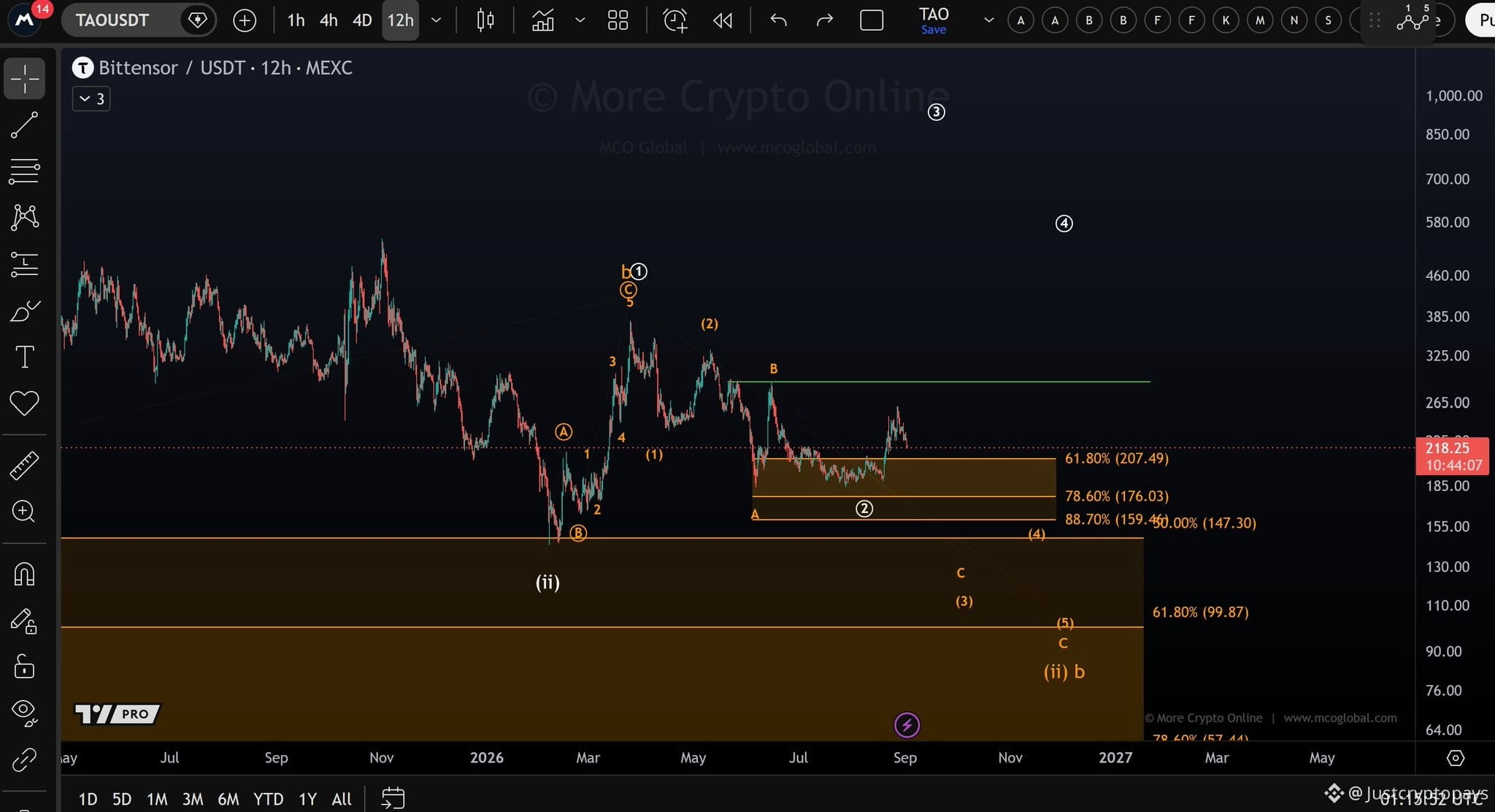
$TAO This looks like a clear B-wave top. Support is still holding for now, but I can’t rule out one more move lower to complete wave C of (4). From here, we need to see a small 5-wave move to the upside, along with a break above the $297 micro resistance, to signal that a bottom may be in. #CZonTBPNInterview
$TAO

This looks like a clear B-wave top. Support is still holding for now, but I can’t rule out one more move lower to complete wave C of (4). From here, we need to see a small 5-wave move to the upside, along with a break above the $297 micro resistance, to signal that a bottom may be in.
#CZonTBPNInterview
$BTC : I still see this move to the upside as part of the ongoing structure. Key support for a pullback lies between $70,201 and $68,451. After a dip, another push higher would be needed to give initial confirmation that a local bottom is in place. #BinanceWalletLaunchesPredictionMarkets
$BTC : I still see this move to the upside as part of the ongoing structure.
Key support for a pullback lies between $70,201 and $68,451.
After a dip, another push higher would be needed to give initial confirmation that a local bottom is in place.
#BinanceWalletLaunchesPredictionMarkets
🚀 Market Flash: The “Ceasefire Surge” & the 4B Power Move The idea that this rally is just short liquidations is off. Fresh data from CryptoQuant shows a major structural shift in the derivatives market. 📊 What’s Really Driving It About $630M in shorts were liquidated, but the key story is Open Interest: Bitcoin $BTC : +$2.1B Ethereum (ETH): +$2.2B This isn’t just shorts getting squeezed it's new long positions entering aggressively, signaling confidence in further upside. 🌍 Macro Trigger A tentative two-week U.S.–Iran ceasefire has cooled geopolitical tension. With the Strait of Hormuz reopening, risk sentiment improved: BTC climbed 4.5% to around 72K $ETH jumped over 6% to about 2,230, hinting at rotation into ETH Bottom line: This looks like fresh positioning, not just a squeeze. The question is whether it has enough fuel to push higher. #freedomofmoney
🚀 Market Flash: The “Ceasefire Surge” & the 4B Power Move

The idea that this rally is just short liquidations is off. Fresh data from CryptoQuant shows a major structural shift in the derivatives market.

📊 What’s Really Driving It

About $630M in shorts were liquidated, but the key story is Open Interest:

Bitcoin $BTC : +$2.1B

Ethereum (ETH): +$2.2B

This isn’t just shorts getting squeezed it's new long positions entering aggressively, signaling confidence in further upside.

🌍 Macro Trigger

A tentative two-week U.S.–Iran ceasefire has cooled geopolitical tension. With the Strait of Hormuz reopening, risk sentiment improved:

BTC climbed 4.5% to around 72K

$ETH jumped over 6% to about 2,230, hinting at rotation into ETH

Bottom line: This looks like fresh positioning, not just a squeeze. The question is whether it has enough fuel to push higher.
#freedomofmoney
$XAUT faced rejection at the first resistance level, but the pullback isn’t very strong yet. A drop below this week’s low at 4,714 could open the door for more downside, with the next support zone sitting between 4,247 and 4,535. The rally from the March low appears choppy and relatively weak, suggesting the structure is vulnerable to deeper pullbacks. A break above resistance could allow for a C-wave move higher, but for now, the bulls still have something to prove. #BinanceWalletLaunchesPredictionMarkets
$XAUT

faced rejection at the first resistance level, but the pullback isn’t very strong yet. A drop below this week’s low at 4,714 could open the door for more downside, with the next support zone sitting between 4,247 and 4,535.

The rally from the March low appears choppy and relatively weak, suggesting the structure is vulnerable to deeper pullbacks. A break above resistance could allow for a C-wave move higher, but for now, the bulls still have something to prove.
#BinanceWalletLaunchesPredictionMarkets
$RENDER : Price appears to have completed a full C-wave to the upside. A bearish scenario would come into play if a 5-wave decline develops from this level. In the short term, price looks set to push toward the $2.25 area, which marks the next resistance. #freedomofmoney
$RENDER : Price appears to have completed a full C-wave to the upside. A bearish scenario would come into play if a 5-wave decline develops from this level. In the short term, price looks set to push toward the $2.25 area, which marks the next resistance.
#freedomofmoney
$BTC could see support for a potential wave (4) pullback between 69,977 and 68,316. A move to a new high would be the first sign that price is following the bullish (white) scenario. However, a drop below 67,707 would invalidate this setup and point to further downside. #freedomofmoney
$BTC could see support for a potential wave (4) pullback between 69,977 and 68,316.

A move to a new high would be the first sign that price is following the bullish (white) scenario. However, a drop below 67,707 would invalidate this setup and point to further downside.
#freedomofmoney
$ETH recent upward move looks like a corrective bounce, forming a 3-wave structure that may have completed wave (c) of wave 2. If price breaks above 2,402, it could signal that a local bottom has formed. However, if it fails to clear that level, the bearish trend remains in play #freedomofmoney
$ETH recent upward move looks like a corrective bounce, forming a 3-wave structure that may have completed wave (c) of wave 2.

If price breaks above 2,402, it could signal that a local bottom has formed. However, if it fails to clear that level, the bearish trend remains in play
#freedomofmoney
Connectez-vous pour découvrir d’autres contenus
Rejoignez la communauté mondiale des adeptes de cryptomonnaies sur Binance Square
⚡️ Suviez les dernières informations importantes sur les cryptomonnaies.
💬 Jugé digne de confiance par la plus grande plateforme d’échange de cryptomonnaies au monde.
👍 Découvrez les connaissances que partagent les créateurs vérifiés.
Adresse e-mail/Nº de téléphone
Plan du site
Préférences en matière de cookies
CGU de la plateforme