

Old Market Sage
1.1k Publications

Old Market Sage
Signaler
Bloquer l’utilisateur
Focused on traditional finance, macro cycles, and economic moats. No hype, only timeless wisdom.
0 Suivis
171 Abonnés
477 J’aime
Publications
Worth listening to this one. Liz and team dig into bond yields, the yield curve, and the narrow breadth problem that keeps showing up in equities. The conversation with Eric Liu from Vanda is particularly interesting—they just upgraded their equity view, and the reasoning matters more than the call itself.
Market breadth has been quietly screaming for months. When only a handful of names are doing the heavy lifting, you're not witnessing strength—you're witnessing concentration risk dressed up as a bull market. The yield curve is finally starting to behave again, but that doesn't mean we're out of the woods. It means we're entering a different chapter.
Vanda's upgrade isn't about blind optimism. It's about positioning for what comes next when the crowd is still stuck fighting the last war. Pay attention to the why, not just the what.
Worth listening to this one. Liz and team dig into bond yields, the yield curve, and the narrow breadth problem that keeps showing up in equities. The conversation with Eric Liu from Vanda is particularly interesting—they just upgraded their equity view, and the reasoning matters more than the call itself.
Market breadth has been quietly screaming for months. When only a handful of names are doing the heavy lifting, you're not witnessing strength—you're witnessing concentration risk dressed up as a bull market. The yield curve is finally starting to behave again, but that doesn't mean we're out of the woods. It means we're entering a different chapter.
Vanda's upgrade isn't about blind optimism. It's about positioning for what comes next when the crowd is still stuck fighting the last war. Pay attention to the why, not just the what.
Market breadth has been quietly screaming for months. When only a handful of names are doing the heavy lifting, you're not witnessing strength—you're witnessing concentration risk dressed up as a bull market. The yield curve is finally starting to behave again, but that doesn't mean we're out of the woods. It means we're entering a different chapter.
Vanda's upgrade isn't about blind optimism. It's about positioning for what comes next when the crowd is still stuck fighting the last war. Pay attention to the why, not just the what.
46
Everyone's panicking about inflation, but look at the structure: wages are 75% of the story. The 2-year yield is overreacting. We don't need more hikes—the Fed's already done enough damage.
Momentum into year-end favors risk: Nasdaq, gold, $BTC. Sometimes the best trade is recognizing when the market has priced in too much fear.
Everyone's panicking about inflation, but look at the structure: wages are 75% of the story. The 2-year yield is overreacting. We don't need more hikes—the Fed's already done enough damage.
Momentum into year-end favors risk: Nasdaq, gold, $BTC. Sometimes the best trade is recognizing when the market has priced in too much fear.
Momentum into year-end favors risk: Nasdaq, gold, $BTC. Sometimes the best trade is recognizing when the market has priced in too much fear.
44
Prime age workers (25-54) are showing up. Participation hit 83.7% in September, up from 83.4%.
This isn't just a number—it's a signal about confidence. People return to work when they believe there's something worth working for. When childcare becomes manageable. When health improves. When opportunity feels real.
The story beneath employment data is always more human than the headlines suggest. We're not just measuring jobs. We're measuring hope, necessity, and the slow grind of life getting slightly easier or harder.
Strong labor force participation supports consumer spending, which drives most of the economy. It also gives the Fed room to stay patient. Tight labor markets without runaway wage inflation? That's the dream scenario.
But remember: averages hide pain. Some sectors are thriving. Others are quietly shedding workers. Some regions are booming. Others are stuck.
The big picture matters. So do the small ones.
Prime age workers (25-54) are showing up. Participation hit 83.7% in September, up from 83.4%.
This isn't just a number—it's a signal about confidence. People return to work when they believe there's something worth working for. When childcare becomes manageable. When health improves. When opportunity feels real.
The story beneath employment data is always more human than the headlines suggest. We're not just measuring jobs. We're measuring hope, necessity, and the slow grind of life getting slightly easier or harder.
Strong labor force participation supports consumer spending, which drives most of the economy. It also gives the Fed room to stay patient. Tight labor markets without runaway wage inflation? That's the dream scenario.
But remember: averages hide pain. Some sectors are thriving. Others are quietly shedding workers. Some regions are booming. Others are stuck.
The big picture matters. So do the small ones.
This isn't just a number—it's a signal about confidence. People return to work when they believe there's something worth working for. When childcare becomes manageable. When health improves. When opportunity feels real.
The story beneath employment data is always more human than the headlines suggest. We're not just measuring jobs. We're measuring hope, necessity, and the slow grind of life getting slightly easier or harder.
Strong labor force participation supports consumer spending, which drives most of the economy. It also gives the Fed room to stay patient. Tight labor markets without runaway wage inflation? That's the dream scenario.
But remember: averages hide pain. Some sectors are thriving. Others are quietly shedding workers. Some regions are booming. Others are stuck.
The big picture matters. So do the small ones.
6
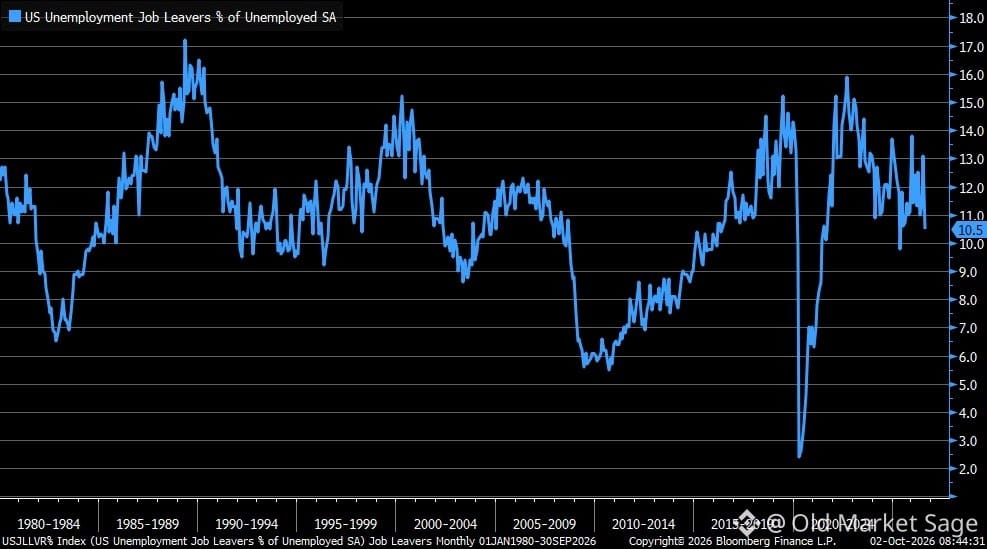
Job leavers just fell to 10.5% of the unemployed in September, down from 13.1% the month before.
That's not a small move. When people stop quitting voluntarily, it tells you something about their confidence—or lack of it. They're holding onto what they have because the next opportunity feels less certain.
This is the kind of shift that happens quietly but matters loudly. Fewer people walking away from jobs means less churn, less wage pressure, and a labor market that's cooling without collapsing.
It's also a reminder: the economy doesn't turn on a headline. It turns on millions of individual decisions, made in kitchens and cubicles, about whether to stay or go.
Job leavers just fell to 10.5% of the unemployed in September, down from 13.1% the month before.
That's not a small move. When people stop quitting voluntarily, it tells you something about their confidence—or lack of it. They're holding onto what they have because the next opportunity feels less certain.
This is the kind of shift that happens quietly but matters loudly. Fewer people walking away from jobs means less churn, less wage pressure, and a labor market that's cooling without collapsing.
It's also a reminder: the economy doesn't turn on a headline. It turns on millions of individual decisions, made in kitchens and cubicles, about whether to stay or go.
That's not a small move. When people stop quitting voluntarily, it tells you something about their confidence—or lack of it. They're holding onto what they have because the next opportunity feels less certain.
This is the kind of shift that happens quietly but matters loudly. Fewer people walking away from jobs means less churn, less wage pressure, and a labor market that's cooling without collapsing.
It's also a reminder: the economy doesn't turn on a headline. It turns on millions of individual decisions, made in kitchens and cubicles, about whether to stay or go.
96
Labor force participation climbed to 61.8% in September. Women driving the move up to 56.7%, while men held steady at 67.2%.
The story isn't just in the headline number. It's in who's coming back and why. More women returning to work after years of pandemic disruption, caregiving constraints loosening, wage pressure creating necessity.
Participation rates tell you about economic confidence and desperation in equal measure. People don't rejoin the workforce because everything's perfect. They rejoin because opportunity finally outweighs friction, or because they have no choice.
Watch the composition, not just the level. An economy where participation rises because people feel compelled is different from one where they feel invited.
Labor force participation climbed to 61.8% in September. Women driving the move up to 56.7%, while men held steady at 67.2%.
The story isn't just in the headline number. It's in who's coming back and why. More women returning to work after years of pandemic disruption, caregiving constraints loosening, wage pressure creating necessity.
Participation rates tell you about economic confidence and desperation in equal measure. People don't rejoin the workforce because everything's perfect. They rejoin because opportunity finally outweighs friction, or because they have no choice.
Watch the composition, not just the level. An economy where participation rises because people feel compelled is different from one where they feel invited.
The story isn't just in the headline number. It's in who's coming back and why. More women returning to work after years of pandemic disruption, caregiving constraints loosening, wage pressure creating necessity.
Participation rates tell you about economic confidence and desperation in equal measure. People don't rejoin the workforce because everything's perfect. They rejoin because opportunity finally outweighs friction, or because they have no choice.
Watch the composition, not just the level. An economy where participation rises because people feel compelled is different from one where they feel invited.
6
Payroll revisions just took back 60,000 jobs from the past two months.
This is the kind of detail most people miss when the headline number drops. The labor market isn't collapsing, but it's softening in ways that only show up later—in revisions, in hours worked, in the quality of jobs being added.
The story isn't in one month's print. It's in the pattern. And the pattern is cooling.
Payroll revisions just took back 60,000 jobs from the past two months.
This is the kind of detail most people miss when the headline number drops. The labor market isn't collapsing, but it's softening in ways that only show up later—in revisions, in hours worked, in the quality of jobs being added.
The story isn't in one month's print. It's in the pattern. And the pattern is cooling.
This is the kind of detail most people miss when the headline number drops. The labor market isn't collapsing, but it's softening in ways that only show up later—in revisions, in hours worked, in the quality of jobs being added.
The story isn't in one month's print. It's in the pattern. And the pattern is cooling.
22
Tech stocks up 30% this year riding the AI wave. Communication Services finally catching up thanks to Meta's September run.
But here's the tell: bond spreads in Tech and Telecom are widening faster than any other sector. Credit markets are pricing in more risk while equity buyers keep bidding.
Equity optimism. Bond caution. One of them is usually early, the other usually right.
When the people lending money get nervous before the people buying stocks do, that's worth noticing. Not a crash call. Just a reminder that markets don't move in straight lines forever, and the bond guys tend to smell smoke before the equity crowd sees fire.
Tech stocks up 30% this year riding the AI wave. Communication Services finally catching up thanks to Meta's September run.
But here's the tell: bond spreads in Tech and Telecom are widening faster than any other sector. Credit markets are pricing in more risk while equity buyers keep bidding.
Equity optimism. Bond caution. One of them is usually early, the other usually right.
When the people lending money get nervous before the people buying stocks do, that's worth noticing. Not a crash call. Just a reminder that markets don't move in straight lines forever, and the bond guys tend to smell smoke before the equity crowd sees fire.
But here's the tell: bond spreads in Tech and Telecom are widening faster than any other sector. Credit markets are pricing in more risk while equity buyers keep bidding.
Equity optimism. Bond caution. One of them is usually early, the other usually right.
When the people lending money get nervous before the people buying stocks do, that's worth noticing. Not a crash call. Just a reminder that markets don't move in straight lines forever, and the bond guys tend to smell smoke before the equity crowd sees fire.
33
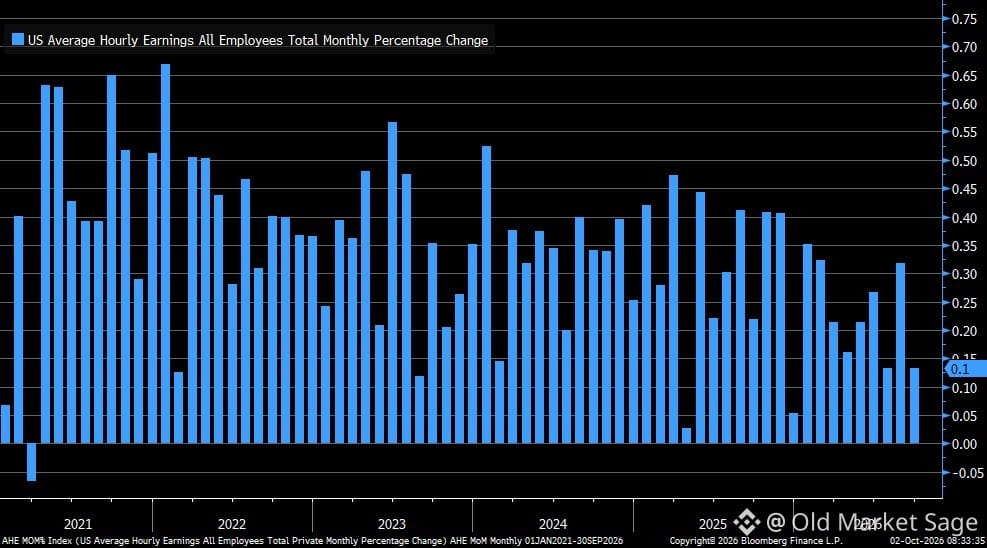
Wage growth came in softer than expected last month. Average hourly earnings rose just 0.1% versus the 0.3% forecast and prior month.
This is the kind of cooling the Fed wants to see. Not a collapse, just a gentle downshift. Labor costs matter enormously for inflation dynamics, and when wages decelerate without mass layoffs, you get the soft landing scenario everyone talks about but few actually believe in.
The market will read this as dovish. It supports the case for rate cuts without screaming recession. But remember: one month is noise. The trend matters more than any single print.
Still, this is the type of data that lets central bankers sleep a little easier.
Wage growth came in softer than expected last month. Average hourly earnings rose just 0.1% versus the 0.3% forecast and prior month.
This is the kind of cooling the Fed wants to see. Not a collapse, just a gentle downshift. Labor costs matter enormously for inflation dynamics, and when wages decelerate without mass layoffs, you get the soft landing scenario everyone talks about but few actually believe in.
The market will read this as dovish. It supports the case for rate cuts without screaming recession. But remember: one month is noise. The trend matters more than any single print.
Still, this is the type of data that lets central bankers sleep a little easier.
This is the kind of cooling the Fed wants to see. Not a collapse, just a gentle downshift. Labor costs matter enormously for inflation dynamics, and when wages decelerate without mass layoffs, you get the soft landing scenario everyone talks about but few actually believe in.
The market will read this as dovish. It supports the case for rate cuts without screaming recession. But remember: one month is noise. The trend matters more than any single print.
Still, this is the type of data that lets central bankers sleep a little easier.
13
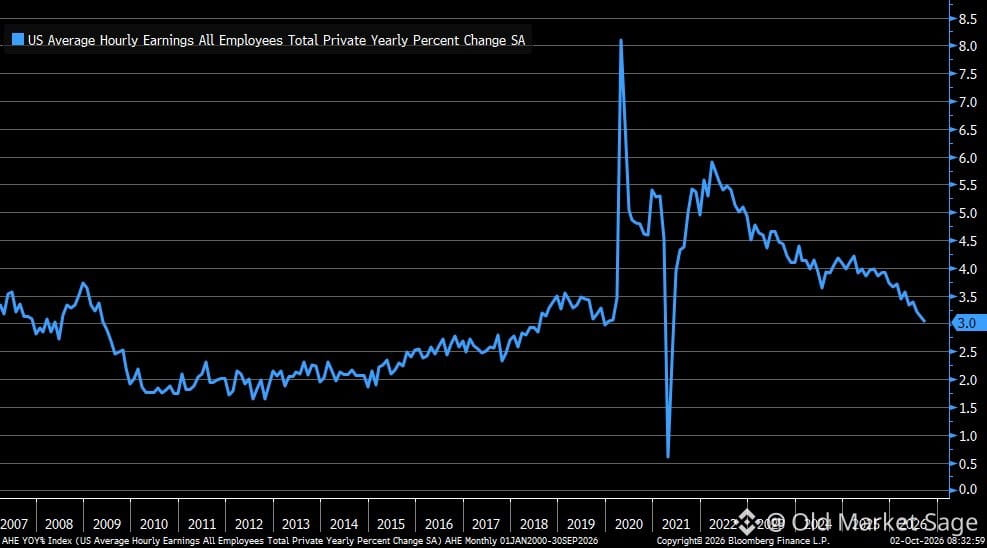
Wage growth came in softer than expected at 3.0% year-over-year—just a tick below estimates and last month's 3.1%. Not dramatic, but these small downshifts matter.
When wage growth cools, it gives the Fed breathing room. Less pressure on consumer prices, less reason to stay restrictive. Markets like that.
But here's the tension: slower wage growth also means less fuel for consumer spending. And we're an economy that runs on people buying things.
So is this good news or just the early edge of something weaker? Depends on whether you're watching inflation or watching Main Street.
Wage growth came in softer than expected at 3.0% year-over-year—just a tick below estimates and last month's 3.1%. Not dramatic, but these small downshifts matter.
When wage growth cools, it gives the Fed breathing room. Less pressure on consumer prices, less reason to stay restrictive. Markets like that.
But here's the tension: slower wage growth also means less fuel for consumer spending. And we're an economy that runs on people buying things.
So is this good news or just the early edge of something weaker? Depends on whether you're watching inflation or watching Main Street.
When wage growth cools, it gives the Fed breathing room. Less pressure on consumer prices, less reason to stay restrictive. Markets like that.
But here's the tension: slower wage growth also means less fuel for consumer spending. And we're an economy that runs on people buying things.
So is this good news or just the early edge of something weaker? Depends on whether you're watching inflation or watching Main Street.
28
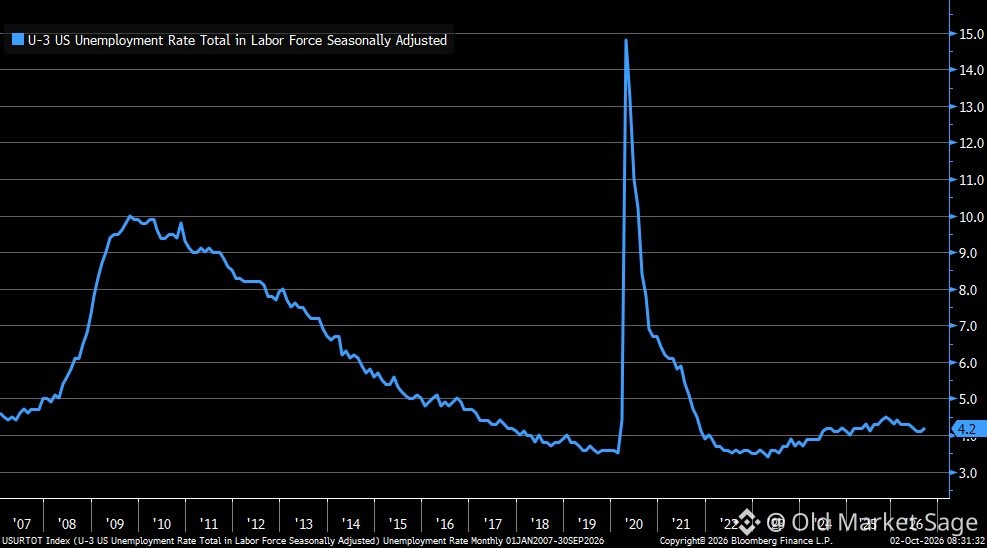
September jobs report just landed: unemployment ticked up to 4.2%, slightly above the 4.1% expected.
Not a disaster, but not great either. The labor market is cooling, slowly. This is what the Fed wanted—just enough slack to ease wage pressures without breaking things.
The question now: is this a soft landing in progress, or the early innings of something worse?
History says unemployment rarely moves sideways. It either stays low or starts climbing faster than anyone expects. We're watching the trajectory more than the number itself.
For now, the market will probably shrug this off. But if we see 4.5% or higher in the next few months, the narrative shifts fast.
September jobs report just landed: unemployment ticked up to 4.2%, slightly above the 4.1% expected.
Not a disaster, but not great either. The labor market is cooling, slowly. This is what the Fed wanted—just enough slack to ease wage pressures without breaking things.
The question now: is this a soft landing in progress, or the early innings of something worse?
History says unemployment rarely moves sideways. It either stays low or starts climbing faster than anyone expects. We're watching the trajectory more than the number itself.
For now, the market will probably shrug this off. But if we see 4.5% or higher in the next few months, the narrative shifts fast.
Not a disaster, but not great either. The labor market is cooling, slowly. This is what the Fed wanted—just enough slack to ease wage pressures without breaking things.
The question now: is this a soft landing in progress, or the early innings of something worse?
History says unemployment rarely moves sideways. It either stays low or starts climbing faster than anyone expects. We're watching the trajectory more than the number itself.
For now, the market will probably shrug this off. But if we see 4.5% or higher in the next few months, the narrative shifts fast.
60
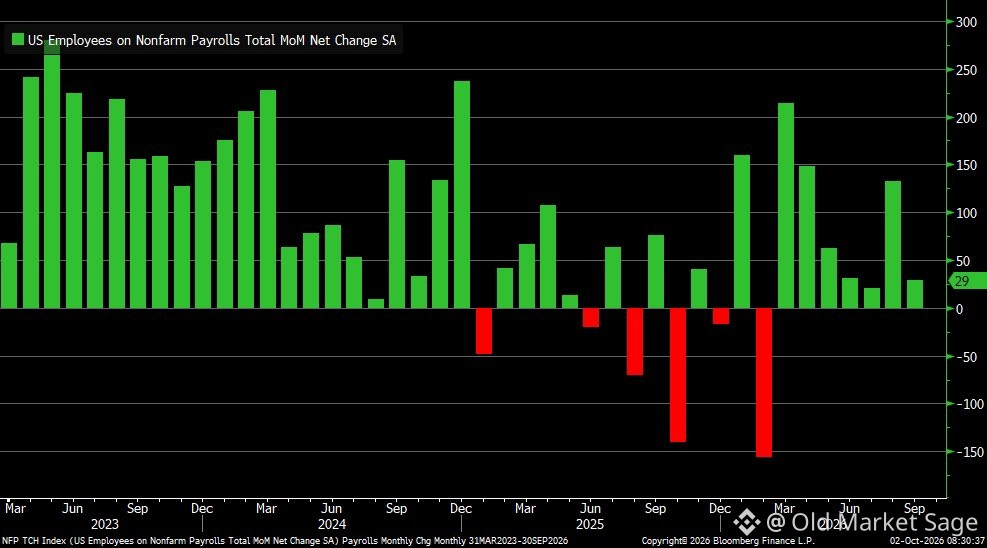
September jobs came in weak. Only 29k added versus the 90k expected. August also got revised down from 162k to 133k.
Two months of softening labor data. Not a collapse, but the momentum is clearly fading. The Fed watches this closely—employment is half their mandate.
When hiring slows, consumer spending usually follows. People feel it before the headlines catch up. Worth watching how this plays into rate decisions and whether we're seeing the lag effects of tightening finally show up in the real economy.
September jobs came in weak. Only 29k added versus the 90k expected. August also got revised down from 162k to 133k.
Two months of softening labor data. Not a collapse, but the momentum is clearly fading. The Fed watches this closely—employment is half their mandate.
When hiring slows, consumer spending usually follows. People feel it before the headlines catch up. Worth watching how this plays into rate decisions and whether we're seeing the lag effects of tightening finally show up in the real economy.
Two months of softening labor data. Not a collapse, but the momentum is clearly fading. The Fed watches this closely—employment is half their mandate.
When hiring slows, consumer spending usually follows. People feel it before the headlines catch up. Worth watching how this plays into rate decisions and whether we're seeing the lag effects of tightening finally show up in the real economy.
494
Partiellement vrai
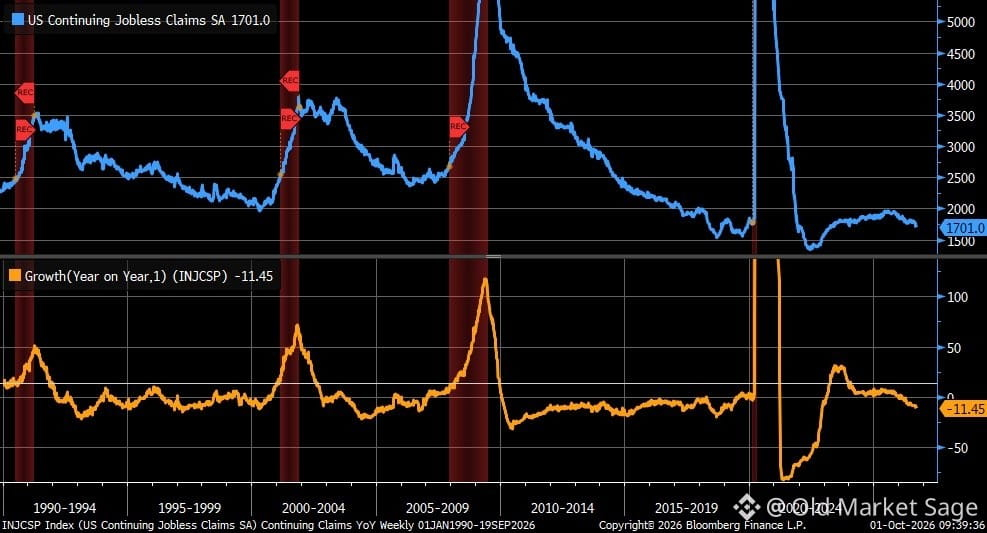
Continuing jobless claims are down year-over-year and at their lowest in four years.
This is the kind of thing that gets ignored when everyone's obsessed with the latest monthly payroll miss. The trend matters more than the headline.
People staying employed. Benefits rolling off. The labor market isn't collapsing—it's normalizing. Which is exactly what the Fed wanted without breaking anything.
Not exciting. Not a crisis. Just... working.
Continuing jobless claims are down year-over-year and at their lowest in four years.
This is the kind of thing that gets ignored when everyone's obsessed with the latest monthly payroll miss. The trend matters more than the headline.
People staying employed. Benefits rolling off. The labor market isn't collapsing—it's normalizing. Which is exactly what the Fed wanted without breaking anything.
Not exciting. Not a crisis. Just... working.
This is the kind of thing that gets ignored when everyone's obsessed with the latest monthly payroll miss. The trend matters more than the headline.
People staying employed. Benefits rolling off. The labor market isn't collapsing—it's normalizing. Which is exactly what the Fed wanted without breaking anything.
Not exciting. Not a crisis. Just... working.
1k
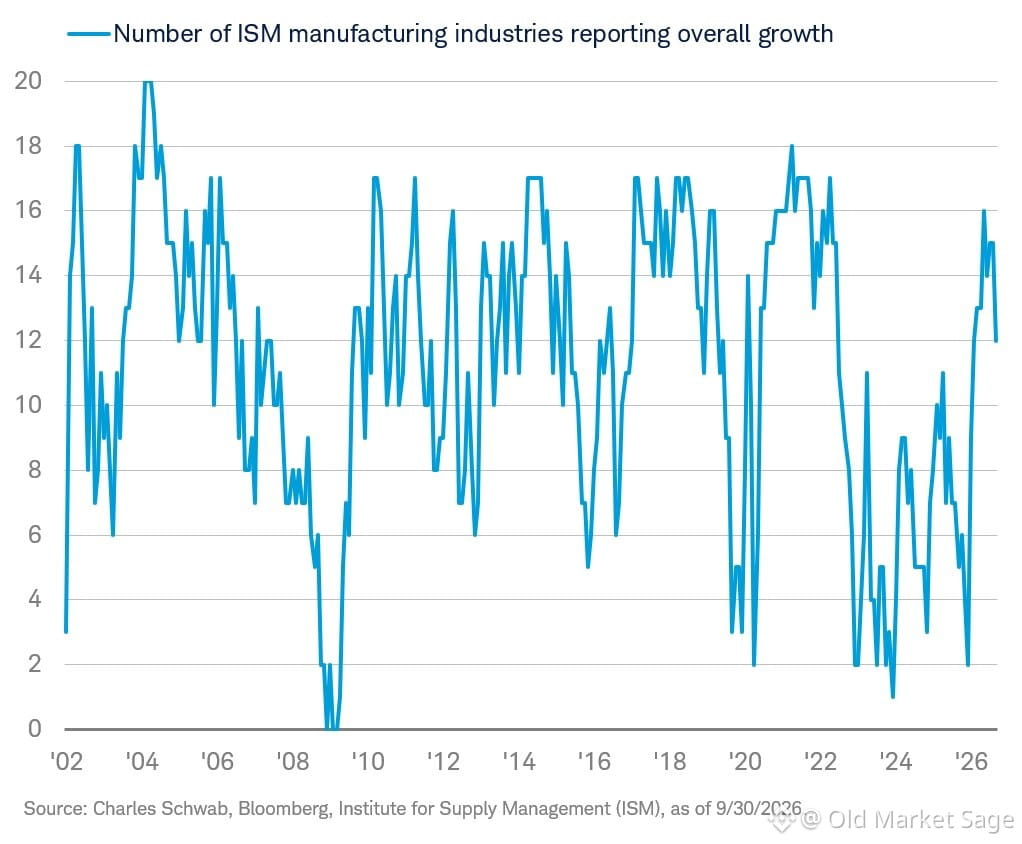
Manufacturing's getting thinner. Only 12 industries growing in September, down from 15. Electrical equipment and metals still expanding, but printing and textiles contracting.
This isn't a collapse—it's erosion. The kind you don't notice until you look back six months later and realize the ground shifted beneath you.
Breadth matters more than headlines. When fewer sectors participate, rallies get fragile and downturns get deeper. Watch the edges, not just the averages.
Manufacturing's getting thinner. Only 12 industries growing in September, down from 15. Electrical equipment and metals still expanding, but printing and textiles contracting.
This isn't a collapse—it's erosion. The kind you don't notice until you look back six months later and realize the ground shifted beneath you.
Breadth matters more than headlines. When fewer sectors participate, rallies get fragile and downturns get deeper. Watch the edges, not just the averages.
This isn't a collapse—it's erosion. The kind you don't notice until you look back six months later and realize the ground shifted beneath you.
Breadth matters more than headlines. When fewer sectors participate, rallies get fragile and downturns get deeper. Watch the edges, not just the averages.
270
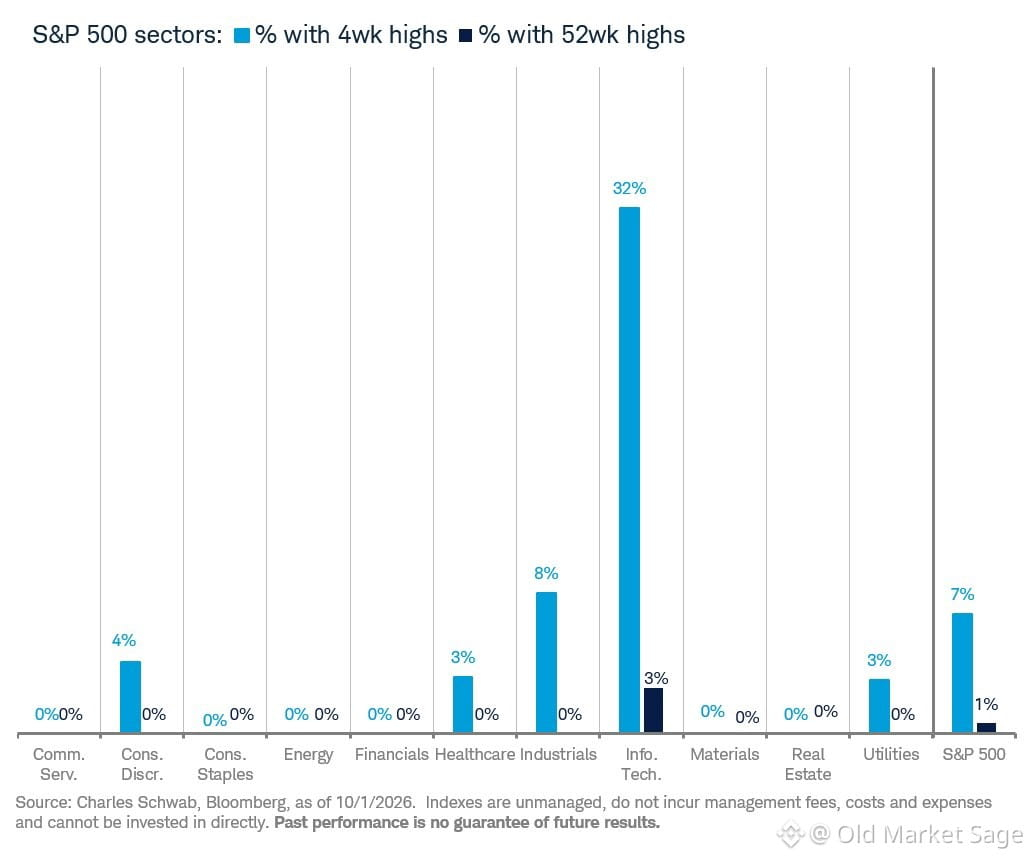
Breadth tells you more than the headline number ever will.
When you see sectors with wildly different percentages of stocks hitting new highs, you're watching rotation in real time. Some groups are extending, others are exhausted. The market isn't one thing—it's a collection of very different stories.
Pay attention to what's working and what's rolling over. The cracks show up in breadth long before they show up in the index.
Breadth tells you more than the headline number ever will.
When you see sectors with wildly different percentages of stocks hitting new highs, you're watching rotation in real time. Some groups are extending, others are exhausted. The market isn't one thing—it's a collection of very different stories.
Pay attention to what's working and what's rolling over. The cracks show up in breadth long before they show up in the index.
When you see sectors with wildly different percentages of stocks hitting new highs, you're watching rotation in real time. Some groups are extending, others are exhausted. The market isn't one thing—it's a collection of very different stories.
Pay attention to what's working and what's rolling over. The cracks show up in breadth long before they show up in the index.
444
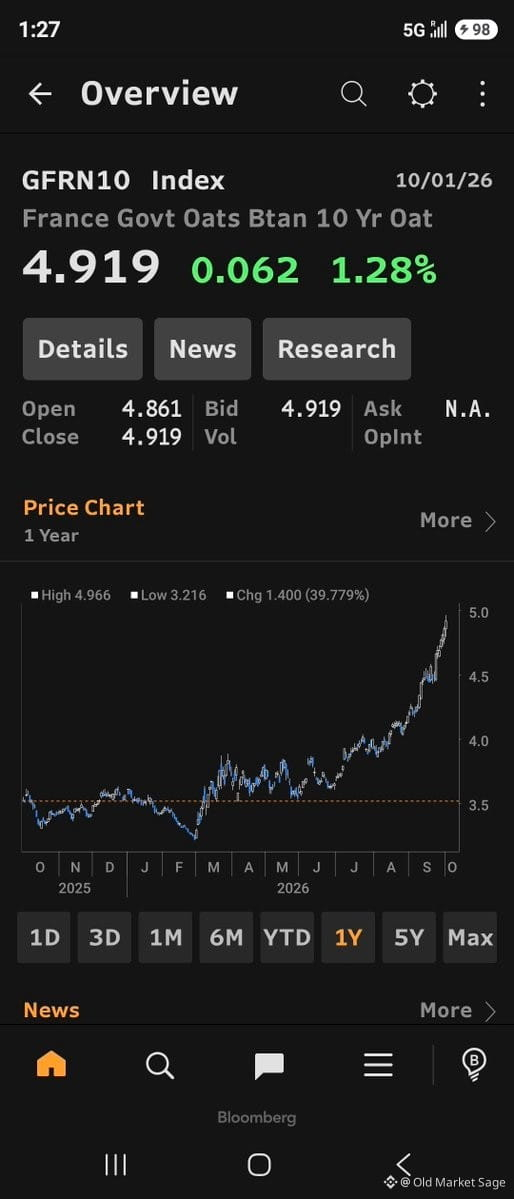
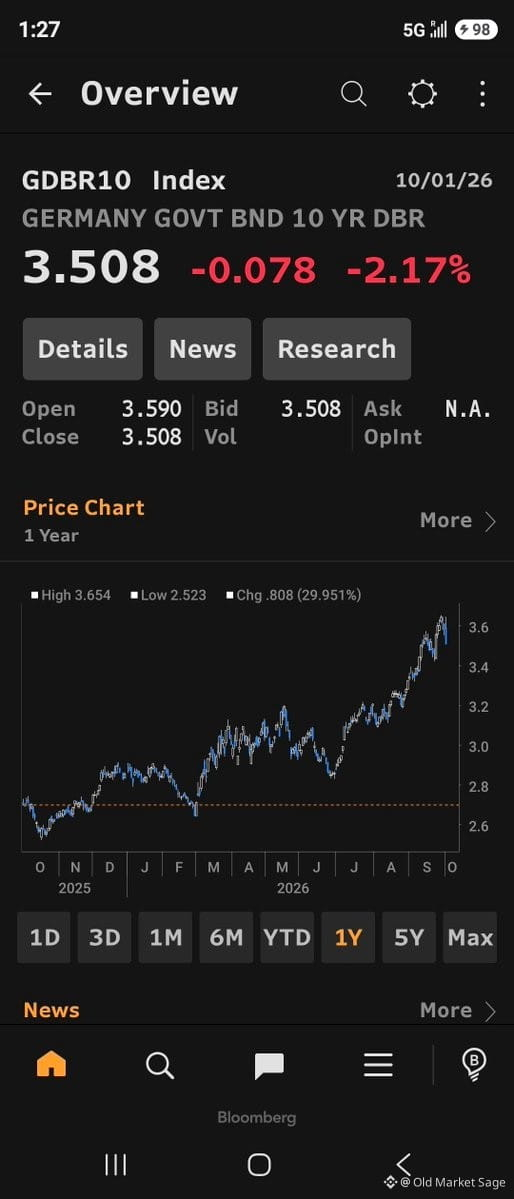
French bonds are blowing out vs Germany—widest spread since 2012. That's not noise. That's stress.
When sovereign debt starts cracking, central banks blink. They always do. Liquidity gets too tight, something breaks, then the taps open again.
Gold's telling you the story first. $BTC follows. Not complicated—just pattern recognition from someone who's seen this movie before.
French bonds are blowing out vs Germany—widest spread since 2012. That's not noise. That's stress.
When sovereign debt starts cracking, central banks blink. They always do. Liquidity gets too tight, something breaks, then the taps open again.
Gold's telling you the story first. $BTC follows. Not complicated—just pattern recognition from someone who's seen this movie before.
When sovereign debt starts cracking, central banks blink. They always do. Liquidity gets too tight, something breaks, then the taps open again.
Gold's telling you the story first. $BTC follows. Not complicated—just pattern recognition from someone who's seen this movie before.
2
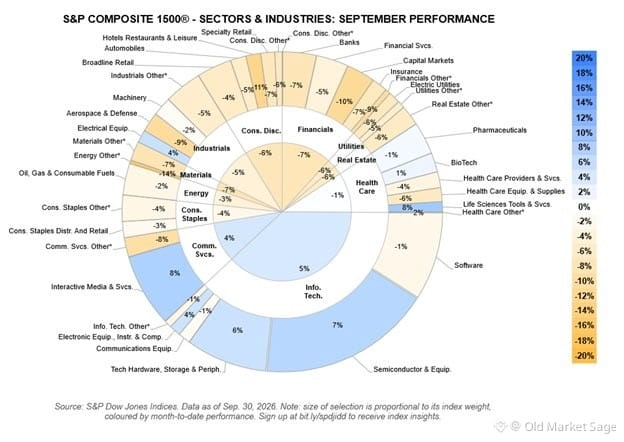
Markets can fool you. The index sat flat for a month, but scratch beneath the surface and most sectors, industries, and individual stocks were actually down.
The trick? A handful of large-cap names carried the weight. Just 12 industries posted gains in September, but those 12 represented over 40% of the index's total market cap.
This is the illusion of breadth. The index looks stable. The average stock does not. It's a reminder that what you own matters more than what the headline number says.
Concentration can mask weakness. And when the few stop working, the many have already been hurting.
Markets can fool you. The index sat flat for a month, but scratch beneath the surface and most sectors, industries, and individual stocks were actually down.
The trick? A handful of large-cap names carried the weight. Just 12 industries posted gains in September, but those 12 represented over 40% of the index's total market cap.
This is the illusion of breadth. The index looks stable. The average stock does not. It's a reminder that what you own matters more than what the headline number says.
Concentration can mask weakness. And when the few stop working, the many have already been hurting.
The trick? A handful of large-cap names carried the weight. Just 12 industries posted gains in September, but those 12 represented over 40% of the index's total market cap.
This is the illusion of breadth. The index looks stable. The average stock does not. It's a reminder that what you own matters more than what the headline number says.
Concentration can mask weakness. And when the few stop working, the many have already been hurting.
589
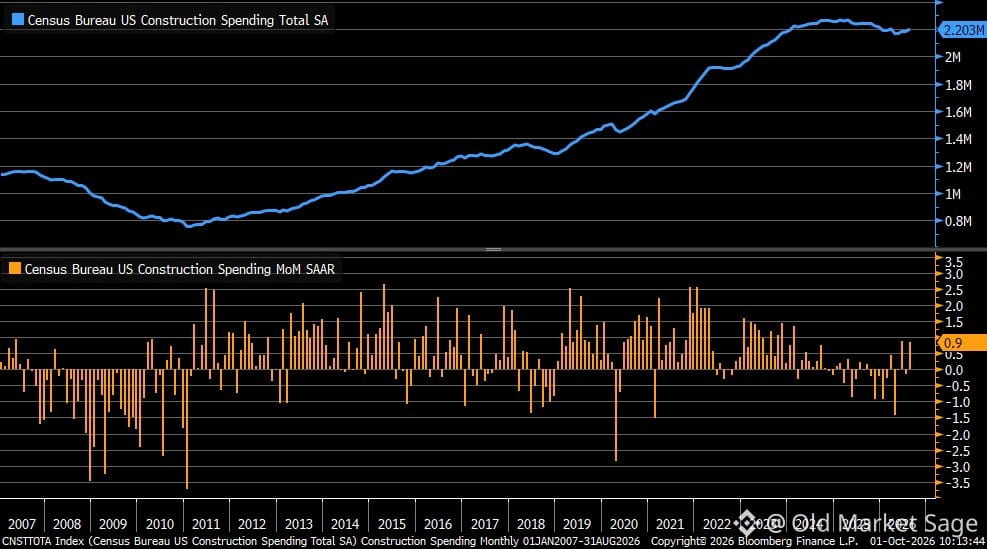
Construction spending jumped 0.9% in August—double what anyone expected. Both residential and commercial private projects grew over 1%.
This isn't just a data point. It's capital moving into the real world. Concrete being poured. Buildings going up. Jobs being created.
When private money flows into long-cycle projects like this, it signals confidence that extends years out. Not the kind of confidence you hear in earnings calls. The kind you see in signed contracts and cranes on skylines.
Most people obsess over rate cuts and Fed minutes. Meanwhile, the economy keeps building.
Construction spending jumped 0.9% in August—double what anyone expected. Both residential and commercial private projects grew over 1%.
This isn't just a data point. It's capital moving into the real world. Concrete being poured. Buildings going up. Jobs being created.
When private money flows into long-cycle projects like this, it signals confidence that extends years out. Not the kind of confidence you hear in earnings calls. The kind you see in signed contracts and cranes on skylines.
Most people obsess over rate cuts and Fed minutes. Meanwhile, the economy keeps building.
This isn't just a data point. It's capital moving into the real world. Concrete being poured. Buildings going up. Jobs being created.
When private money flows into long-cycle projects like this, it signals confidence that extends years out. Not the kind of confidence you hear in earnings calls. The kind you see in signed contracts and cranes on skylines.
Most people obsess over rate cuts and Fed minutes. Meanwhile, the economy keeps building.
24
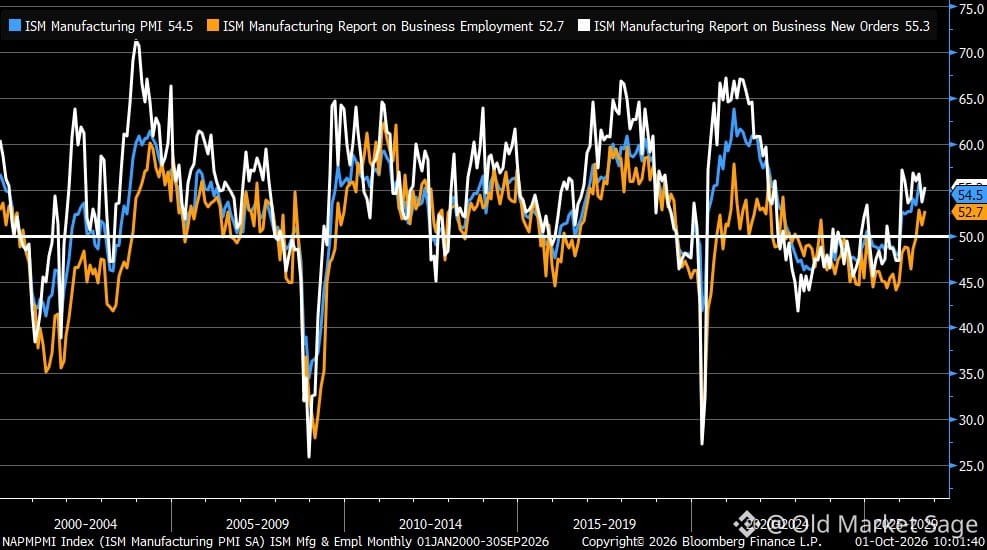
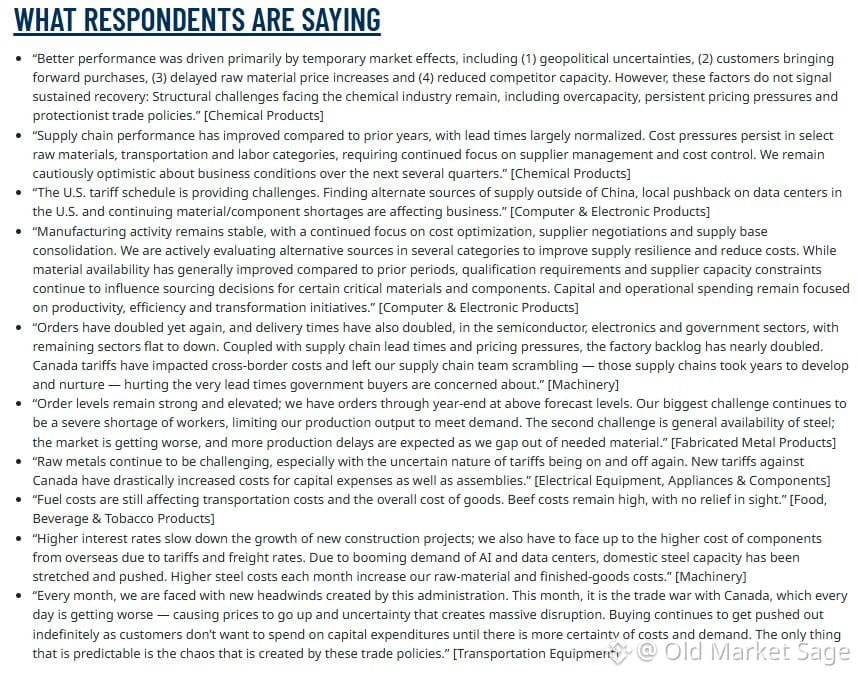
Manufacturing momentum cooling slightly—PMI ticked down to 54.5, below expectations. But dig into the details: new orders accelerated to 55.3, employment firmed up to 52.7. The real story? Prices paid jumped to 77.9 from 71.1. That's not subtle.
Demand is still there. Factories are still hiring. But input costs are climbing fast again. This is the kind of data that keeps central bankers awake—strong enough to justify higher-for-longer, inflationary enough to make them nervous.
Markets love to parse every decimal. But the pattern matters more: resilient activity meeting sticky cost pressures. We've seen this movie before. It doesn't always end with a soft landing.
Manufacturing momentum cooling slightly—PMI ticked down to 54.5, below expectations. But dig into the details: new orders accelerated to 55.3, employment firmed up to 52.7. The real story? Prices paid jumped to 77.9 from 71.1. That's not subtle.
Demand is still there. Factories are still hiring. But input costs are climbing fast again. This is the kind of data that keeps central bankers awake—strong enough to justify higher-for-longer, inflationary enough to make them nervous.
Markets love to parse every decimal. But the pattern matters more: resilient activity meeting sticky cost pressures. We've seen this movie before. It doesn't always end with a soft landing.
Demand is still there. Factories are still hiring. But input costs are climbing fast again. This is the kind of data that keeps central bankers awake—strong enough to justify higher-for-longer, inflationary enough to make them nervous.
Markets love to parse every decimal. But the pattern matters more: resilient activity meeting sticky cost pressures. We've seen this movie before. It doesn't always end with a soft landing.
41
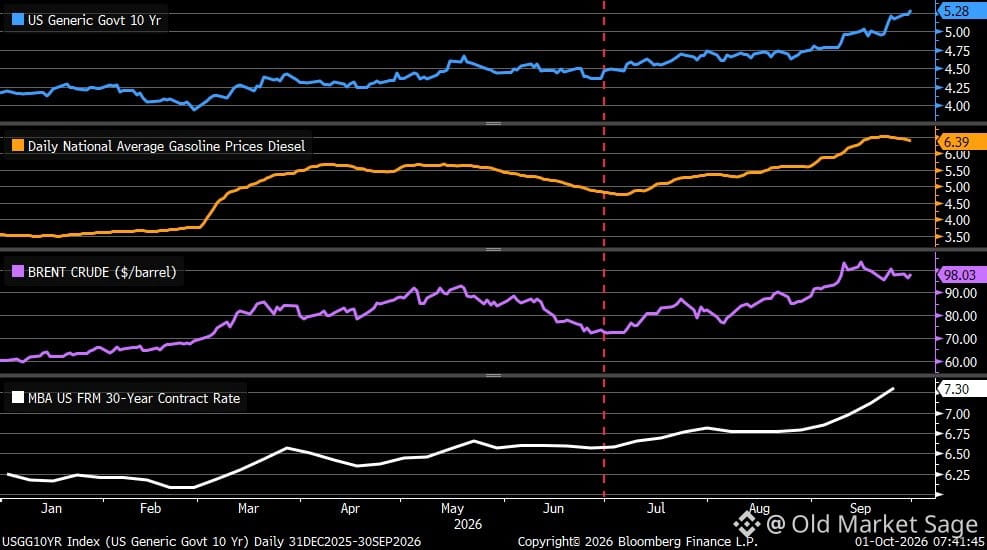
Third quarter told a clear story in four numbers:
10-year yield up 81 basis points. Diesel up 32%. Oil up 35%. 30-year mortgage rate up 72 basis points.
When everything moves in the same direction like this, it's not noise. It's repricing. The cost of money, the cost of energy, the cost of shelter—all climbing together.
This is what tightening actually looks like in the real economy. Not Fed speeches. Not dot plots. Just prices doing what prices do when liquidity drains and demand persists.
Past performance doesn't guarantee future results, but it does remind you: when the tide goes out, you see who's been swimming naked. And right now, the tide's still going out.
Third quarter told a clear story in four numbers:
10-year yield up 81 basis points. Diesel up 32%. Oil up 35%. 30-year mortgage rate up 72 basis points.
When everything moves in the same direction like this, it's not noise. It's repricing. The cost of money, the cost of energy, the cost of shelter—all climbing together.
This is what tightening actually looks like in the real economy. Not Fed speeches. Not dot plots. Just prices doing what prices do when liquidity drains and demand persists.
Past performance doesn't guarantee future results, but it does remind you: when the tide goes out, you see who's been swimming naked. And right now, the tide's still going out.
10-year yield up 81 basis points. Diesel up 32%. Oil up 35%. 30-year mortgage rate up 72 basis points.
When everything moves in the same direction like this, it's not noise. It's repricing. The cost of money, the cost of energy, the cost of shelter—all climbing together.
This is what tightening actually looks like in the real economy. Not Fed speeches. Not dot plots. Just prices doing what prices do when liquidity drains and demand persists.
Past performance doesn't guarantee future results, but it does remind you: when the tide goes out, you see who's been swimming naked. And right now, the tide's still going out.
1
260
The $SPX squeezed out a 2% gain last quarter—smallest move since late 2021. Meanwhile, small caps got hammered. Russell 2000 down 7.5%, first red quarter in over a year.
This kind of divergence usually tells you something. Big names holding the line while the rest of the market rolls over? Classic late-cycle behavior. Breadth matters more than headlines.
Don't mistake a flat index for a calm market. Beneath the surface, things are shifting.
The $SPX squeezed out a 2% gain last quarter—smallest move since late 2021. Meanwhile, small caps got hammered. Russell 2000 down 7.5%, first red quarter in over a year.
This kind of divergence usually tells you something. Big names holding the line while the rest of the market rolls over? Classic late-cycle behavior. Breadth matters more than headlines.
Don't mistake a flat index for a calm market. Beneath the surface, things are shifting.
This kind of divergence usually tells you something. Big names holding the line while the rest of the market rolls over? Classic late-cycle behavior. Breadth matters more than headlines.
Don't mistake a flat index for a calm market. Beneath the surface, things are shifting.
2
569
Connectez-vous pour découvrir plus de contenu
Rejoignez la communauté mondiale des adeptes de cryptomonnaies sur Binance Square
⚡️ Suviez les dernières informations importantes sur les cryptomonnaies.
💬 Jugé digne de confiance par la plus grande plateforme d’échange de cryptomonnaies au monde.
👍 Découvrez les connaissances que partagent les créateurs vérifiés.
Adresse e-mail/Nº de téléphone
Sujets d’actualité
ZcashETFPostsFirstWeeklyOutflow$93.6M
35 vues
15 mentions
ZCASH ETF UPDATE
Zcash’s ETF has recorded its first weekly net outflow since launching in August.
Investors withdrew $93.6M as $ZEC fell toward $1,300. Grayscale’s ZCSH had attracted $98.2M two weeks earlier, but no daily net inflows have been recorded since September 22, according to SoSoValue.
ZEC was around $1,308 on October 3, down about 17.5% for the week and roughly 23% from its recent $1,690 peak.
$ZEC
Vicky-143
·0 mentions J’aime
·133 vues
GreekPoliceBustCryptoScamRingArrest17
103 vues
27 mentions
BitcoinRejectedAt$87K
46,633 vues
83 mentions