

N O V A X
9.4k Publications

N O V A X
Signaler
Bloquer l’utilisateur
Just a curious mind exploring crypto.
222 Suivis
1.4K+ Abonnés
3.6K+ J’aime
Publications
Tous
Citations
·
--
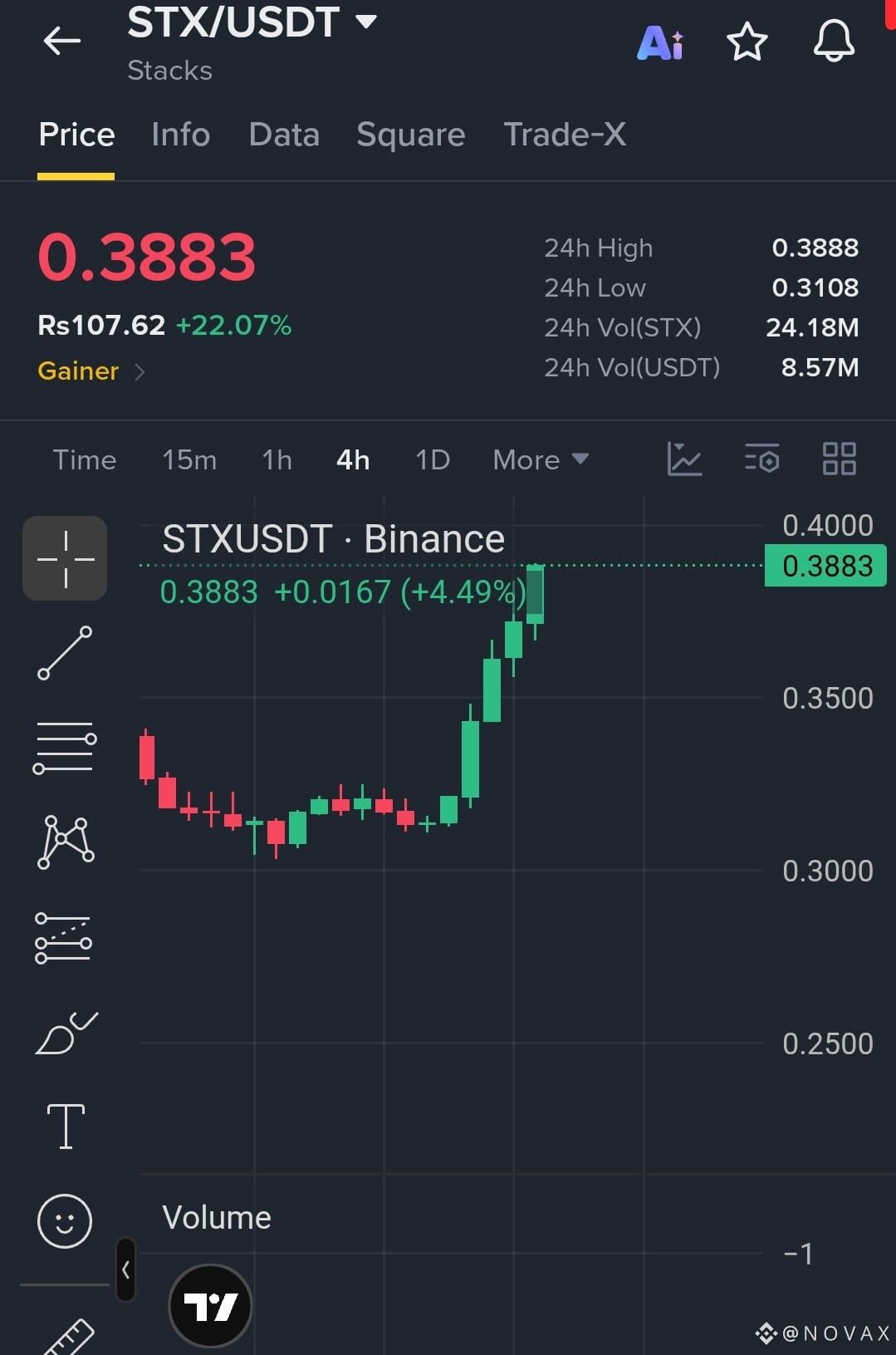
$STX went up from 0.31 to 0.3888.
long trade setup:
Entry: 0.3883
SL: 0.3550
TP1: 0.3920
TP2: 0.3950
TP3: 0.3980
Not financial advice trade your own risk.
$STX went up from 0.31 to 0.3888.
long trade setup:
Entry: 0.3883
SL: 0.3550
TP1: 0.3920
TP2: 0.3950
TP3: 0.3980
Not financial advice trade your own risk.
long trade setup:
Entry: 0.3883
SL: 0.3550
TP1: 0.3920
TP2: 0.3950
TP3: 0.3980
Not financial advice trade your own risk.
1
174
·
--
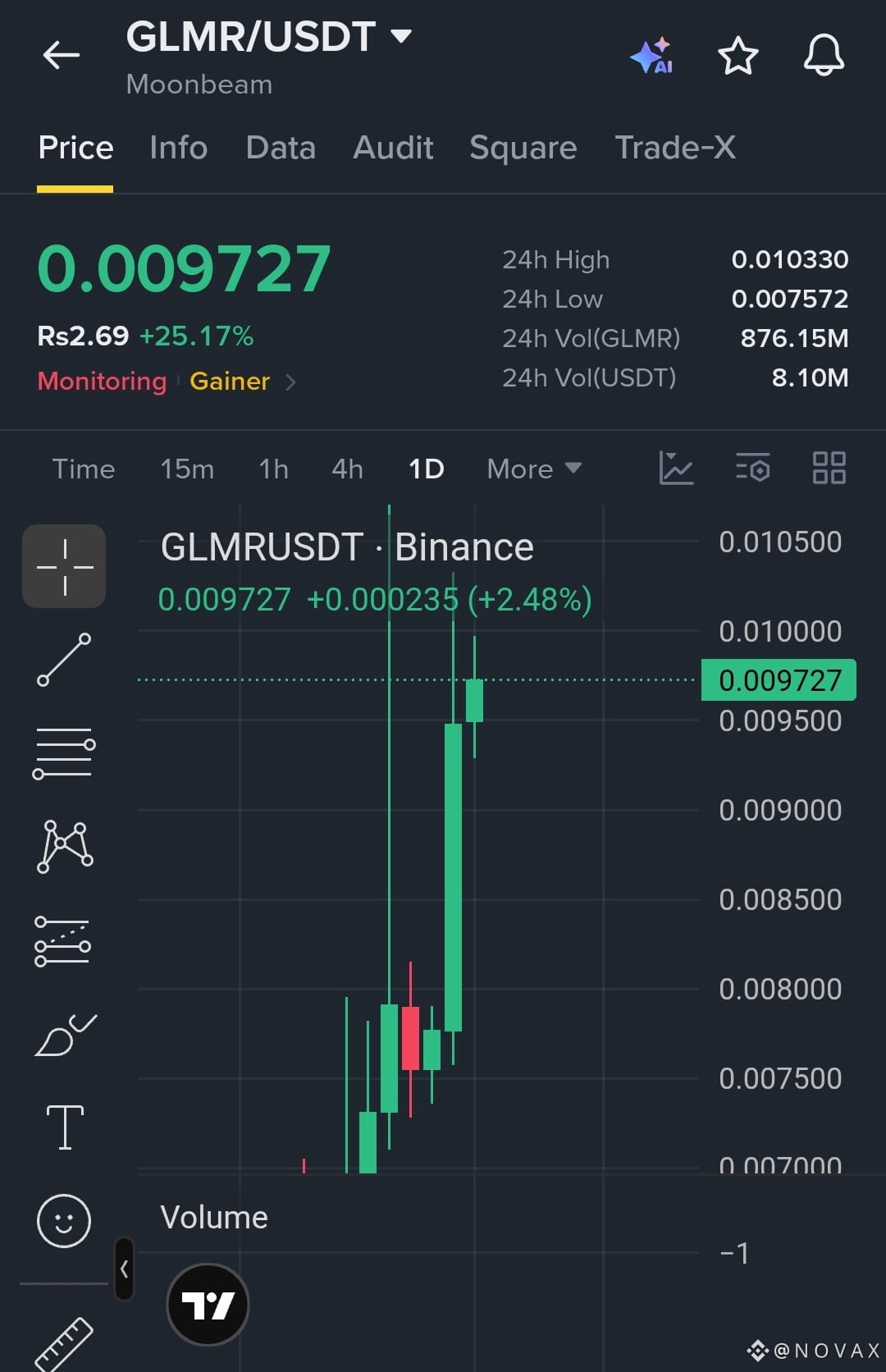
$GLMR is climbing from 0.0076 to 0.01033.
long trade setup:
Entry: 0.009727
SL: 0.008900
TP1: 0.009950
TP2: 0.010150
TP3: 0.010330
Not financial advice trade your own risk.
$GLMR is climbing from 0.0076 to 0.01033.
long trade setup:
Entry: 0.009727
SL: 0.008900
TP1: 0.009950
TP2: 0.010150
TP3: 0.010330
Not financial advice trade your own risk.
long trade setup:
Entry: 0.009727
SL: 0.008900
TP1: 0.009950
TP2: 0.010150
TP3: 0.010330
Not financial advice trade your own risk.
1
194
·
--
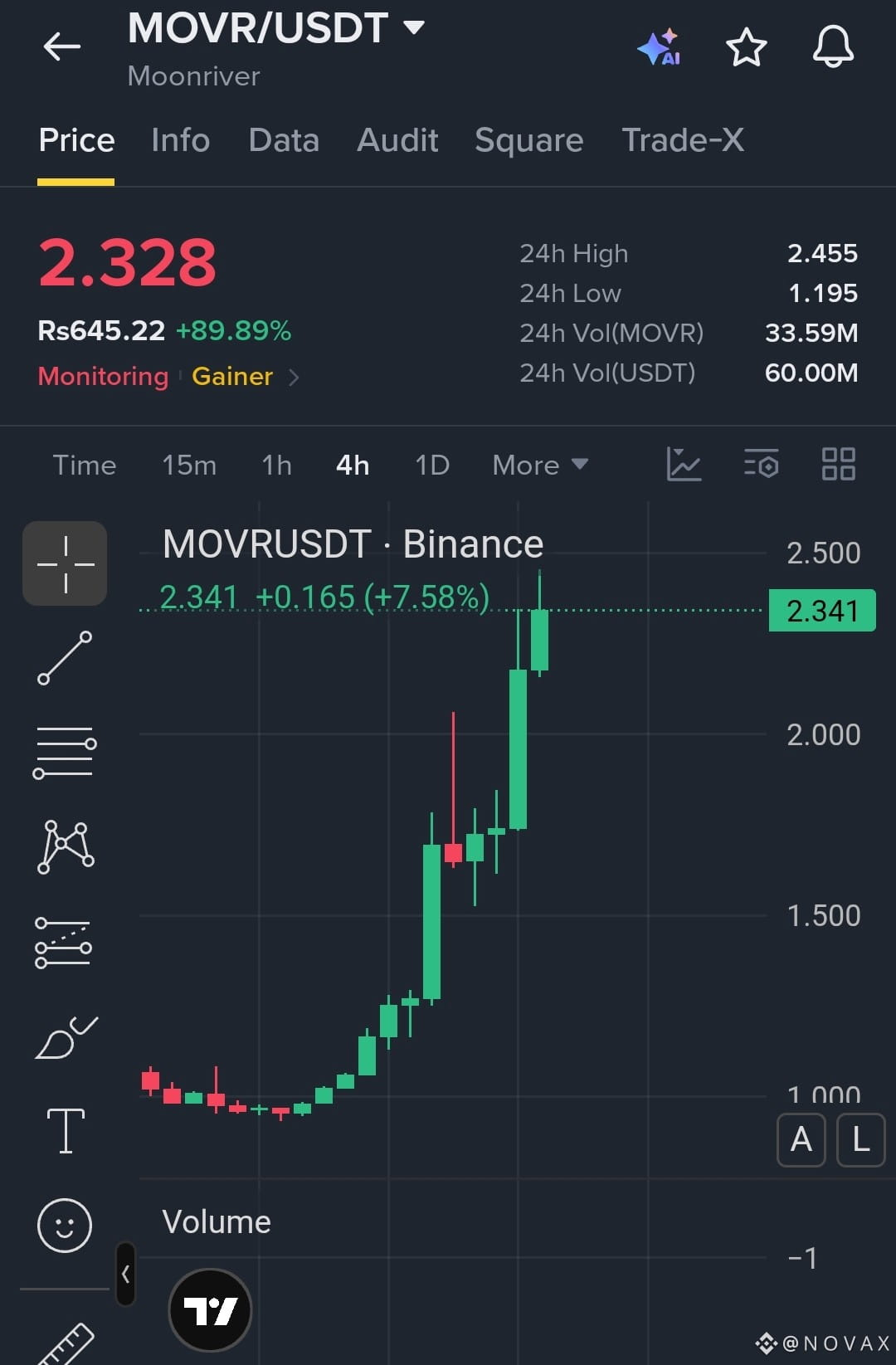
$MOVR just went up 89.89% today, from 1.20 to 2.455.
long trade setup:
Entry: 2.328
SL: 2.100
TP1: 2.400
TP2: 2.430
TP3: 2.455
Not financial advice trade your own risk.
$MOVR just went up 89.89% today, from 1.20 to 2.455.
long trade setup:
Entry: 2.328
SL: 2.100
TP1: 2.400
TP2: 2.430
TP3: 2.455
Not financial advice trade your own risk.
long trade setup:
Entry: 2.328
SL: 2.100
TP1: 2.400
TP2: 2.430
TP3: 2.455
Not financial advice trade your own risk.
1
412
·
--
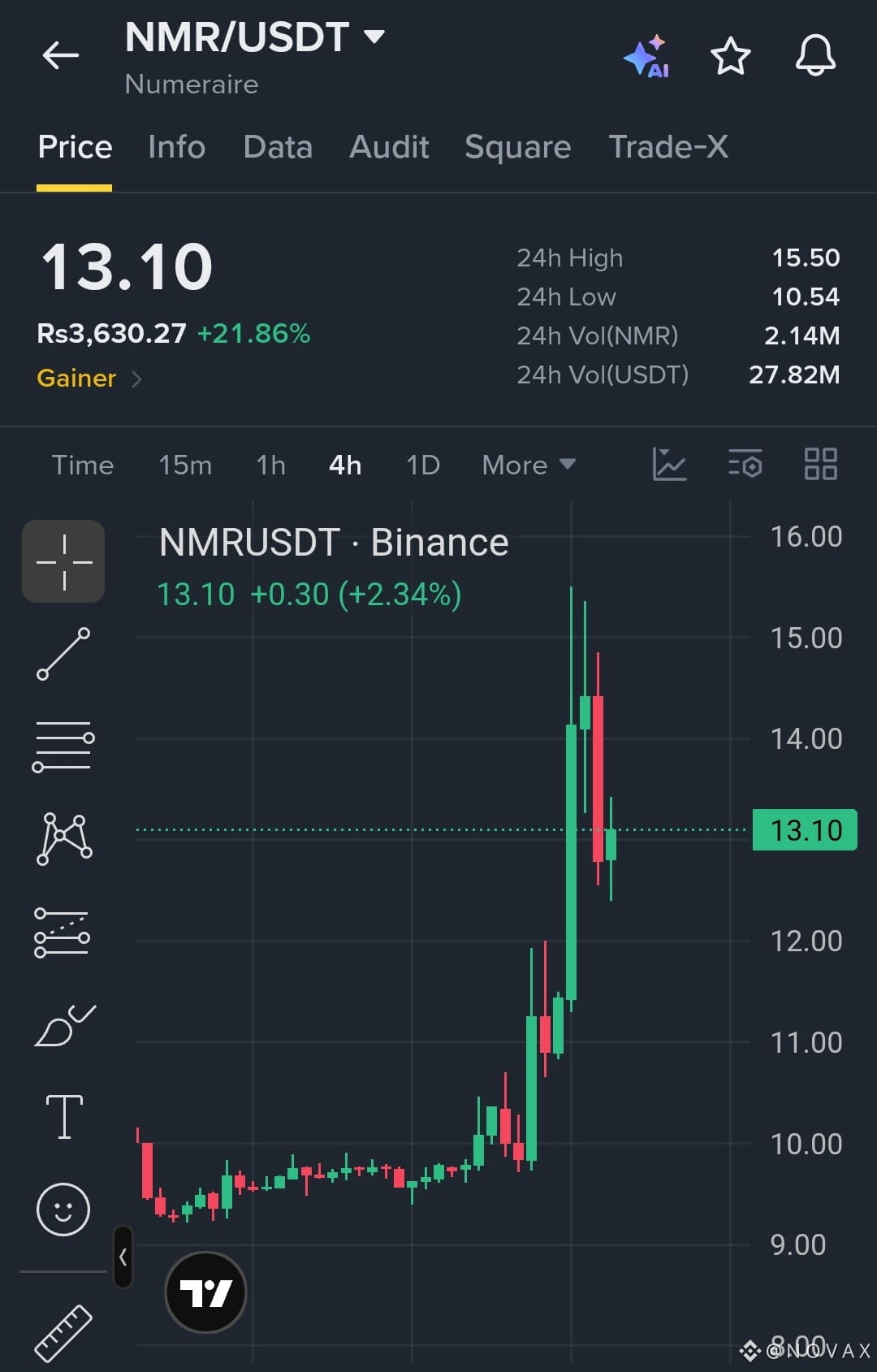
$NMR just broke out hard up 21.86% today, climbing from 9.50 to fresh highs near 15.50 before cooling off.
long trade setup:
Entry: 13.10
SL: 11.80
TP1: 13.80
TP2: 14.60
TP3: 15.50
Not financial advice trade your own risk.
$NMR just broke out hard up 21.86% today, climbing from 9.50 to fresh highs near 15.50 before cooling off.
long trade setup:
Entry: 13.10
SL: 11.80
TP1: 13.80
TP2: 14.60
TP3: 15.50
Not financial advice trade your own risk.
long trade setup:
Entry: 13.10
SL: 11.80
TP1: 13.80
TP2: 14.60
TP3: 15.50
Not financial advice trade your own risk.
1
174
·
--
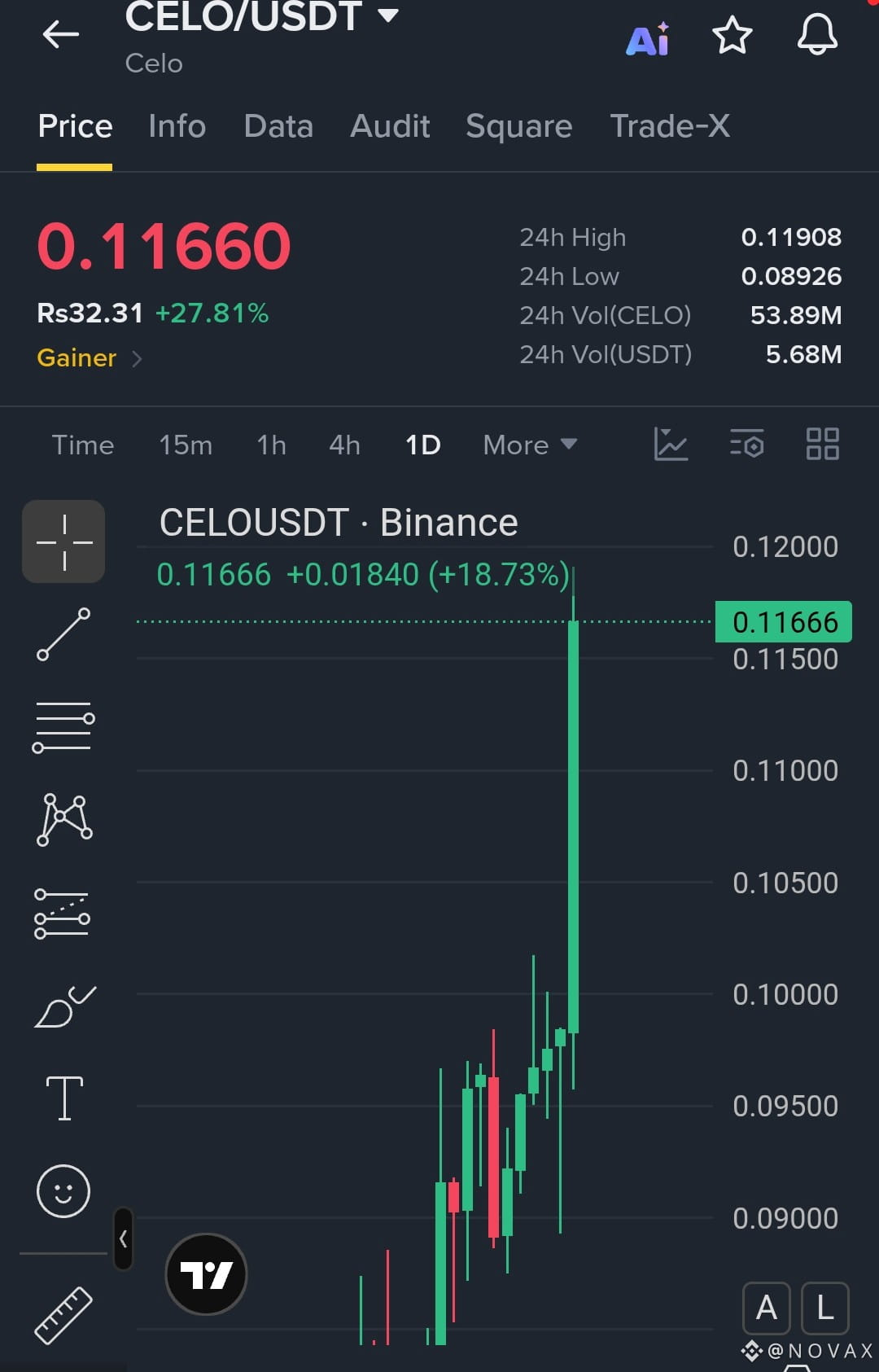
$CELO just went from 0.089 to fresh highs near 0.11908.
long trade setup:
Entry: 0.11660
SL: 0.10500
TP1: 0.11800
TP2: 0.11870
TP3: 0.11908
Not financial advice trade your own risk.
$CELO just went from 0.089 to fresh highs near 0.11908.
long trade setup:
Entry: 0.11660
SL: 0.10500
TP1: 0.11800
TP2: 0.11870
TP3: 0.11908
Not financial advice trade your own risk.
long trade setup:
Entry: 0.11660
SL: 0.10500
TP1: 0.11800
TP2: 0.11870
TP3: 0.11908
Not financial advice trade your own risk.
2
245
·
--
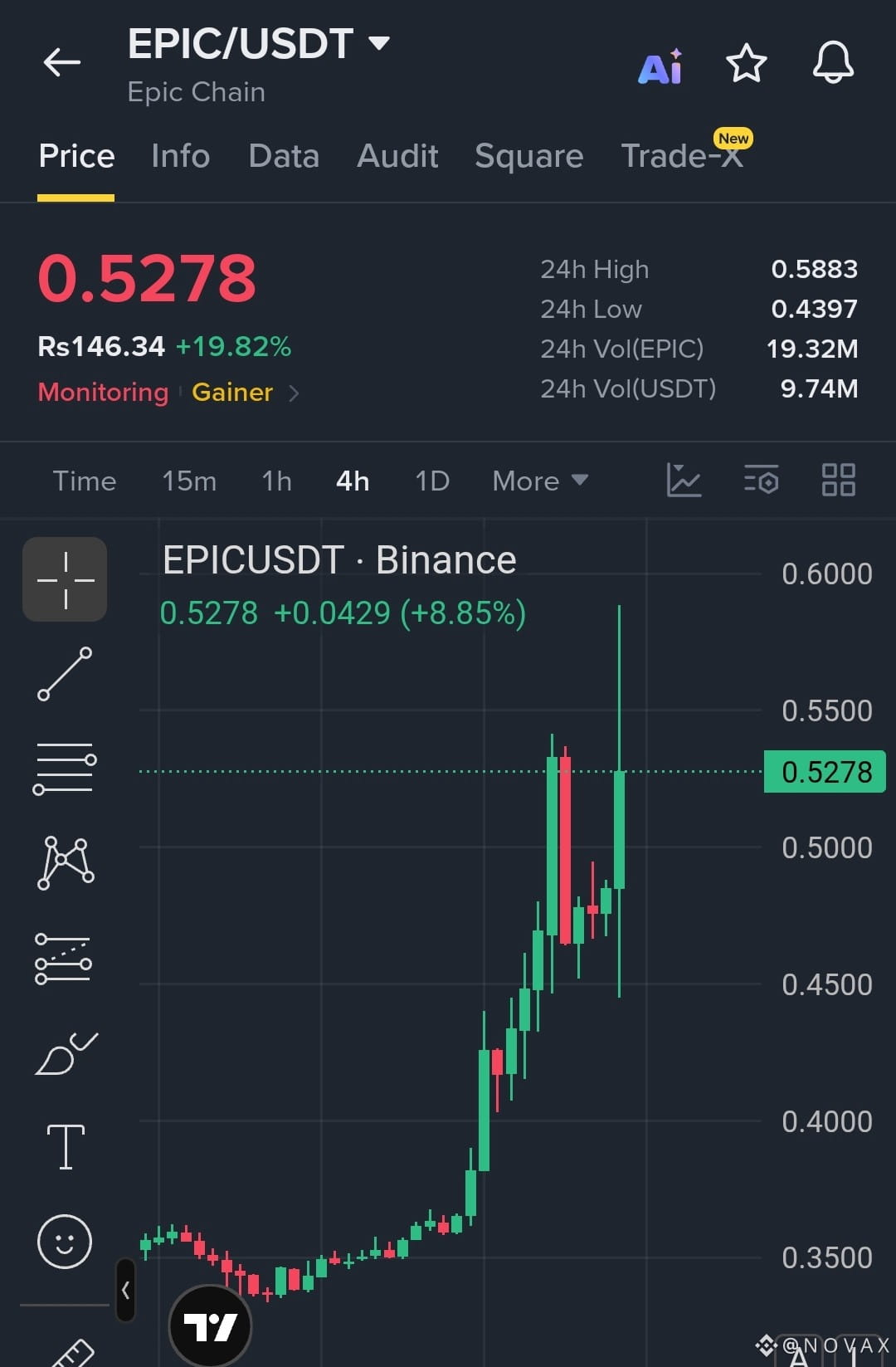
$EPIC is climbing from 0.35 to 0.5883.
long trade setup:
Entry: 0.5278
SL: 0.4800
TP1: 0.5500
TP2: 0.5700
TP3: 0.5883
Not financial advice trade your own risk.
$EPIC is climbing from 0.35 to 0.5883.
long trade setup:
Entry: 0.5278
SL: 0.4800
TP1: 0.5500
TP2: 0.5700
TP3: 0.5883
Not financial advice trade your own risk.
long trade setup:
Entry: 0.5278
SL: 0.4800
TP1: 0.5500
TP2: 0.5700
TP3: 0.5883
Not financial advice trade your own risk.
1
185
·
--
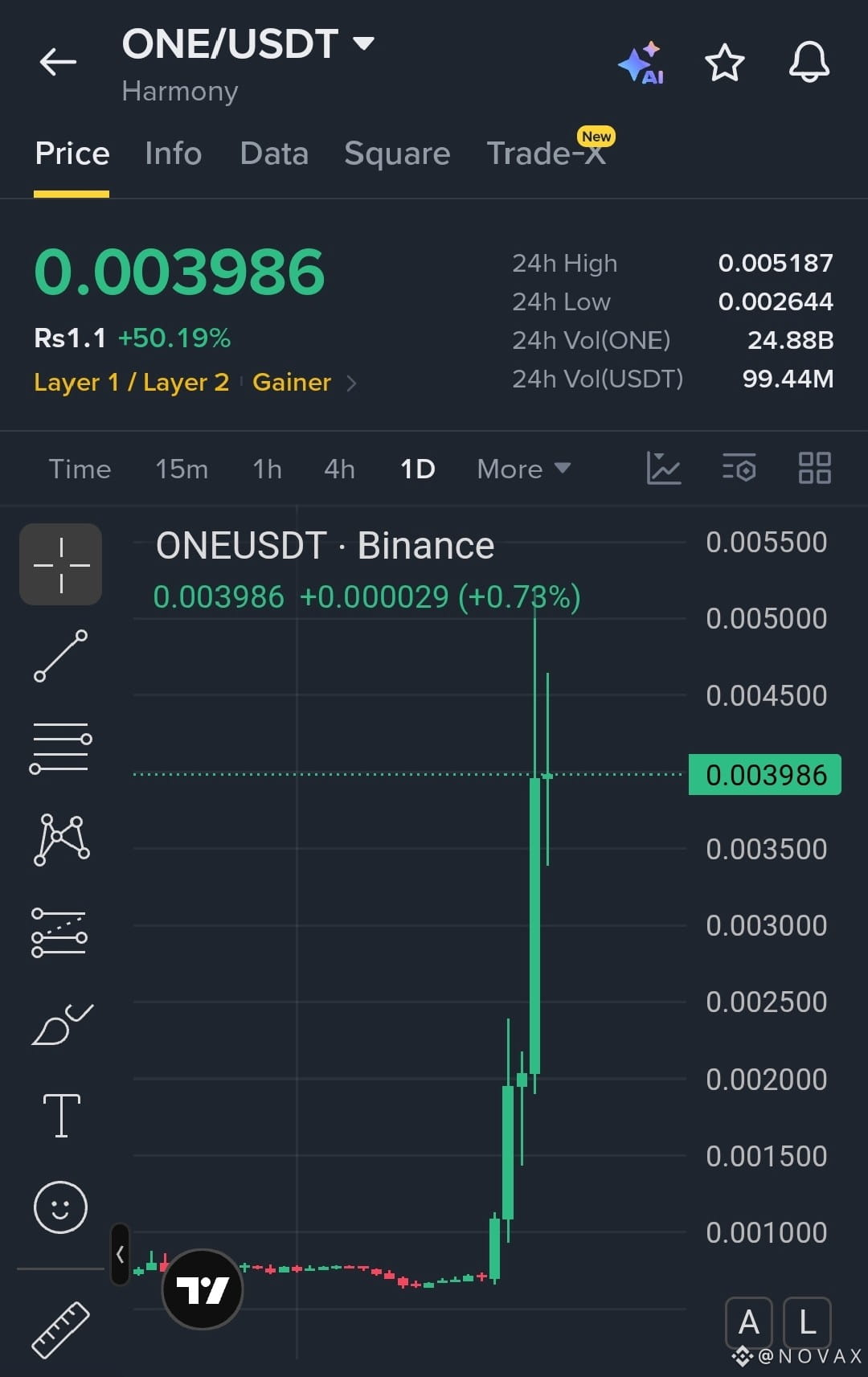
$ONE is going from 0.0018 to fresh highs near 0.005187.
long trade setup:
Entry: 0.003986
SL: 0.003500
TP1: 0.004300
TP2: 0.004750
TP3: 0.005187
Not financial advice trade your own risk.
$ONE is going from 0.0018 to fresh highs near 0.005187.
long trade setup:
Entry: 0.003986
SL: 0.003500
TP1: 0.004300
TP2: 0.004750
TP3: 0.005187
Not financial advice trade your own risk.
long trade setup:
Entry: 0.003986
SL: 0.003500
TP1: 0.004300
TP2: 0.004750
TP3: 0.005187
Not financial advice trade your own risk.
1
188
·
--
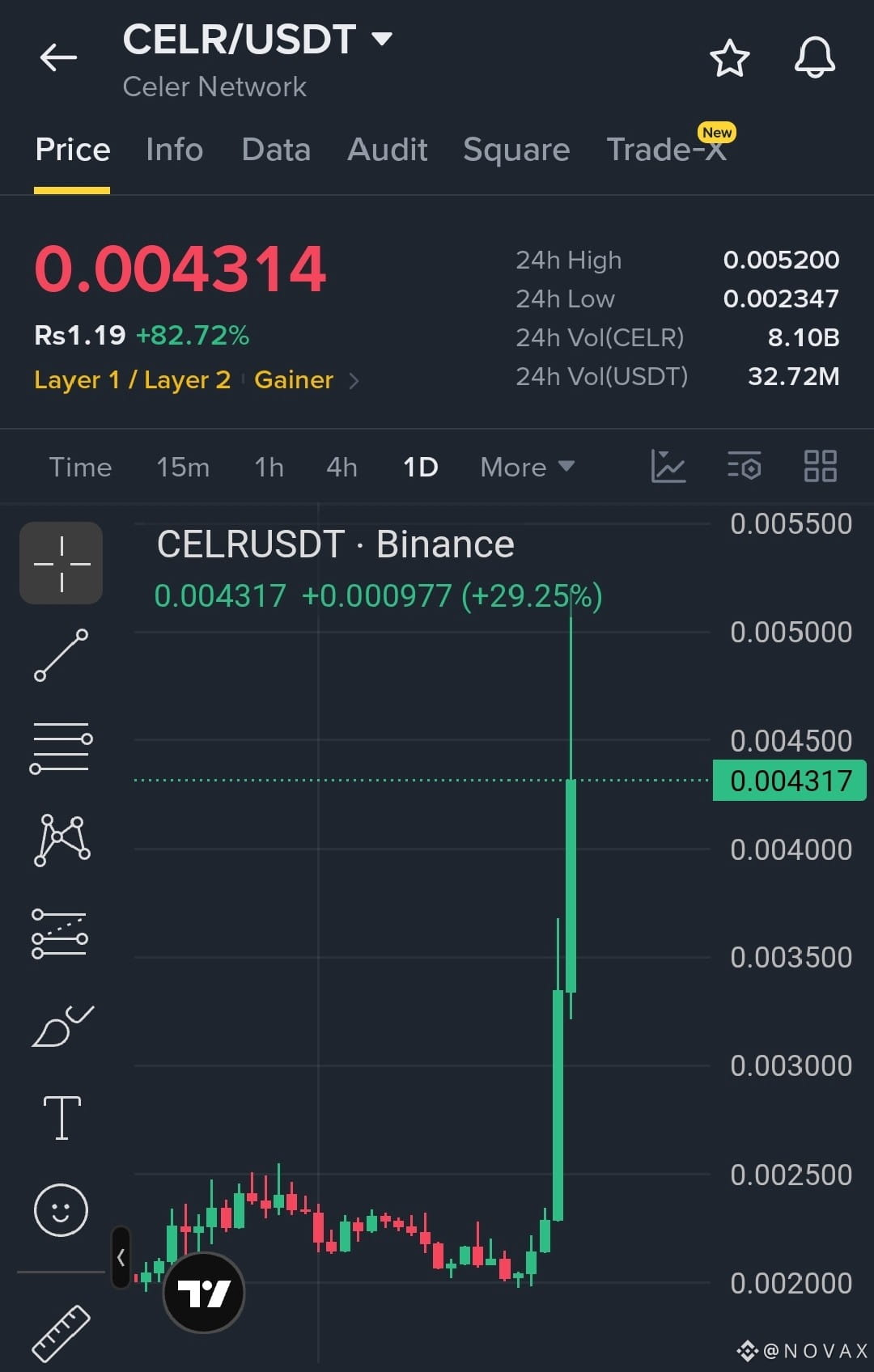
$CELR just exploded up 82.72% today, ripping from 0.0023 to fresh highs near 0.00520.
long trade setup:
Entry: 0.004314
SL: 0.003800
TP1: 0.004500
TP2: 0.004850
TP3: 0.005200
Not financial advice trade your own risk.
$CELR just exploded up 82.72% today, ripping from 0.0023 to fresh highs near 0.00520.
long trade setup:
Entry: 0.004314
SL: 0.003800
TP1: 0.004500
TP2: 0.004850
TP3: 0.005200
Not financial advice trade your own risk.
long trade setup:
Entry: 0.004314
SL: 0.003800
TP1: 0.004500
TP2: 0.004850
TP3: 0.005200
Not financial advice trade your own risk.
2
199
·
--
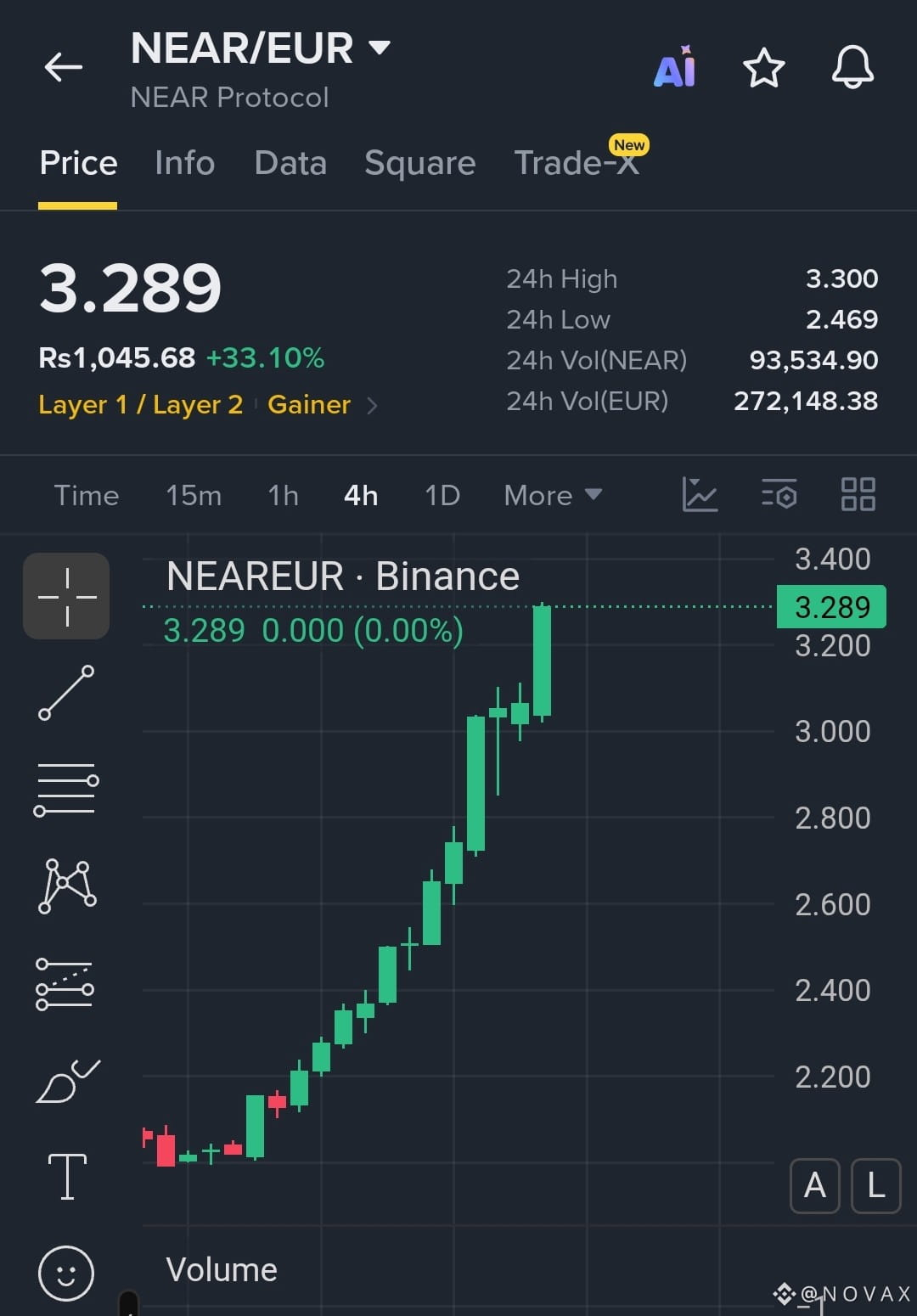
$NEAR is climbing from 2.20 to fresh highs near 3.300.
long trade setup:
Entry: 3.289
SL: 3.050
TP1: 3.300
TP2: 3.320
TP3: 3.350
Not financial advice trade your own risk.
$NEAR is climbing from 2.20 to fresh highs near 3.300.
long trade setup:
Entry: 3.289
SL: 3.050
TP1: 3.300
TP2: 3.320
TP3: 3.350
Not financial advice trade your own risk.
long trade setup:
Entry: 3.289
SL: 3.050
TP1: 3.300
TP2: 3.320
TP3: 3.350
Not financial advice trade your own risk.
3
732
·
--
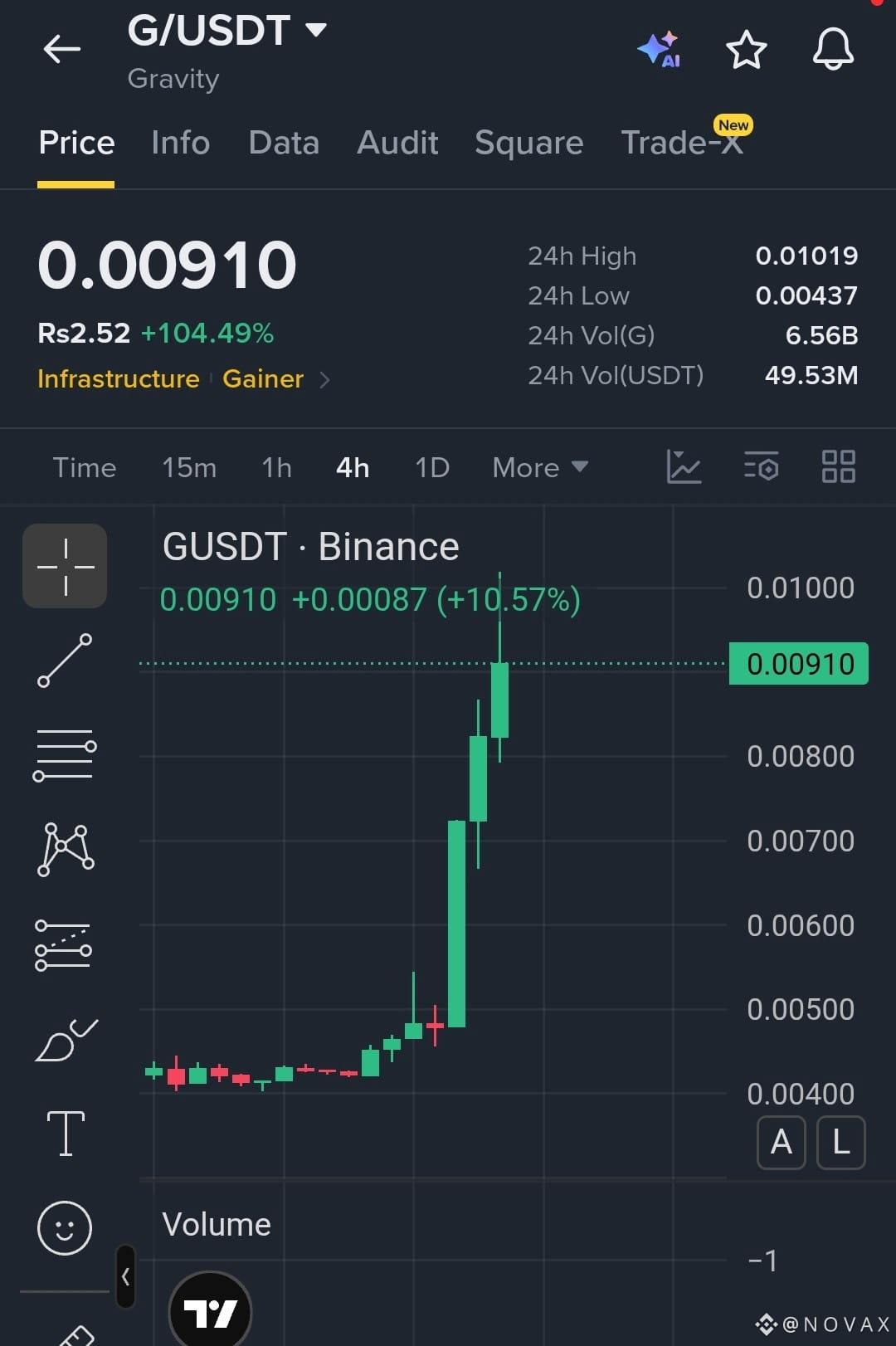
$G just exploded up 104.49% today, ripping from 0.0044 to fresh highs near 0.01019.
long trade setup:
Entry: 0.00910
SL: 0.00800
TP1: 0.00950
TP2: 0.00985
TP3: 0.01019
Not financial advice trade your own risk.
$G just exploded up 104.49% today, ripping from 0.0044 to fresh highs near 0.01019.
long trade setup:
Entry: 0.00910
SL: 0.00800
TP1: 0.00950
TP2: 0.00985
TP3: 0.01019
Not financial advice trade your own risk.
long trade setup:
Entry: 0.00910
SL: 0.00800
TP1: 0.00950
TP2: 0.00985
TP3: 0.01019
Not financial advice trade your own risk.
1
239
·
--
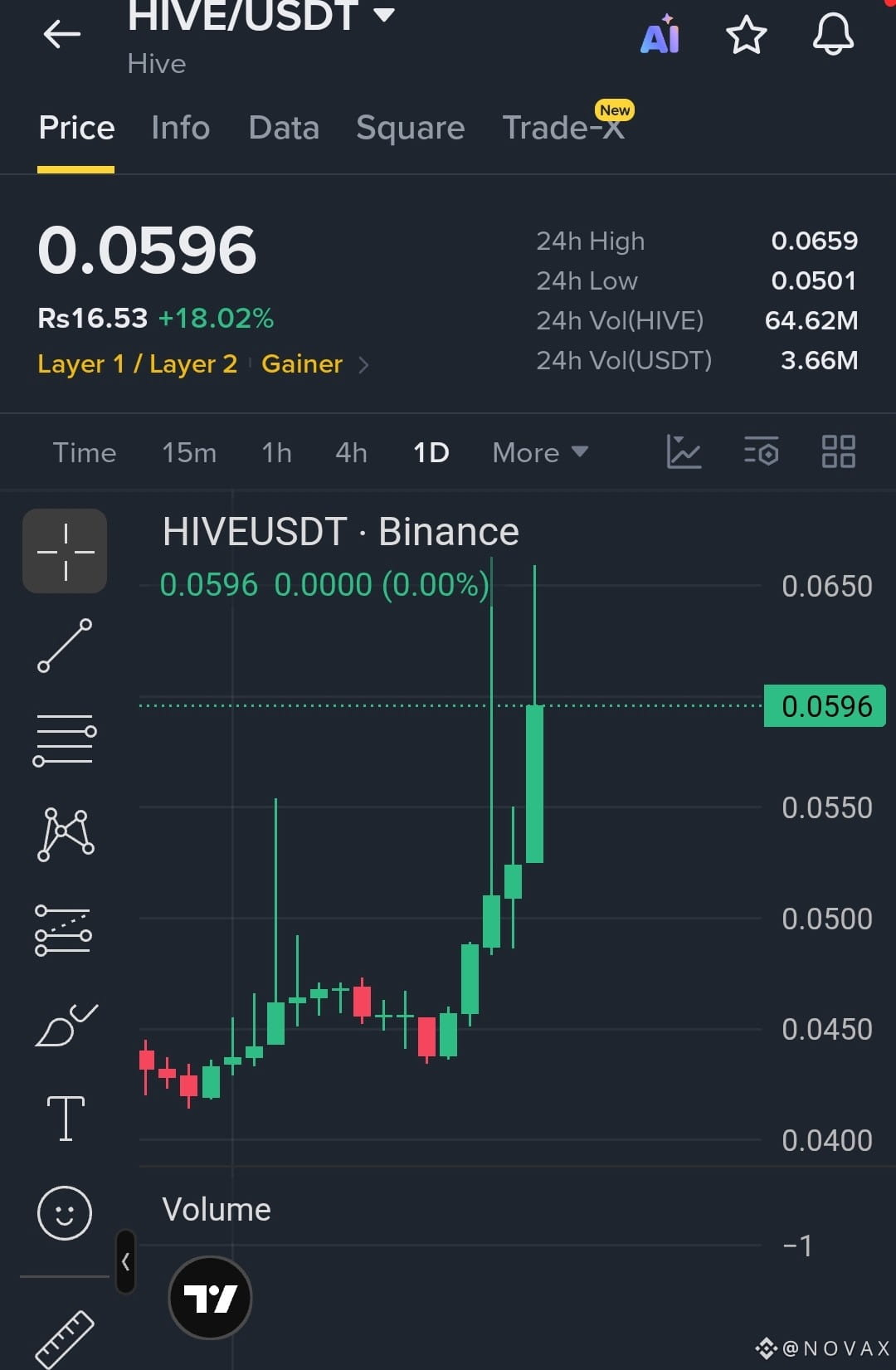
$HIVE just broke out steadily up 18.02% today, climbing from 0.0430 to fresh highs near 0.0659.
long trade setup:
Entry: 0.0596
SL: 0.0540
TP1: 0.0620
TP2: 0.0640
TP3: 0.0659
Not financial advice trade your own risk.
$HIVE just broke out steadily up 18.02% today, climbing from 0.0430 to fresh highs near 0.0659.
long trade setup:
Entry: 0.0596
SL: 0.0540
TP1: 0.0620
TP2: 0.0640
TP3: 0.0659
Not financial advice trade your own risk.
long trade setup:
Entry: 0.0596
SL: 0.0540
TP1: 0.0620
TP2: 0.0640
TP3: 0.0659
Not financial advice trade your own risk.
1
189
·
--
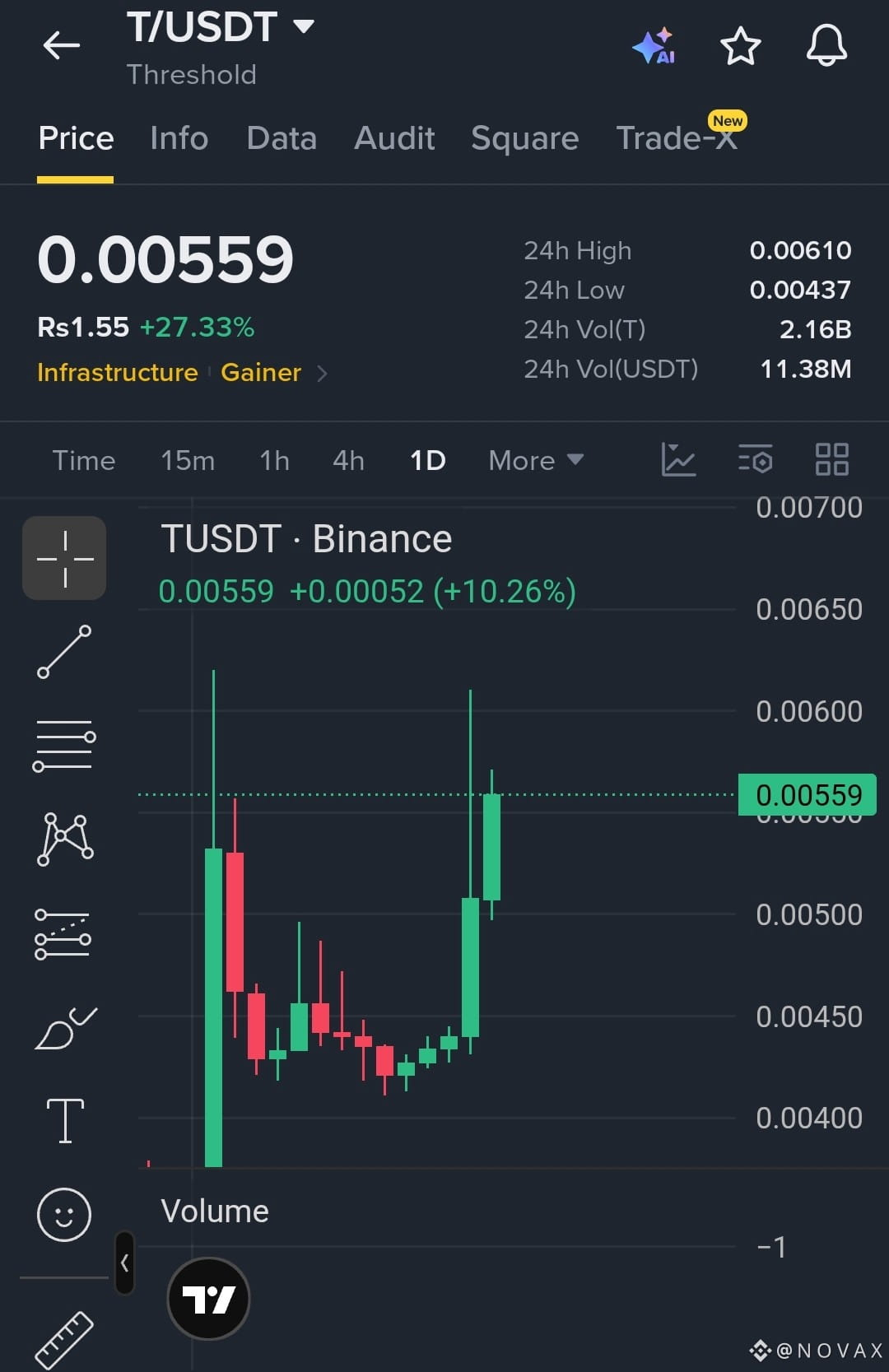
$T just bounced back up 27.33% today, dropping from 0.0061 to 0.0044 before ripping back toward fresh highs near 0.0061.
long trade setup:
Entry: 0.00559
SL: 0.00500
TP1: 0.00580
TP2: 0.00595
TP3: 0.00610
Not financial advice trade your own risk.
$T just bounced back up 27.33% today, dropping from 0.0061 to 0.0044 before ripping back toward fresh highs near 0.0061.
long trade setup:
Entry: 0.00559
SL: 0.00500
TP1: 0.00580
TP2: 0.00595
TP3: 0.00610
Not financial advice trade your own risk.
long trade setup:
Entry: 0.00559
SL: 0.00500
TP1: 0.00580
TP2: 0.00595
TP3: 0.00610
Not financial advice trade your own risk.
1
180
·
--
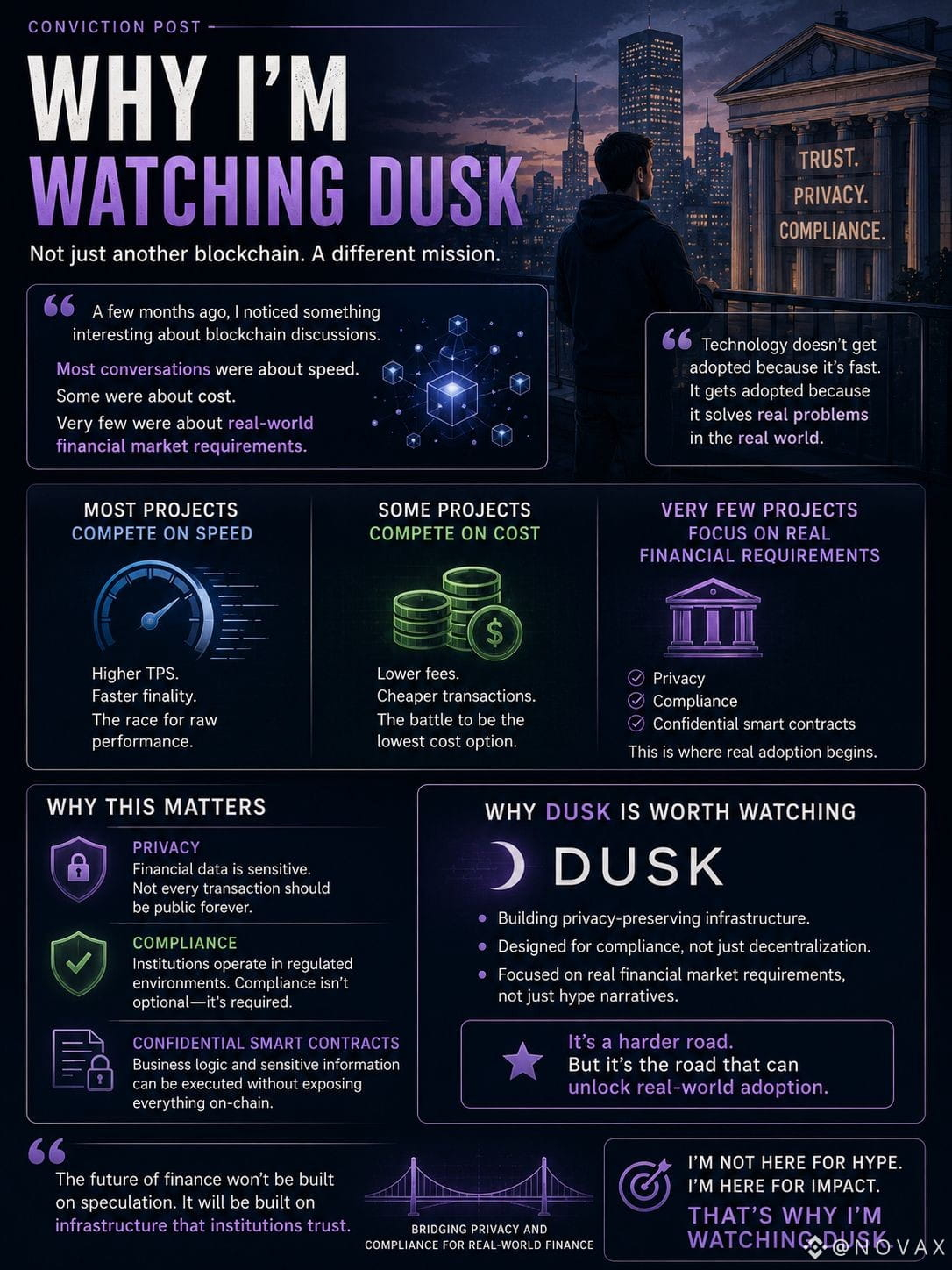
A few months ago, I noticed something interesting about blockchain discussions.
Most projects were competing to be faster.
Others were competing to be cheaper.
But very few were asking a different question:
What would it actually take for financial institutions to use blockchain at scale?
Speed matters.
Low fees matter.
But banks, exchanges, and regulated businesses care about more than transaction costs.
They care about privacy.
They care about compliance.
They care about protecting sensitive information while still meeting regulatory requirements.
That's where Dusk caught my attention.
Not because it claims to be the fastest chain.
Not because it promises the lowest fees.
But because it's attempting to tackle problems that many projects avoid:
• Privacy-preserving finance
• Compliance ready infrastructure
• Confidential smart contracts
Of course, none of these are easy challenges.
Balancing privacy, transparency, security, and regulation is far harder than simply increasing TPS.
Whether Dusk succeeds remains to be seen.
But in a market full of projects chasing speed, it's interesting to watch one focused on the requirements of real world finance.
That's why I'm watching Dusk.
$AAPLB $NVDA.US
#GoldNearsThreeMonthHigh
#dusk $DUSK @Dusk_Foundation
A few months ago, I noticed something interesting about blockchain discussions.
Most projects were competing to be faster.
Others were competing to be cheaper.
But very few were asking a different question:
What would it actually take for financial institutions to use blockchain at scale?
Speed matters.
Low fees matter.
But banks, exchanges, and regulated businesses care about more than transaction costs.
They care about privacy.
They care about compliance.
They care about protecting sensitive information while still meeting regulatory requirements.
That's where Dusk caught my attention.
Not because it claims to be the fastest chain.
Not because it promises the lowest fees.
But because it's attempting to tackle problems that many projects avoid:
• Privacy-preserving finance
• Compliance ready infrastructure
• Confidential smart contracts
Of course, none of these are easy challenges.
Balancing privacy, transparency, security, and regulation is far harder than simply increasing TPS.
Whether Dusk succeeds remains to be seen.
But in a market full of projects chasing speed, it's interesting to watch one focused on the requirements of real world finance.
That's why I'm watching Dusk.
$AAPLB $NVDA.US
#GoldNearsThreeMonthHigh
#dusk $DUSK @Dusk
Most projects were competing to be faster.
Others were competing to be cheaper.
But very few were asking a different question:
What would it actually take for financial institutions to use blockchain at scale?
Speed matters.
Low fees matter.
But banks, exchanges, and regulated businesses care about more than transaction costs.
They care about privacy.
They care about compliance.
They care about protecting sensitive information while still meeting regulatory requirements.
That's where Dusk caught my attention.
Not because it claims to be the fastest chain.
Not because it promises the lowest fees.
But because it's attempting to tackle problems that many projects avoid:
• Privacy-preserving finance
• Compliance ready infrastructure
• Confidential smart contracts
Of course, none of these are easy challenges.
Balancing privacy, transparency, security, and regulation is far harder than simply increasing TPS.
Whether Dusk succeeds remains to be seen.
But in a market full of projects chasing speed, it's interesting to watch one focused on the requirements of real world finance.
That's why I'm watching Dusk.
$AAPLB $NVDA.US
#GoldNearsThreeMonthHigh
#dusk $DUSK @Dusk
21
8
1.2k
·
--
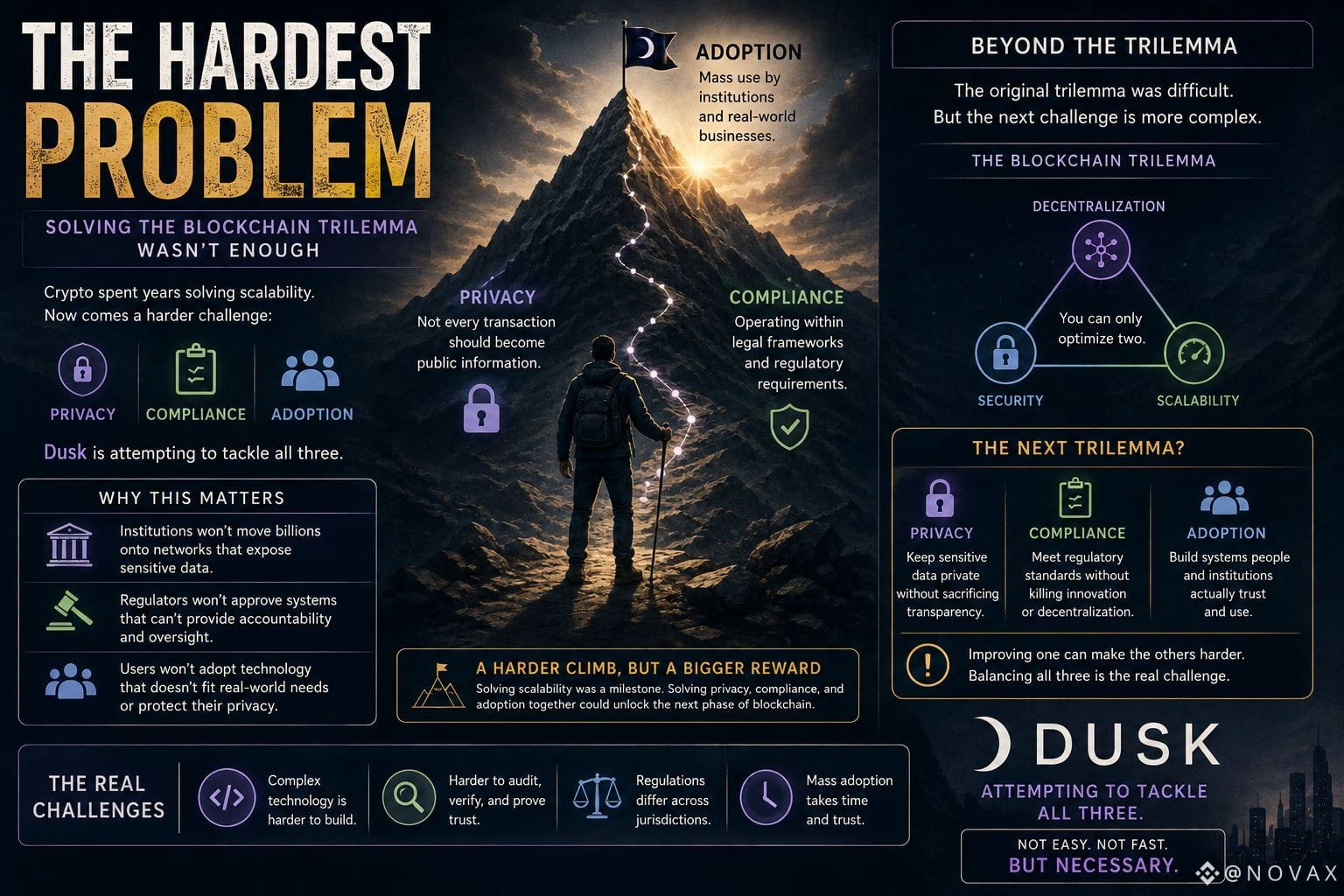
For years, blockchain projects were obsessed with one challenge:
The blockchain trilemma.
How do you balance decentralization, security, and scalability?
Billions of dollars and countless projects were built around finding that answer.
But even if scalability is solved, a bigger question remains:
Who will actually use these networks?
A system can process thousands of transactions per second.
That doesn't automatically make it suitable for financial institutions, businesses, or regulated markets.
The next challenges look different:
• Privacy
• Compliance
• Adoption
Privacy, because not every transaction should become public information.
Compliance, because large organizations operate within legal frameworks.
Adoption, because technology only matters if people and institutions are willing to use it.
The difficult part is that improving one of these areas can sometimes make the others harder.
More privacy can reduce transparency.
More compliance can reduce flexibility.
More adoption brings greater scrutiny.
Dusk is attempting to address all three at the same time.
Whether any blockchain can successfully balance privacy, compliance, and mass adoption remains an open question.
But it may prove to be a harder challenge than the trilemma itself.
$TUT $ZORA
#dusk $DUSK @Dusk_Foundation
#SP500EndsWeeklyWinStreak #SandboxSANDSuspectedInfiniteMintFlawOnBase
For years, blockchain projects were obsessed with one challenge:
The blockchain trilemma.
How do you balance decentralization, security, and scalability?
Billions of dollars and countless projects were built around finding that answer.
But even if scalability is solved, a bigger question remains:
Who will actually use these networks?
A system can process thousands of transactions per second.
That doesn't automatically make it suitable for financial institutions, businesses, or regulated markets.
The next challenges look different:
• Privacy
• Compliance
• Adoption
Privacy, because not every transaction should become public information.
Compliance, because large organizations operate within legal frameworks.
Adoption, because technology only matters if people and institutions are willing to use it.
The difficult part is that improving one of these areas can sometimes make the others harder.
More privacy can reduce transparency.
More compliance can reduce flexibility.
More adoption brings greater scrutiny.
Dusk is attempting to address all three at the same time.
Whether any blockchain can successfully balance privacy, compliance, and mass adoption remains an open question.
But it may prove to be a harder challenge than the trilemma itself.
$TUT $ZORA
#dusk $DUSK @Dusk
#SP500EndsWeeklyWinStreak #SandboxSANDSuspectedInfiniteMintFlawOnBase
The blockchain trilemma.
How do you balance decentralization, security, and scalability?
Billions of dollars and countless projects were built around finding that answer.
But even if scalability is solved, a bigger question remains:
Who will actually use these networks?
A system can process thousands of transactions per second.
That doesn't automatically make it suitable for financial institutions, businesses, or regulated markets.
The next challenges look different:
• Privacy
• Compliance
• Adoption
Privacy, because not every transaction should become public information.
Compliance, because large organizations operate within legal frameworks.
Adoption, because technology only matters if people and institutions are willing to use it.
The difficult part is that improving one of these areas can sometimes make the others harder.
More privacy can reduce transparency.
More compliance can reduce flexibility.
More adoption brings greater scrutiny.
Dusk is attempting to address all three at the same time.
Whether any blockchain can successfully balance privacy, compliance, and mass adoption remains an open question.
But it may prove to be a harder challenge than the trilemma itself.
$TUT $ZORA
#dusk $DUSK @Dusk
#SP500EndsWeeklyWinStreak #SandboxSANDSuspectedInfiniteMintFlawOnBase
19
5
339
·
--
A few years ago, the biggest blockchain conversations were about price movements.
Today, a different question is starting to emerge:
What happens when real institutions want to use this technology?
That's where some of blockchain's biggest challenges become obvious.
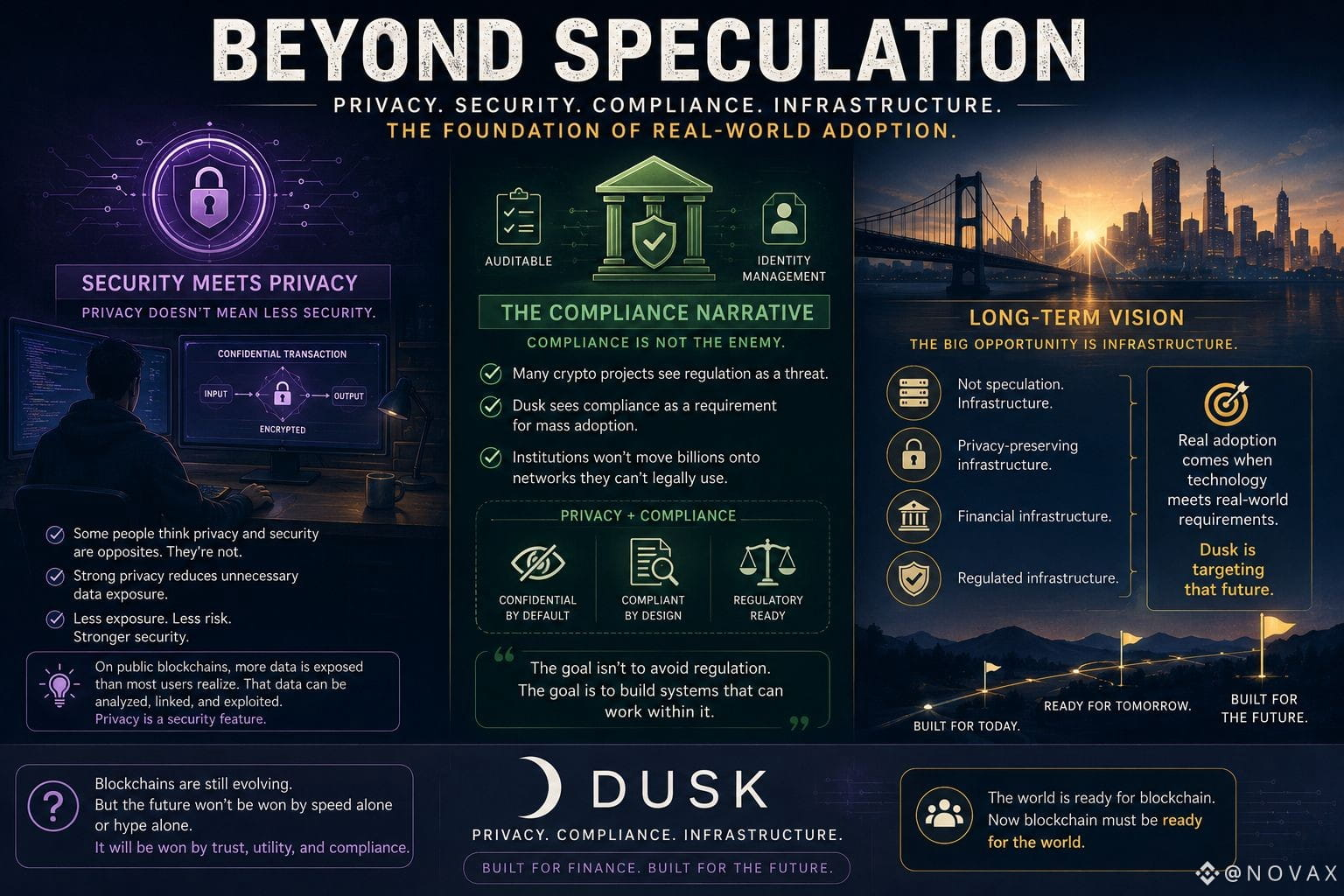
Many people see privacy and security as opposites.
But exposing more information than necessary can create its own risks.
Sensitive business data, trading activity, and financial records aren't meant to be visible to everyone forever.
In many cases, stronger privacy can actually strengthen security by reducing unnecessary data exposure.
At the same time, privacy alone isn't enough.
A network can be private, but if regulators, auditors, or institutions can't legally interact with it, large-scale adoption becomes difficult.
This is where the compliance debate becomes interesting.
For years, parts of the crypto industry treated regulation as something to avoid.
But institutions aren't going to move billions of dollars onto systems they can't legally use.
The challenge isn't choosing between privacy and compliance.
The challenge is finding a way to support both.
That's why the long-term opportunity may not come from speculation alone.
It may come from infrastructure.
Infrastructure that protects sensitive information.
Infrastructure that can support financial markets.
Infrastructure that can operate within real-world regulatory frameworks.
Dusk is positioning itself around that vision.
Whether the industry can successfully balance privacy, security, and compliance remains one of blockchain's biggest unanswered questions.
But solving that problem may matter more than simply being the fastest chain.
#PrivacyProtection
#dusk @Dusk_Foundation $DUSK
$TRUMP $MAGMA
A few years ago, the biggest blockchain conversations were about price movements.
Today, a different question is starting to emerge:
What happens when real institutions want to use this technology?
That's where some of blockchain's biggest challenges become obvious.
Many people see privacy and security as opposites.
But exposing more information than necessary can create its own risks.
Sensitive business data, trading activity, and financial records aren't meant to be visible to everyone forever.
In many cases, stronger privacy can actually strengthen security by reducing unnecessary data exposure.
At the same time, privacy alone isn't enough.
A network can be private, but if regulators, auditors, or institutions can't legally interact with it, large-scale adoption becomes difficult.
This is where the compliance debate becomes interesting.
For years, parts of the crypto industry treated regulation as something to avoid.
But institutions aren't going to move billions of dollars onto systems they can't legally use.
The challenge isn't choosing between privacy and compliance.
The challenge is finding a way to support both.
That's why the long-term opportunity may not come from speculation alone.
It may come from infrastructure.
Infrastructure that protects sensitive information.
Infrastructure that can support financial markets.
Infrastructure that can operate within real-world regulatory frameworks.
Dusk is positioning itself around that vision.
Whether the industry can successfully balance privacy, security, and compliance remains one of blockchain's biggest unanswered questions.
But solving that problem may matter more than simply being the fastest chain.
#PrivacyProtection
#dusk @Dusk $DUSK
$TRUMP $MAGMA
Today, a different question is starting to emerge:
What happens when real institutions want to use this technology?
That's where some of blockchain's biggest challenges become obvious.
Many people see privacy and security as opposites.
But exposing more information than necessary can create its own risks.
Sensitive business data, trading activity, and financial records aren't meant to be visible to everyone forever.
In many cases, stronger privacy can actually strengthen security by reducing unnecessary data exposure.
At the same time, privacy alone isn't enough.
A network can be private, but if regulators, auditors, or institutions can't legally interact with it, large-scale adoption becomes difficult.
This is where the compliance debate becomes interesting.
For years, parts of the crypto industry treated regulation as something to avoid.
But institutions aren't going to move billions of dollars onto systems they can't legally use.
The challenge isn't choosing between privacy and compliance.
The challenge is finding a way to support both.
That's why the long-term opportunity may not come from speculation alone.
It may come from infrastructure.
Infrastructure that protects sensitive information.
Infrastructure that can support financial markets.
Infrastructure that can operate within real-world regulatory frameworks.
Dusk is positioning itself around that vision.
Whether the industry can successfully balance privacy, security, and compliance remains one of blockchain's biggest unanswered questions.
But solving that problem may matter more than simply being the fastest chain.
#PrivacyProtection
#dusk @Dusk $DUSK
$TRUMP $MAGMA
32
9
700
·
--
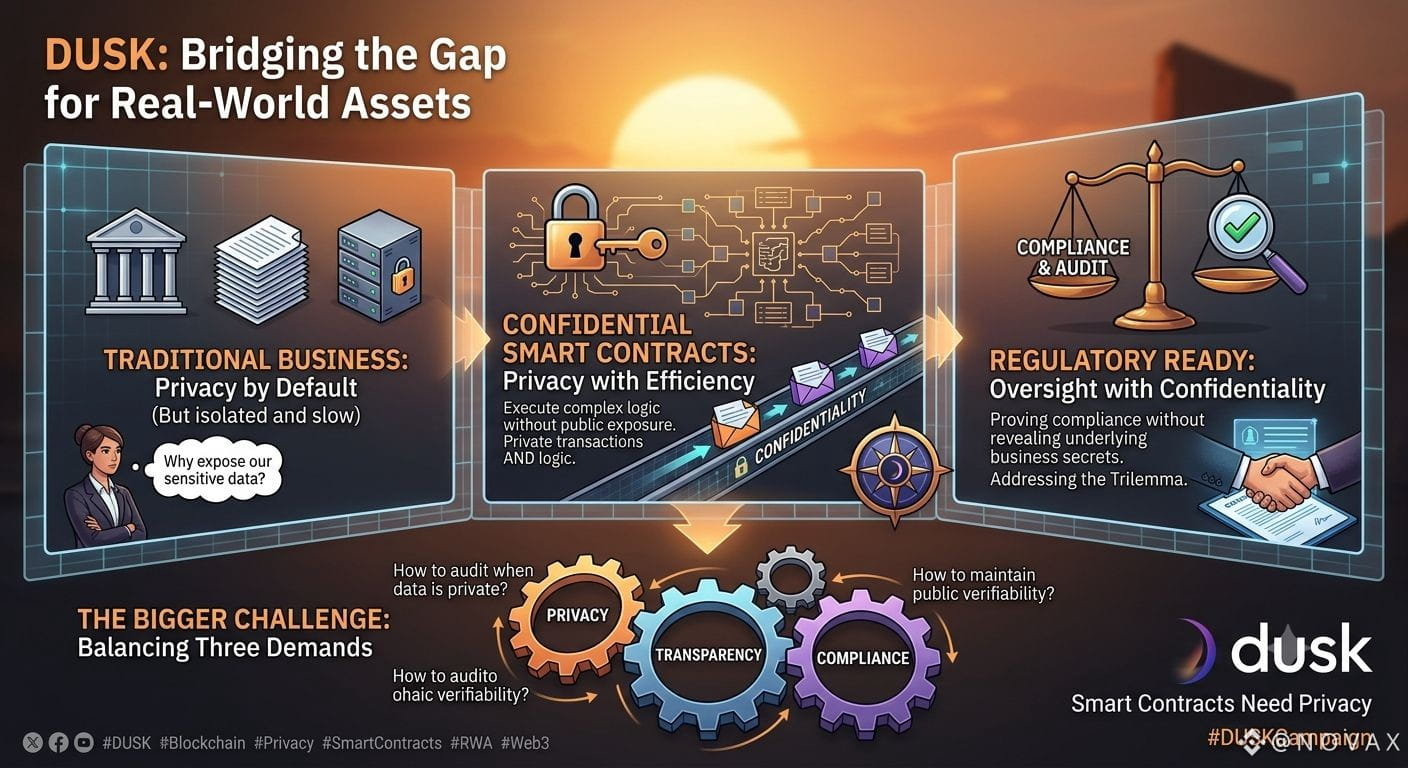
A friend once asked me a simple question:
"If businesses keep sensitive information private today, why would they move it onto a system where everyone can see it?"
It's a fair criticism of many blockchain applications.
Smart contracts are powerful, but in most public networks, the contract activity, data, and interactions can often reveal more information than companies are comfortable sharing.
That's where the idea of confidential smart contracts becomes interesting.
The goal isn't just private transactions.
It's allowing agreements, settlements, and business logic to execute without exposing sensitive information to the entire network.
But this approach comes with trade-offs.
More privacy can mean greater technical complexity.
Auditing becomes harder.
Regulatory oversight becomes more challenging.
And proving that confidential systems remain secure is often more difficult than with fully transparent ones.
Dusk's vision is that privacy should extend beyond transactions and into smart contract execution itself.
The bigger question is whether blockchain can ever balance three competing demands at the same time:
Privacy. Transparency. Compliance.
Many projects have solved one or two of those.
Very few have convincingly solved all three.
That's the challenge confidential smart contracts are trying to address.
#Blockchain #TrumpPressesCongressToPassClarityAct
#dusk $DUSK @Dusk_Foundation
$GOOGL.US
A friend once asked me a simple question:
"If businesses keep sensitive information private today, why would they move it onto a system where everyone can see it?"
It's a fair criticism of many blockchain applications.
Smart contracts are powerful, but in most public networks, the contract activity, data, and interactions can often reveal more information than companies are comfortable sharing.
That's where the idea of confidential smart contracts becomes interesting.
The goal isn't just private transactions.
It's allowing agreements, settlements, and business logic to execute without exposing sensitive information to the entire network.
But this approach comes with trade-offs.
More privacy can mean greater technical complexity.
Auditing becomes harder.
Regulatory oversight becomes more challenging.
And proving that confidential systems remain secure is often more difficult than with fully transparent ones.
Dusk's vision is that privacy should extend beyond transactions and into smart contract execution itself.
The bigger question is whether blockchain can ever balance three competing demands at the same time:
Privacy. Transparency. Compliance.
Many projects have solved one or two of those.
Very few have convincingly solved all three.
That's the challenge confidential smart contracts are trying to address.
#Blockchain #TrumpPressesCongressToPassClarityAct
#dusk $DUSK @Dusk
$GOOGL.US
"If businesses keep sensitive information private today, why would they move it onto a system where everyone can see it?"
It's a fair criticism of many blockchain applications.
Smart contracts are powerful, but in most public networks, the contract activity, data, and interactions can often reveal more information than companies are comfortable sharing.
That's where the idea of confidential smart contracts becomes interesting.
The goal isn't just private transactions.
It's allowing agreements, settlements, and business logic to execute without exposing sensitive information to the entire network.
But this approach comes with trade-offs.
More privacy can mean greater technical complexity.
Auditing becomes harder.
Regulatory oversight becomes more challenging.
And proving that confidential systems remain secure is often more difficult than with fully transparent ones.
Dusk's vision is that privacy should extend beyond transactions and into smart contract execution itself.
The bigger question is whether blockchain can ever balance three competing demands at the same time:
Privacy. Transparency. Compliance.
Many projects have solved one or two of those.
Very few have convincingly solved all three.
That's the challenge confidential smart contracts are trying to address.
#Blockchain #TrumpPressesCongressToPassClarityAct
#dusk $DUSK @Dusk
$GOOGL.US
DUSK-4,65%
GOOGLUS-0,02%
2
138
·
--
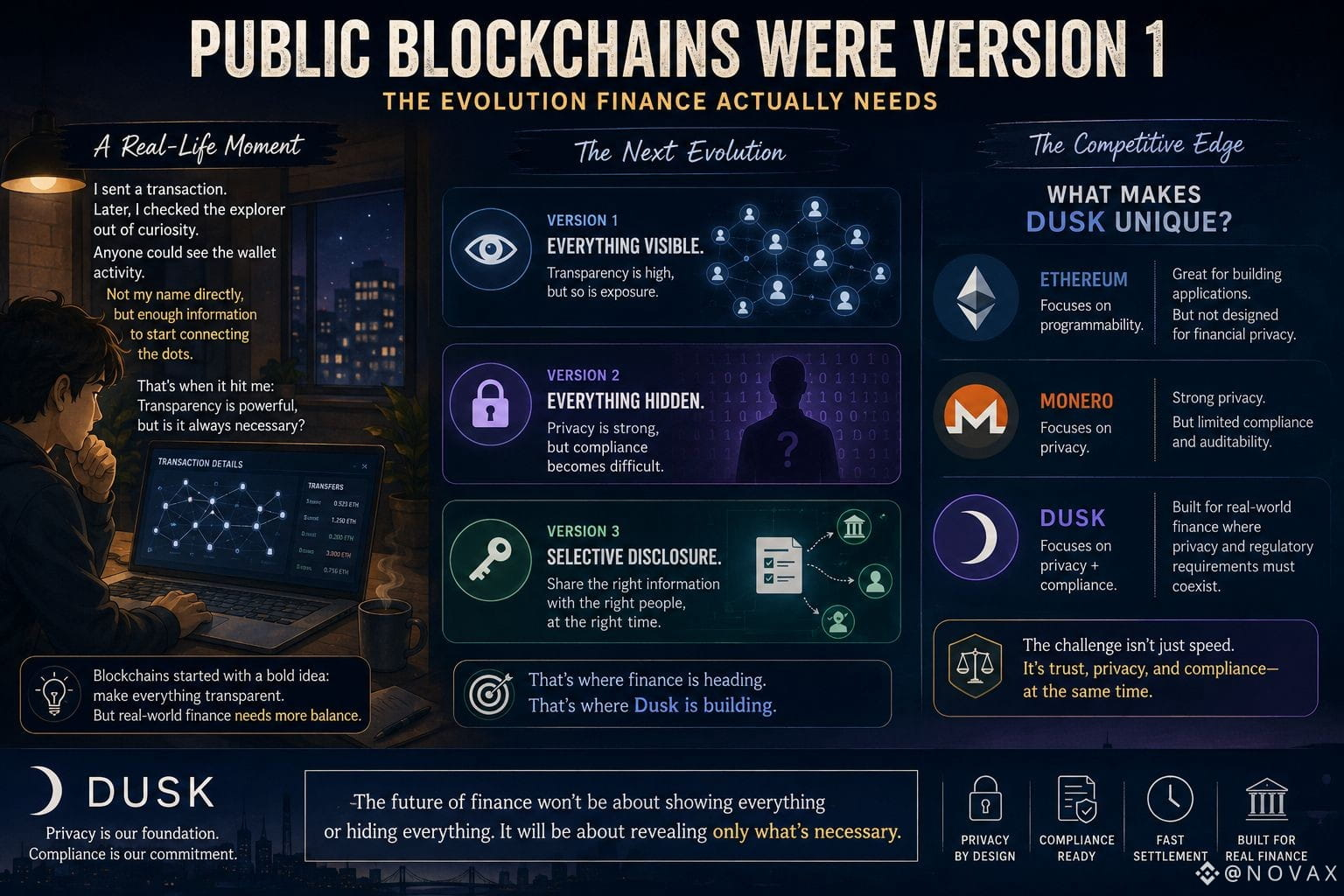
A few years ago, I sent a transaction and later realized something interesting.
Anyone could see the wallet activity.
Not my name directly, but enough information to start building a picture.
At first, blockchain's radical transparency felt like a breakthrough.
Then the questions started.
Would a company want suppliers, competitors, or customers seeing every financial move?
Would an institution put sensitive transactions on a system where everything is permanently visible?
That’s where the evolution of blockchain starts to become interesting.
Version 1: Everything visible.
Version 2: Everything hidden.
Version 3: Selective disclosure.
The first prioritizes transparency.
The second prioritizes privacy.
But finance often operates somewhere in between.
Most institutions don't want to reveal everything, yet they can't hide everything either. They need to share the right information with the right parties at the right time.
While comparing different blockchain projects, I noticed that many discussions still revolve around TPS, fees, and speed.
Those metrics matter.
But they don't necessarily solve the challenges that regulated financial markets face.
Ethereum focused heavily on programmability.
Monero focused heavily on privacy.
Dusk is exploring a different question:
Can privacy and compliance exist together in the same system?
That's a harder problem than simply making transactions faster.
As blockchain technology matures, the debate may shift from "How fast is it?" to
"How much information should actually be shared?"
Because the future of finance may not be about revealing everything or hiding everything.
It may be about revealing only what's necessary.
#DUSK #Web3 #Finance $DUSK @Dusk_Foundation
$AAVE $ACE
A few years ago, I sent a transaction and later realized something interesting.
Anyone could see the wallet activity.
Not my name directly, but enough information to start building a picture.
At first, blockchain's radical transparency felt like a breakthrough.
Then the questions started.
Would a company want suppliers, competitors, or customers seeing every financial move?
Would an institution put sensitive transactions on a system where everything is permanently visible?
That’s where the evolution of blockchain starts to become interesting.
Version 1: Everything visible.
Version 2: Everything hidden.
Version 3: Selective disclosure.
The first prioritizes transparency.
The second prioritizes privacy.
But finance often operates somewhere in between.
Most institutions don't want to reveal everything, yet they can't hide everything either. They need to share the right information with the right parties at the right time.
While comparing different blockchain projects, I noticed that many discussions still revolve around TPS, fees, and speed.
Those metrics matter.
But they don't necessarily solve the challenges that regulated financial markets face.
Ethereum focused heavily on programmability.
Monero focused heavily on privacy.
Dusk is exploring a different question:
Can privacy and compliance exist together in the same system?
That's a harder problem than simply making transactions faster.
As blockchain technology matures, the debate may shift from "How fast is it?" to
"How much information should actually be shared?"
Because the future of finance may not be about revealing everything or hiding everything.
It may be about revealing only what's necessary.
#DUSK #Web3 #Finance $DUSK @Dusk
$AAVE $ACE
Anyone could see the wallet activity.
Not my name directly, but enough information to start building a picture.
At first, blockchain's radical transparency felt like a breakthrough.
Then the questions started.
Would a company want suppliers, competitors, or customers seeing every financial move?
Would an institution put sensitive transactions on a system where everything is permanently visible?
That’s where the evolution of blockchain starts to become interesting.
Version 1: Everything visible.
Version 2: Everything hidden.
Version 3: Selective disclosure.
The first prioritizes transparency.
The second prioritizes privacy.
But finance often operates somewhere in between.
Most institutions don't want to reveal everything, yet they can't hide everything either. They need to share the right information with the right parties at the right time.
While comparing different blockchain projects, I noticed that many discussions still revolve around TPS, fees, and speed.
Those metrics matter.
But they don't necessarily solve the challenges that regulated financial markets face.
Ethereum focused heavily on programmability.
Monero focused heavily on privacy.
Dusk is exploring a different question:
Can privacy and compliance exist together in the same system?
That's a harder problem than simply making transactions faster.
As blockchain technology matures, the debate may shift from "How fast is it?" to
"How much information should actually be shared?"
Because the future of finance may not be about revealing everything or hiding everything.
It may be about revealing only what's necessary.
#DUSK #Web3 #Finance $DUSK @Dusk
$AAVE $ACE
5
3
110
·
--
Last month, I had to submit financial documents for a routine verification process.
What surprised me wasn't the paperwork.
It was how many people and systems ended up seeing information that had nothing to do with the actual verification.
That's one of the less discussed challenges in finance:
Sharing enough information to prove something is legitimate, without exposing everything else.
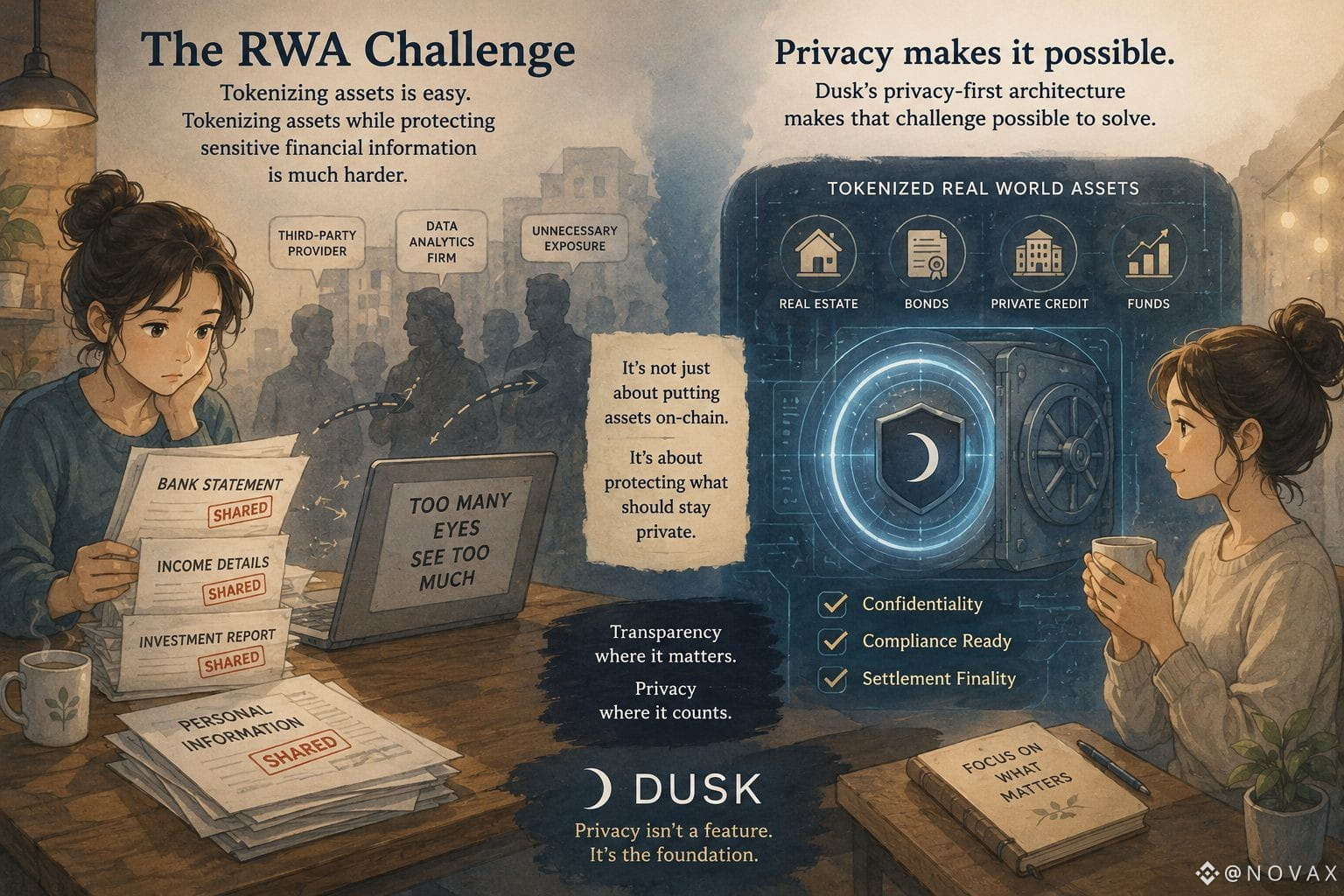
Tokenizing assets is relatively straightforward.
Tokenizing assets while protecting sensitive financial information is much harder.
Many blockchain discussions focus on bringing assets 0n chain, but often pay less attention to what happens to the data attached to those assets.
F0r individuals and institutions alike, transparency can sometimes become a liability rather than a feature.
Dusk approaches this challenge from a privacy first perspective, aiming to balance confidentiality with regulatory requirements.
The real question isn't whether assets can be tokenized.
It's whether they can be tokenized without turning sensitive financial information into public information.
That's where the RWA conversation becomes more interesting.
#RWA #blockchain #Privacy #Finance #dusk $DUSK @Dusk_Foundation $AAPLB $GOOGL.US
Last month, I had to submit financial documents for a routine verification process.
What surprised me wasn't the paperwork.
It was how many people and systems ended up seeing information that had nothing to do with the actual verification.
That's one of the less discussed challenges in finance:
Sharing enough information to prove something is legitimate, without exposing everything else.
Tokenizing assets is relatively straightforward.
Tokenizing assets while protecting sensitive financial information is much harder.
Many blockchain discussions focus on bringing assets 0n chain, but often pay less attention to what happens to the data attached to those assets.
F0r individuals and institutions alike, transparency can sometimes become a liability rather than a feature.
Dusk approaches this challenge from a privacy first perspective, aiming to balance confidentiality with regulatory requirements.
The real question isn't whether assets can be tokenized.
It's whether they can be tokenized without turning sensitive financial information into public information.
That's where the RWA conversation becomes more interesting.
#RWA #blockchain #Privacy #Finance #dusk $DUSK @Dusk $AAPLB $GOOGL.US
What surprised me wasn't the paperwork.
It was how many people and systems ended up seeing information that had nothing to do with the actual verification.
That's one of the less discussed challenges in finance:
Sharing enough information to prove something is legitimate, without exposing everything else.
Tokenizing assets is relatively straightforward.
Tokenizing assets while protecting sensitive financial information is much harder.
Many blockchain discussions focus on bringing assets 0n chain, but often pay less attention to what happens to the data attached to those assets.
F0r individuals and institutions alike, transparency can sometimes become a liability rather than a feature.
Dusk approaches this challenge from a privacy first perspective, aiming to balance confidentiality with regulatory requirements.
The real question isn't whether assets can be tokenized.
It's whether they can be tokenized without turning sensitive financial information into public information.
That's where the RWA conversation becomes more interesting.
#RWA #blockchain #Privacy #Finance #dusk $DUSK @Dusk $AAPLB $GOOGL.US
17
3
239
·
--
A few days ago, I transferred money to pay for something important.
The app said “processing.”
Not failed. Not completed. Just... waiting.
That small delay made me realize something:
In finance, speed matters but certainty matters more.
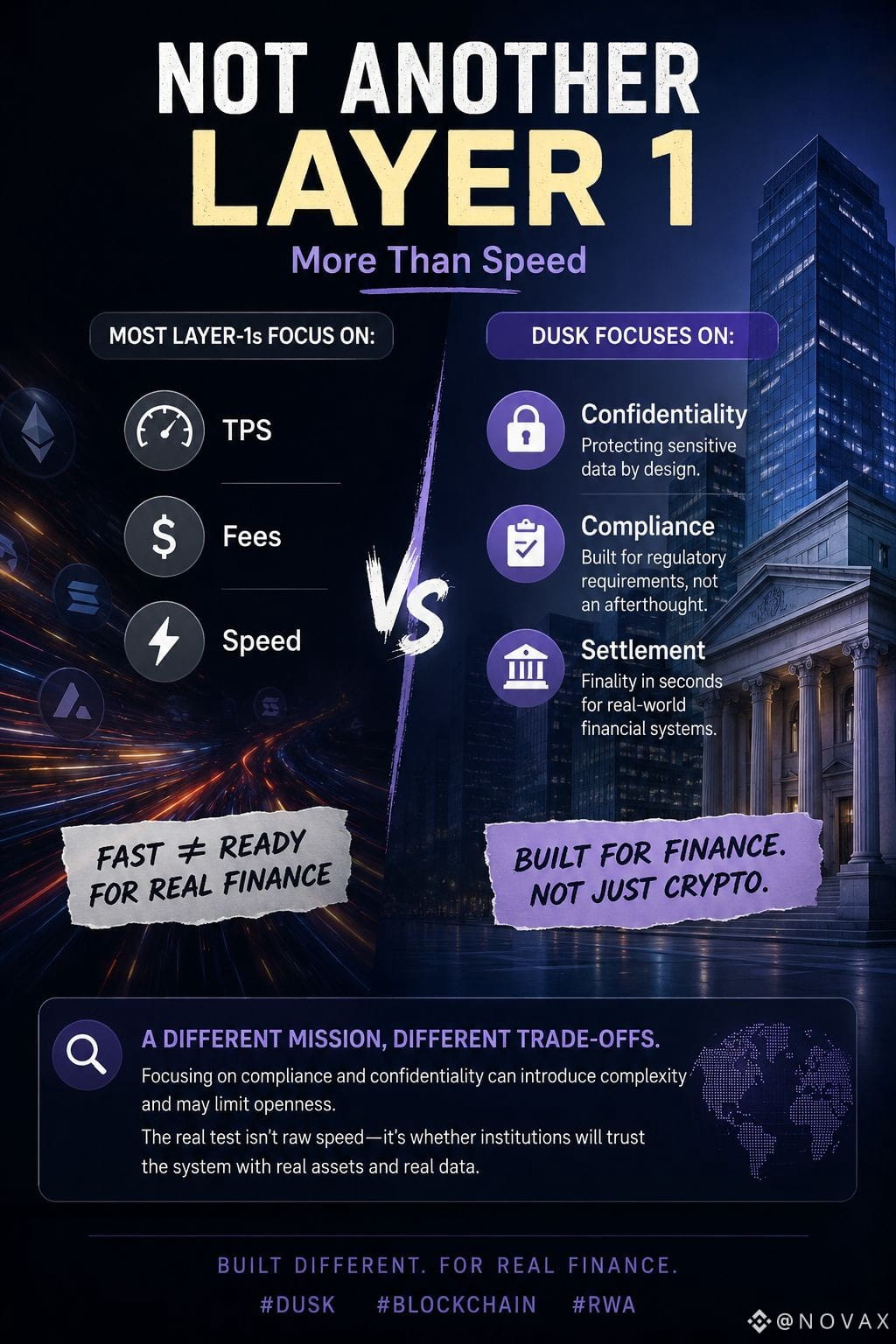
Most Layer-1 conversations focus on: • TPS
• Fees
• Speed
Those are useful metrics, but they don't automatically solve real financial challenges.
Dusk takes a different approach by focusing on: • Confidentiality
• Compliance
• Settlement finality
Because for institutions, the question isn't just how fast a transaction moves. It's whether sensitive information stays protected, regulatory requirements can be met, and settlement can be trusted.
Many blockchains compete to be faster.
Dusk is testing a different idea: that finance may need more than speed alone.
#blockchain #Finance #Privacy #dusk $DUSK @Dusk_Foundation
$AAPLB $AAPL.US #VIXFallsTo2026Low
A few days ago, I transferred money to pay for something important.
The app said “processing.”
Not failed. Not completed. Just... waiting.
That small delay made me realize something:
In finance, speed matters but certainty matters more.
Most Layer-1 conversations focus on: • TPS
• Fees
• Speed
Those are useful metrics, but they don't automatically solve real financial challenges.
Dusk takes a different approach by focusing on: • Confidentiality
• Compliance
• Settlement finality
Because for institutions, the question isn't just how fast a transaction moves. It's whether sensitive information stays protected, regulatory requirements can be met, and settlement can be trusted.
Many blockchains compete to be faster.
Dusk is testing a different idea: that finance may need more than speed alone.
#blockchain #Finance #Privacy #dusk $DUSK @Dusk
$AAPLB $AAPL.US #VIXFallsTo2026Low
The app said “processing.”
Not failed. Not completed. Just... waiting.
That small delay made me realize something:
In finance, speed matters but certainty matters more.
Most Layer-1 conversations focus on: • TPS
• Fees
• Speed
Those are useful metrics, but they don't automatically solve real financial challenges.
Dusk takes a different approach by focusing on: • Confidentiality
• Compliance
• Settlement finality
Because for institutions, the question isn't just how fast a transaction moves. It's whether sensitive information stays protected, regulatory requirements can be met, and settlement can be trusted.
Many blockchains compete to be faster.
Dusk is testing a different idea: that finance may need more than speed alone.
#blockchain #Finance #Privacy #dusk $DUSK @Dusk
$AAPLB $AAPL.US #VIXFallsTo2026Low
4
4
177
·
--
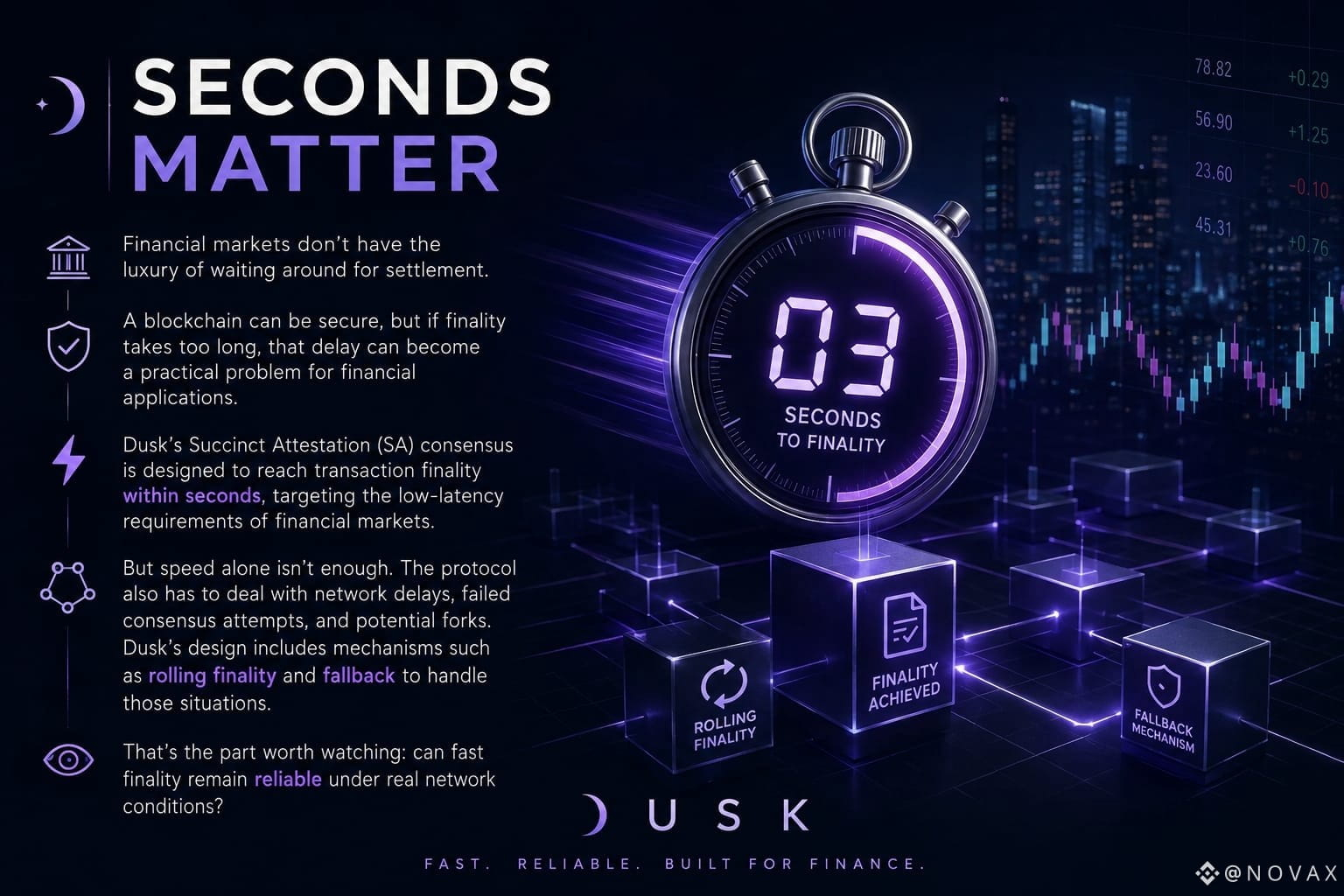
Seconds Matter
Financial markets don’t have the luxury of waiting around for settlement.
A blockchain can be secure, but if finality takes too long, that delay can become a practical problem for financial applications.
Dusk’s Succinct Attestation (SA) consensus is designed to reach transaction finality within seconds, targeting the low latency requirements of financial markets.
But speed alone isn’t enough. The protocol also has to deal with network delays, failed consensus attempts, and potential forks. Dusk’s design includes mechanisms such as rolling finality and fallback to handle those situations.
That’s the part worth watching: can fast finality remain reliable under real network conditions?
#dusk $DUSK @Dusk_Foundation
Seconds Matter
Financial markets don’t have the luxury of waiting around for settlement.
A blockchain can be secure, but if finality takes too long, that delay can become a practical problem for financial applications.
Dusk’s Succinct Attestation (SA) consensus is designed to reach transaction finality within seconds, targeting the low latency requirements of financial markets.
But speed alone isn’t enough. The protocol also has to deal with network delays, failed consensus attempts, and potential forks. Dusk’s design includes mechanisms such as rolling finality and fallback to handle those situations.
That’s the part worth watching: can fast finality remain reliable under real network conditions?
#dusk $DUSK @Dusk
Financial markets don’t have the luxury of waiting around for settlement.
A blockchain can be secure, but if finality takes too long, that delay can become a practical problem for financial applications.
Dusk’s Succinct Attestation (SA) consensus is designed to reach transaction finality within seconds, targeting the low latency requirements of financial markets.
But speed alone isn’t enough. The protocol also has to deal with network delays, failed consensus attempts, and potential forks. Dusk’s design includes mechanisms such as rolling finality and fallback to handle those situations.
That’s the part worth watching: can fast finality remain reliable under real network conditions?
#dusk $DUSK @Dusk
43
12
134
Connectez-vous pour découvrir plus de contenu
Rejoignez la communauté mondiale des adeptes de cryptomonnaies sur Binance Square
⚡️ Suviez les dernières informations importantes sur les cryptomonnaies.
💬 Jugé digne de confiance par la plus grande plateforme d’échange de cryptomonnaies au monde.
👍 Découvrez les connaissances que partagent les créateurs vérifiés.
Adresse e-mail/Nº de téléphone
Sujets d’actualité
BinanceLaunchesBinanceIntelligence
627,385 vues
3,855 mentions
#binancelaunchesbinanceintelligence
🚨 BINANCE JUST PUSHED AI DEEPER INTO CRYPTO.
Binance has launched Binance Intelligence — a new AI-powered layer built around market research, trading workflows, and crypto data.
The interesting part?
It’s not just one tool.
🧠 Binance AI → personalized market briefs, alerts and portfolio insights
⚡ Binance AI Pro → turns natural-language ideas into trading workflows
🤖 Agent OS → connects AI agents with market, wallet and on-chain capabilities
That’s a big shift.
Crypto platforms are no longer only giving traders charts and data.
They’re starting to give them AI systems that can interpret that data.
The real question is:
Will AI become as normal for traders as indicators and charts are today? 👀
$BTC $ETH
#Binance #Aİ #crypto #BTC
Doomsday-Trader
·0 mentions J’aime
·473 vues
BTCFallsBelow$84K
4,370 vues
38 mentions
WinklevossFilesSpotZcashETFApplication
5,436 vues
116 mentions