

Nimesh69
193 Publications

Nimesh69
Signaler
Bloquer l’utilisateur
Ouvert au trading
Trade régulièrement
3.6 an(s)
12 Suivis
99 Abonnés
432 J’aime
Publications
Portefeuille
Tous
Citations
Vidéos
·
--
Haussier
1
1
320
·
--

344
·
--
182
·
--
152

·
--
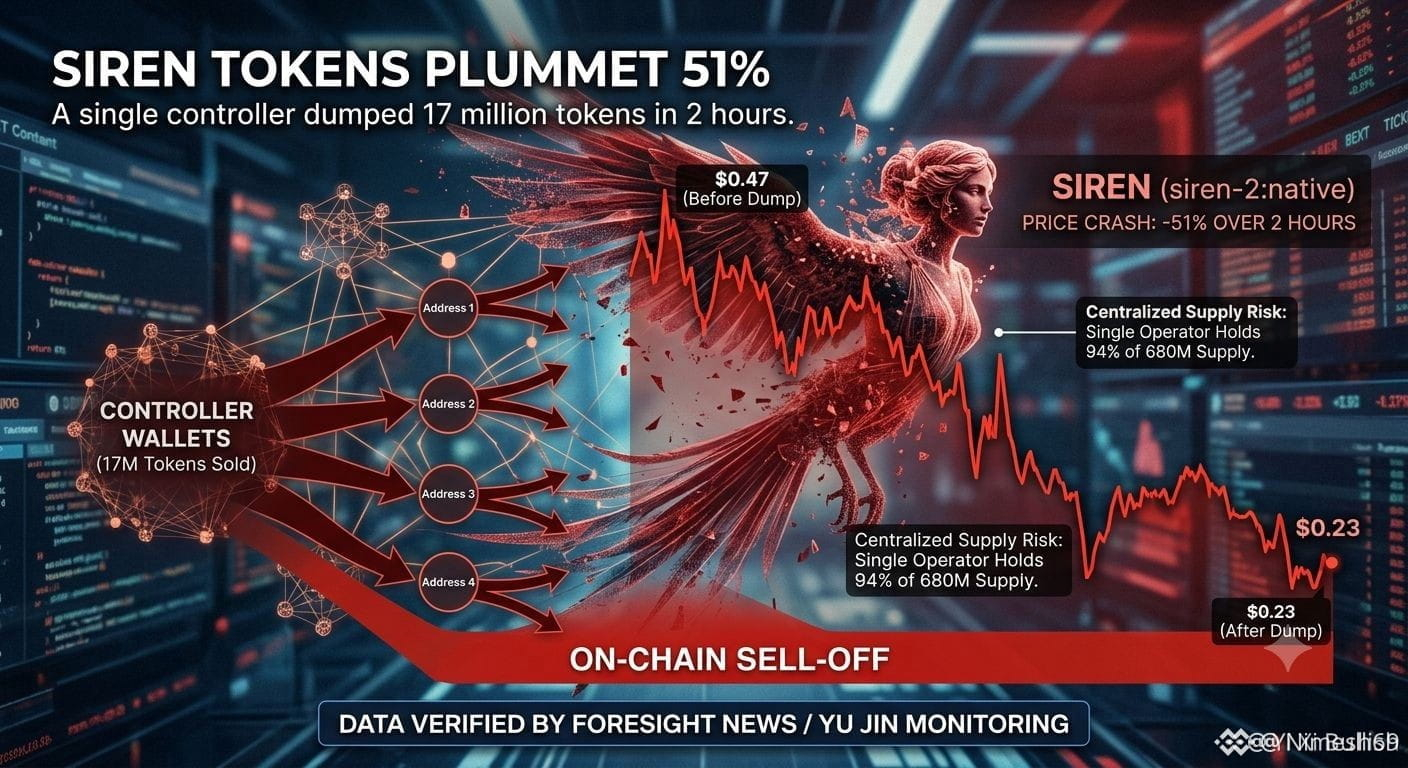
$SIREN suffered a dramatic collapse of more than 50% after a major controller reportedly sold approximately 17 million tokens through multiple on-chain addresses within just two hours.
According to monitoring data shared by Yu Jin and reported by Foresight News, the aggressive selling pressure pushed SIREN's price from $0.47 to $0.23, triggering panic across the market and raising fresh concerns about the project's token distribution.
The most alarming detail is that a single operator is estimated to control at least 94% of the total 680 million token supply, giving one entity extraordinary influence over the token's price action.
Such extreme concentration creates significant risks for investors, as large holders can dramatically impact liquidity and market stability with relatively few transactions.
While some traders may view the sharp decline as a potential buying opportunity, others see it as a reminder that tokenomics and supply distribution are just as important as price momentum.
This event highlights why monitoring whale activity and holder concentration remains essential when evaluating high-risk crypto assets.
💬 Would you still invest in a token if one wallet controlled 94% of the supply, or is that an immediate red flag?
#SIREN #CryptoNews #OnChainAnalysis #SpaceXIPOUSStocksOpenHigher #PakistanSaysUSIranDealMayFinalize
$SIREN suffered a dramatic collapse of more than 50% after a major controller reportedly sold approximately 17 million tokens through multiple on-chain addresses within just two hours.
According to monitoring data shared by Yu Jin and reported by Foresight News, the aggressive selling pressure pushed SIREN's price from $0.47 to $0.23, triggering panic across the market and raising fresh concerns about the project's token distribution.
The most alarming detail is that a single operator is estimated to control at least 94% of the total 680 million token supply, giving one entity extraordinary influence over the token's price action.
Such extreme concentration creates significant risks for investors, as large holders can dramatically impact liquidity and market stability with relatively few transactions.
While some traders may view the sharp decline as a potential buying opportunity, others see it as a reminder that tokenomics and supply distribution are just as important as price momentum.
This event highlights why monitoring whale activity and holder concentration remains essential when evaluating high-risk crypto assets.
💬 Would you still invest in a token if one wallet controlled 94% of the supply, or is that an immediate red flag?
#SIREN #CryptoNews #OnChainAnalysis #SpaceXIPOUSStocksOpenHigher #PakistanSaysUSIranDealMayFinalize
According to monitoring data shared by Yu Jin and reported by Foresight News, the aggressive selling pressure pushed SIREN's price from $0.47 to $0.23, triggering panic across the market and raising fresh concerns about the project's token distribution.
The most alarming detail is that a single operator is estimated to control at least 94% of the total 680 million token supply, giving one entity extraordinary influence over the token's price action.
Such extreme concentration creates significant risks for investors, as large holders can dramatically impact liquidity and market stability with relatively few transactions.
While some traders may view the sharp decline as a potential buying opportunity, others see it as a reminder that tokenomics and supply distribution are just as important as price momentum.
This event highlights why monitoring whale activity and holder concentration remains essential when evaluating high-risk crypto assets.
💬 Would you still invest in a token if one wallet controlled 94% of the supply, or is that an immediate red flag?
#SIREN #CryptoNews #OnChainAnalysis #SpaceXIPOUSStocksOpenHigher #PakistanSaysUSIranDealMayFinalize
1
156
·
--
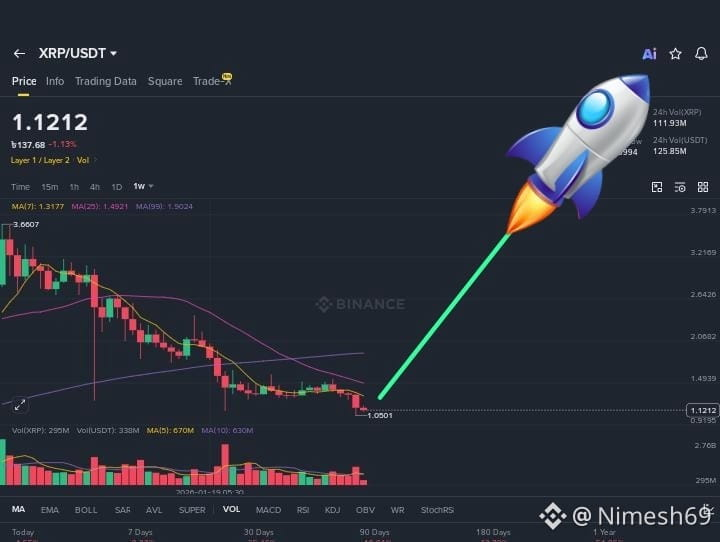
$XRP Big Pump Comming zoon.. harry up Guys..
#Xrp🔥🔥 Long sighnal ... #Market_Update #MarketLiveUpdate #Futures_Signals #LONG✅
$XRP Big Pump Comming zoon.. harry up Guys..
#Xrp🔥🔥 Long sighnal ... #Market_Update #MarketLiveUpdate #Futures_Signals #LONG✅
#Xrp🔥🔥 Long sighnal ... #Market_Update #MarketLiveUpdate #Futures_Signals #LONG✅
1
132
Connectez-vous pour découvrir plus de contenu
Rejoignez la communauté mondiale des adeptes de cryptomonnaies sur Binance Square
⚡️ Suviez les dernières informations importantes sur les cryptomonnaies.
💬 Jugé digne de confiance par la plus grande plateforme d’échange de cryptomonnaies au monde.
👍 Découvrez les connaissances que partagent les créateurs vérifiés.
Adresse e-mail/Nº de téléphone