Binance Square

Nayem_BNB

Trade régulièrement
1.2 an(s)
Providing authentic news about cryptocurrency and Airdrops !!! follow me to get updates about Airdrops and Cryptocurrency.
258 Suivis
15.0K+ Abonnés
18.6K+ J’aime
1.4K+ Partagé(s)
Tout le contenu
🎙️ Market will come Back, do not panic 🧧BPNKO11ZSV🧧
background
avatar
Fin
01 h 49 min 23 sec
1.4k
4
7
--
HISTORY SAYS BULL RUN ALWAYS TESTS TRADERS ... Last 30 days of 2025 Going to be very special for Market
HISTORY SAYS BULL RUN ALWAYS TESTS TRADERS ...

Last 30 days of 2025 Going to be very special for Market
That wasn't Just Dip 😔 ... That was Brutality Destroyed in Seconds
That wasn't Just Dip 😔 ...

That was Brutality Destroyed in Seconds
Mes G et P sur 30 jours
2025-11-02~2025-12-01
-$1 299,04
-97.41%
New Coins Tip... Never Put All of your Portfolio In New Coin 🪙 Always Put small portion in Spot .. If you want to take risk then you can trade in Future trading but keeping money management ...... Never look the % it have fallen Always Look at chart ...
New Coins Tip...

Never Put All of your Portfolio In New Coin 🪙

Always Put small portion in Spot ..

If you want to take risk then you can trade in Future trading but keeping money management ......

Never look the % it have fallen Always Look at chart ...
Condolness To Those Who Bought $SOL At $250.. But Good news to those who was waiting for Dip... $SOL Below $150 Is just Awesome Entry Pont
Condolness To Those Who Bought $SOL At $250..

But Good news to those who was waiting for Dip...

$SOL Below $150 Is just Awesome Entry Pont
$ETH Just hits It's Strongest Support ... From months I was waiting for this moment to buy $ETH .. Finally The moment is here to Buy $ETH ....... Wait 🫷 Till 4H Candle Turns Green Then It will be A greatest Breakout As DEC is Always Green 💚 Historically... 2013,2017,2021 and Now its 2025 This Cycle is just Awesome Just Stick in to market Some exciting news Coming .... Suggestions to All of you ... Trade in Spot ... Hold tightly ...
$ETH Just hits It's Strongest Support ...

From months I was waiting for this moment to buy $ETH ..

Finally The moment is here to Buy $ETH .......

Wait 🫷 Till 4H Candle Turns Green Then It will be A greatest Breakout As DEC is Always Green 💚 Historically...

2013,2017,2021 and Now its 2025 This Cycle is just Awesome Just Stick in to market Some exciting news Coming ....

Suggestions to All of you ...

Trade in Spot ...

Hold tightly ...
A
CHESSUSDT
Fermée
G et P
+1,25USDT
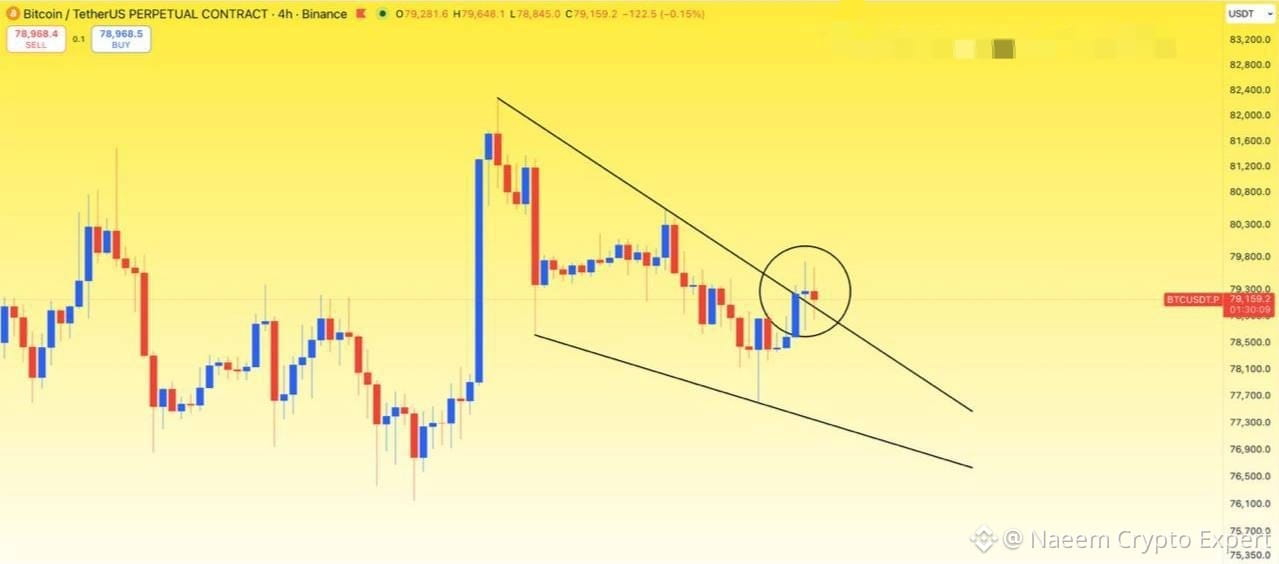
4H Candle Just Started Showing Some Hopes For Traders ....🥳 If this Candle Turns Green Then Next Stop is going to be $91k for $BTC ... Hold it tightly As it's just A dip .... Don't Be Panic from this Dip It's just for moments... It's Opportunity For the new Traders ....
4H Candle Just Started Showing Some Hopes For Traders ....🥳

If this Candle Turns Green Then Next Stop is going to be $91k for $BTC ...

Hold it tightly As it's just A dip ....

Don't Be Panic from this Dip It's just for moments...

It's Opportunity For the new Traders ....
For traders these Candles are Heartbeats.... But now Heartbeats are going down 🥺
For traders these Candles are Heartbeats....

But now Heartbeats are going down 🥺
A
CHESSUSDT
Fermée
G et P
+1,25USDT
YGG The largest decentralized community dedicated to connecting players to Web3 games#YGGPlay $YGG @YieldGuildGames I believe the success of YGG stems from its ability to solve the core problem of financial exclusion in early Web3 gaming. Many popular Play-to-Earn (P2E) titles require a significant upfront investment to purchase the necessary Non-Fungible Tokens (NFTs)—such as land, characters, or specialized gear—before a player can even begin earning. This initial barrier to entry effectively locked out thousands of talented players, particularly those in emerging economies. YGG's groundbreaking solution was the Scholarship Program. I find this model brilliant in its simplicity and impact: * Asset Pooling: The guild (the YGG DAO) pools capital from investors and uses it to acquire a massive, diversified treasury of high-value gaming NFTs across dozens of virtual worlds. * Zero-Cost Access: The guild then lends these expensive, productive assets to new players, known as "Scholars," at no cost to the player. * Shared Earnings: The Scholars use the assets to play the games, generate in-game rewards (crypto tokens), and the resulting profit is split between the Scholar (who earns a majority share), the manager (who mentors the Scholar), and the guild treasury. This model instantly removes the financial barrier, allowing anyone with time and skill to start earning digital income, transforming gaming from a cost-center into a meaningful source of livelihood for many around the world. Furthermore, I see YGG's organizational structure, based on SubDAOs, as a critical element of its scalability. These are specialized guilds that operate under the main YGG umbrella but focus on specific regions (e.g., YGG SEA for Southeast Asia) or specific game genres. This structure allows the main DAO to maintain centralized governance over the treasury and core strategy while delegating localized management, asset allocation, and community building to regional leaders. This ensures that the guild remains culturally relevant and operationally efficient as it scales globally. In essence, YGG is far more than a gaming collective; I view it as an early, decentralized digital labor network. It leverages the $YGG token for governance, allowing token holders to vote on which new games to invest in and how the treasury assets are managed. This community-driven approach ensures that the organization remains aligned with the interests of its players and contributors, ultimately serving its mission of creating the largest, most vibrant virtual world economy.....

YGG The largest decentralized community dedicated to connecting players to Web3 games

#YGGPlay $YGG @Yield Guild Games
I believe the success of YGG stems from its ability to solve the core problem of financial exclusion in early Web3 gaming. Many popular Play-to-Earn (P2E) titles require a significant upfront investment to purchase the necessary Non-Fungible Tokens (NFTs)—such as land, characters, or specialized gear—before a player can even begin earning. This initial barrier to entry effectively locked out thousands of talented players, particularly those in emerging economies.
YGG's groundbreaking solution was the Scholarship Program. I find this model brilliant in its simplicity and impact:
* Asset Pooling: The guild (the YGG DAO) pools capital from investors and uses it to acquire a massive, diversified treasury of high-value gaming NFTs across dozens of virtual worlds.
* Zero-Cost Access: The guild then lends these expensive, productive assets to new players, known as "Scholars," at no cost to the player.
* Shared Earnings: The Scholars use the assets to play the games, generate in-game rewards (crypto tokens), and the resulting profit is split between the Scholar (who earns a majority share), the manager (who mentors the Scholar), and the guild treasury.
This model instantly removes the financial barrier, allowing anyone with time and skill to start earning digital income, transforming gaming from a cost-center into a meaningful source of livelihood for many around the world.
Furthermore, I see YGG's organizational structure, based on SubDAOs, as a critical element of its scalability. These are specialized guilds that operate under the main YGG umbrella but focus on specific regions (e.g., YGG SEA for Southeast Asia) or specific game genres. This structure allows the main DAO to maintain centralized governance over the treasury and core strategy while delegating localized management, asset allocation, and community building to regional leaders. This ensures that the guild remains culturally relevant and operationally efficient as it scales globally.
In essence, YGG is far more than a gaming collective; I view it as an early, decentralized digital labor network. It leverages the $YGG token for governance, allowing token holders to vote on which new games to invest in and how the treasury assets are managed. This community-driven approach ensures that the organization remains aligned with the interests of its players and contributors, ultimately serving its mission of creating the largest, most vibrant virtual world
economy.....
Kite A dedicated blockchain built from the ground up to empower and secure transactions Kite is a foundational layer, a purpose-built Layer-1 blockchain that I consider to be the economic backbone for the emerging agentic economy, where autonomous Artificial Intelligence (AI) agents transact, coordinate, and create value independently. The design ethos behind Kite is a recognition that existing human-centric blockchains—with their slow confirmation times, unpredictable gas fees, and manual wallet systems—are fundamentally unfit for the needs of machine-to-machine (M2M) commerce. I see Kite as solving the single biggest dilemma facing the growth of this trillion-dollar projected market: how do I give an AI agent financial authority without risking catastrophic loss? I believe the answer lies in Kite's unique architectural choices, starting with its three-layer identity system. Instead of giving a powerful, autonomous AI agent access to a standard, fully privileged crypto wallet, which is inherently risky, Kite breaks down identity into a secure hierarchy. I find this to be a critical security innovation. The three layers are: the User (the human or organization, holding the root authority), the Agent (the AI program, holding delegated authority with strict limits), and the Session (a temporary key for a single action, which expires immediately). This layered approach ensures that an AI agent, even if compromised, can only spend funds within the strict, pre-programmed rules defined by the user. I can ensure that an agent can only spend up to \$50 a day, or only pay for services from approved data providers, and these rules are enforced cryptographically, on-chain. The core function of this dedicated blockchain is enabling Micropayments at scale. AI workflows require millions of small, real-time payments for things like API calls, data queries, computational resources, and model inferences. Traditional blockchains are simply too slow and expensive for this high-frequency, low-value volume. Kite addresses this by implementing a payment architecture designed for machines, achieving near-zero transaction fees and sub-second block times. I note that this is often achieved through technologies like the x402b protocol standard and native stablecoin payment rails, which eliminate the volatility of traditional gas tokens and make continuous M2M commerce economically viable. I find this focus on machine-native payment rails to be the functional core of the platform. Furthermore, Kite introduces a novel consensus mechanism I find particularly relevant to its mission: Proof of Attributed Intelligence (PoAI). Unlike Proof-of-Work or Proof-of-Stake, which focus on securing the chain, PoAI is designed to secure and attribute the economic value created by AI. I believe this mechanism is key to building a fair AI economy. It ensures that when a dataset, a model, or a specific computational output is used by an agent to complete a profitable task, the original contributors are fairly and transparently rewarded. This on-chain attribution ensures that data and model marketplaces can operate with integrity and that all economic actors are compensated based on verifiable contribution, rather than assumed trust. I also observe that Kite is built with strong interoperability in mind. While it is a specialized Layer-1, it is often deployed as an EVM-compatible chain built on high-performance infrastructure like an Avalanche Subnet. This choice is strategic because it allows developers familiar with the Ethereum Virtual Machine (EVM) to easily build on Kite, while benefiting from the high throughput and predictable fees needed for AI. I can access the massive pool of Solidity developers and existing EVM tooling while providing the performance necessary for a machine-driven economy. This blending of accessibility and performance is what makes the platform viable for both seasoned blockchain developers and new AI engineers. In its role as a dedicated economic layer, Kite is not just about payments; it is about establishing trustless identity and governance for non-human entities. I feel that the ability to give an AI agent a verifiable, portable cryptographic identity—a "Kite Passport"—is a profound step. This identity allows the agent to build an on-chain reputation that spans multiple applications. Combined with its programmable governance features, the platform ensures that every autonomous action taken by an AI is traceable, auditable, and confined by the owner's pre-set rules. I see this as the essential legal and compliance framework needed to integrate AI agents into real-world business and financial systems. In summary, I understand Kite to be the essential infrastructure that transforms AI agents from sophisticated, yet financially constrained, chatbots into full economic actors. It does this by creating a highly secure, high-speed, and low-cost environment specifically engineered for machine-to-machine interactions. I believe this focus on custom identity, programmable governance, and machine-optimized payments makes Kite the leading candidate to serve as the underlying economic protocol for the multi-trillion-dollar autonomous agent economy. #Kite $KITE @GoKiteAI

Kite A dedicated blockchain built from the ground up to empower and secure transactions

Kite is a foundational layer, a purpose-built Layer-1 blockchain that I consider to be the economic backbone for the emerging agentic economy, where autonomous Artificial Intelligence (AI) agents transact, coordinate, and create value independently. The design ethos behind Kite is a recognition that existing human-centric blockchains—with their slow confirmation times, unpredictable gas fees, and manual wallet systems—are fundamentally unfit for the needs of machine-to-machine (M2M) commerce. I see Kite as solving the single biggest dilemma facing the growth of this trillion-dollar projected market: how do I give an AI agent financial authority without risking catastrophic loss?
I believe the answer lies in Kite's unique architectural choices, starting with its three-layer identity system. Instead of giving a powerful, autonomous AI agent access to a standard, fully privileged crypto wallet, which is inherently risky, Kite breaks down identity into a secure hierarchy.
I find this to be a critical security innovation. The three layers are: the User (the human or organization, holding the root authority), the Agent (the AI program, holding delegated authority with strict limits), and the Session (a temporary key for a single action, which expires immediately).
This layered approach ensures that an AI agent, even if compromised, can only spend funds within the strict, pre-programmed rules defined by the user. I can ensure that an agent can only spend up to \$50 a day, or only pay for services from approved data providers, and these rules are enforced cryptographically, on-chain.
The core function of this dedicated blockchain is enabling Micropayments at scale. AI workflows require millions of small, real-time payments for things like API calls, data queries, computational resources, and model inferences. Traditional blockchains are simply too slow and expensive for this high-frequency, low-value volume. Kite addresses this by implementing a payment architecture designed for machines, achieving near-zero transaction fees and sub-second block times.
I note that this is often achieved through technologies like the x402b protocol standard and native stablecoin payment rails, which eliminate the volatility of traditional gas tokens and make continuous M2M commerce economically viable. I find this focus on machine-native payment rails to be the functional core of the platform.
Furthermore, Kite introduces a novel consensus mechanism I find particularly relevant to its mission: Proof of Attributed Intelligence (PoAI). Unlike Proof-of-Work or Proof-of-Stake, which focus on securing the chain, PoAI is designed to secure and attribute the economic value created by AI.
I believe this mechanism is key to building a fair AI economy. It ensures that when a dataset, a model, or a specific computational output is used by an agent to complete a profitable task, the original contributors are fairly and transparently rewarded. This on-chain attribution ensures that data and model marketplaces can operate with integrity and that all economic actors are compensated based on verifiable contribution, rather than assumed trust.
I also observe that Kite is built with strong interoperability in mind. While it is a specialized Layer-1, it is often deployed as an EVM-compatible chain built on high-performance infrastructure like an Avalanche Subnet. This choice is strategic because it allows developers familiar with the Ethereum Virtual Machine (EVM) to easily build on Kite, while benefiting from the high throughput and predictable fees needed for AI.
I can access the massive pool of Solidity developers and existing EVM tooling while providing the performance necessary for a machine-driven economy. This blending of accessibility and performance is what makes the platform viable for both seasoned blockchain developers and new AI engineers.
In its role as a dedicated economic layer, Kite is not just about payments; it is about establishing trustless identity and governance for non-human entities. I feel that the ability to give an AI agent a verifiable, portable cryptographic identity—a "Kite Passport"—is a profound step. This identity allows the agent to build an on-chain reputation that spans multiple applications.
Combined with its programmable governance features, the platform ensures that every autonomous action taken by an AI is traceable, auditable, and confined by the owner's pre-set rules. I see this as the essential legal and compliance framework needed to integrate AI agents into real-world business and financial systems.
In summary, I understand Kite to be the essential infrastructure that transforms AI agents from sophisticated, yet financially constrained, chatbots into full economic actors. It does this by creating a highly secure, high-speed, and low-cost environment specifically engineered for machine-to-machine interactions.
I believe this focus on custom identity, programmable governance, and machine-optimized payments makes Kite the leading candidate to serve as the underlying economic protocol for the multi-trillion-dollar autonomous agent economy.
#Kite $KITE @KITE AI
Lorenzo protocol Aims to unlock billions of dollars in dormant BTC liquidity for the DeFi ecosystem.The foundational statement that Lorenzo Protocol aims to unlock billions of dollars in dormant Bitcoin (BTC) liquidity for the DeFi ecosystem captures the project's entire mission and value proposition. I believe this is one of the most significant narratives in crypto today, as a vast majority of the world's largest digital asset, Bitcoin, sits idle in cold storage. Lorenzo is not just talking about this issue; I see it as having engineered a sophisticated mechanism to actively solve it, primarily through the power of Liquid Staking. At its core, Bitcoin, while the most secure and decentralized asset, lacks native yield generation and smart contract functionality. It is digital gold, but it is not inherently productive within a DeFi context. The trillion-dollar market capitalization of BTC is largely static, offering no utility outside of acting as a store of value or collateral in a few limited scenarios. Lorenzo Protocol changes this dynamic by leveraging innovative protocols, specifically its partnership with the Babylon Chain, to introduce Bitcoin Liquid Restaking. I view the process as a transformative two-step solution. First, a BTC holder locks their native BTC into a secure, trust-minimized protocol. This action is not a mere transfer; it is a mechanism that contributes to the security of other Proof-of-Stake chains through a concept called economic security sharing. For providing this service, the BTC holder is rewarded with staking yield. Crucially, in return for their locked BTC, the user receives a derivative token, $stBTC (Staked BTC). This $stBTC token is the key to unlocking the liquidity. While the underlying BTC is locked and earning yield, the $stBTC is a liquid asset—a receipt that represents the user's staked BTC plus accumulated rewards. I can immediately take this $stBTC and use it across the broader Decentralized Finance landscape. It can be used as collateral for borrowing stablecoins, deposited into lending pools to earn additional interest, or integrated into complex, structured financial products. This instantly brings the economic value of the previously "dormant" BTC into the active, productive environment of DeFi. This process is highly attractive to institutional investors who are often constrained by mandates that prioritize security and risk-aversion. Lorenzo Protocol addresses these concerns directly. I see the security model as being paramount: by utilizing the security layers of the Babylon Chain, the system mitigates the smart contract and counterparty risks often associated with wrapping or bridging BTC. Furthermore, Lorenzo has established partnerships with institutional-grade custody providers like Ceffu, ensuring that the native Bitcoin holdings are secured using multi-party computation (MPC) and robust cold storage solutions, which I believe is essential for gaining institutional trust. Beyond the liquid staking token, Lorenzo further enhances BTC utility through its Advanced Financial Abstraction Layer (FAL) and the creation of On-Chain Traded Funds (OTFs). The FAL takes the newly liberated $stBTC liquidity and funnels it into sophisticated, risk-adjusted strategies, abstracting the complexity from the end-user. I consider the OTFs, such as the USD1+ OTF, as highly significant because they blend the yields from the liquid restaking process with external sources, such as Real-World Assets (RWA) like tokenized U.S. Treasuries. This blending provides users with superior, diversified, and predictable yield on a stable asset, all while using their underlying BTC as the ultimate security bedrock. I believe the success of Lorenzo Protocol will not only benefit individual BTC holders but will also be instrumental in solidifying the entire Bitcoin DeFi (BTCFi) ecosystem. By providing a secure, liquid, and yield-bearing version of BTC, it draws massive amounts of capital and activity to the BTCFi space, which I anticipate will, in turn, increase transaction fees on the Bitcoin network, helping to address long-term concerns about Bitcoin's diminishing security budget as miner rewards halve. Lorenzo is essentially turning Bitcoin into the engine of a new financial system, moving it beyond a mere store of value to become the foundational collateral that powers decentralized global finance. #LorenzoProtocol $BANK @LorenzoProtocol

Lorenzo protocol Aims to unlock billions of dollars in dormant BTC liquidity for the DeFi ecosystem.

The foundational statement that Lorenzo Protocol aims to unlock billions of dollars in dormant Bitcoin (BTC) liquidity for the DeFi ecosystem captures the project's entire mission and value proposition. I believe this is one of the most significant narratives in crypto today, as a vast majority of the world's largest digital asset, Bitcoin, sits idle in cold storage.
Lorenzo is not just talking about this issue; I see it as having engineered a sophisticated mechanism to actively solve it, primarily through the power of Liquid Staking.
At its core, Bitcoin, while the most secure and decentralized asset, lacks native yield generation and smart contract functionality. It is digital gold, but it is not inherently productive within a DeFi context.
The trillion-dollar market capitalization of BTC is largely static, offering no utility outside of acting as a store of value or collateral in a few limited scenarios. Lorenzo Protocol changes this dynamic by leveraging innovative protocols, specifically its partnership with the Babylon Chain, to introduce Bitcoin Liquid Restaking.
I view the process as a transformative two-step solution. First, a BTC holder locks their native BTC into a secure, trust-minimized protocol. This action is not a mere transfer; it is a mechanism that contributes to the security of other Proof-of-Stake chains through a concept called economic security sharing.
For providing this service, the BTC holder is rewarded with staking yield. Crucially, in return for their locked BTC, the user receives a derivative token, $stBTC (Staked BTC).
This $stBTC token is the key to unlocking the liquidity. While the underlying BTC is locked and earning yield, the $stBTC is a liquid asset—a receipt that represents the user's staked BTC plus accumulated rewards.
I can immediately take this $stBTC and use it across the broader Decentralized Finance landscape. It can be used as collateral for borrowing stablecoins, deposited into lending pools to earn additional interest, or integrated into complex, structured financial products.
This instantly brings the economic value of the previously "dormant" BTC into the active, productive environment of DeFi.
This process is highly attractive to institutional investors who are often constrained by mandates that prioritize security and risk-aversion. Lorenzo Protocol addresses these concerns directly.
I see the security model as being paramount: by utilizing the security layers of the Babylon Chain, the system mitigates the smart contract and counterparty risks often associated with wrapping or bridging BTC. Furthermore, Lorenzo has established partnerships with institutional-grade custody providers like Ceffu, ensuring that the native Bitcoin holdings are secured using multi-party computation (MPC) and robust cold storage solutions, which I believe is essential for gaining institutional trust.
Beyond the liquid staking token, Lorenzo further enhances BTC utility through its Advanced Financial Abstraction Layer (FAL) and the creation of On-Chain Traded Funds (OTFs). The FAL takes the newly liberated $stBTC liquidity and funnels it into sophisticated, risk-adjusted strategies, abstracting the complexity from the end-user.
I consider the OTFs, such as the USD1+ OTF, as highly significant because they blend the yields from the liquid restaking process with external sources, such as Real-World Assets (RWA) like tokenized U.S. Treasuries. This blending provides users with superior, diversified, and predictable yield on a stable asset, all while using their underlying BTC as the ultimate security bedrock.
I believe the success of Lorenzo Protocol will not only benefit individual BTC holders but will also be instrumental in solidifying the entire Bitcoin DeFi (BTCFi) ecosystem. By providing a secure, liquid, and yield-bearing version of BTC, it draws massive amounts of capital and activity to the BTCFi space, which I anticipate will, in turn, increase transaction fees on the Bitcoin network, helping to address long-term concerns about Bitcoin's diminishing security budget as miner rewards halve. Lorenzo is essentially turning Bitcoin into the engine of a new financial system, moving it beyond a mere store of value to become the foundational collateral that powers decentralized global finance.
#LorenzoProtocol $BANK @Lorenzo Protocol
Injective powers decentralized exchanges,derivatives,lending, and Real-World Asset (RWA) protocols @Injective $INJ #Injective Injective is not merely another Layer-1 blockchain; I see it as a precision-engineered financial machine, a dedicated architecture built from the ground up to serve the most demanding sectors of decentralized finance. It is the ultimate platform for building and interacting with sophisticated financial markets, including decentralized exchanges, derivatives, lending protocols, and the critical integration of Real-World Assets (RWAs). Its unique composition, utilizing the robust Cosmos SDK and a custom exchange module, allows it to transcend the limitations that plague general-purpose blockchains when they attempt to handle complex financial transactions at scale. I have observed that the core of Injective’s power lies in its On-Chain Order Book, a fundamental primitive that distinguishes it from the dominant Automated Market Maker (AMM) model used by most other decentralized exchanges (DEXs). This on-chain order book enables a trading experience that feels comparable to the speed and efficiency of traditional centralized exchanges, yet retains the non-custodial, permissionless nature of true decentralization. This is achieved through a bespoke exchange module that handles trade execution, order matching, and settlement directly on the chain. This foundational technology is crucial for attracting institutional traders and sophisticated financial applications that rely on precise limit orders, deep liquidity, and a clear market view, functionalities often missing or severely limited in AMM environments. The network’s high-performance capability is another area I find particularly impressive. It leverages a Tendermint-based Proof-of-Stake (PoS) consensus mechanism, which allows for block finality in sub-second times, often around 0.6 seconds. Coupled with its ability to handle 10,000+ Transactions Per Second (TPS), Injective provides the throughput necessary for high-frequency trading and continuous financial activities that would cause congestion and prohibitively high fees on slower chains. For a derivatives or options market, instant finality is not a luxury—it is an absolute necessity for risk management and reliable trade execution, and Injective delivers this consistently. When discussing its role in derivatives, I understand that Injective excels because its architecture supports the complexity inherent in these products. It allows for the creation and trading of perpetual swaps, futures, and options markets with decentralized settlement guarantees. The platform’s unique Frequent Batch Auction (FBA) model for order matching is a key feature here; it aggregates orders and executes them simultaneously at fixed intervals. I see this as a powerful tool to prevent Miner/Maximal Extractable Value (MEV) front-running, a common issue where malicious actors profit by manipulating transaction order. By neutralizing this threat, Injective creates a fairer, more predictable trading environment, which is vital for both retail traders and large-scale market makers. The influence of Injective extends directly into the lending sector. While many lending protocols exist in siloed environments, the lending applications built on Injective benefit immensely from the chain's unified financial infrastructure. Because the spot and derivatives markets share the same underlying blockchain primitives, lending protocols can offer innovative, sophisticated financial products. For instance, collateral held in a lending application can be more readily used for hedging in a derivatives market built on the same chain. I believe this level of composability reduces capital inefficiency and allows for the creation of structured products that dynamically manage risk and yield across multiple market types, making the lending environment more flexible and capital-efficient than isolated systems. A major focus where Injective is making significant strides is the integration of Real-World Assets (RWAs). RWAs, such as tokenized U.S. Treasuries or real estate, represent a critical bridge between traditional finance (TradFi) and the DeFi world. Injective’s speed and institutional-grade features make it an ideal venue for these assets. When RWAs are tokenized and brought on-chain, they need an environment that can support continuous credit flows, regulatory clarity through governance, and sophisticated financial engineering. I see Injective providing this framework. Developers can build protocols that allow RWAs to be used not just for collateral but to be actively paired with derivatives, securitized, indexed, and integrated into complex lending strategies. This is redefining RWA use beyond simple stablecoin backing and moving toward fully interactive on-chain financial instruments. Interoperability is a central pillar of the Injective ecosystem, which I find indispensable for any leading Layer-1. As a Cosmos SDK chain, it natively supports the Inter-Blockchain Communication (IBC) protocol, allowing seamless and secure communication with other Cosmos chains. Beyond this, Injective features robust custom bridges to major external networks, including Ethereum and Solana. This cross-chain connectivity is what fuels its decentralized exchanges and lending pools, ensuring that assets and liquidity are not trapped in a single ecosystem. I believe this broad interoperability is key to establishing Injective as a universal hub for decentralized finance, drawing liquidity from the widest possible array of sources. The $INJ token is the native asset that powers this entire financial machine. I find its utility deeply ingrained into the protocol's function. It is used for network security through staking in the PoS consensus mechanism. It serves as the governance token, giving holders the ability to propose and vote on all major upgrades and parameter changes. Furthermore, the tokenomics feature a strongly deflationary mechanism—the unique Weekly Token Burn Auction. In this mechanism, a significant percentage (currently 60%) of the transaction fees collected by the various decentralized applications built on Injective is auctioned off and burned. I believe this systematic reduction of supply, directly tied to the overall activity and usage of the ecosystem, provides a compelling economic driver for the token's value over the long term. Beyond its core functionality, Injective is a highly developer-friendly platform. It employs a modular architecture, offering developers powerful, plug-and-play components (or "primitives") that abstract away much of the complexity of blockchain engineering. This includes pre-built modules for the on-chain order book, derivatives markets, and oracle integration. I appreciate that this modularity drastically reduces the time and effort required to launch sophisticated financial dApps, allowing developers to focus on innovation rather than rebuilding foundational infrastructure. The chain supports smart contracts via CosmWasm (the standard for Cosmos) and, crucially, features native support for the Ethereum Virtual Machine (EVM), creating a unified environment that welcomes developers from both major ecosystems. This dual compatibility ensures maximum reach and liquidity for new applications. In summary, my analysis shows that Injective is a highly specialized Layer-1, meticulously constructed to be the superior foundation for the future of decentralized finance. It has moved beyond the simple swap and token transfer capabilities of many foundational blockchains. By offering a decentralized on-chain order book, ultra-fast transaction finality, MEV resistance for derivatives, deep RWA integration capabilities, and a deflationary native token, Injective provides a holistic, institutional-grade environment. I feel that its architecture doesn't just host DeFi applications; it actively enhances them, positioning the network to be the premier venue where complex financial instruments meet the transparency and efficiency of the blockchain. #Injective $INJ

Injective powers decentralized exchanges,derivatives,lending, and Real-World Asset (RWA) protocols

@Injective $INJ #Injective Injective is not merely another Layer-1 blockchain; I see it as a precision-engineered financial machine, a dedicated architecture built from the ground up to serve the most demanding sectors of decentralized finance. It is the ultimate platform for building and interacting with sophisticated financial markets, including decentralized exchanges, derivatives, lending protocols, and the critical integration of Real-World Assets (RWAs).
Its unique composition, utilizing the robust Cosmos SDK and a custom exchange module, allows it to transcend the limitations that plague general-purpose blockchains when they attempt to handle complex financial transactions at scale.
I have observed that the core of Injective’s power lies in its On-Chain Order Book, a fundamental primitive that distinguishes it from the dominant Automated Market Maker (AMM) model used by most other decentralized exchanges (DEXs).
This on-chain order book enables a trading experience that feels comparable to the speed and efficiency of traditional centralized exchanges, yet retains the non-custodial, permissionless nature of true decentralization.
This is achieved through a bespoke exchange module that handles trade execution, order matching, and settlement directly on the chain. This foundational technology is crucial for attracting institutional traders and sophisticated financial applications that rely on precise limit orders, deep liquidity, and a clear market view, functionalities often missing or severely limited in AMM environments.
The network’s high-performance capability is another area I find particularly impressive. It leverages a Tendermint-based Proof-of-Stake (PoS) consensus mechanism, which allows for block finality in sub-second times, often around 0.6 seconds. Coupled with its ability to handle 10,000+ Transactions Per Second (TPS), Injective provides the throughput necessary for high-frequency trading and continuous financial activities that would cause congestion and prohibitively high fees on slower chains. For a derivatives or options market, instant finality is not a luxury—it is an absolute necessity for risk management and reliable trade execution, and Injective delivers this consistently.
When discussing its role in derivatives, I understand that Injective excels because its architecture supports the complexity inherent in these products. It allows for the creation and trading of perpetual swaps, futures, and options markets with decentralized settlement guarantees.
The platform’s unique Frequent Batch Auction (FBA) model for order matching is a key feature here; it aggregates orders and executes them simultaneously at fixed intervals. I see this as a powerful tool to prevent Miner/Maximal Extractable Value (MEV) front-running, a common issue where malicious actors profit by manipulating transaction order.
By neutralizing this threat, Injective creates a fairer, more predictable trading environment, which is vital for both retail traders and large-scale market makers.
The influence of Injective extends directly into the lending sector. While many lending protocols exist in siloed environments, the lending applications built on Injective benefit immensely from the chain's unified financial infrastructure. Because the spot and derivatives markets share the same underlying blockchain primitives, lending protocols can offer innovative, sophisticated financial products.
For instance, collateral held in a lending application can be more readily used for hedging in a derivatives market built on the same chain. I believe this level of composability reduces capital inefficiency and allows for the creation of structured products that dynamically manage risk and yield across multiple market types, making the lending environment more flexible and capital-efficient than isolated systems.
A major focus where Injective is making significant strides is the integration of Real-World Assets (RWAs). RWAs, such as tokenized U.S. Treasuries or real estate, represent a critical bridge between traditional finance (TradFi) and the DeFi world. Injective’s speed and institutional-grade features make it an ideal venue for these assets.
When RWAs are tokenized and brought on-chain, they need an environment that can support continuous credit flows, regulatory clarity through governance, and sophisticated financial engineering. I see Injective providing this framework. Developers can build protocols that allow RWAs to be used not just for collateral but to be actively paired with derivatives, securitized, indexed, and integrated into complex lending strategies.
This is redefining RWA use beyond simple stablecoin backing and moving toward fully interactive on-chain financial instruments.
Interoperability is a central pillar of the Injective ecosystem, which I find indispensable for any leading Layer-1. As a Cosmos SDK chain, it natively supports the Inter-Blockchain Communication (IBC) protocol, allowing seamless and secure communication with other Cosmos chains. Beyond this, Injective features robust custom bridges to major external networks, including Ethereum and Solana.
This cross-chain connectivity is what fuels its decentralized exchanges and lending pools, ensuring that assets and liquidity are not trapped in a single ecosystem. I believe this broad interoperability is key to establishing Injective as a universal hub for decentralized finance, drawing liquidity from the widest possible array of sources.
The $INJ token is the native asset that powers this entire financial machine. I find its utility deeply ingrained into the protocol's function. It is used for network security through staking in the PoS consensus mechanism. It serves as the governance token, giving holders the ability to propose and vote on all major upgrades and parameter changes. Furthermore, the tokenomics feature a strongly deflationary mechanism—the unique Weekly Token Burn Auction.
In this mechanism, a significant percentage (currently 60%) of the transaction fees collected by the various decentralized applications built on Injective is auctioned off and burned. I believe this systematic reduction of supply, directly tied to the overall activity and usage of the ecosystem, provides a compelling economic driver for the token's value over the long term.
Beyond its core functionality, Injective is a highly developer-friendly platform. It employs a modular architecture, offering developers powerful, plug-and-play components (or "primitives") that abstract away much of the complexity of blockchain engineering. This includes pre-built modules for the on-chain order book, derivatives markets, and oracle integration.
I appreciate that this modularity drastically reduces the time and effort required to launch sophisticated financial dApps, allowing developers to focus on innovation rather than rebuilding foundational infrastructure. The chain supports smart contracts via CosmWasm (the standard for Cosmos) and, crucially, features native support for the Ethereum Virtual Machine (EVM), creating a unified environment that welcomes developers from both major ecosystems. This dual compatibility ensures maximum reach and liquidity for new applications.
In summary, my analysis shows that Injective is a highly specialized Layer-1, meticulously constructed to be the superior foundation for the future of decentralized finance. It has moved beyond the simple swap and token transfer capabilities of many foundational blockchains.
By offering a decentralized on-chain order book, ultra-fast transaction finality, MEV resistance for derivatives, deep RWA integration capabilities, and a deflationary native token, Injective provides a holistic, institutional-grade environment. I feel that its architecture doesn't just host DeFi applications; it actively enhances them, positioning the network to be the premier venue where complex financial instruments meet the transparency and efficiency of the blockchain.
#Injective $INJ
Falcon finance Unlock instant liquidity from any major asset (BTC, ETH, RWAs) @falcon_finance $FF @falcon_finance The essence of Falcon Finance lies in its audacious commitment to establishing a truly universal collateralization infrastructure, a concept that fundamentally redefines how I interact with my digital wealth. I no longer view my Bitcoin, my staked Ether, or my tokenized real-world assets (RWAs) as static holdings; instead, Falcon Finance transforms them into an instantly accessible and dynamic source of liquidity. This is the core revolutionary idea: unlocking stable, USD-pegged liquidity in the form of the synthetic dollar, USDf, from virtually any asset I hold, without forcing me to sell my long-term positions. It is a paradigm shift from siloed, asset-specific lending platforms to a unified financial engine. I see this infrastructure as a multi-layered system designed to be both highly flexible and robustly secure. At the base, I have the Universal Collateral Engine. This is the smart contract architecture that handles the acceptance, valuation, and risk management of diverse asset types. Unlike older DeFi protocols which might only accept a handful of blue-chip tokens or specific stablecoins, I can deposit a broad spectrum of assets into Falcon’s vaults. This includes volatile assets like BTC and ETH, stablecoins like USDC and USDT, and crucially, tokenized RWAs such as U.S. Treasury bills and corporate debt. The inclusion of RWAs is particularly exciting to me, as it bridges the safety and deep market liquidity of traditional finance with the transparency and composability of the decentralized Web3 world. When I deposit a volatile asset like Bitcoin, I am required to use an overcollateralization ratio (OCR). This mechanism is key to maintaining the USDf peg. I must deposit more value in BTC than the amount of USDf I wish to mint. For example, if the required OCR is 150%, I would need to deposit $150 worth of BTC to mint $100 of USDf. This excess collateral acts as a necessary safety buffer against the inevitable volatility of crypto assets. The protocol doesn't just use a fixed OCR; instead, I note that the system uses a dynamic, risk-adjusted collateral engine. This means the specific OCR required for BTC or ETH is constantly calibrated by the protocol based on real-time factors like the asset's volatility, market liquidity, and the overall stress in the crypto markets. If the market becomes turbulent, the protocol can automatically adjust the OCR upwards, subtly reducing the risk exposure of the entire USDf system. The minting process itself is split into two modes to accommodate different risk profiles and asset types. The Classic Mint is the more straightforward path, used primarily for stablecoins, where I can typically mint USDf at a 1:1 ratio, or for blue-chip cryptos that require standard overcollateralization. The Innovative Mint, however, is designed for the future, tailored to handle more exotic or riskier altcoins or specialized RWAs. This mode often involves stricter parameters and liquidation thresholds, allowing the protocol to expand its collateral base while maintaining tight risk management. This dual approach is why I believe Falcon Finance is scalable; it can absorb new asset classes without compromising the stability of the minted synthetic dollar. Once I mint USDf, I immediately gain access to two distinct advantages. First, I have instant, usable liquidity—a stable, dollar-pegged asset that I can use across the wider DeFi ecosystem for trading, lending, or paying for services. I haven't sold my BTC, which means I maintain my long-term exposure to its price appreciation, but I now have working capital. This is the definition of capital efficiency. Second, the system introduces a dual-token model centered around yield. If I don't immediately need to spend my minted USDf, I can stake it within the protocol to receive sUSDf (Synthetic USDf). The sUSDf is the yield-bearing version of the stablecoin, which automatically accrues value over time. This yield is not magically generated; rather, the protocol deploys the underlying collateral into sophisticated, low-risk, market-neutral yield strategies. These strategies primarily involve funding rate arbitrage and cross-exchange trading spreads, ensuring that the returns are generated sustainably from market inefficiencies, rather than risky directional bets. The result is a stablecoin that not only maintains its peg but also grows in value, providing me with both preservation and a reliable return. The reported APYs, often competitive and consistent, are a major promotional draw for me. Crucial to the success of this universal collateralization model is the protocol's unwavering focus on transparency and security. Falcon Finance understands that trust is non-negotiable, especially when dealing with complex multi-asset collateral. I observe that the protocol openly publishes a Transparency Dashboard that allows me to monitor the real-time reserve tracking, including the composition and overcollateralization ratio of the assets backing every unit of USDf. Falcon finance Unlock instant liquidity from any major asset (BTC, ETH, RWAs) to create USD-pegged stablecoin, USDf.Furthermore, the commitment to independent quarterly audits (e.g., by firms like Harris & Trotter LLP) provides institutional-grade assurance that the reserves are verifiable and correctly managed. This dedication to on-chain transparency addresses the opaque reserve issues that have plagued traditional stablecoins. For ultimate system resilience, I also note the implementation of an On-Chain Insurance Fund. A portion of the protocol's profits is continuously channeled into this dedicated reserve. The fund acts as a crucial safety net, designed to stabilize the USDf peg and cover any unexpected losses or shortfalls during periods of extreme market stress. Combined with the overcollateralization and market-neutral hedging strategies, this insurance fund ensures that the system is engineered to withstand black swan events, providing me with confidence in the long-term stability of my USDf. Finally, the philosophy of Universal Collateralization extends beyond just the technical mechanics; it defines the protocol's role in the future of finance. Falcon Finance is positioning itself as the foundational liquidity infrastructure layer—a universal hub that can facilitate the convergence of decentralized finance (DeFi) and traditional finance (TradFi). By standardizing the collateralization of diverse assets, the protocol simplifies the development process for others. New DeFi projects no longer need to build their own isolated collateral management systems; they can simply plug into the Falcon Engine and use USDf as a stable, capital-efficient medium of exchange. This modular, future-proof approach is why I believe the protocol will be a catalyst for innovation, enabling the construction of the next generation of synthetic assets, decentralized credit products, and liquidity solutions on a common, resilient foundation.

Falcon finance Unlock instant liquidity from any major asset (BTC, ETH, RWAs)

@Falcon Finance $FF @Falcon Finance The essence of Falcon Finance lies in its audacious commitment to establishing a truly universal collateralization infrastructure, a concept that fundamentally redefines how I interact with my digital wealth. I no longer view my Bitcoin, my staked Ether, or my tokenized real-world assets (RWAs) as static holdings; instead, Falcon Finance transforms them into an instantly accessible and dynamic source of liquidity.
This is the core revolutionary idea: unlocking stable, USD-pegged liquidity in the form of the synthetic dollar, USDf, from virtually any asset I hold, without forcing me to sell my long-term positions. It is a paradigm shift from siloed, asset-specific lending platforms to a unified financial engine.
I see this infrastructure as a multi-layered system designed to be both highly flexible and robustly secure. At the base, I have the Universal Collateral Engine. This is the smart contract architecture that handles the acceptance, valuation, and risk management of diverse asset types.
Unlike older DeFi protocols which might only accept a handful of blue-chip tokens or specific stablecoins, I can deposit a broad spectrum of assets into Falcon’s vaults. This includes volatile assets like BTC and ETH, stablecoins like USDC and USDT, and crucially, tokenized RWAs such as U.S. Treasury bills and corporate debt. The inclusion of RWAs is particularly exciting to me, as it bridges the safety and deep market liquidity of traditional finance with the transparency and composability of the decentralized Web3 world.
When I deposit a volatile asset like Bitcoin, I am required to use an overcollateralization ratio (OCR). This mechanism is key to maintaining the USDf peg. I must deposit more value in BTC than the amount of USDf I wish to mint. For example, if the required OCR is 150%, I would need to deposit $150 worth of BTC to mint $100 of USDf. This excess collateral acts as a necessary safety buffer against the inevitable volatility of crypto assets.
The protocol doesn't just use a fixed OCR; instead, I note that the system uses a dynamic, risk-adjusted collateral engine. This means the specific OCR required for BTC or ETH is constantly calibrated by the protocol based on real-time factors like the asset's volatility, market liquidity, and the overall stress in the crypto markets. If the market becomes turbulent, the protocol can automatically adjust the OCR upwards, subtly reducing the risk exposure of the entire USDf system.
The minting process itself is split into two modes to accommodate different risk profiles and asset types. The Classic Mint is the more straightforward path, used primarily for stablecoins, where I can typically mint USDf at a 1:1 ratio, or for blue-chip cryptos that require standard overcollateralization. The Innovative Mint, however, is designed for the future, tailored to handle more exotic or riskier altcoins or specialized RWAs.
This mode often involves stricter parameters and liquidation thresholds, allowing the protocol to expand its collateral base while maintaining tight risk management. This dual approach is why I believe Falcon Finance is scalable; it can absorb new asset classes without compromising the stability of the minted synthetic dollar.
Once I mint USDf, I immediately gain access to two distinct advantages. First, I have instant, usable liquidity—a stable, dollar-pegged asset that I can use across the wider DeFi ecosystem for trading, lending, or paying for services. I haven't sold my BTC, which means I maintain my long-term exposure to its price appreciation, but I now have working capital. This is the definition of capital efficiency.
Second, the system introduces a dual-token model centered around yield. If I don't immediately need to spend my minted USDf, I can stake it within the protocol to receive sUSDf (Synthetic USDf). The sUSDf is the yield-bearing version of the stablecoin, which automatically accrues value over time. This yield is not magically generated; rather, the protocol deploys the underlying collateral into sophisticated, low-risk, market-neutral yield strategies.
These strategies primarily involve funding rate arbitrage and cross-exchange trading spreads, ensuring that the returns are generated sustainably from market inefficiencies, rather than risky directional bets. The result is a stablecoin that not only maintains its peg but also grows in value, providing me with both preservation and a reliable return. The reported APYs, often competitive and consistent, are a major promotional draw for me.
Crucial to the success of this universal collateralization model is the protocol's unwavering focus on transparency and security. Falcon Finance understands that trust is non-negotiable, especially when dealing with complex multi-asset collateral. I observe that the protocol openly publishes a Transparency Dashboard that allows me to monitor the real-time reserve tracking, including the composition and overcollateralization ratio of the assets backing every unit of USDf.
Falcon finance Unlock instant liquidity from any major asset (BTC, ETH, RWAs) to create USD-pegged stablecoin, USDf.Furthermore, the commitment to independent quarterly audits (e.g., by firms like Harris & Trotter LLP) provides institutional-grade assurance that the reserves are verifiable and correctly managed. This dedication to on-chain transparency addresses the opaque reserve issues that have plagued traditional stablecoins.
For ultimate system resilience, I also note the implementation of an On-Chain Insurance Fund. A portion of the protocol's profits is continuously channeled into this dedicated reserve. The fund acts as a crucial safety net, designed to stabilize the USDf peg and cover any unexpected losses or shortfalls during periods of extreme market stress. Combined with the overcollateralization and market-neutral hedging strategies, this insurance fund ensures that the system is engineered to withstand black swan events, providing me with confidence in the long-term stability of my USDf.
Finally, the philosophy of Universal Collateralization extends beyond just the technical mechanics; it defines the protocol's role in the future of finance. Falcon Finance is positioning itself as the foundational liquidity infrastructure layer—a universal hub that can facilitate the convergence of decentralized finance (DeFi) and traditional finance (TradFi). By standardizing the collateralization of diverse assets, the protocol simplifies the development process for others. New DeFi projects no longer need to build their own isolated collateral management systems; they can simply plug into the Falcon Engine and use USDf as a stable, capital-efficient medium of exchange. This modular, future-proof approach is why I believe the protocol will be a catalyst for innovation, enabling the construction of the next generation of synthetic assets, decentralized credit products, and liquidity solutions on a common, resilient foundation.
🎙️ Tapu Enters The Market And Market Immediately Moves 💫
background
avatar
Fin
05 h 59 min 59 sec
16.8k
14
5
Falcon Finance Bridging DeFi’s Yield Potential with Institutional-Grade Stability and CollateralizaFalcon Finance (FF) is an innovative decentralized finance (DeFi) protocol that is strategically positioning itself at the confluence of traditional finance (TradFi) and the decentralized economy. It distinguishes itself not as a simple lending or swapping platform, but as a robust universal collateralization infrastructure built around a dual-token system designed to deliver sustainable, institutional-grade yield on assets while prioritizing security, compliance, and risk management. The core mission of Falcon Finance is to solve the dual problem facing DeFi: the need for reliable, yield-generating stable assets and the desire to unlock liquidity from a wide, diverse range of collateral, including tokenized real-world assets (RWAs). At the heart of the Falcon Finance ecosystem lies its revolutionary dual-token system, comprising the synthetic dollar Falcon USD (USDf) and the yield-bearing token sUSDf. The system is designed to provide stable, capital-efficient utility alongside long-term, compounding returns. USDf is an overcollateralized synthetic dollar minted by users who deposit various digital assets. The collateral base is significantly broad, accepting not only stablecoins like USDC and USDT but also major cryptocurrencies like Bitcoin (BTC) and Ethereum (ETH), and crucially, tokenized real-world assets (RWAs) such as U.S. Treasury bonds. This expansive collateral base is a key differentiator, as it allows users to retain exposure to their core assets (like BTC or RWA) while simultaneously accessing USD-pegged liquidity and yield-generating opportunities on-chain. The minting process itself is split into methods, such as Classic Mint for stablecoin deposits at a simple 1:1 ratio, and more complex mechanisms for non-stable assets, which require an overcollateralization ratio to absorb market volatility and maintain the USDf’s 1:1 dollar peg. Once minted, USDf acts as the protocol’s internal currency. Users can use USDf for trading or move it into staking vaults to receive sUSDf. This sUSDf token is the yield-bearing asset of the protocol; its value grows over time as it automatically accrues and compounds the yields generated by Falcon Finance’s underlying strategies. This yield-bearing design provides a passive, set-it-and-forget-it approach to earning returns, creating an attractive proposition for both retail users and institutions seeking reliable income streams in the crypto space. The source of the sustainable yield offered by Falcon Finance is not derived from simple, volatile farming, but from sophisticated, market-neutral institutional-grade strategies. These strategies are designed to perform reliably regardless of the prevailing market direction. Key yield generation tactics include funding rate arbitrage and cross-exchange price difference arbitrage. Funding rate arbitrage involves exploiting the difference between the perpetual futures market and the spot market, earning predictable funding payments by balancing long or short positions. Cross-exchange arbitrage takes advantage of minute price discrepancies for the same asset across different exchanges. Furthermore, the integration of Tokenized Real-World Assets (RWAs), such as tokenized U.S. Treasury bonds, allows the protocol to capture yields derived from the traditional financial system, which are then passed on to sUSDf holders, strengthening the yield profile and making it more resilient to crypto-native volatility. Security and risk management are foundational pillars of the Falcon Finance protocol, reflecting its ambition to appeal to institutional capital. The protocol employs a comprehensive, multi-layered security framework. This begins with rigorous Smart Contract Audits conducted by leading cybersecurity firms to proactively identify and neutralize vulnerabilities before deployment. Beyond code security, Falcon Finance incorporates automated monitoring and manual oversight to detect and respond to unusual market activity or potential exploits in real time. For additional safety, the protocol maintains liquidity reserves and may employ hedging strategies during periods of extreme market stress to limit exposure. Crucially, the system is backed by an on-chain insurance fund which provides a pool of capital designed to mitigate losses in the rare event of a severe technical failure or market disruption, providing an added layer of confidence for users. The utilization of independent custodians with multi-signature approvals and Multi-Party Computation (MPC) technology is often integrated to manage the security of underlying collateral. The FF Token serves as the native utility and governance asset that underpins the entire ecosystem, ensuring decentralization and long-term alignment of interests. With a fixed maximum supply, the token is designed to appreciate in value as the protocol grows due to its integral role in protocol mechanics. Governance is a primary utility: FF holders can propose and vote on key protocol upgrades, changes to collateral ratios, fee structures, and the deployment of new yield strategies, making the protocol truly decentralized. Economically, the FF token is tied to value accrual through staking and burning mechanisms. Holders can stake FF to gain access to enhanced yield opportunities and reduced fees within the platform. Furthermore, the protocol’s revenue—derived from minting fees, redemption fees, and the spread on yield generation—is often used to execute a buyback-and-burn mechanism on the FF token, actively reducing the circulating supply and creating deflationary pressure linked directly to the protocol’s economic success and adoption. Programs like Falcon Miles gamify engagement, rewarding users who participate actively in minting, staking, and governance with additional ecosystem incentives, fostering community loyalty and deep engagement. Falcon Finance represents a sophisticated leap in DeFi’s evolution, moving beyond simple decentralized lending and into the realm of complex, risk-managed synthetic asset creation. By pioneering the universal collateral infrastructure that integrates both traditional and digital assets, and by utilizing institutional-grade strategies for yield generation, the protocol is not just participating in the current DeFi landscape; it is building a necessary bridge between the vast, stable capital of TradFi and the transparent, capital-efficient infrastructure of the blockchain economy. Its dual-token model, robust security posture, and integrated RWA strategy position it as a serious contender in the synthetic dollar market, aiming to compete with the largest centralized stablecoins by offering both stability and sustainable, verified yield. #FalconFinance $FF @falcon_finance

Falcon Finance Bridging DeFi’s Yield Potential with Institutional-Grade Stability and Collateraliza

Falcon Finance (FF) is an innovative decentralized finance (DeFi) protocol that is strategically positioning itself at the confluence of traditional finance (TradFi) and the decentralized economy. It distinguishes itself not as a simple lending or swapping platform, but as a robust universal collateralization infrastructure built around a dual-token system designed to deliver sustainable, institutional-grade yield on assets while prioritizing security, compliance, and risk management.
The core mission of Falcon Finance is to solve the dual problem facing DeFi: the need for reliable, yield-generating stable assets and the desire to unlock liquidity from a wide, diverse range of collateral, including tokenized real-world assets (RWAs).
At the heart of the Falcon Finance ecosystem lies its revolutionary dual-token system, comprising the synthetic dollar Falcon USD (USDf) and the yield-bearing token sUSDf. The system is designed to provide stable, capital-efficient utility alongside long-term, compounding returns.
USDf is an overcollateralized synthetic dollar minted by users who deposit various digital assets. The collateral base is significantly broad, accepting not only stablecoins like USDC and USDT but also major cryptocurrencies like Bitcoin (BTC) and Ethereum (ETH), and crucially, tokenized real-world assets (RWAs) such as U.S. Treasury bonds.
This expansive collateral base is a key differentiator, as it allows users to retain exposure to their core assets (like BTC or RWA) while simultaneously accessing USD-pegged liquidity and yield-generating opportunities on-chain.
The minting process itself is split into methods, such as Classic Mint for stablecoin deposits at a simple 1:1 ratio, and more complex mechanisms for non-stable assets, which require an overcollateralization ratio to absorb market volatility and maintain the USDf’s 1:1 dollar peg. Once minted, USDf acts as the protocol’s internal currency.
Users can use USDf for trading or move it into staking vaults to receive sUSDf. This sUSDf token is the yield-bearing asset of the protocol; its value grows over time as it automatically accrues and compounds the yields generated by Falcon Finance’s underlying strategies.
This yield-bearing design provides a passive, set-it-and-forget-it approach to earning returns, creating an attractive proposition for both retail users and institutions seeking reliable income streams in the crypto space.
The source of the sustainable yield offered by Falcon Finance is not derived from simple, volatile farming, but from sophisticated, market-neutral institutional-grade strategies. These strategies are designed to perform reliably regardless of the prevailing market direction.
Key yield generation tactics include funding rate arbitrage and cross-exchange price difference arbitrage. Funding rate arbitrage involves exploiting the difference between the perpetual futures market and the spot market, earning predictable funding payments by balancing long or short positions.
Cross-exchange arbitrage takes advantage of minute price discrepancies for the same asset across different exchanges. Furthermore, the integration of Tokenized Real-World Assets (RWAs), such as tokenized U.S. Treasury bonds, allows the protocol to capture yields derived from the traditional financial system, which are then passed on to sUSDf holders, strengthening the yield profile and making it more resilient to crypto-native volatility.
Security and risk management are foundational pillars of the Falcon Finance protocol, reflecting its ambition to appeal to institutional capital. The protocol employs a comprehensive, multi-layered security framework. This begins with rigorous Smart Contract Audits conducted by leading cybersecurity firms to proactively identify and neutralize vulnerabilities before deployment. Beyond code security, Falcon Finance incorporates automated monitoring and manual oversight to detect and respond to unusual market activity or potential exploits in real time.
For additional safety, the protocol maintains liquidity reserves and may employ hedging strategies during periods of extreme market stress to limit exposure. Crucially, the system is backed by an on-chain insurance fund which provides a pool of capital designed to mitigate losses in the rare event of a severe technical failure or market disruption, providing an added layer of confidence for users. The utilization of independent custodians with multi-signature approvals and Multi-Party Computation (MPC) technology is often integrated to manage the security of underlying collateral.
The FF Token serves as the native utility and governance asset that underpins the entire ecosystem, ensuring decentralization and long-term alignment of interests. With a fixed maximum supply, the token is designed to appreciate in value as the protocol grows due to its integral role in protocol mechanics. Governance is a primary utility: FF holders can propose and vote on key protocol upgrades, changes to collateral ratios, fee structures, and the deployment of new yield strategies, making the protocol truly decentralized.
Economically, the FF token is tied to value accrual through staking and burning mechanisms. Holders can stake FF to gain access to enhanced yield opportunities and reduced fees within the platform. Furthermore, the protocol’s revenue—derived from minting fees, redemption fees, and the spread on yield generation—is often used to execute a buyback-and-burn mechanism on the FF token, actively reducing the circulating supply and creating deflationary pressure linked directly to the protocol’s economic success and adoption.
Programs like Falcon Miles gamify engagement, rewarding users who participate actively in minting, staking, and governance with additional ecosystem incentives, fostering community loyalty and deep engagement.
Falcon Finance represents a sophisticated leap in DeFi’s evolution, moving beyond simple decentralized lending and into the realm of complex, risk-managed synthetic asset creation. By pioneering the universal collateral infrastructure that integrates both traditional and digital assets, and by utilizing institutional-grade strategies for yield generation, the protocol is not just participating in the current DeFi landscape; it is building a necessary bridge between the vast, stable capital of TradFi and the transparent, capital-efficient infrastructure of the blockchain economy.
Its dual-token model, robust security posture, and integrated RWA strategy position it as a serious contender in the synthetic dollar market, aiming to compete with the largest centralized stablecoins by offering both stability and sustainable, verified
yield.
#FalconFinance $FF @Falcon Finance
Yield Guild Games The Pioneer That Turned Gaming Communities into On-Chain EconomiesThe history of video gaming is a narrative of evolving economics, moving from arcade coins to packaged software, subscriptions, and eventually, free-to-play models subsidized by in-game purchases. The advent of blockchain technology, Non-Fungible Tokens (NFTs), and the Play-to-Earn (P2E) model heralded a radical, paradigm-shifting evolution: the transition from centralized, closed economies to decentralized, on-chain economies where players are the true owners of their digital assets and, crucially, their time. Leading this revolution, not as a game developer but as an economic and community facilitator, is Yield Guild Games (YGG). Founded in 2020 by Gabby Dizon, Beryl Li, and Mikey Gariath, YGG pioneered the concept of a decentralized autonomous organization (DAO) dedicated to investing in virtual world NFTs and then lending those assets out to a global community of players—or scholars—who could not afford the high upfront investment required to participate in the most lucrative P2E games. The problem YGG sought to solve was one of economic access. Games like Axie Infinity, the initial catalyst for YGG's growth, required players to own several NFT-based characters (Axies) just to begin earning tokens. As the P2E phenomenon exploded in late 2020 and 2021, the price of these entry-level NFTs skyrocketed, creating a massive barrier to entry, particularly for players in developing nations where the income potential was highest relative to local wages. YGG ingeniously circumvented this barrier by establishing the Scholarship Model. This model operates on a principle of shared ownership and shared reward: the Guild Treasury purchases the necessary game assets (NFTs). These assets are then lent to a "scholar" who uses them to play the game and earn in-game currency. The earned tokens are automatically split via smart contracts, typically in a ratio highly favorable to the scholar (e.g., 70% to the scholar, 20% to the Community Manager who mentors them, and 10% to the Guild Treasury). This system instantly transformed the guild from a simple social club into a powerful, decentralized engine for economic empowerment, creating real, tangible income for thousands of people globally, especially in regions like the Philippines. Central to YGG's structure is its design as a Decentralized Autonomous Organization (DAO). The YGG DAO is governed by holders of the YGG token, which grants voting rights on major decisions regarding the Guild's treasury management, investment strategies, and governance proposals. The YGG DAO’s treasury holds and manages a vast and diversified portfolio of high-value virtual assets, including land in major metaverse projects like The Sandbox, Decentraland, and Star Atlas, as well as thousands of in-game character NFTs. This treasury is not just a static vault; it is the source of capital that fuels the scholarship program and dictates the Guild’s strategic positioning across the multi-game landscape. This collective ownership structure ensures that the value generated by the scholars’ collective effort and the foresight of the Guild’s investments ultimately accrues back to the community of YGG token holders, fostering a unique alignment of incentives between players, managers, and investors. The Guild’s economic strategy is an expansive one, revolving around the concept of synergy across multiple virtual worlds. YGG's investment thesis is built on identifying promising play-to-earn projects early, acquiring foundational assets (like virtual land or early-edition NFTs), and then deploying its community of scholars into these nascent ecosystems to drive adoption and generate utility. This approach helps de-risk individual game exposure; if one game’s economy struggles, the Guild's diverse asset portfolio and active involvement in numerous other games—from strategy and RPGs to virtual worlds—provides resilience. YGG pioneered the concept of SubDAOs, which are specialized operational arms focused on specific regions, game titles, or blockchain ecosystems (e.g., YGG SEA for Southeast Asia, or SubDAOs dedicated solely to Axie Infinity or a specific metaverse). These SubDAOs have their own treasuries, tokens, and governance structures, allowing for localized decision-making and tailored strategies that better serve local communities and specific game dynamics, while still being tethered to the overarching YGG DAO. As the Web3 gaming landscape matured, YGG recognized the limitations of the initial P2E model, which often prioritized earning over engagement. The Guild's strategy has therefore evolved, transitioning from primarily lending out assets to becoming a fundamental Web3 gaming infrastructure provider. This shift is epitomized by the Guild Advancement Program (GAP). GAP is a protocol-driven framework that uses a proof-of-contributor model to track and reward community members based on verified contributions, skills, reputation, and quest completion within various games and the broader YGG ecosystem. GAP aims to create a verifiable, on-chain gaming identity for players, moving beyond simply earning tokens to building a reputation that can unlock better opportunities and governance participation. This new model is foundational to the concept of Play-and-Earn, where the enjoyment of the game (play) is intrinsically linked to the economic benefits (earn). The impact of YGG extends far beyond its specific scholarship numbers; it fundamentally proved the viability of a decentralized, collective ownership model in the digital economy. It demonstrated that capital could be deployed across borders, assets could be efficiently utilized without centralized custodians, and economic opportunity could be created simply by structuring community effort around programmable assets. This model paved the way for hundreds of other gaming guilds and catalyzed billions of dollars in investment into the Web3 gaming sector. YGG effectively established the blueprint for decentralized labor organizations in the metaverse, showcasing how DAOs could coordinate human capital at a global scale. Its successful execution of the scholarship model in games like Axie Infinity brought significant media attention, illustrating to the world that P2E was not just a niche phenomenon but a powerful engine capable of supplementing or replacing traditional income streams for individuals globally, solidifying YGG's role as the definitive pioneer that turned gaming communities into vibrant, self-sustaining on-chain economies. The continuous evolution of YGG, from pure lending to building reputation infrastructure via GAP, confirms its ongoing commitment to shaping the future of digital asset ownership and economic participation in the nascent metaverse. #YGGPlay $YGG @YieldGuildGames

Yield Guild Games The Pioneer That Turned Gaming Communities into On-Chain Economies

The history of video gaming is a narrative of evolving economics, moving from arcade coins to packaged software, subscriptions, and eventually, free-to-play models subsidized by in-game purchases. The advent of blockchain technology, Non-Fungible Tokens (NFTs), and the Play-to-Earn (P2E) model heralded a radical, paradigm-shifting evolution: the transition from centralized, closed economies to decentralized, on-chain economies where players are the true owners of their digital assets and, crucially, their time.
Leading this revolution, not as a game developer but as an economic and community facilitator, is Yield Guild Games (YGG). Founded in 2020 by Gabby Dizon, Beryl Li, and Mikey Gariath, YGG pioneered the concept of a decentralized autonomous organization (DAO) dedicated to investing in virtual world NFTs and then lending those assets out to a global community of players—or scholars—who could not afford the high upfront investment required to participate in the most lucrative P2E games.
The problem YGG sought to solve was one of economic access. Games like Axie Infinity, the initial catalyst for YGG's growth, required players to own several NFT-based characters (Axies) just to begin earning tokens. As the P2E phenomenon exploded in late 2020 and 2021, the price of these entry-level NFTs skyrocketed, creating a massive barrier to entry, particularly for players in developing nations where the income potential was highest relative to local wages.
YGG ingeniously circumvented this barrier by establishing the Scholarship Model. This model operates on a principle of shared ownership and shared reward: the Guild Treasury purchases the necessary game assets (NFTs). These assets are then lent to a "scholar" who uses them to play the game and earn in-game currency.
The earned tokens are automatically split via smart contracts, typically in a ratio highly favorable to the scholar (e.g., 70% to the scholar, 20% to the Community Manager who mentors them, and 10% to the Guild Treasury). This system instantly transformed the guild from a simple social club into a powerful, decentralized engine for economic empowerment, creating real, tangible income for thousands of people globally, especially in regions like the Philippines.
Central to YGG's structure is its design as a Decentralized Autonomous Organization (DAO). The YGG DAO is governed by holders of the YGG token, which grants voting rights on major decisions regarding the Guild's treasury management, investment strategies, and governance proposals. The YGG DAO’s treasury holds and manages a vast and diversified portfolio of high-value virtual assets, including land in major metaverse projects like The Sandbox, Decentraland, and Star Atlas, as well as thousands of in-game character NFTs.
This treasury is not just a static vault; it is the source of capital that fuels the scholarship program and dictates the Guild’s strategic positioning across the multi-game landscape. This collective ownership structure ensures that the value generated by the scholars’ collective effort and the foresight of the Guild’s investments ultimately accrues back to the community of YGG token holders, fostering a unique alignment of incentives between players, managers, and investors.
The Guild’s economic strategy is an expansive one, revolving around the concept of synergy across multiple virtual worlds. YGG's investment thesis is built on identifying promising play-to-earn projects early, acquiring foundational assets (like virtual land or early-edition NFTs), and then deploying its community of scholars into these nascent ecosystems to drive adoption and generate utility.
This approach helps de-risk individual game exposure; if one game’s economy struggles, the Guild's diverse asset portfolio and active involvement in numerous other games—from strategy and RPGs to virtual worlds—provides resilience. YGG pioneered the concept of SubDAOs, which are specialized operational arms focused on specific regions, game titles, or blockchain ecosystems (e.g., YGG SEA for Southeast Asia, or SubDAOs dedicated solely to Axie Infinity or a specific metaverse).
These SubDAOs have their own treasuries, tokens, and governance structures, allowing for localized decision-making and tailored strategies that better serve local communities and specific game dynamics, while still being tethered to the overarching YGG DAO.
As the Web3 gaming landscape matured, YGG recognized the limitations of the initial P2E model, which often prioritized earning over engagement. The Guild's strategy has therefore evolved, transitioning from primarily lending out assets to becoming a fundamental Web3 gaming infrastructure provider.
This shift is epitomized by the Guild Advancement Program (GAP). GAP is a protocol-driven framework that uses a proof-of-contributor model to track and reward community members based on verified contributions, skills, reputation, and quest completion within various games and the broader YGG ecosystem.
GAP aims to create a verifiable, on-chain gaming identity for players, moving beyond simply earning tokens to building a reputation that can unlock better opportunities and governance participation. This new model is foundational to the concept of Play-and-Earn, where the enjoyment of the game (play) is intrinsically linked to the economic benefits (earn).
The impact of YGG extends far beyond its specific scholarship numbers; it fundamentally proved the viability of a decentralized, collective ownership model in the digital economy. It demonstrated that capital could be deployed across borders, assets could be efficiently utilized without centralized custodians, and economic opportunity could be created simply by structuring community effort around programmable assets.
This model paved the way for hundreds of other gaming guilds and catalyzed billions of dollars in investment into the Web3 gaming sector. YGG effectively established the blueprint for decentralized labor organizations in the metaverse, showcasing how DAOs could coordinate human capital at a global scale.
Its successful execution of the scholarship model in games like Axie Infinity brought significant media attention, illustrating to the world that P2E was not just a niche phenomenon but a powerful engine capable of supplementing or replacing traditional income streams for individuals globally, solidifying YGG's role as the definitive pioneer that turned gaming communities into vibrant, self-sustaining on-chain economies. The continuous evolution of YGG, from pure lending to building reputation infrastructure via GAP, confirms its ongoing commitment to shaping the future of digital asset ownership and economic participation in the nascent metaverse.
#YGGPlay $YGG @Yield Guild Games
Beyond DeFi Understanding Kite's Role in the Multi-Trillion Dollar Decentralized Intelligence SectoThe term Kite in the cryptocurrency and blockchain world refers to an innovative Layer-1 blockchain specifically engineered to serve the nascent and rapidly expanding Artificial Intelligence (AI) agent economy. It is not a generic smart contract platform, but rather a purpose-built infrastructure designed to allow autonomous AI agents—software programs capable of executing tasks, making decisions, and managing digital interactions independently—to interact, transact, and govern themselves in a decentralized, cryptographically secure manner. This architecture is a response to a critical bottleneck: the current reliance of sophisticated AI systems on centralized, human-centric payment rails (like credit cards or traditional banks), which drastically limits their autonomy, introduces trust issues, and restricts their ability to engage in real-time, high-volume micro-transactions. Kite addresses this infrastructure crisis by providing the necessary trust layer and economic backbone for machines to transact with machines (M2M) securely and efficiently. The core value proposition is to transform AI agents from passive tools into first-class economic actors capable of possessing verifiable identities, holding secure wallets, and executing financial transactions autonomously. This is achieved by creating a secure, verifiable environment where AI entities operate according to programmable rules defined by their users and where their contributions can be accurately attributed and compensated. Architecturally, the Kite blockchain is an EVM-compatible Layer 1 that has been developed using either the Cosmos SDK or built upon a high-speed subnet architecture like Avalanche, a feature that ensures compatibility with the vast existing ecosystem of Ethereum tools and developers while offering superior performance. This compatibility allows developers to leverage familiar programming languages and tools while benefiting from Kite’s specialized AI-focused features. Its consensus mechanism is a crucial distinguishing factor, often referred to as Proof of Artificial Intelligence (PoAI) or Proof of Attributed Intelligence. This bespoke mechanism is optimized to verify and track the verifiable contributions of data, AI models, and agent interactions to the network, ensuring fairness and transparency in rewarding participants unlike the resource-intensive nature of Proof of Work or general-purpose Proof of Stake. The key features enabling the agent economy on Kite revolve around identity, payments, and control. Every AI agent, whether it's a chatbot, a trading bot, or a data model, is assigned a unique, cryptographic on-chain identity and a wallet address. This verifiable identity is essential for establishing trust and reputation within the decentralized network. For payments, Kite focuses on enabling real-time, low-cost micropayments through mechanisms like state channel payment rails. This is necessary for use cases such as an AI agent paying for a single API call, querying a specific dataset, or compensating another agent for a complex computational service instantly. The protocol often supports stablecoin-native transactions (such as USDC) to mitigate the volatility of traditional cryptocurrencies, a vital consideration for mission-critical financial and operational activities managed by autonomous software. The control mechanism is implemented via smart contracts that define the programmable spending rules and permissions for each agent, allowing human users to set clear constraints and governance over the AI's financial actions, thereby mitigating the risk of catastrophic loss and replacing the need for manual human approval for every micro-transaction. The KITE token is the native utility and governance asset of the network and is essential for its operation. Its primary functions include serving as the medium of exchange for AI service payments on the network—AI agents use KITE to pay each other for services, computational power, and data access. Secondly, KITE is used for staking to secure the network under its PoAI/PoS consensus model, with validators earning rewards for processing and verifying transactions. Thirdly, the token is integral to the platform’s governance model, allowing token holders and developers to participate in the DAO, voting on proposals that affect the network's parameters, fee structures, and future upgrades. Developers are often required to lock up or stake KITE to deploy their AI models and modules onto the platform, aligning incentives and ensuring skin-in-the-game for ecosystem growth. The tokenomics are directly tied to network activity, ensuring that as the adoption of autonomous AI agents grows, so does the utility and demand for the KITE token, creating a feedback loop for the platform’s sustained economic health. The project is strategically positioned through significant partnerships and institutional backing, with investments from prominent venture capital firms like PayPal Ventures and Coinbase Ventures. This institutional validation underscores the belief in the long-term necessity of a dedicated blockchain infrastructure for the AI-Web3 intersection. Furthermore, Kite aligns itself with open standards like x402 and Agent-to-Agent (A2A) protocols, focusing on providing the foundational settlement and verification layer for implementing these inter-agent communication and payment standards. Its collaboration with Zero-Knowledge (ZK) technology providers aims to develop a "ZK Passport," enhancing identity verification and privacy protection for AI agents, demonstrating a commitment to creating a sophisticated, privacy-preserving infrastructure capable of scaling to support a multi-trillion-dollar decentralized intelligence economy, far surpassing simple decentralized finance (DeFi) by addressing the financial and operational needs of machine entities themselves. In another distinct context, KITE is also the name of a native cryptocurrency token within the HAI platform, which is an innovative project operating in the Optimism ecosystem, a prominent Ethereum Layer 2 solution. This particular KITE token is designed to enhance Decentralized Finance (DeFi) functions such as staking, farming, and governance, acting as a utility asset to earn passive rewards and participate in network decision-making for a stablecoin-focused protocol. While this token shares the name, the primary and most significant reference to "Kite" in the modern crypto landscape is the Layer-1 blockchain focused on the AI Agent economy. #Kite $KITE @GoKiteAI

Beyond DeFi Understanding Kite's Role in the Multi-Trillion Dollar Decentralized Intelligence Secto

The term Kite in the cryptocurrency and blockchain world refers to an innovative Layer-1 blockchain specifically engineered to serve the nascent and rapidly expanding Artificial Intelligence (AI) agent economy.
It is not a generic smart contract platform, but rather a purpose-built infrastructure designed to allow autonomous AI agents—software programs capable of executing tasks, making decisions, and managing digital interactions independently—to interact, transact, and govern themselves in a decentralized, cryptographically secure manner.
This architecture is a response to a critical bottleneck: the current reliance of sophisticated AI systems on centralized, human-centric payment rails (like credit cards or traditional banks), which drastically limits their autonomy, introduces trust issues, and restricts their ability to engage in real-time, high-volume micro-transactions.
Kite addresses this infrastructure crisis by providing the necessary trust layer and economic backbone for machines to transact with machines (M2M) securely and efficiently. The core value proposition is to transform AI agents from passive tools into first-class economic actors capable of possessing verifiable identities, holding secure wallets, and executing financial transactions autonomously.
This is achieved by creating a secure, verifiable environment where AI entities operate according to programmable rules defined by their users and where their contributions can be accurately attributed and compensated.
Architecturally, the Kite blockchain is an EVM-compatible Layer 1 that has been developed using either the Cosmos SDK or built upon a high-speed subnet architecture like Avalanche, a feature that ensures compatibility with the vast existing ecosystem of Ethereum tools and developers while offering superior performance.
This compatibility allows developers to leverage familiar programming languages and tools while benefiting from Kite’s specialized AI-focused features. Its consensus mechanism is a crucial distinguishing factor, often referred to as Proof of Artificial Intelligence (PoAI) or Proof of Attributed Intelligence.
This bespoke mechanism is optimized to verify and track the verifiable contributions of data, AI models, and agent interactions to the network, ensuring fairness and transparency in rewarding participants unlike the resource-intensive nature of Proof of Work or general-purpose Proof of Stake.
The key features enabling the agent economy on Kite revolve around identity, payments, and control. Every AI agent, whether it's a chatbot, a trading bot, or a data model, is assigned a unique, cryptographic on-chain identity and a wallet address. This verifiable identity is essential for establishing trust and reputation within the decentralized network. For payments, Kite focuses on enabling real-time, low-cost micropayments through mechanisms like state channel payment rails.
This is necessary for use cases such as an AI agent paying for a single API call, querying a specific dataset, or compensating another agent for a complex computational service instantly. The protocol often supports stablecoin-native transactions (such as USDC) to mitigate the volatility of traditional cryptocurrencies, a vital consideration for mission-critical financial and operational activities managed by autonomous software.
The control mechanism is implemented via smart contracts that define the programmable spending rules and permissions for each agent, allowing human users to set clear constraints and governance over the AI's financial actions, thereby mitigating the risk of catastrophic loss and replacing the need for manual human approval for every micro-transaction.
The KITE token is the native utility and governance asset of the network and is essential for its operation. Its primary functions include serving as the medium of exchange for AI service payments on the network—AI agents use KITE to pay each other for services, computational power, and data access. Secondly, KITE is used for staking to secure the network under its PoAI/PoS consensus model, with validators earning rewards for processing and verifying transactions.
Thirdly, the token is integral to the platform’s governance model, allowing token holders and developers to participate in the DAO, voting on proposals that affect the network's parameters, fee structures, and future upgrades. Developers are often required to lock up or stake KITE to deploy their AI models and modules onto the platform, aligning incentives and ensuring skin-in-the-game for ecosystem growth. The tokenomics are directly tied to network activity, ensuring that as the adoption of autonomous AI agents grows, so does the utility and demand for the KITE token, creating a feedback loop for the platform’s sustained economic health.
The project is strategically positioned through significant partnerships and institutional backing, with investments from prominent venture capital firms like PayPal Ventures and Coinbase Ventures. This institutional validation underscores the belief in the long-term necessity of a dedicated blockchain infrastructure for the AI-Web3 intersection. Furthermore, Kite aligns itself with open standards like x402 and Agent-to-Agent (A2A) protocols, focusing on providing the foundational settlement and verification layer for implementing these inter-agent communication and payment standards. Its collaboration with Zero-Knowledge (ZK) technology providers aims to develop a "ZK Passport," enhancing identity verification and privacy protection for AI agents, demonstrating a commitment to creating a sophisticated, privacy-preserving infrastructure capable of scaling to support a multi-trillion-dollar decentralized intelligence economy, far surpassing simple decentralized finance (DeFi) by addressing the financial and operational needs of machine entities themselves. In another distinct context, KITE is also the name of a native cryptocurrency token within the HAI platform, which is an innovative project operating in the Optimism ecosystem, a prominent Ethereum Layer 2 solution. This particular KITE token is designed to enhance Decentralized Finance (DeFi) functions such as staking, farming, and governance, acting as a utility asset to earn passive rewards and participate in network decision-making for a stablecoin-focused protocol. While this token shares the name, the primary and most significant reference to "Kite" in the modern crypto landscape is the Layer-1 blockchain focused on the AI Agent economy.
#Kite $KITE @KITE AI
Lorenzo protocol solving the complexities in Web3 Finance The Lorenzo Protocol is emerging as a distinct financial layer within the decentralized ecosystem, focusing on the creation of institutional-grade, tokenized investment products that strategically blend opportunities from both traditional finance (TradFi) and native decentralized finance (DeFi) spaces. It essentially functions as an on-chain asset management platform, aiming to simplify and standardize access to sophisticated yield-generating strategies for both retail participants and institutional entities without requiring them to manage the underlying financial complexities or operational infrastructure themselves. The core purpose is to bring the structural rigor and precision of traditional financial product design into the transparent, programmable environment of blockchain technology. At the heart of the protocol is the Financial Abstraction Layer (FAL), which acts as the operational backbone for all activities. This layer is responsible for automating critical functions, including capital deployment, the execution of complex investment strategies, real-time performance monitoring, and the ultimate distribution of generated returns. The FAL manages user deposits through specialized vault contracts—smart contract-based repositories that hold assets and allocate them to predefined, risk-adjusted strategies. When users deposit supported assets, they receive corresponding Liquidity Provider (LP) tokens, which represent their proportional ownership share in the underlying strategy and accruing yield. This dual-vault architecture often involves Simple Vaults for straightforward strategies (like single-asset yield optimization) and Composed Vaults which act as multi-strategy portfolios, rebalancing capital across several Simple Vaults based on market conditions or external manager guidance. A foundational element of Lorenzo’s offering is the creation of On-Chain Traded Funds (OTFs). These are tokenized products that mirror fund structures common in traditional finance, but are implemented entirely through smart contracts and token primitives. An OTF is essentially a single tradable token that represents a basket of assets allocated across a specific, rules-based financial mandate, such as a strategy merging tokenized real-world assets (RWA, like tokenized U.S. Treasuries) with decentralized stablecoin yield protocols. This product design provides transparency in asset composition and strategy rules while maintaining the liquidity and composability inherent to token standards, allowing the tokenized fund to be used across the broader DeFi landscape. Crucially, Lorenzo Protocol has positioned itself heavily in the emerging Bitcoin restaking sector. By leveraging the Babylon Chain’s Bitcoin staking protocol, Lorenzo aims to increase the utility and dynamism of idle Bitcoin capital. The protocol allows users to stake their native BTC (or BTC-pegged assets) and receive a liquid staking token (lstBTC or stBTC). This liquid token represents the staked position and the yield accrued from providing shared security to various Proof-of-Stake (PoS) networks via the Babylon framework. This mechanism enables Bitcoin holders to earn staking rewards while simultaneously utilizing the liquid derivative token in other DeFi applications to pursue additional yield, effectively transforming dormant Bitcoin into an actively generating asset and enhancing the security of multiple ecosystems by anchoring them to Bitcoin's robust finality. The native utility and governance token of the platform, BANK, is integral to the system. Holders use BANK to participate in the DAO, voting on proposals that shape strategy parameters, vault configurations, and the overall protocol direction. Furthermore, the token is often integrated into the platform's economic design via a vote-escrow model (veBANK) to align long-term incentives and is central to the governance decisions that dictate the future evolution of the protocol's institutional-grade financial ecosystem. #LorenzoProtocol $BANK @LorenzoProtocol

Lorenzo protocol solving the complexities in Web3 Finance

The Lorenzo Protocol is emerging as a distinct financial layer within the decentralized ecosystem, focusing on the creation of institutional-grade, tokenized investment products that strategically blend opportunities from both traditional finance (TradFi) and native decentralized finance (DeFi) spaces.
It essentially functions as an on-chain asset management platform, aiming to simplify and standardize access to sophisticated yield-generating strategies for both retail participants and institutional entities without requiring them to manage the underlying financial complexities or operational infrastructure themselves.
The core purpose is to bring the structural rigor and precision of traditional financial product design into the transparent, programmable environment of blockchain technology.
At the heart of the protocol is the Financial Abstraction Layer (FAL), which acts as the operational backbone for all activities.
This layer is responsible for automating critical functions, including capital deployment, the execution of complex investment strategies, real-time performance monitoring, and the ultimate distribution of generated returns.
The FAL manages user deposits through specialized vault contracts—smart contract-based repositories that hold assets and allocate them to predefined, risk-adjusted strategies. When users deposit supported assets, they receive corresponding Liquidity Provider (LP) tokens, which represent their proportional ownership share in the underlying strategy and accruing yield.
This dual-vault architecture often involves Simple Vaults for straightforward strategies (like single-asset yield optimization) and Composed Vaults which act as multi-strategy portfolios, rebalancing capital across several Simple Vaults based on market conditions or external manager guidance.
A foundational element of Lorenzo’s offering is the creation of On-Chain Traded Funds (OTFs). These are tokenized products that mirror fund structures common in traditional finance, but are implemented entirely through smart contracts and token primitives.
An OTF is essentially a single tradable token that represents a basket of assets allocated across a specific, rules-based financial mandate, such as a strategy merging tokenized real-world assets (RWA, like tokenized U.S. Treasuries) with decentralized stablecoin yield protocols.
This product design provides transparency in asset composition and strategy rules while maintaining the liquidity and composability inherent to token standards, allowing the tokenized fund to be used across the broader DeFi landscape.
Crucially, Lorenzo Protocol has positioned itself heavily in the emerging Bitcoin restaking sector. By leveraging the Babylon Chain’s Bitcoin staking protocol, Lorenzo aims to increase the utility and dynamism of idle Bitcoin capital.
The protocol allows users to stake their native BTC (or BTC-pegged assets) and receive a liquid staking token (lstBTC or stBTC). This liquid token represents the staked position and the yield accrued from providing shared security to various Proof-of-Stake (PoS) networks via the Babylon framework.
This mechanism enables Bitcoin holders to earn staking rewards while simultaneously utilizing the liquid derivative token in other DeFi applications to pursue additional yield, effectively transforming dormant Bitcoin into an actively generating asset and enhancing the security of multiple ecosystems by anchoring them to Bitcoin's robust finality.
The native utility and governance token of the platform, BANK, is integral to the system. Holders use BANK to participate in the DAO, voting on proposals that shape strategy parameters, vault configurations, and the overall protocol direction. Furthermore, the token is often integrated into the platform's economic design via a vote-escrow model (veBANK) to align long-term incentives and is central to the governance decisions that dictate the future evolution of the protocol's institutional-grade financial ecosystem.
#LorenzoProtocol $BANK @Lorenzo Protocol
Injective (INJ): The Layer-1 Blockchain Built for Web3 FinanceInjective (INJ) is a high-performance, open, and interoperable Layer-1 blockchain specifically designed for building and powering next-generation decentralized finance (DeFi) applications. Unlike general-purpose blockchains, Injective is custom-built with the goal of providing an institutional-grade financial infrastructure for a diverse range of DeFi applications, including decentralized spot and derivatives exchanges, prediction markets, lending protocols, and more. It offers a unique combination of high speed, low fees, cross-chain compatibility, and a dedicated financial engine that sets it apart in the crowded crypto landscape. Core Architecture and Technology Injective operates as an independent blockchain built using the Cosmos SDK, a framework for creating application-specific blockchains. This design choice provides several key architectural advantages: * Tendermint-Based Proof-of-Stake (PoS) Consensus: Injective utilizes a Tendermint-based PoS consensus mechanism. This allows the network to achieve instant transaction finality and extremely fast performance, capable of sustaining thousands of transactions per second (TPS). This speed and predictability are crucial for high-frequency financial applications like order book-based trading. * Decentralized On-Chain Order Book: A defining feature of Injective is its native, fully decentralized, and MEV-resistant on-chain order book. This order book is a core primitive, meaning any application built on Injective can instantly access shared liquidity and utilize a professional trading environment without relying on centralized intermediaries. The order book management, trade execution, order matching, and settlement are all programmatically handled directly on the chain. * CosmWasm Smart Contracts: Injective utilizes CosmWasm, a smart contract platform built for the Cosmos ecosystem. This gives developers the flexibility to deploy sophisticated smart contracts with advanced interchain capabilities, enabling the creation of complex DeFi products that leverage assets from across the multichain ecosystem. * Interoperability: As a part of the Cosmos ecosystem, Injective natively supports the Inter-Blockchain Communication (IBC) Protocol, allowing seamless, trustless communication and asset transfer with other IBC-enabled blockchains. Furthermore, Injective features robust cross-chain bridges, like the Peggy bridge (for Ethereum) and integrations with other bridging solutions (like Wormhole), enabling secure asset transfers with major chains like Ethereum (ETH) and Solana (SOL), making it highly interoperable with both EVM and non-EVM environments. Key Financial Modules and Functionality Injective provides a plug-and-play financial infrastructure where developers can leverage pre-built modules rather than having to develop core functionality from scratch. These specialized modules form the foundation of the ecosystem: * Exchange Module: This is the core engine for trading. It facilitates the creation and management of spot, perpetual, futures, and options markets. Its on-chain design ensures transparency and minimizes the risk of front-running. * Insurance Module: This module supports underwriters who back the derivative markets hosted on the exchange. It acts as a safety mechanism, often using staked INJ, to cover potential losses in the derivatives markets. * Auction Module: This unique module allows token holders to bid on baskets of tokens accumulated from exchange trading fees. The INJ tokens paid by the winning bidder are then burned (eliminated from circulation) by the protocol. This mechanism contributes to a deflationary pressure on the INJ token supply. * Oracle Module: This component is critical for decentralized finance, as it obtains reliable, real-world price data (such as traditional stock market data or cryptocurrency prices) to accurately set asset prices and execute liquidations on the exchange. The INJ Native Token The INJ token is the native utility and governance asset that powers the entire Injective ecosystem. Its functions are diverse and essential to the network's operation: * Protocol Governance: INJ holders participate in the Decentralized Autonomous Organization (DAO), allowing them to propose and vote on key decisions regarding the chain's parameters, upgrades, and overall direction. * Proof-of-Stake Security: INJ is used to secure the network through staking. Validators stake INJ to secure the chain and process transactions, receiving rewards in return. This DPoS (Delegated Proof-of-Stake) model ensures the integrity and resilience of the network. * Fee Value Capture and Burning: A significant portion of the fees generated from trading activities on the Injective exchange is funneled into the aforementioned Auction Module to be regularly burned. This deflationary mechanism is a core part of the token's economic design. * Collateral and Insurance: INJ can be used as collateral for derivative trading and is staked within the Insurance Module to underwrite market stability. Injective's Market Position Injective aims to bridge the efficiency and complexity of traditional financial exchanges with the transparency and permissionless nature of decentralized blockchain technology. By being a dedicated, highly optimized Layer-1 chain for DeFi, it avoids the congestion issues and high gas fees that plague general-purpose blockchains when processing advanced financial transactions. Its focus on an on-chain, decentralized order book differentiates it from popular Automated Market Maker (AMM) DEXs (like Uniswap), positioning it as a direct competitor to centralized exchanges (CEXs) but in a fully decentralized, non-custodial manner. The ability for developers to rapidly deploy sophisticated financial dApps using pre-built modules, combined with its seamless cross-chain access to assets, makes Injective a powerful platform for building a global, borderless, and decentralized financial future. Injective Protocol has continued to attract capital and developer talent, building an increasingly comprehensive ecosystem across various Web3 finance verticals, proving the viability of an application-specific Layer-1 approach to solving the complex challenges of decentralized trading. #Injective $INJ @Injective

Injective (INJ): The Layer-1 Blockchain Built for Web3 Finance

Injective (INJ) is a high-performance, open, and interoperable Layer-1 blockchain specifically designed for building and powering next-generation decentralized finance (DeFi) applications. Unlike general-purpose blockchains, Injective is custom-built with the goal of providing an institutional-grade financial infrastructure for a diverse range of DeFi applications, including decentralized spot and derivatives exchanges, prediction markets, lending protocols, and more.
It offers a unique combination of high speed, low fees, cross-chain compatibility, and a dedicated financial engine that sets it apart in the crowded crypto landscape.
Core Architecture and Technology
Injective operates as an independent blockchain built using the Cosmos SDK, a framework for creating application-specific blockchains. This design choice provides several key architectural advantages:
* Tendermint-Based Proof-of-Stake (PoS) Consensus: Injective utilizes a Tendermint-based PoS consensus mechanism. This allows the network to achieve instant transaction finality and extremely fast performance, capable of sustaining thousands of transactions per second (TPS).
This speed and predictability are crucial for high-frequency financial applications like order book-based trading.
* Decentralized On-Chain Order Book: A defining feature of Injective is its native, fully decentralized, and MEV-resistant on-chain order book. This order book is a core primitive, meaning any application built on Injective can instantly access shared liquidity and utilize a professional trading environment without relying on centralized intermediaries.
The order book management, trade execution, order matching, and settlement are all programmatically handled directly on the chain.
* CosmWasm Smart Contracts: Injective utilizes CosmWasm, a smart contract platform built for the Cosmos ecosystem. This gives developers the flexibility to deploy sophisticated smart contracts with advanced interchain capabilities, enabling the creation of complex DeFi products that leverage assets from across the multichain ecosystem.
* Interoperability: As a part of the Cosmos ecosystem, Injective natively supports the Inter-Blockchain Communication (IBC) Protocol, allowing seamless, trustless communication and asset transfer with other IBC-enabled blockchains.
Furthermore, Injective features robust cross-chain bridges, like the Peggy bridge (for Ethereum) and integrations with other bridging solutions (like Wormhole), enabling secure asset transfers with major chains like Ethereum (ETH) and Solana (SOL), making it highly interoperable with both EVM and non-EVM environments.
Key Financial Modules and Functionality
Injective provides a plug-and-play financial infrastructure where developers can leverage pre-built modules rather than having to develop core functionality from scratch. These specialized modules form the foundation of the ecosystem:
* Exchange Module: This is the core engine for trading. It facilitates the creation and management of spot, perpetual, futures, and options markets. Its on-chain design ensures transparency and minimizes the risk of front-running.
* Insurance Module: This module supports underwriters who back the derivative markets hosted on the exchange. It acts as a safety mechanism, often using staked INJ, to cover potential losses in the derivatives markets.
* Auction Module: This unique module allows token holders to bid on baskets of tokens accumulated from exchange trading fees. The INJ tokens paid by the winning bidder are then burned (eliminated from circulation) by the protocol. This mechanism contributes to a deflationary pressure on the INJ token supply.
* Oracle Module: This component is critical for decentralized finance, as it obtains reliable, real-world price data (such as traditional stock market data or cryptocurrency prices) to accurately set asset prices and execute liquidations on the exchange.
The INJ Native Token
The INJ token is the native utility and governance asset that powers the entire Injective ecosystem. Its functions are diverse and essential to the network's operation:
* Protocol Governance: INJ holders participate in the Decentralized Autonomous Organization (DAO), allowing them to propose and vote on key decisions regarding the chain's parameters, upgrades, and overall direction.
* Proof-of-Stake Security: INJ is used to secure the network through staking. Validators stake INJ to secure the chain and process transactions, receiving rewards in return. This DPoS (Delegated Proof-of-Stake) model ensures the integrity and resilience of the network.
* Fee Value Capture and Burning: A significant portion of the fees generated from trading activities on the Injective exchange is funneled into the aforementioned Auction Module to be regularly burned. This deflationary mechanism is a core part of the token's economic design.
* Collateral and Insurance: INJ can be used as collateral for derivative trading and is staked within the Insurance Module to underwrite market stability.
Injective's Market Position
Injective aims to bridge the efficiency and complexity of traditional financial exchanges with the transparency and permissionless nature of decentralized blockchain technology. By being a dedicated, highly optimized Layer-1 chain for DeFi, it avoids the congestion issues and high gas fees that plague general-purpose blockchains when processing advanced financial transactions.
Its focus on an on-chain, decentralized order book differentiates it from popular Automated Market Maker (AMM) DEXs (like Uniswap), positioning it as a direct competitor to centralized exchanges (CEXs) but in a fully decentralized, non-custodial manner. The ability for developers to rapidly deploy sophisticated financial dApps using pre-built modules, combined with its seamless cross-chain access to assets, makes Injective a powerful platform for building a global, borderless, and decentralized financial future.
Injective Protocol has continued to attract capital and developer talent, building an increasingly comprehensive ecosystem across various Web3 finance verticals, proving the viability of an application-specific Layer-1 approach to solving the complex challenges of decentralized trading.
#Injective $INJ @Injective
Connectez-vous pour découvrir d’autres contenus
Découvrez les dernières actus sur les cryptos
⚡️ Prenez part aux dernières discussions sur les cryptos
💬 Interagissez avec vos créateurs préféré(e)s
👍 Profitez du contenu qui vous intéresse
Adresse e-mail/Nº de téléphone

Dernières actualités

--
Voir plus
Plan du site
Préférences en matière de cookies
CGU de la plateforme