

Mustafas Mindwave
881 Publications

Mustafas Mindwave
Signaler
Bloquer l’utilisateur
Ouvert au trading

Détenteur pour SUI
Trade régulièrement
2 an(s)
7 Suivis
65 Abonnés
197 J’aime
Publications
Portefeuille
Tous
Citations
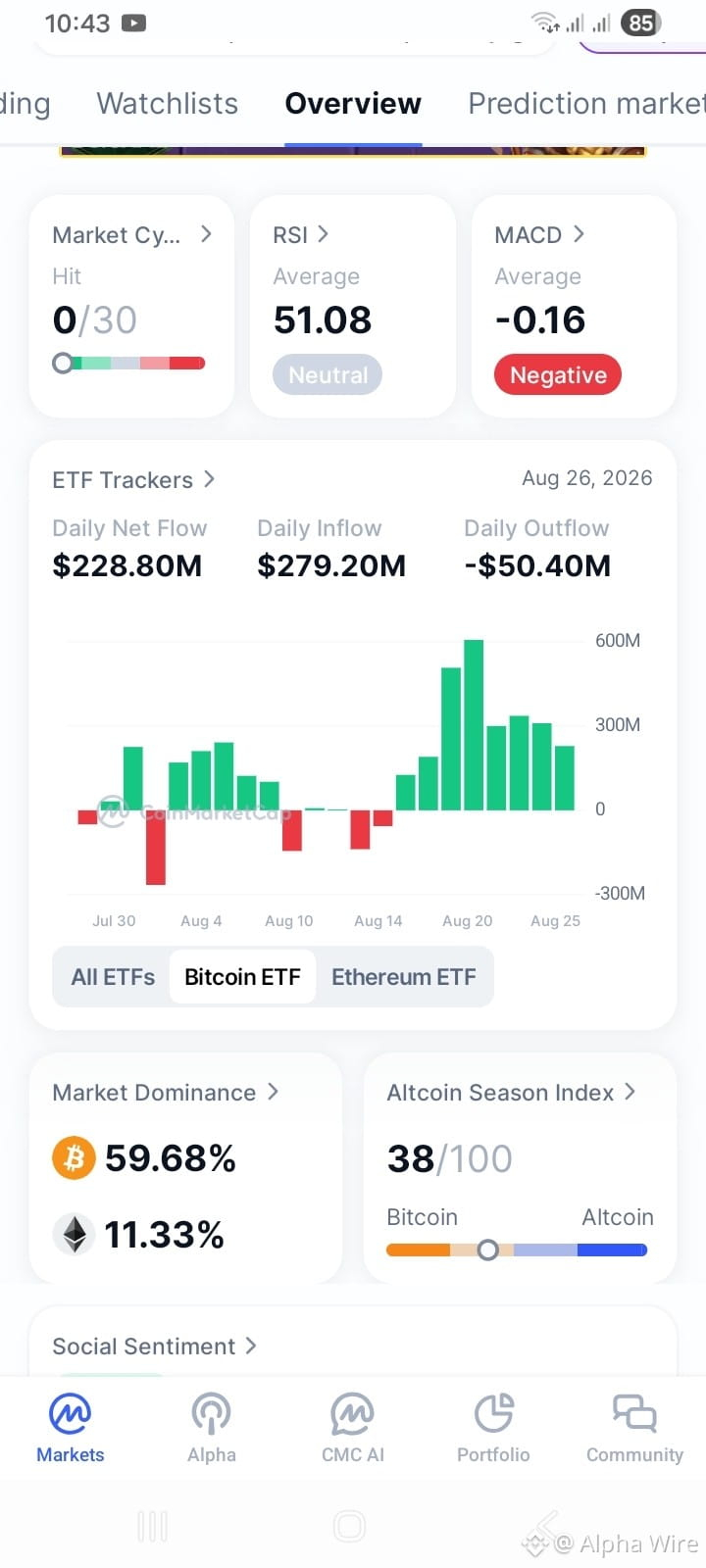
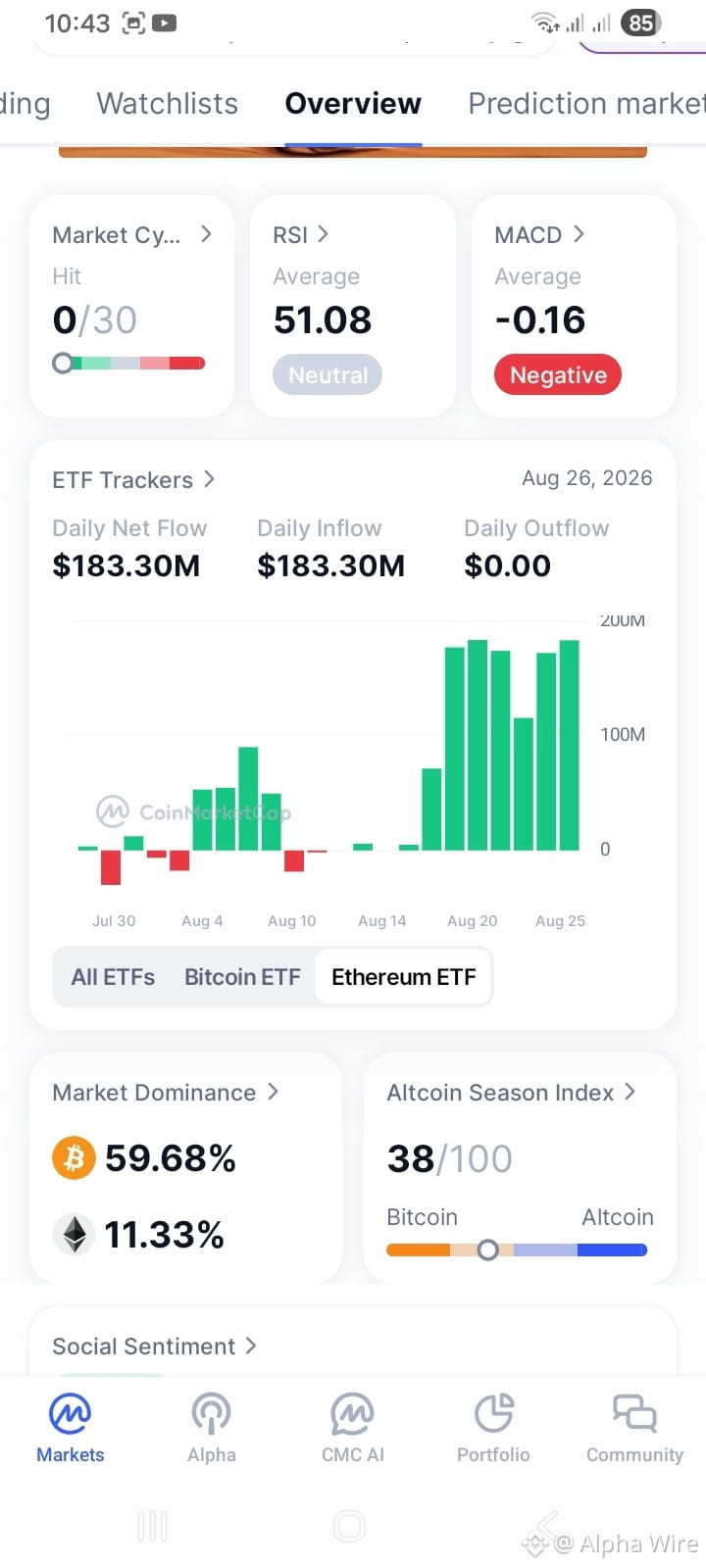
$ETH and $BTC ETF's inflows extremely strong seven consecutive positive sessions completed
Broad altseason hasn’t officially kicked off yet, but we’re already seeing some clear early signs of capital rotation into the altcoin market.
{future}(ETHUSDT)
{future}(BTCUSDT)
#XRPLeadsCryptoPullbackDropsNearly7% #DollarPostsBiggestGainInNearlyFourWeeks #NvidiaRises4%OnRevenueBeat #SECSendsCryptoCustodyRuleToWhiteHouse #ETH
$ETH and $BTC ETF's inflows extremely strong seven consecutive positive sessions completed
Broad altseason hasn’t officially kicked off yet, but we’re already seeing some clear early signs of capital rotation into the altcoin market.
#XRPLeadsCryptoPullbackDropsNearly7% #DollarPostsBiggestGainInNearlyFourWeeks #NvidiaRises4%OnRevenueBeat #SECSendsCryptoCustodyRuleToWhiteHouse #ETH
Broad altseason hasn’t officially kicked off yet, but we’re already seeing some clear early signs of capital rotation into the altcoin market.
#XRPLeadsCryptoPullbackDropsNearly7% #DollarPostsBiggestGainInNearlyFourWeeks #NvidiaRises4%OnRevenueBeat #SECSendsCryptoCustodyRuleToWhiteHouse #ETH
111
🍎 APPLE IS BACK ON TOP.
JUST IN: Apple ($AAPL ) has reclaimed the title of the world's most valuable company by market capitalization, overtaking Nvidia ($NVDA ) after recent market moves.
The shift highlights the intense competition among tech giants as investors continue to closely watch AI, semiconductor demand, and earnings expectations.
👀 Will Apple hold onto the #1 spot, or can Nvidia reclaim the crown?
{future}(NVDAUSDT)
{future}(AAPLUSDT)
#Apple #NVIDIA #stocks #AI #BinanceSquare
🍎 APPLE IS BACK ON TOP.
JUST IN: Apple ($AAPL ) has reclaimed the title of the world's most valuable company by market capitalization, overtaking Nvidia ($NVDA ) after recent market moves.
The shift highlights the intense competition among tech giants as investors continue to closely watch AI, semiconductor demand, and earnings expectations.
👀 Will Apple hold onto the #1 spot, or can Nvidia reclaim the crown?
#Apple #NVIDIA #stocks #AI #BinanceSquare
JUST IN: Apple ($AAPL ) has reclaimed the title of the world's most valuable company by market capitalization, overtaking Nvidia ($NVDA ) after recent market moves.
The shift highlights the intense competition among tech giants as investors continue to closely watch AI, semiconductor demand, and earnings expectations.
👀 Will Apple hold onto the #1 spot, or can Nvidia reclaim the crown?
#Apple #NVIDIA #stocks #AI #BinanceSquare
59
🤖 $NEAR AI IS DOUBLING DOWN ON SECURE AI AGENTS.
LATEST: Corbits has partnered with $NEAR AI to build more private, secure, and verifiable AI agent workflows.
The collaboration combines Trusted Execution Environments (TEEs), the IronClaw secure agent runtime, and collaborative AI tools to help teams verify where AI models run, how agents operate, and what security controls protect their actions.
👀 Could secure AI agents become the next major use case for blockchain technology?
{spot}(NEARUSDT)
#Near #AI #crypto #Web3 #BinanceSquare
🤖 $NEAR AI IS DOUBLING DOWN ON SECURE AI AGENTS.
LATEST: Corbits has partnered with $NEAR AI to build more private, secure, and verifiable AI agent workflows.
The collaboration combines Trusted Execution Environments (TEEs), the IronClaw secure agent runtime, and collaborative AI tools to help teams verify where AI models run, how agents operate, and what security controls protect their actions.
👀 Could secure AI agents become the next major use case for blockchain technology?
#Near #AI #crypto #Web3 #BinanceSquare
LATEST: Corbits has partnered with $NEAR AI to build more private, secure, and verifiable AI agent workflows.
The collaboration combines Trusted Execution Environments (TEEs), the IronClaw secure agent runtime, and collaborative AI tools to help teams verify where AI models run, how agents operate, and what security controls protect their actions.
👀 Could secure AI agents become the next major use case for blockchain technology?
#Near #AI #crypto #Web3 #BinanceSquare
76
📉 WHY IS ETHEREUM UNDER PRESSURE?
LATEST: $ETH slipped as rising U.S. Treasury yields drew institutional capital toward higher-yielding, lower-risk assets.
Analysts also note that softer spot ETF demand and lower network fees have weighed on short-term sentiment. While lower fees benefit users and Layer-2 adoption, they can temporarily reduce $ETH 's token-burning rate, influencing the asset's economic dynamics.
👀 Is this just a short-term rotation into safer assets, or could $ETH face more downside before its next rally?
{spot}(ETHUSDT)
#Ethereum #ETH #crypto #markets #BinanceSquare
📉 WHY IS ETHEREUM UNDER PRESSURE?
LATEST: $ETH slipped as rising U.S. Treasury yields drew institutional capital toward higher-yielding, lower-risk assets.
Analysts also note that softer spot ETF demand and lower network fees have weighed on short-term sentiment. While lower fees benefit users and Layer-2 adoption, they can temporarily reduce $ETH 's token-burning rate, influencing the asset's economic dynamics.
👀 Is this just a short-term rotation into safer assets, or could $ETH face more downside before its next rally?
#Ethereum #ETH #crypto #markets #BinanceSquare
LATEST: $ETH slipped as rising U.S. Treasury yields drew institutional capital toward higher-yielding, lower-risk assets.
Analysts also note that softer spot ETF demand and lower network fees have weighed on short-term sentiment. While lower fees benefit users and Layer-2 adoption, they can temporarily reduce $ETH 's token-burning rate, influencing the asset's economic dynamics.
👀 Is this just a short-term rotation into safer assets, or could $ETH face more downside before its next rally?
#Ethereum #ETH #crypto #markets #BinanceSquare
95
🎟️ DEVCON 8 TICKETS ARE NOW LIVE!
LATEST: The $ETH Foundation has opened global ticket sales for Devcon 8, which will be held November 3–6 in Mumbai, India.
As Ethereum's flagship developer conference, Devcon brings together builders, researchers, and Web3 innovators from around the world to showcase the latest advancements in the Ethereum ecosystem.
👀 Could Devcon 8 unveil the next major breakthrough for $ETH and Web3?
{spot}(ETHUSDT)
#Ethereum #Devcon #Web3 #ETH #BinanceSquare
🎟️ DEVCON 8 TICKETS ARE NOW LIVE!
LATEST: The $ETH Foundation has opened global ticket sales for Devcon 8, which will be held November 3–6 in Mumbai, India.
As Ethereum's flagship developer conference, Devcon brings together builders, researchers, and Web3 innovators from around the world to showcase the latest advancements in the Ethereum ecosystem.
👀 Could Devcon 8 unveil the next major breakthrough for $ETH and Web3?
#Ethereum #Devcon #Web3 #ETH #BinanceSquare
LATEST: The $ETH Foundation has opened global ticket sales for Devcon 8, which will be held November 3–6 in Mumbai, India.
As Ethereum's flagship developer conference, Devcon brings together builders, researchers, and Web3 innovators from around the world to showcase the latest advancements in the Ethereum ecosystem.
👀 Could Devcon 8 unveil the next major breakthrough for $ETH and Web3?
#Ethereum #Devcon #Web3 #ETH #BinanceSquare
116
🚨 TOM LEE TURNS BULLISH ON $ETH ETHEREUM.
LATEST: Fundstrat's Tom Lee says Ethereum has broken out against $BTC , reinforcing his positive outlook on the second-largest cryptocurrency.
Some market bulls are now speculating that ETH could make a powerful move toward $5,000, though such forecasts remain highly speculative and will depend on broader market conditions and sustained buying momentum.
👀 Has $ETH Ethereum finally begun to outperform Bitcoin—or is it too early to call a major breakout?
{spot}(ETHUSDT)
#Ethereum #ETH #bitcoin #crypto #BinanceSquare
🚨 TOM LEE TURNS BULLISH ON $ETH ETHEREUM.
LATEST: Fundstrat's Tom Lee says Ethereum has broken out against $BTC , reinforcing his positive outlook on the second-largest cryptocurrency.
Some market bulls are now speculating that ETH could make a powerful move toward $5,000, though such forecasts remain highly speculative and will depend on broader market conditions and sustained buying momentum.
👀 Has $ETH Ethereum finally begun to outperform Bitcoin—or is it too early to call a major breakout?
#Ethereum #ETH #bitcoin #crypto #BinanceSquare
LATEST: Fundstrat's Tom Lee says Ethereum has broken out against $BTC , reinforcing his positive outlook on the second-largest cryptocurrency.
Some market bulls are now speculating that ETH could make a powerful move toward $5,000, though such forecasts remain highly speculative and will depend on broader market conditions and sustained buying momentum.
👀 Has $ETH Ethereum finally begun to outperform Bitcoin—or is it too early to call a major breakout?
#Ethereum #ETH #bitcoin #crypto #BinanceSquare
1
86
🚀 BINANCE IS EVOLVING INTO A FINANCIAL SUPER APP.
LATEST: Binance is rapidly expanding beyond crypto trading by integrating a wider range of financial products into a single ecosystem.
From digital assets and tokenized investments to broader financial services, the strategy aims to keep users within one platform while diversifying revenue beyond traditional trading fees. The move reflects a growing trend of crypto exchanges transforming into full-scale financial operating systems.
👀 Could Binance become the world's leading all-in-one financial platform?
#Binance #crypto #Web3 #Finance #BinanceSquare
🚀 BINANCE IS EVOLVING INTO A FINANCIAL SUPER APP.
LATEST: Binance is rapidly expanding beyond crypto trading by integrating a wider range of financial products into a single ecosystem.
From digital assets and tokenized investments to broader financial services, the strategy aims to keep users within one platform while diversifying revenue beyond traditional trading fees. The move reflects a growing trend of crypto exchanges transforming into full-scale financial operating systems.
👀 Could Binance become the world's leading all-in-one financial platform?
#Binance #crypto #Web3 #Finance #BinanceSquare
LATEST: Binance is rapidly expanding beyond crypto trading by integrating a wider range of financial products into a single ecosystem.
From digital assets and tokenized investments to broader financial services, the strategy aims to keep users within one platform while diversifying revenue beyond traditional trading fees. The move reflects a growing trend of crypto exchanges transforming into full-scale financial operating systems.
👀 Could Binance become the world's leading all-in-one financial platform?
#Binance #crypto #Web3 #Finance #BinanceSquare
81
🚀 CRYPTO IS EVOLVING FASTER THAN EVER.
LATEST: From $BTC and $ETH to the rapidly expanding world of altcoins, digital assets continue to reshape global finance. As major companies deepen their investment in blockchain technology and tokenized ecosystems, the crypto industry is entering a new phase of innovation and mainstream adoption.
With markets evolving at a rapid pace, staying informed has never been more important for investors navigating this fast-moving landscape.
👀 Which crypto trend do you think will define the next bull cycle—AI, RWAs, stablecoins, or $BTC ?
{spot}(BTCUSDT)
{spot}(ETHUSDT)
#bitcoin #Ethereum #crypto #blockchain #BinanceSquare
🚀 CRYPTO IS EVOLVING FASTER THAN EVER.
LATEST: From $BTC and $ETH to the rapidly expanding world of altcoins, digital assets continue to reshape global finance. As major companies deepen their investment in blockchain technology and tokenized ecosystems, the crypto industry is entering a new phase of innovation and mainstream adoption.
With markets evolving at a rapid pace, staying informed has never been more important for investors navigating this fast-moving landscape.
👀 Which crypto trend do you think will define the next bull cycle—AI, RWAs, stablecoins, or $BTC ?
#bitcoin #Ethereum #crypto #blockchain #BinanceSquare
LATEST: From $BTC and $ETH to the rapidly expanding world of altcoins, digital assets continue to reshape global finance. As major companies deepen their investment in blockchain technology and tokenized ecosystems, the crypto industry is entering a new phase of innovation and mainstream adoption.
With markets evolving at a rapid pace, staying informed has never been more important for investors navigating this fast-moving landscape.
👀 Which crypto trend do you think will define the next bull cycle—AI, RWAs, stablecoins, or $BTC ?
#bitcoin #Ethereum #crypto #blockchain #BinanceSquare
38
🚨 MIDDLE EAST TENSIONS HAVE ESCALATED FURTHER.
BREAKING: 🇺🇸🇮🇷 Iran's Islamic Revolutionary Guard Corps (IRGC) says it launched ballistic missiles at a U.S. air base in Jordan while urging Jordanians to dismantle American military bases in the kingdom.
Jordan's military said it intercepted multiple missiles that entered its airspace, as regional tensions continue to rise and global markets closely monitor the unfolding situation.
👀 Could this mark another major escalation in the U.S.-Iran conflict?
#iran #Jordan #usa #Geopolitics #BinanceSquare
🚨 MIDDLE EAST TENSIONS HAVE ESCALATED FURTHER.
BREAKING: 🇺🇸🇮🇷 Iran's Islamic Revolutionary Guard Corps (IRGC) says it launched ballistic missiles at a U.S. air base in Jordan while urging Jordanians to dismantle American military bases in the kingdom.
Jordan's military said it intercepted multiple missiles that entered its airspace, as regional tensions continue to rise and global markets closely monitor the unfolding situation.
👀 Could this mark another major escalation in the U.S.-Iran conflict?
#iran #Jordan #usa #Geopolitics #BinanceSquare
BREAKING: 🇺🇸🇮🇷 Iran's Islamic Revolutionary Guard Corps (IRGC) says it launched ballistic missiles at a U.S. air base in Jordan while urging Jordanians to dismantle American military bases in the kingdom.
Jordan's military said it intercepted multiple missiles that entered its airspace, as regional tensions continue to rise and global markets closely monitor the unfolding situation.
👀 Could this mark another major escalation in the U.S.-Iran conflict?
#iran #Jordan #usa #Geopolitics #BinanceSquare
52
🚨 ROBINHOOD'S LAYER 2 IS SPARKING A BIG $ETH DEBATE.
LATEST: Early data suggests Robinhood Chain generated roughly $843K in user fees while paying only around $1.6K to Ethereum for data availability and settlement.
The numbers have reignited discussions over whether Ethereum captures enough value from Layer 2 networks, as most of the revenue appears to remain within the L2 ecosystem.
👀 Should $ETH earn a larger share of Layer 2 revenue, or is the current model working as intended?
{spot}(ETHUSDT)
#Ethereum #Layer2 #Robinhood #crypto #BinanceSquare
🚨 ROBINHOOD'S LAYER 2 IS SPARKING A BIG $ETH DEBATE.
LATEST: Early data suggests Robinhood Chain generated roughly $843K in user fees while paying only around $1.6K to Ethereum for data availability and settlement.
The numbers have reignited discussions over whether Ethereum captures enough value from Layer 2 networks, as most of the revenue appears to remain within the L2 ecosystem.
👀 Should $ETH earn a larger share of Layer 2 revenue, or is the current model working as intended?
#Ethereum #Layer2 #Robinhood #crypto #BinanceSquare
LATEST: Early data suggests Robinhood Chain generated roughly $843K in user fees while paying only around $1.6K to Ethereum for data availability and settlement.
The numbers have reignited discussions over whether Ethereum captures enough value from Layer 2 networks, as most of the revenue appears to remain within the L2 ecosystem.
👀 Should $ETH earn a larger share of Layer 2 revenue, or is the current model working as intended?
#Ethereum #Layer2 #Robinhood #crypto #BinanceSquare
74
🇯🇵 $XRP IS GAINING MORE INSTITUTIONAL MOMENTUM IN JAPAN.
LATEST: SBI Digital Finance has partnered with Doppler Finance to build regulated infrastructure for institutional $XRP lending and digital asset services in Japan.
The collaboration will focus on XRP lending, liquidity, collateral management, and tokenized assets, aiming to strengthen Japan's institutional crypto ecosystem rather than retail trading.
👀 Could Japan become the global leader in institutional $XRP adoption?
{spot}(XRPUSDT)
#xrp #Japan #crypto #blockchain #BinanceSquare
🇯🇵 $XRP IS GAINING MORE INSTITUTIONAL MOMENTUM IN JAPAN.
LATEST: SBI Digital Finance has partnered with Doppler Finance to build regulated infrastructure for institutional $XRP lending and digital asset services in Japan.
The collaboration will focus on XRP lending, liquidity, collateral management, and tokenized assets, aiming to strengthen Japan's institutional crypto ecosystem rather than retail trading.
👀 Could Japan become the global leader in institutional $XRP adoption?
#xrp #Japan #crypto #blockchain #BinanceSquare
LATEST: SBI Digital Finance has partnered with Doppler Finance to build regulated infrastructure for institutional $XRP lending and digital asset services in Japan.
The collaboration will focus on XRP lending, liquidity, collateral management, and tokenized assets, aiming to strengthen Japan's institutional crypto ecosystem rather than retail trading.
👀 Could Japan become the global leader in institutional $XRP adoption?
#xrp #Japan #crypto #blockchain #BinanceSquare
80
🇪🇺 EU CRYPTO REGULATIONS ARE ENTERING A NEW ERA.
LATEST: International law firm Reed Smith has launched an automated MiCA compliance platform to help crypto companies navigate the European Union's new regulatory framework.
As the MiCA transition period comes to an end, crypto firms are now operating under full regulatory supervision, increasing demand for compliance and legal technology solutions.
👀 Will clearer regulations accelerate institutional crypto adoption across Europe?
#MiCA #crypto #Regulation #Europe #BinanceSquare
🇪🇺 EU CRYPTO REGULATIONS ARE ENTERING A NEW ERA.
LATEST: International law firm Reed Smith has launched an automated MiCA compliance platform to help crypto companies navigate the European Union's new regulatory framework.
As the MiCA transition period comes to an end, crypto firms are now operating under full regulatory supervision, increasing demand for compliance and legal technology solutions.
👀 Will clearer regulations accelerate institutional crypto adoption across Europe?
#MiCA #crypto #Regulation #Europe #BinanceSquare
LATEST: International law firm Reed Smith has launched an automated MiCA compliance platform to help crypto companies navigate the European Union's new regulatory framework.
As the MiCA transition period comes to an end, crypto firms are now operating under full regulatory supervision, increasing demand for compliance and legal technology solutions.
👀 Will clearer regulations accelerate institutional crypto adoption across Europe?
#MiCA #crypto #Regulation #Europe #BinanceSquare
88
🚨 $BTC BITCOIN JUST GOT A WAKE-UP CALL.
LATEST: Bitcoin briefly slipped below $62,000 as escalating geopolitical tensions sparked a wave of liquidations and pushed investors toward risk-off assets.
Despite the sharp sell-off, $BTC quickly recovered to around $62.6K, showing resilience even as U.S. spot Bitcoin ETFs recorded notable outflows and traders remained cautious.
👀 Was this just a healthy shakeout—or is more volatility still ahead for $BTC ?
{spot}(BTCUSDT)
#bitcoin #BTC #crypto #markets #BinanceSquare
🚨 $BTC BITCOIN JUST GOT A WAKE-UP CALL.
LATEST: Bitcoin briefly slipped below $62,000 as escalating geopolitical tensions sparked a wave of liquidations and pushed investors toward risk-off assets.
Despite the sharp sell-off, $BTC quickly recovered to around $62.6K, showing resilience even as U.S. spot Bitcoin ETFs recorded notable outflows and traders remained cautious.
👀 Was this just a healthy shakeout—or is more volatility still ahead for $BTC ?
#bitcoin #BTC #crypto #markets #BinanceSquare
LATEST: Bitcoin briefly slipped below $62,000 as escalating geopolitical tensions sparked a wave of liquidations and pushed investors toward risk-off assets.
Despite the sharp sell-off, $BTC quickly recovered to around $62.6K, showing resilience even as U.S. spot Bitcoin ETFs recorded notable outflows and traders remained cautious.
👀 Was this just a healthy shakeout—or is more volatility still ahead for $BTC ?
#bitcoin #BTC #crypto #markets #BinanceSquare
72
📊 CRYPTO SENTIMENT IS IMPROVING—BUT THE BREAKOUT IS STILL MISSING.
LATEST: The crypto market remains stuck below key resistance, with total market capitalization struggling to break above recent highs. While selling pressure has eased and market sentiment is gradually recovering, technical indicators suggest the broader trend has yet to turn decisively bullish.
$BTC Bitcoin continues to hold around its 200-week moving average—a level that has historically marked the later stages of major corrections. At the same time, a developing RSI divergence hints that bearish momentum may be fading, although it doesn't yet confirm the start of a new bull market.
👀 Is this the beginning of a long-term recovery, or just another pause before the next move?
{spot}(BTCUSDT)
#bitcoin #crypto #markets #trading #BinanceSquare
📊 CRYPTO SENTIMENT IS IMPROVING—BUT THE BREAKOUT IS STILL MISSING.
LATEST: The crypto market remains stuck below key resistance, with total market capitalization struggling to break above recent highs. While selling pressure has eased and market sentiment is gradually recovering, technical indicators suggest the broader trend has yet to turn decisively bullish.
$BTC Bitcoin continues to hold around its 200-week moving average—a level that has historically marked the later stages of major corrections. At the same time, a developing RSI divergence hints that bearish momentum may be fading, although it doesn't yet confirm the start of a new bull market.
👀 Is this the beginning of a long-term recovery, or just another pause before the next move?
#bitcoin #crypto #markets #trading #BinanceSquare
LATEST: The crypto market remains stuck below key resistance, with total market capitalization struggling to break above recent highs. While selling pressure has eased and market sentiment is gradually recovering, technical indicators suggest the broader trend has yet to turn decisively bullish.
$BTC Bitcoin continues to hold around its 200-week moving average—a level that has historically marked the later stages of major corrections. At the same time, a developing RSI divergence hints that bearish momentum may be fading, although it doesn't yet confirm the start of a new bull market.
👀 Is this the beginning of a long-term recovery, or just another pause before the next move?
#bitcoin #crypto #markets #trading #BinanceSquare
29
🚨 TRUMP SAYS THE U.S. IS "TAKING OVER" THE STRAIT OF HORMUZ.
JUST IN: 🇺🇸🇮🇷 President Trump said the United States is "taking over" the Strait of Hormuz, signaling a tougher U.S. stance as tensions with Iran continue to escalate.
The remarks come amid ongoing military exchanges and heightened concerns over one of the world's most critical oil shipping routes, with global markets closely watching for the next developments.
👀 Could this mark a major turning point in the U.S.-Iran conflict and global energy markets?
#iran #usa #oil #Geopolitics #BinanceSquare
🚨 TRUMP SAYS THE U.S. IS "TAKING OVER" THE STRAIT OF HORMUZ.
JUST IN: 🇺🇸🇮🇷 President Trump said the United States is "taking over" the Strait of Hormuz, signaling a tougher U.S. stance as tensions with Iran continue to escalate.
The remarks come amid ongoing military exchanges and heightened concerns over one of the world's most critical oil shipping routes, with global markets closely watching for the next developments.
👀 Could this mark a major turning point in the U.S.-Iran conflict and global energy markets?
#iran #usa #oil #Geopolitics #BinanceSquare
JUST IN: 🇺🇸🇮🇷 President Trump said the United States is "taking over" the Strait of Hormuz, signaling a tougher U.S. stance as tensions with Iran continue to escalate.
The remarks come amid ongoing military exchanges and heightened concerns over one of the world's most critical oil shipping routes, with global markets closely watching for the next developments.
👀 Could this mark a major turning point in the U.S.-Iran conflict and global energy markets?
#iran #usa #oil #Geopolitics #BinanceSquare
63
📉 AI MODELS AREN'T EXPECTING A BIG $XRP BREAKOUT—YET.
LATEST: A new Finbold AI forecast projects $XRP could trade around $1.06 by August 1, suggesting a modest decline from current levels.
The prediction is based on multiple AI models analyzing technical indicators such as MACD, RSI, and the 50-day Moving Average. Interestingly, while most models expect slight downside, one AI model still sees XRP climbing to around $1.12, highlighting the market's mixed outlook.
👀 Will $XRP surprise the AI models—or continue consolidating in the weeks ahead?
{spot}(XRPUSDT)
#xrp #crypto #altcoins #AI #BinanceSquare
📉 AI MODELS AREN'T EXPECTING A BIG $XRP BREAKOUT—YET.
LATEST: A new Finbold AI forecast projects $XRP could trade around $1.06 by August 1, suggesting a modest decline from current levels.
The prediction is based on multiple AI models analyzing technical indicators such as MACD, RSI, and the 50-day Moving Average. Interestingly, while most models expect slight downside, one AI model still sees XRP climbing to around $1.12, highlighting the market's mixed outlook.
👀 Will $XRP surprise the AI models—or continue consolidating in the weeks ahead?
#xrp #crypto #altcoins #AI #BinanceSquare
LATEST: A new Finbold AI forecast projects $XRP could trade around $1.06 by August 1, suggesting a modest decline from current levels.
The prediction is based on multiple AI models analyzing technical indicators such as MACD, RSI, and the 50-day Moving Average. Interestingly, while most models expect slight downside, one AI model still sees XRP climbing to around $1.12, highlighting the market's mixed outlook.
👀 Will $XRP surprise the AI models—or continue consolidating in the weeks ahead?
#xrp #crypto #altcoins #AI #BinanceSquare
1
1
1.2k
🇯🇵 JAPAN IS MAKING A BIG MOVE INTO ON-CHAIN FINANCE.
LATEST: SBI Holdings has partnered with the $SOL Foundation to develop Japan's first on-chain financial market, marking a major step toward institutional blockchain adoption.
The collaboration will focus on issuing Japanese stablecoins, tokenizing real-world assets such as bonds and real estate, improving cross-border payments, and building AI-ready financial infrastructure—all powered by the $SOL ecosystem.
👀 Could this partnership accelerate global adoption of tokenized real-world assets on $SOL ?
{spot}(SOLUSDT)
#solana #crypto #RWA #Stablecoins #BinanceSquare
🇯🇵 JAPAN IS MAKING A BIG MOVE INTO ON-CHAIN FINANCE.
LATEST: SBI Holdings has partnered with the $SOL Foundation to develop Japan's first on-chain financial market, marking a major step toward institutional blockchain adoption.
The collaboration will focus on issuing Japanese stablecoins, tokenizing real-world assets such as bonds and real estate, improving cross-border payments, and building AI-ready financial infrastructure—all powered by the $SOL ecosystem.
👀 Could this partnership accelerate global adoption of tokenized real-world assets on $SOL ?
#solana #crypto #RWA #Stablecoins #BinanceSquare
LATEST: SBI Holdings has partnered with the $SOL Foundation to develop Japan's first on-chain financial market, marking a major step toward institutional blockchain adoption.
The collaboration will focus on issuing Japanese stablecoins, tokenizing real-world assets such as bonds and real estate, improving cross-border payments, and building AI-ready financial infrastructure—all powered by the $SOL ecosystem.
👀 Could this partnership accelerate global adoption of tokenized real-world assets on $SOL ?
#solana #crypto #RWA #Stablecoins #BinanceSquare
29
📈 BINANCE FUTURES ARE BOOMING DESPITE A QUIET SPOT MARKET.
LATEST: Binance processed around $1.6 trillion in futures trading volume during June, marking its highest monthly futures volume of 2026.
The surge represents a sharp rebound in derivatives activity, even as spot trading remains near its weakest levels in two years. The trend suggests traders are increasingly using leverage and positioning for larger market moves ahead.
👀 Is this a sign that crypto volatility is about to return?
#Binance #crypto #bitcoin #trading #BinanceSquare
📈 BINANCE FUTURES ARE BOOMING DESPITE A QUIET SPOT MARKET.
LATEST: Binance processed around $1.6 trillion in futures trading volume during June, marking its highest monthly futures volume of 2026.
The surge represents a sharp rebound in derivatives activity, even as spot trading remains near its weakest levels in two years. The trend suggests traders are increasingly using leverage and positioning for larger market moves ahead.
👀 Is this a sign that crypto volatility is about to return?
#Binance #crypto #bitcoin #trading #BinanceSquare
LATEST: Binance processed around $1.6 trillion in futures trading volume during June, marking its highest monthly futures volume of 2026.
The surge represents a sharp rebound in derivatives activity, even as spot trading remains near its weakest levels in two years. The trend suggests traders are increasingly using leverage and positioning for larger market moves ahead.
👀 Is this a sign that crypto volatility is about to return?
#Binance #crypto #bitcoin #trading #BinanceSquare
19
🤖 $BNB CHAIN IS MAKING A BIG PLAY FOR AI IN CRYPTO.
LATEST: $BNB Chain has unveiled its Agent Studio roadmap, featuring developer templates and AWS-linked infrastructure designed to make it easier to build and deploy AI-powered blockchain applications.
Rather than focusing on hype, the initiative aims to give developers the tools to create AI agents that can interact with wallets, smart contracts, payments, and on-chain identities—strengthening the foundation for the next generation of Web3 applications.
👀 Could AI agents become the next major growth driver for the $BNB Chain ecosystem?
{spot}(BNBUSDT)
#BNBChain #AI #crypto #Web3 #BinanceSquare
🤖 $BNB CHAIN IS MAKING A BIG PLAY FOR AI IN CRYPTO.
LATEST: $BNB Chain has unveiled its Agent Studio roadmap, featuring developer templates and AWS-linked infrastructure designed to make it easier to build and deploy AI-powered blockchain applications.
Rather than focusing on hype, the initiative aims to give developers the tools to create AI agents that can interact with wallets, smart contracts, payments, and on-chain identities—strengthening the foundation for the next generation of Web3 applications.
👀 Could AI agents become the next major growth driver for the $BNB Chain ecosystem?
#BNBChain #AI #crypto #Web3 #BinanceSquare
LATEST: $BNB Chain has unveiled its Agent Studio roadmap, featuring developer templates and AWS-linked infrastructure designed to make it easier to build and deploy AI-powered blockchain applications.
Rather than focusing on hype, the initiative aims to give developers the tools to create AI agents that can interact with wallets, smart contracts, payments, and on-chain identities—strengthening the foundation for the next generation of Web3 applications.
👀 Could AI agents become the next major growth driver for the $BNB Chain ecosystem?
#BNBChain #AI #crypto #Web3 #BinanceSquare
23
🚀 DEXE IS EMERGING AS ONE OF THE STRONGEST AI CRYPTO PLAYS.
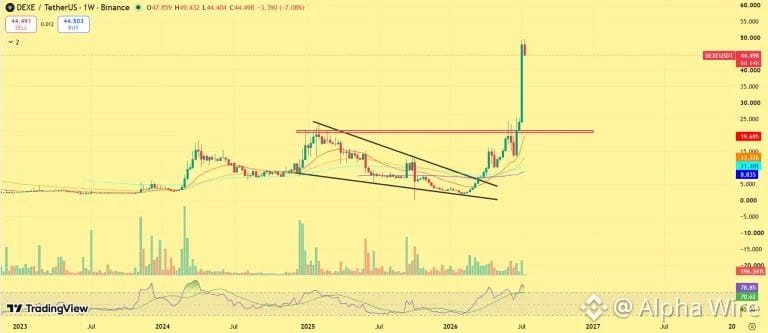
LATEST: DeXe ($DEXE ) has broken above a long-term falling wedge pattern, signaling a potential shift in momentum after months of consolidation.
The token has reclaimed the $40 level as support, backed by rising trading volume—an encouraging sign that buyers remain in control. If bullish momentum continues, the next key area to watch is around $50. However, holding the $30–$35 support zone will be critical to keeping the bullish structure intact.
👀 Is $DEXE preparing for its next major breakout, or will it face resistance before moving higher?
{spot}(DEXEUSDT)
#dexe #AI #crypto #altcoins #BinanceSquare
🚀 DEXE IS EMERGING AS ONE OF THE STRONGEST AI CRYPTO PLAYS.
LATEST: DeXe ($DEXE ) has broken above a long-term falling wedge pattern, signaling a potential shift in momentum after months of consolidation.
The token has reclaimed the $40 level as support, backed by rising trading volume—an encouraging sign that buyers remain in control. If bullish momentum continues, the next key area to watch is around $50. However, holding the $30–$35 support zone will be critical to keeping the bullish structure intact.
👀 Is $DEXE preparing for its next major breakout, or will it face resistance before moving higher?
#dexe #AI #crypto #altcoins #BinanceSquare
LATEST: DeXe ($DEXE ) has broken above a long-term falling wedge pattern, signaling a potential shift in momentum after months of consolidation.
The token has reclaimed the $40 level as support, backed by rising trading volume—an encouraging sign that buyers remain in control. If bullish momentum continues, the next key area to watch is around $50. However, holding the $30–$35 support zone will be critical to keeping the bullish structure intact.
👀 Is $DEXE preparing for its next major breakout, or will it face resistance before moving higher?
#dexe #AI #crypto #altcoins #BinanceSquare
119
Connectez-vous pour découvrir plus de contenu
Rejoignez la communauté mondiale des adeptes de cryptomonnaies sur Binance Square
⚡️ Suviez les dernières informations importantes sur les cryptomonnaies.
💬 Jugé digne de confiance par la plus grande plateforme d’échange de cryptomonnaies au monde.
👍 Découvrez les connaissances que partagent les créateurs vérifiés.
Adresse e-mail/Nº de téléphone