

Zenobia-Rox
30.8k Publications

Zenobia-Rox
 Compte Square Vérifié+
Signaler
Bloquer l’utilisateur
Crypto trader | Charts, setups, & market psychology in one place.. Twitter x @Jak_jon9
Ouvert au trading
Trade régulièrement
1.1 an(s)
749 Suivis
40.3K+ Abonnés
45.7K+ J’aime
Publications
Portefeuille
Tous
Direct
·
--
Haussier
parsnal hok I'm watching $MOVR 👀🔥
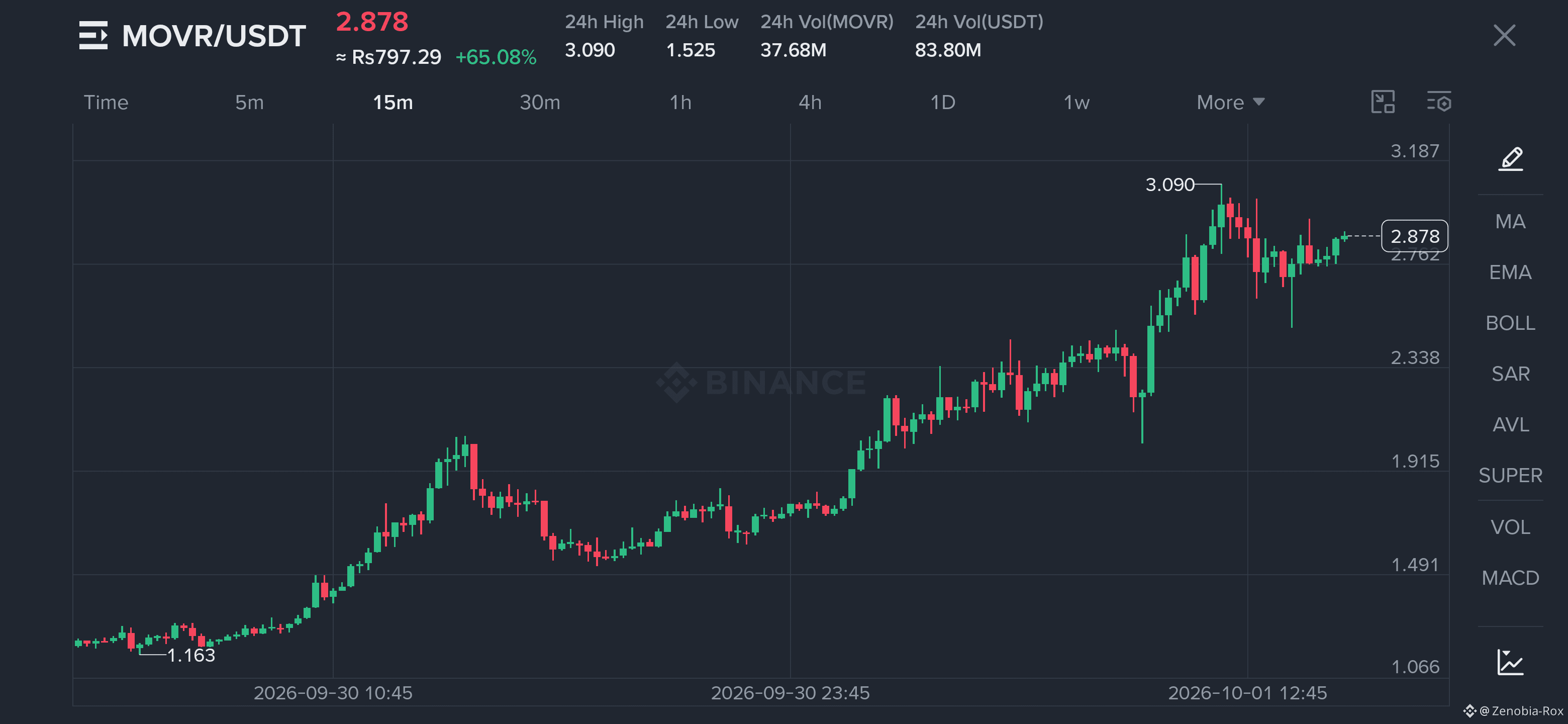
$MOVR is moving with serious momentum — up 65%+ in 24H and currently around 2.878. After pushing to 3.090, price is consolidating near the highs instead of giving back the whole move. That’s the part I’m watching closely.
If buyers defend the current zone and momentum returns, the previous high could come back into play.
🎯 Entry Level: 2.80 – 2.88
🚀 TP1: 3.00
🚀 TP2: 3.09
🚀 TP3: 3.25
🛑 STOP LOSS: 2.68
The key level for me is 3.09 — a clean breakout and hold above it could open the next leg, while losing the 2.68 area would weaken this setup significantly.
DISCLAIMER: This is a chart-based setup for educational purposes only, not financial advice. Crypto is highly volatile—manage risk carefully.
parsnal hok I'm watching $MOVR 👀🔥
$MOVR is moving with serious momentum — up 65%+ in 24H and currently around 2.878. After pushing to 3.090, price is consolidating near the highs instead of giving back the whole move. That’s the part I’m watching closely.
If buyers defend the current zone and momentum returns, the previous high could come back into play.
🎯 Entry Level: 2.80 – 2.88
🚀 TP1: 3.00
🚀 TP2: 3.09
🚀 TP3: 3.25
🛑 STOP LOSS: 2.68
The key level for me is 3.09 — a clean breakout and hold above it could open the next leg, while losing the 2.68 area would weaken this setup significantly.
DISCLAIMER: This is a chart-based setup for educational purposes only, not financial advice. Crypto is highly volatile—manage risk carefully.
$MOVR is moving with serious momentum — up 65%+ in 24H and currently around 2.878. After pushing to 3.090, price is consolidating near the highs instead of giving back the whole move. That’s the part I’m watching closely.
If buyers defend the current zone and momentum returns, the previous high could come back into play.
🎯 Entry Level: 2.80 – 2.88
🚀 TP1: 3.00
🚀 TP2: 3.09
🚀 TP3: 3.25
🛑 STOP LOSS: 2.68
The key level for me is 3.09 — a clean breakout and hold above it could open the next leg, while losing the 2.68 area would weaken this setup significantly.
DISCLAIMER: This is a chart-based setup for educational purposes only, not financial advice. Crypto is highly volatile—manage risk carefully.
1
350
·
--
parsnal hok I’m watching $MOVR closely 👀🔥
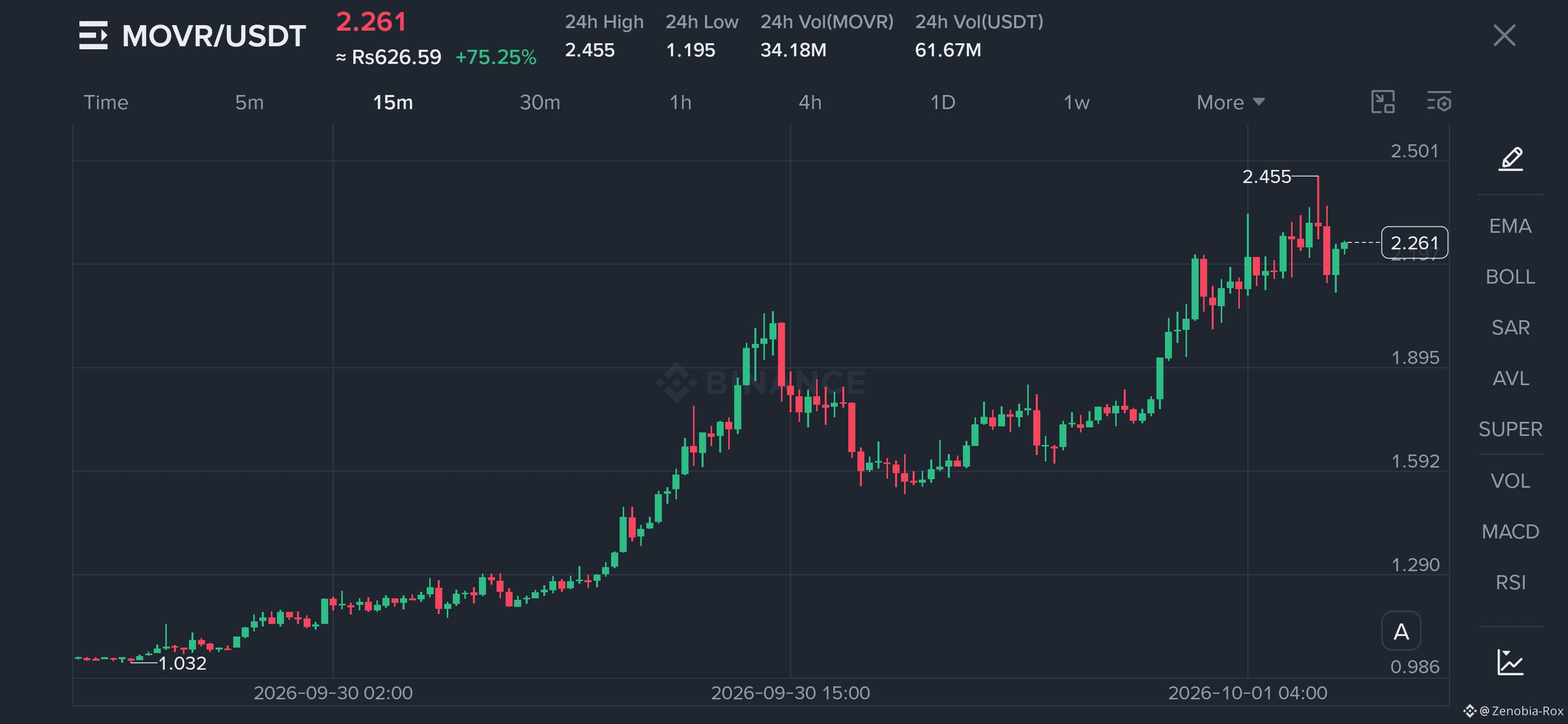
$MOVR just ripped +75% in 24H, climbing from around $1.19 to a high of $2.455. Now price is holding near $2.26 after the pullback — and this is where I’m watching for the next move.
The structure is still strong, but after such a huge pump, I don’t want to chase the candle. I’m watching the $2.15–$2.25 area for a controlled entry and a possible continuation toward the recent high.
🎯 Entry Level: $2.15 – $2.25
🚀 TP1: $2.35
🚀 TP2: $2.45
🚀 TP3: $2.60
🛑 STOP LOSS: $2.05
If $2.45 breaks with real volume, the chart could open the door toward the next psychological zone. If support fails, I’d rather step aside than force the trade.
⚠️ DISCLAIMER: This is my personal chart-based setup, not financial advice. Crypto is highly volatile. Do your own research and manage risk carefully.
parsnal hok I’m watching $MOVR closely 👀🔥
$MOVR just ripped +75% in 24H, climbing from around $1.19 to a high of $2.455. Now price is holding near $2.26 after the pullback — and this is where I’m watching for the next move.
The structure is still strong, but after such a huge pump, I don’t want to chase the candle. I’m watching the $2.15–$2.25 area for a controlled entry and a possible continuation toward the recent high.
🎯 Entry Level: $2.15 – $2.25
🚀 TP1: $2.35
🚀 TP2: $2.45
🚀 TP3: $2.60
🛑 STOP LOSS: $2.05
If $2.45 breaks with real volume, the chart could open the door toward the next psychological zone. If support fails, I’d rather step aside than force the trade.
⚠️ DISCLAIMER: This is my personal chart-based setup, not financial advice. Crypto is highly volatile. Do your own research and manage risk carefully.
$MOVR just ripped +75% in 24H, climbing from around $1.19 to a high of $2.455. Now price is holding near $2.26 after the pullback — and this is where I’m watching for the next move.
The structure is still strong, but after such a huge pump, I don’t want to chase the candle. I’m watching the $2.15–$2.25 area for a controlled entry and a possible continuation toward the recent high.
🎯 Entry Level: $2.15 – $2.25
🚀 TP1: $2.35
🚀 TP2: $2.45
🚀 TP3: $2.60
🛑 STOP LOSS: $2.05
If $2.45 breaks with real volume, the chart could open the door toward the next psychological zone. If support fails, I’d rather step aside than force the trade.
⚠️ DISCLAIMER: This is my personal chart-based setup, not financial advice. Crypto is highly volatile. Do your own research and manage risk carefully.
314
·
--
Haussier
parsnal hok I’m watching $ARK closely 👀🔥
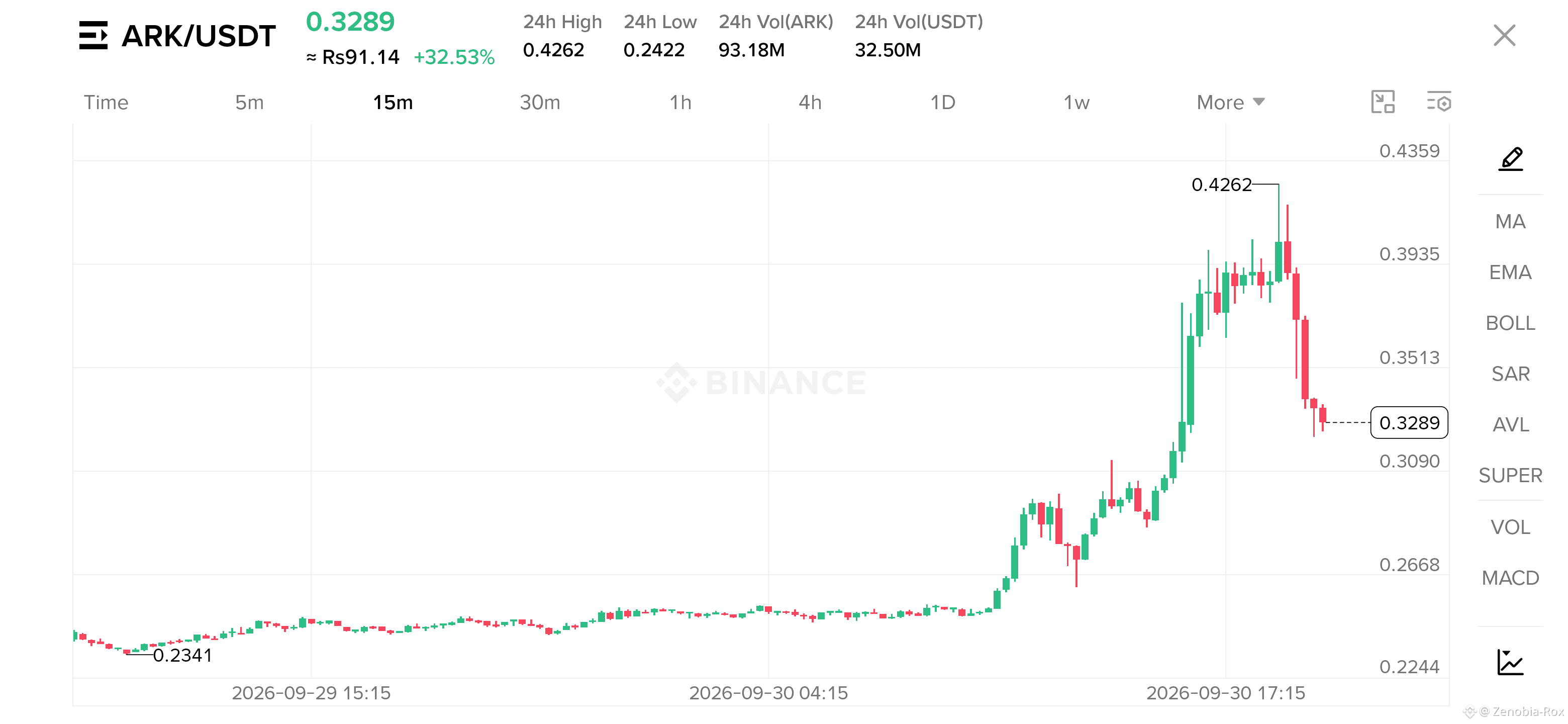
ARK just ripped from the low $0.24 area to $0.4262, and now we’re seeing a sharp pullback. Price is around $0.3289, so this is where I’d watch the reaction instead of chasing the spike.
If $0.309–$0.320 holds, a bounce could put the recent highs back into focus. ⚡
🎯 Entry Level: $0.315 – $0.329
🚀 TP1: $0.351
🚀 TP2: $0.393
🚀 TP3: $0.426
🛑 STOP LOSS: $0.298
The key level for me is $0.309 — losing that area could weaken the setup considerably.
DISCLAIMER: This is a chart-based setup for educational purposes only, not financial advice. Manage risk and do your own research. $ARK
{spot}(ARKUSDT)
parsnal hok I’m watching $ARK closely 👀🔥
ARK just ripped from the low $0.24 area to $0.4262, and now we’re seeing a sharp pullback. Price is around $0.3289, so this is where I’d watch the reaction instead of chasing the spike.
If $0.309–$0.320 holds, a bounce could put the recent highs back into focus. ⚡
🎯 Entry Level: $0.315 – $0.329
🚀 TP1: $0.351
🚀 TP2: $0.393
🚀 TP3: $0.426
🛑 STOP LOSS: $0.298
The key level for me is $0.309 — losing that area could weaken the setup considerably.
DISCLAIMER: This is a chart-based setup for educational purposes only, not financial advice. Manage risk and do your own research. $ARK
ARK just ripped from the low $0.24 area to $0.4262, and now we’re seeing a sharp pullback. Price is around $0.3289, so this is where I’d watch the reaction instead of chasing the spike.
If $0.309–$0.320 holds, a bounce could put the recent highs back into focus. ⚡
🎯 Entry Level: $0.315 – $0.329
🚀 TP1: $0.351
🚀 TP2: $0.393
🚀 TP3: $0.426
🛑 STOP LOSS: $0.298
The key level for me is $0.309 — losing that area could weaken the setup considerably.
DISCLAIMER: This is a chart-based setup for educational purposes only, not financial advice. Manage risk and do your own research. $ARK
240
·
--
Haussier
parsnal hok I’m watching $GTC closely 👀🔥
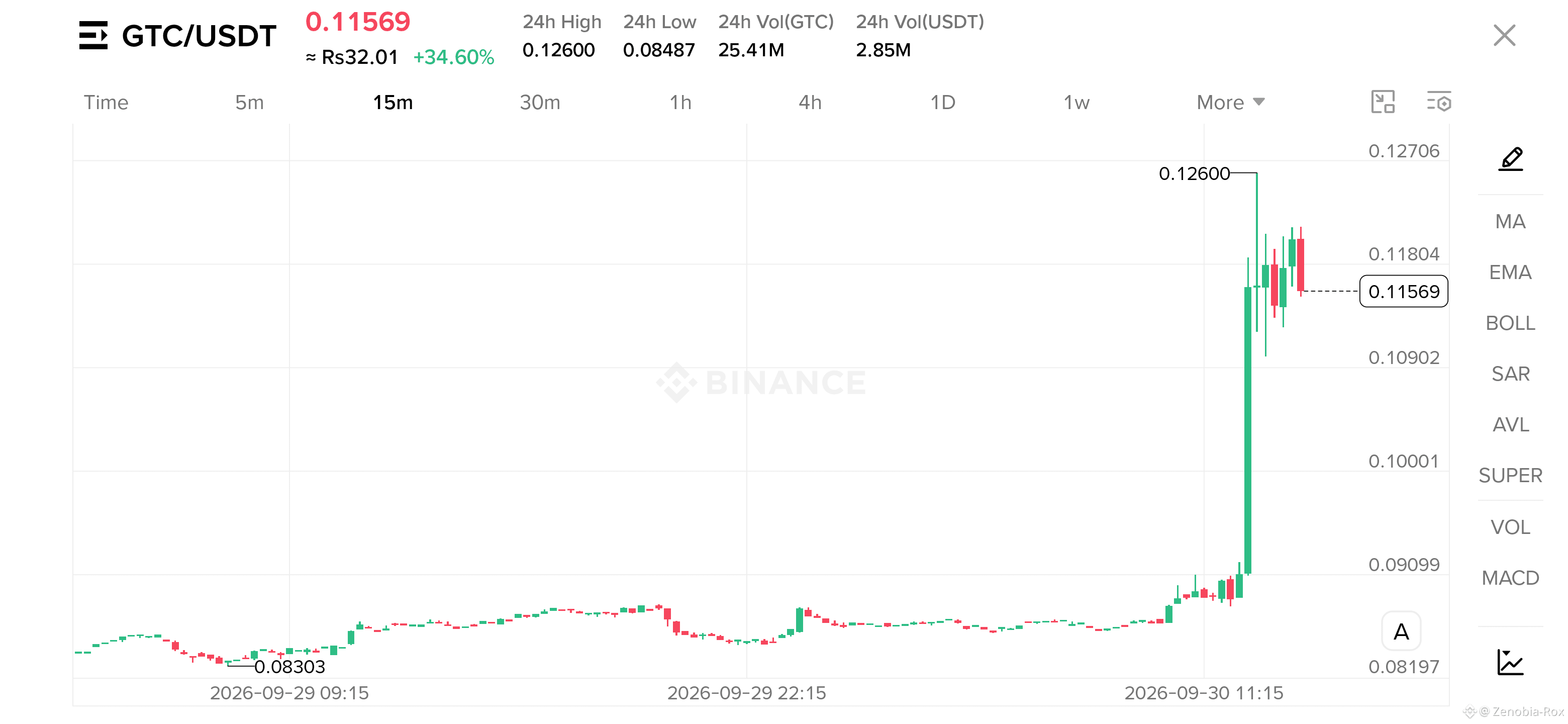
This 15M chart just woke up. GTC ripped from the $0.09 area to $0.126, then started consolidating around $0.115–$0.118. I’m watching whether this zone holds before the next push.
🎯 Entry level: $0.113 – $0.116
🚀 TP1: $0.120
🚀 TP2: $0.126
🚀 TP3: $0.135
$GTC
🛑 STOP LOSS: $0.108
The key for me is simple: hold the breakout zone and reclaim $0.120 with momentum. If $0.108 breaks, the setup loses its structure.
⚠️ DISCLAIMER: This is a chart-based setup for educational purposes only, not financial advice. Crypto is highly volatile—manage risk carefully.
$GTC
{spot}(GTCUSDT)
parsnal hok I’m watching $GTC closely 👀🔥
This 15M chart just woke up. GTC ripped from the $0.09 area to $0.126, then started consolidating around $0.115–$0.118. I’m watching whether this zone holds before the next push.
🎯 Entry level: $0.113 – $0.116
🚀 TP1: $0.120
🚀 TP2: $0.126
🚀 TP3: $0.135
$GTC
🛑 STOP LOSS: $0.108
The key for me is simple: hold the breakout zone and reclaim $0.120 with momentum. If $0.108 breaks, the setup loses its structure.
⚠️ DISCLAIMER: This is a chart-based setup for educational purposes only, not financial advice. Crypto is highly volatile—manage risk carefully.
$GTC
This 15M chart just woke up. GTC ripped from the $0.09 area to $0.126, then started consolidating around $0.115–$0.118. I’m watching whether this zone holds before the next push.
🎯 Entry level: $0.113 – $0.116
🚀 TP1: $0.120
🚀 TP2: $0.126
🚀 TP3: $0.135
$GTC
🛑 STOP LOSS: $0.108
The key for me is simple: hold the breakout zone and reclaim $0.120 with momentum. If $0.108 breaks, the setup loses its structure.
⚠️ DISCLAIMER: This is a chart-based setup for educational purposes only, not financial advice. Crypto is highly volatile—manage risk carefully.
$GTC
224
·
--
Haussier
parsnal hok I'm watching 👀 $QNT
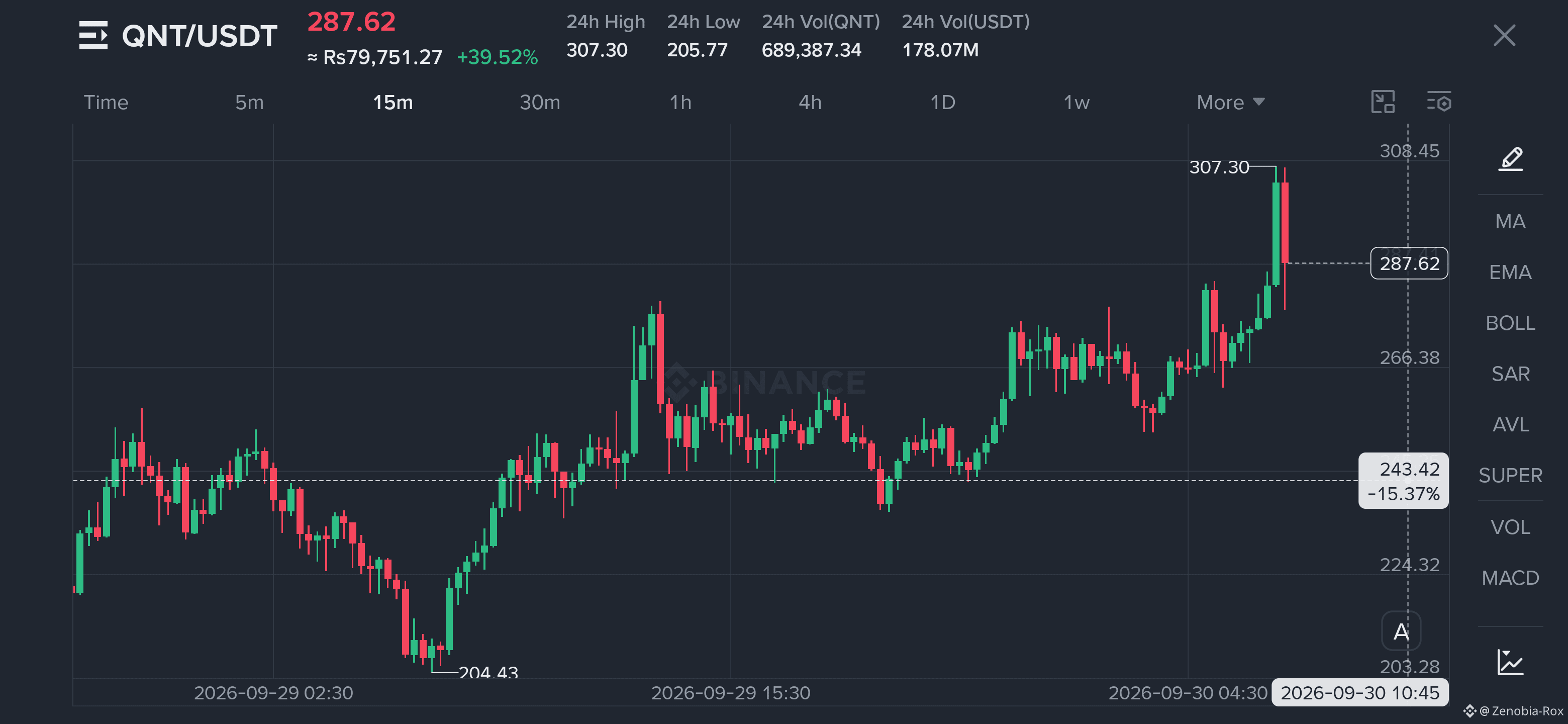
QNT just ripped from the mid-$260s and pushed all the way to $307.30 before cooling back to around $287.62. That pullback is the level I’m watching now — I don’t want to chase a green candle after a move like this.
If buyers defend the $280–285 area and price starts building again, the next push could be interesting. But losing the support zone would change the setup quickly.
🎯 Entry Level: $280 – $286
🚀 TP1: $298
🚀 TP2: $307
🚀 TP3: $320
🛑 STOP LOSS: $272
The key is simple: hold the pullback, reclaim $300, and watch how price reacts near $307. If momentum disappears, I’d rather step aside than force the trade.
⚠️ DISCLAIMER: This is a chart-based setup for educational purposes, not financial advice. Crypto is highly volatile. Always manage risk and do your own research before entering any trade.$QNT
{spot}(QNTUSDT)
parsnal hok I'm watching 👀 $QNT
QNT just ripped from the mid-$260s and pushed all the way to $307.30 before cooling back to around $287.62. That pullback is the level I’m watching now — I don’t want to chase a green candle after a move like this.
If buyers defend the $280–285 area and price starts building again, the next push could be interesting. But losing the support zone would change the setup quickly.
🎯 Entry Level: $280 – $286
🚀 TP1: $298
🚀 TP2: $307
🚀 TP3: $320
🛑 STOP LOSS: $272
The key is simple: hold the pullback, reclaim $300, and watch how price reacts near $307. If momentum disappears, I’d rather step aside than force the trade.
⚠️ DISCLAIMER: This is a chart-based setup for educational purposes, not financial advice. Crypto is highly volatile. Always manage risk and do your own research before entering any trade.$QNT
QNT just ripped from the mid-$260s and pushed all the way to $307.30 before cooling back to around $287.62. That pullback is the level I’m watching now — I don’t want to chase a green candle after a move like this.
If buyers defend the $280–285 area and price starts building again, the next push could be interesting. But losing the support zone would change the setup quickly.
🎯 Entry Level: $280 – $286
🚀 TP1: $298
🚀 TP2: $307
🚀 TP3: $320
🛑 STOP LOSS: $272
The key is simple: hold the pullback, reclaim $300, and watch how price reacts near $307. If momentum disappears, I’d rather step aside than force the trade.
⚠️ DISCLAIMER: This is a chart-based setup for educational purposes, not financial advice. Crypto is highly volatile. Always manage risk and do your own research before entering any trade.$QNT
503
·
--
Haussier
parsnal hok I'm watching $OG /USDT 👀🔥
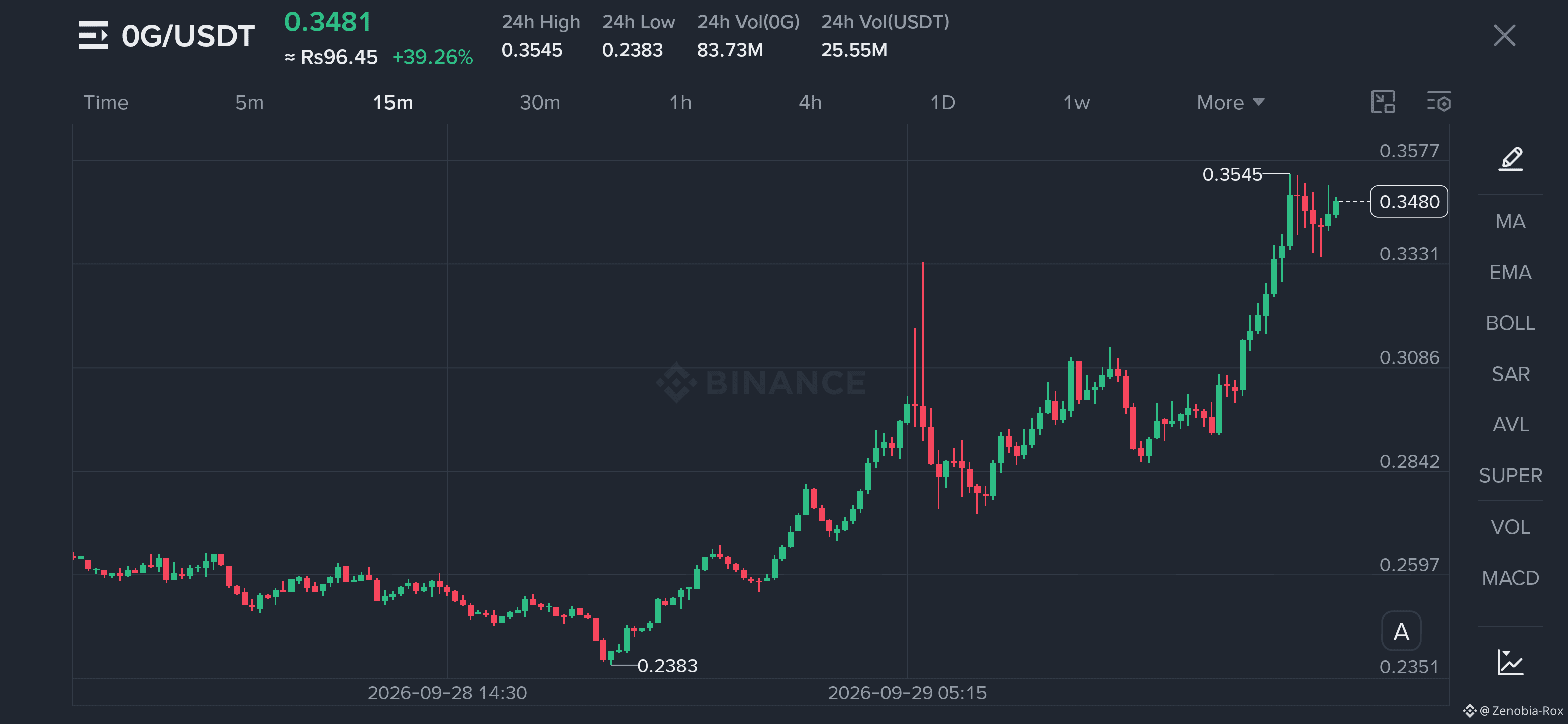
OG is moving aggressively on the 15M chart, up around 39%, and price is holding near $0.348 after tagging $0.3545. I wouldn’t chase a vertical candle here — I’m watching for a controlled pullback and continuation.$OG
📍 Entry Level: $0.340 – $0.347
🎯 TP1: $0.3545
🎯 TP2: $0.3650
🎯 TP3: $0.3800
🛑 STOP LOSS: $0.3310
The key zone for me is $0.333–$0.340. If buyers defend it, the recent high can come back into focus. A clean break and hold above $0.3545 could open the door toward the higher targets. If $0.331 breaks decisively, I’d consider this setup invalidated.
⚠️ DISCLAIMER: This is a chart-based trading setup, not financial advice. Crypto is highly volatile. Manage risk, use proper position sizing, and do your own research. DYOR/NFA. $OG
{spot}(OGUSDT)
parsnal hok I'm watching $OG /USDT 👀🔥
OG is moving aggressively on the 15M chart, up around 39%, and price is holding near $0.348 after tagging $0.3545. I wouldn’t chase a vertical candle here — I’m watching for a controlled pullback and continuation.$OG
📍 Entry Level: $0.340 – $0.347
🎯 TP1: $0.3545
🎯 TP2: $0.3650
🎯 TP3: $0.3800
🛑 STOP LOSS: $0.3310
The key zone for me is $0.333–$0.340. If buyers defend it, the recent high can come back into focus. A clean break and hold above $0.3545 could open the door toward the higher targets. If $0.331 breaks decisively, I’d consider this setup invalidated.
⚠️ DISCLAIMER: This is a chart-based trading setup, not financial advice. Crypto is highly volatile. Manage risk, use proper position sizing, and do your own research. DYOR/NFA. $OG
OG is moving aggressively on the 15M chart, up around 39%, and price is holding near $0.348 after tagging $0.3545. I wouldn’t chase a vertical candle here — I’m watching for a controlled pullback and continuation.$OG
📍 Entry Level: $0.340 – $0.347
🎯 TP1: $0.3545
🎯 TP2: $0.3650
🎯 TP3: $0.3800
🛑 STOP LOSS: $0.3310
The key zone for me is $0.333–$0.340. If buyers defend it, the recent high can come back into focus. A clean break and hold above $0.3545 could open the door toward the higher targets. If $0.331 breaks decisively, I’d consider this setup invalidated.
⚠️ DISCLAIMER: This is a chart-based trading setup, not financial advice. Crypto is highly volatile. Manage risk, use proper position sizing, and do your own research. DYOR/NFA. $OG
56
·
--
Haussier
I’m watching $OG /USDT like a hawk right now, and the tension on this 4-hour chart is insane! 🔥
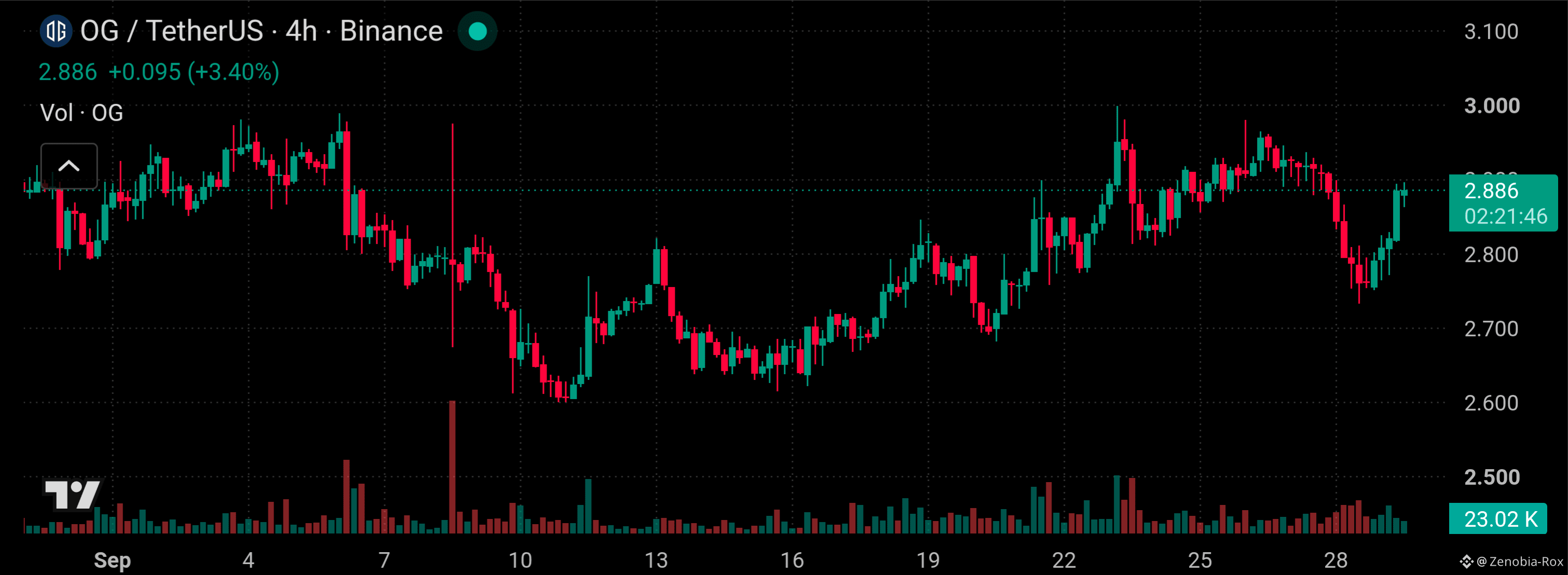
We’ve seen a solid recovery off the $2.70 support zone, and price is currently pressing up against $2.886 with momentum building. If it breaks past $2.95, we could see a massive explosive wave up to test $3.00 and beyond!
Here is my game plan:
* Entry Level: $2.850 – $2.885
* TP1: $2.950
* TP2: $3.020
* TP3: $3.150
* STOP LOSS: $2.760
> DISCLAIMER: This is strictly for educational purposes and sharing my personal trading setup. Crypto markets are extremely volatile. Always manage your risk and do your own research (DYOR) before entering any trade.$OG
{spot}(OGUSDT)
>
I’m watching $OG /USDT like a hawk right now, and the tension on this 4-hour chart is insane! 🔥
We’ve seen a solid recovery off the $2.70 support zone, and price is currently pressing up against $2.886 with momentum building. If it breaks past $2.95, we could see a massive explosive wave up to test $3.00 and beyond!
Here is my game plan:
* Entry Level: $2.850 – $2.885
* TP1: $2.950
* TP2: $3.020
* TP3: $3.150
* STOP LOSS: $2.760
> DISCLAIMER: This is strictly for educational purposes and sharing my personal trading setup. Crypto markets are extremely volatile. Always manage your risk and do your own research (DYOR) before entering any trade.$OG
>
We’ve seen a solid recovery off the $2.70 support zone, and price is currently pressing up against $2.886 with momentum building. If it breaks past $2.95, we could see a massive explosive wave up to test $3.00 and beyond!
Here is my game plan:
* Entry Level: $2.850 – $2.885
* TP1: $2.950
* TP2: $3.020
* TP3: $3.150
* STOP LOSS: $2.760
> DISCLAIMER: This is strictly for educational purposes and sharing my personal trading setup. Crypto markets are extremely volatile. Always manage your risk and do your own research (DYOR) before entering any trade.$OG
>
1
85
·
--
Haussier
I'm watching $MARSCOIN /USDT absolute madness unfold right now!
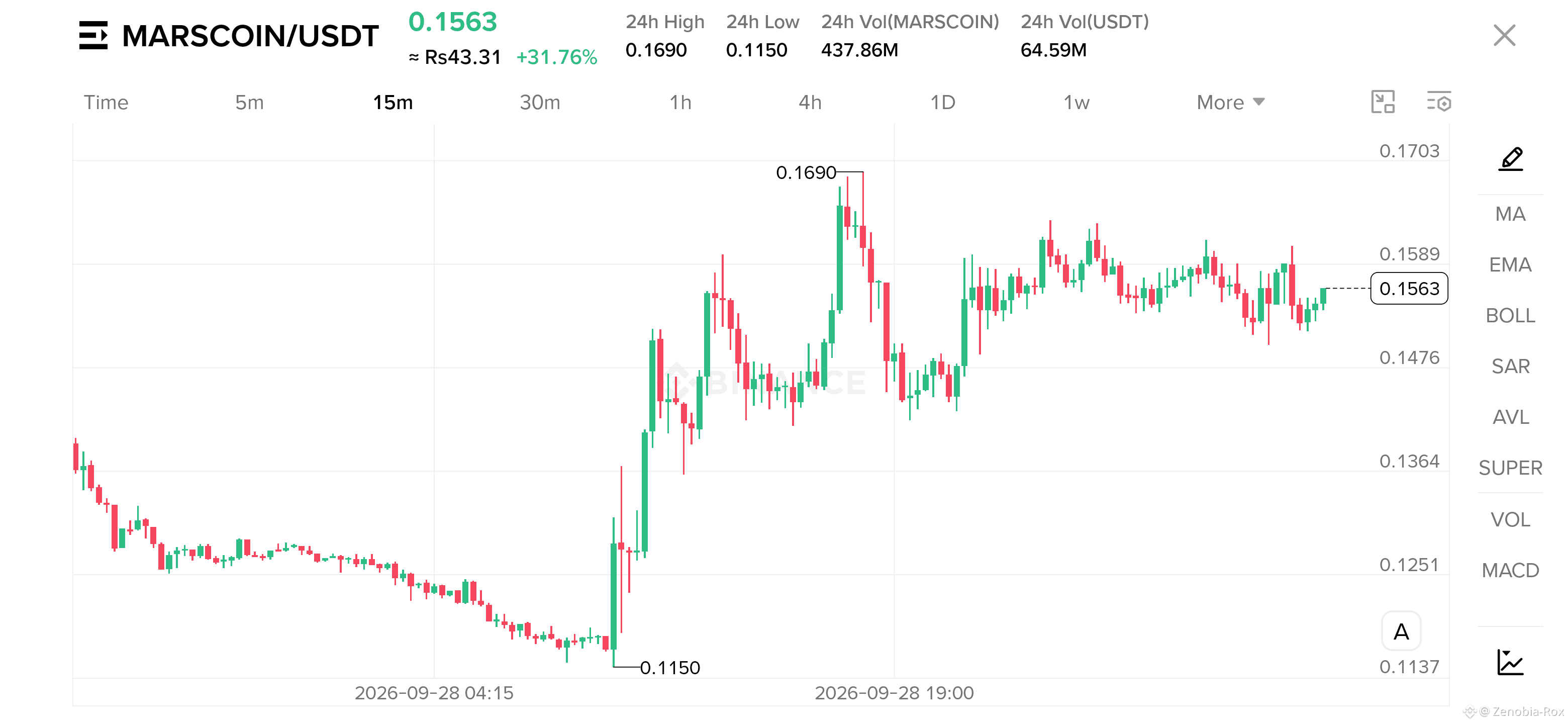
After printing a local low at 0.1150, it spiked wildly to 0.1690 (+31.76%) and is now coiling around 0.1563 in a classic consolidation phase. Momentum is building, and the order book is heating up fast. If it breaks out past resistance, we could be looking at another massive leg up!
Entry Level: $0.1520 - $0.1565 (Current range / buying the retest dips)
🎯 TP1: $0.1680 (Testing recent high)
🎯 TP2: $0.1820 (Breakout target)
🎯 TP3: $0.1980 (Moonshot target)
⛔ STOP LOSS: $0.1440 (Tight risk management below support)
⚠️ DISCLAIMER: Crypto trading carries high market risk. This post is for educational and entertainment purposes only, not financial advice. Always do your own research (DYOR) and manage your risk strictly.
I'm watching $MARSCOIN /USDT absolute madness unfold right now!
After printing a local low at 0.1150, it spiked wildly to 0.1690 (+31.76%) and is now coiling around 0.1563 in a classic consolidation phase. Momentum is building, and the order book is heating up fast. If it breaks out past resistance, we could be looking at another massive leg up!
Entry Level: $0.1520 - $0.1565 (Current range / buying the retest dips)
🎯 TP1: $0.1680 (Testing recent high)
🎯 TP2: $0.1820 (Breakout target)
🎯 TP3: $0.1980 (Moonshot target)
⛔ STOP LOSS: $0.1440 (Tight risk management below support)
⚠️ DISCLAIMER: Crypto trading carries high market risk. This post is for educational and entertainment purposes only, not financial advice. Always do your own research (DYOR) and manage your risk strictly.
After printing a local low at 0.1150, it spiked wildly to 0.1690 (+31.76%) and is now coiling around 0.1563 in a classic consolidation phase. Momentum is building, and the order book is heating up fast. If it breaks out past resistance, we could be looking at another massive leg up!
Entry Level: $0.1520 - $0.1565 (Current range / buying the retest dips)
🎯 TP1: $0.1680 (Testing recent high)
🎯 TP2: $0.1820 (Breakout target)
🎯 TP3: $0.1980 (Moonshot target)
⛔ STOP LOSS: $0.1440 (Tight risk management below support)
⚠️ DISCLAIMER: Crypto trading carries high market risk. This post is for educational and entertainment purposes only, not financial advice. Always do your own research (DYOR) and manage your risk strictly.
223
·
--
Haussier
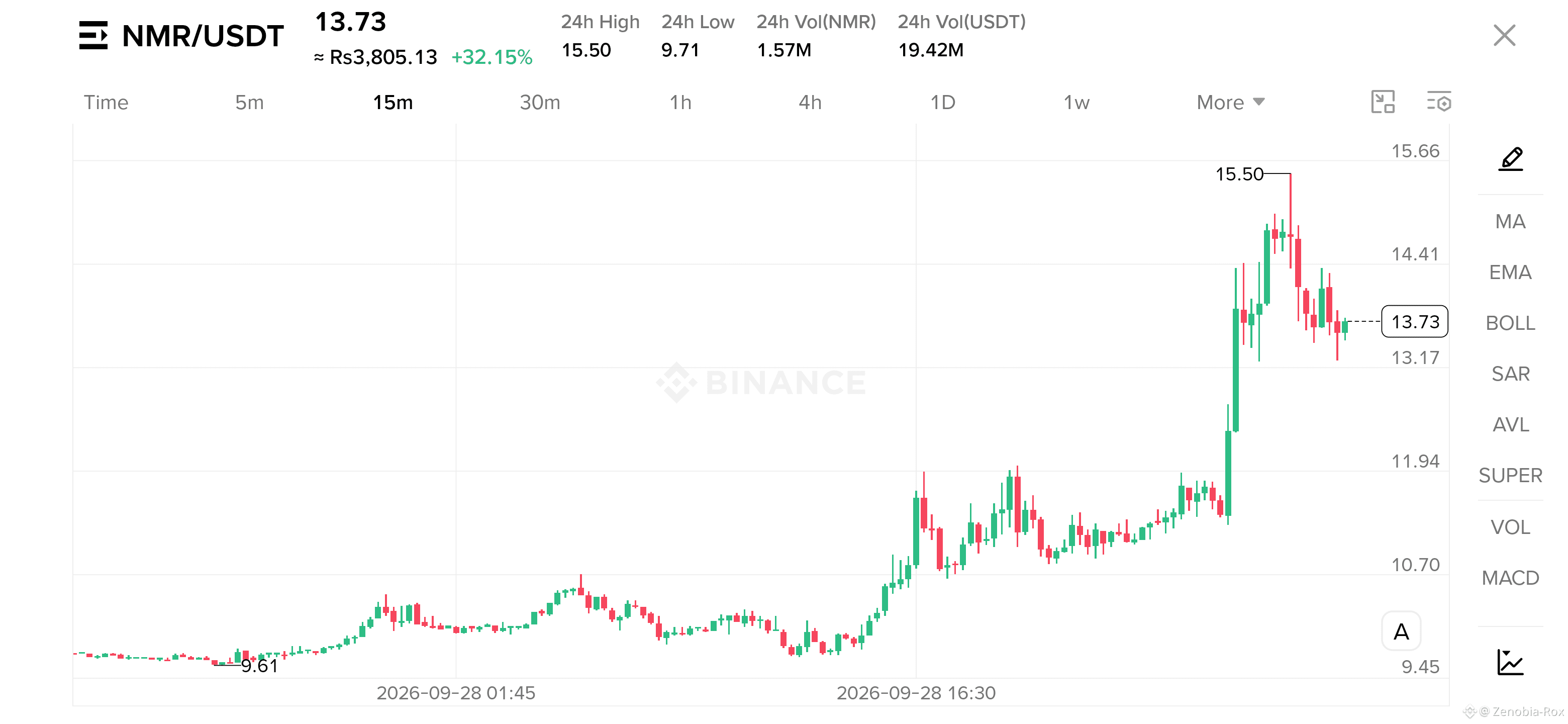
🔥 I'm watching $NMR USDT right now! The artificial intelligence token is undergoing a sharp expansion phase after breaking out from its multi-month baseline near $9.61, rapidly printing local highs around $15.50 before establishing a consolidation structure.
🎯 Execution Plan (Key Reference Levels):
* Entry Zone: $13.20 – $13.75
* TP1: $14.50
* TP2: $15.50
* TP3: $16.80
* STOP LOSS: $12.40
⚠️ DISCLAIMER: This content is strictly provided for informational and educational purposes only. It does not constitute financial, investment, or trading advice. Cryptocurrencies are highly volatile; always manage risk properly and conduct independent research before engaging in market execution.$NMR
{spot}(NMRUSDT)
🔥 I'm watching $NMR USDT right now! The artificial intelligence token is undergoing a sharp expansion phase after breaking out from its multi-month baseline near $9.61, rapidly printing local highs around $15.50 before establishing a consolidation structure.
🎯 Execution Plan (Key Reference Levels):
* Entry Zone: $13.20 – $13.75
* TP1: $14.50
* TP2: $15.50
* TP3: $16.80
* STOP LOSS: $12.40
⚠️ DISCLAIMER: This content is strictly provided for informational and educational purposes only. It does not constitute financial, investment, or trading advice. Cryptocurrencies are highly volatile; always manage risk properly and conduct independent research before engaging in market execution.$NMR
🎯 Execution Plan (Key Reference Levels):
* Entry Zone: $13.20 – $13.75
* TP1: $14.50
* TP2: $15.50
* TP3: $16.80
* STOP LOSS: $12.40
⚠️ DISCLAIMER: This content is strictly provided for informational and educational purposes only. It does not constitute financial, investment, or trading advice. Cryptocurrencies are highly volatile; always manage risk properly and conduct independent research before engaging in market execution.$NMR
1
189
·
--
Haussier
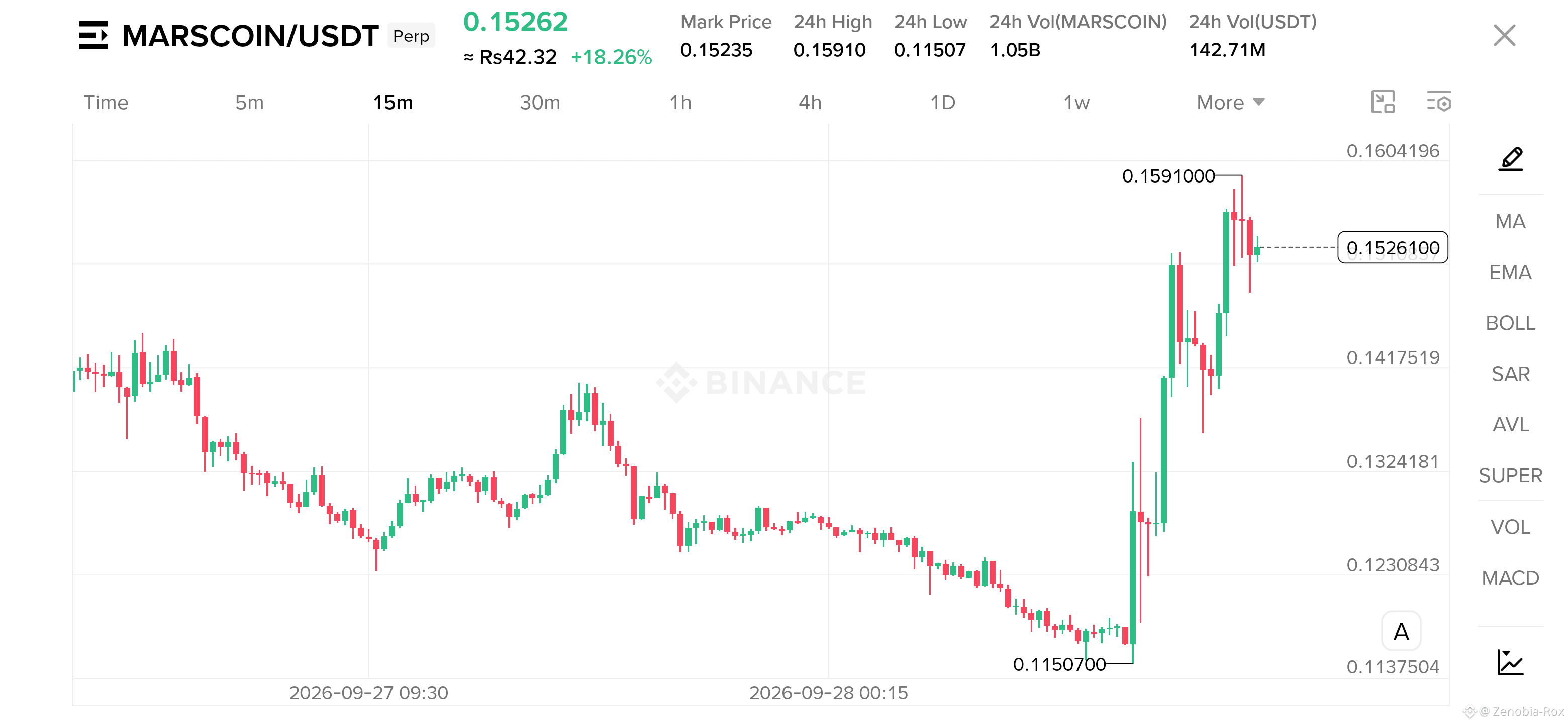
I’m watching $MARSCOIN /USDT absolutely lose its mind right now! After bottoming out hard around 0.1150, it came out of nowhere with a massive spike all the way up to 0.1591. The volume flooding in is insane, and honestly, this chart looks ready for another wild leg up if it holds these levels.
If you're looking to ride this wave with me, here’s how I’m playing it:
* Entry Level: 0.1480 – 0.1520 (Catching a quick dip instead of chasing the top)
* TP1: 0.1590 (Locking in quick profits at the recent peak)
* TP2: 0.1680 (Breakout continuation)
* TP3: 0.1800 (If the moonbags really start flying)
* Stop Loss: 0.1390 (Gotta protect the capital if the rug pulls)
DISCLAIMER: Not financial advice at all, just sharing what’s on my radar! Crypto moves fast and can burn you just as quickly. Always do your own research (DYOR) and never trade money you can't afford to lose.
I’m watching $MARSCOIN /USDT absolutely lose its mind right now! After bottoming out hard around 0.1150, it came out of nowhere with a massive spike all the way up to 0.1591. The volume flooding in is insane, and honestly, this chart looks ready for another wild leg up if it holds these levels.
If you're looking to ride this wave with me, here’s how I’m playing it:
* Entry Level: 0.1480 – 0.1520 (Catching a quick dip instead of chasing the top)
* TP1: 0.1590 (Locking in quick profits at the recent peak)
* TP2: 0.1680 (Breakout continuation)
* TP3: 0.1800 (If the moonbags really start flying)
* Stop Loss: 0.1390 (Gotta protect the capital if the rug pulls)
DISCLAIMER: Not financial advice at all, just sharing what’s on my radar! Crypto moves fast and can burn you just as quickly. Always do your own research (DYOR) and never trade money you can't afford to lose.
If you're looking to ride this wave with me, here’s how I’m playing it:
* Entry Level: 0.1480 – 0.1520 (Catching a quick dip instead of chasing the top)
* TP1: 0.1590 (Locking in quick profits at the recent peak)
* TP2: 0.1680 (Breakout continuation)
* TP3: 0.1800 (If the moonbags really start flying)
* Stop Loss: 0.1390 (Gotta protect the capital if the rug pulls)
DISCLAIMER: Not financial advice at all, just sharing what’s on my radar! Crypto moves fast and can burn you just as quickly. Always do your own research (DYOR) and never trade money you can't afford to lose.
1
2
210
·
--
Haussier
parsnal hok I’m watching $QNT closely 👀🔥
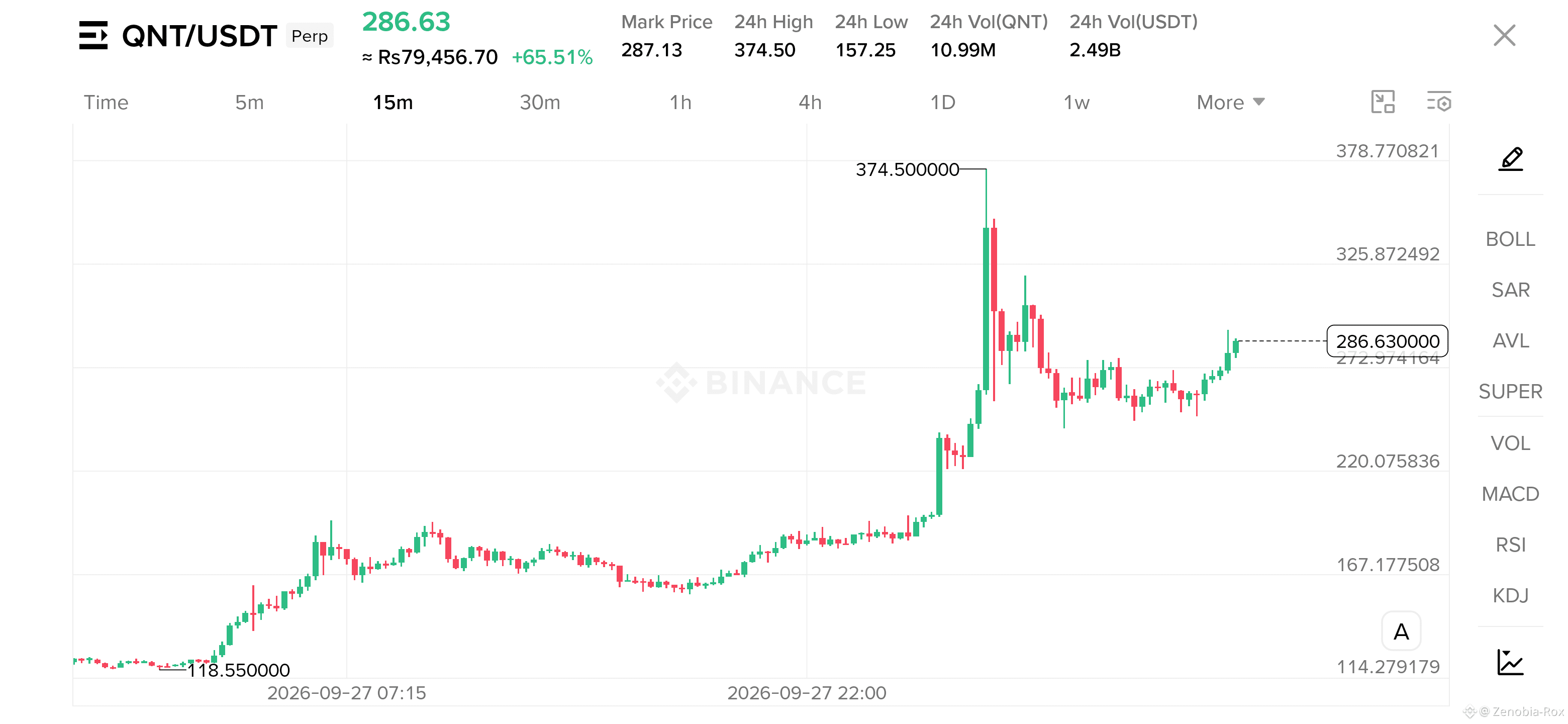
QNT just delivered a massive move, ripping +65% and touching $374.50 before cooling off. Now price is around $286.63, and the 15M chart is showing buyers stepping back in after the pullback.
I’m not chasing the vertical candle here. I’m watching the $275–285 zone for confirmation. If that area holds and momentum returns, QNT could start testing the next resistance levels.
🎯 Trade Setup — QNT/USDT
Entry: $278 – $288
TP1: $305
TP2: $325
TP3: $350 – $375
STOP LOSS: $267
The key is simple: hold the $275 area → bullish structure stays alive. Lose it decisively, and I’d step back rather than force the trade.
Volume is already huge, so volatility can be wild. Manage risk accordingly. ⚡
DISCLAIMER: This is my chart-based setup, not financial advice. Crypto is highly volatile. Do your own research and never risk more than you can afford to lose. DYOR/NFA. $QNT
{spot}(QNTUSDT)
parsnal hok I’m watching $QNT closely 👀🔥
QNT just delivered a massive move, ripping +65% and touching $374.50 before cooling off. Now price is around $286.63, and the 15M chart is showing buyers stepping back in after the pullback.
I’m not chasing the vertical candle here. I’m watching the $275–285 zone for confirmation. If that area holds and momentum returns, QNT could start testing the next resistance levels.
🎯 Trade Setup — QNT/USDT
Entry: $278 – $288
TP1: $305
TP2: $325
TP3: $350 – $375
STOP LOSS: $267
The key is simple: hold the $275 area → bullish structure stays alive. Lose it decisively, and I’d step back rather than force the trade.
Volume is already huge, so volatility can be wild. Manage risk accordingly. ⚡
DISCLAIMER: This is my chart-based setup, not financial advice. Crypto is highly volatile. Do your own research and never risk more than you can afford to lose. DYOR/NFA. $QNT
QNT just delivered a massive move, ripping +65% and touching $374.50 before cooling off. Now price is around $286.63, and the 15M chart is showing buyers stepping back in after the pullback.
I’m not chasing the vertical candle here. I’m watching the $275–285 zone for confirmation. If that area holds and momentum returns, QNT could start testing the next resistance levels.
🎯 Trade Setup — QNT/USDT
Entry: $278 – $288
TP1: $305
TP2: $325
TP3: $350 – $375
STOP LOSS: $267
The key is simple: hold the $275 area → bullish structure stays alive. Lose it decisively, and I’d step back rather than force the trade.
Volume is already huge, so volatility can be wild. Manage risk accordingly. ⚡
DISCLAIMER: This is my chart-based setup, not financial advice. Crypto is highly volatile. Do your own research and never risk more than you can afford to lose. DYOR/NFA. $QNT
1
202
·
--
Haussier
parsnal hok I’m watching $QNT closely 👀
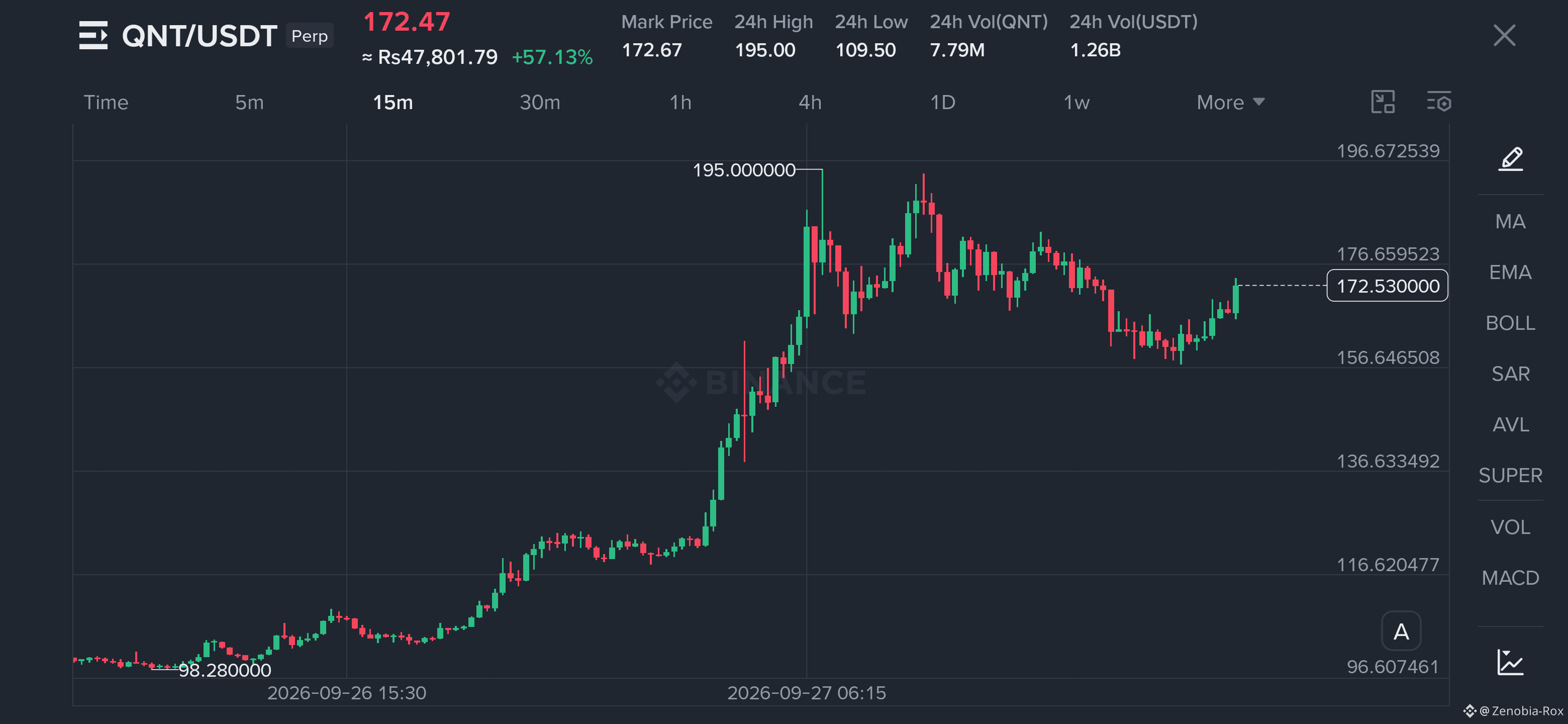
QNT just delivered a massive move, but the interesting part is what happened AFTER the spike to $195.
Price cooled off, built a base around the $156–160 area, and is now pushing back toward the $176–177 resistance zone. If bulls can reclaim that area with momentum, the next move could get interesting.
I’m not chasing the green candle here — I’d rather watch for a clean entry around the pullback zone.
🎯 QNT/USDT Setup
Entry: $168 – $172
TP1: $176.50
TP2: $184.00
TP3: $193.00
STOP LOSS: $162.00
A strong break and hold above $176.50 would make the setup more interesting. If $162 breaks decisively, I’d consider the bullish setup invalidated.
⚠️ DISCLAIMER: This is a chart-based setup for educational purposes, not financial advice. Crypto is highly volatile. Always manage risk and DYOR.
$QNT
{spot}(QNTUSDT)
parsnal hok I’m watching $QNT closely 👀
QNT just delivered a massive move, but the interesting part is what happened AFTER the spike to $195.
Price cooled off, built a base around the $156–160 area, and is now pushing back toward the $176–177 resistance zone. If bulls can reclaim that area with momentum, the next move could get interesting.
I’m not chasing the green candle here — I’d rather watch for a clean entry around the pullback zone.
🎯 QNT/USDT Setup
Entry: $168 – $172
TP1: $176.50
TP2: $184.00
TP3: $193.00
STOP LOSS: $162.00
A strong break and hold above $176.50 would make the setup more interesting. If $162 breaks decisively, I’d consider the bullish setup invalidated.
⚠️ DISCLAIMER: This is a chart-based setup for educational purposes, not financial advice. Crypto is highly volatile. Always manage risk and DYOR.
$QNT
QNT just delivered a massive move, but the interesting part is what happened AFTER the spike to $195.
Price cooled off, built a base around the $156–160 area, and is now pushing back toward the $176–177 resistance zone. If bulls can reclaim that area with momentum, the next move could get interesting.
I’m not chasing the green candle here — I’d rather watch for a clean entry around the pullback zone.
🎯 QNT/USDT Setup
Entry: $168 – $172
TP1: $176.50
TP2: $184.00
TP3: $193.00
STOP LOSS: $162.00
A strong break and hold above $176.50 would make the setup more interesting. If $162 breaks decisively, I’d consider the bullish setup invalidated.
⚠️ DISCLAIMER: This is a chart-based setup for educational purposes, not financial advice. Crypto is highly volatile. Always manage risk and DYOR.
$QNT
1
191
·
--
Haussier
parsnal hok I'm watching $Q 👀
+70% in 24H and the chart is moving fast. After a move like this, I’m more interested in how price behaves on a retest than blindly buying the spike.
🔥 Entry: $0.0435 – $0.0468
🎯 TP1: $0.0510
🎯 TP2: $0.0570
🎯 TP3: $0.0650
🛑 STOP LOSS: $0.0405
If buyers defend the entry zone, momentum could continue. Lose it cleanly, and the setup changes.
⚠️ DISCLAIMER: Educational setup only. Crypto is highly volatile. Always manage your own risk.
parsnal hok I'm watching $Q 👀
+70% in 24H and the chart is moving fast. After a move like this, I’m more interested in how price behaves on a retest than blindly buying the spike.
🔥 Entry: $0.0435 – $0.0468
🎯 TP1: $0.0510
🎯 TP2: $0.0570
🎯 TP3: $0.0650
🛑 STOP LOSS: $0.0405
If buyers defend the entry zone, momentum could continue. Lose it cleanly, and the setup changes.
⚠️ DISCLAIMER: Educational setup only. Crypto is highly volatile. Always manage your own risk.
+70% in 24H and the chart is moving fast. After a move like this, I’m more interested in how price behaves on a retest than blindly buying the spike.
🔥 Entry: $0.0435 – $0.0468
🎯 TP1: $0.0510
🎯 TP2: $0.0570
🎯 TP3: $0.0650
🛑 STOP LOSS: $0.0405
If buyers defend the entry zone, momentum could continue. Lose it cleanly, and the setup changes.
⚠️ DISCLAIMER: Educational setup only. Crypto is highly volatile. Always manage your own risk.
144
·
--
Haussier
parsnal hok I'm watching $QNT 👀
QNT is sitting around $176.90 after a +67% move. That kind of strength gets attention, but I’m watching the next consolidation rather than chasing the candle.
🔥 Entry: $171 – $177
🎯 TP1: $185
🎯 TP2: $195
🎯 TP3: $210
🛑 STOP LOSS: $164
For me, the important part is whether QNT can hold above the breakout area and build another base. Momentum is strong, but risk is high after such a sharp move.
⚠️ DISCLAIMER: Not financial advice. These are speculative levels for educational purposes only. DYOR.
parsnal hok I'm watching $QNT 👀
QNT is sitting around $176.90 after a +67% move. That kind of strength gets attention, but I’m watching the next consolidation rather than chasing the candle.
🔥 Entry: $171 – $177
🎯 TP1: $185
🎯 TP2: $195
🎯 TP3: $210
🛑 STOP LOSS: $164
For me, the important part is whether QNT can hold above the breakout area and build another base. Momentum is strong, but risk is high after such a sharp move.
⚠️ DISCLAIMER: Not financial advice. These are speculative levels for educational purposes only. DYOR.
QNT is sitting around $176.90 after a +67% move. That kind of strength gets attention, but I’m watching the next consolidation rather than chasing the candle.
🔥 Entry: $171 – $177
🎯 TP1: $185
🎯 TP2: $195
🎯 TP3: $210
🛑 STOP LOSS: $164
For me, the important part is whether QNT can hold above the breakout area and build another base. Momentum is strong, but risk is high after such a sharp move.
⚠️ DISCLAIMER: Not financial advice. These are speculative levels for educational purposes only. DYOR.
125
·
--
Haussier
parsnal hok I'm watching $GLMR 👀
GLMR is up more than 52% in 24H and trading near $0.01003. The momentum is obvious, but after a pump like this, I want confirmation instead of chasing.
🔥 Entry: $0.00955 – $0.01005
🎯 TP1: $0.0108
🎯 TP2: $0.0116
🎯 TP3: $0.0128
🛑 STOP LOSS: $0.00905
The real test is whether buyers can turn the current zone into support. If they do, I’ll keep watching for continuation.
⚠️ DISCLAIMER: These levels are speculative and for educational purposes only. Not financial advice. DYOR and manage your risk.
parsnal hok I'm watching $GLMR 👀
GLMR is up more than 52% in 24H and trading near $0.01003. The momentum is obvious, but after a pump like this, I want confirmation instead of chasing.
🔥 Entry: $0.00955 – $0.01005
🎯 TP1: $0.0108
🎯 TP2: $0.0116
🎯 TP3: $0.0128
🛑 STOP LOSS: $0.00905
The real test is whether buyers can turn the current zone into support. If they do, I’ll keep watching for continuation.
⚠️ DISCLAIMER: These levels are speculative and for educational purposes only. Not financial advice. DYOR and manage your risk.
GLMR is up more than 52% in 24H and trading near $0.01003. The momentum is obvious, but after a pump like this, I want confirmation instead of chasing.
🔥 Entry: $0.00955 – $0.01005
🎯 TP1: $0.0108
🎯 TP2: $0.0116
🎯 TP3: $0.0128
🛑 STOP LOSS: $0.00905
The real test is whether buyers can turn the current zone into support. If they do, I’ll keep watching for continuation.
⚠️ DISCLAIMER: These levels are speculative and for educational purposes only. Not financial advice. DYOR and manage your risk.
63
·
--
Haussier
Guys, I want you to wait for 2 mins and read this post...We have seen a lot of coins pumping very fast and also dumping very fast...But $ENA isn’t one of them...It’s now trading around 0.28 with a pump over 28%+ last 24 hours...Total 57 M USDC was traded in this coin...We have also observed that the price is repecting the EMA 50 line strongly... It's creating higher highs, so good for a long trade...
On the other hand, $2Z is also making the market very hard...It has now shown a good correction, where you might enter for a long position...Last 24h it showed around 36%+ gains with a trading volume of 68 M USDT....
I am also keeping my eyes on $RARE as It's the top gainer today...But it might fall anytime without giving you any chance...let the buyers exhaust... then enter short there...
#CircleMints500MUSDCOnSolana #PolymarketBankFailureBetsDrawFDICConcern #BlackRockBuildsTokenizedPortfoliosForOndo
Guys, I want you to wait for 2 mins and read this post...We have seen a lot of coins pumping very fast and also dumping very fast...But $ENA isn’t one of them...It’s now trading around 0.28 with a pump over 28%+ last 24 hours...Total 57 M USDC was traded in this coin...We have also observed that the price is repecting the EMA 50 line strongly... It's creating higher highs, so good for a long trade...
On the other hand, $2Z is also making the market very hard...It has now shown a good correction, where you might enter for a long position...Last 24h it showed around 36%+ gains with a trading volume of 68 M USDT....
I am also keeping my eyes on $RARE as It's the top gainer today...But it might fall anytime without giving you any chance...let the buyers exhaust... then enter short there...
#CircleMints500MUSDCOnSolana #PolymarketBankFailureBetsDrawFDICConcern #BlackRockBuildsTokenizedPortfoliosForOndo
On the other hand, $2Z is also making the market very hard...It has now shown a good correction, where you might enter for a long position...Last 24h it showed around 36%+ gains with a trading volume of 68 M USDT....
I am also keeping my eyes on $RARE as It's the top gainer today...But it might fall anytime without giving you any chance...let the buyers exhaust... then enter short there...
#CircleMints500MUSDCOnSolana #PolymarketBankFailureBetsDrawFDICConcern #BlackRockBuildsTokenizedPortfoliosForOndo
🟢 $ENA — Long
100%
🔵 $2Z — Long
0%
🔴 $RARE — Short
0%
⚪ Wait for confirmation
0%
1 Votes • Vote fermé
109
·
--
Haussier
I didn’t expect the Bitget situation to raise a debate this serious.
After the reported $387.5M hot-wallet breach, stolen funds were moved through THORChain, putting the protocol in a difficult position.
Now Gracy Chen is publicly asking THORChain to reject swaps involving identified attacker wallets.
And honestly, that changes the conversation.
A permissionless protocol is designed to stay neutral. But when specific wallets are publicly identified as being linked to a hack, does neutrality still mean processing their swaps?
THORChain faced a similar controversy after the $1.46B Bybit hack, when stolen assets were routed through the network.
The uncomfortable question isn’t whether the attacker can be identified.
It’s what happens after they are identified.
That line between permissionless infrastructure and responsibility just got a lot harder to define.
#Bitget #ThorchainDeFi #Crypto #DeFi #GracyChen
I didn’t expect the Bitget situation to raise a debate this serious.
After the reported $387.5M hot-wallet breach, stolen funds were moved through THORChain, putting the protocol in a difficult position.
Now Gracy Chen is publicly asking THORChain to reject swaps involving identified attacker wallets.
And honestly, that changes the conversation.
A permissionless protocol is designed to stay neutral. But when specific wallets are publicly identified as being linked to a hack, does neutrality still mean processing their swaps?
THORChain faced a similar controversy after the $1.46B Bybit hack, when stolen assets were routed through the network.
The uncomfortable question isn’t whether the attacker can be identified.
It’s what happens after they are identified.
That line between permissionless infrastructure and responsibility just got a lot harder to define.
#Bitget #ThorchainDeFi #Crypto #DeFi #GracyChen
After the reported $387.5M hot-wallet breach, stolen funds were moved through THORChain, putting the protocol in a difficult position.
Now Gracy Chen is publicly asking THORChain to reject swaps involving identified attacker wallets.
And honestly, that changes the conversation.
A permissionless protocol is designed to stay neutral. But when specific wallets are publicly identified as being linked to a hack, does neutrality still mean processing their swaps?
THORChain faced a similar controversy after the $1.46B Bybit hack, when stolen assets were routed through the network.
The uncomfortable question isn’t whether the attacker can be identified.
It’s what happens after they are identified.
That line between permissionless infrastructure and responsibility just got a lot harder to define.
#Bitget #ThorchainDeFi #Crypto #DeFi #GracyChen

1
225
·
--
Haussier
parsnal hok I'm watching $QNT closely 👀
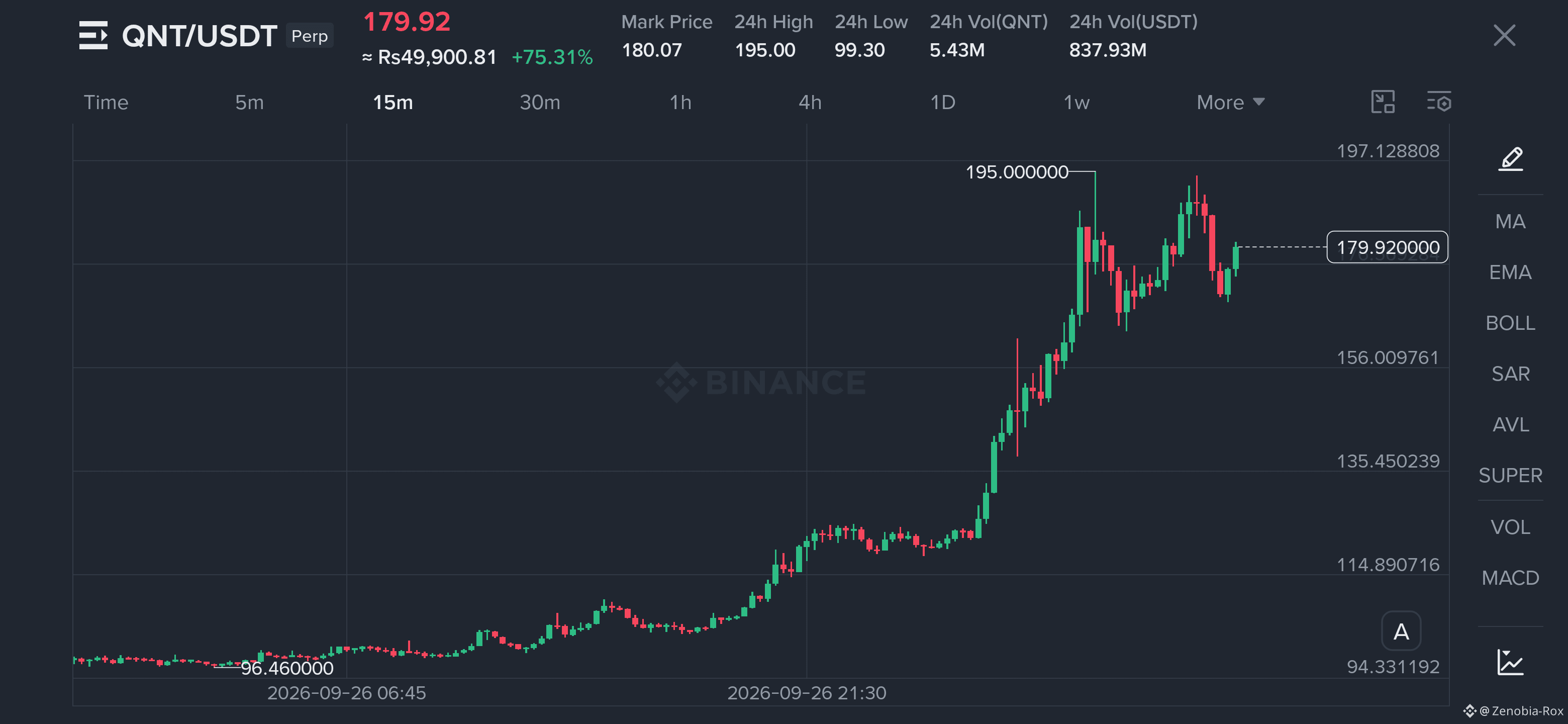
This chart has already made a serious move — from around $96 to $195. Now price is sitting near $180 after a sharp pullback and bounce.
I’m not chasing the green candles here. I’d rather watch how QNT behaves around the $175–180 zone. If buyers defend it and momentum returns, that previous $195 high becomes the key level to attack.
🔥 QNT/USDT Setup
Entry Level: $175 – $181
TP1: $188
TP2: $195
TP3: $205
STOP LOSS: $168
The big breakout is already on the chart. Now I want to see whether QNT can turn this consolidation into another leg higher. If $195 breaks with strength, things could get interesting fast. ⚡
DISCLAIMER: This is a chart-based setup for educational purposes, not financial advice. Crypto is highly volatile—manage risk and DYOR.
$QNT
{spot}(QNTUSDT)
parsnal hok I'm watching $QNT closely 👀
This chart has already made a serious move — from around $96 to $195. Now price is sitting near $180 after a sharp pullback and bounce.
I’m not chasing the green candles here. I’d rather watch how QNT behaves around the $175–180 zone. If buyers defend it and momentum returns, that previous $195 high becomes the key level to attack.
🔥 QNT/USDT Setup
Entry Level: $175 – $181
TP1: $188
TP2: $195
TP3: $205
STOP LOSS: $168
The big breakout is already on the chart. Now I want to see whether QNT can turn this consolidation into another leg higher. If $195 breaks with strength, things could get interesting fast. ⚡
DISCLAIMER: This is a chart-based setup for educational purposes, not financial advice. Crypto is highly volatile—manage risk and DYOR.
$QNT
This chart has already made a serious move — from around $96 to $195. Now price is sitting near $180 after a sharp pullback and bounce.
I’m not chasing the green candles here. I’d rather watch how QNT behaves around the $175–180 zone. If buyers defend it and momentum returns, that previous $195 high becomes the key level to attack.
🔥 QNT/USDT Setup
Entry Level: $175 – $181
TP1: $188
TP2: $195
TP3: $205
STOP LOSS: $168
The big breakout is already on the chart. Now I want to see whether QNT can turn this consolidation into another leg higher. If $195 breaks with strength, things could get interesting fast. ⚡
DISCLAIMER: This is a chart-based setup for educational purposes, not financial advice. Crypto is highly volatile—manage risk and DYOR.
$QNT
1
158
·
--
Haussier
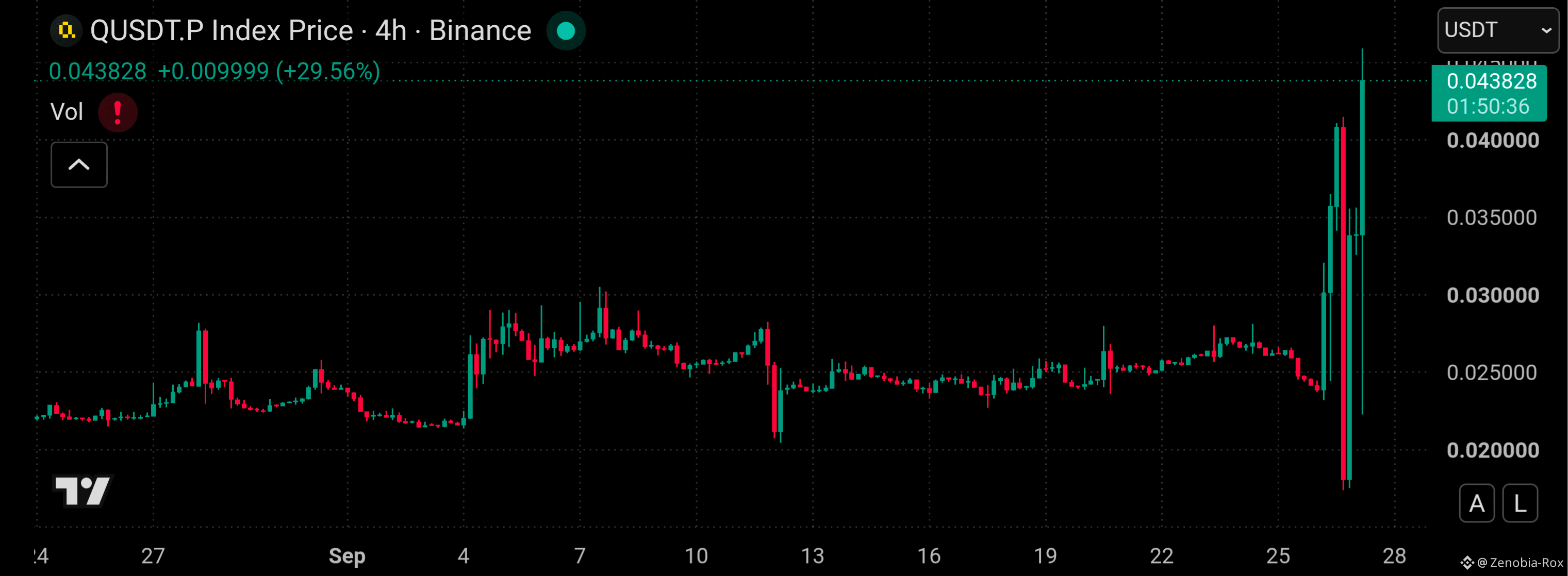
I’m watching $Q (QUSDT.P) absolute madness unfold on the charts right now, and the momentum is getting unreal 🔥
After a massive spike straight up to 0.043828 (+29.56%), this coin is showing extreme volatility and high-volume action. The bulls are attempting a massive breakout, but with wicks going both ways, timing the entry here is critical.
Here is how I’m setting up this high-thrill trade opportunity: $Q
* Entry Level: $0.04100 - $0.04350 (Looking for a healthy retest/consolidation entry)
* TP1: $0.04850
* TP2: $0.05400
* TP3: $0.06200
* STOP LOSS: $0.03750 (Strict risk management—protect your capital!)
⚠️ DISCLAIMER: Trading crypto derivatives/futures carries extreme risk. This is strictly my personal market view and educational content, NOT financial advice. Always do your own research (DYOR) and manage your risk carefully! $Q
{future}(QUSDT)
I’m watching $Q (QUSDT.P) absolute madness unfold on the charts right now, and the momentum is getting unreal 🔥
After a massive spike straight up to 0.043828 (+29.56%), this coin is showing extreme volatility and high-volume action. The bulls are attempting a massive breakout, but with wicks going both ways, timing the entry here is critical.
Here is how I’m setting up this high-thrill trade opportunity: $Q
* Entry Level: $0.04100 - $0.04350 (Looking for a healthy retest/consolidation entry)
* TP1: $0.04850
* TP2: $0.05400
* TP3: $0.06200
* STOP LOSS: $0.03750 (Strict risk management—protect your capital!)
⚠️ DISCLAIMER: Trading crypto derivatives/futures carries extreme risk. This is strictly my personal market view and educational content, NOT financial advice. Always do your own research (DYOR) and manage your risk carefully! $Q
After a massive spike straight up to 0.043828 (+29.56%), this coin is showing extreme volatility and high-volume action. The bulls are attempting a massive breakout, but with wicks going both ways, timing the entry here is critical.
Here is how I’m setting up this high-thrill trade opportunity: $Q
* Entry Level: $0.04100 - $0.04350 (Looking for a healthy retest/consolidation entry)
* TP1: $0.04850
* TP2: $0.05400
* TP3: $0.06200
* STOP LOSS: $0.03750 (Strict risk management—protect your capital!)
⚠️ DISCLAIMER: Trading crypto derivatives/futures carries extreme risk. This is strictly my personal market view and educational content, NOT financial advice. Always do your own research (DYOR) and manage your risk carefully! $Q
208
·
--
Haussier
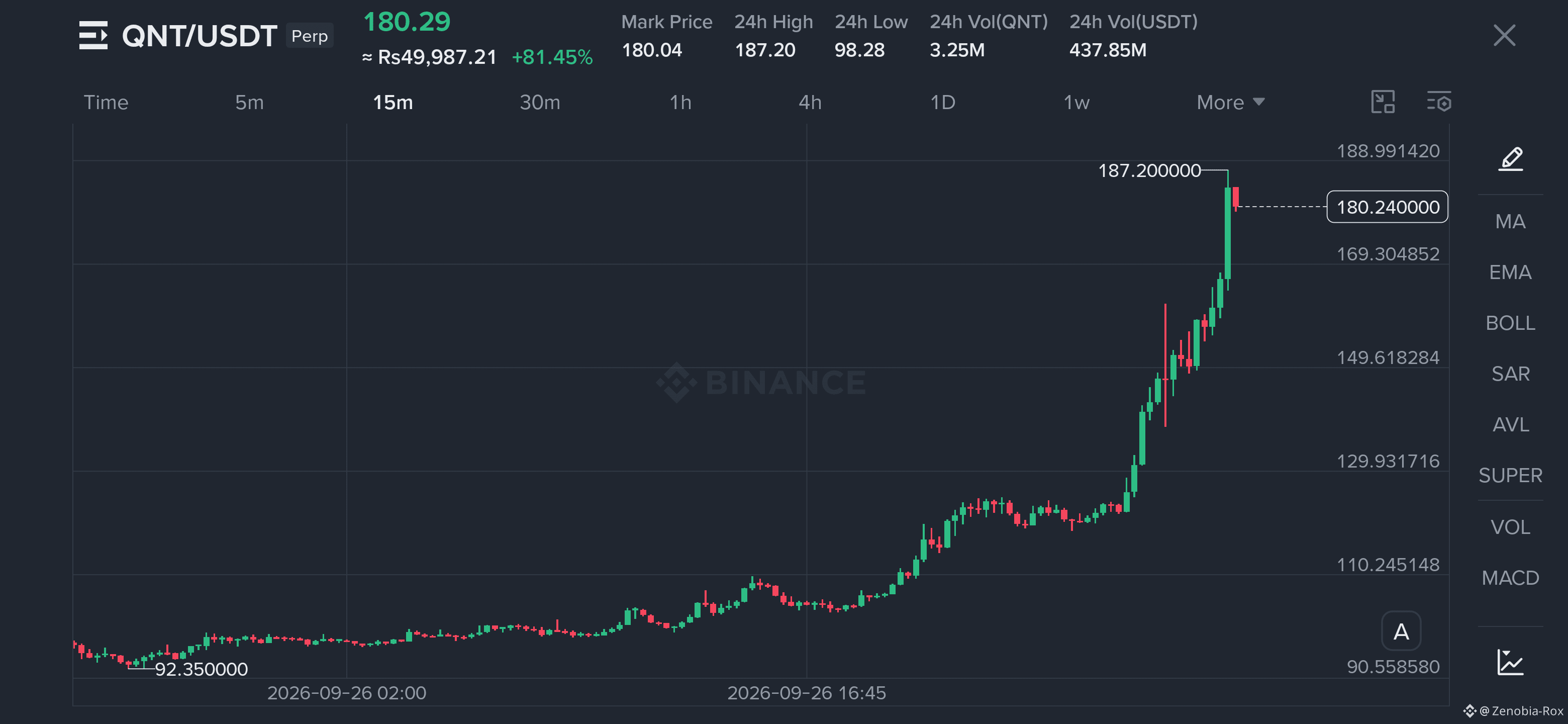
I’m watching $QNT /USDT absolutely explode on the charts right now! Up over 80% today, hitting a high of 187.20 after a massive vertical breakout. Momentum is running extremely hot, and if it consolidates around these levels, we could see another wild push upwards.
Here is the setup to trade this move carefully:
* Entry Level: $172.00 – $180.00 (Looking for a retest/pullback on lower timeframes before re-entry)
* TP1: $195.00
* TP2: $210.00
* TP3: $230.00
* Stop Loss: $158.00
DISCLAIMER: Trading crypto futures and high-volatility assets carries a high level of risk. This is not financial advice. Always do your own research (DYOR) and manage your risk strictly! $QNT
{spot}(QNTUSDT)
I’m watching $QNT /USDT absolutely explode on the charts right now! Up over 80% today, hitting a high of 187.20 after a massive vertical breakout. Momentum is running extremely hot, and if it consolidates around these levels, we could see another wild push upwards.
Here is the setup to trade this move carefully:
* Entry Level: $172.00 – $180.00 (Looking for a retest/pullback on lower timeframes before re-entry)
* TP1: $195.00
* TP2: $210.00
* TP3: $230.00
* Stop Loss: $158.00
DISCLAIMER: Trading crypto futures and high-volatility assets carries a high level of risk. This is not financial advice. Always do your own research (DYOR) and manage your risk strictly! $QNT
Here is the setup to trade this move carefully:
* Entry Level: $172.00 – $180.00 (Looking for a retest/pullback on lower timeframes before re-entry)
* TP1: $195.00
* TP2: $210.00
* TP3: $230.00
* Stop Loss: $158.00
DISCLAIMER: Trading crypto futures and high-volatility assets carries a high level of risk. This is not financial advice. Always do your own research (DYOR) and manage your risk strictly! $QNT
1
389
Connectez-vous pour découvrir plus de contenu
Rejoignez la communauté mondiale des adeptes de cryptomonnaies sur Binance Square
⚡️ Suviez les dernières informations importantes sur les cryptomonnaies.
💬 Jugé digne de confiance par la plus grande plateforme d’échange de cryptomonnaies au monde.
👍 Découvrez les connaissances que partagent les créateurs vérifiés.
Adresse e-mail/Nº de téléphone
Sujets d’actualité
AmazonPlansToSell$8BNvidiaChips
4 vues
5 mentions
#AmazonPlansToSell$8BNvidiaChips
🔥 BREAKING: AMAZON IS MOVING $8 BILLION WORTH OF NVIDIA CHIPS
Amazon is reportedly seeking to offload around $8B of advanced NVIDIA chips to investors through a new special-purpose vehicle.
But here’s the interesting part 👀
🔹 Thousands of Grace Blackwell chips would be transferred to the vehicle
🔹 Amazon would then lease the chips back
🔹 The structure could make Amazon’s balance sheet more asset-light
🔹 Amazon may retain up to 10% equity in the vehicle
🔹 The chips are already being installed across 12+ U.S. data centers
This is not simply Amazon “selling NVIDIA” and walking away — Amazon would continue using the chips.
And the AI infrastructure race keeps getting bigger. 🚀
Is this bullish or bearish for $NVDA? 👇
#amazon #NVIDIA #Aİ
Faizan Crypto Learner
·0 mentions J’aime
·58 vues
NEARFallsToAround$4.70Down14%
24,538 vues
36 mentions
EthereumFoundationLaunchesZkAPIOnMainnet
16,072 vues
272 mentions